Physical and psychological abuse of Julian Assange
Clinical psychologist Lissa Johnson: They are trying to break Assange “physically and psychologically” WSWS, By Oscar Grenfell , 28 August 2019Australian clinical psychologist Lissa Johnson has been an outspoken defender of Julian Assange, writing extensively on the grave implications of his persecution for democratic rights and freedom of speech.
Johnson explained to the WSWS that she “writes about the psychology of politics and social issues.” She has a background in media studies and sociology, and a PhD in the psychology of manipulating reality-perception.
Earlier this year, Johnson wrote an extensive five–partinvestigative series titled “The Psychology of Getting Julian Assange,” published on the New Matilda website. Johnson provided the following responses to a series of questions from the World Socialist Web Site earlier this week.
WSWS: John Shipton and John Pilger have recently detailed the punitive conditions of Assange’s detention in Belmarsh Prison. Could you speak about the way in which his isolation, and the denial of his right to access computers/legal documents is aimed at stymieing his defence against the US extradition request and increasing the psychological pressures upon him?
Lissa Johnson: If anyone takes a moment to imagine what it must be like to face the prospect of 175 years in a US prison, having already been subjected to nearly a decade of arbitrary detention and judicial harassment, knowing that you have no chance of a fair trial in the US, having been smeared in the media and branded a “terrorist” and enemy of the state, then that gives you an inkling of what Julian Assange was dealing with even before being placed under lockdown in Belmarsh prison. If you add to that having read hundreds of documents from Guantanamo Bay and knowing, in intimate detail, what the United States does to those it brands terrorists and enemies of the state, then Julian Assange’s reality becomes even clearer.
Now, with the full force of the US national security state bearing down on him, Julian Assange has been stripped of his most basic abilities to protect himself. Continue reading
Double standards in UK prison, as Julian Assange is deprived of justice
Julian Assange: Deprivation of Justice and Double Standards in Belmarsh Prison, 21st Century Wire , AUGUST 28, 2019 BY
Alfred de Zayas, former UN Rapporteur, has described the actions of the British authorities in pursuit of Assange as “… contrary to the rule of law and contrary to the spirit of the law.” What we see on the surface is an illusion of British justice, masking a political agenda behind it.
Britain’s notorious Belmarsh Prison is now being presented as beacon of good governance, indicative of a fair and just society which equitable but firm with perpetrators. After carefully reviewing the case of Julian Assange though, there can be little doubt that placing the award-winning journalist in such a facility is nothing but the latest vehicle for his rendition to the US.
So far, Belmarsh has been fulfilling that state agenda.
Belmarsh as the state’s next weapon of choice
Judge Deborah Taylor sent Assange to category A Belmarsh prison for a bail-skipping offense, even though he’d demonstrated that he had good reason to skip bail. It is difficult not to conclude that the category A assignment was done so that he would be weak and vulnerable. In essence, Assange was sent to Belmarsh for 50 weeks for failing to turn up at a police station. There was no ongoing court case; he had no prior offenses; there were no charges; the Swedish investigation had been dropped. So skipping police bail was all the British government had. It should also be pointed out that Judge Taylor made a series of mistakes during the sentencing on 1st May, referring to rape charges in Sweden, which Assange corrected and which she then acknowledged were wrong. This indicates that Judge Taylor went into court at least uninformed, set in her mind that Assange had somewhere, somehow been charged with rape. This would seem to explain some of the reasoning behind Judge Taylor’s cruel sentencing, described by the United Nations Working Group on Arbitrary Detention as ‘disproportionate’ but also as furthering the arbitrary deprivation of Assange’s liberty. What’s more, it has been pointed out how several thousand people in the UK skip bail each year and are in now way subject to such harsh punishment.
Clearly, Judge Taylor had used narratives provided by the state in order to send Assange to a category A penitentiary, even though these narratives have been thoroughly debunked. …….
Following his assessment of Assange in May inside Belmarsh prison, Nils Melzer issued a statement detailing the conditions of dentention. Melzer was accompanied by two medical experts who specialize in the examination of possible victims of torture as well as the documentation of symptoms, both physical and psychological. On examining Assange Melzer observed the following:
“Most importantly, in addition to physical ailments, Mr. Assange showed all symptoms typical for prolonged exposure to psychological torture, including extreme stress, chronic anxiety and intense psychological trauma.“
In addition to these concerns, reports also indicate Assange is being medicated. Continue reading
“Lipstick on a Pig” – Pro nuclear groups again trying to classify nuclear power as “Renewable”
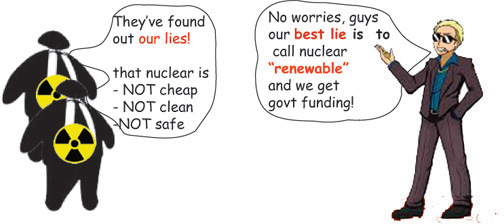
To keep Diablo Canyon open, SLO assemblyman wants to classify nuclear power as renewable, BY MATT FOUNTAIN The Tribune, AUGUST 28, 2019 A Central Coast legislator and two pro-nuclear groups are taking an unusual step to keep Diablo Canyon nuclear power plant operating: They want an amendment to the state Constitution classifying nuclear power as a renewable energy source.
Then, with the plant’s production able to count toward California’s target for renewables, the hope is that someone would acquire it through PG&E’s bankruptcy proceedings and continue to run it for another 20 years.
The effort’s a long shot, however, in a state controlled by Democrats more interested in investing in solar, wind, and geothermal energy, and with the plant facing significant relicensing hurdles.
Assemblyman Jordan Cunningham, R-San Luis Obispo, announced Wednesday that he filed a proposed constitutional amendment to prohibit the Legislature from discriminating against any form of renewable or zero-carbon energy as part of California’s Renewables Portfolio Standard, qualifying nuclear as a source of renewable energy.
The operating licenses for Diablo Canyon’s two reactors expire in 2024 and 2025 respectfully, and the plant is slated for closure in 2026.
Logistical issues aside, Cunningham says qualifying the plant as a generator of renewable energy could allow the plant to operate up to 2045.
In June 2016, PG&E abandoned its efforts to relicense the plant’s reactors, citing among other factors the state’s renewable energy policy…….
The proposed amendment is supported by the pro-nuclear nonprofit groups Environmental Progress and Californians for Green Nuclear Power.
‘LIPSTICK ON A PIG’
But David Weisman, spokesman for the Alliance for Nuclear Responsibility, which has called for the early closure of Diablo Canyon, likened the proposed amendment to a recent taxpayer bailout of Ohio’s two remaining nuclear reactors.
Saying that PG&E customers already pay among the highest rates in the country, Weisman said subsidies placed on the nuclear industry in other states have passed on extra costs to ratepayers.
“Ratepayers are already on the hook for a portion of billions of dollars in losses caused by PG&E’s negligence in Northern California,” Weisman said, referring to the utility’s liability for allegedly causing recent wildfires. “PG&E doesn’t want this plant.”
John Geesman, attorney for the Alliance, said the Diablo Canyon proposal will likely draw attention to the magnitude of Diablo’s above-market costs.
“This is an obvious attempt to put lipstick on a pig in hopes of attracting a purchaser of the asset in bankruptcy,” Geesman wrote in an email…… https://www.sanluisobispo.com/news/local/article234470352.html
“Chernobyl on the Seine” – Marie curie’s radioactive legacy
France Is Still Cleaning Up Marie Curie’s Nuclear Waste, Her lab outside Paris, dubbed Chernobyl on the Seine, is still radioactive nearly a century after her death. Bloomberg Business Week , By Tara Patel, 28 Aug 19,
In 1933 nuclear physicist Marie Curie had outgrown her lab in the Latin Quarter in central Paris. To give her the space needed for the messy task of extracting radioactive elements such as radium from truckloads of ore, the University of Paris built a research center in Arcueil, a village south of the city. Today it’s grown into a crowded working-class suburb. And the dilapidated lab, set in an overgrown garden near a 17th century aqueduct, is sometimes called Chernobyl on the Seine. No major accidents occurred at the lab, which closed in 1978. But it’s brimming with radioactivity that will be a health threat for millennia, and France’s nuclear watchdog has barred access to anyone not wearing protective clothing. The lab is surrounded by a concrete wall topped by barbed wire and surveillance cameras. Monitors constantly assess radiation, and local officials regularly test the river. “We’re proof that France has a serious nuclear waste problem,” says Arcueil Mayor Christian Métairie. “Our situation raises questions about whether the country is really equipped to handle it……. (subscribers only) https://www.bloomberg.com/news/articles/2019-08-28/france-is-still-cleaning-up-marie-curie-s-nuclear-wastePhysicist Ed Lyman on new safety threats to US nuclear reactors
BO’s Chernobyl Sparks Questions About US Nuclear Power Safety, UCS, AUGUST 27, 2019
Physicist Ed Lyman discusses new safety threats to US nuclear reactors and why risks here are different than in Russia.
If you’re gonna have nuclear power, you should make sure that there’s a sufficient region around every plant that’s low population density. So that if evacuation or other emergency measures are needed, they can be carried out effectively. And by simply suburbanization and development, a lot of plants around the country that were originally sited in rural areas now find themselves in suburbs and the population’s increasing.
The idea is that it doesn’t really matter too much how old the plant is, as long as you can inspect and maintain those systems, structures, and components that are aging so that they stay within an acceptable range. Now there are certain things that can’t be changed. For instance, the concrete and steel containment buildings around most plants, it’s not something that’s going to be replaced.
There’s buried piping in a lot of plants, this piping was never intended to be replaced, but some of it is corroding. So, there may be an issue with how do you manage those structures that can’t be replaced. And finally, the reactor vessels, these are the steel vessels that hold the nuclear fuel in reactors, they become brittled over time as they’re bombarded with neutrons. And there is a risk that they could shatter like glass if they are sufficiently brittle and they undergo rapid cooling.
So that’s one of the…what is called a time limiting aspects of a nuclear plant because those reactor vessels would be way too expensive to ever replace……..
Colleen: Ed, is it true that the next generation of nuclear power plants will be so safe that they can’t meltdown?
Ed: It is not true. Any nuclear plant has vulnerabilities that could result in a serious accident or could be exploited. It is true that you can design greater safety into nuclear power, there are ways to reduce that risk. But by and large, you’re always going to have these vulnerabilities and you can’t depend on the design to save the day. It’s always going to be a good design plus a well-run plant, plus well-trained operators, plus robust inspections and maintenance, and also robust security to prevent against sabotage attacks.
Colleen: How far-fetched is the idea that terrorists could attack a nuclear power plant? What would they be trying to do or to get?
Ed: For a commercial nuclear power plant in this country, the greatest concern is radiological sabotage. And that is a deliberate act that could destroy or disable enough of the safety systems and the backup safety systems that the reactor would meltdown and there would be very little that the plant operators could do about that. And it’s a very real threat.
Because if there were a well-trained, paramilitary type terrorist attack at a nuclear reactor, without a robust security response, the attackers could essentially destroy enough equipment to cause a meltdown within minutes. So there is a very short time window for trying to respond if you have this type of event. The best thing to do is to prevent the attack from taking place…..
it’s a fallacy to think that Chernobyl was an event that was only due to Soviet incompetence and corruption and that that kind of thing couldn’t happen here. Chernobyl couldn’t happen here, but Fukushima could or something worse than Fukushima. https://ucsusa.org/ep66-lyman
International calls for urgent action on climate, as new fires rage in Amazon forests
|
As New Fires Rage in Amazon, Global Calls for Urgent Action to Avert ‘Astronomical’ Impacts to ‘Life on Earth’, Pope Francis urges protection of “that lung of forests” and French President Macron says G7 nations pledged help at summit August 25, 2019 by Common Dreams by Andrea Germanos, staff writer The military operations involving C-130 aircraft to put out fires came after Brazil’s far-right President Jair Bolsonaro triggered global protests over his government’s policies and failure to take swift action to combat the flames. Official data released Saturday backs up the call for swift action. Agence France-Presse reported, “Some 1,130 new fires were ignited between Friday and Saturday, according to Brazil’s National Institute for Space Research (INPE).” So far this year, the country has witnessed 79,513 fires, more than half of which occurred in the Amazon, according to the agency. That marks an 82 percent increase from 2018. The fires were discussed by global leaders meeting in Biarritz, France for the G7 summit. French President Emmanuel Macron said Sunday, “We are all agreed on helping those countries which have been hit by the fires as fast as possible.” “Our teams are making contact with all the Amazon countries so we can finalize some very concrete commitments involving technical resources and funding,” said Macron. The French leader and Bolsonaro last week sparred on Twitter over the fires. “Our house is burning. Literally. The Amazon rain forest—the lungs which produces 20 percent of our planet’s oxygen—is on fire,” tweeted Macron. Bolsonaro then accused Macron of using the fires “for personal political gains” and said the French president had a “sensationalist tone.” Pope Francis on Sunday added his voice to the chorus of concern. “We are all worried about the vast fires that have developed in the Amazon,” he said, speaking to the public in St Peter’s Square. “That lung of forests,” the pontiff added, “is vital for our planet.” Bolsonaro—who previously asserted there weren’t resources to battle the fires—has baselessly suggested the fires could have been started by NGOs upset with his policies. But environmental campaigners say his policies promoting deforestation and other manifestations of Amazon exploitation are the main culprits…….. As conservation group WWF said in a tweet Friday, further loss and destruction of this key carbon sink and biodiversity hotspot will affect us all. “If this vital ecosystem continues to burn,” said WWF, “the implications for life on Earth will be astronomical.”https://www.commondreams.org/news/2019/08/25/new-fires-rage-amazon-global-calls-urgent-action-avert-astronomical-impacts-life |
|
Russia fears fatal consequences if the NEWSTART nuclear arms treaty is allowed to lapse
Calls on Donald Trump to start talks about the last remaining nuclear weapons agreement between Russia and the U.S. remain unanswered, 18 months before it expires, increasing the risk of an unhindered arms race, according to Russian President Vladimir Putin’s spokesman. The consequences will be “quite fatal” if Russia and the U.S. let lapse the 2010 New START treaty limiting both nuclear powers’ strategic arsenals, Kremlin spokesman Dmitry Peskov said on a call with reporters Monday. “Undoubtedly, strategic stability on the overall global level will be affected, because we all — I mean humanity — we will be left without a single document that would regulate this area.”…….. (subscribers only) https://www.bloomberg.com/news/articles/2019-08-26/russia-says-u-s-silence-on-last-nuclear-treaty-may-be-fatal |
|
|

A Small Nuclear Reactor exploded in Russian accident – fallout isotopes prove this

Isotopes’ Composition Proves Nuclear Reactor Was Involved in Russian Explosion, Expert Says
Analyses of the radionuclides in the fallout over Severodvinsk show several isotopes that would not have been present if was a simple RTG in the explosion.
Trump on climate change- USA companies’ profits more important. He is expert on environment

Trump’s climate session no-show, ABC News, 27 Aug 19
A $US20 million ($29.5 million) pledge to battle wildfires raging across the Amazon is being seen as one of the few solid agreements to come out of the meeting — but it appears to have come about with little input from Mr Trump.
“The President had scheduled meetings and bilaterals with Germany and India, so a senior member of the administration attended in his stead,” press secretary Stephanie Grisham said in a statement.
CNN and the Guardian reported Mr Trump appeared to be unaware of when the climate session would be held when asked by reporters. He thought it had not happened yet…..
The US president up-ended last year’s G7 summit in Canada, walking out of the meeting early and disassociating himself from the final communique having initially endorsed the document. …..
World leaders’ closing remarks
US President Donald Trump: …….
- On climate change: “We are the number one energy producer in the world. It is tremendous wealth — I am not going to lose that wealth on dreams, on windmills, which frankly are not working that well.”
- “I want the cleanest water on Earth, I want the cleanest air on Earth … I think I know more about the environment than most people.” https://www.abc.net.au/news/2019-08-27/trump-ready-to-meet-irans-president-to-solve-nuclear-impasse-g7/11451490
Japan to decommission reactors at world’s biggest nuclear plant?

Japan may decommission reactors at world’s biggest nuclear plant, https://www.aljazeera.com/ajimpact/japan-decommission-reactors-world-biggest-nuclear-plant-190826074851152.html
Plant operator Tepco says it may start decommissioning at least one reactor five years after restarting two others. Japan‘s Tokyo Electric Power Company (Tepco) said on Monday it may start to decommission at least one nuclear reactor at its Kashiwazaki-Kariwa power plant, the world’s biggest nuclear plant by capacity, within five years of restarting two of the reactors at the site.Tepco President Tomoaki Kobayakawa made the comments in a statement outlining its response to a request for plans on the station’s future by the government of the city of Kashiwazaki in Niigata prefecture, where the plant is located.
In 2017, Tepco received initial regulatory approval from the Japanese government to restart reactors 6 and 7 at Kashiwazaki-Kariwa, each with a capacity of 1,356 megawatts (MW). The plant site has seven reactors with a total capacity of 8,212MW, equal to 20 percent of Japan’s nuclear capacity.
The facility is Tepco’s last remaining nuclear plant after it announced plans to shut its Fukushima Daini station, near the Fukushima Daichi plant where a massive earthquake and tsunami caused the meltdown of three of the site’s reactors in 2011.
Kashiwazaki’s Mayor Masahiro Sakurai demanded in 2017 that Tepco submit plans to shut at least one of reactors 1 to 5 in return for approval of the restart of reactors 6 and 7, a city official told the Reuters news agency by phone on Monday. The Kashiwazaki mayor will take about a month to evaluate Tepco’s plan, the official said.
Tepco said on Friday that Kobayakawa would brief local officials on Monday about its answers to the city’s request.
Tepco may take steps to decommission more than one of reactors 1 to 5 within five years after the restart of reactors 6 and 7 if it is confident it can secure enough non-fossil fuel energy sources, according to the statement.
A Tepco official said on Monday the company is aiming to have renewable and nuclear power produce 44 percent of total output by 2030.
Tepco has been trying to convince local authorities near Kashiwazaki-Kariwa, who have sign-off rights on nuclear restarts, that it has overcome operational failings revealed at Fukushima.
Eight years ago, nearly 20,000 people died in an earthquake and tsunami that precipitated what became Japan’s worst nuclear disaster. At least 160,000 people were forced to leave their contaminated homes.
In April, Japan partially lifted an evacuation order in one of the two towns, Okuma, for the first time since the disaster, but many former residents are still reluctant to return.
The other town, Futaba, remains off-limits, as are several other towns nearby.
NATO nuclear bombs are stored in violation of international law in Italy, Germany, Belgium, the Netherlands and Turkey.
|
NATO Nuclear Gaff, Voltaire Network , by Manlio Dinucci It’s a stale old secret. But it is also one of the most
 formidable denials of the Atlantic Alliance: nuclear bombs are stored in violation of international law in Italy, Germany, Belgium, the Netherlands and Turkey. By mistake, a member of the NATO Parliamentary Assembly wrote it in a report immediately withdrawn. VOLTAIRE NETWORK | ROME (ITALY) | 26 AUGUST 2019 That the United States keeps nuclear bombs in five NATO countries – Italy, Germany, Belgium, the Netherlands and Turkey – has long been proven (especially by the Federation of American Scientists – FAS) [1]. But NATO never officially admitted it. However something has just gone off the rails. In the document titled “A new era for nuclear deterrence? Modernization, Arms Control and Alien Nuclear Forces”, by Canadian Senator Joseph Day on behalf of the Defense and Security Committee of the NATO Parliamentary Assembly, the’ secret ’has been revealed. ….. Accusing Russia of keeping many tactical nuclear weapons in its own arsenal, the document states that the US nuclear weapons deployed in advanced positions in Europe and Anatolia (ie near Russian territory) serve “To ensure the full involvement of the Allies in NATO’s nuclear mission and the concrete confirmation of the US nuclear commitment to the security of the European allies of the Alliance”. As soon as Senator Joseph Day’s document was published online, NATO intervened by deleting it and then republishing it as an amended version. Too late though……… This confirms what we have documented for years …… All this in violation of the Non-Proliferation Treaty, ratified by both the US and Italy. Meanwhile the Parliament is tearing on the TAV but not on the Bomb, that it tacitly unanimously approves. …………… Translation Roger Lagassé Source |
|
Russia launched two ballistic missiles from nuclear-powered submarines in the Arctic Ocean and the Barents Sea
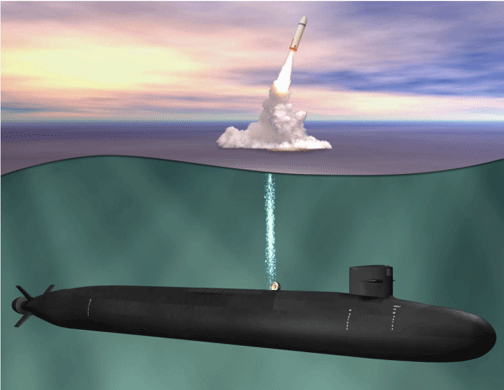 Russia says it launched 2 ballistic missiles in the Arctic Ocean as part of combat training By Amir Vera, CNN August 25, 2019 Russia launched two ballistic missiles from nuclear-powered submarines in the Arctic Ocean and the Barents Sea on Saturday, according to a tweet from the Russian Ministry of Defense.
Contradictory reports from Russia, over the Aug. 8 nuclear incident
|
Russia says nuclear accident during suspected missile engine test released radioactive gas cloud https://www.cbsnews.com/news/russia-nuclear-accident-released-radioactive-gas-cloud-isotopes-government-reveals-today-2019-08-26/ AUGUST 26, 2019 MOSCOW — Russia’s state weather and environment monitoring agency on Monday released new details about a brief spike in radioactivity following a mysterious explosion at the navy’s testing range that has been surrounded by secrecy and fueled fears of increased radiation levels.
Russia’s state weather and environmental monitoring agency Rosgidromet said Monday the brief rise in radiation levels was caused by a cloud of radioactive gases containing isotopes of barium, strontium and lanthanum that drifted across the area. The agency said its monitoring has found no trace of radiation in air or ground samples since Aug. 8. It has previously said that the peak radiation reading in Severodvinsk on Aug. 8 briefly reached 1.78 microsieverts per hour in just one neighborhood — about 16 times the average. Readings in other parts of Severodvinsk varied between 0.45 and 1.33 microsieverts for a couple of hours before returning to normal. The authorities said those readings didn’t pose any danger, and the recorded levels were indeed several times less than what a passenger is exposed to on a long-haul flight. Still, contradictory statements from the authorities and their reluctance to reveal details of the explosion have drawn comparisons to the Soviet cover-up of the 1986 explosion and fire at the Chernobyl nuclear power plant, the world’s worst nuclear disaster. The Defense Ministry denied any radiation leak even as the local administration in Severodvinsk reported a hike in radiation levels and told residents to stay indoors — a move that prompted frightened residents to buy iodine, which can help reduce risks from exposure to radiation. Russian media reported that the victims of the explosion received high doses of radiation. They said that medical workers at the Arkhangelsk city hospital that treated three of those injured said they hadn’t been warned that they would treat people exposed to radiation and lacked elementary protective gear. The Moscow Times on Monday cited Igor Semin, a cardiovascular surgeon at the hospital, who scathingly criticized the authorities in a social network post for failing to warn the hospital workers about the deadly risks. “They were abandoned and left to fend for themselves,” the newspaper quoted Semin as saying. Asked about the doctor’s statement, Kremlin spokesman Dmitry Peskov said that the authorities will look into the matter. Officials have said the explosion in Nyonoksa occurred during tests of a “nuclear isotope power source” of a rocket engine — a cryptic description that made many observers conclude that the test involved one of Russia’s most secretive weapons — the prospective Burevestnik (Storm Petrel) nuclear-powered cruise missile which was code-named “Skyfall” by NATO. U.S. President Donald Trump has thrown his weight behind that theory, saying the U.S. learned much from the failed test. |
|
Donald Trump’s idea – use nuclear bombs to stop hurricanes from hitting the United States
 https://amp.axios.com/trump-nuclear-bombs-hurricanes-97231f38-2394-4120-a3fa-8c9cf0e3f51c.html
Jonathan Swan, Margaret Talev, 26 Aug 19, President Trump has suggested multiple times to senior Homeland Security and national security officials that they explore using nuclear bombs to stop hurricanes from hitting the United States, according to sources who have heard the president’s private remarks and been briefed on a National Security Council memorandum that recorded those comments.
Behind the scenes: During one hurricane briefing at the White House, Trump said, “I got it. I got it. Why don’t we nuke them?” according to one source who was there. “They start forming off the coast of Africa, as they’re moving across the Atlantic, we drop a bomb inside the eye of the hurricane and it disrupts it. Why can’t we do that?” the source added, paraphrasing the president’s remarks.
Asked how the briefer reacted, the source recalled he said something to the effect of, “Sir, we’ll look into that.”
Trump replied by asking incredulously how many hurricanes the U.S. could handle and reiterating his suggestion that the government intervene before they make landfall.
The briefer “was knocked back on his heels,” the source in the room added. “You could hear a gnat fart in that meeting. People were astonished. After the meeting ended, we thought, ‘What the f—? What do we do with this?'”
Trump also raised the idea in another conversation with a senior administration official. A 2017 NSC memo describes that second conversation, in which Trump asked whether the administration should bomb hurricanes to stop them from hitting the homeland. A source briefed on the NSC memo said it does not contain the word “nuclear”; it just says the president talked about bombing hurricanes.
The source added that this NSC memo captured “multiple topics, not just hurricanes. … It wasn’t that somebody was so terrified of the bombing idea that they wrote it down. They just captured the president’s comments.”
The sources said that Trump’s “bomb the hurricanes” idea — which he floated early in the first year and a bit of his presidency before John Bolton took over as national security adviser — went nowhere and never entered a formal policy process.
White House response: A senior administration official said, “We don’t comment on private discussions that the president may or may not have had with his national security team.”
A different senior administration official, who has been briefed on the president’s hurricane bombing suggestion, defended Trump’s idea and said it was no cause for alarm. “His goal — to keep a catastrophic hurricane from hitting the mainland — is not bad,” the official said. “His objective is not bad.”
“What people near the president do is they say ‘I love a president who asks questions like that, who’s willing to ask tough questions.’ … It takes strong people to respond to him in the right way when stuff like this comes up. For me, alarm bells weren’t going off when I heard about it, but I did think somebody is going to use this to feed into ‘the president is crazy’ narrative.”
Trump called this story “ridiculous” in a Monday tweet from the G7 summit. He added, “I never said this. Just more FAKE NEWS!”
The big picture: Trump didn’t invent this idea. The notion that detonating a nuclear bomb over the eye of a hurricane could be used to counteract convection currents dates to the Eisenhower era, when it was floated by a government scientist.
The idea keeps resurfacing in the public even though scientists agree it won’t work. The myth has been so persistent that the National Oceanic and Atmospheric Administration, the U.S. government agency that predicts changes in weather and the oceans, published an online fact sheet for the public under the heading “Tropical Cyclone Myths Page.”
The page states: “Apart from the fact that this might not even alter the storm, this approach neglects the problem that the released radioactive fallout would fairly quickly move with the tradewinds to affect land areas and cause devastating environmental problems. Needless to say, this is not a good idea.”
About 3 weeks after Trump’s 2016 election, National Geographic published an article titled, “Nuking Hurricanes: The Surprising History of a Really Bad Idea.” It found, among other problems, that:
Dropping a nuclear bomb into a hurricane would be banned under the terms of the Peaceful Nuclear Explosions Treaty between the U.S. and the former Soviet Union. So that could stave off any experiments, as long as the U.S. observes the terms of the treaty.
Atlantic hurricane season runs until Nov. 30.
Long history of misguided suggestions to nuclear bomb hurricanes

|
The idea has evidently surfaced multiple times in the administration, as Swan outlined, including during a hurricane preparedness briefings at the White House. “I got it. I got it. Why don’t we nuke them?” the president evidently interrupted, according to Swan’s source. “They start forming off the coast of Africa, as they’re moving across the Atlantic, we drop a bomb inside the eye of the hurricane and it disrupts it. Why can’t we do that?” Even in a White House system engineered to respond quickly and authoritatively to a president’s whims, questions, or orders, no one knew what to do with an idea so obviously batty. As one source reportedly told Swan, “You could hear a gnat fart in that meeting. People were astonished. After the meeting ended, we thought, ‘What the f—? What do we do with this?’” (Trump denied the reports in a tweet Monday.) The truth, though, is that Donald Trump’s apparent brainstorm—as terrible an idea as it is—actually has a long history. Seventy years ago, it was at the forefront of American scientific thought. What makes Trump’s embrace of nuking hurricanes unique is that, broadly speaking, no policymaker has seriously considered it a good idea since the days that the 73-year-old president was wearing diapers. The bombing of Hiroshima and Nagasaki—when the US unleashed a destructive technology more powerful than anything in history—at first spurred unbridled excitement over the power of the atom…… Engineers dreamed of the day when nuclear engines would replace gasoline-powered automobiles, when a lump of Uranium-235 the size of a vitamin pill would power the family car for years at a time. In those heady early years of the atomic age, many scientists imagined a world where humans could routinely use nuclear weapons to cleave the earth and remake its climate. Decades before climate change became a major concern, one book, Almighty Atom: The Real Story of Atomic Energy, suggested using atomic weapons to melt the polar ice caps, gifting “the entire world a moister, warmer climate.” Thought experiments exploded over how harnessing the power of the atom would finally unleash humans’ ability to control and reshape their environment through geo-engineering. “For the first time in the history of the world, man will have at his disposal energy in amounts sufficient to cope with the forces of Mother Nature,” ……. One of the first tourist attractions in Las Vegas was the chance to wake up early, stand outside your hotel, and watch the flash and mushroom cloud from the bombs rolling into the sky. The after-effects of radiation—the invisible and inescapable poison spread by nuclear explosions—became clear soon enough. With that awareness, early atomic enthusiasm waned, particularly as bombs leapt from nuclear to thermonuclear, the atomic bomb’s power of kilotons—that is, a thousand tons of TNT—growing to the hydrogen bomb’s megatons, the equivalent of a million tons of TNT….. nuking hurricanes entered the conversation. According to International Spy Museum historian Vince Houghton, whose book Nuking the Moon details wacky military and intelligence schemes, an American meteorologist named Jack Reed, one of the nation’s earliest hurricane hunters, appears to be the first to seriously consider bombing a hurricane. His calculations held that maybe one or two 20-megaton bombs might be able to deflect a hurricane from land. He called for a test of the theory, but found it embraced by precisely zero policymakers …. Reed’s idea would actually now be prohibited under international law by the Peaceful Nuclear Explosions Treaty. Yet the appeal of nuking hurricanes has never really gone away. The issue is such a MacGuffin that NOAA has dedicated a webpage to debunking it: “During each hurricane season, there always appear suggestions that one should simply use nuclear weapons to try and destroy the storms,” the weather service writes. “Apart from the fact that this might not even alter the storm, this approach neglects the problem that the released radioactive fallout would fairly quickly move with the tradewinds to affect land areas and cause devastating environmental problems. Needless to say, this is not a good idea.” The idea has enough staying power that the meteorologists at NOAA even took on the underlying science, pointing out that there’s little evidence that even a successfully placed atomic bomb would do anything to alter a hurricane’s formation —the systems are simply too large, too strong, and most of all, a nuclear explosion wouldn’t affect the underlying dynamics, …… Even for Donald Trump, launching 80 nukes a year seems extreme https://www.wired.com/story/nuking-hurricanes-polar-ice-caps-climate-change/ |
|
1 This Month
19 November – Webinar – The Reality of Reprocessing
Time: 11:00 AM Pacific Time (US & Canada) / 2:00 PM Eastern / 7:00 PM UK / 8:00 PM CET
Register for the Zoom Event Here

Tell Congress: Prevent Nuclear Catastrophe in Iran

Tell Congress: Prevent Nuclear Catastrophe in Iran

Read the Public Inquiry Report, the Commissioners’ report, Surrendering Australia: The AUKUS Deception is available to download for free at aukuspublicinquiry.com. Or just watch the replay of the National Press Club Luncheon.


Shut down the radiation-damaged Heysham nuclear reactors now
To see nuclear-related stories in greater depth and intensity – go to https://nuclearinformation.wordpress.com

Say No to NASA’s Reckless Nuclear Reactor on the Moon
Say No to NASA’s Reckless Nuclear Reactor on the Moon
-
Archives
- November 2026 (190)
- October 2026 (302)
- September 2026 (339)
- August 2026 (330)
- July 2026 (355)
- June 2026 (287)
- May 2026 (306)
- April 2026 (356)
- March 2026 (251)
- February 2026 (267)
- January 2026 (308)
- December 2025 (358)
-
Categories
- 1
- 1 NUCLEAR ISSUES
- business and costs
- climate change
- culture and arts
- ENERGY
- environment
- health
- history
- indigenous issues
- Legal
- marketing of nuclear
- media
- opposition to nuclear
- PERSONAL STORIES
- politics
- politics international
- Religion and ethics
- safety
- secrets,lies and civil liberties
- spinbuster
- technology
- Uranium
- wastes
- weapons and war
- Women
- 2 WORLD
- ACTION
- AFRICA
- Atrocities
- AUSTRALIA
- Christina's notes
- Christina's themes
- culture and arts
- Events
- Fuk 2022
- Fuk 2023
- Fukushima 2017
- Fukushima 2018
- fukushima 2019
- Fukushima 2020
- Fukushima 2021
- general
- global warming
- Humour (God we need it)
- Nuclear
- RARE EARTHS
- Reference
- resources – print
- Resources -audiovicual
- Weekly Newsletter
- World
- World Nuclear
- YouTube
-
RSS
Entries RSS
Comments RSS

