 US-Russia nuclear war would kill 34 million people within hours and is increasingly likely, Princeton study concludes, Independent UK,
Risk of catastrophic conflict has risen ‘dramatically in the past two years’, academics warn
Jon Sharman. 18 Sep 19, More than 90 million people would be killed or injured in a
nuclear war between the US and
Russia if a conventional conflict went too far, according to a new simulation created by researchers.
Such a scenario has become “dramatically” more plausible in the last two years because the two countries have dropped support for arms-control measures, according to a team from Princeton University.
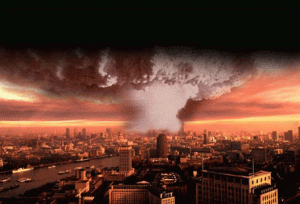
The simulation, the result of a study at Princeton‘s Science and Global Security programme (SGS), suggests 34 million people would be killed and 57 million injured in the first hours of an all-out nuclear conflagration – not counting those left ill by fallout and other long-term problems.
In the animation, electronic trails of ballistic missiles arc across the screen, before blossoming into a carpet of white discs.
Worldwide destruction would include the nuclear incineration of Europe, which the Princeton scientists claimed could be brought about by the escalation of a conventional war between Russia and Nato………. https://www.independent.co.uk/news/world/americas/us-russia-nuclear-war-trump-putin-simulation-europe-nato-a9109116.html
September 19, 2019
Posted by Christina Macpherson |
Russia, USA, weapons and war |
Leave a comment
U.S. senators urge Trump administration to end nuclear talks with Saudis https://www.reuters.com/article/us-usa-saudi-nuclearpower/us-senators-urge-trump-administration-to-end-nuclear-talks-with-saudis-idUSKBN1W329R, Timothy Gardner WASHINGTON (Reuters) 18 Sept 19, – Two Democratic U.S. senators on Wednesday urged Trump administration officials to halt talks with Saudi Arabia on building nuclear reactors after weekend attacks that halved the country’s oil output and increased instability in the Middle East.
U.S. Energy Secretary Rick Perry told reporters on Tuesday at a nuclear power conference in Vienna the United States would only provide Saudi Arabia with nuclear power technology if it signed an agreement with a U.N. watchdog allowing for intrusive snap inspections.
But Saudi Arabia has resisted agreeing to strict nonproliferation restrictions, known as the gold standard, that would block it from enriching uranium and reprocessing spent fuel, potential pathways to making a nuclear bomb.
Senators Ed Markey and Jeff Merkley, members of the Senate Foreign Relations Committee, wrote to Secretary of State Mike Pompeo and Perry urging the administration to discontinue recent talks with the kingdom about nuclear power development.
The lawmakers have been concerned about Saudi Arabia’s reluctance to agree to the gold standard, after de facto ruler Crown Prince Mohammed bin Salman said last year his country does not want nuclear weapons but will pursue them if its rival Iran develops one.
“Sharing nuclear technology with Saudi Arabia, especially without adequate safeguards, will give Riyadh the tools it needs to turn the Crown Prince’s nuclear weapons vision into reality,” said the letter from Markey and Merkley, a copy of which was seen by Reuters.
The State Department and Energy Department did not immediately comment.
In a Sept. 4 letter to Saudi Arabia’s Energy Minister Khalid al-Falih, who was replaced by Prince Abdulaziz bin Salman on Sunday, Perry said an agreement on nuclear power “must also contain a commitment by the kingdom to forgo any enrichment and reprocessing for the term of the agreement.”
But the letter, a copy of which was obtained by Reuters, did not clarify the length of the “term” the kingdom would have to forgo those practices or whether it covered U.S. origin uranium or uranium from other countries.
A nonproliferation expert said the administration wants to convey the idea it supports the gold standard, but the ambiguity means it remains unclear if it does.
“Why would you even consider helping the kingdom build nuclear reactors after the attack on an energy facility?” said Henry Sokolski, executive director of the Washington-based Nonproliferation Policy Education Center. “What makes you think building another energy facility that’s radioactive is smart?”
Perry has said that if the United States does not work with Saudi Arabia, other suppliers such as China and Russia could help the kingdom develop nuclear power.
But some lawmakers say if China or Russia helped the kingdom develop nuclear power without adequate nonproliferation safeguards Washington has the tools to counter that.
Riyadh plans to issue a multi-billion-dollar tender in 2020 to construct its first two nuclear power reactors, with U.S., Russian, South Korean, Chinese and French firms involved in preliminary talks.
In February, Markey and Senator Marco Rubio, a Republican, joined lawmakers in the House of Representatives in introducing legislation that would increase congressional oversight over any civil nuclear cooperation agreement with Saudi Arabia.
Reporting by Timothy Gardner; Editing by Tom Brown and David Gregorio
September 19, 2019
Posted by Christina Macpherson |
politics, USA |
Leave a comment
Former nuclear site in N.J. set to become key part of new offshore wind farm, NJ.com, By Michael Sol Warren | NJ Advance Media for NJ.com
When the Danish wind developer Orsted won its bid to build a massive wind farm in the ocean off of Atlantic City earlier this year, it immediately faced a new challenge: how to bring that future electricity to land.
Orsted found its solution in a shuttered nuclear power plant.
Last week, the New Jersey Board of Public Utilities approved Orsted’s purchase of interconnection rights at the former Oyster Creek nuclear power plant in Lacey Township from the plant’s owner, Exelon Generation. The purchase means that Oyster Creek could be used as a landing point for the electricity generated by the company’s Ocean Wind project. ……
The Oyster Creek site is appealing because it already has the infrastructure needed to feed power into the regional electric grid.
According to NJBPU documents, Orsted estimated that it would save $25 million by using an existing interconnection point with the grid, like Oyster Creek, instead of building a totally new one…….
Ocean Wind will be capable of producing 1,100 megawatts of electricity once it goes online; that’s enough to power about 500,000 homes. Orsted expects the project to be completed in 2024. The NJBPU gave its blessing to the Ocean Wind project in June. …..https://www.nj.com/news/2019/09/former-nuclear-site-in-nj-set-to-become-key-part-of-new-offshore-wind-farm.html
September 19, 2019
Posted by Christina Macpherson |
renewable, USA |
Leave a comment
Agency considering storing Three Mile Island nuclear debris in Idaho
https://kywnewsradio.radio.com/articles/ap-news/agency-considering-three-mile-island-nuclear-debris-idaho, AP NEWS SEPTEMBER 18, 2019 BOISE, Idaho (AP) — Federal authorities want to store the partially melted core from one of the United States’ worst nuclear power accidents for another 20 years in Idaho.
The U.S. Nuclear Regulatory Commission said Monday it’s considering a request from the U.S. Department of Energy to renew a license to store the radioactive debris from the Three Mile Island nuclear power plant.
The core of a reactor south of Harrisburg, Pennsylvania, partially melted in 1979. The commission says continuing to store the debris at the Energy Department’s 890-square-mile site in eastern Idaho that includes the Idaho National Laboratory will have no significant impact.
The license would be good through 2039, four years past an agreement the Energy Department has with Idaho to remove the high-level radio
September 19, 2019
Posted by Christina Macpherson |
USA, wastes |
Leave a comment
Reed ’21: The Hidden Dangers of Nuclear Energy, Brown Daily Herald , By ANDREW REED
STAFF COLUMNIST, September 6, 2019 “…….. for the last few decades, making reactors safer to operate has been the primary focus of nuclear engineers. In fact, nuclear engineers have said that some of the newest generation of reactors, which will begin production in 2030, will be even walk-away-safe — that is, you could relinquish all control of the reactor, forever, without incident. Inevitably, and even perhaps in my lifetime, the threat of nuclear meltdowns will be a relic of a technologically feeble era. But that’s what scares me.
The increased safety of nuclear reactors threatens to obscure the inherent dangers of their very existence. And as fossil fuels continue their terminal decline toward extinction, countries currently not operating reactors will operate them in the future. As more nuclear material is produced and more reactors come
online the risks of nuclear war or nuclear terrorism only increase.
Reactors require fuel — uranium, but not the kind you can dig out of the ground. Current nuclear reactors require uranium-235 (U-235), an isotope which accounts for 0.7 percent of the uranium you can mine. Reactors generally require between 3-5 percent U-235 in order to sustain a chain reaction. You get to that magic number by separating the U-235 isotope in a process called enrichment. Unfortunately, the processes and materials used to enrich uranium to the reactor-grade threshold are the same as those used to reach the weapons-grade-enrichment threshold — 90 percent,
according to the International Atomic Energy Agency. 5 percent vs. 90 percent may seem like a massive gulf — but, unfortunately, once you’ve gone from 0.7 percent to 5 percent, you’ve already done about three-quarters of the
work. Furthermore, one of the byproducts of producing energy from a nuclear reactor is, in part, plutonium-239, another material that can be used to make a nuclear weapon.
Now you can see the problem — “going green” through nuclear energy can be a wonderfully benign and even altruistic disguise for a weapons program. If you think I’m being overly pessimistic, this was exactly the cover story used when Iran tried to acquire the bomb in
2003, and when North Korea did acquire the bomb in
2006. It’s only a matter of time until another nation successfully turns their nuclear energy program into a weapons program. And as the use of nuclear energy becomes safer and cheaper and its use increasingly ubiquitous, we’re looking at a world where many more countries have, at the very least, capability to manufacture nuclear weapons. And when that happens, the probability of nuclear war increases. The chances of it happening in a given year may be small, but one day our luck is going to run out.
Moreover, as countries increasingly rely on nuclear energy, two other risks begin to materialize — nuclear theft and sabotage. In the late 1980s, the U.S. government seriously considered the possibility of a 9/11-style attack on a nuclear plant — at least seriously enough to ram a jet into a slab of reinforced concrete to simulate an attack on a
nuclear reactor. Thankfully, the jet didn’t penetrate the wall. So, it seems, for the time being, U.S. reactors, which are housed in reinforced concrete containment buildings, are safe from such an
attack. The problem is, these security measures are far from universal — there are many reactors currently in operation that are vulnerable to such an attack. And as nuclear energy becomes safer, at least some countries will probably continue to forgo the expense of such measures since the primary purpose of concrete containment structures is to contain potential leaks rather than prevent potential attacks, and these leaks are much less likely with new technological developments. Even today, should a terrorist decide to fly a plane into an unprotected nuclear reactor, the consequences could be Chernobyl-esque.
Finally, as more and more countries gain access to nuclear materials, the concern for theft grows exponentially. Currently, there’s no good way to recycle nuclear waste, so it must be stored for thousands of years before it is no longer radioactive. The United States alone spends billions of dollars each year protecting its radioactive materials from theft. But with all the capital we have spent on nuclear security, there have been numerous cases of security lapses and even theft in the past few decades — including one
last year. In an instance in 2012, a group of Ocean’s Eleven wannabes, led by an 82-year-old nun, descended from the wooded hills surrounding the U.S.’s most secure nuclear complex, cut through a series of three chain-link fences and maneuvered undetected to within 20 feet of the uranium storage building. Lucky for them, the security cameras had been broken for months, and the complex’s new motion detection system had been setting off so many false alarms that the guards just stopped investigating them. Lucky for the rest of us, the intruders’ only desire was to spray paint Bible verses and smear human blood on the walls of the
complex. This is perhaps the most striking example of security breakdown, but there are other, less cinematic instances of actual evildoers getting their hands on actual nuclear material, including an incident in 1995 in which a group of Chechen rebels stole a substantial quantity of caesium-137, wrapped it in conventional explosives and left it in a Moscow park. Fortunately, the bomb did not
detonate.
Keep in mind, the concern here is not necessarily that a terrorist could themselves create a nuclear weapon. Though not impossible, there are considerable engineering challenges to doing so. Rather, the more immediate concern is a terrorist obtaining nuclear material, driving a truck filled with said material and conventional explosives into the middle of Manhattan, and detonating what is referred to as a “dirty bomb.” In doing so, they would disperse radioactive material across the city. A crude bomb of this form would, at the very least, cause extreme psychological chaos.
Many of the problems associated with nuclear technology remain unsolved and seem, for the time being, unsolvable. Technology can all but eliminate the risk of nuclear meltdowns, but the associated risks are intrinsic to the technology itself and only increase with the passage of time. It is up to us to decide if clean energy is worth a fully nuclear planet — if we are willing to trade energy for the chance that a terrorist flies a plane into a reactor or contaminates an entire city with a radioactive bomb. But once this technology spreads, there will be no reigning it in.
September 19, 2019
Posted by Christina Macpherson |
2 WORLD, safety |
Leave a comment

Nuclear power pack: 3 Can’t miss STEM resources on nuclear energy, USA Office of Nuclear Energy SEPTEMBER 17, 2019 “………. DOE recently partnered with the American Nuclear Society and Discovery Education to develop high school and elementary curriculum.
Navigating Nuclear: Energizing Our Free World is packed with FREE K-12 resources to support educators who want to incorporate nuclear into their lesson plans. All activities and lesson plans are Next Generation Science Standard-aligned.
The middle school curriculum is ready for teachers to use. High school and elementary resources are under development and will be rolled out over the next two years, so stay tuned!
The DOE-sponsored curriculum will include new perspectives on computer science, computational thinking and culturally-responsive curriculum……..
Inspiring future generations of leaders, scientists, and engineers is what we’re all about at DOE. Our Nuclear Energy University Program (NEUP) supports students’ passion for nuclear by funding nuclear energy research and infrastructure projects at colleges and universities across the nation. …….. https://www.energy.gov/ne/articles/nuclear-power-pack-3-can-t-miss-stem-resources-nuclear-energy
September 19, 2019
Posted by Christina Macpherson |
Education, USA |
Leave a comment
 Senate panel wants probe into nuclear weapons glitches, Roll Call, John M. Donnelly @johnmdonnelly 18 Sept 19,
Panel is concerned that problems might reflect fundamental oversight shortcomings that have broader implications. The panel is concerned that recent glitches in atomic weapons may have broader implications, and senators want to get to the bottom of the issue. Separately, a congressional aide familiar with the issue said the problems will add hundreds of millions of dollars to the atomic weapons budget.
“The Committee is concerned that a recent technical challenge demonstrates a lack of systems engineering and highlights a lack of coordination and leadership focus, which in turn jeopardizes successful program execution,” the report says.
The document does not mention any particular programs or provide details on the nature of the technical challenges. But experts on nuclear weapons said the panel is almost certainly referring to problems with two new weapons: a bomb called the B61-12 and a modified submarine-launched warhead called the W-88.
In both those programs, problems with commercially manufactured electrical components have caused months of delays, U.S. government officials have publicly acknowledged.
In another sign of intensifying congressional concern over the programs, the House Armed Services Subcommittee on Strategic Forces plans to hold a hearing Sept. 25 on those two programs.
Senate appropriators suggested in their report that they are worried the delays in these programs may reflect fundamental oversight shortcomings and could cause ripple effects in other nuclear initiatives, such as keeping nuclear weapons out of terrorists’ hands, updating warship reactors and modernizing facilities.
The investigation must find causes and solutions, the panel said, and it must “ensure the extent of condition is not more widespread than currently reported.”……….. https://www.rollcall.com/news/congress/senate-panel-wants-probe-nuclear-weapons-glitches
September 19, 2019
Posted by Christina Macpherson |
safety, USA, weapons and war |
Leave a comment
Nuclear Energy in Space: Nonproliferation Risks http://www.spaceref.com/news/viewpr.html?pid=54634, University of Texas-Austin, September 17, 2019
On October 17, experts from NASA, Congress, and reactor companies will gather in the nation’s capital to discuss ongoing development of nuclear reactors for space missions and the potential security risks.
The event is free, but pre-registration is required. For further details, and to register, please see: https://space-nuclear.eventbrite.com.
The program will feature Jeffrey A. Sheehy, NASA’s Chief Engineer in the Space Technology Mission Directorate. The keynote address will be delivered by Rep. Bill Foster (D-IL), the only physicist in Congress and a member of the House Science Committee.
Controversy centers on NASA’s choice of fuel for the reactor it tested in 2018 for use on a planetary surface: weapons-grade, highly enriched uranium. NASA scientists believe such uranium would enable smaller reactors, reducing launch costs. However, critics argue it could undermine decades of U.S. progress in reducing worldwide civilian commerce in this dangerous material, create a precedent that could help rogue countries obtain nuclear weapons, sharply increase security costs, impede NASA’s cost-saving collaboration with commercial partners who lack licenses for such uranium, and potentially disperse nuclear weapons material to adversaries in the event of a launch failure. They say that an alternative reactor fuel – low-enriched uranium, which is unsuitable for nuclear weapons – could reduce the security, economic, and political risks.
Last month, President Trump issued a Presidential Memorandum on the launch of space nuclear systems, which highlighted the security risk: “Due to potential national security considerations associated with nuclear nonproliferation . . . The President’s authorization shall be required for Federal Government launches . . . when such systems utilize any nuclear fuel other than low-enriched uranium.” In June 2019, the U.S. House of Representatives passed an appropriations bill that included an amendment by Rep. Foster, directing NASA to “work towards the development of a low enriched uranium (LEU) space power reactor.”
September 19, 2019
Posted by Christina Macpherson |
safety, space travel, USA, weapons and war |
Leave a comment
 Mersea Island Courier 16th Sept 2019, Native oysters at risk from new nuclear build. Graham Farley of Mersea Island Environmental Alliance (MIEA) shares why marine life in the
Blackwater Estuary will be at risk if the Bradwell B nuclear new-build goes
ahead.
CHINA General Nuclear Power Group (CGN) and EDF Energy are currently
circulating updates on the proposed Bradwell new-build nuclear project. In
their article they say that members of the public have a chance to win a
photographic competition or even submit their happy memories associated
with the original Bradwell Magnox Station!
My memories of the Bradwell Magnox station include: radioactive leaks, record fines, more leaks and attempts to cover up a catalogue of failures including the failed FED
dumping of radioactive waste in our estuary.
Unsurprisingly, there are no mentions of climate change and environmental protection in their
literature. It was assumed that with the decreasing cost of green energy,
spiralling costs of new nuclear projects and collapse of other UK proposed
nuclear builds that Bradwell would be shelved.
However, this isn’t so, as we have a copy of a Marine Licence application from July this year to
survey the estuary, which confirms that the project is still moving
forward. This document confirms the power station “will likely operate
with cooling water abstracted from the Blackwater Estuary”.
The case I’m making to stop the nuclear new build at Bradwell is environmental:
the Blackwater Estuary is one of the most important wildlife habitats in
the country, therefore safeguarding and preserving this habitat for future
generations is a priority! We must protect of the delicate ecology of the
mud flats, salt marsh and the shallow estuary with its many international
environmental protections and UK Marine Conservation Zone (MCZ) status.
https://www.facebook.com/MerseaIslandCourierNews/?__tn__=%2Cd%2CP-R&eid=ARCXSjfi2E_C6CL5eAX4Wa1zR6M4NHF98IQvB60PU0ALVpvfuFzC7Kyd1J8fQ6a4UpvR19lHEu5jwshV
September 19, 2019
Posted by Christina Macpherson |
environment, UK |
Leave a comment
NFLA 16th Sept 2019, The Nuclear Free Local Authorities (NFLA) publishes today its response to
the UK Government consultation on the Revenue Asset Base (RAB) financial
model being proposed to assist the funding of new nuclear reactors.
NFLA see this new model as a real risk to the public purse, providing
preferential treatment to new nuclear over renewable energy investment, is
overly complicated to implement at a time when the ‘climate emergency’
calls for more straightforward and realisable schemes like energy
efficiency and decentralised energy solutions instead.
http://www.nuclearpolicy.info/news/nfla-view-governments-proposed-funding-new-nuclear-reactors-moving-risks-taxpayer/
September 19, 2019
Posted by Christina Macpherson |
business and costs, politics, UK |
Leave a comment
 From space, you can clearly see the human impact on the Amazon, ABC News, 19 Sep 19, [excellent pictures] , By Michael Slezak and Mark Doman As thick plumes of smoke blanketed Brazil’s most populous city Sao Paulo, global attention turned to the cause.
The Amazon, the world’s most biodiverse rainforest, was burning at a rate not seen in almost a decade.
It was decried as a global tragedy. Lit by farmers, the fires raged through villages, destroyed ecosystems and pumped climate-warming pollution into the atmosphere.
The Brazilian government, which has been criticised for winding back protections of the Amazon, sent in the army and slapped a temporary ban on fires used to clear land.
But one month on, the fires are still burning.
It’s a vicious circle as fire after fire, as well as other farming activities, damage surrounding forests making them more prone to future fires.
The cycle has alarmed some scientists who fear the rainforest is being pushed closer toward a tipping point they call the “dieback scenario”, where the forests enter an irreversible cycle of collapse.
“This year it is a correct statement that most of the fires are on previously cleared lands or are deforesting lands immediately adjacent to them,” said Professor Mark Cochrane, an expert in Amazon deforestation from the University of Maryland Center for Environmental Science.
That’s the case most years, since fires are lit by farmers and usually can only spread through disturbed forest. An exception is during severe droughts, when fires can spread through less disturbed forest, Professor Cochrane said.
But he said this year was “exceptional in recent memory” because of the proportion of the ongoing fires were being used for deforestation, rather than merely for the maintenance of previously deforested areas.
The latest data shows a dramatic uptick in land clearing in July and August, just as the fires took hold. …….. https://www.abc.net.au/news/2019-09-19/satellite-images-of-amazon-reveals-human-impact-of-fires/11478580
September 19, 2019
Posted by Christina Macpherson |
climate change, SOUTH AMERICA |
Leave a comment
The Emperor’s New-Old Nuclear Clothes, Common Dreams , Helena Cobban September 18, 2019, by The Lobe Log,
Israel wants to keep leaders in Washington distracted and always a little off-balance, so they will end up without the bandwidth and the stamina needed to confront Israel over the continuation of colonial expansion in the lands occupied in 1967.byHelena Cobban
How is it still possible to write a lengthy article about the military/strategic dynamic among the triad of Israel, Iran, and the United States while making zero mention of Israel’s robust nuclear-weapons capability? New York Times staffers Ronen Bergman and Mark Mazzetti, and their editors at the Times magazine clearly think this is quite okay. In their recent lengthy article, “The Secret History of the Push to Strike Iran,” Bergman and Mazzetti looked at the U.S.-Israeli coalitional aspect of the past 17 years in the project to prepare for launching military or special-ops actions against Iran. They followed in the long tradition within the big corporate media of deliberately ignoring Israel’s nuclear capability, a factor that is central to any understanding of the forces at play in the Middle East and also, crucially, those at play in the U.S.-Israeli relationship.
The authors’ omission of any mention of Israel’s nuclear capabilities—and the ability these capabilities have long given to the country’s leaders to exert strong, continuing nuclear blackmail on Washington—is one serious flaw in their narrative. Another is that they seriously downplay the importance of the fact that Israel’s military is incapable, on its own, of inflicting debilitating damage on Iran’s nuclear program using only “conventional,” that is non-nuclear, weapons. (The two lacunae could perhaps be linked, as we will see below.)
Early in the article, Bergman and Mazzetti set the scene for how they see the strategic dynamic among Israel, Iran, and Washington by citing an analysis provided by Ilan Goldenberg, who was an up-and-coming Pentagon official in the Obama administration………….
A few things about the nuclear dimension of the U.S.-Israel-Iran triangle have been clear to me for a long time. One is that the longstanding refusal of most members of the U.S. political elite (officials, legislators, think-tankers, corporate media, and so on) to even mention the fact of Israel’s own nuclear-weapons capabilities and to take full account of them in public discussions of strategic matters in the Middle East is extremely harmful. Among the harms inflicted by that refusal (and by the general political clout that Israel wields in Washington) is that Israel’s longstanding ability to wield a form of nuclear blackmail against Washington—as I have written about for more than 30 years now—is never mentioned. Nor is the fact that, while Iran has been a full member of the NPT and has submitted to a full range of inspections of its nuclear research facilities for many decades now, Israel is not a member and has never been subjected to any such inspections.
(Another thing that is almost never mentioned is that all journalists based in Israel—as Bergman is—are subject to the country’s rigorous censorship system. This censorship is particularly strict regarding all military issues.)
………… so long as Iran does not break out of the NPT, Israel can quietly, behind the veil of its longstanding policy of “nuclear ambiguity”, continue to exert a form of “extreme-case” nuclear deterrence against Iran. (And to use the threat of a potential unveiling as a potent means of leverage against decision-makers in Washington.)
So why, then, do we have all the continual hullabaloo and endless navel-scratching in the Western corporate media (and the Western political system, more broadly) about the possibility—not yet anywhere close to a fact, but a possibility, some time in the future—that Iran may start to build a nuclear-weapons capability?
My conclusion is that a good part of this navel-scratching is a deliberate tactic of diversion: a way for the decision-makers in Israel and their supporters to keep leaders in Washington and elsewhere distracted and always a little off-balance, so they will end up without the bandwidth and the stamina needed confront Israel over the continuation of its project of colonial expansion in the lands occupied in 1967.
That colonial project in the West Bank (including East Jerusalem) and in Golan is what all Israeli leaders since 2001 have cared about most deeply. And they all knew that one great way to head off any efforts a U.S. president might make to challenge the project was to raise a hubbub about Iran’s alleged pursuit of nuclear weapons.
“Why do you keep talking to us about human rights or international law issues in the Palestinian territories?” was the essential message such efforts sent to decision-makers in Washington. “Stop worrying about those. We will handle them as we see fit, and you should butt out. But meantime, keep looking at all those shiny objects over there in the Iranian nuclear program! And by the way, keep your aid money flowing to our military. Otherwise, just imagine what havoc we could create for you in the Gulf…”
September 19, 2019
Posted by Christina Macpherson |
Israel, politics international, weapons and war |
Leave a comment
 Nuclear tourism experience in Bandung to be launched in October https://www.thejakartapost.com/travel/2019/09/18/nuclear-tourism-experience-in-bandung-to-be-launched-in-october.html, THE JAKARTA POST, Jakarta / Wed, September 18, 2019
The National Nuclear Energy Agency (Batan) is set to launch a nuclear tourism experience on Oct. 30, aiming to introduce nuclear technology to the public.
“We will have an open house to present the results of our research and development team from 2015 to 2019,” said Jupiter Sitorus Pane, head of the Science and Applied Nuclear Technology Center of Batan in Bandung on Wednesday to Antara news agency.
Jupiter said travelers can visit a number of places related to Batan in Bandung, such as reactors, isotopes production lab, the reactor conversion lab and Applied Nuclear Technology Center.
“Our target market is students and those interested in nuclear sciences. As this is a nuclear facility and considered a vital object, visitors must be at least 18 years old,” he said, adding that the tour will be free of charge.
September 19, 2019
Posted by Christina Macpherson |
Indonesia, marketing |
Leave a comment
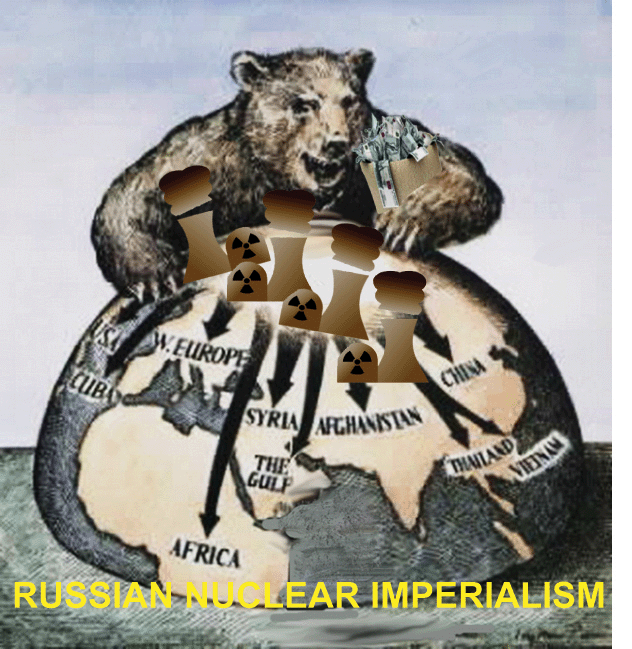
 Uganda says Russia to help it develop nuclear energy, KAMPALA (Reuters) 18 Sept 19, – Uganda said on Wednesday it had signed an Inter-Governmental Agreement (IGA) with Russia to help the East African country build capacity to exploit nuclear technology for energy, medical and other peaceful purposes.The government of President Yoweri Museveni has previously said it is eager to use the country’s uranium deposits to boost energy production capacity.
In May last year Uganda also signed a memorandum of understanding with China National Nuclear Corporation (CNNC) to help Uganda build capacity in the use of atomic energy for peaceful purposes.
In an emailed statement, Uganda’s energy ministry said the IGA with Russia was signed in Vienna on Tuesday between Energy Minister Irene Muloni and Nikolai Spasskiy, the deputy director general of Russian state corporation ROSATOM……….
Reporting by Elias Biryabarema in Kampala; Editing by Matthew Lewis https://www.reuters.com/article/us-uganda-russia/uganda-says-russia-to-help-it-develop-nuclear-energy-idUSKBN1W328N
September 19, 2019
Posted by Christina Macpherson |
AFRICA, marketing, Russia |
Leave a comment
“The ashes of half a dozen unidentified laborers ended up at a Buddhist temple in a town just north of the crippled Fukushima nuclear plant. Some of the dead men had no papers; others left no emergency contacts. Their names could not be confirmed and no family members had been tracked down to claim their remains. They were simply labeled “decontamination troops”
Addressing the issue, Japan’s environmental minister Yoshiaki Harada held a news conference (September 2019). Unfortunately, he proffered the following advice: “The only option will be to drain it into the sea and dilute it.” (Source: Justin McCurry in Tokyo, Fukushima: Japan Will Have to Dump Radioactive Water Into Pacific, Minister Says, The Guardian, Sept. 10, 2019)
“The only option”… Really?
Over the past 8 years, Tokyo Electric Power (TEPCO) has scrambled like a Mad Hatter to construct emergency storage tanks (1,000) to contain upwards of one million tonnes of contaminated radioactive water, you know, the kind of stuff that, over time, destroys human cells, alters DNA, causes cancer, or produces something like the horrific disfigured creature in John Carpenter’s The Thing! That’s the upshot of a triple nuclear meltdown that necessitates constant flow of water to prevent further melting of reactor cores that have been decimated and transfigured into corium or melted blobs. It’s the closest to a full-blown “china syndrome” in all of human history. Whew! Although, the truth is it’ll be a dicey situation for decades to come.
Ever since March 11, 2011, TEPCO has scrambled to build storage tanks to prevent massive amounts of radioactive water from pouring into the ocean (still, some lesser amounts pour into the ocean every day by day). Now the government is floating a trial balloon in public that, once the tanks are full, it’ll be okay to dump the radioactive water into the ocean. Their logic is bizarre, meaning, on the one hand, the meltdown happens, and they build storage tanks to contain the radioactive water, but on the other hand, once the storage tanks run out of space, it’s okay to dump radioactive water into the ocean. Seriously?
Meantime, the Fukushima meltdown brings the world community face to face with TEPCO and the government of Japan in an unprecedented grand experiment that, so far, has failed miserably. Of course, dumping radiation into the Pacific is like dumping radiation into everybody’s back yard. But, for starters, isn’t that a non-starter?
Along the way, deceit breeds duplicity, as the aforementioned Guardian article says the Japanese government claims only one (1) death has been associated with the Fukushima meltdown but keep that number in mind. Reliable sources in Japan claim otherwise, as explained in previous articles on the subject, for example, “Fukushima Darkness, Part Two” d/d November 24, 2017, and as highlighted further on in this article.
When it comes to nuclear accidents, cover-ups reign supreme; you can count on it.
As such, it is believed the Japanese government is lying and should be held accountable for hoodwinking the world about the ravages of Fukushima, especially with the Olympics scheduled for next year.
For example, the following explains how death by radiation is shamefully hidden from the public via newspeak: Fukushima Daiichi Nuclear Power Station worker deaths “that expire at home” are not officially counted. Accordingly, how many workers on a deathbed with radiation sickness leave home to go to work (where deaths are counted) just before they die? Oh, please!
Meanwhile, the last thing the world community needs in the face of an uncontrollable nuclear meltdown, like Fukushima, is deceptiveness and irresponsibility by the host government. Too much is at stake for that kind of childish nonsense. And just to think, the 2020 Olympics are scheduled with events held in Fukushima. Scandalously, the International Olympic Committee (IOC) is A-Okay with that.
In contrast, a Greenpeace International March 8th 2019 article entitled: Japanese Government Misleading UN on Impact of Fukushima Fallout on Children, Decontamination Workers: “The Japanese government is deliberately misleading United Nations human rights bodies and experts over the ongoing nuclear crisis in areas of Fukushima… In areas where some of these decontamination workers are operating, the radiation levels would be considered an emergency if they were inside a nuclear facility.” Enough said!
“In its reporting to the United Nations, the Japanese government deliberately misrepresents the scale, complexity, and radiation risks in areas of Fukushima, the working practice and conditions for workers, and its disregard for children’s health and wellbeing. This reality should shame the government to radically change its failing policies,” said Kazue Suzuki, Energy Campaigner of Greenpeace Japan.
As such, either Greenpeace or the IOC is “dead wrong” about the conditions at Fukushima. Take your pick.
After all, the trend of misrepresentation of nuclear accidents has been established for decades. Not only Fukushima, Chernobyl (1986) is a nuclear disaster zone where the “official death count from radiation exposure” has been considerably discounted by various governmental agencies and NGOs. For inexplicable reasons (actually explicable but a long story), nuclear accidents are given Get Out Jail Free cards by the world’s press and associated governmental orgs and NGOs.
Yet, over time, the truth comes out, and when it does it’s dreadfully atrocious: A BBC special report, The True Toll of the Chernobyl Disaster d/d July 26, 2019 says: “The official, internationally recognized death toll, just 31 people died as an immediate result of Chernobyl while the UN estimates that only 50 deaths can be directly attributed to the disaster.”
That’s the official tally. Ugh! It’s so far off the mark that, if it were a baseball pitch, it’d be in the dirt, and a prime example of the public not getting the truth about the ravages of nuclear power accidents.
Of course, it is important to take note of how “wordsmiths” describe the death numbers, i.e., “died as an immediate result of Chernobyl” can only include someone standing at the site when it happened, leaving out all cases of radiation exposure that kills and cripples over subsequent days, months, and years. Or, in the case of the UN statement, “only 50 deaths can be directly attributed.” Only those standing there when it happened… ahem!
According to the BBC article, the Russian Academy of Sciences said as many as 112,000-125,000 died by 2005. That’s 2,500xs more deaths than the official reports, which also never increase in number over time as radiation takes its merry ole time blasting, destroying, and/or altering human cell structure. Ukrainian authorities claim death rates of Chernobyl cleanup workers rose from 3.5 to 17.5 deaths per 1,000 between 1988 and 2012 on a database of 651,453 cleanup workers, which equates to 11,392 deaths. Additionally, Belarus had 99,693 cleanup workers, equating to 1,732 deaths. Not only that, disability among workers shows that approximately 5% are still healthy in 2012 (only 5%, meaning 95% unhealthy) with commonality of cardiovascular and circulatory diseases and nervous system problems.
By 2008 in Belarus alone 40,049 liquidators or cleanup workers of Chernobyl were registered with cancer.
Viktor Sushko, deputy director general of the National Research Centre for Radiation Medicine (NRCRM) based in Kiev, Ukraine, describes the Chernobyl disaster as: “The largest anthropogenic disaster in the history of humankind,” Ibid.
Thus begging the most obvious of questions re Fukushima victims in the years ahead; how many cases of cancer, and how many will die? Unfortunately, radioactive isotopes don’t stop once they’re activated in a nuclear meltdown. They’re pernicious over time destroying and/or grotesquely altering human cell structure. For proof, visit second-generation Chernobyl children locked up in orphanages in Belarus.
“As of January 2018, 1.8 million people in Ukraine, including 377,589 children, carried status of victims of the disaster, according to Sushko and his colleagues. Not only that, there has been a rapid increase in the number of people with disabilities, rising from 40,106 in 1995 to 107,115 in 2018,” Ibid.
According to a USA Today article – Chernobyl’s Legacy: Kids With Bodies Ravaged by Disaster, April 17, 2016: “There are 2,397,863 people registered with Ukraine’s health ministry to receive ongoing Chernobyl-related health care. Of these, 453,391 are children — none born at the time of the accident. Their parents were children in 1986. These children have a range of illnesses: respiratory, digestive, musculoskeletal, eye diseases, blood diseases, cancer, congenital malformations, genetic abnormalities, trauma.” Many of the children are hidden away deep in the forested countryside in orphanages in Belarus.
Back to Fukushima, there are numerous instances of governmental meddling to hide the truth, starting with passage of the 2013 government secrecy act, The State Secrecy Law, aka: Act on the Protection of Specially Designated Secrets (SDS), Act No. 108, which says that civil servants or others who “leak secrets” will face up to 10 years in prison, and those who “instigate leaks,” especially journalists, will be subject to a prison term of up to 5 years. Subsequently, Japan fell below Serbia and Botswana in the Reporters Without Borders 2014 World Press Freedom Index.
Horrifically, at the end of the day, when nuclear goes bad, it takes everyone along on a daunting trip for years and years and more years, outliving life spans but continuing generation after generation, like the 453,391 Chernobyl-radiated-influence children born after the nuclear blowout in 1986. Chernobyl altered their genes before they were born…. Imagine that!
Cliodhna Russell visited children’s orphanages in Belarus in 2014: “Children rocking back and forth for hours on end, hitting their heads against walls, grinding their teeth, scraping their faces and putting their hands down their throats.” (Source: How My Trip to a Children’s Mental Asylum in Belarus Made Me Proud to be Irish, the journal.ie, March 18, 2014.)
Postscript: “It’s a real shame that the authorities hide the truth from the whole world, from the UN. We need to admit that actually many people are dying. We are not allowed to say that, but TEPCO employees also are dying. But they keep mum about it,” Katsutaka Idogawa, former mayor of Futaba (Fukushima Prefecture) Fukushima Disaster: Tokyo Hides Truth as Children Die, Become Ill from Radiation – Ex-Mayor, RT News, April 21, 2014)
Post-Postscript: “The ashes of half a dozen unidentified laborers ended up at a Buddhist temple in a town just north of the crippled Fukushima nuclear plant. Some of the dead men had no papers; others left no emergency contacts. Their names could not be confirmed and no family members had been tracked down to claim their remains. They were simply labeled “decontamination troops” — unknown soldiers in Japan’s massive cleanup campaign to make Fukushima livable again five years after radiation poisoned the fertile countryside,” (Source: Mari Yamaguchi, Fukushima ‘Decontamination Troops’ Often Exploited, Shunned, AP & ABC News, Minamisona, Japan, March 10, 2016)
September 17, 2019
Posted by Christina Macpherson |
Japan, Reference, secrets,lies and civil liberties, spinbuster |
1 Comment