It’s time to reset US nuclear waste policy
 Life after Yucca Mountain: The time has come to reset US nuclear waste policy, The Hill, BY DAVID KLAUS AND ROD EWING, 12/09/19 After decades of inaction and stalemate, there are small but significant signs that the U.S. government may finally be ready to meet its legal commitment to manage and dispose of the more than 80,000 metric tons of used nuclear fuel at 74 operating and shut-down commercial nuclear reactors sites in 35 states across the country. The signs of progress include:
While the debate over the fate of Yucca Mountain is primarily responsible for the current standoff, pressure for action is increasing at the local level where closed plants and what to do with the spent fuel stored on site has become a particularly hot political issue. Seven U.S. reactors were permanently closed from 2013 through 2018 and an additional 13 are set to close by 2025. There are now 21 “stranded sites” scattered across the country – closed reactor sites with no ongoing reactor operations. Moreover, the number of plant closures is expected to increase as plants age and state regulators refuse to adopt rate structures that value the type of base load power provided by nuclear reactors.
There also is pressure for action at the national level. The failure of the U.S. government to take ownership of the spent fuel has cost the taxpayers $7.4 billion in damages paid to utilities for continued storage at their reactor sites — and costs are projected to increase as more reactors close. With government payments to utilities already running some $600 million per year, the government estimates the total cost may ultimately be as high as $34 billion. Industry estimates are in the range of $50 billion……
Perhaps most significant obstacle is the dysfunction in our current political system. In normal times, political compromise to address the most significant current problem – the growing amounts of spent fuel at closed reactor sites around the country – should be in reach. It is time to reset U.S. policy and accept that the Yucca Mountain site is not going to be licensed and built. Legislators working in good faith should be able to resolve the funding issue, develop a fair, consent-based process for selecting a site for a long-term spent fuel repository and amend federal law to no longer hold the development of a consolidated interim storage facility hostage to that process. David Klaus formerly served, among other positions, as Deputy Under Secretary at the U.S. Department of Energy and Counsel to the Energy and Commerce Committee of the U.S. House of Representatives. He is an Affiliate of the Center for International Security and Cooperation at Stanford University. Professor Rod Ewing is the co-director of the Center for International Security and Cooperation at Stanford University and led a recent initiative – Reset of America’s Nuclear Waste Management Strategy and Policy. https://thehill.com/blogs/congress-blog/energy-environment/473627-life-after-yucca-mountain-the-time-has-come-to-reset#.Xe6gyaz6YH4.twitter
|
|
|
Israel’s Foreign Minister Israel Katz suggests bombing Iran to stop its nuclear program
 FM: Bombing Iran to stop its nuclear program remains ‘an option’ Speaking with Italian media on the sidelines of a foreign policy conference in Rome, Israel Katz rebukes European leaders for not taking a more aggressive stand against Tehran. Iranian FM accuses Israel of testing nuclear missile aimed at his country. Israel Hayom 12-08-2019 The option to launch a preemptive strike against Iran to prevent it from developing a nuclear weapon remains viable, Foreign Minister Israel Katz said in an interview Saturday. Speaking with Italian-language daily Corriere della Sera, Katz – asked whether Israel was mulling military options vis-à-vis the Islamic republic – said, “Yes, it is an option. We will not allow Iran to produce or obtain nuclear weapons. If it were the last possible way to stop this, we would act militarily.” The comments were reportedly made on the sidelines of a foreign policy conference in Rome. They came just hours after Iran announced its ready to unveil a “new generation” of nuclear-related “products,” including new centrifuge systems and a heavy water power plant scheduled to be built by the spring of 2020. Katz further admonished European leaders for not taking a more aggressive stand against Iran over its repeated, escalating violations of the 2015 nuclear deal…… On Friday, Iran’s Foreign Minister Mohammed Javad Zarif accused Israel of holding “a nuclear missile test aimed at Iran.” “Israel today tested a nuke-missile, aimed at Iran,” Zarif said on Twitter, adding that the United States, Germany, France and the United Kingdom “never complain about the only nuclear arsenal in West Asia – armed with missiles actually DESIGNED to be capable of carrying nukes – but has fits of apoplexy over our conventional & defensive ones.” The Israeli defense establishment successfully tested a rocket propulsion system on Friday. Defense officials stressed that the test was planned in advance and carried out as planned. https://www.israelhayom.com/2019/12/08/fm-bombing-iran-to-stop-its-nuclear-program-remains-an-option/ |
|
Floating small nuclear reactors bring serious risks
nuclear experts have highlighted crucial negatives that cast doubt on the floating nuclear utopia.Jan Haverkamp, Greenpeace Netherlands senior expert nuclear energy and energy policy, sees the three main disadvantages of Akademin Lomonosov to be the big human factors risk, its problematic construction, and the pollution of the Arctic region with nuclear waste.
this project is reintroducing a major pollution risk in an area which functions as a climate regulator for the globe – “the Arctic pristine area, which is a very important natural area for the entire balance on the planet,”
Is floating nuclear power a good idea? Power Technology By Yoana Cholteeva, 9 Dec 19, Floating nuclear power promises to provide a steady source of energy at hard-to-reach locations, but at the same time the dangers inherent in nuclear power make some question whether it’s safe enough for areas where help is hard to find. Is floating nuclear power really a good idea? Yoana Cholteeva investigates.
Russian nuclear company Rosatom announced the arrival of the world’s first floating nuclear power plant, Akademik Lomonosov, in September 2019 when the technology was transported to the port of its permanent location in Russia’s Far East. The 144m-long and 30m-wide vessel has now docked at the port in Pevek, off the coast of Chukotka, where it will stay before its commissioning next year.
Akademik Lomonosov will use small modular reactor technology and is equipped with two KLT-40C reactor systems with 35MW capacity each. It has been designed to access hard-to-reach areas where it can operate for three to five years without the need for refuelling. It also has an overall life cycle of 40 years, which may be extended to 50 years Continue reading
Pentagon to get more control over the news? Is this a GOOD idea?
 The Pentagon Wants More Control Over the News. What Could Go Wrong?The Pentagon is using a moral panic over “fake news” to gain influence over the domestic news landscape, Rolling Stone By MATT TAIBBI 9 Dec 19, If there’s a worse idea than the Pentagon becoming Editor-in-Chief of America, I can’t remember it. But we’re getting there:
From Bloomberg over Labor Day weekend: Fake news and social media posts are such a threat to U.S. security that the Defense Department is launching a project to repel “large-scale, automated disinformation attacks,” as the top Republican in Congress blocks efforts to protect the integrity of elections. One of the Pentagon’s most secretive agencies, the Defense Advanced Research Projects Agency (DARPA), is developing “custom software that can unearth fakes hidden among more than 500,000 stories, photos, video and audio clips.” Once upon a time, when progressives still reflexively distrusted the military, DARPA was a liberal punchline, known for helping invent the Internet but also for developing lunatic privacy-invading projects like LifeLog, a program to “gather in a single place just about everything an individual says, sees, or does.” DARPA now is developing a semantic analysis program called “SemaFor” and an image analysis program called “MediFor,” ostensibly designed to prevent the use of fake images or text. The idea would be to develop these technologies to help private Internet providers sift through content. ….. Stories about the need for such technologies are always couched as responses to the “fake news” problem. Unfortunately, “fake news” is a poorly-defined, amorphous concept that the public has been trained to fear without really understanding. ……. Fake news has a long history in America. Its most pernicious incarnation is never the work of small-time scam artists. The worst “fake news” almost always involves broad-scale deceptions foisted on the public by official (and often unnamed) sources, in conjunction with oligopolistic media companies, usually in service of rallying the public behind a dubious policy objective like a war or authoritarian crackdown. From the sinking of the Maine in 1898, to rumors of a union-led socialist insurrection before the Palmer raids in 1919, to the Missile Gap in the late fifties and early sixties (here is the CIA’s own website admitting that one was “erroneous”), to the Gulf of Tonkin lie that launched the Vietnam War, to the more recent WMD fiasco, true “fake news” is a concerted, organized, institutional phenomenon that involves deceptions cooked up at the highest levels. …… the final, omnipresent ingredient in most major propaganda campaigns is the authoritarian solution. Here, it’s unelected, unsupervised algorithmic control over media. We’ve never had a true news regulator in this country, yet the public is being conditioned now to accept one, without thinking of the consequences. The most enormous issue posed by the modern media landscape is the industry’s incredible concentration, which allows a handful of private platforms – Facebook, Twitter, Google – to dominate media distribution. This makes it possible to envisage direct levers of control over the public’s media habits that never existed back when people got much of their news from local paper chains with individual distribution networks. We’ve already seen scary examples of misidentified foreign subversion, from the Washington Post’s repeat editorials denouncing Bernie Sanders as a useful idiot for the Kremlin to the zapping of hundreds of domestic political sites as “coordinated inauthentic behavior.” What if the same people who can’t tell the difference between Truthdig and Pravda get to help design the new fake news algorithms? That’s a much bigger worry than the next Paul Horner or even, frankly, the next Russian Facebook campaign. While Donald Trump is in the White House, progressives won’t grasp how scary all of this is, but bet on it: In a few years, we’ll all wish we paid more attention when the Pentagon announced it wanted in on the news regulation business. https://www.rollingstone.com/politics/political-commentary/darpa-fake-news-internet-censorship-879671/ |
|
Ontario’s First Nations to vote on nuclear waste plan near Lake Huron
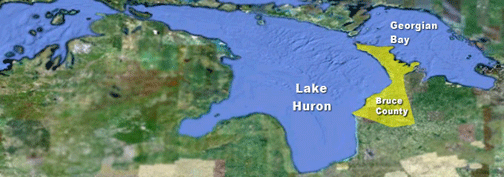
|
First Nation vote on nuclear waste DGR set for Jan. 31 https://london.ctvnews.ca/first-nation-vote-on-nuclear-waste-dgr-set-for-jan-31-1.4718866 Scott MillerVideographer @ScottMillerCTV Contact
Friday, December 6, 2019 WINGHAM, ONT. — The Saugeen Ojibway Nation (SON) will decide if nuclear waste is buried along the shores of Lake Huron in a little over a month.The First Nation band of approximately 5,000 will hold a binding vote on Jan. 31, 2020 to find out if their members want Ontario Power Generation (OPG) to bury 230,000 cubic metres of low- and intermediate-level nuclear waste under part of the Bruce Power site near Kincardine, or not.
Officials say whatever the people decide, that will be the band’s position on the proposed Deep Geological Repository (DGR). If they vote yes, OPG would still require federal government approval to move forward with the project. If SON votes no, OPG says they’ll start looking for an alternative site in Ontario. There are over 200 resolutions opposing the project, from municipal councils within the Great Lakes Basin, in Canada and the United States. Councils in nearby Bruce County have declared their support for the project. |
|
To store Canada’s nuclear wastes close to Lake Huron – the worst of the worst
|
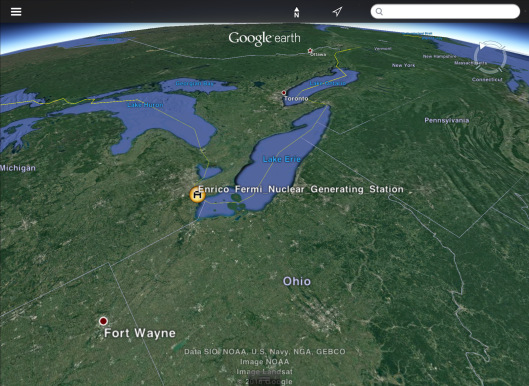
Site near Lake Huron one of two finalists to store Canada’s nuclear waste, Herald Mail Media, By Keith Matheny Detroit Free Press (TNS), Dec 8, 2019
Canada has narrowed to two communities its list of potential hosts for a permanent national repository for its most radioactive waste — spent fuel from nuclear power generation. And one of those two finalists is on the shores of Lake Huron. If chosen, Huron-Kinloss/South Bruce, in Bruce County, Ontario, could host a large repository, 1,650 feet or more underground, to which the entire nation’s spent nuclear fuel supply would be transported and stored, essentially forever. “This is the worst of the worst” waste, said Kevin Kamps, radioactive waste specialist with the nonprofit Beyond Nuclear, based in Tacoma Park, Md. “It’s highly radioactive irradiated nuclear fuel. It is dangerous forever.”……
Canada has an inventory of almost 2.9 million used nuclear fuel bundles currently stored above-ground in wet pools and dry containers at the nuclear plant sites where the waste is generated. That’s about 128 million pounds of highly radioactive material, a number that is growing. The site along Lake Huron is in the same county where another underground storage facility — this one for low-to-intermediate-level radioactive waste from Ontario’s 19 nuclear reactors — was proposed. That plan, still under consideration, generated loud opposition throughout the Great Lakes Basin beginning about five years ago, especially in Michigan. Michigan’s Democratic U.S. senators, who were among those urging a halt to the lower-radiation waste storage on the Great Lakes, expressed alarm that Canada is now considering putting its most dangerous nuclear wastes along the Great Lakes as well. “This makes no sense,” U.S. Sen. Debbie Stabenow said. “Canada has as much at stake as we do in protecting our Great Lakes. There is no justification for a nuclear waste site so close to Lake Huron to even be under consideration.” Stabenow said she would reach out to the Canadian government regarding the issue. U.S. Sen. Gary Peters noted that the Great Lakes provide drinking water to 40 million people on the U.S. and Canadian sides. “That’s why we need to do everything we can to protect the Great Lakes for future generations,” he said. “I am extremely concerned about the possibility of hazardous nuclear waste being stored near the Great Lakes. Any accident could have catastrophic and long-term consequences to the health and well-being of Michigan and the country. I urge the Nuclear Waste Management Organization in Canada to reconsider naming a finalist location so close to the Great Lakes.” The finalist decision was made by the Nuclear Waste Management Organization, which consists of the nation’s generators of nuclear power and its wastes: Ontario Power Generation, New Brunswick Power Corp. and Hydro-Quebec. Under an act of Canada’s parliament in 2002, the organization is tasked with designing and implementing Canada’s plan for the safe, long-term management of used nuclear fuel. …… The sites were winnowed to five last month, and last week, the organization decided on its two finalists: Huron-Kinloss/South Bruce and Ignace, a rural community in northwest Ontario about 150 miles north of western Lake Superior….. Bruce County is home to Ontario Power Generation’s Bruce Nuclear Generation Station, which has eight reactors. “You have a company town, Kincardine Ontario, with one of the largest nuclear plants on Earth,” said Brennain Lloyd, project coordinator for NorthWatch, a regional coalition in northeast Ontario that works on regional issues.Many area residents, with family ties to the nuclear plant, expressed support for the low-to-intermediate radioactive waste repository, and would have an economic interest in the spent fuel disposal site, Lloyd noted. “Everybody who drinks Great Lakes water is being held hostage to the decision-making of these few thousand people,” she said. While several nations, including France, Sweden and Finland, are at various stages of designing deep geologic repositories for their spent nuclear fuel, there has not yet been any proof, anywhere, that the concept works over the very long term, said Gordon Edwards, president of the nonprofit Canadian Citizens for Environmental Responsibility, based in Montreal. ….. Belfadhel said the completed repository site would have on-site monitoring for “over 100 years.” Edwards said that’s a pittance of what will be needed. “The pyramids of Egypt are only 5,000 years old; the Great Lakes are only about 10,000 years old, created by the last Ice Age,” he said. “The idea that we can create structures that can last longer than the lifetime of the Great Lakes since they were first created is very presumptuous.” Another problem is transporting highly radioactive spent fuel to the site, Kamps said. “Are they going to use barges on the Great Lakes? What if they sink?” he said. “If not barges, are they going to use trains and trucks? What if they crash? What if they are attacked by terrorists? If there are releases, it’s probably going into the lakes. “You’re talking about concentrating 22 reactors’ worth of spent fuel. If you’re going to concentrate that much radioactivity in one place, terrorists might consider attacking it for the ultimate dirty bomb on the planet. …… The proposal to store the most dangerous waste in the world near the Great Lakes should not even be considered, Edwards said. “The people who previously expressed themselves against the low and intermediate-level waste dump need to rise up again,” he said. “All of the high-level waste from all of Canada’s nuclear reactors, it’s ridiculous to put it right beside the Great Lakes. It’s millions of times more radioactive than the low and intermediate level waste.” https://www.heraldmailmedia.com/news/nation/site-near-lake-huron-one-of-two-finalists-to-store/article_a98ff7b8-3b2f-52e7-b55c-c21a6e9d12ca.html |
|
Britain, France, and Germany press Iran over its ballistic missile program
|
Europeans Ramp up Pressure on Iran, Britain, France, and Germany say Iran’s ballistic missile program is inconsistent with the nuclear deal and improves its capacity to deliver nuclear payload. Tehran counters that Europeans have failed to meet obligations under the pact. FP.com,
BY COLUM LYNCH
DECEMBER 6, 2019, Three key European powers this week inched closer to the Trump administration’s maximum pressure campaign against Iran, saying that Tehran’s ballistic missile program is inconsistent with its obligations under the Iran nuclear accord. Iran’s ballistic program—which was largely prohibited by the United Nations Security Council before the adoption of the Iran nuclear pact in 2015—has been a source of contention between Washington and Tehran. Under the terms of the agreement, Iran reserved the right to develop ballistic missiles for conventional warheads. But it pledged not to develop missiles capable of delivering a nuclear bomb. Under President Donald Trump, the United States—which pulled out of the nuclear deal in May 2018—maintains that Iran has been violating the spirit of the agreement by developing banned missile capabilities under the cover its conventional weapons program. The administration recently got a boost from Britain, France, and Germany, which signed a joint letter last month declaring that “Iran’s developments of nuclear-capable ballistic missiles and related technologies is inconsistent” with its obligations under a U.N. resolution that endorsed the nuclear accord. Foreign Policy is publishing the letter, which was made public by the United Nations earlier this week, as part of our Document of the Week series. The letter constituted the latest sign that key European powers—which remain committed to the nuclear pact—are seeking to shore up their relations with Washington and to chastise Tehran for what they view as its gradual retreat from its obligations under the nuclear pact. But Iran’s foreign minister, Mohammad Javad Zarif, accused them of seeking to “cover up their miserable incompetence” in living up to their own obligations under the nuclear pact. If the United Kingdom, France, and Germany “want a modicum of global credibility, they can begin by exerting sovereignty rather than bowing to US bullying,” he said. The European powers assert that an Iranian launch of a Shahab-3 medium-range missile—which appeared footage posted on social media in April—included a booster that the Missile Technology Control Regime concluded is capable of delivering a nuclear weapon. The 35-member association of the world’s main missile producers urges restrictions on the export of nuclear missile technology……… https://foreignpolicy.com/2019/12/06/europe-iran-ramp-up-pressure-ballistic-missiles/ |
|
France’s nuclear industry in dire straits
 The French nuclear revolution is rusting away, December 6, 2019, THE AUSTRALIAN, Henry Ergas “……..France’s nuclear power industry faces a future that is more uncertain than ever. The problems gripping the industry were highlighted late last month in an official report prepared by the former president and chief executive of PSA Peugeot Citroen, Jean Martin Folz.
While the report’s focus is on the difficulties that have plagued the construction of a new reactor at Flamanville in northwestern France, its implications reach much further.
With nuclear power plants accounting for more than 70 per cent of its overall electricity generation, no country is as dependent on nuclear energy as is France.
The decision to rely so massively on nuclear energy was taken in 1974, after the oil shock of the previous year had underlined France’s vulnerability to Middle Eastern oil. Prime minister Pierre Messmer launched a crash program that led to the construction of 56 reactors in just 15 years.
…….. however, most of France’s generators are approaching the final decade of their useful life. Planning for their replacement has been a stop-start affair, with the Greens’ increasingly strident opposition to nuclear power deterring successive governments from taking action.
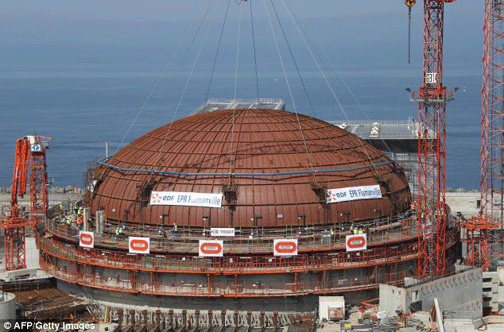 As a result, only the Flamanville plant received the go-ahead, with construction beginning in 2007 for an expected entry into service in 2012. Virtually from the outset, the project was beset by woes. At this stage, the total costs of construction are four times greater than initially estimated, while the plant will not enter service before the end of 2022.
The problems stem partly from the sheer complexity of the new reactor, which is the first of its kind to be built in France.
Additionally, the catastrophe at Fukushima in 2011 led to regulatory changes that necessitated costly redesigns. And the project has suffered more than its fair share of mismanagement, aggravated by a byzantine allocation of responsibilities between EDF, the main French electricity utility, which oversaw the project, and many layers of subcontractors.
However, as the Folz report shows, the primary cause of the difficulties lies in the erosion of the industry’s skill base during the long hiatus from the end of the crash program in 1990 to the initiation of Flamanville………
There is, at this point, no prospect of France scaling up its nuclear program  ………The cost blowout at Olkiluoto drove Areva, the “national champion” of France’s nuclear industry, into bankruptcy.
Even with an injection of $7.3bn in public funds EDF, which acquired Areva, lacks the balance sheet strength to underwrite new projects, while the French government’s borrowing ability is hampered by its already too high levels of debt.
To make matters worse, the regulated prices at which EDF has to sell the power it generates mean that it cannot charge its European clients the full value of the baseload it supplies.
 As for global investors, who might provide the debt financing EDF would require, they are wary of projects that are risky in themselves ….
Given those constraints, the government has announced a modest plan to eventually build six additional reactors. So far, however, there are no actionable decisions beyond the completion of Flamanville. And work on the next generation of reactors….. has been quietly downgraded, making it likely that there will no fourth generation reactor of French design.
The consequences for France itself are far-reaching. Beginning in the late 1950s, French firms succeeded in one high-technology market after the other by developing or acquiring a rather basic design (including the Westinghouse Pressurised Water Reactor, the Mirage jet fighter and the TGV high-speed train) that they upgraded while producing it on a large scale.
That era is over, and there is every sign France is struggling with almost all the major projects it has in train.
The Folz report should therefore come as an ominous warning for Australia’s submarine project, as it identifies French industry’s serious managerial and technological weaknesses in a range of areas, such as precision welding, that are crucial to that project’s success……. https://www.theaustralian.com.au/commentary/the-french-nuclear-revolution-is-rusting-away/news-story/afe4546ed799939cf117d71f05035c5e
Nuclear power headed to be excluded from EU green finance scheme
‘Do no harm’: Nuclear squeezed out of EU green finance scheme, 
 By Frédéric Simon | EURACTIV.com Dec 6, 2019 European Greens claimed victory on Thursday (5 December) after EU negotiators reached agreement on a green finance taxonomy aimed at channelling billions of private investor’s money into clean technologies. Coal, and – in principle – nuclear power, are out.
The deal, reached by national envoys and EU Parliament negotiators yesterday evening, marks a stunning defeat for France, which lobbied hard to win recognition for nuclear energy as a low-carbon source of energy…….
Do no harm” test
But the European Parliament “resisted attempts from national governments to politicise the environmental criteria” underpinning the EU’s new sustainable finance classification scheme, the Greens said in a statement.
A strengthened “do no harm” principle means nuclear power will – in all likelihood – be excluded from the EU’s green finance taxonomy when experts sit down to agree detailed implementing rules next year, they said.
The ‘no-harm’ test “will help avoid nuclear energy from being considered an environmentally sustainable investment,” the Greens said in a statement to the press.
The taxonomy will provide investors, pension funds and private equity firms with “a common definition of what is green and what is not” in order to channel more capital into sustainable businesses and prevent “green-washing,” the European Commission said last year when it tabled the proposed new regulation.
The deal creates three categories for sustainable investments: “green”, “enabling” and “transition”. It also obliges companies with more than 500 employees to disclose how much of their activities are compliant with the three new categories, the FT reported.
“Today’s compromise will shift financial flows away from dirty, carbon intensive investments and into sustainable economic activities,” said Bas Eickhout, a Dutch Green MEP who was the European Parliament’s lead negotiator on the draft EU regulation.
“Any investment in coal cannot be considered sustainable,” he said in a statement……..
EU experts will now have to sit down and lay out thresholds to determine which economic activities can qualify as green. These will include CO2 emission limits for power production, which EU experts have tentatively set at 100g of CO2 per KWh – a threshold that would, in principle, exclude natural gas.
Here again, the Greens claimed they won guarantees ensuring those implementing rules “will be prepared by a balanced platform of experts” – not national envoys.
During the negotiations, France pushed for technical thresholds to be decided by a group of experts appointed by EU national governments. But the Greens resisted those attempts, saying that would have exposed the group to political pressures.
“The key part of the agreement is the strong independent governance structure,” Jess said.
“The text establishes an independent Platform on Sustainable Finance who will be responsible for developing and maintaining the full taxonomy going forward,” he explained. The expert group will also be responsible for monitoring capital flows and advising governments in their economic transition.
Magical thinking of the nuclear lobby as it jumps on the Green New Deal bandwagon
Unfortunately, the case for nuclear as a green technology is not so simple—the technology faces a spate of environmental and economic challenges, while its track record as a bridge fuel shows it may be more rivalrous than concomitant with renewables. In fact, it may be the nuclear industry that needs the Green New Deal, not the other way around.
For as long as it’s existed, nuclear has been an aspirational technology as much as an extant one
the magical thinking of the nuclear industry has taken different forms. Over decades, breeder reactors, salt reactors, large-scale fusion have all been the nuclear future just over the horizon. “The industry that people talk about is a theoretical industry,” says Jaczko. “The actual industry is not that.”
So the enthusiasm for the public investment of the Green New Deal is primarily a tactical one, with the promise of a massive outlay of public funds enticing an industry in need of a lifeline.

The Tantalizing Nuclear Mirage, Many see nuclear power as a necessary part of any carbon-neutral mix. The reality isn’t so simple. The American  Prospect, BY ALEXANDER SAMMON DECEMBER 5, 2019
It took seven months on the campaign trail for Cory Booker to emerge as the Democratic Party’s foremost champion of nuclear power. In September, after he unveiled a signature climate plan replete with “$20 billion dedicated to research, development and demonstration of next-generation advanced nuclear energy,” he embraced the technology with unprecedented ardor. “I didn’t come to the United States Senate as a big nuclear guy,” Booker told Grist in an interview. “But when I started looking at the urgency of climate change … nuclear has to be a part of the blend.”
To hear Booker tell it, his evolution on the subject was the product of scientific rigor and anti-ideological clarity on decarbonization. He related this narrative during a media blitz, comparing anti-nuclear Democrats to Republican climate deniers over their rejection of an incontrovertible science, while pledging to usher in a nuclear future that no right-minded person could deny. “Where the science is going, to me, at first sounded like science fiction … new nuclear actually portends of exciting things where you have no risk of the kinds of meltdowns we’re seeing,” he proclaimed at CNN’s climate town hall.
Grandiosity aside, Booker isn’t alone in his nuclear embrace. He’s part of an unlikely pro-nuclear political alliance, an emergent accord that spans the centrist think tank Third Way, Andrew Yang, Jay Inslee, environmental activists, and progressive commentators alike. “The left should stop worrying and learn to love existing nuclear power plants,” wrote New York’s Eric Levitz in a subsequent send-up of Bernie Sanders’s and Elizabeth Warren’s twin commitments to phase out the technology.
In a world where the rapid deployment of zero-carbon energy production is urgent, nuclear power, the argument goes, represents the only proven bet.
……..With 11 years, per the U.N.’s 2018 IPCC report, to overhaul our energy system, to be serious about decarbonization is to find a place at the table for nuclear.
It’s an alluring idea. Already, this logic has been embraced in states like Ohio and Booker’s New Jersey, which have been allocating green tax subsidies to nuclear projects. And while it’s largely played out in the background, the question of what to do about nuclear has vexed Green New Dealers since the rollout of Alexandria Ocasio-Cortez’s framework in February. While plane travel and hamburgers raised hackles in the press, one of the first clauses to be deleted from the initial proposal pledged to phase out the technology altogether.
So does the Green New Deal need nuclear to achieve its lofty goals? Does zero-carbon energy infrastructure necessitate a nuclear buildout, or at least an embrace of already-existing nuclear as a bridge fuel, as countries like Sweden have done? Unfortunately, the case for nuclear as a green technology is not so simple—the technology faces a spate of environmental and economic challenges, while its track record as a bridge fuel shows it may be more rivalrous than concomitant with renewables. In fact, it may be the nuclear industry that needs the Green New Deal, not the other way around.
DESPITE THE NEWFOUND exigency of overhauling the country’s energy mix, this is not the first time America’s energy system has arrived at a crossroads in the last ten years, nor is it the first time nuclear has been trotted out as its last, best hope. In the late aughts, with oil prices soaring and production stagnant, policymakers made a commitment to expanding American nuclear generation. An era of so-called “nuclear renaissance” began, with four next-generation reactors commissioned at two plants, one in Georgia and the other in South Carolina.
Now, over a decade later, that project managed to bankrupt its construction company, Westinghouse, nearly taking down the entire Toshiba conglomerate, Westinghouse’s parent company, with it. The two reactors in South Carolina were abandoned, while the Southern Nuclear and Georgia Power utility companies assumed control of the remaining two reactors in Georgia, the Vogtle 3 and 4. But even a cash infusion from Georgia ratepayers, who began subsidizing the completion of the project in 2011, was not enough to keep the project close to its budget or timeline. Initially expected to come online in 2016-2017, the Vogtle plant has run some $14 billion over budget. Its completion dates have been deferred to 2021-2022. There’s currently no other active nuclear development in the United States.
That timeline should be particularly alarming for nuclear enthusiasts………
WHEN DID NUCLEAR get this environmental rebrand? Until very recently, the industry hadn’t led with its environmental chops. In fact, for years, nuclear buddied up with the coal industry, courting the Trump administration for subsidies, while the Nuclear Energy Institute supported the Department of Energy’s failed coal and nuclear bailout, and lauded Ohio’s controversial coal and nuclear subsidy package earlier this year.
For as long as it’s existed, nuclear has been an aspirational technology as much as an extant one. Since Eisenhower first announced nuclear energy generation as a civilian project in 1953, its promises of worldwide abundance have far outpaced its production. Twenty years later, in 1973, Richard Nixon pledged to have 1,000 nuclear plants online by 1980, a goal that never approached realization. Since then, the magical thinking of the nuclear industry has taken different forms. Over decades, breeder reactors, salt reactors, large-scale fusion have all been the nuclear future just over the horizon. “The industry that people talk about is a theoretical industry,” says Jaczko. “The actual industry is not that.” Since the development of nuclear weapons, the non-military nuclear energy program has always been a PR charge as much as it was a serious proposal. “Historians have determined that the rollout of civilian nuclear power in the 1960s had as much to do with Cold War PR as the need for electricity,” says Brown.
Nuclear’s pivot to unlikely environmental champion and running mate of the Green New Deal is far from a happy accident. It’s a deliberate posture, informed as much by shrewd marketing as Booker’s data-driven rationale. With the rapid development of solar and wind, nuclear is now far more expensive to produce in terms of dollars per kilowatt hour. With the rapid growth of renewables, nuclear now finds itself on the wrong side of free-market forces, in dire need of public subsidy to stay afloat.
So the enthusiasm for the public investment of the Green New Deal is primarily a tactical one, with the promise of a massive outlay of public funds enticing an industry in need of a lifeline. “Of course the nuclear industry is trying new alliances; they are desperate.” says Bill Snape, senior counsel at the Center for Biological Diversity. Cutting them in would be an unforced error for GND legislation—the money that would be spent making nuclear viable, shielding it from an array of climate disasters, and figuring out what to do with its waste would be much better spent figuring out battery storage or something else to stitch in the gaps in renewable generation.
Looking closer at Booker’s proposal, it’s not clear even he believes the sales pitch he’s making. Despite his lofty pronouncements, the climate plan, which sums to $3 trillion, allocates just two-thirds of 1 percent to nuclear development. The $20 billion is barely enough to cover the cost overruns of the two reactors at Georgia’s Vogtle plant. The notion that such a paltry sum would finally put the industry over the top after decades of malaise, indeed, sounds like science fiction. https://prospect.org/greennewdeal/the-tantalizing-nuclear-mirage/
Significant obstacles to Rolls Royce’s fantasy of “clean” nuclear-supplied jet fuel
 Rolls-Royce Touts Nuclear Reactors as Key to Clean Jet Fuel, Bloomberg,
By Christopher Jasper,December 6, 2019,
- Synthetics, biofuels to be mainstay of aviation, CEO says
- Small reactors to be used to generate required electricityRolls-Royce Holdings Plc is pitching nuclear reactors as the most effective way of powering the production of carbon-neutral synthetic aviation fuel without draining global electricity grids.
Drawing on technology developed for nuclear-powered submarines, the small modular reactors or SMRs could be located at individual plants to generate the large amounts of electricity needed to secure the hydrogen used in the process, according to Chief Executive Officer Warren East…….
The proposals face significant obstacles, including widespread public concern about radiation leaks and the safe disposal of nuclear waste, as well as question marks over U.K. plans to revive the sector after Hitachi Ltd. and Toshiba Corp. withdrew from major projects.Rolls aims to minimize regulatory barriers by building an initial network of 16 SMRs on the sites of former U.K. nuclear power stations still approved for atomic use.
The plants, costing 1.8 billion pounds ($2.4 billion) apiece, would feed the national grid and come online from the 2030s, with all complete by 2050. https://www.bloomberg.com/news/articles/2019-12-06/rolls-royce-pitches-nuclear-reactors-as-key-to-clean-jet-fuel
Global nuclear lobby gears up for nuclear propaganda via social media


Unique IAEA Gathering Highlights Social Media’s Role in Nuclear Stakeholder Involvement. Matt Fisher, IAEA Department of Nuclear Energy 5 Dec 19, More than 120 participants from 66 countries will gather in Vienna next week at the IAEA Technical Meeting on Using Social Media for Public Communication and Stakeholder Involvement for Nuclear Programmes. The input received during the meeting will be used to update the recently revamped Nuclear Communicator’s Toolbox.
The first-of-a-kind meeting, which runs from 9 to 13 December, will examine the evolving landscape of social media and social networking sites (SNS), including social media strategies, SNS as communication and engagement tools, policies for employees and tackling misinformation. It will include a group exercise in which participants formulate a social media plan to address a hypothetical scenario requiring prompt action.
“Social media has become an essential component of public outreach as it allows for rapid, straightforward engagement with a wide variety of stakeholders,” said the IAEA’s Masahiro Tachibana, the event’s scientific secretary. “Many nuclear organizations are using social media to deliver updates on their activities and to engage the public on important issues. The high number of participants demonstrates the broad interest in sharing experiences and identifying ways to further optimize the use of this communication tool.”
As the use of social media worldwide continues to grow, so too does its potential impact. More than 3.4 billion people are using social media in 2019, an increase of approximately 10% from 2018, according to the Global State of Digital in 2019 report……..
Mike Mueller, a Senior Digital Content Strategist at the US Department of Energy’s Office of Nuclear Energy, said social media efforts over the last two years have helped his office to triple its web traffic and reach more than 2 million people every month. “Social media has been instrumental in helping us meet our mission to inform the public on the facts about nuclear energy,” said Mueller, who will take part in the meeting. ….https://www.iaea.org/newscenter/news/unique-iaea-gathering-highlights-social-medias-role-in-nuclear-stakeholder-involvement
Putin offers US to extend key nuclear pact
 Putin offers US to extend key nuclear pact https://www.heraldsun.com.au/news/breaking-news/putin-offers-us-to-extend-key-nuclear-pact/news-story/e88b576c31aaa9f2e81843b5f306dfc7. Associated Press, December 6, 2019 Russian President Vladimir Putin claims Moscow is prepared to immediately extend a pivotal nuclear arms reduction pact with the United States.
Speaking at Thursday’s meeting with military officials, Putin said that Russia has repeatedly offered the US to extend the New START treaty that expires in 2021 but as yet he hasn’t heard back.
“Russia is ready to extend the New START treaty immediately, before the year’s end and without any preconditions,” Putin said.
The pact, which was signed in 2010 by former President Barack Obama and then Russian President Dmitry Medvedev, limits each country to no more than 1,550 deployed nuclear warheads and 700 deployed missiles and bombers.
Putin and other Russian officials have repeatedly voiced concern about Washington’s reluctance to discuss the treaty’s extension.
Nuclear power useless as a technology to counter global heating
The Tantalizing Nuclear Mirage, Many see nuclear power as a necessary part of any carbon-neutral mix. The reality isn’t so simple. The American Prospect, BY ALEXANDER SAMMON DECEMBER 5, 2019 “………..
If it’s going to take 10 to 15 years to see a plant through to completion, even with massive financial backing, that’s seemingly impossible to square with the 11 years to decarbonize. At the very least, we’d need hundreds, if not thousands of plants already under construction just to make a dent. Booker, Yang, and other advocates are betting that R&D might accelerate that process, but in a real sense it’s already too late.
So if new construction can’t be counted on, and the window for adding new nuclear to the fleet has already shut, what about the reactors we currently have? Has their environmental potential gotten short shrift?
 While nuclear fission emits far less carbon dioxide than energy production by oil and gas, the process of getting to that energy generation complicates nuclear’s claim to zero-carbon status. Uranium mining, processing, and transport are all carbon-intensive procedures done by diesel-powered heavy machinery. Instead of carbon, the plants themselves emit heat, often in great quantities, which can warm nearby air and water dramatically, killing fish and wildlife and afflicting neighboring habitats.
And while nuclear may maintain a cleaner sheet than fossil fuels when it  comes to CO2, its record on H2O is less rosy. An American nuclear plant can require between 19 million and 1.4 billion gallons of water a day, just for purposes of cooling. Because of that implacable thirst, it’s imperative that nuclear plants are constructed near major water sources.
Thus, nuclear plants dot our rivers and coastline, each of which carries with it its own climate-specific challenges. Plants built near abundant freshwater—rivers and lakes—have been forced to contend with the twin challenges of too much water and not enough. In recent years, nuclear reactors, like those on the Great Lakes, have been forced to shut down when droughts have plagued rivers and lakes, reducing water levels to perilous lows. Meanwhile, in places like Nebraska, flood risks have necessitated shutdowns. And in France, which sports one of the most robust nuclear programs in the world, heat waves have caused water temperatures to surge to the point of shutdowns multiple summers in a row.
In fact, a 2012 study published in Nature Climate Change forecasted a decrease in thermoelectric power generating capacity of up to 19 percent in Europe and 16 percent in the United States for the period 2031-2060, just due to lack of cooling water. Extant nuclear plants may not accelerate a rapidly warming climate, but it remains to be seen if they can functionally exist in one.
Coastal plants face climate-induced challenges of their own. Hurricane Sandy, which laid siege to the Atlantic coast in 2012, forced seven nuclear plant shutdowns due to flooding, storm debris, and wind damage. Earlier this year, Bloomberg Businessweek identified 19 U.S. nuclear plants under threat from rising seas, and 54 facilities (out of a national total of 60) that “weren’t designed to handle the flood risk they face.” And that was before a November report found nearly four times as many people as previously thought are living on land that is likely to flood at least once a year on average by mid-century. Large-scale retreat from low-lying coastal cities is going to be a reality, and nuclear power plants can’t move with a shifting coastline. Even if they could, plants that draw on saltwater for cooling would suffer similarly diminished capacity as global ocean temperatures rise, as well.
Those rising sea levels are also a problem for the ever-perplexing, still unresolved issue of waste disposal. Beyond the controversial Yucca Mountain disposal site in Nevada, which has failed to get off the ground, much nuclear waste is simply stored on site. At the now-decommissioned San Onofre plant in Southern California and the Pilgrim plant in Cape Cod, the waste is buried beneath the sand at the water’s edge. “Four decades of radioactive waste being stored right there on the water line,” says Kate Brown, a professor of Science, Technology, and Society at MIT. “It’s a short-term solution for a long-term problem.”
That also means that sea-level rise threatens waste disposal, and with no way to check for leaks, the impact of rising seas on that waste remains largely unknown. But in the Marshall Islands, the site of one of the largest American nuclear waste disposal venues, known as the Runit Dome, the effect of sea-level rise is certain: The concrete encasement is now at risk of collapsing as rising seas encroach.
If nuclear is too costly to factor in long-term, and too unstable to subsist in the present, the question remains of when to begin the transition away from it. The concern that an immediate shutdown of existing nuclear plants would lead to accelerating carbon emissions from either coal or natural gas as a substitute has led certain countries, like Sweden, to favor a slow phaseout of its nuclear fleet. France, too, despite heavy reliance on nuclear, has been discussing a slow, partial phaseout, in accordance with that rationale.
This was the fear when Germany, not long after the Fukushima meltdown, announced it would quickly shutter its entire nuclear power program. Initially, those concerns seemed vindicated. Carbon emissions spiked, as reliance on coal production increased. The country was quickly branded as a cautionary tale. But just a few short years after this campaign was waged, that analysis has changed dramatically. “Today renewables account for 40 percent of German energy production; 15 years ago it was in the single digits,” says Greg Jaczko, former chairman of the U.S. Nuclear Regulatory Commission under Obama. Not only have renewables taken over the energy share once produced by nuclear, “they’ve done enough of a build that they’re going to eat into coal.”
It’s the same story in Japan, where emissions spiked briefly after Fukushima caused a wide-scale shutdown. Even today, only a couple of the country’s nuclear reactors have been brought back online. But thanks to an aggressive build-out of renewables, emissions are below where they were with a fully operating nuclear fleet. Countries that have chosen to decommission slowly have seen their renewable build-outs stymied accordingly; dependence on nuclear has decelerated an inevitable process. Sweden’s reliance on nuclear has been an impediment to renewable development, which is part of the reason the deadline for decommissioning keeps getting pushed. Bridge fuels have a way of making themselves permanent………….https://prospect.org/greennewdeal/the-tantalizing-nuclear-mirage/
Florida nuclear station gets license for 80 Years
| D |
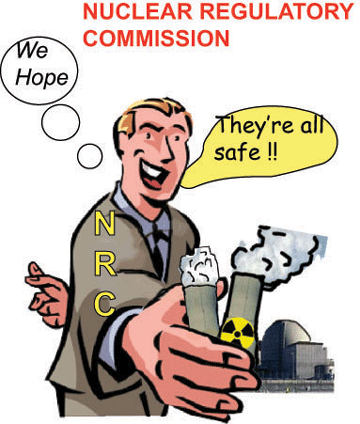
FPL’s Turkey Point first US nuclear plant to get license out to 80 years, Utility Dive, By Kavya Balaraman Dec. 7 2019,
Dive Brief:
The majority of nuclear power plants in the U.S. are currently on a renewed license — extending their initial 40-year operational lifespan to 60 — but as more reach the 60-year mark, the NRC is gearing up for “subsequent license renewals,” which would authorize the plants to operate for another two decades. …….
Damon Moglen, senior strategic advisor of the Climate and Energy Program at Friends of the Earth, called the development “a licensing disaster waiting to happen.” The Turkey Point facility remains vulnerable to climate change, he said, and the region is expected to experience rising sea levels by the 2050s.
This decision in no way serves the public and the environment, it only serves the interest of a very precise industry looking to protect its profits,” he said. https://www.utilitydive.com/news/fpls-turkey-point-first-us-nuclear-plant-to-get-license-out-to-80-years/568593/
|
|
1 This Month
19 November – Webinar – The Reality of Reprocessing
Time: 11:00 AM Pacific Time (US & Canada) / 2:00 PM Eastern / 7:00 PM UK / 8:00 PM CET
Register for the Zoom Event Here

Tell Congress: Prevent Nuclear Catastrophe in Iran

Tell Congress: Prevent Nuclear Catastrophe in Iran

Read the Public Inquiry Report, the Commissioners’ report, Surrendering Australia: The AUKUS Deception is available to download for free at aukuspublicinquiry.com. Or just watch the replay of the National Press Club Luncheon.


Shut down the radiation-damaged Heysham nuclear reactors now
To see nuclear-related stories in greater depth and intensity – go to https://nuclearinformation.wordpress.com

Say No to NASA’s Reckless Nuclear Reactor on the Moon
Say No to NASA’s Reckless Nuclear Reactor on the Moon
-
Archives
- November 2026 (178)
- October 2026 (302)
- September 2026 (339)
- August 2026 (330)
- July 2026 (355)
- June 2026 (287)
- May 2026 (306)
- April 2026 (356)
- March 2026 (251)
- February 2026 (267)
- January 2026 (308)
- December 2025 (358)
-
Categories
- 1
- 1 NUCLEAR ISSUES
- business and costs
- climate change
- culture and arts
- ENERGY
- environment
- health
- history
- indigenous issues
- Legal
- marketing of nuclear
- media
- opposition to nuclear
- PERSONAL STORIES
- politics
- politics international
- Religion and ethics
- safety
- secrets,lies and civil liberties
- spinbuster
- technology
- Uranium
- wastes
- weapons and war
- Women
- 2 WORLD
- ACTION
- AFRICA
- Atrocities
- AUSTRALIA
- Christina's notes
- Christina's themes
- culture and arts
- Events
- Fuk 2022
- Fuk 2023
- Fukushima 2017
- Fukushima 2018
- fukushima 2019
- Fukushima 2020
- Fukushima 2021
- general
- global warming
- Humour (God we need it)
- Nuclear
- RARE EARTHS
- Reference
- resources – print
- Resources -audiovicual
- Weekly Newsletter
- World
- World Nuclear
- YouTube
-
RSS
Entries RSS
Comments RSS

