Anxieties over proposal to allow some nuclear waste to be disposed in landfills

 Advocates raise questions about proposal to allow some nuclear waste to be disposed in landfills The Hill, BY RACHEL FRAZIN – 04/03/20 Scientists and advocates are raising concerns about a proposed relaxation on regulations for disposing of nuclear waste, saying that the government should halt the proposal as the scientific community focuses on the coronavirus.
A March 6 Nuclear Regulatory Commission (NRC) proposal would allow for the disposal of some nuclear waste in municipal landfills, rather than a licensed facility.
Advocates say the proposal could put public health at risk, pushing the NRC to give the public more time to weigh in.
“What they’re trying to do is prop up a failing industry so that the cost of decommissioning these [nuclear] reactors is reduced so you don’t have to send it to a place that is expensive because it’s designed to safely handle it,” said Dan Hirsch, the former director of the University of California, Santa Cruz’s Program on Environmental and Nuclear Policy.
“I find it just astonishing that they would do that in the midst of the coronavirus pandemic,” he added. “How the NRC can look themselves in the mirror to propose massive deregulation and do it in the midst of the pandemic, I find it just ethically shocking.”……..
“If they’re going to consider it at all, it should only be considered once the pandemic is behind us,” he said.
Currently, the nuclear waste in question is typically disposed of at licensed waste disposal facilities, which have adequate training and equipment to protect public health.
The proposal would grant some exceptions to this regulation for waste with a cumulative radiation dose level of up to 25 millirem…….
n a statement on Thursday, Public Employees for Environmental Responsibility Pacific Director Jeff Ruch also criticized the proposal.
“NRC’s action could transform most municipal dumps into radioactive repositories, with essentially no safeguards for workers, nearby residents, or adjoining water tables,” he said. https://thehill.com/policy/energy-environment/490988-advocates-raise-questions-about-proposal-to-allow-some-nuclear
Nuclear Regulatory Commission pulls back inspectors, because of Covid 19
|
The agency and the primary industry group say the change in oversight does not pose a threat to the public. “Nuclear power plants also have plans to maintain appropriate staffing under adverse conditions,” the agency said. “The NRC will require plants to shut down if they cannot appropriately staff their facilities.” Still, the decision has raised alarm from the Union of Concerned Scientists. Edwin Lyman, director of nuclear plant safety at the UCS, which monitors the intersection of policy and science, said he was worried plant operators could request that inspections of their plants be delayed during these refueling periods. In part, he said, “other concerns are potential requests from reactor owners to postpone certain inspections that take place during refueling outages until the next cycle, which could result in delays of more than 18-24 months in some of these critical activities. The concern is some of these inspections require personnel to be in tight quarters or might require specialized contractors from off-site.” The agency also said in a March 27 announcement that it was evaluating scheduled inspections of nuclear sites, including reactors being decommissioned and facilities where spent fuel is stored. NRC did not respond to questions about which facilities would be affected……. the industry is running low on protective medical supplies — gloves, wipes, masks and thermometers, Korsnick said — and the scheduled refueling operations could present a problem during a pandemic when authorities have locked down cities and states from non-essential activities. Nuclear reactors need fresh fuel every 18 or 24 months, and to complete these refueling changeovers requires hundreds of specialized technicians to enter each plant and work for a month or two before leaving. “These workers typically stay in hotels or board with local families, and eat in restaurants,” she said……. Nuclear plants are required to maintain a certain number of staffers in their control room, as well as at least 10 armed guards to protect against attacks. They also fall under regulations that bar staff from working too much in a brief period of time, typically no more than 16 hours in a day, 26 hours in two days and 72 hours in a 7-day stretch. …….https://personalliberty.com/citing-virus-nuclear-agency-pulls-back-inspectors/ |
|

Problems of New England nuclear reactors most are offline
Most NE nuclear power offline due to timing fluke and problem, CT Mirror, CAll but unnoticed as the coronavirus pandemic tears through the Northeast: the New England power grid is without 75% of its nuclear power – with more to go. by JAN ELLEN SPIEGEL, APRIL 3, 2020
Many nuclear power plants schedule refueling operations in spring and fall when electricity demand is lower, and that is the case in New England, where the three remaining nuclear plants typically supply about one-third of the electricity. The Seabrook Nuclear plant in New Hampshire went offline on Tuesday for its refueling – that’s 1,245 megawatts of power. Unit 2 of the Millstone Nuclear Power Station, with about 870 megawatts, is due for refueling this spring as well.
But in the meantime, Millstone Unit 3, which carries about 1,230 megawatts , tripped offline less than a day after the Seabrook shutdown due to a circuit fault between the main generator and the switchyard, according to Kenneth Holt, spokesman for the plant’s owner Dominion Energy. The automatic reactor protection system kicked in as it was supposed to and the plant was shut down.
As of Friday noon, the grid mix showed nuclear at 8% and natural gas at a whopping 68%.
While the situation is abnormal and the timing with the health emergency a fluke, it does not pose any special risks for the region, especially since the demand for power is lower than normal because so much commerce and industry has temporarily shut down. ……
Nuclear plants have some wiggle room, but not a lot, for refueling. In the case of Millstone, each unit is refueled every 18 months in an alternating rotation. Unit 3, the one offline now, is due for refueling in the fall. Refueling takes about one month during which one-third of the plant’s nuclear rods, which are about one foot-by-one foot by 12 to 14 feet long, are replaced. They last about 4.5 years.
……….. https://ctmirror.org/2020/04/03/most-ne-nuclear-power-offline-due-to-timing-fluke-and-problem/
Danger in transporting spent nuclear fuel to New Mexico
Why should NM store nation’s nuclear waste? https://www.abqjournal.com/1439716/why-should-nm-store-nations-nuclear-waste.html BY LAURA WATCHEMPINO / MULTICULTURAL ALLIANCE FOR A SAFE ENVIRONMENT, PUEBLO OF ACOMA
Friday, April 3rd, 2020 If the Nuclear Regulatory Commission’s conclusion that it’s safe to move spent nuclear fuel from nuclear power plants across the country to a proposed storage facility in Lea County sounds vanilla-coated, it’s because the draft environmental impact statement for a Consolidated Interim Storage Facility submitted by Holtec International did not address how the casks containing the spent fuel would be transported to New Mexico.
It’s likely the casks would be transported primarily by rail using aging infrastructure in need of constant repair. But our rail systems were not built to support the great weight of these transport casks containing thin-wall fuel storage canisters.
Nor was the potential for cracked or corroded canisters to leak radiation studied because an earlier NRC Generic EIS for the Continued Storage of Spent Nuclear Fuel assumed damaged fuel storage canisters would be detected during an intermediary dry transfer system or a pool. But Holtec’s proposal only addresses a new destination for the high-level nuclear waste – not the removal and transport of the fuel storage canisters from nuclear power plants to New Mexico.
Even transport casks with canisters that are not damaged will release radiation as they are transported from nuclear power plants to the storage facility, exposing populations along the transport routes in a majority of states and tribal communities in New Mexico to repeated doses of radiation.
Other issues not considered in the draft EIS were the design life of the thin-wall canisters encasing the nuclear fuel rods and faulty installation at reactor sites like San Onofre, or the self-interest of the Eddy-Lea Energy Alliance in using the land it acquired for a consolidated interim storage site.
Thin-wall canisters cannot be inspected for cracks and the fuel rods inside are not retrievable for inspection or monitoring without destroying the canister. NRC does not require continuous monitoring of the storage canisters for pressure changes or radiation leaks. The fuel rods inside the canisters could go critical, or result in an uncontrolled nuclear chain reaction, if water enters the canisters through cracks, admits both Holtec and the NRC. None of us are safe if any canister goes critical.
Yet a site-specific storage application like Holtec’s should have addressed NRC license requirements for leak testing and monitoring, as well as the quantity and type of material that will be stored at the site, such as low burnup nuclear fuel and high burnup fuel.
With so many deficiencies in the draft EIS, a reasonable alternative is to leave this dangerous radioactive nuclear waste at the nuclear plants that produced it in dry cask storage rather than multiply the risk by transporting thousands of containers that could be damaged across many thousands of miles and decades to southeastern New Mexico, then again to a permanent repository.
Interim storage of spent nuclear fuel at existing nuclear plant sites is already happening – there are 65 sites with operating reactors in the United States and dry cask storage is licensed at 35 of these sites in 24 states. But since the thin-wall canisters storing the fuel rods are at risk for major radioactive releases, they should be replaced with thick-walled containers that can be monitored and maintained. The storage containers should be stored away from coastal waters and flood plains in hardened buildings.
Attempting to remove this stabilized nuclear waste from where it is securely stored across hundreds or thousands of miles through our homelands and backyards to a private storage facility also raises some thorny liability issues, since the United States will then be relieved of overseeing the spent nuclear fuel in perpetuity. The states and nuclear plants that want to send us their long-lived radioactive waste will also be off the hook, leaving New Mexico holding a dangerously toxic bag without any resources to address the gradual deterioration of man-made materials or worse, a catastrophic event. It’s a win/win, however, for Holtec International and the Eddy-Lea Energy Alliance.
Environmental justice footnote: When removal of uranium mine waste on the Navajo Nation was being discussed a few years ago, communities got this response from EPA: Digging up the waste and tr+ansporting it to a licensed repository in different states outside the Navajo Nation – which has always been the Nation’s preferred alternative – is the most expensive option. “Off-site disposal, because of the amount of waste in and around these areas, means possibly multiple years of hundreds and hundreds and hundreds of trucks going in and out of the community and driving for miles.”
Finally: 1000s of sailors leaving nuclear Aircraft Carrier and going into Coronavirus isolation


US Sailors Pour Off Aircraft Carrier and Into Coronavirus Isolation on Guam, Defense One , BY BRADLEY PENISTON, DEPUTY EDITOR, 2 Apr. 20 NAVY LEADERS PRAISE SHIP’S CAPTAIN FOR URGENT EVACUATION REQUEST; 3,700 WILL LEAVE THE SHIP WITHIN DAYS.
About one-fifth of the USS Theodore Roosevelt’s 4,865 sailors are off the COVID-stricken aircraft carrier and into isolation on Guam, with about 2,700 more expected to evacuate in the next few days, Acting Navy Secretary Thomas Modly said Wednesday.
Modly’s update comes two days after the ship’s captain sent a stark letter up the chain of command — made public on Tuesday by the San Francisco Chronicle — warning that fully 90 percent of the crew needed to evacuate and isolate for two weeks for their own safety. The secretary’s comments clarify that the Navy was indeed evacuating most sailors from the ship, after Defense Secretary Mark Esper said in a CBS News interview aired late Tuesday that said an evacuation was not yet necessary. Modly praised the captain for the prodding, and said that evacuation efforts already were in the works but not with the right urgency. ….. https://www.defenseone.com/threats/2020/04/us-sailors-pour-aircraft-carrier-and-isolation-guam/164287/?oref=d-topstory
Second: Navy change of heart: nuclear-powered aircraft carrier sailors can evacuate
|
“We are not at war,” Caprain Brett Crozier wrote in a four-page letter to bosses detailing how the ship did not have enough quarantine facilities. “Sailors do not need to die. If we do not act now, we are failing to properly take care of our most trusted asset – our sailors.” Now, his demand to get crew ashore appears to have been met with Acting Navy Secretary Thomas Modly confirming sailors were being taken off board in stages, with 1,000 people already evacuated and placed in isolation on land. It is thought around 100 people on the nuclear-powered vessel have tested positive for Covid-19, although this remains unconfirmed by the navy itself. Modly said the force had been working for several days to get the majority of crew off the ship but that, because Guam was dealing with its own outbreak of Covid-19, there were not currently enough isolated beds. He said he was in talks with officials there to use hotels and set up tents. “It’s not the same as a cruise ship, it has armaments on it, it has aircraft on it, we have to be able to fight fires if there is a fire on there,” he said……..
|
First: Captain of nuclear-powered aircraft carrier begs to have its sailors evacuated
Navy Rejects Captain’s Plea to Evacuate Virus-Ravaged Carrier, Bloomberg, By Roxana Tiron ,Travis J Tritten, and Glen Carey
- Admiral says sailors will be rotated off in smaller numbers
-
A U.S. Navy captain’s dramatic plea to evacuate most sailors from an aircraft carrier struck by the coronavirus was tamped down by an admiral who called for a more gradual rotation of crew members off the ship that’s sidelined in Guam.
Citing an “ongoing and accelerating” danger on board the USS Theodore Roosevelt, Captain Brett Crozier sent his Navy superiors a memo pleading, “We are not at war. Sailors do not need to die.” He called for removing all but a skeleton crew off the carrier, where sailors are in close quarters, so that they can be isolated and tested……
The Roosevelt, meant to be patrolling the Pacific and South China Sea, is sitting dockside in Guam indefinitely as the number of soldiers infected by the novel coronavirus rises daily. Infections started cropping up after an early March port call in Vietnam, which Pentagon leaders say had about 16 known virus cases at the time …… https://www.bloomberg.com/news/articles/2020-03-31/carrier-s-captain-pleads-for-coronavirus-action-to-save-sailors?fbclid=IwAR2jMtSh2oHrD8_xM384jGcK52DX3TihqP3brMrzaUrSNBgY17GYBVxcbEg
Doctors warn on coronavirus danger for Julian Assange, imprisoned without conviction, in a coronavirus incubator
 ASSANGE EXTRADITION: Doctors Warning on Assange in a Covid-19 Breeding Ground, Consortium News,April 1, 2020 • In a prison cited for failing to curb infections, Doctors4Assange warn that Julian Assange is at high risk of contracting the deadly coronavirus. According to a report Wednesday in The Daily Maverick, imprisoned WikiLeaks publisher Julian Assange is one of only two prisoners of 797 inmates in Belmarsh Prison who are being held for skipping bail. The majority are violent criminals, including 20 percent for murder and 16 inmates on terrorism offenses. The facility was also repeatedly criticized by prison inspectors for a lapse in preventing infections to inmates. Following Judge Vanessa Baraitser’s decision to deny Assange bail last week, Doctors4 Assange released the following statement:
Doctors4Assange Statement on Assange
Bail Hearing over Coronavirus Risk, March 27, 2020 Doctors4Assange strongly condemns last Wednesday’s decision by UK District Judge Vanessa Baraitser to deny bail to Julian Assange. Despite our prior unequivocal statement[1] that Mr Assange is at increased risk of serious illness and death were he to contract coronavirus, and the evidence of medical experts, Baraitser dismissed the risk, citing UK guidelines for prisons in responding to the global pandemic: “I have no reason not to trust this advice as both evidence-based and reliable and appropriate.”[2]
Notably, however, Baraitser did not address the increased risk to Mr Assange relative to the general UK prison population, let alone prisoners at HMP Belmarsh where Assange is incarcerated. Nor did she address the rapidly emerging medical and legal consensus that vulnerable and low-risk prisoners should be released, immediately.
As the court heard, Mr Assange is at increased risk of contracting and dying from the novel disease coronavirus (COVID-19), a development which has led the World Health Organization to declare a public health emergency of international concern[3] and a global pandemic.[4] The reasons for Mr Assange’s increased risk include his ongoing psychological torture, his history of medical neglect and fragile health, and chronic lung disease.
Edward Fitzgerald, QC, representing Mr Assange, said, “These [medical] experts consider that he is particularly at risk of developing coronavirus and, if he does, that it develops into very severe complications for him… If he does develop critical symptoms it would be very doubtful that Belmarsh would be able to cope with his condition.”[5]
Baraitser’s casual dismissal of Mr Assange’s dire situation in the face of the COVID-19 emergency stood in stark contrast not only to the expert medical evidence, but the proceedings themselves. The hearing took place on the third day of the UK’s coronavirus lock-down. Of the two counsels representing Mr Assange, Edward Fitzgerald QC wore a facemask and Mark Summers QC participated via audiolink. US attorneys joined the proceedings by phone.
Mr Assange himself appeared by videolink, which was terminated after around an hour, rendering him unable to follow the remainder of his own hearing, including the defence summation and the District Judge’s ruling. Mr Assange’s supporters attending in person observed social distancing measures. Overall only 15 people were in attendance, including judge, counsel, and observers……..
Adding their legal voices to these medical and human rights authorities, the day after Mr Assange’s bail hearing, three professors in law and criminology recommended “granting bail to unsentenced prisoners to stop the spread of coronavirus”.[12]
Julian Assange is just such an unsentenced prisoner with significant health vulnerability. He is being held on remand, with no custodial sentence or UK charge in place, let alone conviction.
Doctors4Assange are additionally concerned that keeping Assange in Belmarsh not only increases his risk of contracting coronavirus, it will increase his isolation and his inability to prepare his defence for his upcoming extradition hearing, in violation of his human right to prepare a defence…… https://consortiumnews.com/2020/04/01/assange-extradition-doctors-warning-on-assange-in-a-covid-19-breeding-ground/
Fukushima Daiichi nuclear power plant’s deadly hazard – highly radioactive sandbags
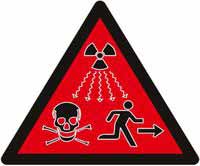 Nuclear sandbags too hot to handle, https://www.theaustralian.com.au/world/the-times/nuclear-sandbags-too-hot-to-handle/news-story/87b811443cb8e2881f55e17108872880 By RICHARD LLOYD PARRY, THE TIMES. APRIL 1, 2020
- Japanese engineers trying to dismantle the melted reactors at the Fukushima Daiichi nuclear power plant face a new hazard — radioactive sandbags so deadly that standing next to them for a few minutes could be fatal.
The sandbags were intended to make life easier for the teams dealing with the aftermath of the nuclear disaster in 2011 when three reactors melted after a tsunami destroyed their cooling systems. Twenty-six tonnes of the bags were placed in basements beneath two of the reactors to absorb radioactivity from waste water.
They were stuffed with zeolite, minerals that can absorb caesium. Nine years after the disaster, the submerged sandbags have sucked up so much radiation that they now represent a deadly danger themselves.
Samples of zeolite removed from the bags contain caesium, producing huge amounts of radiation, while the sandbags are giving off up to four sieverts of radiation an hour. Fifteen minutes of exposure to this could cause haemorrhaging. After an hour, half of those exposed would eventually die as a result. The maximum lifetime recommended dose of radiation for humans is less than half a sievert.
Tokyo Electric Power Co (Tepco), which operates the plant, had intended to remove the contaminated water by the end of 2020. The complication caused by the sand means it will take three years longer, the latest delay to the decommissioning.
Tepco managers have admitted that the technology needed to finish the job does not exist and they do not have a full idea of how it will be achieved. Their stated goal of decommissioning by 2051 may be impossible, they said.
One of the biggest problems is the 170 tonnes of irradiated water coming out of the plant every day, much of it natural ground water that flows through the earth towards the sea, picking up radiation on the way. Tepco pumps it out and stores it in huge storage tanks, filtered of some, but not all, of its contaminants — 1.17 million tonnes so far. In two years, the storage space will run out.
The government wants to pour the water away, insisting that the diluting effect of the Pacific will render the radiation harmless, but it is opposed by North and South Korea and the local fishing industry, whose reputation has been ruined by the disaster.
TEPCO’s staggering costs to remove melted nuclear fuel from Fukushima’s crippled reactors
 TEPCO puts cost to remove melted nuclear fuel at over 1 trillion yen, http://www.asahi.com/ajw/articles/13259804, By RINTARO SAKURAI/ Staff Writer, March 31, 2020 Tokyo Electric Power Co. estimates that 1.37 trillion yen ($12.6 billion) will be needed over 12 years to remove melted nuclear fuel from reactors at the crippled Fukushima No. 1 nuclear power plant.TEPCO’s announcement on March 30 covers only two of the three reactors that suffered meltdowns triggered by the 2011 Great East Japan Earthquake and tsunami. No estimate was attempted for the cost to prepare for the removal of melted nuclear fuel from the No. 1 reactor. The situation at that reactor is the most difficult among the three reactors, and TEPCO officials are still struggling to come up with a plan for removing the debris from within. The estimate covers the period between fiscal 2020 and fiscal 2031. Of that amount, 350 billion yen will be applied as a special loss to the company’s balance statement for the fiscal year ending March 31, 2020. The utility had already released its plan for decommissioning the three reactors, which foresaw a start to removing melted nuclear fuel from the No. 2 reactor before the end of 2021, while removal would begin for the No. 3 reactor by 2031. In announcing its expected profits for the current fiscal year, TEPCO also outlined its estimated expenses for melted fuel removal over the next 12 years. A total of 330 billion would be needed as preparatory measures, such as further examining the interior of the No. 2 reactor and decontaminating radiation from the area around the three reactors. Another 20 billion yen is expected to be spent for trial removal of melted nuclear fuel from the No. 2 reactor, while 1.02 trillion yen would be required to construct the facilities needed to remove the melted fuel from the No. 2 and No. 3 reactors. The construction cost would be written off as a special loss from TEPCO’s balance statement in the fiscal year when the work takes place. TEPCO forecasts a net profit of 79 billion yen for the current fiscal year, a decrease of 66 percent from fiscal 2019. Sales are expected to decrease by 2.2 percent to 6.199 trillion yen. |
|
Russia concerned about coronavirus and nuclear safety, as four nuclear workers test positive4
 Four nuclear workers test positive for coronavirus as Rosatom steps up pandemic response Bellona, April 1, 2020 by Charles Digges The staff of at least one nuclear power plant in Russia has been put into isolation due to concerns over the spread of Covid-19, as Rosatom, Russia’s state nuclear corporation, announced a raft of measures to protect the employees of its sprawling domestic and international apparatus.
Four Russian nuclear workers have tested positive for the coronavirus and the staff of a nuclear power plant has been put into isolation while state nuclear corporation Rosatom implements a raft of measures to protect employees of its sprawling domestic and international apparatus.
As Moscow – and the rest of the world – institutes lockdowns for its citizens, Rostom says it is erring on the side of caution to protect its highly skilled workers against an international pandemic that has infected some 877,000 people around the planet. As of March 31, Russia claims 2,337 of those cases………
On Monday, Alexei Likhachev, Rosatom’s CEO said in a video address on the company’s website that he had instituted corporation-wide health checks and sanitation practices at nuclear facilities in Russia, and had sent home all employees who could feasibly work remotely.
But he left broader decisions about staff quarantines up to local authorities, both in the Russian regions where Rosatom operates facilities as well as in foreign countries.
To that end, he said that Rosatom is continuing the construction of nuclear stations abroad despite the global coronavirus outbreak. But he added that the majority of business trips scheduled for Rosatom employees had been cancelled. …….
Throughout the world, nuclear operators are grappling with the advance of the coronavirus, which causes the Covid-19 illness. Some countries, like the United States, are suggesting that nuclear power plant operators should be isolated on site to prevent their specialized staff from falling ill.
The United Kingdom has already shut down one of its nuclear fuel reprocessing sites after a portion of its technicians were forced to self-isolate after being exposed to the virus.
In France, the Le Hague reprocessing facility has likewise been stalled. And while France’s national operator EDF has refused to comment about the level of absenteeism or the number of confirmed coronavirus infections among its staff, it says its nuclear power plants could operate for three months with a 25 percent reduction in staffing levels and for two to three weeks with 40 percent fewer staff.
Rosatom’s 250,000 employees operate 38 nuclear reactors throughout Russia and staff numerous mining, technological and sales concerns throughout Europe, Asia and the Middle East. The corporation also has 36 power units at different stages of implementation in 12 countries around the world. It is currently constructing seven reactors overseas: two each in Bangladesh, Belarus and India, plus one unit in Turkey.
38 sailors on nuclear-powered aircraft carrier positive for COVID-19, U.S. military secretive on impact of virus
APR 1, 2020
Relying on a high-state of readiness, the nuclear triad is under threat from the coronavirus……….in a War of the Worlds-style twist, humanity’s most lethal weapons could be nullified by an organism that can’t even be seen. ……
Cop26 climate talks in Glasgow postponed until 2021
 Cop26 climate talks in Glasgow postponed until 2021, Crucial UN conference will be delayed until next year as a result of the coronavirus crisis, Guardian Jillian Ambrose Energy correspondent 2 Apr 2020 The UN climate talks due to be held in Glasgow later this year have been postponed as governments around the world struggle to halt the spread of coronavirus.
The most important climate negotiations since the Paris agreement in 2015 were scheduled to take place this November to put countries back on track to avoid climate breakdown. They will now be pushed back to 2021.
A statement from the UN on Wednesday night confirmed that the meeting of over 26,000 attendees would be delayed until next year. It said new dates for the conference would be decided in due course……. https://www.theguardian.com/environment/2020/apr/01/uk-likely-to-postpone-cop26-un-climate-talks-glasgow-coronavirus
U.S. Nuclear Regulatory Commission weakens some regulations in view of COVID-19
Nuclear regulators ease some power reactor regs in response to COVID-19, By Matthew Bandyk Utility Dive, March 31, 2020,
- In response to the COVID-19 pandemic and its strain on available nuclear plant personnel, the U.S. Nuclear Regulatory Commission is allowing power reactor operators to apply for temporary exemptions from regulations limiting the amount of hours workers can stay on the job, according to a letter released by the agency on Monday.
- In addition, the NRC staff is also working on a separate memorandum that will guide nuclear plants as to which labor and time-intensive tasks they can temporarily waive, such as many of the inspections during refueling outages………
1 This Month

Tell Congress: Prevent Nuclear Catastrophe in Iran

Tell Congress: Prevent Nuclear Catastrophe in Iran

Read the Public Inquiry Report, the Commissioners’ report, Surrendering Australia: The AUKUS Deception is available to download for free at aukuspublicinquiry.com. Or just watch the replay of the National Press Club Luncheon.

19 November – Webinar – The Reality of Reprocessing
Time: 11:00 AM Pacific Time (US & Canada) / 2:00 PM Eastern / 7:00 PM UK / 8:00 PM CET
Register for the Zoom Event Here


Shut down the radiation-damaged Heysham nuclear reactors now
To see nuclear-related stories in greater depth and intensity – go to https://nuclearinformation.wordpress.com

Say No to NASA’s Reckless Nuclear Reactor on the Moon
Say No to NASA’s Reckless Nuclear Reactor on the Moon
-
Archives
- November 2026 (147)
- October 2026 (302)
- September 2026 (339)
- August 2026 (330)
- July 2026 (355)
- June 2026 (287)
- May 2026 (306)
- April 2026 (356)
- March 2026 (251)
- February 2026 (267)
- January 2026 (308)
- December 2025 (358)
-
Categories
- 1
- 1 NUCLEAR ISSUES
- business and costs
- climate change
- culture and arts
- ENERGY
- environment
- health
- history
- indigenous issues
- Legal
- marketing of nuclear
- media
- opposition to nuclear
- PERSONAL STORIES
- politics
- politics international
- Religion and ethics
- safety
- secrets,lies and civil liberties
- spinbuster
- technology
- Uranium
- wastes
- weapons and war
- Women
- 2 WORLD
- ACTION
- AFRICA
- Atrocities
- AUSTRALIA
- Christina's notes
- Christina's themes
- culture and arts
- Events
- Fuk 2022
- Fuk 2023
- Fukushima 2017
- Fukushima 2018
- fukushima 2019
- Fukushima 2020
- Fukushima 2021
- general
- global warming
- Humour (God we need it)
- Nuclear
- RARE EARTHS
- Reference
- resources – print
- Resources -audiovicual
- Weekly Newsletter
- World
- World Nuclear
- YouTube
-
RSS
Entries RSS
Comments RSS

