More delay for Japan to open Onagawa nuclear power plant Unit 2: Unit 1 to be closed
|
Onagawa 2 upgrade faces further delay, WNN, 04 May 2020
The completion of safety countermeasures at unit 2 of the Onagawa nuclear power plant in Miyagi Prefecture, in Japan, will not be completed until March 2023, two years later than previously scheduled, Tohoku Electric Power Company announced on 30 April. Japan’s nuclear regulator concluded in February the unit meets revised safety standards, clearing the way for it to resume operation.
Tohoku expects to spend about JPY340 billion (USD3.2 billion) on the countermeasures, which include seismic reinforcement of Onagawa 2 and construction of a 29-metre high and 800m long sea wall to protect the plant from tsunamis. The company had originally planned to complete this construction work by April 2017, but the schedule has been pushed back a number of times. The latest plan had been for the countermeasures to be in place by the end of financial year 2020 (ending March 2021). However, Tokohu has now announced it has reviewed its upgrade works plan for Onagawa 2’s operation. Based on discussions it has had with the Nuclear Regulation Authority (NRA), Tohoku has decided to expand or revise its construction works for improving the facilities at the plant. As a result, the entire plan of construction work has been delayed and is now expected to be completed in FY2022 (ending March 2023). ……..
Tohoku has already decided to decommission unit 1 of the plant and is considering applying to restart unit 3. https://www.world-nuclear-news.org/Articles/Further-delay-in-completion-of-Onagawa-2-safety-up
|
|
Indian Point nuclear power station – Unit 2 permanently closed
|
Indian Point 2 permanently closes, Nuclear Engineering International 4 May 2020 Unit 2 at the US Indian Point nuclear power plant closed on 30 April as part of a deal reached in January 2017 between Entergy, the state of New York and the environmental group Riverkeeper. The plant’s two pressurised water reactor (PWRs) generated a quarter of the electricity used in New York City and Westchester County in 2017.Indian Point 2, with a net generating capacity of 998MWe, began commercial operation in 1974. Indian Point 3, a 1030MWe unit began operating in 1976 and is due to retire in April 2021. New natural gas power plants and efficiency measures are expected to up the slack.
Entergy has agreed to sell the plant to Holtec International, a New Jersey-based decommissioning firm. But the licence transfer, which is pending Nuclear Regulatory Commission approval, will take place only after the plant closes in 2021…… Entergy said in a statement that it is committed to continued operation of the nuclear fleet in Louisiana, Arkansas and Mississippi. It shut down Pilgrim in Massachusetts last year and plans to close the Palisades nuclear plant in Michigan in 2022. Both these facilities will be decommissioned by Holtec, through its affiliate Comprehensive Decommissioning International…..https://www.neimagazine.com/news/newsindian-point-2-permanently-closes-7904262
|
|
Bahrain’s new environmental bill – strict laws against nuclear waste dumping
New environmental bill referred to Parliament
Workers at Connecticut’s nuclear power plant worried about coronavirus precautions
Nuclear plant workers cite lack of precautions around virus, myrecordjournal. 4 May 20, HARTFORD, Conn. (AP) — Workers at Connecticut’s only nuclear power plant worry that managers are not taking enough precautions against the coronavirus after 750 temporary employees were brought in to help refuel one of the two active reactors.
Ten employees at the Millstone Power Station in Waterford have tested positive for the virus, and the arrival of the temporary workers alarms some of the permanent employees, The Day newspaper reported Sunday.
“Speaking specifically for the guard force, there’s a lot of frustration, there’s a lot of concern, and I would say there’s anger,” said Millstone security officer Jim Foley.
Foley, vice president of the local chapter of the United Government Security Officers of America, said security personnel have had to fight for personal protective equipment and for partitions at access points to separate staff from security.
Foley also has filed a complaint with the Occupational Safety and Health Administration saying Millstone staff are using ineffective cleaning materials and citing a lack of cleaning and sanitizing. Cleaning activity was not scheduled during three weekends in April, he said.
Officials at Millstone, owned by Dominion Energy, have not heard internal criticism about the plant’s virus precautions, Millstone spokesman Kenneth Holt said……..
Millstone recently increased cleaning staff on the weekends, Holt said, and there is regular disinfecting at the plant. …….
The deaths of nearly 2,500 Connecticut residents have been linked to COVID-19, the disease caused by the virus. More than 29,000 state residents have tested positive. As of Sunday, hospitalizations had declined for 11 consecutive days, to over 1,480……. https://www.myrecordjournal.com/News/State/Nuclear-plant-workers-cite-lack-of-precautions-around-virus.html
UK’s Ministry of Defence (MoD) gags staff on subject of Trident nuclear weapons in Scotland.
Ferret 3rd May 2020, The Ministry of Defence (MoD) has banned its military and civilian staff
from speaking publicly about Trident nuclear weapons in Scotland. All
members of the armed forces and MoD civil servants have been instructed not
make any public comment, or have any contact with the media, on
“contentious topics” such as “Trident/Successor” and “Scotland
and Defence”. The instructions have been condemned as a “gagging order
worthy of a dictatorship” by campaigners. They have also been criticised
by the Scottish National Party as “an infringement too far”.
https://theferret.scot/ministry-of-defence-trident-scotland-gag/
Raytheon selected to Build New Nuclear Cruise Missile [ Trump has shares]
Raytheon to Build New Nuclear Cruise Missile , Arms Control Association, May 2020, By Kingston Reif
The U.S. Air Force announced last month that it plans to continue development of a new fleet of nuclear air-launched cruise missiles (ALCMs) with Raytheon Co. as the sole contractor.
“After an extensive evaluation of contractor programmatic and technical approach during…preliminary design reviews, the Air Force decided to focus on Raytheon’s design,” according to an April 17 service press release.
In August 2017, the Air Force awarded a $900 million contract to Raytheon and a $900 million contract to Lockheed Martin Corp. to proceed with development of the ALCM replacement, known as the long-range standoff (LRSO) weapon. (See ACT, October 2017.) The contracts were intended to cover a 54-month period of development after which the Air Force would choose one of the contractors to complete development and begin production.
The service’s rationale for focusing on one contractor roughly two years earlier than planned is unclear………The Trump administration is requesting $1.5 billio
n for the missile and warhead in fiscal year 2021.https://www.armscontrol.org/act/2020-05/news/raytheon-build-new-nuclear-cruise-missile
Wind and solar power thriving in pandemic, but nuclear power going down the drain
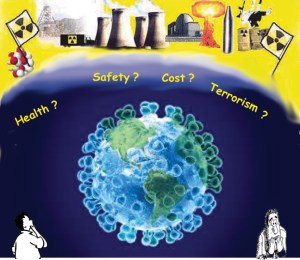 Nuclear is Getting Hammered by Green Power and the Pandemic, Plant operators are forced to switch uneconomic units off because of low prices and slumping demand. Bloomberg Green, May 4, 2020, “………Nations around the world have set tough targets to reduce greenhouse gases with the help of clean energy to meet commitments set out in the 2015 Paris Agreement.

In China, the coronavirus caused reduced output at CGN Power Co.’s atomic plants after the Lunar New Year holiday. Without taking into account the two reactors that came into operation in 2019, output at the remaining 22 units fell 4.7% in the first quarter from a year earlier, the company said.
After correcting for weather effects, full lockdowns reduced daily electricity demand by at least 15% in France, India, Italy, Spain, the U.K. and northwest U.S., the International Energy Agency said in a report on April 30. Global power consumption will decline as much as 5% this year, or the most since the Great Depression, according to the group advising the richest nations.
That will hurt all power sources, although use of renewables will still post a 1% gain this year, IEA said. Nuclear could drop by 3% from 2019 due to lower demand and delays to planned maintenance and construction of several projects, IEA said.
For example, EDF’s U.K. unit is undertaking more work than usual at its reactors, with five out of 15 units halted for long-term repairs. Output is below normal for the time of year. The company declined to comment on whether it was altering production due to rising renewables.
……. At Vattenfall, workers will permanently shut another old reactor at Ringhals by the end of the year, just after one unit was closed down in December. It would have been too costly to make the investments needed to keep them running any longer, the company has said.
And Hall, the boss, has a clear vision. While 5 billion kronor ($510 million) will be invested to secure safe operations at its nuclear and hydro plants this year and next, as much as 25 billion kronor will go to wind.
“We want to build more fossil-free generation and that is predominantly wind.” https://www.bloomberg.com/news/articles/2020-05-04/nuclear-is-getting-hammered-by-green-power-and-the-pandemic
Scientists Warn Worse Pandemics Are on the Way if We Don’t Protect Nature
 Scientists Warn Worse Pandemics Are on the Way if We Don’t Protect Nature https://www.ecowatch.com/pandemics-environmental-destruction-2645854694.html?rebelltitem=4#rebelltitem4 Jordan Davidson
Apr. 27, 2020 A group of biodiversity experts warned that future pandemics are on the horizon if mankind does not stop its rapid destruction of nature.
Writing an article published Monday by The Intergovernmental Science-Policy Platform on Biodiversity and Ecosystem Services (IPBES), the authors put the responsibility for COVID-19 squarely on our shoulders.
“There is a single species that is responsible for the COVID-19 pandemic – us. As with the climate and biodiversity crises, recent pandemics are a direct consequence of human activity – particularly our global financial and economic systems, based on a limited paradigm that prizes economic growth at any cost. We have a small window of opportunity, in overcoming the challenges of the current crisis, to avoid sowing the seeds of future ones,” the authors wrote on IPBES.
The authors of the report include the three co-chairs of the comprehensive 2019 IPBES Global Assessment Report on Biodiversity and Ecosystem Services, which found that one million species of plants and animals are at risk of extinction within decades. The fourth author, Peter Daszak, is the president of EcoHealth Alliance and is tasked with spearheading the IPBES’ next global assessment, as The Guardian reported.
The authors argue that government stimulus plans need to include sustainable and nature-positive initiatives. “It may be politically expedient at this time to relax environmental standards and to prop up industries such as intensive agriculture, long-distance transportation such as the airlines, and fossil-fuel-dependent energy sectors, but doing so without requiring urgent and fundamental change, essentially subsidizes the emergence of future pandemics,” the authors wrote.
They also fault wanton greed for allowing microbes that lead to novel diseases to jump from animals to humans.
“Rampant deforestation, uncontrolled expansion of agriculture, intensive farming, mining and infrastructure development, as well as the exploitation of wild species have created a ‘perfect storm’ for the spillover of diseases from wildlife to people,” they wrote in their article.
They warn that 1.7 million unidentified viruses known to infect people are estimated to exist in mammals and water birds. Any one of these may be more disruptive and lethal than COVID-19.
With that in mind, the authors suggest three facets that should be considered for COVID-19-related stimulus plans. Countries should strengthen environmental regulations; adopt a ‘One Health’ approach to decision-making that recognizes complex interconnections among the health of people, animals, plants, and our shared environment; and prop up healthcare systems in the most vulnerable countries where resources are strained and underfunded. “This is not simple altruism – it is vital investment in the interests of all to prevent future global outbreaks,” the scientists argue in their IPBES article.
“The programs we’re talking about will cost tens of billions of dollars a year,” Daszak told The Guardian. “But if you get one pandemic, even just one a century, that costs trillions, so you still come out with an incredibly good return on investment.
“Business as usual will not work. Business as usual right now for pandemics is waiting for them to emerge and hoping for a vaccine. That’s not a good strategy. We need to deal with the underlying drivers.”
Their assessment has been supported recently by others in the scientific community. A study published earlier this month blamed human impact on wildlife for the current outbreak, as The Guardian reported.
The authors of the new article end their piece on an optimistic note about nature’s resiliency. “We can build back better and emerge from the current crisis stronger and more resilient than ever – but to do so means choosing policies and actions that protect nature – so that nature can help to protect us,” they wrote.
New START is the only U.S.-Russian nuclear treaty still in effect. Time to renew it
|
Minister Lavrov was specific that Washington must agree to extend New START before Russia would agree to include new Russian systems in future negotiations. Secretary Pompeo reiterated the U.S. position that future arms control talks must embrace the White House desire to include China in a trilateral arms control agreement. Frankly, holding New START hostage to Chinese agreement to join a trilateral negotiation makes no sense. Under New START, Russia and the U.S. are permitted to deploy up to 1,550 nuclear warheads. China maintains a minimum deterrence force that the director of the Defense Intelligence Agency recently stated to be a couple of hundred nuclear warheads. Given this large disparity, China has little to gain from negotiating and has shown little interest in doing so. If Russia and the U.S. can bring their numbers down significantly through a new round of negotiations, there could be a basis then to persuade China to join a trilateral negotiation. The Trump administration should immediately accept the Russian offer to extend the New START Treaty and to engage in a new round of strategic arms negotiations. New START is the only U.S.-Russian nuclear treaty still in effect. If the pact is permitted to expire in February 2021, there will be no limits on Russian strategic systems and no inspection regime to verify what types and numbers of systems the Russians are deploying. The Joint Chiefs of Staff and the Intelligence Community are solidly in favor of extending New START because they know what the adverse impact will be on our ability to assess the threat to U.S. interests and our planning to address that threat. A bold approach the U.S. should consider is to enter into a negotiation now with Russia to extend New START at a lower level of 1,000 deployed warheads from the currently authorized 1,550. During the 2010 negotiations on New START, the Joint Chiefs certified that 1,000 would be adequate to support our deterrence strategy. …….. https://thehill.com/opinion/international/494960-time-to-restart-nuclear-arms-negotiations-with-russia |
|

16 Japanese Financial institutions won’t invest in companies involved in nuclear weapons
 Many Japanese lenders refuse to invest in companies linked to nuclear arms https://www.japantimes.co.jp/news/2020/05/03/business/corporate-business/many-japanese-lenders-refuse-invest-companies-linked-nuclear-arms/#.Xq8zaqgzbIU
KYODO Sixteen Japanese financial institutions say they refrain from investing in and extending loans to companies involved in the manufacturing of nuclear weapons and delivery systems, according to a Kyodo News survey released Sunday.
The survey found the lenders set guidelines for such issues in an effort to avert international criticism against conducting business with nuclear-related companies amid growing public perceptions about the inhumane nature of nuclear weapons and other weapons of mass destruction.
The 16 lenders include three megabanks — MUFG Bank under Mitsubishi UFJ Financial Group Inc., Mizuho Bank under Mizuho Financial Group Inc., and Sumitomo Mitsui Banking Corp. under Sumitomo Mitsui Financial Group Inc. — as well as Japan Post Bank Co. and Resona Bank under Resona Holdings Inc.
Kyodo sent a written questionnaire to a total of 119 city banks, regional banks and online banks from late February to early March. Of those, 35 responded.
About 70 percent of the total did not answer because they said they have never discussed the issue.
A Resona Bank official said the Osaka-based lender drew up written rules in March 2018 that it will not invest in nuclear, anti-personnel mines and other such fields due to rising international criticism against conducting businesses with companies involved in the manufacturing and development of weapons of mass destruction.
Eleven other lenders possessing such guidelines are Saitama Resona Bank in Saitama Prefecture, Aozora Bank in Tokyo, SBI Sumishin Net Bank, Hokkaido Bank and North Pacific Bank in Hokkaido, Tohoku Bank in Iwate Prefecture, Ogaki Kyoritsu Bank in Gifu Prefecture, Kansai Mirai Bank in Osaka Prefecture, Minato Bank in Hyogo Prefecture, Higo Bank in Kumamoto Prefecture and Kagoshima Bank in Kagoshima Prefecture.
According to the survey, nine respondents including Hokkaido Bank, the Bank of Kochi in Kochi Prefecture and Oita Bank in Oita Prefecture said they backed the Treaty on the Prohibition of Nuclear Weapons.
Of 20 lenders expressing reservation about the 2017 U.N. nuclear ban treaty, five questioned the Japanese government’s reluctance to sign it.
Japan does not possess nuclear weapons but remains under the nuclear umbrella of the United States.
Twelve respondents including Tohoku Bank, Higo Bank and the Bank of Toyama in Toyama Prefecture said they think the adoption of the U.N. pact would generate risks in the future to investment in nuclear-related companies.
None of the 35 respondents said they have provided funds to companies developing intercontinental ballistic missiles, bombers capable of loading nuclear weapons and other nuclear weapons-linked infrastructure.
However, the three megabanks declined to disclose their investments in nuclear-related companies.
 While welcoming the 16 lenders for supporting such guidelines, the International Campaign to Abolish Nuclear Weapons, or ICAN, a nongovernmental organization and the 2017 Nobel Peace Prize laureate, said it suspects some still continue to invest in nuclear-related businesses.
“Companies that manufacture nuclear weapons conduct businesses in other areas,” said Akira Kawasaki, a member of the International Steering Group of ICAN. “We see it as a perception gap between us and some banks that claim they abstain from investing in nuclear weapons manufacturing businesses.”
ICAN wants those banks to disclose details about their guidelines, Kawasaki said.
Beyond Nuclear and other groups challenge Holtec’s nuclear waste plan for New Mexico
 Carlsbad Current Argus 2nd May 2020, A proposed nuclear waste repository near Carlsbad and Hobbs proceeded through the federal licensing process despite protests from environmental
groups who questioned the legality of the project. Holtec International applied to the Nuclear Regulatory Commission (NRC) for a license to build and operate a facility that would temporarily store spent nuclear fuel rods in a remote location of southeast New Mexico while a permanent repository is developed.
The consolidated interim storage facility was challenged by Beyond Nuclear and other organizations who questioned Holtec’s application for suggesting the U.S. Department of Energy could take ownership of the waste.
The Southwest Research and Information Center says that rules are ignored in nuclear waste construction in New Mexico
|
Appeal: New Mexico ignored rules in OK of nuke site work, https://www.myhighplains.com/news/new-mexico/appeal-new-mexico-ignored-rules-in-ok-of-nuke-site-work/ by: SUSAN MONTOYA BRYAN, Apr 28, 2020, ALBUQUERQUE, N.M. (AP) — A watchdog group wants the New Mexico Court of Appeals to put the brakes on a key construction project at the nation’s only underground nuclear waste repository.The Southwest Research and Information Center alleges state environmental officials ignored regulations and past practices in giving temporary approval for contractors to begin building a new ventilation shaft at the Waste Isolation Pilot Plant. The state stands by its decision. A radiation release in 2014 forced the repository’s temporary closure. Resulting contamination limited the air flow underground, prompting the need for a new system so full-scale operations can resume. |
|
Comment Period For Proposed Nuclear Waste Dump In New Mexico extended by 60 days

 60-Day Extension Of Public Comment Period For Proposed Nuclear Waste Dump In New Mexico, KRWG, By NEWS EDITOR AND PARTNERS • MAY 2, 2020 U.S. Senators Tom Udall and Martin Heinrich, and U.S. Representatives Xochitl Torres Small, Ben Ray Luján, and Deb Haaland are welcoming an announcement from the Nuclear Regulatory Commission (NRC) that their March 20 request has been met and a 60-day extension on the public comment period will be implemented for the Draft Environmental Impact Statement for Holtec’s proposed spent nuclear fuel storage facility in Southeast New Mexico. Here is statement from the office of Senator Martin Heinrich:
“Allowing for full public participation, as NEPA requires, is particularly important for projects involving nuclear waste,” the delegation said. “Any proposal to store commercial spent nuclear fuel raises a number of health, safety and environmental issues, including potential impacts on local agriculture and industry, issues related to the transportation of nuclear waste, and disproportionate impacts on Native American communities.”…….https://www.krwg.org/post/60-day-extension-public-comment-period-proposed-nuclear-waste-dump-new-mexico
Half of highly radioactive exhaust stack dismantled at Fukushima Nuclear Reactor 1
Asahi Shimbun 30th April 2020, Work to dismantle the upper half of an exhaust stack at the crippled Fukushima No. 1 nuclear power plant finished on April 29, the first time a
structure highly contaminated by radiation was dismantled at the plant. The
chimney, which is 120 meters tall and about 3 meters in diameter, was used
for the No. 1 and No. 2 reactors of the plant, operated by Tokyo Electric
Power Co. On the morning of April 29, workers spent an hour to lower sliced
parts of the stack to the ground from a height of about 60 meters. With its
upper half removed, the chimney now stands 59 meters high.
Petersberg Climate Dialogue to be held virtually this year
 Sustainable Recovery**
Livestream recording of “Financing Climate Ambition in the context of
COVID-19”. A sustained green, resilient recovery from COVID-19 requires
significant investments to scale and achieve economy-wide transformation,
particularly in developing and emerging markets. Delivering this
sustainable recovery and creating new opportunities for growth will involve
accelerating the transition towards a low-carbon, resilient future that is
already underway.
Dialogue has provided a forum for high-level political discussions,
focusing both on the international climate negotiations and on advancing
climate action on the ground.
will be held virtually for the first time, and will focus on climate
ambition in the context of a green, resilient recovery. See, in particular
Mark Carmey from 41.43 He asks “what can we do to drice climate finance
in support of the transition to a net zero economy?” A related question
is what will be the economics of a post-Covid world? The new economy will
require a massive reallocation of capital. It provides an opportunity to
require companies and sectors to have net zero transition plans. The aim of
his work on Cop-26 is to ensure that every financial decision takes climate
into account. 120 countries have committed to net zero. That means every
company, every sector, every pension fund in those countries should have a
net zero plan which it has disclosed. When countries are designing their
recovery strategies they would do well to use this new financial framework
that is centred around the transition to net zero because that will amplify
the effectiveness. Once the war against Covid in won our ambition should be
to build a planet fit for our grandchildren.
Climate Policy Initiative 29th April 2020
https://www.youtube.com/watch?v=8sLyUMokSvI
Top regulator who steered banks’ revival after last crash has a new crisis
mission: ‘My green energy plan to spark the economy back to life’. With the
oil price at record lows, Lord Turner concedes that fossil fuels ‘are
suddenly going to look cheap’ as travel resumes – potentially making a
switch to cleaner energy less attractive. But he is adamant that investment
in green fuel would create jobs and give Britain’s post-coronavirus economy
a much-needed boost. For instance, a jobs cull in North Sea oil could be
offset by transferring workers with marine engineering skills to building
bases for offshore windfarms, he says. ‘North-west Europe is blessed with
huge amounts of offshore wind potential, and both the UK and the rest of
Europe should be planning for massive offshore wind developments in the
North Sea that can give us green electricity at a low price,’ he says.
‘It’s a huge strategic opportunity.’ When pressed on whether the Government
should bail out struggling companies, rather than letting some firms fail,
it’s the first time his smooth theorising is rattled. ‘I’m not getting into
the specifics of individual companies,’ he says testily. ‘But any company
that receives a bailout should have green targets attached.’
Daily Mail 2nd May 2020
1 This Month

Tell Congress: Prevent Nuclear Catastrophe in Iran

Tell Congress: Prevent Nuclear Catastrophe in Iran

Read the Public Inquiry Report, the Commissioners’ report, Surrendering Australia: The AUKUS Deception is available to download for free at aukuspublicinquiry.com. Or just watch the replay of the National Press Club Luncheon.

19 November – Webinar – The Reality of Reprocessing
Time: 11:00 AM Pacific Time (US & Canada) / 2:00 PM Eastern / 7:00 PM UK / 8:00 PM CET
Register for the Zoom Event Here


Shut down the radiation-damaged Heysham nuclear reactors now
To see nuclear-related stories in greater depth and intensity – go to https://nuclearinformation.wordpress.com

Say No to NASA’s Reckless Nuclear Reactor on the Moon
Say No to NASA’s Reckless Nuclear Reactor on the Moon
-
Archives
- November 2026 (147)
- October 2026 (302)
- September 2026 (339)
- August 2026 (330)
- July 2026 (355)
- June 2026 (287)
- May 2026 (306)
- April 2026 (356)
- March 2026 (251)
- February 2026 (267)
- January 2026 (308)
- December 2025 (358)
-
Categories
- 1
- 1 NUCLEAR ISSUES
- business and costs
- climate change
- culture and arts
- ENERGY
- environment
- health
- history
- indigenous issues
- Legal
- marketing of nuclear
- media
- opposition to nuclear
- PERSONAL STORIES
- politics
- politics international
- Religion and ethics
- safety
- secrets,lies and civil liberties
- spinbuster
- technology
- Uranium
- wastes
- weapons and war
- Women
- 2 WORLD
- ACTION
- AFRICA
- Atrocities
- AUSTRALIA
- Christina's notes
- Christina's themes
- culture and arts
- Events
- Fuk 2022
- Fuk 2023
- Fukushima 2017
- Fukushima 2018
- fukushima 2019
- Fukushima 2020
- Fukushima 2021
- general
- global warming
- Humour (God we need it)
- Nuclear
- RARE EARTHS
- Reference
- resources – print
- Resources -audiovicual
- Weekly Newsletter
- World
- World Nuclear
- YouTube
-
RSS
Entries RSS
Comments RSS

