South Korea, Germany to bolster ties in transition towards renewable energy
S. Korea, Germany to bolster ties in transition towards renewable energy
The cooperation came as a follow-up to an agreement reached by Industry Minister Sung Yun-mo and German counterpart Peter Altmaier in Berlin last year, in which they vowed to bolster cooperation in the energy segment.
Seoul and Berlin will especially focus efforts on cooperating deeper on their shift towards renewable energy, while phasing out nuclear energy…….
The two countries are both making efforts to reduce their coal-based power generation as well, with Germany planning to break away from the resource by 2038. South Korea also vowed to “significantly reduce” its consumption of coal. https://en.yna.co.kr/view/AEN20200512003700320?fbclid=IwAR1RpCGPA8_id6MKRdp3q4xHlK6-BjaQOf5lbJL5TIhbKP6kHqekyrZmMagcolin@yna.co.kr
Judge Puts Hold on Move to Drop Flynn Case
 “Judge Puts Hold on Move to Drop Flynn Case more https://wordpress.com/read/feeds/4410547/posts/2701189215

By VOA News
May 12, 2020 11:53 PM
There is another stunning development in the case of President Donald Trump’s former National Security Adviser Michael Flynn.
The federal judge overseeing the case has put the Justice Department’s move to drop the criminal charges against Flynn on hold to give outside legal experts a chance to argue against the department’s decision.
Judge Emmet Sullivan said late Tuesday that “friends of the court” will be able to file briefs and that he will set up a time to hear those arguments “at the appropriate time.”
Sullivan could decide to call witnesses to testify and answer questions about the Justice Department’s extraordinary move last week to drop the charges against Flynn, and possibly reopen the entire case months before a presidential election.
Flynn pleaded guilty to charges of lying to the FBI about his talks with the Russian ambassador to the U.S. about easing U.S. sanctions during the transition period between the Obama and Trump administrations – a crime that carries a maximum five-year prison sentence.
The charges against Flynn were part of Special Counsel Robert Mueller’s investigation into Russian meddling in the 2016 presidential election.
Sullivan told Flynn at his 2018 sentencing that lying to the FBI was a “very serious offense.”
Flynn initially said he was guilty, that no one had talked him into admitting his crime and that he had no intention of taking back his plea.
But as his sentencing day approached, Flynn appealed to the court for a postponement, claiming that prosecutors set him up.
The Justice Department, led by Attorney General William Barr, shocked and angered the legal community last week when it said the case against Flynn should be dropped…
The decision opened the floodgates of criticism of Barr and the Justice Department that it is politically motivated and carrying out Trump’s wishes…
There has been no reaction to Sullivan’s decision so far from Barr or the White House. https://www.voanews.com/usa/us-politics/judge-puts-hold-move-drop-flynn-case http://archive.vn/7TiRw
A summary of Flynn’s Russia connections – showing why anyone who is sane would be suspicious of him.
https://miningawareness.wordpress.com/2020/05/08/general-michael-flynn-fired-from-the-dia-summary-2/
South Carolina nuclear fuel plant treatment pool leaking, polluting groundwater?
Now, the lagoon liner is wearing out. And that’s a concern.
Recent research suggests radioactive pollution has seeped through the synthetic barrier that was supposed to protect soil and groundwater in the Congaree River flood plain. Soil below the liner is suspected of being polluted with waste from the east lagoon, according to a new report for the plant’s operator, Westinghouse Nuclear.
’“It is expected that some contamination will exist in the soil underlying the east lagoon liner, given the long operating history of the lagoon and the potential for a liner system leak,’’ the May 8 report for Westinghouse says.
If the soil below the lagoon is polluted, as Westinghouse suspects, it could indicate that groundwater flowing away from the property and toward the Congaree River has been contaminated.
No one knows the extent of the contamination yet, but Westinghouse has a plan to dig radioactive sludge from the lagoon and haul it across the country for disposal in the Idaho desert.
Once the company has removed the mucky sludge and the lagoon’s 1980s era liner, it plans to test the soil below the waste pond to see how much contamination may be in the earth.
The new Westinghouse consulting report, released by the U.S. Nuclear Regulatory Commission, says sludge in the east lagoon at Westinghouse is contaminated with low enriched uranium and technetium-99, nuclear materials generated as part of production of fuel rods at the 51-year-old factory.
Exposure to sufficient amounts of uranium can cause kidney damage in adults and children. Technetium 99, which concentrates in the thyroid and gastrointestinal tract, can increase a person’s chances of cancer if exposed to certain amounts………
For now, Westinghouse is moving forward with cleanup efforts. Although the company doesn’t plan to clean up some pollution until it closes the plant in future decades, Westinghouse has agreed to get rid of other contamination sooner. …….
The tainted material that would be shipped to Idaho, likely next year, includes 45,000 cubic feet of sludge, soil and debris from the east lagoon, a 160-foot long pond behind the plant on Bluff Road.
Radioactive pond sludge would be hauled away on railroad cars to a U.S. Ecology site in the Owyhee Desert near Grand View, Idaho, according to plans filed with the U.S. Nuclear Regulatory Commission. Contaminated cylinders and a polluted sludge pile also will be carted away from the site for disposal……. https://www.thestate.com/news/local/environment/article242667201.html
Corona and nuclear power
|
Ann Darling: Corona and nuclear power, https://www.gazettenet.com/Darling-letter-34192441 13 May 20, Here’s a new twist on the pandemic. It has to do with nuclear power.That may seem an unlikely pairing, but nuclear reactors have workers, and they can get sick just like everyone else. Every day these essential workers are in facilities that, by their radioactive nature, can create great environmental and economic harm if they are not managed very carefully.
What is happening at nuclear reactors in the midst of the pandemic? Right now there are 30 nuclear power stations in a refueling phase in which the reactor is shut down, maintenance and safety inspections are completed, and new fuel is placed in the reactor. This requires bringing in hundreds of contract workers, who then travel on to the next refueling reactor. Yet, the Nuclear Regulatory Commission (NRC) is not requiring coronavirus screening or quarantining of workers prior to beginning work. Conditions in nuclear power plants make social distancing difficult, with large work crews, confined spaces, and frequent contact with equipment surfaces. At some sites, workers have complained about lack of social distancing, sanitation, PPE, and testing. Further, since March, the NRC has granted exemptions to nuclear power generating stations to increase limits on the number of hours employees can be required to work, and to postpone scheduled safety inspections and maintenance. Eighty-six organizations, organized by the Nuclear Information and Resource Service (NIRS, nirs.org), have sent a letter to Vice President Mike Pence, chair of the Coronavirus Task Force, and six federal agencies outlining the failure of the NRC to act responsibly in the fact of this pandemic. The groups call for an immediate, multi-agency, industrywide response to protect workers and reactor host communities, and to ensure nuclear safety is not compromised. We at the Citizens Awareness Network feel a responsibility to let you know what’s happening and what’s being done by active citizens to try to protect us here in the Pioneer Valley, where the Indian Point and Seabrook reactors are just 120 miles away, and Millstone only 75. Your federal tax dollars subsidize nuclear power, and we thought you’d want to know. |
|
Water loss in northern peatlands threatens to intensify fires, global warming
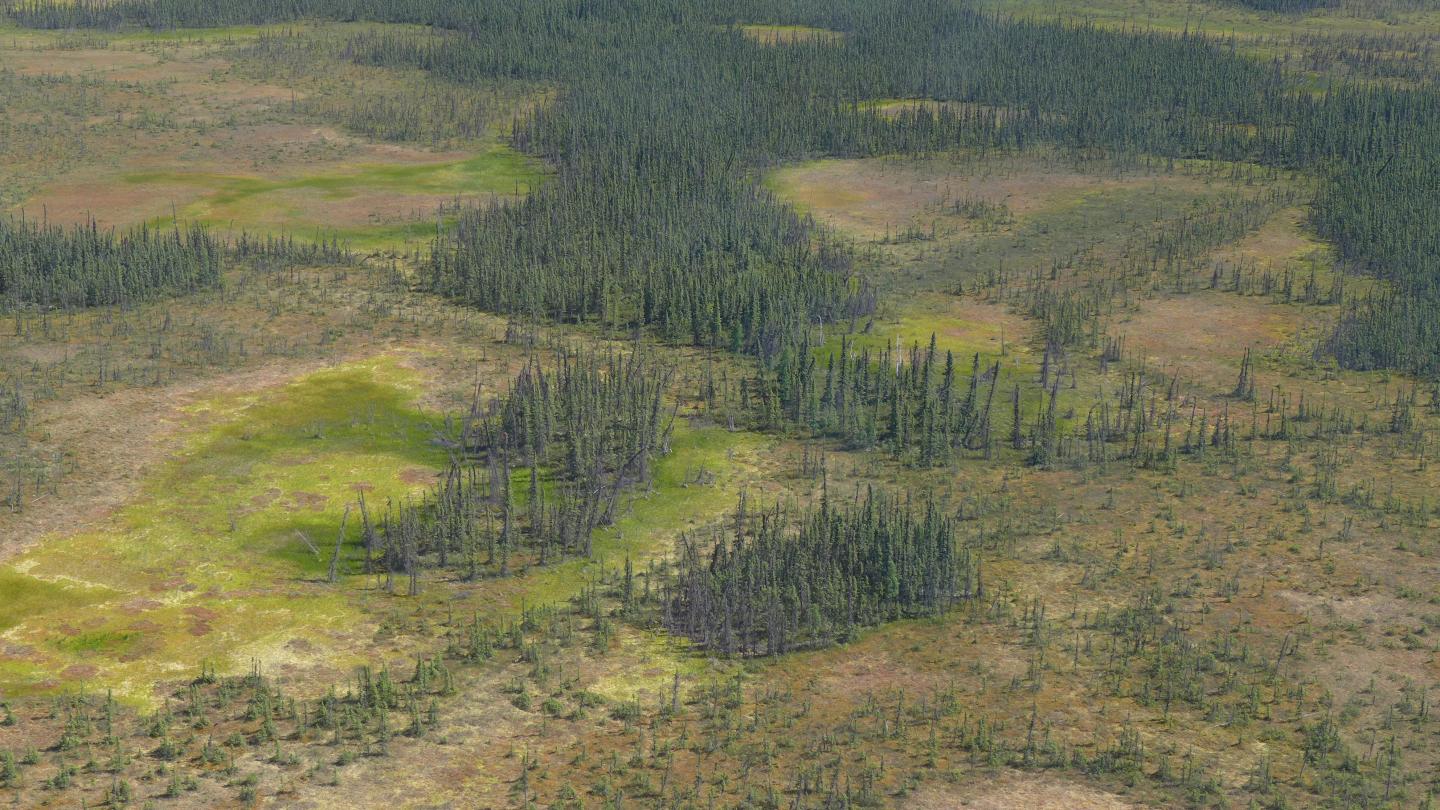 Water loss in northern peatlands threatens to
 intensify fires, global warming
https://www.eurekalert.org/pub_releases/2020-05/mu-wli050820.php Boreal climate change study features 59 authors, MCMASTER UNIVERSITY HAMILTON, ON, MAY 11, 2020 – A group of 59 international scientists, led by researchers at Canada’s McMaster University, has uncovered new information about the distinct effects of climate change on boreal forests and peatlands, which threaten to worsen wildfires and accelerate global warming.Manuel Helbig and Mike Waddington from McMaster’s School of Geography and Earth Sciences gathered observational data from collaborators in countries across the boreal biome. Their study of how ecosystems lose water to the atmosphere appears today in the journal Nature Climate Change.
The unprecedented detail of their work has highlighted dramatic differences in the ways forests and peatlands regulate water loss to the atmosphere in a warming climate, and how those differences could in turn accelerate the pace of warming.
Most current global climate models assume the biome is all forest, an omission that could seriously compromise their projections, Helbig says.
“We need to account for the specific behavior of peatlands if we want to understand the boreal climate, precipitation, water availability and the whole carbon cycle,” he says.
“Peatlands are so important for storing carbon, and they are so vulnerable.”
Until now, Helbig says, it had not been possible to capture such a comprehensive view of these water-cycle dynamics, but with the support of the Global Water Futures Initiative and participation from so many research partners in Canada, Russia, the US, Germany and Scandinavia, new understanding is emerging.
As the climate warms, air gets drier and can take up more water. In response to the drying of the air, forest ecosystems – which make up most of the world’s natural boreal regions – retain more water. Their trees, shrubs and grasses are vascular plants that typically take up carbon dioxide and release water and oxygen through microscopic pores in their leaves. In warmer, dryer weather, though, those pores close, slowing the exchange to conserve water.
Together with lakes, the spongy bogs and fens called peatlands make up the remainder of the boreal landscape. Peatlands store vast amounts of water and carbon in layers of living and dead moss. They serve as natural firebreaks between sections of forest, as long as they remain wet.
Peatland mosses are not vascular plants, so as warming continues, they are more prone to drying out. Unlike forests, they have no active mechanism to protect themselves from losing water to the atmosphere. Dehydration exposes their dense carbon stores to accelerated decomposition, and turns them from firebreaks into fire propagators, as shown in previous research from Waddington’s ecohydrology lab.
Drier peatlands mean bigger, more intense fires that can release vast amounts of carbon into the atmosphere, accelerating global warming, Helbig says.
“It’s crucial to consider the accelerated water loss of peatlands in a warming climate as we project what will happen to the boreal landscape in the next 100 to 200 years,” he says.
If You Like Covid-19, You’ll Love Nuclear War
 Might this unsteady and unseemly American president soon become subject to still more serious forms of personal dissemblance and/or psychological debility? Leaving aside Trump’s largely unprecedented and breathtaking venality,[5] his open indifference to history and above all his continuing malfeasance and shameless dishonesty, should he still be allowed to decide whether we Americans should live or die?
It also reveals his incapacity to feel even a scintilla of human empathy for other human beings.
What does all this really mean? In what specific policy directions should we Americans now be propelled? Continue reading
Russia proposes 3 year extension of Strategic Arms Reduction Treaty (Start-3): USA silent
 Russia proposes five-year extension of nuclear weapons treaty, https://www.plenglish.com/index.php?o=rn&id=55581&SEO=russia-proposes-five-year-extension-of-nuclear-weapons-treaty Temas Relacionados: 11Moscow, May 11 (Prensa Latina) Russia proposed on Monday to extend for another five years the validity of the Strategic Arms Reduction Treaty (Start-3), amid the silence of the United States to refer to that possibility.
In the course of five years, a new mechanism for controlling weapons of mass destruction can be developed, said Russian Deputy Foreign Minister Sergei Riabkov.
Contacts between Moscow and Washington in the area of strategic weapons are maintained on a permanent basis, stressed the Russian deputy foreign minister, who admitted the absence for now of any intention from the White House to seek an extension of the agreement, without conditions.
I believe that Start-3 has worked and produced results over the past decade and can be sought to be extended for another five years to achieve a new agreement or to improve the existing one in that important area, the official said.
Riabkov described the American hopes that the so-called Chinese factor might have some influence on the Russian position as unrealistic. One cannot unite in a single discussion issues, the content of which is lacking in common, he said.
For the Russian diplomat, it is truly cumbersome to overload the already difficult relations between Russia and the United States with new problems and concerns.
On the 50th anniversary of the signing of the Nuclear Non-Proliferation Treaty, it would be wise to show the utmost responsibility for keeping Start-3, signed in Prague in April 2010, he observed. That compromise expires next year.
The Nuclear Non-Proliferation Treaty- its promise and its failure
 Now, nuclear disarmament is at a standstill, existing treaties have either been dismantled or at risk, development in underway of new types of nuclear weapons with new missions and lowered threshold of use, and threats of use of nuclear weapons have been sounded.
|
25 Years After the Indefinite Extension of The Nuclear Non-Proliferation Treaty: A Field of Broken Promises and Shattered Visions InDepth News, By Tariq Rauf 11 May 20, VIENNA (IDN) – “I long ago took to heart the words of Omar Bradley, spoken virtually a half century ago, when he observed, having seen the aftermath of the bombs on Hiroshima and Nagasaki, thus: ‘We live in an age of nuclear giants and ethical infants. We live in a world that has achieved brilliance without wisdom, power without conscience. We’ve unlocked the mysteries of the atom and forgotten the lessons of the Sermon on the Mount. We know more about war than we know about peace, more about killing than we know about living’.”
These remarks were made by General George Lee Butler, the last Commander of the United States Strategic Air Command (SAC) in a speech in Ottawa, Canada, on 11 March 1999. “Why a country that makes atomic bombs would ban fireworks”, asked a child at the United Nations kindergarten in New York. ………..Decision on the Indefinite Extension of the NPT The momentous decision to extend the NPT indefinitely was taken on Thursday, 11 May 1995, in the 17th plenary meeting of the review and extension conference starting at 12:10 PM New York time. The President of the 1995 NPT Review and Extension Conference (NPTREC), Ambassador Jayantha Dhanapala (Sri Lanka), began the meeting by saying that, “I apologize to all delegations for the delay in convening this meeting, but I assure them that it was for very good reasons. Consultations were taking place amongst delegations to ensure that our work should progress smoothly. We also commence a little after high noon to intensify the drama of the occasion”. Dhanapala informed the delegates that three proposals were on the table regarding options for the extension of the Treaty, these were: (1) a proposal by Mexico, calling for indefinite extension along with a number of procedural elements; (2) a proposal submitted by Canada on behalf of 103 States parties and subsequently sponsored by eight additional States parties, calling for the indefinite extension with no added elements; and (3) a proposal submitted by Indonesia and 10 States parties and subsequently sponsored by three additional States parties; calling for an extension for rolling fixed periods of twenty-five years with a review and extension conference at the end of each fixed period to conduct an effective and comprehensive review of the operation of the Treaty, and for the Treaty to be extended for the next fixed period of twenty-five years unless the majority of the parties to the Treaty decided otherwise at the review and extension conference………. The principles and objectives contained recommendations and actions covering all three pillars of the NPT: (1) nuclear disarmament; (2) nuclear-non-proliferation; and (3) peaceful uses of nuclear technologies. Continue reading |
Can Covid-19 response be a model for climate action?
 Some governments are already flagging the need to alter environmental standards to boost economic activity. But business groups are suggesting that the rebuilding of virus-rattled economies can be done hand-in-hand with the transition to net-zero emissions. Perhaps climate policy – historically relegated to the “too-hard” basket – stands a chance in the new world.
|
Can Covid-19 response be a NOAH YIM NATASHA KASSAM Mass behaviour change, policies guided by science, acting In 2020, the world will see the largest annual drop in carbon dioxide emissions in history. The havoc wreaked by the coronavirus and its accompanying lockdowns has seen fleets of planes grounded and factories shudder to a halt. Levels of mobility in the world’s largest cities have fallen below 10% of usual traffic. The International Energy Agency predicts that Covid-19 could wipe out international demand for coal, oil, and gas, with only renewable energy showing resilience. The preliminary data from some of the world’s biggest economies shows that global emissions are in for a sharp, if temporary, decline. Early numbers from Europe suggest that the continent could see a 24% drop in EU Emissions Trading Scheme (ETS) emissions for the whole year. Global emissions will likely only fall by 5% – a reminder that most of the world’s emissions do not come from transportation. But economies around the world are lifting their lockdowns. China, the world’s largest carbon emitter, saw a 25% decrease in emissions over its four-week lockdown. Factories in China are back online, and as in previous economic disruptions, stimulus packages and increased targets could outweigh the short-term impacts on energy and emissions. Publics recognise the challenge ahead. In China, 87% say that climate change is as serious a crisis as Covid-19 in the long term. While the number in Australia is much lower, the majority – 59% – agree. Given the significant personal and economic sacrifices many publics have made to combat Covid-19, will these concerns finally translate into real progress in addressing climate change, once the current crisis has subsided? The prospects look good. Covid-19 has put science front and centre. Continue reading |
Heat+ humidity – global heating has already made parts of the world too hot for humans
 Climate change has already made parts of the world too hot for humans, New Scientist 8 May 2020, By Adam Vaughan Global warming has already made parts of the world hotter than the human body can withstand, decades earlier than climate models expected this to happen.
Jacobabad in Pakistan and Ras al Khaimah in the United Arab Emirates have both repeatedly crossed a deadly threshold for one or two hours at a time, an analysis of weather station data found.
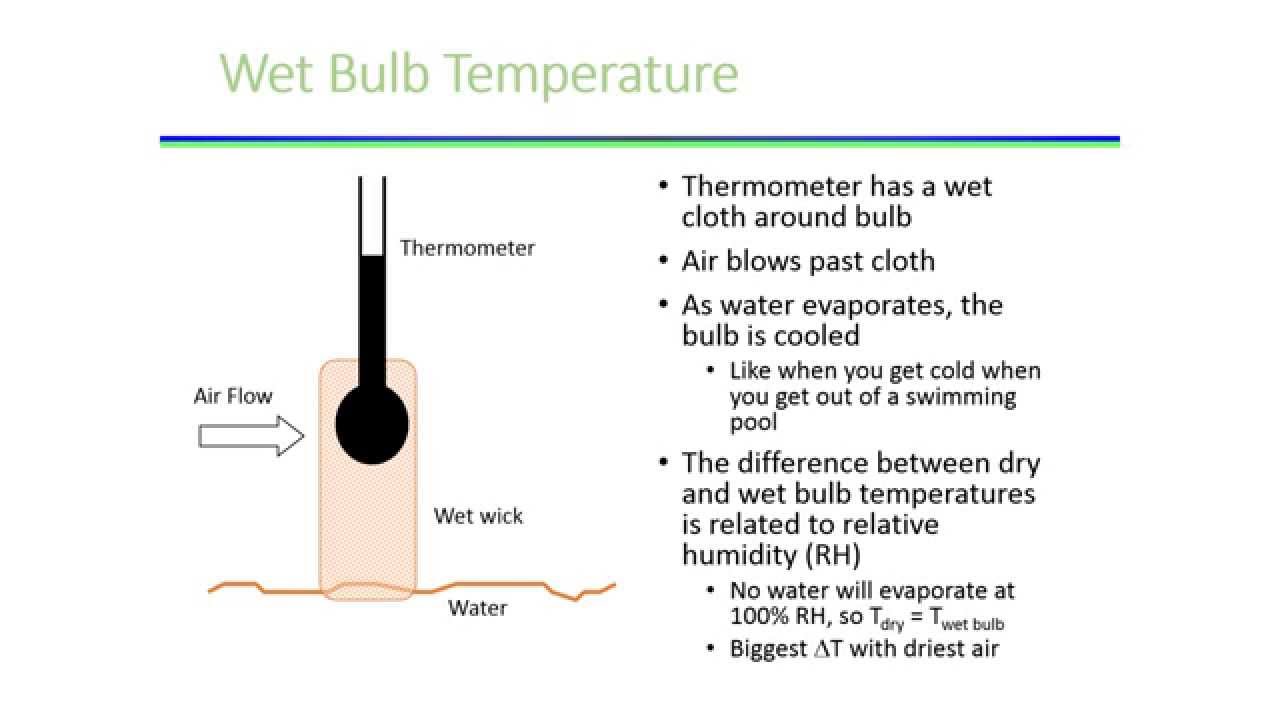
Wet bulb temperature (TW) is a measure of heat and humidity, taken from a thermometer covered in a water-soaked cloth. Beyond a threshold of 35°C TW the body is unable to cool itself by sweating, but lower levels can still be deadly, as was seen in the 2003 European heatwave that killed thousands without passing 28°C TW.
A US-UK team analysed weather station data across the world, and found that the frequency of wet bulb temperatures exceeding temperatures between 27°C TW and 35°C TW had all doubled since 1979. Though 35°C TW is thought of as a key threshold, harm and even death is possible at lower temperatures, so the team included these in their analysis.
Most of the frequency increases were in the Persian gulf, India, Pakistan and south-west North America. But at Jacobabad and Ras al Khaimah, 35°C TW appears to have been passed, the first time the breach has been reported in scientific literature.
“The crossings of all of these thresholds imply greater risk to human health – we can say we are universally creeping close to this magic threshold of 35°C. The tantalising conclusion is it looks like, in some cases for a brief period of the day, we have exceeded this value,” says Tom Matthews at Loughborough University in the UK……….: https://www.newscientist.com/article/2242855-climate-change-has-already-made-parts-of-the-world-too-hot-for-humans/#ixzz6M5ow6Dlr
Alabama joins Kentucky, South Dakota and West Virginia to criminalize fossil fuel protests
In March, Kentucky, South Dakota and West Virginia passed laws restricting pipeline protests. Alabama is poised to become the fourth.
By Alexander C. Kaufman 10 May 20 Alabama lawmakers this week advanced legislation to add new criminal penalties to nonviolent protests against pipelines and other fossil fuel projects, setting a course to become the fourth state to enact such measures amid the chaos of the coronavirus pandemic.
Kentucky, South Dakota and West Virginia enacted similar measures in March, just as states started implementing lockdowns to contain the outbreak of COVID-19, the respiratory illness caused by the virus.
The Alabama Senate passed the bill on March 12, just befohe Alabama Senate passed the bill on March 12, just before state officials, alarmed at the spread of the virus, postponed legislative hearings for a month. When the capitol reopened in Montgomery on May 4, state Democrats remained in their home districts, but enough Republican lawmakers returned to restart work on the legislation. On Monday, the House version of the bill was introduced and referred to the committee that oversees utilities and infrastructure. Continue reading
Climate change – a bigger still challenge follows coronavirus
 After coronavirus, focus on the climate emergency https://www.theguardian.com/world/2020/may/10/after-coronavirus-focus-on-the-climate-emergency Signatories including Dr Wolfgang Knorr say it is game over for preventing climate change, Colin Hines says a green infrastructure should be prioritised in a post-Covid-19 world, and Andy Radford on why we should consider permanent changes to the way we live
11 May 2020 Last month, the Guardian quoted Fatih Birol, executive director of the International Energy Agency, saying if we put post-pandemic bailout money in the wrong place “we will lock ourselves in a dirtier energy system, making it much more difficult to reach our climate targets” (‘Coronavirus profiteers’ condemned as polluters gain bailout billions, 17 April).
We beg to differ. It is game over for preventing dangerous climate change now that governments are planning the cheapest and quickest return to consumption. Riding on the wave of cheap oil and fossil-fuel bailouts is incompatible with keeping the average global temperature rise below 2C, let alone 1.5C.
Even if the world agreed to maintain all the pandemic-enforced restrictions on travel and consumption, the emissions saved would amount to almost nothing, compared with what’s needed to achieve the Paris agreement’s climate targets. Yet whether it’s to discourage mass fatalism, or prevent the very worst of what the future threatens, those of us with this knowledge still cling to “yes we can”. In this story, it is always five to midnight; it is always the last chance to prevent disaster. In contrast, collective action on climate can only grow out of complete honesty. It is time to acknowledge our collective failure to respond to climate change, identify its consequences and accept the massive personal, local, national and global adaptation that awaits us all.
Dr Wolfgang Knorr Department of Physical Geography and Ecosystem Science, Lund University, Prof Eric Rignot University of California, Irvine, Prof Rik Leemans Wageningen University and Research, Prof Andy Morse School of Environmental Sciences, University of Liverpool, Prof Dennis Baldocchi Department of Environmental Science, Policy and Management, University of California, Berkeley, Prof Thomas Hickler Senckenberg Biodiversity and Climate Research Centre, Prof Francis E Putz Department of Biology, University of Florida, Prof Maarten Krol Wageningen University, Dr Alberte Bondeau Institut Méditerranéen de Biodiversité et d’Ecologie, Aix-Marseille Université, CNRS, Prof Wolfgang Cramer Institut Méditerranéen de Biodiversité et d’Ecologie, Aix-Marseille Université, CNRS, Prof Paul Palmer University of Edinburgh, Dr James G Dyke Global Systems Institute, University of Exeter
Oxford University’s call for a green stimulus for the economy and Polly Toynbee’s demand for a dramatically fairer reversal of the impact of “wealth on health” could both be addressed by a nationwide Green New Deal programme (Poverty kills people: after coronavirus we can no longer ignore it, 5 May).
This would allow a way out of the economic collapse caused by coronavirus, while rebuilding our social infrastructure and tackling the climate emergency. It can also provide new jobs and huge opportunities for businesses. At its heart must be a labour-intensive social infrastructure that rebuilds our austerity battered public services. The prioritisation of green infrastructure will require a shift of economic priorities towards more decentralised local economies that reduce carbon emissions and air pollution, minimise the throughput of raw materials, provide long-term food security and protect biodiversity.
This radically new approach will involve listening to climate experts, funding the transition needed through massive government borrowing and introducing policies to curb our “freedoms” to travel, eat and consume in ways that threaten the planet. It is a Green New Deal imperative to tackle both the social and climate crisis that must emerge as the exit strategy from coronavirus.
Colin Hines
Convenor, UK Green New Deal Group
It is not only whales that are enjoying the opportunity for improved “conversations” presented by the current drop in manmade noise levels (Silence is golden for whales as lockdown reduces ocean noise, 27 April). From insects to fish, nature is booming as human activity intrudes less during lockdown. In our gardens, birdsong is more noticeable without a constant soundtrack of traffic noise. When our activities increase post-lockdown, we should reflect on the joy these sounds have given us and consider more permanent changes to the way we share the planet with our wildlife, for the benefit of all.
Andy Radford
Professor of behavioural ecology, University of Bristol
Barrow, UK – hub of nuclear weapons work and nuclear transport
Close Capenhurst 10th May 2020, Barrow is best known as the place where BAE Systems build Trident nukiller submarines. The company is also building the Astute-class submarines.
What is less well know is that the ships which transport nukiller waste around the globe go out of the port of Barrow. Neither do most people realise just what else goes on in the town. Pacific Nuclear Transport Limited, a subsidiary of International Nuclear Services, is based at Barrow. The
company website boast that it is ‘the world’s most experienced shipper of nuclear cargoes’. Barrow is also the home port for James Fisher & Sons, which works for the military, and built its first ship suitable fortransporting irradiated nuclear fuel in the 1960s. The company also provides Nukiller equipment and services.
wide and growing coalition of real concern about EDF’s Sizewell C nuclear project
 East Anglian Daily Times 9th May 2020. NFLA, Cllr David Blackburn Councillors are right, EDF should delay its Sizewell C application. I warmly welcome the joint letter of opposition
councillors on Sizewell County Council calling on the Government to halt
EDF moving forward with a Development Consultation Order for Sizewell C
(EADT, 28th April).
The letter mirrors our own concerns noted last week in
our own letter to the EADT, and that of many parish, town and East Suffolk
District Councillors as well. Democratic discussions have to be put on hold
at the moment as the country deals with the worst public health emergency
in living memory.
It suggests an arrogance and a desperation within EDF to
want to move forward with the Sizewell C development at the moment. The
four rounds of local consultation on EDF’s Sizewell C plans showed a large
level of concern and opposition from across local government, much of which
stating that EDF have not provided adequate information to explain how they
would mitigate many of the harmful environmental effects of the
development. Indeed, all local environmental groups have raised huge
concern on its impact, particularly to the likes of wildlife gems like the
RSPB Minsmere site.
Just today, 60 prominent local people have added
similar concerns in a joint letter to The Times. It is clear there is a
wide and growing coalition of real concern about Sizewell C. EDF should not
just halt the DCO application, it should listen to local opinion and cancel
the project altogether. There is no need for Sizewell C. It is time EDF
listened to its critics and halted it.
$25 million settlement coming, over failed V.C. Summer nuclear project, with no SCANA admission of wrongdoing

Dominion Energy, which bought SCANA Corp. and South Carolina Electric & Gas in 2019, could soon reach a $25 million settlement with stock market regulators over the failed V.C. Summer nuclear project that the acquired businesses abandoned nearly three years ago.The proposed deal would allow Dominion to remove itself from a high-profile civil case that the U.S. Securities and Exchange Commission filed in February. That lawsuit alleges that SCANA, the majority owner of the two partially built reactors in Fairfield County, “repeatedly deceived” investors and furthered a “historic” case of securities fraud. Dominion Energy South Carolina, the successor of SCE&G, was named in the lawsuit. Richmond, Va.-based Dominion inherited the company’s legal liability, along with all of SCE&G’s ratepayers in South Carolina, when it sealed its takeover of SCANA early last year. When the SEC filed the case in February, Dominion called the lawsuit a “disappointing development.” Since then, the utility giant has worked behind the scenes to cut a deal with the federal agency. The company announced the potential settlement with the SEC as part of a quarterly earnings report this week. Dominion’s leaders said they struck the $25 million deal with officials at the agency’s Division of Enforcement in April. The company emphasized the settlement would still need to be finalized by the SEC and a federal judge in South Carolina. According to Dominion, the deal would allow the company to settle the case without admitting any wrongdoing by SCANA over the course of the failed V.C. Summer expansion project. |
|

1 This Month

Tell Congress: Prevent Nuclear Catastrophe in Iran

Tell Congress: Prevent Nuclear Catastrophe in Iran

Read the Public Inquiry Report, the Commissioners’ report, Surrendering Australia: The AUKUS Deception is available to download for free at aukuspublicinquiry.com. Or just watch the replay of the National Press Club Luncheon.

19 November – Webinar – The Reality of Reprocessing
Time: 11:00 AM Pacific Time (US & Canada) / 2:00 PM Eastern / 7:00 PM UK / 8:00 PM CET
Register for the Zoom Event Here


Shut down the radiation-damaged Heysham nuclear reactors now
To see nuclear-related stories in greater depth and intensity – go to https://nuclearinformation.wordpress.com

Say No to NASA’s Reckless Nuclear Reactor on the Moon
Say No to NASA’s Reckless Nuclear Reactor on the Moon
-
Archives
- November 2026 (147)
- October 2026 (302)
- September 2026 (339)
- August 2026 (330)
- July 2026 (355)
- June 2026 (287)
- May 2026 (306)
- April 2026 (356)
- March 2026 (251)
- February 2026 (267)
- January 2026 (308)
- December 2025 (358)
-
Categories
- 1
- 1 NUCLEAR ISSUES
- business and costs
- climate change
- culture and arts
- ENERGY
- environment
- health
- history
- indigenous issues
- Legal
- marketing of nuclear
- media
- opposition to nuclear
- PERSONAL STORIES
- politics
- politics international
- Religion and ethics
- safety
- secrets,lies and civil liberties
- spinbuster
- technology
- Uranium
- wastes
- weapons and war
- Women
- 2 WORLD
- ACTION
- AFRICA
- Atrocities
- AUSTRALIA
- Christina's notes
- Christina's themes
- culture and arts
- Events
- Fuk 2022
- Fuk 2023
- Fukushima 2017
- Fukushima 2018
- fukushima 2019
- Fukushima 2020
- Fukushima 2021
- general
- global warming
- Humour (God we need it)
- Nuclear
- RARE EARTHS
- Reference
- resources – print
- Resources -audiovicual
- Weekly Newsletter
- World
- World Nuclear
- YouTube
-
RSS
Entries RSS
Comments RSS

