Germany: Ministry of the Environment: Mini‑reactors [SMNRs] not an option

Berlin (energate) – The gap between the hype and industrial reality surrounding nuclear energy is widening. This applies in particular to the smaller nuclear reactors, Small Modular Reactors (SMR). This is the conclusion of the World Nuclear Industry Status Report, which was commissioned by the Heinrich Böll Foundation, the Federal Office for the Safety of Nuclear Waste Management (BASE) and the Friedrich Ebert Foundation, among others.
by Leonie Wolf, energate, 22 January 2026
According to the study, nuclear energy remains “irrelevant” on the global market, as the 5.4
GW increase in nuclear capacity is offset by 100 times the combined new capacity of over 565
GW of wind and solar energy. Wind and solar plants
worldwide currently generate 70 per cent more electricity than nuclear reactors.
According to the report, there is still no market-ready product for Small Module Reactors (SMR), only a design certification and an approved standard design. Both come from the US company NuScale. The US Nuclear Regulatory Commission has already approved a total of three of the company’s models, but previous contracts with potential customers have been cancelled due to increased costs.
A first mini-reactor was cancelled in 2023.

According to the study, the two largest European start-ups Newcleo and Naarea are in financial difficulties; the French start-up Naarea has already filed for insolvency. The start-up is now to be taken over by the Polish-Luxembourgish group Eneris.
The Netherlands and France continue to rely on nuclear power
Despite these failures, other countries are sticking with nuclear energy. In the Netherlands, a debate on the use of SMR, which is seen as a measure to achieve the 2030 climate targets, has been ongoing for several years. In addition, the Dutch company Mammoet signed a memorandum of understanding with Electricité de France (EDF) at the end of 2025, which provides for the construction of nuclear plants in the Netherlands. Two nuclear power plants were already planned for 2022 and two more are still in operation.
Debate continues in Germany
Although Germany has withdrawn from nuclear energy, the debate about its benefits continues. Parliamentary State Secretary Rita Schwarzelühr-Sutter also spoke at the presentation of the World Nuclear Industry Status Report. When asked by energate, a spokesperson for the Federal Ministry for the Environment explained that Germany had “good reasons” for withdrawing from the use of nuclear power. The risks of nuclear energy and also of the use of SMRs remain “ultimately unmanageable”. In addition, the development and construction of smaller reactors raises many other unresolved issues.
There is also no reliable evidence to date for the safety promises. As a result, the disadvantages of nuclear energy would be transferred from a few large plants to many small ones. Ultimately, “the individual plants may become smaller, but the problems as a whole tend to become bigger”.
The spokesperson also referred to a study by the Federal Office for the Safety of Nuclear Waste Management, which energate has already reported on. According to the report, the advantages of mass production of SMRs would only outweigh their fundamental cost disadvantages compared to large reactors with a production volume of around 3,000 units.
The CDU/CSU (Christian Democrats) parliamentary group takes a different view. At the end of 2024, the CDU and CSU published a position paper in which they advocated research and development of nuclear power plants, including SMRs. CSUChairman Markus Söder also spoke out in favour of the use of SMRs in an interview with Die Welt at the end of 2025.
A total of 127 different designs worldwide
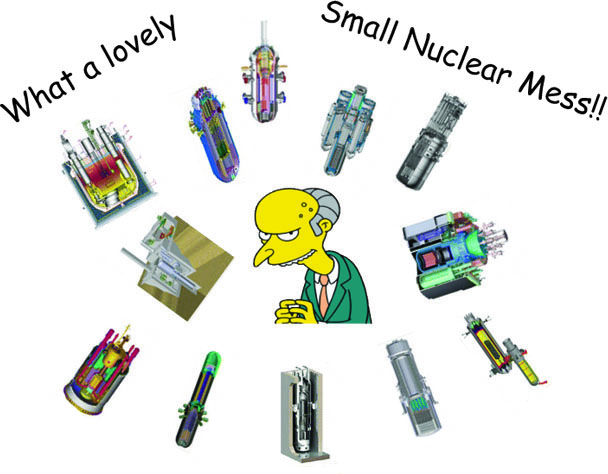
The report states that it is above all the continuous financial and political support for SMRs that keeps faith in them alive. In particular, private capital injections are playing an increasingly important role in driving research and development forward. There are 127 different SMR designs, so the funding amounts are widely spread. This means that most designs do not have sufficient financial resources to drive development forward
. According to the report, even the US start-up NuScale is still years away from building the first Small Module Reactor, although several designs have already been approved.
Dissecting The Belief That The US Should Forcibly Remove Tyrannical Governments
Caitlin Johnstone, Feb 02, 2026, https://www.caitlinjohnst.one/p/dissecting-the-belief-that-the-us?utm_source=post-email-title&publication_id=82124&post_id=186562873&utm_campaign=email-post-title&isFreemail=true&r=1ise1&triedRedirect=true&utm_medium=email
“Government X does bad things” and “therefore the US should forcibly overthrow Government X” are two completely different claims. Propagandists keep acting like they’re the same claim and like the second claim naturally follows the first, and I’m seeing far too many people accepting this manipulation without question.
They are not the same claim. They’re entirely unrelated. It should not be necessary to explain this to grown adults, but here we are.
Even if we accept as fact all the claims about how badly the US-targeted government is behaving, and even if we ignore the obvious fact that unilateral US regime change wars are against international law, there is still no valid reason to accept that a government doing bad things justifies US regime change interventionism.
Just because a foreign government has done bad things does not mean it would be good if another government took military action to overthrow them. This is uniquely true of the United States, who is quantifiably the single most tyrannical government on earth, and whose regime change interventionism reliably causes more death, suffering and abuse than its proponents claimed they were trying to stop.
The United States is the very last government on earth who has any business engaging in humanitarian interventionism. Literally dead last. No other government has been responsible for more catastrophic military actions justified under humanitarian pretenses than Washington and its network of allies and proxies.
Most of the violence, chaos and instability we’ve seen in the middle east in recent decades has been the fallout from prior western interventionism under the leadership of the United States. Dropping a Jewish ethnostate on top of a pre-existing civilization, installing puppet regimes, setting up military bases, invading Iraq, backing the Saudi genocide in Yemen, deliberately fomenting violent uprisings in Libya and Syria, and countless other interventions have kept the middle east from following the rest of humanity into a state of relative peace and stability after the second world war.
“Therefore the US should forcibly overthrow Government X” also doesn’t naturally follow from “Government X does bad things” because the US generally doesn’t overthrow governments who do bad things. A majority of the world’s dictatorships are armed and supported by the United States.
There are many, many tyrannical governments in our world whose abuses you hardly ever hear about, because they are not enemies of the US empire. You don’t hear western media and western governments constantly shrieking about the mass atrocities of Saudi Arabia, the UAE and other tyrannical Gulf state monarchies, for example, because they are aligned with the global interests of the US hegemon.
This shows that the US never actually attacks countries to stop their governments from doing bad things. That might be the excuse, but it’s never the reason. The governments targeted by the United States do tend to be more authoritarian than the western liberal ideal because if they weren’t controlling their country with an iron fist they would have already folded to US efforts to absorb them into the imperial power umbrella a long time ago, but that’s never the real reason for targeting them.
The real reason is global hegemony. The US never attacks foreign governments because they are doing bad things, it only ever attacks them for being disobedient and failing to kiss the imperial ring.
It is therefore crazy and stupid to pretend “Government X does bad things” should naturally give rise to the expectation that the US should forcibly overthrow that government. The US never deposes foreign governments for doing bad things, and when it does depose them it reliably leads to far more chaos, suffering and destruction than if it had just minded its own affairs.
Propagandists rely on repetition, echo chambers, information dominance and narrative distortion to manipulate our minds. But they also rely on our own lack of basic critical thinking skills. A little robust examination of our underlying assumptions goes a long way.
Trump slashing nuclear reactor safety and security rules
January 29, 2026, https://beyondnuclear.org/trump-slashing-reactor-safety-and-security-rule
Department of Energy executes White House Executive Order
Radical changes to nuclear safety and security at new reactors withheld from public review
In response to White House Executive Order 14301 issued on May 23, 2025, the US Department of Energy (DOE) is deregulating federal reactor safety /security standards and rules in order to expedite at least three experimental designs of eleven new advanced reactors. The DOE cuts are intended to speed up licensing, construction and operational testing phase so as to achieve reactor criticality by July 4, 2026. The expedited approval process will be used to demonstrate proof-of-product for full commercial operation of these designs as ready for mass assembly line production.
National Public Radio (NPR) reported on January 28, 2026, that it had obtained copies of the DOE documents as the basis for their news story headlined “The Trump administration has secretly rewritten nuclear safety rules.” The new rules and standards for reactor safety and security of unproven experimental reactor designs have not yet been publicly released. As NPR reports, the new rules are being rewritten to alter 5o years of duly promulgated regulatory law by the US Nuclear Regulatory Commission (NRC) not to bolster public safety, national security and environmental protection but to hasten the deployment of unproven, untested and still dangerous nuclear power technology.
In an earlier NRC interview on December 17, 2025. Dr. Allison Macfarlane, a former NRC Chairwoman, warned that the federal government cannot both commercially promote nuclear power and independently regulate nuclear safety and security with reasonable assure a very low probability of the next severe nuclear accident or by deliberate malice. On numerous occasions, Dr. Macfarlane, other NRC Commissioners and independent scientists point to an established historical conflict of interest created by federal government and nuclear industry’s simultaneous collaborative promotion and regulatory expansion of nuclear power and nuclear arms race.
That proved to be the downfall of the US Atomic Energy Commission (AEC) principally established for the development of atomic bombs and cogenerate electricity from the waste heat from the weaponization of the atom. The AEC was subsequently abolished by Congress with the passage of the Energy Reorganization Act of 1974 (ERDA) because of gross neglience of nuclear safety. On January 19, 1975, the AEC responsibilities were divided up creating the US Nuclear Regulatory Commission to take over the safety licensing and regulation of commercial nuclear power and the Energy Research and Development Agency (ERDA) to handle energy research, development, and the functions of nuclear weapons production. ERDA was later incorporated into the US Department of Energy in 1977.
The United States has now come full circle with the Trump Administration’s executive orders dismantling 50 years of promulgation of nuclear power safety regulation and regulatory law to return safety to the back seat and nuclear energy promotion as the priority. It is further alarming and no secret that several of the new commercial reactor designs under licensing review by the DOE are in fact “dual purpose” reactors that once operational will have the capability to produce both electrical energy and the basic building blocks for nuclear weapon enhancement and expansion.
The January 28th NPR analysis finds that DOE’s nuclear rules “slash hundreds of pages of requirements for security at the reactors. They also loosen protections for groundwater and the environment and eliminate at least one key safety role. The new orders cut back on requirements for keeping records, and they raise the amount of radiation a worker can be exposed to before an official accident investigation is triggered.”
Where the protection of groundwater from radioactive contamination once was required as a “must,” the new DOE rules and standards need only provide “‘consideration’ to ‘avoiding or minimizing’ radioactive contamination. Radioactive monitoring and documentation are also softened,” NPR observed.
An independent scientist is quoted in the NPR story, “They’re taking a wrecking ball to the system of nuclear safety and security regulation oversight that has kept the U.S. from having another Three Mile Island accident,’ said Edwin Lyman, director of nuclear power safety at the Union of Concerned Scientists. ‘I am absolutely worried about the safety of these reactors.’”
Now here we are, during the 50th anniversary of the US Nuclear Regulatory Commission, the Trump Administration, the DOE and the nuclear industry are poised for “Unleashing American Energy” by deregulatory Executive Orders.
The DOE announced the “Reactor Pilot Program” in June 2025, following the release of Executive Order 14301, which accelerates and expands the federal experimental reactor testing program to streamline commercial reactor licensing and oversight. At the same time, the Trump Administration is deregulating the NRC by slashing its safety and security standards and regulatory law.
The DOE “Pilot Reactor Program” is comprised of eleven projects. The DOE will choose at least three units to be licensed for operational criticality by July 4, 2026:
- Aalo Atomics Inc.—The Austin, Texas-based startup nuclear company has broken ground for its experimental 10 MWe sodium cooled reactor under development at the Idaho National Laboratory near Idaho Falls, Idaho. Five units are intended to make up a 50 MWe “pod” for electrical power production.
- Antares Nuclear Inc.— Headquartered in Los Angeles, California, Antares Nuclear has submitted a construction permit application filed for a four-unit, non-power, light-water-cooled, pool-type Versatile Isotope Production Reactor facility to be located at the Idaho National Laboratory desert site, in Bingham County, Idaho.
- Atomic Alchemy Inc.—Atomic Alchemy Inc. is headquartered in Idaho National Laboratory, Idaho Falls, Idaho. The company operates in the nuclear technology sector, specifically focused on non-power radioisotope production reactors for the defense, industrial and medical sectors using the 15-MWtVersatile Isotope Production Reactor (VIPR).
- Deep Fission, Inc.— The start-up company is headquartered in Berkeley, CA for the development of a 15 MWe pressurized water microreactor that first broke ground in Parsons, Kansas on December 9, 2025. It is proposed as a first-of-a-kind deep geological reactor at the Great Plains Industrial Park in Labette County on the Kansas-Oklahoma border. Deep Fission signed a Memorandum of Understanding (MOU) with its “sister” company Deep Isolation to collocate the power generation facility in a mile deep 30 inch wide borehole in the bedrock. The natural bedrock body and a mile deep column of water overhead are credited for the reactor containment system. The same borehole and bedrock body are credited as a permanent, deep geological high-level radioactive waste disposal facility. After seven years of operation, the reactor vessel is disconnected from the surface turbogenerator and control room and abandoned, capped and sealed in place in-place at the bottom of the borehole. The next fresh fuel loaded reactor unit is lowered down the borehole and connected to the surface to resume operation stacked on top of the now sealed unit nuclear waste unit. And so on.
- Last Energy Inc.—Last Energy Inc. corporate headquarters are in Austin, Texas. The start-up company is proposing to build a fleet of 20-MWe micro-modular reactors near Abilene, Texas targeting data center power needs (specifically the PWR-20, a downsized model of the currently operational commercially sized Point Beach reactor Unit 1 rated at 625 MWe in Wisconsin).
- Oklo Inc. (two projects)— Oklo Inc. is headquartered in Santa Clara, California. Its Aurora Powerhouse is a 75 MWe small modular liquid sodium-cooled fast reactor under development at the Idaho National Laboratory. Oklo is additional developing an estimated $1.7 billion project to build the nation’s first privately funded nuclear fuel recycling facility at the Oak Ridge Heritage Center in Tennessee. This project aims to recycle used nuclear fuel from existing reactors into fuel for fast reactors, with operations targeted for 2030. The proposed fast reactors are identified as a global nuclear weapons proliferation risk to be exported around the world.
- Natura Resources LLC— Natura Resources is headquartered in Abilene, Texas. The company is developing a Generation IV liquid-fueled molten salt reactor (MSR). They are proposing to site their first reactor at the Science and Engineering Research Center (SERC) on the campus of Abilene Christian University in Abilene, Texas.
- Radiant Industries Inc.— Radiant Industries is headquartered in El Segundo, California for modular microreactors. Radiant has announced that it will build its first microreactor factory on a decommissioned Manhattan Project site in Oak Ridge, Tennessee. World Nuclear News reports, “Radiant is developing the 1 MWe Kaleidos high-temperature gas-cooled portable microreactor, which will use a graphite core and TRISO (tri-structural isotropic) fuel. The electric power generator, cooling system, reactor, and shielding are all packaged in a single shipping container, facilitating rapid deployment.”
- Terrestrial Energy Inc.— Terrestrial Energy, Inc. is headquartered in Charlotte, North Carolina. They are developing the Integral Molten Salt Reactor (IMSR) which is a Generation IV small modular reactor (SMR) designed to produce both high-grade industrial heat and electricity. Their pilot project is planned for the Texas A&M University RELLIS Campus in Bryan, Texas.
- Valar Atomics Inc.— Valar Atomics Inc. is headquartered in El Segundo, California. The company is developing the Ward 250, a 100-kWt, helium-cooled, TRISO-fueled high-temperature gas reactor (HTGR) designed for modular, behind-the-meter, or microgrid use. The pilot project is located at the Utah San Rafael Energy Lab (USREL) in Emery County, Utah.
Europe in Panic: Trump’s Power Play Shakes the World Order
by Joshua Scheer, February 1, 2026 https://scheerpost.com/2026/02/01/europe-in-panic-trumps-power-play-shakes-the-world-order/
For decades, the Western Alliance has been treated as a permanent fixture of global politics — a transatlantic bond forged in the ashes of World War II and held together through the Cold War by a shared fear of the Soviet Union. But as this video argues, the world that created NATO no longer exists, and the assumptions that once held Europe and the United States together are cracking under the weight of new geopolitical realities.
The rise of China as an economic and technological superpower, Europe’s deepening trade ties with Beijing, and Washington’s escalating pressure campaigns have all exposed the uncomfortable truth: the “alliance” has always been a hierarchy, and the United States has always sat at the top. What’s different today is that the old Cold War glue no longer works — and the Trump administration’s aggressive economic demands, territorial ambitions, and threats toward its own allies have forced Europe to confront a question it has avoided for generations: Is dependence on Washington still sustainable?
Jeff Bezos and the audacious bid to put nuclear reactors on the Moon.

Amazon billionaire could get one-up on his rival Elon Musk in the space race’s latest twist.
Matthew Field, Senior Technology Reporter,
Amazon billionaire could get one-up on his rival Elon Musk in the space
race’s latest twist. Nasa’s proposals are likely to kick off a race
within the nuclear industry to be the first company to plant a reactor on
the Moon.
The US space agency previously ran a concept study into the idea.
The winning bidders included energy giant Westinghouse and defence firm
Lockheed Martin, working with nuclear business BWXT and X-energy, a nuclear
start-up backed by Jeff Bezos’s Amazon.
Amazon led a $500m (£365m)
investment in X-energy in 2024 and is one of its biggest shareholders. For
Bezos, who also controls the rocket business Blue Origin, success in
building a nuclear reactor on the Moon could help the billionaire one-up
rival Musk. Bezos and Musk have repeatedly clashed over their ambitions to
dominate space. The billionaires both bid for Nasa’s multibillion-dollar
lunar lander contract, which Musk won. The SpaceX boss has repeatedly
labelled Bezos and his Blue Origin business a “copycat”.
Telegraph 31st Jan 2026, https://www.telegraph.co.uk/business/2026/01/31/bezos-seeks-one-up-musk-nuclear-reactors-on-the-moon/
Why Trump’s Denunciations of the Iranian Killings Ring Fatally Hollow
How the Ghost of Renee Nicole Good Haunts His Response to Iran’s Protests
By Juan Cole, TomDispatch, 3 Feb 26
The pro-democracy protesters in Iran deserved so much better. They deserved the support of a democratic United States that could sincerely urge the rule of law and habeas corpus (allowing people to legally challenge their detentions) be respected, not to speak of freedom of speech, the press, and assembly in accordance with the Constitution. Unfortunately, President Donald J. Trump has forfeited any claim to respect for such rights or a principled foreign policy and so has proved strikingly ineffective in aiding those protesters.
The arbitrary arrests and killings committed by agents of Trump’s authoritarian-style rule differ only in number, not in kind, from the detainments and killings of protesters carried out by the basij (or pro-regime street militias) in Iran. In fact, they rendered his protests and bluster about Iran the height of hypocrisy. Above all, the killing of Renee Nicole Good in her car in Minneapolis by a Trumpian ICE agent haunted his response, providing the all-too-grim Iranian regime with an easy rebuttal to American claims of moral superiority.
Rioters and Terrorists
Trump’s threats of intervention in Iran came after the latest round of demonstrations and strikes there this winter. In late December, bazaar merchants in Iran decried the collapse of the nation’s currency, the rial. For many years, it had been under severe pressure thanks to Trump’s “maximum pressure” sanctions, renewed European sanctions over Iran’s nuclear enrichment program, and incompetent government financial policies. In December, the rial fell to 1.4 million to the dollar — and no, that is not a misprint — having lost 40% of its value over the course of the previous year. Inflation was already running at 42%, harming those on fixed incomes, while the rial’s decline particularly hurt the ability of Iranians to afford imported goods. ……………….
A turning point came on January 8th, when security force thugs began shooting down demonstrators en masse and stacking up bodies. Until then, the demonstrations had been largely peaceful……………………………………………………………………………………………………
By mid-January, human rights organizations were estimating that thousands of demonstrators had been mown down by the Iranian police and military. Even Iran’s clerical leader, Ali Khamenei, confirmed that thousands were dead, though ludicrously enough, he blamed Donald Trump for instigating their acts. On January 9th, perhaps as a cover for its police and military sniping into crowds, the government cut the country’s internet off, while denouncing all protesters as “rioters” and “terrorists.”
Antifa-Led Hellfire
And here’s the truly sad thing: while such unhinged rhetorical excesses were once the province of dictatorships and other authoritarian regimes like those in Iran and North Korea, the White House is now competing with Tehran and Pyongyang on a remarkably even playing field. The Trump White House, for instance, excused the dispatch of the National Guard to Portland, Oregon, last year on the grounds of a “Radical left reign of terror,” “antifa-led hellfire,” and “lunatics” committing widespread mayhem in that city, even deploying “explosives.” Of course, Trump’s image of Portland as an apocalyptic, anarchist free-fire zone bore no relation to reality, but it did bear an eerie relation to the language of the authoritarian regimes in Iran and North Korea.
That means Trump’s America now stands on increasingly shaky ground when it accuses other regimes of atrocities. ……………………………………………………………………………………………………………………………………………………………………………………………………………………………..https://tomdispatch.com/why-trumps-denunciations-of-the-iranian-killings-ring-fatally-hollow/
Finland detects small amount of radioactivity, sees no health impact

Armen Press 30th Jan 2026, original at https://armenpress.am/en/article/1240847
Small amounts of radioactive substances have been detected in air samples in Finland though there was no risk to public health, Reuters reported citing the country’s nuclear safety watchdog.
“The concentrations were very low and posed no risk to people or the environment,” the Radiation and Nuclear Safety Authority (STUK) said in a statement, according to Reuters.
According to the report, STUK said that the radioactive substances did not originate from Finnish nuclear power plants, though it did not offer an explanation for their detection.
“In many cases, the source of the radioactive substances cannot be identified,” the agency said.
Finland, Sweden, Russia and the wider region have a number of nuclear power reactors.
The long half-life of France’s nuclear tests in Polynesia
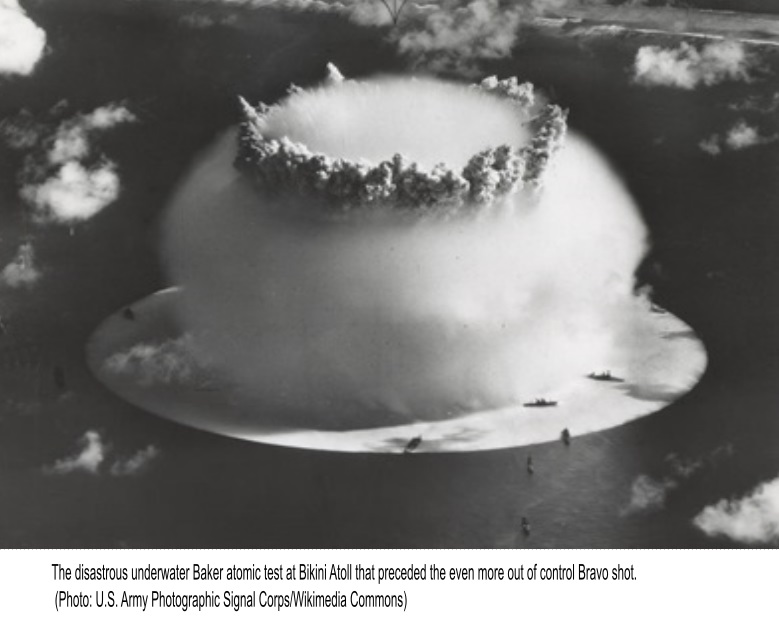
Only in the years since the programme ended has the true impact come to light. While the French military measured radiation levels after each explosion, the data was kept secret until victims’ associations won a legal battle to have it partially declassified in 2013.
“Every family in French Polynesia has a lot of cancer. It’s just not one. Some have, as we say, cocktails of cancer,”
Thirty years ago this week, on an island in the South Pacific, France conducted its final nuclear test – ending a programme that exposed thousands of people to radiation over decades. The islands of French Polynesia are still living with the fallout.
31/01/2026 By:Jessica Phelan, https://www.rfi.fr/en/france/20260131-the-long-half-life-of-france-s-nuclear-tests-in-polynesia
“It started with my grandmother. She had thyroid cancer during the Nineties. Then her first child, my auntie, had thyroid cancer too.”
Hinamoeura Morgant-Cross was a child in Tahiti when France last exploded a nuclear bomb. She has few memories of the years when her home was a testing ground, but they have changed the course of her life.
“My mum had thyroid problems… And also, my sister had thyroid problems. She has to take medication for the rest of her life. My auntie also got breast cancer a few years ago.
“And I have had chronic myeloid leukaemia since I was 24 years old.”
France tested nuclear weapons in Polynesia for 30 years. The explosions started in 1966, after France had already tested several bombs in the Algerian Sahara.
After Algeria claimed independence, France moved the tests to its colony in the South Pacific. They continued until 27 January 1996 – more than three years after the United States’ final test, four since the United Kingdom’s and five since the Soviet Union’s.
France chose two uninhabited atolls as its test sites, Moruroa and Fangataufa, which between them took the impact of 193 explosions – the biggest around 200 times more powerful than the bomb the US dropped on Hiroshima.
At least 41 took place in the open air, before tests were moved underground in 1975. Mushroom clouds drifted over the ocean, carrying radiation to populated islands – including Tahiti, more than 1,200 kilometres away.
Only in the years since the programme ended has the true impact come to light. While the French military measured radiation levels after each explosion, the data was kept secret until victims’ associations won a legal battle to have it partially declassified in 2013.
“Around 20 boxes” of documents out of thousands were released in that first batch, according to Patrice Bouveret of the Observatoire des Armements, a Lyon-based campaign group that helped make them public. But the information was enough for journalists and researchers to map a far broader pattern of exposure than France had ever publicly acknowledged.
One 1974 test alone exposed an estimated 110,000 people to more than the annual “safe” dose of radiation, according to a 2021 investigation led by public-interest newsroom Disclose.
The revelations pushed French President Emmanuel Macron to order the opening of all archives – with the exception of details that might suggest how to build a nuclear device. Tens of thousands of documents have since been released and continue to lay bare the gap between what French authorities knew about the risks, and what they told those most affected.
‘Cocktails of cancer’
“Every family in French Polynesia has a lot of cancer. It’s just not one. Some have, as we say, cocktails of cancer,” says Morgant-Cross, today a member of the French Polynesian parliament and an anti-nuclear campaigner.
“But it’s hard for them to think that it can be related to the nuclear tests because of the decades of French propaganda saying that French nuclear tests are clean.”
Visiting Tahiti in September 1966, president Charles de Gaulle declared that all precautions had been taken to ensure the tests would “not cause any inconvenience whatsoever to the dear people of Polynesia”.
Nearly three decades later, president Jacques Chirac – who ordered France’s final nuclear tests in 1995-96, reversing a moratorium that had halted the programme since 1992 – was still insisting that they had “strictly no ecological consequences”.
For years, Polynesians were told their lifestyle and eating habits were to blame for health problems, according to Morgant-Cross. She only made the connection between her family’s history of cancer and the nuclear tests, she says, when she met survivors in other countries.
Seeing the list of diseases that research has linked to radiation exposure, she realised the thyroid cancer that afflicted her relatives, as well as her own rare form of leukaemia, were among them.
“These aren’t illnesses that show up immediately after an explosion,” says Bouveret. “It’s not like a week later you get sick. They develop a long time afterwards.”
In 2023, France’s National Institute of Health and Medical Research, Inserm, used declassified military data to estimate how much radiation thyroid cancer patients had been exposed to and calculate what role it played. Researchers said nuclear tests “are most likely responsible for a small increase in the incidence of thyroid cancers in French Polynesia” – though they warned the estimated doses were probably inaccurate.
The difficulty of proving harm to health has been a barrier to compensation. France introduced a law in 2010 allowing victims to claim reparations from the state, but the criteria to qualify – which include demonstrating exposure to a certain level of radiation – have proved hard to meet.
Only 1,026 people had successfully claimed by the end of 2024, Bouveret says – 607 in mainland France, 417 from Polynesia and two from Algeria. “It’s ridiculous when you consider the number of people who have been impacted by these diseases.”
A bill to reform the law is before the French parliament. It would also bind the state to cover the costs of treating illnesses caused by radiation – estimated at some €855 million, and currently borne by French Polynesian social security.
A society upended
The broader consequences of France’s nuclear tests are even harder to quantify.
The programme kicked off massive construction, drawing islanders to help build military bases and research stations. Many stayed to work at the new sites, concentrating the population and shifting labour away from traditional fishing and farming.
Corals were flattened to make way for ships, which may have contributed to a dramatic rise in ciguatera – a type of food poisoning caused by eating fish sickened by toxins from plankton found on damaged reefs.
“They really poisoned our main food,” says Morgant-Cross. “We eat fish from breakfast to dinner.” Today the archipelago is largely dependent on food shipped in from elsewhere, and like other parts of overseas France, suffers from high cost of living.
As de Gaulle promised, the nuclear programme brought economic opportunities – but they depended on jobs and money provided by the French state, binding Polynesia ever more tightly to France.
Bouveret believes that helped stymie the archipelago’s aspirations to independence. Now, given the costs of caring for nuclear victims and containing the lingering radiation on Moruroa and Fangataufa, he says separating from France looks “extremely difficult”.
For Morgant-Cross, the first step is to “decolonise minds” and help Polynesians fathom the damage done. While she was at school in the 1990s, she recalls, children were still taught “we should be grateful” for the nuclear tests.
Things have changed since then, but confronting the past remains difficult – and not only for the generation who remember when speaking out could cost people their jobs or lead to arrest.
“As a mother of two boys, I really hope that they don’t have the burden of this issue like myself,” she says.
“I felt some trauma, but without understanding where it came from. And I understood with my grandmother, when I saw the fear in her eyes… I saw how guilty she felt because of the leukaemia that I have. She felt that if she had protested more, maybe I would not be sick today.
“It’s really traumatic for our people.”
Listen to a version of this story on the Spotlight on France podcast, episode 139.
Small Modular Reactors: Game changer or more of the same?
There has been a large amount of publicity on Small Modular Reactors (SMRs) based on exaggerated, unproven or untrue claims for their advantages over large reactors. Only one order for a commercially offered design has been placed (Canada) and that had yet to start construction in January 2026. The UK should not invest in SMRs until there is strong evidence to support the claims made for them.
Policy Brief, Stephen Thomas, Emeritus Professor of Energy Policy, Greenwich University, 31 Jan 26 https://policybrief.org/briefs/small-modular-reactors-game-changer-or-more-of-the-same/
Introduction
With current large reactor designs tarnished by their poor record of construction, attention for the future of new nuclear power plants has switched to Small Modular Reactors (SMRs). The image of these portrayed in the media and by some of their proponents is that they will roll off production lines, be delivered to the site on the back of a truck and, with minimal site assembly, be ready to generate in next to no time; they will be easy to site, a much cheaper source of power, be safer and produce less waste than large reactors; as a result, they are being built in large numbers all around the world. But what is the reality?
What are SMRs and AMRs?
In terms of size, the International Atomic Energy Agency (IAEA) defines SMRs as reactors producing 30-300MW of power and defines reactors producing up to 30MW as micro-reactors. In practice, the size of SMRs is increasing and of the seven designs that have received UK government funding, four are at or beyond the 300MW upper limit for SMRs.1 The vendors of the two micro-reactor designs funded by the UK have both collapsed,2 leaving the X-Energy Xe-100 the only reactor design, at 80MW, that is technically an SMR.
The term Advanced Modular Reactor (AMR) is largely a UK invention and denotes reactors using designs other than the dominant large reactor technologies — Pressurised and Boiling Water Reactors (PWRs and BWRs). In other countries, the term SMR covers all reactors in the IAEA’s size range. None of the proposed AMR designs are new, all having been discussed for 50-70 years but not built as commercial reactors. They can be divided into those built as prototypes or demonstration reactors — the Sodium-cooled Fast Reactor (SFR) and the High Temperature Gas-cooled Reactor (HTGR) — and those that have not been built — Molten Salt Reactors (MSRs) and Lead-cooled Fast Reactors (LFRs).
Some designs include a heat storage device so that when demand is high, this heat can be used to generate additional electricity as well as that generated by the reactors. When electricity demand is low, the heat produced by the reactor can be stored for when demand is higher, giving it a generating flexibility. For example, the Terrapower SFR design includes molten salt heat storage to boost the station’s output from 345MW to 500MW at peak times. This is intended to address the issue that operating reactors in ‘load-following mode’ is problematic technologically and economically. It is not clear whether this generating flexibility justifies the substantial additional expense of the heat storage system.
What is the case for SMRs and AMRs?
SMRs and AMRs are presented, not only by the nuclear industry, but also by the media and government, as established, proven, commercial products. The main claims for SMRs and AMRs compared to large reactors are:
- They will be cheaper to build per kW of capacity and less prone to cost overruns;
- They will be quicker and easier to build and less prone to delay;
- They will produce less waste per kW of capacity;
- Building components on factory production lines will reduce costs;
- Modular construction, reducing the amount of site-work, will reduce costs and delays;
- They will be safer;
- They will generate more jobs.
There have been numerous critiques that demonstrate these claims are at best unproven or at worst simply false.3 The summary of the critiques on each point is as follows.
Construction Cost
The first commercial reactors worldwide were mostly in the SMR size range, but they proved uneconomic and the vendors continually increased their size to gain scale economies, culminating in the 1600MW Framatome European Pressurised Reactor (EPR). Intuitively, a 1600MW reactor vessel will cost less than ten 160MW reactor vessels. While increasing their size was never enough to make the reactors economic, it is implausible that scaling them down will make them cheaper per unit of capacity because of the lost scale economies. It appears that SMRs are struggling to be economically viable. Holtec doubled the electrical output of its design at some point in 2023.4 The realistic competitors to SMRs are not large reactors but other low-carbon options such as renewables and demand-side management.
“While increasing their size was never enough to make the reactors economic, it is implausible that scaling them down will make them cheaper per unit of capacity because of the lost scale economies.”
Construction time
There is no clear analysis explaining why reactors are now expected to take longer to build and why they seem more prone to delay.5 However, it seems likely that the issue is that the designs have got more complex and difficult to build as they are required to take account of vulnerabilities exposed by events such as the Fukushima disaster. The problems thrown up by the occupation of Ukraine’s Zaporizhia site by Russia have yet to be taken up in new reactor designs. As a result of the 9/11 terrorist attack on New York, new reactor vessels are required to be able to withstand an aircraft impact. The conflict in Ukraine spilled on to the Zaporizhia site causing concerns that a serious accident would result. Analysis suggests that the exterior of other parts of the plant should be toughened. If the issue is complexity rather than size per se, reducing the size of the reactors may do no more than make construction a little easier.
Waste
For SMRs, there is a clear consensus that they will produce more waste per unit of capacity than a large reactor. For example, Nuclear Waste Services, the UK body responsible for waste disposal said: “It is anticipated that SMRs will produce more waste per GW(e) than the large (GW(e) scale) reactors on which the 2022 IGD data are based.”6 Alison MacFarlane, former chair of the US Nuclear Regulatory Commission (NRC) wrote: “The low-, intermediate-, and high-level waste stream characterization presented here reveals that SMRs will produce more voluminous and chemically/physically reactive waste than LWRs, which will impact options for the management and disposal of this waste.”7 The AMRs will produce an entirely different cocktail of waste varying according to the type of reactor.
“SMRs will produce more voluminous and chemically/physically reactive waste than Large Light Water Reactors”
Factory production lines
In principle and in general, production lines, which have high set-up costs, can reduce costs with high-volume items with a fixed design and a full order book. But, if demand is not sufficient to fully load the production line or the design changes requiring a re-tooling, the fixed costs might not be fully recoverable. The production lines proposed for SMRs will produce less than a handful of items per year — a long way from a car or even an aircraft production line — and the market for SMRs is uncertain, so guaranteeing a full order book is impossible. There is also a ‘chicken and egg’ issue that the economics of SMRs will only be demonstrated when the components are produced on production lines, but production lines will only be viable when the designs are demonstrated sufficiently to provide a flow of orders.
Modularity
Modularity is a rather vague term, and all reactors will be made up of components delivered to the site and assembled there, any difference between designs being down to the extent of site work. The Westinghouse AP1000 design is said to be modular but this did not prevent all eight orders suffering serious delays and cost overruns. Framatome now describes the successor design to the EPR, the 1600MW EPR2, as modular.8
Safety
Some of the SMRs and AMRs rely on ‘passive’ safety, in other words, they do not require the operation of an engineered system to bring the reactor back under control in the event of an accident. A common assumption is that because it is passive, it is fail-safe, and will therefore not require back-up safety systems and so will be cheaper. None of these assumptions is true and, for example, the UK Office of Nuclear Regulation (ONR) has said for the 20MW PWR design from Last Energy: “ONR advised that it is philosophically possible to rely entirely on two passive safety systems, providing there is adequate defence in depth (multiple independent barriers to fault progression)”.9 Some designs rely on being built underground but the Nuward and NuScale designs that use this have struggled to win orders with Nuward being abandoned and NuScale losing its only major order prospect because of rising costs.10
Job creation
A key selling point for SMRs is that they will require much less site work and that implies fewer jobs. More of the work will be done in factories but the business model for SMRs requires that, globally, as few factories be built as possible to maximise scale economies, so if, for example, the factory is not in the UK, neither will the jobs be.
What is the experience with SMRs?
Many reactors that fall into the size range of SMRs were built in the 1960s including 24 reactors in the UK. By the mid-60s, almost all new orders were for reactors larger than 300MW. This century, only two SMR projects have been completed11, one in China and one in Russia, but neither design appears to have any firm follow-up projects. Two projects are under construction, one in Russia and one in China, but neither design appears to have any further firm order prospects. There is one micro-reactor under construction in Argentina (see Table below).
The most advanced project using a commercially available design is for a GE Vernova BWRX-300 reactor to be built at the Darlington site in Canada. There appears to be a firm order for this reactor although by January 2026, construction had not started. The Canadian safety regulator will assess the design during the construction period, not before construction starts as would be required in most jurisdictions; this gives rise to a risk of delays and cost escalation if a design issue requiring additional cost emerges during construction.
There are several other projects with a named site and design, often presented in the media as being under construction, but these have yet to receive regulatory approval for the design, they do not have construction permits and a firm reactor order has not been placed. Those listed in Table 1 are the ones that appear most advanced in terms of regulatory approvals. Numerous other projects have been publicised, invariably with ambitious completion date targets, but they are some distance from a firm order being placed. Up to this point, historically, a high proportion of nuclear projects of all sizes announced do not proceed and there is no reason to believe this will not be the case with these projects. Once a firm reactor order has been placed, the project is more likely to go ahead because the cost of abandonment is high.
The two operating SMRs (in China and Russia) have a very poor record in terms of construction time and operating performance, but authoritative construction costs are not known. Completion of the three under construction is also behind schedule. While these projects are not for commercial designs, this provides no evidence that the ambitious claims for SMRs will be met.
Conclusions
The perception that SMRs are being built in large numbers is untrue and the claims made for them in terms of, for example, cost, safety, and waste are at best unproven and at worst false.
The image of them being much smaller than existing reactors is incorrect. The IAEA’s size range is arbitrary but the clear trend for SMRs to increase in size does put a question mark against the claims made for them such as reduced cost per kW due to small size, ease of siting and mass production. Most of the designs that have realistic order prospects are at or beyond the 300MW upper limit of the IAEA range for SMRs. This is illustrated by the Holtec design which, for more than a decade was being developed as a reactor, SMR160, designed to produce 160MW of electricity. In 2023 and with no publicity, the output of the reactor was doubled to become the SMR300 and projects using this technology are foreseeing 340MW of power. The idea that siting and building them will be easy is not credible; a reactor of more than 300MW will need to be carefully sited so it is not vulnerable to sea-level rise or to seismic issues and will require substantial on-site work including foundations, suggesting that the claim that these projects would be largely factory built is implausible. It would also mean that either the modules would be very large making them difficult to transport or would require a larger number of modules increasing the amount of site-work.
“The perception that SMRs are being built in large numbers is untrue and the claims made for them in terms of, for example, cost, safety, and waste are at best unproven and at worst false.”
This increased size also means that the image of a rolling production line producing large numbers of reactors is inaccurate. Rolls Royce, whose design has increased to 470MW, is anticipating its production lines would produce components for only two reactors per year.
The UK, along with Canada and the USA is in the vanguard of development of SMR designs. The history of nuclear power shows that developing new reactor designs is an expensive venture with a high probability of failure. The UK’s chosen design is the largest SMR design on offer and is being developed by a company with no experience designing or building civil nuclear power plants. Submarine reactors have very different design priorities and the reactors built by Rolls Royce use US designs. There is huge scope for the UK to build much cheaper offshore wind and to carry out energy efficiency measures which would have the double dividend of reducing emissions and tackling fuel poverty. It would make much more sense for the UK to let other countries make the investments and take the risk and only if SMRs are shown to fulfil the claims made for them to then adopt them as part of the UK’s generating mix.
| Country | Site | Vendor | Technology | Output MW | Status | Construction start | Commercial operation | Load factor |
|---|---|---|---|---|---|---|---|---|
| Russia | Lomonsov | Rosatom | PWR | 2 x 32 | Operating | April 2007 | May 2020 | 32.1% |
| Russia | Brest | Rosatom | SFR | 300 | Under construction | June 2021 | 2028/29 | |
| China | Shidoa Bay | Tsinghua | HTGR HTR-PM | 200 | Operating | December 2012 | December 2023 | 26.9% |
| China | Linglong 1 | CNNC | PWR ACP100 | 100 | Under construction | July 2021 | 2026? | |
| Argentina | Carem25 | CNEA | PWR Carem | 25 | Under construction | August 2015 | 2028? | |
| Canada | Darlington | GE Vernova | BWRX-300 | 300 | Firm order | – | 2030? | |
| USA | Kemmerer | Terrapower | SFR Natrium | 345 | Construction permit applied for | – | 2031? | |
| USA | Palisades | Holtec | PWR SMR300 | 2 x 340 | Pre-licensing | – | 2030? | |
| USA | Clinch River | GE Vernova | BWRX-300 | 300 | Construction permit applied for | – | 2033? | |
| UK | Wylfa | Rolls Royce | PWR | 470 | Design review | 2030? | 2035? | |
| UK | Llynfi | Last Energy | PWR | 4 x 20 | Site licence applied for | 2028? | 2030? |
Note: Load factor is the most widely used measure of reactor reliability and is measured as the electrical output of the plant as a percentage of the output produced if the reactor had operated uninterrupted at full power.
Endnotes…………………………………………………………………………………………………………………………………………………………….
Controversial plans for 139 homes on old Marchon site approved.
“We have been given no guarantees that this land is safe or that contamination will not be disturbed. It is unclear how old some of the contamination reports are, raising doubts over their accuracy and reliability.“
even the developer admits in the reports they do not fully know what they will uncover until excavation begins.
By Lucy Jenkinson, 10th December 2025, https://www.whitehavennews.co.uk/news/25684633.decision-due-controversial-plans-139-homes-old-marchon-site/
CONTROVERSIAL plans to build 139 homes on the site of a former chemical factory have been approved by planners today.
The application put forward by Persimmon Homes to build houses on the old Marchon site at Kells in Whitehaven, was considered by Cumberland Council’s planning committee this afternoon (December 9).
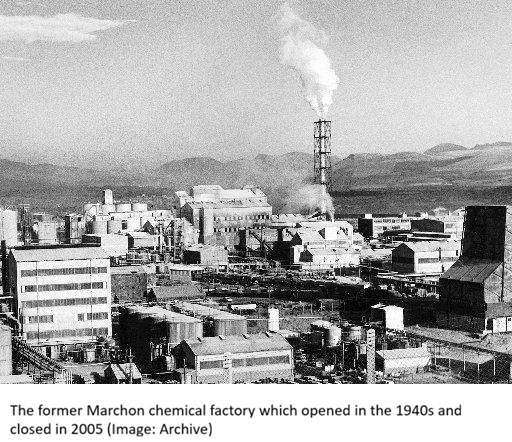
Members visited the site, which was formerly used to produce ingredients for detergents and toiletries from the 1940s until 2005, before making their decision.
The application is for phase one of the scheme, with an area of land designated to provide a commercial related development within phase two.
Persimmon Homes say the location creates an opportunity for ‘a vibrant residential development of good quality design’ and a range of housing types would be provided to meet local needs.
Access points would be created off High Road and there would be an opportunity to link with an existing national pedestrian and cycle network.
Concerns had been raised by some residents living nearby over the risk of contaminated land and the capacity of local services including school places and GP surgeries.
One resident who lives at Saltom Bay Heights said: “We have been given no guarantees that this land is safe or that contamination will not be disturbed. It is unclear how old some of the contamination reports are, raising doubts over their accuracy and reliability.”
“Proper up-to-date testing of the land has not been carried out, and even the developer admits in the reports they do not fully know what they will uncover until excavation begins. There are known areas where digging is restricted, yet no reassurance has been provided on what happens if contamination is released.
“There are not enough school places and GP surgeries and dental services are already overstretched in Whitehaven, yet these pressures have not been properly addressed. Approving this development without fully resolving these risks would be reckless and irresponsible. They can’t control the winds and airborne chemical contamination.”
Paula and Gary Marsh, who also live at Saltom Bay Heights, said they were ‘deeply concerned’ about the risk of airborne chemicals during excavation.
They said: “This development is being pushed forward without certainty, without transparency, and without adequate protection for public health. These risks are real, current, and long-term, and they cannot be dismissed.”
A remediation statement submitted with the application, which dates back to 2007, says the site was designated as contaminated land by the former Copeland Council, on the basis of sixteen pollutant linkages. These included petroleum hydrocarbons, phosphates and metals such as arsenic, copper, lead and mercury.
The Environment Agency said in its initial response to the plans that it considered the scheme to be ‘acceptable’ in principle but further detail should be agreed with the planning authority.
It also said if contamination not previously identified was found to be present at the site then no further development should be carried out until a remediation strategy detailing how the contamination would be dealt with had been approved by the local planning authority.
Persimmon Homes was approached for comment by The Whitehaven News.
With Trump silent, last US-Russia nuclear pact set to end

Washington (United States) (AFP) – Come Thursday, barring a last-minute change, the final treaty in the world that restricted nuclear weapon deployment will be over.
France24 1st Feb 2026
New START, the last nuclear treaty between Washington and Moscow after decades of agreements dating to the Cold War, is set to expire, and with it restrictions on the two top nuclear powers.
The expiration comes as President Donald Trump, vowing “America First,” smashes through international agreements that limit the United States, although in the case of New START, the issue may more be inertia than ideology.
Russian President Vladimir Putin in September suggested a one-year extension of New START.
Trump, asked afterward by a reporter for a reaction while he was boarding his helicopter, said an extension “sounds like a good idea to me” — but little has been heard since.
Putin ally Dmitry Medvedev, who as Russia’s president signed New START with counterpart Barack Obama in 2010, said in a recent interview with the Kommersant newspaper that Russia has received no “substantive reaction” on New START but was still giving time to Trump.
Putin ally Dmitry Medvedev, who as Russia’s president signed New START with counterpart Barack Obama in 2010, said in a recent interview with the Kommersant newspaper that Russia has received no “substantive reaction” on New START but was still giving time to Trump.
Trump “seems to have the right instinct on this issue but has thus far failed to follow through with a coherent strategy,” Kimball said.
Jon Wolfsthal, director of global risk at the Federation of American Scientists, said Trump and Putin could pick up the phone and agree immediately at a political level to extend New START.
“This is a piece of low-hanging fruit that the Trump administration should have seized months ago,” he said.
Wolfsthal is among experts involved in the “Doomsday Clock” meant to symbolize how near humanity is to destruction. It was recently moved closer to midnight in part due to New START’s demise……………………………………………………………………………………………….https://www.france24.com/en/live-news/20260201-with-trump-mum-last-us-russia-nuclear-pact-set-to-end
Malaysian Officials take action as concerns arise about nuclear power plants: ‘Preparing for that possibility’

It also requires clearer decommissioning plans and long-term waste management strategies
Malaysia will only decide on the use of nuclear energy for electricity after 2030
“We cannot begin preparations only after a decision has been made.”
by Christine Dulion, January 31, 2026, https://www.thecooldown.com/green-business/nuclear-regulatory-law-malaysia-amendment/
Malaysia has taken a major step toward strengthening public and environmental safety with the rollout of a newly amended nuclear regulatory law. Officials say it’s designed to tighten oversight as the country weighs nuclear power as part of its long-term energy future.
The Atomic Energy Licensing Bill (Amendment) 2025 officially took effect on Dec. 1, according to the Edge Malaysia. The changes come as the government evaluates whether nuclear energy could help meet its goal of reaching net-zero pollution by 2050, while also addressing concerns around safety, waste, and accountability.
Under the updated law, anyone involved with atomic energy is required to be licensed, including for the possession or use of radioactive materials, operation of radiation generators, management of radioactive waste, and the construction or decommissioning of nuclear-related facilities. The amendment also introduces a new permit system for cross-border activity, making it illegal to import, export, or transport nuclear materials or technology without government approval.
Violations can carry serious consequences. . Anyone found illegally moving nuclear or radioactive materials across borders could face up to 10 years in prison, fines of up to $123,300, or both. The law also criminalizes the intentional misuse of radioactive materials if it is meant to cause injury, death, or environmental damage.
Supporters say the law reassures residents that any future nuclear activity, such as recycling radioactive waste, will be tightly regulated. It also requires clearer decommissioning plans and long-term waste management strategies, making sure radioactive materials are monitored throughout their entire lifecycle.
Nuclear energy is a complex topic. While it can produce large amounts of low-pollution electricity and support energy security, it also raises concerns around radioactive waste, high upfront costs, and long-term safety. Malaysia’s new legislation doesn’t settle that debate, but it does put firmer rules in place before decisions are made.
“Although Malaysia will only decide on the use of nuclear energy for electricity after 2030, this amendment represents a step in preparing for that possibility, as we cannot being preparations only after a decision has been made,” said Science, Technology, and Innovation minister Chang Lih Kang.
Is it time to replace NATO with EATO?

The very worst outcome following the end of the war in Ukraine would be for a new Iron Curtain to be drawn, with Europe and Ukraine continuing to pursue a policy of political and cultural exceptionalism against Russia, while arming themselves to the teeth in anticipation of the next war.Time to think about a Eurasian Treaty to secure peace and security between Russia and Europe
If all that the Treaty included was a version of the Washington Treaty Preamble with Articles 1 and 2, it would help Europe, Ukraine and Russia to take a huge stride towards peaceful coexistence and mutually beneficial economic cooperation across the Eurasian landmass. Perhaps, with war seemingly approaching its final chapter, it’s time to create a new vision for coexistence.
Ian Proud, Jan 31, 2026, https://thepeacemonger.substack.com/p/is-it-time-to-replace-nato-with-eato?utm_source=post-email-title&publication_id=3221990&post_id=186398540&utm_campaign=email-post-title&isFreemail=true&r=1ise1&triedRedirect=true&utm_medium=email
In recent weeks, there has been renewed discussion of the future of NATO as a guarantor of security on the European mainland.
The newly published US National Defense Strategy has made it clear that it is for European States to manage the risk of future military conflict with Russia, to allow America to focus its efforts on competition with China in the Pacific.
America has reintroduced the concept of gunboat diplomacy, threatening to invade Greenland and to attack Iran, while also kidnapping the leader of a sovereign nation in Venezuela. And while only the first has induced genuine horror in European capitals, other developments, most notably the gunning down of two protestors in Minnesota, have made European citizens, if not its leaders, increasingly anxious about ties with the Americans.
Times have changed since the North Atlantic Treaty was signed in Washington DC on 4 April 1949.
Then, America was the nation that had provided enormous military support and troops to Britain and the Commonwealth, to take on Hitler’s Germany on the western front of World War II, as the Soviet Union drove the Nazis out, having halted their advance in Stalingrad.
Wartime allies became adversaries following the war, as Winston Churchill raised the spectre of Communism’s spread across Europe.
Yet the Soviet Union no longer exists as an epochal threat to the freedom and democracy of European States emerging from the devastation of World War II.
European states have largely all achieved a level of prosperity, peace and stability unseen in centuries, on a continent that was historically dominated by war and conquest by the largest powers.
Russia is now a functioning market democracy, albeit one that does not wish to see itself shackled to a normative system of liberal ‘values’ that increasing numbers of citizens across Europe are turning away from, as they press their governments to focus on domestic priorities.
The main outlier to that is Ukraine, which remains an economically failing state and seething hotbed of conflict, caused by the aspirations to expand a NATO military alliance and to inflict a strategic defeat on Russia which, in the future, historians will come to regard as a catastrophic mistake.
If the current trend of the USA turning its gaze across the Pacific continues, loosening the fabric of NATO to the point of disintegration, the primary underlying driver of war in Ukraine would evaporate.
No NATO would radically shift the nature of pan-European security, removing a long-standing and oft-stated Russian fear of external aggression from a military bloc that, even before members lift defence spending to 5% of GDP, accounted for 53% of global military expenditure.
Indeed, no NATO might also allow existing European Members to reappraise whether vast increases in defence spending were, in fact, necessary, or whether a new approach to pan-European security might allow them to re-focus in on the prosperity for which their citizens yearn.
That would only be possible, however, if, after the war in Ukraine ends, there was an effort by European states to re-establish relations with Russia, while at the same time deepening relations with Ukraine, despite the evident suspicion on all sides.
In the immediate post-war period, Ukraine would be the only state in the heart of Europe that did not fit in with the club.
Issues such as Ukraine’s endemic corruption, its war-induced democratic back-sliding, its tolerance of the neo-Nazi extremist fringe, and its efforts to erase all traces of Russianness, would have to be addressed should it pursue its stated aspiration of membership of the European Union.
Yet there is no reason to believe that it could not rebuild, with its sizeable, generally well-educated and industrious population, should it repopulate the country after the war ends.
A normalisation of relations with Russia, beyond the obvious benefits from the reopening of borders and reestablishment of people-to-people links, would help to reindustrialise European economies with the benefit of lower cost energy.
The very worst outcome following the end of the war in Ukraine would be for a new Iron Curtain to be drawn, with Europe and Ukraine continuing to pursue a policy of political and cultural exceptionalism against Russia, while arming themselves to the teeth in anticipation of the next war.
The very big risk is that a Ukraine so bruised and resentful following the cessation of hostilities would seek to shape European policy to remain explicitly anti-Russian, in the manner that Poland and the Baltic States have tried to do for many years.
That should never be allowed to happen.
For the very reason that grievance and distrust may dominate some aspects of European relations for a generation to come, a more stable framework for pan-European security will be needed to prevent another repeat of an avoidable war in Ukraine.
That might require the creation of a Eurasian Treaty (and associated Organisation – EATO) perhaps, based on the North Atlantic Treaty of 1949, but without the commitment to collective defence within Article 5.
If all that the Treaty included was a version of the Washington Treaty Preamble with Articles 1 and 2, it would help Europe, Ukraine and Russia to take a huge stride towards peaceful coexistence and mutually beneficial economic cooperation across the Eurasian landmass. Perhaps, with war seemingly approaching its final chapter, it’s time to create a new vision for coexistence. A draft Eurasian Treaty might begin as follows:
The Parties to this Treaty reaffirm their faith in the purposes and principles of the Charter of the United Nations and their desire to live in peace with all peoples and all governments.
They are determined to safeguard the freedom, common heritage and civilisation of their peoples, founded on the principles of democracy, individual liberty and the rule of law. They seek to promote stability and well-being in the Eurasian area. They are resolved to unite their efforts for the preservation of peace and security. They therefore agree to this Eurasian Treaty :
Article 1
The Parties undertake, as set forth in the Charter of the United Nations, to settle any international dispute in which they may be involved by peaceful means in such a manner that international peace and security and justice are not endangered, and to refrain in their international relations from the threat or use of force in any manner inconsistent with the purposes of the United Nations.
Article 2
The Parties will contribute toward the further development of peaceful and friendly international relations by strengthening their free institutions, by bringing about a better understanding of the principles upon which these institutions are founded, and by promoting conditions of stability and well-being. They will seek to eliminate conflict in their international economic policies and will encourage economic collaboration between any or all of them.
Sellafield is Awash with Acid Chemicals – Rivers, Sea, Soil, Nothing is Off Limits for “Disposal” of This Toxic Brew Mixed with Dangerous Radioactive Isotopes at the Arse End of Atomic “Clean Energy”.
Sellafield’s Latest £22 MILLION Chemical Tender for wiping the Arse End of “Clean Energy”
Marchon Chemical Works , contaminated industrial site, which supplied Sellafield with a sea of acid used in processes on site, is now insanely earmarked for housing!……………………………………………………………………………………………………………………………………………………..
There is a requirement for Sellafield Ltd to implement a Contract for Bulk and Packaged Chemicals to support site-wide operations and decommissioning activities across the Sellafield site.
This will include, but is not limited to, the following scope:
- Sodium Hydroxide 22% – IBC 1000L/1245kg
- Aluminium Sulphate 8% – Delivered via road tanker.
- Ferric Nitrate Solution – Delivered via road tanker.
- Praestol DW-31-EU – 1L/1.1kg
- Hydrochloric Acid 14% – IBC 1000L/1071kg
- Hydrated Lime – Per kg
- Nickel Nitrate – 10kg
- Sodium Carbonate Light – 25kg
- Sodium Hypochlorite (14/15%) – IBC 1000L/1255kg
- Pure Dried Vacuum Salt – Per kg
- Sodium Nitrate 36% – 834L/1068kg
- Granulated Sugar – 1000kg
- Sulphuric Acid 77% – IBC 1000L/1698Kg
- Sulphuric Acid 96% – Per kg
- Silver Zeolite Cartridges
- Silver Zeolite – 35g
- Brenntamer CL 845 – 25kg
- Lithium Nitrate – Per kg or 1230kg
…………………………………………………………………..
CPV classifications
24960000 – Various chemical products
24311521 – Caustic soda
24411000 – Nitric acid and salts
24311520 – Sodium hydroxide
24311410 – Inorganic acids
24311470 – Hydrogen chloride
24313100 – Sulphides, sulphites and sulphates
24311500 – Hydroxides as basic inorganic chemicals
24312120 – Chlorides
24311522 – Liquid soda
24311411 – Sulphuric acid
24313000 – Sulphides, sulphates; nitrates, phosphates and carbonates
24313120 – Sulphates
24313300 – Carbonates
24962000 – Water-treatment chemicals………………………………………………………………………………………………………………………………………………………………………………………………………………………….. https://mariannewildart.wordpress.com/2026/01/31/sellafield-is-awash-with-acid-chemicals-rivers-sea-soil-nothing-is-off-limits-for-disposal-of-this-toxic-brew-mixed-with-dangerous-radioactive-isotopes-at-the-arse-end-of-atomic/
1 This Month



26 September – International Day for the Total Elimination of Nuclear Weapons


PLEASE OPPOSE HR 8255 AND S.3639 – bills would accelerate satellite deployment, with no environmental review or safeguards – https://ncstd5li.quorum.us/campaign/169331/
To see nuclear-related stories in greater depth and intensity – go to https://nuclearinformation.wordpress.com
-
Archives
- September 2026 (281)
- August 2026 (330)
- July 2026 (355)
- June 2026 (287)
- May 2026 (306)
- April 2026 (356)
- March 2026 (251)
- February 2026 (267)
- January 2026 (308)
- December 2025 (358)
- November 2025 (359)
- October 2025 (375)
-
Categories
- 1
- 1 NUCLEAR ISSUES
- business and costs
- climate change
- culture and arts
- ENERGY
- environment
- health
- history
- indigenous issues
- Legal
- marketing of nuclear
- media
- opposition to nuclear
- PERSONAL STORIES
- politics
- politics international
- Religion and ethics
- safety
- secrets,lies and civil liberties
- spinbuster
- technology
- Uranium
- wastes
- weapons and war
- Women
- 2 WORLD
- ACTION
- AFRICA
- Atrocities
- AUSTRALIA
- Christina's notes
- Christina's themes
- culture and arts
- Events
- Fuk 2022
- Fuk 2023
- Fukushima 2017
- Fukushima 2018
- fukushima 2019
- Fukushima 2020
- Fukushima 2021
- general
- global warming
- Humour (God we need it)
- Nuclear
- RARE EARTHS
- Reference
- resources – print
- Resources -audiovicual
- Weekly Newsletter
- World
- World Nuclear
- YouTube
-
RSS
Entries RSS
Comments RSS

