UK’s Sizewell nuclear plan in doubt, due to cost and China’s involvement?
Plan for new UK nuclear plant under intense scrutiny, Proposal for reactor attracts attention because of Chinese role as well as cost Ft.com Nathalie Thomas in Edinburgh and Jim Pickard in London, JUNE 2 2020
Environmentalists insist cheaper, green technologies such as wind, solar and batteries should take precedence over nuclear. ……….Nuclear just isn’t cost-effective,” said Doug Parr, chief scientist for campaign group Greenpeace.
https://www.ft.com/content/4e3221ef-ac1e-43cc-8d68-e1397ca0637f Against this backdrop, the government last year launched a consultation on a possible new funding model for new nuclear plants. The so-called regulated asset base model is attractive to developers because it would cut the cost of capital for a new nuclear plant, reflecting how consumers would pay upfront for the project through their energy bills. These consumers could be left picking up the tab for cost overruns.
Please use the sharing tools found via the share button at the top or side of articles. Copying articles to share with others is a breach of FT.com T&Cs and Copyright Policy. Email licensing@ft.com to buy additional rights. Subscribers may share up to 10 or 20 articles per month using the gift article service. More information can be found here.
https://www.ft.com/content/4e3221ef-ac1e-43cc-8d68-e1397ca0637f
Loophole in the Nuclear Non-Proliferation Treaty (NPT): small military nuclear reactors lack safeguards
 Small military nuclear reactors: In need of global safeguards, Bulletin of the Atomic ScientistsBy Victor Gilinsky, Henry Sokolski, June 3, 2020 The US Defense Department recently awarded three contracts totaling $40 million to kick off a design competition to build small mobile nuclear reactors that can “be forward deployed with forces outside the continental United States,” including at “remote operating bases.” The notion of small reactors accompanying troops in battle raises all sorts of military, logistical, and international legal issues. But one that has received little attention is that the program shines a light on a growing loophole in the Nuclear Non-Proliferation Treaty (NPT).
It goes without saying that, if the program ever comes to fruition, such reactors on US military bases would not be subject to inspections by the International Atomic Energy Agency (IAEA)—the organization that helps implement the NPT. America’s special agreement with the agency takes account of the United States’ nuclear weapon status, and so excludes it from international inspection activities related to national security.
It may surprise readers unacquainted with the finer points of the NPT, though, that, in principle, non-nuclear weapon states could get a similar deal. The treaty does not prohibit non-nuclear weapon states from engaging in all military applications of nuclear energy, only those that involve nuclear explosives. And each safeguards agreement between a country and the IAEA includes a provision that describes this possibility.
Here is how the loophole arises: Article II of the NPT obligates non-nuclear weapon states to not obtain nuclear weapons. Article III requires IAEA safeguards “for the exclusive purpose of verification” of each country’s NPT obligations—the obligations being to not divert nuclear energy from peaceful uses to nuclear weapons or nuclear explosives.
The obligation does not extend to non-explosive military applications, so neither do IAEA safeguards or inspections. The safeguards agreement that all non-nuclear weapon states adopt with the IAEA contains a paragraph whose title says it all: “Non-Application Of Safeguards To Nuclear Material To Be Used In Non-Peaceful Activities.” The paragraph imposes a number of restrictions on the removal of nuclear materials from IAEA oversight for “non-peaceful” uses, although it still leaves a good deal open to interpretation.
That includes the dividing line between peaceful and non-peaceful. That the NPT has a problem defining “peaceful uses” should be clear from the treaty’s Article V, which speaks of “peaceful applications of nuclear explosions.” Former Brazilian ambassador Sergio Duarte, who speaks with authority as he was president of the 2005 NPT Review Conference and, before that, chairman of the IAEA Board of Governors, recently wrote, “There is no definition of ‘peaceful uses’ in any multilateral treaty on non-proliferation.”
The possibility of non-explosive military use of nuclear energy by non-weapon states is not just an academic matter—the Brazilian Navy is developing a nuclear-powered submarine and expects its reactor to be exempt from inspection while the submarine is operating. This should draw attention to the extent of the non-explosive use exception: Would such an exception apply equally to a land-based military reactor? Could a country just put a military label on a power reactor and thereby curtail international inspection? What about nuclear fuel cycle facilities?……….
The US program will probably go nowhere beyond the initial contracts. The real motivation apparently stems not from military need but from the Energy Department’s desperate attempt to use Defense Department funds to keep a US nuclear reactor manufacturing industry alive. In any case, it’s doubtful that the Defense Department even thought about the implications of the program for the NPT.
The State Department describes the NPT as “the cornerstone of the nuclear nonproliferation regime,” and says, “The United States remains dedicated to preserving and strengthening the nuclear nonproliferation regime, on which the treaty is based.” Whether or not the US small military reactors go forward, or the Brazilian submarines get built, the effect of treating exemptions from the NPT as normal and acceptable undermines the treaty. With the NPT Review Conference slated for early next year, this is the time to clarify these issues with a view to eliminating the IAEA exception to inspections of non-explosive military applications of nuclear energy. https://thebulletin.org/2020/06/small-military-nuclear-reactors-in-need-of-global-safeguards/
Confidential documents stolen, hacked from US nuclear missile contractor
Hackers steal secrets from US nuclear missile contractor
Cyber extortionists have stolen sensitive data from a company which supports the US Minuteman III nuclear deterrent. Sky News, Alexander MartinTechnology reporter @AlexMartin Wednesday 3 June 2020 UK Hackers have stolen confidential documents from a US military contractor which provides critical support for the country’s Minuteman III nuclear deterrent, Sky News has learnt.
After gaining access to Westech International’s computer network, the criminals encrypted the company’s machines and began to leak documents online to pressure the company to pay extortion.
It is unclear if the documents stolen by the criminals include military classified information, but files which have already been leaked online suggest the hackers had access to extremely sensitive data, including payroll and emails.
There are also concerns that Russian-speaking operators behind the attack could attempt to monetise their haul by selling information about the nuclear deterrent on to a hostile state.
Court documents in the US allege that Russian cyber criminals with a financial motivation have collaborated with the intelligence services in order to steal classified government documents.
A spokesperson for Westech confirmed to Sky News that the company had been hacked and its computers encrypted, and that investigations to identify what data the criminals had managed to steal were ongoing.
The company is involved with the nuclear deterrent as a sub-contractor for Northrup Grumman, providing engineering and maintenance support for the Minuteman III intercontinental ballistic missiles.
Minuteman III is the land-based component of the US nuclear deterrent, stored in hundreds of protected underground launch facilities operated by the US Air Force.
Each ICBM is capable of delivering multiple thermonuclear warheads further than 6,000 miles, or the distance between London and Buenos Aires.
Brett Callow, a researcher for Emsisoft which specialises in tackling ransomware incidents, told Sky News: “This is not the first incident in which a contractor has leaked data and, unless action is taken, it will not be the last.
“The information exposed in these incidents could potentially be of interest to other nation states and present a risk to both national security and to the safety of service personnel.
“Even if a company pays the ransom, there is no guarantee that the criminals will destroy the stolen data, especially if it has a high market value.
“They may still sell it to other governments or trade it with other criminal enterprises,” Mr Callow warned, adding that another criminal group operating under the same model is offering interested parties the opportunity to bid for its stolen data…….. https://news.sky.com/story/hackers-steal-secrets-from-us-nuclear-missile-contractor-11999442
France goes back to its restrictive nuclear compensation law affecting Polynesian nuclear test survivors
The new law reintroduces the need for every claimant to prove a minimum exposure to radiation for a compensation claim to be accepted.
It was approved by a joint commission of the National Assembly and the Senate which met after last week’s rejection of the text in the Senate.
The National Assembly had earlier voted for the law, and in a first reading, the Senate had initially also approved it but then acceded to amendments.
The French Polynesian members of the legislature have not been in Paris since the start of the Covid-19 pandemic and couldn’t take part in the discussion of the proposed law.
The compensation law clause defining the minimum exposure had been removed in 2017 because almost all compensation claims kept being rejected.
However, in 2018 the government changed its mind and reintroduced the restrictions as part of a finance act to complement a health act.
This was challenged and in February, the supreme court ruled that compensation claims lodged before the 2018 law change were not subject to the new terms.
With the new law, however, all outstanding claims have to meet the same requirements.
Between 1966 to 1996, France carried out 193 nuclear weapons tests in French Polynesia and until a decade ago, France claimed its tests were clean caused no harm to humans.
The test sites of Moruroa and Fangataufa remain excised from French Polynesia and are French no-go zones.
Latina plant, the last of Italy’s 4 nuclear power stations to be dismantled
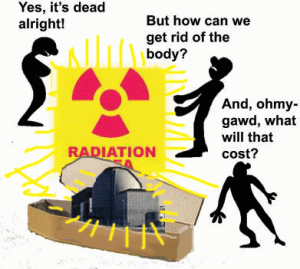 Italy approves dismantling of Latina plant https://www.world-nuclear-news.org/Articles/Dismantling-of-Italys-Latina-plant-to-begin 02 June 2020
The main activities envisaged during this initial phase of decommissioning concern the dismantling of the six boilers, with a total weight of over 3600 tonnes, and the lowering of the reactor building height from 53 to 38 metres. Buildings and auxiliary systems will also be dismantled. These operations are in addition to those already carried out or in progress at the plant.
By the end of this phase, all previous radioactive wastes generated through the operation of the plant or those produced by the dismantling of structures, systems and plant components will be stored safely at the site. These wastes will be stored both in a new temporary storage facility and in some specifically adapted reactor building premises. This initial phase of decommissioning the Latina plant is expected to be completed in 2027 and to cost EUR270 million (USD302 million).
With the availability of a planned national repository, it will be possible to start the second and final phase of the decommissioning of the plant with the dismantling of the graphite gas reactor. Once all the radioactive waste has been transferred to the repository and the temporary storage facilities demolished, the site will be released, without radiological restrictions, and returned to the community for its reuse.
“We are pleased with the issuance of this decree, the fifth after those obtained for the Bosco Marengo [fuel fabrication] plant and the Trino, Garigliano and Caorso [nuclear power] plants,” said Sogin CEO Emanuele Fontani. “This is a crucial step for the closure of the Italian nuclear cycle, which allows us to get to the heart of the decommissioning of the Latina plant. This measure confirms the fruitful collaboration between the various institutional subjects involved in the dismantling of nuclear plants.”
The Latina plant, comprising a single 210 MWe Magnox graphite gas-cooled reactor, began operating in January 1964. It was permanently shut in December 1987 as a result of the Italian referendum on nuclear power that followed the April 1986 Chernobyl disaster. Sogin took over ownership of the site in November 1999.
Anxieties over the risks of spent nuclear fuel storage at San Onofre
|
Used Nuclear Fuel Storage at San Onofre Raises Concerns Over Plant’s Vulnerability, Voice of OC By HOSAM ELATTAR 3 June 20 The Orange County Board of Supervisors Tuesday approved a memorandum of understanding with Southern California Edison to provide the county over $10 million in financial support for emergency preparedness at the San Onofre Nuclear Generating station.Supervisor Lisa Bartlett, who made the motion in support of approving the memorandum, said if there is an incident at the plant it could cost the county a lot of money to address the emergency and the sum agreed to would only cover notifying communities of an incident.
Donna Boston, Orange County director of emergency management, said there is a provision in the agreement that would allow the county to bill Southern California Edison for any excess spending if an emergency response is needed. “We’re not getting but a pittance when you consider what it’s going to take on an emergency preparedness basis, whether it’s evacuation of cities, or if we’ve got nuclear fuel that’s leaking out into the atmosphere or the communities,” Bartlett said. The supervisors’ action comes on the heels of a virtual meeting held last week by the San Onofre Community Engagement Panel about the plant’s vulnerability. The panel made up of local officials and community members advises the plant’s operators on the dismantling of the plant and meets at least four times a year. The plant at San Onofre was retired in June 2013 after uproar from the public and local officials over a radiation leak in 2012. Since then the used nuclear fuel that’s been cooling in wet pools is being converted to dried storage and is kept at the plant. About nine of the 73 canisters of used fuel have yet to be transferred to dry storage but the process is expected to be completed by mid-summer. “We’re moving the spent fuel rods out of the cooling pools and into the dry cask storage, which is safer, but you’re still going to have all of those spent fuel rods in the dry cask storage that are above ground, which concerns me,” said Bartlett……… Some members of the public felt the virtual meeting had an inadequate discussion of the worst case scenario at San Onofre. “There is no plan for when one of these canisters does fail,” said Kalene Walker during the public comment portion of the presentation at last week’s virtual meeting. “There’s so many issues regarding this system. I’m into prevention. Emergency response is super important and appreciated. But I don’t want to be anywhere near when one of these canisters goes off.” Bartlett said Tuesday that canisters have cracked before. “If we have a terrorist attack or something else occurs, we could be in a world of hurt until we get those canisters completely moved off site somewhere else,” Bartlett said…….. https://voiceofoc.org/2020/06/used-nuclear-fuel-storage-at-san-onofre-raises-concerns-over-plants-vulnerability/ |
|
|
Desperate nuclear lobby tries to con the European Commission with its bogus claim about climate solving

|
Industry urges EC to recognise nuclear’s role in economic recovery, WNN,03 June 2020The European nuclear industry has written an open letter to the European Commission, saying it is ready to play an important part in supporting a low-carbon economic revival. The letter, addressed to EC President Gertrud von der Leyen, European Parliament President David Maria Sassoli and European Council President Charles Michel, was signed by 25 companies and 14 associations, including European nuclear trade body Foratom.
Last week, Foratom said it was regrettable that the European Commission had ignored the need for nuclear power as a clean, dispatchable and European source of energy in its green recovery plan from the coronavirus pandemic. The EC’s plan – Next Generation EU – aims to boost the EU budget with new financing raised on the financial markets for 2021-2024, and a reinforced long-term budget of the European Union for 2021-2027. Today’s letter reads as follows:…… https://www.world-nuclear-news.org/Articles/Industry-urges-EC-to-recognise-nuclear-s-role-in-e |
|
EDF terminates nuclear electricity supply contracts,
EDF terminates nuclear electricity supply contracts, WNN ,03 June 2020 French utility EDF has notified three energy suppliers – Alpiq, Gazel Energie and Total Direct Energie – of the termination of their contracts under a mechanism that allows rival suppliers to buy electricity produced by EDF’s nuclear power plants. The suppliers had sought to invoke the force majeure clause in their supply contracts with EDF…….
EDF announced today that it had terminated the ARENH contracts it has with Alpiq, Gazel and Total Direct Energie, as provided for in the contracts when an interruption occurs for a period of over two months.
“The COVID-19 health crisis and the emergency measures introduced by public authorities on 17 March 2020 led to a decline in electricity consumption by non-residential clients, impacting all market players, including EDF,” the company said. “Faced with this decline in electricity consumption, some suppliers decided to revoke their contractual commitments citing force majeure to reduce the volumes bought last November as part of the ARENH contract.”…… https://www.world-nuclear-news.org/Articles/EDF-terminates-nuclear-electricity-supply-contract
Exhumed AREVA – now “Framatome” acquires BWX Technologies’ US nuclear services business
 Framatome acquires BWX Technologies’ US nuclear services business 3 June 2020 3 June 2020 Framatome has completed its acquisition of BWX Technologies’ US commercial nuclear services business. With this transaction, Framatome expands its portfolio of equipment and tooling for nuclear power plant inspections and maintenance, a statement said. …..https://www.neimagazine.com/news/newsframatome-acquires-bwx-technologies-us-nuclear-services-business-7954409
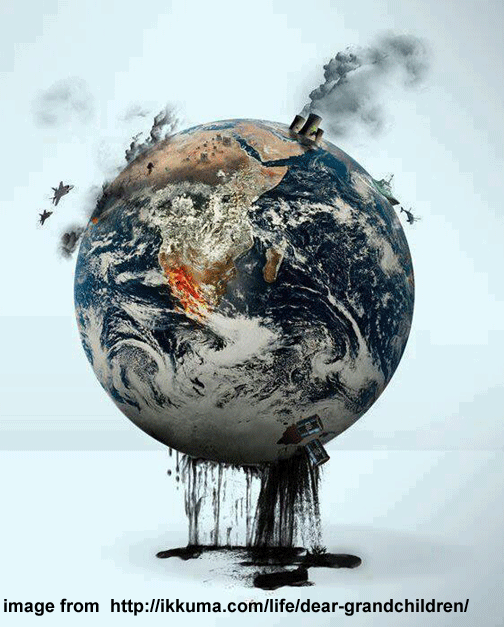
Back to “normal” or on to “new normal” ? But NORMAL IS the problem!
|
‘Normal Is the Problem’
So is normal’s idiot child, ‘the new normal.’ What we’ve made normal never was natural. Andrew Nikiforuk 30 May 2020 | TheTyee.ca Tyee contributing editor Andrew Nikiforuk’s 2006 book Pandemonium predicted the pandemic we are now …….. Normal has become a pathological state.
After the random normlessness of this pandemic, I don’t want to go back to normal either. Or its idiotic child, “the new normal.” Let’s face facts: our hi-tech, globalized-trade-anything-for-peanuts world run mostly by tyrants isn’t natural. Since 1970, an outpouring of normality has just about destroyed the Earth: It has created an abnormal economic machine, blind to energy spending, that doubled the global population and boosted per capita consumption by 45 per cent. At the same time the so-called value of global economic activity grew by 300 per cent. Meanwhile global trade has exploded like a coronavirus by 900 per cent. To support all this consumption and trade, the extraction of “living materials” from nature has jumped by 200 per cent. Now here’s just a partial list of the cost of all this exponential normality: Humans have appropriated or altered 70 per cent of the world’s lands with mines, roads, industrial farms, cities and airports. We have engineered more than 75 per cent of the world’s longest rivers. We have filled the ocean with plastics and slaughtered coral reefs. Anyone who calls that kind of behaviour normal is crackers. It’s ecological imperialism, and nothing more than a full-scale assault on the dignity of local life. The list goes on, and scientists now think it’s normal to publish papers on “the pervasive human decline of life.” Humans, for example, have destroyed 85 per cent of the wetlands. That’s like eating your kidneys for dinner, and I can’t think of anybody who would consider that normal except Hannibal Lecter. We have eliminated 40 per cent of the world’s original forests. We have extirpated (and there’s a word for these normal times) most of the world’s large mammals. An estimated one million species of animals and plants stand on the brink of extinction. Homo sapiens, another mammal, are on that list, and we pretend that’s normal. As these species disappear, our ever-expanding artificial intelligence probably won’t wave goodbye because replacing the natural with artificial is what normal is all about……. Normal really means big-box living and being a slave to machines. It means you’re so distracted by screens, speed and mobility, you can’t pay attention to what matters. Normal means you don’t have any respect for limits or sacred places. Normal means you think you can simply swap fossil fuels with so-called “clean energy” and protect the norm. But it mostly means you have surrendered your capacity to be human and to love this place. So I don’t want to go back to normal…… Normal really means big-box living and being a slave to machines. It means you’re so distracted by screens, speed and mobility, you can’t pay attention to what matters. Normal means you don’t have any respect for limits or sacred places. Normal means you think you can simply swap fossil fuels with so-called “clean energy” and protect the norm. But it mostly means you have surrendered your capacity to be human and to love this place. So I don’t want to go back to normal……. I don’t want to go back to a world where political parties cultivate men and women obsessed with power and deny the truth. That’s just evil. I don’t want to go back to world where people don’t know their neighbours, or the names of the birds in their trees. I don’t want to go back to a world where billionaires think so little of this Earth that their primary obsession is to escape to Mars. I don’t want to go back to a world where political leaders don’t have the courage to talk about cheap energy, reckless consumption, over-population and climate change in the same sentence. …. I don’t want to go back to an economy where corporations socialize all costs and privatize all gains. That’s robbery and theft. And it must end. I don’t want to go back to a world where governments subsidize bottom trawlers to scrape the floor of the ocean to support globalization… … Normal is the problem, and the normlessness of a pandemic has exposed the fat tail of normal as pathology. And I am not going back to it……..https://thetyee.ca/Culture/2020/05/30/New-Normal-Problem/ |
|
The world is sleepwalking toward a period free of nuclear arms control
 Nuclear arms control: What happens when US and Russia let it lapse? WHY WE WROTE THIS
In less than a year, the world could enter a period free of nuclear arms control treaties for the first time in more than a half-century. Is such a state of affairs sustainable? Christian Science Monitor By Fred Weir Correspondent, 2 June 20, MOSCOW
The world is sleepwalking toward a period free of nuclear arms control, as New START, the last remaining nuclear weapons treaty, is set to expire next February.
Arms control waning
Several U.S. presidents added their own contributions to the network of accords. As recently as a decade ago Barack Obama inked New START, the deal that made the deepest-ever reductions to strategic nuclear arsenals, with his Russian counterpart Dmitry Medvedev.
Things have been shaky ever since, though arms control experts on both sides have insisted until recently that the system might be revived if leaders wanted it. But the Trump administration, which seems averse to any limitations on U.S. power, has buried the whole idea by tearing up quite a few international treaties. Specifically, it recently pulled out of the 1987 Intermediate Nuclear Forces treaty, which had banned an entire class of nuclear missiles and was dubbed “the treaty that ended the Cold War.”
No choice but to come back to the table
Andrei Kortunov, head of the Russian International Affairs Council, which is affiliated with the Foreign Ministry, says new forms of arms control will undoubtedly be needed in the future. The most dangerous thing about the present moment is that the old tried-and-true framework is being destroyed before any new controls have been even envisioned. The dangers of miscalculation or misunderstanding will multiply amid that vacuum, he says.
If that common culture, all the mechanisms of dialogue, trust-building, and verification are lost, Russia will probably not try to match the U.S. missile for missile as the USSR did in the past, he adds.
“In the absence of any arms control, it will become almost impossible for the U.S. to know what we really have or what we may be able to do. Russia is likely to follow a policy of ‘strategic ambiguity,’ to keep them guessing as a means of deterrence. That would be a very dangerous state of affairs, one that nobody would wish for,” Mr. Kortunov says……..https://www.csmonitor.com/World/Europe/2020/0601/Nuclear-arms-control-What-happens-when-US-and-Russia-let-it-lapse
Species are becoming extinct at an accelerating rate
 Sixth mass extinction of wildlife accelerating, scientists warn warn Analysis shows 500 species on brink of extinction – as many as were lost over previous century Damian Carrington Environment editor, 2 Jun 2020 The sixth mass extinction of wildlife on Earth is accelerating, according to an analysis by scientists who warn it may be a tipping point for the collapse of civilisation. More than 500 species of land animals were found to be on the brink of extinction and likely to be lost within 20 years. In comparison, the same number were lost over the whole of the last century. Without the human destruction of nature, even this rate of loss would have taken thousands of years, the scientists said. The land vertebrates on the verge of extinction, with fewer than 1,000 individuals left, include the Sumatran rhino, the Clarión wren, the Española giant tortoise and the harlequin frog. Historic data was available for 77 of the species and the scientists found these had lost 94% of their populations. The researchers also warned of a domino effect, with the loss of one species tipping others that depend on it over the edge. “Extinction breeds extinctions,” they said, noting that unlike other environmental problems extinction is irreversible. Humanity relies on biodiversity for its health and wellbeing, scientists said, with the coronavirus pandemic an extreme example of the dangers of ravaging the natural world. Rising human population, destruction of habitats, the wildlife trade, pollution and the climate crisis must all be urgently tackled, they said. “When humanity exterminates other creatures, it is sawing off the limb on which it is sitting, destroying working parts of our own life-support system,” said Prof Paul Ehrlich, of Stanford University in the US, and one of the research team. “The conservation of endangered species should be elevated to a global emergency for governments and institutions, equal to the climate disruption to which it is linked.” “We are facing our final opportunity to ensure that the many services nature provides us do not get irretrievably sabotaged,” said Prof Gerardo Ceballos of the National Autonomous University of Mexico, who led the research. The analysis, published in the journal Proceedings of the National Academy of Sciences, examined data on 29,400 land vertebrate species compiled by the IUCN Red List of Threatened Species and BirdLife International. The researchers identified 515 species with populations below 1,000 and about half of these had fewer than 250 remaining. Most of these mammals, birds, reptiles and amphibians were found in tropical and subtropical regions…….. Prof Georgina Mace, of University College London, said: “Action is important for many reasons, not least of which is that directly and indirectly we rely on the rest of life on Earth for our own health and wellbeing,” she said. “Disrupting nature leads to costly and often hard-to-reverse effects. Covid-19 is an extreme present-day example, but there are many more.” Mark Wright, the director of science at WWF, said: “The numbers in this research are shocking. However, there is still hope. If we stop the land-grabbing and devastating deforestation in countries such as Brazil, we can start to bend the curve in biodiversity loss and climate change. But we need global ambition to do that.” |
|
China’s nuclear power ambitions face delays, waste problems, and the growing success of renewables
 It’s a pity that nuclear energy is so easily described as “climate-friendly”. Yes, the actual nuclear reactor can be said to be cutting carbon emissions. But why does everyone ignore the huge carbon emissions from the entire nuclear fuel chain, from uranium mining through to burial of radioactive wastes? Why ignore the emissions of ionising radiation, another unseen, but dangerous pollutant?
And why ignore climate change’s effects on nuclear power? Far from nuclear energy stopping global heating, it’s more likely that global heating will stop nuclear power. Nuclear is highly water-guzzling, so most reactors are perched neat the sea, or near rivers – meaning in danger of sea level rise, as well as other extremes such as hurricanes. The water requirements mean that nuclear is affected by extreme heat – and plants have to cut down, or even shut down.
China to Dominate Nuclear as Beijing Bets on Homegrown Reactors
China probably won’t hit its nuclear energy target this year, but that’s unlikely to derail a broader ambition to become the planet’s chief proponent of the climate-friendly [what!!] fuel
Bloomberg, 1 June 20
An American nuclear reactor flooded by an extreme rainfall event – during the pandemic
COVID Infects World Nuclear Plants May 27, 2020, by Radio Ecoshock
“………AN AMERICAN REACTOR FLOODED BY AN EXTREME RAINFALL EVENT – DURING THE PANDEMIC
Grant Smith mentioned the climate threat to nuclear installations. We have a case of that right now. The American mid-West has experience record-setting extreme rainfall events. The City of Chicago just had it wettest May, for the third year in a row. All that rain burst two dams in Michigan, flooding out the city of Midland, population 42,000. It also flooded the Dow Chemical plant that has produced noxious chemicals for years, including Agent Orange. The company acknowledges their chemicals have leaked out over the years. It has been declared a Superfund site, among the worst in the country requiring federal cleanup funds. There are chemicals lining the river, now being stirred up by the flood, and washing down into Lake Michigan.
What is less reported is the Dow nuclear reactor at that flooded site. It is a smaller research reactor built in the 1960’s, called a TRIGA 1 model. The reactor is sunk down into the ground. It doesn’t have cooling rods, but depends on convection for water cooling. Although the reactor was not operating at the time of the flood in late May, the design suggest it probably still had nuclear materials inside. Are they now leaking out into the river and Lake Michigan. So far, the company says “no”. With no federal oversight reporting we can rely on, you just have to take the word of Dow Chemical that this reactor is perfectly safe during this extreme rainfall event. Nothing to worry about here, they say. Beyond nearly 400 very large nuclear power plants in the United States, there are thousands of smaller reactors scattered around the country, at Universities, military bases, and private companies. Who is keeping track of those as climate change and a pandemic come knocking at the door?
Here is that unusual event report to the NRC about the Dow Chemical reactor in Michigan. For those who want to dive deeper, here is a description of that Triga Mark I reactor……… https://www.ecoshock.org/2020/05/covid-infects-world-nuclear-plants.html
The European Union plus France, Germany and the UK “deeply regret” US decision on Iran sanctions
EU and others ‘regret’ US decision on Iran sanctions, WNN 01 June 2020 The European Union plus France, Germany and the UK have said they “deeply regret” the USA’s decision to end three sanction waivers covering Joint Comprehensive Plan of Action (JCPOA) projects in Iran. Separately, a spokesperson for China’s Foreign Ministry said the US decision “hampers” international non-proliferation progress…….
“We deeply regret the US decision to end the three waivers covering key JCPOA nuclear projects in Iran, including the Arak Modernisation Project,” the spokespersons of the High Representatives of the EU and the Foreign Ministries of France, Germany and the UK said in a joint statement issued on 30 May. “These projects, endorsed by UN Security Council resolution 2231, serve the non-proliferation interests of all and provide the international community with assurances of the exclusively peaceful and safe nature of Iranian nuclear activities.
“We are consulting with our partners to assess the consequences of this decision by the United States.
“The JCPOA is a key achievement of the global non-proliferation architecture and currently the best and only way to ensure the exclusively peaceful nature of Iran’s nuclear programme. That is why we have worked continuously with the aim of ensuring the full and effective implementation of commitments under the JCPOA, in particular the return of Iran to full compliance with its nuclear commitments without delay.”
Zhao Lijian, spokesman for China’s Foreign Ministry, on 29 May said the US decision to end the waiver “hampers” international non-proliferation progress and shared efforts to preserve the JCPOA.
“The Arak reactor conversion is an important part of the JCPOA and a joint project of parties to the agreement,” he said. “China is ready to work with other parties to continue upholding the deal and safeguarding its own legitimate rights and interests.”
The JCPOA was signed in July 2015 by Iran and the E3/EU+3 (China, France, Germany, Russia, the UK and the USA – also referred to as the P5+1 – plus the European Union) and implemented in January 2016, clearing the way for the lifting of nuclear-related economic sanctions against Iran. Under its terms, Iran agreed to limit its uranium enrichment activities, eliminate its stockpile of medium-enriched uranium and limit its stockpile of low-enriched uranium over the subsequent 15 years……
US President Donald Trump in 2018 announced the termination of the USA’s participation in the JCPOA, directing the US administration to begin the process of re-imposing sanctions on Iran. https://www.world-nuclear-news.org/Articles/EU-and-others-regret-US-decision-on-Iran-sanctions
1 This Month

Tell Congress: Prevent Nuclear Catastrophe in Iran

Tell Congress: Prevent Nuclear Catastrophe in Iran

Read the Public Inquiry Report, the Commissioners’ report, Surrendering Australia: The AUKUS Deception is available to download for free at aukuspublicinquiry.com. Or just watch the replay of the National Press Club Luncheon.

19 November – Webinar – The Reality of Reprocessing
Time: 11:00 AM Pacific Time (US & Canada) / 2:00 PM Eastern / 7:00 PM UK / 8:00 PM CET
Register for the Zoom Event Here


Shut down the radiation-damaged Heysham nuclear reactors now
To see nuclear-related stories in greater depth and intensity – go to https://nuclearinformation.wordpress.com

Say No to NASA’s Reckless Nuclear Reactor on the Moon
Say No to NASA’s Reckless Nuclear Reactor on the Moon
-
Archives
- November 2026 (147)
- October 2026 (302)
- September 2026 (339)
- August 2026 (330)
- July 2026 (355)
- June 2026 (287)
- May 2026 (306)
- April 2026 (356)
- March 2026 (251)
- February 2026 (267)
- January 2026 (308)
- December 2025 (358)
-
Categories
- 1
- 1 NUCLEAR ISSUES
- business and costs
- climate change
- culture and arts
- ENERGY
- environment
- health
- history
- indigenous issues
- Legal
- marketing of nuclear
- media
- opposition to nuclear
- PERSONAL STORIES
- politics
- politics international
- Religion and ethics
- safety
- secrets,lies and civil liberties
- spinbuster
- technology
- Uranium
- wastes
- weapons and war
- Women
- 2 WORLD
- ACTION
- AFRICA
- Atrocities
- AUSTRALIA
- Christina's notes
- Christina's themes
- culture and arts
- Events
- Fuk 2022
- Fuk 2023
- Fukushima 2017
- Fukushima 2018
- fukushima 2019
- Fukushima 2020
- Fukushima 2021
- general
- global warming
- Humour (God we need it)
- Nuclear
- RARE EARTHS
- Reference
- resources – print
- Resources -audiovicual
- Weekly Newsletter
- World
- World Nuclear
- YouTube
-
RSS
Entries RSS
Comments RSS

