Okinawa Governor says NO to hosting prohibited U.S. nuclear missiles
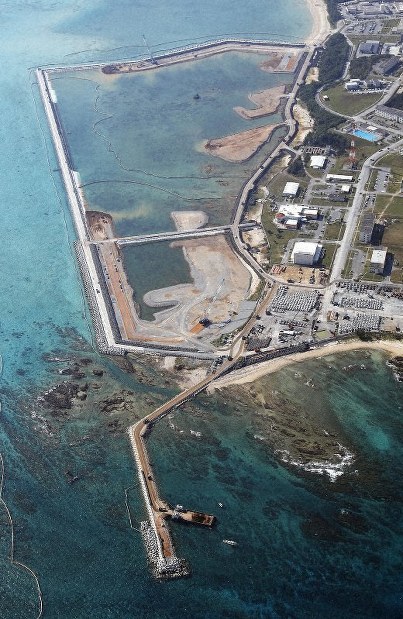 Okinawa Governor Refuses to Host Prohibited U.S. Nuclear Missiles, In Depth News, By Jaya Ramachandran, 29 June 20, GENEVA (IDN) – Governor Denny Tamaki of Okinawa district has rejected the U.S. plans to base on the island missiles capable of threatening China – apparently as part of President Donald Trump’s move to challenge Beijing and upgrade the importance of Taiwan, 500 kilometres away from the island. If a plan for Okinawa to host such missiles were to develop, Tamaki said: “I can easily imagine fierce opposition from Okinawa residents.”Okinawa comprises more than 150 islands in the East China Sea between Taiwan and Japan’s mainland. It’s known for its tropical climate, broad beaches and coral reefs, as well as World War II sites.
Okinawa has been a critical strategic location for the United States Armed Forces since the end of World War II. The island hosts around 26,000 U.S. military personnel, about half of the total complement of the United States Forces Japan, spread among 32 bases and 48 training sites.
The largest island (Okinawa) hosts the Okinawa Prefectural Peace Memorial Museum, commemorating a massive 1945 Allied invasion, and Churaumi Aquarium, home to whale sharks and manta rays.
Missiles the U.S. plans to base on Okinawa are prohibited by the 1987 Intermediate-Range Nuclear Forces (INF) Treaty between the U.S. and the Soviet Union which, after dissolution, reconstituted into the Russian Federation in 1991.
U.S. President Ronald Reagan and the then Soviet General Secretary Mikhail Gorbachev agreed to eliminate and permanently forswear all of their nuclear and conventional ground-launched ballistic and cruise missiles with ranges of 500 to 5,500 kilometres.
It was the first arms-control treaty to abolish an entire category of weapons systems. Besides, two protocols to the agreement established unprecedented procedures for observers from both nations to verify first-hand the other countries destruction of its missiles.
The INF Treaty led to the elimination of 2,692 U.S. and Soviet nuclear and conventional, ground-launched ballistic and cruise missile. The U.S. President Donald Trump formally withdrew from the treaty August 2, 2019, citing Russian noncompliance with the accord. The Pentagon tested two previously prohibited missiles in August and December 2019.
Since the United States withdrew from the Treaty, Australia, Japan, the Philippines, and South Korea have publicly said that they were not asked to nor are they considering serving as hosts for new U.S. ground-launched missiles. Secretary of Defence Mark Esper has previously suggested that he would like to see the deployment of such missiles in Europe and particularly Asia to counter China.
A senior Defence Department official told the Los Angeles Times that the Pentagon is “very attentive to our allies’ concerns, and we recognized their political challenges”. However, the official continued, “everything that’s said in the media is not necessarily what’s said behind closed doors”.
As the Washington-based Arms Control Association reported on June 26, Secretary-General of the North Atlantic Treaty Organization (NATO) Jens Stoltenberg said on June 17 after a NATO Defence Ministerial that the alliance has “no intention to deploy new land-based nuclear missiles in Europe”.
China is firmly opposed to any deployment of such missiles in the Asia-Pacific. “If the U.S. insists on the deployment, it will be a provocation at China’s doorstep,” said Chinese Defence Ministry Spokesperson Senior Colonel Wu Qian on June 24. “China will never sit idle and will take all necessary countermeasures,” he warned…….. https://www.indepthnews.net/index.php/armaments/nuclear-weapons/3648-okinawa-governor-refuses-to-host-prohibited-u-s-nuclear-missiles
The Shoshone people and nuclear bomb testing
 Nuclear tests and the Shoshone people, https://www.reviewjournal.com/opinion/nevada-views-nuclear-tests-and-the-shoshone-people-2063105/ By Ian Zabarte June 27, 2020 -REGARDING Gary Martin’s June 15 Review-Journal article, “Nuke test rumors spur Nevada lawmakers”: As a Shoshone, we always had horses. My grandfather always told me, “Stop kicking up dust.” Now I understand that it was because of the radioactive fallout.
To hide the impacts from nuclear weapons testing, Congress defined Shoshone Indian ponies as “wild horses.” There is no such thing as a wild horse. They are feral horses, but the Wild Horse and Burrow Acts of 1971 gave the Bureau of Land Management the affirmative act to take Shoshone livestock while blaming the Shoshone ranchers for destruction of the range caused by nuclear weapons testing. My livelihood was taken and the Shoshone economy destroyed by the BLM. On the land, radioactive fallout destroyed the delicate high desert flora and fauna, creating huge vulnerabilities where noxious and invasive plant species took hold.
Nuclear weapons testing at the Nevada National Security Site has left a dark legacy of radiation exposure to Americans downwind from the battlefield of the Cold War. Among the victims are the Shoshone people, whom, by no fault of our own, were exposed to radiation in fallout from more than 924 nuclear tests. The Shoshone people never consented to the nuclear weapons testing.
Nuclear testing is a violation of the peace treaty with the Shoshone, the Treaty of Ruby Valley, and the U.S. Constitution, Article 6 Section 2, the treaty supremacy clause. Nothing in the treaty contemplated the secret massacre of Shoshone people with radioactive poison from nuclear weapons testing within our own homelands. My tribe and family are the victims.
The enduring purpose of nuclear technology is the creation of weapons of mass destruction. Their tests within the Shoshone homelands are deliberate acts that destroy the Shoshone people. No Shoshone, not one person, should be sacrificed for the benefit of some Americans and the profit of the military industrial complex.
Nuclear weapons development in Shoshone homelands violates humanitarian law, human rights law and environmental law and is racist. Racism is a crime. It is called genocide, “a crime against humanity.”
To prove intent to commit genocide, we have only to look at the culture of secrecy of the military occupation of Shoshone homelands during and since the Cold War at the test site. The acts committed in nuclear weapons development and testing against the Shoshone people benefit other Americans. The Shoshone people suffer without relief or acknowledgement of our silent sacrifice. Secrecy is not transparent. Secrecy is not democratic and is unconstitutional when the acts are conducted in and upon the Shoshone land and people.
Nevada took hundreds of millions of dollars for characterization studies from the federal government in grants equal to taxes from Shoshone property and gave nothing to the Shoshone. A clear case of taxation without representation to defraud the Shoshone people of our property interests.
What is needed now are hearings on and support for the extension and funding of the Radiation Exposure Compensation Act of 2019. The Shoshone people need DNA testing and funding for tribal community health education on radiation basics and information on appropriate protective behavior to mitigate radiation exposure.
The Shoshone people are committed to the enforcement of law in the service of justice and human dignity. That is human growth and development, not nuclear weapons.
Ian Zabarte is Principal Man for the Western Bands of the Shoshone Nation of Indians.
Ukraine declassifies Chernobyl nuclear disaster documents
 Ukraine declassifies Chernobyl nuclear disaster documents https://www.brusselstimes.com/all-news/119019/ukraine-declassifies-chernobyl-documents/
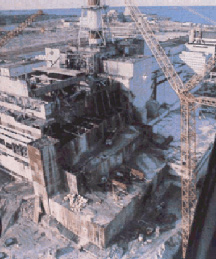
The archives, published in a book edited by the Ukrainian secret service, SBU, give an overview of the various construction errors, accidents and emergency interruptions at the plant between 1971 and the day of the disaster.
After Reactor 4 of the Soviet nuclear plant at Chernobyl exploded, a no-go zone was set up around the area due to the risk of radiation.
The biggest nuclear disaster in History caused the deaths of thousands of people, while tens of thousands had to be displaced.
On Sunday, a new fire occurred in the red zone around the plant, which is about three hectares in area. The Ukrainian authorities said on Monday that the fire had, for the most part, been put out.
In early April, a forest fire fed by gusty winds and unusually dry weather had broken out around the abandoned nuclear plant.
By the time it was brought under control in mid-May, about 11,500 hectares had been destroyed.
France’s old Fessenheim nuclear reactor to finally shut down- the first of many
 France’s oldest nuclear reactor to finally shut down,Guardian,
Environmentalists have welcomed news that the 43-year-old Fessenheim reactor will close, nine years after it was first planned, Agence France-Presse, 28 June 20,
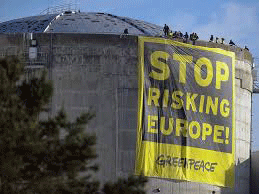
France’s oldest nuclear power plant will shut down on Tuesday after four decades in operation, to the delight of environmental activists who have long warned of contamination risks, but stoking worry for the local economy.
The Fessenheim plant, opened in 1977 and already three years over its projected 40-year life span, became a target for anti-nuclear campaigners after the catastrophic meltdown at Fukushima in Japan in 2011.
Despite a pledge by then-president Francois Hollande just months after the Fukushima disaster to close Fessenheim – on the Rhine river near France’s eastern border with Germany and Switzerland – it was not until 2018 that his successor Emmanuel Macron gave the final green light.
Run by state-owned energy company EDF, one of Fessenheim’s two reactors was disconnected in February.
The second is to be taken off line early on Tuesday, but it will be several months before the reactors have cooled enough for the used fuel to be removed.
That process should be completed by 2023, and the plant is not expected to be fully dismantled before 2040 at the earliest. …..
More will follow, with only 294 people needed on site for the fuel removal process until 2023, and about 60 after that for the final disassembly. ……
There is no legal limit on the life span of French nuclear power stations, but the EDF had envisaged a 40-year ceiling for all second-generation reactors, which use pressurised water technology.
France’s ASN nuclear safety authority has said reactors can be operated beyond 40 years only if ambitious safety improvements are undertaken.
In the 1990s and 2000s, several safety failures were reported at Fessenheim, including an electrical fault, cracks in a reactor cover, a chemistry error, water pollution, a fuel leak, and non-lethal radioactive contamination of workers.
In 2007, the same year a Swiss study found that seismic risks in the Alsace region had been underestimated during construction, the ASN denounced a “lack of rigour” in EDF’s operation of the plant.
Without Fessenheim, France will still have 56 pressurised water reactors at 18 nuclear plants generating some 70% of its electricity. Only the US, with 98, has more reactors, but France is by far the world’s biggest consumer of nuclear energy.
In January, the French government said it would shut 12 more reactors nearing or exceeding the 40-year limit by 2035, when nuclear power should represent just 50% of the country’s energy mix in favour of renewable sources.
At the same time, the EDF is racing to get its first next-generation reactor running by 2022 – 10 years behind schedule – and more may be in the pipeline…….https://www.theguardian.com/environment/2020/jun/28/frances-oldest-nuclear-reactor-to-finally-shut-down
New Zealand stood up to the nuclear bullies- the Rainbow Warrior story

NZ gained ‘international creds’ as nuclear-free nation with Rainbow Warrior bombing, says author, Asia Pacific Report
New Zealand established its credentials as an independent small nation after the fatal bombing of the Greenpeace flagship Rainbow Warrior in 1985, says an author and academic who spent weeks on the vessel shortly before it was attacked.
On 10 July 1985, the Rainbow Warrior was sunk at an Auckland wharf by two bombs planted on the hull of the ship by French secret agents.
The event is often referred to as the first act of terrorism in New Zealand.
LISTEN: The Afternoons with Jesse Mulligan Crime NZ interview with David Robie
WATCH: Eyes of Fire archival videos
READ: The Eyes of Fire book
Two French agents planted two explosives on the ship while it was berthed at Marsden wharf, the second explosion killing Greenpeace photographer Fernando Pereira.
Dr David Robie, who is an AUT professor of journalism and communication studies, as well as the director of the university’s Pacific Media Centre, had spent more than 10 weeks on the ship as a journalist covering its nuclear rescue mission in the Pacific.
He wrote about his experience in Eyes of Fire, a book about the last voyage of the first Rainbow Warrior – two other Rainbow Warrior ships have followed.
In 1985, Rongelap atoll villagers in the Marshall Islands asked Greenpeace to help them relocate to a new home at Mejato atoll. Their island had been contaminated by radioactive fallout from US atmospheric nuclear weapons testing in the Pacific.
Environmental journalism
“At the time I was very involved in environmental issues around the Pacific and in those days Greenpeace was very small, a fledgling organisation,” he tells Jesse Mulligan.
“They had a little office in downtown Auckland and Elaine Shaw was the coordinator and she was quite worried that this was going to be a threshold voyage.
“It was probably the first campaign by Greenpeace that was humanitarian, it wasn’t just environmental – to rescue basically the people who had been suffering from nuclear radiation.” ……….
Moruroa protest planned
The US had carried out 67 nuclear tests at the Marshall Islands. France was also carrying out 193 tests in the Pacific and Greenpeace had planned on confronting that situation at Moruroa Atoll after its Marshall Islands rescue effort.
New Zealand had already voiced disapproval of the testing in the region, with then Prime Minister David Lange in 1984 rebuking the French for “arrogantly” continuing the programme in the country’s backyard.
Dr Robie left the ship when it docked in Auckland after the Marshall Islands stage of the mission. Three days after the ship had docked, a birthday celebration was held for Greenpeace campaign organiser Steve Sawyer onboard. The attack happened after the party.
Just before midnight on the evening of 10 July 1985, two explosions ripped through the hull as the ship.
Portuguese crew member Fernando Pereira was killed after returning on board after the first explosion……..
Thirteen foreign agents were involved, operating in three teams. The first team brought in the explosives, the second team would plant these and the third was on stand-by in case anything went wrong with the first two teams.
“A commanding officer kept an overview of the whole operation. I think there was an element of arrogance, the same arrogance as with the testing itself. There was a huge amount of arrogance about taking on an operation like this in a peaceful country – we were allies of France at the time – and it is extraordinary that they assumed they could get away with this outrageous act.”
Two of the spies were caught. Two General Directorate for External Security (DGSE) officers, Dominique Prieur and Alain Mafart, were arrested on July 24. Both were charged with murder, pleaded guilty to manslaughter and were sentenced to 10 years’ imprisonment.
Repression of independence movements
“You have to see it within the context of the period of the time,” Dr Robie says.
He says that the French policy of repression against independence movements in New Caledonia and Tahiti, with assassinations of Kanak leaders like Eloi Machoro, needed to be understood to put the Rainbow Warrior attack in perspective. France was bitterly defending its nuclear force de frappe.
“New Zealand was unpopular with the major nuclear powers and there was certainly no sympathy for New Zealand’s position about nuclear testing. So, there wasn’t really any co-operation, even from our closest neighbour, Australia……..
The case was a source of considerable embarrassment to the French government.
“They did pay compensation after arbitration that went on with the New Zealand government and Greenpeace. But justice was never really served… the 10 years were never served, both Prieur and Mafart were part of the negotiations with French government.
NZ was held ‘over a barrel’
“Basically, France had New Zealand over a barrel over trade and the European Union, so compromises were reached and Prieur and Mafart were handed over to France for three years. Essentially house arrest at Hao atoll, the rear base of the French nuclear operations in Polynesia.”
Dr Robie said the rear base was widely regarded as a military “Club Med”.
He says they didn’t even spend three years there, but left for France within the time period.
While the attack was on an international organisation rather than New Zealand itself, most New Zealanders saw it as an attack on the sovereignty of the nation
Dr Robie says it left a long-lasting impression on New Zealanders.
“It was a baptism of fire. It was a loss of innocence when that happened. And in that context, we had stood up as a small nation on being nuclear-free. Something we should have been absolutely proud of, which we were, with all those who campaigned for that at the time. I think that really established our independence, if you like, as a small nation.
“I think we have a lot to contribute to the world in terms of peace-making and we shouldn’t lose track of that. The courage that was shown by this country, standing up to a major nuclear power. We should follow through on that kind of independence of thought.” https://asiapacificreport.nz/2020/06/29/nz-gained-international-creds-as-nuclear-free-nation-with-rainbow-warrior-bombing-says-author/
Instead of funding health, care, U.S. Senate approves big increase to funding nuclear weapons
We have allowed our tax dollars to be spent in continued efforts to dominate the world. Instead of taking care of our citizens, we create weapons of mass destruction at great cost to all living things.
This quote from the late Congressman Stewart Udall is still as applicable now as it was in 1993: “There is nothing comparable in our history to the deceit and the lying that took place as a matter of official government policy in order to protect this [nuclear weapons] industry. Nothing was going to stop them and they were willing to kill our own people. … The atomic weapons race and the secrecy surrounding it crushed American democracy. It induced us to conduct government according to lies. It distorted justice. It undermined American morality.
Step up against expansion of LANL’s nuclear mission https://www.santafenewmexican.com/opinion/my_view/step-up-against-expansion-of-lanls-nuclear-mission/article_d8414dbc-b7ce-11ea-aecc-3b8d2fa29a01.html, By Lydia Clark, 28 June 20
-
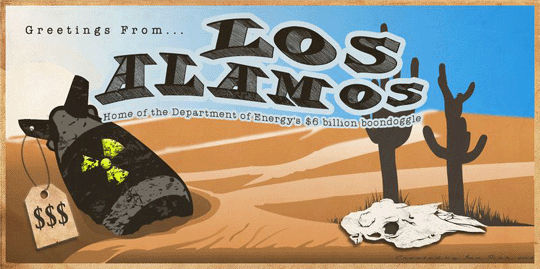
- The U.S. Senate just approved a 20 percent increase for the fiscal year 2021 defense budget that could go into effect this October. For New Mexico, this is devastating. It gives Los Alamos National Laboratory approximately $837 million for nuclear weapons production.
The U.S. government has far too long ignored the oppression exerted from militaristic efforts to control its citizens and its effects worldwide. This “knee on the neck” of humanity must stop.
We have allowed our tax dollars to be spent in continued efforts to dominate the world. Instead of taking care of our citizens, we create weapons of mass destruction at great cost to all living things. This is not a knee, but an anvil around our necks.
The current plan for 80 plutonium pits (the cores of nuclear weapons) per year at LANL will create another Rocky Flats, the last big plutonium pit factory in the U.S. Colorado is still paying the price environmentally for the Rocky Flats pit production factory. The devastation to workers’ lives from plutonium contamination will never be fully compensated. The contamination of the environment, workers and the public is what this pit factory at LANL creates, not security and safety for our nation.
We, the people, can say “no” to spending our tax dollars in this manner. There is still time to stop this insanity. As we see now and have seen in the past, together we can create change. Businesses and individuals must stand up and demand positive change. Oppose nuclear weapons production, oppose nuclear weapons use. Demand a Sitewide Environmental Impact Statement. It creates transparency. Only this statement will encompass all Northern New Mexico in the far-reaching impacts of a plutonium pit factory at LANL.
This quote from the late Congressman Stewart Udall is still as applicable now as it was in 1993: “There is nothing comparable in our history to the deceit and the lying that took place as a matter of official government policy in order to protect this [nuclear weapons] industry. Nothing was going to stop them and they were willing to kill our own people. … The atomic weapons race and the secrecy surrounding it crushed American democracy. It induced us to conduct government according to lies. It distorted justice. It undermined American morality. Until the cold war, our country stood for something.” — New York Times, June 8, 1993.
I implore the citizens of Santa Fe, Northern New Mexico and the entire state to take action by opposing production of nuclear weapons at LANL, asking for a Sitewide Environmental Impact Statement and demanding sustainable benefits for our city, region and state.
Let us once more stand for something. Equality, social justice, real democracy and compassion. By definition, compassion means a sympathetic consciousness with a desire to alleviate it. Let us stand together in consciousness and show compassion for our environment, our humanity and our future.
Wylfa nuclear project: Donald Trump plea over site sale dismissed
Work on the £13bn project was put on hold last year because of rising costs after Hitachi failed to reach a funding agreement with the UK government.
A Horizon Energy spokesman said: “We don’t comment on speculation.
“Our focus remains on securing the conditions necessary to restart this crucial project, which would bring transformative economic benefits to the region and play a huge role in helping deliver the UK’s climate change commitments.”
Horizon is owned by Hitachi and was set to lead the project to build the site……. https://www.bbc.com/news/uk-wales-politics-53212790
Unacceptable to build a radioactive waste repository on the BiH border, Bosnia forming an expert team to plan Croatian nuclear waste disposal .
He expects that after the formation of the expert team, a meeting with the competent ministry in the Government of Croatia will follow and that, based on the application of European conventions, scientific, research and professional staff from BiH will be able to come to Trgovska Gora…… Košarac added, they are working on forming a proposal of a team for legal experts not to give up on the internationally recognized rights that BiH has signed at the international level.
He reiterated that it is completely unacceptable to build such a landfill on the border with BiH. https://www.sarajevotimes.com/164093-2/
Judge orders temporary stop to decommissioning Oyster Creek Nuclear Generating Station
Judge Orders Decommissioning Temporarily Halted at Former Nuclear Plant
Lacey Officials, Oyster Creek Generating Station Owners Disagree on Land Use Oversight, The Sandpaper, June 24, 2020, By Gina G. Scala Ocean County Superior Court Judge Francis R. Hodgson issued an order of temporary restraint to the owners of the shuttered Oyster Creek Nuclear Generating Station on June 2, stopping all decommissioning activities unrelated to site security and maintaining the dry cask storage of spent nuclear fuel.
Hodgson’s order came after counsel for Lacey Township filed a complaint against Holtec International and Holtec Decommissioning International in late May.
Holtec is a Camden-based global energy technology company that assumed ownership and licensee status of Oyster Creek in June 2019 after a near 10-month application review by the Nuclear Regulatory Commission. The plant had previously been owned by Exelon Generation, part of the Exelon Corp. nuclear fleet. Lacey Township is the host community of the shuttered nuclear plant, which went online in December 1969 and sits on 779 acres of land in the Forked River section of the township.
In his finding, Hodgson ordered that pending a future court date, Holtec is temporarily prohibited and restrained from continuing any and all work at the facility unless or until permits are provided to plaintiff’s attorney documenting that the work being undertaken is permitted by the appropriate regulatory authority.
At issue is whether the Atomic Energy Act of 1954 and other federal law supersedes the uniform construction code and municipal oversight from mandating a building permit, local planning board approval and site plan approval, among other approvals, prior to construction beginning, according to Jerry J. Dasti, head counsel for Lacey Township, writing in a June 11 supplemental memorandum of law argument filed with Hodgson.
Citing the U.S. Constitution and numerous state and federal Supreme Court cases, Dasti argued determining preemptive status of state laws is well established and Holetc’s argument doesn’t meet the criteria. ……..
Holtec has until June 24 to respond, in writing, to Hodgson’s order, including a request for relief from his determination. The township has until June 29 to file its written response in opposition, according to the June 2 order of temporary restraint.
In the meantime, Holtec officials have come to an agreement with the state of Massachusetts on key issues related to the safe decommissioning of the Pilgrim Nuclear Station, located on Cape Cod Bay in Plymouth. ……
Both Oyster Creek and Pilgrim were boiling water reactors powered by General Electric. The nuclear power plants both used local water sources as their cooling method, as opposed to cooling towers. Oyster Creek permanently ceased operations on Sept. 17, 2018. Pilgrim was shuttered on May 31, 2019. https://www.thesandpaper.net/articles/judge-orders-decommissioning-temporarily-halted-at-former-nuclear-plant/
Need for action on global heating – It’s 38°C in Siberia
|
The Arctic heatwave: here’s what we know, https://www.theguardian.com/commentisfree/2020/jun/25/arctic-heatwave-38c-siberia-scienceTamsin Edwards
It’s 38°C in Siberia. The science may be complicated – but the need for action now couldn’t be clearer Fri 26 Jun 2020 There’s an Arctic heatwave: it’s 38°C in Siberia. Arctic sea ice coverage is the second lowest on record, and 2020 may be on course to be the hottest year since records began. For many people, such news induces a lurch of fear, or avoidance – closing the webpage because they don’t want to hear yet more bad news. A few might think “It’s just weather,” and roll their eyes. How can we make sense of such an event? Climate is subtle and shifting, with many drivers and timescales. But we can use this northern heatwave to illuminate the complexity of our planet. We can break this question into parts, from fast to slow. Fast: the immediate effect is to increase wildfires. Siberia has seen “zombie fires” reignited from deep smouldering embers in peatland. This is bad news, releasing particulate air pollution and more carbon in 18 months than in the past 16 years. The immediate cause? Here in the mid-high northern latitudes, we live in unstable weather under the influence of the polar jet stream. This rapid current of air high above our heads drags weather in a conveyor belt from west to east, with alternating patches of cold and warm air, low and high pressure. Sometimes the weather patterns get stuck, creating a stable period of weather, like a heatwave. This is one long, severe example. Does climate change make this “blocking” more likely? Maybe. The jet stream is created by the contrast between cold polar air and the warmer south. The Arctic is warming twice as fast as the global average: that means less north-south contrast, so the jet stream can become more wobbly and meandering. Loops break off like the oxbow lakes of school geography lessons, stranding particular weather patterns in one place. And why is the Arctic warming faster? Because sea ice and snow are so bright. When they melt with global warming, the ocean and land beneath are darker, so they absorb more of the sun’s heat. Their loss amplifies our warming. The current low in Arctic sea ice is itself partly the result of the Siberian heatwave, amplifying the usual year-to-year fluctuations. But the trend is down: the more CO2 we emit, the more the planet’s temperature rises, and the more sea ice we lose. Scientists predict the Arctic will start seeing summers without sea ice by 2050. But it’s not irreversible. It’s not a tipping point. The sea ice would return if we could cool the climate again. Unfortunately we know only three ways to do that: extract vast amounts of CO2 from the air with trees or technology; reflect the sun’s rays at a planetary scale; or wait, for many generations. This Arctic heatwave is a sharp spike on top of the global warming trend. That’s what makes it more intense, more likely and more of a warning: it’s a taste of the future predicted for Russia, if we burn quickly through our fossil fuels. The real fear around the Arctic for the longer term, I find when talking to people, comes from the idea of “runaway” warming from methane release. Warming could release stores of methane – a strong greenhouse gas – from permafrost or frozen sediments at the bottom of the ocean, which would add to the warming from our own activities. There is more than twice the amount of carbon in the permafrost as in the atmosphere, and thawing has already begun. There are big local impacts – damage to roads and buildings, because the ground can no longer bear so much weight, and an appalling story involving what appears to be anthrax release from thawing burial grounds. Permafrost thaw was even blamed by a Russian mining company for the recent collapse of a fuel reservoir, contaminating the river with 20,000 tonnes of diesel, though other factors were probably also involved. So could this Siberian heatwave, or ones like it, trigger catastrophic warming? I see much fear about amplifying methane feedbacks, including the false idea that climate scientists don’t consider them (we do, just separately to the main global climate models). Yet for several years there has been growing evidence that this risk is less than originally thought. Carbon stored in permafrost and wetlands is predicted to contribute around 100bn tonnes of CO2 this century. That’s a lot, but we add around 40bn tonnes ourselves every year. The methane at the bottom of the ocean would take centuries to release, so as long as we limit global warming we should keep those stores mostly locked up. There are uncertainties, of course, but the stores’ impact on warming is likely to be tenths of a degree, not several degrees. Yet every tonne of CO2 released from permafrost means one tonne fewer we can emit if we are to reach net zero emissions by 2050. Every year’s equivalent of our emissions brings our deadline closer. Every tenth of a degree of warming brings us closer to our target of 1.5°C and makes more permafrost thaw, and the impacts of climate change worse for the most vulnerable people and species of the world. The Arctic heatwave shows us that there are few simple stories in climate change. There is always a mix of natural and human influence, bad news and slightly-less-bad news, and occasionally even hopeful news. So, more than ever, we need to avoid over-simplifying or slipping into easy tropes like “We’re all doomed” or “It’s all weather,” but to try to understand the details. Perhaps there is one simple story though: every bit of warming we avoid will help keep our planet a more familiar and an easier place to live on. • Dr Tamsin Edwards is a senior lecturer in physical geography at King’s College London |
The world must learn to live with Covid-19

The shifting strategies are an acknowledgment that even the most successful countries cannot declare victory until a vaccine is found.
They also show the challenge presented by countries like the United States, Brazil and India, where the authorities never fully contained initial outbreaks and from where the coronavirus will continue to threaten to spread.
How the world is learning to live with a deadly pandemic, https://thenewdaily.com.au/news/world/2020/06/26/coronavirus-pandemic-2/, Sui-Lee Wee, Benjamin Mueller and Emma Bubola China is testing restaurant workers and delivery drivers block by block.
South Korea tells people to carry two types of masks for differing risky social situations.
Germany requires communities to crack down when the number of infections hits certain thresholds.
Britain will target local outbreaks in a strategy that Prime Minister Boris Johnson calls “whack-a-mole”.
Around the world, governments that had appeared to tame the coronavirus are adjusting to the reality that the disease is here to stay.
But in a shift away from damaging nationwide lockdowns, they are looking for targeted ways to find and stop outbreaks before they become third or fourth waves.
While the details differ, the strategies call for giving governments flexibility to tighten or ease as needed.
They require some mix of intensive testing and monitoring, lightning-fast response times by authorities, tight border management and constant reminders to their citizens of the dangers of frequent human contact.
They require some mix of intensive testing and monitoring, lightning-fast response times by authorities, tight border management and constant reminders to their citizens of the dangers of frequent human contact.
The strategies often force central governments and local officials to share data and work closely together, overcoming incompatible computer systems, turf battles and other long-standing bureaucratic rivalries Continue reading
Sizewell planning documents reveal higher-than-expected £20bn price tag
  Cost of new Sizewell C nuclear plant put at £20bn https://www.ft.com/content/77c209f7-6d18-4609-ac3c-77d1b5b82b34 26 June 20, Higher-than-expected price tag revealed for first time in planning documents. Nathalie Thomas in Edinburgh and Donato Paolo Mancini in London A new nuclear plant proposed on England’s east coast will cost £20bn, according to planning documents that reveal the higher-than-expected price of the project for the first time. The developers of the proposed plant at Sizewell in Suffolk — France’s EDF and Chinese state-owned CGN — had previously indicated the power station could be built for 20 per cent less than Hinkley Point C. Britain’s first new nuclear plant in a generation is under construction in Somerset.
This implied a cost of about £18bn for the Suffolk plant, called Sizewell C, after EDF last year said the price tag for Hinkley Point had risen to as much as £22.5bn. The first new-build project has suffered a string of cost overruns.
The revelation of Sizewell’s cost in extensive planning documents published on Thursday will reignite the ferocious debate around whether the UK should build large new nuclear plants.
Some backbench Conservative MPs, opposed to Chinese state involvement in critical national infrastructure, have concerns about the project because of the presence of CGN. The Chinese state-owned company is a junior financing partner on the Sizewell C project but hopes to install its own reactor technology in another proposed nuclear station at Bradwell-on-Sea, Essex.
The Financial Times reported on Wednesday that CGN, or China General Nuclear Power Corporation, was on a US list of 20 companies with links to the Chinese military compiled by the Pentagon. The list is part of an attempt by the White House and Congress to prevent Beijing from obtaining sensitive technologies as well as US funding.
EDF said in the planning documents that the cost estimate for Sizewell C includes design, construction and land costs associated with the proposed site, which is situated next to one of the UK’s operational nuclear plants, known as Sizewell B. It also takes into account “expected inflation and contingencies”, according to the document.
The company had previously claimed the cost savings on Sizewell could be delivered because it would be a “near identical copy” of Hinkley Point C.
EDF said the budget detailed in the planning application includes inflation over the estimated 10 years of construction, whereas the latest estimate for Hinkley Point C — estimated to be in a range of £21.5bn to £22.5bn — was based on 2015 prices.
The 20 per cent cost saving still stood if you subtracted a fifth from the Hinkley budget and then adjusted that sum for inflation, the company added.
EDF and CGN are yet to clarify how the new plant would be funded. The UK government last year launched a consultation on a so-called regulated asset base model (RAB) — used for other forms of infrastructure such as energy networks. This would lower the cost of capital of the scheme because consumers would have a surcharge added to their energy bills before the plant was completed.
Stop Sizewell C, a local campaigning group, said the funding statement was “a work of fiction” and described the £20bn pricetag as “totally eye-watering”.
Greenpeace UK’s chief scientist Doug Parr said the nuclear industry’s claim that it can always make the next power plant cheaper was “just never true.” He pointed out that the costs of renewable power had dropped below half those of nuclear “and just keep dropping”.
The government is yet to report back on the consultation. Privately, some nuclear industry leaders have been making an argument for the taxpayer to take a stake in any new project.
|
|
UK planning inspectorate accepts Sizewell C nuclear plans for examination

|
Sizewell C: Nuclear power station plans accepted for scrutiny, https://www.bbc.com/news/uk-england-suffolk-53176514, 25 June 2020
An application to build a new nuclear power station has been accepted for examination by the planning inspectorate. Plans for the Sizewell C plant on the Suffolk coast were put forward by EDF Energy after being mooted 10 years ago. The acceptance means an examining authority will now be appointed to scrutinise the application, with the government having final decision. Stop Sizewell C (SSC) group said it will continue to fight the application. EDF Energy said in a statement: “The decision means the Inspectorate is satisfied that the eight years of public consultation by the project was conducted properly and that full examination of the proposals can now take place.” But Alison Downes from SSC said the “quality of EDF’s consultations failed to provide required information”. She added EDF “had not been transparent in its disclosures of environmental assessment or transport strategy” nor the plant’s impact on the local area. Concerns about effective scrutiny of pre-application proposals during the lockdown restrictions was supported in letters from local MP Dr Dan Poulter and Suffolk County Council. In a joint statement on Wednesday Suffolk County Council and East Suffolk Council said: “The lack of a comprehensive set of documents up to this point has compromised the engagement that has taken place, and the Councils do not feel they have been able to complete their pre-application work with the Applicant (EDF Energy) to the extent set out by the Planning Act 2008,” EDF Energy said a copy of the full planning application and supporting documents would become available on the Planning Inspectorate website. |
|
The Anthropocene, begun in 16th Century colonialism, slavery -? for repair in 21st Century post-Covid-19 recovery

Why the Anthropocene began with European colonisation, mass slavery and the ‘great dying’ of the 16th century, The Conversation, Mark Maslin, Professor of Earth System Science, UCL, Simon Lewis, Professor of Global Change Science at University of Leeds and, UCL June 25, 2020 The toppling of statues at Black Lives Matter protests has powerfully articulated that the roots of modern racism lie in European colonisation and slavery. Racism will be more forcefully opposed once we acknowledge this history and learn from it. Geographers and geologists can help contribute to this new understanding of our past, by defining the new human-dominated period of Earth’s history as beginning with European colonialism.Today our impacts on the environment are immense: humans move more soil, rock and sediment each year than is transported by all other natural processes combined. We may have kicked off the sixth “mass extinction” in Earth’s history, and the global climate is warming so fast we have delayed the next ice age.
We’ve made enough concrete to cover the entire surface of the Earth in a layer two millimetres thick. Enough plastic has been manufactured to clingfilm it as well. We annually produce 4.8 billion tonnes of our top five crops and 4.8 billion livestock animals. There are 1.4 billion motor vehicles, 2 billion personal computers, and more mobile phones than the 7.8 billion people on Earth.
All this suggests humans have become a geological superpower and evidence of our impact will be visible in rocks millions of years from now. This is a new geological epoch that scientists are calling the Anthropocene, combining the words for “human” and “recent-time”. But debate still continues as to when we should define the beginning of this period. When exactly did we leave behind the Holocene – the 10,000 years of stability that allowed farming and complex civilisations to develop – and move into the new epoch?
Five years ago we published evidence that the start of capitalism and European colonisation meet the formal scientific criteria for the start of the Anthropocene.
Our planetary impacts have increased since our earliest ancestors stepped down from the trees, at first by hunting some animal species to extinction. Much later, following the development of farming and agricultural societies, we started to change the climate. Yet Earth only truly became a “human planet” with the emergence of something quite different. This was capitalism, which itself grew out of European expansion in the 15th and 16th century and the era of colonisation and subjugation of indigenous peoples all around the world.
In the Americas, just 100 years after Christopher Columbus first set foot on the Bahamas in 1492, 56 million indigenous Americans were dead, mainly in South and Central America. This was 90% of the population. Most were killed by diseases brought across the Atlantic by Europeans, which had never been seen before in the Americas: measles, smallpox, influenza, the bubonic plague. War, slavery and wave after wave of disease combined to cause this “great dying”, something the world had never seen before, or since.
In North America the population decline was slower but no less dramatic due to slower colonisation by Europeans. US census data suggest the Native American population may have been as low as 250,000 people by 1900 from a pre-Columbus level of 5 million, a 95% decline.
This depopulation left the continents dominated by Europeans, who set up plantations and filled a labour shortage with enslaved workers. In total, more than 12 million people were forced to leave Africa and work for Europeans as slaves. ……….
In addition to the critical task of highlighting and tackling the racism within science, perhaps geologists and geographers can also make a small contribution to the Black Lives Matter movement by unflinchingly compiling the evidence showing that when humans started to exert a huge influence on the Earth’s environment was also the start of the brutal European colonisation of the world.
In her insightful book, A Billion Black Anthropocenes or None, the geography professor Kathryn Yusoff makes it very clear that predominantly white geologists and geographers need to acknowledge that Europeans decimated indigenous and minority populations whenever so-called progress occurred.
Defining the start of the human planet as the period of colonisation, the spread of deadly diseases and transatlantic slavery, means we can face the past and ensure we deal with its toxic legacy. If 1610 marks both a turning point in human relations with the Earth and our treatment of each other, then maybe, just maybe, 2020 could mark the start of a new chapter of equality, environmental justice and stewardship of the only planet in the universe known to harbour any life. It’s a struggle nobody can afford to lose. https://theconversation.com/why-the-anthropocene-began-with-european-colonisation-mass-slavery-and-the-great-dying-of-the-16th-century-140661
Nuclear developers push UK government for prompt decision on government finance for new construction
 Nuclear developers press for ‘prompt’ decision on new UK plants , Ft.com, Nathalie Thomas in Edinburgh, JUNE 24 2020
Britain’s nuclear energy industry has said it could cut the price of power from new large power stations by more than half as it presses ministers for a “prompt” decision on government financing to support construction. …….
The NIA argues that supply chain costs would fall further if it can build further scale and experience. But it warns that new projects rely on “prompt decisions” by ministers on an alternative financing mechanism to support nuclear plant construction. Executives at EDF have made clear they will not replicate the model used for Hinkley, which has been beset by cost overruns. A government consultation on alternative funding models, launched last year, is yet to report back.
Under a RAB model, households would pay for a plant’s construction through their energy bills long before any electricity is generated, allowing developers to attract cheaper finance from investors such as pension funds. But it also leaves consumers on the hook for cost overruns.
1 This Month

Tell Congress: Prevent Nuclear Catastrophe in Iran

Tell Congress: Prevent Nuclear Catastrophe in Iran

Read the Public Inquiry Report, the Commissioners’ report, Surrendering Australia: The AUKUS Deception is available to download for free at aukuspublicinquiry.com. Or just watch the replay of the National Press Club Luncheon.

19 November – Webinar – The Reality of Reprocessing
Time: 11:00 AM Pacific Time (US & Canada) / 2:00 PM Eastern / 7:00 PM UK / 8:00 PM CET
Register for the Zoom Event Here


Shut down the radiation-damaged Heysham nuclear reactors now
To see nuclear-related stories in greater depth and intensity – go to https://nuclearinformation.wordpress.com

Say No to NASA’s Reckless Nuclear Reactor on the Moon
Say No to NASA’s Reckless Nuclear Reactor on the Moon
-
Archives
- November 2026 (147)
- October 2026 (302)
- September 2026 (339)
- August 2026 (330)
- July 2026 (355)
- June 2026 (287)
- May 2026 (306)
- April 2026 (356)
- March 2026 (251)
- February 2026 (267)
- January 2026 (308)
- December 2025 (358)
-
Categories
- 1
- 1 NUCLEAR ISSUES
- business and costs
- climate change
- culture and arts
- ENERGY
- environment
- health
- history
- indigenous issues
- Legal
- marketing of nuclear
- media
- opposition to nuclear
- PERSONAL STORIES
- politics
- politics international
- Religion and ethics
- safety
- secrets,lies and civil liberties
- spinbuster
- technology
- Uranium
- wastes
- weapons and war
- Women
- 2 WORLD
- ACTION
- AFRICA
- Atrocities
- AUSTRALIA
- Christina's notes
- Christina's themes
- culture and arts
- Events
- Fuk 2022
- Fuk 2023
- Fukushima 2017
- Fukushima 2018
- fukushima 2019
- Fukushima 2020
- Fukushima 2021
- general
- global warming
- Humour (God we need it)
- Nuclear
- RARE EARTHS
- Reference
- resources – print
- Resources -audiovicual
- Weekly Newsletter
- World
- World Nuclear
- YouTube
-
RSS
Entries RSS
Comments RSS

