Wildfires: Could this be the worst year ever?

The area of land burnt in Europe this year is significantly higher than the average, and Britain is at risk as well thanks to sustained high global temperatures. Even Britain,
a country with a climate not normally conducive to wildfires, is recording
record amounts of burnt land for this stage of the summer. These fires are
starting abnormally early, and appear to be more severe than previous
years. What is causing them, and could 2025 be the worst year yet?
Times 13th July 2025, https://www.thetimes.com/uk/environment/article/wildfires-could-this-be-the-worst-year-ever-twnx25v7s
China backs Southeast Asia nuclear ban; Rubio, Lavrov at ASEAN meeting
US President Trump’s tariffs loom over gathering in Malaysia’s Kuala Lumpur which will also feature US-Russia talks.
Aljazeera, 10 Jul 2025
China has agreed to sign a Southeast Asian treaty banning nuclear weapons, Malaysia’s and China’s foreign ministers confirmed, in a move that seeks to shield the area from rising global security tensions amid the threat of imminent United States tariffs.
The pledge from Beijing was welcomed as diplomats on Thursday gathered for the Association of Southeast Asian Nations (ASEAN) foreign ministers’ meeting, where US Secretary of State Marco Rubio is also due to meet regional counterparts and Russian counterpart Sergey Lavrov.
Malaysia’s Minister of Foreign Affairs Mohamad Hasan told reporters China had confirmed its willingness to sign the Southeast Asian Nuclear Weapon-Free Zone (SEANWFZ) treaty – an agreement in force since 1997 that restricts nuclear activity in the region to peaceful purposes such as energy generation.
“China made a commitment to ensure that they will sign the treaty without reservation,” Hasan said, adding that the formal signing will take place once all relevant documentation is completed.
ASEAN has long pushed for the world’s five recognised nuclear powers – China, the United States, Russia, France and the United Kingdom – to sign the pact and respect the region’s non-nuclear status, including within its exclusive economic zones and continental shelves.
Last week, Beijing signalled its readiness to support the treaty and lead by example among nuclear-armed states.
Rubio, who is on his first visit to Asia as secretary of state, arrived in Kuala Lumpur on Thursday amid a cloud of uncertainty caused by President Donald Trump’s aggressive tariff strategy, which includes new levies on six ASEAN nations as well as key traditional allies Japan and South Korea……………………………………………………………….
………………………..Reporting from Kuala Lumpur, Al Jazeera’s Rob McBride says Southeast Asian nations are finding themselves at the centre of intensifying diplomatic competition, as global powers look to strengthen their influence in the region.
“The ASEAN countries are facing some of the highest tariffs from the Trump administration,” McBride said. “They were also among the first to receive new letters announcing yet another delay in the imposition of these tariffs, now pushed to 1 August.”
The uncertainty has pushed ASEAN states to seek alternative trade partners, most notably China. “These tariffs have provided an impetus for all of these ASEAN nations to seek out closer trade links with other parts of the world,” McBride added.
China’s Foreign Minister Wang Yi has been in Kuala Lumpur for meetings with ASEAN counterparts, underscoring Beijing’s growing engagement.
Meanwhile, Russia’s top diplomat, Sergey Lavrov, has also been holding talks in Malaysia, advancing Moscow’s vision of a “multipolar world order” – a concept backed by China that challenges what they see as a Western-led global system dominated by the US………………………………………………………………………………………………………………………. https://www.aljazeera.com/news/2025/7/10/china-backs-southeast-asia-nuclear-ban-rubio-lavrov-at-asean-meeting
Putin urges Iran to accept ‘zero enrichment’ nuclear deal with US – Axios
Russian President Vladimir Putin has urged Iranian officials to accept a
nuclear agreement that would ban uranium enrichment, a key US demand in any
future talks, Axios reported Saturday citing multiple sources. Putin
conveyed his position to both President Donald Trump and Iranian leaders in
recent weeks, encouraging Tehran to move toward a deal that would help
restart negotiations with Washington.
Iran International 12th July 2025,
https://www.iranintl.com/en/202507120964
Trump to Ukraine: ‘Squander another half million casualties to prevent defeat on my watch’

Walt Zlotow, West Suburban Peace Coalition, Glen Ellyn IL. 13 July25
Most esteemed observers put Ukraine’s dead and wounded at north of a half million in their lost war with Russia. Several million young Ukrainian men have fled conscription while stragglers are rounded up like stray dogs to be thrown into the meat grinder of warfare they’re totally unprepared to fight.
But the war is much more than Ukraine defending itself from a Russian invasion. It’s America’s proxy war to weaken, Russia from Western European political economy. Its origins go back 17 years when the US pitched NATO membership to Ukraine to achieve that senseless goal. It virtually guaranteed war after the US engineered the 2014 coup against Russian friendly Ukrainian President Victor Yanukovych. It ignited a civil war between the Kyiv government and the Russian cultured Ukrainians in the Donbas on Russia’s border. Russia tried diplomacy for 8 years to no avail before invading both to keep Ukraine out of NATO and end protect the beleaguered Donbas Ukrainians. Just before the invasion the US stupidly told Russia that NATO membership for Ukraine and Russia’s security concerns were not subject to diplomacy.
America’s best laid plans to prevail failed spectacularly. Now Ukraine will never join NATO but Donbas Ukrainians are largely safe and thrilled to be under Russian protection from the terrors imposed by Kyiv. Ukraine’s fate was sealed once Biden announced he’d only waste US treasure for weapons but not one drop of US blood for Ukraine’s defense. Three and a half years and over $200 billion in US/NATO weapons have simply put Ukraine on US/NATO life support.
Biden was able to keep Ukraine in the fight for nearly 3 years, squandering a half million of its finest, so he could pass the war on to successor Trump. After being eviscerated by the US national security class for his admitting defeat and withdrawing from the 20 year Afghan war, Biden was loathe to incur another defeat on his watch. So he loaded up Ukraine with tons of weapons in his last months to ensure Ukraine would not collapse before his leaving.
Even before retaking office, clueless Trump bragged he’d end the war in one day. He tried to browbeat Ukraine President Zelensky to negotiate war’s end, even humiliating him before the world in the Oval Office. One hundred seventy-five days in Trump is facing his own Afghanistan style defeat as Ukraine nears collapse.
To stave off impending defeat he reversed the Pentagon’s withdrawal of new weapons based on US stockpiles running low. But all he could sputter was that he’s releasing “defensive weapons” only which will do no good with Ukraine running out of cannon fodder to fire them.
For Trump that’s A-OK. ‘Fight on Ukraine…I’ve only got three and a half years to keep this going till I can pull a Biden and pass it on the next clueless idiot trying to defeat an undefeatable Russia.’ The real issue is not whether Trump will succeed. He can’t. The ominous issue facing the US, indeed peoplekind, is whether Trump’s plan to avert defeat will lead to nuclear war that has been a possibility every day in Ukraine for the past three and a half years.
Atomic bomb survivors in Japan fear nuclear weapons could be used again: poll
Newly released survey shows close to 70 percent of survivors fear a resurgence in nuclear risks as Japan readies for the 80th anniversary of Hiroshima and Nagasaki.
14 July 25 https://trt.global/world/article/0c8b4e3aec45
Nearly 70 percent of atomic bomb survivors in Japan believe nuclear weapons could be used again, citing growing global tensions, including Russia’s war in Ukraine and North Korea’s weapons development, a survey by Kyodo News Agency revealed on Sunday, ahead of the 80th anniversary of the US atomic bombings.
Around 1,500 survivors took part in the survey, with 68.6 percent saying the risk of nuclear weapons being used again is increasing.
Some 45.7 percent of respondents said they “cannot forgive” the US for the bombings, while 24.3 percent said they have “no special feelings” and 16.9 percent said they “did not know.”
This year marks 80 years since the US dropped atomic bombs on Hiroshima and Nagasaki in western Japan near the end of World War II.
On August 6, 1945, the US dropped an atomic bomb on Hiroshima, killing an estimated 140,000 people.
A second bomb was dropped on Nagasaki three days later, resulting in about 70,000 additional deaths.
Japan surrendered on August 15, 1945, officially marking the end of World War II.
Nuclear waste to nuclear reactor: The case of Russia in Kazakhstan
Ayushi Saini, 11 Jul 2025 https://www.lowyinstitute.org/the-interpreter/nuclear-waste-nuclear-reactor-case-russia-kazakhstan
Facing energy deficits, Kazakhstan turns to Russia’s Rosatom for nuclear
power despite a history of environmental and dependency concerns.
After shutting down its last Soviet-era reactor in 1999, Kazakhstan is now on the cusp of returning to nuclear energy. Long reliant on non-renewables and electricity imports, the country faces rising energy demands and an urgent need to diversify its energy sources.
In October 2024, a national referendum strongly backed the construction of a nuclear power plant, with Russia’s Rosatom ultimately selected to lead the project. The decision marks a major shift in the country’s energy strategy and reaffirms Russia’s enduring influence in Central Asia’s high-stakes infrastructure sector.
However, the decision raises several concerns, including environmental risks, increased energy dependence on Russia, and the revival of unsettling memories of Soviet-era nuclear contamination in Kazakhstan. Understanding why Kazakhstan is turning back to nuclear power and why it chose Russia for its first Nuclear Power Plant (NPP)merits a closer look at the strategic and geopolitical factors behind this move.
Nuclear past, nuclear future
Kazakhstan’s journey with nuclear technology is fraught and painful. As a Soviet republic, it served as a major testing ground, most notably at the Semipalatinsk Test Site, where more than 450 atmospheric and underground nuclear detonations took place. This placed a heavy toll on the environment of Kazakhstan, without the nuclear waste having been taken care of by the Soviet Union.
From 1979 to 1999, Kazakhstan hosted a high-neutron Soviet nuclear power plant. After independence in 1991, Kazakhstan dismantled its arsenal and embraced nuclear non-proliferation with the Semipalatinsk test site closing in the same year.
Now, facing power deficits, it is returning to nuclear power for civilian use. The new plant will be built near the village of Ulken by Lake Balkhash – a site chosen for its geographical viability, including proximity to water access. However, environmental concerns persist. Kazakhstan lacks the domestic capacity to manage nuclear waste and must rely on external actors. Despite its past role in Kazakhstan’s nuclear contamination, Russia has reemerged as a key partner in the country’s nuclear revival.
Illusion of a consortium
Astana designated Rosatom to lead the construction of its first NPPafter a competitive bidding process involving China’s China National Nuclear Commission (CNNC), France’s Electricité de France (EDF), and Korea Hydro & Nuclear Power. While authorities claim the formation of an international consortium, Rosatom remains the undisputed leader, reflecting both its technological edge and Moscow’s strategic weight in Astana. Kazakhstan claims that it is the exclusive owner, operator, and supplier of uranium fuel, with complete control over the technological processes of its upcoming nuclear power plant.
Meanwhile, China has been selected to lead the second nuclear power plant, with feasibility studies underway. Kazakhstani officials argue that China is best suited to cooperate with Russia, given their regional rapport. Though framed as multinational, the consortium appears largely symbolic, aimed at balancing ties with major powers. Rosatom’s financing offer further tightens Russia’s grip on Kazakhstan’s energy future.
Why Russia?
Kazakhstan’s decision to shift to nuclear power comes amid a growing electricity production deficit. The country faces a projected shortfall of over 6 GW by 2030, making energy security urgent. The selection of Rosatom to carry out the construction is officially justified by Kazakhstani authorities, given Russia’s global leadership in nuclear technology and its advanced VVER 3+ generation reactors, which are already in operation across several domestic and international sites. Rosatom was deemed to have submitted “the most optimal and advantageous proposal.”
This outcome is not surprising. Talks between Kazakhstan and Russia on nuclear cooperation began in 2011, leading to a feasibility study and a series of agreements. In 2014, an MoU was signed for constructing a VVER-based plant with a capacity of up to 1200 MWe. Kazakhstan also holds a 25% stake in parts of Russia’s nuclear energy sector, and Rosatom’s subsidiary, Uranium One, is already active in Kazakhstan’s uranium mining. Additionally, Russia was Kazakhstan’s top electricity supplier in 2024, exporting 4.6 billion kWh.
Kazakhstan’s alignment with Russia reflects shared Soviet-era technical standards, institutional continuity, and a workforce fluent in the Russian system. Rosatom’s reactors are cost-effective, geographically proximate, and supported by uranium supply and tech transfer offers. Russian remains a common language among elites, and Rosatom’s regional presence, including in Uzbekistan, adds further appeal.
As Kazakhstan’s oil and gas sector is dominated by Western companies (such as ENI, Shell and Chevron, and Russian Lukoil only having 13% stakes in Kashagan Oil Field), choosing Russia for nuclear energy helps Astana maintain a strategic balance and avoid overdependence on any one bloc, without triggering Western sanctions, as Rosatom remains unsanctioned.
Balancing act
Kazakhstan’s decision to pursue nuclear power under Rosatom’s leadership marks a turning point in both its energy strategy and ties with Russia. While the project aims to ease electricity shortages and boost Kazakhstan’s global energy profile, it also deepens reliance on Russia, whose regional influence had waned after the Ukraine crisis.
Although Kazakhstan seeks diverse partnerships – “middle power” diplomacy being a recent fous – geographic and historical ties continue to draw it toward Moscow. The inclusion of other countries in the proposed consortium reflects Astana’s multi-vector foreign policy, an attempt to maintain geopolitical flexibility while meeting infrastructure needs. As the consortium’s lead, Rosatom reinforces its influence over the region’s energy and political landscape. Yet, Kazakhstan’s visible effort to balance Russia and China suggests it won’t sideline either in its strategically vital energy sector.
Iran says cooperation with UN nuclear watchdog will take ‘new form’
Iran said Saturday its cooperation with the International Atomic Energy
Agency “will take on a new form”, expressing a desire for a diplomatic
solution to resolve concerns over its nuclear programme.
Iran’s 12-day war
with Israel last month, sparked by an Israeli bombing campaign that hit
military and nuclear sites as well as residential areas, rattled its
already shaky relationship with the UN nuclear watchdog.
The attacks began
days before a planned meeting between Tehran and Washington aimed at
reviving nuclear negotiations, which have since stalled. Iran has blamed
the IAEA in part for the June attacks on its nuclear facilities, which
Israel says it launched to prevent Iran from developing a nuclear weapon —
an ambition Tehran has repeatedly denied. Araghchi said requests to monitor
nuclear sites “will be reviewed on a case-by-case basis… taking into
account safety and security issues”, and be managed by Iran’s Supreme
National Security Council.
Daily Mail 12th July 2025,
https://www.iranintl.com/en/202507120964
Aid as ambush: The horrifying new face of Israel’s Gaza war.
The IDF has shut out the UN, installing its own group to hand out food to the starving Palestinians… except it distributes death instead
By Eva Bartlett, a Canadian independent journalist. She has spent years on the ground covering conflict zones in the Middle East, especially in Syria and Palestine (where she lived for nearly four years). 30 Jun, 2025 , https://www.rt.com/news/620793-israel-palestine-aid-trap/
For nearly 630 days, the world has watched the Israeli slaughter of Palestinians in Gaza, primarily by bombing, sniping, and starvation. Off-camera, we’ve read about the rape and torture of Palestinian hostages, including the torturing to death of three doctors from the enclave.
For the last 100 days, Israel has reinforced a full blockade on Gaza, depriving starving Palestinians of food, drinking water, medicines, and fuel – meaning ambulances cannot function. . This is following prior blockades last year, and the overall blockade of the strip, which has lasted over 17 years.
Since late May, we’ve been seeing horrific video footage of skeletal Palestinians lined up hoping for food aid being gunned down by US mercenaries and Israeli soldiers.
Israel has endlessly bombed Palestinians, destroyed hospitals and abducted doctors and patients. It has bombed churches, schools, UN centres and tents housing displaced Palestinians – in supposed “safe zones” where they were ordered by the Israeli army to flee to. It has killed over 200 journalists and deliberately targeted medics. To those only paying attention recently, these crimes go back decades, and extend to the Israeli army and illegal colonists’ crimes against Palestinian civilians, including children, in the West Bank. Add to this the Israeli bombardment of civilian areas of Lebanon and Syria over the years, and now Israel’s recent unprovoked bombings of Iran.
Suffice it to say that when Israel came under the barrage of Iranian retaliatory missiles, reports of some 30 Israeli civilians suffering panic attacks garnered little sympathy.
Again, those who have been paying attention for longer than two years would also recall previous Israeli wars on Gaza, like in 2014, when Israelis gathered with drinks and snacks on hillsides to rejoice in the bombing of the enclave, or the 2009 t-shirts celebrating snipers killing pregnant women with the phrase “one shot, two kills”.
In 2010, when writing about a traumatized 10 year old I’d met who could no longer walk normally nor speak after the terror of having Israeli tanks shelling his home, I cited a study by the Gaza Community Mental Health Programme which stated that “91.4 percent of children in Gaza displayed symptoms of moderate to very severe PTSD.”That was fifteen years and numerous Israeli wars on Gaza ago.
The US-Israeli “humanitarian” death traps
The killing of Palestinians in Gaza didn’t stop when Israel attacked Iran. The most insidious new invention is the recently-created US-Israeli “aid” group, the Gaza Humanitarian Foundation (GHF). The Israeli authorities accuse Hamas of stealing aid, and based on this unproven accusation, have deemed that long-established UN aid agencies could no longer operate in Gaza, insisting instead that a group staffed with armed combat veterans (mercenaries is a better word) is better equipped to ensure that food reaches famished Palestinians.
It is outrageous that in spite of some media coverage, Israel has been allowed to for months (over a year, really) block the entrance of thousands of aid trucks amassed outside of Gaza, only to then dictate that hired gunmen would be in charge of “distributing aid.”
The massive irony and duplicity is that even Israeli and Western media have reported on the actual thieves of aid in Gaza: not Hamas, but an ISIS-linked group under the protection of the Israeli army.
As the independent media outlet The Cradle reported, the group’s leader, Yasser Abu Shabab, “is a known leader of armed gangs linked to ISIS and involved in looting aid under Israeli protection… Multiple reports, including from Haaretz and The Washington Post, confirm that these gangs have been seen looting in full view of Israeli forces, who neither intervene nor prevent the theft.”
In a subsequent post, The Cradle cited the Israeli Army Radio as reporting: “Israel has transferred weapons to members of the militia…The militia operates mainly in the Rafah area, which the Israeli army has occupied and cleared. The militia’s tasks include preventing humanitarian aid from entering Gaza and fighting Hamas.”
What is apparently happening is that starved Palestinians, after walking many kilometres to the distribution sites, are then corralled into tight enclosures and fired upon by the “aid” mercenaries.
Jonathan Whittall, the Head of the UN Office for the Coordination of Humanitarian Affairs in the Occupied Palestinian Territory (OCHA) described the situation as “conditions created to kill, carnage, weaponized hunger, a death sentence for people just trying to survive.”
In a clip posted on June 23, Whittall said, “Israeli authorities are preventing us from distributing through these systems that we’ve established and that we know work. We could reach every family in Gaza, as we have in the past, but we’re prevented from doing so at every turn.”
More recently, UN Secretary-General Antonio Guterres echoed Whittall, saying: “Any operation that channels desperate civilians into militarized zones is inherently unsafe. It is killing people.. People are being killed simply trying to feed themselves and their families. The search for food must never be a death sentence.” The UN’s own humanitarian efforts are being “strangled” by Israel, he said, and even the aid workers themselves are starving.
The aid-seeking civilians are reportedly being shot in the head and chest, in what looks more like execution than “warning shots” or “crowd control”.
The victims include an 18-month old girl whose X-ray shows a bullet lodged in her chest. According to Ramy Abdu, Chairman of the non-profit Euro-Med Human Rights Monitor, the girl was shot while in her mother’s arms on the way to a GHF aid point.
As far back as last July, an article in The Lancet warning that the total number of Palestinian civilian deaths caused directly and indirectly by Israeli attacks since October 2023 could reach “up to 186,000 or even more.”Other estimates were even more grim, include that of Norwegian Dr. Mads Gilbert, who has worked extensively from Gaza over the years, who said the number of those dead or soon to die could be over 500,000.
Fast forward to a recent report by Yaakov Garb of Ben-Gurion University, published via the Harvard Dataverse. It describes the false aid distribution design as, “all adjacent to Israeli military installations… manned by armed combat veterans backed by Israeli soldiers. The design creates a ‘chokepoint’ or ‘fatal funnel’ – a predictable movement path from a single entry to a single exit with no cover or concealment.”
It is the graphic on page five which caught people’s attention. From a population of 2.2 million before the genocide, the graph only accounts for 1.85 million, leaving many asking, where are the remaining 350,000 people? This makes the concerns voiced a year ago more valid.
In his report, Yaakov Garb wrote, “The Israeli military has an obligation, as the occupying power in Gaza, to supply the population with humanitarian relief… If an attacker cannot adequately and neutrally feed a starving population in the wake of a disaster it is ongoingly creating, it is obligated to allow other humanitarian agencies to do so.”
But instead, every day we see new horrors of emaciated Palestinian civilians desperately braving death in hopes of securing food for their families… and being gunned down by the Israeli army and the mercenaries it backs.
It seems, at least, that these actions are finally catching up with Israel, meaning a lack of support for or trust in the state or its representatives, and a global demand for justice for Palestinians.
To cite Craig Mokhiber, a human rights lawyer and former senior UN Human Rights official, who posted recently on X:
“The (Israeli) regime is on trial for genocide. Its leaders are indicted for crimes against humanity. Israel is isolated. The regime is now almost universally despised, just as the Nazi and apartheid regimes were despised. People across the world stand overwhelmingly with Palestine. You don’t come back from apartheid & genocide.”
Hoping for nuclear to boost the economy -will not end well.

Samuel Rafanell-Williams, Scottish CND:
MANY readers will be conscious of
the emerging PR operation to promote nuclear power and admonish the
Scottish Government over its long-standing opposition to new nuclear
projects in Scotland.
This comes at a time when The Ferret reported 585
cracks in the reactor of the Torness nuclear plant in East Lothian,
prompting fears about radioactive risks (Hunterston B power station was
closed in 2022 following the discovery of 586 reactor cracks).
The industrial messes of the Hinkley and Sizewell nuclear projects in England,
both running billions over budget, also don’t sweeten the case for
starting similar projects in Scotland.
Transparently, this media drive is
an attempt to manufacture consent for new potential nuclear plants in
Scotland in the wake of the UK Government’s recent proud announcement of
“Nuclear Britain”.
These PR efforts in Scotland are being led by
lobbyists like Britain Remade, a group composed of former Tory party
officials firmly committed to lifting Scotland’s ban on nuclear power, as
recently reported by Bella Caledonia.
Make no mistake, the UK
Government’s promotion of nuclear power is integral to its vision of a
war economy: massive investment, including exorbitant public expenditure,
into so-called “civilian” nuclear power (£40 billion-plus for Hinkley,
£40bn-plus for Sizewell) is a precondition for shoring up the nuclear
weapons industry. As Scottish CND have frequently argued, much of the same
technical expertise, personnel and fissile materials are required in both
fission and the production of warheads and propulsion reactors for naval
vessels. All nuclear states know building their omnicide weapons relies on
a nuclear power programme.
The National 11th July 2025, https://www.thenational.scot/politics/25305651.hoping-nuclear-boost-economy-will-not-end-well/
US Army Building New Air Bases, Ammunition Depots For Israel
By News Desk, The Cradle.July 9, 2025, https://popularresistance.org/us-army-building-new-air-bases-ammunition-depots-for-israel/
Part of tens of billions in US aid to Israel, the projects include multi-year tenders for hangars, fuel stations, and ammunition sites.
The US Army Corps of Engineers is constructing new military infrastructure for Israel across several bases, including airfields, hangars, and ammunition depots, according to public records reported by Haaretz on 8 July.
The current projects total more than $250 million, with future ones expected to exceed $1 billion, based on a call for interested contractors originally scheduled for June but postponed due to Israel’s war against Iran.
The Israeli news site Haaretz reported on the public documents on Monday.
The US Army Corps of Engineers is using contractors to build ammunition depots, refuelling stations, and concrete structures for Israeli military bases. The documents also show that the US is seeking contractors for building maintenance and repairs, including work on airfields.
One project for hangars, maintenance rooms, and storage facilities for new Boeing KC-46 tankers that Israel is expected to receive in the coming years is projected to cost over $100 million. Another facility to house CH-53K helicopters is expected to cost up to $250 million.
The US is also soliciting bids for ammunition storage buildings, estimated at up to $100 million. A separate seven-year tender, capped at $900 million, covers maintenance, repairs, construction, demolition, and infrastructure upgrades at unspecified sites for the Israeli Ministry of Defence.
These projects are funded through foreign military financing. Israel receives $3.8 billion annually in military aid, under a system that allows the US and Israel to determine how to spend the funds, which are routed to US defense contractors.
Since the Hamas-led 7 October 2023 Operation Al-Aqsa Flood, Washington has also provided supplemental military aid totalling around $18 billion.
The US has previously used military aid for Israeli infrastructure. In 2012, public tender documents showed large-scale US-funded works at Nevatim air base. At the time, the Washington Post reported that the US had constructed a secret facility there, known as site “911.”
The construction projects detailed on Monday were planned before the June 2025 Israeli attack on Iran. On 2 July, Reuters cited an Israeli official confirming that Iranian ballistic missiles struck several Israeli military sites during the 12-day exchange.
Earlier in June, Washington approved a $510 million arms deal for Israel, adding over 7,000 JDAM kits and support services to the growing list of weapons transfers in 2025.
That package formed part of a broader escalation in US military support, which by mid-year had surpassed $9 billion. Tel Aviv reported receiving more than 90,000 tons of US weapons in 600 days – deliveries Netanyahu credited to Trump as “the greatest friend that Israel has ever had in the White House.”
Around the same time, the Pentagon halted multiple arms shipments to Ukraine, despite internal reviews showing no critical shortage.
The decision followed concerns over stockpile depletion after the US assisted Israel in intercepting Iranian missiles. Senior officials have since pushed for a shift in US military focus toward the Pacific.
SIZEWELL C, RISING SEA LEVELS AND EDF’s SILENCE

The dust has just about settled since Labour’s ‘golden nuclear
moment’ laid out by Rachel Reeves in her recent Spending Review. Plans
for the monstrous Sizewell C took another step forward, nudged along by the
offer of another £14.2 billion of taxpayers’ money, together with a
further £2.5 billion promised for Small Modular Reactors, and roughly the
same amount for fusion, the nuclear industry’s very own black hole.
So
loud were the fanfares, so overblown the hype, that the real story of that
week got lost. EDF’s deeply ingrained habits of secrecy and deceit were
– yet again – exposed to the harsh light of a Freedom of Information
request from the indefatigable Together Against Sizewell C (TASC). One of
the principal concerns that TASC has doggedly pursued over the last few
years is the vulnerability of Sizewell C being built on one of Europe’s
most rapidly eroding coastlines and its lack of resilience to the impacts
of climate change. The evidence regarding future sea level rise goes from
deeply worrying to totally terrifying – with the very real possibility of
at least a 1 metre rise – and possibly as much as 2 metres – by 2100.
Given that the spent fuel used at Sizewell C throughout its operating life
(around 4,000 tonnes) will need to be stored on site until at least 2160
this is clearly a matter of the greatest concern.
Johnathon Porritt 7th July 2025, https://jonathonporritt.com/sizewell-c-flood-risk-and-edf-silence/
Staff walk out at Hinkley Point C over alleged ‘bullying’
“This bullying has been going on for far too long.”
Staff at Hinkley Point C walked out
on an unofficial strike on Wednesday over alleged bullying. An unconfirmed
number of workers in the MEH group of contractors have downed tools at the
nuclear power station construction site in Somerset yesterday (July 9). A
person involved in the staff walk out told the Local Democracy Reporting
Service it was a response to bullying from senior management. They said:
“This bullying has been going on for far too long.”
Somerset Live 10th July 2025, https://www.somersetlive.co.uk/news/local-news/staff-walk-out-hinkley-point-10333388
Why new nuclear power is a bad way to balance solar and wind
As we continue to respond to the coordinated propaganda campaign for new nuclear power in Scotland we hear from David Toke, the author of the book ‘Energy Revolutions – profiteering versus democracy’ (Pluto Press).
In the UK it has almost become an accepted truth in the media that new nuclear power is needed because there is no other practical or cheaper way to balance fluctuating wind and solar power. Yet not only is this demonstrably false, but it actually runs counter to the way that the UK electricity grid is going to be balanced anyway. Essentially the UK’s increasingly wind and solar dominated grid is going to be balanced by gas engines and turbines that are hardly ever used. But you would never guess this from the coverage.
Bella Caledonia 9th July 2025,
https://bellacaledonia.org.uk/2025/07/09/why-new-nuclear-power-is-a-bad-way-to-balance-solar-and-wind/
The Australia-Tuvalu climate migration treaty is a drop in the ocean

Australia has offered a lifeline to the people of Tuvalu, whose island is threatened by rising sea levels. But the deal comes with strings attached – and there will be millions more climate migrants in need of refuge by 2050
By New Scientist, 2 July 2025, https://www.newscientist.com/article/mg26635502-900-the-australia-tuvalu-climate-migration-treaty-is-a-drop-in-the-ocean/
A lifeline has been extended to the people of Tuvalu, a low-lying Pacific nation where rising sea levels are creating ever more problems. Each year, Australia will grant residency to 280 Tuvaluans. The agreement could see everyone currently living in Tuvalu move within just a few decades.
Effectively the world’s first climate migration agreement, the Australia-Tuvalu Falepili Union will also provide adaptation funds to help those who stay behind.
Is this a model for how climate migration can be managed in an orderly way, before disaster strikes? Far from it. To get this deal, Tuvalu must allow Australia a say in future security and defence matters. Few other countries are likely to agree to similar terms.
Tuvalu’s population is also very small. Taking in around 10,000 climate migrants would be inconsequential for a country of 28 million like Australia. Worldwide, it is estimated that between 25 million and 1 billion people might be forced to move by 2050 because of climate change and other environmental factors. Where will they go?
Many argue that the wealthy countries that emitted most of the carbon dioxide that is warming the planet have a moral duty to help people displaced by climate change. But these kinds of discussions have yet to be translated into the necessary legal recognition or acceptance of forced climate migrants. On the contrary, many higher-income nations seem to be becoming more hostile to migrants of any kind.
There has been a little progress in setting up “loss and damage” funds to compensate lower-income countries for the destruction caused by global warming. This could help limit the need for climate migration in the future – but the money promised so far is a fraction of what is required.
The most important thing nations should be doing is limiting future warming by cutting emissions – but globally these are still growing. Sadly, the Falepili Union is a drop in the ocean, not a turning of the tide.
UK Moves Closer to Approving Sizewell C Nuclear Plant Project
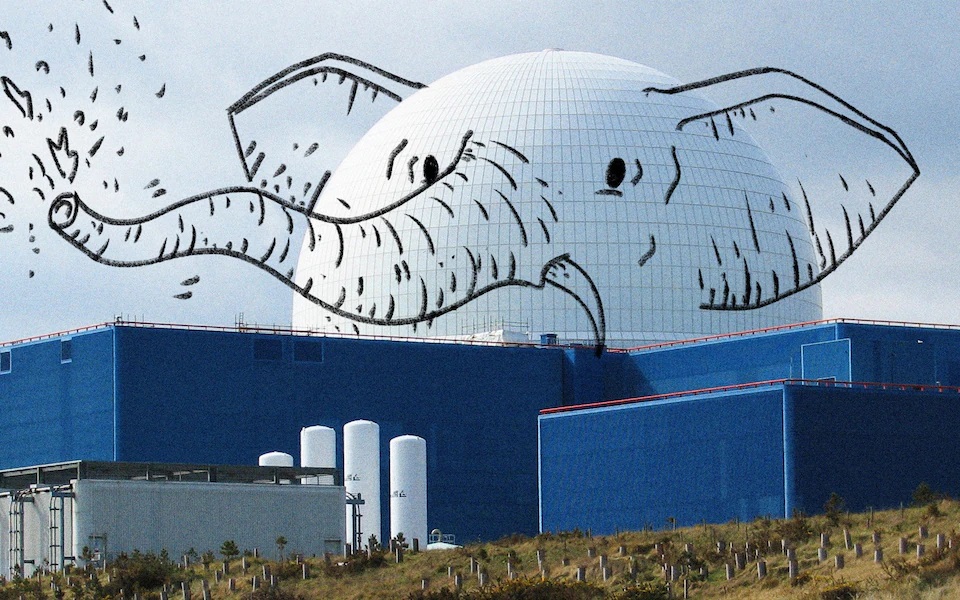
The UK government has reached a deal with French authorities, allowing
Electricite de France SA (EDF) to retain a 12.5% stake in the Sizewell C
nuclear reactor project. The UK government and other investors will hold
the remaining stake, with the UK investing £14.2 billion in the project to
replace aging atomic plants and provide low-carbon electricity. EDF is set
to hold a board meeting to greenlight its participation in Sizewell C,
which will help the UK government make a final investment decision on the
project soon after.
Bloomberg 7th July 2025, https://www.bloomberg.com/news/articles/2025-07-07/uk-moves-closer-to-approving-sizewell-c-nuclear-plant-project
1 This Month
19 February – VIRTUAL EVENT-Decision Time: AI and Our Nuclear Arsenal
12:45 p.m. Central / 1:45 p.m. Eastern
To see nuclear-related stories in greater depth and intensity – go to https://nuclearinformation.wordpress.com
-
Archives
- February 2026 (181)
- January 2026 (308)
- December 2025 (358)
- November 2025 (359)
- October 2025 (376)
- September 2025 (258)
- August 2025 (319)
- July 2025 (230)
- June 2025 (348)
- May 2025 (261)
- April 2025 (305)
- March 2025 (319)
-
Categories
- 1
- 1 NUCLEAR ISSUES
- business and costs
- climate change
- culture and arts
- ENERGY
- environment
- health
- history
- indigenous issues
- Legal
- marketing of nuclear
- media
- opposition to nuclear
- PERSONAL STORIES
- politics
- politics international
- Religion and ethics
- safety
- secrets,lies and civil liberties
- spinbuster
- technology
- Uranium
- wastes
- weapons and war
- Women
- 2 WORLD
- ACTION
- AFRICA
- Atrocities
- AUSTRALIA
- Christina's notes
- Christina's themes
- culture and arts
- Events
- Fuk 2022
- Fuk 2023
- Fukushima 2017
- Fukushima 2018
- fukushima 2019
- Fukushima 2020
- Fukushima 2021
- general
- global warming
- Humour (God we need it)
- Nuclear
- RARE EARTHS
- Reference
- resources – print
- Resources -audiovicual
- Weekly Newsletter
- World
- World Nuclear
- YouTube
-
RSS
Entries RSS
Comments RSS
 nuclear-news