 How Hot Will the Future Feel? New Yorker, 29 July 20, By Bill McKibben
Even among the grim daily toll of pandemic deaths and job losses, the most fateful numbers in the news last week probably came from a huge study carried out by a team of scientists at the World Climate Research Programme. It wove together the warming that we’ve observed so far, the latest understanding of feedback effects from clouds and other systems, and the record of the climate in the deep past to conclude that doubling the amount of carbon in the atmosphere (which, at current rates, will occur toward the middle of the century) will raise the average surface temperature on Earth between two and a half and four degrees Celsius
This is the first significant narrowing of that range in decades—ever since the nineteen-eighties, we’ve been saying one and a half to four and a half degrees. Now, though, researchers are essentially ruling out the bottom end of the range: two and a half degrees, now essentially the best-case scenario, is an enormous number. Dealing with the volume and complexity of data “was such a long and painful process,” one researcher, Kate Marvel, at nasa’s Goddard Institute, said. James Hansen, the former Goddard chief and the world’s premier climate scientist, said, “It is an impressive, comprehensive study, and I am not just saying that because I agree with the result. Whoever shepherded this deserves our gratitude.”
Indeed, they do. But, in truth, the numbers—what we might call pure climatology—can tell us only so much. What will haunt our future are two other variables, both of which are even harder to calculate. The first is: How much damage will that extra heat wreak? So far, scientists—who tend to be conservative in their forecasts—have under-predicted everything from coral die-off to
Arctic ice melt. The past week, during which the Atlantic-hurricane alphabet
hit “H” earlier in the season than ever before, provided more reminders that even the one degree Celsius that the temperature has already risen is an awful lot. In China, record rains were powering remarkably dangerous flooding along the Yangtze River—by last weekend, people were beginning to
raise fears for the Three Gorges Dam, the largest structure of its kind in the world.
But, again, the level of damage that comes from rising temperatures—let’s call it applied climatology—is not as telling, ultimately, as our collective ability to respond to that damage. The brittleness of political systems in the face of change on this scale is even scarier than the brittleness of dams. The Times Magazine offered a remarkable glimpse into such a possibility this week, with a long examination of climate migration—present and future—from Central America. As more and more people find themselves in zones too hot to support life, they will move, and, as we already know, those movements provoke both compassion and demagoguery. “The best outcome requires not only good will and the careful management of turbulent political forces; without preparation and planning, the sweeping scale of change could prove wildly destabilizing,” Abrahm Lustgarten writes. “The United Nations and others warn that in the worst case, the governments of the nations most affected by climate change could topple as whole regions devolve into war.”
The pandemic shows us above all, I think, that twenty-first-century survival depends on an ability to handle chaos: that our political leaders, and our other institutions, have to devote themselves as never before to humane competence. And, as this summer’s racial reckoning should remind us, the pain that’s coming needs to be distributed far more fairly. We’re fast running out of margin. The capacity of political systems to respond to extreme stress can’t be predicted as numerically as the response of physical systems to extra carbon, but it will be measured, as with
covid-19, in deaths. Just on a much larger scale……
https://www.newyorker.com/news/annals-of-a-warming-planet/how-hot-will-the-future-feel
August 1, 2020
Posted by Christina Macpherson |
2 WORLD, climate change |
Leave a comment
RISING GLOBAL FLOOD RISK DEMANDS ACTION, PURSUIT, 31 Jul 20,
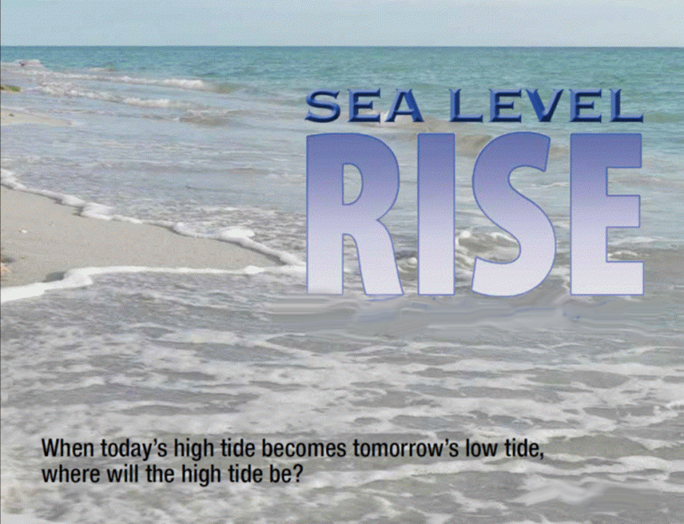
By the end of the century tens of millions more people and trillions of dollars more of the world economy will be at risk of being flooded as sea levels rise We know climate change will cause rising sea levels and increase the frequency of storms and extreme waves, putting large stretches of land at greater risk of flooding. But just how bad will it be?
It is the sort of question that has long frustrated strong policy action on countering and mitigating climate change……
In what is the most comprehensive effort yet to assess the global risks of rising sea levels, researchers have now estimated that in the next 80 years the flood risk across the world will rise by around 50 per cent, putting millions more people and trillions of US dollars more of infrastructure at risk.
In addition, by 2100, extreme floods now thought of as being one-in-100-year events, will be occurring as frequently as every 10 years across much of the world – an increased risk of ten times.
According to the University of Melbourne-led study now published in Nature: Scientific Reports, the land area exposed to an extreme one-in-100-year flood event will increase by more than 250,000 square kilometres, an increase of 48 per cent to over 800,000 square kilometres.
In concrete terms the study’s estimates translate into about 77 million more people being at risk of experiencing flooding, a rise of 52 per cent to 225 million.
The economic risk in terms of the infrastructure exposed will rise by $US3.5 trillion, an increase of 46 per cent to $US11.3 trillion…….
According to the University of Melbourne-led study now published in Nature: Scientific Reports, the land area exposed to an extreme one-in-100-year flood event will increase by more than 250,000 square kilometres, an increase of 48 per cent to over 800,000 square kilometres.
In concrete terms the study’s estimates translate into about 77 million more people being at risk of experiencing flooding, a rise of 52 per cent to 225 million.
The economic risk in terms of the infrastructure exposed will rise by $US3.5 trillion, an increase of 46 per cent to $US11.3 trillion………..
It’s showing that whole coastal communities are at risk of being devastated so we need urgent action.
“Curbing rising greenhouse gases is critical, but much of the predicted sea level rise is already baked-in – it will happen irrespective of what happens with greenhouse gases. So we need to adapt.
“This may mean building coastal defences like those already undertaken in the Netherlands. In other locations it may involve retreating populations from coastal areas.”
And Ms Kireczi notes that like many of the consequences of climate change, some low and middle income countries (LMICs) are particularly exposed.
For example, major populations in South-east and South Asia are at risk. But major populations in wealthier regions are also at risk including parts of China, Northern Europe and the United States.
“We need to start planning now the long-term investments in coastal defences, like dykes and sea walls, that we are going to need to protect vulnerable populations and assets.” https://pursuit.unimelb.edu.au/articles/rising-global-flood-risk-demands-action
August 1, 2020
Posted by Christina Macpherson |
2 WORLD, climate change, oceans |
Leave a comment
 Bill would expand access to comp for federal nuclear site workers https://www.businessinsurance.com/article/20200731/NEWS08/912335900/Bill-would-expand-access-to-comp-for-federal-nuclear-site-workers#, Angela Childers, July 31, 2020
A bill introduced in the U.S. Senate Wednesday would help workers at federal radioactive sites obtain workers compensation for work-related cancers and other health issues.
S.B. 4363, introduced Wednesday by Sen. Patty Murray (D-Washington), would establish an occupational disease presumption for employees at the U.S. Department of Energy’s Radioactive Waste Management Complex.
The bill is aimed at helping cleanup workers at Washington State’s Hanford Nuclear Site and other nuclear sites more easily claim workers compensation benefits when they suffer from medical conditions as a result of exposure to toxic substances, Sen. Murray’s office said Thursday in a news release.
While the state of Washington created a presumption law for Hanford workers in 2018, the federal legislation would cover workers at other Energy Department nuclear sites. The Hanford site is a 560-square-mile federally operated site known for having manufactured plutonium used in one of the atomic bombs dropped on Japan in 1945.
The U.S. Department of Justice filed a lawsuit in late 2018 over the state’s presumption law, claiming that the law discriminated against the federal government and its Energy Department contractors and aimed to directly regulate the federal government by imposing extra cleanup costs on the decommissioned site. However, a federal judge dismissed the lawsuit in June 2019.
The bill has been referred to the Senate Committee on Health, Education, Labor and Pensions.
August 1, 2020
Posted by Christina Macpherson |
employment, health, USA |
Leave a comment

 EDF warns heatwave may force brief outage for 2.6 GW Golfech reactors, S and P Global, London — Rising temperatures may lead to output restrictions at France’s 2.6 GW Golfech nuclear power plant from July 31, operator EDF warned. “Due to the temperature forecasts on the Garonne, production restrictions are likely to affect EDF’s nuclear power plant at Golfech,” it said July 27. 28 Jul 2020 Author Andreas Franke , Editor Felix Fernandez
Restrictions focus on July 31 to August 3 period.
Mini-heatwave only forecast to last until weekend
July’s nuclear average above expectations at 30 GW
London — Rising temperatures may lead to output restrictions at France’s 2.6 GW Golfech nuclear power plant from July 31, operator EDF warned.
“Due to the temperature forecasts on the Garonne, production restrictions are likely to affect EDF’s nuclear power plant at Golfech,” it said July 27.
This could lead to “unavailability of both units” until August 2.
France’s most southerly reactors, located between Toulouse and Bordeaux on the Garonne river, were some of the most impacted units during an extended heatwave last summer when air temperatures rose above 40 C in late June.
The current spell of hot weather is not forecast to stretch beyond the weekend with Meteo France not yet characterizing it as heatwave despite measuring the highest temperature so far this year at nearby Albi at 39.9 C on July 27.
In 2019, temperatures briefly peaked in late June above 40 C amid extended spells of extreme hot weather, increasing river temperatures above critical levels.
Grid operator RTE forecasts power demand to peak above 55 GW on July 31 with average weighted temperatures 7 C above norms.
In June 2019, French demand spiked close to record summer highs of 59.5 GW as temperatures reached 45 C in some regions of southern France.
Around two-thirds of France’s 56 reactor units are river-cooled, with some restrictions due to high temperatures stretching into autumn during past summers…. https://www.spglobal.com/platts/en/market-insights/latest-news/electric-power/072820-edf-warns-heatwave-may-force-brief-outage-for-26-gw-golfech-reactors.
August 1, 2020
Posted by Christina Macpherson |
climate change, France |
Leave a comment
Bloomberg 30th July 2020, Electricite de France SA was fined 5 million euros ($6 million) by

France’s markets regulator for providing false information on the Hinkley
Point C nuclear project. EDF and former Chief Executive Officer Henri
Proglio, who was fined 50,000 euros, failed to properly disclose new
circumstances concerning the U.K. project’s financing, the Autorité des
Marchés Financiers said in a statement on Thursday.
In October 2013, EDF
announced it would build the U.K.’s first nuclear reactors since 1995
after reaching a deal with the government on guaranteed prices for the
power they’d generate. The energy firm also said the project would
benefit from a British credit guarantee on conditions that were yet-to-be
agreed. EDF and Proglio should have specified in a statement a year later
that there had been significant changes on the guarantees, the AMF said.
EDF and its current CEO Jean-Bernard Levy were cleared of a second
accusation brought forward by AMF investigators. The AMF’s enforcement
committee assesses civil market-abuse cases ranging from insider trading to
publishing misleading information.
Electricite de France SA said it’s
facing delays at the Hinkley Point C nuclear plant as the coronavirus
pandemic hampered work on-site and hit supply chains. The largest and most
advanced infrastructure project in the U.K. will miss three key milestones
this year, one of them critical — risking the 2025 completion deadline.
EDF plans to make up time by the end of 2021 but the threat of a second
wave of coronavirus and lockdowns could cause more long-term set-backs.
“We’ve absorbed a lot of factory delays but we had some margin in our
program to do so,” Hinkley Point C’s managing director Stuart Crooks
said in an interview on-site in the southwest of England. EDF still expects
Hinkley to be finished on time.
August 1, 2020
Posted by Christina Macpherson |
France, Legal |
Leave a comment
 America Wants to Put a Nuclear Power Plant on the Moon
What happens to all that highly enriched uranium in space? Popular Mechanics, BY CAROLINE DELBERT, JUL 30, 2020
Scientists at the U.S. Department of Energy’s (DoE) Idaho National Laboratory have a new design for a nuclear power plant they say could allow humans to more easily live on the moon. As part of a form plan, the scientists say they want to have the fission reactor, safe launch, and landing system ready by 2027
What are the challenges of generating nuclear energy on the moon?
Designing this special reactor is kind of like adapting terrestrial technology to be mounted on, say, a residential sailboat. The fundamentals can be the same, but there are limitations because of the different environment. A power plant for the moon must be almost totally self-sufficient and run without the influence of gravity or Earth’s atmosphere. It has to be light and small enough that everything can be lifted into space.
Design Development Today reports that the Union of Concerned Scientists expressed, well, concerns:
“Edwin Lyman, director of Nuclear Power Safety at the Union of Concerned Scientists, a nonprofit, said his organization is concerned the parameters of the design and timeline make the most likely reactors those that use highly enriched uranium, which can be made into weapons. Nations have generally been attempting to reduce the amount of enriched uranium being produced for that reason.”
While the Idaho National Laboratory and the DoE broadly are pushing for “advanced” reactor technology in terms of issues like modularity and safety, the “parameters of the design and timeline” they refer to—in this case advocating for a small, reliable, space-friendly design in just 6 years—almost definitely rules out the modular reactors being developed and certified now.
To fully test and regulate these reactors—and design the special edition to send to the moon in this timeframe—is probably impossible. To rush any nuclear approval is a terrible idea, not just for safety, but also for a public that’s already shy about nuclear energy.
Technology like thorium fuel is still far from ready for the market….
August 1, 2020
Posted by Christina Macpherson |
space travel, USA |
Leave a comment

As I’ve mentioned before on this site, the oh so confident macho nuclear enthusiasts don’t need to do precautions, even though USA is in the thick of the pandemic. Only the 2 token women have the brains to wear masks.
US Ramps Up Planning for Space Nuclear Technology AIP, 31 July 20, NASA and the Department of Energy are expanding their collaboration as part of a broader White House push to develop nuclear power systems for space applications. The initiative comes as NASA faces key decisions on what fuel sources and technology development paths to pursue.
As NASA launched its Perseverance rover to Mars yesterday, senior officials from the Department of Energy were at Cape Canaveral to see it off. Perseverance is the first mission to launch since the Curiosity rover in 2011 that is powered by the radioactive isotope plutonium-238, which is manufactured in DOE facilities.
Now, NASA, DOE, and the White House want nuclear power to play a much larger role in space exploration as plans take shape for a sustained human presence on the Moon and subsequent crewed journeys to Mars……….
The American Nuclear Society hosted a debate on the topic at its annual meeting in June. While the society has generally supported the use of space nuclear power and propulsion in the past, it has decided to develop a position statement by spring 2021 on whether to favor the use of LEU.
Among the participants was Rep. Bill Foster (D-IL), a former Fermilab physicist, who argued that proceeding with HEU ( Highly Enriched Uranium) would set a dangerous precedent. “If all of the spacefaring nations start using HEU reactors in space, then this would involve utilization of a significant amount of weapons grade material,” he remarked…….
Alan Kuperman, a policy scholar affiliated with the Nuclear Proliferation Prevention Project, pointed to U.S. efforts since the 1970s to minimize the use of HEU in civilian applications, arguing they are “based on the logic of no exceptions.”
“If we say, ‘well, we’re going to have exceptions,’ then other countries are going to say, ‘well, we want exceptions too,’ and then the whole thing falls apart,” he remarked……..https://www.aip.org/fyi/2020/us-ramps-planning-space-nuclear-technology
August 1, 2020
Posted by Christina Macpherson |
space travel, USA |
Leave a comment
 What Happens When A Drone Comes For A Nuclear Reactor? Forbes, Kelsey D. Atherton, 31 July 20.
How seriously, exactly, should a nuclear reactor take the threat from a quadcopter?
This question sits at the center of a long investigation by The War Zone, built upon a trove of documents about a curious pair of incidents in September 2019. As the authors report:How seriously, exactly, should a nuclear reactor take the threat from a quadcopter?
This question sits at the center of a long investigation by The War Zone, built upon a trove of documents about a curious pair of incidents in September 2019. As the authors report:
This particular story starts on Sept. 29, 2019. Shortly before 11:00 PM local time at the Palo Verde Nuclear Generating Station, Daphne Rodriguez, an Acting Security Section Chief at the plant, called the duty officer at NRC’s Headquarters Operations Center (HOC). Rodriguez reported that a number of drones were flying over and around a restricted area near the nuclear power plant’s Unit 3, which houses one of its three pressurized water reactors.
The observed drone flights on September 29th were followed by multiple reported sightings on the night of September 30th. The full tale, about what action was taken, and what risks were prioritized, is worth reading in full, as it gives a deep sense of prioritization and uncertainty in the face of novel concern.
What I found fascinating reading it is the way this was all foreshadowed, half a decade ago, by a series of incidents in France.
In 2014, a series of drones
buzzed nuclear reactors in France. While environmental activists were accused and
hobbyists detained, little came of the arrests. At the time, much was made of the unique way drones could threaten nuclear power plants. Cheap, small, and expendable, commercial, hobbyists drones are hard to see on radar, and, especially in 2014, few technologies existed to reliably detect or disable drones. Reactors and power plants are large facilities, and cameras built to record movement on the ground are especially oblivious to flying objects……..
As The War Zone notes, a drone doesn’t have to break a reactor for it to cause problems and disruptions at such a power plant. Drone detection technologies, abundant in 2020 in a way they simply were not in 2014, could provide a start for keeping an eye on weird flights near critical infrastructure. Automated disabling systems, from jammers to directed energy weapons to electronic warfare tools to, even, guns mounted on turrets are all possibilities in hardening reactors specifically against drone intrusions.
August 1, 2020
Posted by Christina Macpherson |
2 WORLD, safety |
Leave a comment
 Trump Says Nuclear Proliferation Is Scarier Than Climate Change. He’s Failing at Both. Mother Jones
“Enlightened leadership would be treating both as emergencies.”
WILL PEISCHEL 31 Jul 20, On Tuesday morning, President Donald Trump set off a furor when he told Axios reporter Jonathan Swan that during a recent call with Vladimir Putin, he hadn’t bothered to mention US intelligence suggesting that Russia had offered bounties to Taliban fighters for killing American service members. Trump said that instead, the two leaders had discussed nuclear nonproliferation efforts—and then he inexplicably pivoted to downplaying the threat of climate change.
“If we can do something with Russia in terms of nuclear proliferation, which is a very big problem, bigger problem than global warming, a much bigger problem than global warming in terms of the real world, that would be a great thing,” he said told Swan.
Bringing up global climate change—which already affects the lives of millions—was apparently an arbitrary tangent to the conversation. Even if it wasn’t, experts say attempting to rank the two existential threats against each other isn’t exactly a useful way to gauge either of them. …….
New START, a weapons treaty between Russia and the United States to limit nuclear stockpiles, is slated to expire in early 2021. The treaty contains a provision allowing it to be extended for five years, activated by signatures from both presidents. “If there was seriousness to his remarks, he could do that with the stroke of a pen,” Pomper says. Pomper also criticized Trump for abandoning the Iran nuclear deal and for his failed efforts to scale back North Korea’s weapons programs. On top of that, the Under Secretary of State for Arms Control and International Security Affairs is serving only in an acting role. “Basically, it’s hard to find a situation in the nonproliferation arms control world where it’s gotten better after this administration,” Pomper says. “I’m kind of at a loss for words.”
Efforts to confront global climate change—the smaller problem, according to Trump—are in a similar state. That’s perhaps less surprising, given Trump’s long record of dismissing global warming as a Chinese hoax. We’re already dealing with the consequences. “We’re seeing droughts and wildfires,” says Astrid Caldas, a senior climate scientist with Union of Concerned Scientists. “Here we are with the ninth tropical storm this year, about to be named, if it happens. This usually doesn’t happen until September.” And though climate change was a known existential threat long before Trump entered the picture, Caldas says the administration’s stewardship has done additional damage. “The denial of climate change and calling it a hoax, the whole administration rolling back of environmental regulations and the pulling out of the Paris Agreement,” she says, “all of these things signal that there is not a concern about people’s well being.” https://www.motherjones.com/environment/2020/07/trump-says-nuclear-proliferation-is-scarier-than-climate-change-hes-failing-at-both/
August 1, 2020
Posted by Christina Macpherson |
climate change, politics international, USA |
Leave a comment
Iran’s Khamenei Rejects Talks With U.S. Over Missile, Nuclear Programs, RFERL, 30 Jul 20
|
Iran’s Supreme Leader Ayatollah Ali Khamenei has ruled out negotiations with Washington over Tehran’s ballistic missile and nuclear programs, calling the United States “Iran’s main enemy.”
“America’s brutal sanctions on Iran are aimed at collapsing our economy…..Their aim is to limit our influence in the region and to halt our missile and nuclear capabilities,” Khamenei said on July 31 in a live speech on state television……..
Khamenei said he would not agree to negtiations with the United State that were aimed only at boosting Trump’s reelection hopes.
“This old man in charge, he apparently made some propaganda use out of his negotiations with North Korea. Now he wants to use (talks with Iran) for the (November 3 U.S. presidential) election,” he said. …… https://www.rferl.org/a/iran-s-khamenei-rejects-talks-with-u-s-over-missile-nuclear-programs/30758648.html |
August 1, 2020
Posted by Christina Macpherson |
Iran, politics international, USA |
Leave a comment
 Coronavirus company news summary – EDF says construction delays likely – Nuclear plant bill ramps up for Georgia Power, https://www.power-technology.com/uncategorised/coronavirus-company-news-summary-edf-says-construction-delays-likely-nuclear-plant-bill-ramps-up-for-georgia-power/ 31 July 20
The ongoing Covid-19 pandemic has increased Georgia Power’s share of the costs for the Vogtle nuclear plant by nearly $150m. However, the company still intends to complete the construction of Units 3 and 4 as per schedule by November 2021 and November 2022, despite the disruptions caused by the pandemic.
EDF has acknowledged that coronavirus has slowed down construction and maintenance of its nuclear power plant fleet in France and the UK. , A statement by EDF said the risk of delays in commissioning of the UK’s Hinkley Point C plant is “high”. In France, all construction activities at the Flamanville 3 EPR project were suspended between mid-March and early-May, which could result in further delays and additional costs.
Singareni Collieries Company has revealed plans to build 800MW of solar power projects in the southern Indian state of Telangana. The plan encompasses building 500MW of floating solar capacity on large water bodies.
The AES Corporation has made a strategic investment of nearly $8.6m in Australian solar technology innovator 5B to accelerate the adoption of solar energy. It claims 5B’s MAVERICK design allows customers to leverage a higher number of solar resources at three-times the pace, while providing up to two times more energy within the same footprint of traditional solar facilities.
August 1, 2020
Posted by Christina Macpherson |
2 WORLD, business and costs, health |
Leave a comment
JEA Settles Litigation Over Nuclear Plant Vogtle, WJCT News 89.9, By BILL BORTZFIELD • JUL 30, 2020 JEA has ended its attempt to get out of a deal it made to buy electricity from a Georgia nuclear power plant that has seen billions of dollars in cost overruns.
Thursday afternoon Jacksonville’s public utility announced it has settled litigation and all related claims with the Municipal Electric Authority of Georgia (MEAG Power) in its dispute over the Alvin W. Vogtle Electric Generating Plant, which is commonly referred to as Plant Vogtle.
In settling the case, JEA acknowledged the contract is “valid and enforceable.”…….
Earlier this week JEA’s board unanimously agreed to have JEA’s legal team attempt to reach a settlement….. https://news.wjct.org/post/jea-settles-litigation-over-nuclear-plant-vogtle
That followed a U.S. District judge’s June ruling against JEA in the lawsuit, saying the contract Jacksonville’s utility set up for the nuclear power plant is still valid.
August 1, 2020
Posted by Christina Macpherson |
legal, USA |
Leave a comment
Nuclear-affected atolls in Marshalls see promise in US talks, RNZ 31 July 2020 , Giff Johnson, Editor, Marshall Islands Journal / RNZ Pacific correspondent, Momentum is developing behind efforts for renewed attention to lingering problems related to the US nuclear weapons testing programme in the Marshall Islands.
This week leaders of four nuclear test-affected atolls spoke of the building movement movement to issues surrounding the actions of the US from 1946 to 1958.
Elected leaders from Bikini and Enewetak, the ground zeroes for 67 nuclear weapons tests, and Rongelap and Utrok, two atolls heavily contaminated with radioactive fallout from the 1954 Bravo hydrogen bomb test, described separate meetings in the past few days with US Ambassador to the Marshall Islands, Roxanne Cabral, and Marshall Islands President, David Kabua, as “productive and positive.”
The push for action on compensation, health care and cleanups of radioactive islands comes against the backdrop of negotiations between the Marshall Islands and US governments to extend expiring grant funding in a Compact of Free Association.
Island leaders said nuclear test legacy issues had languished for years and they wanted the Marshall Islands to pursue them during the upcoming talks.
It was preferred that a solution was found that benefitted both the Marshall Islands and the United States…….
US-provided compensation fell far short of funds needed to meet compensation awards for this nuclear test-affected nation……
Utrok Mayor Tobin Kaiko said he personally, as well as other nuclear test-affected islanders, continued living with health problems caused by exposure to radioactive fallout.
He said their suffering had been exacerbated by US authorities consistently downplaying the hazards of radiation and the potential for health problems among affected islanders………. https://www.rnz.co.nz/international/pacific-news/422407/nuclear-affected-atolls-in-marshalls-see-promise-in-us-talks
August 1, 2020
Posted by Christina Macpherson |
OCEANIA, wastes, weapons and war |
Leave a comment
 NATIONAL NUCLEAR SECURITY ADMINISTRATION:
Information on the Fiscal Year 2021 Budget Request and Affordability of Nuclear Modernization Activities, Government Accountability Office
GAO-20-573R: Published: Jul 30, 2020. The Department of Energy’s National Nuclear Security Administration is in the middle of a long-term effort to modernize the U.S. nuclear weapons stockpile.
DOE’s 2021 budget estimate for nuclear modernization activities for FYs 2021-2025 is $81 billion—$15 billion more than its 2020 budget estimate for the same period.
Such an increase may require cuts in other national defense programs to keep the defense budget within spending limits.
What GAO Found
The Department of Energy’s (DOE) National Nuclear Security Administration (NNSA) is in the midst of a long-term effort to modernize the U.S. nuclear weapon stockpile and its supporting production infrastructure. NNSA’s modernization plans and budgets are communicated to Congress on an annual basis primarily through two key documents—the Stockpile Stewardship and Management Plan (SSMP) and DOE’s budget justification—together referred to as NNSA’s nuclear security budget materials. GAO reviewed four areas related to the affordability of NNSA’s modernization activities as described in these budget materials:
Funding for nuclear modernization activities. Congress funds NNSA’s nuclear modernization activities through the Weapons Activities appropriation account, which falls under the National Defense budget function along with other NNSA, DOE, and Department of Defense (DOD) appropriations related to the common defense and security of the United States. Discretionary defense spending for fiscal year 2021 may not exceed a certain statutory limit, or else a sequestration—a cancellation of budgetary resources—would be triggered. Therefore, a proposed increase for a given program under the National Defense budget function may need to be offset by reductions in other defense programs to keep the defense budget within statutory spending limits………https://www.gao.gov/products/gao-20-573r#summary
August 1, 2020
Posted by Christina Macpherson |
USA, weapons and war |
Leave a comment
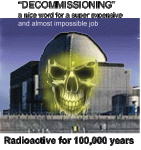
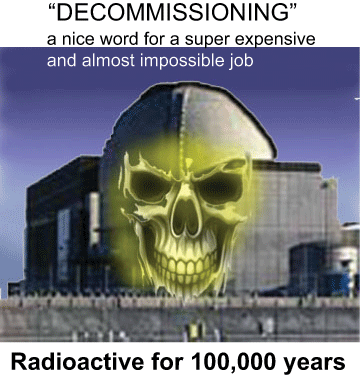
 Trawsfynydd: Nuclear reactors to go under new decommissioning plan, By George Herd, BBC News, 30 July 2020
Plans have been unveiled to remove nuclear reactors and towers at a former power plant in Snowdonia.
It follows a decision to name Trawsfynydd in Gwynedd as the lead project for former Magnox stations in the UK.
The twin reactors will become the very first in the UK to be fully decommissioned.
It should safeguard hundreds of jobs at the plant for 20 years, and help drive decommissioning plans at other sites.
There are 10 former Magnox nuclear power stations in the UK, which have all now stopped generating electricity – the last being Wylfa on Anglesey in 2015.
Trawsfynydd was shut down in 1991 after operating for a quarter of a century.
Under original plans, the twin reactor buildings that tower over the landscape were due to be reduced in height by two-thirds, and then left in a care and maintenance phase, before the site is completely cleared in 2083.
The new programme will see the remaining reactor buildings demolished, while a new low-level radioactive waste store is built on the site to hold the material.
Magnox, which operates the site on behalf of the UK’s Nuclear Decommissioning Authority, said it estimated there would be 50,000 cubic metres of very low or low-level waste retained, until a new geological waste disposal site is identified by the UK government. …..
Magnox said it was still in the “early days” of planning the next phase of active decommissioning at Trawsfynydd, and would be launching consultations with stakeholders, including the community.
It said it envisaged a 20 year programme to:
- Remove the reactor building’s concrete panel outer shell down to ground level
- Remove the six 1,000 tonne boilers stored in sections and the 45 tonne overhead crane from each reactor, for off-site disposal
- Remove the reactors, their components and the reactor core
- Demolish the remaining reactor buildings
State of the art robotics and remote handling will be used to dismantle Trawsfynydd’s twin reactors and “minimise the risk of radiation dose to workers”.
Magnox said it still expected the site to be completely cleared by the 2083 target……
“There is a duty on the nuclear sector and today’s electricity users to take responsibility for the clear-up of sites, and Trawsfynydd’s twin reactors will be the first to be completely decommissioned in the United Kingdom,” said the Plaid Cymru MP for Dwyfor Meirionnydd. “In this respect, work undertaken here will lead the entire sector, and open opportunities for a whole new generation of engineers.”…. https://www.bbc.com/news/uk-wales-53595839
August 1, 2020
Posted by Christina Macpherson |
decommission reactor, UK |
Leave a comment