Sea level rise – a threat to nuclear power stations that is being ignored
 For nuclear plants operating on thin margins, growing climate risks prompt tough choices Climate change creates a number of problems for nuclear power plants that some academics say the industry needs to address soon. UtilityDive, Matthew Bandyk@MatthewBandy- – 11 Sept 20′‘………..Sea Levels
Researchers are projecting that nuclear plants need to be concerned not just with water temperature, but also water levels, especially when severe weather events linked to climate change like hurricanes can cause the water level a plant was designed to handle to rise rapidly.
About 37 GW of nuclear power capacity face “higher exposure to flood risk,” according to the Moody’s report. These include plants along the Atlantic and Gulf coasts, as well as inland plants located on rivers, like the Nebraska Public Power District’s Cooper plant on the Missouri River near the Omaha Public Power District’s now-retired Fort Calhoun plant, which was inundated with flood waters in 2011, forcing the plant to shut down for almost three years.
Over the long term, severe weather and rising sea levels could make the need to solve the puzzle of where to store spent fuel from reactors more urgent.
Due to the failure to develop a central waste repository like the long-stalled Yucca Mountain facility, much of the spent fuel is stored on-site in pools within the reactor that shield the potentially dangerous radiation from the discarded fuel assemblies, or, in the case of older spent fuel, stored in dry casks. Spent fuel pools must be actively cooled to avoid a scenario like the Fukushima disaster in 2011.
A 2020 academic journal article by Jordaan and other Johns Hopkins researchers looked at what would happen to spent fuel pool sites at U.S. nuclear plants if sea levels rose by six feet — as the National Oceanic and Atmospheric Administration has projected could happen over the next 80 years.
Seven plants would be at essentially the same level as coastal water, “meaning that the water will be encroaching on the plant with regularity,” the article said. One active plant — Turkey Point — and two decommissioned plant sites — Humboldt Bay in California and Crystal River in Florida — would “be partially or completely submerged by water” in this scenario. To avoid a Fukushima-like incident or the corrosion of dry casks, the article calls for “a long-term and comprehensive storage plan that is less vulnerable to climate change.”
As part of the regulatory response to Fukushima, U.S. nuclear plants updated their evaluations of the potential hazards they face based on their geographic locations, including floods. In some cases, those flood reevaluations have led to changes at some plants, such as new watertight barriers, according to Uhle.
There has been controversy both within and outside the NRC regarding whether the agency has done enough to ensure plants’ flooding protections are in line with the current estimated threats, which are in some cases far more severe than was thought when plants were initially licensed.
In early 2019, a divided NRC approved a rule incorporating “lessons learned” from Fukushima into regulatory requirements, but it did not contain provisions that would have required more extensive protections against the reevaluated hazards.
“Instead of requiring nuclear power plants to be prepared for the actual flooding and earthquake hazards that could occur at their sites, NRC will allow them to be prepared only for the old, outdated hazards typically calculated decades ago when the science of seismology and hydrology was far less advanced than it is today,” NRC Commissioner Jeff Baran said when explaining his objection to the majority’s decision.
The regulations the NRC stopped short of imposing would have forced plant operators to, in some cases, take flood mitigation steps beyond what the plant was originally designed to withstand, according to Ed Lyman, director of nuclear power safety for the Union of Concerned Scientists, who was a strong critic of the commission’s move. For example, if a building containing critical safety equipment for a plant was built to stay above water in a flood, and new studies showed the potential water level was higher than previously thought, the NRC regulations would not require that building to be moved to a higher location, Lyman said.
“Even without additional concerns from climate change, the plants aren’t protected today,” he said……… https://www.utilitydive.com/news/for-nuclear-plants-operating-on-thin-margins-growing-climate-risks-prompt/584883/
Nuclear waste disposal problem National Nuclear Security Administration’s elephant in the desert
|
Post-WIPP Disposal ‘Far and Away’ Biggest TRU Waste Challenge for NNSA Pit Mission, Official Says https://www.exchangemonitor.com/pit-waste-far-away-biggest-challenge-nnsa-pit-mission-official-says/
BY EXCHANGEMONITOR 11 Sept 29, Addressing the elephant in the desert, an official with the National Nuclear Security Administration (NNSA) on Wednesday warned that ongoing nuclear-weapon maintenance will require a transuranic waste disposal site that is open beyond 2050: the current,BEST-CASE AVAILABILITY FOR THE WASTE ISOLATION PILOT PLANT IN NEW MEXICO.
“From an NNSA perspective, with an enduring mission, we are going to continue to have a need to dispose of transuranic waste past 2050,” James McConnell, the Department of Energy agency’s associate administrator for safety, infrastructure, and operations, said Wednesday at the ExchangeMonitor’s virtual RadWaste Summit. “Far and away the biggest challenge for NNSA is to make sure that the disposal system for transuranic waste is robust enough to not become a choke point for our mission,” McConnell said. The Waste Isolation Pilot Plant is DOE’s only deep-underground disposal facility for transuranic waste. In order to operate the facility into the 2050s, the agency needs New Mexico to modify the site’s operating permit. As written, the permit requires the federal government to stop burying waste at the site in 2024, then spend a decade safely closing down the facility. The NNSA plans in 2024 to start casting new war-ready plutonium cores for nuclear warheads at the Los Alamos National Laboratory in New Mexico. It expects to expand production to a combined 80 pits annually at Los Alamos and the Savannah River Site in South Carolina by around 2030. The associated waste stream from the mission will one day make the nuclear weapons agency the largest generator of transuranic waste in the Department of Energy complex. That will not happen until 2038 or so, “so there’s time to figure out what this means, both in terms of management and availability of continued disposal,” McConnell said. Transuranic waste, or TRU waste, is equipment and material contaminated with elements heavier than uranium, typically plutonium. Pits are the fissile cores of nuclear weapons, and the first to be cast later this decade will be for warheads to tip the planned fleet of Ground-Based Strategic Deterrent intercontinental ballistic missiles. After starting production four years from now, the NNSA plans to produce 30 pits a year at Los Alamos starting in 2026, then 80 a year by 2030 by adding another 50 pits annually at the Savannah River Site. Either site could, at least temporarily, handle all 80 pits on its own. In that 80-pit solo configuration, Los Alamos would annually generate a mixture of roughly 400 cubic yards (about 305 cubic meters) of transuranic and mixed transuranic waste. The NNSA projects Savannah River to generate more waste than that to produce just its nominal 50 pits a year: 1,365 cubic yards (or almost 1,045 cubic meters) of transuranic waste annually. Casting 80 pits a year by using both factories would produce about 19,200 cubic yards, or some 14,680 cubic meters, of transuranic waste from 2030 to 2050, according to slides McConnell briefed at the conference. He said the NNSA, together with DOE’s Office of Environmental Management, will begin a collaborative review “in the very short coming weeks” about the future NNSA TRU waste generator sites. |
|
Effective nuclear arms control engagement with China – the View from Beijing
Carnegie–Tsinghua Center for Global Policy 11 Sept 20, Effective nuclear arms control engagement with China will likely require confidence-building measures by the United States and greater support from the international community.
The United States will have to keep its public voice down while offering China concrete proposals to address the two countries’ asymmetric capabilities. If they’re to be taken seriously, these proposals should show a willingness by the United States to limit its own capabilities, particularly in areas of U.S. superiority such as air- and sea-launched missile systems and space-based capabilities.
Given China’s deep skepticism and outsider status in the arms control arena, engagement will require transparency and time to build confidence. One valuable starting point could be a reset of fundamental terms: China may be more eager to discuss “strategic ability” than “arms control.” Identifying cooperative measures for nuclear risk reduction would be a useful topic for initial discussions.
No good reason for USA to start testing nuclear weapons again
|
Could resuming nuclear weapons testing lead to new arms race? https://www.deseret.com/utah/2020/9/10/21431021/nuclear-weapons-testing-donald-trump-downwinders-utah-ben-mcadams
By Dennis Romboy@dennisromboy Sep 10, 2020, SALT LAKE CITY — There’s no good reason for the United States to start testing nuclear weapons again, and if it did, the world would be less safe because other countries would follow suit, the former director of Sandia National Laboratories said Thursday.
“It’s really important to understand that if the U.S. resumes nuclear testing, it will incentivize other nations to resume testing as well,” said Jill Hruby, who headed for two years the lab that ensures the U.S. nuclear arsenal is safe, secure and reliable. “Other existing nuclear powers wouldn’t want to be seen as unable to test or as unable to send a message that their weapons work,” she said. “This is just a longstanding tit for tat set of actions that takes place in this community.” Hruby joined a virtual panel discussion on efforts to prohibit federal funding to restart explosive nuclear weapons testing hosted by Rep. Ben. McAdams. The Utah Democrat blocked funding for test site preparations or weapons tests in an annual defense bill in the House. The Senate voted earlier to set aside $10 million in its version of the defense bill to conduct testing if the Trump administration decided to pursue it. Negotiations to reconcile the two bills won’t begin for months. McAdams said explosive nuclear weapons testing is not only unnecessary but dangerous and irresponsible, noting past underground and above-ground tests exposed Utahns and others to radiation that resulted in deadly illnesses and cancer. “Our country does not need new nuclear weapons testing. We cannot afford to put our citizens in danger and we should not signal to the rest of the world that nuclear nonproliferation is a thing of the past,” he said. Hruby, now a member of the Nuclear Threat Initiative advisory board, said there are scientific reasons to restart testing, including to see how aged weapons perform, validate the behavior of new weapons and collect information on new weapon designs. But, she said, none of them are compelling because they could be explored with computer modeling. “The potential political cost and actual cost for testing is higher than the benefit, in my opinion,” she said. If testing were to resume, it would be for political not technical reasons, Hruby said. Deb Sawyer, of the Utah Campaign to Abolish Nuclear Weapons, said testing would be a giant step backward and encourage more countries to test. “Testing would just open up the gates and say, ‘Go for it,’ and that’s the last thing that we need,” she said. The Trump administration has talked about testing nuclear weapons as Congress considers extending compensation for those still suffering from radiation exposure during years of nuclear tests. Utahns, including Mary Dickson, were repeatedly exposed to radiation from nuclear bomb tests at the Nevada Test Site near Las Vegas. Dickson, a Downwinder and thyroid cancer survivor, said the impacts are far more widespread and severe than people know. She said it’s “morally reprehensible” to consider renewed nuclear weapons testing. “There’s no way we should be risking those lives again,” she said. McAdams said he’s often asked if underground testing, which ended in 1992, would be safe. Longtime community activist Steve Erickson, a consultant and volunteer with Downwinders Inc. for nearly 40 years, said it’s a complicated question but there have been numerous releases of radiation from underground tests. “It’s a dicey proposition,” he said. Erickson said there is no strategic value to resuming nuclear testing. The only reason to test would be to develop and proof new warheads, he said. “The question then becomes what do we need another new weapon for, another nuclear warhead,” Erickson said. “And to what end would we want to perhaps pursue a new arms race?” |
|
Broad support among Ohio lawmakers for the repeal of nuclear bailout law
 Lawmakers debate repeal of nuclear plant bailout law https://www.mahoningmatters.com/regional-news/lawmakers-debate-repeal-of-nuclear-plant-bailout-law-2703211 – By: State Rep. Michael O’Brien of Warren testified in favor of a full repeal of House Bill 6 Thursday.
COLUMBUS (AP) — The alleged corruption that led to passage of a nuclear plant bailout law and questions about whether the bailout was necessary require the law’s immediate repeal and replacement, Democratic and Republican lawmakers testified Thursday.
Supporters of the energy policy contained within the law who worry a repeal of House Bill 6 throws the baby “out with the bathwater” overlook the enormous problems with the law, said state Rep. Laura Lanese.
“I would counter that what we have now isn’t bathwater, but mud,” Lanese told the House Select Committee on Energy Policy and Oversight, created to hear the repeal. “And once you have mud, you can’t cleanly separate the dirt from the water and still have confidence you got rid of all the dirt.”
The law is now at the center of a $60 million federal bribery probe that led to the ouster of former GOP House Speaker Larry Householder. Federal prosecutors in July accused Householder and four others of shepherding energy company money for personal and political use as part of an effort to pass the legislation, then kill any attempt to repeal it at the ballot.
Federal documents make clear the company was Akron-based FirstEnergy.
While FirstEnergy and its executives have denied wrongdoing and have not been criminally charged, federal investigators say the company secretly funneled millions to secure a $1 billion legislative bailout for two unprofitable Ohio nuclear plants then operated by an independently controlled subsidiary called FirstEnergy Solutions.
In addition to the corruption charges, there’s evidence that the plants didn’t need the bailout, said Lanese and fellow Republican Rep. Dave Greenspan. They noted that a FirstEnergy spinoff company announced an $800 million stock buyback in May, after the law was passed.ly funneled millions to secure a $1 billion legislative bailout for two unprofitable Ohio nuclear plants then operated by an independently controlled subsidiary called FirstEnergy Solutions.
In addition to the corruption charges, there’s evidence that the plants didn’t need the bailout, said Lanese and fellow Republican Rep. Dave Greenspan. They noted that a FirstEnergy spinoff company announced an $800 million stock buyback in May, after the law was passed.
In addition, a portion of the bill also provided guaranteed profits for the company even if revenue dips.
“The owner and operator of the nuclear plants has cash flow and is profitable today, months before the first cent from House Bill 6 is set to reach them,” Greenspan said.
In addition, by favoring nuclear energy over other clean energy options, the bill created winners and losers, Greenspan said.
Democratic state Reps. Michael O’Brien of Warren and Michael Skindell of suburban Cleveland also testified in favor of a repeal. The effort has broad bipartisan support, including backing from Republican Gov. Mike DeWine.
Campaign against nuclear fuel waste storage in South Bruce, Canada
People in communities near the Municipality of South Bruce may receive a leaflet from the group Protect Our Waterways-No Nuclear Waste with information on the proposal to store used nuclear fuel deep underground near Teeswater.
Spokesman Michelle Stein said 50,000 leaflets were sent out this week to let people know some of the group’s concerns about the plan to store Canada’s nuclear waste in a Deep Geologic Repository or DGR.
Stein said the Nuclear Waste Management Organization is assembling land in the municipality of South Bruce to store irradiated nuclear fuel from 4.6 million spent fuel bundles.
“The proposed site includes the Teeswater River flowing through it, and that leads to Lake Huron. And 40 million people get their drinking water from Lake Huron,” she said.
“It’s a decision that is going to affect so many people, and change our community in such a large way, I think each individual deserves to have a vote,” she added.
Stein says 1,600 residents of South Bruce signed a petition opposing the proposed DGR. Stein wants to see a referendum on the issue, as both the Nuclear Waste Management Organization and the municipality have stated that the project needs broad community support to go ahead.
If the proposed nuclear waste dump is approved there will be two loads of spent nuclear fuel travelling by truck every day for forty years from Canada’s nuclear reactors. And if there is a radioactive leak underground it could affect 40 million people in Canada and the US,” said Stein.“People need to know the risks. Nowhere in the world is there an operating DGR for high-level nuclear waste as is being proposed here. Underground storage sites for low-medium level nuclear waste in the US and Germany have leaked radioactive material and required multi-billion-dollar clean-ups”, says Stein. “I encourage everyone who lives in a community near South Bruce to contact their own Mayor and tell them you oppose NWMO’s proposal for a nuclear waste dump.”
POW-NNW believes that the “rolling stewardship” method of managing nuclear waste is better because it maintains it in a monitored and retrievable state at all times, with continual improvements to packaging and environmental protection.
Stein added that ongoing scientific studies examine how spent nuclear fuel can be reused, reduced, and even neutralized. In its initial report to Parliament, the NWMO did not say that on-site storage at the reactor sites was unsafe or not feasible.
Bruce County divided over becoming permanent site to store Canada’s nuclear waste,
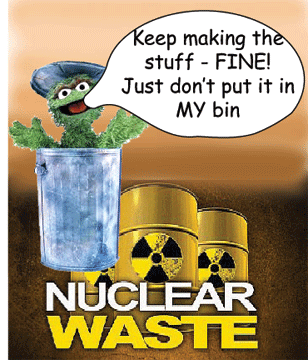 Bruce County divided over becoming permanent site to store Canada’s nuclear waste,
Canada has 57K tonnes of highly radioactive spent nuclear fuel and nowhere to put it, Colin Butler · CBC News · Feb 21 2020, Bruce County calls itself a place “where the smiles are bigger and a little more frequent,” but those smiles belie a deepening divide among neighbours over what to do with Canada’s growing stockpile of nuclear waste.
The town of South Bruce, on the rim of the sparkling waters of Lake Huron, is one of two sites selected by a federal agency tasked with finding permanent locations to store Canada’s nearly three million bundles of highly radioactive spent nuclear fuel.
On Thursday, politicians in Bruce County debated whether their community should be home to a place to put that waste, what’s called a deep geologic repository, or DGR; a multi-billion dollar high tech nuclear waste dump that would see the material stored in perpetuity hundreds of metres below the Earth.
At issue in the debate are the ethics of leaving the burden of some of Canada’s most dangerous nuclear material to future generations, the possible development and devaluation of prime Ontario farmland and concerns over the potential safety of the drinking water for 40 million people in two countries.
‘I am strongly opposed’
On Thursday, that politically-fraught debate took centre stage in Walkerton, Ont. before a packed council chamber where politicians debated whether DGRs were “settled science” in an argument that has already played out at dinner tables, arenas and coffee shops in the area for years, dividing neighbours and leaving communities deeply polarized.
“I am strongly opposed,” said Brockton Mayor Chris Peabody, whose township includes Walkerton, a place that two decades ago grappled with a tainted water crisis where e. coli killed six people and sickened thousands.
“The proposal is to bury the waste under the Teeswater River,” he told council. “I can’t support that. I’ve got several communities down river that get their drinking water from aquifers along that river.”
Peabody said if a deep geologic repository were to be located west of Teeswater, it would potentially devalue prime farmland and the resulting stigma of burying nuclear waste near his community might affect the ability of local farmers to sell their wares.
“It would make it very difficult for them to market their produce and survive,” he said. “I don’t think the scientific consensus supports burying nuclear waste in class one farmland in Southern Ontario.”
Utilizing a deep geologic repository isn’t simply a matter of “burying nuclear waste in class one farmland” as Peabody suggests. The proposed underground project is a highly sophisticated $23 billion nuclear waste disposal site designed to contain and isolate some of the most dangerous materials on Earth for thousands of years.
The sprawling complex of tunnels and chambers would occupy a footprint of about 600 hectares underground, where nuclear waste would be stored at a depth as low as the CN Tower is tall (500 to 600 metres). The idea is the material would be encased in containers below natural bedrock to keep the harmful effects of radiation at bay for millennia.
While proponents of the system claim a DGR is a safe way to store nuclear waste, those opposed argue it has a spotty record at best, pointing out that similar facilities in New Mexico and Germany have leaked – and by that token, opponents say a DGR near Lake Huron would potentially put the drinking water of 40 million people at risk.
It’s not the first time the debate has come to the area. Ontario Power Generation recently abandoned a 15-year campaign for a similar proposed facility to store low to intermediary waste at a site not far from the Bruce Nuclear Generating Station.
The failure to move ahead with the project is part of a larger problem of Canada’s struggle to find a permanent home for its growing stockpile of nuclear waste.
As of 2018, it’s estimated Canada had some 57,000 tonnes of highly radioactive spent nuclear fuel and nowhere to put it.
So far, the federal agency tasked with disposing it, the Nuclear Waste Management Organization, or NWMO, has identified two potential communities with the right geological makeup; Ignace in Ontario’s north and South Bruce, in Ontario’s Great Lakes Basin. ……. https://www.cbc.ca/news/canada/london/canada-nuclear-waste-1.5469727
Opposition in Kamoenai to hosting nuclear waste dump
|
Second site in Hokkaido considers hosting nuclear waste dump, Japan Times, SAPPORO/SUTTSU, HOKKAIDO – The village of Kamoenai in Hokkaido is considering hosting a final disposal facility for high-level radioactive waste, it was learned Friday.The village is looking at applying for a literature survey, the first of three stages in the research process to select the location of a final disposal facility for high-level radioactive waste from nuclear power plants.
Kamoenai is the second municipality in the nation to be contemplating the process since the government published details of areas it considered suitable for nuclear waste disposal in its Nationwide Map of Scientific Features for Geological Disposal in 2017. The town of Suttsu, also in Hokkaido, was the first municipality to do so……. The village, which is located in western Hokkaido and had a population of 823 as of the end of August, faces the Sea of Japan and neighbors the village of Tomari, which hosts a nuclear power plant run by Hokkaido Electric Power Co. The plant is currently offline. According to the government map, almost all of Kamoenai except for some southern areas is unsuitable for waste disposal. Procedures to select a host for a final disposal site are conducted in three stages, comprising the “literary” survey, a “preliminary” investigation and a “detailed” investigation. A municipality undergoing a literature survey can receive subsidies of up to ¥2 billion from the central government. Meanwhile, many residents of Suttsu, Hokkaido, another municipality that is considering applying for a literature survey, voiced opposition to the plan Thursday at a briefing session organized by the municipal government. The meeting was the fourth of its kind for Suttsu residents. The first such session was held on Monday. At Thursday’s meeting, which was opened to the press, Suttsu Mayor Haruo Kataoka explained the reasons for considering applying for a literature survey. Some 260 residents attended the session, which lasted for over three hours from 6:30 p.m. Participating residents voiced concerns that the move would lead to harmful rumors about the town, and that if the town received subsidies from the government as a result of applying for the literature survey, it would have no choice but to become a final disposal site. Some said that detailed discussions should be held after the mayoral election in the town next year……. In talks with reporters after the meeting, Kataoka rejected the idea of holding a local referendum on the matter, saying, “It will divide the town residents.” According to the town, the first briefing session on Monday was cut short due to technical issues, such as not having reserved enough time for questions from residents. Therefore, the town government plans to hold an additional session within this month for participants that attended the Monday meeting. https://www.japantimes.co.jp/news/2020/09/11/national/hokkaido-village-nuclear-waste/ |
|
Britain’s National Audit Office warns on costs of cleaning up old nuclear plants
|
Estimates of the cost to clear up 12 of the UK’s earliest nuclear power sites have increased by nearly £3bn since 2017 and there remains “inherent uncertainty” over the final bill, the country’s public spending watchdog has warned. The National Audit Office on Friday published its latest report into the long-running saga around the decommissioning of two research sites and 10 early nuclear power stations in Britain, which came to be known as the “Magnox” plants due to the magnesium alloy that was used to cover the fuel rods inside their reactors. The spending watchdog also found that the costs to the taxpayer of a botched 2014 tender process to outsource the decommissioning to the private sector was £20m higher than when it last investigated three years ago.
Cleaning up the Magnox sites, which were built before privatisation and include Hunterston A in Scotland and Hinkley Point A in Somerset, has turned into a costly and torturous affair. In 2016 the High Court ruled the 2014 competition for a 14-year contract to decommission the sites — which had been awarded to Cavendish Fluor Partnership, or CFP, a joint venture between UK-based Babcock International and Fluor of the US — had been “fudged” by the Nuclear Decommissioning Authority, a body attached to the Department for Business, Energy and Industrial Strategy.
A year later ministers, acting on legal advice, terminated the arrangement with CFP nine years early and renegotiated a shorter contract that ran until the end of August 2019. Decommissioning of the sites was then brought in-house by the NDA. ………. https://www.ft.com/content/6f313c84-d314-4160-b124-a68c4e85be09
|
|
|
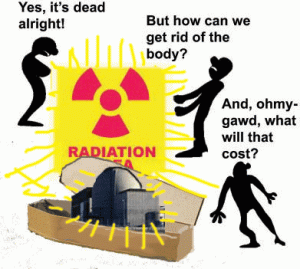
Donald Trump says US has incredible nuclear weapons; denies leaking classified info
Donald Trump says US has incredible nuclear weapons; denies leaking classified info https://economictimes.indiatimes.com/news/defence/donald-trump-says-us-has-incredible-nuclear-weapons-denies-leaking-classified-info/articleshow/78053124.cmsSynopsis– 11 Sept 20, “Woodward writes that anonymous people later confirmed that the US military had a secret new weapons system, but they would not provide details, and that the people were surprised Trump had disclosed it,” The Washington Post said.
WASHINGTON: President Donald Trump has said the US has some “incredible” nuclear weapon systems that nobody knows about but refuted allegations of leaking classified information about them to a renowned investigative journalist in his upcoming book.
Penned by American journalist Bob Woodward, the book ‘Rage’ to be launched on September 15 has stirred several controversies around Trump’s presidency, weeks before the US election to be held on November 3.
According to the excerpts of the book released by The Washington Post, Trump during an interview with Woodward said, “I have built a nuclear — a weapons system that nobody’s ever had in this country before. We have stuff that you haven’t even seen or heard about. We have stuff that (Russian President Vladimir) Putin and (Chinese President) Xi Jinping have never heard about before. There’s nobody — what we have is incredible.”
“Woodward writes that anonymous people later confirmed that the US military had a secret new weapons system, but they would not provide details, and that the people were surprised Trump had disclosed it,” The Washington Post said.
Speaking to reporters on Thursday, Trump denied having talked about classified information about US nuclear weapons.
“We have great weaponry. No, I’m not talking about classified (information). I’m talking about what we build. We’re building great weaponry,” the president said when asked if he shared classified information about a nuclear weapons system with Woodward.
“What were you talking about when you talked about that?” Trump was asked.
“Our military is stronger now than it’s ever been. We spent USD 2.5 trillion on our military over the last three-and-a-half years. We now have new rockets and missiles. And, frankly, our nuclear — we have to hope to God we never have to use it — but our nuclear now is in the best shape it’s been in decades,” he asserted.
Trump told reporters the US has some nuclear systems that nobody knows about. ..
James Acton, co-director of the Carnegie Endowment for International Peace’s nuclear policy programme, tweeted that Trump might have been mentioning about a 2017 announcement of a plan to reduce the explosive power of some nuclear warheads on submarine-launched missiles.
“The timing was kept secret. My guess is that Trump told Woodward about the first deployment before it was made public. This weapon is usually called the low-yield D5 (because the missile is the Trident D5 sea-launched ballistic missiles). The warhead is the W76-2,” he tweeted on Thursday.
“I don’t believe that the US could build an actually new nuclear weapon in secret. Too much money for classified budgets. Too many people involved for it not to leak,” Acton said in another tweet.
Meanwhile, addressing a public rally in Michigan on Thursday, Trump asserted that he did not leak any information and asserted that he just wanted to inform the people that the US has the greatest weaponry in the world.
“I said, we have systems and missiles and rockets and military – we have systems that you’ve never even seen before. (Chinese) President Xi (Jinping) has nothing like it. Russian President (Vladimir) Putin has nothing like it.
“They (the media) said he may be giving away classified information. These people are sick. Never speak well about our technology…I just want to let people know we have the greatest systems, the greatest equipment and the greatest people anywhere in the world. There is nobody like the US military,” Trump told the crowd.
Donald Trump says US has incredible nuclear weapons; denies leaking classified info https://economictimes.indiatimes.com/news/defence/donald-trump-says-us-has-incredible-nuclear-weapons-denies-leaking-classified-info/articleshow/78053124.cmsSynopsis
“Woodward writes that anonymous people later confirmed that the US military had a secret new weapons system, but they would not provide details, and that the people were surprised Trump had disclosed it,” The Washington Post said.
v
WASHINGTON: President Donald Trump has said the US has some “incredible” nuclear weapon systems that nobody knows about but refuted allegations of leaking classified information about them to a renowned investigative journalist in his upcoming book.
Penned by American journalist Bob Woodward, the book ‘Rage’ to be launched on September 15 has stirred several controversies around Trump’s presidency, weeks before the US election to be held on November 3.
According to the excerpts of the book released by The Washington Post, Trump during an interview with Woodward said, “I have built a nuclear — a weapons system that nobody’s ever had in this country before. We have stuff that you haven’t even seen or heard about. We have stuff that (Russian President Vladimir) Putin and (Chinese President) Xi Jinping have never heard about before. There’s nobody — what we have is incredible.”
“Woodward writes that anonymous people later confirmed that the US military had a secret new weapons system, but they would not provide details, and that the people were surprised Trump had disclosed it,” The Washington Post said.
Speaking to reporters on Thursday, Trump denied having talked about classified information about US nuclear weapons.
“We have great weaponry. No, I’m not talking about classified (information). I’m talking about what we build. We’re building great weaponry,” the president said when asked if he shared classified information about a nuclear weapons system with Woodward.
“What were you talking about when you talked about that?” Trump was asked.
“Our military is stronger now than it’s ever been. We spent USD 2.5 trillion on our military over the last three-and-a-half years. We now have new rockets and missiles. And, frankly, our nuclear — we have to hope to God we never have to use it — but our nuclear now is in the best shape it’s been in decades,” he asserted.
Trump told reporters the US has some nuclear systems that nobody knows about. ..
James Acton, co-director of the Carnegie Endowment for International Peace’s nuclear policy programme, tweeted that Trump might have been mentioning about a 2017 announcement of a plan to reduce the explosive power of some nuclear warheads on submarine-launched missiles.
“The timing was kept secret. My guess is that Trump told Woodward about the first deployment before it was made public. This weapon is usually called the low-yield D5 (because the missile is the Trident D5 sea-launched ballistic missiles). The warhead is the W76-2,” he tweeted on Thursday.
“I don’t believe that the US could build an actually new nuclear weapon in secret. Too much money for classified budgets. Too many people involved for it not to leak,” Acton said in another tweet.
Meanwhile, addressing a public rally in Michigan on Thursday, Trump asserted that he did not leak any information and asserted that he just wanted to inform the people that the US has the greatest weaponry in the world.
“I said, we have systems and missiles and rockets and military – we have systems that you’ve never even seen before. (Chinese) President Xi (Jinping) has nothing like it. Russian President (Vladimir) Putin has nothing like it.
“They (the media) said he may be giving away classified information. These people are sick. Never speak well about our technology…I just want to let people know we have the greatest systems, the greatest equipment and the greatest people anywhere in the world. There is nobody like the US military,” Trump told the crowd.
Professor Paul Rogers – a witness explaining how Julian Assange is to be extradited for POLITICAL REASONS
 Julian Assange clearly political, says extradition trial witness, https://www.theaustralian.com.au/world/julian-assange-clearly-political-says-extradition-trial-witness/news-story/735ef7d40551d52f4f7f12d9d6c318d7 JACQUELIN MAGNAY, FOREIGN CORRESPONDENT@jacquelinmagnay, THE TIMES, SEPTEMBER 10, 2020
Julian Assange’s nomination for the Senate during the 2013 federal election campaign and the establishment of the WikiLeaks political party the year before “clearly shows’’ the WikiLeaks founder has a political view and a libertarian standpoint, a witness has told the Old Bailey.
Professor Paul Rogers, the emeritus professor of peace studies at Bradford University, was called as a witness by Assange’s team to persuade the judge that Assange is being targeted for political means, and thus an extradition to the US should not be permitted under the Anglo-US extradition treaty.
In day three of the court hearing where Assange, 49, is objecting to extradition to the US, Professor Rogers said in written testimony that Assange’s expressed views, opinions and activities demonstrate very clearly “political opinions”. He cited how Assange had formed the political party to contest the Australian general election and “central of this is his view to put far greater attention to human rights’’.
He added: “The clash of those opinions with those of successive US administrations, but in particular the present administration which has moved to prosecute him for publications made almost a decade ago, suggest that he is regarded primarily as a political opponent who must experience the full wrath of government, even with suggestions of punishment by death made by senior officials including the current President.’’
But US prosecutor James Lewis QC said: “Assistant US Attorney Gordon D. Kromberg explicitly refutes that this is a political prosecution but rather an evidence-based prosecution.’’
In documents to the court, the prosecution says the investigation into Assange had been ongoing before the Trump administration came into office.
“Assange’s arguments are contradicted by judicial findings, made in the US District Court of the District of Columbia, that the investigation into the unauthorised disclosure of classified information on the WikiLeaks website remained ongoing when the present administration came into office,” the prosecution says.
Mr Lewis added: “If this was a political prosecution, wouldn’t you expect him to be prosecuted for publishing the collateral murder video?’’https://www.theaustralian.com.au/world/julian-assange-clearly-political-says-extradition-trial-witness/news-story/735ef7d40551d52f4f7f12d9d6c318d7
He said Assange was being extradited to face charges relating to complicity in illegal acts to obtain or receive voluminous databases of classified information, his agreement and attempt to obtain classified information through computer hacking; and publishing certain classified documents that contained the unredacted names of innocent people who risked their safety and freedom to provide information to the United States and its allies, including local Afghans and Iraqis, journalists, religious leaders, human rights advocates, and political dissidents from repressive regimes.
Professor Rogers told the court the motivation of Assange and WikiLeaks was to achieve greater transparency and was political. The trial continues.
NuScam’s ”small” nuclear reactor design approved – but cost, safety, public acceptance hurdles loom against them

First U.S. Small Nuclear Reactor Design Is Approved, Concerns about costs and safety remain, however, Scientific American  By Dave Levitan on September 9, 2020
- The U.S. Nuclear Regulatory Commission (NRC) has approved the design of a new kind of reactor, known as a small modular reactor (SMR). The design, from the Portland, Ore.–based company NuScale Power, is intended to speed construction, lower cost and improve safety over traditional nuclear reactors…………
- some experts have expressed concerns over the potential expense and remaining safety issues that the industry would have to address before any such reactors are actually built. ………
- The NRC’s design and related final safety evaluation report (FSER) do not mean that the firm can begin constructing reactors. But utility companies can now apply to the NRC to build and operate NuScale’s design. With almost no new nuclear construction completed in the U.S. over the past three decades, SMRs could help reinvigorate a flagging industry.
NuScale’s SMR, developed with the help of almost $300 million from the U.S. Department of Energy, has a generating capacity of 50 megawatts—substantially smaller than standard nuclear reactors, which can range to well more than 1,000 megawatts (MW). A utility could combine up to 12 SMRs at a single site, producing 600 MW of electricity—enough to power a midsize city. The NRC says it expects an application for a 60-MW version of NuScale’s SMR in 2022……….
In a July 2020 report, NRC nuclear engineer Shanlai Lu discussed a complicated issue known as boron dilution, which could possibly cause “fuel failure and prompt criticality condition”—meaning that even if a reactor is shut down, fission reactions could restart and begin a dangerous power increase. And in another report, the NRC’s Advisory Committee on Reactor Safeguards also noted that “several potentially risk-significant items” are not yet completed, though it did still recommend that the NRC issue the FSER. The agency’s response to the latter report stated that those items will be further assessed when site-specific licensing applications—the step needed to actually begin building and operating a reactor—are submitted. ……..
Lyman says that in general, the NRC’s design certification process should reduce uncertainty for utilities aiming to build nuclear plants because they can reference a completed safety review. But he thinks the NuScale approval undermines that advantage. Whether the gaps in safety will result in further delays to NuScale’s time line remains to be seen. The NRC will undertake another review when the company’s 60-MW design is submitted. https://www.scientificamerican.com/article/first-u-s-small-nuclear-reactor-design-is-approved/
Julian Assange’s extradition hearing in London. What can we expect?
 What’s at stake at Julian Assange’s long-awaited extradition hearing?, ABC 8 Sept 20, Julian Assange is fighting an attempt by the United States to extradite him to face charges on what it says was “one of the largest compromises of classified information in the history of the United States”.
It marks the culmination of a nearly decade-long pursuit by US authorities of the Australian-born WikiLeaks founder over the publication of secret documents and files in 2010 and 2011.
Assange’s extradition hearing had initially begun in February but was delayed for several months, and the coronavirus pandemic added additional delays, meaning Assange has been kept on remand in Belmarsh prison in south-east London since last September.
As reported by Background Briefing, Assange’s defence team will attempt to persuade the court he is unfit to travel to the US to face trial, and that the attempt to send him there is essentially an abuse of process.
How did he get to this point?
WikiLeaks made international headlines in April 2010 when it published a classified US military video showing an Apache attack helicopter gunning down 11 civilians, including two Reuters journalists, on a street in Baghdad in 2007.
Later that year, WikiLeaks released hundreds of thousands of US military messages and cables, a leak that saw former US Army intelligence analyst Chelsea Manning jailed……..
Assange, 49, has always denied the allegations, saying they were part of a US plot to discredit him and eventually extradite him to the US, and the investigation was eventually dropped in 2017.
He remained holed up in the embassy for seven years until April 2019, when the Ecuadorian government withdrew his asylum and Metropolitan Police officers arrested him for failing to surrender to the court over an arrest warrant issued in 2012……..
In May 2019, Assange was sentenced to 50 weeks in jail for breaching bail conditions, and during that time the US Justice Department brought 18 charges against him.
What is Assange accused of?
Assange is facing 17 charges relating to obtaining and disclosing classified information, and one charge concerning an alleged conspiracy to crack passwords on government servers.
The US alleges he conspired with Chelsea Manning to hack into US military computers to acquire the classified information published by WikiLeaks.
What can we expect from this hearing?
The court must examine a series of factors before any extradition can be granted, such as if the alleged crimes have equivalent offences in the UK and could lead to trial.
“It’s what’s called double criminality, in other words, whether the offences for which Assange is being sought in under US law are broadly being recognised under UK law,” Professor Don Rothwell, from the Australian National University, told Background Briefing.
Prosecutors have argued there is no doubt his actions would amount to offences under the UK’s Official Secrets Act.
If the court agrees, it must then consider how extradition would affect Assange’s health.
Previous court appearances this year have been delayed due to health issues, and his lawyers say his efforts to protect himself from US extradition and being stuck inside the Ecuadorian embassy for seven years had taken its toll.
If the court accepted it would be detrimental to his health, it could open up the possibility of protecting Assange in the UK under European human rights law.
The magistrate may also take issue with how the prosecutors are seeking to impose American law on what Mr Assange is alleged to have done outside of US territory.
“In this matter, US law is seeking to extend all the way, not only from the United States, but into the United Kingdom and into parts of Europe and basically impact upon the activities that Assange has undertaken associated with WikiLeaks over 10 years ago,” Professor Rothwell said…….
Assange’s legal team contends the US is seeking to prosecute Assange for political offences and that he is thereby exempt from extradition under the terms of the UK-US extradition treaty…….
What happens next?
The hearing is expected to last between three and four weeks, with any decision made likely to be appealed and go to a higher court, meaning the legal battle would likely drag into next year and possibly beyond that.
If Assange is eventually extradited to the United States and found guilty, he faces a maximum 175 years imprisonment for the 18 offences listed in the indictment. https://www.abc.net.au/news/2020-09-09/julian-assange-what-does-extradition-hearing-mean/12642972
Chernobyl nuclear power plant gets special permission to run ‘hot’ tests with nuclear waste

 Chornobyl nuclear power plant gets special permission to run ‘hot’ tests with nuclear waste https://112.international/society/chornobyl-nuclear-power-plant-gets-special-permission-to-run-hot-tests-with-nuclear-waste-54539.html Source : 112 Ukraine, 9 Sept 20,
The spent fuel will be soon transferred to new storage, as the old one’s operational life is expiring Chornobyl nuclear power plant (NPP) received special permission to run hot tests with the spent nuclear fuel. Press office of the NPP reported that on September 8.
According to the message, over 23 years of service, the storage amounted up to 21,000 elements of nuclear waste. Due to the fact that the operational life of the current storage is expiring, the staff is now making arrangements to transport the waste to a new repository site. At first, only part of the waste will be transferred, and the rest is to be moved after successful “hot” tests.
“The new storage boasts of special technology, allowing to keep the building in the inert atmosphere. It’ll have helium pumped up in there, and the bilateral leak-tight bottles, which are supposed to keep the spent fuel for 100 years,” said Volodymyr Peskov, the Acting Director of Chornobyl NPP enterprise.
The NPP staff managed to get permission for hot tests after cold tests with nuclear waste were performed successfully.
UK. For thehighly radioactive Dounreay nuclear site, a mobile robot will be used to identify the toxic structures
 Press & Journal 8th Sept 2020 A mobile robot will be used for the first time in one of the most contaminated and inaccessible parts of the Dounreay nuclear plant to provide vital information on the next steps in its decommissioning. The technology will provide the first images in decades from inside the Caithness site’s Fuel Cycle Area (FCA).
The FCA consists of two reprocessing plants, waste stores and laboratory facilities where spent nuclear fuel was examined and reprocessed. As part of the site clean up, Dounreay Site Restoration Ltd (DSRL) is working with the Robotics and Artificial Intelligence in Nuclear (Rain) Hub, a consortium of universities led by the University of Manchester, to explore ways to overcome some of
the challenges.
1 This Month



Read the Public Inquiry Report, the Commissioners’ report, Surrendering Australia: The AUKUS Deception is available to download for free at aukuspublicinquiry.com. Or just watch the replay of the National Press Club Luncheon.

19 November – Webinar – The Reality of Reprocessing
Time: 11:00 AM Pacific Time (US & Canada) / 2:00 PM Eastern / 7:00 PM UK / 8:00 PM CET
Register for the Zoom Event Here


Shut down the radiation-damaged Heysham nuclear reactors now
To see nuclear-related stories in greater depth and intensity – go to https://nuclearinformation.wordpress.com

Say No to NASA’s Reckless Nuclear Reactor on the Moon
Say No to NASA’s Reckless Nuclear Reactor on the Moon
-
Archives
- November 2026 (119)
- October 2026 (302)
- September 2026 (339)
- August 2026 (330)
- July 2026 (355)
- June 2026 (287)
- May 2026 (306)
- April 2026 (356)
- March 2026 (251)
- February 2026 (267)
- January 2026 (308)
- December 2025 (358)
-
Categories
- 1
- 1 NUCLEAR ISSUES
- business and costs
- climate change
- culture and arts
- ENERGY
- environment
- health
- history
- indigenous issues
- Legal
- marketing of nuclear
- media
- opposition to nuclear
- PERSONAL STORIES
- politics
- politics international
- Religion and ethics
- safety
- secrets,lies and civil liberties
- spinbuster
- technology
- Uranium
- wastes
- weapons and war
- Women
- 2 WORLD
- ACTION
- AFRICA
- Atrocities
- AUSTRALIA
- Christina's notes
- Christina's themes
- culture and arts
- Events
- Fuk 2022
- Fuk 2023
- Fukushima 2017
- Fukushima 2018
- fukushima 2019
- Fukushima 2020
- Fukushima 2021
- general
- global warming
- Humour (God we need it)
- Nuclear
- RARE EARTHS
- Reference
- resources – print
- Resources -audiovicual
- Weekly Newsletter
- World
- World Nuclear
- YouTube
-
RSS
Entries RSS
Comments RSS

