Hard to save the Iran nuclear deal, even if Biden wins the U.S. election.
 Even if Biden wins US election, time is running out to save Iran nuclear deal
Events in the US are being watched closely as Iran’s presidential election looms in early 2021, Guardian, Patrick Wintour Diplomatic editor, Wed 21 Oct 2020 Even if Joe Biden triumphs at the polls, Iran’s weakened government may only have a few months to negotiate a revived nuclear deal before facing its own electoral challenge by hardliners who oppose any engagement with the west.
The narrow window has prompted calls for Biden to offer a phased approach to rejoining the Iran nuclear deal abandoned by Donald Trump in 2018, in order to show progress before the Iranian presidential election.
Iran’s reformists and centrists remain severely damaged by the failure of the original agreement to deliver economic benefits to ordinary Iranians.
Once Trump left the deal, he imposed maximum economic pressure on Tehran, blocking Iran’s oil exports, and leaving advocates of engagement with the US struggling to defend their strategy. In a recent interview in Kar Va Kargar the foreign minister Javad Zarif insisted the foreign ministry had not been naive to negotiate with the Americans, but said Trump had “blown up the entire negotiating room”.
Iran’s current president, Hassan Rouhani, was also an advocate of the deal, known as the Joint Comprehensive Plan of Action, but is standing down after two four-year terms. A range of conservatives, including members of the powerful Iranian Revolutionary Guards Corps, are preparing to stand, advocating either closer ties with China or a stronger self-reliant economic policy.
The reformist movement has not yet decided whether to put up a candidate or instead back a technocratic figure such as Ali Larijani, the former Speaker who is currently assisting Rouhani in framing a 25-year strategic partnership with China.
Reformists were trounced in spring parliamentary elections marked by a record low turn-out. The chances of persuading the disillusioned middle class to vote in the presidential election may in part depend on finding a credible candidate who can raise hopes of a resumption of talks with the west.
Biden has so far promised that “if Iran returns to strict compliance with the nuclear deal, the US would rejoin the agreement as a starting point for follow-on negotiations”.
But even if he does win, Biden would not take office until 20 January, leaving only a short time for reformists to convince Iranians that the path of engagement is worth trying again.
Some analysts say a Biden victory could be enough to change the mood in Iran – and certainly the elections are being watched with fascination in Tehran……. https://www.theguardian.com/us-news/2020/oct/21/even-if-biden-wins-us-election-time-is-running-out-to-save-iran-nuclear-deal
Very dubious claims made by proponents of NuScam’s small nuclear reactor plans
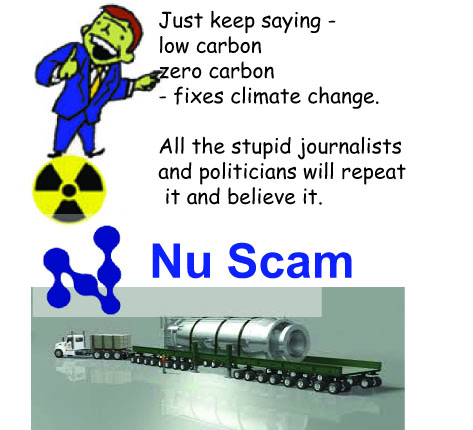 Small Nuclear Reactors Would Provide [a dubious claim] Carbon-Free Energy, but Would They Be Safe? Inside Climate News, Jonathan Moens, -21 Oct 20 Regulators have approved designs for 12 small reactors to be built in Idaho, but opponents say the project is dangerous and too late to fight climate change. “……… Last month, U.S. officials approved NuScale Power’s designs for 12 small nuclear reactors to be built in Boise, Idaho. The reactors could make use of the water, transmission lines and general infrastructure of former coal-powered plants in the West to produce clean energy, said Jose Reyes, co-founder of the company.
NuScale said the energy produced by its reactors would generate enough electricity to power about 50,000 homes across six Western states. The Utah Associated Municipal Power Systems, an energy cooperative, would be the first to build the reactors on a federal site at the Idaho National Laboratory.
The NuScale Power initiative has met with opposition from local environmental groups, who say that nuclear power is a dangerous and unsustainable energy source.
In addition, the highly radioactive waste from nuclear reactors must be securely stored indefinitely to prevent accidents, and contains plutonium and uranium that can be reprocessed into nuclear weapons. “We see this project as a way to create a whole new generation of high level radioactive waste,” said Scott Williams, executive director of Healthy Environment Alliance of Utah, a nuclear watchdog. ……
The designs underwent a public health and safety review by the Nuclear Regulatory Commission. But some scientists think they still aren’t safe enough. In a public statement, Edwin Lyman, director of nuclear power safety with the Union of Concerned Scientists, cited a report by a senior engineer at the Nuclear Regulatory Commission expressing concern that the cooling process might inadvertently cause “catastrophic” core damage to the reactors.
Other scientists worry that NuScale may be getting ahead of itself by not having a planning protocol for a radioactive emergency that affects areas around the site.
“In the event of an accident, the people around there will not have rehearsed how to do an evacuation,” said M.V. Ramana, a professor in the School of Public Policy and Global Affairs at the University of British Columbia. …….
Too Late in a Climate Crisis?
The municipal power systems cooperative still needs to obtain a license to build and begin operating the reactors. To do so, the project will undergo an additional site-specific review to consider the potential ecological, geographic and residential impact the technology may have on the area, said George Griffith, lead technician at the Idaho National Laboratory.
The delay means that while NuScale will be ready to manufacture modular reactors by around 2024, it will take an additional five to six years for them to be operational at the Idaho site, said Reyes.
Some experts, however, question whether 2029 is too late for the technology to be relevant in a time of climate crisis…….
Ramana, of the University of British Columbia, said, “While the overall capital cost [for small modular reactors] might be smaller, they also generate smaller amounts of electricity.” He outlined his concerns in a report released in September urging the Utah energy cooperative to “end their pursuit of small modular reactors.”
Ramana made clear that while devastating incidents associated with nuclear power plants might seem unlikely, we need to remain cautious.
“The lesson we should learn from all the many nuclear and other accidents that have happened with hazardous technologies, is a little bit of humility,” he said. https://insideclimatenews.org/news/20102020/small-nuclear-reactors-carbon-free-energy
Japan now has enough plutonium to make about 6,000 atomic bombs
Japan Sticks to Nuclear Fuel Recycling Plan Despite Plutonium Stockpile
Japan now has 45.5 tons of separated plutonium, enough to make about 6,000 atomic bombs. https://thediplomat.com/2020/10/japan-sticks-to-nuclear-fuel-recycling-plan-despite-plutonium-stockpile/
Chief Cabinet Secretary Kato Katsunobu, at a meeting with the governor of Aomori prefecture, home to Japan’s pending nuclear fuel reprocessing plant, reaffirmed that new Prime Minister Suga Yoshihide’s government will pursue the country’s nuclear energy policy.
“The government will firmly promote our nuclear energy policy and fuel cycle programs,” Kato said. He said Japan will make effort to reduce volume and toxicity of high-level nuclear waste, and extract plutonium from spent fuel from a resource conservation point of view.
critics say continuation of spent fuel reprocessing only adds to Japan’s already large plutonium stockpile. Japan also lacks a final repository for high-level nuclear waste.
Wednesday’s meeting came after the Nuclear Regulation Authority granted a safety approval this past summer for the Rokkasho fuel reprocessing plant, operated by Japan Nuclear Fuel Ltd., located in northern Japan, for a planned launch in 2022. The authority also gave a preliminary permit for the Rokkasho MOX fuel production plant, also planned for completion in 2022.
Japan now has 45.5 tons of separated plutonium — 8.9 tons at home, and 36.6 tons in Britain and France, where spent fuel from Japanese nuclear plants has been reprocessed and stored because Japan lacks a plant to produce MOX fuel containing plutonium at home. The amount is enough to make about 6,000 atomic bombs.
Despite security concerns raised by Washington and others, the stockpile is hardly decreasing due to difficulties in achieving a full nuclear fuel recycling program and slow restarts of reactors amid setbacks from the 2011 Fukushima disaster.
Japan reprocesses spent fuel, instead of disposing it as waste, to extract plutonium and uranium to make MOX fuel for reuse, while the U.S. discontinued the costly and challenging program. Allowed under international safeguard rules, Japan is the only non-nuclear weapons state that separates plutonium for peaceful purposes, though the same technology can make atomic bombs.
Vital need to protect Antarctic seas: groups aim for new protected areas

‘No other choice’: Groups push to protect vast swaths of Antarctic seas, Mongabay
BY ELIZABETH CLAIRE ALBERTS ON 19 OCT, 2020
- A coalition of conservation groups is advocating for the establishment of three new marine protected areas (MPAs) in East Antarctica, the Antarctic Peninsula and the Weddell Sea, which would encompass 4 million square kilometers (1.5 million square miles) of the Southern Ocean, or 1% of the global ocean.
- These proposals will be discussed at an upcoming meeting of the Commission for the Conservation of Antarctic Marine Living Resources (CCAMLR), which is due to take place online because of the pandemic.
- Conservationists anticipate that China and Russia may not support these MPA proposals due to fishing interests in the region, although they are optimistic that the MPAs will eventually be approved.
A coalition of conservation groups, including Pew, ASOC, SeaLegacy, Antarctica2020, Ocean Unite, and Only One, are working together to advocate for the formation of three marine protected areas (MPAs) in East Antarctica, the Antarctic Peninsula, and the Weddell Sea. Together, these areas would protect about 4 million square kilometers (1.5 million square miles), encompassing 1% of the world’s ocean. That’s two and a half times the size of Alaska, and nearly three times the size of Papahānaumokuākea Marine National Monument in Hawaiʻi, which is currently one of the world’s largest marine sanctuaries.
“If these three marine protected areas … [are] created at the same time, it would form the largest marine protection in the history of humanity,” Cristina Mittermeier, National Geographic wildlife photographer and co-founder of SeaLegacy, told Mongabay. “[It would be] a piece of good news that the planet needs.”
This is a matter of political will’
The body responsible for making decisions surrounding Antarctica’s marine region is the Commission for the Conservation of Antarctic Marine Living Resources (CCAMLR), an international commission with 25 member states and the European Union, as well as 10 acceding states. Originally established to manage krill fisheries in the Southern Ocean, the commission meets each year in Hobart, Australia, to negotiate total allowable catches for fisheries, and to discuss other matters related to Antarctica’s marine region, including the designation of MPAs.
Any decision requires a consensus among all members, and proposals can take a long time to be approved. For instance, it took more than five years for the commission to approve a proposal to turn a region of the Ross Sea into an MPA, according to Werner. But it finally went ahead in 2016: now 1.55 million km2 (nearly 600,000 mi2)of the Ross Sea is classified as an MPA, with 1.12 million km2 (432,000 mi2) of the region fully protected from commercial fishing.
“In CCAMLR, everything is possible,” said Werner, who acts as an official observer and scientific representative at the commission. “You can have a proposal blocked for years like the Ross Sea, and then one day [it happens].”…………
The way that Antarctica goes, so does the world’
One of the most important species living in the Southern Ocean is krill. These tiny, shrimp-like crustaceans are the foodstuff for many species, such as whales, seals, penguins, squids, fish and seabirds. Without krill, the pelagic food web would entirely collapse.
Krill is also heavily harvested for human consumption, mainly for fish meal and omega-3 dietary supplements.
The establishment of the three proposed MPAs — which would include no-take zones, but also areas that would allow regulated fishing — would help protect krill populations from overharvesting and enable fishing activities to continue in other areas, Cousteau said. According to one study, MPAs help increase fish mass………
But it’s not just fishing that’s a threat to krill — climate change is wreaking havoc on the species as high temperatures melt the ice it vitally depends upon. …….. https://news.mongabay.com/2020/10/no-other-choice-groups-push-to-protect-vast-swaths-of-antarctic-seas/
Taiwan furthers its departure from nuclear power, with more unused fuel rods sent back to USA
More fuel rods at fourth nuclear power plant sent back to U.S. https://focustaiwan.tw/society/202010210027
Five or six trucks carrying an unknown number of unused fuel rods from the Fourth Nuclear Power Plant arrived at Keelung Port in the early hours and were then loaded into several containers that departed for the U.S. at around noon.
However, the authorities in charge did not disclose whether this is the last batch of fuel rods being sent back to America.
A Legislative Yuan resolution that was passed in 2018 demands that state-run Taiwan Power Co. (Taipower) must send back all 1,744 unused fuel rods from the plant to America by the end of this year.
Taipower has said the task will cost NT$700 million (US$24.1 million).
In July 2018, the first batch of 160 rods was transported back to its U.S. supplier — Global Nuclear Fuel Americas, LLC — which was followed by three more similar operations as of August 2019, the Taipei-based China Times reported on Tuesday.
On Oct. 15, Atomic Energy Council Minister Hsieh Shou-shing (謝曉星) said 240 fuel rods at the power plant were still waiting to be transported to the U.S. — a delay caused by travel restrictions triggered by the COVID-19 pandemic.
According to the Ministry of Economic Affairs, disposing of the 1,744 fuel rods from the plant could save about NT$100 million in maintenance costs per year.
The government has spent NT$283.8 billion on building the plant in New Taipei’s Gongliao District, but it has been mothballed since 2014 due to public concern over the use of nuclear power.
How would Bradwell B affect local people, place and environment? What powers are behind the decision?
Hitler’s quest for nuclear weapons
WW2: Hitler’s true nuclear capacity exposed in secret sabotage mission that ‘saved world’
WORLD WAR 2 saw the Allies cooperate to fight Adolf Hitler’s Nazi Germany but jaw-dropping documents reveal just how close he came to using nuclear weapons. Express UK By CALLUM HOARE Oct 21, 2020 The German nuclear weapons programme was an unsuccessful scientific effort to research and develop atomic weapons during World War 2. It went through several phases but was ultimately “frozen at the laboratory level” with historians and scholars alike generally agreeing it failed on all fronts. With that, Hitler is thought to have focused more on his revolutionary V1 and V2 rockets, but he came terrifyingly close to arming them with nuclear warheads, according to declassified papers unearthed by writer and filmmaker Damien Lewis.
“The greatest fear was that the Nazis had mastered the technology to fit a nuclear or radiological charge to the V2s, in which case there would be no defence possible.
“Churchill ordered aerial surveys to forewarn of such attacks – dry-run rehearsals to prepare for such an ordeal, and for frontline doctors to be briefed on the symptoms of radiation poisoning.
Such fears were very real. Following German physicist Otto Hahn splitting the atom in December 1938, the Allies believed the Germans to be two years ahead in the race to build the atom bomb.”
In May 1940, German forces struck a further blow in the race for nuclear supremacy after seizing Olen, Belgium, where the largest remaining stock of European uranium was located.
British intelligence reports on Operation Peppermint found by Mr Lewis revealed fears from London.
One read: “Since the fall of Belgium, much of the largest stock of uranium has been available [to Germany] from the refinery.”
According to Mr Lewis, its destination was the AuerGesellschaft refinery, at Oranienburg, Germany.
Allied research suggested it would require 20,000 workers, half a million watts of electricity and $150million (£114million) in expenditure to build the world’s first atom bomb.
Hitler, who now controlled most of western Europe, could demand such resources.
And, in concentration camps, he had access to millions of workers.
“Details of Operation Peppermint and the measures taken to prepare for a Nazi nuclear strike were revealed in papers that I unearthed from the National Archives.
“This came as a great surprise to me, for I was unaware that the Allied wartime leaders viewed Nazi Germany’s nuclear programme as such a real and present threat.”
However, a top secret heroic mission would lead to a breakthrough……..
Hunting Hitler’s Nukes: The Secret Race to Stop the Nazi Bomb’ is published by Quercus and available to buy here. https://www.express.co.uk/news/world/1350513/world-war-2-hitler-nuclear-capacity-secret-winston-churchill-operation-peppermint-spt
An opportunity to remove American nuclear weapons from Europe
Creating an Opportunity to Withdraw U.S. Nuclear Weapons From Europe Carnegie Endowment PIA FUHRHOP, ULRICH KÜHN, OLIVER MEIEROCTOBER 20, 2020
ARMS CONTROL TODAY The United States could withdraw the tactical weapons it deploys in Europe with no negative consequences for NATO unity and the security of Europe. In order to secure such an outcome, German leaders and NATO policymakers will have to combine reassurance and arms control in novel and smart ways.
In May 2020, a debate erupted in Germany on the future of NATO nuclear sharing and Berlin’s participation in the arrangement that has seen U.S. nuclear weapons deployed in European nations for decades. This may well turn out to be an opportunity for the alliance, European security, and arms control. Even though it might not sound very realistic today, within the next five years the United States could withdraw the tactical weapons it deploys in Europe with no negative consequences for NATO unity and the security of Europe. In order to secure such an outcome, German leaders and NATO policymakers will have to combine reassurance and arms control in novel and smart ways. ………. https://carnegieendowment.org/2020/10/20/creating-opportunity-to-withdraw-u.s.-nuclear-weapons-from-europe-pub-83001
South Wales and the danger of pollution from the dumping of radioactive mud from Hinkley nuclear project
|
Welsh politicians urge openness on impact of mud from nuclear power stationHinkley Point C building site waste due to be dumped in sea near Cardiff, Guardian, Steven Morris, @stevenmorris20, Thu 22 Oct 2020 The builders of the Hinkley Point C nuclear power station must be completely open about the potential environmental impact of dumping tens of thousands of tonnes of mud in the sea near Cardiff, politicians in Wales have said.
EDF is proposing to deposit mud excavated as part of the huge construction project on the Somerset coast in the waters off the Welsh capital next year. The Welsh parliament debated the issue on Wednesday after 10,000 people signed a petition calling for a full environmental impact assessment (EIA) to be carried out on the proposal. Petitioners, led by the musician Cian Ciarán, of the band Super Furry Animals, fear the mud could be contaminated and may cause environmental damage and harm the health of people who live in south Wales. Ahead of the debate, EDF confirmed it would carry out a full EIA but members of the Welsh parliament, or Senedd Cymru, said it was vital the findings – and the workings – were published in full. Llyr Gruffydd, a Plaid Cymru member of the Senedd, said there were “real concerns” that the dumping may harm marine life and put public health in danger. “Radioactive particles from the outflow pipes of Hinkley Point A and Hinkley Point B have been flushed out for the last 55 years,” he said. “We know there were plutonium leaks in the 1970s that might also have contaminated the mud they want to dump in Welsh waters.” …….. https://www.theguardian.com/uk-news/2020/oct/21/welsh-politicians-urge-openness-on-impact-of-mud-from-nuclear-power-station |
|
Culture and pride – Britain’s unnecessary attachment to nuclear weapons
|
THE NUCLEAR TREATY dividing the World, Byline Times, Stephen Colegrave, 21 October 2020 “……….. Problem for Brexit Britain In the UK, our predilection for nuclear arms is cultural as much as political.
Brexit Britain is clinging on to its belief that it can regain and retain its place at the centre of the world. But the irony is that many of the nations that it wants to trade with as it turns its back on Europe are in the Nuclear Weapon Free Zones and have been part of developing and signing the treaty banning nuclear weapons. The Brexiters’ love of patriotic militarism with navy ships and flags spearheading trade missions are likely to have the opposite effect than expected. These nuclear-free nations might be no match for the military might of NATO and the other nuclear powers but they do have complete control of their own trade. “The ground is moving under the UK’s feet,” says Ben Donaldson, head of campaigns at the United Nations Association. “Whether or not the UK supports the UN Treaty on the Prohibition of Nuclear Weapons, the impact will be felt. The treaty is popular with states the UK is looking to strike trade deals with and the UK is finding itself increasingly diplomatically isolated on this issue. A large majority of countries have made it clear they have lived in fear of nuclear fallout for too long and want action. As well as being immoral, the UK’s current position of variously ignoring and attacking the treaty and its supporters is unsustainable and damages its influence on the world stage.” Government Gives Arms Industry Extra Tens of Millions of Pounds During COVID-19 Pandemic Joshua Stein As the fiftieth nation prepares to sign the treaty, there is hope that the nations with nuclear weapons themselves are finding it harder to justify themselves to their own populations. There have been concerns about US President Donald Trump pressing the red button in the same way he presses ‘tweet’. Even in Britain there is a backlash. Although there are not protests on the streets like at the height of the Campaign for Nuclear Disarmament (CND), more and more councils are signing up to be nuclear-free zones, such as Manchester City Council. In America, the whole state of California, which has the fourth largest GDP in the world, has gone down this route. Increasingly, financial institutions are divesting in companies that are part of the supply chain and manufacturing nuclear weapons in an initiative called Wall of Fame. Hopefully this treaty will start to call time on the nuclear weapon nations and their allies ignoring the moral and ethical case for a ban, when an increasingly large part of the world wants nothing to do with these dangerous and potentially powerless ‘deterrents’. |
|
60 years since nuclear war very nearly happened
Nearly 60 years ago this week, we were one argument away from nuclear war, Lessons from the Cuban Missile Crisis remain important, yet Americans largely ignore foreign policy. Deseret News, By Arthur Cyr, Columnist Oct 20, 2020 The Cuban Missile Crisis occurred more than a half century ago, but the lessons remain important. Nuclear arms control talks between Moscow and Washington have derailed, and UN arms embargo of Iran has ended.
Current dangers of fatal military miscalculation may equal the height of the Cold War. In the United States, our military presence in the Mideast fuels fitful debate but not sustained discussion of serious strategic risks involved.
During Oct. 22-28, 1962, the Cuba crisis dominated world attention, as Washington and Moscow sparred on the edge of thermonuclear war. Lessons include difficulty of securing accurate intelligence and the unpredictability of events.
On Oct. 14, 1962, U.S. reconnaissance photos revealed the Soviet Union was placing offensive nuclear missiles in Cuba, despite contrary assurances. On Oct. 16, after thorough review and analysis, National Security Adviser McGeorge Bundy informed President John F. Kennedy……….
The initial pressure for military attack dissipated. Kennedy deftly delayed intense pressures for war, while avoiding angry confrontation.
Lessons of the crisis include the importance of disciplined objective intelligence analysis, and communicating with opponents. Then and now, U.S. presidential leadership is essential.
Today, U.S. troops are in the Mideast close to forces from Russia, Iran, Israel, Syria, Turkey and various armed insurgent groups. Yet Americans remain preoccupied with domestic concerns and largely ignore foreign policy.
Cuban Missile Crisis lessons remain important, ignored at great peril.
Arthur I. Cyr is Clausen Distinguished Professor at Carthage College and author of “After the Cold War.” Contact acyr@carthage.edu https://www.deseret.com/opinion/2020/10/20/21525956/cold-war-cuban-missile-crisis-jfk-nuclear-weapons
Alarm about dangerous transit of radioactive material through Fort Worth.
Nuclear Waste Heading to Cowtown? Activists are sounding the alarm about potentially dangerous transit of radioactive material through Fort Worth. Fort Worth Weekly, By Edward Brown October 21, 2020 Like most large U.S. cities, Fort Worth is intersected by multiple rail lines that were first laid well over a century ago. Trains do much of the heavy lifting in this country, and that work sometimes requires carrying hazardous materials that (if released through an accident or leak) could contaminate the surrounding environment with potentially costly and deadly results.
One such fiery derailment occurred last year in Fort Worth when tankers carrying ethanol derailed during heavy rainfall and created a fire that incinerated three horses holed up in a nearby barn. The potential transportation of highly radioactive waste through Fort Worth as part of a proposal by the United States Nuclear Regulatory Commission (NRC) has alarmed local environmental and civic activists who fear that the transit of radioactive materials through Cowtown isn’t worth the risk.
According to the NRC, the proposal would allow transportation of spent nuclear fuel, which is highly radioactive and potentially deadly, from East Coast nuclear power plants to Andrews County, which is located in West Texas near Odessa. The commission recently closed the public comment portion of the proposal, and a document released by the NRC said a final decision would be released by May of next year.
To draw attention to the potential transportation of nuclear waste through Fort Worth, several environmental and civic activists recently held a press conference at Rogers Roundhouse, located north of Fort Worth Zoo and near Davidson Yard, where 50 miles of tracks handle about 1,800 cars a day. ……
Susybelle Gosslee with the League of Women Voters of Texas, a nonpartisan civic organization, said Fort Worth has nothing to gain and everything to lose by allowing radioactive waste to pass near hospitals, schools, families, and children. …….
“There are some times when waste has to be moved 25 miles away but not 2,000 miles away,”…..https://www.fwweekly.com/2020/10/21/nuclear-waste-heading-to-cowtown/
USA: Millions of jobs in clean energy and infrastructure – analysis finds.
“We don’t have to choose between a strong economy or a healthy environment—we can have both,” says an EPI data analyst. Common Dreams, byJessica Corbett, staff writer – 20 Oct 20, Pursuing trade and industrial policies that boost U.S. exports and eliminate the trade deficit while investing $2 trillion over four years in the nation’s infrastructure, clean energy, and energy efficiency improvements could support 6.9 to 12.9 million “good jobs” annually by 2024, according to an analysis published Tuesday.
EDF facing legal action over planned dumping of radioactive mud, and over fish safety problems

 Campaigners attempting to stop mud from the construction of Hinkley Point
Nuclear Power Station, Somerset, being dumped into Welsh waters, have
announced they are working with leading environmental lawyers Leigh Day to
block the proposals.
Wales for a licence to dump 800,0000 tonnes of mud dredged as part of
building work for the new plant that is being built on the site of the
disused Hinkley Point A facility. Two years ago, EDF were given permission
to dump 300,000 tonnes of mud from the site off the Cardiff coast, despite
protests and following a Senedd debate.
proposals received over 10,000 signatures and has triggered a debate in the
Senedd tomorrow. Earlier this month EDF Energy confirmed it will carry out
an Environmental Impact Assessment as part of its licence application. This
agreement reverses NRW and Welsh Government’s previous position that an
EIA was not needed for the dumping they permitted in 2018 just 2.1 miles
off the South Wales coast and 2.5 miles from Cardiff.
written to Natural Resources Wales (NRW) requesting full disclosure of
documents on the Environmental Impact Assessment (EIA)-screening
application from EDF and the agreement with NRW that “environmental
impact assessment is required”.
a controversial fish management system that is being installed at the site
of the new facility. The Environment Agency granted a licence to EDF in
2013 that permitted sea water to be used for the nuclear power station’s
cooling system but required the deployment of a fish deterrent system on
the site to protect marine life in the estuary.
 proposed the use of an acoustic deterrent system to reduce the number of
fish being killed by the cooling system but in 2017 abandoned the plans
without suggesting any alternative. Currently the plant’s proposed Fish
Recovery and Return System will consist of a 5mm mesh barrier set up in the
water intake tunnel to stop large fish from being sucked in while another
channel will divert fish, dead or alive, back out to sea. Last year the
Sunday Times reported that marine and conservation groups estimated that
this system will kill 250,000 fish a day and called for it to be altered or
scrapped. EDF said the FRR will kills an estimated 650,00 fish a year.https://nation.cymru/news/senedd-roundup-leading-environmental-lawyers-join-battle-to-block-mud-dump/
Japan – nuclear power fine – but no nuclear waste for Aomori Prefecture, please
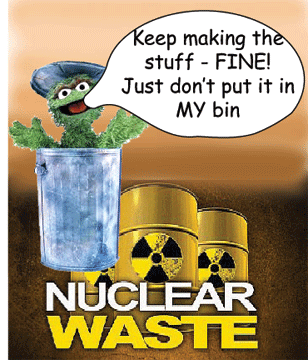 Aomori wants reassurance that it won’t be final nuclear waste site, Japan Times, 21 Oct 20, Aomori Prefecture on Wednesday urged the government to reconfirm its policy of not building in the prefecture a facility for the final disposal of high-level radioactive waste from nuclear power plants across the nation.The request was made during a meeting of a council for discussions on issues related to the country’s nuclear fuel cycle policy between relevant Cabinet ministers and officials of the prefecture, where a spent nuclear fuel reprocessing facility is under construction. It was the first meeting of the council since November 2010.
At the day’s meeting, the Aomori side called on Prime Minister Yoshihide Suga’s Cabinet, launched last month, to maintain the promise not to make the prefecture a final disposal site, upheld by past administrations.
Participants in the meeting, held at the Prime Minister’s Office in Tokyo, included Chief Cabinet Secretary Katsunobu Kato and industry minister Hiroshi Kajiyama from the central government, and Aomori Gov. Shingo Mimura.
“It’s necessary for the state and the operator (of the reprocessing plant) to make the utmost efforts to promote, with support from Aomori, the nuclear fuel cycle policy, including the launch of the plant,” Kato said at the start of the meeting.
Mimura told reporters after the meeting that he asked the central government to abide by the promise and promote the nuclear fuel cycle policy, in which uranium and plutonium are extracted from spent fuel and reprocessed into fuel for use at nuclear power plants.
Mimura indicated that Kato showed the state’s understanding of his requests……..
Aomori has agreed to accept spent nuclear fuel from nuclear plants across the country on the condition that a final disposal facility is not constructed in the prefecture.
The central government regards the nuclear fuel cycle as a pillar of its nuclear energy strategy.
Besides the reprocessing plant, a facility to make mixed oxide, or MOX, fuel from extracted uranium and plutonium is also under construction at the same site in Rokkasho. https://www.japantimes.co.jp/news/2020/10/21/national/japan-aomori-nuclear-waste-disposal/
1 This Month

Read the Public Inquiry Report, the Commissioners’ report, Surrendering Australia: The AUKUS Deception is available to download for free at aukuspublicinquiry.com. Or just watch the replay of the National Press Club Luncheon.



19 November – Webinar – The Reality of Reprocessing
Time: 11:00 AM Pacific Time (US & Canada) / 2:00 PM Eastern / 7:00 PM UK / 8:00 PM CET
Register for the Zoom Event Here



Shut down the radiation-damaged Heysham nuclear reactors now
To see nuclear-related stories in greater depth and intensity – go to https://nuclearinformation.wordpress.com

Say No to NASA’s Reckless Nuclear Reactor on the Moon
Say No to NASA’s Reckless Nuclear Reactor on the Moon
-
Archives
- November 2026 (109)
- October 2026 (302)
- September 2026 (339)
- August 2026 (330)
- July 2026 (355)
- June 2026 (287)
- May 2026 (306)
- April 2026 (356)
- March 2026 (251)
- February 2026 (267)
- January 2026 (308)
- December 2025 (358)
-
Categories
- 1
- 1 NUCLEAR ISSUES
- business and costs
- climate change
- culture and arts
- ENERGY
- environment
- health
- history
- indigenous issues
- Legal
- marketing of nuclear
- media
- opposition to nuclear
- PERSONAL STORIES
- politics
- politics international
- Religion and ethics
- safety
- secrets,lies and civil liberties
- spinbuster
- technology
- Uranium
- wastes
- weapons and war
- Women
- 2 WORLD
- ACTION
- AFRICA
- Atrocities
- AUSTRALIA
- Christina's notes
- Christina's themes
- culture and arts
- Events
- Fuk 2022
- Fuk 2023
- Fukushima 2017
- Fukushima 2018
- fukushima 2019
- Fukushima 2020
- Fukushima 2021
- general
- global warming
- Humour (God we need it)
- Nuclear
- RARE EARTHS
- Reference
- resources – print
- Resources -audiovicual
- Weekly Newsletter
- World
- World Nuclear
- YouTube
-
RSS
Entries RSS
Comments RSS

