nuclear-news

The News That Matters about the Nuclear Industry Fukushima Chernobyl Mayak Three Mile Island Atomic Testing Radiation Isotope

Ipswich Council raises fresh worries about Sizewell nuclear power plan

East Anglian Daily Times 18th Dec 2020. Ipswich councillors have raised fresh concerns over the proposed Sizewell C
nuclear power station project on the Suffolk coast, citing train concerns
and impacts on housing as key worries.
EDF Energy launched another
consultation last month after tweaking plans for the £20billion scheme,
with Ipswich Borough Council’s planning committee on Wednesday agreeing its
response.
The committee raised three chief concerns – that freight
movements by rail on the East Suffolk Line should have regard to noise and
air quality disturbance; questions over the impact freight transport would
have on the Ipswich Garden Suburb development being built at the north of
the town; and fears that the extra freight by rail could reduce the number
of passenger trains on the East Suffolk Line – a key commuter route and
sustainable mode of transport. EDF agreed to transport more construction
materials by rail and sea in a bid to take hundreds of lorries off the road
during the construction, a move that would cut road haulage by 20%,
according to the developers.
https://www.eadt.co.uk/news/local-council/ipswich-borough-council-sizewell-c-consultation-response-6855812 

December 20, 2020 Posted by | safety, UK | Leave a comment

Important considerations about the 2020 Cyberattack and Nuclear Power Plants

December 20, 2020 Posted by | safety, USA | Leave a comment

West yet to condemn Iranian nuclear scientist’s assassination

December 20, 2020 Posted by | Iran, politics international, USA | Leave a comment

USA government resists paying compensation to nuclear workers made ill by ionising radiation

the labor department ignored overwhelming evidence that her husband became sick from working at SRS

the system has become hard to navigate, with the government often fighting tooth-and-nail against the workers they were supposed to help

More than 2,200 workers had spent five years or more going through the exhaustive claims process, according to McClatchy’s 2015 “Irradiated’’ series. Some workers who filed for benefits died while awaiting decisions from the government, McClatchy found.

Death and despair. How the feds refused to help a nuclear worker’s family in SC, The State, BY SAMMY FRETWELL, December18, 2020 Every time Jerry Bolen came home from a construction job at the local nuclear weapons complex, he took off his dusty coveralls before stepping into the house he shared with his wife and children.

It was a precaution against tracking hazardous, radioactive materials into the family’s home in rural Barnwell County, says his widow, recalling how she would gingerly place the contaminated garment into the washing machine.

But while the effort protected the couple’s three kids, Jerry Bolen suffered. The long days he spent working at the Savannah River Site, exposed to chemicals and radiation, eventually killed him, his widow says.

Now, an exasperated Carolyn Bolen has sued the U.S. Department of Labor following a 13-year battle with the government over whether the family should receive compensation for the cancer that took Jerry Bolen’s life in 2006.

Her story is a familiar one. Many people who worked at SRS have complained for years that a federal compensation program for sick workers and their families is a bureaucratic morass that takes too long to maneuver and often doesn’t provide the benefits they were promised.

In Carolyn Bolen’s case, however, she was turned down so many times for benefits through the federal program that she exhausted all her appeals, prompting the federal lawsuit, she and her lawyers say.

The Nov. 20 suit against the labor department is among a handful of cases in South Carolina by ex-SRS workers and their families who were denied benefits in recent years through the federal compensation program, said Bolen’s lawyers, who specialize in helping sick workers.

Bolen’s attorneys said the labor department ignored overwhelming evidence that her husband became sick from working at SRS. They are seeking $275,000, the maximum she can get under the program. Other suits are expected as more workers or their loved ones are turned down by the government, said attorneys Warren Johnson and Josh Fester.

The federal government launched the compensation program two decades ago after conceding that employment at nuclear weapons sites likely made some of the workers ill. It was designed to help former employees who got sick working in U.S. nuclear sites during the Cold War.

To receive compensation, workers or their families must show that radiation on the site was as likely as not to have caused cancer or a handful of other ailments. Or, in some cases, they must show that people worked on the site during times when records of exposure are difficult to find.

The nuclear compensation program provides benefits to sick workers, but in some cases, covers their families after the person has passed away, such as with Bolen.

Unfortunately, the system has become hard to navigate, with the government often fighting tooth-and-nail against the workers they were supposed to help, Johnson said. Taking legal action to force federal compensation shouldn’t be necessary, said Johnson and Fester, whose law practice has represented sick SRS workers for years.

“This was supposed to be a way to make up for, or show our gratitude to these patriotic workers,’’ Johnson said of the compensation program. “They gave their health for our sake for the Cold War. We can at least offset the burden, by giving financial security, knowing they aren’t leaving a burden on their wives and children.’’………..

In 2015, the labor department told The State and the McClatchy Co. the program had approved more than 40 percent of the claims made by nuclear workers and their families, far more than the 25 percent the government anticipated when the program launched in 2001. The labor department said Friday the approval rate nationally is now more than 50 percent.

Even so, many claims don’t get approved and the wait for answers can be time-consuming. More than 2,200 workers had spent five years or more going through the exhaustive claims process, according to McClatchy’s 2015 “Irradiated’’ series. Some workers who filed for benefits died while awaiting decisions from the government, McClatchy found.

Earlier this month, a federal panel considered a proposal, advocated by Johnson, that could make it easier for thousands of workers and their families to receive benefits. But the board put off a decision until next year…………

he never complained about the long hours or said much about hazardous conditions at the site. That was important to the federal government because, during the Cold War, much of the work on the Savannah River Site needed to be kept confidential, family members say.

Tim Bolen, his son, said he never knew his father worked at SRS until just a few weeks before his death. But Carolyn Bolen did.

She remembers the days her husband came home with his coveralls coated in “white stuff’’ that she says came from the Savannah River Site. Bolen never knew what the material was, but she was always wary of the potential danger. And her husband occasionally offered clues that the white material came from SRS, she said……….

The site, a 310-square-mile complex, contains an array of nuclear production areas with some of the most toxic substances in the world.

Among them is a tank farm, which houses nuclear waste deadly enough to rapidly kill a person directly exposed to it. Carolyn Bolen’s lawsuit says her husband worked for a while in the tank farm area and another section where radioactive material is used.

The Savannah River Site, located near the Georgia border outside Aiken, was part of the national effort to produce atomic weapons between World War II and the early 1990s. Nationally, the effort employed some 600,000 people, according to the U.S. Government Accountability Office……

After working periodically at SRS through the years, Jerry Bolen began to feel an uncomfortable sensation in the late 1990s that he couldn’t shake.

Something was wrong with his bladder. During trips to the bathroom, bloody urine flowed into the toilet and a sharp sting caused him to gasp. The pain was so bad, at times, that Carolyn Bolen could hear her husband’s cries throughout the house.

“He just screamed for mercy,’’ she said.

The discomfort sent him to a doctor, where the family learned the man who had faithfully kept a roof over their heads and food on the table was gravely ill. He had bladder and prostate cancer…….

In August 2006, Jerry “Little Mac’’ Bolen died at the age of 60, leaving his wife and family wondering how the once robust man could slip from their world. It didn’t seem right that a man so young and energetic had become so sick, family members say. …….

MISSING RECORDS

Jerry Bolen’s time at SRS, and his devotion to his family, haven’t impressed federal officials who have considered whether his family is eligible for benefits through the labor department’s sick worker compensation program. They’re skeptical an award to his widow is warranted, saying they need more evidence.

An obstacle some workers face is gaining access to records that could show there is at least a 50 percent chance radiation caused cancer they developed after working at the Savannah River Site, a complex developed in the early 1950s.

Many records either can’t be located, are inaccurate or don’t exist, meaning workers can’t prove how many days they worked on site, or the amount of radioactive material they might have been exposed to.

That’s a particular concern for subcontractors like Bolen, who did not work directly for the government or for the major contractors hired by the U.S. Department of Energy to run the site. Subcontractors often were local construction companies brought in to do specific jobs.

Johnson and Fester said records of subcontractors often are harder to find than those for energy department workers.

In Bolen’s case, the labor department turned down the family’s claim for benefits because “the submitted documentation does not establish covered SRS employment for the employee,’’ according to the federal lawsuit Carolyn Bolen filed. In declining comment on the Bolen case, a Department of Labor spokeswoman said Friday that claims can be turned down for a variety of reasons…..

Bolen’s lawsuit, however, said the labor department simply dismissed credible evidence that would prove the case. Jerry Bolen, for instance, worked with acquaintances or for his brothers’ construction businesses in the late 1960s, 1970s and 1980s, according to five affidavits filed in Carolyn Bolen’s federal lawsuit last month.

Those affidavits, provided by family and friends who worked with Jerry Bolen, were combined with SRS identification badges issued in his name, and records of radiation doses the family ran across in his belongings. Some material was unearthed and provided to the government after the labor department had initially denied requests for compensation.

Despite the evidence, the Department of Labor ruled against the Bolen family’s request for reconsideration this past summer. Her case had been turned down at least three times before 2020.

“The department simply ignored additional evidence that Mr. Bolen was present at the site before 1968 and after Jan. 24, 1969,’’ the lawsuit said. “Mrs. Bolen’s request for reconsideration further asserts the department misapplied the law in determining covered employment by holding Mrs. Bolen to an impossible burden of proof.’’

While the Bolens have been turned down repeatedly in seeking compensation, Johnson and Fester are hoping the lawsuit will succeed. Fester said one of the five other cases the firm has filed resulted in a verdict that would have required payment to a sick worker. But the worker died before benefits were dispersed.

In the meantime, Fester and Johnson are pushing the federal government to approve a proposal that could open up benefits to thousands of people who worked at the Savannah River Site.

Under federal law, the government can acknowledge that it is too difficult to find records during certain years that would prove a person’s case for compensation for radiation-related cancer. As a result, the government can declare periods of years free of the need to provide records showing that a person likely got cancer from working at SRS.

The government already has done that for the time from 1953 to fall 1972. Some ex-workers at SRS, who were employed there for at least 250 days between these times, are eligible for benefits without producing extensive documentation about exposure to radioactive materials.

Now, a federal advisory board is considering whether to extend that to cover up to 1990 for some types of workers at SRS. It’s clear that Jerry Bolen worked well above 250 days between 1972 and 1990 at the site, so it’s possible his family could gain compensation if the time period is expanded to 1990, Johnson and Fester said.

A decision, under consideration for years, could be rendered as early as February if the federal advisory board recommends expanding the period. Such a decision ultimately would be made by the U.S. Department of Health and Human Services, the labor department said Friday.

Carolyn Bolen said a favorable decision — and her lawsuit — would mean a lot to many people who need help after they or their loved ones got sick at SRS.

“There are a lot of poor people in this world, and they don’t have the money like the president or the people in the White House,’’ she said. “I ain’t just talking about myself. There are people with needs.’’

This story has been updated with information provided Friday Dec. 18, 2020 by the U.S. Department of Labor.  https://www.thestate.com/news/local/environment/article247828620.html

 

December 19, 2020 Posted by | employment, health, investigative journalism, Legal, Reference, USA | 1 Comment

34 years later, food crops near Chernobyl still contain ionising radiation

Unsafe levels of radiation found in Chernobyl crops, By Harry Baker – Staff Writer   https://www.livescience.com/chernobyl-radioactive-isotopes-crops.html– 19 December 20, The effects of the explosive 1986 disaster can still be seen in nearby crops.

Crops grown near the Chernobyl nuclear site in Ukraine are still contaminated with radiation from the explosive 1986 disaster.

In a new study, researchers found that wheat, rye, oats and barley grown in this area contained two radioactive isotopes — strontium 90 and cesium 137 — that were above safe consumption limits. Radioactive isotopes are elements that have increased masses and release excess energy as a result.

“Our findings point to ongoing contamination and human exposure, compounded by lack of official routine monitoring,” study author David Santillo, an environmental forensic scientist at Greenpeace Research Laboratories at the University of Exeter, said in a statement, referring to the fact that the government suspended its radioactive goods monitoring program in 2013.

Santillo and his colleagues, in collaboration with researchers from the Ukrainian Institute of Agricultural Radiology, analyzed 116 grain samples, collected between 2011 and 2019, from the Ivankiv district of Ukraine — about 31 miles (50 kilometers) south of the nuclear plant.

This area is outside of Chernobyl’s “exclusion zone,” which is a 30 mile (48 km) radius around the plant that was evacuated in 1986 and has remained unoccupied. They found radioactive isotopes, predominantly strontium 90, were above safe consumption level in 48% of samples. They also found that wood samples collected from the same region between 2015 and 2019, had strontium 90 levels above the safe limit for firewood.

The researchers believe that the lingering radiation in the wood, in particular, may be the reason for the continued contamination of crops, almost 35 years after the disaster. When analyzing the wood ash from domestic wood-burning ovens, they found strontium 90 levels that were 25 times higher than the safe limit. Locals use this ash, as well as ash from the local thermal power plant (TPP), to fertilize their crops, which continues to cycle the radiation through their soil.

However, computer simulations suggest that it could be possible to grow crops in the region at “safe” levels if this process of repeated contamination ceased. The researchers are now calling for the Ukrainian government to reinstate its monitoring program and create a system for properly disposing of radioactive ash.

“Contamination of grain and wood grown in the Ivankiv district remains of major concern and deserves further urgent investigation,” study author Valery Kashparov, director of the Ukrainian Institute of Agricultural Radiology, said in the statement. “Similarly, further research is urgently needed to assess the effects of the Ivankiv TPP on the environment and local residents, which still remain mostly unknown.”

The findings were published on Dec. 17 in the journal Environment International.

Originally published on Live Science.

December 19, 2020 Posted by | environment, radiation, Ukraine | Leave a comment

In a massive cyber-attack, U.S. nuclear agency has been hacked

U.S. Nuclear Weapons Agency Hacked as Part of Massive Cyber-Attack,  TIME

DECEMBER 17, 2020 

The U.S. nuclear weapons agency and at least three states were hacked as part of a suspected Russian cyber-attack that struck a number of federal government agencies, according to people with knowledge of the matter, indicating widening reach of one of the biggest cybersecurity breaches in recent memory.

Microsoft said that its systems were also exposed as part of the attack.

Hackers with ties to the Russian government are suspected to be behind a well coordinated attack that took advantage of weaknesses in the U.S. supply chain to penetrate several federal agencies, including departments of Homeland Security, Treasury, Commerce and State. While many details are still unclear, the hackers are believed to have gained access to networks by installing malicious code in a widely used software program from SolarWinds Corp., whose customers include government agencies and Fortune 500 companies, according to the company and cybersecurity experts.

“This is a patient, well-resourced, and focused adversary that has sustained long duration activity on victim networks,” the U.S. Cybersecurity and Infrastructure Security Agency said in a bulletin that signaled widening alarm over the the breach. The hackers posed a “grave risk” to federal, state and local governments, as well as critical infrastructure and the private sector, the bulletin said. The agency said the attackers demonstrated “sophistication and complex tradecraft.”

The Energy Department and its National Nuclear Security Administration, which maintains America’s nuclear stockpile, were targeted as part of the larger attack, according to a person familiar with the matter. An ongoing investigation has found the hack didn’t affect “mission-essential national security functions,” Shaylyn Hynes, a Department of Energy spokeswoman, said in a statement.

“At this point, the investigation has found that the malware has been isolated to business networks only,” Hynes said. The hack of the nuclear agency was reported earlier by Politico.

Microsoft spokesman Frank Shaw said the company had found malicious code “in our environment, which we isolated and removed.”……..

Biden’s Pledge

While President Donald Trump has yet to publicly address the hack, President-elect Joe Biden issued a statement Thursday on “what appears to be a massive cybersecurity breach affecting potentially thousands of victims, including U.S. companies and federal government entities.”

“I want to be clear: My administration will make cybersecurity a top priority at every level of government — and we will make dealing with this breach a top priority from the moment we take office,” Biden said, pledging to impose “substantial costs on those responsible for such malicious attacks.”

Russia has denied any involvement in the attack……… https://time.com/5922897/us-nuclear-weapons-energy-hacked/

December 19, 2020 Posted by | incidents, secrets,lies and civil liberties, USA | Leave a comment

Mutsu Mayor Soichiro Miyashita made it clear that spent nuclear fuel facility will not go ahead.

December 19, 2020 Posted by | Japan, politics, wastes | Leave a comment

Big boasts for small nuclear reactors on ships – but a recipe for disaster?

Floating ‘mini-nukes’ could power countries by 2025, says startup, Danish company plans to fit ships with small nuclear reactors to send energy to developing countries,  Guardian, Jillian Ambrose, 18 Dec 2020 
Floating barges fitted with advanced nuclear reactors could begin powering developing nations by the mid-2020s, according to a Danish startup company.Seaborg Technologies believes it can make cheap nuclear electricity a viable alternative to fossil fuels across the developing world as soon as 2025……..

Seaborg has raised about €20m (£18.3m) from private investors, including the Danish retail billionaire Anders Holch Povlsen, and received the first of the necessary regulatory approvals within a four-phase process from the American Bureau of Shipping this week. ….

Seaborg hopes to begin taking orders by the end of 2022 for the nuclear barges, which would be built in South Korean shipyards and towed to coastlines where they could be anchored for up to 24 years, he said. ……….

Seaborg’s design would be one of the first examples of a commercially available nuclear barge used to provide electricity to the mainland.

Chris Gadomski, a nuclear analyst at Bloomberg New Energy Finance, said: “The concept of a floating nuclear power plant has been around for a long time, and makes a lot of sense. But there are concerns.” There was inherent risk involved with nuclear reactor technologies and floating power plants, so combining to two could raise serious questions for investors and governments, he said.

“In places like the Philippines and Indonesia it makes a lot of sense. But it wasn’t so long ago that the Philippines was the site of a major tsunami, and I don’t know how you would hedge against a risk like that,” he added.

Jan Haverkamp, from Greenpeace, said floating reactors were “a recipe for disaster” including “all of the flaws and risks of larger land-based nuclear power stations”. “On top of that, they face extra risks from the unpredictability of operation in coastal areas and transport – particularly in a loaded state – over the high seas. Think storms, think tsunamis,” he said. ……..https://www.theguardian.com/environment/2020/dec/17/floating-mini-nukes-could-power-countries-by-2025-says-startup

December 19, 2020 Posted by | Denmark, Small Modular Nuclear Reactors | Leave a comment

Hacking of U.S. nuclear weapons agency went undetected for 9 months

December 19, 2020 Posted by | incidents, USA | Leave a comment

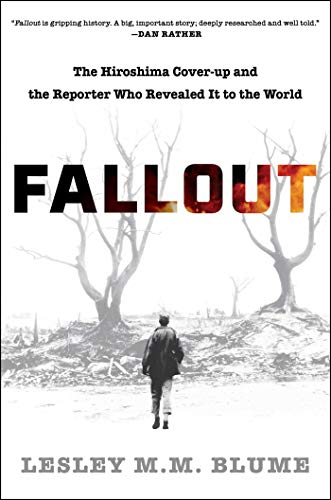
The power of influence in writing on nuclear issues, – impressive storytelling in Lesley Blume’s “Fallout”

We’re in a storytelling crisis”: Advice for writing on nuclear issues, from the author of “Fallout” Bulletin of the Atomic Scientists, By Sara Z. Kutchesfahani | December 16, 2020  Storytelling is an important tool to change public perception. Recent research has shown that people are ready for nuclear weapons to enter the storytelling space, as long as these new stories are told in less intimidating ways and feature nuclear weapons in the background—rather than the forefront—of a story. Very few publications in the national security space provide a forum for storytelling, with the notable exception being the online publication Inkstick.

How can nuclear policy experts become better storytellers? I thought Lesley M. M. Blume would have some prescient advice. Her new book powerfully shows how one courageous American reporter unraveled one of the deadliest cover-ups of the 20th century—the true effects of the atomic bomb—potentially saving millions of lives. Fallout tells the incredible story of how New Yorker journalist John Hersey of Hiroshima fame was able to go to the Japanese city in the aftermath of the bombing and interview six survivors.

Even before the Japanese surrendered in 1945, the US government and military had begun a secret propaganda and information-suppression campaign to hide the devastating nature of nuclear weapons. The cover-up intensified as Allied occupation forces closed Hiroshima and Nagasaki to Allied reporters, preventing leaks about the horrific long-term effects of radiation that would kill thousands during the months after the blast. For nearly a year, the cover-up worked—until John Hersey got into Hiroshima and managed to report the truth to the world.

As Hersey and his editors prepared his article for publication, they kept the story secret—even from most of their New Yorker colleagues. When the magazine published “Hiroshima” in August 1946 as a single issue, it became an instant global sensation, and it changed the US public’s perception of the dropping of the bombs virtually overnight from that of pride to that of visceral repulsion and existential fear. Hersey’s story brought home, for millions across the United States and around the world, the true implications of the then-new atomic age.

On December 10, I interviewed Lesley about her brilliant book. We talked about how the publication of Hiroshima changed the US public’s perception of the bombs, the lessons learned, and how nuclear experts can become better storytellers. The transcript is below. [on original].

2020. Blume’s book Fallout, published in August 2020, documents the Hiroshima cover-up and how a reporter – John Hersey – revealed it to the world. …………

Lesley M. M. Blume: There was the “before” Hersey’s Hiroshima, and then there was the “after” Hersey’s Hiroshima. Before Hersey’s book came out, the atomic bomb had been largely painted by the US government and military essentially as a conventional mega weapon. It was quickly becoming an accepted part of our conventional arsenal, even a tenable cost-saving weapon—it costs a lot less money to lob a nuke at somebody than it does to move troops into an area to wage combat—and, as such, there was a widespread acceptance of and enthusiasm about the weapon between August 1945 and August 1946. The bomb was normalized, in the public’s estimation, with surprising rapidity. [US President] Harry Truman himself referred to the bomb as just a “bigger piece of artillery.”

After Hersey’s Hiroshima comes out, readers—and not just American readers, but readers around the world—are seeing what these then-experimental weapons indeed do to human beings, not just at the moment of detonation, but in the hours, days, weeks, months, and years to come. This is because Hersey was able to document the first part of the long tail of nuclear weapons, namely that they are the weapon that continues to kill indefinitely after detonation.

The book immediately affected American attitudes: the vast majority of polled Americans in August 1945 were thrilled about the bombs because, they were told, the bombings had saved both American and Japanese lives, hastened the end of the war, and avoided a land invasion. Not only that, but they also viewed it as pure vengeance. When President Truman made his announcement about the Hiroshima bombing, he said that the Japanese had been repaid manyfold for Pearl Harbor. Many people agreed with him then, and they agree with him now; people are still passionate about the payback element of it………..

Lesley M. M. Blume: As I’ve been doing publicity for Fallout this fall since the book came out on August 4, I’ve been pretty shocked by an increased complacency toward the nuclear landscape, which the Bulletin of the Atomic Scientists has deemed the most perilous ever. I‘ve been shocked by how, here we are in the most perilous nuclear landscape in 75 years, how the nuclear threat is not on most people’s minds. And it certainly wasn’t a significant election issue by any stretch of the imagination. Whenever you would see these write ups about where the candidates stood on 10 or 12 issues such as trade with China, the pandemic, or climate change, the nuclear landscape was never one of them. The younger my interviewers were, the less concerned they were, and that’s because it hasn’t been a part of their psyche of what’s surrounding them—and not just because we’ve been dealing with other urgent existential threats like the pandemic and climate change………

And as the pandemic worsens, this issue is getting less and less attention. Fallout came out in the United Kingdom a few weeks ago, and there was no bandwidth for op-eds about staring down the nuclear threat. Nor was there much of an appetite among US editors for an op-ed advocating that the nuclear landscape be a bigger election issue—even among publications that gave Fallout considerable launch coverage.

As vaccines start to roll in, and it’s the beginning of the end for the pandemic, we need to be anticipating the moment when the news landscape opens up enough for us to leap in and start to drive home the urgency of this threat. The nuclear challenges that still face us have never been resolved in 75 years—even during historical moments when world leaders put their all into creating de-escalation mechanisms, when whole populations were completely immersed in the dangers of the nuclear threat. We are now far from eras of peak awareness like the 1950s, 1960s, and 1980s, and we need to work really, really hard to create an increased awareness as soon as possible. Because with the pandemic, there’s a vaccine; with climate change, we can work to dial it back. But nuclear disaster on a global scale? There’s no coming back from that. As Albert Einstein said, “I know not with what weapons World War III will be fought, but World War IV will be fought with sticks and stones.”  https://thebulletin.org/2020/12/were-in-a-storytelling-crisis-advice-for-writing-on-nuclear-issues-from-the-author-of-fallout/

December 17, 2020 Posted by | 2 WORLD, media, weapons and war | Leave a comment

Sleepwalking Toward the Nuclear Precipice

December 17, 2020 Posted by | 2 WORLD, weapons and war | Leave a comment

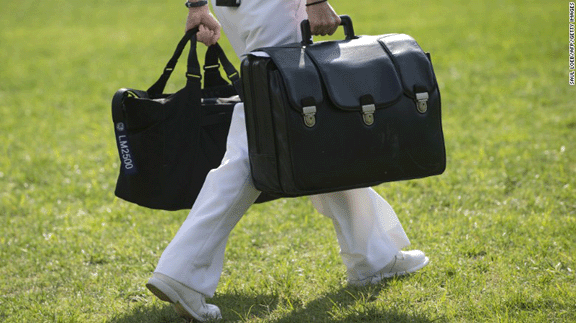
How will Biden get the “nuclear football” i Trump does not attend the inauguration?

Here’s what happens to the ‘nuclear football’ if Trump decides to skip Biden’s inauguration  https://www.businessinsider.com.au/what-happens-to-nuclear-football-if-trump-skips-biden-inauguration-2020-12?r=US&IR=T

RYAN PICKRELL, DEC 16, 2020,
  • American presidents are accompanied by a military aide carrying a briefcase with the tools necessary for nuclear war.
  • During presidential inaugurations, nuclear command authority and the “nuclear football” are transferred to the new president.
  • But President Donald Trump may not participate in President-elect Joe Biden’s inauguration, which could complicate the transfer.
  • The Pentagon said there was a plan for the transfer in that scenario but declined to provide details. But nuclear-weapons experts and a former military aide who carried the briefcase provided some insight.

An important yet discreet part of the inauguration of a new president is the transfer of command and control authority over the US nuclear arsenal, but there is the possibility President Donald Trump will not attend President-elect Joe Biden’s inauguration, which could complicate matters.

Trump has refused to say whether he will attend Biden’s inauguration, but multiple reports have suggested that the president will skip the swearing-in ceremony of his successor and hold a political rally elsewhere instead.

So what happens to the “nuclear football” that accompanies the president if Trump doesn’t show? How does it get to Biden?

“That’s a good question,” Hans Kristensen, a nuclear weapons expert at the Federation of American Scientists, told Insider. “It is an unprecedented situation.”

The president has the sole authority to conduct a nuclear strike, and wherever he goes, he is accompanied by a military aide carrying a briefcase called the “president’s emergency satchel,” more commonly known as the nuclear football.

Every president since John F. Kennedy has been accompanied by the aide carrying the hefty briefcase, which gives the commander in chief the ability to command US nuclear forces while away from physical command and control centres.

The briefcase does not contain a button that can instantly unleash hundreds of nuclear warheads deployed on intercontinental ballistic missiles, submarine-launched ballistic missiles, and strategic bombers. Instead, the briefcase contains communication tools, codes, and options for nuclear war.

Separate from the football, presidents carry a card, sometimes called the “biscuit,” on their person containing authentication codes. In a nuclear conflict, the president would use the codes in coordination with the tools in the briefcase to identify himself to the military and order a nuclear strike.

Incoming presidents are typically briefed on their nuclear responsibilities before taking the oath of office. Then, during the inauguration, the codes they received that morning or the day before become active, and control of the football is quietly and seamlessly passed to the new president.

Trump described that moment as “sobering” and “very scary,”telling ABC News in 2017 that “when they explain what it represents and the kind of destruction that you’re talking about, it is a very sobering moment.”

The transfer of the nuclear football is supposed to occur at noon as the new president is sworn in. The military aide who has been carrying the briefcase hands it off to the newly designated military aide, former Vice President Dick Cheney said in a past Discovery documentary. This traditionally happens off to the side and is not a part of the show.

If Trump is not at the inauguration, then the transfer process will be different. Still, the transfer will need to be instantaneous, said retired Air Force Lt. Col. Buzz Patterson, who carried the football for former President Bill Clinton.

“That’s the way it has to be,” he told Insider. “For the process to work, you have to have this clear handing off of responsibilities.” He said that how that happens would be up to the Pentagon, which serves the office of the commander in chief, not the man.

A Pentagon spokesperson told Insider the Department of Defence had a plan for the transfer on Inauguration Day but declined to provide any further details.

“We war game this stuff, and we practice it ad nauseam for years and years,” Patterson said. “There are systems in place to make sure that happens instantaneously. There won’t be any kind of question about who has it, who is in charge at that point in time.”

“We don’t take this stuff lightly,” he added. “There won’t be any kind of hiccup. It will just go down without anybody even noticing, which is what is supposed to happen.”

Kristensen, the nuclear weapons expert at FAS, speculated that the plan could resemble plans in place for situations in which a president is suddenly killed or incapacitated, situations in which nuclear command and control authority and all accompanying equipment have to be immediately transferred to the vice president or another designated survivor.

Stephen Schwartz, a nonresident senior fellow with the Bulletin of the Atomic Scientists, recently discussed with the Centre for Arms Control and Non-Proliferation what would happen to the nuclear football if Trump did not attend the inauguration.

Schwartz, known for his research on the nuclear football, said there was more than one football. In fact, he explained, there are at least three of them — for the president, vice president, and a designated survivor.

He said that if another nuclear football had not already been prepared, one likely would be before the inauguration. There would be a military aide ready then to begin following Biden as soon as he is sworn in. And, at that time, Trump’s nuclear command and control authority would presumably expire.

“Hopefully President Trump will be there and it will be just a handoff, which is what it’s been for decades,” Patterson said, adding that if he didn’t, “it’s not that big of a deal” because the military will make sure that the transfer occurs as needed.

December 17, 2020 Posted by | politics, USA, weapons and war | Leave a comment

Is Energy Harbor cutting nuclear plant workers’ benefits in violation of labor deal?

December 17, 2020 Posted by | employment, USA | Leave a comment

Doubts about planned Berkshire ”garden town”, because it’s too close to AWE nuclear weapons factory

BBC 15th Dec 2020, Plans to build a new “garden town” could be scrapped over concerns about a
potential nuclear emergency. The proposed 15,000-home development in
Grazeley is within a couple of miles of nuclear weapons factory AWE
Burghfield. The Office for Nuclear Regulation has extended a “detailed
emergency planning zone” (DEPZ) for the plant, taking in most of the site
earmarked for homes.

That means anyone living in the zone could be affected
by a “reasonably foreseeable” radiation emergency. Three Berkshire councils
that have worked jointly on the plans are now considering shelving the
project, according to the Local Democracy Reporting Service (LDRS).

https://www.bbc.co.uk/news/uk-england-berkshire-55307254

December 17, 2020 Posted by | safety, UK, weapons and war | Leave a comment

Turkey’s unfinished nuclear plant already redundant

Critics say Turkey’s unfinished nuclear plant already redundant
Turkey’s power plant building spree has resulted in an enormous idle capacity but the construction of new plants continues at the expense of taxpayers despite the country’s bruising economic woes. Al-Monitor      Mustafa Sonmez  Dec 15, 2020

Turkey’s ruling Justice and Development Party (AKP), in power for 18 years, is under increasing fire for poorly planned, prodigal investments whose long-term financial fallout is coming into sharper relief as the country grapples with severe economic woes. Standing out among the most dubious investments is a series of power plants, including a nuclear energy plant still under construction, that have created an idle capacity threatening to haunt public finances for years.

The miscalculations date back to the AKP’s early years in power, when the Turkish economy — fresh from an IMF-backed overhaul — enjoyed unprecedented inflows of foreign capital that stimulated economic growth of up to 7% per year. The AKP’s economic credentials thrived, translating to lasting political gains.  The government encouraged construction as the main driver of growth, even if it relied almost entirely on the continued flow of foreign funds. While the country’s energy consumption grew its power production lagged behind and required larger imports of gas, oil and even coal to power electricity plants.

…….The government-backed investment frenzy rested on the assumption that the economy would sustain its growth pace of 6-7% per year. This belief, however, was not justified. Amid ups and downs since 2014, the economy has slowed and so has its energy demand. Consumption has increased only 44% over the past decade, according to official figures, meaning that a significant capacity is now idle while the investments continue to gulp bulky public funds and many of them have caused lasting environmental damage.

………Chief among the ongoing projects is the nuclear power plant that Russia’s state-owned nuclear energy company Rosatom is building in Akkuyu, on Turkey’s southern Mediterranean coast, under an intergovernmental agreement signed in 2010. The facility, scheduled to become operational in 2023, will be the country’s first nuclear power plant, with a capacity of 4,800 megawatts. The build-operate-transfer project has been granted a 49-year production license that expires in June 2066.

Under the deal, the Russians assumed the financing of the project, estimated to cost $20 billion, while the Turkish government provided the land free of charge and promised to purchase 70% of the plant’s electricity production for 15 years at the price of 12.35 cents/kWh. The estimate was that the cost of the 15-year purchase guarantee would total 57 billion liras, but amid the dramatic deprecation of the currency since 2018, the sum has already swelled to 140 billion liras.

Even before the currency turmoil, the project risked delays due to financing snags. Whether it could be finished on time or whether the builders and Ankara could now face additional costs remains to be seen. But given the country’s energy consumption trend, one thing is already clear: the project was a gross, prodigal misstep economically, not to mention the safety and environmental concerns over the plant’s location in an earthquake-prone area.

Ankara, however, seems to have not learned a lesson. Plans remain underway for a second nuclear power plant in Sinop, on the country’s northern Black Sea coast. The government is looking for new partners after a Japanese-led consortium abandoned the project due to prohibitive costs.

According to the Energy Ministry’s 2019-2023 strategy paper, Ankara will seek an intergovernmental deal different from that with Russia and the details of the project, including its capacity and fuel and reactor types, will be decided once the builder is found.
https://www.al-monitor.com/pulse/originals/2020/12/turkey-nuclear-plant-become-redundant-before-completion.html#ixzz6gpABtCr7

December 17, 2020 Posted by | politics, Turkey | Leave a comment