The risk of USA – Iran military showdown before Trump leaves office
Are the US and Iran headed for a military showdown before Trump leaves office? The Conversation Clive Williams
Campus visitor, ANU Centre for Military and Security Law, Australian National University, January 4, 2021 Tensions are running high in the Middle East in the waning days of the Trump administration.
Over the weekend, Iran’s foreign minister, Mohammad Javad Zarif, claimed Israeli agents were planning to attack US forces in Iraq to provide US President Donald Trump with a pretext for striking Iran.
Just ahead of the one-year anniversary of the US assassination of Iran’s charismatic General Qassem Soleimani, the head of Iran’s Revolutionary Guards also warned his country would respond forcefully to any provocations.
Today, we have no problem, concern or apprehension toward encountering any powers. We will give our final words to our enemies on the battlefield.
Israeli military leaders are likewise preparing for potential Iranian retaliation over the November assassination of senior Iranian nuclear scientist Mohsen Fakhrizadeh — an act Tehran blames on the Jewish state.
Both the US and Israel have reportedly deployed submarines to the Persian Gulf in recent days, while the US has flown nuclear-capable B-52 bombers to the region in a show of force.
And in another worrying sign, the acting US defence secretary, Christopher Miller, announced over the weekend the US would not withdraw the aircraft carrier USS Nimitz and its strike group from the Middle East — a swift reversal from the Pentagon’s earlier decision to send the ship home.
Israel’s priorities under a new US administration
Israeli Prime Minister Benjamin Netanyahu would like nothing more than action by Iran that would draw in US forces before Trump leaves office this month and President-elect Joe Biden takes over. It would not only give him the opportunity to become a tough wartime leader, but also help to distract the media from his corruption charges.
Any American military response against Iran would also make it much more difficult for Biden to establish a working relationship with Iran and potentially resurrect the 2015 Iran nuclear deal.
It’s likely in any case the Biden administration will have less interest in getting much involved in the Middle East — this is not high on the list of priorities for the incoming administration. However, a restoration of the Iranian nuclear agreement in return for the lifting of US sanctions would be welcomed by Washington’s European allies.
This suggests Israel could be left to run its own agenda in the Middle East during the Biden administration.
Israel sees Iran as its major ongoing security threat because of its support for Hezbollah in Lebanon and Palestinian militants in Gaza.
One of Israel’s key strategic policies is also to prevent Iran from ever becoming a nuclear weapon state. Israel is the only nuclear weapon power in the Middle East and is determined to keep it that way.
While Iran claims its nuclear program is only intended for peaceful purposes, Tehran probably believes realistically (like North Korea) that its national security can only be safeguarded by possession of a nuclear weapon.
In recent days, Tehran announced it would begin enriching uranium to 20% as quickly as possible, exceeding the limits agreed to in the 2015 nuclear deal.
This is a significant step and could prompt an Israeli strike on Iran’s underground Fordo nuclear facility. Jerusalem contemplated doing so nearly a decade ago when Iran previously began enriching uranium to 20%.
How the Iran nuclear deal fell apart……….. https://theconversation.com/are-the-us-and-iran-headed-for-a-military-showdown-before-trump-leaves-office-152606
Treaty on the Prohibition of Nuclear Weapons: The Road There and the Road Ahead.
 Treaty on the Prohibition of Nuclear Weapons: The Road There and the Road Ahead. https://www.commondreams.org/views/2021/01/05/treaty-prohibition-nuclear-weapons-road-there-and-road-ahead?utm_campaign=shareaholic&utm_medium=Social&utm_source=twitter For those of us who have been part of the anti-nuclear movement, this moment in history is one filled with possibilities.byMadelyn Hoffman, Ryan Swan, On January 22, 2021, the world will take a major step toward global nuclear disarmament when the Treaty on the Prohibition of Nuclear Weapons (TPNW) enters effect. This is one step closer to realizing the vision the survivors of the 1945 atomic bombings of Hiroshima and Nagasaki (Hibakusha) have spoken about all over the world. They have never given up their efforts to prevent another collision between humans and nuclear weapons and end every talk with “No More Hibakusha, No More Hiroshimas and No More Nagasakis.” Their message of preventing further nuclear catastrophe is now recognized and embodied in this groundbreaking new Treaty. Anti-nuclear organizing efforts need to honor the determination, commitment and vision of Hibakusha, even if achieving the end goal of nuclear abolition requires taking just one step at a time. The Road to the TPNW An early significant development was the conclusion of the Treaty on the Nonproliferation of Nuclear Weapons (NPT), negotiated throughout the 1960s and entering force in 1970. Its aims were to curtail the spread of nuclear weapons and commit those states already in possession of such weapons to work toward disarmament. While the NPT has proved largely effective on the nonproliferation front, its disarmament achievements have been unsatisfactory, as nuclear weapon states (NWS) have continuously failed to pursue “negotiations in good faith on effective measures relating to the cessation of the nuclear arms race… and to nuclear disarmament, and on a treaty on general and complete disarmament” as the NPT requires them to do (Article VI). Non-nuclear weapon state (NNWS) frustration with the lack of disarmament progress has grown over the years and finally reached a tipping point after the 2014 Ukraine Crisis and reinvigorated major power nuclear competition. The Marshall Islands brought an unprecedented case before the International Court of Justice claiming that the nuclear weapon states had failed to live up to their NPT disarmament obligations, which – while dismissed on suspect jurisdictional grounds – gained widespread international attention and support. Around this same time in 2014, the New Agenda Coalition proposed the idea of a convention banning nuclear weapons to serve as an “effective measure” implementing Article VI.. Negotiations began in 2016 and, in summer 2017, 122 nations came together in support of the historic TPNW. Garnering its 50th ratification in late October 2020, the TPNW is now set to enter force on January 22, 2021 and will round out the chemical weapons and biological weapons conventions in banning the last outstanding weapon of mass destruction. The Road Ahead—Obstacles to Overcome Not unexpectedly, the NWS have maintained firm opposition to the TPNW, with the U.S. casting it as an illegitimate and “dangerous” challenger to the NPT. It asserts that the TPNW fails to recognize the strategic context in which nuclear weapon states find themselves and that it “is and will remain divisive in the international community,” threatening the global nonproliferation regime by permitting “forum-shopping” opportunities for states seeking to skirt the NPT’s strict International Atomic Energy Agency-overseen (IAEA) verification protocols. This characterization is clearly suspect and motivated by self-interest. Countering it is an important first step. Statements from TPNW drafting states specifically emphasize the mutually-reinforcing relationship between the two treaties. Far from being in competition with the NPT, the TPNW specifically complements it by legally augmenting Article VI. The TPNW text also renders dubious the alleged forum-shopping concerns. TPNW Article 3 specifies that each state party “at a minimum, maintain its [IAEA] safeguards obligations in force at the time of entry into force of this Treaty” and that those states which have “not yet done so shall conclude with the [IAEA] and bring into force a comprehensive safeguards agreement.” This battle over narrative is particularly important now in the leadup to the next quinquennial NPT Review Conference (RevCon) this coming spring. A central RevCon issue will be how – and if – RevCon final documents acknowledge the TPNW in the event consensus is reached. The NWS have been fiercely opposed to any mention of the TPNW and the U.S. has urged states not to accede to (or recognize) it. Formal acknowledgement in the RevCon process would be a significant step toward overcoming NWS attempts to stymie the TPNW and toward paving the way for ultimate integration of the treaty into the NPT and broader international legal framework. Such entrenchment would make it more and more difficult for the NWS to continue to belittle the TPNW and perpetually procrastinate on their disarmament obligations. Carpe Diem For those of us who have been part of the anti-nuclear movement, this moment in history is one filled with possibilities. When the majority of the world’s peoples feel the need to mobilize and, once and for all, put a sense of urgency behind the need to eliminate the threat of nuclear weapons, it feels like a “now or never” moment. We must all take advantage of this moment to push for greater TPNW awareness. Those of us who live in the NWS have a unique responsibility to move our governments to understand that, once the TPNW becomes law, mere possession of nuclear weapons, let alone “upgrading and modernizing them” to the tune of trillions of dollars, will be understood as illegal by a growing number of the world’s nations. Everything must be done to apply concerted pressure on NWS governments. In the U.S., calls, e-mails and letters to our Senators should be issued, urging them to acknowledge the Treaty and its validity and value. Discontent with the allocation of enormous tax-payer dollars to gratuitously dangerous nuclear arsenal modernization should also be emphasized. At the international level, the NNWS must insist on formal acknowledgement of the TPNW as a condition for their consent to any eventual NPT RevCon final documents. The International Campaign to Abolish Nuclear Weapons and other NGOs should also continue their public relations campaigns in NWS ally states to pressure domestic governments to recognize the TPNW as valid international law. Madelyn Hoffman is co-chair of the Green Party USA’s Peace Action Committee and was the Green Party of New Jersey’s candidate for U.S. Senate in 2018 and 2020. She was the director of NJ Peace Action (formerly NJ SANE founded in 1957) from 2000 to 2018.
Ryan Swan, J.D., M.Phil., is an incoming doctoral student in peace and conflict studies at the University of Bonn. He has professional experience in security policy analysis and serves on the Green Party USA’s Peace Action Committee. |
|
Canada shows how nuclear reactors are not needed for production of technetium-99m
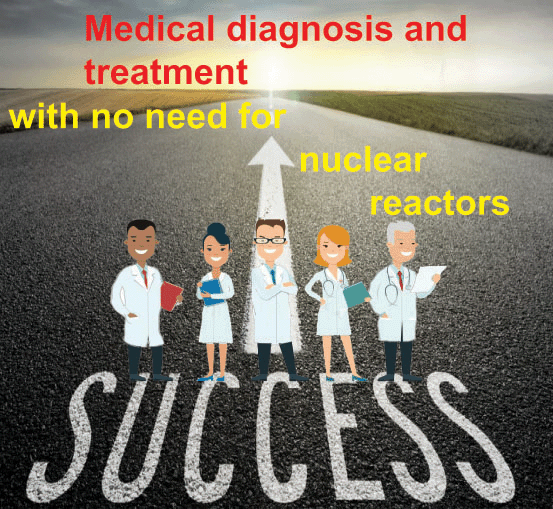
these cyclotrons can be used to reliably create technetium-99m regionally and without the need for reactor-based materials.
Cyclotron-produced technetium-99m approved by Health Canada, TRIUMF,
Now, a new cyclotron-based approach to producing this critical diagnostic tool has received Health Canada approval, greenlighting the made-in-Canada technology for national implementation and opening the door to a greener, more reliable way to make technetium-99m.
The approval represents a critical milestone for the TRIUMF-led Cyclomed99 consortium, which spearheaded the innovative research effort. The consortium, including partners BC Cancer, the University of British Columbia (UBC), the Lawson Health Research Institute, and the Centre for Probe Development and Commercialization, is the first in the world to obtain full regulatory approval for cyclotron-based production.
It also a turning point for the consortium‘s licensee ARTMS Inc., the TRIUMF spin-off company bringing this technology to market. ARTMS’ technology makes technetium-99m production possible on many of the world’s most common medical cyclotrons, enabling regional production of this critical isotope within local communities.
“Medical isotopes help so many people every day. It’s critical to have a stable, multi-faceted supply chain to avoid unexpected disruptions to their availability,” said Paul Schaffer, Associate Laboratory Director, Life Sciences at TRIUMF and Associate Professor at UBC’s Faculty of Medicine. “The approval of cyclotron-produced technetium-99m by Health Canada is an important milestone for this Canadian innovation that will ultimately deliver direct benefit for Canadian patients.”
While the Health Canada approval brings new promise for patients and researchers, it also highlights an important chapter in Canadian innovation, one which saw a focused national research effort produce an effective solution to a global problem.
The path towards cyclotron-produced technetium-99m ……
In 2009, following unplanned disruptions at NRU (which historically provided up to half of the world’s technetium-99m via molybdenum-99 generators), the Government of Canada initiated the Non-reactor-based Isotope Supply Contribution Program (NISP) which challenged researchers to find a new way to produce critical medical isotopes—in particular, technetium-99m.
Led by Schaffer and TRIUMF‘s Dr. Tom Ruth, scientists and engineers from TRIUMF joined partners at BC Cancer, the Centre for Probe Development Commercialization (CPDC), the Lawson Health Research Institute, and the University of British Columbia to launch a national collaboration to answer the NISP call: the ‘CycloMed99‘ consortium.‘
A new way to produce technetium-99m
The consortium’s proposal detailed a new and innovative technology to enable the production of technetium-99m using medical cyclotrons. These compact particle accelerators already operate in regional healthcare centres worldwide, producing isotopes by bombarding a target material with a proton beam and extracting the desired species. The process is safe and precise, employing stable targets and producing little to no long-lived radioactive waste. And, with the right target and extraction systems, these cyclotrons can be used to reliably create technetium-99m regionally and without the need for reactor-based materials.
“Cyclotron centres across Canada can produce these isotopes locally and on-demand, and we have shown the path that can be used to achieve regulatory approval,” said Francois Bénard, senior executive director of research at BC Cancer, professor of radiology and associate dean of research at UBC’s faculty of medicine. “The same approach can be followed at other sites in Canada and internationally. This has been a shared vision of many researchers across the country, and we have to recognize the many collaborators who worked for years to make this announcement possible.”
This bright future will first take shape at TRIUMF‘s Institute for Advanced Medical Isotopes (IAMI), where a state-of-the-art TR-24 medical cyclotron will offer production capacity for the Lower Mainland‘s technetium-99 needs. In addition, IAMI will serve as a hub for radiopharmaceutical research, providing access to leading-edge facilities and expertise in accelerator technology and isotope science. The Institute will further catalyze the Vancouver region’s diverse nuclear medicine sector by convening researchers, students, academic collaborators, not-for-profits, government, and industry partners.
“With support from the Canadian government and our partners, we have developed an effective solution to the medical isotope crisis, one that will improve health outcomes and reaffirm Canada’s role as a global leader in isotope production and research. … …https://www.triumf.ca/headlines/cyclotron-produced-technetium-99m-approved-health-canada?fbclid=IwAR1d-vA4gmCfoY1HWJqwPBs_KkmGHMfwxGKVK41bnPNeD2I7Yr-vHkaVf4o
Biden Plans Renewed Nuclear Talks With Russia While Punishing Kremlin
Biden Plans Renewed Nuclear Talks With Russia While Punishing Kremlin, Adviser Says. The president-elect also plans to pursue a “follow-on negotiation” with Iran over its missile capabilities if Tehran re-enters compliance with the nuclear deal.
NYT, By David E. Sanger, Jan. 3, 2021
President-elect Joseph R. Biden Jr.’s incoming national security adviser said on Sunday that the new administration would move quickly to renew the last remaining major nuclear arms treaty with Russia, even while seeking to make President Vladimir V. Putin pay for what appeared to be the largest-ever hacking of United States government networks.
In an interview on “GPS” on CNN, Jake Sullivan, who at 44 will become the youngest national security adviser in more than a half century, also said that as soon as Iran re-entered compliance with the 2015 nuclear deal — which he helped negotiate under President Barack Obama — there would be a “follow-on negotiation” over its missile capabilities.
“In that broader negotiation, we can ultimately secure limits on Iran’s ballistic missile technology,” Mr. Sullivan said, “and that is what we intend to try to pursue through diplomacy.”
He did not mention that missiles were not covered in the previous accord because the Iranians refused to commit to any limitations on their development or testing. To bridge the impasse, the United Nations passed a weakly worded resolution that called on Tehran to show restraint; the Iranians say it is not binding, and they have ignored it.
Taken together, Mr. Sullivan’s two statements indicated how quickly the new administration would be immersed in two complex arms control issues, even as Mr. Biden seeks to deal with the coronavirus pandemic and the economic shocks it has caused. But the first issue to arise, renewing the New Start, will be made more complex because of Mr. Biden’s vow to assure that Moscow pays for the hacking of more than 250 American government and private networks, an intrusion that now appears far more extensive than first thought.
Mr. Biden has said that after the government formally determines who was responsible for the attack, “we will respond, and probably respond in kind.” But that means moving to punish Russia while keeping New Start — a remnant of the era when nuclear rather than cyber was the dominant issue between the two countries — from lapsing and setting off a new arms race. ……… https://www.nytimes.com/2021/01/03/us/politics/biden-russia-iran.html
Indonesia’s nuclear ambitions could prove disastrous for the Southeast Asian region
More dangerously, Indonesia’s nuclear stakeholders have traditionally run into trouble selling the idea of nuclear energy to their constituents given widespread fear over Indonesia being prone to earthquakes and volcanic activity given its unique position within the Pacific’s ‘Ring of Fire’.
|
Will Indonesia become a nuclear power? https://www.trtworld.com/magazine/will-indonesia-become-a-nuclear-power-43025 6 Jan 21, In spite of its nuclear ambitions, Indonesia does not yet have the capacity to manage its nuclear waste disposal, which could prove disastrous for the Southeast Asian region.
Indonesia may be taking steps to revive its nuclear ambitions under President Joko Widodo’s government. In February 2020, Luhut Binsar Pandjaitan, Indonesian minister of maritime affairs and former chief of staff to Widodo, publicly proclaimed that powerful nations like the United States do not see Indonesia as a serious international player due to its lack of nuclear weapons. His statement quickly captured local news headlines. The retired four-star army general turned political heavyweight is a major proponent behind recent interest in acquiring nuclear reactor technology to capitalize on Indonesia’s wealth of mineral resources. If Indonesia takes the nuclear track, it would be a major departure from its traditional foreign policy footing. Historically, Indonesia organised the Bandung Conference in 1955 which gave rise to a global Non-Aligned Movement (NAM) of African and Asian states who collectively opted out of aligning with either the United States or Russia during the dawn of the cold war. Nuclear pivot Continue reading |
British tax-payers’ £ 132 billion cost for 120 years of nuclear decommissioning
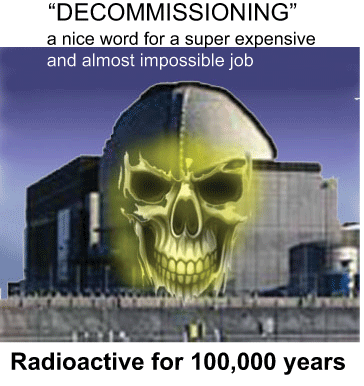 Brinkwire 4th Jan 2021, It has been warned that a “perpetual” lack of information about the condition of the nuclear facilities in Britain means that decommissioning for 120 years would not be complete and cost billions of pounds.
The decommissioning of UK civil nuclear power plants, including the Torness power plant in East Lothian and the Hunterston B power plant in Ayrshire, would cost the taxpayer about £ 132 billion, according to a new estimate, and will not be finished for 120 years.
The Public Accounts Committee blames the U.K. in its sober analysis. Government for a “sorry saga” of massively ineffective contracts, “weak” government monitoring and a “persistent” lack of awareness of the condition of nuclear installations. The Nuclear Decommissioning Authority (NDA) has left decades of inadequate information on the status and location of dangerous and
radioactive materials with a history of a lack of awareness about the condition of the sites it is responsible for safeguarding, the study warned. The NDA recognizes that it still does not have a complete understanding of the condition of the 17 sites in its custody, including the 10 former Magnox power plants, the report from the committee said.
According to the latest NDA figures, the decommissioning of UK civilian nuclear power plants would cost an incredible £ 132 billion for current and future generations of British taxpayers, and the work will not be finished for 120 years, with a huge effect on the lives of people living
near the plants, the study said.
Astounding failure by Ohio Republican leadership to repeal nuclear bailout law
Claims in a federal complaint released in July indicate that the law was at the heart of an alleged corruption scheme involving roughly $60 million. Former Ohio House Speaker Larry Householder, R-Glenford, and others were arrested last summer.
Failure to repeal the law in 2020 was “an astounding failure by Republican leadership,” said Rep. David Leland, D-Columbus, as the legislature adjourned last month……..
Allegations in the federal criminal case indicate that FirstEnergy and FirstEnergy Solutions — now known as Energy Harbor — provided most of the funding for an alleged scheme to elect favorable lawmakers and then to pass and defend HB 6. …….
Rulings from the Ohio Supreme Court and the Franklin County Court of Common Pleas have temporarily postponed collection of the nuclear plant subsidies anyway. Meanwhile, FirstEnergy benefits from the 2019 law’s revenue guarantee provision. Consumers pay subsidies for the old coal plants. And provisions that gutted Ohio’s renewable energy and energy efficiency standards are in full force…….
FirstEnergy Solutions paid money to Generation Now. The dark money group is a defendant in the criminal case.
And while Seitz maintained that “no alleged corruption infected all of HB 6,” others such as Rep. Mike Skindell, D-Lakewood, have stressed that “all of it — not just part of it” is tainted by the alleged corruption.
“To suggest we can parse out which pieces of the bill were not the product of corruption is wishful thinking,” Leppla said. “There is an ongoing FBI investigation, with more shoes likely to drop, so we won’t know the full extent of the corruption for some time.”
Although a FirstEnergy Solutions officer provided brief testimony on HB 6 in 2019, the company has not provided financial materials in any hearings to back up its alleged need for funding. Asked why he wouldn’t make Energy Harbor provide such sworn testimony now, Seitz said the proposed regulatory audit would be “much better than any testimony at this point.”
“Pushing it off to a closed-door audit that won’t be made fully public is a convenient way for legislators to avoid public scrutiny and outrage at forking over Ohioans’ hard-earned money to bail out a company that doesn’t need it,” Leppla said.
“I can’t think why the legislature would not want this information,” Brown said. Indeed, an option approach would tell Energy Harbor that it could draw on a slush fund if it is too incompetent or too inefficient to compete. In his view, the whole approach is “beyond crony capitalism.”………
“What we do know,” Leppla said, “is that HB 6 was a widely disliked bill that will raise Ohioans’ bills, pollute our air, and send us backward in the fight against climate change — and yet, it passed anyway.” https://www.wvxu.org/post/rep-bill-seitz-forefront-key-points-nuclear-bailout-law-hb-6#stream/0
Ohio lawmakers still don’t know what to do about corruptly instituted nuclear bailout law
The courts have taken some of the heat off by temporarily blocking the start of consumer surcharges this month to fuel the $150 million that would be used to subsidize the plants’ operations, but the law now considered to be the fruits of corruption remains on the books.
“We have a new General Assembly, so we have 20 new members,” House Speaker Bob Cupp (R., Lima) said Monday. “We will continue to work to find a solution that the House, the Senate, and the governor can all agree on…It is still a high priority on our agenda to find a solution.”
New Senate President Matt Huffman (R., Lima) said he and the speaker have been talking about how to proceed.
Restoring Iran nuclear deal is good for Israel
In order to stop Iran and to restore Israeli relations with the US and with the American Jewish community, the Israeli government must cooperate with the Biden government in its efforts to return to diplomacy with Iran from its first day in office, on January 20, not a moment too soon.
Grand Gulf nuclear plant in Mississippi raises concerns about nuclear power
That means Entergy Corp., which is the plant’s main owner, and the Midcontinent Independent System Operator, which operates the regional grid, often have to rely on other generation to fill the gap — possibly costing more and boosting greenhouse gas emissions if fossil fuel sources are tapped.
“The same rule applies to Grand Gulf as applies to coal, to gas, to any resource that we know we’re paying more for than we’re getting from,” said Logan Atkinson Burke, executive director of the New Orleans-based Alliance for Affordable Energy. “And the question is, who’s profiting from that, and who is being burdened by it?”
Experience at Grand Gulf suggests regulators and plant operators may need to consider new approaches and closer oversight of aging reactors, which face an uncertain future if they become too expensive to repair and maintain, observers say. This could have national implications as the electricity industry tries to transition away from fossil fuels and aims to rely more heavily on carbon emissions-free nuclear power.
The industry says nuclear plants are performing well broadly and companies are making investments to keep them operating. But Grand Gulf shows that a reactor that often goes offline can be expensive and undermine climate goals. An examination of New Orleans, for example, provided a snapshot in the past, estimating that a multiday unplanned outage at Grand Gulf in late 2018 resulted in higher costs of more than $1 million for New Orleans ratepayers, according to data from the city.
Aging and troubled nuclear reactors in competitive markets also occupy shaky ground because cheaper options like renewables have been able to undercut them economically, and there isn’t always a customer base to prop them up. Grand Gulf operates in a regulated territory, so it has protection, said Paul Patterson, a utility analyst with Glenrock Associates LLC. But he added that keeping plants alive isn’t a given.
“If the stars aren’t aligned politically to support these plants, it’s not going to happen,” he said………
Grand Gulf finished last among U.S. reactors at 68.8% capacity…….
At the same time, the Nuclear Regulatory Commission recently questioned the site’s operators about mislabeling of waste tied to the plant. And the Federal Energy Regulatory Commission has been reviewing complaints around Grand Gulf’s financial structure that could lead to a refund for customers……..
Nuclear reactors are designed to act as baseload power plants, which means they aren’t usually turned on and off frequently. It also takes time to take a nuclear plant offline, unless there’s an emergency that automatically trips the reactor for safety reasons.
But downtime at Grand Gulf has plagued the plant for years, as E&E News reported in 2018 (Energywire, Dec. 4, 2018). ……. its performance tanked in 2020, as it was at zero on about 39% of the days. This stemmed largely from the refueling and upgrades Entergy undertook — and issues that followed.
Safety concerns could lead to more time that Grand Gulf is not operating, according to observers. Edwin Lyman of the Union of Concerned Scientists ticked off a list of statistics for Grand Gulf that he said concern him. The reactor is in Column 2 of the NRC’s so-called Action Matrix, meaning its performance has declined. It has a number of “green” or low-level safety issues that may trigger additional inspections and reviews, and it has a “white” finding, which is more severe.
“That’s showing a troubling trend in management and safety control,” said Lyman, nuclear power safety director at UCS…..
Lyman questioned whether there is stringent oversight by federal regulators of basic procedures such as replacing and maintaining equipment, following guidelines and continuing education. Management needs to follow through on overseeing maintenance activities, he said.
“All of these seem to be challenging the safety of the plant,” he said.
The NRC looks for so-called cross-cutting issues, which are something that affects most or all safety cornerstones. This is as broad as having a “safety conscious work environment” and can be as specific as human behavior and identifying and solving problems. But the agency has been under pressure to weaken its oversight, which means such patterns may be missed, Lyman said…….
Colby Cook, a spokesperson for the Louisiana Public Service Commission, said a directive last year authorized LPSC staff to initiate a complaint at FERC regarding Grand Gulf’s operations. He said the complaint hasn’t been filed yet. But it could involve other jurisdictions that have an interest in how the plant performs.
And regulators in various states are watching federal agencies for potential decisions related to Grand Gulf………
Lyman of USC acknowledged bipartisan support in Congress for nuclear power. He said it’s up to the Energy Department to promote nuclear as a climate solution, but said the reactors need to be running safely if that’s the case. This is where the NRC comes in.
“The people who you need to depend on to make sure the plants are running safely are not doing their jobs now,” Lyman said…….
Lyman called for a more detailed grading system at the NRC so the public has a better sense of safety problems. That could lead to public pressure on the staff and management at certain plants, which also are dealing with the COVID-19 pandemic.
“I’m concerned generation with the operating reactor fleet especially when they are under economic pressure, especially now with COVID,” Lyman said……
Burke of the Alliance for Affordable Energy in Louisiana said she has no reason to be confident that Grand Gulf will have a great future performance. When the plant is offline, she said, Entergy and MISO likely depend on gas-fueled generation in the region. Burke also worried that new natural gas-fired units could be proposed to replace Grand Gulf at some point….
Burke said utilities and regulators need to plan with credible data.
“If we’re honest about what this plant is costing us all, then this plant shuts down and we finally get to plan for the future,” she said. https://www.eenews.net/stories/1063721867
High court drops TEPCO’s appeal against order for compensation to affected Fukushima worker
| High court drops TEPCO’s appeal against order for compensation to affected Fukushima worker |
http://www.japan-press.co.jp/modules/news/index.php?id=13357, December 17, 2020
In the court battle, the man, who worked for the TEPCO subsidiary Kandenko at the time of the Fukushima nuclear disaster, stated that he experienced anxiety over health problems due to radiation exposure during emergency work he was assigned to do at the crippled nuclear power plant. According to the worker, he was assigned to emergency work that included connecting cables to a power panel in the basement of the No. 3 reactor’s turbine building. He suffered external exposure to radiation of up to 10.81 mSv and internal exposure of 5.8 mSv. The worker demanded a total of 1.1 million yen in damage from his company and TEPCO on the grounds that they failed to fulfill their responsibility to ensure workers’ safety.
At the appeal hearing, TEPCO demanded that the district court decision be reviewed because the amount of radiation which the worker received was less than that needed to be compensated.
The high court ruling pointed out that it is generally accepted that exposure to some levels of radiation may increase the risk of health problems such as getting cancer. Stating that the plaintiff’s health anxiety is understandable, the court turned down the utility’s demand.
At a press conference after the ruling, lawyer Hirota Tsuguo on behalf of the plaintiff’s legal team said, “It is significant that the court ordered TEPCO, which has dominant power in the nuclear power-related industry, to compensate the worker. The company should abide by the court judgement.”
Past related article:
> Radiation-exposed worker sues TEPCO [May 8, 2014]
Multinational effort could help solve U.S.-Russia nuclear issue
|
EDITORIAL: Multinational effort could help solve U.S.-Russia nuclear issue, Asahi Shimbun January 6, 2021 The United States and Russia should take the inauguration of President Joe Biden on Jan. 20 as a cue to explore a new bilateral relationship that will improve their handling of nuclear disarmament and other issues.New START (Strategic Arms Reduction Treaty), their only remaining nuclear disarmament treaty, is due to expire in February. Negotiations for its extension have remained stalled since last year. Unfortunately, relations between President-elect Biden and Russian President Vladimir Putin are already somewhat strained……… the two nations together possess more than 90 percent of the global arsenal of nuclear warheads, wielding tremendous influence over various parts of the world. Should all dialogue or collaboration cease between these two nuclear superpowers, they will be incapable of fulfilling their responsibility of protecting global peace and security. For this reason, the demise of New START must be avoided at all costs. As soon as the Biden administration is sworn in, Washington and Moscow must do everything in their power to forge an agreement on extending the treaty. Also urgent is the need to revive the Iran nuclear deal, abandoned arbitrarily by the Donald Trump administration. Other pressing issues on which U.S.-Russia collaboration is indispensable include the North Korean nuclear problem and China’s surging military presence. We probably cannot expect any immediate improvement in the Biden-Putin personal relationship. But it may be worth the effort to explore issue-by-issue solutions within multinational frameworks. Precedents that can be consulted include the participation of Germany and the five permanent members of the United Nations Security Council in the Iran nuclear deal, and the six-party talks on North Korean problems. We believe now is the time for not only the United States and Russia, but also many countries, including Japan, to reaffirm the value of multinational cooperation. Every country must face, and act on, the fact that the “my country first” mentality provides no solution to issues such as nuclear proliferation, infections and the environment. http://www.asahi.com/ajw/articles/14084371 |
|
Should £25 billion Hinkley C plant go ahead, with so many safety issues not solved?
David Lowry’s Blog 4th Jan 2021On Christmas Eve last year I received a detailed response to a Freedom of Information request I had made to the UK Office for Nuclear Regulation
[ONR] (I am a member of the chief nuclear inspector’s independent advisory
panel) on the 415 unresolved nuclear safety issues outstanding for the
nuclear licence for the Hinkley Point C nuclear power plant the north
Somerset coast, 18 miles from the Welsh capital city, Cardiff, across the
Bristol channel. It contains an alarming number of extremely important
unresolved matters.
Should this £25 billion plant really have been given
the regulatory green light with so many safety issues unfinished? It is
nonetheless reassuring that the ONR has been so thorough in flagging up key
matters that need safety resolution.
http://drdavidlowry.blogspot.com/2021/01/hinkley-point-c-new-nuclear-plant-still.html
Canada vocal about nuclear disarmament, but silent about the Treaty for Prohibition of Nuclear Weapons
 Canada reaffirms support to advance nuclear disarmament Mirage News, 5 Jan 21, On behalf of the Honourable François-Philippe Champagne, Minister of Foreign Affairs, Rob Oliphant, Parliamentary Secretary to the Minister of Foreign Affairs, today reaffirmed Canada’s unwavering support for advancing nuclear non-proliferation and disarmament during the third meeting of foreign ministers of the Stockholm Initiative for Nuclear Disarmament. Co-hosted by Jordan, Germany and Sweden, the meeting brought together international partners advocating for action-oriented steps on nuclear disarmament. Participants called on all nuclear weapon states to show leadership in advancing nuclear disarmament and to take meaningful steps to implement all commitments under the Treaty on the Non-Proliferation of Nuclear Weapons (NPT). ………https://www.miragenews.com/canada-reaffirms-support-to-advance-nuclear-disarmament/
|
|
|
Massive nuclear waste storage construction at Dounreay
Press & Journal 4th Jan 2021, Work on Dounreay’s newest radioactive waste store has reached new heights
following a marathon efforts by staff. The construction project was one of
the first to re-start work in June, following the easing of lockdown
restrictions. The 60-strong team has had to learn Covid-19 compliant ways
of working, sometimes in close proximity with each other, to keep
themselves and their colleagues safe on site.
Since then they have poured
1,500 tonnes of concrete and the building walls have now risen to above the
first floor level. Last week the team embarked on the biggest concrete pour
of the project so far, working for nine hours to lay the floor slab in the
crane maintenance bay (CMB) on the first floor of the building, with 27
lorries delivering 425 tonnes of concrete. An overnight shift completed the
job in the early hours of the morning.
The new intermediate level waste
store will hold drums of waste in safe long term storage at Dounreay in
accordance with Scottish Government policy. The £22 million contract,
awarded to Graham Construction Ltd, started in 2018 and is expected to take
around three years to complete. Dounreay project manager Dave Busby said
that casting the CMB floor slab was a significant construction milestone as
it will allow the team to install the 170 tonne CMB shield door early next
year.
1 This Month

Read the Public Inquiry Report, the Commissioners’ report, Surrendering Australia: The AUKUS Deception is available to download for free at aukuspublicinquiry.com. Or just watch the replay of the National Press Club Luncheon.


19 November – Webinar – The Reality of Reprocessing
Time: 11:00 AM Pacific Time (US & Canada) / 2:00 PM Eastern / 7:00 PM UK / 8:00 PM CET
Register for the Zoom Event Here



Shut down the radiation-damaged Heysham nuclear reactors now
To see nuclear-related stories in greater depth and intensity – go to https://nuclearinformation.wordpress.com

Say No to NASA’s Reckless Nuclear Reactor on the Moon
Say No to NASA’s Reckless Nuclear Reactor on the Moon
-
Archives
- November 2026 (109)
- October 2026 (302)
- September 2026 (339)
- August 2026 (330)
- July 2026 (355)
- June 2026 (287)
- May 2026 (306)
- April 2026 (356)
- March 2026 (251)
- February 2026 (267)
- January 2026 (308)
- December 2025 (358)
-
Categories
- 1
- 1 NUCLEAR ISSUES
- business and costs
- climate change
- culture and arts
- ENERGY
- environment
- health
- history
- indigenous issues
- Legal
- marketing of nuclear
- media
- opposition to nuclear
- PERSONAL STORIES
- politics
- politics international
- Religion and ethics
- safety
- secrets,lies and civil liberties
- spinbuster
- technology
- Uranium
- wastes
- weapons and war
- Women
- 2 WORLD
- ACTION
- AFRICA
- Atrocities
- AUSTRALIA
- Christina's notes
- Christina's themes
- culture and arts
- Events
- Fuk 2022
- Fuk 2023
- Fukushima 2017
- Fukushima 2018
- fukushima 2019
- Fukushima 2020
- Fukushima 2021
- general
- global warming
- Humour (God we need it)
- Nuclear
- RARE EARTHS
- Reference
- resources – print
- Resources -audiovicual
- Weekly Newsletter
- World
- World Nuclear
- YouTube
-
RSS
Entries RSS
Comments RSS

