“They’ll be able to dream up some bogus price” – UK nuclear proponents want financing system

|
UK needs new finance model for nuclear – experts, Montel News , KELLY PAUL, London 18 Jan 2021
The UK must adopt a regulated asset base model (RAB) to kickstart investment in nuclear development, or risk the country missing its target to be net zero by 2050, proponents of the financing mechanism say.
A RAB model for financing could attract pension funds, insurance firms, sovereign wealth funds and infrastructure asset managers to shore up French utility EDF’s funds and carry a new nuclear project through to completion, industry experts told Montel. The UK’s plans to build new nuclear infrastructure in the country have stalled against a backdrop of political reticence to commit, spiralling costs associated with Hinkley Point C, which EDF is building, and the steady retreat of potential investors. …… Under RAB, an economic regulator would grant a licence to a company to charge a regulated price to users in exchange for the provision of infrastructure, in this case a nuclear reactor. …….
The UK government recently confirmed it has entered into negotiations with EDF on the Sizewell C reactor in Suffolk and has pledged to reach an investment decision on at least one nuclear power station by the end of the current parliament. High cost EDF itself signalled that the cost for the Hinkley C reactor would be between GBP 21.5 billion and GBP 22.5 billion, a rise of between GBP 1.9 billion and GBP 2.9 billion as compared with previous estimates. In France, meanwhile, the operator’s Flamanville reactor is running 11 years behind schedule and EDF’s estimated cost of completion has spiralled to EUR 12.4bn, up from its original estimate of EUR 3.3bn.
Blank cheque Detractors of the RAB model have dismissed the mechanism as a “blank cheque” for UK consumers to sign, while others called into question the price competitiveness of new nuclear given the falling cost of renewables. Critics maintain that by guaranteeing a significant source of capital ahead of the expensive construction phase, as RAB does, consumers are essentially being asked to pay for a reactor when they have no way of assessing how costly it will be, or if any of the delays that have marred Hinkley could occur again. At the government’s recent consultation on the RAB model, specific figures relating to financing were not discussed. “They’ll be able to dream up some bogus price,” said Stephen Thomas, emeritus professor of energy policy at the University of Greenwich. https://www.montelnews.com/en/story/uk-needs-new-finance-model-for-nuclear-experts/1187367 |
|
The hidden costs of France’s old, past-their-use-by-date nuclear reactors
Ian Fairlie’s Blog 16th Jan 2021, In early 2019, four French EDF scientists wrote a 22 page report on load following in French nuclear reactors. The English version was first published on April 1 2020 but this has only recently been brought to my attention (ie mid Jan 2021).
This report is instructive and worrying, and requires careful reading. In essence, it discusses how French nuclear engineers have managed to retrofit and configure France’s reactors so that they can follow the diurnal loads increasingly required by France’s electricity needs.
It should be borne in mind that EDF’s 58 nuclear reactors are very old and past their sell-by dates. Most are between 30 and 40 years old with an average age of 33 years in 2018.
Some background is necessary to explain why this report was written. French reactors have been
operating since the 1980s. Since their gross output has usually exceeded French domestic requirements, especially at night, much is exported to France’s neighbours i.e. UK, Belgium, Netherlands, Germany, Italy and Spain.
Large amounts were until recently also sent to large pumped storage schemes in Switzerland at night. These transfers have been at a considerable financial loss to EDF and the French Treasury as the prices for such supplies are understood to be low. In addition, during the day, France imports significant amounts of electricity- mainly from the renewables in Germany.
https://www.ianfairlie.org/news/french-report-nuclear-power-plant-flexibility-at-edf/
22 January – Trident Ploughshares, Scotland to celebrate entry into force of nuclear weapons ban
 The National 18th Jan 2021, MEMBERS of the anti-nuclear weapons group Trident Ploughshares will celebrate the entry into force of the UN Treaty on the Prohibition of Nuclear Weapons (TPNW) on January 22 with banner drops, billboards and
projections on buildings, and bell ringing in town centres across the UK.
In Edinburgh, messages will be projected on city centre buildings with
billboards proclaiming “UN outlaws nuclear weapons. Time for a clean
break”, with a variation asking “What about Scotland?” depicting
Nicola Sturgeon alongside her words: “No ifs, no buts, no nuclear weapons
on the Clyde, or anywhere.”
Russia to withdraw form Open Skies Treaty, EU concerned
The media’s false concept of “balance”
|
Even After January 6, Some Media Can’t Kick Their Addiction to False Balance, Fair,
JULIE HOLLAR 18 Jan, 21, In the wake of the unprecedented events of January 6, many in corporate media—on both the editorial and reporting sides—have displayed a new and refreshing ability to apply accurate labels to people and their behaviors (“sedition,” “incitement,” “white nationalists,” etc.) and to apportion blame based on reality, not a wished-for fantasy of balance.
That false concept of balance, which FAIR has criticized for years (e.g., 9/30/04, 9/17/20), is finally coming under greater scrutiny. As Washington Post media critic Margaret Sullivan (1/17/21) recently wrote: “When one side consistently engages in bad-faith falsehoods, it’s downright destructive to give them equal time.” Considering that Trump has few allies left within the establishment—even many big businesses have publicly turned against him—perhaps it’s easier for journalists to cast off their commitment to false balance. But it’s far from inevitable. ……..https://fair.org/home/even-after-january-6-some-media-cant-kick-their-addiction-to-false-balance/ |
|
|
America’s Committee to Defend Australian citizen Julian Assange
|
A project of the Courage Foundation, the Assange Defense Committee is a national coalition fighting to free WikiLeaks founder Julian Assange. Comprising human rights defenders, press freedom advocates, civil liberties lawyers, and supporters across the United States, the Committee organizes public rallies, provides essential resources, and raises awareness about the unprecedented prosecution against Julian Assange and the threat it poses to the freedom of the press around the world. In supporting journalists’ right to publish, the Assange Defense Committee is upholding the public’s right to know what its government is doing in its name. Co-chairsThe Committee calls for Julian Assange’s immediate release, charges to be dropped, safe passage to the secure location of his choosing, and compensation for the psychological torture and arbitrary detention he has endured. Noam Chomsky Alice Walker Daniel Ellsberg Advisory BoardLeading journalists, lawyers, whistleblowers, and human rights defenders advising the Assange Defense Committee. See our supporters page for high-profile individuals and organizations who are standing up for Assange’s right to publish and your right to know………https://assangedefense.org/about/?fbclid=IwAR06__azOpLuMwwwNxlVcH2I3u7ZThlGnLHiVkhGmuX_HO-d4EDCo0N_fb0 |
|

Biden works a weakened U.S. hand to negotiate way back into Iran nuclear deal
President Donald Trump worked to blow up the multinational deal to contain Iran’s nuclear program during his four years in office, gutting the diplomatic achievement of predecessor Barack Obama in favour of what Trump called a maximum pressure campaign against Iran.
Down to Trump’s last days in office, accusations, threats and still more sanctions by Trump and Secretary of State Mike Pompeo, and Iran’s decision to spur uranium enrichment and seize a South Korean tanker, are helping to keep alive worries that regional conflict will erupt. Iran on Friday staged drills, hurling volleys of ballistic missiles and smashing drones into targets, further raising pressure on the incoming American president over a nuclear accord.
Even before the Capitol riot this month, upheaval at home threatened to weaken the U.S. hand internationally, including in the Middle East’s nuclear standoff. Political divisions are fierce, thousands are dying in the pandemic and unemployment remains high.
Biden and his team will face allies and adversaries wondering how much attention and resolution the U.S. can bring to bear on the Iran nuclear issue or any other foreign concern, and whether any commitment by Biden will be reversed by his successor.
“His ability to move the needle is … I think hampered by the doubt about America’s capacity and by the skepticism and worry about what comes after Biden,” said Vali Nasr, a professor at Johns Hopkins University School of Advanced International Studies. Nasr was an adviser on Afghanistan during the first Obama administration.
Biden’s pick for deputy secretary of state, Wendy Sherman, acknowledged the difficulties in an interview with a Boston news show last month before her nomination.
“We’re going to work hard at this, because we have lost credibility, we are seen as weaker” after Trump, said Sherman, who was Barack Obama’s lead U.S. negotiator for the 2015 Iran nuclear agreement. She was speaking of U.S. foreign objectives overall, including the Iran deal.
Biden’s first priority for renewed talks is getting both Iran and the United States back in compliance with the nuclear deal, which offered Iran relief from sanctions in exchange for Iran accepting limits on its nuclear material and gear…………….https://globalnews.ca/news/7583615/biden-us-iran-nuclear-deal/
How the Treaty on the Prohibition of Nuclear Weapons Impacts the United States
 How the Treaty on the Prohibition of Nuclear Weapons Impacts the
 United States, and Why the United States Must Embrace its Entry into Force, Columbia SIPA Journal of International Affairs, ALICIA SANDERS-ZAKRE AND SETH SHELDEN, JAN 15, 2021 The United Nations Treaty on the Prohibition of Nuclear Weapons (TPNW) will enter into force on January 22, 2021, two days following the inauguration of Joseph Biden as the 46th president of the United States. Despite the TPNW’s widespread support throughout the world, the United States has attempted to thwart the treaty’s progress at every step, boycotting the negotiations from the start and urging other countries to withdraw as the treaty neared its entry into force. These efforts have proven unsuccessful. This article explores the implications of the entry into force of the TPNW, with special attention to the United States and how the new Biden administration can play a more constructive role in the international treaty regime.
With the TPNW, nuclear weapons will be subject to a global ban treaty for the first time, at last aligning nuclear weapons with other weapons of mass destruction, all already the subject of treaty-based prohibitions. The TPNW provides a framework to verifiably eliminate nuclear weapons and requires its States Parties, i.e., states that have ratified or acceded to the treaty, to assist victims and remediate environments affected by nuclear weapons use and testing. The treaty was negotiated in recognition of the increasing likelihood of use of nuclear weapons, whether intentionally or accidentally, and the catastrophic humanitarian consequences that would result from any such use.
The United States has aggressively attempted to thwart the TPNW despite support for the treaty from more than two-thirds of the world’s states. These efforts have been unsuccessful. If President-elect Biden truly intends “to prove to the world that the United States is prepared to lead again—not just with the example of our power but also with the power of our example,” his administration must reverse the U.S. position on the TPNW.
Past United States Approach to TPNW
Before treaty negotiations had begun, in a 2016 nonpaper the United States urged NATO members to vote against proceeding with the initiative, claiming that such a treaty would “undermine…long-standing strategic stability.” Despite U.S. urging, the resolution to proceed with negotiations was adopted in December 2016 with clear global support. After Donald Trump assumed the presidency, the United States intensified its opposition, publicly dismissing and ridiculing the TPNW while privately pressuring countries not to support it. On the first day of treaty negotiations, U.S. Ambassador to the UN, Nikki Haley, hosted a press conference outside the room where negotiations were to take place, criticizing the pursuit of a prohibition treaty and questioning if nations participating were “looking out for their people.”
In October 2020, as the treaty approached the threshold of 50 ratifications for its entry into force, the United States sent a letter to countries that had joined the TPNW, restating its “opposition to the potential repercussions” of the treaty and encouraging states to withdraw their instruments of ratification. Once the treaty reached 50 States Parties, U.S. Assistant Secretary of State Christopher Ford retweeted his remarks from 2018 in which he had called the treaty “harmful to international peace and security.” China, France, Russia, the United Kingdom, and the United States have consistently issued joint statements disparaging the treaty at various international fora, including the International Atomic Energy Agency (IAEA) General Conference, the United Nations General Assembly, and Nuclear Non-Proliferation Treaty (NPT) meetings.
U.S. opposition to the TPNW is predicated on the falsehood that nuclear weapons provide security, as well as mischaracterizations about the treaty itself. Despite legal obligations and decades of commitments to bring about a world without nuclear weapons, in truth the United States relies steadfastly upon deterrence doctrines that are incompatible with these obligations and commitments, and it views any threat to the legitimacy of nuclear weapons as a threat to its national security. In clutching to deterrence doctrines, despite recognition—even from conservatives and libertarians—that nuclear weapons offer no military or practical value, U.S. policymakers undoubtedly are influenced also by the trillion dollar industry supporting its nuclear weapon arsenal. They thus have advanced spurious claims about the TPNW’s failings, arguing that the treaty will undermine the NPT, weaken IAEA safeguards, and only impact democracies, all of which are untrue.
These false assertions have been debunked in numerous more thorough examinations, so it suffices to say that the majority of countries do not share U.S. and like-minded states’ concerns about the TPNW
…………Nuclear-armed states aggressively denouncing an initiative with global support impairs unity in other international fora needed to advance other nuclear disarmament, nonproliferation, and risk reduction measures.
Implications of Entry Into Force
U.S. denouncements of the TPNW also ignore the significant impact of this treaty internationally, and on the United States itself. When the TPNW enters into force, States Parties will immediately need to adhere to the treaty’s Article 1 prohibitions, prohibiting them from developing, testing, producing, manufacturing, acquiring, transferring, possessing, stockpiling, using, or threatening to use nuclear weapons, or allowing nuclear weapons to be stationed in their territories. It also prohibits States Parties from assisting, encouraging, or inducing anyone to engage in these activities.
Under Articles 6 and 7 of the TPNW, States Parties also are obligated to assist victims of and remediate environments contaminated by nuclear weapon use and testing. These “positive obligations” break new ground in international nuclear weapons law. States with affected victims and contaminated lands under their jurisdiction have the primary responsibility for providing assistance, in a nod to state sovereignty and practical facilitation. However, Article 7 requires all States Parties to cooperate in implementing the treaty and, particularly for those in a position to do so, to assist affected states. ………..more https://jia.sipa.columbia.edu/online-articles/how-treaty-prohibition-nuclear-weapons-impacts-united-states-and-why-united-states
Donald Trump and the ”nuclear football” on January 20
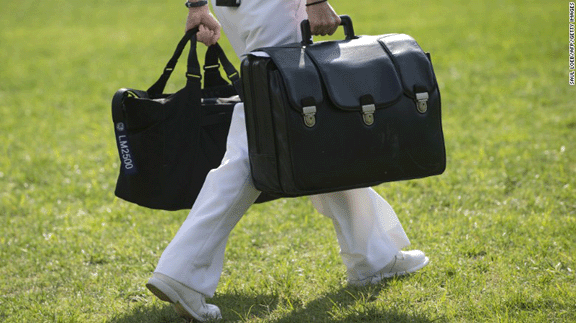 Independent 16th Jan 2021, Donald Trump will get to take the nuclear football with him when he leaves Washington DC on his final day in office – but the codes will be deactivated at the stroke of noon.
Mr Trump will be accompanied by the 45-pound briefcase when he flies to Florida on the morning of Joe Biden’s inauguration, as he is reportedly expected to do. But the nuclear codes that accompany it will stop working as soon as Mr Biden is sworn in as his successor 1,000 miles away on Wednesday.
The horror of Russia’s nuclear submarines and nuclear trash dumped at sea
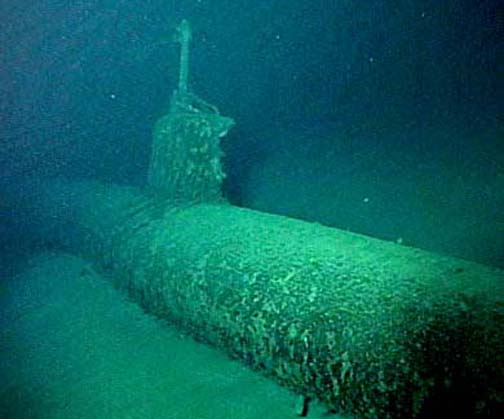
CTY Pisces – Photos of a Japanese midget submarine that was sunk off Pearl Harbor on the day of the attack. There’s a hole at the base of the conning tower where an artillery shell penetrated the hull, sinking the sub and killing the crew. Photos courtesy of Terry Kerby, Hawaii Undersea Research Laboratory. August 2003.
For decades, the Soviet Union used the desolate Kara Sea as their dumping grounds for nuclear waste. Thousands of tons of nuclear material, equal to nearly six and a half times the radiation released at Hiroshima, went into the ocean. The underwater nuclear junkyard includes at least 14 unwanted reactors and an entire crippled submarine that the Soviets deemed proper decommissioning too dangerous and expensive. Today, this corner-cutting haunts the Russians. A rotting submarine reactor fed by an endless supply of ocean water might re-achieve criticality, belching out a boiling cloud of radioactivity that could infect local seafood populations, spoil bountiful fishing grounds, and contaminate a local oil-exploration frontier.
“Breach of protective barriers and the detection and spread of radionuclides in seawater could lead to fishing restrictions,” says Andrey Zolotkov, director of Bellona-Murmansk, an international non-profit environmental organization based in Norway. “In addition, this could seriously damage plans for the development of the Northern Sea Route—ship owners will refuse to sail along it.”
News outlets have found more dire terms to interpret the issue. The BBC raised concerns of a “nuclear chain reaction” in 2013, while The Guardian described the situation as “an environmental disaster waiting to happen.” Nearly everyone agrees that the Kara is on the verge of an uncontrolled nuclear event, but retrieving a string of long-lost nuclear time bombs is proving to be a daunting challenge.
Nuclear submarines have a short lifespan considering their sheer expense and complexity. After roughly 20-30 years, degradation coupled with leaps in technology render old nuclear subs obsolete. First, decades of accumulated corrosion and stress limit the safe-dive depth of veteran boats. Sound-isolation mounts degrade, bearings wear down, and rotating components of machinery fall out of balance, leading to a louder noise signature that can be more easily tracked by the enemy. …….
The Soviet Union and Russia built the world’s largest nuclear-powered navy in the second half of the 20th century, crafting more atom-powered subs than all other nations combined. At its military height in the mid-1990s, Russia boasted 245 nuclear-powered subs, 180 of which were equipped with dual reactors and 91 of which sailed with a dozen or more long-range ballistic missiles tipped with nuclear warheads………
A majority of the Soviet’s nuclear submarine classes operated from the Arctic-based Northern Fleet, headquartered in the northwestern port city of Murmansk. The Northern Fleet bases are roughly 900 kilometers west of the Kara Sea dumping grounds. A second, slightly smaller hub of Soviet submarine power was the Pacific Fleet, based in and around Vladivostok on Russia’s east coast above North Korea. Additional Soviet-era submarines sailed from bases in the Baltic and Black Seas.
…….. the disposal of these submarines posed more problems than previous conventional vessels. Before crews could chop the vessels apart, the subs’ reactors and associated radioactive materials had to be removed, and the Soviets didn’t always do this properly.
Mothballed nuclear submarines pose the potential for disaster even before scrapping begins. In October of 1995, 12 decommissioned Soviet subs awaited disposal in Murmansk, each with fuel cells, reactors, and nuclear waste still aboard. When the cash-strapped Russian military didn’t pay the base’s electric bills for months, the local power company shut off power to the base, leaving the line of submarines at risk of meltdown. Military staffers had to persuade plant workers to restore power by threatening them at gunpoint.
The scrapping process starts with extracting the vessel’s spent nuclear fuel from the reactor core. The danger is immediate: In 1985, an explosion during the defueling of a Victor class submarine killed 10 workers and spewed radioactive material into the air and sea. Specially trained teams must separate the reactor fuel rods from the sub’s reactor core, then seal the rods in steel casks for transport and storage (at least, they seal the rods when adequate transport and storage is available—the Soviets had just five rail cars capable of safely transporting radioactive cargo, and their storage locations varied widely in size and suitability). Workers at the shipyard then remove salvageable equipment from the submarine and disassemble the vessel’s conventional and nuclear weapons systems. Crews must extract and isolate the nuclear warheads from the weapons before digging deeper into the launch compartment to scrap the missiles’ fuel systems and engines.
When it is time to dispose of the vessel’s reactors, crews cut vertical slices into the hull of the submarine and chop out the single or double reactor compartment along with an additional compartment fore and aft in a single huge cylinder-shaped chunk. Once sealed, the cylinder can float on its own for several months, even years, before it is lifted onto a barge and sent to a long-term storage facility.
But during the Cold War, nuclear storage in Soviet Russia usually meant a deep-sea dump job. At least 14 reactors from bygone vessels of the Northern Fleet were discarded into the Kara Sea. Sometimes, the Soviets skipped the de-fueling step beforehand, ditching the reactors with their highly radioactive fuel rods still intact.
According to the Bellona, the Northern Fleet also jettisoned 17,000 containers of hazardous nuclear material and deliberately sunk 19 vessels packed with radioactive waste, along with 735 contaminated pieces of heavy machinery. More low-level liquid waste was poured directly into the icy waters.
Another submarine is perhaps a bigger risk for a radioactive leak. K-159, a November class, suffered a radioactive discharge accident in 1965 but served until 1989. After languishing in storage for 14 years, a 2003 storm ripped K-159 from its pontoons during a transport operation, and the battered hulk plunged to the floor of the Barents Sea, killing nine crewmen. The wreck lies at a depth of around 250 meters, most likely with its fueled and unsealed reactors open to the elements.
Russia has announced plans to raise the K-27, the K-159, and four other dangerous reactor compartments discarded in the Arctic. As of March 2020, Russian authorities estimate the cost of the recovery effort will be approximately $330 million.
The first target is K-159. But lifting the sunken sub back to the surface will take a specially built recovery vessel, one that does not yet exist. Design and construction of that ship is slated to begin in 2021, to be finished by the end of 2026. Now, in order to avoid an underwater Chernobyl, the Russians are beginning a terrifying race against the relentless progression of decay. https://www.popularmechanics.com/military/navy-ships/a34976195/russias-nuclear-submarine-graveyard/
India must oppose dumping of radioactive waste into the Pacific, but IAEA and Indian govt downplay the dangers
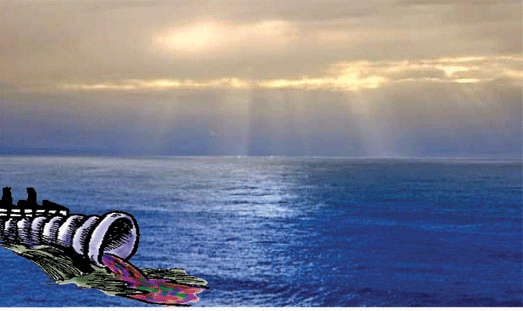 Silence on Fukushima Disaster Exposes our Approach to Nuclear Safety and Why India must Oppose Dumping of Radioactive Water Into the Pacific, BYSONALI HURIA, JANUARY 17, 2021 Next year, the operator of the tsunami-hit Fukushima nuclear plant would start releasing radioactive water into the Pacific Ocean. A number of nations are up in arms against it, but Indian authorities are not rising to the occasion to protect its most vulnerable against the impending disaster.
SONALI HURIA explains what is at stake for people and the environment.
THE new year has begun on a grim note with a toxic gas leak at the Rourkela Steel Plant in Odisha on 6 January, which claimed the lives of four contractual workers. This is the latest in a disconcerting string of industrial accidents in India over the last few years, which have remained peripheral to the mainstream media narrative.
It appears that India has learned precious little from the Bhopal gas disaster, which has ebbed from public memory even as the accident site remains contaminated and survivors continue to await an elusive justice.
Against this backdrop, as we approach the tenth anniversary of the Fukushima nuclear disaster, it may be pertinent to think of what a nuclear accident might mean for the country’s already shoddy industrial safety record and systemic inadequacies, especially as the Fukushima disaster now poses a formidable new challenge to which India’s response, so far, has been active denial and muted silence.
“Fukushima” has become synonymous with the devastating and ongoing nuclear accident that occurred off the eastern Pacific coast of Japan in 2011.
Japan’s nuclear regulator, the Nuclear Regulation Authority (NRA) reportedly stated as recently as in December 2020 that the reactor buildings of the Fukushima Daiichi nuclear power plant continue to record “lethal” levels of radiation, thus posing a “serious challenge” to decommissioning efforts.
DISPOSING CONTAMINATED WATER
Among the many vexing problems precipitated by the accident is the disposal of the contaminated water from the beleaguered nuclear plant.
The acerbic debate within Japan on the disposal of this radioactive water came to a head recently when the Japanese government made it clear that beginning 2022, the operator of the Fukushima plant, the Tokyo Electric Power Company (TEPCO), would start releasing radioactive water from the wrecked plant into the Pacific Ocean—a task envisaged to be accomplished over the next several years as part of larger decommissioning efforts.
Since the devastating earthquake and tsunami off the Pacific coast of Tōhoku triggered a meltdown at the three units of the nuclear plant in March 2011, cleanup efforts have required, among other things, the pumping of tens of thousands of tons of water to cool the smouldering reactor fuel cores.
However, this has led to a steady on-site accumulation of heavily contaminated water—as of 2020, TEPCO has nearly 1.23 million metric tons (and counting) of highly radioactive wastewater on its hands that has been stored in nearly 1,044 tanks…………
LOOMING DANGERS
Greenpeace International has warned that carbon-14, which TEPCO affirmed is present in the contaminated tank-water for the first time in August 2020, has the “potential to damage human DNA”.
Tokyo’s decision has understandably ruffled feathers globally.
The Republic of Korea, China, and Chile, state parties to the London Convention on the Prevention of Marine Pollution by Dumping of Wastes and Other Matter, have repeatedly called for international deliberation and resolution of the problem, even as South Korea, which has banned all seafood imports from the region since the accident, has formally called upon the International Atomic Energy Agency (IAEA) to dissuade Japan. While the North Korean state media described the proposed discharge as a “criminal act”, a coalition of environmental and citizens’ groups from Taiwan petitioned the Japanese government in November 2020, expressing their objections.
The IAEA has confined itself to assisting the Japanese government rather than question or evaluates the proposed water disposal plan. It has demonstrated yet again that it is not the international nuclear watchdog many believe it to be.
UN Special Rapporteurs on hazardous wastes, right to food, rights to assembly and association, and the rights of indigenous people have also urged Japan not to use the present pandemic as a “sleight of hand” to release the radioactive water without any credible consultation within and outside Japan regarding a decision that will have a long-lasting impact on the environment and human health.
DANGERS FOR INDIA
The stakes for India cannot be overstated either.
In an unanticipated moment of candidness, nuclear health scientists from within the Indian establishment—the Defence Research Development Organisation (DRDO) and the All India Institute of Medical Sciences (AIIMS)—have warned that the release of the Fukushima wastewater containing “radioactive isotopes such as cesium, tritium, cobalt and carbon-12” will prove disastrous for human and aquatic health across the world’s coastal belts by crippling fishing economies and causing a “spectrum of diseases, including cancer”……..
the Indian government, in particular, its nuclear establishment, has consistently downplayed the risks associated with nuclear energy to public and environmental health, even labelling public concerns surrounding radiation “myths”, and whose first reactions to the Fukushima nuclear accident were of impudent denial.
… EAS Sarma, former Union Power Secretary to the Government of India, has exhorted the Department of Atomic Energy (DAE) to apprise the Prime Minister’s Office of the “far-reaching implications” of the proposed release of the radioactive Fukushima water, and for India to take a firm stand at the IAEA against this unilateral decision of the Japanese government.
TEPCO has reportedly already been draining hundreds of tonnes of contaminated water into the Pacific Ocean. Noting with dismay the abject silence of the DAE and India’s Environment Ministry in this regard, Sarma identifies the lack of a robust nuclear regulatory body or mechanism in India as responsible for this lack lustre approach to an issue of great import for the health of the people of the country and the larger marine ecology of the region.
Domestically, it is time to pause and think whether India is equipped to handle an accident of the scale of Fukushima—a nuclear Bhopal?
Sarma’s letter to the Cabinet Secretary also underscores the need for the government to recognise the magnitude of the devastation wrought by nuclear accidents, the inability of TEPCO to handle the disaster even a decade since its occurrence, and thus to pause its own plans “to import reactors on a large scale and enlarge nuclear power generation capacity”.
…..…DOWNPLAYING THE DANGERS
In effect, therefore, the IAEA has demonstrated yet again that it is not the international nuclear watchdog many believe it to be. In her fascinating new account of the Chernobyl nuclear accident, Manual for Survival, the environmental historian, Kate Brown, explores the IAEA’s complicity in downplaying the accident and denying radiation impacts in exposed Chernobyl children and even asserting that “radiation anxiety” stems from “irrational fears”, as nuclear technocrats across the globe are prone to doing.
In the tenth year of the ongoing Fukushima accident, therefore, it is imperative that a dialogue be initiated on the need for an effective international nuclear monitoring regime that isn’t also tasked with the responsibility of promoting nuclear energy.
Domestically, it is time to pause and think whether India is equipped to handle an accident of the scale of Fukushima—a nuclear Bhopal?
At the very least, it is time India’s government demonstrates that it is willing and able to deploy its purportedly surging international stature and influence under Prime Minister Narendra Modi to protect the country’s environment and the health of its vulnerable communities against the Fukushima water release, which appears a near certainty now. https://www.theleaflet.in/silence-on-fukushima-disaster-exposes-our-approach-to-nuclear-safety-and-why-india-must-oppose-dumping-of-radioactive-water-into-the-pacific/#
Catholics welcome Treaty on Prohibition of Nuclear Weapons
 Catholic advocates welcome treaty banning nuclear weapons coming into force, Crux, Dennis SadowskiJan 17, 2021, CATHOLIC NEWS SERVICE
CLEVELAND — A Holy See-supported treaty banning the possession of nuclear weapons that is coming into force is buoying efforts by nations and nonprofit and church organizations working to abolish such armaments.
The Treaty on the Prohibition of Nuclear Weapons comes into force Jan. 22, three months after the 50th nation ratified the historic document.
Nuclear abolition supporters said the treaty puts the world’s nine nuclear powers on notice that momentum to dismantle arsenals of the world’s most destructive weapons is building.
We have an opportunity to move in a different direction now. We have to convince the nuclear states to take this seriously, to take this as an opportunity to move to a new conversation in the nuclear age,” said Marie Dennis, the Washington-based senior adviser to Pax Christi International’s secretary general.
The treaty resulted from months of negotiations at the United Nations in 2017 led by non-nuclear countries. Dennis described the effort as an example of the Catholic social teaching principle of participation.
“People around the world who live in countries that are not part of the nuclear weapons countries or under the nuclear umbrella have realized more and more clearly that the whole world would be devastated by an exchange of nuclear weapons and the people of the world decided to do something about it,” she explained.
The Holy See was a key participant in the process that led to drafting the treaty, providing encouragement and advice to negotiators, said Jesuit Father Drew Christiansen, a nuclear weapons expert who is professor of ethics and global development at Georgetown University.
He credited Pope Francis for the Vatican’s work on the pact. “I think it’s part of Francis’s agenda to get this out there,” he said. “As Francis begins to elaborate more about this teaching on arms and warfare, he’ll speak out more on this issue.”
The Holy See was the among the first to ratify the treaty, which was approved by 122 U.N. members. Netherlands was the only country to vote against it while Singapore abstained.
The nuclear nations and those under the U.S. nuclear umbrella opposed the measure and played little if any role in negotiations. In addition to the U.S., the countries possessing nuclear weapons are Russia, China, United Kingdom, France, Israel, India, Pakistan and North Korea.
Data from various sources, including the U.S. Department of State and the Stockholm International Peace Research Institute, show that the nine countries hold an estimated 13,440 nuclear weapons. …….. https://cruxnow.com/church-in-the-usa/2021/01/catholic-advocates-welcome-treaty-banning-nuclear-weapons-coming-into-force/
Why Won’t Canada Back a Nuclear Weapons Ban?

Government uses NATO as an excuse not to sign treaty
Why Won’t Canada Back a Nuclear Weapons Ban? — Beyond Nuclear International
Why Won’t Canada Back a Nuclear Weapons Ban?The UN nuclear ban treaty becomes international law on January 22, but the Trudeau government won’t sign, January 17, 2021 by beyondnuclearinternational By Bianca Mugyenyi 17 Jan 21, In a win for the long-term survival of humanity, the United Nations’ treaty banning nuclear weapons was ratified by the 50th country, Honduras, allowing the pact to pass.But any celebration in Canada should be muted by embarrassment at our government’s indifference to the threat nukes pose to humankind.
The Treaty on the Prohibition of Nuclear Weapons was negotiated at a 2017 UN conference, creating a legally binding agreement that would ban nuclear weapons and lead toward their total elimination.
Rather than showing support for this important meeting, Canada was in a minority of countries that voted against even holding this conference at a General Assembly vote in autumn 2016. (More than 120 countries were in favour of holding the conference; just 38 were opposed.)
Additionally, Prime Minister Justin Trudeau refused to send a representative to the 2017 conference, where two-thirds of the world’s countries were represented.
Trudeau was dismissive of the conference: “There can be all sorts of people talking about nuclear disarmament, but if they do not actually have nuclear arms, it is sort of useless to have them around, talking.”
Around the same time, Trudeau made no effort to congratulate Canadian activist Setsuko Thurlow, a survivor of the atomic bombing of Hiroshima, who co-accepted the 2017 Nobel Peace Prize on behalf of the International Campaign to Abolish Nuclear Weapons.
The Trudeau government has failed to join the 86 countries that have already signed the nuclear weapons treaty, described by UN Secretary-General Antonio Guterres as “a very welcome initiative.”
Mexico and New Zealand, an ally with Canada in the Five Eyes security network, as well as European Union members Ireland and Austria have ratified the treaty. With Honduras becoming the 50th nation to ratify it, the treaty will enter into force on January 22, 2021.
In a last-ditch attempt to block the accord from reaching the required 50 member states, the Trump administration delivered a letter calling on countries that had signed to withdraw their support.
According to an Associated Press report, the letter claimed U.S. NATO allies — like Canada — “stand unified in our opposition to the potential repercussions” of the treaty…….
Canada’s defence policy, “Strong, Secure, Engaged,” makes two dozen references to Canada’s commitment to the nuclear-armed NATO alliance. According to NATO, “nuclear weapons are a core component of the Alliance’s overall capabilities.” Canada contributes personnel and funds to NATO’s Nuclear Policy Directorate and Nuclear Planning Group.
The Liberal government says it cannot ratify the UN nuclear ban treaty because of Canada’s membership in NATO.
Rather than offer this excuse to avoid signing a treaty opposed by powerful allies and Canada’s military, it could instead be used as a moment to consider re-evaluating Canada’s involvement in NATO.
The Canadian Foreign Policy Institute initiated an open letter to Trudeau after Canada’s second consecutive defeat for a seat on the UN Security Council.
The letter asked: “Should Canada continue to be part of NATO or instead pursue non-military paths to peace in the world?” It has been signed by Greenpeace Canada, 350.org, Idle No More, Vancouver and District Labour Council and 50 other groups, as well as four sitting MPs and David Suzuki, Naomi Klein, Stephen Lewis and more than 2,000 others.
The NDP, Greens and Bloc Québécois have all called for Canada to adopt the UN nuclear ban treaty. Thousands of Canadians have also signed petitions calling on the government to join the initiative.
Nuclear weapons will soon be banned under international law. The government needs to be challenged to get on the right side of history and sign the Treaty on the Prohibition of Nuclear Weapons.
Only then can Canadians proudly celebrate the critical effort under way to protect the future of humanity.
Bianca Mugyenyi is an author and former co-executive director of The Leap. She currently directs the Canadian Foreign Policy Institute.https://beyondnuclearinternational.org/2021/01/17/why-wont-canada-back-a-nuclear-weapons-ban/
While European organisations discuss nuclear wastes, UK unveils plan for Cumbria waste burial
 David Lowry’s Blog 15th Jan 2021, I have spent the past few days engaged in an excellent webinar on nuclear waste and information disclosure, titled: Aarhus convention and nuclear (acn) round table on radioactive waste management (rwm), online 13-15 January 2021 The promotional blurb reads “The European Commission (DG ENER) and Nuclear Transparency Watch (NTW) have organized an “Aarhus Convention and Nuclear” Roundtable [with] the objective to gather concerned stakeholders by Radioactive Waste Management (operators, regulators and institutional representatives, experts and researchers, NGOs, civil society representatives) in order to discuss concrete implementation of the Aarhus Convention principles (public information and participation)”
As this three day forum was underway across the European a digital airwaves, the UK nuclear waste management implementer- Radioactive Waste Management Limited and Nuclear Decommissioning Authority (NDA) unveiled a new atomic aspirant to bury nuclear waste under their land in Cumbria, near Sellafield.
http://drdavidlowry.blogspot.com/2021/01/why-truth-matters-including-on-nuclear.html |
|
France says Iran is building nuclear weapons capacity, urgent to revive 2015 deal
|
France says Iran is building nuclear weapons capacity, urgent to revive 2015 deal, ABC, 17 Jan 21, Iran is in the process of building up its nuclear weapons capacity and it is urgent that Tehran and Washington return to a 2015 nuclear agreement, France’s Foreign Minister Jean-Yves Le Drian has said.
Key points:
Iran has been accelerating its breaches of the nuclear deal and earlier this month started pressing ahead with plans to enrich uranium to 20 per cent fissile strength at its underground Fordow nuclear plant. That is the level Tehran achieved before striking the deal with world powers to contain its disputed nuclear ambitions. The Islamic Republic’s breaches of the nuclear agreement since President Donald Trump withdrew the United States in 2018 and subsequently imposed sanctions on Tehran may complicate efforts by president-elect Joe Biden, who takes office on January 20, to rejoin the pact………. https://www.abc.net.au/news/2021-01-17/french-minister-says-iran-is-building-nuclear-weapons-capacity/13064994 |
|
1 This Month

Read the Public Inquiry Report, the Commissioners’ report, Surrendering Australia: The AUKUS Deception is available to download for free at aukuspublicinquiry.com. Or just watch the replay of the National Press Club Luncheon.


19 November – Webinar – The Reality of Reprocessing
Time: 11:00 AM Pacific Time (US & Canada) / 2:00 PM Eastern / 7:00 PM UK / 8:00 PM CET
Register for the Zoom Event Here



Shut down the radiation-damaged Heysham nuclear reactors now
To see nuclear-related stories in greater depth and intensity – go to https://nuclearinformation.wordpress.com

Say No to NASA’s Reckless Nuclear Reactor on the Moon
Say No to NASA’s Reckless Nuclear Reactor on the Moon
-
Archives
- November 2026 (109)
- October 2026 (302)
- September 2026 (339)
- August 2026 (330)
- July 2026 (355)
- June 2026 (287)
- May 2026 (306)
- April 2026 (356)
- March 2026 (251)
- February 2026 (267)
- January 2026 (308)
- December 2025 (358)
-
Categories
- 1
- 1 NUCLEAR ISSUES
- business and costs
- climate change
- culture and arts
- ENERGY
- environment
- health
- history
- indigenous issues
- Legal
- marketing of nuclear
- media
- opposition to nuclear
- PERSONAL STORIES
- politics
- politics international
- Religion and ethics
- safety
- secrets,lies and civil liberties
- spinbuster
- technology
- Uranium
- wastes
- weapons and war
- Women
- 2 WORLD
- ACTION
- AFRICA
- Atrocities
- AUSTRALIA
- Christina's notes
- Christina's themes
- culture and arts
- Events
- Fuk 2022
- Fuk 2023
- Fukushima 2017
- Fukushima 2018
- fukushima 2019
- Fukushima 2020
- Fukushima 2021
- general
- global warming
- Humour (God we need it)
- Nuclear
- RARE EARTHS
- Reference
- resources – print
- Resources -audiovicual
- Weekly Newsletter
- World
- World Nuclear
- YouTube
-
RSS
Entries RSS
Comments RSS

