Lancaster City Council will call on government to join nuclear weapons ban
City councillors have voted in favour of writing to the government to urge it to sign up to the United Nation’s Treaty on Prohibition of Nuclear Weapons, which came into force last month. Lancaster Guardian, By Nick Lakin, Monday, 15th February 2021, The motion was brought to council by Green Councillor Mandy Bannon, who represents Marsh ward.
South Lakeland and Lancaster District Campaign for Nuclear Disarmament (CND), has praised the council for its decision.
The motion brought to council was in response to a global campaign organised by the International Campaign for the Abolition of Nuclear Weapons (ICAN) which was awarded the Nobel Peace Prize in 2017………
Regulatory Harmonization: An Upcoming Hurdle for SMRs?
Nuclear developers may have problems selling small modular reactors abroad. GreenTech Media JASON DEIGN FEBRUARY 15, 2021 The nuclear industry is betting on small modular reactors (SMRs) to regain its competitive edge in markets such as the U.S. and Canada. Proponents say the reactors can be built cheaply once multiple units start being ordered and can even lead to lucrative export opportunities.There’s just one problem. If you build an SMR in the U.S., for example, you can’t sell it in Canada until Canadian regulators have approved the design. And the same goes for every other nuclear market in the world. Even nuclear insiders recognize that this could be a big issue for SMRs.
Regulatory harmonization has a lot to do with whether or not SMRs are going to be able to achieve cost competitiveness,” stated John Gorman, president and CEO of the Canadian Nuclear Association, in an interview.
… national regulations cover everything from food safety to vehicle emissions.
But the hyper-safety-conscious nuclear industry takes regulation to a whole new level. The SMR manufacturer NuScale, for example, claims to have spent more than $500 million, plus 2 million labor hours, in the process of passing its U.S. Nuclear Regulatory Commission Design Certification Application…….
National regulations are not just highly detailed but also wildly divergent. The differences between the regulatory regimes in the U.S. and the U.K., for example, reflect not just different jurisdictions but entirely different safety philosophies.
Iranian Intelligence Minister Mahmoud Alavi says his officers had “recognized and foiled” several alleged attempts by Israel to eliminate Iranian officials in the wake of last year’s hit on the country’s nuclear mastermind – who he says was killed by a disgruntled co-worker, not Israel.
Iranian Intelligence Minister Mahmoud Alavi claimed Sunday that Israel had planned to carry out “many operations” seeking to undermine the Islamic republic’s efforts to develop nuclear capabilities, saying these efforts have ” all been prevented by Iranian security.”
These efforts, he told the state-run ISNA news agency, included planned assassinations of officials in the nuclear program, which were to follow the November elimination of Mohsen Fakhrizadeh, believed to be head of the Iranian military nuclear program.
“After Fakhrizadeh was killed, the Zionists attempted to carry out additional acts of terrorism and evil in the country, including more assassinations. These attempts were recognized and foiled by Iranian intelligence,” he said.
While the ayatollahs’ regime has consistently blamed Israel for Fakhrizadeh’s death, Alavi told ISNA on Sunday that the country’s nuclear mastermind was not, in fact, killed by Israel rather “by a disgruntled co-worker.”
“The man responsible for the assassination of Mohsen Fakhrizadeh was fired from the intelligence service and left the country shortly before it [the hit] actually took place. He is now wanted by Iranian authorities,” the minister said.
He did not elaborate as to whether Iranian authorities think the suspect was working with Israel.
Intellinews 13th Feb 2021, Bulgaria’s prosecution has filed charges against former energy ministers Rumen Ovcharov and Petar Dimitrov over mismanagement that led to a loss of around BGN500mn (€250mn) related to the project to build the Belene nuclear power plant, the Anticorruption Fund NGO said in a statement on February 12.
There was no official statement from the prosecution, but the NGO has published a photo of the documents. The accusations against the two former ministers and two former executive directors of the state-owned National Electricity Company (NEC), Mardik Papazyan and Lyubomir Velkov, were raised back in 2016 when the prosecution launched an investigation. It
claims the two former ministers failed to exercise sufficient control over the executive directors of NEK when they allowed them to sign a deal with Atomstroyexport on the nuclear power plant at Belene.
Nor was the potential for cracked or corroded canisters to leak radiation studied
proposal only addresses a new destination for the high-level nuclear waste – not the removal and transport of the fuel storage canisters from nuclear power plants
Even transport casks with canisters that are not damaged will release radiation as they are transported from nuclear power plants to the storage facility, exposing populations along the transport routes in a majority of states and tribal communities in New Mexico to repeated doses of radiation.
If the Nuclear Regulatory Commission’s (NRC) conclusion that it’s safe to move spent nuclear fuel from nuclear power plants across the country to a proposed storage facility in Lea County sounds vanilla-coated, it’s because the draft environmental impact statement for a Consolidated Interim Storage Facility submitted by Holtec International did not address how the casks containing the spent fuel would be transported to New Mexico.
It’s likely the casks would be transported primarily by rail using aging infrastructure in need of constant repair. But our rail systems were not built to support the great weight of these transport casks containing thin-wall fuel storage canisters.
Nor was the potential for cracked or corroded canisters to leak radiation studied because an earlier NRC Generic EIS for the Continued Storage of Spent Nuclear Fuel assumed damaged fuel storage canisters would be detected during an intermediary dry transfer system or a pool.
But Holtec’s proposal only addresses a new destination for the high-level nuclear waste – not the removal and transport of the fuel storage canisters from nuclear power plants to New Mexico.
Even transport casks with canisters that are not damaged will release radiation as they are transported from nuclear power plants to the storage facility, exposing populations along the transport routes in a majority of states and tribal communities in New Mexico to repeated doses of radiation.
Other issues not considered in the draft EIS were the design life of the thin-wall canisters encasing the nuclear fuel rods and faulty installation at reactor sites like San Onofre, or the self-interest of the Eddy-Lea Energy Alliance in using the land it acquired for a consolidated interim storage site.
Thin-wall canisters cannot be inspected for cracks and the fuel rods inside are not retrievable for inspection or monitoring without destroying the canister. NRC does not require continuous monitoring of the storage canisters for pressure changes or radiation leaks. The fuel rods inside the canisters could go critical, or result in an uncontrolled nuclear chain reaction, if water enters the canisters through cracks, admits both Holtec and the NRC. None of us are safe if any canister goes critical.
Yet a site-specific storage application like Holtec’s should have addressed NRC license requirements for leak testing and monitoring, as well as the quantity and type of material that will be stored at the site, such as low burnup nuclear fuel and high burnup fuel.
Irradiated nuclear fuel is safer (but not safe) stored at the reactor site rather than transported thousands of miles to New Mexico. (Image: U.S. Nuclear Regulatory Commission)
With so many deficiencies in the draft EIS, a reasonable alternative is to leave this dangerous radioactive nuclear waste at the nuclear plants that produced it in dry cask storage rather than multiply the risk by transporting thousands of containers that could be damaged across many thousands of miles and decades to southeastern New Mexico, then again to a permanent repository.
Interim storage of spent nuclear fuel at existing nuclear plant sites is already happening – there are 65 sites with operating reactors in the United States and dry cask storage is licensed at 35 of these sites in 24 states. But since the thin-wall canisters storing the fuel rods are at risk for major radioactive releases, they should be replaced with thick-walled containers that can be monitored and maintained. The storage containers should be stored away from coastal waters and flood plains in hardened buildings.
Attempting to remove this stabilized nuclear waste from where it is securely stored across hundreds or thousands of miles through our homelands and backyards to a private storage facility also raises some thorny liability issues, since the United States will then be relieved of overseeing the spent nuclear fuel in perpetuity.
The states and nuclear plants that want to send us their long-lived radioactive waste will also be off the hook, leaving New Mexico holding a dangerously toxic bag without any resources to address the gradual deterioration of man-made materials or worse, a catastrophic event. It’s a win/win, however, for Holtec International and the Eddy-Lea Energy Alliance.
Ironically, just a few years ago, the US Environmental Protection Agency had expressed opposition to mass transportation of another kind of radioactive waste. In a classic example of environmental injustice, the EPA balked at removing uranium mine waste on the Navajo Nation, because, it said, “Off-site disposal, because of the amount of waste in and around these areas, means possibly multiple years of hundreds and hundreds and hundreds of trucks going in and out of the community and driving for miles”.
The agency told the affected communities, during discussion about digging up the uranium mine waste and transporting it to a licensed repository in different states outside the Navajo Nation, that this option, also the Nation’s preference, was the most expensive. But now New Mexico is the destination for precisely the reverse, with hundreds and thousands of transports from different states coming to deposit the country’s nuclear waste site radioactive debris on Native soil.
Laura Watchempino is with the Multicultural Alliance for a Safe Environment/Pueblo of Acoma. A version of this article first appeared in the Albuquerque Journal and is republished with kind permission of the author
Consent will be key to nuclear waste storage, The Chronicle Journal, BY CARL CLUTCHEY, NORTH SHORE BUREAU, 15 Feb 21, The incoming executive in charge of overseeing site selection regarding a potential underground storage facility for spent nuclear-fuel rods says consultation with affected neighbouring communities will be paramount.The potential facility “cannot and will not go forward without the informed and willing consent of potential host communities,” Lise Morton said on Jan. 29, in a Nuclear Waste Management Organization (NWMO) news release………
One of two sites remaining in Nuclear Waste Management Organization’s search for a potential underground storage facility will permanently house three million spent nuclear-fuel rods.
One candidate site is in South Bruce in southwestern Ontario near an existing nuclear station; the other is located about 35 kilometres west of Ignace, south of Highway 17 and on the traditional lands of Wabigoon Lake First Nation.
The Nuclear Waste Management Organization wants to announce a site for its so-called deep geological repository by 2023.
Biden administration files appeal pressing for Assange extradition, Yahoo News, Sat, 13 February 2021 The administration of US President Joe Biden has appealed a British judge’s ruling against the extradition of WikiLeaks founder Julian Assange, a Justice Department official said Friday.
A brief filed late Thursday declared Washington’s desire to have Assange stand trial on espionage and hacking-related charges over WikiLeaks’ publication of hundreds of thousands of US military and diplomatic documents beginning in 2009.
The Justice Department had until Friday to register its stance on Judge Vanessa Baraitser’s January 4 ruling that Assange suffered mental health problems that would raise the risk of suicide if he were sent to the United States for trial.
“Yes, we filed an appeal and we are continuing to pursue extradition,” Justice Department spokesman Marc Raimondi told AFP.
After Baraitser’s decision, which did not question the legal grounds for the US extradition request, Donald Trump’s administration moved to appeal.
But Biden’s stance was not clear, and he was pressured by rights groups to drop the case, which raises sensitive transparency and media freedom issues.
After WikiLeaks began publishing US secrets in 2009, then-president Barack Obama, whose vice president was Biden, declined to pursue the case.
Assange said WikiLeaks was no different than other media constitutionally protected to publish such materials.
Prosecuting him, too, could mean also prosecuting powerful US news organizations for publishing similar material — legal fights the government would likely lose.
But under Trump, whose 2016 election was helped by WikiLeaks publishing Russian-stolen materials damaging to his rival Hillary Clinton — the Justice Department built a national security case against Assange.
In 2019 the native Australian was charged under the US Espionage Act and computer crimes laws with multiple counts of conspiring with and directing others, from 2009 to 2019, to illegally obtain and release US secrets……….
Assange has remained under detention by British authorities pending the appeal.
Earlier this week 24 organizations, including Human Rights Watch, Amnesty International USA and Reporters Without Borders, urged Biden to drop the case.
“Journalists at major news publications regularly speak with sources, ask for clarification or more documentation, and receive and publish documents the government considers secret,” they said in an open letter.
“In our view, such a precedent in this case could effectively criminalize these common journalistic practices.”
Assange’s fiancée Stella Moris said in a statement that Baraitser’s January decision that Assange was a high risk for suicide and that US prison facilities were not safe remained a strong reason to deny extradition.
Baraitser “was given clear advice by medical experts that ordering him to stand trial in the US would put his life at risk,” she said.
“Any assurances given by the Department of Justice about trial procedures or the prison regime that Julian might face in the US are not only irrelevant but meaningless because the US has a long history of breaking commitments to extraditing countries,” she said https://au.news.yahoo.com/biden-administration-files-appeal-assange-171637702.html
Military officials were unaware of potential danger to Pence’s ‘nuclear football’ during Capitol riot, By Barbara Starr and Caroline Kelly, CNN, February 12, 2021 Military officials overseeing the authorization process to launch nuclear weapons were unaware on January 6 that then-Vice President Mike Pence’s military aide carrying the “nuclear football” was potentially in danger as rioters got close during the violent Capitol insurrection, according to a defense official.
US Strategic Command became aware of the gravity of the incident after seeing a video played at the Senate impeachment trial Wednesday showing Pence, his Secret Service agents and a military officer carrying the briefcase with classified nuclear launch information running down a flight of stairs inside the Capitol to get to safety, the official said.
“As the rioters reached the top of the stairs, they were within 100 feet of where the vice president was sheltering with his family, and they were just feet away from one of the doors to this chamber,” Del. Stacey Plaskett, one of the impeachment managers, explained in the senate trial on Wednesday. In one video, the crowd can be heard chanting “Hang Mike Pence” as they stand in an open doorway of the Capitol.
It is not clear if other national security elements of the government such as the National Security Council or top officials at the Pentagon were aware of the gravity of Pence’s position and those of his team.
On January 6 the military officer was able to maintain control of the backup “football” at all times and the President was inside the White House, the official said. Even if the rioters had gotten hold of it, they could not have used any of the information because of the security controls on the system, the official said.
Since they never lost control of the “football” and then-President Donald Trump was safe, they didn’t have to deactivate Pence’s system. But the incident raises the question of whether the “football’s” status was sufficiently accounted for at all times.
“The risk associated with the insurrectionists getting their hands on Pence’s football wasn’t that they could have initiated an unauthorized launch. But had they stolen the football and acquired its contents, which include pre-planned nuclear strike options, they could have shared the contents with the world,” Kingston Reif, an expert on nuclear weapons policy at the nonpartisan Arms Control Association, told CNN.
“Such an outcome would have been a security breach of almost incomprehensible proportions,” Reif added. “And it ought to raise further questions about the rationale for the anachronism that is the football.”
‘HELL’ AT SEA Sailors on Royal Navy nuclear submarine come through ‘patrol from hell’ after Covid outbreak at sea, The Sun, Jerome Starkey, 12 Feb 2021,
SAILORS on a nuclear sub have come through the patrol from hell after a Covid outbreak at sea.
A source said: “Imagine being cooped up underwater and breathing the same air when a killer virus is on the loose. It really was the patrol from hell.”
Strong Earthquake in Japan 10 years after the devastating tsunami in 2011
7.3 strong, the earthquake reports little damage
A leak in a nuclear plant and widespread power outage are initial concerns
The 7.3 magnitude quake which hit near Fukushima on Saturday night 11.04 pm local time hit off of Fukushima just weeks before the 10th anniversary of a quake on March 11, 2011 that devastated northeast Japan…………
, most concerning are reports of a leak at Fukushima Daini Nuclear Power plant, according to public broadcaster NHK – though this has been denied by the facility owners.
Pool water used for storing spent nuclear fuel may have leaked and contaminated the surrounding area, the outlet said.
An earthquake of 7.1 degrees on the Ritcher scale shook eastern Japan that Saturday (02/13/2021) and was strongly felt in Tokyo, without the Japanese authorities activating the tsunami warning for the moment.
Highest seismic activity before an earthquake occurs, are zero. The radioactivity contained in the pools of water that accumulate is a minor problem within this frame. We also remember that Japan’s nuclear program is a consequence of the unconditional surrender imposed by the U.S. after the Second War, to have control in the fissile material zone and lay its largest base on the island of Okinawa.
It was not an accident.
It’s not an earthquake fault.
It was the deliberate action of a conquest strategy, which made Japan a time bomb for all humanity.
Powerful magnitude 7.3 earthquake jolts Fukushima area, Japan Times 14 Feb 21, A powerful magnitude 7.3 earthquake struck late Saturday off the coast of Tohoku, leaving at least 50 people injured and knocking multiple power plants offline.
The quake, which measured a strong 6 on the Japanese seismic intensity scale — the second-highest level — jolted Miyagi and Fukushima prefectures in the Tohoku region. No tsunami warning was issued.
The injuries were reported in Miyagi and Fukushima prefectures, but it was not immediately clear if anyone was seriously hurt.
Nationwide, at least 950,000 homes were without power as of midnight, top government spokesman Katsunobu Kato said at a news conference. Kato later said that multiple power plants in the nation were offline.
A government source said the power outage situation was expected to improve through the early hours of Sunday but that more time would be needed in the Tohoku region.
The quake, which was also felt in Tokyo, where it registered a 4 on the Japanese scale, struck at around 11:07 p.m., according to the Meteorological Agency. The epicenter was off the coast of Fukushima, about 220 kilometers (135 miles) north of Tokyo. Its focus was estimated to be at a depth of about 55 kilometers.
At a news conference early Sunday morning, a Meteorological Agency official said aftershocks of up to a strong 6 on the Japanese scale could occur for at least a week. The official said Saturday’s quake was believed to be an aftershock of the Great East Japan Earthquake that struck the same region on March 11, 2011.
“Because (the 2011 quake) was an enormous one with a magnitude of 9.0, it’s not surprising to have an aftershock of this scale 10 years later,” said Kenji Satake, a professor at the University of Tokyo’s Earthquake Research Institute.
The quake registered a strong 6 in the southern part of Miyagi, and in the Nakadori central and Hamadori coastal regions of Fukushima, the agency said…….
No abnormalities have been found at the Fukushima Nos. 1 and 2 nuclear power plants, according to Tokyo Electric Power. The same was true for Japan Atomic Power Co.’s inactive Tokai No. 2 nuclear power plant in the village of Tokai in Ibaraki Prefecture and Tohoku Electric Power Co.’s Onagawa nuclear plant in Miyagi Prefecture, according to their operators……….
Prime Minister Yoshihide Suga immediately directed government agencies to assess damage, rescue any potential victims, work with municipalities and provide necessary information about any evacuation plans and damage as soon as possible. The government was setting up a task force to examine the quake.
Defense Minister Nobuo Kishi directed the Self-Defense Forces to gather information on the scope of the damage and be prepared to respond immediately.
The quake, which comes less than a month before the 10th anniversary of the Great East Japan Earthquake, registered a 4 on the Japanese scale as far north as Aomori Prefecture and as far west as Shizuoka Prefecture. It was the strongest quake in the region since April 7 that year, the meteorology agency said.
Big money, nuclear subsidies, and systemic corruption, Bulletin of the Atomic Scientists, By Cassandra Jeffery, M. V. Ramana | February 12, 2021
The “largest bribery, money-laundering scheme ever perpetrated against the people and the state of Ohio” came to light during an unexpected press conference in July 2020 in Columbus. Speaking haltingly and carefully, US Attorney for the Southern District of Ohio David DeVillers announced “the arrest of Larry Householder, Speaker of the House of the state of Ohio and four other defendants for racketeering. The conspiracy was to pass and maintain a $1.5 billion bailout in return for $61 million in dark money.”
Unravelling an intricate web of alleged illegal activities used to launder money, DeVillers broke down the complicated modus operandi of “Company A.” With a gentle smile on his face, he said, “everyone in this room knows who Company A is, but I will not be mentioning the name of Company A because of our regulations and rules. They have not, and no one from that company has as of yet, been charged”.
Company A is FirstEnergy Solutions, a fact most Ohians had been aware of long before the July 2020 press conference. FirstEnergy, now called Energy Harbour, is one of Ohio’s largest utility corporations. For years, the firm lobbied to get a subsidy to continue operating its unprofitable nuclear plants and maintain its revenue flow. When lobbying efforts failed to produce subsidies, it resorted to bribery to gain legislative support for House Bill 6, 2019 legislation that forces state consumers to pay into something called “the Ohio Clean Air Fund.” The green language is a smoke screen for the real purpose: to siphon nearly $150 million annually to FirstEnergy to keep its Perry and Davis-Besse nuclear power plants and two coal-fired power plants operating, while simultaneously gutting Ohio’s renewable energy standards. Also gone were the state’s energy efficiency programs, which had saved consumers and corporations millions of dollars. When citizens tried to organize a referendum to repeal the bill, FirstEnergy indulged in various dirty tactics to thwart this democratic opposition.
Ohio is not alone in its nuclear energy corruption. Also in July 2020, Commonwealth Edison (ComEd), a subsidiary of Exelon, was charged with bribery to “Public Official A” in Illinois. Though not named, the filing makes it clear that “Public Official A” is Illinois House Speaker Michael Madigan, who has denied wrongdoing. ComEd has agreed to pay a $200 million fine to resolve this case. Exelon also finds itself at the centre of another ongoing investigation by the United States Securities and Exchange Commission. The focus of the investigation is reportedly Anne Pramaggiore, a former Exelon CEO who stepped down from the company and from his post chair of the Federal Reserve Bank of Chicago. As in Ohio, the corruption charges relate to lobbying for state subsidies and special treatment of nuclear power plants.
Three other states—New Jersey, Connecticut, and New York—have implemented similar subsidies (although, to date, no allegations of wrongdoing related to them have been made public). Changes in the economics of electricity markets are threatening the profitability of nuclear power plants, a shifting reality driving a demand for these financial bailouts. As the New Jersey-based energy company Public Service Enterprise Group (PSEG) explained in October 2020, across the nation “nuclear plants continue to struggle economically to survive. Since 2018, three nuclear plants have closed in the eastern US, all for economic reasons, and the impact has had a ripple effect.”
Changing economics of electricity generation. These “economic reasons” have to do with an ongoing massive transformation of the energy sector. Over the last decade, the cost of renewables like solar and wind have dropped substantially; these renewables can generate electricity at much lower costs than fossil fuels and, especially, nuclear power. In the United States, unsubsidized wind power costs fell by 71 percent between 2009 and 2020, whereas unsubsidized utility scale solar energy costs declined by 90 percent during the same period. Nuclear energy costs increased by 33 percent between 2009 and 2020. The International Energy Agency has dubbed solar energy “the new king of electricity” and foresees it dominating future deployment in the electricity sector for decades.
The major beneficiaries of the subsidies for nuclear plants are large corporations: PSEG in New Jersey and Dominion in Connecticut, besides Exelon and FirstEnergy. These, and other electrical utility companies in the United States, have historically invested primarily in nuclear reactors and fossil fuel plants. Thanks to the changing economics of electricity, these companies are finding it harder to maintain their profits while operating the older power plants that are now more expensive as sources of electricity.
These companies and various associated organizations have engaged in extensive lobbying and large-scale propaganda campaigns to get governments pass legislation that makes consumers pay more for the electricity they use. In that sense, what has resulted would be better described as corporate welfare than as subsidies. The subsidies have improved these companies’ financial situation, which in turn contributes to their clout in state and national policy making and their ability to fund advocacy efforts—and even to pay politicians tidy sums of money. The larger significance of the political power these large utilities have amassed is their ability to block transition to a fully renewable and more environmentally sustainable energy system.
Financial subsidies. Subsidies take different forms in different states. In New York and Illinois, utility companies are required to purchase a specific amount of zero-emission credits from authorized nuclear generating stations, all of which are owned and operated by Exelon Corporation. Purchasing contracts in both states will be in effect for 10 to 12 years, and utility companies are mandated to tack on the cost to consumer bills. Over in New Jersey, “each electric public utility” is required to purchase “Nuclear Diversity Certificates” from nuclear power plants, with consumers paying for these programs through higher utility bills.
The deal that Dominion Energy struck in Connecticut was different, taking the form of a contract that requires the state’s two electric distribution utilities to purchase about 50 percent of the electricity output of Dominion’s Millstone nuclear generating plant for 10 years. Millstone houses two operational nuclear reactors. In all of these cases, the annual financial benefits to these large corporations run in to the hundreds of millions of dollars.
The modus operandi was developed by multiple stakeholders and publicly released in 2016 in the form of a toolkit by the American Nuclear Society (ANS). Produced by a special committee consisting of senior nuclear officials, the toolkit outlined “a variety of policy pathways to support the current nuclear fleet and prevent early retirement.” The states mentioned above have implemented polices that incorporate one or more of the strategies outlined in the ANS toolkit, including amalgamations of low-carbon portfolio standards and mandated purchase of nuclear energy. The toolkit even went so far as to suggest that state government entities could acquire nuclear power plants or suspend collecting taxes, but these suggestions have not been implemented so far.
Building political support. While the American Nuclear Society led the policy-development charge, the Nuclear Energy Institute (NEI)—the nuclear industry’s lobbying arm—reinforced the advocacy message on the ground. The NEI’s 2017 report outlined specific plans and efforts instituted around the same time as many of these nuclear bailouts were pushed through state legislatures. Substantial resources were funnelled toward lobbying efforts aimed at key political and public actors. NEI’s deliberate intention, as outlined in the 2017 report, was to build political support to “avoid placing additional financial burden on US nuclear plants.”
Large-scale media dissemination, educational campaigns, relationship-building with regulatory bodies, think tanks, and policy institutions, and direct political lobbying are some of the tactics outlined in the report. Not all of the tactics aimed at subsidies; some were aimed at lowering expenses for nuclear companies by finding ways to lessen their environmental obligations. For example, the NEI managed to terminate annual fees charged to nuclear generating plants for hazardous material cleanup, which made taxpayers liable for these costs. The NEI took full credit for this shift: “After targeting the House and Senate Appropriations Committees, NEI successfully prevented reimplementation of a $200 million annual fee placed on the industry.”
The NEI also tried to influence the appointment of officials to oversight bodies, including the Nuclear Regulatory Commission (NRC), declaring that it “shared names of potential candidates with the Trump administration and worked with member companies to urge Congress to communicate with the White House the need to nominate and confirm commissioners.” The NRC is the agency tasked with overseeing safety, and in 2017, the NEI proudly announced that it had “worked with the House Appropriations Committee to again reduce the NRC’s budget.”
The power game. Many energy companies are actively involved in local or state-level lobbying. In recent years, Illinois has been a site of intense lobbying by Exelon and its subsidiary, Commonwealth Edison (ComEd), primarily to get more and more subsidies from the state. “At least two dozen former Illinois state lawmakers have lobbied on behalf of ComEd or Exelon since 2000,” according to Illinois Policy, an independent public policy organization. Exelon’s hold on Illinois decision-making has been characterized by David Kraft of the Nuclear Energy Information Service as “nuclear blackmail,” a result of politics that “forced environmentalists wanting to see new legislation pass that would expand renewables, into a reluctant and grudging alliance with Exelon, but on Exelon’s terms.”
The process works as follows. Every so often, Exelon or ComEd would declare that one or more of their nuclear plants are no longer profitable and threaten to shut the plants down within a year. The threats have tended to be successful; lobbyists can argue, with some truth on their side, that a shutdown will lead to job losses and a cut in tax revenue, also leaving Illinois with an energy shortage that may increase reliance on carbon-based sources.
Money begets money. The effects of enacting laws that favor nuclear energy firms are clear from the financial status of these corporations. Exelon share prices increased from $34.63 on April 1, 2017 to a high of $50.95 exactly two years later, while Dominion’s stock price grew from $64.19 on May 1, 2018 to $83.70, as of November 6, 2020. Similar increases have been recorded by FirstEnergy and PSEG.
Apart from stock owners, the other major beneficiaries from the utility business are, of course, executives in these companies. CEOs like Dominion’s Thomas Farrell and Exelon’s Christopher Crane are among the highest paid executives in the electrical generation and utility industry………..
Dealing with corruption, legal and illegal. The crimes that people like Larry Householder and Michael Madigan are accused of committing are shameful; they are, however, just examples of the apparent systemic corruption that seems to permeate the nuclear industry.
While the actions taken against these individuals have captured headlines, the picture painted in the media still misses the mark on less egregious, everyday forms of political action. Lobbying by deep-pocketed industries and other efforts to capture regulators are pernicious but often go unremarked, in part because under the rules that govern politics in the United States, such actions are often legal. Addressing these problems with the urgency they require will necessarily involve confronting the economic and political system that privileges profits and capital over people and the environment.https://thebulletin.org/2021/02/big-money-nuclear-subsidies-and-systemic-corruption/
How Close Did the Capitol Rioters Get to the Nuclear “Football”?
The video of Mike Pence shown during the impeachment revealed something startling about the nuclear chain of command. Slate, BY FRED KAPLAN, FEB 11, 2021 Among the many startling videos shown at Wednesday’s impeachment trial documenting the Jan. 6 insurrection at the Capitol, there was one clip that was so brief, subtle, and beside the immediate point that the House managers didn’t highlight it—but it was nevertheless hugely enlightening.
It revealed that, like the president, the vice president is routinely escorted by a military aide who carries a satchel containing the codes that allow him to launch a nuclear attack.The pertinent clip shows Vice President Mike Pence and his family being rushed out of the Capitol to escape the rioters, who, it turns out, were determined to kill him for certifying the Electoral College votes and thus betraying Donald Trump. Following Pence was an Air Force officer carrying two bags, one of which looked a lot like the nuclear satchel, also known as the Football or the Black Bag…………..
During some administrations, a military aide with a Football accompanied the vice president only on out-of-town trips. But a former White House official told me that a military aide with a satchel was always close to Joe Biden when he was Barack Obama’s vice president. Presumably (though nobody has told me this), a military aide carries a satchel close to Kamala Harris too……………
As for the prospect of a rogue veep, there’s probably nothing to worry about. It’s worth noting what’s in the satchel. Contrary to popular culture, there is no “button” to push, nor is there an indented surface that matches the president’s (or vice president’s) palm. What’s actually in the satchel—which is said to weigh 45 pounds—is a card (sometimes called the “biscuit”) citing phone numbers to call and a passcode that authenticates the identity of the caller, some encrypted communication gear to make the call, and a book describing all of the preapproved nuclear attack options and how the president would go about ordering each one. This book used to be a rather heavy tome called the SIOP Execution Handbook (the SIOP, standing for Single Integrated Operational Plan, is the nuclear war plan) or, at various times, the Gold Book or the Black Book. When Carter first leafed through the book, he told the officers who supplied it, “I’m pretty smart, and I don’t understand any of this.” So the operations division of the Pentagon’s Joint Staff condensed the complicated book into a stack of laminated cards (“like a menu at Wendy’s,” as one officer described them) inscribed in very clear language.
To launch a nuclear attack, the president (or the vice president) would transmit the coded message to a one-star general and his staff in the National Military Command Center, located on the Pentagon’s ground floor, who would in turn pass the order on to the missile and bomber crews, who would launch the attack. That’s it. There is no red button, but there are also no other officials involved in the chain of command. (Other officials are supposed to consult and confer, but they don’t have the ultimate say.)
If the vice president ordered an attack (something that the officer carrying the Football would have to allow), the officers in the Pentagon would know whether the authentication code belonged to the president or the vice president. They would also know whether the president was still alive and in command. If he was, they would know that the vice president’s order was not legitimate.
What about the mob? What could they do, had they grabbed the Football? First, it’s very unlikely that they could have grabbed it. The Secret Service agents around Pence would almost certainly meet any such attempt with deadly force. There would have been a dozen or more dead rioters scattered on the bloodied floor near the staircase where Pence, his family, and his entourage had gathered. If the mob’s survivors kept mauling and overpowering Pence and the others, they might not have thought to grab the Football, which is locked in a metal case tucked inside an ordinary-looking satchel. Even if they had grabbed the satchel, bashed the lock, and opened the case, they wouldn’t have known what to do with the stuff inside. Had they figured it out, the officers in the Pentagon would have known the signals were coming from an unauthorized source.
Could the mob have taken the Football and sold it to the Russians or some other adversary? It would be worth millions of dollars. Despite the militias’ self-image as “patriots,” it’s not out of would be worth millions of dollars. Despite the militias’ self-image as “patriots,” it’s not out of the question. According to a U.S. District Court affidavit, Riley June Williams, the Pennsylvania woman accused of breaching the Capitol and stealing Pelosi’s laptop on Jan. 6, intended to give the computer “to a friend in Russia, who then planned to sell the device to SVR, Russia’s foreign intelligence service.”……….
Big money, nuclear subsidies, and systemic corruption, Bulletin of the Atomic Scientists, By Cassandra Jeffery, M. V. Ramana | February 12, 2021 ”………..Material interests and policy interests.
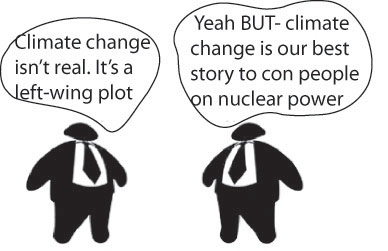
The most common argument used by these companies and those who support nuclear subsidies is the need to fight climate change. There are two problems with this argument.
The second problem is the assumption that corporations owning nuclear plants are primarily interested in rapidly reducing emissions. Many utilities have large fossil fuel investments— investments that suggest a shutdown won’t be happening anytime soon. This suggestion seems especially true with natural gas plants. Although utilities often describe natural gas as clean (for example, Exelon describes its fleet as powered by “clean burning natural gas”), the climate implications of continued natural gas use are substantial. Exelon, the company with the most nuclear plants in the country, also owns and operates, along with its subsidiaries, 11 oil-fired power plants, five dual-fuel (natural gas and oil-powered) power stations, and 10 natural gas-based power plants throughout North America. In addition to its four nuclear power plants, Dominion owns 17 power plants fueled by natural gas and 14 power plants fueled by coal or oil. The company’s estimate of carbon dioxide emissions from its power plants is around 40 million metric tons in 2018, roughly the same level as in 2012. Likewise, PSEG owns just two nuclear power plants, but the company owns or has a stake in 10 fossil fuel generating plants with one more natural gas powered plant under construction.
With such large stakes in fossil fuel-based power plants, it is clear that these utilities are not about to switch immediately to renewables—or even to nuclear power—and give up on years and years of future profits that they and their shareholders are hoping for. In all of the states that offered nuclear subsidies, and elsewhere, the utilities have tried to hold back the deployment of renewables in more or less obvious ways. US utilities are not alone. Studies show that electric utilities around the world have “hindered the transition of the global electricity sector towards renewables, which has to date mostly relied on non-utility actors (such as independent power producers) for expanding the use of renewables.”
Rather than adapting to the necessity of building up renewables, these utilities resort to tactics that have been used in the past to justify nuclear power plant construction. As former Nuclear Regulatory Commission member Peter Bradford listed at the beginning of the so-called nuclear renaissance, these include “subsidy, tax breaks, licensing shortcuts, guaranteed purchases with risks borne by customers, political muscle, ballyhoo, and pointing to other countries (once the Soviet Union, now China) to indicate that the US is ‘falling behind.’”…. https://thebulletin.org/2021/02/big-money-nuclear-subsidies-and-systemic-corruption/
Read the Public Inquiry Report, the Commissioners’ report, Surrendering Australia: The AUKUS Deception is available to download for free at aukuspublicinquiry.com. Or just watch the replay of the National Press Club Luncheon.
19 November – Webinar – The Reality of Reprocessing
Time: 11:00 AM Pacific Time (US & Canada) / 2:00 PM Eastern / 7:00 PM UK / 8:00 PM CET