Lawmaker says Filipinos will be ‘guinea pigs’ in nuclear pact with US

ABS-CBN News Nov 24 2022
MANILA — House Deputy Minority Leader France Castro is against negotiations for a civilian nuclear pact between the United States and the Philippines, saying it poses threat to the health and safety of Filipinos.
According to the ACT Teachers party-list representative, the Filipinos will become “guinea pigs” in this nuclear energy cooperation deal known as “123 agreement”.
The pact, among initiatives announced during US Vice President Kamala Harris’s recent trip to the Philippines, can lead to the future sale of US nuclear reactors to Manila.
“The US and the Philippines agreed to have a… testing of what we call the nuclear equipment here in the Philippines,” Castro told ANC’s “Headstart” Thursday.
“So, we are being made as guinea pigs in this experiment. This would affect our health, of course, our safety and the environment,” she added.
The Makabayan bloc, led by Castro, has filed House Resolution 582 to investigate the “123 agreement”.
The group said modular or microreactor nuclear power plants are still at an experimental stage and are only legally being made in US bases…………………… https://news.abs-cbn.com/video/news/11/24/22/filipinos-will-be-guinea-pigs-in-nuclear-pact-with-us-solon
Philippines to be America’s nuclear guinea-pig for experimental small modular nuclear reactors?
Philippines’ Makabayan bloc files resolution seeking to probe US-Philippines nuclear energy deal By CNN Philippines Staff.Nov 23, 2022,
— The Makabayan bloc in the House of Representatives has filed a resolution seeking to investigate the nuclear energy cooperation deal announced by United States Vice President Kamala Harris, citing threats to the health and safety of Filipinos and the environment.
ACT Teachers party-list Rep. France Castro, Gabriela Women’s Party Rep. Arlene Brosas, and Kabataan party-list Rep. Raoul Danniel Manuel warned that Filipinos may be used as “guinea pigs” for testing nuclear equipment.
“Ang mahirap dito baka tayong mga mamamayang Pilipino ang ma-1-2-3 at maging mga guinea pig ng teknolohiyang ito na tine-testing pa lang ng US,” Castro said in a statement.
[Translation: The problem here is that Filipinos may be duped and served as guinea pigs for a technology still being tested by the US.]
According to the White House fact sheet released on Monday, the 123 Agreement, or the nuclear energy cooperation deal, will provide the legal basis for US exports of nuclear equipment and material to the Philippines.
The 123 Agreement also aims to support expanded partnerships on zero-emission energy and nonproliferation of nuclear weapons.
According to Philippine Ambassador to the US Jose Manuel Romualdez, the Marcos administration is considering bringing in US-developed small modular reactors to the country.
“As it is, modular or microreactor nuclear power plants are still at an experimental stage and are only legally being made in US bases. Early this year, the Pentagon’s Strategic Capabilities Office announced the construction and testing decision that followed the office’s Environmental Impact Statement work for Project Pele,” Castro said………….more https://www.cnnphilippines.com/news/2022/11/23/Makabayan-bloc-US-PH-nuclear-energy-deal-probe.html
Barbados PM launches blistering attack on rich nations at Cop27 climate talks
Mia Mottley, prime minister of Barbados, has criticised industrialised
nations for failing the developing world on the climate crisis, in a
blistering attack at the Cop27 UN climate talks.
She said the prosperity –
and high carbon emissions – of the rich world had been achieved at the
expense of the poor in times past, and now the poor were being forced to
pay again, as victims of climate breakdown that they did not cause.
“We were the ones whose blood, sweat and tears financed the industrial
revolution,” she said. “Are we now to face double jeopardy by having to
pay the cost as a result of those greenhouse gases from the industrial
revolution? That is fundamentally unfair.”
Guardian 7th Nov 2022
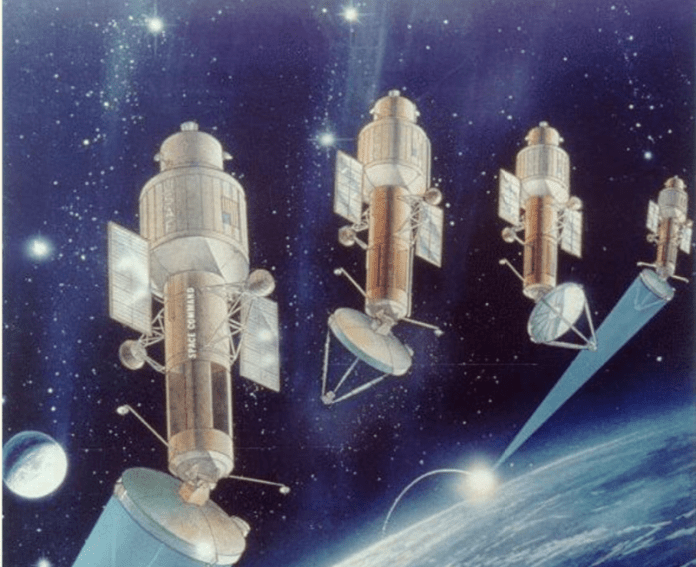
Rocket Lab: Helping the US wage endless wars from space
https://thedailyblog.co.nz/2022/10/25/rocket-lab-helping-the-us-wage-endless-wars-from-space/By John Minto, October 25, 2022
It’s clear local mana whenua were misled by Rocket Lab founder Peter Beck when iwi land at Mahia Peninsula was leased to launch satellites into space.
At the time Peter Beck was clear Rocket Lab would be used for civilian purposes only and would not take up military contracts, despite this being a particularly lucrative path to take.
Fast forward a few years and we find Beck has abandoned any principles he may have had and his company is now majority owned by the US military and is launching satellites for US military purposes.
The government has to sign off on each launch to make sure it is in line with what’s acceptable to this country but it’s clearly a rubber stamp process conducted by Stuart Nash.
Any assurances from Peter Beck or Economic and Regional Development Minister Stuart Nash, who signs off on the launches for the government, that Rocket Lab’s work is for the betterment of mankind are not credible.
Peter Beck sets up straw man arguments saying claims of Rocket Lab weaponizing space are “misinformation” and the company would “not deal in weapons”. “We’re certainly not going to launch weapons or anything that damages the environment or goes and hurts people,” he told Newshub last year.
What nonsense. These are “straw-man” arguments. No-one has claimed the rockets contain weapons but what is absolutely clear is that the US military launches rockets for military purposes and this is what is happening at Mahia.
The NZ Herald reported last year on the capabilities of “Gunsmoke-J satellites”, which have been launched from Mahia for the US military, saying:
The other is the “Gunsmoke-J” satellite being launched for the US Army’s Space and Missile Defence Command (SMDC).
Gunsmoke-J is a prototype for a possible series of nano-satellites that will collect targeting data “in direct support of Army combat operations” according to a US Army fact sheet and a US Department of Defence budget document.
Green MP and party spokesperson for security and intelligence, Teanau Tuiono, is right to speak out:
“Weaponising space is not in our national interest and goes against our international commitments to ensuring peace in space,”
“The government should put in place clear rules that stop our whenua being used to launch rockets on behalf of foreign militaries”
“We should not be a launching pad for satellites for America’s military and intelligence agencies,” Green Party security and intelligence spokesman Teanau Tuiono said.
Rocket Lab is donkey deep with US strategies for “full spectrum dominance of the planet – including space. In doing so Beck and the government have made Mahia a target for conventional or even tactical nuclear weapons if hostilities break out between the US and another world power.
It’s ironic that the government provided start-up funds for Beck to get Rocket Lab off the ground only for Aotearoa New Zealand to find the company has put us to bed with a foreign military and made us target for conventional or nuclear attack.
Mana whenua in Mahia are right to be concerned – and so should the rest of us.
The government is “consulting” at the moment on these issues in their Space Policy Review.
Make a submission for the peaceful use of space here (Deadline 31 October)
New Zealand MP says Rocket Lab launches could betray country’s anti-nuclear stance
The commercial space company rejects criticism of satellite launches for the US military,
Guardian, Eva Corlett in Wellington, @evacorlett 17 Oct 22,
A New Zealand commercial space company, Rocket Lab, has faced new opposition to its activities on behalf of foreign militaries, with one New Zealand Green MP saying its actions could fly in the face of the country’s anti-nuclear stance.
The American-New Zealand company, founded by Peter Beck in 2006, provides rockets to deliver payloads into orbit from its launch site on the Māhia Peninsula, in New Zealand’s north. A third of Rocket Lab’s activities have been on behalf of defence and national security agencies. These include launching US and Australian spy satellites, the controversial “Gunsmoke J” satellite, and most recently Nasa’s capstone spacecraft.
The company’s contracts with the US have been flagged as concerning by the Māhia community, the Green party, and Rocket Lab Monitor – a watchdog group.
In 2019, the New Zealand government banned launch activities that were not in the country’s national interest, or were a breach of both domestic and international laws. The minister for economic and regional development, Stuart Nash, who is also the MP for the area that covers the Māhia Peninsula, has the ability to veto space launches that are not considered to be in the national interest, including payloads that contribute to nuclear weapons programmes or support or enable specific defence, security or intelligence operations contrary to government policy.
But the Green party’s security and intelligence spokesperson, Teanau Tuiono warned last week that it is “unclear when the national interest test should be invoked” and that there is no guarantee the satellites will not be used to assist nuclear programmes.
“Weaponising space is not in our national interest and goes against our international commitments to ensuring peace in space,” he said.
“Launching space satellites from Aotearoa could improve the ability of foreign actors to control a nuclear explosive device,” Tuiono said. “But right now, the government is allowing operators like Rocket Lab to put payloads into space for the US Army Space and Missile Defense Command and the US Space Force.”
Tuiono said that this poses a risk to New Zealand’s nuclear-free stance, which was enshrined in law more than 35 years ago and is considered a defining moment in the country’s history.
“We risk betraying the anti-nuclear generation and handing our kids a less safe world,” Tuiono said………………………………………………………
Watchdog group, Rocket Lab Monitor, has said it’s skeptical that this is a fail-proof system and worries the country’s space agency lacks in-house expertise to assess if satellites are contributing to nuclear weapon programmes.
“It all relies on the ‘intent’ of a payload rather than monitoring what it actually ends up being used for,” its spokesperson Sonya Smith said.
Smith pointed to Rocket Lab’s 2021 launch of the “Gunsmoke-J” satellite – an experimental satellite that, according to the US army, can “provide tactically actionable targeting data” to “warfighters”, and to which Minister Nash admitted he was “unaware of [its] specific military capabilities”.
Last month, the government announced a new aerospace strategy, that includes further financial support for the emerging sector. At the same time, it opened a review to allow the public to give feedback on the future of New Zealand’s space policy. https://www.theguardian.com/world/2022/oct/17/new-zealand-mp-says-rocket-lab-launches-could-betray-countrys-anti-nuclear-stance
Marshall Islanders unwilling to sign economic agreement with USA – want redress first of their harmful nuclear legacy

Haunted By 67 Nuclear Tests, US Facing Severe Roadblocks To Renew COFA Pact With Marshall Islands
https://eurasiantimes.com/haunted-by-67-nuclear-tests-us-facing-severe-roadblocks-to-renew-cofa-pact-with-marshall-islands/ By Ashish Dangwal, October 18, 2022
The United States appears to be facing a severe roadblock in renewing a binding treaty with the Marshall Islands, which have long sought compensation for the dozens of US nuclear tests conducted there between the 1940s and 1950s.
The provisions of a Compact of Free Association (COFA), signed between the Pacific island group and the US in 1986, will be reviewed by the Marshall Islands and the United States later this year.
The COFA’s key components include US immigration benefits for Marshallese citizens, direct economic support, and exclusive American defense and security access to the islands and their territorial waters.
The Marshall Islands leaders have repeatedly highlighted that the long-term repercussions of the 67 US nuclear tests conducted between 1946 and 1958 on health, the environment, and the economy must be adequately addressed before they consent to a new economic agreement with the US.
‘We want to thank them’: Local Marshallese community welcomes anti-nuclear testing ship.
BY ERIK HOGSTROM erik.hogstrom@thmedia.com
The voices of Noreen Akeang and the other singing women rose in intensity as the ship passed through the gates of Dubuque’s Ice Harbor.
The visit of the Golden Rule to Dubuque carried great significance to Akeang and other members of the city’s Marshallese community.
“We want to tell them how much we appreciate them,” Akeang said. “We want to thank them for what they tried to do so long ago.”
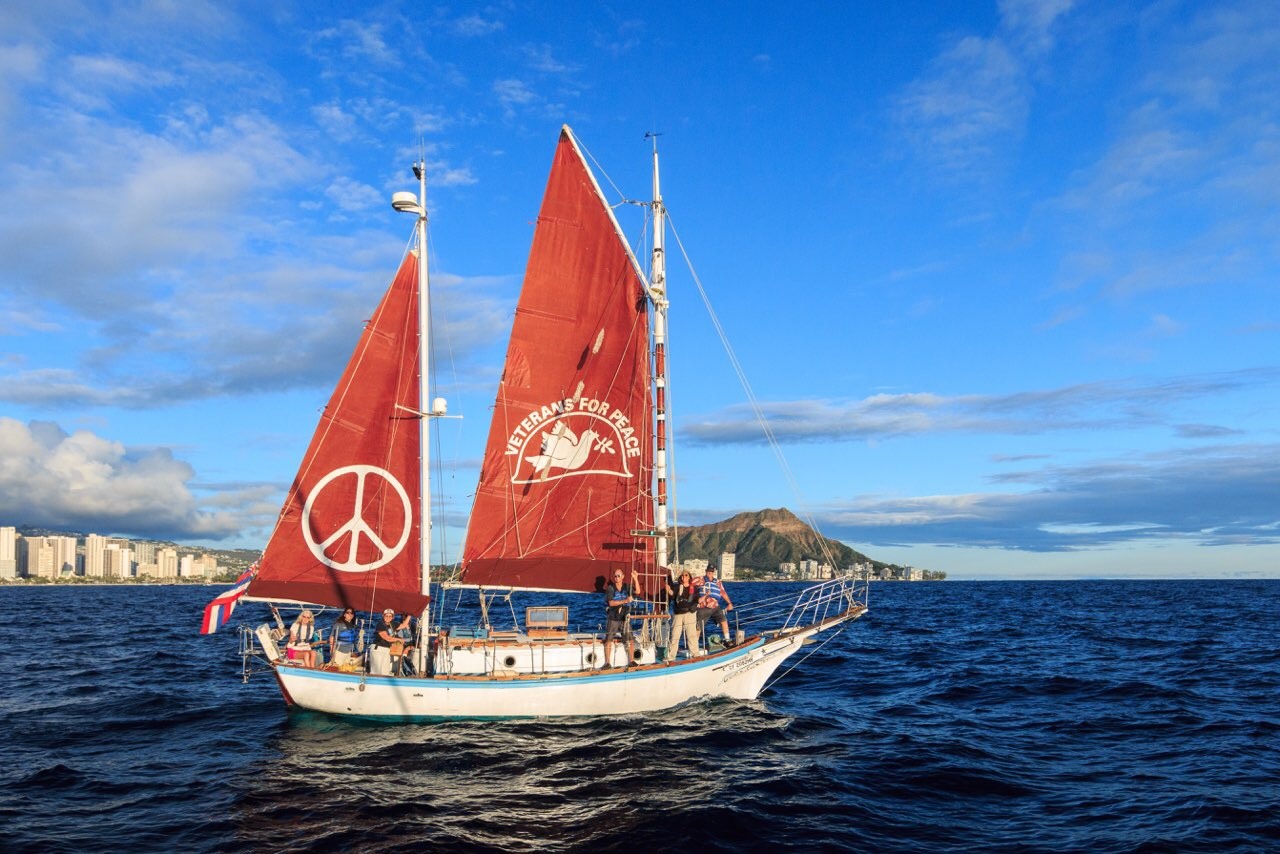
A national project of the Veterans For Peace organization, the Golden Rule arrived in Dubuque late Sunday afternoon and will depart Tuesday morning. Dubuque is among 100 ports of call during a tour of the Midwest, Southeast and eastern United States. The ship’s arrival Sunday drew more than 50 people to the Ice Harbor – with about half of the attendees drawn from the city’s Marshallese community.
“The significance (of the Dubuque visit) is especially important for the 800-plus members of the Marshallese community who live in Dubuque,” said Art Roche, a local organizer of the ship’s Dubuque visit. “Of all of the places where the ship is going to be stopping in the 15-month tour this is the largest Marshallese population on that tour.”
The 34-foot vessel attempted to sail in 1958 from Hawaii to the Marshall Islands to prevent atmospheric nuclear weapons testing. The ship never made it.
“They tried to come to the Marshall Islands, but the U.S. Coast Guard came (and intercepted the ship) and put (the crew) in jail,” said Maitha Jolet, a member of Dubuque’s Marshallese community. “We never knew about it (in the Marshall Islands). Many people didn’t know that a crew of people were supposed to come to the Marshall Islands and do something to protest and try to stop the nuclear testing.”
The United States began using the Marshall Islands as a nuclear testing site shortly after the end of World War II.
“The testing was really bad,” Jolet said.
Jolet said the nuclear testing and associated radiation has resulted in higher rates of cancer and other illnesses among Marshallese. Roche said nuclear contamination of the islands’ areas resulted in dietary changes with adverse effects, too.
“The nuclear testing resulted in their inability to grow their own food and take fish from local waters,” Roche said. “They can’t rely on their own natural resources so everything has to be brought into the Marshall Islands. Consequently, they experienced big dietary changes, including a dependence on rice.”
Roche said the high consumption of rice and other introduced foods puts Marshallese at greater risk of diabetes and other health concerns.
Golden Rule crew members and support staff said they were touched by the Marshallese community’s song-filled welcome to Dubuque.
“I wasn’t expecting it to be so emotional,” said Cindy Boyum, of St. Paul, Minn. “It was just so powerful to meet the people.”
Boyum has been sailing on the ship for part of its southerly journey down the Mississippi River.
“It’s so amazing that the Golden Rule finally gets to be among the Marshallese,” said Helen Jaccard, the Golden Rule project manager. “It just warms my heart that after all of these years we are able to see them and interact.”
Marshall Islands to receive U.N. support over nuclear legacy
https://english.kyodonews.net/news/2022/10/e2a640256da0-marshall-islands-to-receive-un-support-over-nuclear-legacy.html KYODO NEWS -8 Oct 22,
The U.N. Human Rights Council adopted a resolution Friday aimed at assisting the Marshall Islands in its efforts to secure justice for people suffering from the impact of the United States’ former nuclear testing program in its territory.
“We have suffered the cancer of the nuclear legacy for far too long and we need to find a way forward to a better future for our people,” Samuel Lanwi, deputy permanent representative of the Republic of the Marshall Islands in Geneva told the body in an emotional speech.
The United States conducted dozens of nuclear weapons tests in the islands of the Pacific state in the 1940s and ’50s, including the 1954 Castle Bravo test at Bikini Atoll, the biggest U.S. bomb ever detonated.
The text tabled by five Pacific Island states — the Marshall Islands, Fiji, Nauru, Samoa and Vanuatu — was backed by Australia and did not demand reparations.
It called on the U.N. rights chief to submit a report in September 2024 on the challenges to the enjoyment of human rights by the Marshallese people stemming from the nuclear legacy.
The United States as well as other nuclear weapons states such as Britain, India and Pakistan expressed concern about some aspects of the text but did not ask for a vote on the motion. Japan did not speak at the meeting.
The Marshallese people are still struggling with the health and environmental consequences of the nuclear tests, including higher cancer rates. Many people displaced due to the tests are still unable to return home.
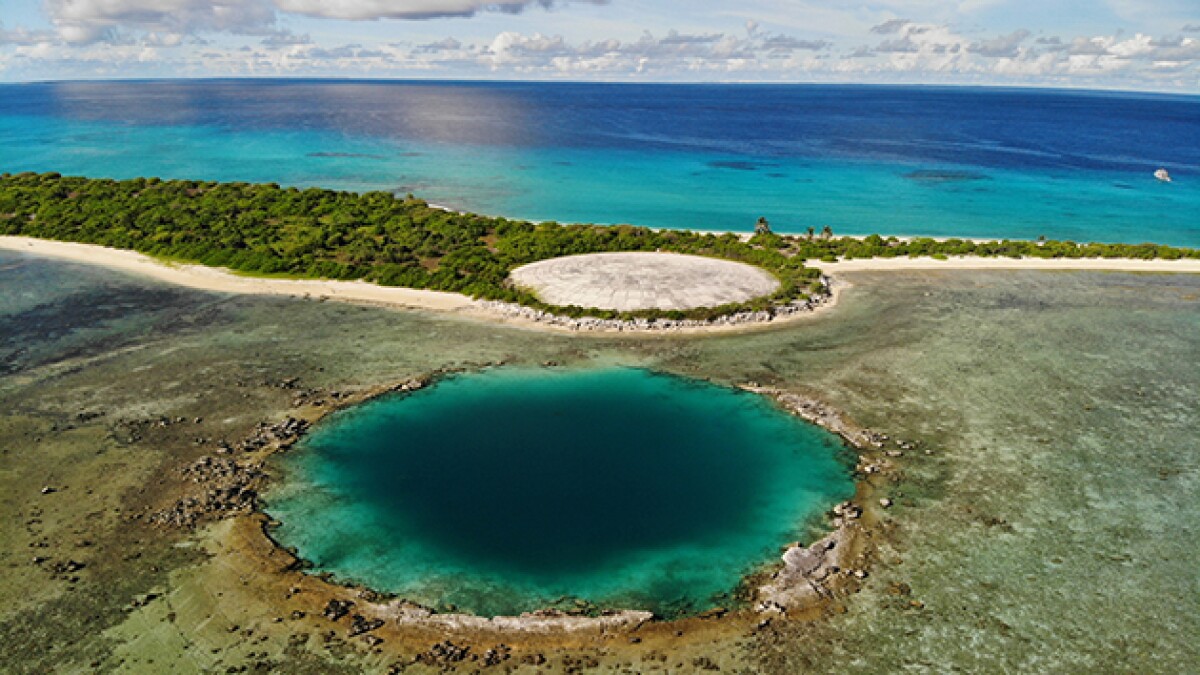
A concrete dome on Runit Island containing radioactive waste is of particular concern, especially in relation to rising sea levels as a result of climate change, according to the countries that drafted the resolution.
The Marshall Islands says a settlement reached in 1986 with the United States fell short of addressing the extensive environmental and health damage that resulted from the tests.
The U.S. government asserts the bilateral agreement settled “all claims, past, present and future,” including nuclear compensation.
Observers say some nuclear states fear the initiative for the Marshall Islands could open the door to other countries bringing similar issues to the rights body.
World shouldn’t give up on nuclear disarmament, says Prime Minister Jacinda Ardern
25/09/2022 NewsHub, By Craig McCulloch for RNZ
After a two-year Covid-induced hiatus, the United Nations’ leaders’ summit returned with gusto this week, but against a far darker backdrop than Jacinda Ardern’s last time there.
The general assembly has been dominated by Russia’s invasion of Ukraine, with attention fuelled this week by Vladimir Putin’s barely veiled nuclear threats and expanded war effort.
In an end-of-trip interview with RNZ, the Prime Minister noted the conflicted emotions among leaders in New York: pleased to have “come through” the pandemic, only to then “smack up against such significant hurdles”.
“Everyone was talking in some form about issues like inflation… climate action, and the persistent security threats in Europe,” Ardern told RNZ.
The mere mention of nuclear war added gravity; the conflict was “absolutely” on everyone’s lips, Ardern said.
“It is a worrying time.”… https://www.newshub.co.nz/home/politics/2022/09/world-shouldn-t-give-up-on-nuclear-disarmament-says-prime-minister-jacinda-ardern.html
Marshall Islands calls off talks after no US response on nuclear legacy plan

Giff Johnson, Editor, Marshall Islands Journal / RNZ Pacific correspondent, Editor, Marshall Islands Journal / RNZ Pacific correspondent 24 Sept 22,
On the eve of the US Pacific Islands Summit in Washington, a key ally in the region called off a scheduled negotiating session for a treaty Washington views as an essential hedge against China in the region.
The Marshall Islands and the United States negotiators were scheduled for the third round of talks this weekend to renew some expiring provisions of a Compact of Free Association when leaders in Majuro called it off, saying the lack of response from Washington on the country’s US nuclear weapons testing legacy meant there was no reason to meet.
Marshall Islands leaders have repeatedly said the continuing legacy of health, environmental and economic problems from 67 US nuclear tests from 1946-1958 must be satisfactorily addressed before they will agree to a new economic package with the US.
Washington sees the Compact treaties with the Marshall Islands, Federated States of Micronesia, and Palau, which stretch across an ocean area larger than the continental US, as key to countering the expansion of China in the region.
“The unique security relationships established by the Compacts of Free Association have magnified the US power projection in the Indo-Pacific region, structured US defense planning and force posture, and contributed to essential defense capabilities,” said a new study released September 20 in Washington, DC by the United States Institute of Peace, “China’s Influence on the Freely Associated States of the Northern Pacific.”
China’s naval expansion is increasing the value of the US relationship with the freely associated states (FAS)………………………..
US and Marshall Islands negotiators have both said they hope for a speedy conclusion to the talks as the existing 20-year funding package expires on September 30, 2023. But the nuclear test legacy is the line in the sand for the Marshall Islands.
“The entire Compact Negotiation Committee agreed – don’t go,” said Parliament Speaker Kenneth Kedi, who represents Rongelap Atoll, which was contaminated with nuclear test fallout by the 1954 Bravo hydrogen bomb test at Bikini Atoll and other weapons tests.
“It is not prudent to spend over $100,000 for our delegation to travel to Washington with no written response to our proposal. We are negotiating in good faith. We submitted our proposal in writing.” But he said Friday, “there has been no answer or counter proposal from the US.”
US and Marshall Islands officials had been aiming to sign a “memorandum of understanding” at the summit as an indication of progress in the discussions, but that now appears off the table…………………
Marshall Islands President David Kabua, while affirming in his speech at the UN that the Marshall Islands has a “strong partnership” with the US, added: “It is vital that the legacy and contemporary challenges of nuclear testing be better addressed” (during negotiations on the Compact of Free Association). “The exposure of our people and land has created impacts that have lasted – and will last – for generations.”
The Marshall Islands submitted a proposed nuclear settlement agreement to US negotiators during the second round of talks in July. The US has not responded, Kedi and other negotiating committee members said Friday in Majuro.
……………………………… “We live with the problem (from the nuclear tests),” said Kelen, a displaced Bikini Islander. “We know the big picture: bombs tested, people relocated from their islands, people exposed to nuclear fallout, and people studied. We can’t change that. What we can do now is work on the details for this today for the funding needed to mitigate the problems from the nuclear legacy.”
Kedi said he was tired of US attempts to argue over legal issues from the original Compact of Free Association’s nuclear test settlement that was approved 40 years ago before the Marshall Islands was an independent nation.
That agreement, which provided a now-exhausted $150 million nuclear compensation fund, was called “manifestly inadequate” by the country’s Nuclear Claims Tribunal, which over a two-decade period determined the value of claims to be over $3 billion.
“Bottom line, the nuclear issue needs to be addressed,” Kedi said…………………..
President Kabua is scheduled to participate in the White House-sponsored US Pacific Islands Summit on September 28-29.
Meanwhile, the members of his Compact negotiating team are in Majuro waiting for a response from the US government to their proposal to address the nuclear legacy. https://www.rnz.co.nz/international/pacific-news/475398/marshall-islands-calls-off-talks-after-no-us-response-on-nuclear-legacy-plan
At U.N., Micronesia denounces Japan plan to release Fukushima water into Pacific
UNITED NATIONS, Sept 22 (Reuters) – The president of the Pacific island state of Micronesia denounced at the United Nations on Thursday Japan’s decision to discharge what he called nuclear-contaminated water from the Fukushima Daiichi Nuclear Power Station into the Pacific Ocean………………… (subscribers only) more https://www.reuters.com/world/asia-pacific/un-micronesia-denounces-japan-plan-release-fukushima-water-into-pacific-2022-09-22/
s
New Zealand will push for total ban on nuclear weapons – Jacinda Ardern
https://www.nzherald.co.nz/nz/new-zealand-will-push-for-total-ban-on-nuclear-weapons-jacinda-ardern/KMAJHPQARBHVY3ETZGUGOI7COA/ By Thomas Coughlan, 24 Sep, 2022
Prime Minister Jacinda Ardern said there is an “outlier” amongst countries that have nuclear weapons because Russia now appears to believe that a nuclear war can be won and fought, as she continued to push for the abolition of nuclear weapons.
Speaking to media after her address to the United Nations General Assembly, Ardern said New Zealand never believed the doctrine of Mutual Assured Destruction (MAD), which meant that countries would not start a nuclear war, because they believed they would be annihilated by their enemy in retaliation.
“New Zealand – no one wants to be proven right on this issue,” Ardern said.
“We’ve always had the view that so long as everyone holds them [nuclear weapons] that no one will push the button – New Zealand has never had the view that that is a good strategy or a safe strategy.”
arlier in the day, she told the United Nations that one country – a reference to Russia – believed it could fight and win a nuclear war.
“It takes one country to believe that their cause is nobler, their might stronger, their people more willing to be sacrificed,” Ardern said.
“None of us can stand on this platform and turn a blind eye to the fact that there are already leaders amongst us who believe this,” she said.
Russia’s apparent belief that it could start and win a nuclear war is a reversal from its position in January, when it made a pledge with other nuclear powers who were signatories to the Nuclear Non-Proliferation Treaty that “a nuclear war cannot be won and must never be fought”.
American and Russian leaders have been making some version of this statement since leaders Ronald Reagan and Mikhail Gorbachev first said it in 1985.
If the doctrine of MAD is gone, then the world could be closer to a nuclear war than ever before.
Ardern said Russia was an “outlier” and other countries had a far more stable nuclear policy.
“I wouldn’t take Russia’s position as indicative of the rest of the world.”
As Japan builds nuclear dumping facilities, Pacific groups say ‘stop’
https://www.reuters.com/world/iran-seeks-stronger-us-guarantees-revival-2015-nuclear-deal-2022-08-31/ Pacific civil society groups are calling on Japan to halt its plans to dump radioactive nuclear wastewater into the Pacific Ocean.
Earlier this month the Japanese government started building facilities needed for the discharge of treated, but still radioactive, wastewater from the defunct Fukushima nuclear power plant.
In a joint statement, civil society groups, non-governmental organisations and activists described the Fumio Kishida Government’s plans as a fundamental breach of Pacific peoples’ right to a clean, healthy and sustainable environment.
Joey Tau from the pan-Pacific movement Youngsolwara Pacific said this breaches Pacific peoples’ rights to live in a clean environment.
Tau told Pacific Waves the Pacific Ocean is already endangered and Japan’s plan will have devastating impacts.
“We have a nuclear testing legacy in the Pacific. That continues to impact our people, our islands and our way of life, and it impacts the health of our people.
“Having this plan by Japan poses greater risks to the ocean which is already in a declining state.
“The health of our ocean has declined due to human endured stresses and having this could aggravate the current state of our region.
“And also, there are possible threats on the lives of our people as we clearly understand in this part of the world, the ocean is dear to us, it sustains us,” Tau said.
Tau said both the opposition in Vanuatu and the president of the Federated States of Micronesia have expressed serious concerns at Japan’s plans, and the Pacific Islands Secretariat this year has appointed an international expert panel to advise the Forum Secretary-General and national leaders.
The Northern Marianas’ House of Representatives has also condemned Japan’s plan to dump the nuclear waste.
Tau said the plans should not proceed without the Pacific people being able to voice their concerns and being better advised.
The world stands on a nuclear precipice – we must avoid catastrophe- Jacinda Ardern

https://www.theguardian.com/commentisfree/2022/aug/25/the-world-stands-on-a-nuclear-precipice-we-must-avoid-catastrophe 25 Aug 22, The world can still step back from the abyss. The nuclear weapon states – the US, Russia, China, France and the UK – must lead the way
In 1945 nuclear weapons were used in armed conflict for the first and only time. 355,000 people were killed in Hiroshima and Nagasaki by two nuclear bombs.
Two. That number alone puts in stark perspective the world’s current arsenal of about 13,000 nuclear weapons.
And yet in many ways the 13,000 weapons held globally represents progress; it’s less than a quarter of the more than 63,000 weapons in circulation in 1985 during the cold war.
But what John F Kennedy said in 1961 at the United Nations is as urgent now as it ever was: “We must abolish these weapons before they abolish us.”
Over the more than 50 years since the inception of the nuclear non-proliferation treaty it’s played an important role in lowering the risk of these weapons abolishing us. In addition to the near 80% reduction in nuclear weapons, the treaty has also contributed to keeping a lid on the number of countries acquiring them. More countries have ratified the treaty than any other arms limitation and disarmament agreement.
Right now in New York, there is an opportunity to go even further. And we must.
Our world is at greater risk of nuclear catastrophe than at any time since the height of the cold war. Growing superpower tensions and two decades of stalled progress on arms control have pushed the risk of these weapons closer to reality.
Currently 191 countries are meeting at the UN to renew the nuclear non-proliferation treaty and negotiations are going down to the wire. These talks offer a chance to breathe new life into nuclear disarmament at a time when the world needs that more than ever.
Nuclear catastrophe is not an abstract threat but a real world risk. Nuclear weapons could be deployed in a conflict, as Russia’s president, Vladimir Putin, has intimated, or they could be deployed by miscalculation or mistake – real possibilities in times of heightened tension.
New Zealand is calling on the nuclear weapons states – the US, Russia, China, France and the UK – to step back from the nuclear abyss, and provide that leadership by committing to negotiate a new multilateral nuclear disarmament framework.
But from one of the best geographical positions in the world to be should nuclear fallout occur, why does New Zealand feel so strongly about this issue?
We are a Pacific nation. Our region bears the scars of decades of nuclear testing, on both the people and the lands and waters of our region. That’s why for 35 years New Zealand has been proudly nuclear-free and an international advocate for a world free of nuclear weapons.
This does not mean we are naive to real world dynamics, nor does our geographic location mean we have the luxury of a moral stance that others do not. In fact, New Zealand’s message – that nuclear weapons do not make anyone safer and no longer have a place in our world – reflects the view of the overwhelming majority of countries. We just need to believe a different approach is possible.
We only have to look back in our history to map a path to a safer future. The lessons of Hiroshima and Nagasaki, and of testing in the Pacific, are reminder enough that there is never justification for the deployment of nuclear weapons.
The challenges of agreeing multilateral nuclear disarmament can seem overwhelming. But it’s not a task that can be put off indefinitely.
Right now, the treaty is under stress. It is affected by geopolitical developments including tension between the nuclear weapon states. But, more fundamentally, there is growing scepticism and frustration about the intention of the nuclear weapon states to ever fully implement their nuclear disarmament commitments under the treaty, with those states arguing the global security environment makes doing so too difficult.
If this continues, there is a real prospect of countries losing faith in the treaty – putting at risk both the treaty’s role in progressing nuclear disarmament, and in preventing the spread of nuclear weapons material.
There is a lot at stake in New York this week. Some might say that in the current global environment a new nuclear arms race is inevitable, and with it a further undermining of our nuclear disarmament and non-proliferation efforts. But I cannot accept a logic that suggests insecurity and instability render us incapable of doing the very thing that would help make the world less insecure and less unstable – an idea that the history of the treaty itself shows is false.
There can and should be a different trajectory – one of urgent leadership, of recognition of the nuclear precipice on which we are all standing, and of continued progress in our efforts to rid the world of nuclear weapons. It’s not only possible – it’s necessary.
- Jacinda Ardern is the prime minister of New Zealand
1 This Month
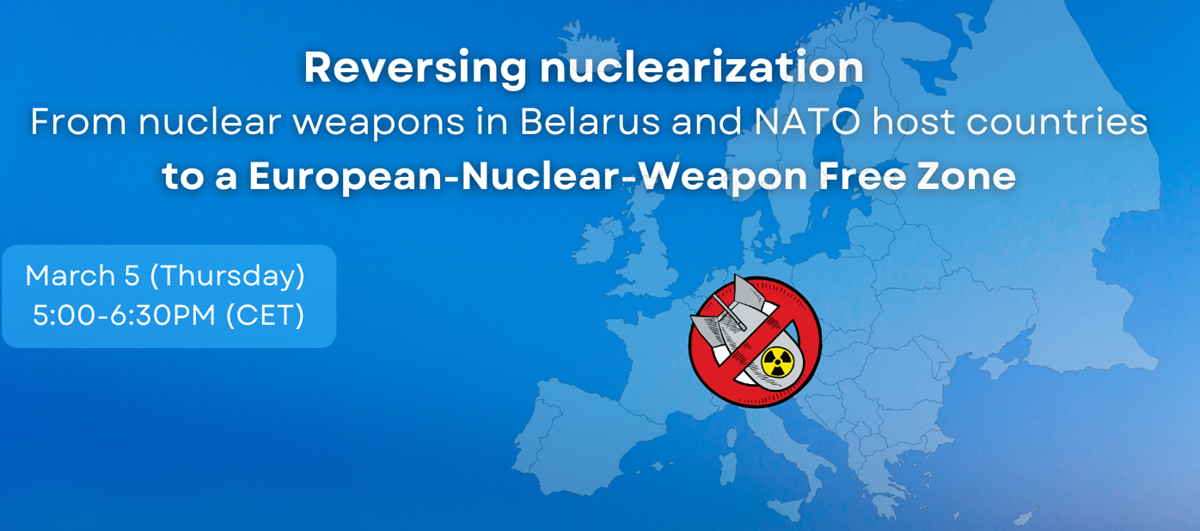
5 March -Online – Reversing nuclearization:
From nuclear weapons in Belarus and NATO host countries to a European-Nuclear-Weapon Free Zone
11am-12:30pm Eastern Time USA / 5pm-6:30pm CET

of the week – Advocating for a
nuclear free beach – https://www.samuellawrencefoundation.org/
The Samuel Lawrence Foundation advocates for a Nuclear Waste Free Beach at San Onofre, join us and take action!

10 March A LIVE WEBINAR THE REAL EFFECTS OF NUCLEAR POWER
What the Industry Isn’t Telling Us
1:00 PM Mountain, 2 pm Central, 3 pm Eastern. Live on the Keepers of the Water Facebook page

18 March Webinar @ 1 PM EST: An Assessment of SMR Projects: The Case of Canada
register for the zoom:
https://us02web.zoom.us/webinar/register/WN_o8BIIOUvQ2ONJR1nta65DQ#/registration

of the week – STOP SMALL MODULAR REACTORS IN CANADA
To see nuclear-related stories in greater depth and intensity – go to https://nuclearinformation.wordpress.com
-
Archives
- March 2026 (38)
- February 2026 (268)
- January 2026 (308)
- December 2025 (358)
- November 2025 (359)
- October 2025 (376)
- September 2025 (258)
- August 2025 (319)
- July 2025 (230)
- June 2025 (348)
- May 2025 (261)
- April 2025 (305)
-
Categories
- 1
- 1 NUCLEAR ISSUES
- business and costs
- climate change
- culture and arts
- ENERGY
- environment
- health
- history
- indigenous issues
- Legal
- marketing of nuclear
- media
- opposition to nuclear
- PERSONAL STORIES
- politics
- politics international
- Religion and ethics
- safety
- secrets,lies and civil liberties
- spinbuster
- technology
- Uranium
- wastes
- weapons and war
- Women
- 2 WORLD
- ACTION
- AFRICA
- Atrocities
- AUSTRALIA
- Christina's notes
- Christina's themes
- culture and arts
- Events
- Fuk 2022
- Fuk 2023
- Fukushima 2017
- Fukushima 2018
- fukushima 2019
- Fukushima 2020
- Fukushima 2021
- general
- global warming
- Humour (God we need it)
- Nuclear
- RARE EARTHS
- Reference
- resources – print
- Resources -audiovicual
- Weekly Newsletter
- World
- World Nuclear
- YouTube
-
RSS
Entries RSS
Comments RSS
 nuclear-news