The Philippines to be the South East Asian guinea pig for NuScam’s small nuclear reactors?

New in Marcos’ nuclear push: US firm seeks site in Philippines for costly small reactors Cristina Chi – Philstar.com, May 2, 2023 |
MANILA, Philippines (Corrected, May 3; 10:33 a.m.)— A top nuclear energy firm from the United States that has been developing a type of nuclear reactor flagged for being potentially financially risky as renewable energy becomes more affordable has expressed interest in putting up a site in the Philippines.
This comes as President Ferdinand “Bongbong” Marcos Jr. takes his aggressive nuclear energy push to talks with US officials during his visit there this week — an agenda backed by his cousin House Speaker Martin Romualdez but roundly criticized by environmental groups………………………
Too expensive, too risky’
NuScale Power was flagged by independent think-tank Institute for Energy Economics and Financial Analysis in 2022 for developing SMR technology that is “too expensive, too risky and too uncertain.”
The group also recommended that SMR “should be abandoned” given that the costs of available renewable sources are falling rapidly and that the SMR wouldn’t generate electricity before 2029.
Marcos is on a four-day trip to the United States that began last weekend, and he has so far met with US President Joe Biden and other business leaders, including executives of the energy firm.
…………. Clayton Scott, NuScale executive vice president for business, also expressed confidence that NuScale’s small modular reactor (SMR) technology “will perform as expected.” NuScale was also accompanied by local partner Enrique Razon, representing Prime Infrastructure Capital, Inc.
Marcos first met with NuScale executives in 2022 on the sidelines of the 77th United Nations General Assembly.
Among the deals clinched during Marcos’ meeting with US officials is the US Agency for International Development’s commitment to invest $5 million to support the Philippines’ exploration of the potential for nuclear energy to meet the country’s need for clean energy, “consistent with the highest standards of nuclear security, safety and nonproliferation.”
Environmental groups’ pushback
A financially unrewarding nuclear energy deal may not be the only risk posed by NuScale Power’s entry in the Philippines, according to environmental group Greenpeace.
Nuclear energy companies are “practically making the Philippines the guinea pig for untested risky technologies to promote their business” despite other local options for safer and cheaper renewable energy, Greenpeace campaigner Khevin Yu said.
Yu warned of the potential consequences of tapping nuclear energy for electricity in the Philippines given that Germany, like other developed countries, has weaned off nuclear power — an undertaking that it began in 2002 and was accelerated in 2011 after the Fukushima nuclear disaster in Japan.
Italy also permanently shut down all of its functioning nuclear plants in 2022.
Yu said that risks related to nuclear technology remain unresolved, and SMRs “are still untested and unproven.”
“(And) there is currently no way to safely store nuclear waste,” Yu said.
“Even if they actually succeed in putting up nuclear plants, it will take a long time before we are able to use it. Furthermore, we will be stuck with maintaining a ticking time-bomb, which will endanger the lives of nearby communities should an accident occur,” Yu added.
Yu, meanwhile, pointed out that the pivot to renewable energy became a topic of discussion between Marcos and Bide, which he said should now “be the focus of the current administration.” https://www.philstar.com/headlines/climate-and-environment/2023/05/02/2263238/new-marcos-nuclear-push-us-firm-seeks-site-philippines-costly-small-reactors
‘New Zealand should say sorry’ – sailors posted to watch nuclear tests
RNZ Jimmy Ellingham, Manawatū reporter, jimmy.ellingham@rnz.co.nz 1 May 23
New Zealand sailors exposed to British nuclear tests in the Pacific in the 1950s remain unhappy they have never had a government apology for being placed in harm’s way.
On the weekend the veterans, now aged at least in their 80s, held a reunion in Palmerston North.
For many of them it could be their last chance to catch up with their mates from Operation Grapple, which happened in 1957 and 1958, when New Zealand vessels HMNZS Pukaki and Rotoiti observed tests near Christmas Island, now part of Kiribati……………………………….
In the mid-1990s, Tahi and fellow veteran, the late Roy Sefton, organised the first reunion in Palmerston North, which revealed four decades of suffering.
“They stood up and spoke about the defects they had with their children, and that was terrible.
“A guy stood up and said, ‘How come I lost my two boys? They were 18 years old. They had cancer.’ He was carrying the genes, you see.”
Sefton and Tahi led the veterans’ association and have lobbied successive governments for an apology for being exposed to radiation, to no avail……………
The lack of acknowledgement from New Zealand’s government was particularly frustrating for the veterans, given the effects the tests had on them were confirmed by a scientific study.
It was done by now-retired Massey University associate professor Dr Al Rowland.
“I conducted a big research programme on the nuclear test veterans and I discovered alarming evidence of long-term genetic damage.”
This damage was a consequence of Operation Grapple, he said.
Rowland is the veterans’ association patron and he said it saddened him that they still had not received an apology.
“What we are looking for is recognition of the research, from the government.
“The international scientific community have accepted the work and I’ve received a lot of plaudits. In fact, I received an ONZM for the research from John Key’s government.”
Despite that, he said the veterans’ association had regular meetings with ministers, but was making no progress.
Roy Sefton died two years ago, but down the years he fought for pensions for veterans and their families, said his daughter, Anu……………………………………… https://www.rnz.co.nz/news/national/489021/new-zealand-should-say-sorry-sailors-posted-to-watch-nuclear-tests
New Zealand’s nuclear test veterans seek recognition
More than 500 sailors on New Zealand navy ships were exposed to tests of hydrogen bombs in the late 1950s. Aaron Smale spoke to one ahead of Anzac Day.
newsroom, Aaron Amale 23 Apr 23
He was a 17-year-old kid from Te Kuiti when he was ordered onto the deck of a Navy ship and told to sit down with his back facing out to sea. He and his mates donned dark glasses and wore what was grossly inadequate protection. Then he saw the bones in his hands from the flash of a hydrogen bomb being detonated.
Ordered to stand up and turn around, Tere Tahi saw what should have been a frightening sight but his reaction was one of awe and wonder.
“It was the most beautiful thing. It was fantastic. It was fantastic seeing all the different colours in the blast. It was a marvellous experience to see something like that, but we didn’t know what effects it would have on us after that. We went in close to the fallout when the sea was being drawn towards the mushroom.”
Tahi had joined the Navy as a teenager and was stationed on the ship Rotoiti, one of two New Zealand ships that was sent to Christmas Island and witnessed the British testing hydrogen bombs in 1958. The legacy of those tests continues to affect those who saw them and has been passed down through their families.
“We were told to get on to the upper deck with anti-flash gear, put on dark glasses and to have our backs towards the detonation and when that was completed, we were told to turn and watch the blast. We had all this gear on and dark glasses and when it went off we could see the bones in our fingers, in our hands, with our hands over the dark glasses.”
“I wasn’t scared, because we didn’t know what the after effects would be.”…………
Tahi is now the president of the Nuclear Test Veterans Association in New Zealand and has taken on the fight to try and help veterans and their families affected by the impacts of being exposed to radiation. The association is having a reunion on April 28-30 in Palmerston North.
“I’ve set up some projects to help our veterans that have illnesses. What I want to do is give them some assistance helping them out with the illnesses. Some of them are finding it difficult to finance.”
The illnesses are not limited to the veterans themselves.
“Another problem that we faced with is a lot of our children, a lot of the veterans’ children have been born with deformities. It’s been very bad too. And that’s my final legacy – if you try and do something for them.”………………………
It wasn’t only New Zealand personnel who were exposed to the blasts. British sailors were also present and have been waging the same war to get recognition.
“I went to England to a nuclear test veterans association commemoration. I was invited by the English government to go over there, this was in November of last year. It was the British. It was them that dropped the bomb.”
He says in hindsight he believes they were being used in an experiment. He worked as a radio operator and heard the secret communications coming through.
“As a radio man we receive secret signals saying that the reason they wanted troops there was to see what effects it would have on the equipment, which would have been our ships and the equipment on the ships, and to what see what effects it would have on the men. It was terrible. They wanted to see what effects it would have on us. It was obvious we were guinea pigs.
“Hiroshima and Nagasaki, our bomb was a hundred times worse than that. A hundred times worse.”……………………………….
An estimated 20,000 British servicemen, 524 New Zealand soldiers and 300 Fijian soldiers were deployed to “Christmas Island” from 1956 to 1962.
Between May 1957 and September 1958 the British government tested nine thermonuclear weapons on Kiritimati for Operation Grapple. In 1962, the UK cooperated with the US on Operation Dominic, detonating another 31 bombs on Kiritimati.
The long-term impact on their lives and families largely hasn’t been formally acknowledged. The inhabitants of the islands have never been acknowledged either. https://www.newsroom.co.nz/nuclear-test-veterans-still-waiting-for-recognition—
Maori workers exposed to radiation in cleaning up USA’s failed nuclear reactor in Antarctica
Detour: Antarctica – Kiwis ‘exposed to radiation’ at Antarctic power plant, https://www.nzherald.co.nz/travel/detour-antarctica-kiwis-exposed-to-radiation-at-antarctic-power-plant/NY5WTQ72JF4OFUW4F35ZSUCB6U/ 8 Jan, 2022 By Thomas Bywater, Thomas Bywater is a writer and digital producer for Herald Travel
In a major new Herald podcast series, Detour: Antarctica, Thomas Bywater goes in search of the white continent’s hidden stories. In this accompanying text series, he reveals a few of his discoveries to whet your appetite for the podcast. You can read them all, and experience a very special visual presentation, by clicking here. To follow Detour: Antarctica, visit iHeartRadio, or wherever you get your podcasts.
The Waitangi Tribunal will consider whether NZ Defence Force personnel were appropriately warned of potential exposure to radiation while working at a decommissioned nuclear reactor in Antarctica.
It’s among a raft of historic claims dating from 1860 to the present day before the Military Veterans Inquiry.
After an initial hearing in 2016, the Waitangi Tribunal last year admitted the Antarctic kaupapa to be considered alongside the other claims.
“It’s been a bloody long journey,” said solicitors Bennion Law, the Wellington firm representing the Antarctic claimants.
Between 1972 and the early 1980s, more than 300 tonnes of radioactive rubble was shipped off the continent via the seasonal resupply link.
Handled by US and New Zealand personnel without properly measuring potential exposure, the submission argues the Crown failed in its duty of care for the largely Māori contingent, including NZ Army Cargo Team One.
“This failure of active protection was and continues to be in breach of Te Tiriti o Waitangi,” reads the submission.
The rubble came from PM3A, a portable nuclear power unit on Ross Island, belonging to the US Navy. Decommissioned in 1972, its checkered 10-year operating history led it to be known as ‘Nukey Poo’ among base inhabitants. After recording 438 operating errors it was shut off for good.
Due to US obligations to the Antarctic Treaty, nuclear waste had to be removed.
Peter Breen, Assistant Base Mechanic at New Zealand’s Scott Base for 1981-82, led the effort to get similar New Zealand stories heard.
He hopes that NZDF personnel involved in the cleanup of Ross Island might get medallic recognition “similar to those who were exposed at Mururoa Atoll”. Sailors were awarded the Special Service Medal Nuclear Testing for observing French bomb sites in the Pacific in 1973, roughly the same time their colleagues were helping clear radioactive material from Antarctica.
A public advisory regarding potential historic radiation exposure at McMurdo Station was published in 2018.
Since 1975 the Waitangi Tribunal has been a permanent commission by the Ministry of Justice to raise Māori claims relating to the Crown’s obligations in the Treaty of Waitangi.
The current Military Veterans’ Kaupapa includes hearings as diverse as the injury of George Nepata while training in Singapore, to the exposure of soldiers to DBP insecticides during the Malayan Emergency.
Commenced in 2014 in the “centenary year of the onset of the First World War” the Māori military veterans inquiry has dragged on to twice the duration of the Great War.
Of the three claimants in the Antarctic veterans’ claim, Edwin (Chaddy) Chadwick, Apiha Papuni and Kelly Tako, only Tako survives.
“We’re obviously concerned with time because we’re losing veterans,” said Bennion Law.
Detour: Antarctica is a New Zealand Herald podcast. You can follow the series on iHeartRadio, Apple Podcasts, Spotify or wherever you get your podcasts.
Imperial Visits: US Emissaries in the Pacific
Australian Independent Media Binoy Kampmark 19 Mar 23
For some time, Washington has been losing its spunk in the Pacific. When it comes to the Pacific Islands, a number have not fallen – at least entirely – for the rhetoric that Beijing is there to take, consume, and dominate all. Nor have such countries been entirely blind to their own sharpened interests. This largely aqueous region, which promises to submerge them in the rising waters of climate change, has become furiously busy.
A number of officials are keen to push the line that Washington’s policy towards the Pacific is clearly back where it should be. It’s all part of the warming strategy adopted by the Biden administration, typified by the US-Pacific Island Country summit held last September. In remarks made during the summit, President Joe Biden stated that “the security of America, quite frankly, and the world, depends on your security and the security of the Pacific Islands. And I really mean that.”
Not once was China mentioned, but its ghostly presence stalked Biden’s words. A new Pacific Partnership Strategy was announced, “the first national US strategy for [the] Pacific Islands.” Then came the promised cash: some $810 million in expanded US programs including more than $130 million in new investments to support, among other things, climate resilience, buffer the states against the impact of climate change and improve food security.
The Pacific Islands have also seen a flurry of recent visits. In January this year, US Indo-Pacific military commander Admiral John Aquilino popped into Papua New Guinea to remind the good citizens of Port Moresby that the eyes of the US were gazing benignly upon them. It was his first to the country, and the public affairs unit of the US Indo-Pacific Command stated that it underscored “the importance of the US-Papua New Guinea relationship” and showed US resolve “toward building a more peaceful, stable, and prosperous Indo-Pacific region.”
In February, a rather obvious strategic point was made in the reopening of the US embassy in the Solomon Islands. Little interest had been shown towards the island state for some three decades (the embassy had been closed in 1993). But then came Beijing doing, at least from Washington’s perspective, the unpardonable thing of poking around and seeking influence.
Now, Prime Minister Manasseh Sogavare finds himself at the centre of much interest, at least till he falls out of favour in the airconditioned corridors of Washington………………………………………………………………………………………….. https://theaimn.com/imperial-visits-us-emissaries-in-the-pacific/
Samoa’s desperate plea for world climate action

Samoa PM urges world to save Pacific people from climate crisis
obliteration. The world must step back from the brink of climate disaster
to save the people of the Pacific from obliteration, the prime minister of
Samoa has urged.
On the eve of a landmark report by the Intergovernmental
Panel on Climate Change, which is expected to deliver a scientific “final
warning” on the climate emergency, Fiame Naomi Mata’afa, Samoa’s prime
minister, issued a desperate plea for action. “We’re all impacted, but
the degree of the impact is in the particular circumstance of countries. So
our low-lying atoll countries, it’s right there, we’re living with it,”
said Mata’afa. “There are already examples in the Pacific of communities,
whole communities, that have relocated to different countries,” she said.
“They’re really having to address issues of sovereignty through loss of
land.”
Guardian 19th March 2023
At last! While cowardly Australian corporate media fawns all over the nuclear submarine deal – New Zealand has the guts to criticise it.

the Australian order will be filled with a new and advanced SSN® model still in development. This is where the British come in. In a sense, Australia will be (a) serving as a test run and (b) will be creating extra economies of scale for the British Navy’s plans to develop and build SSN( R) models to replace its Astute class submarines by the early to mid 2040s.
On AUKUS And Australia’s Decision On Nuclear Subs
Monday, 13 March 2023, Scooop, Gordon Campbell
China may well regard Taiwan as a renegade province. Yet the invasion of Taiwan – as the Australian economist and commentator John Quiggin points out – would pose massive challenges for the forces or Xi Jinping……………………………………………………What Quiggin is getting at here is that a concerted campaign is currently being waged by sections of the Aussie media with the aim of scaring the pants off the Australian public about the imminent threat from China in the Pacific, in the South China Sea and with regard to Taiwan.
The aim of this campaign is to justify a sky-high level of new defence spending by the Australian government. New Zealand is at risk of being carted along by the same momentum into authorising increases in our own defence spending that we don’t need, and can’t afford.
Acting the part
The campaign kicks into high gear today. As the Oscars get handed out in Los Angeles, another pantomime of power will be playing out on the docks just down the coast, in San Diego. Anthony Albanese, Rishi Sunak and Joe Biden will be standing shoulder to shoulder as they announce the first concrete manifestation of the AUKUS pact – a military alliance between Australia, Britain and the Americans that has China as its common target……………………………………
. As Reuters put it:
….[The] AUKUS pact, will have multiple stages with at least one U.S. submarine visiting Australian ports in the coming years and end in the late 2030’s with a new class of submarines being built with British designs and American technology, one of the officials said….after the annual port visits, the United States would forward deploy some submarines in Western Australia by around 2027.
In the early 2030’s, Australia would buy 3 Virginia class submarines and have the option to buy two more. AUKUS is expected to be Australia’s biggest-ever defence project and offers the prospect of jobs in all three countries.
That last bit is very important. Like his predecessors, Albanese will be treating Australia’s defence policy as a cutting edge ingredient of its manufacturing policy.
Australia’s defence policy as a cutting edge ingredient of its manufacturing policy. For Australian politicians, military policy and defence spending is as much about (a) creating jobs for Aussie workers, (b) gaining technology upgrades for Aussie industry and (c) scoring lucrative contracts for Aussie goods and services firms as it is about the actual defence of the nation.
…………………………………………………………………. In a worst case scenario, the Australians could well invite New Zealand to join AUKUS and assign us some “friend of AUKUS” status, as an observer. Our anti-nuclear legislation would complicate such a role. That aside, and given the ocean currents and prevailing winds, New Zealand has every good reason to feel nervous about the prospect of our near-neighbour learning on the job about how to build and maintain the nuclear reactors on its new submarine fleet.
Luckily, most of the new Aussie subs won’t be delivered until the early to mid 2030s. That means these massively expensive new purchases probably wouldn’t arrive in time to deter China from invading Taiwan, given that this is supposed to be imminent.
In the US, the building of Virginia-class subs are shared between two shipyards, one in Groton Connecticut and the other in Newport News, Virginia. Reportedly, the design variant that Australia has in mind will have been a three-headed upgrade project to the Virginia-class that will have been co-designed by Britain and the US, as amended to Australian specifications, with at least some of the subs being built by US-trained Australians who had no prior experience in this sort of construction. On top of these complications, all participants will be coming under pressure to deliver every stage of the project at the lowest cost possible. I mean, what could possibly go wrong with such a design and construction plan? And in this case, I don’t just mean the danger of cost blowouts.
Attack and defence
AUKUS is likely to make New Zealanders feel more unsafe in a number of other ways as well. For starters, AUKUS is not a “defend the homeland” pact. It is a forward projection alliance, to attack enemy targets and stifle the enemy’s ability to defend itself and respond. (Enemy = China.) Before we bow to the pressure coming from our traditional allies to join in with their chest-bumping rivalries with China, it is probably worth looking at the Aussie nuclear submarine deal in more detail.
The Albanese government has said the Aussie subs will not be nuclear-armed. (Not yet, anyway) However, the roughly 40 Tomahawk cruise missiles (the final design will limit the number) that each submarine will carry can all carry nuclear warheads. Only previous treaty commitments with Russia have prevented the cruise missiles carried on Virginia-class subs from being nuclear-armed.
Yet with the scrapping of nuclear proliferation treaties with Russia in the wake of the war in Ukraine, we could well be sailing in a few years time into “neither confirm nor deny” territory with our Australian neighbours. Regardless of their potential for carrying nuclear tipped Tomahawk cruise missiles alongside the usual torpedoes, mines, autonomous undersea drones, etc etc ….Would these nuclear-powered Australian subs be barred from docking at New Zealand ports under the terms of our anti-nuclear legislation? Yes, they would.
Therefore, it would be good to know if our current political leaders share a bi-partisan agreement to preserve our anti-nuclear stance in its current form and thereby ban those Aussie subs from our ports, now and forever more. Even if Labour and National did agree, the reality is that our new and expensive Poseidon anti-submarine surveillance aircraft will still be taking part in exercises which will increasingly have (a) a nuclear component and (b) an anti-submarine (ASW) component, courtesy of our ANZAC buddies. Lest we forget. (The growing ASW role for Virginia-class SSN category subs is mentioned on page 9 of the Congressional Review Service evaluation of the SSN programme. )
From what can be gleaned at this point i.e. prior to the formal announcement, the Australian order will be filled with a new and advanced SSN® model still in development. This is where the British come in. In a sense, Australia will be (a) serving as a test run and (b) will be creating extra economies of scale for the British Navy’s plans to develop and build SSN( R) models to replace its Astute class submarines by the early to mid 2040s.
To repeat: It would be unwise for New Zealand to be stampeded by the “defence” lobbyists both here and offshore into making significant increases to the allocations for Defence in the May Budget. If nothing else, the Aussie subs saga is a useful reminder that the regional tensions in the Pacific and the China bogey are both being driven and monetised by firms within the military-industrial complex, via the pork barrel politicking (lucrative jobs and contracts for our neighbourhood! ) that is so rife among our traditional military allies.
Footnote: While we spend billions on a fleet of new Poseidon anti-submarine aircraft, and the Aussies buy their fleet of mega-expensive nuclear submarines, the future of underwater warfare is seen by some observers to rest with unmanned underwater vehicles (UUVs). Apparently, the Australian military has a programme to develop UUVs called Ghost Shark, cutely named after the US Ghost Bat programme.
UUVs are being developed to do some of the dirty and dangerous work previously done by crewed submarines under their ASW air cover. Some see UUVs as an adjunct to conventional below- surface warfare. Others see UUVs as making those conventional tools redundant. You can read about these unmanned underwater military drones here. https://www.scoop.co.nz/stories/HL2303/S00018/on-aukus-and-australias-decision-on-nuclear-subs.htm
Nuclear research center reiterates need for separate regulatory body

Business World, March 12, 2023,
THE creation of a new agency that will oversee nuclear power will assure objective regulation of the development of the industry, especially in the areas of safety and security, the head of a nuclear research institution said.
Responding to claims that a separate regulator is unnecessary, Carlo A. Arcilla, director of the Philippine Nuclear Research Institute (PNRI), told BusinessWorld by phone: “You don’t normally want to have a situation where a body will regulate itself.”
The PNRI is an arm of the Department of Science and Technology tasked with conducting research into the safe and peaceful use of nuclear energy in the Philippines. Mr. Arcilla said that transferring regulatory powers to a different agency would help avoid conflict of interest.
The House nuclear energy committee is currently discussing a bill proposing to create the Philippine Atomic Energy Regulatory Authority or PhilATOM, which will take on the regulatory functions that the PNRI currently holds.
A science advocacy organization has called the bill unnecessary, calling instead for the expansion of the PNRI’s powers……………….
The proposed agency will be headed by a director general and deputy director-general, who will be appointed by the President of the Philippines.
Advocates of Science and Technology for the People, the group that opposed the bill, also said that nuclear waste disposal could affect the safety of nearby communities. ……. https://www.bworldonline.com/economy/2023/03/12/510115/nuclear-research-center-reiterates-need-for-separate-regulatory-body/
Pentagon Prepares for Island Combat in the Pacific as US-China Tensions Rise

Restructuring the Force
With China now identified by the U.S. Department of Defense as the most dangerous, or “pacing” threat to U.S. national security, all of the military services have been instructed to prepare for a U.S.-China conflict. Accordingly, both the U.S. Army and the Marine Corps are restructuring their Asia-oriented forces — those committed to the Pentagon’s Indo-Pacific Command (INDOPACOM) — to be capable of conducting multiple offensive and defensive operations throughout the Western Pacific. This has generally entailed lightening their arms and equipment to allow for easy deployment and acquiring more forward operating bases in the region. Both also seek new mobile missile systems (often called “precision fires”) for attacks on enemy ships and land installations.
The U.S. has been securing new basing facilities and conducting large-scale combat exercises in the Western Pacific.By Michael T. Klare , TRUTHOUT, February 28, 2023
“………………………………………………… the notion of another major amphibious campaign in the Pacific has largely evaporated. Recently, however, the U.S. Army and Marine Corps have begun preparing for precisely such a contest as China has emerged as the principal adversary to U.S. hegemony and neighboring Pacific islands have acquired fresh strategic significance.
Any major U.S. conflict with China, it is widely believed, will largely entail air and naval operations in China’s maritime areas, notably the East and South China Seas and the waters surrounding Taiwan. Such a clash, strategists assume, will involve intense air and sea battles for control of these areas. But, as in World War II, the fighting will also envelop any islands housing the air and naval bases of either side, such as China’s installations on islands in the South China Sea and U.S. bases in Japan, Okinawa and the Philippines. Aside from air and missile attacks on these island facilities, either or both sides may seek to occupy them through amphibious assault, resulting in the sort of brutal combat seen in those same areas during World War II.
These islands are all part of (or enclosed within) what Chinese strategists call the “the first island chain” — the long string of archipelagos stretching from Japan in the north to the Ryukyus and Taiwan in the middle and the Philippines and Borneo in the south, together acting as a sort of barrier to Chinese naval projection into the greater Pacific. (Strategists also speak of a second, outer island chain, consisting of the Mariana Islands and the western Caroline Islands.)
The United States has long maintained a major military presence on islands up and down the first chain, both to project U.S. power into the region and to sustain U.S. combat operations in the event of a war. These include the major concentration of Air Force and Navy forces in Japan, the large Marine Corps contingent on Okinawa and bare-bones facilities in the Philippines. Along with any U.S. ships in the area, these bases would be among the primary targets for Chinese air and missile attacks at the onset of a U.S.-China conflict, followed, conceivably, by amphibious assaults aimed at occupying or demolishing them — which would no doubt provoke an aggressive U.S. response.
Located between the Chinese coastline and the first island chain are several contested island groups — the Spratly Islands in the South China Sea and the Senkaku Islands in the East China Sea — that could also become sites of U.S.-Chinese fighting in the event of a future conflict. The Spratlys are claimed in their entirety by China and in part by Brunei, Malaysia, the Philippines and Vietnam; the Senkakus (called the Diaoyu by the Chinese) are claimed by both China and Japan.
Both island groups have witnessed clashes between Chinese vessels and those of the other claimants in recent years, and the U.S. has vowed to assist its allies in defending their territorial claims against future Chinese harassment. Should China attempt to test this pledge in some significant fashion — say, by seizing islands now occupied by Filipino personnel — U.S. forces might engage in an amphibious operation to repel such an attack. A Chinese attempt to occupy the Senkakus — now administered by Japan — could produce a similar result, especially given President Biden’s recent assertion that the U.S. mutual defense treaty with Japan extends to the Senkakus.
To further complicate the picture, China has established military installations on some of the islands and atolls it claims in the South China Sea, in some cases using sand dredged from the seafloor to expand their size to allow the construction of airstrips. These installations, outfitted with an array of anti-air and anti-ship missiles, pose a potential threat to U.S. and allied warships operating in the area and so would constitute a prime target for amphibious assault in the event of a major U.S.-China conflict.
Restructuring the Force
With China now identified by the U.S. Department of Defense as the most dangerous, or “pacing” threat to U.S. national security, all of the military services have been instructed to prepare for a U.S.-China conflict. Accordingly, both the U.S. Army and the Marine Corps are restructuring their Asia-oriented forces — those committed to the Pentagon’s Indo-Pacific Command (INDOPACOM) — to be capable of conducting multiple offensive and defensive operations throughout the Western Pacific. This has generally entailed lightening their arms and equipment to allow for easy deployment and acquiring more forward operating bases in the region. Both also seek new mobile missile systems (often called “precision fires”) for attacks on enemy ships and land installations…………………………………………………………………………………………………………………………………………………………
Training for Pacific Island Wars
To put all these plans into practice, both military branches have been conducting large-scale combat exercises in the Western Pacific and securing new basing facilities there.
Especially indicative of the Marines’ new thinking is a series of exercises called “Resolute Dragon,” held in conjunction with the Japan Self-Defense Forces (JSDF) over the past two years. Although ostensibly focused on defending Japan’s main islands, the exercises appear to embody a larger strategic sweep, involving joint amphibious operations throughout the region.
During Resolute Dragon 2021, held December 4-17 of that year, some 2,650 Marines and 1,400 soldiers from the JSDF engaged in simulated maritime assault operations. …………………………………
Resolute Dragon 2022, held last October, retained many features of the 2021 version but included an additional twist: while 1,600 U.S. Marines were training alongside JSDF soldiers in Japan, another 1,900 were partnered with Philippines Marine Corps personnel in a parallel exercise,…………….. also involved participation by the JSDF Amphibious Rapid Deployment Brigade and Republic of Korea Marines, suggesting the multinational and region-spanning nature of U.S. planning for future amphibious operations.
………………………………………………. Guam was again the site of a simulated airborne assault one year later,
…………………………………. Acquiring Forward Operating Bases
In addition to these training and restructuring efforts, the Army and Marine Corps are preparing for possible island battles in the Western Pacific by acquiring additional bases in the area.
The first such installation to be established is the Marine Rotational Force (MRF) in Darwin, Australia. Located by the Timor Sea in Australia’s Northern Territory, the MRF facility is closer to the southern Philippines and the South China Sea than to, say, Sydney or Melbourne. As a result of an agreement signed by President Obama during a visit to Australia in 2011, the U.S. presence has grown from just 200 Marines in the first rotation to approximately 2,500 today. While in Australia, these troops engage in a six-month stint of training and exercises, usually in conjunction with Australian military personnel. In the event of a war with China, the Darwin facility could also be used to support combat operations throughout the South China Sea area.
Just recently, on February 2, Secretary of Defense Lloyd Austin signed an agreement with Philippine President Ferdinand Marcos Jr. affording the U.S. military access to four more bases in his country, in addition to four other facilities the Pentagon has been allowed to use under a previous accord.
The acquisition of these bases, along with all the other developments described above, demonstrate just how far the Army and Marine Corps have proceeded in their efforts to prepare for major combat operations in the Western Pacific. Clearly, senior Pentagon officials believe that a war with China is becoming increasingly likely, and that, when and if such a conflagration erupts, it will entail heavy fighting over key islands in that region.
………………………………… With diplomacy making little progress in resolving U.S.-China tensions, both sides are continuing to arm and train their forces for combat over the critical island bases of the Western Pacific. And while these contests may not resemble those of World War II in every respect, the simulated battles enacted in exercises like Forager and Resolute Dragon suggest they will be equally ferocious and bloody. https://truthout.org/articles/pentagon-prepares-for-island-combat-in-the-pacific-as-us-china-tensions-rise/?eType=EmailBlastContent&eId=b8136138-3739-4340-98df-2fe56169438b
Fury as Japan plans to dump a million tonnes of contaminated water in the Pacific
Japan has a serious problem it can no longer control – and the “solution” has horrified our nearest neighbours, who say a catastrophe is coming.
Alexis Carey@carey_alexis, news.com.au February 23, 2023
Outrage is growing over an “unjust” plan to dump more than a million tonnes of contaminated wastewater on Australia’s doorstep – within months.
In 2011, Japan was rocked by the Fukushima nuclear disaster – the worst of its kind since Chernobyl in 1986.
Responders scrambled to stop damaged reactors at Fukushima’s Daiichi nuclear plant from overheating by pumping massive amounts of water through them, with the contaminated water then being stored in massive tanks at the site.
But now, Japan has run out of space, and in 2021, announced plans to dump 1.3 million tonnes of the contaminated wastewater into the Pacific Ocean.
The water would be treated before being released over a period of several decades, with Prime Minister Yoshihide Suga saying at the time it was “a realistic solution”.
“We will do our utmost to keep the water far above safety standards,” he vowed.
In the almost two years since, Japan has been working out the finer details of the release, which is now due to begin as soon as the northern hemisphere’s spring or summer – Australia’s autumn or winter.
And countries across the Pacific are furious.
Kenichi Takahara, risk communicator of the Fukushima Daiichi decontamination and decommissioning engineering company, visits the Fukushima Daiichi nuclear power plant. Picture: Philip Fong/AFP
‘Catastrophic harm’
Writing for The Guardian soon after the plan was first announced, youth advocates from the region Joey Tau and Talei Luscia Mangioni described it as an “unjust act”.
“To Pacific peoples, who have carried the disproportionate human cost of nuclearism in our region, this is yet another act of catastrophic and irreversible trans-boundary harm that our region has not consented to,” they wrote.
They were referring to the long history of the Pacific being used as the world’s nuclear waste dumping ground, with hundreds of nuclear tests being carried out across the region in the decades since the Second World War.
High-profile individuals and groups from across the Pacific – including from Vanuatu, Fiji, the Marshall Islands and French Polynesia – have also spoken out against Japan’s plan for months on end.
“If it is safe, dump it in Tokyo, test it in Paris, and store it in Washington, but keep our Pacific nuclear-free,” Vanuatu stateswoman and veteran activist of the Nuclear Free and Independent Pacific (NFIP) movement Motarilavoa Hilda Lini said soon after Japan’s plan was unveiled.
“We are people of the ocean, we must stand up and protect it.”
In another moving statement released last year, environmental advocacy group Youngsolwara Pacific likened the release to “nuclear war”.
“How can the Japanese government, who has experienced the same brutal experiences of nuclear weapons in both Hiroshima and Nagasaki, wish to further pollute our Pacific with nuclear waste? To us, this irresponsible act of trans-boundary harm is just the same as waging nuclear war on us as Pacific peoples and our islands.”
But their pleas have fallen on deaf ears – and a string of experts have even voiced support for Japan’s controversial move.
………………………………….But for many critics of the plan, plenty of concerns remain.
“We must prevent actions that will lead or mislead us towards another major nuclear contamination disaster at the hands of others,” the former prime minister of the Cook Islands Henry Puna said just last month, as the deadline for the release looms. https://www.news.com.au/technology/environment/fury-as-japan-plans-to-dump-a-million-tonnes-of-contaminated-water-in-the-pacific/news-story/fbf0c9c3ab7a4414c7e41713a4b0c628
The World’s Dumping Ground for Nuclear Waste Doesn’t Want Fukushima’s Wastewater
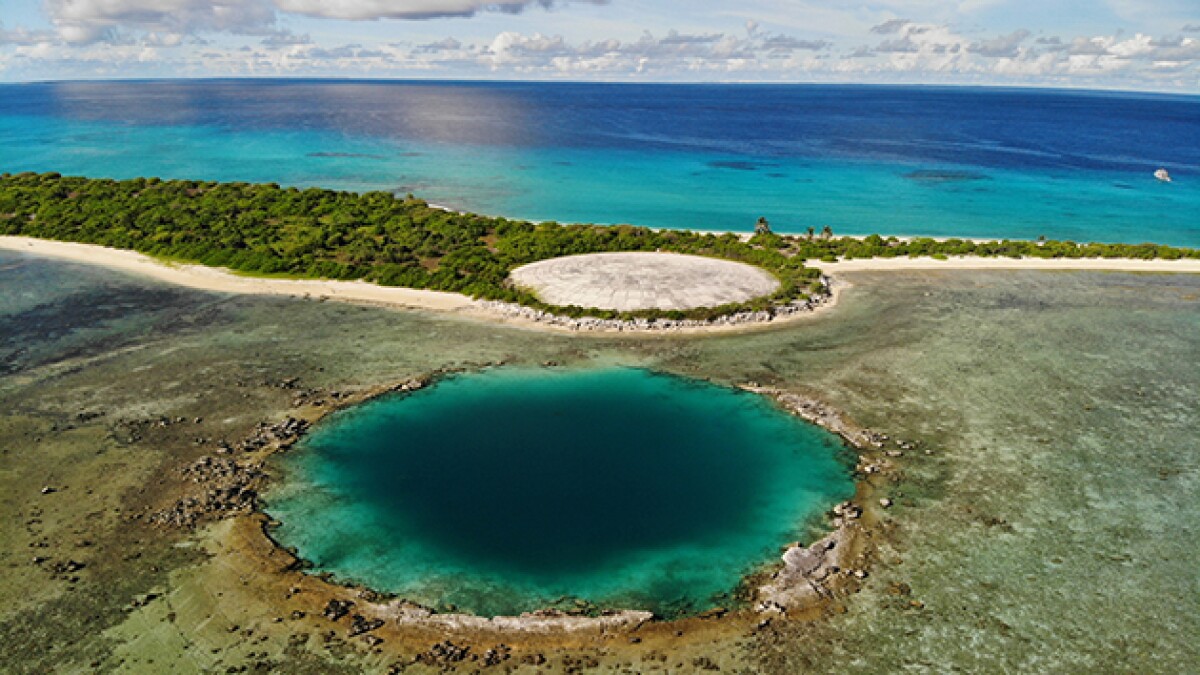
Japan’s plan to discharge more than 1,000 tanks of nuclear wastewater into the Pacific has incensed island nations.
VICE, By Hanako Montgomery 17 Feb 23,
TOKYO — In the middle of the Pacific Ocean, a group of tropical islands has never seen winter. But one morning 70 years ago, a loud bang followed by a flash of light made it “snow” for the first time.
Fluttery and white, the powdery material sank into the Marshall Islands’ deep blue lagoons. It lightly covered the palm trees that lined Rongelap Atoll, astounding those who came out of their thatched homes to watch it settle on roofs. Children played with it, scooping the dust into their mouths.
But within hours, the atoll’s residents mysteriously began falling ill. Hair fell out in clumps. Skin burned. People vomited. They were evacuated two days later, but the damage was already done. Years later, the Rongelapese would suffer heightened cases of cancer, miscarriages, and birth deformities.
This was the fallout of Castle Bravo, the U.S.’ largest-ever thermonuclear bomb test that sprinkled radioactive debris on that warm March day. Now, residents of the island nations that include Fiji, the Marshall Islands, and French Polynesia invoke the nuclear accident and its subsequent contamination to oppose Japan’s plan to release its nuclear wastewater into the Pacific.
“We have a legacy of being the dumping ground when it comes to the issue of nuclear waste,” James Bhagwan, a Fijian anti-nuclear activist and secretary-general of the Pacific Conference of Churches, told VICE World News.
“Pacific Islanders have a spiritual bond with both land and ocean. So this again speaks to the issue of poisoning a part of us, our family,” he said.
The comparison Bhagwan drew between the controlled release of treated wastewater and an atmospheric nuclear test gone wrong may sound like a stretch. But it speaks to how much Pacific Island nations fear Japan’s planned discharge in the coming months of more than 1.3 million metric tons of contaminated water into the world’s largest ocean.
The nuclear waste sits in over 1,000 water tanks in Japan’s northeastern prefecture of Fukushima, the product of the meltdown of the Daiichi nuclear reactors there in 2011. …………………………………….
In objecting to the release, Motarilavoa Hilda Lini, a Vanuatu stateswoman, has cited the slogan of the Nuclear Free and Independent Pacific movement: “If it is safe, dump it in Tokyo, test it in Paris, and store it in Washington, but keep our Pacific nuclear-free.”…………………………………………………………..
Ken Buesseler, a marine radiochemist and one of five experts on the Pacific Islands Forum’s panel of independent scientists, questioned TEPCO’s ability to sufficiently remove radioactive material from the liquid. He cited how, in 2020, the company had to retreat about 70 percent of the stored wastewater because it was found to contain amounts of radioactive substances exceeding standards.
“That doesn’t give me a lot of confidence,” he told VICE World News. Monitoring the wastewater after it was released into the ocean would be too late, Buesseler added, as once it’s in the ocean, TEPCO can’t get it back.
He also faulted the company for analyzing only about a quarter of the 1,061 tanks and providing testing results on just seven radioactive substances out of the dozens TEPCO said it would monitor. This, he said, ignored the possibility that there would be variation among the tanks, potentially overlooking harmful levels of more radioactive substances such as cesium-137 and strontium-90………………………………………………
Though the deadline for Japan’s release of the treated wastewater is fast approaching, the country is yet to fully convince Pacific Island nations that its plan won’t be harmful. The tanks fill up day by day, swelling to their 1.3 million ton limit.
Now, the Pacific Islands are running out of time to defend their oceans, the environmentalist Bhagwan said, warning Japan of the consequences that could lay ahead.
“The culture of shame will be laid upon the Japanese government and the people of Japan in years to come. Do they want that to be part of their legacy?” he said. https://www.vice.com/en/article/4axjk9/japan-nuclear-disaster-fukushima-wasterwater-pacific-islands
US set to boost military presence near China
Washington and the Philippines have announced plans for four more American bases. 5 Feb 23, https://www.rt.com/news/570878-us-philippines-military-bases/
The US military will be deployed to four new bases in “strategic areas” of the Philippines, the two countries announced on Thursday. The agreement was reached during the ongoing visit of US Defense Secretary Lloyd Austin, who met Philippine President Ferdinand ‘Bongbong’ Marcos Jr in Manila.
The two nations are set to “accelerate the full implementation” of the Enhanced Defense Cooperation Agreement (EDCA), a framework regulating the deployment of US troops to the Philippines, which is listed among Washington’s “major” non-NATO allies.
“The United States has allocated over $82 million toward infrastructure investments at the existing five sites under the EDCA, and is proud that these investments are supporting economic growth and job creation in local Philippine communities,” the Pentagon said in a statement.
Apart from further development of the existing bases, the US military will be deployed to four new sites in unspecified “strategic areas of the country.”
“The United States and the Philippines have committed to moving quickly in agreeing to the necessary plans and investments for the new and existing EDCA locations. The Philippine-US Alliance has stood the test of time and remains ironclad. We look forward to the opportunities these new sites will create to expand our cooperation together,” the Pentagon added.
The move comes amid mounting tensions in the region, namely around Taiwan and the South China Sea, a busy waterway subject to overlapping maritime and territorial claims by multiple nations, including China. The Philippines, a former US colony and long-standing Washington ally, has maintained close economic ties with Beijing.
China has already condemned the US-Philippines plan, accusing Washington of stirring up further tension. The Chinese Embassy in the Philippines expressed hope that Manila would be “vigilant and resists from being taken advantage of.”
“The United States, out of its self interests and zero-sum game mentality, continues to step up military posture in this region. Its actions escalate regional tension and undermine regional peace and stability,” the embassy said in a statement.
“Such moves contradict the common aspiration of regional countries to seek peace, cooperation and development, and run counter to the common aspiration of the Filipino people to pursue sound economic recovery and a better life in cooperation with China,” it added.
Twin threats to the Marshallese — Beyond Nuclear International

Art reflects trauma of nuclear testing and climate change
Twin threats to the Marshallese — Beyond Nuclear International
Youth activists paint pictures of their forgotten history and perilous present
From Reverse The Trend and the Marshallese Educational Initiative
Last summer, Reverse The Trend and Marshallese Educational Initiative showcased a series of paintings by Marshallese youth that reflect the twin existential threats of nuclear testing and climate change as part of the Amnesia Atómica Exhibit in New York City’s Times Square.
The paintings expose the trauma experienced by youth living in diaspora in the United States who are learning about the ongoing biological, ecological, and cultural consequences of US nuclear testing on their homelands — a history not taught in US schools.
Joining other youth from affected communities and using art as activism, Marshallese youth are reversing the trend and engaging leaders and their communities to act on these twin threats.
The Amnesia Atómica exposition centered around artist Pedro Reyes’s ZERO NUKES, a 30-foot-tall inflatable sculpture serving as a beacon to bring experts, political leaders, and engaged citizens together to address the nuclear threat.
It was commissioned by the Bulletin of the Atomic Scientists, which focuses on three main areas—nuclear risk, climate change, and disruptive technologies—and equips the public, policymakers, and scientists with the information needed to reduce man-made threats to our existence.
The sculpture was designed to serve as a central platform for a series of public programs and events to spotlight the voices of activists, artists, scientists, and community organizations in the anti-nuclear field, and drive conversations around non-proliferation and disarmament.
Amnesia Atómica was curated by Pedro Alonzo, who specializes in ambitious artworks in public spaces.
We are also sharing our documentary, “A Journey Home.” The film is based on a community poem written by six Marshallese students — ranging from high school to undergraduate — living in Springdale, Arkansas. It is a reflection on the many meanings of home: as Arkansas, as the Marshall Islands, and as Earth that needs to be protected and cultivated for the next generation…………more https://beyondnuclearinternational.org/2023/02/05/twin-threats-to-the-marshallese/—
US makes diplomatic move targeting China
Washington sends diplomats to Solomon Islands after 30-year absence
https://www.rt.com/news/570836-us-embassy-solomon-islands/ 2 Feb 23
The US embassy in the Solomon Islands reopened on Thursday, decades after being shut down as redundant, amid concerns in Washington about the South Pacific archipelago’s overtures to Beijing.
The mission in Honiara will consist of a charge d’affaires, a “couple” of State Department employees and a “handful” of locals, according to Associated Press, which described the reopening as part of an effort to “counter China’s push into the Pacific.”
In a pre-recorded statement, US Secretary of State Antony Blinken said that through its new embassy, Washington will be “better positioned” to advance democracy and “tackle shared challenges.”
Located about 1,800 kilometers northeast of Australia, the Solomons last hosted a US diplomatic mission in 1993, when the State Department decided to downsize due to the end of the Cold War. The US had played a key role in liberating the archipelago from Japanese occupation during the Second World War, in the bloody Guadalcanal campaign.
In 2019, however, Honiara decided to transfer its diplomatic relations with China from the nationalist exiles in Taiwan to the Communist government in Beijing. The decision touched off riots in Guadalcanal, with protesters targeting Chinese businesses and setting fire to the prime minister’s residence.
In 2022, Honiara signed a security agreement with China, causing further alarm in the US and Australia. The State Department informed Congress that reopening the embassy was a priority given China’s “growing influence” and fears of a military build-up in the Solomons.
The US had told the Solomons that Washington would have “significant concerns and respond accordingly” to any “permanent military presence, power-projection capabilities, or a military installation” by China.
The Australian government said any kind of Chinese naval base in the archipelago would be a “red line” for Canberra, while some commentators even called for invading the islands.
In response to those concerns, Solomon Islands Prime Minister Manasseh Sogavare said that Australia remains the “security partner of choice,” and issued assurances that there would be no Chinese military base, insisting the security pact with Beijing “had solely domestic applications.”
Japan’s Plan To Discharge Water From Fukushima Nuclear Plant Faces Pacific Opposition
By BenarNews, By Stephen Wright
Officials from Pacific island nations will meet Japan’s prime minister in March in an effort to halt the planned release of water from the tsunami-damaged Fukushima Daiichi nuclear plant into the Pacific Ocean, a regional leader said.
Plans to dispose of Fukushima water over four decades are a source of tension between Japan and Pacific island nations and a possible complication for the efforts of the United States and its allies to show a renewed commitment to the Pacific region as China’s influence grows.
The planned discharges “are a very serious issue that our leaders have accepted must be stopped at all costs,” Henry Puna, secretary-general of the 18-nation Pacific Islands Forum, said Thursday at a press conference in the Solomon Islands capital Honiara.
The Japanese government’s timetable for disposal of Fukushima water indicates that releases could begin as soon as April this year – part of an effort to decommission the stricken power station over several decades. Water contaminated by the nuclear reactors damaged in a 2011 tsunami is stored in dozens of large tanks at the coastal Fukushima plant.
Japan’s method involves putting the contaminated water through a purification process known as the Advanced Liquid Processing System, which it says will reduce all radioactive elements except tritium to below regulatory levels. The treated water would then be diluted by more than 100 times to reduce the level of tritium – radioactive hydrogen used to create glow-in-the-dark lighting and signs……………………………
Data doubts
Five scientists working with the Pacific Islands Forum last week criticized the quality of data they had received from Tokyo Electric on the treated water in the tanks and expressed doubts about how well the purification process works.
Over more than four years, only a quarter of tanks had been tested for radiation, and testing rarely covered more than nine types of radiation out of 64 types that should be tested for, said the five scientists, who include Woods Hole Oceanographic Institution’s senior scientist Ken Buesseler.
“The accident is not over; this is not normal operations for a reactor. Therefore, extraordinary efforts should be made to prove operations are safe and will not cause harm to the environment,” the scientists’ presentation said.
The Pacific Islands Forum has described the scientists as independent nuclear experts. The forum’s secretariat didn’t respond to a question about whether the scientists are compensated for their work with the forum.
Nigel Marks, a materials scientist at Australia’s Curtin University and former nuclear reactor engineer, who is not advising the forum, said he is sympathetic to concerns that Tokyo Electric’s data could be more complete.
“But at the same time some recognition for Japan’s unique situation must be acknowledged,” he said. “The authorities have done their very best that technology allows. Eventually they reach a point where there is too much water to store.”
Puna said the Pacific islands delegation would meet with Japanese Prime Minister Fumio Kishida around March 7. They want a delay in water releases, at the very least, while more research is carried out, he said.
“There are serious gaps in the scientific evidence on the safety or otherwise of the proposed release,” Puna said. “I am pleased that the Japanese prime minister has finally agreed to meet with a high-level delegation from our region.”
Decades of Fukushima water discharges, Puna said, could “damage our livelihoods, our fisheries livelihoods, our livelihood as people who are dependent very much and connected to the ocean in our culture and identity.”
Mihai Sora, a Pacific analyst at Australia’s Lowy Institute, said it’s hard to imagine a more alarming proposition for Pacific island nations given the “toxic legacy” of nuclear weapons testing and waste dumping in the Pacific.
The timing, amidst regional geopolitical competition that has traditional powers falling over themselves to demonstrate who’s a better partner to the Pacific, could scarcely be worse,” Sora said.
The United States, United Kingdom and France carried out more than 300 nuclear detonations in the Pacific from 1946 to 1966, according to the International Disarmament Institute at Pace University in New York, which exposed thousands of military personnel and civilians to radiation and made some atolls uninhabitable.
“Decades of hard-won regional goodwill towards Japanese Pacific engagement are at risk with this single policy initiative,” Sora said……………….
Japan’s embassy in Suva, Fiji didn’t respond to a request for comment. https://www.eurasiareview.com/28012023-japans-plan-to-discharge-water-from-fukushima-nuclear-plant-faces-pacific-opposition/
1 This Month
23-25 October – on Zoom – World BEYOND War’s annual global conferenc


Shut down the radiation-damaged Heysham nuclear reactors now
To see nuclear-related stories in greater depth and intensity – go to https://nuclearinformation.wordpress.com

Say No to NASA’s Reckless Nuclear Reactor on the Moon
Say No to NASA’s Reckless Nuclear Reactor on the Moon

-
Archives
- October 2026 (247)
- September 2026 (339)
- August 2026 (330)
- July 2026 (355)
- June 2026 (287)
- May 2026 (306)
- April 2026 (356)
- March 2026 (251)
- February 2026 (267)
- January 2026 (308)
- December 2025 (358)
- November 2025 (359)
-
Categories
- 1
- 1 NUCLEAR ISSUES
- business and costs
- climate change
- culture and arts
- ENERGY
- environment
- health
- history
- indigenous issues
- Legal
- marketing of nuclear
- media
- opposition to nuclear
- PERSONAL STORIES
- politics
- politics international
- Religion and ethics
- safety
- secrets,lies and civil liberties
- spinbuster
- technology
- Uranium
- wastes
- weapons and war
- Women
- 2 WORLD
- ACTION
- AFRICA
- Atrocities
- AUSTRALIA
- Christina's notes
- Christina's themes
- culture and arts
- Events
- Fuk 2022
- Fuk 2023
- Fukushima 2017
- Fukushima 2018
- fukushima 2019
- Fukushima 2020
- Fukushima 2021
- general
- global warming
- Humour (God we need it)
- Nuclear
- RARE EARTHS
- Reference
- resources – print
- Resources -audiovicual
- Weekly Newsletter
- World
- World Nuclear
- YouTube
-
RSS
Entries RSS
Comments RSS

