French Nuclear tests: revelations about a cancer epidemic

|
Nuclear tests: revelations about a cancer epidemic https://www.mediapart.fr/journal/international/090321/essais-nucleaires-revelations-sur-une-epidemie-de-cancers MARCH 9, 2021 BY DISCLOSE
In a confidential report, the Polynesian government acknowledges the existence of a “cluster of thyroid cancers” directly linked to French nuclear tests.On July 2, 1966, in the greatest secrecy, France carried out its first nuclear test in the Polynesian sky. That day, at 5:34 am, Aldebaran, the name given to the bomb, was fired from a barge installed on an azure lagoon, near the Mururoa atoll. A few microseconds after the explosion, a fireball appears. This incandescent mass of several thousand degrees rises in the sky and forms, as it cools, a huge cloud of radioactive dust dispersed by the winds. No less than 46 “atmospheric” tests like this one have been carried out in the space of eight years. Each time, the explosion generated fallout contaminating everything in their path. Starting with the inhabitants of the islands. In total, they were exposed 297 times to intense levels of radioactivity. The general staff have always held to the same line of defense. The atmospheric tests, presented as “clean”, would not have had “consequences for the health” of the Polynesians. For years, the associations defending the victims of the trials have been convinced to the contrary. As for the scientific community, it has tried several times to verify this position through in-depth analyzes of official data, without success. Latest illustrations of this failure: the study published by the National Institute of Health and Medical Research (Inserm) on February 18. At the end of this work commissioned by the Ministry of Defense eight years ago, Inserm considered that the “links between the fallout from atmospheric tests and the occurrence of radiation-induced pathologies” were difficult to establish, due to a lack of data. reliable on the contamination of the archipelagos. Cluster of cancers ” However, a confidential report submitted to the Polynesian government a year earlier, in February 2020, argues the opposite. Disclose has obtained a copy of this never-before-released document. Soberly titled “Health consequences of French nuclear tests in the Pacific”, this eight-page report was written by a French military doctor at the request of the Monitoring Medical Center, an administration created in 2007 by the French and Polynesian governments and responsible for screening radiation-induced diseases. In other words, pathologies linked to repeated exposure to ionizing radiation. According to the author, some 10,000 Polynesians, including 600 children under the age of 15 living in the Gambier Islands, Tureia or even Tahiti have thus received a dose of radioactivity of 5 millisieverts (mSv), that is to say five times more than the minimum threshold (1 mSv) above which exposure is considered dangerous for human health. But the most embarrassing information is on page 5 of the document. For the first time, an official report establishes a direct link between nuclear tests and the extent of the number of cancers in the population. “The presence of a ‘cluster’ of thyroid cancers focused on the islands subjected to fallout during aerial shots, and in particular in the Gambier Islands, leaves little doubt about the role of ionizing radiation, and in particular of thyroid exposure to radioactive iodine, in the occurrence of this excess of cancers, ”says the author. The thyroid, an organ at the base of the neck, is particularly sensitive to ionizing radiation, especially in childhood, when the risk of developing thyroid cancer is greatest. The incidence of thyroid cancer and the link with the atmospheric gunfire campaign were precisely the subject of an Inserm analysis in 2010. According to this study, 153 thyroid cancers were diagnosed between 1985 and 1995 in the population born before 1976 and residing in French Polynesia. As a result, the number of people with thyroid cancer was two to three times higher than in New Zealand and Hawaii. Without being able to establish a direct link with nuclear tests, the college of experts already deplored the lack of available data. Based on data from the time, Disclose and Interprt, in partnership with the Science and Global Security program at Princeton University (United States), reassessed the doses of radioactivity received in the thyroid by the inhabitants of the Gambier, of Tureia and Tahiti during six of the most contaminating nuclear tests. Our estimates show that the doses received would be between two and ten times higher than the estimates established by the French Atomic Energy Commission (CEA) in 2006. How can we explain such a gap between our results and those of the CEA? The answer lies in the details of the calculation options chosen by the scientists at the Atomic Energy Commission. Take the example of Aldebaran, the first test in the open air. The CEA estimated that the population of the Gambier Islands, very exposed to toxic fallout, only drank river water, but no rainwater, which is much more loaded with radioactive particles. Many witnesses met in Polynesia question this assertion. This is the case with Julie Lequesme, 12 years old at the time of the events. “We had only that, rainwater,” says the resident of Taku, a village northeast of Mangareva, the main island of the Gambier archipelago. The same goes for Rikitea, the capital of the island, where “the running water network was not completed until the end of the 1970s”, specifies Jerry Gooding, the former president of the association. , the main organization supporting civilian victims of nuclear tests. Rainwater consumption is also confirmed by at least four official documents we obtained. A study by the Office for Scientific and Technical Research Overseas (Orstom) published in August 1966, one month after the start of the tests, thus notes that some of the islanders only consumed rainwater, in particular in because of their isolation. Same conclusion in a report from the Joint Biological Control Service (SMCB), an army service, dated April 24, 1968. By reintegrating the consumption of rainwater after Aldebaran, our estimates for the exposure of a child aged 1 to 2 at the time are 2.5 times higher than official calculations. Of the six tests we reconstructed, the consumption of rainwater was the main source of exposure to radioactivity for five of them. By choosing not to incorporate this data or by minimizing its importance, the state has therefore knowingly underestimated the extent of the contamination. In the Gambiers, cancer as a legacy According to the Ministry of the Armed Forces, the Gambier Islands have been affected by atmospheric fallout 31 times. In fact, the archipelago was struck by all the tests carried out between 1966 and 1974. Since then, cancer has spread everywhere. From Rikitea to Taku, to the shore of Taravai, the inhabitants are convinced: this plague is directly linked to atomic experiments. By investigating the field and meeting dozens of witnesses, Disclose was able to map the disease in Mangareva, the main Gambier island. Although we have not been able to establish a direct link between the trials and the number of cancers on site, the result is instructive. Yves Salmon developed carcinoma, a radiation-induced cancer of the blood, in 2010. His wife contracted breast cancer. She was recognized as a victim of French nuclear tests. The same goes for his sister. Utinio, Yves Salmon’s neighbor, contracted thyroid cancer in 2001. The man, who still lives near the village of Taku, spent his childhood in the Gambiers. In 2010, the French state finally recognized him as a victim of nuclear tests. Monique, 69, is Utinio’s cousin. She was a thyroid cancer survivor after two years in hospital and received state compensation in August 2011. Monique has six children, four of whom have thyroid cancer. Her two daughters have sought compensation from the Nuclear Test Victims Compensation Committee (Civen) without having received any answers yet. Sylvie (first name has been changed) and her older sister, born in 1972 and 1971, both suffered from breast cancer. “It was when our elders started dying that we really began to wonder,” said the eldest. Their mother died of the same disease in 2009. She was recognized as a victim of nuclear tests, just like Sylvie. This resident of Mangareva now fears for her daughter. Julie Lequesme’s father, an elder from Taku village, died of throat cancer in 1981 after working in Mururoa. “The island doctor told me that based on my father’s X-rays, he was a heavy smoker,” she says. However, my father never touched a cigarette. Her husband, a CEA alumnus, also died of cancer in 2010. In the family of Catherine Serda, a former resident of the small village of Taku, eight people suffered from cancer between the end of the 1970s and the beginning of the 1990s. Their common point: they all lived in Mangareva at the time. tests. If you have any information to give us, you can contact us at enquete@mediapart.fr. If you wish to send documents through a highly secure platform, you can connect to the frenchleaks.fr site |
|
110, 000 people in French Polynesia affected by the radioactive fallout from atomic bomb tests
BBC 9th March 2021, Researchers used declassified French military documents, calculations and testimonies to reconstruct the impact of a number of the tests. They
estimated that around 110,000 people in French Polynesia were affected by
the radioactive fallout. The number represented “almost the entire”
population at the time, the researchers found.
France has consistently underestimated the devastating impact of its nuclear tests in French Polynesia
Guardian 9th March 2021, France has consistently underestimated the devastating impact of its nuclear tests in French Polynesia in the 1960s and 70s, according to
groundbreaking new research that could allow more than 100,000 people to
claim compensation. France conducted 193 nuclear tests from 1966 to 1996 at
Moruroa and Fangataufa atolls in French Polynesia, including 41 atmospheric
tests until 1974 that exposed the local population, site workers and French
soldiers to high levels of radiation. By crunching the data from 2,000
pages of recently declassified French defence ministry documents, analysing
maps, photos and other records, and carrying out dozens of interviews in
France and French Polynesia, researchers have meticulously reconstructed
three key nuclear tests and their fallout.
New Zealand groups oppose launch of U.S. military nuclear satellite

a security expert has suggested it puts New Zealand into “the kill chain” and makes New Zealand a military target.
|
NZ rocket launches may breach nuclear-free laws, say peace groups, The Spinoff
Ollie Neas | 8 Mar 21, Rocket Lab launches of satellites honing US military targeting capabilities have been criticised by the Peace Foundation, which is calling on the PM to step in.Peace groups are calling on the prime minister, Jacinda Ardern, to stop the launch of a controversial US military satellite that is scheduled for lift-off from Mahia this month, saying it may contravene nuclear-free legislation.Rocket Lab’s next mission is due to carry a satellite for the US Army’s Space and Missile Defence Command, called the Gunsmoke-J. The satellite is designed to improve US military targeting capabilities by improving how data is provided to “warfighters”.The satellite has previously been condemned by the Green Party, while a security expert has suggested it puts New Zealand into “the kill chain” and makes New Zealand a military target. Non-profit group The Peace Foundation has now added to those concerns: the launch may breach New Zealand’s nuclear-free laws. In an open letter to the prime minister, the Peace Foundation’s International Affairs and Disarmament Committee says Rocket Lab’s launches for US military agencies risk drawing New Zealand “into supporting the weaponisation of space and the related nuclear arms race”. Satellites contributing to nuclear weapons programmes cannot be approved under New Zealand law. But the Peace Foundation says New Zealand may lack the technical expertise and information necessary to properly assess whether a satellite is making such a contribution. As a result, the Peace Foundation says approvals of US military satellites should be suspended, and approval of the Gunsmoke-J satellite revoked, until greater oversight of space launches is implemented. The letter has been endorsed by 17 civic, peace and religious groups, as well as members of the public………… The US Army says the technology being demonstrated could, among other purposes, assist in “long-range precision fires” – a type of missile used to provide “precision surface-to-surface deep-strike capability”. The minister responsible for approving the satellite, Stuart Nash, told parliament last month that he was “unaware” of its “specific military capabilities”. Otago University conflict resolution and disarmament expert Kevin Clements said it is “astonishing” that Nash was unaware of the Gunsmoke-J’s specific military capabilities. “It is even worse that he is willing to rely on the US Army alone to provide the information required by him and New Zealand’s space agency in relation to the approval process,” Clements said in a statement. “Rocket Lab’s launch programme is increasingly opaque. The precise content of each payload seems intentionally ambiguous and approvals do not seem to take New Zealand’s anti-nuclear legislation into account.” Strong parallel’ with nuclear ships issue The Peace Foundation says there is a “strong parallel” between the launch of US military satellites from New Zealand and the “neither confirm nor deny” issue of the 1980s. The US policy of neither confirming nor denying whether its ships were nuclear armed led to a ban on US warships visiting New Zealand ports – the seminal moment in the anti-nuclear campaign. As with that issue, the Peace Foundation says New Zealand cannot be confident that US military satellites launched from New Zealand are not contributing to nuclear weapons systems. The Peace Foundation says assessing whether the Gunsmoke-J complies with the nuclear free law would require detailed technical knowledge of how the technology might be used in the future. “Increasingly, space-based US military assets are ‘dual-capable’ (can support nuclear and non-nuclear weapons), and dual-capable satellites used for non-nuclear targeting today can easily be used for nuclear targeting tomorrow………. Call to reform space law In light of its concerns, the Peace Foundation says greater oversight is needed over New Zealand’s space regime. It proposes assigning oversight of space launches to the prime minister, strengthening space regulations, and mandating oversight of space-launch activity to the Public Advisory Committee on Disarmament and Arms Control (PACDAC) – a body set up by the Nuclear Free Zone Act to advise the government on disarmament matters. Minutes of PACDAC meetings obtained by The Spinoff under the Official Information Act show the committee has had ongoing concerns about the consistency of space activity with New Zealand’s nuclear free law. Space Agency officials have met with the committee to assure members of the legality of launches. The Peace Foundation also calls for changes to the Technology Safeguards Agreement that New Zealand signed with the US to allow for the transfer of sensitive rocket technology. The treaty requires the US to provide “sufficient information” about its spacecraft to allow New Zealand to assess them, but also allows the US government to veto any space launch from New Zealand. “There are some very big moral questions at stake here,” says Clements. “Is this current Labour government willing for New Zealand soil to be used by Rocket Lab in order to assist US government targeting in conventional and nuclear warfare?” The Peace Foundation’s letter comes a week after Rocket Lab announced that it would list publicly on the Nasdaq stock exchange, with a valuation of $5.7 billion. Although its main launch site and production facility is in New Zealand, Rocket Lab is US owned. Its investors include major US venture capital firms as well as aerospace and defence company Lockheed Martin, which produces nuclear weapons. Rocket Lab also unveiled plans to launch a larger rocket called the Neutron, which will allow it to launch astronauts. Since 2018, Rocket Lab has launched military or intelligence payloads on seven different missions for agencies ranging from US Special Operations Command to the National Reconnaissance Office, a major US spy agency. Rocket Lab says around 30% of its business is for defence agencies. https://thespinoff.co.nz/politics/09-03-2021/nz-rocket-launches-may-breach-nuclear-free-laws-say-peace-groups/ |
|
Nuclear Free And Independent Pacific Day 2021
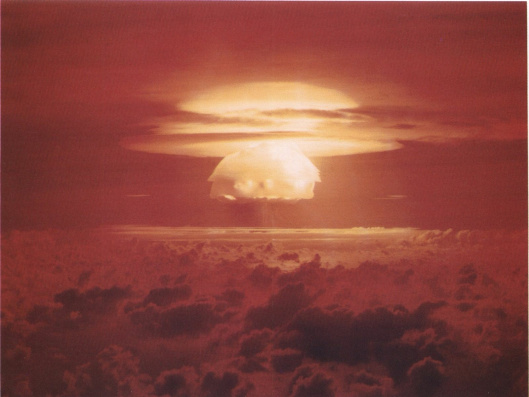
Peace Movement Aotearoa Today, 1 March, is Nuclear Free and Independent Pacific Day – the 67th anniversary of the ‘Bravo’ nuclear bomb detonation by the United States close to the surface of Bikini Atoll, in the Marshall Islands, which blasted out a crater more than 200 feet deep and a mile across.
Particles of radioactive fallout from the blast landed on the island of Rongelap (100 miles away) to a depth of one and a half inches in places, and radioactive mist appeared on Utirik (300 miles away). The US navy did not send ships to evacuate the people of Rongelap and Utirik until three days after the explosion. Fallout from this one nuclear weapon detonation spread over more than 7,000 square miles, and traces were detected throughout the Pacific, in India, Japan, the United States and Europe. The Marshallese, and other Pacific peoples subjected to more than 300 full scale nuclear bomb detonations in the Pacific – conducted by Britain, France and the US – were used as human guinea pigs in an obscene experiment to ‘progress’ the insane pursuit of nuclear weapons supremacy.
Nuclear Free and Independent Pacific Day is a day to remember that the arrogant colonial mindset which allowed, indeed encouraged, this horror continues today – the Pacific is still neither nuclear free nor independent.
Much of the Pacific remains under foreign control, from military or illegal occupation to dependence on a coloniser state for international representation, including ‘American’ Samoa, Cook Islands, French-Occupied Polynesia, Guam, Hawai’i, Kanaky, Niue, Norfolk Island, Northern Marianas, Pitcairn Island, Rapa Nui, Tokelau, Uvea mo Futuna, and West Papua. The voices of these Pacific peoples, along with the voices of ngā hapū o Aotearoa and indigenous Australians, are not heard directly in the UN General Assembly and other international forums where so many decisions on crucial issues affecting our region are made – not only on nuclear weapons and other disarmament priorities, but also on social and economic justice, human rights, protection of natural resources and the environment, the COVID-19 pandemic, climate justice and demilitarisation.
The Pacific is one of the regions that is being, and will continue to be, most impacted by climate change and extreme weather events which are affecting low-lying islands and Pacific peoples who are dependent on natural resources for food, clothing and shelter, and on water sources that are vulnerable to salinisation by rising sea levels and high seas. Yet the overwhelming majority of fossil fuel use and greenhouse gas emissions do not come from the Pacific island nations.
The Pacific is also one of the most highly militarised regions in the world – but only four Pacific island nations have armed forces. The overwhelming majority of militarisation in the Pacific comes from outside the region – military bases, military training exercises, and military occupation by the armed forces of Indonesia, France and the United States, in particular, along with Australia, Britain, China, New Zealand, Russia and others.
Nuclear Free and Independent Pacific Day is a day to think about the many faces of colonisation – physical, cultural, spiritual, economic, nuclear, military – past and present; the ongoing issues of independence, self-determination and sovereignty here in Aotearoa New Zealand and the other colonised and occupied countries of the Pacific; and the ability of Pacific peoples to stop further nuclearisation, militarisation and economic exploitation of our region.
It is a day to acknowledge and remember those who have suffered and died in the struggle for independence around the Pacific; those who have opposed colonisation in its many forms and paid for their opposition with their health and life; and those who have suffered and died as a result of the nuclear weapons states’ use of the Pacific for nuclear experimentation, uranium mining, nuclear bomb blasts and nuclear waste dumping.
It is a day to celebrate the courage, strength and endurance of indigenous Pacific peoples who have maintained and taken back control of their lives, languages and lands to ensure the ways of living and being which were handed down from their ancestors are passed on to future generations.
It is the day to pledge your support to continue the struggle for a nuclear free and independent Pacific, as the theme of the 8th Nuclear Free and Independent Pacific Conference said: “No te parau tia, no te parau mau, no te tiamaraa, e tu, e tu – For justice, for truth and for independence, wake up, stand up!”
The continuing tragedy and nuclear abomination of U.S. tests on the Marshall Islands
The lingering legacy of US nuclear testing in the Marshall Islands, https://www.nzherald.co.nz/world/the-lingering-legacy-of-us-nuclear-testing-in-the-marshall-islands/NTHZG3PJNS6NXV4SZLPTHCANNY/13 Dec, 2020, By RNZ.
The US detonated its largest nuclear bombs around the Marshall Islands in the 1940s and 50s – but the Marshallese are still campaigning for adequate compensation.
The Marshall Islands are two chains of 29 coral atolls in the middle of the Pacific Ocean between Papua New Guinea and Hawaii.
Following the tests, whole islands ceased to exist, hundreds of native Marshallese had to be relocated off their home islands and many were affected by fallout from the testing.
In 1977, US authorities put the most contaminated debris and soil into a huge concrete dome called the Runit Dome, which sits on Enewetak Atoll and houses 88,000 square metres of contaminated soil and debris.It has recently received media attention as it appears to be leaking, due to cracking and the threat from rising sea levels, while some Marshallese have fears it may eventually collapse.
However, American officials have said it’s not their problem and responsbility falls on the Marshallese, as it is their land.
The US has cited a 1986 compact of free association, which released the US goverment from further liability, which will go up for renegotiation in 2023.
Meanwhile, the Marshallese continue to campaign for adequate compensation from the US.
While he said that suggestions that the Rumit Dome – nicknamed “The Tomb” by locals – was about to collapse were alarmist, there were still major concerns surrouding it.
“The issue is it’s got plutonium, which has a half-life of 24,000 years, and how long does concrete last?”
Describing the structure as a “symbol of the nuclear legacy here”, Johnson said that US government scientists had reported there was already so much contamination in the area that it would be difficult to find what leakage from the dome had added.
The United States has continued to refuse to accept responsibility for the Runit Dome’s condition, despite its history of nuclear testing in the country.
“The nuclear weapons test legacy is the overriding issue in the Marshall Islands with the United States and it remains a festering problem, because US compensation and medical care and so forth was only partial for what was needed,” Johnson said.
The first compact to free association between the Marshall Islands and the US contained a compensation agreement, including the establishment of a nuclear claims tribunal to adjudicate all claims. While it determined there was a large amount of compensation due to Marshallese on various atolls, this has never been paid out, apart from funding of $150 million in 1986.
Since then, the US has accepted no more liability on nuclear compensation, as the compact resulted in the Marshall Islands being an independent country, able to join the United Nations.
However, Johnson said the United States Congress had taken a different position on this.
There have also been big differences in the treatment of Marshallese nuclear victims and those in the United States
“The US used Bikini and Enewetak to test its biggest hydrogen bombs,” Johnson said. “While it maintained a nuclear test site in Nevada, it only tested relatively small nuclear devices there, because it simply could not test hydrogen bombs in the continental United States – Americans wouldn’t have stood for it.”
Not long after the 1986 free association compact ended American responsibility for nuclear compensation in the Marshall Islands, the US Congress enacted a radiation compensation act for Americans – which Johnson said really emphasised the unfairness of the situation.
“Long story short, they appropriated $100 million and then they ran out, the US congress appropriated more, again ran out, appropriated more and fast-forward to 2020 and they’re over $2 billion in compensation awarded to American nuclear victims.
Johnson also had concerns about the lack of a baseline epidemiological study by the US, following the tests. Studies on the affects of radiation centred around thyroid issues, but many islanders have reported cancer, miscarriages and stillbirths in the years following.
His wife Darlene Keju died of breast cancer, which also affected her mother and father – she grew up on one of the islands in the downwind zone of the tests.
The US had never looked at rates of cancer, or studied the differences between low fallout and high fallout areas, he said.
Johnson hoped the nuclear legacy between the countries could be worked out amicably, but he wasn’t too optimistic.
Despite this tension, Johnson said the Marshallese did not harbour anti-American sentiment and the compensation issues were a “black mark on an otherwise good relationship” between the two countries.
He said around 30 to 40 percent of all Marshallese were living in the US.
“The Marshall Islands, since WWII, has a very long standing high regard and strong relationship with the US that came out of the end of the Japanese period of militarism and the execution of many islanders and privation, into a period where the US fostered democratic institutions, created opportunities for education, providing scholarships, opening the door to people going to the US and the unpacked treaty really put this together, in terms of the relationship that’s of benefit to both sides.”
However, ongoing tensions between the US and China may help the Marshall Islands in their push for further compensation.
“Possibly the changing geopolitical situation out here might offer an opening to get some interest to try to amicably do something to resolve the whole thing,” Johnson said.
But the nuclear legacy is not the only issue affecting the island – climate change is looming large and reports by US scientists have said that the Marshall Islands could be uninhabitable by the 2030s, due to rising sea levels.
Nuclear power – simply unaffordable for the Philippines
|
DOE to submit ‘nuclear power plan’ to Duterte this December, Manila Bulletin, November 6, 2020, by Myrna M. Velasco” For BNPP’s repowering, Duterte previously instructed the energy department to also undertake a study on that proposal; and to assess the cost impact that will have on consumers’ pockets.
But on that particular sphere, Senate Committee on Energy Chairman Sherwin T. Gatchalian sounded off cynicism on claims that electricity rates in the Philippines will go down with the proposed repowering of the mothballed 620-megawatt BNPP project. “It’s not true that prices are lower because of the layers of technology that shall be integrated into the nuclear power facility to ensure its safe operations,” he claimed. Gatchalian noted that in Vietnam’s case, that country shelved its planned nuclear power development after determining that the resulting power price will just be comparable with other electric generating facilities — and yet there’s great degree of risk that they have to manage on the safety aspect of technology deployment. ………In the Philippines, the propounded revival of BNPP’s operations had been hurdled by concerns of ‘social acceptance’ in the many years that already passed; and there are also questions on where to source the US$1.0 billion to US$2.0 billion funding for BNPP’s rehabilitation.The other major issue is which entity shall be designated to operate the plant, since the Electric Power Industry Reform Act (EPIRA) already prohibits state-run National Power Corporation (NPC) from engaging into operation or investments in power generation… |
Now climate change, rising seas, swamping Kiribati and the Marshall Islands, victims of nuclear racism
Losing paradise, Atomic racism decimated Kiribati and the Marshall Islands; now climate change is sinking them, Beyond Nuclear https://wordpress.com/read/feeds/72759838/posts/2998141589–1 Nov 20, This is an extract from the Don’t Bank on the Bomb Scotland report “Nuclear Weapons, the Climate and Our Environment”.
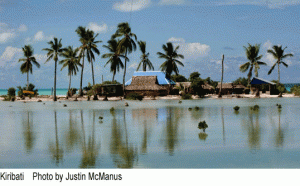 Kiribati. In 1954, the government of Winston Churchill decided that the UK needed to develop a hydrogen bomb (a more sophisticated and destructive type of nuclear weapon). The US and Russia had already developed an H-bomb and Churchill argued that the UK “could not expect to maintain our influence as a world power unless we possessed the most up-to-date nuclear weapons”.
The governments of Australia and New Zealand refused to allow a hydrogen bomb test to be conducted on their territories so the British government searched for an alternative site. Kiritimati Island and Malden Island in the British Gilbert and Ellice Islands Colony in the central Pacific Ocean (now the Republic of Kiribati) were chosen. Nine nuclear weapons tests – including the first hydrogen bomb tests – were carried out there as part of “Operation Grapple” between 1957 and 1958.
Military personnel from the UK, New Zealand and Fiji (then a British colony) and Gilbertese labourers were brought in to work on the operation. Many of the service personnel were ordered to witness the tests in the open, on beaches or on the decks of ships, and were simply told to turn their backs and shut their eyes when the bombs were detonated. There is evidence that Fijian forces were given more dangerous tasks than their British counterparts, putting them at greater risk from radiation exposure. The local Gilbertese were relocated and evacuated to British naval vessels during some of the tests but many were exposed to fallout, along with naval personnel and soldiers.
After Grapple X, the UK’s first megaton hydrogen bomb test in November 1957, dead fish washed ashore and “birds were observed to have their feathers burnt off, to the extent that they could not fly”. The larger Grapple Y test in 1958 spread fallout over Kiritimati Island and destroyed large areas of vegetation.
Despite evidence that military personnel and local people suffered serious health problems as a result of the tests, including blindness, cancers, leukaemia and reproductive difficulties, the British government has consistently denied that they were exposed to dangerous levels of radiation and has resisted claims for compensation.
Like the Marshall Islands, the low-lying Republic of Kiribati is now bearing the brunt of the effects of climate change. Salt water washed in on king tides has contaminated the islands’ scarce freshwater resources. Pits that are used to grow taro plants have been ruined and the healthy subsistence lifestyle of local people is under threat.
It is predicted that rising sea levels will further impact freshwater resources and reduce the amount of agricultural land, while storm damage and erosion will increase. Much of the land will ultimately be submerged. In anticipation of the need to relocate its entire population, the government of Kiribati bought 20km2 of land on Fiji in 2014.
The UK is set to spend £3.4 billion a year on Trident nuclear weapons system between 2019 and 2070. If Trident were scrapped, a portion of the savings could be provide to the Republic of Kiribati in the form of climate finance (see section 1.2.1). Scrapping Trident would also allow money and skills to be redirected towards measures aimed at drastically cutting the UK’s carbon emissions (see section 1.2.2) – action that Pacific island nations are urgently demanding.
The Marshall Islands. The most devasting incident of radioactive contamination took place 8,000 km from the US mainland during the Castle Bravo test in 1954. The US detonated the largest nuclear weapon in its history at Bikini Atoll in the Marshall Islands, causing fallout to spread over an area of more than 11,000km. Residents of nearby atolls, Rongelap and Utirik, were exposed to high levels of radiation, suffering burns, radiation sickness, skin lesions and hair loss as a result.

Castle Bravo was just one of 67 nuclear weapons tests conducted by the US in the Marshall Islands between 1946 and 1958. Forty years after the tests, the cervical cancer mortality rate for women of the Marshall Islands was found to be 60 times greater than the rate for women in the US mainland, while breast and lung cancer rates were five and three times greater respectively. High rates of infant mortality have also been found in the Marshall Islands and a legacy of birth defects and infertility has been documented. Many Marshallese were relocated by the US to make way for the testing.
Some were moved to Rongelap Atoll and relocated yet again after the fallout from Castle Bravo left the area uninhabitable.
Rongelap Atoll was resettled in 1957 after the US government declared that the area was safe. However, many of those who returned developed serious health conditions and the entire population was evacuated by Greenpeace in 1984. An attempt to resettle Bikini Atoll was similarly abandoned in 1978 after it became clear that the area was still unsafe for human habitation.
A 2019 peer-reviewed study found levels of the radioactive isotope caesium-137 in fruits taken from some parts of Bikini and Rongelap to be significantly higher than levels recorded at the sites of the world’s worst nuclear accidents, Chernobyl and Fukushima.
Compounding the injustice of nuclear weapons testing, the Republic of the Marshall Islands is now on the frontline of the climate emergency. The government declared a national climate crisis in 2019, citing the nation’s extreme vulnerability to rising sea levels and the “implications for the security, human rights and wellbeing of the Marshallese people”.
At Runit Island, one of 40 islands in the Enewetak Atoll, rising sea levels are threatening to release radioactive materials into an already contaminated lagoon. In the late 1970s, the US army dumped 90,000 cubic metres of radioactive waste, including plutonium, into a nuclear blast crater and covered it with a concrete cap. Radioactive materials are leaking out of the crater and cracks have appeared on the concrete cap. Encroaching salt water caused by rising sea levels could collapse the structure altogether. The Marshallese government has asked the US for help to prevent an environmental catastrophe but the US maintains that the dome is the Marshall Islands’ responsibility. Hilda Heine, then President of the Republic of the Marshall Islands, said of the dome in 2019: “We don’t want it. We didn’t build it. The garbage inside is not ours. It’s theirs.”
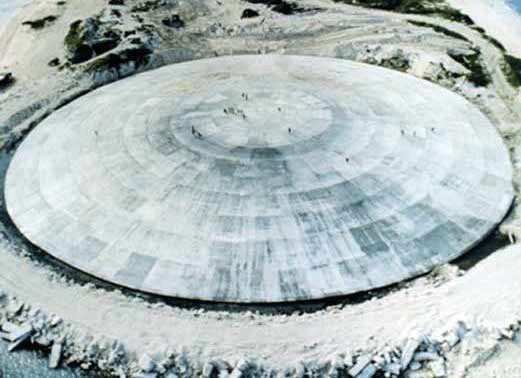
The Runit Island dome offers a stark illustration of the ways in which the injustices of nuclear weapons testing and climate change overlap. Marshall Islanders were left with the toxic legacy of nuclear weapons testing conducted on their territory by another state. The country is now being forced to deal with the effects of a climate crisis that they did not create, including the erosion of the Runit dome.
The nations that contributed most to the crisis are failing to cut their emissions quickly enough to limit further global heating, leaving the Marshallese at the mercy of droughts, cyclones and rising seas. A recent study found that if current rates of greenhouse gas emissions are maintained, the Marshall Islands will be flooded with sea water annually from 2050. The resulting damage to infrastructure and contamination of freshwater supplies will render the islands uninhabitable.
If the US scrapped its nuclear weapons programme, it could give a portion of the billions of dollars that would be saved to the Republic of the Marshall Islands to help the country mitigate and adapt to climate disruption (see section 1.2.1 on international climate finance). The US could also use the freed-up funds to invest in its own Just Transition away from a fossil-fuel powered economy. Read the full report.
A bit of good news – Chameleon last seen a century ago rediscovered in Madagascar
|
Chameleon last seen a century ago rediscovered in Madagascar https://www.theguardian.com/environment/2020/oct/30/voeltzkow-chameleon-rediscovered-madagascar
Scientists find several living specimens of Voeltzkow’s chameleon during expedition Scientists have found an elusive chameleon species that was last spotted in Madagascar 100 years ago.Researchers from Madagascar and Germany said on Friday they had discovered several living specimens of Voeltzkow’s chameleon during an expedition to the north-west of the African island nation. In a report published in the journal Salamandra, the team, led by scientists from the Bavarian State Collection of Zoology (ZSM), said genetic analysis determined that the species was closely related to Labord’s chameleon. Researchers believe that both reptiles only live during the rainy season – hatching from eggs, growing rapidly, sparring with rivals, mating and then dying during a few short months. “These animals are basically the mayflies among vertebrae,” said Frank Glaw, the curator of reptiles and amphibians at the ZSM. Researchers said the female of the species, which had never previously been documented, displayed particularly colourful patterns during pregnancy, when encountering males and when stressed. The scientist say the Voeltzkow’s chameleons’ habitat is under threat from deforestation. |
|
Pacific islands demand truth on the decades of nuclear testing, now that nuclear weapons are becoming illegal
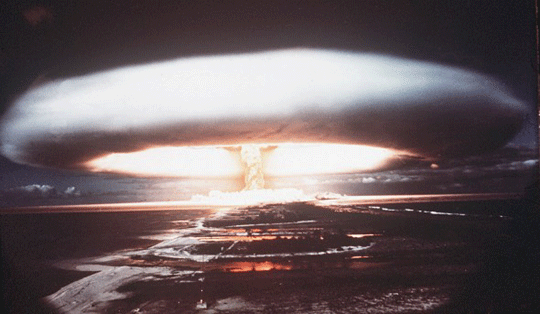
Guardian 25th Oct 2020, Now that nuclear weapons are illegal, the Pacific demands truth on decades of testing. Nuclear weapons will soon be illegal. Just over 75 years since their devastation was first unleashed on the world, the global community has rallied to bring into force a ban through the Treaty on the Prohibition of Nuclear Weapons.
Late on Saturday night in New York, the 50th country – the central American nation of Honduras – ratified the treaty. It will become international law in 90 days. For many across the Pacific region, this is a momentous achievement and one that has been long called
for. Over the second half of the 20th century 315 nuclear weapons tests were conducted by so-called “friendly” or colonising forces in the Marshall Islands, Kiribati, Australia and Maohi Nui (French Polynesia).
The United States, Britain and France used largely colonised lands to testtheir nuclear weapons, leaving behind not only harmful physical legacies but psychological and political scars as well. Survivors of these tests and their descendants have continued to raise their voices against these weapons. They are vocal resisters and educators, the reluctant but intense knowledge holders of the nuclear reality of our region.
Tuvalu – the 47th nation to ratify the Treaty on the Prohibition of Nuclear Weapons


|
|
Tuvalu ratifies the Treaty on the Prohibition of Nuclear Weapons, https://www.rnz.co.nz/international/pacific-news/428354/tuvalu-ratifies-the-treaty-on-the-prohibition-of-nuclear-weapons
7:20 pm on 14 October 2020 Tuvalu has ratified the Treaty on the Prohibition of Nuclear Weapons, bringing it closer to being in force.
Tuvalu was the 47th nation to make the move, meaning only three more ratifications are needed to empower the treaty. The treaty establishes a comprehensive ban on the weapons of mass destruction and aims to help pave the way to their elimination. Earlier this month, Tuvalu and 11 other Pacific small island developing states delivered a joint statement to the UN on the occasion of the International Day for the Total Elimination of Nuclear Weapons. They noted their region has suffered from the effects of decades of nuclear testing by the United States, the United Kingdom and France.
The 12 nations appealed to all nations that have not yet done so to ratify the Treaty on the Prohibition of Nuclear Weapons, as well as the Comprehensive Nuclear-Test-Ban Treaty of 1996. “We Pacific small island developing states say no to nuclear weapons, and we reiterate our commitment to the elimination of nuclear weapons everywhere.” Tuvalu is the ninth Pacific island nation to join the nuclear weapon ban treaty so far, following Palau, New Zealand, the Cook Islands, Samoa, Vanuatu, Kiribati, Fiji and Niue. Nauru has signed but not yet ratified the treaty.
|
|
Pacific Island Nations determined to say NO to nuclear weapons, and support UN Treaty Ban

|
Pacific will continue to say no to nuclear weapons, UN told, https://www.rnz.co.nz/international/pacific-news/427663/pacific-will-continue-to-say-no-to-nuclear-weapons-un-told 5 Oct 20, Marking International Day Against Nuclear Explosions last weekend, the island nations agreed they had all suffered the effects of nuclear testing in the region.Presenting a joint statement from 12 Pacific countries to the United Nations General Assembly, Fiji’s Prime Minister said more than 300 nuclear tests were carried out in the Pacific from 1946 to 1996 – in the atmosphere, underground and underwater.
Frank Bainimarama told the online event communities living close to ‘ground zero’ were relocated from their ancestral homes and restricted from using the ocean resources for their livelihoods. Mr Bainimarama says those impacted also faced an increase in related health problems. “At the end of these nuclear tests, radioactive waste and machinery were either buried or dumped into the Pacific Ocean. Today, we still do not know the full impact of these nuclear tests on our environment and communities,” Frank Bainimarama said. Bainimarama said Pacific islanders considered themselves the custodians of the vast blue Pacific Ocean. “The Pacific Ocean defines who we are; it serves as the foundation of our economies, our environment, and the well-being of our communities,” he said. “We have a vision that the blue Pacific Ocean will become an ocean of peace and prosperity for our people and the world.” Bainimarama said protecting the blue Pacific continent was of paramount importance to the islanders’ future. He said it could only become an ocean of peace if it was nuclear-free. He said stopping the development of nuclear weapons and eliminating them altogether would free up much-needed global resources to assist vulnerable communities, and those around the world, in fighting the effects of climate change. “The world does not need nuclear weapons,” Bainimarama said. The challenges of nuclear disarmament can only be resolved by a strengthened multilateral system that sets the conditions for transparency, confidence-building, and co-operation.” The Fijian leader said the Treaty on the Non-Proliferation of Nuclear Weapons (NPT), the Comprehensive Nuclear Test Ban Treaty (CTBT) and the Treaty on the Prohibition of Nuclear Weapons (TPNW) were crucial if Pacific islands, which he refers to as PSIDS, were to further reduce and eliminate nuclear weapons. “Today, we PSIDS say no to nuclear weapons and we reiterate our commitment to the elimination of nuclear weapons everywhere,” Bainimarama said. “We encourage member states to ratify the Comprehensive Nuclear Test Ban Treaty (CTBT) and the Treaty on the Prohibition of Nuclear Weapons (TPNW). “It is morally right, and we owe it to ourselves and our future generations.” The Fijian leader presented a joint statement to the UN Assembly from the PSIDS’ members including the Federated States of Micronesia (FSM), Fiji, Kiribati, Nauru, Palau, Papua New Guinea, Marshall Islands, Samoa, Solomon Islands, Tonga, Tuvalu and Vanuatu. Bainimarama said their statement was also aligned with the message sent by the Tuvalu Mission at the UN on behalf of the Pacific Islands Forum. The online event was hosted by UN President Tijjani Muhammad-Bande from Nigeria. |
|
Cost and safety dangers should rule out nuclear power for the Philippines
A report this year placed the cost of reviving the BNPP, as estimated by a foreign group, at $3 billion to $4 billion. Reviving it will go against a trend in other countries to reduce nuclear power in their energy mix, because of safety concerns in the power plants as well as the risks posed by nuclear waste, which remains radioactive and cannot be destroyed or recycled……..
Like Japan, the Philippines sits along the Pacific Ring of Fire. Before the start of this year’s pandemic, Taal Volcano’s powerful phreatic explosion emptied surrounding communities, displaced thousands and blanketed towns and cities all the way to Metro Manila with toxic, suffocating ash. Earthquakes and aftershocks continue to be recorded in Taal, with seismologists warning of the possibility of a cataclysmic eruption.
If the BNPP is revived, at great cost to a cash-strapped government, what happens if Mount Natib also acts up, or if an earthquake hits Bataan? If all the proponents of nuclear energy will live together with their immediate families near the BNPP – and not just for show, buying a house nearby while the kids live in an exclusive village far from harm’s way – then by all means, go ahead with the project. https://www.philstar.com/opinion/2020/10/03/2046802/editorial-going-nuclear
Marshall Islands in danger of being overcome by rising sea levels
Star of the day: David Kabua, President of the Marshall Islands, believes his territory will disappear under rising sea levels, https://pledgetimes.com/star-of-the-day-david-kabua-president-of-the-marshall-islands-believes-his-territory-will-disappear-under-rising-sea-levels/ by Bhavi Mandalia, September 22, 2020 The Marshall Islands facing rising waters. (HILARY HOSIA / AFP)
David Kabua, 71, president for nine months of the Marschall Islands is worried. This small confetti of land lost in the Pacific Ocean, 180 km², perched just two meters from sea level, is threatened by rising waters. There is not much on the 30 atolls that make up the archipelago, nothing to covet, nothing to export, no natural resources, only small farms, fishing boats and a huge radioactive waste storage site. , memory of the American nuclear tests of the 1960s.
This little piece of land, so coveted during the wars for its strategic location, no longer has any leverage to attract attention. And yet, it will soon no longer appear on the world maps. This is the warning cry launched by David Kabua on Monday September 21 at the UN, a simple cry: “My country will disappear if the world does not keep its promises, those made during the Paris agreement.” He recounted the impact of climate change, the increasingly devastating tides, population evacuations, the intense droughts which generate another plague: swarms of mosquitoes carrying various diseases. And then there is the money that is lacking to build the necessary infrastructure to protect its 75,000 inhabitants. Money promised five years ago, and which does not arrive. Finally, there is worse:“The fact, he said, that industrialized countries continue to finance fossil fuels, oil, gas and coal. We are doing our part, but alone we can do nothing. “
David Kabua addresses the United Nations. The UN that the Marschall Islands joined in 1991 but that they could well leave, in fact, not voluntarily, but by force of circumstances, because the atolls will end up submerged. So he concluded by asking: “Will we still be here for the UN’s 100th anniversary in 2045? How about you? Are you going to help us keep our islands in this world?” In the assembly, the question created a long silence. David Kabua, for his part, has nothing more to give than a warning, a prophecy for all. We know. But we look elsewhere. Hope does exist, however, it is in the motto of the Marschall Islands: “Achievement through joint effort“. And we have 25 years ahead of us.
Duterte asks nations to reject war, eliminate nuclear weapons
Duterte asks nations to reject war, eliminate nuclear weapons, Darryl John Esguerra – Reporter / @DJEsguerraINQ
No goals, however lofty, can justify weapons that destroy with such unforgiving brutality,” Duterte said.
The video, which also featured messages by other world leaders, was originally posted on YouTube by the City of Hiroshima to commemorate the 75th anniversary of the atomic bombing last Aug. 6, which was followed by the bombing of Nagasaki on Aug. 9.
“We must not forget: Nuclear weapons will not make us freer, stronger, or more secure. We must not waver. All nations should reject war and do everything to pave the path for peace. We must be firm. All nations must work together to eliminate nuclear weapons,” Duterte said……….Other world leaders in the video were World Health Organization Director-General Tedros Ghebreyesus, Belgium Foreign Affairs and Defense Minister Philippe Goffin, and Lithuanian President Gitanas Nauseda. https://globalnation.inquirer.net/190853/on-75th-anniv-of-hiroshima-bombing-duterte-asks-nations-to-reject-war-eliminate-nuclear-weapons
1 This Month



Shut down the radiation-damaged Heysham nuclear reactors now
To see nuclear-related stories in greater depth and intensity – go to https://nuclearinformation.wordpress.com

Say No to NASA’s Reckless Nuclear Reactor on the Moon
Say No to NASA’s Reckless Nuclear Reactor on the Moon
-
Archives
- October 2026 (247)
- September 2026 (339)
- August 2026 (330)
- July 2026 (355)
- June 2026 (287)
- May 2026 (306)
- April 2026 (356)
- March 2026 (251)
- February 2026 (267)
- January 2026 (308)
- December 2025 (358)
- November 2025 (359)
-
Categories
- 1
- 1 NUCLEAR ISSUES
- business and costs
- climate change
- culture and arts
- ENERGY
- environment
- health
- history
- indigenous issues
- Legal
- marketing of nuclear
- media
- opposition to nuclear
- PERSONAL STORIES
- politics
- politics international
- Religion and ethics
- safety
- secrets,lies and civil liberties
- spinbuster
- technology
- Uranium
- wastes
- weapons and war
- Women
- 2 WORLD
- ACTION
- AFRICA
- Atrocities
- AUSTRALIA
- Christina's notes
- Christina's themes
- culture and arts
- Events
- Fuk 2022
- Fuk 2023
- Fukushima 2017
- Fukushima 2018
- fukushima 2019
- Fukushima 2020
- Fukushima 2021
- general
- global warming
- Humour (God we need it)
- Nuclear
- RARE EARTHS
- Reference
- resources – print
- Resources -audiovicual
- Weekly Newsletter
- World
- World Nuclear
- YouTube
-
RSS
Entries RSS
Comments RSS

