The Children Who Suffered When a U.S. Nuclear Test Went Wrong

The Children Who SufferedWhen a U.S. Nuclear Test Went Wrong https://www.thedailybeast.com/the-children-who-suffered-when-a-us-nuclear-test-went-wrong
YEARS OF SUFFERING
In 1954 the U.S. executed its largest nuclear detonation. The people of the Marshall Islands would endure the effects of fallout for years.Walter Pincus Nov. 07, 2021. During the 1954 Castle Bravo test over Bikini Atoll in the Marshall Islands, America executed its largest nuclear detonation, a thousand times more powerful than the bomb dropped on Hiroshima. Nuclear fallout rained down on inhabitants of atolls more than 100 miles away, including Rongelap.
What follows is an excerpt of Blown to Hell: America’s Deadly Betrayal of the Marshall Islanders, where Dr. Robert A. Conard, a former Navy doctor who was among those who first examined the Marshall Island natives after Bravo, discovers a new impact of the radioactive fallout on children. Beginning in 1956, as an employee of the Atomic Energy Commission’s Brookhaven National Laboratory, Conard led annual medical examinations of the Rongelapese.
Over the years, Dr. Robert A. Conard and pediatricians he brought with him to Rongelap carefully watched the slow development of several children who had been exposed to the 1954 fallout. In the survey done in March 1963, the doctors’ attention was initially focused on two boys who had been one-year-olds at the time of the fallout.
Both showed early signs of cretinism, a condition of stunted physical and mental growth owing to a deficiency of a thyroid hormone often related to iodine deficiency.
Also of particular interest was the development of a palpable nodule in the thyroid gland of 13-year-old Disi Tima, a fisherman’s daughter, who had been exposed to the Bravo fallout when she was four years old.
Members of US congressional oversight committee press the Biden administration on the Marshall Islands’ legacy of nuclear waste contamination
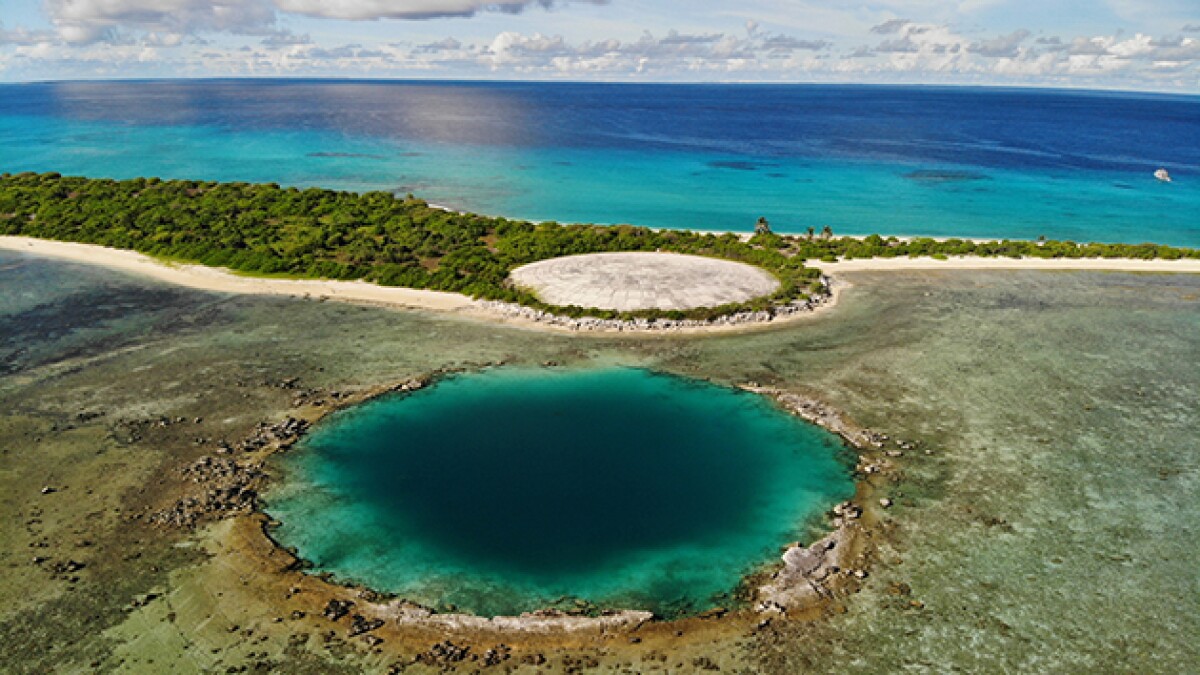
It’s a thorny point for the Marshallese, who are worried about the lingering effects of the nuclear waste left in their nation, decades of persistent health concerns, and a fear that United States officials have not been forthright or transparent about the risks the nuclear waste poses to their health and environmental well-being.
According to a U.S. government presentation delivered in 2019, Runit Dome is vulnerable to leakage caused by storm surge and sea level rise, and its groundwater, which is leaking into the lagoon and ocean, is severely contaminated with radioactive isotopes. Testing of sea creatures in the surrounding lagoon, including giant clams, shows high levels of radioactivity.
Rep. Katie Porter presses Biden team on Marshall Islands nuclear waste, gets few answers, https://www.latimes.com/environment/story/2021-10-22/marshall-islands-nuclear-waste-congressional-hearing-compact, SUSANNE RUST OCT. 22, 2021
For months, U.S. refusal to accept responsibility for a leaking dome of radioactive waste in the Marshall Islands has complicated negotiations with the Marshallese government on an international compact viewed as crucial for blunting Chinese influence in the central Pacific.
On Thursday, members of a congressional oversight committee scolded representatives of the Biden administration for not making more progress on negotiations and taking the Marshallese position more seriously. During the hearing, administration officials offered conflicting statements on U.S. obligations to the Marshall Islands, making it unclear where the White House stands on America’s history in the region. In addition, the U.S. State Department declined to participate.
“The point of the hearing today was to examine why the United States is not willing to discuss the nuclear legacy with the Marshallese,” said Rep. Katie Porter (D-Irvine), who along with a bipartisan panel of lawmakers stressed the critical role the Republic of the Marshall Islands plays in U.S. national security and safety.
Porter, who heads the Natural Resources Subcommittee on Oversight and Investigations, said negotiations will be difficult “unless we act on the moral and national security imperative that we have to address the nuclear legacy.”
The hearing was timed for the 35th anniversary of the signing of the agreement between the two nations, which is set to expire in 2023. It also comes as China develops friendly relations with nations of the central and South Pacific, part of a broader strategy to stem U.S. influence off its shores and worldwide.
The Marshall Islands’ Kwajalein Atoll is home to the Ronald Reagan Ballistic Missile Defense Test Site — where the U.S. tests its long- and mid-range missile defense system. Its location halfway across the Pacific allows the U.S. military to monitor hostile foreign forces, and it is also an important hub for the American space program.
Realizing its leverage, the Marshallese government is increasingly pressing U.S. officials to take ownership for cleaning up Runit Dome. The leaking nuclear repository holds 3.1 million cubic feet of radioactive waste, a byproduct of U.S. weapons testing during the Cold War, and a focus of a Times investigation in 2019.
For decades, the U.S. government has deflected. Instead, it insists the Marshall Islands is solely responsible for the waste site, even though Congress has required the Department of Energy, with funding from the Department of the Interior, to monitor it indefinitely.
Continue readingAUKUS and the Philippines – sleepwalking into military-nuclear entanglements

From peaceful, nuclear-free Asean to battle-ready Indo-Pacific? Manila Times, By Dan Steinbock, October 18, 2021As the Duterte era is gradually ending, new arms races and nuclear proliferation cast a dark shadow over Southeast Asia. The Philippines may be sleepwalking into military-nuclear entanglements.
ACCORDING to the new trilateral security pact between the United States, the United Kingdom and Australia (Aukus), Washington and London will “help” Canberra to develop and deploy nuclear-powered submarines.
The highly controversial $66-billion deal is expected to trigger arms races and nuclear proliferation in Asia. It violates the Southeast Asian Nuclear-Weapon-Free Zone Treaty (SEANWFZ, 1995), effective since 1997. It would seem to violate the Philippine Constitution. And it is strongly opposed by China.
Yet, right after the Aukus, when Asean began to build consensus on the nuclear pact, Philippine Foreign Affairs Secretary Teodoro Locsin Jr. welcomed the pact.
PH policies, Asean concerns
According to Locsin, the Philippines “welcomes Australia’s decision to establish” the Aukus. And he added: “Asean member states, singly and collectively, do not possess the military wherewithal to maintain peace and security in Southeast Asia.”
According to this logic, Asean is irrelevant in matters of regional peace and security and therefore each Asean should align with one or another major military power, irrespective of collective consequences.
Such logic shuns and could derail, inadvertently or purposefully, the ongoing work by the Asean and China on the Code of Conduct for the South China Sea by 2022. Most importantly, the logic opens the door to the nuclearization of the region at the expense of the SEANWFZ treaty and the aspirations of the Asean community. That’s why Malaysia’s veteran statesman Mahathir Mohamad blasted the Aukus statement: “You have escalated the threat.”
The first reaction of both Malaysia and Indonesia was to warn of an impending arms race unleashed by such a pact. Australia’s nuclear decision prompted the Indonesian foreign ministry’s official note that it was “deeply concerned over the continuing arms race and power projection in the region.” So, why did Locsin choose to break ranks with the Asean?
ADRi: China the issue of 2022
The plan to drag the Philippines into the Indo-Pacific containment front against China seems to have evolved in the mid-2010s, but fell apart with the Duterte election triumph and the meltdown of the Liberal Party.
To avoid a déjà vu, former Foreign Affairs secretary Albert del Rosario recently called on the Philippines to choose a leader who will reverse President Rodrigo Duterte‘s policy of “loving and embracing” China after the “’22 polls.”
In this quest, a key supportive role belongs to the Stratbase Albert del Rosario Institute (ADRi), embedded with US business and national security interests. Through its board members and executives, Rosario’s ADRi is joined with its parent, Stratbase, an “advisory and research consultancy,” and Bower Group Asia led by Ernest Z. Bower 4th. Stratbase is the Philippine partner of Bower Group Asia.
Until the 2000s, Bower led the US-Asean Business Council. He is an ADRi board member and Southeast Asia advisor at the Center for Strategic and International Studies (CSIS), a leading US think-tank close to the State Department, Pentagon, defense contractors and Wall Street.
The maritime dispute with China, said ADRi’s president Victor Manhit, is what “we will make an issue in the 2022 elections.” Due to interlocking leaderships, Manhit himself heads Stratbase and Bower Asia Group‘s Philippine branch.
The goals go back to the Benigno “Noynoy” Aquino 3rd government (2010 to 2016).
As the Duterte era is gradually ending, new arms races and nuclear proliferation cast a dark shadow over Southeast Asia. The Philippines may be sleepwalking into military-nuclear entanglements.
ACCORDING to the new trilateral security pact between the United States, the United Kingdom and Australia (Aukus), Washington and London will “help” Canberra to develop and deploy nuclear-powered submarines.
The highly controversial $66-billion deal is expected to trigger arms races and nuclear proliferation in Asia. It violates the Southeast Asian Nuclear-Weapon-Free Zone Treaty (SEANWFZ, 1995), effective since 1997. It would seem to violate the Philippine Constitution. And it is strongly opposed by China.
Yet, right after the Aukus, when Asean began to build consensus on the nuclear pact, Philippine Foreign Affairs Secretary Teodoro Locsin Jr. welcomed the pact.
Such logic shuns and could derail, inadvertently or purposefully, the ongoing work by the Asean and China on the Code of Conduct for the South China Sea by 2022. Most importantly, the logic opens the door to the nuclearization of the region at the expense of the SEANWFZ treaty and the aspirations of the Asean community. That’s why Malaysia’s veteran statesman Mahathir Mohamad blasted the Aukus statement: “You have escalated the threat.”
The first reaction of both Malaysia and Indonesia was to warn of an impending arms race unleashed by such a pact. Australia’s nuclear decision prompted the Indonesian foreign ministry’s official note that it was “deeply concerned over the continuing arms race and power projection in the region.” So, why did Locsin choose to break ranks with the Asean?…………..
Conflicts of interest, military entanglements…………..
…….. the Aukus pact does contribute to the ongoing arms races in Southeast Asia. It will foster nuclear proliferation in the region. It violates the goals of the nuclear-free Southeast Asia treaty. It is not in line with the Philippine Constitution.
President Duterte has pledged to end the bilateral military deal with Washington if US nuclear weapons are found in the Philippines. But his term will end by next summer.
Obviously, Australia, the US and UK seek to calm Asean members, arguing that nuclear weapons are not really for military purposes. But since 1945, assurances have not been reliable in nuclear matters. During the Cold War, US nuclear warheads were secretly stockpiled in the Philippines. Moreover, in the 1965 Philippine Sea A-4 crash, a US Skyhawk attack aircraft fell into the sea off Japan. Coming from the US Naval Base in Subic Bay, it was carrying a nuclear weapon with 80 times the blast power of the Hiroshima explosion.
It wasn’t until 1989 that the Pentagon disclosed the loss of the 1-megaton hydrogen bomb.
New policy? Two policies? No policy?
Today, the destructive power of these weapons is far greater, as stressed by the International Campaign to Abolish Nuclear Weapons (ICAN). In January, the Philippines ratified the ICAN’s legally binding Treaty on the Prohibition of Nuclear Weapons (TPNW). On May 19, Locsin stated that the Philippines welcomes the Aukus nuclear pact.
Only two days later, Locsin reaffirmed the Philippines’ “principled policy and commitment toward the complete prohibition of nuclear weapons as enshrined in the relevant provisions of the Philippine Constitution and the Treaty.”
The Philippines’ principled policy is crystal clear: The country definitely welcomes nuclear proliferation in Southeast Asia. And the country is absolutely committed against nuclear-free Southeast Asia. Where will that “principled policy and commitment” take us after the 2022 election?
 |
Keep space for peace – opposition to New Zealand’s space industry and its military connections
NZ’s $1.7 billion space industry rockets away, but a law review sparks more debate about controversial military payloads, Stuff Amanda Cropp, Oct 17 2021 ”……………….. how far and how fast the New Zealand space industry has come since Rocket Lab’s first test launch blasted off in 2017 from its Māhia Peninsula launch site, with millions being invested by the Government and the private sector.A review of the Outer Space and High-Altitude Activities Act that regulates launches and payloads received only 17 responses last month, but consultation on the “peaceful, sustainable and responsible” use of space, delayed until next year because of Covid-19, is likely to get a much more heated reception.
Peace groups, the Green Party and members of the Māhia community have already been vocal about their opposition to Rocket Lab’s military work in the wake of the controversial Gunsmoke-J satellite it launched for the United States Army Space and Missile Defence Co………….
…… The Outer Space and High-Altitude Activities Act outlaws payloads that contribute to nuclear weapons programmes or capabilities, harm, interfere with or destroy other spacecraft or systems on earth; support or enable specific defence, security or intelligence operations that are contrary to government policy, or are likely to cause serious or irreversible harm to the environment…………….
Space for Peace
In March, 17 peace groups wrote an open letter to Prime Minister Jacinda Ardern saying the Gunsmoke-J launch appeared to breach both the New Zealand Nuclear Free Zone, Disarmament and Arms Control Act and the Cabinet-approved to payload assessments.
They argued that because US military strategy was increasingly using satellite systems to control and direct nuclear, as well as non-nuclear, weapons, it was extremely difficult to determine whether any given satellite was contributing to supporting this weapons system.
……… In mid-September the Anti-Bases Campaign had about 100 attendees at a Keep Space for Peace webinar, and organiser Murray Horton says they were primarily concerned Rocket Lab’s Auckland and Māhia operations effectively constituted a US base in New Zealand, albeit a privately owned one.
Sonya Smith of the Māhia’s Rocket Lab Monitoring Group says they want future regulations to include a clause outlawing payloads that will “assist in the operation of a weapon”.
Professor Kevin Clements is a member of the Peace Foundation International Affairs and Disarmament Committee, which was a signatory to the letter to the prime minister, and he does not believe MBIE is the appropriate agency to vet payloads.
“They have a vested interest in seeing [space] is a thriving industry bringing dollars into the New Zealand economy. This needs to be handled by the prime minister’s department.”…….. https://www.stuff.co.nz/business/126560061/nzs-17-billion-space-industry-rockets-away-but-a-law-review-sparks-more-debate-about-controversial-military-payloads
CNMI House slams Japan’s plan to dump nuclear waste into Pacific
CNMI House slams Japan’s plan to dump nuclear waste into Pacific, https://www.rnz.co.nz/international/pacific-news/452916/cnmi-house-slams-japan-s-plan-to-dump-nuclear-waste-into-pacificThe CNMI House of Representatives has a introduced a joint resolution that condemns Japan’s plan to dump treated nuclear waste from the destroyed Fukushima nuclear plant into the Pacific Ocean.
Introduced by Representaive Sheila Babauta, the joint resolution opposes any other government’s actions related to nuclear testing, storage, and waste disposal in the Pacific and reaffirm everyone’s fundamental right to a safe and healthy living environment.
The resolution states that the Pacific Ocean is a resource and home for many in the Commonwealth, broader Oceania, and many in Japan who rely on it to provide food, economic subsistence, a means of travel, and so many other aspects of life that can be easily threatened by human activities such as pollution and nuclear exercises.
Japan announced in April a plan to start dumping in two years into the Pacific more than a million tons of treated but still radioactive wastewater from the Fukushima nuclear plant, which was destroyed in the 2011 Tohoku earthquake and tsunami.
Babauta, who chairs the House’s Natural Resources Committee, said the people of Oceania have throughout history been disproportionately impacted by foreign powers’ nuclear activities within the Pacific region.
In 1979, Japan also proposed a plan to dump about 10,000 drums of nuclear waste in the Pacific.
Babauta said UN Special Rapporteurs released a statement expressing deep disappointment in Japan’s latest decision, saying “the release of one million tons of contaminated water into the marine environment imposes considerable risks to the full enjoyment of human rights of concerned populations in and beyond the borders of Japan.”
New Zealand PM says Australian nuclear subs will NOT be welcome in country’s waters
New Zealand PM says Australian nuclear subs will NOT be welcome in country’s waters, https://7news.com.au/politics/federal-politics/australian-nuclear-subs-not-welcome-in-nz-c-3978704 7 News, Ben McKay, 16/09/20
Australia’s planned nuclear submarine fleet won’t be welcome in New Zealand, according to Prime Minister Jacinda Ardern.
The new submarines are the centrepiece of the new AUKUS security tie-up of Australia, the United States and the United Kingdom.
NZ has been left out of the AUKUS alliance, despite being a member of the Five Eyes intelligence-sharing network, along with AUKUS members and Canada.
The country has been staunchly nuclear-free for decades, earning the ire of treaty partner US by declining visits from its nuclear-powered ships.
“We weren’t approached by nor would I expect us to be,” Ardern said.
“Prime Minister Morrison and indeed all partners are very well versed and understand our position on nuclear-powered vessels and also nuclear weapons.
Australia’s planned nuclear submarine fleet won’t be welcome in New Zealand, according to Prime Minister Jacinda Ardern.
The new submarines are the centrepiece of the new AUKUS security tie-up of Australia, the United States and the United Kingdom.
NZ has been left out of the AUKUS alliance, despite being a member of the Five Eyes intelligence-sharing network, along with AUKUS members and Canada.
The country has been staunchly nuclear-free for decades, earning the ire of treaty partner US by declining visits from its nuclear-powered ships.
“We weren’t approached by nor would I expect us to be,” Ardern said.
“Prime Minister Morrison and indeed all partners are very well versed and understand our position on nuclear-powered vessels and also nuclear weapons.
That of course means that they well understood our likely position on the establishment of nuclear-powered submarines and their use in the region.”
Ardern said by law, and by a consensus of NZ’s major political parties, nuclear-powered vessels would not be welcome.
“Certainly they couldn’t come into our internal waters,” she said.
Ardern declined to say whether it would be appropriate for Australia’s new fleet to sail in the Pacific but welcomed interest from the US and the UK in the “contested region”.
“I am pleased to see that the eye is being tuned to our region, from partners that we work closely with.”
Some Kiwi experts believe the AUKUS formation shows an Australian acquiescence to US foreign policy.
“It highlights that much deeper level of Australian integration into US defence and security planning and thinking,” Victoria University professor David Capie told The Guardian.
“New Zealand and Australia were in a different space to begin with and this has perhaps just made that look sharper again.”
Ardern said the new alliance “in no way changes our security and intelligence ties with these three countries”.
NZ’s opposition is less sure, with leader Judith Collins saying other aspects of the defence alliance would be worth involvement.
Mururoa nuclear test veterans fight for their children and grandchildren
Mururoa nuclear test veterans fight for their children and grandchildren, Stuff Jimmy Ellingham, Sep 11 2021 Forty-eight years after 500 Kiwi sailors were sent to French Polynesia to protest French nuclear testing in the Pacific the effects on their health and families continue to reverberate.
Those aboard the HMNZS Otago and HMNZS Canterbury were several dozen kilometres away from the atmospheric tests they witnessed at Mururoa Atoll.
The sailors drank, washed in and cleaned their clothes in desalinated water from the fallout zone, and the ships’ decks were washed down with it.
In 2020, an Otago University study of 83 sailors and 65 children published in the New Zealand Medical Journal found they were at higher risk of transferring genetic illnesses across generations.
The research found 30 per cent of veterans had cancer and 31 per cent joint problems. Among their children, 40 per cent reported fertility problems, while many chose not to have offspring of their own because their fathers were exposed to radiation.
The veterans can get help or certain health conditions. Their descendants can’t get anything.
The Mururoa Nuclear Veterans Group, an incorporated society representing the men from the two frigates and HMAS Supply, is working to change this.
Retired Rear Admiral Jack Steer, who didn’t serve at Mururoa but works with the group to advocate for veterans, said children and grandchildren were affected by their fathers and grandfathers being exposed to radiation on the protest mission.
The group wants to see as many veterans and descendants as possible tested to see if there is a link.
“A number of the veterans have died of various forms of cancer and some of them are very unwell. They believe they were eradiated. This test will prove beyond reasonable doubt whether they were.”
The group wanted to collect blood samples, so they’re available for scrutiny as science advances. It’s a costly process. Each sample costed $117, although the group had secured a place to store them, Steer said.
The group was hoping to secure government funding for testing, as had happened for Operation Grapple veterans, who witnesses British nuclear testing in the Pacific in the 1950s.
Steer said the Mururoa veterans weren’t after compensation.
“What they want is that testing proves that their children and grandchildren were exposed to radiation or affected by their dads’ exposure to radiation.”
The group had recently secured $50,000 funding from the Returned and Services’ Association to start the testing project……. https://www.stuff.co.nz/national/300404527/mururoa-nuclear-test-veterans-fight-for-their-children-and-grandchildren
Pacific environmentalists call on Japan not to empty radioactive wastewater into the Pacific
This year marks the 76th anniversary of the first use of nuclear weapons
for the purpose of war. As the world solemnly observes the tragic
anniversary of the bombings of Hiroshima and Nagasaki, we wish to highlight
the Pacific’s own and often overlooked nuclear history that followed.
Asguardians of the world’s largest ocean, we emphasise again our continuing
concern for our region and the irreparably damages on our people and the
environment from 318 nuclear weapons tests undertaken by the United States,
United Kingdom and France.
Today, we acknowledge that our region has still not healed from this trauma and that we did not consent. Given this legacy, we call on Japan to not repeat this brutality through its proposed act of
discharging over a million tonnes of radioactive wastewater from Fukushima.
Pasifika Environews 6th Sept 2021
No apology from France, as new report reveals the harm done to Pacific islands by atomic bomb tests

Although testing stopped more than two decades ago, its legacy lives on in French Polynesia’s politics, health, economy and environment,
“In every other Pacific Island, you have the same,” said Colombani, who also spent more than a decade working in French Polynesia’s tourism sector. “You have the postcard, but if you look beyond that, there’s something you cannot even imagine.”
New study on nuclear testing in French Polynesia reveals France’s ‘censorship and secrecy’ https://www.pri.org/stories/2021-08-06/new-study-nuclear-testing-french-polynesia-reveals-france-s-censorship-and
More than 400 claims have been filed against the French government for nuclear tests on French Polynesia between 1966 and 1996. Scientists say about 110,000 people have been affected by radioactive fallout. It’s been nearly two decades since France stopped testing nuclear weapons in French Polynesia.
But many across French Polynesia’s 118 islands and atolls across the central South Pacific were disappointed last month when President Emmanuel Macron, on his very first trip to the territory France has controlled since 1842, failed to apologize for the nearly 200 nuclear tests conducted between 1966 and 1996.
“Faced with dangerous powers in the concert of nations, I wish to say here that the nation owes a debt to French Polynesia,” Macron said in a July 27 speech. He went on to admit that the tests on the Mururoa and Fangataufa atolls were “not clean in any way” — but stopped short of an official apology.
Guillaume Colombani, who works for Radio Te Reo-o-Tefana, said while they weren’t expecting an apology, it was still devastating not to get one.
“So, when you do something wrong, whatever it is, if you go and see the people you have hurt and you say, ‘Listen, I’m sorry for what I’ve done,’” said Colombani, “it is easier for the community to say, ‘OK, we accept, here’s forgiveness,’ or ‘No, we don’t accept. You have to do something for us.’”
Colombani, 41, grew up in Tahiti during the last decades of the nuclear tests and said he remembers seeing images of blue lagoons turning white after bombs were set off. He can recount the hyper-polarization of the issue and the anti-nuclear demonstrations spurred across the Pacific.
Although testing stopped more than two decades ago, its legacy lives on in French Polynesia’s politics, health, economy and environment, he said.
Underestimated exposure levels
Scientists have long estimated some 110,000 people were affected by the radioactive fallout — many of them French Polynesians who worked at the testing sites. However, a study released earlier this year revealed that France underestimated the level of toxic exposure during the atmospheric tests that took place in the 1960s and ’70s.
The Mururoa Files was based on a two-year investigation of more than 2,000 declassified French state documents as well as various interviews conducted in French Polynesia.
“We found that they underestimated the level of exposure by factors of two to 10, depending on the tests and locations,” said Sebastien Philippe, a researcher and lecturer at the Princeton School of Public and International Affairs with the program on science and global security and co-author of the study.
That’s two to 10 times higher than the estimates given by France’s Atomic Energy Commission in a report produced nearly a decade after testing stopped. The findings compiled by Philippe and his team found, among other things, that one reason the estimates of radiation exposure were so low is that France did not take into account contaminated drinking water.
Ultimately, this systematic underestimation not only made it more difficult to link cases of cancer to the nuclear tests, but it also made it harder for victims to get compensated.
“The compensation process was scientifically broken, and I think the reason for that is the government really realized how much money it was going to cost them, and decided it would be easier to deal with this in court,” Philippe said.
More than 400 claims have been filed against the French government, but only about half have been settled in the last 10 years. Philippe said this was allowed to happen because of the French government’s “censorship and secrecy” surrounding the nuclear testing.
One upside of the release of this study, he said, was the French government’s commitment to open more government archives to the public — a commitment that President Macron made on his recent trip. The French government did not respond to The World’s request for comment about Macron’s trip.
Irreversible environmental damage
The underestimation of the radioactive fallout also made it difficult to fully understand the scope of irreversible environmental damage from the nuclear testing.
Keitapu Maamaatuaiahutapu, a physicist and climate scientist at the University of French Polynesia, said the destruction was particularly bad when the testing went underground in the mid-’70s and bombs were set off in boreholes drilled into the atolls.
These bombs had power “100 to 1,000 times more than the bomb dropped on Hiroshima,” he said.
Whole lagoons full of coral were decimated and fish populations were poisoned for years. Now, there’s also a concern that the atolls may break apart — a process being sped up by rising ocean levels due to climate change, he said.
“And the release of the radioactivity from those holes,” Maamaatuaiahutapu said. “Not only would that create [a] tsunami, but it would pollute the ocean.”
France continues to control all of the information about the damage caused by nuclear testing, including heavily guarding the test sites themselves, he said, so there might not be a way to tell when something might happen. Both the Mururoa and Fangataufa atolls are more than 700 miles away from the main island of Tahiti.
Maamaatuaiahutapu also said that he doesn’t believe that French Polynesia will never get an official apology from Paris, and that also creates political problems.
Experts said that French Polynesians who are loyal to France don’t want to criticize Paris, because it supports the territory with some $2 billion a year.
On the other hand, the independent movement, which both Maamaatuaiahutapu and Colombani are part of, supports every effort to hold France accountable, and to spread the word about nuclear tests across the Pacific — a place known mostly for its beauty.
“In every other Pacific Island, you have the same,” said Colombani, who also spent more than a decade working in French Polynesia’s tourism sector. “You have the postcard, but if you look beyond that, there’s something you cannot even imagine.”
An expert explains that the Philippines’ nuclear power plant would be OK, but solar power would be faster and better.
Instead of nuclear power, why not solar power? https://opinion.inquirer.net/143165/instead-of-nuclear-power-why-not-solar-power Philippine Daily Inquirer August 17, 2021, Last July 8, Peter Wallace wrote in his column about nuclear power plants being safe and that there are many countries operating their nuclear power plants safely over the last 50 years: the United States, Germany, Taiwan, Japan. etc.
I agree about recommissioning the Bataan nuclear plant. As a chemical engineer, I can say that we have enough controls to operate it safely.
However, reviving the Bataan plant will take at least five years. Why not recommend the use of solar panels instead, per Republic Act No. 11285 or the Energy Efficiency and Conservation Act, which requires building owners to use renewable sources like solar? The Philippines is the only country in the world with 2,000 hours of sun per year.
Germany went on to use solar panel systems on roofs and, in a short period of time, four million houses have been generating power, resulting in the shutdown of many coal plants. In the United States, New York appointed an energy czar to speed up the use of renewable energy.
Australia gives incentives to households that use solar batteries. lberdrola Spain has made tremendous progress on the use of renewable energy, becoming one of the top five electric utility companies in the world. Portugal and Spain have invested in photovoltaic battery storage systems.
France’s secrecy and censorship on the atomic bomb tests in the Pacific

New study on nuclear testing in French Polynesia reveals France’s ‘censorship and secrecy’ https://www.pri.org/stories/2021-08-06/new-study-nuclear-testing-french-polynesia-reveals-france-s-censorship-and
More than 400 claims have been filed against the French government for nuclear tests on French Polynesia between 1966 and 1996. Scientists say about 110,000 people have been affected by The WorldAugust 06, 2021 · 12:30 PM EDT
By Ashley Westerman It’s been nearly two decades since France stopped testing nuclear weapons in French Polynesia.
But many across French Polynesia’s 118 islands and atolls across the central South Pacific were disappointed last month when President Emmanuel Macron, on his very first trip to the territory France has controlled since 1842, failed to apologize for the nearly 200 nuclear tests conducted between 1966 and 1996.
“Faced with dangerous powers in the concert of nations, I wish to say here that the nation owes a debt to French Polynesia,” Macron said in a July 27 speech. He went on to admit that the tests on the Mururoa and Fangataufa atolls were “not clean in any way” — but stopped short of an official apology.
Guillaume Colombini, who works for Radio Te Reo-o-Tefana, said while they weren’t expecting an apology, it was still devastating not to get one.
“So, when you do something wrong, whatever it is, if you go and see the people you have hurt and you say, ‘Listen, I’m sorry for what I’ve done,’” said Colombini, “it is easier for the community to say, ‘OK, we accept, here’s forgiveness,’ or ‘No, we don’t accept. You have to do something for us.’”
Colombini, 41, grew up in Tahiti during the last decades of the nuclear tests and said he remembers seeing images of blue lagoons turning white after bombs were set off. He can recount the hyper-polarization of the issue and the anti-nuclear demonstrations spurred across the Pacific.
Although testing stopped more than two decades ago, its legacy lives on in French Polynesia’s politics, health, economy and environment, he said.
Underestimated exposure levels
Scientists have long estimated some 110,000 people were affected by the radioactive fallout — many of them French Polynesians who worked at the testing sites. However, a study released earlier this year revealed that France underestimated the level of toxic exposure during the atmospheric tests that took place in the 1960s and ’70s.
The Mururoa Files was based on a two-year investigation of more than 2,000 declassified French state documents as well as various interviews conducted in French Polynesia.
“We found that they underestimated the level of exposure by factors of two to 10, depending on the tests and locations,” said Sebastien Philippe, a researcher and lecturer at the Princeton School of Public and International Affairs with the program on science and global security and co-author of the study.
That’s two to 10 times higher than the estimates given by France’s Atomic Energy Commission in a report produced nearly a decade after testing stopped. The findings compiled by Philippe and his team found, among other things, that one reason the estimates of radiation exposure were so low is that France did not take into account contaminated drinking water.
Ultimately, this systematic underestimation not only made it more difficult to link cases of cancer to the nuclear tests, but it also made it harder for victims to get compensated.
“The compensation process was scientifically broken, and I think the reason for that is the government really realized how much money it was going to cost them, and decided it would be easier to deal with this in court,” Philippe said.
More than 400 claims have been filed against the French government, but only about half have been settled in the last 10 years. Philippe said this was allowed to happen because of the French government’s “censorship and secrecy” surrounding the nuclear testing.
One upside of the release of this study, he said, was the French government’s commitment to open more government archives to the public — a commitment that President Macron made on his recent trip. The French government did not respond to The World’s request for comment about Marcon’s trip.
The underestimation of the radioactive fallout also made it difficult to fully understand the scope of irreversible environmental damage from the nuclear testing.
Keitapu Maamaatuaiahutapu, a physicist and climate scientist at the University of French Polynesia, said the destruction was particularly bad when the testing went underground in the mid-’70s and bombs were set off in boreholes drilled into the atolls.
These bombs had power “100 to 1,000 times more than the bomb dropped on Hiroshima,” he said.
Whole lagoons full of coral were decimated and fish populations were poisoned for years. Now, there’s also a concern that the atolls may break apart — a process being sped up by rising ocean levels due to climate change, he said.
“And the release of the radioactivity from those holes,” Maamaatuaiahutapu said. “Not only would that create [a] tsunami, but it would pollute the ocean.”
France continues to control all of the information about the damage caused by nuclear testing, including heavily guarding the test sites themselves, he said, so there might not be a way to tell when something might happen. Both the Mururoa and Fangataufa atolls are more than 700 miles away from the main island of Tahiti.
Maamaatuaiahutapu also said that he doesn’t believe that French Polynesia will never get an official apology from Paris, and that also creates political problems.
Experts said that French Polynesians who are loyal to France don’t want to criticize Paris, because it supports the territory with some $2 billion a year.
On the other hand, the independent movement, which both Maamaatuaiahutapu and Colombini are part of, supports every effort to hold France accountable, and to spread the word about nuclear tests across the Pacific — a place known mostly for its beauty.
“In every other Pacific Island, you have the same,” said Colombini, who also spent more than a decade working in French Polynesia’s tourism sector. “You have the postcard, but if you look beyond that, there’s something you cannot even imagine.”
French President acknowledges France’s debt to Polynesia, but no apology.
French President Emmanuel Macron said Tuesday that Paris owed “a debt” to
French Polynesia over nuclear tests conducted in the South Pacific
territory between 1966 and 1996, but stopped short of apologising.
Daily Mail 28th July 2021
Emmanuel Macron in French Polynesia – not likely to satisfy campaigners resentful of France’s nuclear tests legacy
In French Polynesia, Macron tackles nuclear test legacy, China dominance, President Emmanuel Macron is visiting French Polynesia to showcase France’s commitment to the region amid concerns about the impact of climate change on the Pacific island territory, the legacy of French nuclear testing on its atolls — and most of all, growing Chinese dominance in the region……Residents in the sprawling archipelago of more than 100 islands located midway between Mexico and Australia are hoping Macron confirms compensation for radiation victims following decades of nuclear testing as France pursued atomic weapons.
The tests remain a source of deep resentment, seen as evidence of racist colonial attitudes that disregarded the lives of islanders.
Analysis: France’s efforts to redress effects of nuclear testing unlikely to satisfy campaigners
French officials denied any cover-up of radiation exposure at a meeting earlier this month with delegates from the semi-autonomous territory led by President Édouard Fritch.
The meeting came after the investigative website Disclose reported in March that the impact from the fallout was far more extensive than authorities had acknowledged, citing declassified French military documents on the nearly 200 tests.
Only 63 Polynesian civilians have been compensated for radiation exposure since the tests ended in 1996, Disclose said……….
Climate change, pandemic also on the cards
Macron also plans to address risks for the islands from rising sea levels as well as cyclones that some scientists warn could become more dangerous due to climate change………. https://www.france24.com/en/france/20210725-in-french-polynesia-macron-tackles-nuclear-test-legacy-china
Maohi Lives Matter’: Tahiti protesters condemn French nuclear testing legacy

Maohi Lives Matter’: Tahiti protesters condemn French nuclear testing legacy https://globalvoices.org/2021/07/23/maohi-lives-matter-tahiti-protesters-condemn-french-nuclear-testing-legacy/
France conducted 193 nuclear tests in the South Pacific by Mong Palatino 23 July 20217
More than 1,000 people gathered in the Tahiti capital of Papeete to condemn the failure of the French government to take full accountability for its nuclear testing program in the South Pacific.
France conducted 193 nuclear tests from 1966–1996 in Mā’ohi Nui (French Polynesia). France’s 41st nuclear experiment in the Pacific led to catastrophe on July 17, 1974, when France tested a nuclear bomb codenamed “Centaure.” Because of weather conditions that day, the test caused an atmospheric radioactive fallout which affected all of French Polynesia. Inhabitants of Tahiti and the surrounding islands of the Windward group were reportedly subjected to significant amounts of ionizing radiation 42 hours after the test, which can cause significant long-term health problems.
The July 17, 2021 protest was organized under the banner of #MaohiLivesMatter to highlight the continuing fight for nuclear justice. Campaigners said that despite the statement of former French President François Hollande in 2016 recognizing the negative environmental and health impact of the nuclear tests, the French government has done little to provide compensation or rehabilitation to French Polynesia.
After analyzing 2,000 pages of declassified French military documents about the nuclear tests, in March 2021 a group of researchers and investigative journalists from INTERPRT and Disclose released their findings on the health implications of the experiments.
According to our calculations, based on a scientific reassessment of the doses received, approximately 110,000 people were infected, almost the entire Polynesian population at the time.
The report has revived public awareness in France about the impact of their nuclear testing program. The French government held a roundtable discussion about the issue in Paris in early July. Though some criticized the French government for their alleged lack of transparency around the clean-up efforts in French Polynesia, officials denied these claims.
Protesters in Tahiti insisted that the French government should do more to address the demands of French Polynesian residents. Some noted that if French President Emmanuel Macron was able to seek forgiveness for the role of France in enabling the Rwanda genocide in 1994, he should at least make a similar apology for the harmful legacy of the nuclear tests in the Pacific.
The #MaohiLivesMatter protest has inspired solidarity in the Pacific.
The International Campaign to Abolish Nuclear weapons (ICAN) Australia issued this statement of support:
As you gather in Maohi Nui on the 17th July we offer our deep respects to your leaders and community members who have long spoken out against the harms imposed by these weapons. We have heard your calls for nuclear justice. We continue to listen closely when you speak of the lived experience of the testing years and the on–going harms.
French President Emmanuel Macron is expected to tackle the legacy of nuclear testing during his visit to Tahiti this month.
Nuclear-free Asia Pacific Report
Nuclear-free Asia Pacific Report
By APR editor – July 19, 2021 Over the past 50 years, France has continued to deny the tragedies of nuclear testing in French Occupied Polynesia by propagating the theory of “clean nuclear tests”. Image: Youngsolwara Pacific
Asia Pacific Report newsdesk Moana activists, campaigners, scholars, researchers and Green MPs gathered today in a show of solidarity for Tahiti’s Ma’ohi Lives Matter rally at Auckland University of Technology and vowed to work towards independence for the French-occupied Pacific territory.
A live feed from the Tahitian capital of Pape’ete was screened and simultaneous events happened across the Pacific, such as in Fiji.
Many of the Auckland participants were stalwarts from the early days of the Nuclear-Free and Independent Pacific (NFIP) movement from the 1970s and 1980s and declared their support for pro-independence Tahitian leader Oscar Temaru.
Many speakers protested that Tahitians were still awaiting compensation for the legacy of health problems and the devastation of Moruroa and Fangataufa atolls during 30 years of testing and 193 nuclear blasts, both atmospheric and underground.
The speakers said it was appalling that serious attempts for compensation and a state apology had not happened in the two decades since the tests ended in 1996.
However, reports from Paris at the weekend hinted that the French Polynesian President had indicated that France had for the first time conceded it should compensate Tahiti’s social security agency CPS for the medical costs caused by the tests.
The agency had repeatedly said that since 1995 it had paid out US$800 million to treat a total of 10,000 people suffering from cancer as the result of radiation from the tests.
French PM’s letter
Tahiti’s territorial President Édouard Fritch said he received a letter from French Prime Minister Jean Castex, in which he admitted that the demand for a re-imbursement of the outlays was legitimate…………….
Environmental journalist, author and academic Dr David Robie denounced the “decades of lies, bluster and cover-ups” by French authorities, saying recent allegations published by the book Toxique and investigative website The Moruroa Files were a “game changer” forcing action from Paris…………
The rally participants acknowledged the connection between indigenous struggles in Mā’ohi Nui, Aotearoa, Australia, Hawai’i, Kanaky New Caledonia, Micronesia, Papua New Guinea, Rapa Nui, Solomons, Vanuatu, West Papua, and the rest of Moana.,,,,,,, https://asiapacificreport.nz/2021/07/19/nuclear-free/
1 This Month



Shut down the radiation-damaged Heysham nuclear reactors now
To see nuclear-related stories in greater depth and intensity – go to https://nuclearinformation.wordpress.com

Say No to NASA’s Reckless Nuclear Reactor on the Moon
Say No to NASA’s Reckless Nuclear Reactor on the Moon
-
Archives
- October 2026 (247)
- September 2026 (339)
- August 2026 (330)
- July 2026 (355)
- June 2026 (287)
- May 2026 (306)
- April 2026 (356)
- March 2026 (251)
- February 2026 (267)
- January 2026 (308)
- December 2025 (358)
- November 2025 (359)
-
Categories
- 1
- 1 NUCLEAR ISSUES
- business and costs
- climate change
- culture and arts
- ENERGY
- environment
- health
- history
- indigenous issues
- Legal
- marketing of nuclear
- media
- opposition to nuclear
- PERSONAL STORIES
- politics
- politics international
- Religion and ethics
- safety
- secrets,lies and civil liberties
- spinbuster
- technology
- Uranium
- wastes
- weapons and war
- Women
- 2 WORLD
- ACTION
- AFRICA
- Atrocities
- AUSTRALIA
- Christina's notes
- Christina's themes
- culture and arts
- Events
- Fuk 2022
- Fuk 2023
- Fukushima 2017
- Fukushima 2018
- fukushima 2019
- Fukushima 2020
- Fukushima 2021
- general
- global warming
- Humour (God we need it)
- Nuclear
- RARE EARTHS
- Reference
- resources – print
- Resources -audiovicual
- Weekly Newsletter
- World
- World Nuclear
- YouTube
-
RSS
Entries RSS
Comments RSS

