Too late for a well-managed shutdown of Indian Point nuclear plant?
Three options to replace Indian Point stand out. One, local fossil fuel sources such as natural gas could generate more electricity. Two, excess hydroelectric power or wind power generated upstate or in Canada could be transported downstate. And three, consumers could drastically cut their electricity use.
All appear relatively simple and, together, offer promise. But closer inspection shows there is a great deal of complexity involved……
Has Time Run Out to Replace Indian Point’s Nuclear Power? Reuters, 8 July 11, By Alice Kenny, SolveClimate News Editor’s Note: In this three-part series, SolveClimate News examines the feasibility of closing the Indian Point nuclear facility in Buchanan, N.Y. The plant, now up for relicensing, faces demands for a shutdown by Gov. Andrew Cuomo and many environmental groups. This is part two.
Renewed backlash against New York’s Indian Point nuclear plant in the wake of Japan’s disaster has forced politicians and energy experts in the state to again confront tough questions about how to permanently replace the facility’s electricity.
Now, with the plant up for relicensing, some observers warn that time may have run out for a well-managed and gradual shutdown of the complex, located just 24 miles from America’s most populous city…… Continue reading
Pros and cons of moving nuclear wastes from pools to casks
 Haste vs. Procrastination on Nuclear Waste, NYT By MATTHEW L. WALD 7 July 11 “…….safety concerns arise in moving the fuel to casks, too. The details, pro and con, get interesting. Continue reading
Global warming will bring increased wildfire threats to nuclear installations
 While there are a range of findings, the majority point toward greatly increased stresses upon western North American forests due to climate change. There are even detailed studies, nearly all of them, indicating that climatic changes will increase the number and severity of fire events beyond the parameters reconstructed through paleodendrological evidence. Wildfires are likely be the punctual culmination of various stresses, in one quick moment transforming forests into deserts where trees may never again grow in any great numbers…….While building nuclear weapons might not quite be fiddling, you get the idea. While America burns, its leaders are busy pouring scarce money and manpower into nuclear weapons. The fire in New Mexico is both symbolic and literal in this sense..
 Nuclear Fiddling, While Los Alamos Burns, The 4th Media, DARWIN BOND-GRAHAM | BeiJing Time, July 5, 2011 LANL is not just any government lab. LANL is the epicenter of the US nuclear weapons program. It is the home base of the weaponeers, the thousands of Department of Energy employees and subcontractors who have tethered their careers, livelihoods, and identities to the atom bomb’s continuing role in American foreign, and domestic policy. In this respect LANL is the brain trust (or moral pit, if you prefer) of US nuclearism. LANL is also now the center of US plutonium manufacturing for nuclear weapons; the Lab is host to billion dollar factories dedicated to storing, milling (one could even say supplicating to) this most deadly material. Expansions are underway Continue reading
California’s solar electricity exceeds nuclear by 6%
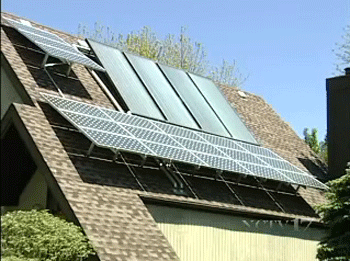 California rooftop solar installations surge; renewable energy approaches oil output, reports say, LA Times 6 July 11 Renewable sources in the U.S. are starting to produce enough energy to rival oil output, according to the federal Energy Information Administration.
Biomass and biofuels along with geothermal, solar, water and wind-power generation were responsible for nearly 12% of the country’s energy production during the first quarter of the year. That’s nearly 6% more than nuclear’s output and 77% of the amount coming from domestic crude oil, the agency said. Continue reading
Dangers of USA’s spent nuclear fuel pools
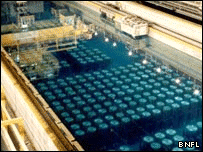 A Safer Nuclear Crypt, NYT, By MATTHEW L. WALD, July 5, 2011, The nuclear calamity at Japan’s Fukushima Daiichi plant has refocused attention on the vulnerability of spent fuel pools at the 104 operating American nuclear plants.
Training US nuclear staff for nuclear calamities
At U.S. Nuclear Reactors, Crews Train For The Worst, 5 July 11NPR, by RICHARD HARRIS..…..”…….— Berry says reactor operators in these training scenarios can respond to some pretty intense crises, on the scale even of Fukushima. But David Lochbaum, a nuclear engineer at a watchdog group called the Union of Concerned Scientists, says he’s skeptical that the mess in Japan could have been prevented, given the real-world conditions there….
He adds that you can’t truly simulate the kind of crisis response we saw at Fukushima, where a lot of the action took place outside the control rooms. Workers scrambled around to try to read dials, fix electrical circuits and struggle with stalled pumps. And he adds training might not be enough when a crew is confronting not only severe conditions but simultaneous crises at multiple reactors.
“Fukushima showed us that we could have an across-the-board situation where all the reactors are in jeopardy and there’s no on-site cavalry that can come running to the aid of the accident unit,” Lochbaum says.
He adds that overall, the U.S. training system is an important element of emergency preparedness. But it’s no guarantee that crews here can handle anything and everything thrown their way.http://www.npr.org/2011/07/06/137633351/at-u-s-nuclear-reactors-crews-train-for-the-worst
USA Senate Bill to set up temporary nuclear waste storage sites
Senators float bill to create interim storage sites for spent nuclear fuel, THE HILL By Andrew Restuccia – 07/01/11, Sens. Lisa Murkowski (R-Alaska) and Mary Landrieu (D-La.) floated legislation Friday that would require the Energy Department to establish two temporary repositories for spent fuel from the country’s nuclear power plants.
The legislation comes amid increased frustration by Republicans and some Democrats over the Obama administration’s decision to abandon Yucca Mountain, a proposed nuclear waste repository designated by Congress that has been mired by years of delay.
“This proposal addresses one of the most glaring failures of our national nuclear policy — what to do with the used nuclear fuel currently that is currently being stored at over 100 sites across the country,” Murkowski said in a statement Friday.
The lawmakers say the legislation is intended to end a series of lawsuits filed by utilities because the federal government has yet to establish a permanent waste repository. The lawsuits could cost the federal government billions of dollars. ….
The storage of spent nuclear fuel has come under increased scrutiny in the aftermath of the disaster at Japan’s Fukushima Daiichi nuclear power plant.
Sen. Dianne Feinstein (D-Calif.) has raised questions about the way spent fuel is stored in light of issues at the spent fuel pools at the Japanese plant. In the United States, spent fuel rods are placed in pools for several years and then moved into dry cask storage.
“It is clear that we lack a comprehensive national policy to address the nuclear fuel cycle,” Feinstein, the chairwoman of the Appropriations Committee’s Energy and Water subcommittee, said earlier this year.
A recent NRC inspector general report said the commission does not have an adequate system in place for the inspection of nuclear spent fuel storage sites…..
Nuclear Regulatory Commission rubber stamps Salem Nuclear plants’ license renewal
 Salem Nuclear Power Plants Sail Through Relicensing Process, NJSP Spotlight, By Tom Johnson, July 1 The federal government yesterday approved a 20-year extension of the operating licenses for the two Salem nuclear power plants in Lower Alloways Creek Township in South Jersey. The extension from the U.S. Nuclear Regulatory Commission (NRC) was not unexpected, since the its staff had signed off on the extension earlier this month and the regulatory agency has never failed to approve a relicensing request…….
Safety Concerns, Jeff Tittel, director of the New Jersey Sierra Club, expressed disappointment in the decision. “The NRC believes in license first, inspect and regulate later. They have it backward,” Tittel said. “We believe outside independent experts need to review the plants and their different design features to ensure safety.”
In the relicensing process, the NRC failed to address sizable tritium leaks causing contamination of groundwater near the plant, Tittel said. He also argued that the Salem plant is old, saying the federal agency failed to look at metal fatigue and other issues that come up as these facilities age……http://www.njspotlight.com/stories/11/0701/0058/
TSA workers exposed to radiation from backscatter airport scanners?
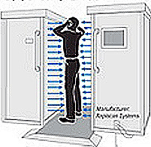 TSA Workers Fear Radiation Dangers From Scanners, 9 News Now, 2 July 11WASHINGTON, DC (WUSA) — After wading through documents he secured with a Freedom Of Information Act filing, the Executive Director of the Electronic Privacy Information Center, Marc Rotenberg told 9NEWS NOW, “We think that the Department of Homeland Security has not been forthcoming with the public about the true extent of radiation risk with the airport body scanners.”
The release of new documents follows concerns of TSA workers that they are being exposed to dangerous levels of radiation as they conduct the screenings. Union representatives in Boston cite an increase in cancer cases among the TSA workforce there and have asked the agency to allow its members to wear radiation monitoring devices……..
“It’s one branch of government that’s made the decision to deploy these devices and it’s the same branch of government which is evaluating its own program. That’s a recipe for a problem,” Rotenberg said… http://wusa9.com/news/article/156513/373/TSA-Workers-Fear-Radiation-Dangers-From-Scanners
Fort Calhoun Nuclear Reactor is Safe, well Sort Of
The plant faces two other challenges, however. One is that the flowing water, four feet deep in some spots around the plant, may have undermined some structures. Already, plant workers have stopped moving heavy vehicles over paved surfaces because they may have been weakened, the managers say….
A Long Road Ahead for a Flooded Reactor, NYT, By MATTHEW L. WALD, 28 June 11, Federal officials say that the Fort Calhoun nuclear plant, which is surrounded by floodwaters from the Missouri River, is safe for now, as I wrote in Tuesday’s Times. But it may be a very long way from reopening. Continue reading
Legal battle- South Carolina’s nuclear waste not to go to Nevada
A federal report issued early in June said the U.S. has generated more than 82,000 tons of spent nuclear fuel and high-level nuclear waste, which it was storing at 80 sites in 35 states.
The amount of waste is expected to double by 2055, the Government Accountability Office said.

Appeals court dismisses nuclear waste suit, Macon.com By NEDRA PICKLER and DINA CAPPIELLO – Associated Press, 1 July 11, WASHINGTON — The Obama administration won a legal battle Friday in the long-standing fight over where to bury the nation’s nuclear waste, but it’s not likely to be the last. The federal appeals court in Washington ruled against South Carolina, Washington state and others that want to ship radioactive spent nuclear fuel they are temporarily storing to a repository 90 miles from Las Vegas at Yucca Mountain. Continue reading
Evacuation not really practical in the case of nuclear meltdown
What Would It Take To Evacuate A Nuclear Meltdown? Gizmodo By Kwame Opam on June 28, 201 1 Nuclear plants in the US are getting older and becoming more unstable with age, even as we demand more power of them. Meanwhile, population growth around these powerhouses has skyrocketed, by as much as a factor of four in some places. Say you live in one of these cities. In the event of an emergency, how likely is it that you’ll get out in time? Continue reading
Vermont citizens rally to support closure of Vermont Yankee nuclear reactor
Vermonters rally to support their state’s efforts to close VermontYankee, Greenpeace, by Jarred Cobb – June 27, 2011 Entergy Nuclear’s efforts to run their aging and dangerous reactor past its scheduled closure date were rebuffed again in Vermont last week. Citizens rallied outside the federal courthouse where Entergy is seeking an injunction to keep Vermont Yankee operating despite the state’s decision to close it down. Many of the folks present at the vigil live within the 10-mile evacuation zone, and know firsthand of Entergy’s incompetence and Vermont Yankee’s history of accidents. From carpenters to mothers and teachers to activists, Vermonters stood shoulder-to-shoulder todeclare: “We Support Vermont.”
Entergy’s refusal to accept Vermont’s decision to close the reactor is an affront to the democratic process and the demands of a majority of Vermonters. Last year, after an ongoing tritium leak, lies about underground piping, and a desire for a renewable energy future, the state senate voted overwhelmingly (26-4) to close Vermont Yankee as scheduled in March 2012. But now, the multibillion-dollar energy company has turned to high-priced lawyers and a federal court…. http://www.greenpeace.org/usa/en/news-and-blogs/campaign-blog/vermonters-rally-to-support-their-states-effo/blog/35460
Los Alamos nuclear facility threatened by wildfires
Bushfire reaches Los Alamos nuke lab
ABC News, Jun 28, 2011
- Video: Fire threatens US nuclear lab (ABC News) A raging bushfire has briefly entered the property of the pre-eminent US nuclear facility, Los Alamos National Laboratory, a vast complex that houses research laboratories and a plutonium facility.A mandatory evacuation was ordered for the town of Los Alamos, which has a population of about 12,000. The speed at which the fire has grown surprised fire officials.
The laboratory, which ensures the safety and reliability of the US nuclear stockpile, is a national security research facility located in the Jemez mountains of northern New Mexico. It was set up in 1943 as part of the Manhattan Project to create the first atomic bomb and still maintains the nation’s largest nuclear weapons arsenal.
Firefighters were able to douse flames on a 4,000-square-metre “spot fire” just inside the south-western boundary of the lab site, about 40km outside Santa Fe, authorities said….
“This fire is going to be with us for a while. It has the potential to double and triple in size,” Los Alamos fire chief Doug Tucker said.
Nuclear watchdog groups are keeping a close eye on the fire, said Jay Coughlin, executive director of Nuclear Watch New Mexico…….
http://www.abc.net.au/news/stories/2
US govt part of the system that rubber stamps nuclear plant relicensing
AP IMPACT: NRC and industry rewrite nuke history
By JEFF DONN, AJC NewsThe Associated Press, 29 June 11 ROCKVILLE, Md. — When commercial nuclear power was getting its start in the 1960s and 1970s, industry and regulators stated unequivocally that reactors were designed only to operate for 40 years. Now they tell another story — insisting that the units were built with no inherent life span, and can run for up to a century, an Associated Press investigation shows.
By rewriting history, plant owners are making it easier to extend the lives of dozens of reactors in a relicensing process that resembles nothing more than an elaborate rubber stamp.
As part of a yearlong investigation of aging issues at the nation’s nuclear power plants, the AP found that the relicensing process often lacks fully independent safety reviews. Records show that paperwork of the U.S. Nuclear Regulatory Commission sometimes matches word-for-word the language used in a plant operator’s application.
Also, the relicensing process relies heavily on such paperwork, with very little onsite inspection and verification.
And under relicensing rules, tighter standards are not required to compensate for decades of wear and tear.
So far, 66 of 104 reactors have been granted license renewals. Most of the 20-year extensions have been granted with scant public attention. And the NRC has yet to reject a single application to extend an original license. The process has been so routine that many in the industry are already planning for additional license extensions, which could push the plants to operate for 80 years, and then 100………………………………NUCLEAR LIFE RENEWED
Relicensing is a lucrative deal for operators. By the end of their original licenses, reactors are largely paid for. When they’re operating, they’re producing profits. They generate a fifth of the country’s electricity.
…..INDUSTRY, GOVERNMENT AS PARTNERS
Despite the aging problems, relicensing rules prohibits any overall safety review of the entire operation. More conservative safety margins are not required in anticipation of higher failure rates in old plants, regulators acknowledge.
The approach has turned relicensing reviews into routine approvals……..
http://www.ajc.com/news/nation-world/ap-impact-nrc-and-990073.html
1 This Month




Shut down the radiation-damaged Heysham nuclear reactors now
To see nuclear-related stories in greater depth and intensity – go to https://nuclearinformation.wordpress.com

Say No to NASA’s Reckless Nuclear Reactor on the Moon
Say No to NASA’s Reckless Nuclear Reactor on the Moon
-
Archives
- October 2026 (302)
- September 2026 (339)
- August 2026 (330)
- July 2026 (355)
- June 2026 (287)
- May 2026 (306)
- April 2026 (356)
- March 2026 (251)
- February 2026 (267)
- January 2026 (308)
- December 2025 (358)
- November 2025 (359)
-
Categories
- 1
- 1 NUCLEAR ISSUES
- business and costs
- climate change
- culture and arts
- ENERGY
- environment
- health
- history
- indigenous issues
- Legal
- marketing of nuclear
- media
- opposition to nuclear
- PERSONAL STORIES
- politics
- politics international
- Religion and ethics
- safety
- secrets,lies and civil liberties
- spinbuster
- technology
- Uranium
- wastes
- weapons and war
- Women
- 2 WORLD
- ACTION
- AFRICA
- Atrocities
- AUSTRALIA
- Christina's notes
- Christina's themes
- culture and arts
- Events
- Fuk 2022
- Fuk 2023
- Fukushima 2017
- Fukushima 2018
- fukushima 2019
- Fukushima 2020
- Fukushima 2021
- general
- global warming
- Humour (God we need it)
- Nuclear
- RARE EARTHS
- Reference
- resources – print
- Resources -audiovicual
- Weekly Newsletter
- World
- World Nuclear
- YouTube
-
RSS
Entries RSS
Comments RSS

