US assisted Israeli war on Iran just another US regime change operation
16 June 2025 AIMN Editorial, By Walt Zlotow https://theaimn.net/us-assisted-israeli-war-on-iran-just-another-us-regime-change-operation/
In the 80 years since WWII, the US has engaged in roughly 80 regime change operations, an average of one per year. Some utilized outright war. Some used proxies. Some consisted of crippling economic sanctions designed to hurt the people so severely they would overthrow the targeted ruler.
Some succeeded immediately. Some took years to achieve regime change. Many failed.
The 1960 regime change operation in Cuba initially used sanctions. When that failed the US used Cuban dissident proxies in an invasion ending in catastrophe. Cuba brought in Russian missiles to prevent further regime change shenanigans. That nearly blew up the whole world simply to change out the Cuban communist regime in a tiny land 1/90th America’s size with a population just 3% of the American behemoth. After 65 years US embargo still makes life horrible for Cubans but does nothing to achieve regime change.
Then there is the current US regime change operation targeting Iran. The US has been itching to change out the Islamic theocracy ruling Iran since their 1979 revolution kicked out the US puppet we installed after our 1953 regime change operation deposed the democratically elected Prime Minister Mohammad Mosaddegh.
But the current Iran regime change operation is truly unique. It’s being conducted by our best buddies in the Middle East, Israel, who launched a ferocious attack against Iran wholly supported, indeed cheered on by the US. Israel is ecstatic the US enabled their war since they’re even more committed to Iran regime change than America.
In possibly the most despicable, duplicitous act of diplomatic treachery in US history, the US lulled Iran from being on alert for attack by scheduling a sixth negotiating session on Iran’s nuclear program while knowing the bombs were about to fall. An Israeli official admitted to the Jerusalem Post; “The round of US-Iranian nuclear negotiations scheduled for Sunday was part of a coordinated US-Israeli deception aimed at lowering Iran’s guard ahead of Friday’s attack.”
Besides keeping Iran’s defenses from preparing for attack, the deception was designed to keep military, political and nuclear scientists from moving to safety. Some were killed in their imagined safe homes.
Israel claims their attacks were defensive to keep Iran from building a nuclear bomb. Poppycock. That argument was simply a MacGuffin, a Hitchcock style directorial plot device to keep the narrative moving. And that narrative is regime change of the theocracy ruling Iran and inflicting massive devastation so Iran will no longer be a hegemonic rival to Israel for Middle East supremacy.
The US is delighted that it may finally achieve its first Iran regime change since deposing Moseddgegh 72 years ago. And it will do so without dropping a single bomb or losing a single soldier or civilian. Firing the bombs and burying their dead will fall to its proxy Israel which, in their lust to topple Iran, is only too happy to fill that proxy role.
On December 6-7, 1941, two Japanese diplomats were still negotiating with US officials in DC when Japan attacked Pearl Harbor. The US charged Japan with dastardly deception to enable their attack. But history later attributed the two events as unrelated due to the slow, poor communication methods of 84 years ago. Not so with America’s grotesque use of diplomacy to achieve, as Sen. Lindsay Graham gloated “Game on” for regime change in Iran.
Next time the US wants to negotiate a sensitive issue of war and peace, the opposition will not say; ‘Remember Pearl Harbor.’ They’ll proclaim; ‘Remember Iran.’
Trump Threatens to Bomb Iran to Smithereens for “Playing By the Rules”

there is no provision in international law or under the UN Charter that allows one country to attack another country based on its own subjective perception of what ‘may or may not’ constitute a threat.
Did we mention that the Trump campaign was given over $100 million by wealthy Zionist donors whose driving ambition is to topple the government in Tehran and absorb territorial Iran into Greater Israel?
Mike Whitney • June 9, 2025, https://www.unz.com/mwhitney/trump-threatens-to-bomb-iran-to-smithereens-for-playing-by-the-rules/
President Donald Trump is threatening to launch air strikes on Iran for activities that are approved under the terms of Iran’s treaty obligations. This is not a matter on which there should be any debate. The Treaty on the Non-Proliferation of Nuclear Weapons (NPT) explicitly grants all parties, including Iran, the “inalienable right” to develop, research, produce, and use nuclear energy for peaceful purposes. This “inalienable right” includes the enriching of uranium.
Trump either doesn’t understand what a “treaty” is or thinks its terms should not apply to Iran. For the sake of clarity, a treaty is a formal, legally binding agreement between sovereign states that is governed by international law. It establishes mutual obligations, rights, or rules on matters such as trade, security, nuclear non-proliferation, or environmental protection. A treaty is not optional and cannot be repealed by executive fiat. States that ratify treaties are legally obligated to comply with their terms in good faith. Political leaders, as representatives of the state, are expected to uphold these obligations.
This is all very straightforward which is why we find so it hard to understand why Trump is threatening a country that is clearly “in compliance” with its obligations under the NPT. Here’s what Trump said on Friday on Air Force One:
“They won’t be enriching. If they enrich, then we’re going to have to do it the other way… (air strikes) And I don’t really want to do it the other way but we’re going to have no choice. There’s not going to be enrichment.”
Trump has no legal authority to determine whether Iran can enrich uranium or not. It’s simply not his decision to make. Even Grok — with its obvious pro-Israel bias — understands this. Check it out:
Donald Trump, whether as a private citizen or as U.S. president, has no legal authority under international law to demand that Iran stop enriching uranium. Iran, as a sovereign state and signatory to the Treaty on the Non-Proliferation of Nuclear Weapons (NPT), has the right under Article IV to develop nuclear energy for peaceful purposes, including uranium enrichment, provided it complies with its safeguards obligations under Article III and its Comprehensive Safeguards Agreement (CSA) with the International Atomic Energy Agency (IAEA). No individual state, including the United States, has the unilateral legal authority under international law to prohibit Iran from exercising this right. Any demand from Trump would be a political or diplomatic action, not a legally binding directive, unless backed by a UN Security Council resolution, which would require agreement from other permanent members (e.g., Russia, China). Grok
Trita Parsi explains how Trump has adopted John Bolton’s Iran policy.[0n original]
Also, there is no provision in international law or under the UN Charter that allows one country to attack another country based on its own subjective perception of what ‘may or may not’ constitute a threat. That’s insanity, and it flies in the face of the UN’s efforts to ensure peace and security through collective action and multilateralism. Besides, there is no credible legal case against Iran, because Iran is not violating the rules. What the MSM stubbornly refuses to tell the public is that Iran has no nuclear weapons and no nuclear weapons program. And—according to the IAEA—Iran has been “in compliance” since 2003 and has never diverted nuclear material to a weapons program. In other words, there’s no legal case against Iran at all. Zilch.
So, what is the point of Trump’s fulminations? Why is he threatening a peaceful country that is clearly “playing by the rules”?
Did we mention that the Trump campaign was given over $100 million by wealthy Zionist donors whose driving ambition is to topple the government in Tehran and absorb territorial Iran into Greater Israel?
Could that be a factor? Could that explain why Trump convened 5 separate meetings with Iranian negotiators without once mentioning the issue of “nuclear enrichment”, but then—Surprise, Surprise—did a swift 180 after which he made “zero enrichment” the foundational demand for which he has declared unflinching support?
Could that be a factor? Could that explain why Trump convened 5 separate meetings with Iranian negotiators without once mentioning the issue of “nuclear enrichment”, but then—Surprise, Surprise—did a swift 180 after which he made “zero enrichment” the foundational demand for which he has declared unflinching support?
How do you explain that sudden about-face? Is Trump pursuing an Israeli agenda or putting “America First”?
And why would Trump stake-out such a flimsy, untenable position when he knows that enrichment is the one provision in the NPT on which Iran will never budge?
The obvious answer is that Trump doesn’t want an agreement; he does not want to resolve the issue peacefully. That’s why he focused on the one issue on which there is no flexibility, figuring (quite rightly) that enrichment can be used as a pretext for war. And that’s the goal, war with Iran.
(Readers who have been following developments with Iran closely may recall that Trump’s original demand was that “Iran cannot have a nuclear weapon”. (Iran has agreed to that demand.) But now, he has sneakily changed the wording to “no enrichment” as if the two things are the same. Naturally, the pro-Israel media has not drawn attention to the president’s sleight-of-hand fearing that it would reveal the deceptive game he is playing. But, the fact remains, Trump used the negotiations to look like he genuinely wanted peace, and then quickly moved the goalposts as the “talks” progressed. Bottom line: A peaceful settlement was never Trump’s objective.
This is from an article at The Times of Israel (June 8, 2025)
This is how desperate the Trump team (and their Israeli allies) are to cast suspicion on Iran’s perfectly legal activities. They’ve actually dug up the details of research that was conducted in 2003. (a period during which Iran has admitted to “aspects of a nuclear weapons program.”) Notice that the IAEA report does not suggest that anything illegal is going on today, or that there is any indication that Iran has an active nuclear weapons program, or even that they are diverting nuclear material to some other location. No. What they’re referring to happened more than two decades ago. It’s a joke.
And the same rule applies to the uranium that has been enriched to 60% which the Iranians have admitted to many times in the past. They’re not hiding anything; they’re looking for sanction’s relief, that’s all. Turns out, they don’t like economic strangulation. Are you surprised?
By the way, under the terms of the NPT, Iran is allowed to enrich uranium to 60% as the treaty does not explicitly set a maximum enrichment level for non-nuclear-weapon states. This is a fact, but it is a fact that is omitted in 100% of the MSM coverage of the issue. Why would that be?:-
Iran Needs Nuclear Energy
Many people believe that a country with vast oil resources like Iran has no need for nuclear energy, but that’s simply not true. Much of Iran’s electricity generation takes place at the Bushehr Nuclear Power Plant, Iran’s primary nuclear power facility, that uses low-enriched uranium to generate significant electrical power and reduce reliance on fossil fuels.
Iran also uses nuclear technology to produce radioisotopes for medical diagnostics and treatment,… widely used in cancer diagnosis and imaging. Iran claims its nuclear program supports healthcare by providing isotopes for over 1 million patients annually.
Iran also uses nuclear energy in industrial applications, agriculture, water resource management, scientific research, cancer treatment, technology and radioisotope production. The fact is, no country would join the NPT if they were denied the “peaceful use” of nuclear power. Why would they?
Finally….
Americans should realize that nothing one reads about Iran in the western media can be trusted; it is all poisoned with the same, vile anti-Iran hatred and bias. Since the 1979 Revolution to today, US policy towards Iran has been an unbroken chain of relentless hectoring, belligerence and demonization. Washington has never treated Iran with the respect it deserves nor will it in the future. That’s because—on a fundamental level—the entire US political class despises Iran for asserting sovereign control over their-own vast resources and for failing to kowtow to their mucky-muck overlords in Washington. That’s the real issue; Iran has refused to cave in to Uncle Sam’s diktats which is why it must be punished with economic strangulation, “maximum pressure” and, inevitably, war. That is how America treats the peasants in the provinces, with an iron fist.
Iran’s foreign minister Abbas Araghchi summed up Iran’s approach at a recent ceremony for the late Ayatollah Khomeini. He said:
“The main foundation of Iran’s foreign policy is based on the principle of renouncing foreign domination. Trump’s ban on enrichment is itself domination, and this is unacceptable to the Iranian people.”
To its credit, Iran has never ‘given an inch’ to Washington’s endless badgering and saber-rattling. They have stuck by their principles and defended their right as a free country to choose their own development model, their own political system and their own collective future without bullying or coercion.
Iran should be applauded for shrugging off Washington’s threats and intimidation, and for its unflinching commitment to the principle of sovereign independence. They have preserved their dignity through 45 years of nonstop hostility and antagonism.
Bravo, Iran.
Trump Praises ‘Excellent’ Israeli Strikes on Iran.
A source said Washington provided Tel Aviv with “exquisite” intel for the assault
by Kyle Anzalone | Jun 13, 2025, https://news.antiwar.com/2025/06/13/trump-praises-excellent-israeli-strikes-on-iran/
President Donald Trump endorsed the massive Israeli strike on Iran early on Friday morning, calling the attack “excellent.” A source explained that the US provided Israel with intelligence for the operation.
Speaking with ABC News on the phone following the Israeli strikes across the Islamic Republic, Trump said, “I think it’s been excellent.” He continued, “We gave them a chance and they didn’t take it. They got hit hard, very hard. They got hit about as hard as you’re going to get hit. And there’s more to come. A lot more.”
Trump refused to provide details about the US role in the attack, saying, “I don’t want to comment on that.”
However, elements of Washington’s support for Tel Aviv are becoming public. Israeli officials told the Jerusalem Post and Axios that the White House helped to create the illusion that the US was still seeking a diplomatic settlement with Iran.
Just hours before the attack, President Trump declared that he was committed to a “Diplomatic Resolution to the Iran Nuclear Issue!” But it appears he had already greenlit the Jewish state’s attack on the Islamic Republic.
A source provided further details of the US support, telling ABC News that Washington provided Tel Aviv with “exquisite” intelligence. Additionally, the source said the US will help Israel defend against any Iranian response.
The Iranian Foreign Ministry said in a statement that it holds the US responsible for the attack. “The Zionist regime’s aggressive actions against Iran cannot have been carried out without the coordination and authorization of the United States. Accordingly, the United States government, as the main supporter of this regime, will also be responsible for the dangerous effects and consequences of the Zionist regime’s adventure,” the ministry said.
Since starting the assault early Friday morning, Israeli forces have delivered multiple rounds of strikes targeting Iranian military sites, nuclear facilities, and residential buildings. Top Iranian nuclear scientists and generals have been confirmed killed.
Tel Aviv said the operation, dubbed “Nation of Lions,” will last several days.
Israel is seeking more support from the US. The Jerusalem Post reports that Israeli Defense Minister Israel Katz will hold a call with Secretary of Defense Pete Hegseth later on Friday to lobby Washington for more military assistance. Additionally, Trump is expected to speak with Israeli Prime Minister Benjamin Netanyahu by phone.
Kyle Anzalone is the opinion editor of Antiwar.com and news editor of the Libertarian Institute. He hosts The Kyle Anzalone Show and is co-host of Conflicts of Interest with Connor Freeman.
Ghoulish US Congresspersons applaud dastardly Israeli attack on Iran
17 June 2025 By Walt Zlotow ,https://theaimn.net/ghoulish-us-congresspersons-applaud-dastardly-israeli-attack-on-iran/
No surprise upon hearing the news, supreme US warmonger Senator Lindsay Graham (R-SC) immediately chortled “Game on. Pray for Israel.” That would be like a US Senator saying “Game on, pray for Germany” after their September 1, 1939 attack on Poland. Just like Germany, Israel cited ‘self-defense’ for their criminal, senseless bombardment that could provoke a regional if not nuclear war.
Rep. Carlos A. Gimenez (R-FL) was a tad less ecstatic but bloodthirsty nonetheless charging: “The threat from Iran will only stop when the regime is destroyed. Anything less is just a temporary respite from the existential threat Iran poses to our allies and the free world.”
Even relatively moderate Maine Republican Senator Susan Collins offered up this huge whopper before hoping for an Israeli victory. “Our country too is at risk as Iran continues its development not only of fissile material but also of ballistic missiles.” The only risk this conflict has to America is destroying every decent, peaceful, humane value our country should be embracing.
The majority of congresspersons commenting, fully support the Israeli regime change attack on Iran just as they’ve been supporting the Israeli genocide in Gaza for the past 20 months. Most are Republicans but one Democratic Senator, John Fetterman, offered this bit of heartless cruelty to the bombarded Iranians: “Our commitment to Israel must be absolute and I fully support this attack. Keep wiping out Iranian leadership and the nuclear personnel We must provide whatever is necessary – military, intelligence, weaponry – to fully back Israel in striking Iran.”
We can only surmise why these unhinged congresspersons support the most heinous conduct any governmental leader can inflict on a people posing no threat to America. But in so doing they disgrace their office, they disgrace America, they disgrace themselves.
Walt Zlotow, West Suburban Peace Coalition, Glen Ellyn IL
Trump’s Nuclear Plan Faces Major Hurdles
By Felicity Bradstock – Jun 14, 2025
- Trump aims to boost U.S. nuclear energy capacity from 100GW to 400GW by 2050, mandating quicker licensing and new reactor construction.
- Nearly all U.S. uranium is imported—especially from Russia—posing a major obstacle given recent bans and tariffs.
- With minimal enrichment capacity and mining, companies like Centrus stress the need for urgent public-private investment to meet demand.
The U.S. President recently announced plans to quadruple the U.S. nuclear
capacity by 2050. However, several challenges must be overcome to meet this
target. Firstly, building a new nuclear plant can take a decade or more,
meaning that operators would have to apply for permits for new projects now
to get them up and running in the coming decades.
In addition, the U.S.
continues to rely heavily on Russia for its Uranium, despite having
introduced heavy sanctions on the country’s energy sector in response to
its 2022 invasion of Ukraine. The U.S. would need to seek an alternative
supply of enriched uranium, or significantly increase its domestic
production, to fuel its power plants.
Oil Price 14th June 2025, https://oilprice.com/Energy/Energy-General/Trumps-Nuclear-Plan-Faces-Major-Hurdles.html
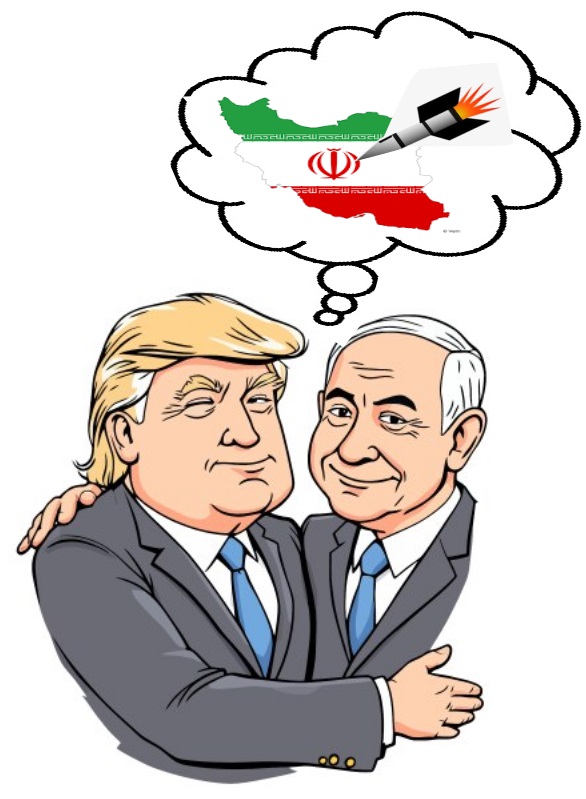
Sources: US Will Enter Israel’s War With Iran
By Dave DeCamp / Antiwar.com, June 16, 2025, https://scheerpost.com/2025/06/16/sources-us-will-enter-israels-war-with-iran/
Sources familiar with the matter have told Antiwar.com Editorial Director Scott Horton that the Trump administration is poised to enter Israel’s aggressive war against Iran directly. US airstrikes on Iran could begin as soon as Monday.
Please contact the White House by sending an email or calling the comment line starting at 10 am EST on Monday (202‑456‑1111). Tell them that you do not want the US to enter this disastrous war, which could lead to heavy American casualties at US bases across the Middle East.
The US has supported the war by reportedly providing Israel with intelligence and helping intercept Iranian missiles and drones, but so far, there have been no direct US attacks on Iran. Iranian officials have warned that Tehran would hit US bases in the region in response to any US strikes.
Axios reported on Saturday that Israel is urging the US to join the war since Israel lacks the bunker-busting bombs necessary to do serious damage to Iran’s Fordow plant, which is buried deep underground. An Israeli official told Axios that President Trump had previously suggested the US could strike Fordow.
Trump himself said on Sunday that it was “possible” that the US would get directly involved in the war, which Israel launched early Friday morning with airstrikes across Iran.
Israeli Prime Minister Benjamin Netanyahu started the war under the pretext of preventing Iran from building a nuclear weapon. But it was the consensus of the US intelligence community that there was no evidence Iran was working toward a nuclear weapon, and Tehran made clear they were ready to make a deal with the US that would significantly lower uranium enrichment levels and increase oversight of its nuclear program in exchange for US sanctions relief.
Ali Larijani, an aide to Iranian Supreme Leader Ayatollah Ali Khamenei, has previously said that the one thing that would make Tehran reconsider its prohibition on the development of nuclear weapons would be a US or Israeli attack.
“We are not moving towards (nuclear) weapons, but if you do something wrong in the Iranian nuclear issue, you will force Iran to move towards that because it has to defend itself,” Larijani said on April 1.
“Iran does not want to do this, but … (it) will have no choice,” he added. “If at some point you (the US) move towards bombing by yourself or through Israel, you will force Iran to make a different decision.”
USA participated in Israeli air defense using Patriot and THAAD systems
Patriot and THAAD missile defense batteries, operated by U.S. military personnel and originally deployed under the Biden administration, participated in Israeli air defense Friday evening, according to U.S. defense officials who spoke on the condition of anonymity to discuss the sensitive subject. That represented a more limited participation in Israel’s defense than last year, when American air and sea assets helped shoot down incoming Iranian missiles during two retaliatory Iranian attacks. – from https://www.washingtonpost.com/world/2025/06/12/israel-attacks-iran-tehran-explosions/#link-45PWIAZSNNE57OYKVRHWOA6Z3I
The Joint Comprehensive Plan of Action (JCPoA), destroyed by President Trump, would have prevented the current attacks between Israel and Iran
Sir Simon Gass, Former British ambassador to Iran and former head of the UK
team negotiating the JCPoA; It is worth remembering that in 2015 a group of
six countries, including the UK, negotiated with Iran the Joint
Comprehensive Plan of Action (JCPoA) — an agreement that, if it were in
force today, would restrict Iran to a mere 300kg of uranium enriched to no
more than 3.67 per cent, far from the quantity or purity needed for a
nuclear weapon. The agreement included an inspection regime of
unprecedented intrusiveness to ensure Iran was not cheating. In return,
Iran was promised relief from international economic sanctions. Israel
lobbied ferociously against this deal: Netanyahu described it as
“capitulation”. That lobbying helped to persuade Republican legislators
to oppose the deal and contributed to President Trump’s decision to
collapse it in 2017. The US never met the obligations that I heard being
solemnly given to Iranian negotiators. Iran has plenty to answer for. But
Israel would not be in its present position if the JCPoA was still in
force.
Times 16th June 2025, https://www.thetimes.com/comment/letters-to-editor/article/times-letters-israels-strikes-against-iranian-nuclear-sites-kvtkkqtst
Staring Down The Barrel Of War With Iran Once Again
Caitlin Johnstone, Jun 12, 2025, https://www.caitlinjohnst.one/p/staring-down-the-barrel-of-war-with?utm_source=post-email-title&publication_id=82124&post_id=165756570&utm_campaign=email-post-title&isFreemail=true&r=1ise1&triedRedirect=true&utm_medium=email
Well it looks like the US is on the precipice of war with Iran again.
US officials are telling the press that they anticipate a potential impending Israeli attack on Iran while the family members of US military personnel are being assisted with evacuation from bases in the region.
This comes as Tehran issues a warning that it will strike all US military bases within range of its missiles if it comes under attack. There are reportedly some 50,000 US troops in 10 bases which could come under fire should this occur.
The US is also evacuating its embassy in Iraq, and has authorized the departure of non-essential personnel from its embassies in Kuwait and Bahrain.
Asked by the press about the evacuations, President Trump said, “They are being moved out because it could be a dangerous place, and we’ll see what happens. We’ve given notice to move out.”
Trump is openly declaring a willingness to strike Iran if nuclear negotiations fall through, while saying he is now “much less confident” that any deal will be made.
“If they don’t make a deal, they’re not gonna have a nuclear weapon; if they do make a deal they’re not gonna have a nuclear weapon too,” the president said in an interview published on Wednesday, adding that “it would be nicer to do it without warfare, without people dying.”
If the US backs an Israeli attack on Iran and then Iran retaliates by killing a bunch of US military personnel, we could be looking at a full-scale direct war between the US and Iran.
As I’ve said in this space many times before, this would be the absolute worst-case nightmare scenario for the middle east, unleashing horrors that dwarf all the other terrible abuses currently happening in the region. As Trump’s now-Director of National Intelligence Tulsi Gabbard said in 2019 (back when she publicly opposed Trump’s warmongering), “What is important that the American people know is a war with Iran would make the war in Iraq look like a cakewalk.”
It’s so stupid that this keeps happening. This could all be avoided by the US simply ceasing to support the genocidal apartheid state of Israel no matter what it does. The fact that Washington has continued to pour weapons into Israel despite all its warmongering and genocide since 2023 means the US supports everything that Israel has been doing.
If a war with Iran does occur, you will doubtless hear western pundits and politicians trying to spin this as America getting “drawn into” another war in the middle east, or Trump being tricked or manipulated into war. But make no mistake: the US could have turned away from this path at any time, and still can.
If this Pandora’s box is opened, it will be because the US empire knowingly chose to open it.
‘We Are Preparing for War’ With China ‘Threat’, Says US Defense Secretary Pete Hegseth.
US Secretary of Defense Pete Hegseth delivered an extremely hawkish speech at the Shangri-La Dialogue 2025 summit in which he demonized China as a “threat” and said, “We are preparing for war” in the Asia-Pacific region.
By Ben Norton, 5 June 25, https://geopoliticaleconomy.com/2025/06/06/preparing-war-china-threat-us-defense-secretary-pete-hegseth/
US Secretary of Defense Pete Hegseth delivered an extremely hawkish speech in which he demonized China as a “threat” and said, “We are preparing for war”.
“Those who long for peace, must prepare for war. And that’s exactly what we’re doing. We are preparing for war, in order to deter war — to achieve peace through strength”, Hegseth stated.
The top Donald Trump administration official made these aggressive remarks at the Shangri-La Dialogue 2025, a summit held in Singapore on 31 May.
“The threat China poses is real, and it could be imminent. We hope not, but it certainly could be”, Hegseth claimed, indicating that the Pentagon was preparing for a war over Taiwan.
“Beyond our borders and beyond our neighborhood, we are reorienting toward deterring aggression by Communist China”, he stressed.
The message of Trump’s Pentagon: war is peace
The Trump administration’s Pentagon has essentially pushed the message “war is peace”.
Hegseth has incessantly reiterated the slogan “peace through strength”.
“President Trump said it himself [in May] in Riyadh – and will never hesitate to wield American power swiftly and decisively if necessary. That is re-establishing deterrence”, the defense secretary emphasized in Singapore.
Hegseth is a war hawk and a religious fundamentalist. He made his name as a former host on the conservative TV network Fox News, where Trump discovered him.
In 2020, Hegseth published a book called “American Crusade”, in which he proudly identified as a “crusader” and wrote that the US right wing is waging a “holy war” against China, the international left, and Islam.
“Communist China will fall—and lick its wounds for another two hundred years”, he promised in the extremist book.
Trump admin pressures Asia-Pacific countries to minimize “economic cooperation with China”
In his speech in Singapore in May 2025, Pete Hegseth noted that it was his second time in his four months serving as secretary of defense that he had visited the Asia-Pacific region (which Washington has sought to rebrand as the “Indo-Pacific”).
In March, Hegseth traveled to Japan and the Philippines, where he threatened China and boasted of US “war-fighting” preparations and “real war plans”.
At the Shangri-La Dialogue conference, Hegseth half-jokingly threatened the Asia-Pacific region with his endless presence……………………………..
The Trump administration essentially told countries that they must choose between either the United States or China — that they can’t have good relations with both sides, because a war could be coming soon.
Hegseth said (emphasis added):
Facing these threats, we know that many countries are tempted by the idea of seeking both economic cooperation with China and defense cooperation with the United States. Now that is a geographic necessity for many. But beware the leverage that the CCP seeks with that entanglement. Economic dependence on China only deepens their malign influence and complicates our defense decision space during times of tension.
China opposes hegemony, while the US empire seeks it
Defense Secretary Hegseth claimed in his May speech in Singapore that, supposedly, “China seeks to become a hegemonic power in Asia. No doubt”.
This is false. China has consistently emphasized, over decades, that it does not seek hegemony. In fact, Beijing does not want any country to have hegemony.
Principled opposition to hegemony has been a constant since the founding of the People’s Republic of China (PRC) under Mao Zedong in 1949, through the Reform and Opening Up initiated by Deng Xiaoping in 1978, and into the New Era launched by President Xi Jinping in 2012.
The Chinese government has always stressed what it calls its “unequivocal commitment to supporting other developing countries in their efforts to defend national sovereignty, develop national economy and fight imperialism, colonialism, and hegemonism”.
In a speech at the United Nations General Assembly in 1974, Deng Xiaoping stated, “If one day China should change her color and turn into a superpower, if she too should play the tyrant in the world, and everywhere subject others to her bullying, aggression, and exploitation, the people of the world should identify her as social-imperialism, expose it, oppose it, and work together with the Chinese people to overthrow it”.
In fact, when the PRC normalized diplomatic relations with the United States and Japan in the 1970s, a source of diplomatic tension was China’s insistence that, in the joint statements signed by Beijing and Washington and Beijing and Tokyo, there had to be an “anti-hegemony” clause.
It is actually the United States that has consistently sought to impose its hegemony on the rest of the world.
This was spelled out clearly in a 1992 document published by the US Department of Defense, known as the Wolfowitz Doctrine (because it was co-written by Paul Wolfowitz, who then served as US under secretary of defense for policy, before later returning as secretary of defense under George W. Bush).
The Pentagon’s Wolfowitz Doctrine stated (emphasis added):
Our first objective is to prevent the re-emergence of a new rival. This is a dominant consideration underlying the new regional defense strategy and requires that we endeavor to prevent any hostile power from dominating a region whose resources would, under consolidated control, be sufficient to generate global power. These regions include Western Europe, East Asia, the territory of the former Soviet Union, and Southwest Asia.
The Trump administration’s foreign policy is still consistent with much of the Wolfowitz Doctrine. Although Trump has de-prioritized Western Europe and the territory of the former USSR, he has dedicated significant resources to US military operations in East Asia and Southwest Asia (also known as the Middle East).
In fact, the main theme of Hegseth’s speech was that the Pentagon will not accept China challenging US dominance in the Asia-Pacific region.
“We will not be pushed out of this critical region”, Hegseth said, in a clear message to Beijing.
This was the US empire stating clearly that it seeks to impose its hegemonic control over East Asia.
Bipartisan warmongering in Washington
This aggressive anti-China stance is bipartisan in Washington.
A former top Joe Biden administration official said he agreed with the thrust of the anti-China policy pursued by Pete Hegseth, a right-wing extremist and religious fanatic.
Ely Ratner, who served as the assistant secretary of defense for Indo-Pacific security affairs in Biden’s Pentagon, wrote approvingly on Twitter/X, “Rhetoric aside, on actual defense policy Secretary Hegseth’s speech was near total continuity with the previous administration”.
“That’s good, but we’ll need heightened urgency, attention, and resources to address the China challenge”, Ratner added.
Biden’s neoconservative Secretary of State Antony Blinken had also maintained a hardline anti-China position.
In a speech in 2022, Blinken announced what was essentially a containment policy targeting China.
“We cannot rely on Beijing to change its trajectory. So we will shape the strategic environment around Beijing”, he said.
Blinken added, “The scale and the scope of the challenge posed by the People’s Republic of China will test American diplomacy like nothing we’ve seen before”.
US launches AUKUS review to ensure it meets Donald Trump’s ‘America First’ agenda

By Brad Ryan and Emilie Gramenz in Washington DC, ABC News, 11 June 25
In short:
The US is reviewing the AUKUS security pact with Australia and the UK, which Australia is depending on to acquire nuclear-powered submarines.
A US defence official said it would ensure the pact met President Donald Trump’s “America First” agenda, as the US struggles to build enough submarines for its own fleet.
But Defence Minister Richard Marles said he was “very confident this [AUKUS] is going to happen” and it was only natural for the new US administration to review it.
The Pentagon is reviewing the AUKUS security pact between Australia, the US and the UK to ensure it aligns with President Donald Trump’s “America First” agenda, a US defence official told the ABC.
But Defence Minister Richard Marles said he remained confident the pact would remain intact, and a review was a “perfectly natural” thing for a new administration to do.
The news follows US Defense Secretary Pete Hegseth’s recent request for Australia to significantly boost its defence spending “as soon as possible”.
The US defence official said the review “will ensure the initiative meets … common sense, America First criteria”.
“As Secretary Hegseth has made clear, this means ensuring the highest readiness of our service members, that allies step up fully to do their part for collective defence, and that the defence industrial base is meeting our needs,” the official said.
Under the AUKUS pact, Australia would be armed with nuclear-powered submarines at a cost of more than $350 billion.
Elbridge Colby, who is the under secretary of Defense for Policy and has voiced scepticism about AUKUS, is leading the review, according to the UK’s Financial Times.
Last August, Mr Colby tweeted he was an AUKUS “agnostic”.
“In principle it’s a great idea. But I’ve been very skeptical in practice,” he wrote, but added he’d become “more inclined based on new information I’ve gleaned”.
Mr Marles told ABC Radio Melbourne he was “very confident this [AUKUS] is going to happen”.
“The meetings that we’ve had with the United States have been very positive in respect of AUKUS,” Mr Marles said. “That dates back to my most recent meeting with Pete Hegseth in Singapore.”
……………………………………………. The Australian government paid the US almost $800 million earlier this year — the first in a series of payments to help America improve its submarine manufacturing capabilities.
………… Mr Hegseth met Defence Minister Richard Marles in Singapore, and said Australia needed to lift its defence spending.
Mr Trump himself has said little publicly about the AUKUS pact, and his criticisms of America’s traditional alliances have fuelled anxieties about its future in Canberra and London.
When a reporter asked Mr Trump about AUKUS in February, he appeared to be unfamiliar with the term, replying: “What does that mean?”…………………………..
Under “Pillar I” of the two-pillar AUKUS deal, the first submarine would arrive in Australia no sooner than 2032. It would be a second-hand US Virginia-class vessel.
The US would subsequently supply Australia with between three and five submarines, before Australia began building its own in Adelaide, modelled on British designs.
Mr Albanese was expected to meet Mr Trump on the sidelines of the G7 summit in Canada next week. But that’s now in limbo after the US condemned Australia and several other countries that placed sanctions on two far-right Israeli ministers.
…………..Critics of the deal, including former prime ministers Malcolm Turnbull and Paul Keating, have long warned it is unfair and risky. “I’ve never done a deal as bad as this,” Mr Turnbull told Radio National earlier this year.
The Greens have proposed a “plan B” defence policy that would eventually see AUKUS cancelled.
There are also longstanding concerns around the US’s consistent failure to meet its own submarine-building targets to fully stock its military fleet…………………………………………….https://www.abc.net.au/news/2025-06-12/aukus-pentagon-review-donald-trump-america-first/105406254
Golden Dome Idiocy

A “shield” against nuclear attack makes nuclear war more likely
Bill Astore, Jun 10, 2025, https://bracingviews.substack.com/p/golden-dome-idiocy?utm_source=post-email-title&publication_id=1156402&post_id=164965873&utm_campaign=email-post-title&isFreemail=true&r=c9zhh&triedRedirect=true&utm_medium=email
Donald Trump has a dream: a “golden dome” over America to defend the country against nuclear missiles. It’s a repeat of Ronald Reagan’s dream, the Strategic Defense Initiative, nicknamed “Star Wars” after the movie. The problem is that the dream represents a nightmare.
How so? Golden Dome would be dangerously escalatory, wildly expensive, and unlikely to work as a “shield” to America. It is worse than a mistake: it is a crime. It represents a massive theft from those who hunger and suffer in America. As Republican President Dwight D. Eisenhower said in 1953, wasting enormous resources on weapons systems is no way of life at all. It is humanity crucifying itself on a cross of iron. Crucifixion is not made more pleasant when the cross is golden.
Put differently, the Golden Dome is a golden idol, a false god, one that by making a massive nuclear strike more likely endangers all of us and God’s creation.
Golden Dome is a grotesque example of makework militarism and warfare as welfare for weapons makers. Though it’s unlikely to work, if it did (partially) it would make a massive nuclear strike more likely, not less, endangering the world with the ecocidal terror of nuclear winter.
Golden Dome and the so-called investment in America’s nuclear triad are both examples of socio-technological madness–America’s leaders are like the mutants in “Beneath the Planet of the Apes,” worshipping the bombs that twisted them and which can only destroy what’s left of civilization.
Some Christians today await the apocalypse when Christ is supposed to return–but the most likely apocalypse features not the second coming of a God-man but a third world war featuring bomb-gods of thermonuclear destruction.
As Daniel Ellsberg once noted, U.S. nuclear attack plans in the early 1960s envisioned 600 million killed, or 100 Holocausts (before we knew such an attack would lead to nuclear winter). We’re lucky this insanity never came to pass. The only sane policy is to cancel Golden Dome and end “investment” in a new nuclear triad. Disarmament, not rearmament, is what’s needed.
The Global Network Against Weapons & Nuclear Power in Space has released a statement against Golden Dome that you can read here. You can add your name to the statement, as I have. Here are some bullet points released along with the statement:
- Golden Dome is financially reckless and unsustainable. Early cost estimates range from $550 billion to several trillion dollars over two decades. This dwarfs even the Pentagon’s annual budget and adds to the US’s $37 trillion national debt—a price tag that makes the project fiscally indefensible.
- Experts overwhelmingly agree that 100% effective missile interception is a fantasy, especially against complex attacks involving decoys, hypersonic missiles, and maneuverable warheads. Even Israel’s Iron Dome has been bypassed by more rudimentary drone and missile attacks.
- Golden Dome includes space-based interceptors—effectively weaponizing the Earth’s orbit and triggering an arms race. This violates the spirit of the Outer Space Treaty and pushes nations like China and Russia to accelerate space weapons development.
- By giving the illusion of first-strike survivability, it runs counter to the Mutually Assured Destruction (MAD) doctrine that has prevented so far a nuclear holocaust and incentivizes other powers to retain or expand their nuclear arsenals, blocking disarmament efforts permanently.
- Thousands of rocket launches for satellite interceptors would further damage the ozone layer, could generate dangerous orbital debris (Kessler Syndrome), and will harm our already fragile space environment.
- The only guaranteed winners of Golden Dome are weapons giants like Lockheed Martin, Raytheon, and Palantir, which stand to profit enormously regardless of the system’s effectiveness or risks.
- The trillions funneled into Golden Dome could be used for urgent domestic priorities—such as healthcare, infrastructure, climate action, and education, directly benefiting millions of Americans.
In short, Golden Dome is a massive, dangerous, and futile vanity project, cloaked in patriotism but driven by profit, politics, and illusion.
A Mar-a-Lago in the sky?

Meanwhile, as Trump is due to parade his military hardware through the streets and skies of Washington, DC this week, at a cost of $45 million to US taxpayers, we are told there is too much wasteful spending, so Medicaid, Medicare and food stamps must be slashed.
by beyondnuclearinternational, https://beyondnuclearinternational.org/2025/06/08/a-mar-a-lago-in-the-sky/
US taxpayers are about to get golden fleeced, again, writes Linda Pentz Gunter
Last week we reported on the White House executive orders that would lay waste to the US Nuclear Regulatory Commission and put an end to any meaningful safety oversight of the US commercial nuclear sector.
Not that there was a whole lot to begin with. None of us will be standing outside the agency’s Rockville Maryland headquarters any time soon holding “Save the NRC” signs.
I mentioned last week that there were five orders affecting the nuclear sector. Technically, the fifth – Restoring Gold Standard Science — didn’t mention nuclear, but its overarching mission— to do the opposite of what its title says — will most certainly negatively affect the integrity of any evaluation of new reactor designs, with the stamp of approval given to the Department of Energy and even the Department of Defense, rather than the NRC.
The Gold Standard order served to remind us of Trump’s perennial obsession with everything gold and golden, also reflected, as it were, in his cheap bordello-style aesthetic on display at Trump Tower and Mar-a-Lago.
The wannabe king boasted during his January 20 inaugural address that “The Golden Age of America begins right now,” then reminded us six weeks later, during his March 4 Joint Address to Congress, that his Golden Age truly was coming. “Get ready for an incredible future,” he said. “The Golden Age of America has only just begun. It will be like nothing that has ever been seen before.”
That last part was certainly true.
As if all this golden fleecing of American taxpayers wasn’t enough, cue the next fanfare — but without any actual golden trumpeters — the Golden Dome for America!
“Golden Dome for America is a revolutionary concept to further the goals of peace through strength,” asserts its manufacturer, Lockheed Martin, our first clue that the Golden Dome has nothing whatever to do with peace, as Lockheed Martin is a major player in the US nuclear weapons complex.
The Golden Dome is effectively a reboot of Ronald Reagan’s ill-fated Strategic Defense Initiative, mockingly nicknamed Star Wars, which was supposed to shoot down incoming nuclear missiles. That was just the latest failed iteration of a US missile defense concept that has been in the works since the 1950s.
Reagan’s SDI arguably cost us a chance to rid the world of nuclear weapons altogether when in 1986, he and then Russian premier Mikhail Gorbachev were poised to do just that. Gorbachev wanted Star Wars consigned to the laboratory. Reagan refused. The arms race continued.
Trump brags he has already picked out the architecture he likes for his Golden Dome, which makes you wonder whether he thinks it’s some sort of floating palace, a Mar-a-Lago in the sky?
The price tag for the Golden Dome is a whopping $175 billion (there’s austerity for you!) and apparently it will all be up and running before Trump’s term is out in January 2029, (assuming Trump willingly leaves office and we still have a democratic election process by then.)
That’s a timeline longtime national security and nuclear policy expert, Joe Cirincione, called “insane” in an interview with The Bulletin of the Atomic Scientists. “You probably won’t even get the architecture of the system settled by the end of his administration,” Cirincione said.
Even more insane is that, far from enhancing the safety of the US, the Golden Dome is entirely provocative and, as a nervous China has already warned, will only increase the risks of militarizing space and could even relaunch a global arms race (arguably something that is already underway).
In any case, there’s not much use in a Golden Dome unless it’s one hundred percent effective, which it has a one hundred percent probability of not being. Its predecessor certainly didn’t achieve that and was what Cirincione described as “the longest-running scam in the history of the Department of Defense.”
If just one missile does get through, the level of destruction would be devastating, and the US would then likely retaliate after which all bets are off.
So far, US missile defense interception attempts (fortunately all tests), have had a success rate that spans a range of 41% to 88% depending on whether you accept an independent analysis, which generates the lower number, or “official” tallies, which produce the higher one. Either way, it’s not 100%.
The whole sorry saga, which began with the deployment of the earliest iterations of US missile defense in 1962, has cost at least $531 billion to date, according to Stephen Schwartz, a longtime analyst on nuclear weapons costs.
On BlueSky, Schwartz called the Golden Dome project “delusional and reckless. There’s no way to design, test, construct, and deploy a comprehensive system to reliably stop any missiles launched from land, sea, or space, and do it in ‘two-and-a-half to three years’ for $175 billion.”
The White House counters that none of this matters as the Golden Dome is meant as a deterrent to frighten off aggressors. It’s the same flawed argument that says spending billions to have our own nuclear weapons is worth it because then our adversaries will never use theirs, either. This, of course, exposes the ludicrousness of the whole deterrence myth, since clearly we could achieve the same end if we all abolished our nuclear weapons, and save a whole lot of money to boot.
But if we proceed on the basis of the White House assertion, then it means we are about to spend $175 billion on something the US would never actually use.
The Golden Dome, it turns out, is no golden ticket to survival.
Linda Pentz Gunter is the international specialist at Beyond Nuclear and writes for and edits Beyond Nuclear International. Any opinions are her own.
Trump’s Nuclear Power Obsession

He failed to mention the “nuclear clause” in all homeowners insurance policies in the U.S. which states: “This policy does not cover loss or damage caused by nuclear reaction or nuclear radiation or radioactive contamination.”
Karl Grossman – Harvey Wasserman, June 6, 2025, https://www.counterpunch.org/2025/06/06/trumps-nuclear-power-obsession/?fbclid=IwY2xjawKxt5pleHRuA2FlbQIxMQBicmlkETFvTWNBeXVHWThCTEtyczlZAR4Wy4zp3k26LXBFk9nJmvu3gAlxlzaxf_bLpDX3vn4MeB8PdK4OTy_hrIw0-Q_aem_GM2n7mrZ43KodEXQfa0ZsA
Donald Trump on May 23rd declared nuclear power to be “a hot industry.” Nuclear power plants are “very safe and environmental,” he said. He made the claims as he issued executive orders to quadruple nuclear energy capacity in the United States.
He failed to mention that nuclear power plants are subject to catastrophic accidents—such as the Fukushima, Chernobyl and Three Mile Island disasters. And in routine operation, they release deadly radioactive emissions. Also, the nuclear fuel cycle—including mining, milling, enrichment of nuclear fuel—is highly carbon-intensive.
He missed the fact that in pure economic terms they portend the largest economic debacle in human history. He omitted mention of who would pay for 300+ new nuclear plants in the U.S. to be built under his executive orders. (There are currently 94 nuclear plants operating in the U.S.)
Trump didn’t say why the nation would quadruple nuclear power capacity when renewables—primarily wind turbines and solar panels—account for more than 80% of the world’s new electric generating capacity and are coming in at up to 90% cheaper than nukes and years faster to deploy.
He failed to mention the “nuclear clause” in all homeowners insurance policies in the U.S. which states: “This policy does not cover loss or damage caused by nuclear reaction or nuclear radiation or radioactive contamination.”
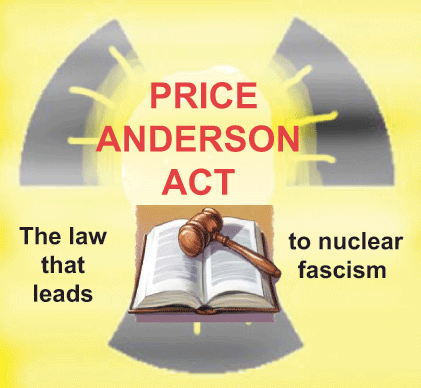
That’s been the situation since 1957 when, with the insurance industry refusing to cover nuclear plant disasters, the Price-Anderson Act was enacted limiting liability in the event of a nuclear plant catastrophe. Congress passed it to jump-start the “Peaceful Atom” program of seven decades ago. The Price-Anderson Act has been extended and extended and Congress recently renewed it for another four decades to cover the untested “Small Modular Reactors” now all the rage in the latest ultra-hyped so-called “nuclear renaissance.”
Trump was surrounded at a signing ceremony in the Oval Office of The White House by executives of the nuclear power industry, including Joe Dominguez, president and CEO of Constellation Energy, the largest nuclear power plant operator in the U.S., Jake Dewitte, CEO of Oklo Inc., and promoters, including Maria Korsnick, president and CEO of the Nuclear Energy Institute, the main nuclear power lobbying organization in the U.S.
Also present was U.S. Interior Secretary Doug Burgum who said: “This is a huge day for the nuclear industry.”
It was a flip from Trump’s comments on the Joe Rogan podcast last year in which he said: “I think there’s a little danger in nuclear.” An article about this on the E&E energy website of Politico said his reservations “seem to qualify his campaign promise to ‘unleash energy production from all sources, including nuclear.’”
But it was a total nuclear advocacy declared by Trump in his executive orders.
One of the four, titled “Ordering the Reform of the Nuclear Regulatory Commission,” notes that since 1978 “only two reactors have entered into commercial operation….Instead of efficiently promoting allegedly “safe, abundant nuclear energy,” the NRC has instead tried to insulate Americans from the most remote risks without appropriate regard for the severe domestic and geopolitical costs of such risk aversion. The NRC utilizes safety models that posit there is no safe threshold of radiation exposure and that harm is directly proportional to the amount of exposure. Those models lack sound scientific basis and produce irrational results.”
“Beginning today,” said this order, “my Administration will reform the NRC, including its structure, personnel, regulations, and basic operations. In so doing, we will produce lasting American dominance in the global nuclear energy market…”
The order then says: “It is the policy of the United States to: Reestablish the United States as the global leader in nuclear energy” and “Facilitate the expansion of American nuclear energy capacity from approximately 100 GW [gigawatts] in 2024 to 400 GW by 2050.”
To avoid a politically suicidal brush with economic reality, Trump ducked this simple calculation: the most recent new U.S. reactors, at Vogtle, Georgia, have come online seven years late, at a price of $18 billion each. (They were originally estimated to cost $7 billion each.) Meanwhile, the other two reactors, the construction of which began also this century, an expected $9.8 billion project at the V.C. Summer nuclear plant site in South Carolina, was abandoned when its estimated cost increased to $25 billion, having generated no electricity at all,
Today there are no large reactors under construction in the U.S. Based on the Vogtle/Summer experiences, to build another 300 nuclear power plants from scratch would cost a “base price” minimum of $5.4 trillion, though the historic likelihood is that they would cost at least double or triple that. Each would likely require 15 years or more to build.
A parallel and thus far theoretical fleet of the much-hyped Small Modular Reactors (“silly mythological rip-offs”) is certain to cost more. Their development has been plagued with soaring price projections, lagging production schedules and a series of cancellations. SMRs produce more radioactive waste per kilowatt-hour than the older, bigger nukes, nuclear proliferation concerns, and there are other problems.
Edwin Lyman, director of nuclear power safety at the Union of Concerned Scientists, in an article last year titled “Five Things the ‘Nuclear Bros’ Don’t Want You to Know About Small Modular Reactors” on its publication “The Equation” starts off with: “1. SMRs are not more economical than large reactors.” He said, “According to the economies of scale principle, smaller reactors will in general produce more expensive electricity than larger ones,” and he elaborates. He further exposes other SMR issues.
Of the Trump order to “reform” the Nuclear Regulatory Commission, in an article published last week in the Bulletin of the Atomic Scientists, Lyman wrote it “mandates that the NRC fundamentally change its mission to support the absurd and reckless goal of quadrupling of U.S. nuclear energy capacity to 400 gigawatts by 2050—which would, if achieved, add the equivalent of 300 large nuclear plants to the U.S. fleet—by prioritizing speedy licensing over protecting public health and safety from radiation exposure. This would effectively make the NRC a promotional agency not unlike its predecessor, the Atomic Energy Commission, thereby undoing the NRC’s 51-year history as the independent safety regulator established by the 1974 Energy Reorganization Act.” The piece was titled: “NRC’s new Mission Impossible: Making Atoms Great Again.”
Another Trump executive order, specifically on “advanced reactors,” was titled “Deploying Advanced Nuclear Reactor Technologies for National Security” and say they “have have the potential to deliver resilient, secure, and reliable power…”
The nuclear industry in recent years has been touting what it calls “advanced” nuclear power plants—which include the SMR—claiming they are safer than current designs.
However, the Union of Concerned Scientists conducted extensive research on the “advanced” plants and its 140-report, authored by Lyman, a physicist, “found that they are no better—and in some respects significantly worse—than the light-water reactors in operation today.”
Another Trump order, “Reforming Reactor Testing at the Department of Energy,” directs “the Department of Energy, the National Laboratories, and any other entity under the [Energy] Department’s jurisdiction to significantly expedite the review, approval, and deployment of advanced reactors.”
And a fourth executive order, “Reinvigorating the Nuclear Industrial Base,” states: “Swift and decisive action is required to jumpstart America’s nuclear energy industrial base and ensure or national and economic security by increasing fuel availability and production, securing civil nuclear supply chains, improving the efficiency with which advanced nuclear reactors are licensed, and preparing our workforce to establish America’s energy dominance and accelerate our path towards a more secure and independent energy future.”
A former chairman of the U.S. Nuclear Regulatory Commission, Dr. Gregory Jaczko, a physicist, commented that the Trump orders show that “he is committed to further lawlessness, more nuclear accidents, and less nuclear safety. This guillotine to the nation’s nuclear safety system will only make the country less safe, the industry less reliable, and the climate crisis more severe….The executive orders look like someone asked an AI, ‘how do we make the nuclear industry worse in this country?’”
Lyman in a statement distributed by the Union of Concerned Scientists said: “Simply put, the U.S. nuclear industry will fail if safety is not made a priority. By fatally compromising the independence and integrity of the NRC, and by encouraging pathways for nuclear deployment that bypass the regulator entirely, the Trump administration is virtually guaranteeing that this country will see a serious accident or other radiological release that will affect the health, safety and livelihoods of millions. Such a disaster will destroy public trust in nuclear power and cause other nations to reject U.S. nuclear technology for decades to come.”
Paul Gunter, director of the Reactor Oversight Project of the organization Beyond Nuclear, said of the order on “reform” of the NRC, that it “most explicitly exposes the Trump Administration’s deliberate attack upon the public’s democratic due process regarding undisputably still hazardous nuclear power and strips away the appearance of maintaining an ‘independent’ federal regulatory agency exercising its due diligence in the interest of public health, safety, security and environmental protection.”
Gunter cited the 1974 Energy Reorganization Act, as did Lyman in his article in the Bulletin of the Atomic Scientists. “The U.S. Atomic Energy Commission (AEC) was abolished by Congress” by the act “precisely because it could no longer maintain the façade of being both the chief promoter and regulator” of nuclear power, said Gunter. This Trump order, said Gunter, “illuminates the obvious 50-year throwback to AEC and its abolition by Congress in 1975 for its blatant ‘conflict of interest’ as simultaneously a promotional agency for atomic power and supposedly an unbiased regulator.”
Tim Judson, executive director of the Nuclear Information and Resource Service, said: “After 70 years of promoting nuclear power, it is still too expensive and produces radioactive waste that will be dangerous for over a million years. President Trump’s executive orders will not fix those problems….There is no ‘fixing’ or ‘reviving’ nuclear energy. The orders are a shortsighted, wasteful effort that will only make nuclear power less safe and more polluting. They will further weaken the Nuclear Regulatory Commission and forever sabotage its already dubious ability to protect public safety and national security.”
Judson said, “One order ignores decades of scientific findings and thousands of families’ tragic experiences with radioactivity, directing the NRC to reduce radiation protections. The National Academy of Sciences has repeatedly found that radiation increases the risk of cancer and other diseases. Only kooks and crackpots under the spell of a Dr. Strangelove-like infatuation with nuclear power say otherwise.”
“Another order,” Judson continued, “will slash the NRC’s staff and subjugate the agency to White House approval of its regulations and licensing decisions, ending even the pretense that an independent regulator will be there to protect the public health and safety. The root of the Fukushima Daichi nuclear meltdowns in 2011 was found to be the subjugation of a nuclear safety regulator to politicians and corporations. The disaster displaced over 100,000 people, shut down the whole nuclear industry, and will cost Japan up to $700 billion. President Trump’s executive orders will increase the changes that could happen here.”
And Judson, like many others, concludes: “The truth is, we can meet all of our energy needs, safely, securely, and affordably, with renewable energy sources that are ready to deploy today. In the last two years alone, the world brought online as much new wind and solar as the entire nuclear industry worldwide can generate after 60 years.”
The Trump pro-nuke executive orders have sparked immediate stock market jumps for Trump’s insider atomic cronies while promising almost incomprehensible losses for the rest of us which includes the spread of atomic machines prone to catastrophe, regularly spewing lethal radioactivity, producing unmanageable waste and this funded by trillions of public dollars.
It further will sink us all into what Forbes Magazine in 1985 described as “the largest managerial failure in business history, a disaster on a monumental scale,” in a lead article titled “Nuclear Follies.”
Meanwhile, renewables are more than ready now, safe power which we can live with. Yet while prices and production times for renewable sources plummet, Trump and his anti-green minions have been vigorously assaulting the wind, solar and other green energy technologies. Trump has attacked not only tax breaks and clean energy grants for the clean energy movement, he has also assaulted the permitting process for renewables, at the same time pushing to expedite it for nuclear power.
He has been joined by California’s “Green Democrat” Governor Gavin Newsom, who has showered subsidies on two decrepit reactors at Diablo Canyon while slashing permits and rate and tax supports for renewables and forcing California ratepayers to fork over $11 billion for the Diablo reactors which are near multiple earthquake fault lines and slated to now be closed, Diablo Canyon is the last nuclear plant running in California. Newsom has devastated the state’s once-booming rooftop solar industry, destroying at least 17,000 green jobs, while sticking California with the continental U.S.’s highest electric rates.
Democratic governors in Michigan, Massachusetts, Pennsylvania, Illinois and elsewhere have also boosted nuclear power while assaulting renewables.
Led by Trump and Newsom, the corrupt corporate leadership of both political parties thus seems bound and determined to bankrupt and irradiate us all with deadly, “nuclear-clause”-covered atomic reactors that can’t compete with the otherwise vibrant, fast-evolving renewable revolution which they are so cynically aiming to kill.
Harvey Wasserman wrote the books Solartopia! Our Green-Powered Earth and The Peoples Spiral of US History. He helped coin the phrase “No Nukes.” He co-convenes the Grassroots Emergency Election Protection Coalition at www.electionprotection2024.org Karl Grossman is the author of Cover Up: What You Are Not Supposed to Know About Nuclear Power and Power Crazy. He the host of the nationally-aired TV program Enviro Close-Up with Karl Grossman (www.envirovideo.com)
To Trump, a million casualties in Ukraine war he’s enabling, is nothing more than a kids’ fistfight

Actually, it takes three to tango since the war goes on because Trump continues enabling it with billions in weapons, logistics and Intel support. Pull that away and Ukraine’s Zelensky would have to negotiate the peace he ran away from in April 2022 at America’s behest. Had he made peace then Zelensky would still control the 45,000 square miles annexed and not incurred over a million senseless casualties.
Walt Zlotow, West Suburban Peace Coalition, Glen Ellyn IL 7 June 25
The depravity of Trump’s view of catastrophic war was on full display in his White House meeting with fellow Ukraine war enabler, German Chancellor Friedrich Merz. Trump told reporters present about the million plus dead and wounded in the largely degraded Ukraine:
To Trump, a million casualties in Ukraine war he’s enabling is nothing more than a kids’ fistfight
The depravity of Trump’s view of catastrophic war was on full display in his White House meeting with fellow Ukraine war enabler, German Chancellor Friedrich Merz. Trump told reporters present about the million plus dead and wounded in the largely degraded Ukraine:
Actually, it takes three to tango since the war goes on because Trump continues enabling it with billions in weapons, logistics and Intel support. Pull that away and Ukraine’s Zelensky would have to negotiate the peace he ran away from in April 2022 at America’s behest. Had he made peace then Zelensky would still control the 45,000 square miles annexed and not incurred over a million senseless casualties.
And cruel, clueless, delusional Trump sits back pretending he’s still concerned about ending a catastrophic war he’s enabled for the past 137 days.
1 This Month





PLEASE OPPOSE HR 8255 AND S.3639 – bills would accelerate satellite deployment, with no environmental review or safeguards – https://ncstd5li.quorum.us/campaign/169331/
To see nuclear-related stories in greater depth and intensity – go to https://nuclearinformation.wordpress.com
-
Archives
- October 2026 (29)
- September 2026 (339)
- August 2026 (330)
- July 2026 (355)
- June 2026 (287)
- May 2026 (306)
- April 2026 (356)
- March 2026 (251)
- February 2026 (267)
- January 2026 (308)
- December 2025 (358)
- November 2025 (359)
-
Categories
- 1
- 1 NUCLEAR ISSUES
- business and costs
- climate change
- culture and arts
- ENERGY
- environment
- health
- history
- indigenous issues
- Legal
- marketing of nuclear
- media
- opposition to nuclear
- PERSONAL STORIES
- politics
- politics international
- Religion and ethics
- safety
- secrets,lies and civil liberties
- spinbuster
- technology
- Uranium
- wastes
- weapons and war
- Women
- 2 WORLD
- ACTION
- AFRICA
- Atrocities
- AUSTRALIA
- Christina's notes
- Christina's themes
- culture and arts
- Events
- Fuk 2022
- Fuk 2023
- Fukushima 2017
- Fukushima 2018
- fukushima 2019
- Fukushima 2020
- Fukushima 2021
- general
- global warming
- Humour (God we need it)
- Nuclear
- RARE EARTHS
- Reference
- resources – print
- Resources -audiovicual
- Weekly Newsletter
- World
- World Nuclear
- YouTube
-
RSS
Entries RSS
Comments RSS

