Virginia business and medical professionals concerned about uranium mining
the group is different from environmental groups in that it comprises business, medical and health professionals who are concerned about potential health impacts from uranium mining.
Coalition forms to address uranium concerns By: TARA BOZICK | GoDanRiver.com December 29, 2011 Halifax County area business owners and other professionals formed The Virginia Coalition on Tuesday in an effort to keep the moratorium on uranium mining in Virginia.
Many felt the socioeconomic reports and National Academy of Sciences study on uranium mining released this month didn’t allay concerns about potential health risks. The General Assembly could take up the issue of whether to allow uranium mining next session, although
opponents and local lawmakers would like to wait until 2013. Continue reading
America’s out-dated Cold War nuclear strategy

 The Cold War Is Long Gone, but the Nuclear Threat Is Still Here The Atlantic, Dec 20 2011, America’s nuclear strategy hasn’t changed much since the Soviet Union fell, but the world’s nuclear dangers have. In the two decades since the fall of the Soviet Union and the end of the Cold War, the nuclear challenges facing the United States have changed radically. American nuclear strategy has not.
American nuclear forces are largely designed to deter a superpower that no longer exists. Continue reading
Talks between USA and Israel about bombing Iran’s nuclear facilities
U.S., Israel Discuss Triggers for Bombing Iran’s Nuclear Infrastructure, The Daily Beast, Eli Lake, Dec 28, 2011 The Obama administration is trying to assure Israel privately that it would strike Iran militarily if Tehran’s nuclear program crosses certain “red lines”—while attempting to dissuade the Israelis from acting unilaterally. Eli Lake reports Continue reading
Florida consumers being hit with costs for imaginary nuclear power plants
consumers are getting hit with costs for “imaginary nuclear plants” and that the Public Service Commission is not properly carrying out a 2006 law.”It’s a scam,’’ ….. “It’s an absolute scam of monumental proportions.’’
attorneys for the Southern Alliance for Clean Energy, consumers and major power users questioned whether the utilities will ever build the multibillion-dollar nuclear plants.
 Clean energy group to challenge PSC decision on nuke funding, Miami Herald, By Jim Saunders, 29 Dec 11 An advocacy grouup notified the state Public Service Commission that it is taking the unusual step of appealing an order that allows utilities to collect money for work on future or existing nuclear plants. By Jim Saunders The News Service of Florida TALLAHASSEE —
An advocacy group will ask the state Supreme Court to reject a regulatory decision that would allow Florida Power & Light and Progress Energy Florida to collect about $282 million from
customers next year for nuclear-power projects.The Southern Alliance for Clean Energy notified the state Public Service Commission last week that it is taking the unusual step of appealing an order that allows the utilities to collect money for work on future or existing
nuclear plants. Continue reading
USA’s ‘nuclear renaissance’ is just not going to happen
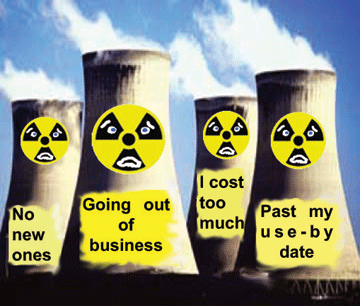 Report: U.S. nuclear renaissance unlikely after Fukushima Los Angeles Times, December 28, 2011 A new study released Wednesday said that the regulatory fallout from the Fukushima power plant disaster in Japan in March will short-circuit the U.S. nuclear renaissance of new power plant construction.
The report, “Nuclear Safety and Nuclear Economics,” was written and presented by Mark Cooper, a frequent critic of the nuclear power industry. The report can be found here. Cooper is a senior fellow for economic analysis at the Institute for Energy and the Environment at the Vermont Law School.
Cooper said that past nuclear disasters, such as the one at the Three Mile Island power plant in Pennsylvania in 1979, have tended to greatly raise regulatory barriers and have also severely multiplied the cost of reactor construction. After Three Mile Island, for example, the report said, the cost of nuclear power plant construction doubled in most cases and trebled or quadrupled in some rare instances.
“This is an important moment to compare what is really likely to happen over the next 10 years with the industry’s expectations” of a nuclear renaissance, Cooper said. “When that comparison is performed properly, it becomes clear that we are witnessing not a revival but a collapse in expectations for new reactor construction.”
The report comes just days after a panel appointed by the Japanese government released a scathing assessment of the reponse to the disaster, which was caused when a huge earthquake generated a tsunami that struck the facility….
A recently updated online report by the World Nuclear Assn. said that as few as four of the 26 new nuclear facilities that have been proposed or planned in the U.S. will be finished by 2020. But it did not mention Fukushima and instead said the primary reason was the fact that a boom in domestic natural gas production has “put the economic viability of some of these projects in doubt.” http://latimesblogs.latimes.com/money_co/2011/12/a-new-study-released-today-said-that-theregulatory-fallout-from-the-fukushima-power-plantdisaster-in-japan-last-marchwill-pro.html
Another safety problem shuts down Pilgrim nuclear power plant
Pilgrim nuclear plant shut down because of safety relief valve leak By Carolyn Y. Johnson, Boston Globe , 27 Dec 11 The Pilgrim Nuclear Power Station in Plymouth was shut down early this morning because of a leak detected in one of four safety relief valve systems. The steam leak was slightly radioactive and contained inside the plant. It posed no threat to the public or to plant workers, according to a spokesman for the Nuclear Regulatory Commission….. Last spring, safety issues and an emergency shutdown at Pilgrim occurred. In November, the NRC officially required a yearlong review of safety procedures because of the problems, which occurred as control room operators as were restarting the reactor after it had been refueled. …. http://www.boston.com/Boston/metrodesk/2011/12/pilgrim-nuclear-plant-shut-down-because-safety-relief-valve-leak/iGrt6XDLKSsJAem1djJ3aJ/index.html
Nuclear ballistic missile submarine almost hit cargo vessel
 Nuclear sub narrowly avoided collision in Strait of Juan de Fuca, newspaper reports By Tom Callis, 25 Dec 1 Peninsula Daily News PORT ANGELES — A nuclear-powered submarine narrowly avoided colliding with a cargo ship in the Strait of Juan de Fuca in October, according to the Navy Times.
The newspaper reported Wednesday that the USS Kentucky, a ballistic-missile sub based at Bangor, was traveling at periscope depth when it came within 900 yards of a 839-foot-long cargo ship on Oct. 12. The officer of the deck had failed to check for other vessels while
making a course change, the Navy Times said. Both ships turned to avoid colliding…
…The newspaper did not say where in the Strait the incident occurred. In an email, a Navy spokesman declined to provide the location or additional information, adding “it is U.S. Navy policy not to discuss specific submarine operations.”
Coast Guard spokespeople could not be reached for comment Saturday. Nosse was relieved of his position in October after the incident and reassigned to Submarine Group 9, the newspaper said……. The newspaper said the control room had a made series of accumulating
errors, including confusing the inbound cargo ship as an outgoing vessel, and the commanding officer, concerned about a trawler, ordering a change of course but not saying in which direction….. http://www.peninsuladailynews.com/article/20111225/news/312259992/nuclear-sub-narrowly-avoided-collision-in-strait-of-juan-de-fuca
New cancer concerns over airport radiation scanners
 the cosmic radiation that infiltrates airliners is absorbed by the whole body and is thus less dangerous than the low-level radiation of the scanners, which permeates only the skin and underlying tissues. In addition ….. blood and male testicles could be endangered.
 Cancer concerns mount over TSA body scanners, Sun Sentinel By Ken Kaye and Brittany Wallman, December 25, 2011 Because the scanners’ lose dose of radiation penetrates just below skin level, it could imperil the lens of the eye, the thyroid and a woman’s breasts, said Dr. Edward Dauer, head of radiology at Florida Medical Center in Fort Lauderdale.
“I think it’s potentially a real danger to the public,” he said, noting that even a small dose could be risky for people predisposed to cancer. “This is an additional exposure.” Continue reading
Ionizing radiation a possibility as cause of seal deaths
Some wonder if radiation could be causing the skin sores and related problems, including ulcers on internal organs and abnormal growths on brains
Is it possible that the ringed seals traveled to a contaminated area?
Or did they eat prey contaminated by radiation?
Is radiation causing Arctic Alaska ringed-seal deaths? Alaska Dispatch Alex DeMarban | Dec 23, 2011 The University of Alaska Fairbanks’ Institute of Marine Sciences is launching an investigation into whether radiation, including possibly from the Fukoshima Daiichi nuclear power-plant disaster in Japan, has harmed or killed more than 100 ringed seals off Alaska’s coasts. Continue reading
America no closer to finding a tomb for its accumulating nuclear wastes
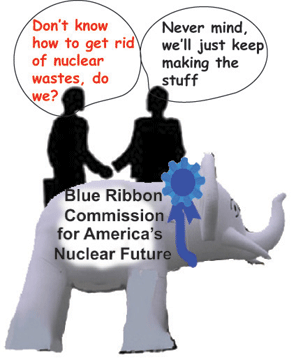 In July, with little fanfare, the Obama administration’s Blue Ribbon Commission on America’s Nuclear Future released a draft report to the Secretary of Energy on a post-Yucca Mountain solution. The report calls for development of “one or more geologic disposal facilities.”
So far, federal officials say they haven’t even started looking for a specific state or single site.
Northland rock considered for nuclear waste storage With Nevada’s Yucca Mountain out of the running as the permanent graveyard for U.S. nuclear waste, scientists now are looking for other places to entomb the stuff, including rock formations common in northern Minnesota and Wisconsin. That’s the message from a 114-page study from the Sandia National Laboratory that surfaced last week. By: John Myers, Duluth News Tribune, 25 Dec 11, Continue reading
Big money pushing for Virginia uranium, rather than water safety

 Virginia. election, uranium’s future among the top political, government stories of 2012, Washingtn Post, 25 Dec 11 RICHMOND, Va. — The list of top stories includes whether money can speak loudly enough to open Virginia to uranium mining despite serious environmental concerns and whether the Republican right rules all of Virginia policymaking…..
A long-awaited independent study by the National Academy of Sciences in December raised serious concerns about whether a massive uranium ore deposit can be safely mined and milled in Pittsylvania County…..
It’s up to the Virginia General Assembly to weigh the appeal of an economic boom in  Southside Virginia — an area hit hard by declines in the textile, furniture and tobacco industries — against the prospect of contaminating water supplies for huge areas of Virginia and North Carolina.
The deep-pockets consortium of investors and corporations eager to recover the 119-million-pound deposit has hired Capitol Square’s most expensive and influential lobbyists to shepherd legislation to end a 30-year uranium mining ban through a deeply divided House and Senate.
This is one of those issues more likely to create geographic divisions than partisan ones…..
http://www.washingtonpost.com/local/va-at-elections-forefront-can-republicans-really-rule-uraniums-future-the-stories-of-2012/2011/12/25/gIQA9RjEHP_story.html
USA $700 Billion for outdated nuclear weapons! – time to question this
in a time of soaring national debts, should we be asking the Chinese to lend us more money for outdated weapons?
What Nuclear Weapons Cost Us — It’s the Right Time for a Debate , Huffington Post, Joel Rubin, 12/20/11 The debate over the extent to which the U.S. government is committing itself to spending vast sums of taxpayer dollars on nuclear weapons and related programs over the next decade is in full force in Congress, inside the administration, and in the media.
An open, transparent debate is essential to ensuring that citizens and policymakers alike have the right information in their hands when deciding about our country’s future spending on both these weapons and their related programs. It’s understandable that there will be differences of opinion throughout this debate – one that’s been made more difficult due to a lack of transparency about what our government actually spends on nuclear weapons and related programs.
It is because of this lack of clear information that Ploughshares Fund is providing its third working paper estimate on what it will cost Americans to produce, build, maintain, and clean-up nuclear weapons and related programs over the next decade. To our knowledge, this estimate is the only current comprehensive assessment that projects these costs for the next decade. It is based upon the best publicly available information.
Our conclusion continues to be that current plans for nuclear weapons and related programs over the next decade will cost the American taxpayer approximately $700 billion.
The state of the debate over these estimates
There is significant consensus between this estimate and others being discussed both on Capitol Hill and in the media. Specifically, there is a common view that the taxpayer will spend a combined $358 billion on nuclear incident management, nuclear threat reduction, missile defense, deferred environmental and health costs, and nuclear weapons activities.
These programs are included in our projection because, as the Congressional Budget Office has noted, they are part of the full cost accounting of nuclear weapons and therefore “…might reasonably be attributed” to nuclear force expenditures….
Bringing it all together Having a debate over the numbers creates an opportunity to ask important questions about our country’s national security and fiscal policy.
For example, what does it really cost to protect Americans from terrorism, cyber attack, and nuclear threats from states such as North Korea and Pakistan? Should it cost that same amount as if the Cold War had never ended? Are there better places to invest these limited defense dollars? And in a time of soaring national debts, should we be asking the Chinese to lend us more money for outdated weapons? …. http://www.huffingtonpost.com/joel-rubin/what-nuclear-weapons-cost_b_1161443.html
USA does not rule out a pre-emptive strike on Iran
 In the interview, Panetta also refused to rule out military action to prevent Iran from obtaining nuclear weapons
The lesson from the US experience in the Iraq war, when Washington claimed there were weapons of mass destruction that never materialized, is for US government figures to speak with more caution,
Panetta refuses to rule out military strike on an Iranian nuclear weapons program National Post, Agence France-Presse Dec 20, 2011, By Dan De Luce WASHINGTON — The Pentagon on Tuesday sought to play down remarks by Defense Secretary Leon Panetta who has suggested Iran’s nuclear program could be on a faster track than previously suspected. Continue reading
Obama government boosts wind and solar energy on both coasts
 Obama Admin Pushes Renewable Energy on 2 Coasts ABC News, By MATTHEW DALY Associated Press WASHINGTON December 20, 2011 (AP) The Obama administration moved Tuesday to boost renewable energy on both coasts, approving onshore solar and wind farms in the West and pushing for offshore wind power in the Atlantic Ocean.
Interior Secretary Ken Salazar said his department has approved a 300-megawatt solar farm on public land in Arizona and a 200-megawatt wind farm in Southern California. The wind farm includes 186 megawatts that would be produced on federal lands.
The projects, southwest of Phoenix and east of San Diego, respectively, are the 24th and 25th renewable energy projects approved on public lands in the past two years, Salazar said, and demonstrate that the administration’s commitment to renewable energy is paying dividends. “Together, these projects will produce the clean energy equivalent of nearly 18 coal-fired power plants, so what’s happening here is nothing short of a renewable energy revolution,” Salazar said.
The Sonoran Solar Energy Project in Arizona, being developed by Florida-based NextEra Energy Resources, will generate enough electricity to power about 90,000 homes. The Tule Wind Project in California, developed by Iberdrola Renewables, the U.S. division of a Spanish energy company, will be able to power about 65,000 homes….
Salazar has urged Congress to extend the wind credit, which expires next year, calling it a lifeline for domestic producers that could save tens of thousands of jobs and bring financial certainty to the renewable industry… http://abcnews.go.com/US/wireStory/interior-backs-solar-wind-farms-calif-ariz-15199048#.TvKi7zXZ7_M
Report on uranium mining and milling in Virginia
Highlights of National Academy of Sciences’ report on uranium mining and milling in Virginia
Uranium report says local sites not viable Fredricksburg.com, By RUSTY DENNEN, 19 Dec 11“.……Virginia Uranium Inc.’s Coles Hill site in Pittsylvania County is the only commercially viable site in the state. Uranium mining and processing carries with it a wide range of
potential adverse human health risks.
A detailed assessment of both the potential site and its surrounding area (including natural, historical and social characteristics) would be needed.
It is not yet possible to predict what specific type of uranium mining or processing might apply to ore deposits in Virginia. A mining project could affect surface water quality and quantity, groundwater quality and quantity, soils, air quality and organisms in
the vicinity.
Because of the 1982 moratorium, the state has no experience regulating uranium mining and there is no regulatory infrastructure. Planning should take into account all aspects of the process—including the eventual closure, site remediation and reclamation—prior to initiation of a project, and there should be opportunities for publicinvolvement throughout.
For more on the report, nationalacademies.org —National Research Council of the National Academies http://blogs.fredericksburg.com/newsdesk/2011/12/19/uranium-report-says-local-sites-not-viable/
1 This Month




Shut down the radiation-damaged Heysham nuclear reactors now
To see nuclear-related stories in greater depth and intensity – go to https://nuclearinformation.wordpress.com

Say No to NASA’s Reckless Nuclear Reactor on the Moon
Say No to NASA’s Reckless Nuclear Reactor on the Moon
-
Archives
- October 2026 (279)
- September 2026 (339)
- August 2026 (330)
- July 2026 (355)
- June 2026 (287)
- May 2026 (306)
- April 2026 (356)
- March 2026 (251)
- February 2026 (267)
- January 2026 (308)
- December 2025 (358)
- November 2025 (359)
-
Categories
- 1
- 1 NUCLEAR ISSUES
- business and costs
- climate change
- culture and arts
- ENERGY
- environment
- health
- history
- indigenous issues
- Legal
- marketing of nuclear
- media
- opposition to nuclear
- PERSONAL STORIES
- politics
- politics international
- Religion and ethics
- safety
- secrets,lies and civil liberties
- spinbuster
- technology
- Uranium
- wastes
- weapons and war
- Women
- 2 WORLD
- ACTION
- AFRICA
- Atrocities
- AUSTRALIA
- Christina's notes
- Christina's themes
- culture and arts
- Events
- Fuk 2022
- Fuk 2023
- Fukushima 2017
- Fukushima 2018
- fukushima 2019
- Fukushima 2020
- Fukushima 2021
- general
- global warming
- Humour (God we need it)
- Nuclear
- RARE EARTHS
- Reference
- resources – print
- Resources -audiovicual
- Weekly Newsletter
- World
- World Nuclear
- YouTube
-
RSS
Entries RSS
Comments RSS

