Nuclear Regulatory Commission wants a more pro nuclear Chairman
Agency Smackdown, Round 2: A Critique of ‘the Nuclear Party’ NYT, By  MATTHEW L. WALD, December 28, 2011, The chairman of the Nuclear Regulatory Commission, whose four fellow commissioners complained about him to the White House, saying that he had been withholding information from them and wielding too much power, drew a spirited defense on Wednesday from a predecessor at the agency. Peter A. Bradford, who was a commission member from 1977 to 1982, was speaking with reporters in a conference call on another topic, whether the recent approval of a new reactor design by the commission represented a major step toward a “nuclear renaissance.” (It doesn’t, he said.)
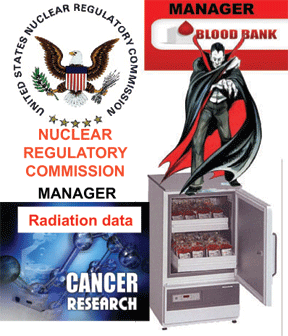 …….In the course of the call, Mr. Bradford said that the four commissioners were trying to give the Nuclear Regulatory Commission’s chairman, Gregory B. Jaczko, “a push toward the door.”
Mr. Bradford said it was not unusual for the commissioners to disagree strongly. “What’s unusual here is the letter these four commissioners have written,’’ he said. He said the letter had been prepared “unquestionably with the intention it would become public,’’ and that that there was no possibility that it would contribute to more collegial decision-making at the commission. The letter accused Mr. Jaczko of intimidating staff members – an allegation that was also noted in a report by the agency’s inspector general this year.
But Mr. Bradford said he did not believe that “ the chairman is somehow raging around the agency and intimidating the staff.’’
“These are professionals, they’re grown-ups, they don’t get scared under their desk by one commissioner, even the chairman,’’ he said. “It doesn’t pass the straight-face test. Of the four other members, two are Republicans and two are Democrats, but Mr. Bradford said the letter was not in fact bipartisan. “In Washington, you’ve got a situation where the ‘nuclear party’ transcends the Republican and Democratic party,’’ he said. “You’ve got four members of the nuclear party writing a letter about the chairman, who’s never been a member of the nuclear party.’’
Those four members have backgrounds in nuclear engineering, the nuclear Navy and related fields; Dr. Jaczko has a Ph.D in particle physics and came to the commission after a career on Capitol Hill, including a stint as an aide to Harry Reid of Nevada, the leader of the Senate’s Democratic majority.
The appointment of Dr. Jaczko did not have the support of the main nuclear industry trade association, the Nuclear Energy Institute, and that group has made an oblique plea for his departure. http://green.blogs.nytimes.com/2011/12/28/in-agency-smackdown-a-critique-of-the-nuclear-party/?scp=1&sq=Peter%20A.%20Bradford&st=cse
Nuclear Regulatory Commission dispute, as Chairman Jaczko wants more safety

 A Philosophical Split at the Nuclear Regulatory Commission, Huffington Post, Elliott Negin, 12 Jan 12“…….For two days, a federal agency aired its dirty laundry in public. Both the House and the Senate held hearings on December 14 and 15 respectively that wound up focusing on a bureaucratic tiff between the chairman of the Nuclear Regulatory Commission and the agency’s four commissioners….
the split may be more philosophical than personal. A critical vote the five took on December 15, the same day as the Senate hearing, suggests that it is at least partly the latter. For the seventh time over the last three years, Jaczko was on the losing end of a 4-1 vote that went against a proposal that would have strengthened plant safeguards. Continue reading
Florida residents up for $millions for nuclear plants?
Progress Energy rate-payers are already on the hook for part of the $2.5 billion in repairs 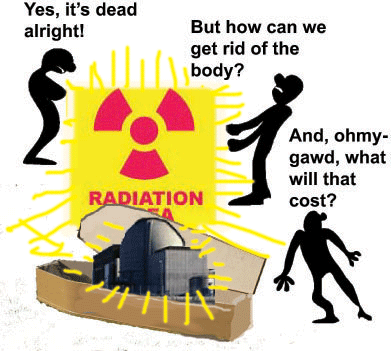 for the existing Crystal River nuclear plant. The plant has been offline with various problems since September 2009 and is not expected to be operating again before 2014. The utility wants customers to pay about $670 toward the repairs and insists that scrapping the plant would cost rate-payers more than fixing it.
Nuclear plant opponents in Fla. voice concerns Washington Examiner, By: MITCH STACY | 01/12/12 Opponents of two proposed nuclear power reactors in west-central Florida told a Nuclear Regulatory Commission panel on Thursday that the units will upset the delicate balance of the rural area’s water system and present a health risk……. The hearing before a
three-judge panel of the Atomic Safety and Licensing Board — the judicial arm of the NRC — addressed a legal challenge to Progress Energy’s application to license the plants. The NRC is expected to complete an environmental impact statement this spring and a formal trial on the challenge could happen as early as October. Continue reading
Ionising radiation a valuable medical tool, but only when really warranted
“Ionized radiation is the most studied carcinogen in the world.”
the problem is that sometimes the devices are used when they are not necessary, a situation peculiar to the American medical system. In the United Kingdom and Europe the devices are not used unless the need is warranted by the patient’s medical condition.
On that, everyone seems to agree.
Medical Physicists Say Fear of Diagnostic Radiation Is Overblown Patients should not decline X-ray imaging for medically advised procedures, group says. Jan 11, 2012 Inside Science, By Joel N. Shurkin, ISNS — An association of physicists in the medical field has warned patients not to decline diagnostic radiation procedures because of perceptions that the tests may be
harmful. Continue reading
USA hypocrisy in nuclear sales to Middle East – arms race risk?
 Nuclear trade agreements allow for U.S. companies to build reactors overseas or provide sensitive technologies, nuclear materials or know-how to recipient nations.
“I think the administration will pay lip service to the idea of [a nuclear trade partner] forgoing enrichment and reprocessing, but I would be very surprised if they made renunciation a hard condition of any agreement,” said nuclear expert Jeffrey Lewis.
serious concerns about the possibility that the entire region could be on the verge of a race to develop nuclear weapons.
 Obama Team Reveals Nuclear Trade, Nonproliferation Decision on Capitol Hill, National Journal, By Elaine M. Grossman January 11, 2012 The Obama administration told key lawmakers by letter on Tuesday how it intends to pursue upcoming nuclear trade agreements with one or more partner states, and the decision was believed to shed light on whether such pacts would contain specific conditions aimed at discouraging the spread of nuclear weapons, Global Security Newswire has learned (see GSN, July 28, 2011).
Two senior Obama administration officials wanted to brief key lawmakers in person or by phone this week, but logistics proved impossible and a written notification was sent instead, according to sources.
Details were shrouded in secrecy even after the letters were sent to the chairs and ranking members of the House Foreign Affairs and Senate Foreign Relations committees, but the outlines of a policy determination appeared to be emerging, sources and experts said. Continue reading
Big investment in wind farms USA
Global Deal: BP, Sempra Energy to Invest $1 Billion in U.S. Wind Farms WSJ, JANUARY 11, 2012, By Cassandra Sweet of Dow Jones Newswires BP PLC and Sempra Energy said Tuesday that together they will invest more than $1 billion in two wind farms under development in Pennsylvania and Kansas. Continue reading
Attack on Iran’s nuclear plant likely to radioactively pollute Kuwait
 Kuwait faces more risk than any other country in the region….. This gives Kuwait the right to request that the United States refrain from any military action that would put the Iranian plant at risk, the experts believe.
 Bushehr plant damage risks 90% radiation in Kuwait KUWAIT TIMES, 11 Jan 12, : Kuwait is not prepared for any negative impact from military action against the Bushehr nuclear power plant, experts say. “A radiation leak from the Bushehr Plant puts at least 90 percent of Kuwait’s population at risk of being affected by the worst kinds of cancer that affect the brain and kidney”, according to studies mentioned recently by experts from inside and outside Kuwait who are following the development of Iran’s nuclear projects.
The expert, quoted in an Al-Dar daily report published yesterday, indicated that Kuwait is not prepared to thwart risks of a radiation leak that could happen as a result of a military strike or natural disaster affecting the plant.
The report quotes the experts as saying that an environmental organization assigned to monitor radiation levels is not equipped to give accurate readings regarding hazardous radiation leaks and spread levels. Continue reading
Indian Point nuclear power plant shut due to radioactive water problem
Pump problem shuts nuclear reactor in NYC suburbs, WSJ, JANUARY 10, 2012, WHITE PLAINS, N.Y. — An increase in a leak of slightly radioactive water forced the shutdown Tuesday of a reactor at the Indian Point nuclear power plant in New York City’s suburbs, officials said.
Entergy Nuclear, owner of the plant in Buchanan, said all the water was contained in the pump. It said there was no release of radioactivity from the Indian Point 2 reactor and no danger to workers or the public…
it’s not yet known how long Indian Point 2 will be offline….. Indian Point, 35 miles from midtown Manhattan, is fighting for new 20-year licenses for the two reactors. Current
licenses expire in 2013 and 2015. Gov. Andrew Cuomo has opposed the new licenses, saying it’s unsafe to have a nuclear plant in such a densely populated area.
http://online.wsj.com/article/AP45c33f21230c436195398edcb5f43907.html
Infant deaths linked to Fukushima radiation – report ignored by govt and media
[In April 2011] the Environmental Protection Agency (EPA) reported increased levels of radiation in the air, water and milk right across the U.S. that were 100s of times above normal levels.
while deaths were reported across all age categories, infants under the age of one-year old were the demographic hardest hit. The increase in 2010-2011 deaths among infants in the spring was 1.8 percent, compared to a decrease of 8.37 percent in the preceding 14 weeks. Infant deaths were highest “because their tissues are rapidly multiplying, they have undeveloped immune systems, and the doses of radioisotopes are proportionally greater than for adults,”
 this study, which was released publicly on December 19, 2011, was not covered by mainstream media, but mostly watchdog groups and alternative, underground and fringe publications. There has been little reported about the after affects of Fukushima of late.
In an audio news conference, Mangano says the reaction of the nuclear industry and government will likely be a smear campaign to the report’s credibility
 14,000 U.S. Deaths Linked to Fukushima Nuclear Meltdown: Infants Hardest Hit,The Province, Tess Zevenbergen January 9, 2012. The first study linking radioactive fallout to 14,000 U.S. deaths as a result of Fukushima’s nuclear meltdown following the 9.0 magnitude earthquake and tsunami that struck the coast of Japan on Friday, March 11th last year has been published in the International Journal of Health Services (IJHS). According to a news release issued over the PR Newswire, the study is the first peer-reviewed study to appear in a medical scientific journal that documents the health hazards associated with the Fukushima nuclear explosion and meltdown catastrophe.
The study, authored by epidemiologist Joseph Mangano MPH MBA and Executive Director of the Radiation and Public Health Project, and Janette Sherman, a toxicologist and adjunct professor at the University of Michigan, states the number of radiation-related deaths linked to the Fukushima disaster is comparable to the number of deaths following the Chernobyl meltdown of 1986. The results of the study were gleaned from looking at U.S. death rates during the period Fukushima occurred, as well as in previous months and years.
“This study of Fukushima health hazards is the first to be published in a scientific journal. It raises concerns, and strongly suggests that health studies continue, to understand the true impact of Fukushima in Japan and around the world. Findings are important to the current debate of whether to build new reactors, and how long to keep aging ones in operation,” stated Mangano. Continue reading
Nuclear technicians watching Internet sites, not the nuclear controls
 NRC: Nuclear technicians surfed web on the job, By Mike M. Ahlers, January 9, 2012 WASHINGTON (CNN) — Nine technicians responsible for monitoring operations at a Louisiana nuclear power plant spent on-duty time surfing the Internet — visiting websites that included news, sports, fishing and retirement information — jeopardizing the safety of the plant, federal regulators say.
The Nuclear Regulatory Commission disclosed the web-surfing activities Monday in a letter that proposes a $140,000 fine against the River Bend nuclear power station, 24 miles northwest of Baton Rouge……
According to an NRC investigation, nine operators “deliberately violated” the safety procedures by surfing the web between January and April of 2010. Three of the nine did so with such frequency and duration that they are being issued “severity level three enforcement violations.” (Severity level one represents the greatest significant violation and severity level four is the lowest.) The remaining six operators will receive severity level four violations. …..http://edition.cnn.com/2012/01/09/us/technicians-web-surfing/
NRC’s nuclear safety moves slow and inadequate
There is some dissent among nuclear experts despite the NRC’s assurances.
radioactive tritium has leaked into groundwater at three-quarters of U.S. commercial nuclear power sites.
Nuclear safety in the U.S. a slow affair Smart Planet, By David Worthington | January 8, 2012 The Nuclear Regulatory Commission (NRC) is taking a years long methodical approach to advanced nuclear safety in the United States while other nations, including France and Japan, are acting more expeditiously.
Japan’s ongoing Fukushima crisis has placed nuclear power under scrutiny throughout the world, and public interest groups in the US have expressed safety concerns about its aging reactors. Watchdogs have criticized the NRC for softening regulations or even ignoring violations…… Continue reading
Airport scanner staff to be monitored for radiation
Airport Screeners to be Monitored for Radiation, TSA Says Jan 9, 2012 Rachael Rettner, MyHealthNews The Transportation Security Administration (TSA) is looking to monitor the levels of radiation that its employees are exposed to from X-ray technology, including airport body scanners, a document from the agency says.
In the document, the TSA said it plans to start performing radiation measurements using “personal dosimeters,” which are devices worn on the body that measure a person’s exposure to radiation, at certain airports. Such devices are used by people who work near sources of radiation such as hospital and nuclear power plant employees.
“The measurements will assist the TSA in determining if the Transportation Security Officers (TSO) at selected federalized airports are exposed to ionizing radiation above minimum detectable levels, and whether any measured radiation doses approach or exceed the threshold where personnel dosimetry monitoring is required by [Department of Homeland Security]/TSA policy,” according to the document, which was posted on a government website. http://www.myhealthnewsdaily.com/2091-airport-security-screening-personal-radiation-monitoring.html
Attacks on NRC Chairman take attention away from nuclear safety issues
The grumbling over Jaczko is a convenient smokescreen to draw attention away from the fact that, for the first time in decades, the NRC actually has a Chairman who, in his own words, is “a very passionate person about safety” at the country’s 104 operating nuclear reactors. That shows up the other four, who, much of the time, adhere to an old culture of capitulation to the demands of the nuclear power industry, a practice which almost invariably diminishes safety…….
Congress could better spend its time looking deeper into lax safety oversight at NRC and tell its commissioners to stop favoring the nuclear industry’s financial priorities over public safety.
The Jaczko DebateNuclear Agency Squabbling Throws Smokescreen Over Safety Lapses, Counter Punch, 6 Jan 12, by LINDA PENTZ GUNTER Four of the five commissioners at the US Nuclear Regulatory Commission have charged their boss, Chairman Gregory Jaczko, with “causing serious damage to this institution.” That is tough talk coming from an agency where mismanagement under previous chairmanships actually did serious damage, not only to the regulatory integrity of the institution, but to safety integrity at nuclear reactors. Continue reading
USA ‘s cautious move to reduce nuclear weapons
 Pentagon cuts: What will the new US military look like? BBC News, By Heather Hurlburt, Executive Director, National Security Network, 6 Jan 12,“…..The president’s 2009 Prague pledge to reduce the role of nuclear weapons in US strategy, and move toward their elimination, will begin to have practical force.
Stephen Young of the Union of Concerned Scientists describes the future of the nuclear weapons complex as “cautious but suggestive”. The strategy review document maintains a nuclear arsenal but hints at reductions, saying “it is possible our deterrence goals can be achieved with a smaller nuclear force”.
What might this mean in practice? In the near-term, disappointment for those on the US right who have advocated aggressive investment in new nuclear bombs and even a return to testing. In the longer-term, many Pentagon generals, especially those not in submarine, missile or nuclear bomber commands, are willing to consider shrinking the nuclear “triad”. There is also a raft of influential players in the nuclear sphere who have been eager to retire the weapons…..” http://www.bbc.co.uk/news/world-us-canada-16433138
New uranium mining banned near Grand Canyon
 U.S. to Ban New Uranium Mining Near Grand Canyon, NYT, 6 Jan 12, By JOHN M. BRODER Interior Secretary Ken Salazar is expected to announce on Monday that he has approved a 20-year moratorium on new uranium mining claims in a million-acre buffer zone around the Grand Canyon.
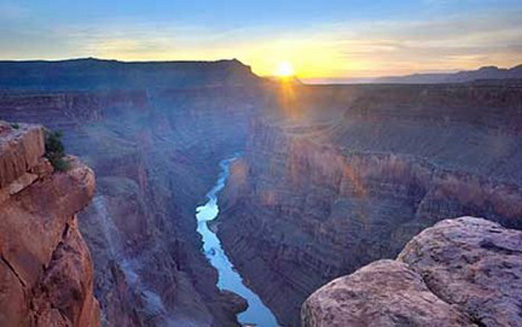
The decision, which has been under consideration for nearly two years, would allow a small number of existing uranium and other hard rock mining operations in the region to continue while barring the new claims. In 2009 Mr. Salazar suspended new uranium claims on public lands surrounding the Grand Canyon for two years, overturning a Bush administration policy that encouraged thousands of new claims when the price of uranium soared in 2006 and 2007.
Many of the stakeholders are foreign interests, including Rosatom, Russia’s state atomic energy corporation.
The Interior Department took public comment and prepared an environmental impact statement before deciding to extend the moratorium for another 20 years…. http://green.blogs.nytimes.com/2012/01/06/u-s-to-ban-new-uranium-mining-near-grand-canyon/
1 This Month




Shut down the radiation-damaged Heysham nuclear reactors now
To see nuclear-related stories in greater depth and intensity – go to https://nuclearinformation.wordpress.com

Say No to NASA’s Reckless Nuclear Reactor on the Moon
Say No to NASA’s Reckless Nuclear Reactor on the Moon
-
Archives
- October 2026 (279)
- September 2026 (339)
- August 2026 (330)
- July 2026 (355)
- June 2026 (287)
- May 2026 (306)
- April 2026 (356)
- March 2026 (251)
- February 2026 (267)
- January 2026 (308)
- December 2025 (358)
- November 2025 (359)
-
Categories
- 1
- 1 NUCLEAR ISSUES
- business and costs
- climate change
- culture and arts
- ENERGY
- environment
- health
- history
- indigenous issues
- Legal
- marketing of nuclear
- media
- opposition to nuclear
- PERSONAL STORIES
- politics
- politics international
- Religion and ethics
- safety
- secrets,lies and civil liberties
- spinbuster
- technology
- Uranium
- wastes
- weapons and war
- Women
- 2 WORLD
- ACTION
- AFRICA
- Atrocities
- AUSTRALIA
- Christina's notes
- Christina's themes
- culture and arts
- Events
- Fuk 2022
- Fuk 2023
- Fukushima 2017
- Fukushima 2018
- fukushima 2019
- Fukushima 2020
- Fukushima 2021
- general
- global warming
- Humour (God we need it)
- Nuclear
- RARE EARTHS
- Reference
- resources – print
- Resources -audiovicual
- Weekly Newsletter
- World
- World Nuclear
- YouTube
-
RSS
Entries RSS
Comments RSS

