Nuclear plants in South Carolina and Virginia had “near misses”
Nuclear watchdog group says Duke Energy plant among 2011 “near misses” Observer.com by johnmurawski on 02/28/2012 “……According to UCS, the situation at Duke Energy’s Oconee nuclear plant in South Carolina involved a glitch in the backup reactor core cooling system that would have rendered the system useless during an accident.
The backup system was installed in 1983 and the plant’s workers didn’t discover the problem until 2011.
Another plant mentioned in the UCS report was the North Anna plant in Virginia which lost offsite power after experiencing an earthquake which was more severe than the plant was designed for……” http://blogs.newsobserver.com/business/nuclear-watchdog-group-says-duke-energy-plant-among-2011-near-misses
Federal govt confident of legal win in keeping new uranium mining from Grand Canyon
Sandy Bahr, director of the Grand Canyon Chapter of the Sierra Club aid the mining industry is used to getting its way when it comes to public lands, and she believes that is one reason for Monday’s lawsuit. “The mining industry seems to forget that these are public
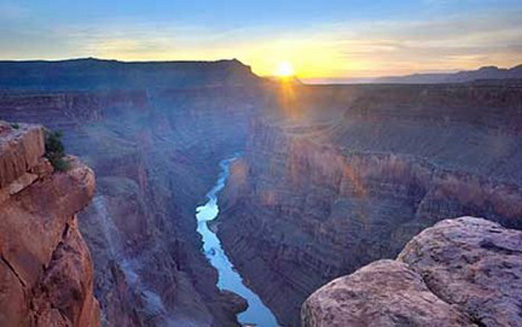 lands, not their lands,” she said. “There are more important things than their short–term profits – namely the Grand Canyon.”
Environmentalists also said they do not believe the department’s environmental analysis will be found to be flawed as it spent more than two years on research, analysis and review of “hundreds of thousands of comments in support of the withdrawal,”

 Salazar confident uranium-mining ban will withstand legal challenge By SALVADOR RODRIGUEZ Cronkite News, 28 Feb 12, WASHINGTON – Interior Secretary Ken Salazar said Tuesday he is confident a 20–year ban on uranium mining near the Grand Canyon will hold up to an industry lawsuit challenging the January withdrawal of the land by federal officials.
Salazar’s comments came one day after the National Mining Association
and the Nuclear Energy Institute filed suit U.S. District Court in Arizona, arguing that the Department of the Interior cannot withdraw more than 5,000 acres of land at a time under the law it cited. Continue reading
A change, but not enough, in the NRC’s pro nuclear culture
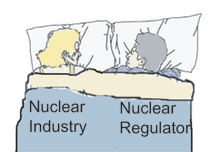 Nuclear Regulatory Commission sea change? Chairman Jaczko wants red tape removed for Fukushima contentions By Frank Mand Wicked Local Feb 27, 2012 PLYMOUTH — While the Nuclear Regulatory Commission seems to be moving quickly now, dispensing with the objections and legal contentions standing in the way of relicensing the Pilgrim Nuclear Power Station, as those impediments are brushed aside something quite remarkable may be taking place.
Almost hidden in several recent decisions by the NRC – decisions which went against critics of relicensing – is the core of a sea change, a belief on the part of certain key individuals in this government bureaucracy that, at least in the case of recent concerns about the relevance of the Fukushima disaster to Pilgrim and other American nuclear power plants, business as usual is no longer acceptable…. Continue reading
Problems of Fort Calhoun nuclear power plant
OPPD’s nuclear problems: how far will they go? (Audio) By Robyn Wisch, KVNO News February 27th, 2012 Even before the great flood of 2011 hit Fort Calhoun last summer, the plant has been on the Nuclear Regulatory Commission’s radar for quite some time as a utility with potential problems. (The plant was cited for inadequate preparations for a flooding emergency in 2010)
But much of that only came to light when the plant actually came under threat of the Missouri waters. The plant has been offline since then – for just about a year now – and in that time the problems have only deepened. ….. Since that time though, in that interim, in June of 2011, there was a fire at Fort Calhoun, which didn’t get a lot of attention at the time. But several months later, the NRC realized the gravity of what took place at that fire, and it’s still not, I don’t think, completely clear to the public how significant that fire was because the plant was already shut down…… what we know now is that the plant suffered certain damage from the flood. Most recently, the NRC said its biggest concern is they’ve checked out the plant, and I think they’ve gone through what they can see above ground. Their biggest concern right now is below the ground, and how much damage was done underneath the earth where the Fort Calhoun plant sits on. And according to the NRC, they haven’t determined that yet, that’s still open for questions. There was a public hearing in Omaha in January. And some members of the public actually raised that issue, before I think we heard it from anybody else. Some people in the general public were wondering is the ground underneath Fort Calhoun secure? And now NRC is making it very clear they don’t know the answer to that yet, and they’re still trying to figure it out. …. http://www.kvnonews.com/2012/02/oppds-nuclear-problems-how-far-will-they-go/
USA’s laughable “Nuclear Waste Confidence Rule”
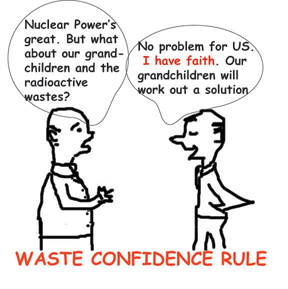 Public comments needed against NRC’s Nuclear Waste Confidence Game , Beyond Nuclear 25 Feb 12, The U.S. Nuclear Regulatory Commission (NRC) has requested public comments on its latest revision to its “Nuclear Waste Confidence Decision.” Please email your comments before March 19th to WCOutreach@nrc.gov in order to head off this latest round of a very dangerous “game being played” by NRC, which is doing the bidding of the nuclear power industry…..
The NRC’s “confidence” that on-site storage for 120 years (60 during reactors operations, 60 after reactor shutdown) is safe and secure would be laughable, if it weren’t so seriously wrong. 120 years is half as long as the United States has been an independent country (1776 to 2012, 236 years). A lot can go wrong in 120 years. NRC’s consideration of 200 to 300 years of on-site storage is even more preposterous. This is not “interim” or “temporary” on-site storage. This is de facto permanent on-site storage, in any common understanding of the term…..
BACKGROUND
First promulgated in 1984, NRC’s “Nuclear Waste Confidence Decision” claimed that by 2007, the U.S. would open one or more repositories for the permanent disposal of irradiated nuclear fuel. In the meantime, NRC expressed its “confidence” that irradiated fuel stored in pools or dry casks on-site would be done so safely and securely. This served as legal cover, carte blanche, for nuclear utilities to generate an unlimited amount of high-level radioactive waste, while blocking concerned citizens and environmental groups intervening in NRC proceedings from challenging new reactor license applications or old reactor license extensions on such grounds as the fact that there is no safe solution to the problem of radioactive waste management.
By 1990, NRC already had to “postpone” its “confidence.” It revised its “Confidence Decision” to now say that by 2025, at least one repository would be opened.
In December 2010, NRC revised its “Nuclear Waste Confidence Decision” yet again, to reflect the reality of the Obama administration’s wise decision to cancel the Yucca Mountain dump. NRC now declared no date certain for the opening of the first repository, but rather stated that on-site storage in pools and/or dry casks was safe for 120 years — 60 years during reactor operations, and 60 years after reactor shutdown. In addition, the five NRC Commissioners ordered their staff to study the potential for on-site storage lasting 200 to 300 years into the future. That explains NRC current request for public comments….
Please submit comments to WCOutreach@nrc.gov. You may also send comments through the U.S mail to: Christine Pineda, Project Manager; Mailstop EBB-2B2; Office of Nuclear Material Safety and Safeguards; U.S. Nuclear Regulatory Commission; Washington, DC 20555-0001 http://www.beyondnuclear.org/radioactive-waste-whatsnew/2012/2/23/public-comments-needed-against-nrcs-nuclear-waste-confidence.html
Rocky Flats nuclear weapons site still contaminated with plutonium
 The Rocky Mountain Peace and Justice Center hired independent contractors to test the soil and find out what the level of present plutonium contamination really looks like – but they were barred from actually entering the refuge. Instead, they tested the soil along the outside of the fence, and found that the level of contamination hasn’t changed since the 1970s.
 Plutonium particles in the soil at Rocky Flats will one way or another, sooner or later, come into people’s lungs and lives, since, with a half-life of 24,000 years, it poses a radiation hazard essentially forever
the Rocky Mountain Peace and Justice Center has filed a lawsuit to attempt to block any construction.
Former Colorado Nuclear Weapons Plant Just As Contaminated 40 Years Later http://www.care2.com/causes/former-colorado-nuclear-weapons-plant-just-as-contaminated-40-years-later.html, Care 2, by Julie Rodriguez February 24, 2012 16 miles northwest of Denver, CO sits the Rocky Flats site, formerly home to a plant that produced nuclear weapons from 1952-1989. These operations were shut down for repeated safety violations, which whistleblowers started bringing to the attention of the EPA and FBI in 1987. The extent of the contamination of the site was never revealed publically. Continue reading
Forceful opposition to renewing license for Pilgrim nuclear power plant
Pilgrim is one of the 23 reactors in the United States that is of the exact same design of the Fukushima reactors
Ms. Lampert also accused the federal government of bowing to corporate interests by disregarding the NRC’s own cautionary findings that these types of reactors should not be allowed to operate.
a 1990 Massachusetts Department of Health study pointed out elevated levels of leukemia among residents living in the region around Pilgrim Power
Opponents To Pilgrim Nuclear Power Plant Turn Out In Force For Panel Discussion, Cape News.net, 24 Feb 12 “……The panel they came to hear from included Carolyn O’Connor, director of external affairs for ISO New England, the entity that oversees the power grid in the region, state Senator Daniel A. Wolf, and Mary E. Lampert, founder and director of Pilgrim Watch and a longtime health and safety advocate.
Entergy Nuclear, the owner of the Pilgrim plant, declined an invitation to have a representative speak at the forum. Continue reading
Nuclear bombing: find out how your city would fare – with NUKEMAP
Nukemap: Shall we play a game? cnet, by Daniel Terdiman February 23, 2012
Tool shows what would happen if history’s most notorious nuclear weapons were dropped on different cities. It’s scary and sobering–and more than a million people have used it. Want to play god much?
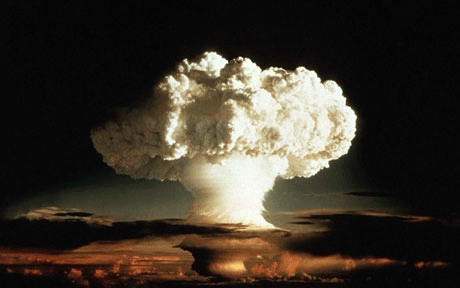
With Nukemap, a new tool that lets anyone test out–on a Google Map–the effects of some of history’s most famous nuclear explosions on cities around the world, you can. Continue reading
Confusing schoolchildren with anti science, climate denialism
Don’t cloud young minds http://www.newscientist.com/article/mg21328533.600-dont-cloud-young-minds.html New Scientist, 22 February 2012 THERE is a strong sense of déjà vu about what is emerging over leaked emails from the Heartland Institute. The US libertarian think tank, which argues that global warming is not primarily caused by humans, intends to develop teaching material that would cast doubt on the scientific consensus on climate change. Its approach is sadly reminiscent of fogging tactics employed by the tobacco industry and creationists

Children should be taught honestly what we know about climate change, as well as what we don’t know and where the uncertainties lie. Yet a plan outlined in documents allegedly from Heartland would build a curriculum around statements such as “whether humans are changing the climate is a major scientific controversy” (see “Climate sceptics may find fertile ground in US schools“). This is to create controversy where none exists.
There simply is no credible scientific alternative to the theory that humans are warming the atmosphere. In 2010, a survey of 1372 climate scientists found that 97 per cent of those who publish most frequently in the field were in no doubt. They agreed with the Intergovernmental Panel on Climate Change that human activity had caused most of Earth’s warming over the second half of the 20th century. By comparison with these scientists, the climate expertise of the small group of contrarians was substantially lower (Proceedings of the National Academy of Sciences, DOI: 10.1073/pnas.1003187107). Continue reading
Expand public’s right to question nuclear safety, says Nuclear Regulatory Commission chief
 Nuclear Regulatory Commission chief sides with Pilgrim watchdog group, By Christopher Burrell, Enterprise News.com, The Patriot Ledger Feb 23, 2012 In a surprising move to side with critics of the Pilgrim nuclear power plant, the chairman of the Nuclear Regulatory Commission is arguing to expand, not limit, the public’s chance to ask plant-safety questions in light of last year’s Fukushima Dai-ichi disaster in Japan.
The Fukushima nuclear plant has a similar reactor to the one at Pilgrim, which has been trying for six years to win approval from the NRC for a 20-year extension of its operating license. “Given the significance of that accident (at Fukushima) and the potential implications for the safety of our nuclear reactors, we should allow members of the public to obtain hearings on new contentions on emerging information,” NRC Chairman Gregory Jaczko
wrote in a dissenting opinion released Wednesday. Jaczko was the sole dissenter on the five-member commission, which is appointed by the president. Continue reading
Ratepayers to take all financial risks, nuclear company to take profits!
 “It exposes ratepayers to all the risk.” The nuclear industry’s answer to its post-Fukushima challenges, he said, “is to simply rip out the heart of consumer protection and turn the logic of capital markets on their head.”
His message to policymakers is simple, Cooper said. “This is an investment you would not make with your own money. Therefore, you should not make it with the ratepayers’ money.”
The Nuclear Industry’s Answer to Its Marketplace Woes, Greentech media Construction Work in Progress (CWIP) financing shifts the risks of nuclear energy to utility ratepayers. HERMAN K. TRABISH: FEBRUARY 22, 2012 A sign of the nuclear industry’s difficult situation in the aftermath of Fukushima is a proposal before the Iowa legislature that would allow utility MidAmerican Energy Holdings, a subsidiary of Warren Buffett’s Berkshire Hathaway, to build a new nuclear facility in the state using Construction Work in Progress (CWIP) financing (also called advanced cost recovery).
“Investment in nuclear power is the antithesis of the kind of investments you would want to make under the current uncertain conditions,” explained nuclear industry authority Mark Cooper, a senior fellow for economic analysis at Vermont Law School’s Institute for Energy and the Environment. “They cannot raise the capital to build these plants in normal markets under the normal regulatory structures.”
CWIP would allow the utility to raise the money necessary to build a nuclear power plant by billing ratepayers in advance of and during construction.
“Construction Work in Progress was intended to circumvent the core consumer protection of the regulatory decision-making process,” Cooper explained. “It exposes ratepayers to all the risk.” The nuclear industry’s answer to its post-Fukushima challenges, he said, “is to simply rip out the heart of consumer protection and turn the logic of capital markets on their head.”
The Staff of the Iowa Utilities Board concurred with Cooper. Its recommendations to the legislature followed his arguments in “Nuclear Socialism Comes to the Heartland of America,” his most recent paper on nuclear economics. In it, Cooper found that CWIP could increase average utility bills as much as $70 per month “before any power is generated by the reactors.”
His message to policymakers is simple, Cooper said. “This is an investment you would not make with your own money. Therefore, you should not make it with the ratepayers’ money.”
CWIP exposes ratepayers to all the risks inherent in nuclear energy, Cooper explained. Continue reading
Radiation increasing in environment around Savannah River Nuclear Site
“Many things can cause infant death and low birth weight and so on,” “Radiation may not have caused all these deaths, but it certainly should be taken seriously.”
cesium levels in deer and wild hogs killed at the site have increased in recent years, rather than decreased.
 Environmental group contends SRS radiation hazards are increasing, Augusta Chronicle, By Rob Pavey, Staff Writer, Feb. 22, 2012 Environmental groups unveiled a new analysis Wednesday they contend warrants a re-examination of health impacts associated with Savannah River Site radiation. What we are saying is that you have a suspicious situation that certainly calls for a new inquiry,” said Louis Zeller, executive director of the Blue Ridge Environmental Defense League.
The 75-page report involved a year-long study of data from the U.S. Energy Department, state and federal environmental regulators and health departments in Georgia and South Carolina.
Among the findings were indicators that radiation levels are gradually increasing, rather than decreasing, as other studies have said; and that “radiosensitive” diseases and deaths – including infant and fetal deaths, thyroid and lung cancers and leukemia – exceeded the national average in the five-county area surrounding SRS, where about 2,000 “excess deaths” occurred since 2002. Continue reading
Uranium mining’s radiation dangers continue near Grand Canyon
 Risks remain from uranium mining near the Grand Canyon Feb 22, 2012 High Country News By Heather Hansen, Red Lodge Clearing House. “….. There are over 5,000 active uranium claims within those one million acres. The withdrawal goes a long way toward protecting the watersheds, seeps and springs, sacred sites and critical wildlife habitat in the area because the only claims that can now be mined would have had to establish “valid existing rights,” before the 2009 moratorium. Yet even with these protections, the mines with existing rights — the ones allowed to operate despite the moratorium — may still have a significant negative impact on the Grand Canyon environment Continue reading
How the nuclear lobby’s devious marketing distorts “incentives”
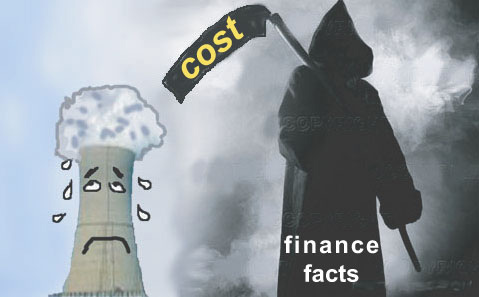 the NRC’s decision on Vogtle was “a non-event” because, he said, “The morning after the license was issued, nobody on Wall Street woke up and said, ‘Hey! Now I’m going to buy in!'” The licensing decision had, he said, “no effect on the economics.”
The Nuclear Industry’s Answer to Its Marketplace Woes, Greentech media Construction Work in Progress (CWIP) financing shifts the risks of nuclear energy to utility ratepayers. HERMAN K. TRABISH: FEBRUARY 22, 2012 “……..An example of incentive distortion is “the sunk-costs argument” now being used by Southern Company for the Vogtle reactors under development in Georgia with CWIP financing. Construction there is reportedly both behind schedule and over budget. Southern Company, Cooper said, is arguing that, with as much as $4 billion in sunk costs, “It’s cheaper to finish this project than to start something else.”
Some nuclear developers, he added, will simply tell regulators that have authorized the spending of billions in ratepayer funds, “If you don’t give me the next $50 million, I’m going to abandon this project.” Continue reading
San Clemente residents want independent radiation monitoring of San Onofre nuclear plant
1 This Month




Shut down the radiation-damaged Heysham nuclear reactors now
To see nuclear-related stories in greater depth and intensity – go to https://nuclearinformation.wordpress.com

Say No to NASA’s Reckless Nuclear Reactor on the Moon
Say No to NASA’s Reckless Nuclear Reactor on the Moon
-
Archives
- October 2026 (279)
- September 2026 (339)
- August 2026 (330)
- July 2026 (355)
- June 2026 (287)
- May 2026 (306)
- April 2026 (356)
- March 2026 (251)
- February 2026 (267)
- January 2026 (308)
- December 2025 (358)
- November 2025 (359)
-
Categories
- 1
- 1 NUCLEAR ISSUES
- business and costs
- climate change
- culture and arts
- ENERGY
- environment
- health
- history
- indigenous issues
- Legal
- marketing of nuclear
- media
- opposition to nuclear
- PERSONAL STORIES
- politics
- politics international
- Religion and ethics
- safety
- secrets,lies and civil liberties
- spinbuster
- technology
- Uranium
- wastes
- weapons and war
- Women
- 2 WORLD
- ACTION
- AFRICA
- Atrocities
- AUSTRALIA
- Christina's notes
- Christina's themes
- culture and arts
- Events
- Fuk 2022
- Fuk 2023
- Fukushima 2017
- Fukushima 2018
- fukushima 2019
- Fukushima 2020
- Fukushima 2021
- general
- global warming
- Humour (God we need it)
- Nuclear
- RARE EARTHS
- Reference
- resources – print
- Resources -audiovicual
- Weekly Newsletter
- World
- World Nuclear
- YouTube
-
RSS
Entries RSS
Comments RSS

