Iowa democratic Senators on tour to oppose nuclear power
Democratic senators launch anti-nuclear tour Iowa Politics, Mar 20, 2012 | by Jason Clayworth | A group of 10 Iowa Senate Democrats today launched an anti-nuclear tour.
“It’s an argument about why this is really bad policy for the state,” Continue reading
The hidden danger of radioactive scrap metal
Chronic exposure to low doses of radiation can lead to cataracts, cancer and birth defects, according to the U.S. Environmental Protection Agency. A 2005 study of more than 6,000 Taiwanese who lived in apartments built with radioactive reinforcing steel from 1983 to 2005 showed a statistically significant increase in leukemia and breast cancer….
Nuclear Risks at Bed, Bath & Beyond Show Hidden Danger of Scrap Bloomberg, By Jonathan Tirone and Andrew MacAskill – Mar 20, 2012 Going shopping? Don’t forget your wallet and credit card. Or Geiger counter.
The discovery of radioactive tissue boxes at Bed, Bath & Beyond Inc. (BBBY) stores in January raised alarms among nuclear security officials and company executives over the growing global threat of contaminated scrap metal. Continue reading
The problem of secondary cancer after radiation therapy
Radiation treatments: Create worse cancer cells — 30 times more potent The Canadian : 19 MARCH 2012 BY TONY ISAACS (NaturalNews) — In a groundbreaking new study just published in the peer reviewed journal Stem Cells, researchers at UCLA’s Jonsson Comprehensive Cancer Center Department of Oncology found that, despite killing half of all tumor cells per treatment, radiation treatments on breast cancer transforms other cancer cells into cancer stem cells which are vastly more treatment-resistant than normal cancer cells.
The new study is yet another blow to the failed and favored mainstream treatment paradigm of trying to cut out, poison out or burn out cancer symptoms (tumors) instead of actually curing cancer.
Senior study author Dr. Frank Pajonk, associate professor of radiation oncology at the Jonsson Center, reported that induced breast cancer stem cells (iBCSC) “were generated by radiation-induced activation of the same cellular pathways used to reprogram normal cells into induced pluripotent stem cells (iPS) in regenerative medicine.” Pjonk, who is also a scientist with the Eli and Edythe Broad Center of Regenerative Medicine at UCLA, added “It was remarkable that these breast cancers used the same reprogramming pathways to fight back against the radiation treatment.”..
… Despite all the billions of dollars spent on cancer, the 40 year “war on cancer” has been a losing one by any honest evaluation. One hundred years ago, anywhere from 1 in 50 to
perhaps 1 in 100 people could be expected to develop cancer. Now it is estimated that 1 in every 2 men and 1 in every 3 women will be diagnosed with cancer in their lifetimes. Despite more people around the world developing cancer and dying from cancer every year, mainstream medicine continues to cling to failed treatments which more often than not fail to eliminate the cancer and help cancer spread and return more aggressively than ever. Notably, two of the three major mainstream cancer treatments – radiation and chemo – are themselves highly carcinogenic……. http://www.agoracosmopolitan.com/news/health/2012/03/19/3511.html
The sanity of cutting $100 billion from USA’s Cold War nuclear arsenal
Try a Little Nuclear Sanity Lawrence S. Wittner, March 19, 2012 On February 8, 2012, Congressman Edward Markey (D-MA) took to the floor of the U.S. House of Representatives to introduce the Smarter Approach to Nuclear Expenditures Act (H.R.
3974).
This SANE Act would cut $100 billion from the U.S. nuclear weapons budget over the next ten years by reducing the current fleet of U.S. nuclear submarines, delaying the purchase of new nuclear submarines, reducing the number of ICBMs, delaying a new bomber
program, and ending the nuclear mission of air bombers.
“America’s nuclear weapons budget is locked in a Cold War time machine,” noted Markey, the senior member of the House Energy and Commerce Committee. “It doesn’t reflect our twenty-first-century security needs. It makes no sense…….Since its introduction, the
SANE Act has picked up significant support. Not surprisingly, it is backed by major peace and disarmament organizations, such as Peace Action, Physicians for Social Responsibility, the Friends Committee on National Legislation, the Nuclear Age Peace Foundation, and the
Ploughshares Foundation. But it has also attracted the support of the National Council of Churches, the Project on Government Oversight, and the Congressional Progressive Caucus. Indeed, the SANE Act now has 45 Congressional co-sponsors…. http://hnn.us/articles/145156.html
Earth Justice and native peoples fight to save Grand Canyon from uranium mining
 Uranium Industry Attack on Grand Canyon, Earth Justice 17 MARCH 2012, Yet another toxic mining threat “……..The new foes of protecting the Grand Canyon region look a lot like Mr. Cameron. They are uranium miners who’ve staked thousands of claims ringing the national park.
Uranium mining has left a toxic legacy in the area, polluting water that run through the Park, which has prompted the Park Service to warn hikers not to drink the water of certain streams, iincluding Horn Creek . (New mines are supposed to be better and cleaner. But the water pollution threatened by the “modern” flooded mines shows otherwise.)
Interior Secretary Ken Salazar stood up for protecting the lands around the national park, putting a million acres off limits to new mining claims.
The uranium industry, like Mr. Cameron, doesn’t like protecting the Grand Canyon . And like Mr. Cameron, they are attacking not only the Grand Canyon protection measures, but also the Interior Secretary’s authority to protect lands. (Industry claims the Interior Department can’t protect more than 5,000 acres at a time from uranium mining claims.)
This time, Earthjustice and our clients – the Havasupai Tribe , Grand Canyon Trust , Center for Biological Diversity , Sierra Club , and National Parks Conservation Association – will be fighting to protect the Grand Canyon. (We filed legal papers to formally intervene in the first of three industry suits last week.)
If history is going to repeat itself, with miners hoping to degrade wildlife habitat, waters and one of America’s natural wonders for profit, we’ll work to ensure the courts again recognize the Canyon’s majesty and again reject the miner’s attacks. http://earthjustice.org/blog/2012-march/uranium-industry-attack-on-grand-canyon
Taxpayer cleaning up many millions of tons of uranium wastes,since company went bankrupt

 Five Million Tons Of Uranium Tailing Disposed, The U.S. Department Of Energy Says They Are A Third Of The Way Done With Their Entire Project To Move All Of The Tailings To Crested Junction KJCT8.com Janelle Ericsson MOAB, UT. — Five million tons of uranium tailings has been removed from an old waste site near the river in Moab. The U.S. Department of Energy says they are a third of the way done with their entire project to move all of the tailings to Crested Junction.
Once they reach their destination they will be put in an engineered cell that will prevent contamination to ground water for a thousand years…
. The UMTRA project was originally started in 2001 when the a corporation went bankrupt. Through legislative actions, the project was given to the Department of Energy to take responsibility of the clean up.
USA’s nuclear workers – cancer from radiation exposure

Christina Macpherson's websites & blogs
This article appeared today – and I thought – “Well, what’s the use of this- it is 12 years old? Out of date news, and so forth” And then I thought -” Well, what’s happened to nuclear workers since then?” Has it miraculously become a healthy job? Or is it that no-one is now doing research into the health of nuclear workers? And if not, why not? And if research is being done into the health of nuclear workers, what are the results? Is it all just too scary to publish?
 Richard D. Miller, a policy analyst with the union, said the change was remarkable because the Energy Department and its predecessor, the Atomic Energy Commission, had ”spared no resources in seeking to defeat claims” by employees who said they had been made sick by radiation or chemicals.
 higher-than-expected rates of leukemia, cancer of the lung and bladder, vision difficulties and chronic fatigue syndrome, among other health problems.
AFTER DECADES OF DENIAL (as per normal for nuke industry) . http://nuclearhistory.wordpress.com/2012/03/17/after-decades-of-denial-as-per-normal-for-nuke-industry/#comment-5284 …. Paul Langley’s Nuclear History Blog, 17 March 12, New York Times : US Govt Concedes Plutonium Workers Suffered Illness, Death http://query.nytimes.com/gst/fullpage.html?res=9C05E2DE1E3CF93AA15752C0A9669C8B63&pagewanted=all
U.S. ACKNOWLEDGES RADIATION KILLED WEAPONS WORKERS , By MATTHEW L. WALD Published: January 29, 2000 WASHINGTON, Jan. 28— After decades of denials, the government is conceding that since the dawn of the atomic age, workers making nuclear weapons have been exposed to radiation and chemicals that have produced cancer and early death.
The new finding — that the exposure led to higher-than-normal rates of a wide range of cancers among workers at 14 nuclear weapons plants — raises the prospect of compensation to them. Although officials cautioned that any decision on that was a long way off, they said a package could amount to tens of millions of dollars for a group that might well include hundreds of families.
The new conclusion comes from the government’s most comprehensive review of studies of worker health and related raw health data. The review accepts the conclusion of many of those studies, some done under contract for the government, that workers were made sick by their exposure. Continue reading
Nuclear power revival being killed off by cheaper, safer, gas
 Cheap Natural Gas Unplugs U.S. Nuclear-Power Revival, WSJ, BY REBECCA SMITH, 16 March 12, The U.S. nuclear industry seemed to be staging a comeback several years ago, with 15 power companies proposing as many as 29 new reactors. Today, only two projects are moving off the drawing board.
What killed the revival wasn’t last year’s nuclear accident in Japan, nor was it a soft economy that dented demand for electricity. Rather, a shale-gas boom flooded the U.S. market with cheap natural gas, offering utilities a cheaper, less risky alternative to nuclear
technology.
“It’s killed off new coal and now it’s killing off new nuclear,” says David Crane, chief executive of NRG Energy Inc http://online.wsj.com/article/SB10001424052702304459804577281490129153610.html
The damaging impact of Indian Point Nuclear Plant on river fish
NRC Finds New Environmental Data on Indian Point, Scarsdale, by Jessica Glenza BUCHANAN, N.Y. 15 March 12, – New environmental impact data of Indian Point Nuclear Power Plants’ effect on Hudson River aquatic organisms prompted the Nuclear Regulatory Commission to begin a supplemental environmental impact statement. The supplement is in addition to the impact statement already required for the two reactors’ license renewal proceedings.
The NRC cited three reasons for the supplemental statement; new data provided by Entergy regarding how many fish are killed or trapped against cooling water intakes, the thermal plume created by warm water ejected from the plant into the Hudson River and new developments with regard to endangered species.
“It’s not that uncommon for us to do a supplemental environmental impact statement, these reviews can take years,” said Neil Sheehan, spokesperson for the NRC about reviews for license renewal. “The listing of the Atlantic sturgeon is obviously a very new piece of information.”
In January, the National Marine Fisheries listed Hudson River Atlantic sturgeon populations as endangered. Data provided by Entergy refers to “impingement” and “entrainment” of fish in the once-through cooling water intakes. “Impingment” refers to the trapping of fish against intake screens, “entrainment” refers to smaller fish that go through the intake’s traveling screens and are killed in the plants’ cooling systems, which use up to 2.5 billion gallons of river water per day….. http://www.thedailyscarsdale.com/news/nrc-finds-new-environmental-data-indian-point
USA’s nuclear safety regulations inadequate
 Chief Nuclear Regulator Admits Safety Goals Are ‘Insufficient’, Aol Energy, By Margaret Ryan, March 15, 2012 US nuclear safety goals are insufficient, and don’t address effects like those seen after the Fukushima disaster in Japan, the head of the US nuclear regulator says. Continue reading
No end of problems for San Onofre nuclear power plant
San Onofre’s Unit 3 reactor shut indefinitely while US regulators probe tube problems Washington Post, By Associated Press, March 15 LOS ANGELES — A nuclear reactor on the California coast will remain shut down indefinitely while a team of federal inspectors determines why several relatively new tubes became so frail that tests found they could rupture and release radioactive water, a federal official said Thursday….
The Unit 3 reactor at the San Onofre Nuclear Generating Station, located about 45 miles north of San Diego, was shut down as a precaution on Jan. 31 after a water leak from another tube in a massive steam generator. Traces of radiation escaped, but officials say there was no danger to workers or neighbors.
Since then, investigators have been looking into excessive wear found on steam generator tubes in the seaside plant and its twin, Unit 2, which has been off line for maintenance and refueling. The two huge steam generators at Unit 2, each containing 9,700 tubes, were replaced in fall 2009, and a year later in Unit 3 as part of a $670 million overhaul.
The NRC dispatched a special, five-member team to Unit 3 on Thursday after pressure tests showed three of the metal-alloy tubes had become so degraded that they could rupture under some circumstances. Such ruptures can require a plant to shut down, if spewing water reaches 150 gallons a day……
 San Onofre’s Unit 1 reactor operated from 1968 to 1992, when it was shut down and dismantled. The utility’s plan to ship the 600-ton reactor vessel on a 15,500-mile voyage around South America to a disposal site in South Carolina was thwarted and it remains at San Onofre, encased in concrete and steel….
http://www.washingtonpost.com/national/federal-regulators-to-investigate-tube-failures-at-califs-san-onofre-nuclear-power-plant/2012/03/15/gIQAn3lIES_story.html
The USA’s radioactive waste time bomb
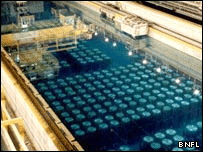 U.S. pools are generally more densely packed than in Japan. Vermont Yankee’s pool contains two to three times the amount of spent fuel as Fukushima Daiichi’s Reactor 4
Alvarez estimated a meltdown of spent fuel in the Indian Point pool, which has three times the radioactivity of four Fukushima spent fuel pools, would kill 5,600 people, do $461 billion in damage and render a large area uninhabitable.
 The U.S. has 65,000 metric tons of nuclear waste, which we leave to our children in perpetuity…don’t make more nuclear waste until we safely dispose of what we have made.
No more Fukushimas: US plants still face risks, BY GWEN L. DUBOIS, The Baltimore Sun, 14 March 12, “…..Our nuclear plants are no better designed than those in Japan. Twenty-three are Mark 1 boiling water reactors, identical to Fukushima Daiichi reactors 1-5. This includes Peach
Bottom, 36 miles from Baltimore in York County, Pa.; and Vermont Yankee, notorious for pipes leaking radioactive tritium, which was relicensed for 20 years on March 10, 2011, over the objection of Vermonters.
Nor are our plants immune from natural or manmade disasters. Nearly half of the 104 reactors in the U.S. are near major fault lines. In August, a 5.8 earthquake 11 miles from Virginia’s North Anna nuclear power plant, which is 70 miles from Washington D.C., rattled nerves in
Baltimore and far beyond. The quake caused twice the amount of ground movement for which North Anna was designed. Continue reading
USA cannot afford to maintain its hoard of nuclear weapons, and a bad example to others
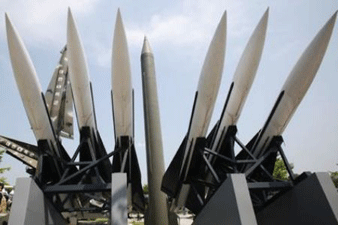 We are telling others, by our hoarding of warheads, that in order to be secure in the world today you need nuclear weapons — and lots of them. Is it any wonder if leaders in Iran and elsewhere might want to buy some protection for themselves with a nuclear stockpile of their own?
the U.S. lavishes over $50 billion a year on nuclear arms related programs.
Obama’s Controversial Plan for Nuclear Sanity Richard Schiffman: 03/14/2012 ” “Iran Worried U.S. Might Be Building 8,500th Nuclear Weapon,” read the headline . This front page banner in the satirical weekly, The Onion may not have gotten the number exactly right. The Obama administration reported in 2010 that the U.S. possesses 5,113 warheads in the stockpile and an additional 4,500 retired , but not yet dismantled, making the grand total even higher than the spoofers had guessed.
While media pundits in the U.S. warn darkly of Tehran’s nuclear ambitions, America itself is regarded as the main nuclear threat in much of the world today. The United States argues that it needs these weapons to deter attacks on itself and its allies, and that it would only use them to prevent or respond to such an attack. But people in other countries wonder why we need so absurdly many of them — secreted away in missile silos, on submarines and in bombers, computer-targeted to obliterate their cities at the turn of a key.
The U.S. rightly wants to prevent the spread of nuclear weapons to nations like Iran that do not yet possess them. Quite simply, the more actors that have the bomb, the greater the risk that it will eventually be used, either as part of a regional war, or in a freelance act of terror. Yet by what right can we ask others to abstain, when we ourselves continue — along with our Cold War rival Russia — to maintain an arsenal large enough to destroy life on the planet several times over?
The problem is not just that we lack the moral authority to preach nonproliferation. The larger problem is that the U.S. is setting a bad example for other nations to follow. Continue reading
Americans prefer diplomacy – not an attack on Iran
 Concern About Broader War Dampens Support for Iran abc News, By Julie Phelan, Mar 14, 2012 Broad concern about wider war in the Middle East is dampening public support for U.S. or Israeli military strikes against Iran’s nuclear development sites, with Americans by wide margins preferring diplomatic efforts or economic deterrence instead.
Eighty-four percent in this ABC News/Washington Post poll suspect that Iran is trying to develop nuclear weapons, basically unchanged since late 2009. As then, the preferred approaches are direct diplomatic talks between the U.S. and Iran, backed by 81 percent, and an increase in international economic sanctions, supported by three-quarters.
Many fewer, 41 percent, support a U.S. bombing effort, with 53 percent opposed, again similar to 2009. Support for Israeli strikes is virtually identical, with 42 percent in favor and 51 percent opposed. Israel has threatened such strikes; President Obama, while not ruling out military action, has urged allowing more time for sanctions to work, a position criticized by some of his Republican opponents.
RISK OF WAR – Reluctance to support air strikes stems mostly from a broad concern that they could trigger a larger war in the Middle East. Nearly nine out of 10 in this poll, produced for ABC by Langer Research Associates, see a risk of broader war if Israel were to bomb Iran; three-quarters call it a “major” risk.
Among those who perceive a major risk of war, just 32 percent support Israeli strikes against Iranian nuclear sites, and 35 percent back U.S. bombing efforts. Those who perceive little or no risk of sparking a regional war are far more supportive of air strikes – 76 percent support action by Israel, 64 percent by the United States…… http://abcnews.go.com/blogs/politics/2012/03/concern-about-broader-war-dampens-support-for-iran-attack/
Iowa pro nuclear Bill scrapes in by just one Senate vote
 Iowa Senate panel passes nuclear power bill, Des Moines Register, Mar. 14, 2012 A bill that could lead to nuclear power expansion in Iowa passed by one vote in a Senate committee Tuesday, and opponents said there would be election consequences for legislators who supported it.
A spokesman for seniors group AARP, one of the most aggressive foes of the bill, told The Des Moines Register that the organization would soon unveil a voter education program complete with a website to highlight how each lawmaker voted on the issue. Continue reading
1 This Month



Shut down the radiation-damaged Heysham nuclear reactors now
To see nuclear-related stories in greater depth and intensity – go to https://nuclearinformation.wordpress.com

Say No to NASA’s Reckless Nuclear Reactor on the Moon
Say No to NASA’s Reckless Nuclear Reactor on the Moon
-
Archives
- October 2026 (256)
- September 2026 (339)
- August 2026 (330)
- July 2026 (355)
- June 2026 (287)
- May 2026 (306)
- April 2026 (356)
- March 2026 (251)
- February 2026 (267)
- January 2026 (308)
- December 2025 (358)
- November 2025 (359)
-
Categories
- 1
- 1 NUCLEAR ISSUES
- business and costs
- climate change
- culture and arts
- ENERGY
- environment
- health
- history
- indigenous issues
- Legal
- marketing of nuclear
- media
- opposition to nuclear
- PERSONAL STORIES
- politics
- politics international
- Religion and ethics
- safety
- secrets,lies and civil liberties
- spinbuster
- technology
- Uranium
- wastes
- weapons and war
- Women
- 2 WORLD
- ACTION
- AFRICA
- Atrocities
- AUSTRALIA
- Christina's notes
- Christina's themes
- culture and arts
- Events
- Fuk 2022
- Fuk 2023
- Fukushima 2017
- Fukushima 2018
- fukushima 2019
- Fukushima 2020
- Fukushima 2021
- general
- global warming
- Humour (God we need it)
- Nuclear
- RARE EARTHS
- Reference
- resources – print
- Resources -audiovicual
- Weekly Newsletter
- World
- World Nuclear
- YouTube
-
RSS
Entries RSS
Comments RSS

