Nuclear Regulatory Commission’s blind faith that nuclear waste is safe
The NRC held that waste storage was safe for at least 60 years after a plant shuts down; they then proposed a rule to allow spent fuel storage at reactor sites for 200-300 years.
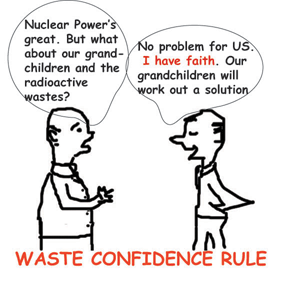
Wake Up and Smell the Radioactive Waste, OpEd News, 20 June 12, By Abby Luby Given that 2,000 tons of spent nuclear fuel is produced every year at nuclear reactors in the United States, and over 75,000 metric tons of nuclear waste is being temporarily stored in 39 states, it is surprising that the Nuclear Regulatory Commission (NRC) has emphatically said this amount of waste is safe. What’s even more surprising is that no one has disputed them. Until now.
Last week, in what New York State calls a landmark victory, a U.S. Appeals Court ruled that the NRC violated a federal act by neglecting to run in-depth studies on how storing radioactive waste at nuclear power plants impacts health and the environment. The lawsuit was spearheaded and won by New York Attorney General Eric Schneiderman, who was joined by state attorneys general from Connecticut, Vermont and New Jersey, and the Prairie Island Indian Community.
Court found that USA’s Nuclear Regulatory Commission could not just ignore nuclear wastes
In its ruling the court concluded that the NRC’s standard finding during the relicensing process that permanent nuclear-waste storage will be available “when necessary” did not calculate the environmental effects of failing to secure permanent storage – “a possibility that cannot be ignored.”
The court also found that the NRC’s finding that spent fuel could safely be stored on site at nuclear plants for 60 years after expiration of a plant’s license, “failed to properly examine future dangers and key consequences.”

 Nuclear waste: why environmentalists are pressing NRC on reactor licenses After a US appeals court ruled the NRC had not adequately evaluated nuclear waste provisions when licensing reactors, the groups are seeking to ensure the public has input on the process. Christian Science Monitor, By Mark Clayton, June 20, 2012 The nation’s top nuclear power plant regulator is being petitioned by environmental groups to halt all further license extensions for 35 power reactors nationwide until their on-site nuclear-waste storage systems undergo more in-depth environmental evaluation. The legal petition filed Monday followed a June 8 ruling by the US Circuit Court of Appeals for the District of Columbia, which found that the Nuclear Regulatory Commission (NRC) had failed to adequately evaluate on-site nuclear waste storage prior to granting license extensions. Continue reading
Wobbly words from USA, as it has no solution to its nuclear wastes
Solution to nuclear waste remains in limbo, Greenville Online, 20 June 12, “….. The nuclear industry has produced about 65,000 metric tons since its inception, and 2,000 more per year must be stored in deep pools of water and moved above ground to steel containers reinforced with concrete — all at the sites of the country’s 104 nuclear reactors…..
 the Blue Ribbon Commission on America’s Nuclear Future was created and tasked with finding a solution …
In discussions of how to dispose of nuclear waste, terms such as “temporary” and “interim” are defined in timelines extending more than 100 years.
In 1987, Congress dismissed two other options being studied to designate Yucca Mountain as the only site the Department of Energy could consider for a permanent repository. Nevada at the time lacked political clout, and the decision has long been described by the state as the “screw Nevada bill.”
Twenty five years later, the government is back where it started. The Blue Ribbon Commission on America’s Nuclear Future, in its long-anticipated report, said recently that just selecting a new site could take as long as 20 years…..
Two years ago, the Nuclear Regulatory Commission issued a “waste confidence decision” declaring that storage of spent fuel at reactors is safe despite the fact that the country has no place to store it permanently.
The fuel rods must cool in large pools near the reactor for several
years before they can be moved into “dry cask” containers.
Instead, the regulatory commission relies on the notion that a permanent site will be operating by the time it is necessary.
About the Flame computer virus
 Flame FAQ: All you need to know about the virus http://www.washingtonpost.com/blogs/blogpost/post/flame-faq-all-you-need-to-know-about-the-virus/2012/06/20/gJQAAlrTqV_blog.html By Benjamin Gottlieb
What is the Flame computer virus?
Flame is a sophisticated type of malware — short for malicious software — capable of infecting myriad computer networks for the purpose of gathering sensitive data. Once a network is infected by Flame, the virus can relay back massive amounts of information through a computer’s facilities. How does it work? Continue reading
Indian Point nuclear plant has three times the radioactivity of Fukushima’s spent fuel pools.
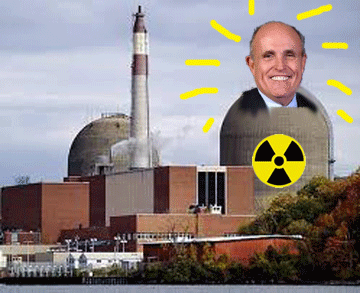 Wake Up and Smell the Radioactive Waste, OpEd News, 20 June 12, By Abby Luby“……Currently at Indian Point, 1,500 tons of high-level irradiated waste is stored in heavy steel and concrete casks on a tarmac a few hundred feet from the Hudson River. The Westchester-based plant produces about 30 tons of radioactive waste every 18 months, which is then crammed into two overcrowded, 40-foot deep spent fuel pools. Each pool holds about 1,000 tons of radioactive waste and has been leaking into the ground and river for years. However, the NRC has maintained that whatever leaches into the river is negligible, reiterating their catch phrase: “Dilution is the solution to pollution.”….
In a study by the Institute for Policy Studies, “Spent Nuclear Fuel Pools in the U.S.: Reducing the Deadly Risks of Storage,” Robert Alvarez, author and senior scholar for nuclear policy, said that Indian Point has three times the radioactivity of Fukushima’s spent fuel pools.
Indian Point is about 30 miles from Manhattan. A 1997 analysis, the Brookhaven National Laboratory [ http://pbadupws.nrc.gov/docs/ML0230/ML023040470.pdf – page 4] estimated a severe fire in a spent-fuel pool would release enough radioactive material to cause as many as 28,000 cancer deaths in a densely populated area and render 188 square miles uninhabitable.
In light of the Fukushima disaster and the potential for future leakage and catastrophic fires, the court ruled that the NRC’s analysis of the impacts of spent fuel storage was insufficient and is now requiring the agency to reassess the environmental impacts of the waste storage. Now it’s up to the NRC to heed the court and truly “protect the health and safety of the public.” http://www.opednews.com/articles/Wake-Up–Smell-the-Radioa-by-Abby-Luby-120614-180.html
No relicensing of nuclear reactors until a permanent waste solution is found
Anti-nuclear activist Ben Davis Jr. is also pushing to get a proposition placed on the statewide ballot that would force both California facilities to go offline and remain shuttered until such time as a feasible plan for nuclear waste storage was actually developed.
Nuclear Waste Must be Considered in Plant Relicensing, San Diego Reader, Dave Rice, June 19, 2012 A June 8 decision from the U.S. Court of Appeals in Washington, D.C. could impact the Nuclear Regulatory Commission’s decision on re-licensing California’s two nuclear plants, as well as dozens of others across the nation.
In a 2010 Waste Confidence Decision, the Commission ruled that permanent storage for highly radioactive spent fuel used in the reactors would be available “when necessary,” and said that it would be safe to store the spent fuel on the site of various power plants until a long-term repository became available…. Continue reading
National coalition of environmental groups calls for halt in nuclear plant relicensing
The amount of spent fuel in storage might reach 150,000 metric tons by the year 2050, the appeals court noted in its ruling.
The court case challenged a “Waste Confidence Decision” — essentially the NRC’s estimate of how well issues of spent fuel will be handled in the future.
The environmental groups are concerned because political and environmental concerns have prevented a solution to the issue of how to deal with spent fuel. “The continual, ‘We don’t know what we are going to do with it, but we know it will be all right’ is not sufficient,” said Ed Smith, safe energy director for the Missouri Coalition for the Environment…..
Group petitions for nuclear licensing halt, Columbia Daily Tribune By RUDI KELLER, June 19, 2012 A national coalition of environmental groups is asking that all nuclear licensing — including the Ameren Missouri request to extend the Callaway Nuclear Plant’s life for 20 years — be put on hold until a solution is found for storing nuclear waste. Continue reading
Design flaws cause safety problems in San Onofre nuclear reactors
An environmental group, Friends of the Earth, has claimed Edison misled the NRC about the changes that it has identified as the likely culprit in excessive tube wear. The federal agency previously disputed that charge, but Collins said that’s under review as part of the
investigation. The group on Monday filed a petition asking the NRC to keep the plant offline until the company amends its license to reflect the design changes……
The NRC has said there is no timetable to restart the reactors.
Feds: Design led to nuke plant woes, Fuel Fix June 18, 2012 by Associated Press CAPISTRANO BEACH, Calif. — After months of investigation, federal regulators have determined that design flaws appear to be the cause of excessive wear in tubing that carries radioactive water through California’s troubled San Onofre nuclear power plant, a top federal regulator said. Continue reading
USA, Iran developed “Flame” computer virus against Iran’s nuclear program
Flame malware developed by US, Israel to slow Iranian nuclear efforts http://www.slashgear.com/flame-malware-developed-by-us-israel-to-slow-iranian-nuclear-efforts-19234747/ Rue Liu, Jun 19th 2012 It turns out that the massive Flame malware attack last month was a sophisticated computer virus developed by the US and Israel in an effort to sabotage Iran’s nuclear program. Citing unnamed Western officials with knowledge of the effort, the Washington Post reported that the attack involved the National Security Agency, the CIA, and Israel’s military as well as the use of the infamous Stuxnet virus. The Flame virus was first discovered last month when Iran detected a series of cyber attacks on its oil industry. Although the attacks were allegedly carried out by Israel alone, the software used was developed in collaboration with the US, adopting much of the same code as the Stuxnet virus.
The virus is said to be the most sophisticated malware discovered to date. Masquerading as a routine Microsoft software, Flame was able to replicate itself across even highly secure networks, control everyday computer functions, send back secret information, log keystrokes, control computer cameras and microphones, take screen shots, and even extract geolocation data from images. Story Timeline…… http://www.slashgear.com/flame-malware-developed-by-us-israel-to-slow-iranian-nuclear-efforts-19234747/
National Academy of Sciences’ report indicates “keep uranium mining ban in Virginia”
Here are just three of the report’s key findings:
» “Extreme natural events (e.g., hurricanes, earthquakes, intense rainfall events, drought) have the potential to lead to the release of contaminants if facilities are not designed and constructed to withstand such an event, or fail to perform as designed.”
» “The decay products of uranium provide a constant source of radiation in uranium tailings for thousands of years, substantially outlasting the current U.S. regulations for oversight of processing facility tailings.”
 » “Because almost all uranium mining and processing to date has taken place in parts of the United States that have a negative water balance (dry climates with low rainfall) federal agencies have limited experience applying laws and regulations in positive water balance (wet climates with medium to high rainfall) situations.”
All the credible science says, ‘Keep the ban’ Go Dan River, By: Robert G. Burnley | GoDanRiver June 17, 2012 I began my career as a water quality scientist in Virginia 40 years ago — six years before uranium deposits were discovered beneath farmland in Pittsylvania County. Since shortly after that discovery, Virginia law has banned uranium mining.
It is my firm belief, based on review of the highly anticipated National Academy of Sciences’ report released last December, that the ban needs to remain in place. Continue reading
Potential disaster at Hanford reservation’s nuclear power plant
Sadly, we have a similarly designed GE Boiling Water Reactor (BWR) with the same potentially disastrous arrangement of spent fuel storage at the Columbia Generating Station (CGS) — formerly known as the WPPSS 2 nuclear power plant — on the Hanford reservation on the Columbia River.
In view of the lessons learned from Fukushima Dai-ichi, it is unfortunate that the Nuclear Regulatory Commission has approved an extension of the CGS license for another 20 years. … A serious accident at the CGS nuclear power plant could provoke a double disaster because it would probably compromise cleanup of nuclear and toxic wastes at the site.
Shut down the Northwest’s only nuclear power plant, Oregon Live, , June 17, 2012 By John Howieson The Fukushima nuclear power accidents, resulting from the earthquake and tsunami that struck the northeast coast of Japan on March 11, 2011, have brought home to people around the world the perilous nature of nuclear energy. If a country as advanced as Japan cannot adequately regulate its nuclear industry to run its reactors safely, then we cannot assume anyone else is capable of it. ……
Recently, a wall of the spent fuel pool located over the Fukushima Dai-ichi number 4 reactor has revealed a bulge increasing the concern about its stability. Failure of this structure or of the precarious water supply cooling the spent fuel threatens a disastrous further release of radioactivity — an even greater amount than was released last year. Continue reading
State of Massachusetts appeals to revoke license extension for Pilgrim nuclear plant
an appeals court ruled that the agency failed to fully evaluate risks associated with its regulations on the storage of spent nuclear fuel
The NRC in May granted a 20-year license extension to the Pilgrim plant, located in Plymouth. In its filing with the U.S. Court of Appeals in Boston, the state seeks to vacate the license renewal and require the commission to prepare an environmental impact statement.
NRC License of Nuclear Plant Challenged by Massachusetts, Bloomberg News By David McLaughlin June 19, 2012 Massachusetts, in an appeal of a Nuclear Regulatory Commission decision to relicense Entergy Corp. (ETR) (ETR)’s Pilgrim nuclear power station, asked to have the extension for the facility 40 miles south of Boston canceled pending further review.
The state seeks to require the commission to take steps to ensure the safety of the plant and the residents of the surrounding communities, Massachusetts Attorney General Martha Coakley said yesterday in a statement.
“The NRC, over our objections, chose to relicense Pilgrim without fully considering the important safety issues raised in the aftermath of the Fukushima accident,” she said, referring to the nuclear disaster last year in Japan. Continue reading
Rapid growth of solar power in USA
 In January, Macon’s Felton Homes public housing complex replaced 10 percent of its energy demand with renewable energy, using a combination of solar panels and solar hot water heaters.
Falling prices are making solar energy an economical energy choice for U.S. homeowners and businesses.
U.S. solar installations grow 85 percent in first quarter,http://www.macon.com/2012/06/17/2063556/us-solar-installations-grows-85.html, June 17, 2012 By EHREN GOOSSENS — Bloomberg News Developers installed 85 percent more solar panels in the United States in the first quarter than a year earlier, led by strong growth in commercial projects and demand, according to the Solar Energy Industries Association. Continue reading
Concern about “complex” nuclear waste at a former western Pennsylvania nuclear waste dump
 Security upped at former Pa. nuclear waste dump, TimesOnline, Jun 17, 2012. Guards from the federal Department of Homeland Security are patrolling a former western Pennsylvania nuclear waste dump as officials rethink their cleanup plans after finding what they called more “complex” nuclear material than expected.
The Pittsburgh Tribune-Review ( http://bit.ly/LwlpaH) says neither the Army Corps of Engineers, which is managing the cleanup, nor the Nuclear Regulatory Commission would say exactly what material was found at the Armstrong County site….
The dump along Route 66 was used to store nuclear and chemical waste from the former Nuclear Materials and Equipment Corp. in Apollo and Parks townships from about
1960 to the early 1970s. http://www.timesonline.com/news/state/security-upped-at-former-pa-nuclear-waste-dump/article_1e038332-6fd1-5569-aad2-2c9f4d5d1e8e.html
Nuclear regulators found security problems at San Onofre, but details not revealed
Feds find security issues at Edison nuclear plant, Bloomberg, June 15, 2012 SAN ONOFRE, Calif. (AP) — Federal regulators have uncovered security problems at Edison International’s troubled San Onofre nuclear plant on the California coast that could result in violations.
San Onofre has been closed for more than four months because of excessive wear on some equipment. It is operated by owner Southern California Edison, which is a unit of Edison International.
A Nuclear Regulatory Commission statement Thursday said inspectors reviewed records, observed activities and interviewed personnel during an inspection in May. The inspection found apparent violations, but many details were withheld because of security concerns.
The problems cited include failure to develop procedures to monitor security of certain electronic devices at the plant…. http://www.businessweek.com/ap/2012-06-15/feds-find-security-issues-at-edison-nuclear-plant
1 This Month



Shut down the radiation-damaged Heysham nuclear reactors now
To see nuclear-related stories in greater depth and intensity – go to https://nuclearinformation.wordpress.com

Say No to NASA’s Reckless Nuclear Reactor on the Moon
Say No to NASA’s Reckless Nuclear Reactor on the Moon
-
Archives
- October 2026 (256)
- September 2026 (339)
- August 2026 (330)
- July 2026 (355)
- June 2026 (287)
- May 2026 (306)
- April 2026 (356)
- March 2026 (251)
- February 2026 (267)
- January 2026 (308)
- December 2025 (358)
- November 2025 (359)
-
Categories
- 1
- 1 NUCLEAR ISSUES
- business and costs
- climate change
- culture and arts
- ENERGY
- environment
- health
- history
- indigenous issues
- Legal
- marketing of nuclear
- media
- opposition to nuclear
- PERSONAL STORIES
- politics
- politics international
- Religion and ethics
- safety
- secrets,lies and civil liberties
- spinbuster
- technology
- Uranium
- wastes
- weapons and war
- Women
- 2 WORLD
- ACTION
- AFRICA
- Atrocities
- AUSTRALIA
- Christina's notes
- Christina's themes
- culture and arts
- Events
- Fuk 2022
- Fuk 2023
- Fukushima 2017
- Fukushima 2018
- fukushima 2019
- Fukushima 2020
- Fukushima 2021
- general
- global warming
- Humour (God we need it)
- Nuclear
- RARE EARTHS
- Reference
- resources – print
- Resources -audiovicual
- Weekly Newsletter
- World
- World Nuclear
- YouTube
-
RSS
Entries RSS
Comments RSS

