Coles Hill uranium decision depends on Virginia legislature
Virginia alone can’t approve the mine. The Nuclear Regulatory Commission, a federal agency, also would have to sign off on it. The agency would do an environmental impact statement that might take more than two years.
When asked, Larry Camper, the head of environmental protection for the Nuclear Regulatory Commission, said he wasn’t aware of his agency ever fully rejecting such an application. So the mine’s fate might rest entirely on whether Virginia lifts its moratorium on uranium mining.
Proposed Coles Hill uranium mine: Buried treasure or hidden threat? By Sean Cockerham and John Murawski | McClatchy Newspapers
CHATHAM, Va. 23 Dec 12NORTH CAROLINA PROTESTS
Opposition in North Carolina has spread from towns near the potentially affected areas to the state capital. Eighteen towns, counties and economic groups have passed resolutions in opposition, including Henderson, Creedmoor and the Roanoke River Mayors Association. Continue reading
Keep the ban on uranium mining in Virginia
Feeling The Heat On Uranium Mining In Virginia Jessie Thomas-Blate, Coordinator, Most Endangered Rivers December 21, 2012 Uranium mining is a hot topic right now in Virginia. You might remember that American Rivers listed the Roanoke River as one of America’s Most Endangered Rivers® of 2011 due to a proposed uranium mine. Since that time, the Virginia legislature has been talking about whether or not to lift a 30-year ban on uranium mining in Virginia.
Recently, the Virginia Pilot’s Editorial Board issued a clear and concise summary of recent activity with this issue. Their ultimate conclusion is key— that the local taxpayers will ultimately have to shoulder the burden of maintaining the radioactive waste from this mine in perpetuity. Thirty years or so of mine production is not worth thousands of years of radioactive waste maintenance. The Roanoke Times Editorial Board agrees.……
The fight is not over.
- If you are a resident of Virginia, tell your legislator that you care too much about the Roanoke River and the water it supplies to thousands of area residents to allow the ban on uranium mining to be lifted! Also, you can sign this petition from Keep The Ban to retain the momentum on this important issue.
If you would like to have more information before forming your own opinion on this issue, Keep The Ban has compiled a list of scientific studies to examine the issue of uranium mining in Virginia. http://www.americanrivers.org/newsroom/blog/jblate-20121221-feeling-the-heat-on-uranium-mining-in-virginia.html
Depleted uranium brings illness to Gulf war veterans
“A 2002 study at the University of Bremen in northern Germany found that chromosomal changes had occurred in Gulf war veterans who had come into contact with uranium ammunition.”
the very weapons that soldiers depend upon to bring them victory are sowing death for themselves and others long after the fighting is finished.
Depleted Uranium Receives More Attention , The Daily Bell
December 21, 2012“…….Jawad al-Ali has worked as a cancer specialist at the Sadr Teaching Hospital (formerly the Saddam Hospital), housed in a sinister-looking building in Basra, since 1991. He remembers the period after the first Gulf war over Kuwait. “It isn’t just that the number of cancer cases suddenly increased. We also had double and triple cancers, that is, patients with tumors on both kidneys and in the stomach. And there were also familial clusters, that is, entire families that were affected.” He is convinced that this relates to the use of uranium ammunition. “There is a connection between cancer and radiation. Sometimes it takes 10 or 20 years before the consequences manifest themselves.”
Uranium ammunition comes with cores of “depleted,” (weakly radioactive) uranium, which has a high density, allowing it to pierce the armor of enemy combat vehicles, especially tanks.
People inhale the fine dust from exploded munitions, especially near tanks. Continue reading
Fukushima type accident risk at Indian Point and Oconee nuclear plants
 Engineers warn: Two US nuclear plants may cause new Fukushima
http://rt.com/usa/news/two-nuclear-nrc-facilities-604/
21 December, 2012, Nuclear engineers have warned the
Senate of the threats facing two US nuclear power facilities, which
could result in enormous explosions or a Fukushima-like meltdown if
natural phenomena or weather conditions cause the facilities to fail.
Senator Joe Lieberman is the current chairman of the Senate Committee
on Homeland Security & Government Affairs, but will retire in 2013.
Two nuclear engineers have asked him to spend his last days in
Congress investigating the threats posed by two nuclear power
facilities. Continue reading
Great lakes nuclear threat is greater than all its other pollution problems
Nuclear power: The ultimate near shore threat to the Great Lakes? Great Lakes Echo
DEC 21 2012 GARY WILSON
Commentary
“I hope you rethink your really scary plan to bury radioactive waste located only half a mile from Lake Huron…”
That’s a concerned citizen responding to a Canadian nuclear power company’s proposal to store radioactive waste underground near Lake Huron for 100,000 years.
The best-known near shore threats to the Great Lakes are raw sewage and algae blooms. Both receive considerable attention from government agencies and accounts about them are regularly reported in the popular media.
The threat posed by the nuclear power plants that dot the region could easily trump both. It may be the ultimate near shore threat. Continue reading
USA’s Nuclear Regulatory Commission not keeping up with new flood dangers
 Nuclear power plant flood risk: Sandy was just a warm-up Remapping Debate, By Heather Rogers Dec. 20, 2012 “……..Are nuclear power plants becoming more exposed to flood risks?
While climate scientists, including Dr. Michael Oppenheimer, the director of the Program in Science, Technology and Environmental Policy at Princeton University, currently project that the frequency of tropical cyclones such as hurricanes will stay the same, or even decrease, the severity of these storms is expected to rise. This is the result of warming ocean surface temperature, due to increasing atmospheric temperatures. “There will be a shift from less intense, say, Category 1 and 2 hurricanes, toward more intense hurricanes,” Oppenheimer said.
Amplifying the effect of these more powerful storms will be a rise in sea level. “So there are two things expected to happen simultaneously which will increase surge levels in the future,” explained Oppenheimer. Consequently, he said, “Planning for any [nuclear] installations along the coast needs to keep that in mind.” Continue reading
Use practical diplomacy with Iran, says USA Conference of Catholic Bishops
 The international community should affirm Iran’s “right to enrich uranium” in exchange for an Iranian commitment to “limit enrichment convincingly short of weapons-grade potential, as confirmed by verifiable inspections,” he said.
 U.S. Bishops Call for Nuclear Negotiations With Iran http://www.ncregister.com/daily-news/u.s.-bishops-call-for-nuclear-negotiations-with-iran/ Bishop Richard Pates, chairman of USCCB’s justice and peace committee, voices ‘deep concern’ over the current ‘dangerous situation.’ 20 Dec 12, ASHINGTON — The U.S. bishops’ leader on international peace issues said that dialogue is the path to a peaceful resolution of nuclear concerns between the United States and Iran.
“Bold steps must be considered to counter this unfortunate and continually rising tide of aggressive posturing between our own nation and Iran,” said Bishop Richard Pates of Des Moines, Iowa. In a Dec. 18 letter to Thomas Donilon, national security advisor to the Obama administration, he explained that a “peaceful resolution will require direct, sustained negotiations over a considerable period of time.”
The bishop, who chairs the Committee on International Justice and Peace for the U.S. Conference of Catholic Bishops, voiced “deep concern” over the “dangerous situation facing our nation, the international community and Iran.”
Speaking on behalf of his committee, he urged the U.S. to immediately begin direct negotiations with the nation in order to avoid further escalation. “Initiating such talks should be done without preconditions and might include extending to Iran some relief from current international sanctions,” he said. Continue reading
Plant Vogtle nuclear expansion behind schedule and over budget,
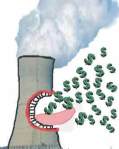
“It’s time to cut our losses now because you are throwing good money after bad,”
Nuclear energy critics assail Plant Vogtle http://www.bizjournals.com/atlanta/news/2012/12/18/nuclear-energy-critics-assail-plant.html
Atlanta Business Chronicle by Dave Williams, December 18, 2012, Georgia’s energy regulators should pull the plug on the Plant Vogtle nuclear expansion rather than make customers keep paying for a project that is behind schedule and over budget, Continue reading
What would be the consequences of a flooded nuclear power plant?
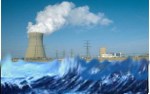
What would be the consequences were a nuclear power plant to flood?
In the case of a natural disaster like a hurricane, the direct impact on a single nuclear power station would likely be exacerbated by a cascade of indirect effects: a range of emergencies and failures unfolding throughout the surrounding area. As during Sandy, transportation would be radically curtailed with roads, bridges, tunnels, trains, and airports shut, as well as some roads blocked by floodwaters, felled trees, and large-scale debris. There could also be widespread power and water outages, fuel shortages, and downed communication lines..
Nuclear power plant flood risk: Sandy was just a warm-up Remapping Debate, By Heather Rogers Dec. 20, 2012 — As Hurricane Sandy approached the East Coast late last October, more than a dozen nuclear power plants from North Carolina stretching up to New England were in its wide-ranging path. On Oct. 29, the night that the eye of the storm made landfall near Atlantic City, New Jersey, five nuclear plants were forced to either reduce power or make emergency shutdowns.
“These facilities need to be hardened more because if they were faced with a Category 2 or a Category 3 [hurricane], it makes me concerned about whether or not they’d be able to safely shut down.” — Michael J. Reilly, National Center for Disaster Preparedness at Columbia University Continue reading
California racing ahead as top solar power state
Which State Leads the the Solar Power Race? http://www.enn.com/energy/article/45368 20 Dec 12,
According to the Solar Energy Industries Association, in the second quarter of 2012, California again led the nation in installed solar capacity, with a total of 217 MW. The state is expected to lead the nation in the solar race again in 2013. According to new research from the California-based NPD Solarbuzz, California is projected to keep its position at number one in 2013, much thanks to its combination of policy initiatives and citizen motivation.
This year, San Diego was named the top Solar City in California for the second year in a row by the California Center for Sustainable Energy, making it not only the top city in the state, but in the country — and the city is not ready to lose that title anytime soon.
California has one of the most ambitious Renewable Portfolio Standard (RPS) requirement goals in the United States. By 2020, their standards require both public and investor-owned utilities to make 33 percent of all electricity delivered to customers from renewable energy sources.
The Go Solar California Campaign contains several policy initiatives to help the state become more solar friendly. The California Solar Initiative (CSI), for example, is the largest rate-payer-funded solar rebate program in the US. It serves homeowners who are customers of investor-owned utilities, and has supported California’s baseline market demand for solar panels.
The state’s New Solar Homes Partnership provides financial incentives and other support to builders of new, energy efficient solar homes. This, together with the CSI and the several other rebate programs offered through the dozens of publicly owned utilities in the state are key components of the Go Solar California initiative.
Although California is leading the race, New Jersey is a close second — and getting closer. New Jersey has intended for increased solar photovoltaic growth within the coming year, as part of the state’s plan to rebuild after Hurricane Sandy. One example of the rebuilding using solar panels is solar-powered traffic lights.
Many homeowners and housing developments within New Jersery will be installing back-up solar generation, either grid-tied or off-grid, which can provide power during future major outages. In 2012, New Jersey’s solar efforts generated 103 MW of solar power.
Despite New Jersey’s efforts, California is projected to be the lead state yet again in solar panel installations and energy generated. California is just 7 years away from reaching its goal of 33 percent renewable energy, and is not planning to slow down anytime soon.
Read more at Clean Techies.
“Uranium widows country” – prolonged task of cleaning up Navajo land
 Uranium cleanup on Navajo Nation complicated by scope, history of problem 19, 2012 By MARYANN BATLLE Cronkite News WASHINGTON – For seven weeks this fall, workers and scientists labored from 7:30 a.m. to 5 p.m., six days a week, digging up and hauling off thousands of cubic yards of uranium-tainted soil in Cove, Ariz., and sealing what remained.
The $1.5 million project by the U.S. Environmental Protection Agency was an emergency measure to clean up two former uranium transfer stations because of their proximity to a day school, a house – which sat on top of one station – and a highway on the Navajo Nation.
The goal was to remove the immediate threat of uranium contamination, stabilize the soil and keep uranium from becoming windborne.
It’s a stopgap measure on two tainted sites among at least 500 – possibly more than 2,000 – that pose a threat to people on the Navajo reservation that spans parts of Utah, New Mexico and Northern Arizona.
More than six decades after the first mines opened on Navajo lands, it is still unclear how many sites need to be cleaned up, how many people may be suffering from the effects of uranium exposure and what can be done to contain all the hazardous material in these communities – if that’s even possible.
What everyone can agree on is that overcoming the legacy of uranium mining will take a long, long time.
“They say it’s a widow community,” Eugene Esplain said of Cove, where this fall’s cleanup took place. “So many men have died from the impacts of uranium mining.”….. http://cronkitenewsonline.com/2012/12/uranium-cleanup-on-navajo-nation-complicated-by-scope-history-of-problem/
USA/Russia slowing down on nuclear disarmament
With the election over, Kristensen is calling on President Barack Obama to “once again make nuclear arms control a prominent and visible part of his foreign policy agenda.”
Rate of US, Russian Nuclear Disarmament ‘Slowing’ AntiWar.com by Carey L. Biron, December 19, 2012 Although the United States and Russia have massively reduced their collective number of nuclear weapons since the heyday of the Cold War, the rate of that reduction is slowing, the Federation of American Scientists (FAS) warned Monday.
Further, these two countries alone continue to account for more than 90 percent of the world’s total nuclear arsenal, 15 times the rest of the seven nuclear weapon states combined.
“The pace of reducing nuclear forces appears to be slowing compared with the past two decades,” Hans M. Kristensen, director of the FAS Nuclear Information Project, said Monday. “Both the United States and Russia appear to be more cautious about reducing further, placing more emphasis on ‘hedging’ and reconstitution of reduced nuclear forces, and both are investing enormous sums of money in modernizing their nuclear forces over the next decade.” Continue reading
.Mining uranium – A recent history of uranium on Navajo lands
 Uranium cleanup on Navajo Nation complicated by scope, history of problem 19, 2012 By MARYANN BATLLE Cronkite News “…..
• 1940s: The mining and milling of uranium ore for U.S defense and energy begins on the Navajo Nation. Continue reading
National Rifle Association puts gun industry profits ahead of children’s lives

There are more than twenty mass shootings every year in America and over a hundred people are shot every day…but the NRA tells us that we can’t do something about guns?….
Increasingly, Americans are recognizing the blood-soaked gun lobby as the pariahs they are, who have done far more damage to America than Osama bin Laden ever dreamed of.
NRA Has More Blood on Its Hands Than al-Qaeda: What Do We Do?, TruthOut,, 18 December 2012 By Thom Hartmann and Sam Sacks, In the coming weeks, we’ll find out just how far our elected lawmakers are willing to go to protect our children from future gun massacres.
 But we already know how far our lawmakers are willing to go to protect us from Middle Eastern terrorists – a group that has killed nothing close to the number of Americans who die every day because of the NRA.
If al-Qaeda were to strike the United States in the last remaining weeks of 2012 and kill as many Americans as three 9/11s, the carnage still wouldn’t compare to what guns do to Americans every single year.
So far in 2012, more than 9,000 Americans have died by way of the gun; almost a hundred thousand were shot. Just this last Saturday alone, 190 people were shot in America. And in Newtown, Connecticut, twenty first graders are dead – gunned down by an assault rifle borrowed from a gun-nut mom. Continue reading
USA’s nuclear waste problem more acute, with probable reactor close-downs
 with the current glut of natural gas, more [nuclear reactor] closings seem possible, which means leaving the wastes behind — “stranded,” as Mr. Wyden put it — at the sites of defunct reactors………...
Come January, Another Try on Nuclear Waste By MATTHEW L. WALD , NYT, 18 Dec 12, The incoming chairman of the Senate Energy Committee suggests that the Energy Department should stop billing utilities more in waste disposal fees than the department is actually spending on addressing nuclear wastes. And he wants the department to pay for moving some of the wastes out of spent fuel pools at the
nation’s highest-risk reactors and into dry casks. Continue reading
1 This Month
23-25 October – on Zoom – World BEYOND War’s annual global conferenc


Shut down the radiation-damaged Heysham nuclear reactors now
To see nuclear-related stories in greater depth and intensity – go to https://nuclearinformation.wordpress.com

Say No to NASA’s Reckless Nuclear Reactor on the Moon
Say No to NASA’s Reckless Nuclear Reactor on the Moon

-
Archives
- October 2026 (219)
- September 2026 (339)
- August 2026 (330)
- July 2026 (355)
- June 2026 (287)
- May 2026 (306)
- April 2026 (356)
- March 2026 (251)
- February 2026 (267)
- January 2026 (308)
- December 2025 (358)
- November 2025 (359)
-
Categories
- 1
- 1 NUCLEAR ISSUES
- business and costs
- climate change
- culture and arts
- ENERGY
- environment
- health
- history
- indigenous issues
- Legal
- marketing of nuclear
- media
- opposition to nuclear
- PERSONAL STORIES
- politics
- politics international
- Religion and ethics
- safety
- secrets,lies and civil liberties
- spinbuster
- technology
- Uranium
- wastes
- weapons and war
- Women
- 2 WORLD
- ACTION
- AFRICA
- Atrocities
- AUSTRALIA
- Christina's notes
- Christina's themes
- culture and arts
- Events
- Fuk 2022
- Fuk 2023
- Fukushima 2017
- Fukushima 2018
- fukushima 2019
- Fukushima 2020
- Fukushima 2021
- general
- global warming
- Humour (God we need it)
- Nuclear
- RARE EARTHS
- Reference
- resources – print
- Resources -audiovicual
- Weekly Newsletter
- World
- World Nuclear
- YouTube
-
RSS
Entries RSS
Comments RSS

