America’s big con job – the Nuclear “Waste Confidence Rule”
The only reasonable and logical solution is to stop making more. But this “Waste Confidence” decision isn’t based on reason or logic. It’s based on keeping the reactors OPERATING for the next hundred years.
So why are we burdening our future generations with an ever-growing, unsolvable problem?
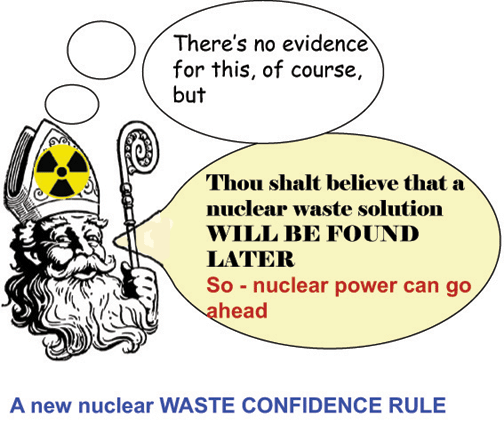
The Eternal Problem – Nuclear Waste Confidence, Counter Punch by RUSSELL D. HOFFMAN, JANUARY 03, 2013“………The pro-nuker preferred to call it “spent fuel confidence.” I, on the other hand, didn’t like the word “confidence” since there’s nothing that warrants ANY confidence in this discussion, whatsoever. ”Waste Failure” would be more appropriate. Or “Waste Impasse” might be even better. Or better yet: ”The Intractable, Unsolvable, Filthy, Disgusting Mess We’ve Made” but I guess that would just be too accurate to a group where a “rapid disassembly” is the term for a core explosion that spews radioactive crud for miles around.
But one way or another, it’s obvious that “Waste Confidence” is a misnomer from start to finish…… …… Nuclear waste storage is a huge unsolved problem in every nuclear country. Continue reading
Toshiba’s plan to put nuclear reactor under permafrost in Alaska
 Radio: New nuclear reactor to be buried 100 feet under permafrost in middle of Alaska? (AUDIO) http://enenews.com/radio-nuclear-reactor-be-buried-100-feet-permafrost-middle-alaska-audio
January 1st, 2013
Title: The New Normal Is No Normal
Source: Radio Ecoshock Show
Date: Jan 2, 2013
Toshiba is very interested in, it has been in talks with the mayor of Galena [Alaska] to build a, what they call a 4S Toshiba, it’s a liquid sodium reactor that they propose to bury under the permafrost — 100 feet under the permafrost, on the Yukon River floodplain.
So the last of the pristine rivers in the world, there’s been negotiations and machinations to put a liquid sodium reactor under the permafrost on the floodplain there in the middle of Alaska.
Full broadcast here
24 organisations warn Nuclear Regulatory Commission not to rush a new “Waste Confidence Rule”
24 Groups: NRC Rushing Nuclear “Waste Confidence” Process, Not Satisfying Court-Ordered Requirements By Physicians for Social Responsibility, Washington, D.C., Jan. 3, 2013 — Incomplete Process Should Trigger Continued Suspension of All Reactor Licensing, Re-Licensing
In documents filed Wednesday with the Nuclear Regulatory Commission (NRC), a wide range of national and grassroots environmental groups said it would be impossible for the NRC to adequately conduct a court-ordered assessment of the environmental implications of long-term storage of spent nuclear reactor fuel in the two short years the federal agency envisions for the process.
In their filings, the 24 groups said a full review of the three issues outlined in June 2012 by the U.S. Court of Appeals for the D.C. Circuit – long-term storage risks for spent nuclear fuel, spent fuel pool fire risks, and spent fuel pool leakage risks – would take at least the seven years originally projected by the NRC staff, and likely considerably longer. Current federal law requires that the NRC conduct a comprehensive environmental impact statement (EIS) study before issuing a revised Waste Confidence Decision; the 24 groups submitted their comments about the appropriate “scoping” of the EIS.

In the absence of an adequate EIS review, the NRC has “no choice but to continue to suspend all licensing and re-licensing actions” for U.S. nuclear reactors, according to the 24 organizations. All licensing and re-licensing actions were previously suspended by the NRC until an EIS and revised Waste Confidence Decision have been issued…..
Highlights of the 24-group filings include the following: Continue reading
Critically dangerous state of Vermont Yankee’s accumulated nuclear waste
 Vermont, New York regulators urge review of storage of spent nuclear fuel, VT Digger, by Andrew Stein | January 3, 2013 “……Vermont Yankee has 1,507 fuel rod assemblies submerged in a spent fuel pool, which was originally designed to hold about 350. Spent fuel rods must be kept under water in order to prevent the Zirconium cladding (the metal tubes that contain the fuel pellets) from igniting. The rods can remain hot for several years.
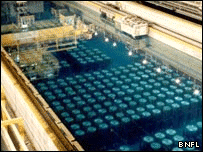 Vermont Yankee’s spent fuel pool, located in a metal warehouse structure, has more than five full reactor cores worth of radioactive material. In the event of an accident, the impact would be five times greater than a single reactor meltdown.
The dry cask storage containers on the site are hundreds of times safer than the spent fuel pool, Shadis said.
At this point, the site has 13 loaded casks, four of which were filled last year, according to Neil Sheehan, NRC public affairs officer for Region 1.
Each cask, which can hold 72 assemblies, costs $1 million. It would cost roughly $11 million to move all of the assemblies into dry cask storage……. http://vtdigger.org/2013/01/03/vermont-new-york-regulators-urge-review-of-spent-nuclear-fuel-storage/
Public ignorance about the radiation dangers of CT scans
 Many people unaware of radiation risk from CT scans By Genevra Pittman | Reuters, 4 Jan 13, NEW YORK–One-third of people getting a CT scan didn’t know the test exposed their body to radiation, in a new study from a single U.S. medical center.
Researchers found the majority of patients also underestimated the amount of radiation delivered by a CT scan, and just one in 20 believed the scan would increase their chance of ever getting cancer.
The study’s lead researcher, , Janet Busey, , said doctors need to do a better job of talking to patients about the risks and benefits of the tests, including about radiation exposure.
One challenge is that there is still debate within the medical community about just how much long term cancer risk the scans carry, she said. That risk also depends on how many scans a patient gets and which organs are exposed to radiation.
“There’s no doubt, CT saves lives,” Busey, from the University of Washington in Seattle, told Reuters Health. And their benefits usually outweigh their risks, she added.
Still, even if the radiation risk is small, patients “definitely should be aware of it.”
CT scans are high-powered X-rays that provide clearer images but expose patients to between ten and 100 times more radiation than a normal head or chest X-ray, for example…. http://news.yahoo.com/many-people-unaware-radiation-risk-ct-scans-213236978.html
Company terminates USA spent nuclear fuel license due to costs
Costs drove PFS move to terminate US spent fuel storage license: exec Washington (Platts)–2 Jan2013
Private Fuel Storage’s December request that the US Nuclear Regulatory Commission terminate its license for an away-from-reactor spent fuel storage facility in Utah that might never be built centered on economics, according to Robert Palmberg, chairman of the PFS board.
It was costing the utility consortium hundreds of thousands of dollars a year to maintain a license for a project that has remained dormant since NRC licensed the facility in 2006, he said in an interview Wednesday. …. http://www.platts.com/RSSFeedDetailedNews/RSSFeed/ElectricPower/6977321
Big solar projects acquired by Warren Buffett company
Buffett Company Acquires Major Solar Projects http://www.energymatters.com.au/index.php?main_page=news_article&article_id=3536 4 Jan 13,
MidAmerican Solar, a subsidiary of Warren Buffett’s MidAmerican Energy Holdings, has acquired SunPower’s 579-megawatt Antelope Valley Solar Projects. The two projects are located in Kern and Los Angeles Counties in California and will provide clean electricity to Southern California Edison (SCE) under long-term power purchase contracts.
President of MidAmerican Renewables Bill Fehrman said the company now has a total portfolio of more than 1,830 megawatts of energy generation projects, including wind, geothermal, solar and hydro assets. Among the holdings are the 550-megawatt Topaz Solar Farm in San Luis Obispo County, California and a 49 percent stake in the 290-megawatt Agua Caliente solar project in Yuma County, Arizona. Continue reading
Financial advice to Entergy – sell Vermont Yankee nuclear plant
Vermont, New York regulators urge review of storage of spent nuclear fuel, VT Digger, by Andrew Stein | January 3, 2013 “……..The Swiss financial services company UBS issued a report this week that forecasts a grim cash flow outlook for Entergy Corporation’s nuclear power plants, and recommended that Entergy sell Vermont Yankee to shore up its finances.
The U.S. Appellate Court ruling put a halt to license renewal applications for nine plants, including Indian Point in New York and Seabrook in New Hampshire.
Under the order, the commission, for the first time, will require environmental assessments of nuclear waste now held at the nation’s 104 reactor sites amid growing public pressure to evaluate the potential hazards of spent fuel pools and dry cask storage at nuclear reactor sites in the United States after the Fukushima nuclear disaster in Japan. There are 104 nuclear reactors at 64 operating plants in the United States, according to a report from CNN. Half are more than 30 years old.
The Commission gave Vermont Yankee, which was built in 1972, a 20-year license extension in 2011.
WASTE STORAGE DOCUMENTS: ….. http://vtdigger.org/2013/01/03/vermont-new-york-regulators-urge-review-of-spent-nuclear-fuel-storage/
An ugly story – Chrystal River nuclear plant – a national financial headache
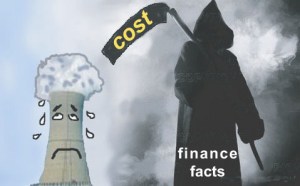 Utility companies pass those costs onto their customers, making
Crystal River’s failed do-it-yourself maintenance project a nationwide
responsibility…… And Crystal River isn’t the only concern. Most of
the 104 reactors in the United States were built in the 1970s and
early 1980s. They are starting to show their age, a fact that is
adding additional pressure to NEIL’s bottom line.
The insurance company is processing claims from American Electric
Power’s nuclear station in Bridgman, Mich., the South Texas Nuclear
Project and California’s San Onofre nuclear power station.
Adding in Crystal River, NEIL and its member utilities — and by
extension their customers — are potentially looking at a huge
financial hit. ” This,” said Cooper, the economist, “is an ugly story.”
Progress Energy Shares the Costly Pain of a Fix at Nuclear Power
Plant, News Chief.com By IVAN PENN TAMPA BAY TIMES, January 2, 2013
The crippled Crystal River nuclear plant, owned by Progress Energy, is
now America’s headache. The bill to fix it and pay for replacement
power may top $5 billion. The problem?
The company that insures all 104 U.S. nuclear power plants has just
$3.6 billion on hand to pay for claims.
Broken nuclear plants in California, Texas and Michigan will vie for
some of that money. But Crystal River alone represents such a
financial threat that the insurance company, Nuclear Electric
Insurance Ltd., may demand that its member utilities pony up more
money. And it could be a lot more — and quickly. Continue reading
USA wind energy to get a boost with an extension of the Production Tax Credit
US tax move puts wind into renewable energy stocks, Sydney Morning
Herald, January 3, 2013 – Vestas Wind Systems, the biggest
wind-turbine maker, and Gamesa Corp. Tecnologica led gains among
European peers as the US Congress approved a law extending a tax
credit for the industry.
Shares of Aarhus, Denmark-based Vestas surged 6.7 per cent, the most
in five weeks, to close at 34 kroner in Copenhagen. Gamesa rose 9.5
per cent, the most since August, to 1.817 euros in Madrid, while
Nordex SE climbed 4 per cent in Frankfurt.
The US House late yesterday passed a bill averting spending cuts and
tax rises that had threatened an economic recovery. The law, already
approved by the Senate, includes an extension of the Production Tax
Credit, which pays wind-farm owners 2.2 cents for every kilowatt-hour
of power they produce.
“It’s really good news for Vestas, because the American market and how
it develops is extremely important,” Chief Marketing Officer Morten
Albaek said today in a phone interview. “It’s a good way of starting
the new year.”
The US Energy Information Administration said Dec. 19 that wind-farm
installations in the country would top 12 gigawatts in 2012 as
developers rushed to complete projects before the scheduled Dec. 31
expiry of the tax credit, known as the PTC. Th
http://www.smh.com.au/business/carbon-economy/us-tax-m
Measuring gamma radiation levels in Virginia
NNSA Helicopters Conduct Radiation Assessment in Northern Virginia
Several residents report hearing helicopters in the skies over the
area.
Annandale Patch, 31 Dec 12, By Jamie M. Rogers “…. The helicopters
began flying over the area Thursday, measuring naturally occurring
radiation, according to the group’s website.
The flights will continue until Jan. 11 during daylight hours
only….. Scientists with NNSA’s Remote Sensing Laboratory (RSL) out
of Joint Base Andrews will use remote gamma radiation-sensing
instrumentals to carry out the assessments.
Naturally-occurring radiation is measured so that baseline levels can
be established and used in security and emergency preparedness,
scientists said. …
http://annandale.patch.com/articles/nnsa-helicopters-conduct-radiation-assessment-in-northern-virginia
Early start for secret shipments of radioactive weapons fuel to Nevada
DOE: Uranium shipments to Nevada could start soon, knoxnews.com, Associated Press December 31, 2012 OAK RIDGE, Tenn. (AP) — A U.S. Department of Energy official says stocks of radioactive uranium could start shipping from the Oak Ridge National Laboratory to Nevada in 2013.
However, The Knoxville News Sentinel reports (http://bit.ly/WVktTK ) that agency officials will not discuss exact dates of the shipments because of safety and security reasons because of the fissionable material’s potential use in nuclear weapons. DOE’s Environmental Manager Mark Whitney said in an interview with the newspaper this fall that the DOE wanted to start the shipments to the Nevada National Security site in early 2013 pending approvals to ship. Continue reading
Nuclear speak about nuclear weapons accidents
When two nukes crashed, he got the call, Orange County Register, 31
Dec 12, First of two parts: After two nuclear bombs fell out of a
plane in 1961, the U.S. turned to Jack ReVelle. Read Part 2. By
KEITH SHARON In the U.S. military’s
euphemistic lexicon of nuclear warfare, there are four terms no one
wants to hear. A “dull sword” is a minor incident involving a nuclear
weapon. A “bent spear” is a breach in the handling of a nuclear
weapon.
An “empty quiver” is a nuclear weapon that has been stolen or lost.
And then there is a “broken arrow,” a nuclear weapon that has somehow
gone awry. According to the book “Broken Arrow: The Declassified
History of U.S. Nuclear Weapons Accidents,” published in 2008, the
United States government has publicly acknowledged 36 broken arrows in
history.
Only one of those involved the potential detonation of two megaton
nuclear bombs on U.S. soil. Only one of those could have wiped out
half the state of North Carolina and, in the process, triggered a
nuclear war.
That broken arrow involved a guy named Jack ReVelle…..
http://www.ocregister.com/articles/revelle-381835-nuclear-bombs.html
Project COW – USA’s bright idea to bomb the moon
A nuclear flash point, Deccan Herald, Jan, 1, 2013: BOMBING THE MOON
Recent reports suggest that during the heydays of the Cold War, the
United States planned to bomb the moon so that the nuclear flash would
intimidate rival powers. Continue reading
US Navy men – major health problems from Fukushima nuclear radiation
 See also: TV: US sailors having traits associated with radiation poisoning after Japan operation — Bleeding from rectum — Baby with birth defects — Cancer — Thyroid problems (VIDEO) http://enenews.com/tv-sailors-having-traits-associated-radiation-poisoning-bleeding-rectum-baby-birth-defects-cancer-thyroid-problems-video
 CNN: Major health issues in ill US Navy sailors who were exposed to Fukushima radiation -Attorney http://enenews.com/cnn-major-health-issues-ill-navy-sailors-exposed-fukushima-radiation-attorney
Title: U.S. Navy sailors sue Japan over nuclear accident
Source: CNN
Author: Tom Watkins and Lateef Mungin
Date: Dec. 28, 2012
[…] “They have physical problems,” said Paul C. Garner, the plaintiffs’ attorney, in an interview with CNN affiliate KGTV in San Diego, the home port of the ship. “One of them is bleeding from his rectum; already, the others have problems with thyroid glands.”
Garner described the illnesses as “major health issues” during a telephone interview with CNN.
“Our best and brightest — who were hired to perform top service to our Navy — went there to provide humanitarian tasks and did not want to bargain their health and well being,” said Garner. “But the people running the power plant lied to them.” […]
1 This Month
23-25 October – on Zoom – World BEYOND War’s annual global conferenc


Shut down the radiation-damaged Heysham nuclear reactors now
To see nuclear-related stories in greater depth and intensity – go to https://nuclearinformation.wordpress.com

Say No to NASA’s Reckless Nuclear Reactor on the Moon
Say No to NASA’s Reckless Nuclear Reactor on the Moon

-
Archives
- October 2026 (219)
- September 2026 (339)
- August 2026 (330)
- July 2026 (355)
- June 2026 (287)
- May 2026 (306)
- April 2026 (356)
- March 2026 (251)
- February 2026 (267)
- January 2026 (308)
- December 2025 (358)
- November 2025 (359)
-
Categories
- 1
- 1 NUCLEAR ISSUES
- business and costs
- climate change
- culture and arts
- ENERGY
- environment
- health
- history
- indigenous issues
- Legal
- marketing of nuclear
- media
- opposition to nuclear
- PERSONAL STORIES
- politics
- politics international
- Religion and ethics
- safety
- secrets,lies and civil liberties
- spinbuster
- technology
- Uranium
- wastes
- weapons and war
- Women
- 2 WORLD
- ACTION
- AFRICA
- Atrocities
- AUSTRALIA
- Christina's notes
- Christina's themes
- culture and arts
- Events
- Fuk 2022
- Fuk 2023
- Fukushima 2017
- Fukushima 2018
- fukushima 2019
- Fukushima 2020
- Fukushima 2021
- general
- global warming
- Humour (God we need it)
- Nuclear
- RARE EARTHS
- Reference
- resources – print
- Resources -audiovicual
- Weekly Newsletter
- World
- World Nuclear
- YouTube
-
RSS
Entries RSS
Comments RSS

