In USA 40 nuclear reactors might be closed down
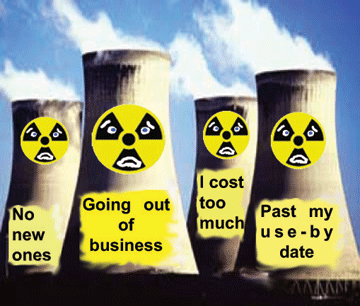 Analyst: “The Slow Demise of U.S. Nuclear Power” — 40 reactors could be closed http://enenews.com/analyst-slow-demise-of-u-s-nuclear-power-40-reactors-at-risk-of-closing
Title: Are U.S. Nuclear Power Plants Going the Way of Coal Plants?
Source: Investment U
Author: David Fessler, Senior Analyst
Date: January 29, 2013: Issue #1958
Last October, Dominion Resources, Inc. (NYSE: D) announced it would be closing its Kewaunee nuclear power plant. Located in Wisconsin, this small, 566-megawatt (MW) unit is the first nuclear plant to succumb to cheap natural gas. […]
[…] According to data from the International Atomic Energy Agency (IAEA), 40 [U.S. nuclear reactors] are smaller than one GW in size. They all could ultimately suffer the same fate as Dominion’s Kewaunee reactor.
Is There a Way to Play the Slow Demise of U.S. Nuclear Power?
[…] Regardless of how many plants are closed, or how quickly it happens, the pipeline companies will be the beneficiaries.
USA’s nuclear waste dumpsters need high level guarding
 America’s Nuclear Dumpsters After Yucca Mountain, the Nuclear Regulatory Commission is stocking up on guns and ammo. Slate, By Geoffrey Brumfiel| , Jan. 30, 2013, While the rest of America spent January debating new gun control laws, one government agency announced its plans to expand the use of high-capacity magazines, assault weapons, and even fully automatic machine guns. The Nuclear Regulatory Commission, which oversees the nation’s nuclear plants, is seeking the firepower not for securing the plants themselves, but to defend their nuclear waste.
Since America’s commercial reactors started opening in the 1960s and ’70s, nuclear waste has been piling up. At first, it was stored in spent fuel pools—swimming pools you’d never, ever want to swim in. That was fine for a time, but by the 1980s, the pools started to get crowded. So the utilities began putting old fuel rods in something they call dry cask storage, and I’ll call nuclear dumpsters.

They’re big, they’re white, and they’re literally kept out back like the rest of the trash. Continue reading
Virginia’s Senate set to block legislation that would allow uranium mining
Opponents: Va. Uranium Bill Doomed in Committee
http://www.whsv.com/news/headlines/Opponents-Va-Uranium-Bill-Doomed-in-Committee-188934761.html
RICHMOND, Va. (AP) — Opponents of uranium mining in Virginia say
they have the votes in a Senate committee to block legislation that
would effectively end a decades-old state moratorium on mining the
radioactive ore.
They said Tuesday the vote won’t even be close.
The predictions are coming from the Virginia Coalition, the Alliance
for Progress in Southern Virginia and the Southern Environmental Law
Center.
Sen. John Watkins’ legislation is scheduled to be heard Thursday by
the Agriculture and Natural Resources Committee. He did not
immediately return a message left with his office by The Associated
Press to respond to the dire predictions for his bill.
Virginia Uranium Inc. wants the General Assembly to end the 1982
mining ban so it can tap a 119-million-pound deposit of the ore in
Pittsylvania County.
Vogtle nuclear plant a financial debacle for USA’s loan guarantee program
Georgia nuclear power plant could be Solyndra redux, report says
A report by two energy-consulting firms says the US government has not protected US taxpayers well enough against the risks of federal loan guarantees to a new nuclear power project. Christian Science Monitor, By Mark Clayton, Staff writer / January 30, 2013 Construction of the first newly licensed US nuclear power plant in decades could become a “Solyndra-like” debacle thanks to billions in federal loan guarantees whose terms appear too weak to protect taxpayers, according to one group’s analysis of internal documents released by the US Department of Energy.
The two-reactor $14 billion Vogtle plant being built in Georgia is seen as a test of the US nuclear industry’s planned “renaissance” with a new nuclear reactor design and updated construction processes all aimed at cutting time and costs.
But two Massachusetts-based energy-consulting firms, Earth Track and Synapse Energy Economics, say the $8.3 billion in federal loan guarantees backing the project were crafted with excessively favorable financial terms for the recipient companies, weak federal oversight, and possible political interference in the loan-guarantee process. The two firms analyzed hundreds of Energy Department e-mails and financial documents released earlier this month to the Southern Alliance for Clean Energy (SACE), a green-energy watchdog group that won access to them in a Freedom of Information Act lawsuit. …..
In their report, Earth Track and Synapse say the documents reveal: Continue reading
CNN’s media coverage promoted climate change denialsim
 “After Failed Climate Coverage, CNN Reports Americans Don’t Understand
Climate Change” Society of Environmental Journalists, 27 Jan 13
“Promoting a recent poll, CNN is treating climate change as a matter
of opinion, saying Americans are divided over whether or not it is
real. But the network itself has fueled such confusion, often failing
to report that manmade emissions are driving climate change or giving
credence to those who deny the science behind it.” Continue reading
Nuclear re-licensing to go ahead, even though no new Waste Confidence Rule yet?
The court disapproved of the NRC’s continued relicensing of nuclear facilities based on the assumption of a long-term geologic repository that in reality did not exist – and the NRC said it was suspending licensing pending a new rule – but now regulators say they don’t anticipate the denial or even the delay of any reactor license application while they await the new waste confidence decision [PDF, pp. 49-50].
In fact, the NRC has continued the review process on pending applications, even though there is now no working Nuclear Waste Confidence Decision (NWCD) – something deemed essential by the courts – against which to evaluate new licenses.
The NRC is looking for a way to permit the continued operation of the US nuclear fleet – and so, the continued manufacture of nuclear waste – without an answer to the bigger, pressing question

 Seventy Years of Nuclear Fission, Thousands of Centuries of Nuclear Waste ,25 January 2013 By Gregg Levine, Truthout Lack of Permanent Spent Fuel Storage Looms Large
“……….When a US Court of Appeals ruled in June that the Nuclear Regulatory Commission (NRC) acted improperly when it failed to consider all the risks of storing spent radioactive fuel onsite at the nation’s nuclear power facilities, it made specific reference to the lack of any real answers to the generations-old question of waste storage:
[The Nuclear Regulatory Commission] apparently has no long-term plan other than hoping for a geologic repository…. If the government continues to fail in its quest to establish one, then SNF (spent nuclear fuel) will seemingly be stored on site at nuclear plants on a permanent basis. The Commission can and must assess the potential environmental effects of such a failure.
The court concluded the current situation – in which spent fuel is stored across the country in what were supposed to be temporary configurations-”poses a dangerous long-term health and environmental risk.”
The decision also harshly criticized regulators for evaluating plant relicensing with the assumption that spent nuclear fuel would be moved to a central long-term waste repository.
A Mountain of Risks Continue reading
Hydraulic Fracking is a source of radiation pollution, too
“We’ve known for a long time that there is radiation coming back in the wastewater”
Among the radioactive material often found in drilling wastes is radium 226, which can cause cancer, anemia and cataracts, according to the federal Agency for Toxic Substances and Disease Registry
DEP backtracks on radiation issue Times online,January 25, 2013 By Rachel Morgan HARRISBURG — For months, the state Department of Environmental Protection denied that radiation in wastewater from natural gas drilling was an issue. On Thursday night, the state announced plans to study the effects of radiation in natural gas drilling wastewater.
After continued questioning by Shale Reporter regarding radioactivity in wastewater, Gov. Tom Corbett’s announcement of a 12-month DEP study of radioactive wastewater was a surprise. The DEP had consistently denied radiation was even an issue……. In the governor’s unexpected announcement Thursday evening, DEP officials said they will begin sampling and analyzing fracking flowback for radioactivity, testing everything from fracking wastewater, drill cuttings, treatment solids and sediments at well pads and wastewater treatment and disposal facilities.
They also plan to analyze radioactivity in pipes, well casings, storage tanks, treatment systems and trucks. http://www.timesonline.com/news/local_news/dep-backtracks-on-radiation-issue/article_9e5853a5-325b-5f9a-83ed-24aea5811db0.html
An Increase in Radiation Monitoring for Fracking, NYT, Jan 25 13 By JON HURDLE Pennsylvania will step up its monitoring of naturally occurring radiation levels in water, rock cuttings and drilling wastes associated with oil and gas development in a yearlong study that will be peer-reviewed, the state’s environmental agency reports.
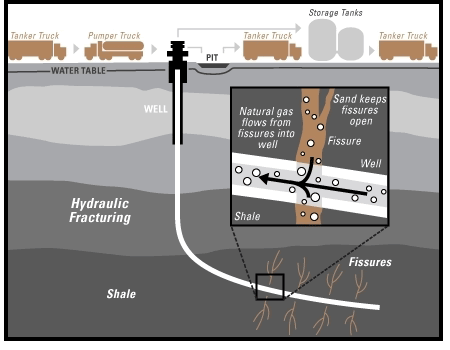
The study will also assess radiation levels in the pipes, well casings, storage tanks, treatment systems and trucks used by the natural gas industry, which has drilled thousands of wells in the gas-rich Marcellus Shale over the last five years….
Hydraulic fracturing, which involves injecting chemicals and water under enormous pressure into underground shale formations to extract gas or oil, got under way in Pennsylvania in 2008.
In New York, state officials are currently weighing whether to allow the drilling process to begin. The state’s health commissioner is conducting a review of whether the state’s Department of Environmental Conservation has adequately addressed potential impacts on public health. Continue reading
Uranium mining: In situ leaching not the same as fracking
A spokesperson for Uranium Energy disputes the similarities to fracking that is made in the article.
“By contrast, ‘in-situ recovery’ is the process of injected-solution mining that reverses the natural process of deposited uranium in sandstones. On-site groundwater fortified with oxygen is introduced into the ground through a pattern of injection wells. The solution dissolves uranium from the sandstone host rock, and the uranium-bearing solution is brought back to surface through vacuum-suction production wells, where the uranium is concentrated on resin beads for trucking to a nearby processing plant where it is concentrated further and dried into yellowcake.”

Opponents of in situ uranium extraction start throwing around the F word MINING.com Editor | January 25, 2013 A US company is extracting underground uranium reserves in Texas using in situ methods, but opponents are comparing it to another process that is drawing high-profile protests.
Forbes reports that Texas-based Uranium Energy Corp (UEC) uses the in situ method for extracting underground uranium by pumping oxygenated water into porous rock layers via deep-drilled wells.
Forbes notes the process is raising concerns among some in Texas who compare the process to hydraulic fracturing, which has some celebrity opponents.”By design it’s much worse than fracking,” says Houston attorney Jim Blackburn, who is interviewed by Forbes.
“This is intentional contamination of a water aquifer liberating not only uranium but other elements that were bound up with the sand. We know this process will contaminate groundwater; that’s the whole point of it.” Continue reading
New Nuclear Waste Confidence Decision” (NWCD) designed to let nuclear power continue?
the fact that their best scenario now projects a repository to be ready by about 2050 is a story in itself.
 Seventy Years of Nuclear Fission, Thousands of Centuries of Nuclear Waste ,25 January 2013 By Gregg Levine, Truthout “…….Confidence Game
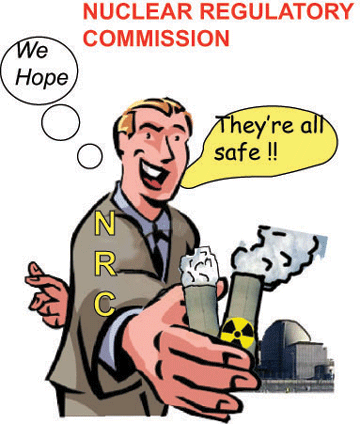
Two months after the Appeals Court found fault with the NRC’s imaginary waste mitigation scenario, the agency announced it would suspend the issuing of new reactor operating licenses, license renewals and construction licenses until the agency could craft a new plan for dealing with the nation’s growing spent nuclear fuel crisis. In drafting its new nuclear “Waste Confidence Decision” (NWCD) – the methodology used to assess the hazards of nuclear waste storage – the Commission said it would evaluate all possible options for resolving the issue.
At first, the NRC said this could include both generic and site-specific actions (remember, the court criticized the NRC’s generic appraisals of pool safety), but as the prescribed process now progresses, it appears any new rule will be designed to give the agency, and so, the industry, as much wiggle room as possible. Continue reading
Running nuclear power plant – 45 times more costly than coal, and gas is even cheaper
while fuel costs [for nuclear power] are low, maintenance costs for enhanced
safeguards are rising.
UBS UBSN.VX -0.98% analyst Julien Dumoulin-Smith estimates fixed costs
per kilowatt of capacity at a nuclear plant are perhaps five times
those for a comparably sized coal plant.
Smaller nuclear plants, with less output over which to spread fixed
costs, suffer most.

Gas Suffocates Nuclear Power
http://online.wsj.com/article/SB10001424127887323854904578263952157252768.html
Natural gas is poison for coal. But its toxicity also extends to
nuclear power. 25 Jan 13, Low gas prices have made it cheaper to run
gas-fired power plants more often and, because these plants often set
the wholesale electricity price, reduced power prices overall. Add on
tightening emissions standards, and coal plants have suffered, with
many expected to close.
But nuclear power stations haven’t escaped. Cheap electricity due to
weak gas prices hurts their profits, too. Continue reading
Dangers of nuclear spent fuel cooling ponds, and of dry cask storage
 Seventy Years of Nuclear Fission, Thousands of Centuries of Nuclear Waste ,25 January 2013 By Gregg Levine, Truthout “…….Everyone Out of the Pool
As disasters as far afield as the 2011 Tohoku earthquake and last October’s Hurricane Sandy have demonstrated, the storage of spent nuclear fuel in pools requires steady supplies of power and cool water. Any problem that prevents the active circulation of liquid through the spent fuel pools – be it a loss of electricity, the failure of a back-up pump, the clogging of a valve or a leak in the system – means the temperature in the pools will start to rise. If the cooling circuit is out long enough, the water in the pools will start to boil. If the water level dips (due to boiling or a leak) enough to expose hot fuel rods to the air, the metal cladding on the rods will start to burn, in turn heating the fuel even more, resulting in plumes of smoke carrying radioactive isotopes into the atmosphere.
And because these spent fuel pools are so full – containing as much as five times more fuel than they were originally designed to hold, and at densities that come close to those in reactor cores – they both heat stagnant water more quickly and reach volatile temperatures faster when exposed to air. Continue reading
USA’s EPA gave miners more than 1,500 permits to pollute deep aquifers
In a parched world, Mexico City is sending a message: Deep, unknown potential sources of drinking water matter, and the U.S. pollutes them at its peril.
Message from Mexico: The US is Polluting Water it May Someday Need to Drink, World News Curator , January 25, 2013 By OryanWNC. By Abrahm Lustgarten from ProPublica Mexico City plans to draw drinking water from a mile-deep aquifer, according to a report in the Los Angeles Times. The Mexican effort challenges a key tenet of U.S. clean water policy: that water far underground can be intentionally polluted because it will never be used.
U.S. environmental regulators have long assumed that reservoirs located thousands of feet underground will be too expensive to tap. So even as population increases, temperatures rise, and traditional water supplies dry up, American scientists and policy-makers often exempt these deep aquifers from clean water protections and allow energy and mining companies to inject pollutants directly into them.
As ProPublica has reported in an ongoing investigation about America’s management of its underground water, the U.S. Environmental Protection Agency has issued more than 1,500 permits for companies to pollute such aquifers in some of the driest regions. Frequently, the reason was that the water lies too deep to be worth protecting. Continue reading
Atoms for Peace, Problems Forever
 leaves America today with what amounts to over five dozen nominally temporary repositories for high-level radioactive waste – and no defined plan to change that situation anytime soon.
Seventy Years of Nuclear Fission, Thousands of Centuries of Nuclear Waste ,25 January 2013 By Gregg Levine, Truthout “……The Manhattan Project’s goal was a bomb, but soon after the end of the war, scientists, politicians, the military and private industry looked for ways to harness the power of the atom for civilian use, or, perhaps more to the point, for commercial profit. Fifteen years to the day after CP-1 achieved criticality, President Dwight Eisenhower threw a ceremonial switch to start the reactor at Shippingport, Pennsylvania, which was billed as the first full-scale nuclear power plant built expressly for civilian electrical generation.
Shippingport was, in reality, little more than a submarine engine on blocks, but the nuclear industry and its acolytes will say that it was the beginning of billions of kilowatts of power, promoted (without a hint of irony) as “clean, safe and too cheap to meter.” It was also, however, the beginning of what is now a weightier legacy: 72,000 tons of nuclear waste.
Atoms for Peace, Problems Forever
News of Fermi’s initial success was communicated by physicist Arthur Compton to the head of the National Defense Research Committee, James Conant, with artistically coded flair:
Compton: The Italian navigator has landed in the New World.
Conant: How were the natives?
Compton: Very friendly.
But soon after that initial success, CP-1 was disassembled and reassembled a short drive away, in Red Gate Woods. The optimism of the physicists notwithstanding, it was thought best to continue the experiments with better radiation shielding – and slightly removed from the center of a heavily populated campus. The move was perhaps the first necessitated by the uneasy relationship between fissile material and the health and safety of those around it, but if it was understood as a broader cautionary tale, no one let that get in the way of “progress.” Continue reading
USA increases “safe” radiation levels – protecting nuclear industry, not the people
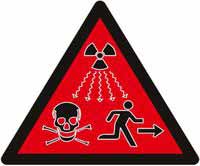 In the wake of the continuing nuclear tragedy in Japan, the United States government is still moving quickly to increase the amounts of radiation the population can “safely” absorb by raising the safe zone for exposure to levels designed to protect the government and nuclear industry more than human life.”
The Radiation Warnings You Won’t Get from the Mainstream Propaganda Machine The Liberty Beacon January 22, 2013, The mainstream media and the federal government will soon have the blood of the world on it’s hands.
Radiation from the Fukushima Nuclear Plant disaster in Japan is now actively in the ecosystem all along the North American west coast… even the sea weed is now radiated. The Vancouver Sun reported one year ago that the seaweed tested from waters off the coast of British Columbia were 4 times the amount considered safe. No further test results were released after the initial report.
The governments of the United States and Canada are not conducting tests for radioactivity – at least not to the knowledge of the public. Secretary of State Hillary Clinton has agreed to continue purchasing seafood from Japan, despite the fact that the food is not being tested for radioactive contamination. Last November, independent testing in Japan showed 65 per cent of the catches tested positive for cesium (a radioactive material). Instead of refusing to purchase the poisoned fish, food safety agencies in both the United States and Canada have simply raised the “acceptable level of radiation.” We can’t go offending the Japanese after promising to buy their tainted goods, now can we?
After the North American governments refused to fund testing, oceanographer Ken Buesseler, a senior scientist at the non-profit Woods Hole Oceanographic Institution in Woods Hole, Mass, along with Nicholas Fisher, a marine sciences professor at the State University of New York at Stony Brook, and other concerned scientists, managed to secure private funding for a Pacific research voyage. The results? Continue reading
NO to San Onofre nuclear plant – San Diego Unified School District Board of Education
 SDUSD Board Votes to Oppose Nuclear Generator Start.San Clemente Patch, 23 Jan 13, The San Diego Unified School District Board of Education Tuesday night adopted a resolution opposing the proposed restart of a reactor at the San Onofre Nuclear Generating Station until its operator undergoes a rigorous license amendment process……. The resolution, introduced by board members Richard Barrera and Kevin Beiser, said “the San Diego Unified School District believes restarting the defective Unit 2 nuclear reactor at San Onofre will have profound impacts on our children in San Diego Unified and the surrounding communities in the event of a nuclear accident regarding radiation contamination of air, water and food, evacuation plans, and long term viability of life in Southern California.”
The resolution also expressed support for a California Public Utilities Commission investigation into the reliability and costs of the plant, especially compared to alternative energy sources.
“Before restarting the nuclear reactor, San Onofre should undergo a rigorous and transparent public review of the Nuclear Regulatory Commission licensing amendment process,” Beiser said. “We must make certain that before restarting San Onofre nuclear power plant, it is safe for our community and our kids.”….. http://sanclemente.patch.com/articles/sdusd-board-votes-to-oppose-nuclear-generator-start-0aeb9208
1 This Month
23-25 October – on Zoom – World BEYOND War’s annual global conferenc


Shut down the radiation-damaged Heysham nuclear reactors now
To see nuclear-related stories in greater depth and intensity – go to https://nuclearinformation.wordpress.com

Say No to NASA’s Reckless Nuclear Reactor on the Moon
Say No to NASA’s Reckless Nuclear Reactor on the Moon

-
Archives
- October 2026 (209)
- September 2026 (339)
- August 2026 (330)
- July 2026 (355)
- June 2026 (287)
- May 2026 (306)
- April 2026 (356)
- March 2026 (251)
- February 2026 (267)
- January 2026 (308)
- December 2025 (358)
- November 2025 (359)
-
Categories
- 1
- 1 NUCLEAR ISSUES
- business and costs
- climate change
- culture and arts
- ENERGY
- environment
- health
- history
- indigenous issues
- Legal
- marketing of nuclear
- media
- opposition to nuclear
- PERSONAL STORIES
- politics
- politics international
- Religion and ethics
- safety
- secrets,lies and civil liberties
- spinbuster
- technology
- Uranium
- wastes
- weapons and war
- Women
- 2 WORLD
- ACTION
- AFRICA
- Atrocities
- AUSTRALIA
- Christina's notes
- Christina's themes
- culture and arts
- Events
- Fuk 2022
- Fuk 2023
- Fukushima 2017
- Fukushima 2018
- fukushima 2019
- Fukushima 2020
- Fukushima 2021
- general
- global warming
- Humour (God we need it)
- Nuclear
- RARE EARTHS
- Reference
- resources – print
- Resources -audiovicual
- Weekly Newsletter
- World
- World Nuclear
- YouTube
-
RSS
Entries RSS
Comments RSS

