Radiation releases from fracking for natural gas
among the substances to be tested for are Radium-226, Radium-228, Uranium-238, Uranium-235, Uranium-234, Thorium-232, Radon-220 and Radon-222.
a December 2011 U.S. Geological Survey report that found that millions of barrels of wastewater from unconventional wells in Pennsylvania and conventional wells in New York were 3,609 times more radioactive than the federal limit for drinking water and 300 times more radioactive than a Nuclear Regulatory Commission limit for nuclear plant discharges.
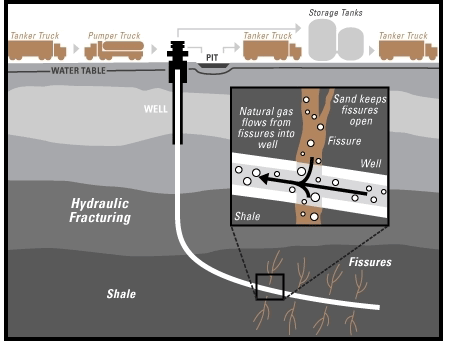
DEP begins fracking radiation tests Times Online, By Rachel Morgan Shalereporter.com 4 April 13 HARRISBURG — The Pennsylvania Department of Environmental Protection this month will begin testing for radioactivity in waste products from natural gas well drilling.
In addition to analyzing wastewater from hydraulic fracturing, known as fracking, the study also will analyze radioactivity in drill cuttings, drilling mud, drilling equipment, treatment solids and sediments at well pads, wastewater treatment and disposal facilities and landfill leachate, among others. The study also will test radiation levels for the equipment involved in the transportation, storage and disposal of drilling wastes. Continue reading
USA Republicans waking up to climate change and renewable energy
 Ending the Debate: Most Republicans Actually Support
 Increased Renewable Energy Use http://www.triplepundit.com/2013/04/breaking-debate-republicans-actually-support-increased-renewable-energy/ By Mike Hower | April 4th, 2013 Apparently, the debate over global warming is not as big as the hard-liners at Fox News and on Capitol Hill would lead us to believe. A recent study released by Yale and George Mason University found that nearly 80 percent of Republicans and Republican-leaning Independents support increasing renewable energy use and more than 60 percent believe the United States should take action to address climate change.
Interestingly, the report also found that only a third of Republican respondents agree with the GOP’s position on climate change, which has changed dramatically since 2008. Continue reading
Crescent Dunes Solar Energy Plant solves problem of “intermittent power”
Crescent Dunes Molten Salt Solar Receiver Completed http://www.energymatters.com.au/index.php?main_page=news_article&article_id=3673 5 April 13, SolarReserve has announced one of its flagship projects is reaching final stages of completion in the Nevada desert, with the installation of molten salt receiver panels on the peak of the 540-foot tall tower of the Crescent Dunes Solar Energy Plant. By utilising molten salt storage technology, the Crescent Dunes solar plant, located near Tonopah, Nevada, can operate like a conventional power plant, providing “on demand” and emissions-free electricity for up to 10 hours in adverse conditions.
“The energy storage capability of this technology solves the problem of intermittency typical of other renewable energy sources,” said Kevin Smith, CEO of SolarReserve. Continue reading
The very real risk of Hanford nuclear waste tanks exploding
The nuclear safety board warned about the risk of explosion to Wyden, who wanted comment on the safety and operation of Hanford’s tanks, technical issues that have been raised about the design of a plant to treat the waste in those tanks, and Hanford’s overall safety culture.
Hanford Nuclear Waste Tanks Could Explode, Agency Warns http://www.huffingtonpost.com/2013/04/02/hanford-nuclear-waste-could-explode_n_3001134.html?utm_hp_ref=green includes video By SHANNON DININNY 04/02/13 YAKIMA, Wash. — Underground tanks that hold a stew of toxic, radioactive waste at the nation’s most contaminated nuclear site pose a possible risk of explosion, a nuclear safety board said in advance of confirmation hearings for the next leader of the Energy Department.
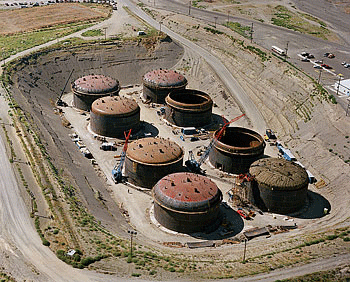
State and federal officials have long known that hydrogen gas could build up inside the tanks at the Hanford Nuclear Reservation, leading to an explosion that would release radioactive material. The Defense Nuclear Facilities Safety Board recommended additional monitoring and ventilation of the tanks last fall, and federal officials were working to develop a plan to implement the recommendation.
The board expressed those concerns again Monday to U.S. Sen. Ron Wyden, D-Ore., who is chairman of the Senate Energy and Natural Resources Committee and had sought the board’s perspective about cleanup at Hanford. Continue reading
Fukushima radiation into ocean: is it killing sea lions?
 Unfortunately, the nuclear accident is nowhere near contained. Japanese experts say that Fukushima is currently releasing up to 93 billion becquerels of radioactive cesium into the ocean each day, the reactors have lost containment, and groundwater is flooding into the stricken reactors(delaying clean-up).
And things may get worse for California, instead of better .
Is Fukushima Radiation Causing the Epidemic of Dead and Starving Sea Lions In California? http://www.zerohedge.com/contributed/2013-03-31/fukushima-radiation-causing-epidemic-dead-and-starving-sea-lions-california by George Washington on 03/31/2013 Associated Press reports:
At island rookeries off the Southern California coast, 45 percent of the pups born in June have died, said Sharon Melin, a wildlife biologist for the National Marine Fisheries Service based in Seattle. Normally, less than one-third of the pups would die.It’s gotten so bad in the past two weeks that the National Oceanic and Atmospheric Administration declared an “unusual mortality event.” That will allow more scientists to join the search for the cause, Melin said. Continue reading
Gallup poll shows Americans want solar and wind power
 Survey Says: Americans Want More Solar And Wind
 Power, by Energy Matters 3 April 13 As the USA seeks to consolidate its domestic energy industry, a nation-wide poll has revealed two-thirds of Americans support solar and wind power over oil and nuclear energy.
Production of coal proved least popular, with just one in three people surveyed supporting it as the primary solution to future energy independence.
The Gallup poll asked respondents to categorise the emphasis they believe should be placed on a range of domestic energy production sources.
The poll found an overwhelming 76 percent of all Americans wanted more emphasis placed on producing domestic energy using solar power, followed closely by wind energy (71 percent), then natural gas (65 percent), oil (46 percent), nuclear (37 percent), and coal (31 percent)…. http://www.energymatters.com.au/index.php?main_page=news_article&article_id=3669
USA science education standards now to include climate change?
Teach Your Children Well – About Climate Change http://www.enn.com/climate/article/45772 JENNIFER LUDDEN, NPR
March 27, 2013 By the time today’s K-12 students grow up, the challenges posed by climate change are expected to be severe and sweeping. Now, for the first time, new federal science standards due out this month will recommend that U.S. public school students learn about this climatic shift taking place.
“Only 1 in 5 [students] feel like they’ve got a good handle on climate change from what they’ve learned in school,” he says, adding that surveys show two-thirds of students say they’re not learning much at all about it. “So the state of climate change education in the U.S. is abysmal.”
We all learn the water cycle. But how many can draw a picture of the carbon cycle? It would include plants taking in carbon to grow, then dying, and eventually turning into fossil fuels like coal and oil, which then put carbon back into the atmosphere when burned.
Even when this is taught, McCaffrey says, climate is often sidelined. Why take Earth science, when what you need to get into college is biology and chemistry? A recent report on climate literacy recommends sweeping changes to address such issues.
On top of this, there’s the political battle over how climate change is taught. Last month, Colorado became the 18th state in recent years — including seven this year — to consider an “Academic Freedom Act.”
Climate change blackboard image via Shutterstock.
Read more at NPR.
Financial planning: New York cites climate change risks
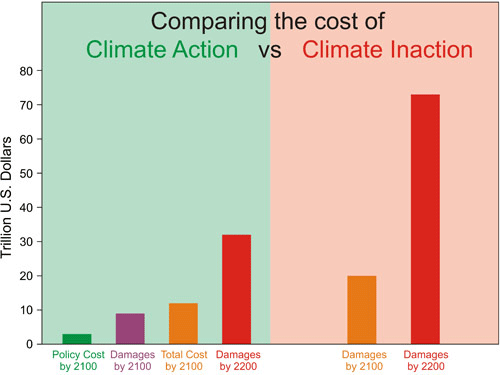
 NY cites climate change as a risk in Sandy’s wake, SMH, March 27 2013 New York is listing climate change as a risk for bondholders after Hurricane Sandy caused more than $US40 billion ($38 billion) in damage in the state and Governor Andrew Cuomo said better preparations are needed.
The state may be the first US state to inform investors of the danger posed by rising sea levels, flooding and erosion tied to climate change, said Rich Azzopardi, a Cuomo spokesman. The citation first appeared in budget documents in January and has since been included among fiscal risks mentioned in bond offering statements, Azzopardi said.
Sandy caused the worst flooding in the more than 100-year history of the New York City subway system, which is run by the state, and devastated coastal areas. The October hurricane knocked out power to more than 2 million residents and followed two 2011 tropical storms that caused severe flooding upstate.
“The extreme weather events of the last two years highlighted real and potential costs from extreme weather events,” Azzopardi said. “The state determined that the effects of climate change presented economic and financial risks.” Other stated risks include federal budget cuts and unsettled labor negotiations.
Be prepared
Cuomo, a 55-year-old Democrat, said after Sandy that the state needs to be better prepared for extreme weather. He has proposed a $US400 million program to buy waterfront homes to reduce the amount of property exposed to potential storm damage.
Offering statements on risk say investors should note the potential costs of storm-related preparation and rebuilding.
“Significant long-term planning and investment by the federal government, state and municipalities may be needed to adapt existing infrastructure to the risks posed by climate change,” the risk statement says.
Businesses have been taking climate projections into account when assessing risk for at least a decade and it’s “astonishing” that more public entities haven’t done so, said Steven Cohen, executive director at Columbia University’s Earth Institute in New York.
Prudent planning
“These are the kinds of things that prudent investors pay attention to and prudent governments set aside funds for,” said Cohen, a former US Environmental Protection Agency official. “This needs to be a part of your financial planning.”
Nuclear Regulatory Commission not facing up to flood risks
 Nuclear Power Flood Risk: NRC Insiders Say Agency Continues To Look The Other Way HUFFINGON POST Tom Zeller Jr. 03/29/2013 According to findings made public earlier this month, the Nuclear Regulatory Commission recently uncovered potentially significant flooding vulnerabilities at two Tennessee nuclear power plants and, after a thorough investigation, the agency aggressively sanctioned the errant operator for several safety violations — although the facilities were permitted to continue operating.
An internal document quietly released this week by the agency, however, suggests that some NRC employees with extensive knowledge of the threat believe the agency is violating its own regulatory mission by allowing at least one reactor to stay online, given the potential for flooding that would likely hobble core cooling equipment and possibly trigger a meltdown.
The odds of this happening, of course, are small. But the NRC is reviewing a variety of risks at United States nuclear power plants in the aftermath of the 2011 meltdown at the Fukushima-Daiichi facility in Japan, which succumbed to a rare but devastating earthquake and subsequent tsunami. Among the risks being considered by the agency is the potential at several U.S. plants on inland waterways to suffer damage if upstream dams are breached or otherwise fail.
Concerns that the NRC was not acting swiftly or decisively enough on the upstream dam risk were raised late last year by two other engineers inside the agency. Steps are being taken to shore up flood defenses at several plants, but no facility has been shuttered by regulators as a result of the heightened scrutiny.
In a memo dated March 19 and posted to the NRC website on Monday, Carl F. Lyon and Patrick D. Milano, both members of the NRC’s Office of Nuclear Reactor Regulation, argue that a rare but consequential rainfall is all that would be needed to disable cooling systems for a reactor at the Watts Bar nuclear station — referred to as “WBN Unit 1” — near Spring City, Tenn.
“Only the probable maximum precipitation event, without a concurrent earthquake or tsunami or any other accident,” the two employees wrote, “is needed at WBN Unit 1 to produce a loss of all decay heat removal systems.”…… http://www.huffingtonpost.com/2013/03/29/nuclear-power-flood-risk_n_2979098.html
Wind Energy races ahead, as nuclear production falls in USA
 BAD NEWS FOR HOMER SIMPSON HTTP://QZ.COM/68344/US-RENEWABLE-ENERGY-PRODUCTION-NOW-TOPS-NUCLEAR-POWER/ US renewable energy production now tops nuclear power By Todd Woody — March 28, 2013
US president Barack Obama has pursued an energy policy he describes as “all of the above,” a bit of Bill Clinton-style triangulation that seeks to boost production from carbon-intensive oil and gas drilling while promoting clean technologies like solar and wind.
So how’s he doing?
New data released yesterday from the US Energy Information Administration offers a snapshot of the energy landscape in Obama’s first term. Energy production from natural gas grew 16% while coal-fired power fell more than 4%, thanks to a glut of cheap natural gas from the fracking boom. It’s a trend likely to continue as shale gas reserves are tapped and new emissions regulations effectively bar the construction of new coal-fired power plants.
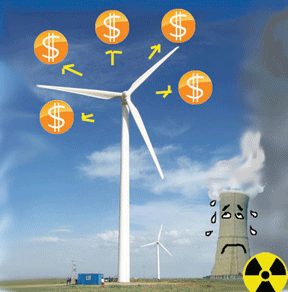
Renewable energy production jumped nearly 24% but remains only 11% of the US’ total energy production. But the trend lines tell the story: Wind energy, for instance, grew 89% while electricity production from nuclear power plants fell 4%.
And this factoid should warm the hearts of anti-nuke activists: The US now gets more energy from renewable sources—wind, solar, hydro, geothermal, and biomass—than it does from nuclear power plants.
While there are new nuclear projects winding their way through the regulatory process, don’t expect a nuke boom. Multibillion-dollar price tags, waste disposal issues and growing water shortages are likely to limit nuclear power’s contribution to the nation’s energy mix in the coming decades.
Mr. Burns just might want to start looking for another job, perhaps as a wind farm magnate.
How wildlife can, and does, damage nuclear reactors
 Wildlife vs U.S. nuclear plants: Flies short-out transformer — Pelican starts emergency generator — Snake causes fire — Bird shuts down reactor… more http://enenews.com/wildlife-incidents-at-u-s-nuclear-plants-flies-short-out-power-transformer-pelican-starts-emergency-generator-snake-causes-fire-fish-block-water-intake-more
March 27th, 2013
Title: Fission Stories #133: Mayflies, and Squirrels, and Rats
Source: All Things Nuclear (Union of Concerned Scientists)
Author: Dave Lochbaum, director, Nuclear Safety Project
Date: March 26, 2013
[…] one wonders about the havoc that an individual saboteur or a team of bad guys might be able to cause by malicious intent. Could well-trained and heavily armed attackers cause more devastation than a furry little squirrel or a pesky rat? […]
Selected incidents at U.S. nuclear plants:
Pelican started an emergency diesel generator
Bird caused […] shut down […] after it landed in the switchyard containing electrical cables connecting the plant to its offsite electrical power grid
Snake slithering onto an overhead power cable […] caused a short that caught the wooden pole holding the cable on fire
“A large number of small forage fish” blocked the screens at the intake structure
Squirrel caused an electrical short in the main power transformer.
Bunch of jellyfish blocked the screens at the intake station
Mayflies caused a power transformer to short out
Full report here
See also: Tepco: Animal caused extended power outage at Fukushima Daiichi — Nearly a foot long (PHOTO)
Solar energy systems for all new homes, rules Californian City Council
CALIFORNIA CITY TO REQUIRE SOLAR ENERGY SYSTEMS ON ALL NEW HOMES HTTP://E360.YALE.EDU/DIGEST/LANCASTER_CALIFORNIA_TO_REQUIRE_SOLAR_ENERGY_SYSTEMS_ON_NEW_HOMES/3804/ 28 MAR 2013: A city in southern California this week passed a zoning regulation that requires developers to install solar power systems on every new house they build. Beginning next year, all new homes built on lots at at least 7,000 square feet in size in Lancaster, Calif. will be required to produce at least one kilowatt of solar electricity. Developers also have the option of purchasing solar energy credits from other developments within the city limits. The new zoning rules are the latest initiative in Mayor Rex Parris’s quest to make Lancaster, which has a population of 150,000 and abundant sunshine, the “solar capital of the universe.” Since 2008, the city has also introduced an initiative to attract utility-scale solar developers to the city, proposed a transmission project to deliver solar-generated power to other communities, and created an affordable solar financing program for homeowners, businesses, and nonprofits. “To truly establish ourselves as the alternative energy capital of the world, we must continue to take a progressive approach,” Parris, a Republican, said in a statement.
Vermont Yankee nuclear plant not financially viable?
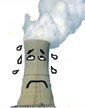 “Entergy’s financial problems must not become nuclear safety problems,” Tim Judson, president of Citizens’ Awareness Network and one of the petition’s authors, said in a public statement. “Unfortunately, that may already be happening, and the NRC must act now. Entergy is in this business to make a profit, and the pressure on the company to cut costs, delay maintenance, and drive these plants to the edge is just too great.”…..
The NRC’s inquiry into Vermont Yankee’s finances comes one month after the Swiss financial services firm UBS Securities downgraded Entergy’s stock from “neutral” to “sell.”
UBS released a report earlier this year that suggested Entergy could improve its financial outlook if it closed Vermont Yankee.
Entergy document cites drastic fall in value of Vermont Yankee nuclear power plant, raising questions about its viability VT Digger, by Andrew Stein | March 21, 2013 Thursday marked the one-year anniversary that Vermont Yankee’s initial 40-year operating license expired, and the aging nuclear plant finds itself on rough financial footing.
In a November 2012 filing with U.S. Securities and Exchange Commission, Entergy Corp. informed investors that in March of last year the company estimated that the fair value of its Vermont Yankee plant had dropped to $162 million — three times less than the carrying value of $517.5 million.
The fair value is “based on the price that Entergy would expect to receive in a hypothetical sale of the Vermont Yankee plant,” the filing says. The cash flow projections “depend on pending legal and state regulatory matters, as well as projections of future revenues and expenses.”
The news of Vermont Yankee’s devaluation was brought to light almost a year later. Continue reading
Over North Korea, USA practises nuclear strikes
Strategic U.S. bombers fly practice nuclear strikes in Korea http://www.prisonplanet.com/strategic-u-s-bombers-fly-practice-nuclear-strikes-in-korea.html Washington Free Beacon March 18, 2013
United States B-52 bombers carried out simulated nuclear bombing raids on North Korea as part of ongoing U.S.-South Korean military exercises, Pentagon officials said on Monday.
Pentagon press secretary George Little told reporters that B-52 bombers from Andersen Air Force Base, Guam, conducted a training mission over South Korea March 8 during war games known as Exercise Foal Eagle.
“It’s not any secret that we are in the midst of sending a very strong signal that we have a firm commitment to the alliance with our South Korean allies,” Little said.
Deputy defense secretary Ashton Carter said during a visit to South Korea on Monday that the bomber flights are part of the U.S. “extended deterrence”—the use of U.S. nuclear forces to deter North Korea, which conducted its third underground nuclear test Feb. 12.
USA Navy Men – legal action grows, over Fukushima radiation exposure
 The plaintiffs say they are suffering a range of disorders related to radiation exposure, from headaches and difficulty concentrating to rectal bleeding, thyroid problems, cancer and gynecological bleeding.
”At all times relevant herein, the Japanese government kept representing that there was no danger of radiation contamination to the USS Reagan (CVN-76) and/or its crew, that ‘everything is under control,’ ‘all is OK, you can trust us,’ and there is ‘no immediate danger’ or threat to human life, all the while lying through their teeth about the reactor meltdowns at FNPP,” lawyers stated in the complaint.
 More U.S. military join lawsuit over Fukushima exposure By Peter Shadbolt, CNN March 19, 2013 – Tokyo Electric Power Company (TEPCO) faces mounting damages from the 2011 Fukushima nuclear disaster as more U.S. servicemembers joined a lawsuit accusing the Japanese national utility of lying about the risks involved in an aid effort to the stricken area in 2011.
Attorneys said the number of plaintiffs had grown to 26 from an initial eight, who filed their original lawsuit in December, and that 100 more were ready to join the lawsuit which is now seeking more than $2 billion, the Stars and Stripes newspaper reported late last week.
READ: TEPCO accused of lying over Fukushima
TEPCO confirmed that more plaintiffs had been added to the court petition filed with the U.S. District Court in California in December but did not give details…..
The amended lawsuit increases the amount of damages lawyers are seeking for crew aboard the USS Ronald Reagan aircraft carrier and other service vessels in the area who say they are suffering continuing health problems from the rescue effort that followed the devastating earthquake and tsunami that struck eastern Japan on March 11, 2011, crippling reactors at the Fukushima Dai-ichi nuclear power plant. Continue reading
1 This Month
23-25 October – on Zoom – World BEYOND War’s annual global conferenc


Shut down the radiation-damaged Heysham nuclear reactors now
To see nuclear-related stories in greater depth and intensity – go to https://nuclearinformation.wordpress.com

Say No to NASA’s Reckless Nuclear Reactor on the Moon
Say No to NASA’s Reckless Nuclear Reactor on the Moon

-
Archives
- October 2026 (209)
- September 2026 (339)
- August 2026 (330)
- July 2026 (355)
- June 2026 (287)
- May 2026 (306)
- April 2026 (356)
- March 2026 (251)
- February 2026 (267)
- January 2026 (308)
- December 2025 (358)
- November 2025 (359)
-
Categories
- 1
- 1 NUCLEAR ISSUES
- business and costs
- climate change
- culture and arts
- ENERGY
- environment
- health
- history
- indigenous issues
- Legal
- marketing of nuclear
- media
- opposition to nuclear
- PERSONAL STORIES
- politics
- politics international
- Religion and ethics
- safety
- secrets,lies and civil liberties
- spinbuster
- technology
- Uranium
- wastes
- weapons and war
- Women
- 2 WORLD
- ACTION
- AFRICA
- Atrocities
- AUSTRALIA
- Christina's notes
- Christina's themes
- culture and arts
- Events
- Fuk 2022
- Fuk 2023
- Fukushima 2017
- Fukushima 2018
- fukushima 2019
- Fukushima 2020
- Fukushima 2021
- general
- global warming
- Humour (God we need it)
- Nuclear
- RARE EARTHS
- Reference
- resources – print
- Resources -audiovicual
- Weekly Newsletter
- World
- World Nuclear
- YouTube
-
RSS
Entries RSS
Comments RSS

