The Clean Energy Economy is Growing Fast
The Oil And Gas Industry’s Assault On Renewable Energy, Environmental Defense Fund Jim Marston April 26, 2013 “…….. In Texas – a state deeply rooted in oil and gas, where an ALEC-backed bill has been introduced to eliminate the state’s RPS entirely (though the legislation would leave in a similar portfolio standard for natural gas) – renewable energy is booming. Texas blew past the RPS goal set for 2015, and now more than 1,300 companies employ more than 100,000 in industries directly and indirectly related to renewable energy. The state’s own Republican Comptroller has noted that, “After the RPS was implemented Texas wind corporations and utilities invested $1 billion in wind power, creating jobs…and increasing the rural tax base.”
Colorado’s RPS, which is also being targeted by ALEC as well, has been very successful. The American Wind Energy Association estimates that the state’s RPS is supporting at least 5,000 direct and indirect jobs and generating a billion dollars in annual wages along with millions in leasing revenue for landowners who benefit from the policy. Between 2006 and 2011, the Denver-metro area saw a 35% increase in direct employment growth in the clean energy sector; today more people are employed by the solar industry than the coal mining or steel manufacturing industries.
So you can see why some in the oil, gas and coal industry might be getting nervous. … http://www.edf.org/blog/2013/04/26/oil-and-gas-industry%E2%80%99s-assault-renewable-energy
USA: Jail sentence for under-reporting injuries at nuclear plants.
An American court has sentenced a former engineering safety manager to 6.5 years in prison for falsifying information about injuries at three nuclear power plant sites. Walter Cardin was convicted in November 2012by a federal grand jury of eight counts of major fraud against the Tennessee Valley Authority (TVA), a US government corporation. The offences were committed from 2004 to 2006. Cardin was convicted of providing false information by under-reporting the number of injuries and their severity.
At the time of the offences, Shaw Group subsidiary Stone & Webster Construction had been contracted by the TVA to provide maintenance and modification services at the Browns Ferry, Sequoyah and Watts Bar nuclear sites, including construction work for the restart of Browns Ferry 1. False injury rates were then used by Stone & Webster to collect safety bonuses of over $2.5 million from TVA. Stone & Webster paid back US$6.2 million to the USA as part of a civil settlement over the false claims and contract fraud in early 2009. During the trial, evidence was presented covering more than 80 injuries that were not properly recorded by Cardin. Some employees testified that they had been denied or delayed proper medical treatment as a result of Cardin’s actions. (World Nuclear News, 15 April 2013, ‘Jail sentence for falsification’)
Boulder, Colorado makes a break for wind energy
 Boulder Wants More Wind Power, and Wants It Now, Triple Pundit, By Tina Casey | April 25th, 2013 Earlier this year, we noticed that the residents of Boulder, Colorado have been moving forward with a plan to break away from their current electricity company, Xcel Energy, in order to establish a new municipal utility. The goal is for the city to provide its utility customers with more wind power and other forms of clean energy. In the latest development, just last week the Boulder City Council voted to move ahead with the final steps. Continue reading
Plan for storage of offshore wind energy
Wind Power Storage, Environmental Network News, 26 April 13 One of the problems with wind power is that when there is no wind then there is no power. Offshore wind could provide abundant electricity — but as with solar energy, this power supply can be intermittent and unpredictable. A new approach from researchers at MIT could mitigate that problem, allowing the electricity generated by floating wind farms to be stored and then used, on demand, whenever it’s needed….. http://www.enn.com/energy/article/45904
The Google Renewable Energy Solution
Google pushes new plan for utility-supplied renewable energy, REneweconomy By Tina Casey on 21 April 2013 Cleantechnica
In a new post on Google’s blog, Google Director of Global Infrastructure Gary Demasi has just put forth a plan that could really blow up the domestic renewable energy market. Continue reading
Draft plan for USA’s nuclear wastes, from 4 US Senators
 U.S. Senators Seek Comments on Plan to Store Nuclear Waste Science, by David Malakoff 25 April 2013, After Yucca. Four U.S. Senators have drafted legislation that would set up a process for disposing of nuclear waste that was once supposed to go to a repository under Yucca Mountain (above) in Nevada.
“Our country can’t wait any longer to find a long-term solution for disposing of nuclear waste,” said Senator Ron Wyden (D-OR), the chair of the Senate Energy and Natural Resources Committee, in a statement. “I’m hopeful the feedback we receive will help us finish the job and allow us to move forward with legislation that puts the U.S. back on the path to safely managing and permanently disposing of the most radioactive wastes.” The other members of the waste quartet are senators Dianne Feinstein (D-CA) and Lamar Alexander (R-TN), who lead the Senate appropriations subpanel that oversees waste issues, and Senator Lisa Murkowski (R-AK), the senior Republican on the energy committee.
The draft bill includes many of the suggestions made by the Blue Ribbon Commission on America’s Nuclear Future. It calls for the creation of a new nuclear waste administration, for example, that would coordinate a “consent-based process” for building new nuclear waste storage facilities. (That process is, in part, a response to complaints that Congress placed the Yucca Mountain facility in Nevada without the state’s consent.) Two of the senators also offered alternative ideas on several issues……
But Dave Lochbaum, the director of the Nuclear Safety Project at the Union of Concerned Scientists (UCS), said in a statement that the draft doesn’t do enough to address the safety of waste already stored at reactors around the nation. “Despite their good intentions, the senators ignored the fact that we have a problem right now with how nuclear plant owners store this highly radioactive waste,” Lochbaum said. “Even under the rosiest scenario, it will take years to site and build an interim storage facility. That means large quantities of nuclear waste will remain at nuclear plants for a long, long time—and three quarters of it is currently crammed in cooling pools rather than stored in dry casks, which are safer.”
The senators say that they released the draft in order to provoke discussion and have asked for comments by 24 May. http://news.sciencemag.org/scienceinsider/2013/04/us-senators-seek-comments-on-pla.html
Serious obstacles to any development of Small Modular Nuclear Reactors
 The Next Nuclear Reactor May Arrive Hauled by a Truck NYT By MATTHEW L. WALD April 24, 2013 WASHINGTON “…….The Obama administration, with nuclear power aims that have received less attention than its alternative energy initiatives, began a five-year program to develop reactors in 2012, planning to spend $452 million.
The budget outlook for the final three years is uncertain, but the incoming energy secretary, Ernest J. Moniz, speaking at his confirmation hearing on April 9, said of small modular reactors: “I think that it’s a very promising direction that we need to pursue. It’s where the most innovation is going on in nuclear energy.”
But new approaches to nuclear power have been forecast far more often than they have been realized, and some worry that small modular reactors could fall into that category. Joyce L. Connery, an Energy Department nuclear expert assigned to the National Security Council, remarked at a nuclear power conference in March, “I hope that soon we populate the world with S.M.R.’s as much as we populate the world with conferences about S.M.R.’s.”
The economics may still be challenging even if the price tag is smaller, she said. …. the environment for nuclear energy is not so great right now,” she told a gathering of several hundred experts organized by the Nuclear Regulatory Commission. Cheap natural gas in North America and global political fallout from the 2011 Fukushima nuclear accident in Japan are not helping, experts say.
And the regulatory structure is not so great for small reactors. Regulatory commission rules for control-room staff levels, emergency planning zones and security are all predicated on large, aboveground reactors. A small one built mostly underground might logically have smaller requirements, but a potential buyer would be reluctant to build one under the current regulatory regime, experts say.
Also, small reactors still face serious scrutiny for safety. David Lochbaum, a nuclear engineer at the Union of Concerned Scientists, said that the nice thing about reactors that existed only on paper was that the worst damage risk is paper cuts; their weaknesses do not become evident until the design or construction is further along…..
Upgrading B61 tactical nuclear bombs – irrelevant goldplating?
If B61 nuclear bombs’ strategic purpose is unclear, why spend more on them? Heather Hurlburtguardian.co.uk, 24 April 2013 The controversy about upgrading US tactical weapons is a microcosm of unresolved issues over Pentagon budget cuts
The Obama administration’s 2014 defense budget, with its proposal to cut $460m from nuclear non-proliferation activities and use that money to pay for new features on its B61 tactical nuclear bombs, has sparked heated debate. Is the modernization desperately needed or irrelevant goldplating? Continue reading
Anger at USA government’s new lax radiation safety rules
 New radiation guidelines outrage anti-nuclear groups Apr
 18 – McClatchy-Tribune Regional News – Pam Sohn Chattanooga Times Free Press, Tenn. At the same time that citizens are cooling on nuclear power in Fukushima’s wake and both nuclear regulators and operators are pushing emergency preparedness for worst-case scenarios, the EPA has moved to update radiation exposure rules.
They include some health-related guidelines to help responders determine evacuation needs and short-term exposure measures for situations not previously spelled out, according to Jonathan Edwards, chief of the Environmental Protection Agency’s radiation division, and David McIntyre, a spokesman for the Nuclear Regulatory Commission. The guide is intended to be used by emergency planners.
But at least two environmental groups charge that the new guidelines, announced Monday in the Federal Register, relax existing rules.
“The new [protective action guides] eliminate requirements to evacuate people in the face of high projected thyroid, skin, or lifetime whole body doses,” according to statements from the Nuclear Information and Resource Service and the Committee to Bridge the Gap.
Daniel Hirsch, president of Committee to Bridge the Gap, said the guide also recommends dumping radioactive waste in municipal landfills not designed for such waste and proposes options for drinking water that would increase the permitted concentrations of radioactivity “by as much as 27,000 times.”….
the groups — both anti-nuclear — are outraged.
“In essence the government is now saying nuclear power accidents could produce such widespread contamination and produce such high radiation levels that the government should abandon efforts to clean it up and instead force people to live with radiation-induced cancer risks orders of magnitude higher than ever considered acceptable,” Hirsch said…….. http://www.renewablesbiz.com/article/13/04/new-radiation-guidelines-outrage-anti-nuclear-groups
USA gets another pro nuclear Energy Secretary
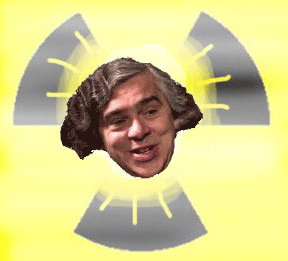 Energy Secretary nominee breezes through committee vote, Planet Ark, 19-Apr-13 by Ayesha Rascoe – Energy Secretary nominee Ernest Moniz easily cleared his first hurdle in the Senate on Thursday, securing nearly unanimous support from the chamber’s energy committee.
With a vote of 21 to 1 in favor of the pick, Moniz’s nomination will move on for consideration by the full Senate. It is unclear when that will take place, but Moniz is widely expected to be confirmed.
Moniz, a professor at the Massachusetts Institute of Technology, would replace Energy Secretary Steven Chu who announced earlier this year that he was stepping down…… Some environmentalists have criticized Moniz’ nomination, saying he was too supportive of shale gas and nuclear power.
Moniz is director of MIT’s Energy Initiative, which received funding from companies such as BP, Chevron and Saudi Aramco for academic work …. http://planetark.org/enviro-news/item/68455
The high cost of dealing with Indian Point’s nuclear wastes
 Nuclear waste handling is pricey, Times Union, Michael McGlynn, April 18, 2013 “…..Indian Point produces electricity and high-level radioactive wastes. The electricity is consumed by users now. The radioactive wastes require expensive safe handling and storage for several hundreds of years.
The federal Nuclear Waste Policy Act of 1982 authorizes the Nuclear Waste Fund to receive fees from licensees responsible for reactor materials; however, the fees to provide safe handling and storage of the radioactive wastes is greatly underfunded.
The U.S. Department of Energy estimated in 2000 the cleanup, treatment and disposal of 56 million gallons of radioactive waste leaking from 177 underground tanks at the Hanford waste disposal site would be $4.3 billion. A few years later, in 2006, the same agency revised the cost to $12.3 billion. In 2009, the U.S. Government Accountability Office issued a report indicating the cleanup, treatment and disposal of the small leak will exceed $86 billion.
Mr. Kremer advocates Indian Point to continue producing electricity and radioactive waste. However, he does not encourage nuclear waste producers to increase their payments to the Nuclear Waste Fund for the safe handling and storage of the radioactive material over the forthcoming hundreds of years. Conservatives may consider this attitude as kicking the radioactive can down the road with the financial debt at future generations. http://www.timesunion.com/opinion/article/Letter-Nuclear-waste-handling-is-pricey-4445902.php#ixzz2R2Mujb8J
Fate of a nuclear waste whistleblower at Hanford
 Nuclear Whistleblower Gives His Testimony Occupy the NRC (Nuclear Regulatory Commission) 18 April 13 “…… Between March, 2003, and July, 2010, I was the Research & Technology (R&T) Manager for the Hanford Waste Treatment Plant (WTP) project in Hanford, WA. In this capacity, I had responsibility for about $500M of programs over the 7 year period.
On July 1, 2010, I was suddenly terminated from my WTP job as a result of continually raising technical concerns and submitting technical issues.
I am still employed by URS but confined to a basement office with little to no meaningful work and essentially no contact with URS management. I have been assigned to the basement office now for almost 16 months. I will provide more details about this shortly.
After my abrupt termination I investigated legal means to address this retaliation and found absolutely no help within the State of Washington legal system and very limited help in the Federal system. Before I describe what happened I would like to provide some more pertinent background on the Hanford site. READ MORE HERE: www.hsgac.senate.gov/download/tamosaitis-testimony-120611
Virginia gets an agency to promote nuclear power
Nuclear authority generates controversy Rapp News By Stephen Nielsen Capital News Service, 18 April 13 RICHMOND – Virginia is creating a new agency to support development of nuclear power – a move that has upset environmentalists and open-government advocates, because the entity won’t have to comply with the state’s Freedom of Information Act and other laws….. In January, Garrett introduced House Bill 1790, which sought to create the Virginia Nuclear Energy Consortium Authority. Sen. Jeffrey McWaters, R-Virginia Beach, sponsored companion legislation – Senate Bill 1138 – in his chamber. Both bills were passed by the General Assembly and signed into law by Gov. Bob McDonnell…..
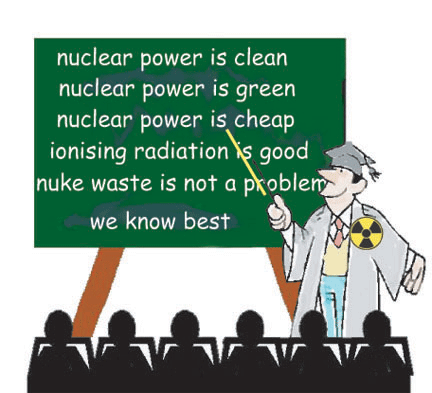
By Jan. 1, the authority will create the Virginia Nuclear Energy Consortium. By law, the consortium will seek to make Virginia “a leader in nuclear energy” Continue reading
Fukushima radiation brings hypothyroidism to babies on USA West coast
 Study: Fukushima radiation fallout has devastated health of US babies on West Coast and in other areas http://www.naturalnews.com/039923_Fukushima_radiation_hypothyroidism.html#ixzz2Qr6W6hxg April 15, 2013 by: Jonathan Benson, staff writer New peer-reviewed research published in the Open Journal of Pediatrics raises fresh concerns about the health effects of the Fukushima Daiichi nuclear disaster on American children and babies. As has long been suspected by those with an understanding of the widespread reach of radioactive fallout from Fukushima, newborns living in California, Hawaii, Washington, and other West Coast states appear to have been directly affected by Fukushima fallout in a serious way, which is reflected by the disproportionate rate of hypothyroidism observed amongst this demographic.
Conducted by a duo of scientists from the Radiation and Public Health Project, a non-profit education and scientific organization that seeks to understand the relationship between nuclear radiation exposure and public health, the research evaluated average rates of hypothyroidism both before and after the Fukushima disaster. In their findings, Joseph J. Mangano and Janette D. Sherman reported that, compared to one year earlier, babies born between one week and 16 weeks after the nuclear meltdowns in Alaska, California, Hawaii, Oregon, and Washington were 28 percent more likely to suffer from congenital hypothyroidism.
2,110 percent increase in iodine-131 on US West Coast following Fukushima linked to hypothyroidism Each of these states and the Pacific Ocean, according to the study, experiences significantly elevated levels of radioactive iodine-131 (I-131), as well as various other radioactive isotopes, in the days and weeks following the March 11, 2011, disaster. Based on the data, the 2,110 percent increase in detectable I-131 all along the U.S. West Coast following the disaster appears to be directly correlated with the higher-than-average rates of congenital hypothyroidism. Continue reading
Move to have uranium companies clean up their mess in Colorado
A Fight in Colorado Over Uranium Mines NYT, By DAN FROSCH April 16, 2013 SLICK ROCK, Colo.”……..Despite bursts of activity from 2003 through 2008, most uranium mines scattered across Colorado have largely been out of production for decades, a testament to fluctuating mineral prices. Now the future of these mines is at the crux of a dispute that could set a precedent for how they are handled.
Environmental groups in Colorado contend that many of the state’s 33 uranium mines should be forced to clean up, given that uranium mining, which flourished here during the cold war, has gone dormant. In legal filings, they have alleged that companies like Cotter are skirting potential costs associated with cleanup, which is required by the state after an operation shuts down. Continue reading
1 This Month
23-25 October – on Zoom – World BEYOND War’s annual global conferenc


Shut down the radiation-damaged Heysham nuclear reactors now
To see nuclear-related stories in greater depth and intensity – go to https://nuclearinformation.wordpress.com

Say No to NASA’s Reckless Nuclear Reactor on the Moon
Say No to NASA’s Reckless Nuclear Reactor on the Moon

-
Archives
- October 2026 (209)
- September 2026 (339)
- August 2026 (330)
- July 2026 (355)
- June 2026 (287)
- May 2026 (306)
- April 2026 (356)
- March 2026 (251)
- February 2026 (267)
- January 2026 (308)
- December 2025 (358)
- November 2025 (359)
-
Categories
- 1
- 1 NUCLEAR ISSUES
- business and costs
- climate change
- culture and arts
- ENERGY
- environment
- health
- history
- indigenous issues
- Legal
- marketing of nuclear
- media
- opposition to nuclear
- PERSONAL STORIES
- politics
- politics international
- Religion and ethics
- safety
- secrets,lies and civil liberties
- spinbuster
- technology
- Uranium
- wastes
- weapons and war
- Women
- 2 WORLD
- ACTION
- AFRICA
- Atrocities
- AUSTRALIA
- Christina's notes
- Christina's themes
- culture and arts
- Events
- Fuk 2022
- Fuk 2023
- Fukushima 2017
- Fukushima 2018
- fukushima 2019
- Fukushima 2020
- Fukushima 2021
- general
- global warming
- Humour (God we need it)
- Nuclear
- RARE EARTHS
- Reference
- resources – print
- Resources -audiovicual
- Weekly Newsletter
- World
- World Nuclear
- YouTube
-
RSS
Entries RSS
Comments RSS

