EDF abandons USA nuclear power project, turns to renewable energy instead
 EDF to exit US nuclear power over impact of shale gas FT, By Hugh Carnegy in Paris , 31 July 13,
EDF, the world’s biggest producer of nuclear-powered electricity, is to pull out of nuclear production in the US, citing the “revolution” in US energy markets caused by the advent of shale gas……
EDF, majority owned by the French state, announced that it was pulling out of CENG, its joint venture in the US withExelon which operates five nuclear plants. Exelon will take over operation of the CENG plants while EDF will exercise a put option to sell its 49.9 per cent stake in the venture between 2016 and 2022. EDF will also receive an immediate special dividend of $400m…….
Mr Proglio said the prospects for nuclear power in the US had been hit by “a true revolution” caused by the exploitation of shale deposits, which had “completely reshaped the landscape of electric power generation in favour of gas”.
Mr Proglio said EDF would switch its focus in the US to renewable energy sources.
Duke Energy scraps plan to build Florida nuclear powerplant

 Duke Energy won’t build Fla. nuclear plant News Observer August 1, 2013 By MITCH WEISS and TAMARA LUSH — The Associated Press ST. PETERSBURG, FLA. — Duke Energy is scuttling plans to build a $24.7 billion nuclear power plant in a small Gulf Coast county in Florida, the company announced Thursday.
In a news release sent late in the afternoon, Duke officials said the company made the decision because of delays by the Nuclear Regulatory Commission in issuing licenses for new plants, and because of recent legislative changes in Florida. The proposed plant — and how the company was raising money for it — have been debated for some time in Florida.
Duke Energy Corp. has been charging its customers nuclear cost recovery fees for the two, planned 1,100-megawatt nuclear units in Levy County. Through these fees, Duke customers have paid $1.5 billion for the plant so far.
Florida State Rep. Mike Fasano, R-Pasco County, said Thursday that he wasn’t surprised by Duke’s announcement.
“I’ve been saying for years that Duke had no intention of building these power plants yet they continue charging the customers for it,” Continue reading
Electricity utilities: some fight, others join – the solar energy revolution


A cautionary tale about nuclear whistleblowing
 Feds warn PSEG about ‘chilling effect’ of whistleblower case on nuclear plant employees By Alexi Friedman/The Star-Ledger July 26, 2013 The federal agency that regulates nuclear reactors on Friday cautioned Public Service Enterprise Group about the potential “chilling effect” on employees and contractors at its three plants in Salem County, following a whistleblower case that involved a security manager who was fired for addressing safety concerns there.
In June, Robert Scull won a $400,000 verdict in federal court in Camden after getting fired from his job at the Salem and Hope Creek nuclear plants in October 2009.
Scull, of Pittsgrove, said he was terminated days after complaining to a supervisor that his shift team was understaffed compared to other plant security teams the company operated.
According to his civil court complaint, Scull, 49 at the time, said initial efforts to report the problem to his direct supervisors were unsuccessful. He then advised the company he would take his complaint to “alternative approved channels established for the purpose of making safety issues known and corrected,” the complaint said………..
In a letter sent Friday, Nuclear Regulatory Commission regional administrator William Dean advised PSE&G Nuclear that the jury verdict “is of concern to the NRC…Wackenhut’s retaliatory action may have a chilling effect” on employees and contractors who want to raise safety or regulatory concerns at the two nuclear plants at Salem and one at Hope Creek, he wrote………… http://www.nj.com/business/index.ssf/2013/07/regulator_warns_pseg_about_chi.html
Closure of San Onofre nuclear plant brings peace of mind, as well as problems
State law bans the permitting of new nuclear facilities until the federal government built a permanent disposal site for nuclear waste, which effectively amounts to a moratorium on new plants.
While the nuclear waste remains on-site and the plant is being decommissioned, the emergency sirens will stay in San Clemente. But for many residents, just the knowledge that the plant is no longer splitting atoms has already offered some peace of mind.
Californians Consider a Future Without a Nuclear Plant for a Neighbor NYT, By IAN LOVETT July 25, 2013SAN CLEMENTE, Calif. — Residents of this quiet Orange County beach community often all but forgot about the hulking nuclear plant just south of the city limits.
But after nearly half a century living with a radioactive neighbor, San Clemente is now adjusting to a future without the San Onofre nuclear power plant, whose proximity has long shaped life here in ways big and small.
Last month, Southern California Edison announced that the nuclear plant, which was closed in January 2012 when a problem with its new steam generators led to a small leak of radioactive steam, would shut down for good………..
As more of the aging nuclear reactors around the country are closed — four reactors, including the two at San Onofre, have been retired this year — more communities around the country may soon find themselves in circumstances similar to San Clemente’s. The dismantling of San Onofre’s reactors will be among the largest decommissioning of nuclear power plants in the country. Experts say it will likely take at least a decade.
But the effects of the plant’s closing are already reverberating. Continue reading
False arguments on the “necessity” for the atomic bombing of Hiroshima and Nagasaki
Will Media Raise Key Questions About Hiroshima, and Nuclear Legacy, This Year? THE NATION,Greg Mitchell on July 24, 2013 Sixty-eight years ago last week the Nuclear Age began with the first successful test of an atomic weapon at the Trinity site in the New Mexico desert. The test and what surrounded it set the standard for much of what followed in the decades to come: radiation dangers, official secrecy and cover-ups, a nearly endless nuclear arms race, and the triumph of the national security state……
Every summer for the past thirty years I’ve written numerous articles about this and related subjects—because the US media, with the exception of the fiftieth anniversary in 1995, fail to raise new, or even longstanding, questions. I’ve written three books on the subject: Hiroshima in America (with Robert Jay Lifton), Atomic Cover-Up (on the decades-long suppression of shocking film shot in the atomic cities by the US military) and Hollywood Bomb (the wild story of how an MGM 1947 drama was censored by the military and Truman himself).
For now, here’s a kind of summary of the debate of the use of the bomb in August 1945. Continue reading
Veterans exposed to radiation at Antarctic Naval Base
 Federal hearings exploring radiation exposure among McMurdo Navy veterans get underway in Washington http://www.newsnet5.com/dpp/news/local_news/investigations/federal-hearings-exploring-radiation-exposure-among-mcmurdo-navy-veterans-get-underway-in-washington Prompted by exclusive 5 On Your Side investigation Ron Regan, newsnet5.com WASHINGTON – Federal hearings prompted by an exclusive 5 On Your Side investigation into radiation exposure among McMurdo Navy veterans are scheduled to begin Tuesday morning.
Our investigative series revealed how a nuclear reactor at McMurdo Naval base in Antarctica continued to leak radiation for years and a possible link to cancer.
Our report documented 432 malfunctions at the plant from 1964 through 1972 while thousands of Navy veterans were stationed there.
Complaints from veterans dying from cancer were ignored by the Veterans Administration until our report exposed the radiation leaking that Navy veterans said was kept secret for decades.
Veterans have hope the hearings will provide them with assistance in compensation for their medical bills.
On Tuesday, the Veterans Advisory Board on Dose Reconstruction will discuss its final report and finding regarding the leaking nuclear reactor and veterans cancer.
Birth defects rise near Hanford radioactive site “just a coincidence”
Watch a recent local TV report on the birth defects here
“Worrisome” spike in deadly birth defects around leaking U.S. nuclear site — Officials claim “it could be a complete coincidence” — No news reports mention it’s by the most contaminated area in Western Hemisphere #Hanford http://enenews.com/worrisome-spike-in-deadly-birth-defect-around-leaking-u-s-nuclear-site-officials-claim-it-could-be-a-complete-coincidence-all-media-reports-fail-to-mention-its-nearby-most-contaminate
Title: Washington State Health Officials Stumped by High Rate of Birth Defects
Source: ABC News with Diane Sawyer
Author: Gillian Mohney
Date: July 18, 2013
high rate of birth defects has confounded Washington health officials, who have been unable to identify a cause.

The Hanford nuclear site is located near Richland, WA, between Benton and Franklin counties (White Arrow)
A report released Tuesday by the Washington State Department of Health said that, since 2010, the neighboring counties of Yakima, Benton and Franklin have an unusually high number pregnancies affected by the [neural tube] birth defect anencephaly, which results in a newborns’ brains being severely underdeveloped. Continue reading
Indian Point nuclear plant tests fabricated – former supervisor charged
Ex-supervisor at Indian Point nuclear plant charged with fabricating fuel tests http://www.nydailynews.com/new-york/ex-supervisor-indian-point-nuclear-plant-charged-fabricating-fuel-tests-article-1.1406963 Daniel Wilson, 57, the Westchester County plant’s chemistry manager from 2007 to 2012, was charged in Federal Court in White Plains with two counts of violating rules of the Nuclear Regulatory Commission. BY BILL HUTCHINSON / NEW YORK DAILY NEWS TUESDAY, JULY 23, 2013, 5:11 PM A FORMER CHEMISTRY MANAGER AT THE INDIAN POINT NUCLEAR PLANT IN WESTCHESTER COUNTY ALLEGEDLY FABRICATED FUEL TESTS TO PREVENT THE FACILITY FROM BEING SHUTTERED.
 An ex-supervisor at the Indian Point nuclear plant was arrested Tuesday on charges he fabricated fuel tests on backup generators to prevent the facility from being shut down.
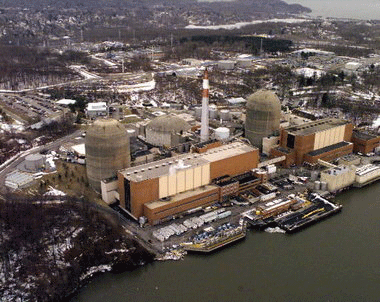
Daniel Wilson, 57, the Westchester County plant’s chemistry manager from 2007 to 2012, was charged in Federal Court in White Plains with two counts of violating rules of the Nuclear Regulatory Commission.
USA quietly reveals extent of massive nuclear bombing of Marshall Islands
The Fallout from Nuclear Secrecy , Consortium News, July 23, 2013 During the Cold War’s early years, the U.S. government detonated dozens of nuclear explosions on Pacific atolls, spreading nuclear fallout around the globe and making some areas uninhabitable, a grim legacy captured in secret documents finally being shared with the Marshall Islands’ government, reports Beverly Deepe Keever.

More than a half century after U.S. nuclear tests shattered the tranquility of Pacific Ocean atolls — rendering parts of them uninhabitable – the U.S. government has quietly released secret fallout results from 49 Pacific hydrogen-bomb blasts with an explosive force equal to 3,200 Hiroshima-size bombs. Continue reading
New Mexico court ruling against uranium mine permit
Judge overturns uranium mine permit http://www.abqjournal.com/main/224658/abqnewsseeker/judge-overturns-uranium-mine-permit.html By Associated Press on Tue, Jul 23, 2013 SANTA FE (AP) — A lawyer for environmental groups say a Santa Fe judge has overturned a decision by Gov. Susana Martinez’s administration granting a permit for a uranium mine to remain inactive without any cleanup.
Eric Jantz of the New Mexico Environmental Law Center said District Judge Raymond Ortiz’s decision on Monday will send the case back to the state Mining and Minerals Division for further public hearings.
The agency renewed a standby permit last year for Rio Grande Resources’ Mount Taylor mine near Grants.
The judge ruled Amigos Bravos and the Multicultural Alliance for a Safe Environment weren’t adequately allowed to raise issues about protecting ground water from contamination from mining waste piles.
The judge also said the agency wrongly kept a company report confidential on the mine’s economic viability.
USA a bigger nuclear attack threat than North Korea is
The threat of nuclear war? North Korea or the United States http://rt.com/op-edge/north-korea-nuclear-us-467/ RT 23 July 13 Michel Chossudovsky is an award-winning author, professor of economics, founder and director of the Centre for Research on Globalization, Montreal and editor of the globalresearch.ca website.
Columbia River threatened by Hanford radioactive waste cleanup plan
Hanford Cleanup Plan Would Let Massive Amounts of Uranium Flow into the Columbia River http://columbiariverkeeper.org/featured/hanford-agencies-want-to-let-massive-amounts-of-uranium-flow-into-the-columbia-river/
On July 15th, the Tri-Party agencies, the U.S. Department of Energy, the U.S. Environmental Protection Agency (EPA), and the Washington State Department of Ecology, released their Proposed Plan for cleanup for forty square miles, ten along the Columbia River, on the southern corner of the Hanford Nuclear Reservation, also known as the 300 Area. The public has only thirty-two days, until, August 16th, to submit comments on the 300 Area Proposed Plan.
Unfortunately, the Tri-Party agencies’ want to rely on experimental technology and natural attenuation to treat the pollutants in the soil and groundwater of southeast Hanford. This strategy demonstrably fails to protect the Columbia River from long lived pollutants such as uranium that seep into the groundwater and the river where they enter the food chain. Continue reading
Hinkley nuclear site’s history of weapons deals with USA

 Hinkley’s hidden history Morning Star UK 21 July 2013 by David Lowry With the coalition government’s decision to back a third nuclear reactor at Hinkley Point on Somerset’s coast and the ongoing debate over Trident replacement, it’s interesting to take a look back at the origins of Britain’s nuclear programme.
When the British nuclear power and weapons programmes were born, a different foreign power, the United States, was intimately involved in the planning.
The first public hint came with an MoD announcement in June 1958 on “the production of plutonium suitable for weapons in the new [nuclear] power stations programme as an insurance against future defence needs” at Britain’s first-generation Magnox reactor (named after the fuel type, magnesium oxide).
A week later in Parliament, Labour’s Roy Mason asked why the government had “decided to modify atomic power stations, primarily planned for peaceful purposes, to produce high-grade plutonium for war weapons.”
He was informed by paymaster general Reginald Maudling: “At the request of the government, the Central Electricity Generating Board has agreed to a small modification in the design of Hinkley Point and of the next two stations in its programme so as to enable plutonium suitable for military purposes to be extracted should the need arise.
“The modifications will not in any way impair the efficiency of the stations. As the initial capital cost and any additional operating costs that may be incurred will be borne by the government, the price of electricity will not be affected……….
the following month, the US and British governments signed a mutual defense – spelt with an “s” even in the official British version, so you can guess where it was authored – co-operation agreement on atomic energy matters.
The agreement was intended to circumvent the draconian restrictions of the 1954 Atomic Energy Act, which sought to retain all nuclear secrets within the US, even though many foreign nationals had worked collaboratively with US counterparts for six or more years on nuclear R&D.
The deal was reached after several months of congressional hearings in Washington DC, but no oversight whatsoever in the British Parliament.
As this formed the basis, within a mere five years, for Britain obtaining the Polaris nuclear WMD system from the US, and some 20-odd years later for Britain to buy US Trident nuclear WMD, the failure of Parliament to at least appraise the security merits of this key bilateral atomic arrangement was unconscionable…….
And so it may be seen that the Britain’s first civil nuclear programme was used as a source of nuclear explosive plutonium for the US military, with Hinkley Point A the prime provider.
The reason there was a swap between Britain and the US of weapons-suitable highly enriched uranium and plutonium was the US had huge surpluses of uranium, but wanted more plutonium than its nuclear production complex at Hanford could deliver, while the British first-generation “commercial” Magnoxes, which were scaled-up plutonium production factories, were perfect for producing military-suitable plutonium as they had online refuelling systems to optimise plutonium over electricity production.
They produced perfect plutonium in surplus, but Britain lacked sufficient highly enriched uranium, so an exchange deal was mutually beneficial.
Two decades later in 1984 Wales national daily the Western Mail reported that the largest Magnox reactor in Britain, at Wylfa on Anglesey, had also been used to provide plutonium for the military.
Plutonium from both reactors went into the British military stockpile of nuclear explosives, and could well still be part of the British Trident warhead stockpile today.
Subsequent research by the Scientists Against Nuclear Arms, published in the prestigious science weekly journal Nature and presented to the Sizewell B and Hinkley C public inquiries in the ’80s, has demonstrated that around 6,700kg of plutonium was shipped to the US under the military exchange agreement, which stipulates explicitly that the material must be used for military purposes by the recipient country.
To put this quantity into context, a nuclear warhead contains around 5kg of plutonium.
Is it any wonder the Atoms for Peace movement began to demand “safeguards” to deter diversion of civilian nuclear plants to military misuse?
After all, the US and Britain knew that such deadly diversion was possible – they had demonstrated it themselves.
The trouble is that safeguards are misleading. They are neither safe, nor do they guard. And what would Iran or North Korea make of this deliberate intermixing of civil and military nuclear programmes by one of the nuclear weapons superpowers – one which leads the criticisms of them for allegedly doing this very thing today. http://www.morningstaronline.co.uk/news/content/view/full/135635
Now double – the cost of upgrading Monticello nuclear plant
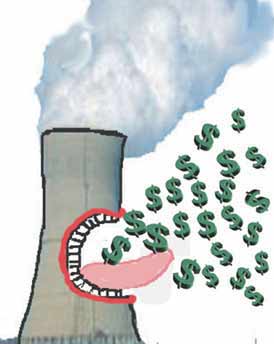 Cost of upgrading Monticello nuclear plant doubles http://www.kare11.com/news/article/1032273/391/Cost-of-upgrading-Monticello-nuclear-plant-doubles Jul 18, 2013 ST. PAUL, Minn. – Xcel Energy says the costs of upgrading its Monticello nuclear plant have doubled to $640 million.
The utility revealed the cost in a filing Wednesday with the state Public Utilities Commission, after previously saying the figure was a trade secret.
The project was originally expected to cost $320 million. The recently completed five-year project included replacement of aging equipment and boosting electricity output by 12 percent. The upgrades are intended to extend the life of the 43-year-old reactor another two decades.
Xcel expects to restart the plant this month after a four-month shutdown.
The utility has asked the PUC for a rate hike for 1.2 million Minnesota customers because of the cost overruns, which it blames on the complexity of the project. The commission is expected to decide this fall.
1 This Month
23-25 October – on Zoom – World BEYOND War’s annual global conferenc


Shut down the radiation-damaged Heysham nuclear reactors now
To see nuclear-related stories in greater depth and intensity – go to https://nuclearinformation.wordpress.com

Say No to NASA’s Reckless Nuclear Reactor on the Moon
Say No to NASA’s Reckless Nuclear Reactor on the Moon

-
Archives
- October 2026 (199)
- September 2026 (339)
- August 2026 (330)
- July 2026 (355)
- June 2026 (287)
- May 2026 (306)
- April 2026 (356)
- March 2026 (251)
- February 2026 (267)
- January 2026 (308)
- December 2025 (358)
- November 2025 (359)
-
Categories
- 1
- 1 NUCLEAR ISSUES
- business and costs
- climate change
- culture and arts
- ENERGY
- environment
- health
- history
- indigenous issues
- Legal
- marketing of nuclear
- media
- opposition to nuclear
- PERSONAL STORIES
- politics
- politics international
- Religion and ethics
- safety
- secrets,lies and civil liberties
- spinbuster
- technology
- Uranium
- wastes
- weapons and war
- Women
- 2 WORLD
- ACTION
- AFRICA
- Atrocities
- AUSTRALIA
- Christina's notes
- Christina's themes
- culture and arts
- Events
- Fuk 2022
- Fuk 2023
- Fukushima 2017
- Fukushima 2018
- fukushima 2019
- Fukushima 2020
- Fukushima 2021
- general
- global warming
- Humour (God we need it)
- Nuclear
- RARE EARTHS
- Reference
- resources – print
- Resources -audiovicual
- Weekly Newsletter
- World
- World Nuclear
- YouTube
-
RSS
Entries RSS
Comments RSS

