Entergy’s finances being probed by Nuclear Regulatory Commission
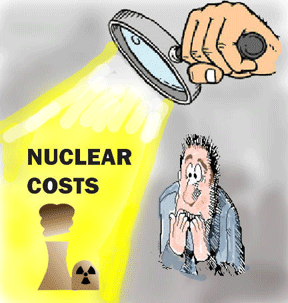 NRC to probe Entergy’s nuclear plant finances Rutland Herald, By Susan Smallheer
Deb Katz, executive director of the Citizens Awareness Network, said Saturday that the NRC accepting the petition for review was a major accomplishment for the groups. She said she hoped the NRC would get answers to many people’s questions about Entergy’s financial status.
Katz made her remarks during the “Flotilla 2013” rally and protest Saturday on the banks of the Connecticut River, directly across from the Vermont Yankee plant in Vernon, Vt. Entergy, the corporate parent of Vermont Yankee, announced last month it was laying off 800 employees out of its workforce of 15,000 nationwide. The cuts translate to a 4.6 percent staff cut at Yankee, which will lose 30 employees out of a total of 650.
Earlier in the year, the company announced it had been forced to write down the value of Vermont Yankee from $517 million to $162 million due to ongoing financial problems.
The NRC announced late last week that it was accepting the petition and would delve into Entergy’s finances. Continue reading
Massachusetts town saves money while leading on renewable energy
 A Town Saves Money with Renewable Energy Engineering.com, Tom Lombardo posted on August 11, 2013 Scituate is the first town in Massachusetts to power all of its government services using only renewable energy. All municipal services – including water, sewer, municipal buildings, and streetlights – will soon be powered by the sun and the wind. The town expects to save over $400,000 per year in electricity costs and the best part is that they didn’t have to buy the solar panels or wind turbine.
Too good to be true? Here’s the deal. Private investors purchased and installed the equipment on municipal land, so those companies paid for and own the equipment. In exchange, the town agreed to purchase its electrical power from the owners at a rate that’s about 40% lower than what they’d be paying the utility. These agreements are becoming more common in the residential market, as consumers want to lower their electricity costs but can’t afford a large initial investment. This is the first time I’ve heard of a municipality doing it.
 First, Use Less Energy

The first step in saving money on energy is not to generate your own, but to use less. Once you make yourself more efficient, then you consider ways to generate power. Several years ago the town of Scituate formed a committee to investigate clean energy. They sent out requests for proposals (RFPs) on energy efficiency and renewable energy production. After an electric load analysis, they found ways to use less electricity by replacing lighting fixtures, transformers, and other electrical equipment with more efficient models. A heating/cooling energy audit determined that they could also save energy through improvements in insulation, replacing oil-burning furnaces with gas-burning furnaces, etc. They invested almost $6M to upgrade this equipment based on the promise of energy savings over the next eighteen years.
 Next, Generate Energy

After improving their efficiency, they hired a consulting firm to do a wind site analysis. In addition to taking wind measurements at various locations over a 12-month period, they also considered logistical factors such as proximity to transmission lines. In spring of 2012, a 1.5 megawatt wind turbine was installed. Over its first year, the turbine generated 3.2 million kWh. At an electric rate of $0.143/kWh – the utility rate in that area – that’s almost half a million dollars worth of energy that the town received; they paid less than $300k for that energy. ……..
Use the Grid for “Virtual Storage”
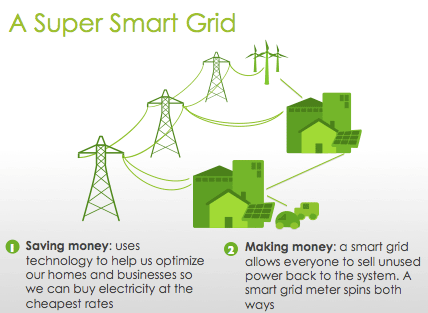
Through a net-metering agreement with the utility, any excess energy that the town generates is sold to the grid at retail rates. When demand exceeds generating capacity, they buy power from the grid. In effect, the grid is acting as a free storage medium for excess energy…….
Reduce Government Spending and Boost Business
Disregarding the optional purchases to improve energy efficiency, the town of Scituate reduced its electric rate by 40% with virtually no investment on its part. In addition, the projects created jobs, gave a boost to a burgeoning industry, and produced science/technology/engineering/math (STEM) lessons for schools. Will other municipalities follow suit? I hope so. http://www.engineering.com/ElectronicsDesign/ElectronicsDesignArticles/ArticleID/6125/A-Town-Saves-Money-with-Renewable-Energy.aspx
Heat pollution of Connecticut River from Vermont Yankee Nuclear Power Plant

 NRC to probe Entergy’s nuclear plant finances Rutland Herald, By Susan Smallheer Staff Writer | August 11,2013 HINSDALE, N.H. ”……….Saturday’s protest was designed to bring public attention to the fact that Vermont Yankee daily dumps 200 million gallons of “hot” water into the Connecticut River to save money by not running its cooling towers.
Dr. Andrew Larkin, a retired internist from Northampton, Mass., said the Connecticut River was 10 degrees warmer near the plant’s discharge than other spots in the river he tested.
“The heated water coming from the reactor confused us, but still we persisted,” Schakman said, adding that only one in 10 shad get past all the dams on the Connecticut River, “only to be cooked by the reactor.” “We have lost so many, now we are down to a few, but still we persist,” he said.
This is the second year that the SAGE Alliance, a coalition of antinuclear groups, has organized the flotilla to focus public attention on the water discharge. About two dozen kayaks and canoes took to the water, with an equal number of people on shore to protest the daily discharge of warm water. Some people wrote messages to Entergy on cedar shingles and set them floating on the river.
“No nuclear accidents. All it takes is one,” wrote Elo-Mai Noormets of Westminster, Vt.
“Peace and health to this river,” wrote Leslie Sullivan Sachs of Brattleboro, Vt. http://rutlandherald.com/article/20130811/THISJUSTIN/708119973
Escalating costs at Nuclear Plant Vogtle as Public Service Commission dilly dallies
 State defers showdown on Ga. nuclear plant costs News Tribune, : August 11, 2013 By RAY HENRY — Associated Press ATLANTA — A debate over the rising cost of building a first-of-its-kind nuclear plant in Georgia will be pushed far into the future.
Regulators at the Public Service Commission were facing a legal dilemma ever since Southern Co. subsidiary Georgia Power asked in February to raise its construction budget for building two more nuclear reactors at Plant Vogtle by $737 million to $6.85 billion. That request raised expectations that PSC staffers would seek this month to block the utility from passing along some of its costs to customers, but that didn’t happen. Instead, Southern Co. and Georgia utility officials recently reached a preliminary deal that would postpone a major budget debate until at least January 2018, when the first reactor is projected to come online.
A glimmer of the state’s strategy emerged Friday in a report filed by nuclear engineer William Jacobs Jr. and PSC analyst Steven Roetger. Their report lays out the reasons why regulators could try to force the utility to absorb losses because of construction mishaps, but it stops short of recommending that regulators reject any spending now…….
Former Commissioner Robert Baker, who has represented a consumer watchdog group critical of the utility’s spending, said regulators should object to spending now, not wait years into the future. Baker said he believes the preliminary agreement might delay a major review until 2020.
“The new commission in 2020 that looks at this is not going to have the institutional memory, have gone through the entire process up to that time,” he said. “They’re not going to want to second guess what happened seven years ago or eight years ago.” http://www.thenewstribune.com/2013/08/11/2725340/state-defers-showdown-on-ga-nuclear.html
Big energy utilities move to stomp out home solar power
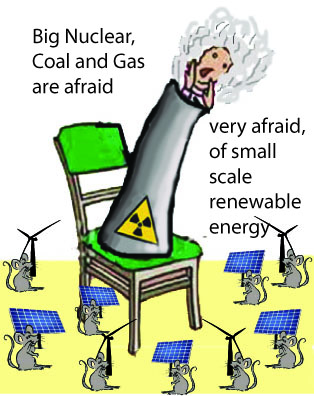 Renewables: A rising power. Ft.com By Pilita Clark, Environment Correspondent, 8 Aug 13……… “People think solar PV is only possible with subsidies and that is totally wrong,” says Karl Kuhlmann, the chief executive. “We’re happy that the industry is moving into an unsubsidised phase. It makes it simpler, better and totally independent from politicians.”
This is not quite true. The impact of cheap Chinese solar panels on western solar-panel makers has stirred political tensions, with trade rows over the threat of punitive tariffs erupting in the US and Europe…….
The more immediate threat to the nascent unsubsidised solar industry may be closer to home. In the US last month, Arizona’s largest utility, APS, asked regulators to look at imposing fees on people installing new rooftop solar systems to help pay for the cost of a grid they still use “essentially for free”.
“As the number of customers installing solar goes up, it drives rates even higher for non-solar customers, making the problem more difficult to solve,” it said in a statement. Utilities in other US states want similar action, infuriating solar companies.
Another outcry has broken out in Spain, the EU’s third-largest solar market after Germany and Italy, where the government last month also produced a proposal to impose new charges on rooftop solar owners.
“It’s really crazy,” says Mr Jornet. “They want me to pay for the electricity I take from my own solar panels. It’s amazing.”…….
Regulators still have to decide if the utilities will get their way. What does seem certain, however, is that the surge in solar power is changing energy markets in ways we have only begun to understand……http://www.ft.com/intl/cms/s/0/a41d86b4-ff9c-11e2-a244-00144feab7de.html#axzz2bb20LPZl
When the nuclear industry buys Florida politicians, they stay bought

Give a big “thanks” to former legislators Hasner, Constantine and all those others in Tallahassee who (knowingly or otherwise) signed off on one of Florida’s Big Loser Laws.
Who gets credit for nuclear advance fee law, one of worst in state history? Tampa Bay Times, Robert Trigaux, Times Business Columnist 9 Aug 13
“………. who is responsible for this evil 2006 law passed by the Florida Legislature? They’re talking about the measure that let big power companies charge customers years in advance for high-priced nuclear power plants that may or may not ever be built. That law authorized companies to keep the money charged in advance — even if the project is canceled.
Who sponsored and voted for such a measure that ranks among the worst Florida laws approved by a Legislature too familiar with corruption and the fine art of favoring hefty campaign contributors first, and citizens last? Gary West of St. Petersburg speaks for many readers in his recent letter published in the Tampa Bay Times: “Wouldn’t it only be an honest move to refund that money to those of us who have been hustled and this piece of rotten legislation repealed? Well, no. Not according to elected officials both past and present.
“You have to admire this trait in the average Florida politician,” West writes. “When they’re bought, they stay bought.”……. Continue reading
Nuclear Waste Administration Act of 2013 a step towards USA action
 Finally, there is a glimmer of hope that – more than 30 years after the Nuclear Waste Policy Act passed, and 15 years after the feds guaranteed they’d start accepting the waste – paralysis and dithering might give way to action
The new bill would:
essentially yank all responsibility from the Department of Energy (which spent about $10 billion on moribund Yucca Mountain) and would create a new organization solely devoted to solving the nuclear waste storage and disposal problem (as was recommended by the president’s Blue Ribbon
Commission, and is widely hailed as a solid idea by Republicans and Democrats alike).
develop the aforementioned “consensual process” for figuring out where to actually put nuclear waste by engaging with willing, rather than unwilling, communities, thus hoping to avoid the gridlock that resulted from 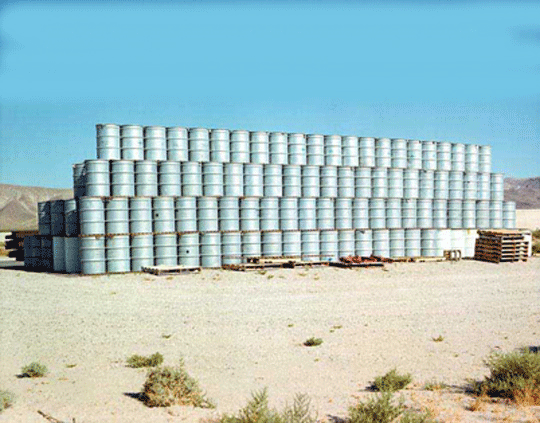 Nevada’s rabid opposition to deep, permanent geologic storage at Yucca Mountain.
emphasize getting the ball rolling for short-term storage first, and for permanent disposal second. This means pushing the new agency to start accepting waste as soon as possible at an “interim storage” site or sites, while it wrestles with the more thorny issue of where to put a permanent, deep geologic repository (or repositories).
End of paralysis on nuclear waste disposal? Orange County Register, August 9th, 2013, by By TERI SFORZA At this very moment, the vast majority of America’s highly radioactive nuclear waste – and San Onofre’s as well — is cooling in steel-lined concrete pools filled with water, which “are essentially loaded guns aimed at neighboring communities,” a scientist testified at a Congressional hearing last week.
“Unlike the reactor cores, the spent fuel pools are not protected by redundant emergency makeup and cooling systems and/or housed within robust containment structures having reinforced . “Thus, large amounts of radioactive material – which under the (Nuclear Waste Policy Act of 1982) should be stored within a federal repository designed to safely and securely isolate it from the environment for at least 10,000 years – instead remains at the reactor sites.” Continue reading
Small Modular Reactors (SMRs) won’t save moribund nuclear ndustry
 Report: Nuclear industry shouldn’t rely on SMRs Malia SpencerReporter-Pittsburgh Business Times 9 Aug 13 A report this week from the nonprofit Institute for Energy and Environmental Research asserts that relying on the development of small modular reactors “is unlikely to breathe new life into the increasingly moribund U.S. nuclear power industry.”….
The reasons for the critical findings? According to the report, SMRs will likely need tens of billions of
purchase orders or government subsidies, will create new reliability vulnerabilities, and will raise concerns about safety and proliferation.
Westinghouse was cited in the report along with Pennsylvania as one of the companies and states that could see “major implications” if SMRs fail to take off……
http://www.bizjournals.com/pittsburgh/blog/energy/2013/08/report-nuclear-industry-shouldnt.html
America desperate to sell off nuclear technology to India?
 Unfortunate that Indo-US nuclear trade has stalled, says Washington NDTV by Pallava Bagla | August 09, 2013 Washington: The Indo-US civilian nuclear deal was billed as the corner stone of the burgeoning strategic partnership between the countries. However, five years later, the deal has not gone according to the script, and the US says the nuclear commerce has not benefitted the Americans who did most of the global diplomatic heavy lifting.
India’s people-friendly nuclear liability regime has reportedly irked the US.
“The nuclear issue is complex. US is not frustrated but India’s nuclear liability law is a concern and it is unfortunate that nuclear trade has not commenced,” said Richard Stratford, director of nuclear energy, safety and security at the US state department….. http://www.ndtv.com/article/india/unfortunate-that-indo-us-nuclear-trade-has-stalled-says-washington-403342
Water discharge permit may lead to closure of Indian Point Nuclear Power Plant
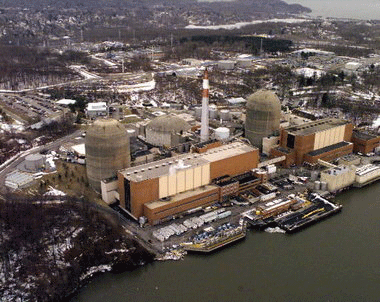 Indian Point may close if Entergy loses water-use permit Company proposes new screen-filtering system, LOHUD.com Aug. 6, 2013 The future of the Indian Point nuclear power plant may rest on the bottom of the Hudson River. That is where plant owner Entergy Nuclear wants to install a new technology
 to filter the water needed to cool the plant’s reactors. The technology is Entergy’s attempt to get a water-use permit from the state, without which it could no longer operate Indian Point.
The environmental group Riverkeeper said Entergy isn’t likely to get the state permission it needs to build anything on the river bottom — an assessment with which the utility company disagrees……..The DEC in 2010 ruled the plant’s daily use of 2.5 billion gallons of river water harmed fish populations and the river’s ecosystem. It denied Entergy the water-use permits. Without them, Entergy can’t renew the plant’s licenses for another 20 years, said Neil Sheehan, a Nuclear Regulatory Commission spokesman. The licenses expire this year and in 2015.
“A final decision by the NRC in favor of the (renewal) application is contingent upon, among other things, successful resolution of the water discharge permit issue at the state level,” Sheehan said.
Entergy has balked at building closed-cycle towers, contending they are too expensive and too massive. Entergy has estimated the towers would cost about $1 billion, approximately 10 times as much as the wire screen technology. http://www.lohud.com/article/20130806/NEWS/308060066
Iowa turns against nuclear power – and not to gas, but to renewables
Like with any energy source, burning natural gas should be considered in the context of its entire lifecycle. In that context, its greenhouse gas emissions are not much better than coal, if not worse,
depending upon the amount of methane leakage
Iowa’s Campaign to Stop Nuclear Power, Blog For Iowa, August 7, 2013 | Author Paul Deaton Nuclear Neighborhoods: 11,000 Generations Prepared remarks delivered by Paul Deaton at the Iowa City Public
Library on the 68th Anniversary of Hiroshima, Aug. 6, 2013.
Well we held back new nuclear power in Iowa. Isn’t that great?
In February 2010, I wrote the first of a long series of posts on Blog
for Iowa about what I believed to be the legislature’s infatuation
with nuclear power during the last four sessions of the Iowa General
Assembly. I wrote, “I heard the words ‘zero sum gain’ applied to
MidAmerican Energy’s process toward change for the first time. It
seems to fit. A zero sum gain is a situation in which a participant’s
gain or loss is exactly balanced by the losses or gains of the other
participant(s). If the state wants to move forward with nuclear power,
it’s okay with MidAmerican Energy, but they are a business, so the
customers will have to pay.”
The customers will have to pay. That pretty much sums it up. What’s
missing is no one knew how much a new nuclear power plant would cost,
then, or now. For this and other reasons, the people of Iowa decided
there were better ways to generate electricity…….. Continue reading
Duke Energy cancels nuclear power projects, agreement includes payout to customers
Duke Energy Settlement with Consumer Advocates Affects Nuclear, Coal Plants POWERnews, 7 Aug 13, A revised settlement agreement reached between Duke Energy Florida, the Office of Public Counsel, and other consumer advocates addresses cost recovery issues related to a retired nuclear reactor, a proposed nuclear project, and two coal units.
Duke will also terminate the engineering, procurement, and construction (EPC) agreement for the cancelled Levy nuclear project. And it will write off $295 million associated with Crystal River 3 and $65 million related to the wholesale allocation of investments in the Levy nuclear plant.
Under terms of the mediator’s proposal, customers and the Crystal River 3 joint owners will receive $835 million in insurance proceeds—the largest claim payout in the history of NEIL.
Duke Energy also definitively cancelled a 2008-proposed plan to built two 1,100-MW reactors in Levy County, Fla…….http://www.powermag.com/POWERnews/Duke-Energy-Settlement-with-Consumer-Advocates-Affects-Nuclear-Coal-Plants_5829.html
How they began: the lies about Hiroshima atomic bombing
 from its very first words, the official narrative was built on a lie, or at best a half-truth. Hiroshima did contain an important military base, used as a staging area for Southeast Asia, where perhaps 25,000 troops might be quartered. But the bomb had been aimed not at the “Army base” but at the very center of a city of 350,000, with the vast majority women and children and elderly males.
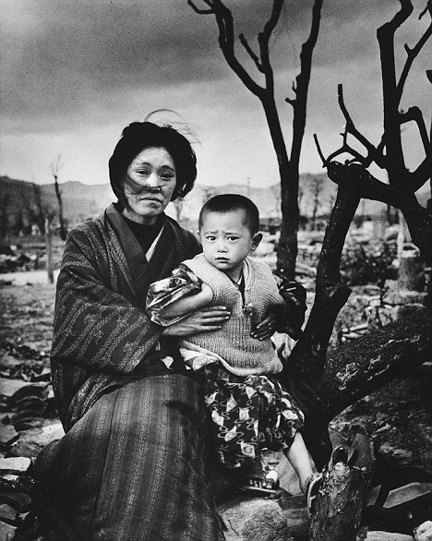 In fact, the two most important reasons Hiroshima had been chosen as our #1 target were: It had been relatively untouched by conventional bombs, meaning its large population was still in place and the bomb’s effects could be fully judged
residential areas bore the brunt of the bomb, with less than 10 percent of the city’s manufacturing, transportation, and storage facilities damaged.
There was something else missing in the Truman announcement: Because the president in his statement failed to mention radiation effects,
68 Years Ago: Truman Opened the Nuclear Era — With a Lie About Hiroshima Greg Mitchell, HUFFINGTON POST, : 08/06/2013 When the shocking news emerged that morning, exactly 68 years ago, it took the form of a routine press release, a little more than one thousand words long……The atmosphere was so casual, many reporters had difficulty grasping the announcement. ….
Those who helped prepare the presidential statement — principally Secretary of War Henry L. Stimson — sensed that the stakes were high, for this marked the unveiling of both the atomic bomb and the official narrative of Hiroshima, which largely persists to this day. It was vital that this event be viewed as consistent with American decency and concern for human life. Continue reading
Secrets about injustice revealed by Manning and Snowden, not military secrets
 the reason there will be more Mannings and Snowdens is that so many American secrets are not strict military secrets but scandalous public secrets pertaining to ways the US national security state behaves that are at odds with national or international law, or in conflict with fundamental national values. Whether one condones what Snowden did or not, it is clear that he was motivated by a deep sense of indignation that his government was doing something profoundly wrong. “If you want a secret respected,” said Senator Daniel Patrick Moynihan, one of the country’s greatest commentators on secrecy, “see that it’s respectable in the first place.”
 Not all secrets are alike, Bulletin of the Atomic Scientists, Hugh Gusterson “……..The second kind of secret is what anthropologists call the “public secret.” These are denied yet known. Their ambiguous status as simultaneously public and secret torques them with psychological conflict. ……. Not infrequently, as Henrik Ibsen famously dramatized in his play An Enemy of the People, opprobrium attaches most harshly not to the transgressor, but to the person who tells the truth out loud…..
Even before he was found guilty, Manning has been punished harshly. The United Nations special rapporteur on torture complained that Manning—held for months in solitary confinement, often naked, and deprived of sleep—had been subjected to “cruel, inhuman and degrading treatment in violation of Article 16 of the Convention Against Torture.”
Like Manning, Edward Snowden gave away a public secret, revealing that the National Security Agency does not just spy on foreigners, but in violation of the legal framework established after the Vietnam War, also harvests vast quantities of information on the communications of American citizens, including email messages, browsing histories, postal records, and telephone metadata. When public rather than military secrets are given away, the state always insists that military security has been damaged, so it should not surprise us that the Obama administration claims Snowden gave away military secrets that will help those bent on attacking the United States. ….. The US government has secretly created a massive apparatus of domestic surveillance on the edge of the law. Continue reading
Palisades Nuclear Power Plant shuts down, with radioactive waster leaking into Lake Michigan
 Nuclear plant Palisades Nuclear Generating Station spills radiation into Lake Michigan Earth First Newswire, by John Upton / Grist 6 Aug 13, Last summer, a leaky tank led to the shutdown of the Palisades nuclear power plant in Michigan. So plant owner Entergy patched up the leak, fired back up the reactor, and hoped for the best.
Unfortunately, the best did not materialize.
The tank began leaking again. But no worries, thought the Einsteins at Entergy, it was only leaking a gallon a day. That was OK, they figured, because the NRC had allowed it to leak up to 38 gallons a day. As of Friday, they were still doing that whole “hoping for the best” thing.
But on Saturday the leaky drip turned into a gush, and all the hoping in the world couldn’t hold back the tide of spilling radioactive water. Nearly 80 gallons of water containing small amounts of radioactive tritium and possibly trace amounts of cobalt and cesium spewed into Lake Michigan, the Nuclear Regulatory Commission told the AP. Early Sunday morning, the tank was ruled inoperable and the nuclear power plant began powering down. This is reportedly the ninth time that the facility has been shut down since 2011.
The Kalamazoo Gazette reports:
Leaks have been an ongoing issue at Palisades, owned by New Orleans-based Entergy Corp., which shut down four times in 2012 and twice so far this year. Most recently, in February, the plant shut down for six days to repair a component cooling water heat exchanger and replace a damaged switch.
The NRC resident inspectors monitored the shutdown and are closely watching repairs, [said the NRC’s Viktoria Mitlyng], and the NRC is sending an additional inspector. There is no current timeline for when Palisades might resume service, she said…….
What should be of concern to regulators and the public, Jackson said, is whether any nuclear power plant has enough of a culture of safety in place. That’s especially important because of the intense pressures in the electrical power industry to keep costs low. http://earthfirstnews.wordpress.com/2013/08/06/nuclear-plant-spills-radiation-into-lake-michigan/
1 This Month
23-25 October – on Zoom – World BEYOND War’s annual global conferenc


Shut down the radiation-damaged Heysham nuclear reactors now
To see nuclear-related stories in greater depth and intensity – go to https://nuclearinformation.wordpress.com

Say No to NASA’s Reckless Nuclear Reactor on the Moon
Say No to NASA’s Reckless Nuclear Reactor on the Moon

-
Archives
- October 2026 (199)
- September 2026 (339)
- August 2026 (330)
- July 2026 (355)
- June 2026 (287)
- May 2026 (306)
- April 2026 (356)
- March 2026 (251)
- February 2026 (267)
- January 2026 (308)
- December 2025 (358)
- November 2025 (359)
-
Categories
- 1
- 1 NUCLEAR ISSUES
- business and costs
- climate change
- culture and arts
- ENERGY
- environment
- health
- history
- indigenous issues
- Legal
- marketing of nuclear
- media
- opposition to nuclear
- PERSONAL STORIES
- politics
- politics international
- Religion and ethics
- safety
- secrets,lies and civil liberties
- spinbuster
- technology
- Uranium
- wastes
- weapons and war
- Women
- 2 WORLD
- ACTION
- AFRICA
- Atrocities
- AUSTRALIA
- Christina's notes
- Christina's themes
- culture and arts
- Events
- Fuk 2022
- Fuk 2023
- Fukushima 2017
- Fukushima 2018
- fukushima 2019
- Fukushima 2020
- Fukushima 2021
- general
- global warming
- Humour (God we need it)
- Nuclear
- RARE EARTHS
- Reference
- resources – print
- Resources -audiovicual
- Weekly Newsletter
- World
- World Nuclear
- YouTube
-
RSS
Entries RSS
Comments RSS

