Nuclear power – the costly ‘renaissance’ that went awfully wrong
 “The fundamental problem was the renaissance was always economically unsound,” Bradford said. “There was never a point in time at which private investors were prepared to back new nuclear. There were just too many things that could go wrong.”
“The problem with using nuclear as an answer to climate change is it’s so much more expensive than other potential answers,” Bradford said. “It’s like building palaces to solve a housing shortage, or using caviar to solve world hunger.”
The ‘nuclear renaissance:’ What went wrong? By Matt Smith, CNN 6 Nov 13“…….Not long ago, nuclear energy seemed poised to start a much-touted renaissance in the United States. Buoyed by forecasts of increased demand, utilities were gearing up to start building the first new reactors since the 1970s. Concerns about the emissions from carbon-rich fossil fuels blamed for global warming started to offset public fears about safety that had lingered since the Three Mile Island accident in 1979. But since then, the industry has seen a dramatic reversal of fortune. And while some environmentalists, now argue that nuclear power is needed to head off climate change, the market has become a hostile place. Continue reading
The multi $billion cost of USA “modernising” its nuclear weaponry
 US to spend billions ‘modernizing’ nuclear arsenal By AFP | 6 Nov, 2013, WASHINGTON: The United States plans to spend billions to upgrade a decades-oldatomic bomb designed to stop a Soviet invasion of Europe, as part of a controversial project to modernize its nuclear arsenal.
Some lawmakers and experts dismiss the effort as a colossal waste of money that could derail arms control talks with Russia. ……. Some members of Congress are wary of the price tag, as the estimated cost for modernizing the B61 bomb keeps rising, from an initial $4 billion to $8.1 billion. And a Pentagon panel has projected the cost could reach $10 to $12 billion.
“The case against the B61 life extension is simple: it is unaffordable, unworkable and unnecessary,” said Kingston Reif of the Bulletin of the Atomic Scientists.
For skeptics, the project looks overly ambitious at a time of budget austerity, when the Air Force is already planning major spending on the new F-35 fighter jet, a new long-range bomber and a new cruise missile.
The cost of the program is coming under particular scrutiny because Obama himself is pushing to scrap tactical weapons in Europe, prompting criticism that the whole undertaking is unneccessary.
“To me, it doesn’t make a lot of sense to spend billions of dollars to extend the life of weapons that the president has already said he wants to get rid of,” said Tom Collina, director of research at the Arms Control Association.
In an editorial, the New York Times denounced the effort as a “Faustian bargain” Obama made with Senate Republicans in 2010, promising modernization of the nuclear arsenal to secure approval of the New Start arms reduction agreement with Russia. Obama has touted fresh arms control negotiations with Russia as a priority but making improvements to the B61 bomb could undermine prospects for any deal with Moscow, Collina and other experts said.
“Certainly, if the United States puts upgraded B61 bombs that are more accurate in Europe, Russia will probably have a response,” Collina said.
“I don’t know what that would be, but it certainly won’t be very positive.” http://economictimes.indiatimes.com/news/politics-and-nation/us-to-spend-billions-modernizing-nuclear-arsenal/articleshow/25333663.cms
Fukushima radiation could rise to Cold War levels in Alaska’s waters
Scientists in Alaska Warn About Spread of Fukushima Radiation Intellihub, By JG Vibes | November 4, 2013 Scientists say Fukushima radiation has reached Alaska ALASKA ) — For years the mainstream media looked the other way as Fukushima has been irradiating the planet, but there have been clear indications that this nuclear disaster is already having an effect, even on the other end of the world.
This week it was reported that scientists in Alaska are raising concerns about the possibility of Fukushima radiation contaminating the local food supply.
Douglas Dasher, a researcher at the University of Alaska Fairbanks, says radiation levels in Alaskan waters could reach Cold War levels.
“The levels they are projecting in some of the models are in the ballpark of what they saw in the North Pacific in the 1960s,” he told CBC……. Throughout the whole entire meltdown process TEPCO and the Japanese government have downplayed the environmental impact of the Fukushima disaster………All parties involved behind the scenes are remaining completely silent, although the Fukushima Nuclear Accident Independent Investigation Commission (NAIIC) has already concluded that the nuclear disaster at Fukushima was “a profoundly man-made disaster that could and should have been foreseen and prevented.”[3]
In contrast to the official reports coming from the government and the power company, test after test has shown that the meltdown has had a significant impact on the surrounding area.
It was reported last year that irradiated fish captured near the inoperative nuclear plant showed 25,800 becquerels of caesium per kilo, which is actually 258 times the level determined ‘safe’ by the government. http://intellihub.com/2013/11/04/scientists-in-alaska-warn-about-spread-of-fukushima-radiation/
Fukushima debris floating between Hawaii and California
1 million tons of Fukushima debris floating near US West Coast? Rt.com November 06, 2013 Over a million tons of Fukushima debris could be just 1,700 miles off the American coast, floating between Hawaii and California, according to research by a US government agency.
The National Oceanic and Atmospheric Administration (NOAA) recently updated its report on the movement of the Japanese debris, generated by the March 2011 tsunami, which killed 16,000 people and led to the Fukushima nuclear power plant meltdown.
Seventy percent of an estimated 5 million tons of debris sank near the coast of Japan, according to the Ministry of Environment. The rest presumably floated out into the Pacific.
While there are no accurate estimates as to where the post-tsunami junk has traveled so far, the NOAA has come up with a computer model of the debris movement, which gives an idea of where its highest concentration could be found.
That area is crosshatched at the NOAA model below (graphic) and resembles an island quite near the US shore……The agency has stressed its research is just computer simulation, adding that “observations of the area with satellites have not shown any debris.”
Despite the fact the tsunami debris is scattered and does not form a solid mass, the researchers still believe it’s a serious matter to keep an eye on. …….concerns such as radiation, meanwhile, have been downplayed. ….http://rt.com/usa/fukushima-debris-island-texas-266/
Uranium miner at Grand Canyon halting, due to poor uranium market
Work for uranium mine near Grand Canyon hits pause Arizona Daily Star, 7 Nov 13 The Associated Press FLAGSTAFF — A uranium mining company that was sinking a shaft for a mine south of Grand Canyon National Park has put the work on hold, citing market conditions and the expense of litigation. Energy Fuels Resources Inc. said the operation will be on standby until December 2014 or until a ruling is issued in a federal case challenging the U.S. Forest Service’s decision to allow development of the Canyon Mine near Tusayan. The company had planned to start extracting 83,000 tons of ore to produce 1.6 million pounds of processed uranium, or yellow cake, in 2015 but now will have to re-evaluate the timeframe….
….Prices for uranium have dropped to the mid-$30s per pound on the spot market, among the lowest in the past five years. http://azstarnet.com/ap/state/work-for-uranium-mine-near-grand-canyon-hits-pause/article_643f8e19-f2a1-565e-ad6b-7acb0ac2a625.html
New York Attorney General slams NRC nuclear waste environmental assessment
 NY Attorney General faults NRC for relying on “unsubstantiated hope” http://www.fierceenergy.com/story/ny-attorney-general-faults-nrc-relying-unsubstantiated-hope/2013-11-05 By Barbara Vergetis Lundin
New York Attorney General Eric T. Schneiderman is calling upon the Nuclear Regulatory Commission (NRC) to strengthen its proposed assessment of the environmental, public health and safety risks of storing highly radioactive nuclear wastes on-site at more than 100 reactors around the country for 60 or more years after the reactors are closed. The Attorney General’s testimony was delivered by Assistant Attorneys General Janice Dean at a public meeting held by the NRC on the proposed Waste Confidence Draft Generic Environmental Impact Statement (DGEIS).
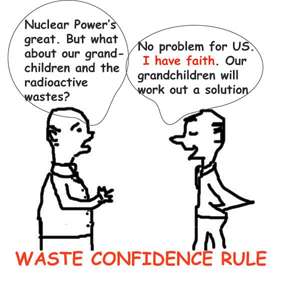 The DGEIS was prepared by the NRC in response to Attorney General Schneiderman’s successful court challenge to the commission’s Temporary Storage Rule in which the NRC had found, without conducting necessary studies, that no significant safety or environmental impacts will result from long-term, on-site storage of radioactive waste at nuclear power plants.
In 2012, a federal circuit court agreed with Attorney General Schneiderman that federal law requires the NRC to complete a thorough analysis of the public health, safety and environmental hazards such storage would pose before allowing the long-term storage of nuclear waste in communities. In reaching its decision, the court found that the spent nuclear fuel stored on-site at nuclear power plants “poses a dangerous, long-term health and environmental risk.”
In his court challenge to the NRC’s Temporary Storage Rule, the Attorney General argued that full compliance with the National Environmental Policy Act requires the commission to conduct a rigorous analysis of the potential for environmental, health and safety impacts from long-term, on-site radioactive waste storage. Continue reading
For USA help, Japan must first sign up to free USA nuclear equipment providers from accident liabilty
 U.S. Says Japan Signing Liability Pact Would Aid Nuclear Cleanup Bloomberg, By Jacob Adelman – Nov 3, 2013 Japan will receive international help with the cleanup at the Fukushima atomic station once it
 joins an existing treaty that defines liability for accidents at nuclear plants, U.S. Energy Secretary Ernest Moniz said.
The treaty, known as the Convention on Supplementary Compensation for Nuclear Damage,assigns accident liability to plant operators rather than equipment and technology vendors,Moniz said in a Nov. 2 interview in Tokyo. Continue reading
Fukushima clean-up an “unprecedented challenge” says shocked USA Energy Secretary Moniz
 US Energy Secretary “shocked” and “stunned” after being at Fukushima plant — “Unprecedented” and “daunting” task ahead for Japan — America has “direct interest” in Tepco doing things safely (VIDEO) http://enenews.com/energy-secretary-shocked-stunned-after-being-fukushima-plant-unprecedented-daunting-task-ahead-japan-america-direct-interest-tepco-doing-safely-video
Statement from U.S. Secretary of Energy Ernest Moniz Regarding Fukushima, Nov. 1, 2013 “On Friday, I made my first visit to the Fukushima Daiichi Nuclear Power Station. It is stunning that one can see firsthand the destructive force of the tsunami even more than two and a half years after the tragic events.[…] TEPCO President Hirose, and his dedicated staff […] face a dauntingtask in the cleanup and decommissioning of Fukushima Daiichi, one that will take decades and is being carried out under very challenging conditions. The TEPCO workforce is facing unprecedented challenges and is clearly focused on devising and implementing solutions. […] It appears that spent nuclear fuel will begin to be removed from Unit 4 as scheduled in mid-November. […] As Japan continues […] the cleanup at the Fukushima site […] the United States stands ready to continue assisting our partners in this daunting yet indispensable task […]“
NHK WORLD, (removed from Internet) Oct. 31, 2013: Ernest Moniz […] in his speech in Tokyo on Thursday […] said the success of the cleanup of areas around the Fukushima plant and decommissioning of reactors have global significance. Moniz said the US has a direct interest in seeing the next steps are done efficiently and safely.
Fukushima to Remove Tritium, IAEA To Send “Help” Update 11/2/13
AP, Nov. 2, 2013: In a speech Thursday in Tokyo, [Moniz] said “the success of the cleanup also has global significance. So we all have a direct interest in seeing that the next steps are taken well, efficiently and safely.”
NHK,, Nov. 2, 2013: Ernest Moniz spoke to NHK on Saturday in Tokyo, one day after visiting the Fukushima Daiichi plant. Moniz said he was shocked to see the scale of the damage that remains more than 2 and half years after the tsunami disaster and the nuclear accident. He said he also sensed how difficult work at the plant is with workers required to wear full face masks and other protective gear.
Watch the NHK interview here (removed from Internet
Fukushima radiation reaching Alaskan coast, but it’s not being measured
 Radiation from Japan nuclear plant arrives on Alaska coast http://www.cbc.ca/news/canada/north/radiation-from-japan-nuclear-plant-arrives-on-alaska-coast-1.2335668 Scientists concerned about lack of monitoring plan CBC News Nov 02, 2013 Scientists at the University of Alaska are concerned about radiation leaking from Japan’s damaged Fukushima nuclear plant, and the lack of a monitoring plan.
Some radiation has arrived in northern Alaska and along the west coast. That’s raised concern over contamination of fish and wildlife. More may be heading toward coastal communities like Haines and Skagway.
Douglas Dasher, a researcher at the University of Alaska Fairbanks, says radiation levels in Alaskan waters could reach Cold War levels.”The levels they are projecting in some of the models are in the ballpark of what they saw in the North Pacific in the 1960s,” he said.
John Kelley, a professor emeritus at the University of Alaska Fairbanks, says he’s not sure contamination will reach dangerous levels for humans but says without better data, who will know? “The data they will need is not only past data but current data, and if no one is sampling anything then we won’t really know it, will we?
“The general concern was, is the food supply safe? And I don’t think anyone can really answer that definitively.” He says much of the monitoring is being done pro bono by universities, NGOs and state organizations.
Nuclear Regulatory Commission’s “Waste Confidence” rule is indeed a “con”
Of greatest concern are Limerick’s fuel pools, already packed beyond design capacity, and dangerously vulnerable to meltdowns with potential for unthinkable health and economic devastation. Limerick’s two fuel pools hold more than two and a half times the amount of fuel rod assemblies (6,200) than four fuel pools at Fukushima (2,400) and far more than other older U.S. nuclear plants like TMI and Oyster Creek. NRC can’t or won’t tell ACE why.
Shedding light on NRC’s nuke waste con game http://www.pottsmerc.com/opinion/20131101/op-ed-shedding-light-on-nrcs-nuke-waste-con-game 10/31/13,
Evan Brandt’s article on Oct. 5, “Gov’t Shutdown May Delay Relicensing of Limerick Nuke Plant”, explained that NRC’s 2012 court-ordered spent fuel study would be delayed by the 2013 government shutdown. Actually, the government shutdown shed light on NRC’s nuke waste con game.
There is NO safe solution for radioactive fuel rods that can remain radioactive for a million years (EPA). They’re among the deadliest materials on earth. Yet, NRC’s “Nuclear Waste Confidence” game makes unsubstantiated claims that high-level radioactive wastes can be stored safely, soundly, and securely, virtually forever. This applies to nuclear plant sites like Limerick and allows them to continue producing and piling up deadly radioactive wastes under the absurd pretense that there is a safe solution.

Unthinkable devastating health and economic consequences threaten our future whether stored in fuel pools, above ground casks, from reprocessing, or from dangerous transport to a central location. NRC’s assumptions are far-fetched and negligent, including that dry cask storage systems, structures, and components can and will be entirely replaced once per century. NRC fails to identify astronomical public costs or where funds would come from for expensive massive replacements forever. NRC irrationally assumes society is willing or able to pay such costs, even if replacement is possible.
It was insanity for NRC to even consider relicensing Limerick Nuclear Plant when there is no safe solution for its deadly radioactive wastes. Continue reading
How badly Hansford nuclear whistleblower was treated
 Shocking Treatment of US Nuclear Whisteblowers: Sent to office in basement with rat poison after warning of Fukushima-like explosion — Another given office in storage room with drums of radioactive waste and asbestos soon after having chemotherapy (VIDEO) http://enenews.com/shocking-treatment-of-us-nuclear-whisteblowers-sent-to-office-in-basement-with-rat-poison-after-warning-of-fukushima-like-explosion-another-given-office-in-storage-room-with-drums-of-radioactive-w
KING 5 News,, Nov. 1, 2013: Hanford whistleblower: ‘I was now the enemy’ […] [Dr. Walt] Tamosaitis determined that the mixers, as designed, would not be able to mix the waste sufficiently, posing a risk that heavy radioactive elements would collect at the bottom of the tanks and begin a nuclear chain reaction. The reaction, in turn, would generate large amounts of explosive hydrogen gas (a similar hydrogen build up at the Fukushima nuclear plant in Japan caused large explosions after the 2011 Tsunami damaged that facility). […] “The worst case scenario would be a criticality and trapping of hydrogen gas which could lead to a hydrogen explosion,” said Tamosaitis. […] URS moved Tamosaitis to another building where he was assigned to a makeshift office in the basement. He sat alone in a cramped space full of storage boxes, rat poison feeders and copy machines. He was not assigned any work and had no boss to report to. “The message was, ‘Don’t do what Walter did. Don’t raise issues. Shut up (and) do what we say,’” said Tamosaitis. […] The Defense Nuclear Facility Safety Board and the Government Accountability Office both issued reports highlighting Tamosaitis’ work. And in early 2012 Energy Secretary Steven Chu ordered a halt to WTP construction. Continue reading
Unanswered questions about proposed uranium mine in South Dakota
 Uranium mine hearings reveal questions about proposed project Rapid City Journal 3 Nov 13 After two weeks of public testimony, one thing has become clear about the proposed uranium mine that would operate near Edgemont: many things about the project remain unclear.
The process paperwork and permit applications …..
“It consists of nearly 80,000 pages of documents, very complex documents,” said Hickey, who represents the Black Hills Wild Horse Sanctuary. ,,,,,,
 As a pair of governor-appointed state permit boards decide whether to allow uranium mining to South Dakota, the stakes couldn’t be higher, and yet the issue couldn’t be murkier. As he testified at last week’s hearings, John Mays, vice president of engineering for Powertech, didn’t ease the concerns of opponents who worry over potential groundwater contamination.
Under questioning, Mays refused to commit Powertech to cleaning water in the mining area to its pre-mining condition. Mays said it was a primary goal, but not a requirement.
Nor would Mays specify what other heavy metals might be extracted along with uranium and then injected back into the aquifers.
Mays testified that only uranium and vanadium — another metal the company hopes to mine — are certain to circulate in and out of the ground. As for arsenic, selenium, molybdenum, and other potentially harmful metals, Mays wouldn’t say.
“What you’re telling this board is that you don’t really know what’s in that ore yet?” Bruce Ellison asked Mays. Ellison is an attorney for Clean Water Alliance, a group of mining opponents. “You haven’t done enough testing?” Continue reading
The Cold War very nearly brought global nuclear catastrophe
 “Even though the cold war ended more than 20 years ago, thousands of warheads are still actively deployed by the nuclear-armed states,” “We continue to face unacceptably high risks and will continue to do so until we have taken steps to abolish these exceptionally dangerous weapons.”.
 How a war game brought the world to the brink of nuclear disaster Former classified documents show how close the Soviet Union came to launching an attack in 1983 The Guardian, Jamie Doward The Observer, Sunday 3 November 2013 Chilling new evidence that Britain and America came close to provoking the Soviet Union into launching a nuclear attack has emerged in former classified documents written at the height of the cold war.
Cabinet memos and briefing papers released under the Freedom of Information Act reveal that a major war games exercise, Operation Able Art, conducted in November 1983 by the US and its Nato allies was so realistic it made the Russians believe that a nuclear strike on its territory was a real possibility. Continue reading
Climaye change denial specialists – the American Tea Party Republicans
 Tea party Republicans are biggest climate change deniers, new Pew poll finds WP, BY JULIET EILPERIN AND SCOTT CLEMENT November 1 Tea party Republicans are now the only group of Americans who think the Earth is not warming, according to a new poll by the Pew Research Center, with just 25 percent of tea party Republicans saying global warming is happening. By contrast, 67 percent of all Americans say there is evidence climate change is underway, including 61 percent of non-tea party Republicans.
Democrats and independents are more confident about global warming: 88 percent of Democrats and 62 percent of independents say there is solid evidence climate change has taken place over the past few decades.
Despite broad belief in warming overall, fewer than half the public believes human activity is to blame (44 percent), a number hardly changed from last year (42 percent). That’s despite a significant rise in the share of Americans who believe scientists generally agree the Earth is getting warmer because of human activity, from 45 percent last year to 54 percent now…….http://www.washingtonpost.com/blogs/the-fix/wp/2013/11/01/only-tea-party-members-believe-climate-change-is-not-happening-new-pew-poll-finds/?tid=hpModule_ba0d4c2a-86a2-11e2-9d71-f0feafdd1394
Renewable energy storage – a cheaper method
The Future Of Renewable Energy Can Now Be Found Inside A Shipping Container Sitting Off The I-95 Corridor BUSINESS INSIDER, ROB WILE NOV 2 2013, If you want to see the future of renewable energy in the U.S., you should check out the large container sitting next to a nondescript office building off the I-95 corridor in Maryland.
Inside of it is a system that helps solve one of the key problems in the renewable industry: how to store power for longer periods of time in an economical way……. The parts to focus on are the inverter, the batteries, and the transformer.
The inverter is used to convert the electricity generated by Konterra’s new rooftop solar panels, which come with the system, into a usable current to power either the building or the local grid. The battery, which is actually just an off-the-shelf lithium ion package, can be tapped by the local grid to temporarily charge or discharge excess power in the surrounding area.
Finally, the transformer can remove the Konterra building from the grid in case of a regional power outage, providing up to four hours-worth of backup supply. Current renewable storage set ups are pretty expensive. This system helps make it more economical………..http://www.businessinsider.com.au/konterra-solar-2013-11
1 This Month
23-25 October – on Zoom – World BEYOND War’s annual global conferenc


Shut down the radiation-damaged Heysham nuclear reactors now
To see nuclear-related stories in greater depth and intensity – go to https://nuclearinformation.wordpress.com

Say No to NASA’s Reckless Nuclear Reactor on the Moon
Say No to NASA’s Reckless Nuclear Reactor on the Moon
-
Archives
- October 2026 (180)
- September 2026 (339)
- August 2026 (330)
- July 2026 (355)
- June 2026 (287)
- May 2026 (306)
- April 2026 (356)
- March 2026 (251)
- February 2026 (267)
- January 2026 (308)
- December 2025 (358)
- November 2025 (359)
-
Categories
- 1
- 1 NUCLEAR ISSUES
- business and costs
- climate change
- culture and arts
- ENERGY
- environment
- health
- history
- indigenous issues
- Legal
- marketing of nuclear
- media
- opposition to nuclear
- PERSONAL STORIES
- politics
- politics international
- Religion and ethics
- safety
- secrets,lies and civil liberties
- spinbuster
- technology
- Uranium
- wastes
- weapons and war
- Women
- 2 WORLD
- ACTION
- AFRICA
- Atrocities
- AUSTRALIA
- Christina's notes
- Christina's themes
- culture and arts
- Events
- Fuk 2022
- Fuk 2023
- Fukushima 2017
- Fukushima 2018
- fukushima 2019
- Fukushima 2020
- Fukushima 2021
- general
- global warming
- Humour (God we need it)
- Nuclear
- RARE EARTHS
- Reference
- resources – print
- Resources -audiovicual
- Weekly Newsletter
- World
- World Nuclear
- YouTube
-
RSS
Entries RSS
Comments RSS

