U.S. to gift Plutonium-239 to private nuclear industry
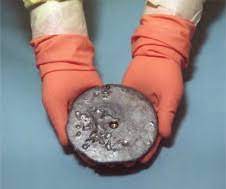
The Trump Administration’s trafficking of nuclear weapons-grade usable plutonium would significantly increase the global proliferation of nation state-sponsored nuclear weapon programs as well as the nuclear weapons material acquisition by thief and purchase for acts of nuclear terrorism.
The Trump Administration’s trafficking of nuclear weapons-grade usable plutonium would significantly increase the global proliferation of nation state-sponsored nuclear weapon programs as well as the nuclear weapons material acquisition by thief and purchase for acts of nuclear terrorism.
October 2, 2025, https://beyondnuclear.org/u-s-to-gift-pu-239-to-private-nuclear-utilities/
Trump Administration’s give away of 20 MT of US plutonium weapons stockpile to private companies threatens nuclear proliferation
According to previously unreleased government documents obtained and reviewed by Politico and addressed in a letter from three Democrat members of Congress to President Donald Trump, The White House is preparing to give away 20 metric tons of weapons-usable plutonium to new nuclear start companies. The Trump deal calls for the equivalent of 2000 nuclear bombs previously slated for permanent disposal as nuclear waste) from the nation’s Cold War era nuclear weapons stockpile to be freed up to help jump start privately-owned U.S. commercial nuclear startup companies. The fledgling nuclear companies would instead use the plutonium fuel in a still unproven and unlicensed new generation of nuclear power plants for domestic power production. The plan includes U.S. startups to reprocess plutonium used in nuclear fuel for international export. The Trump Administration’s trafficking of nuclear weapons-grade usable plutonium would significantly increase the global proliferation of nation state-sponsored nuclear weapon programs as well as the nuclear weapons material acquisition by thief and purchase for acts of nuclear terrorism.
The White House proposal calls for the U.S. Department of Energy (DOE), currently charged with the nation’s nuclear weapons development and nuclear power promotion, to “alter” the military-grade plutonium so it can be used as fuel by civilian startup power companies in new reactor designs. Theses unfinished and yet to be approved designs (such as the sodium cooled metal fuel fast reactors “Aurora” by the Santa Clara, CA start-up Oklo, Inc.’s and Bill Gates’ TerraPower’s “Natrium”) are already being privately marketed for the domestic and international export of fast reactors by companies such as Oklo.
The White House Executive Orders originally issued in May 2025 as part of the President Trump’s national call to “Unleash Nuclear Energy” had directed that the US Department of Energy draw down the from the nation’s plutonium surplus. The current White House plan now additionally includes the military to civilian utility transfer of reserve warhead parts known as “plutonium pits.
The Politico article quotes Oklo’s CEO Jacob DeWitte, “Oklo, wants to take advantage of the plutonium fuel program. Unlike its competitors, Oklo’s fast-neutron reactors can use plutonium as a ‘bridge’ fuel to get around the bottlenecks that exist in obtaining the more desirable grades of uranium.” Those “desirable grades of uranium” fuel are currently only commercially available from the Russia global monopoly on High Assay Low Enriched Uranium (HALEU) which is just less than 20% enriched U-235.
Oklo’s prestigious former board member, Chris Wright, stepped down from the company when he was confirmed to be President Trump’s new Secretary of Energy. Oklo’s Aurora reactor design now under review by the U.S. Nuclear Regulatory Commission is a controversial liquid sodium-cooled metal fueled fast reactor. The fast reactor design is controversial chiefly because it can be retrofitted as a “dual purpose” (military and commercial) reactor to breed more plutonium for nuclear weapons and commercial power generation.
The concept for Oklo’s plan was opposed in a July 25, 2025 letter to Congress signed by 17 scientific experts on global non-proliferation of nuclear weapons. First and foremost, nothing has fundamentally changed to break with the five decades that the United States has opposed from using plutonium fuel in commercial power plants due to security and economic concerns. Their letter further pronounces that authorizing funds for the proposed civilian use of nuclear weapons-usable plutonium as fuel in nuclear power plants will only accelerate the global spread of nuclear weapons in two obvious ways; 1) US companies plan to internationally export plutonium fuel and the plutonium extraction technology, and; 2) the US cannot discourage other countries from further trafficking of weapons-usable plutonium as civilian nuclear fuel if the US is doing it ourselves.
Moreover, pyro-processing or “recycling” to extract plutonium and uranium for reuse as reactor fuel has already proven to be unsustainable economically and will only deepen the already bad economics of nuclear power. The processing is acknowledged as “very costly, due to safety and security concerns, both to extract from nuclear waste and to fabricate into fuel.”
Leah McGrath Goodman, Tony Blair and issues on torture (with added radiation)


Published by arclight2011- date 15 Sep 2012 -nuclear-news.net
[…]
Accusations: Despite the mockery of the film Borat, leaked U.S. cables suggest the country was undemocratic and used torture in detention
Other dignitaries at the meeting included former Italian Prime Minister and ex-EU Commission President
Romano Prodi. Mr Mittal’s employees in Kazakhstan have accused him of ‘slave labour’ conditions after a series of coal mining accidents between 2004 and 2007 which led to 91 deaths.
[…]
Last week a senior adviser to the Kazakh president said that Mr Blair had opened an office in the capital.Presidential adviser Yermukhamet Yertysbayev said: ‘A large working group is here and, to my knowledge, it has already opened Tony Blair’s permanent office in Astana.’
It was reported last week that Mr Blair had secured an £8 million deal to clean up the image of Kazakhstan.
[…]
Mr Blair also visited Kazakhstan in 2008, and in 2003 Lord Levy went there to help UK firms win contracts.
[…]
Max Keiser talks to investigative journalist and author, Leah McGrath Goodman about her being banned from the UK for reporting on the Jersey sex and murder scandal. They discuss the $5 billion per square mile in laundered money that means Jersey rises, while Switzerland sinks.
http://www.youtube.com/watch?v=gA_aVZrR5NI&feature=player_detailpage#t=749s
And as well as protecting the guilty child sex/torturers/murderers of the island of Jersey I believe that they are also protecting the tax dodgers from any association.. its just good PR!
FORMER Prime Minister Tony Blair was reportedly involved in helping to keep alive the world’s biggest takeover by Jersey-incorporated commodities trader Glencore of mining company Xstrata.
11/September/2012
[…]
Mr Blair was said to have attended a meeting at Claridge’s Hotel in London towards the end of last week which led to the Qatari Sovereign wealth fund supporting a final revised bid from Glencore for its shareholding. Continue reading
Powering forward the Transatlantic Nuclear Free Alliance
2 Oct 25, https://www.nuclearpolicy.info/news/powering-forward-the-transatlantic-nuclear-free-alliance/
The UK/Ireland Nuclear Free Local Authorities were proud to partner with Canadian and United States anti nuclear activists at a lively webinar, kindly hosted and organised by SOS: The San Onofre Syndrome, last Thursday (25 September).
Richard Outram, NFLA Secretary, was humbled to join an online panel of distinguished speakers who are working in opposition to new nuclear plants and nuclear waste dumps in both nations. There was an audience of around 50 activists joining us from across the globe, from Colwyn Bay to Hawaii, who had been invited to view the award-winning film ‘SOS – The San Onofre Syndrome: Nuclear Power’s Legacy’.
This time the focus was upon examining the situation in Canada.
Britain’s Nuclear Waste Services, being responsible for locating and building an undersea repository for our nation’s legacy and future high-level radioactive waste – the so called Geological Disposal Facility – has established strong ties with its Canadian counterparts, the Nuclear Waste Management Organisation which has determined to build a similar, though inland and underground, repository – called a Deep Geological Repository – at Ignace in Ontario.
Dr Gordon Edwards is a mathematician, physicist, nuclear consultant, and president of the Canadian Coalition for Nuclear Responsibility (https://www.ccnr.org). CCNR is a not-for-profit organization, federally incorporated in 1978, dedicated to education and research on all issues related to nuclear energy, whether civilian or military — including non-nuclear alternatives — especially those pertaining to Canada. He is based in Montreal.
Brennain Lloyd from We the Nuclear Free North (https://wethenuclearfreenorth.ca/) is a community organizer, public interest researcher and writer. For the last 30 plus years, Brennain has worked with environmental, peace and women’s organizations as a facilitator and adult educator supporting public participation in environmental and natural resource decision-making and various planning processes. She is based in northeastern Ontario.
The panel was also joined by Team SOS in the United States, namely
Mary Beth Brangan and James Heddle, who are award-winning filmmakers of ‘SOS – The San Onofre Syndrome: Nuclear Power’s Legacy’ and co-directors of EON – the Ecological Options Network (https://www.eon3.org) and Morgan Peterson is an Oscar-nominated producer/director and director/editor of ‘SOS – The San Onofre Syndrome’. Mary Beth and James are based in Northern California, USA, whilst Morgan is based in Indiana, USA.
Richard is delighted that colleagues in the USA are looking to start work to build a network of nuclear free local authorities based on the model established from 1981 in the UK and Ireland.
It is almost 45 years since Manchester declared itself the world’s first nuclear free city and hosted the Secretariat of the Nuclear Free Local Authorities. Many cities across the globe followed Manchester’s lead in making similar declarations, many notably in the United States. It would be gratifying if these nuclear free cities could take the lead in establishing a new network across the Atlantic.
Richard said: “The purpose of establishing this Transatlantic Nuclear Free Alliance was to bring together anti-nuclear activists from both sides of the huge ocean which physically divides us in an online forum where we can share information on developments, support one another with campaigns, celebrate our successes, and share our common goals for a nuclear-free, peaceful and sustainable world.
“The UK / Ireland NFLAs would be delighted if from this meeting our colleagues in the United States could begin work to build their own network of nuclear free municipalities and we stand ready to lend support to such an initiative, where we can”.
Lisa Smithline from Moca Media TV, who ably performed the critical job of facilitating the event, summarised the event: “It was a deep and meaningful conversation. The feedback has been extremely positive, people are hungry for this information, the attendees didn’t want it to end!”
A future event will be held in around two months’ time – so do watch out for the invitation.
If you would like to attend and are not yet on the NFLA mailing list for news and future events, please email Richard Outram at richard.outram@manchester.gov.uk
In the meantime, the 25 September event can be viewed online at:
https://us02web.zoom.us/rec/share/Y3wQ_8YDumxukIDLCS5_uuBpUxnuYe9SbUHTF2PhVWEmPtE0Id2qNglFWDShT91n.dY8SN70Lrx5xxyqc
Passcode: RgMr442*
The War Department’s War on Media
The Pentagon’s new restrictions will bar correspondents covering the American military from covering the American military, as the Trump regime attempts to exert full-spectrum control over media.
By Patrick Lawrence, Consortium News, September 30, 2025
It should be evident by now to anyone paying even casual attention that exerting full-spectrum control over American media is among the Trump regime’s most perniciously obsessive projects.
Of all the extra-constitutional messes this vulgar ignoramus is making, I count his assaults on media his gravest attempt to destroy what remains of American democracy and what little chance there may be to restore it.
There are all sorts of cases in point. President Trump has a citizen’s right to file lawsuits against various media — ABC News, The New York Times, The Wall Street Journal, Paramount Global (the parent of CBS News) — but to call these anything other than an antidemocratic assertion of executive power is out of the question.
Lately there are the threats of Brendan Carr, the mad-dog chairman of the Federal Communications Commission, to take licenses away from broadcasters whose reportage and commentary are not to Trump’s liking.
“We can do this the easy way or the hard way,” saith Carr when he forced ABC to take Jimmy Kimmel off the air (temporarily, it turned out) for a few utterly harmless remarks the late-night host made after the assassination of Charlie Kirk, the influential conservative.
What a ridiculous comment from a ridiculous man, what a capricious display of authoritarian power. This is a war on media the Trump regime intends to wage on many fronts, to finish this pencil-sketch of the landscape.
What is to my mind the most portentous attack yet on media of all sorts and what little independence remains among the mainstream variety came a couple of weeks ago, when the Defense Department announced severe new restrictions on journalists covering the Pentagon.
To put the case simply, these rules will bar correspondents covering the American military from covering the American military.
My mind goes first to Jefferson’s famous remark in 1787, while serving as the young United States’ minister in Paris.
“Were it left to me to decide whether we should have a government without newspapers or newspapers without a government,” he wrote to Edward Carrington, a prominent Virginian and a friend, “I should not hesitate a moment to prefer the latter.”
Taking the Pentagon’s new restrictions on their own terms and also as a harbinger, Trump and Pete Hegseth, his buffoonish defense secretary, appear intent on delivering Americans to that condition Jefferson warned against 238 years ago.
Turning his question another way, I remind readers of W.E.B. DuBois, Mark Twain, Samuel Gompers, the James brothers (William and Henry), and other critics of the American imperium as it emerged at the end of the 19th century. There will be empire abroad or democracy at home, they asserted with a sort of desperate alarm, but Americans will not have both.
Considered in this context, Hegseth, with Trump’s evident approval, has just nodded in favor of this argument. Operating the late-phase imperium, Hegseth effectively advises Americans, requires the sequestration of power from public scrutiny.
The document announcing the Defense Department’s new restrictions on correspondents covering the American military runs to 17 pages; a covering letter signed by Sean Parnell, the Pentagon spokesman, describes it as “implementing the Secretary of War [sic] memorandum, ‘Updated Physical Control Measures for Press/Media Access Within the Pentagon,’ dated May 23, 2025.”
Note the date. By mid–May Pentagon correspondents had reported that Hegseth was using unsecured internet lines to conduct classified business and had brought his wife, brother, and personal attorney into a chat room where a top-secret aerial attack on Yemen was under discussion. A few days after that it was reported that he had invited Elon Musk to a briefing on potential war plans against China.
This guy had a lot of stupidity and incompetence to cover up. And the restrictions Hegseth authorized in May, detailed in the memorandum dated Sept. 18 and due to come into effect over the next few days, reek of the sort of revenge — against Democrats, against the universities, against the courts, against the media — that seems to rule within the Trump regime.
How damaging to our tattered republic, you have to conclude, are the petty vendettas of these thankfully passing people.
These new restrictions are beyond Draconian. Journalists covering the Pentagon are to be required to pledge not to report anything, anything at all, that has not been explicitly authorized by a department official. They will not be allowed even to gather information without such authorization. Access even to unclassified information will be limited to occasions “when there is a lawful government purpose for doing so.”
Reporters assigned to cover the Defense Department will now have to take pledges to get in the Pentagon’s front door? Just how far are these people going to go? This reminds me of the loyalty oaths required of federal employees during the McCarthyist 1950s.
Roughly 90 journalists cover the Pentagon at any given time. They will henceforth be restricted even from walking most of the building’s halls without an escort. “Failure to abide by these rules,” the memorandum warns, “may result in suspension or revocation of your building pass and loss of access.”
This is pretty close to Soviet, in my estimation.
“Journalists covering the Pentagon are to be required to pledge not to report anything, anything at all, that has not been explicitly authorized by a department official…. Access even to unclassified information will be limited…
Hegseth took to social media the day these restrictions were issued to journalists and, so, reported in their media. “The ‘press’ does not run the Pentagon,” he declared to all, “the people do.”
Tell me if this is not altogether Soviet.
It would be difficult to overstate the gravity of these measures. Taken to their extreme, and to go by the hyper-officious phrasing of the Sept. 18 memorandum the extreme is what Hegseth’s Pentagon has in mind, once these regulations go live the conduct of the imperium will no longer be visible to the public.
The imposition of total control of information — and so of all “narratives” — and the concealment of all conduct: These are the all-but-stated objectives. We are looking at unlimited prerogative and the strictest enforcement of secrecy, to describe this new regime another way. At this early moment I find it hard to imagine the extent of the lawlessness this may turn out to license.
I start to think the Trump II regime’s relations with media exceed the corruptions of the Cold War decades, and this is going some. But no president then was as brutishly ignorant and as indifferent to the Constitution as Trump. The imperium was on the ascendant during those first post–1945 decades; now it is bankrupt (in lots of ways) and obviously on the wane. The game is bound to get rougher as strength gives way to weakness…………………………………………………………………………………………………………………………………………..
Pete Hegseth has decreed a radical departure in professional practice for journalists covering the national security state. True and highly condemnable.
Pete Hegseth has codified long-established practices and a longstanding relationship between the press and power. True and highly condemnable. https://consortiumnews.com/2025/09/30/patrick-lawrence-the-war-depts-war-on-media/
US Military Doctrine – Goodbye to Geneva
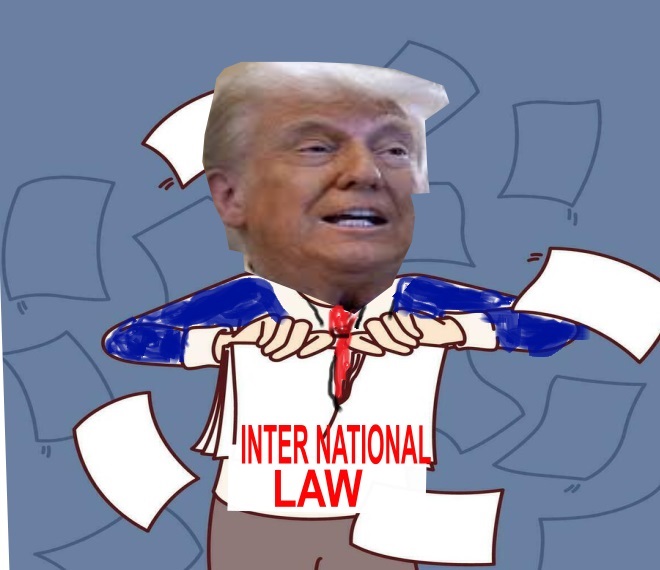
1 October 2025 AIMN Editorial, By Andrew Klein, https://theaimn.net/us-military-doctrine-goodbye-to-geneva/
Recent developments in the United States of America and the performances of President Trump and his Secretary of War Pete Hegseth should be concerning to us all.
There are indeed reports and analyses indicating that Secretary Hegseth is pursuing a significant overhaul of the U.S. military’s legal framework, with the stated goal of empowering commanders and adopting a more aggressive approach to warfare.
Policy Shifts and International Law
The planned changes have raised concerns among observers about their potential impact on the international rules-based order.
Overhauling Military Lawyers
Reports note that Hegseth has made it a priority to “retrain” military lawyers (the Judge Advocate General’s corps, or JAGs) so they provide advice that allows commanders to “pursue more aggressive tactics” and take a “more lenient approach in charging soldiers with battlefield crimes.” Critics of the JAG corps have argued that their interpretation of rules of engagement, such as the requirement to positively identify an enemy combatant, has been too restrictive.
Historical Context and Criticism
This effort is not happening in a vacuum. During the George W. Bush administration after the 9/11 attacks, JAG lawyers resisted the administration’s view that it could lawfully direct the military to ignore the Geneva Conventions regarding detainees.
A Stated Vision for Warfare
In his writings, Hegseth has been explicit about his philosophy, questioning the value of the Geneva Conventions and suggesting that the U.S. military should fight wars on its own terms, with less regard for the opinions of other countries or international courts. He has publicly argued that modern fighters “face lawyers as much as enemies” and that adversaries should receive “bullets, not lawyers.”
When evaluating these developments, it is helpful to consider the following perspectives:
A Deliberate Agenda
The evidence suggests that the actions of Secretary Hegseth are not ad hoc but part of a coherent, long-held belief system aimed at reducing legal constraints on the battlefield, which he views as detrimental to a “warrior ethos.”
A Contentious Debate
This shift represents one side of a long-standing and profound debate within military and international circles. It pits a view prioritising maximum operational freedom against one that holds that adhering to laws of war is a strategic and moral necessity, a stance historically defended by military lawyers themselves.
The potential consequences of altering the U.S. military’s relationship with international humanitarian law are a significant subject of global concern and analysis.
Democrats alarmed as Trump eyes weapons material to fuel nuclear reactors
The scramble to build new reactors to supply power to AI data centers may include plutonium from the nation’s nuclear deterrent.
Politico, By Zack Colman, 09/29/2025
The Trump administration is considering a proposal to divert plutonium that plays a central role in the U.S. nuclear weapons stockpile to fuel a new generation of power plants, according to an Energy Department official and previously undisclosed department documents.
The proposal calls for the department to alter the plutonium so it can be used by civilian power companies, including startups pitching advanced reactor designs. It’s part of a broader push by President Donald Trump to convert tons of the Energy Department’s plutonium to civilian use, a notion that some lawmakers argue would undermine the U.S. weapons program for the benefit of untested private companies.
The initiative would involve harvesting plutonium on a large scale: According to a department official and a July 31 DOE memo seen by POLITICO, more than a fifth of the plutonium needed to meet Trump’s mandates would come from the highly radioactive spheres manufactured for the cores of nuclear weapons. DOE already faces a crunch to make more of those spheres, known as plutonium pits — it’s lagging behind Congress’ demands that it boost pit production to modernize the country’s nuclear deterrence.
The department is “not meeting the current pit manufacturing schedule,” said a former DOE official who is familiar with the department’s plutonium reserves. “So to make pit plutonium available would be a huge shift, and I’d be shocked.”
Both the current and former officials were granted anonymity to share sensitive details about national security matters.
Trump didn’t mention the pits in a May executive order in which he directed DOE to draw from another source — its stores of surplus plutonium — to help revive the nuclear power industry and meet the soaring electricity demands of data centers used in artificial intelligence. The U.S. officially halted its program that made weapons-grade plutonium in 1992.
The department declined to confirm or deny any details of its plutonium plans in response to questions from POLITICO.
“The Department of Energy is evaluating a variety of strategies to build and strengthen domestic supply chains for nuclear fuel, including plutonium, as directed by President Trump’s Executive Orders,” the department said in a statement. “We have no announcements to share at this time.”
The White House referred POLITICO’s questions about the plutonium plans to DOE. The Defense Department referred questions to the White House.
Government watchdogs and congressional Democrats have spent weeks objecting to the entire notion of transferring government-owned plutonium to the power sector. Such a move “goes against long-standing, bipartisan U.S. nuclear security policy,” Democratic Sen. Ed Markey and Reps. Don Beyer and John Garamendi wrote in a Sept. 10 letter to Trump. “It raises serious weapons proliferation concerns, makes little economic sense, and may adversely affect the nation’s defense posture.”
In a separate Sept. 23 letter to Trump, Markey said he was concerned that Energy Secretary Chris Wright was pushing the plutonium proposals to help a Californian nuclear power startup named Oklo, on whose board Wright once sat………….
Oklo spokesperson Paul Day declined to comment on Markey’s concerns of a possible conflict of interest. He also declined to comment on how much plutonium the company intends or has agreed to acquire from DOE. He said DOE “has not, as far as we know, established a plutonium fuel program.”
One nuclear safety watchdog echoed many of the Democrats’ concerns in an interview, saying DOE’s proposal could hollow out the nation’s nuclear defenses and compromise the Pentagon’s long-term deterrence strategy. And it appears to be happening without coordination with the Defense Department, said Hans Kristensen, director of the nuclear information project at the Federation of American Scientists, a nonprofit group that focuses on global security.
…………………………………………..U.S. civilian reactors now use only uranium for their nuclear fuel, but some reactors under development are planning to use plutonium. Spent plutonium from reactors is far more radioactive than uranium — and could pose a greater security risk than uranium if it were to fall into the hands of hostile nations or terrorist groups.
………………………………………… The DOE memo called for delivering 18.5 metric tons of the government’s surplus plutonium and an additional 6.5 metric tons pulled from “material in classified form once it has been declassified.” That latter term, the current DOE official who spoke to POLITICO said, refers to the plutonium pits, whose shape and characteristics can reveal information about nuclear weapons.
The company where Wright was once a board member, Oklo, wants to take advantage of the plutonium fuel program. Unlike its competitors, Oklo’s fast-neutron reactors can use plutonium as a “bridge” fuel to get around the bottlenecks that exist in obtaining the more desirable grades of uranium, CEO Jacob DeWitte told POLITICO in an interview.
DeWitte said Oklo has not publicly revealed how much plutonium the company is seeking to run its new reactors, or from where precisely it plans to obtain that plutonium. He also said the Trump administration has not detailed exactly how much plutonium it will make available, noting that “there is disagreement” over how much surplus plutonium the federal government can hand off before harming nuclear deterrence……………………………………………………………………………………………………………………………………… https://www.politico.com/news/2025/09/29/trumps-nuclear-power-push-stirs-worries-about-us-weapons-stockpile-00583424
Theatre of the absurd
Roswell, 2 Oct 25 https://theaimn.net/theatre-of-the-absurd/
The headliner, of course, was the Commander-in-Chief, Donald Trump. But this was not a presidential address; it was a campaign rally in search of an enemy. Instead of a coherent strategy, the assembled warriors were treated to the familiar Trumpian symphony of digressions, personal boasts, and factual free-association. While the apocryphal tale of a president explaining the melting point of aluminum is a perfect metaphor, the reality was often just as bewildering. This is the man who once claimed that fallen soldiers were “suckers” and “losers” – an hallucination that surely left the Army Chief of Staff staring blankly at his shoes.
The spectacle of the world’s most powerful military being led by a man who treats complex briefings like open-mic night is comedy enough. But every great act needs a sidekick. Enter Pete Hegseth, the cable news warrior turned unofficial advisor, who stepped in to provide the second act of this two-part farce.
If Trump was the master of ceremonial confusion, Hegseth was the sergeant of petty discipline. His message to these titans of modern warfare? Shave.
Yes, shave. While the world smoldered, the sage counsel from the sidelines was that the solution to modern warfare’s challenges lay not in advanced cyber strategy or diplomatic finesse, but in a closer shave. Draped in the language of “warrior culture” and a fight against “wokeness,” Hegseth’s prescription was the ultimate reduction of military virtue to a matter of grooming. It was a disrespect so profound it looped back into comedy. These are men and women who have borne the unimaginable weight of sending troops into battle; to imply they lacked the basic discipline to manage their own facial hair was not just an insult – it was a joke.
The true comedy of this entire spectacle was not in any single gaffe or ridiculous order. It was in the devastating contrast. It was the sight of a room filled with the heirs to Patton and Nimitz being lectured on reality by a man who seemed to have learned his history from a cereal box, and then being scolded on personal hygiene by a commentator playing soldier.
They were called to Washington to confront the nation’s enemies, only to find that the real absurdity was already in the room. The mission, it turned out, wasn’t in some distant desert or contested sea lane. The mission was to survive an administration that confused the Situation Room for a green room and treated its most decorated leaders like unruly recruits. It wasn’t just a failure of policy; it was a masterpiece of political theatre, a comedy of errors where the stakes just happened to be the security of a nation.
(Meanwhile, on another planet):
“The generals in the audience today praised my speech and said they haven’t heard anything better since General Patton, but said mine was more inspiring”
Trump says Israel can ‘finish the job’ in Gaza if Hamas rejects latest ceasefire plan
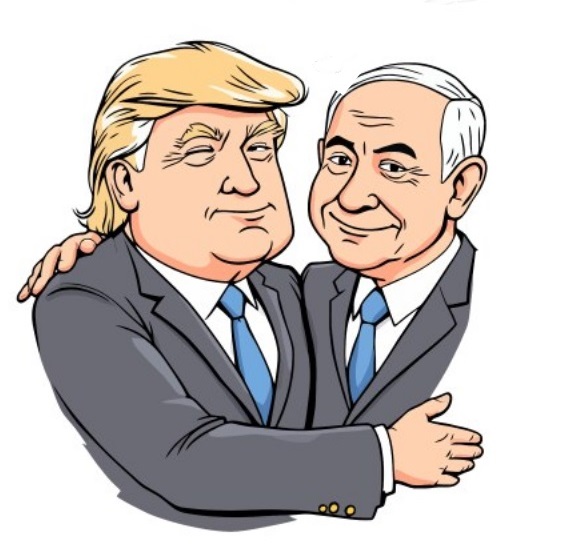
If Hamas rejects the deal, Trump said Israel “would have my full backing to finish the job” of destroying the group. Netanyahu said Hamas could choose the “easy way or hard way” going forward.
Donald Trump says Benjamin Netanyahu accepted the latest U.S.-backed “peace plan” in Gaza and threatened Hamas that if it rejects the proposal, Israel would have his “full backing to finish the job” of destroying the group.
By Michael Arria September 29, 2025, https://mondoweiss.net/2025/09/trump-says-israel-can-finish-the-job-in-gaza-if-hamas-rejects-latest-ceasefire-plan/
President Donald Trump says Israeli Prime Minister Benjamin Netanyahu has accepted the latest U.S.-backed “peace plan,” which is ostensibly aimed at securing a ceasefire in Gaza.
Trump made the announcement during a joint press conference with Netanyahu, which followed a White House meeting between the two leaders. It’s Netanyahu’s fourth trip to Washington since Trump began his term in January.
During the meeting, Trump facilitated an Oval Office phone call between Netanyahu and Qatari Prime Minister Mohammed bin Abdulrahman bin Jassim al-Thani, in which the Israeli leader apologized for the September 9 attack on Doha.
Netanyahu expressed regret about the strikes and, specifically, “that, in targeting Hamas leadership during hostage negotiations, Israel violated Qatari sovereignty,” according to a White House readout of the phone call.
Despite being touted as a diplomatic breakthrough, the 20-point plan recycles a number of previous White House declarations.
The plan would include a prisoner swap, complete Hamas disarmament, and the formulation of a transitional government led by an international body. Additionaly, it requires Gaza to become “deradicalized terror-free zone.”
Trump would chair a “board of peace” to reconstruct the Gaza Strip as part of the program, while Jordan and Egypt would train new Palestinian security forces.
Trump told reporters that it was an “extremely fair” proposal and claimed that Hamas “wants to get this done too,” despite reports that Hamas has yet to receive the plan.
“I also want to thank Prime Minister Netanyahu for agreeing to the plan and for trusting that if we work together, we can bring an end to the death and destruction that we’ve seen for so many years, decades, even centuries and begin a new chapter of security, peace and prosperity for the entire region,” said Trump.
If Hamas rejects the deal, Trump said Israel “would have my full backing to finish the job” of destroying the group. Netanyahu said Hamas could choose the “easy way or hard way” going forward.
“Everyone understands that the ultimate result must be the elimination of any danger posed in the region, and that danger is caused by Hamas,” explained Trump.
Neither leader took questions after the press conference.
Shortly before the meeting, Axios published a report by Marc Caputo and Barak Ravid, which claimed Trump is “willing to break with him over Gaza for the first time since returning to office.” It quoted an anonymous Trump official who insisted that “everyone — and I mean everyone — is exasperated with Bibi.”
Despite such assertions, the Trump administration has continued to support the assault on Gaza without conditions of any kind.
Earlier this month, in a 72-page report, the UN Commission of Inquiry concluded that Israel is committing genocide in Gaza and called for an arms embargo on the country.
“What does this mean for the international community?,” wrote UN human rights chief and commission member Navi Pillay after the report was released. “It means its obligations are not optional. Every state has an obligation to prevent genocide wherever it occurs,” she continued. “That obligation requires action: halting the transfer of weapons and military support used in genocidal acts, ensuring unimpeded humanitarian assistance, stopping the mass displacement and destruction, and using all available diplomatic and legal means to stop the killing. To do nothing is not neutrality. It is complicity.”
As UN Turns 80, Trump Continues US Violation of Charter’s Limits on Use of Force.

Donald Trump has ignored UN rules about attacking other nations, but he is not the first US president to do so
By Marjorie Cohn , Truthout, September 29, 2025
n his inflammatory September 23 speech to the United Nations General Assembly, Donald Trump expressed contempt for the UN, falsely claiming he had ended seven wars and stating, “I realized that the United Nations wasn’t there for us. I thought of it really after the fact … that being the case, what is the purpose of the United Nations?”
If Trump studied history, he would know the answer to that question.
Eighty years ago, after two world wars claimed millions of lives, nations around the world — including the United States — came together and established the UN system “to save succeeding generations from the scourge of war.”
The UN Charter requires that all states settle their disputes peacefully and refrain from the use of armed force except in self-defense under Article 51, after an armed attack against a UN state by another state, or when the Security Council authorizes it.
But, motivated by American exceptionalism — the notion that the U.S. is unique and morally superior and thus not bound by the rules — successive elected U.S. governments have violated the commands of the UN Charter and illegally attacked other countries with impunity.
Violation of UN Charter by Last Five U.S. Presidents
Trump has ignored the straightforward rules about the lawful use of force, but he is not the first U.S. president to do so. We need look no further than the last five presidents, who have launched armed attacks without Security Council approval against countries that had not carried out armed attacks on the United States or other UN member countries.
Bill Clinton could have helped prevent the genocide in Rwanda. But instead, he precluded the UN from acting to stop the killing of 800,000 people. In 1993, Clinton bombed Iraq to retaliate for an assassination attempt against George H. W. Bush. In 1998, on the eve of his impeachment, Clinton once again bombed Iraq, ostensibly to enforce Security Council resolutions, even though only the Council has the power to enforce its resolutions. Both bombings violated the UN Charter. The 1999 U.S.-led NATO bombing of Yugoslavia also violated the Charter, killing roughly 500 civilians. Madeline Albright, Clinton’s secretary of state, labeled the UN “a tool of American foreign policy.”
In 2001, George W. Bush’s administration illegally invaded Afghanistan, even though Afghanistan had not attacked the United States. On September 11, 2001, 19 men (15 of whom hailed from Saudi Arabia) committed crimes against humanity in the United States. But that was not an armed attack by another state sufficient to trigger the Charter’s Article 51 self-defense provision. Bush’s invasion of Afghanistan was not lawful self-defense, and the Security Council had not approved it.
Two years later, before he illegally invaded Iraq and changed its regime, Bush tried to obtain the consent of the Security Council, but the Council refused to authorize the invasion. Then Bush cobbled together prior Security Council resolutions from the first Gulf War, none of which authorized him to attack Iraq in 2003, in a vain attempt to legitimize his illegitimate war.
John Bolton, who served as U.S. ambassador to the UN during George W. Bush’s second term, and national security adviser during Trump’s first term, was a strong advocate for Bush’s 2003 invasion of Iraq. In 1994, Bolton displayed his hatred for the UN when he stated that “there is no such thing as the United Nations,” cynically adding, “If the UN Secretariat building in New York lost 10 stories, it wouldn’t make a bit of difference.”
Barack Obama launched illegal drone strikes in Yemen, Pakistan, Somalia, Libya, Afghanistan, Syria, and Iraq. None of those seven states had mounted an armed attack against the U.S. or any other UN member country, and the Security Council did not authorize the strikes. Moreover, the Obama administration provided no evidence that any of those states were about to launch an imminent attack on the United States. Even if the U.S. Congress had authorized Obama’s wars, they still would not have been in compliance with the Charter.
During Trump’s first regime, he ordered the illegal bombing of Syria. In 2017, he sent 59 Tomahawk cruise missiles to attack Syria in response to its alleged use of chemical weapons in a Damascus suburb. Syria had not attacked the United States or any other UN state before Trump’s missile strike. The use of chemical weapons by Syria did not constitute an armed attack to trigger the right of self-defense. And the Security Council had not approved Trump’s use of force. It therefore violated the Charter.
In 2020, Trump ordered the illegal drone assassination of Iranian Maj. Gen. Qassim Suleimani who was present in Iraq. Neither Iran nor Iraq had attacked the United States and the Council had not authorized Trump’s drone attack. It was therefore illegal under the Charter.
One month after Joe Biden was inaugurated, he authorized airstrikes in Syria on buildings that purportedly belonged to Iran-backed militias who were allegedly responsible for attacks against U.S. and allied personnel in Iraq. Syria, however, had not undertaken an armed attack on the U.S. or another country, and the Security Council had not approved the attack. Biden also authorized illegal drone strikes in Afghanistan in 2021 and 2022, and in Yemen in 2024.
Trump Renames “Department of Defense” the “Department of War”
Trump signed an executive order attempting to rename the “Department of Defense” as the “Department of War.” Permanently renaming the department would require congressional approval, but the move is indicative of his explicit rejection of the Charter’s fundamental precept of self-defense. And his actions since assuming office for his second term are consistent with that rejection.
After Israel illegally attacked Iran in June, Trump conducted a series of military strikes against three Iranian nuclear facilities. Although he claimed his objective was to put “a stop to the nuclear threat posed by the world’s number one state sponsor of terror,” Iran did not constitute an imminent threat. Rafael Grossi, director general of the International Atomic Energy Agency, affirmed at the time that Iran did not even have nuclear weapons capability. The U.S. strikes were not mounted in self-defense, and the Council had not given its imprimatur for the attacks.
Earlier this month, Trump illegally ordered armed attacks on at least three Venezuelan fishing vessels under the guise of fighting the drug war, killing at least 11 people, in direct violation of the Charter. He was apparently testing the waters. Now NBC News is reporting that Trump is considering mounting drone strikes within Venezuela in the next few weeks.
Since October 7, 2023, when Israel began its genocidal campaign against the Palestinian people in Gaza, the United States — under both Biden and Trump — has six times vetoed Security Council resolutions to end the fighting, despite the UN Charter’s command that international disputes be settled peacefully. The Trump administration filed the most recent U.S. veto on September 18.
Secretary of War Pete Hegseth has issued an unprecedented order summoning high-ranking military officials to attend a meeting in Quantico, Virginia, on September 30, reportedly to deliver a message about upholding a “warrior ethos.” Whether this signals a new aggressive approach or remains a mere photo op, the Trump administration is likely to continue the foreign policy tradition of disregarding the UN Charter, thanks to decades of impunity enjoyed by previous administrations.
Marjorie Cohn is professor emerita at Thomas Jefferson School of Law, dean of the People’s Academy of International Law and past president of the National Lawyers Guild. She sits on the national advisory boards of Veterans For Peace and Assange Defense, and is a member of the bureau of the International Association of Democratic Lawyers and the U.S. representative to the continental advisory council of the Association of American Jurists. Her books include Drones and Targeted Killing: Legal, Moral and Geopolitical Issues.
‘Deeply Un-American’: Trump Tells Generals to Use US Cities as Military ‘Training Grounds’
Brett Wilkins, Sep 30, 2025, https://www.commondreams.org/news/trump-us-cities-training-grounds
President Donald Trump told hundreds of senior military commanders Tuesday that the country is “under invasion from within” and that they should use American cities as “training grounds” to target domestic “enemies”—remarks that drew warnings of encroaching fascism as the president expands his invasion and occupation of US communities.
Speaking to nearly 800 US generals and admirals stationed around the world who were summoned to Quantico, Virginia by Defense Secretary Pete Hegseth for a highly unusual assembly, Trump told military leaders they would be used against the American people.
“Just like you have to fight vicious people, mine are a different kind of vicious,” he added.
Trump then said that cities “run by the radical left Democrats… San Francisco, Chicago, New York, Los Angeles” are “very unsafe places, and we’re gonna straighten them out one by one.”
“And this is gonna be a major part for some of the people in this room,” he continued. “This is a war too. It’s a war from within.”
Referring to Hegseth, Trump said, “and I told Pete, “we should use some of these dangerous cities as training grounds for our military.”
Responding to this, Naureen Shah, director of government affairs at the ACLU’s Equality Division, told Common Dreams that when Trump said “the enemy within,” he meant “those who disagree with him.”
“We don’t need to spell out how dangerous the president’s message is, but here goes: Military troops must not police us, let alone be used as a tool to suppress the president’s critics,” Shah said. “In cities across the country, the president’s federal deployments are already creating conflict where there is none and instilling profound fear in people who are simply trying to live their lives and exercise their constitutional rights. Our country and democracy deserve far better than this.”
Trump also said during his Tuesday speech that “only in recent decades did politicians somehow come to believe that our job is to police the far reaches of Kenya and Somalia while America is under invasion from within,” a false assertion given centuries of US imperialism and colonization, first in the Americas and then around the globe.
“We’re under invasion from within, no different than a foreign enemy, but more difficult in many ways, because they don’t wear uniforms—at least when they’re wearing a uniform you can take them out; these people don’t have uniforms,” Trump said. “But we are under invasion from within; we’re stopping it very quickly.”
He then turned his attention to “radical left lunatics, that are brilliant people but dumb as hell when it comes to common sense,” falsely accusing the previous administration of opening US borders to Venezuelans after that country’s government “emptied its prison population into our country.”
In another lie, Trump said that “Washington, DC was the most unsafe, the most dangerous city in the United States of America, and to a large extent, beyond.”
The president claimed that “we took out 1,700 career criminals” during his recently launched takeover of DC—almost certainly another false statement given that more than 80% of arrests made in the capital were for misdemeanor offenses, many of them immigration-related.
Trump said US troops are “following in a great and storied military tradition” of presidents who have deployed military forces against “domestic” enemies.
“Today, I want to thank every service member from general to private who’s helped secure the nation’s capital and make America safe for the American people,” he said, adding in another blatant lie that “we haven’t had a crime in Washington in so long.”
We’re going into Chicago very soon,” he said, although Operation Midway Blitz is already underway in the city.
“How about Portland?” he asked, adding in a comment utterly divorced from reality that the laconic Oregon city “looks like a war zone.”
Trump ordered troops to invade Portland despite the city ranking 72nd in violent crime in the US, according to FBI data.
In an apparent moment of doubt, Trump asked during a Sunday NBC News interview, “Well wait a minute, am I watching things on television that are different from what’s happening?”
Recounting how Democratic Oregon Gov. Tina Kotek asked Trump to not deploy federal forces to Portland, Trump said during Tuesday’s speech that “unless they’re playing false tapes, this looked like World War II. Your place is burning down.”
Amid small-scale protests in Portland over Trump’s authoritarian Immigration and Customs Enforcement (ICE) crackdown, Fox News aired a report conflating video footage from 2020 protests against the police murder of George Floyd with the recent images. Anti-ICE protesters have burned an American flag and set small street fires in Portland, but no structures have been burned down.
Trump also said that any anti-ICE protesters who throw objects at federal vehicles or agents can be met with unlimited force.
“You get out of that car, and you can do whatever the hell you want to do,” the president said.
Critics swiftly pushed back on Trump’s suggestion of using American cities as military “training grounds.”
Congressman Seth Moulton (D-Mass.), a former Marine Corps combat veteran who served multiple tours during the US invasion and occupation of Iraq, said on the social media site X that “today’s speeches by Trump and Hegseth were weak portrayals of ‘leadership’ by two small, insecure men.”
“US cities should never be ‘training grounds’ for the military,” Moulton added. “There is no ‘enemy from within.’ The reputational and operational damage being done to our military will take years to undo.”
The Democratic Association of Secretaries of State said on social media, “This is authoritarian, unconstitutional, and a direct threat to our democracy.”
Chris Rilling, a former senior official at the National Oceanic and Atmospheric Administration (NOAA), said on X: “Trump should be impeached for this statement alone. Period.”
Some legal experts noted that the Posse Comitatus Act of 1878 prohibits use of the military for domestic law enforcement.
Leaders of the Not Above the Law Coalition—which includes progressive groups such as Public Citizen, MoveOn, and Stand Up America—called Trump’s remarks “deeply un-American.”
“This dangerous rhetoric delivered during an unprecedented gathering reveals a fundamental misunderstanding of our military’s purpose and the people it serves,” the coalition co-chairs said. “Make no mistake: This isn’t about public safety—it’s about turning our own military into a force to be used against Trump’s perceived political opponents or anyone who questions his administration.”
“Americans cannot stay silent when our leaders express plans to use our military against us,” they added. “We must reject any attempt to normalize this outrageous and unlawful directive.”
Observers abroad also expressed shock at Trump’s remarks.
“In Trump’s speech today, Trump mentioned something very dangerous: using US cities (Democrat-run, I bet) as US troops training ground,” said José Antonio Salcedo, a professor at University of Porto in Portugal. “This is definitely contrary to the US Constitution.”
“It comes right out of the fascism playbook that Project 2025 and its fringe lunatic authors have been advocating and planning,” he added. “Wake up, people, the US is fast approaching a point of no return.”
Time to stop propping up mentally and physically disintegrating president.

Walt Zlotow, Glen Ellyn IL 1 Oct 25
Last year a President Biden tepidly approached the podium at his presidential debate and verbally self-destructed before a feisty Donald Trump. At that moment everyone in America knew Biden was unfit to remain in the election. Everyone that is except Biden’s wife Jill, son Hunter and likely the entire Biden family. They remained in denial till the horrified Democratic elite forced Biden to drop out.
Why the Biden family persevered to hasten Joe’s inevitable self-destruction trying to stay in power will forever remain a mystery.
But here we are just a year later and we’re facing the same horrifying situation as a physically and mentally disintegrating President Trump is self-destructing in public with no family intervention is sight.
Within a few days his disintegration was on display at two high profile events followed worldwide: the UN General Assembly meeting in New York and the bizarre, valueless US generals summit in Quantico, VR. The clips going viral are a sad testament to the unfitness of Trump to continue even one more day as President and Commander In Chief.
Since they are near totally silent in public, we have no idea what goes on in the minds of Melania, Don Jr., Eric, Tiffany, Baron and the extended Trump family. What is truly inexplicable is how any family members can allow a clearly failing 79 year old patriarch remain in an office now far beyond his mental and physical powers to manage.
This is not a partisan viewpoint. Every American, whether right, left or center should demand Trump resign to allow a physically and mentally capable successor handle the vast, critical issues of war and peace, economic prosperity, climate change, domestic uplift, among others.
It may be too early for Vice President Vance and a majority of the cabinet to invoke the 25th Amendment to remove Trump from the presidency. But it’s long overdue for the Trump family to stage an intervention to force Trump’s resignation. Maybe Jill and Hunter Biden, hopefully chastened by their cruel enabling of debilitated Joe’s refusal to step down, can lend first-hand experience to the Trumps of what truly constitutes familial love.
There is not a day to lose. As disastrous as delay will be for the Trump family, it pales to that facing America and the world.
Trump’s 20-Point Gamble: A bold bid to end the Gaza War – or a recipe for stalemate?
30 September 2025 Roswell AIM Extra, https://theaimn.net/trumps-20-point-gamble-a-bold-bid-to-end-the-gaza-war-or-a-recipe-for-stalemate/
In the sweltering corridors of power at the White House, where deals are struck and destinies rewritten over Diet Cokes and classified briefings, President Trump has once again thrust himself into the heart of the Middle East maelstrom. On September 29, 2025, flanked by Israeli Prime Minister Benjamin Netanyahu, Trump unveiled a sweeping 20-point plan aimed at halting Israel’s relentless war on Gaza – a conflict that has claimed over 66,000 Palestinian lives and left the enclave in rubble since October 2023.
With characteristic bombast, Trump declared the proposal “tremendous,” a “game-changer” that could usher in “greatness in the Middle East,” while Netanyahu nodded in apparent agreement, vowing Israel’s full backing if Hamas balks.
Here is the full text of the peace proposal:
- Gaza will be a deradicalised terror-free zone that does not pose a threat to its neighbours.
- Gaza will be redeveloped for the benefit of the people of Gaza, who have suffered more than enough.
- If both sides agree to this proposal, the war will immediately end. Israeli forces will withdraw to the agreed upon line to prepare for a hostage release. During this time, all military operations, including aerial and artillery bombardment, will be suspended, and battle lines will remain frozen until conditions are met for the complete staged withdrawal.
- Within 72 hours of Israel publicly accepting this agreement, all hostages, alive and deceased, will be returned.
- Once all hostages are released, Israel will release 250 life sentence prisoners plus 1,700 Gazans who were detained after October 7th 2023, including all women and children detained in that context. For every Israeli hostage whose remains are released, Israel will release the remains of 15 deceased Gazans.
- Once all hostages are returned, Hamas members who commit to peaceful co-existence and to decommission their weapons will be given amnesty. Members of Hamas who wish to leave Gaza will be provided safe passage to receiving countries.
- Upon acceptance of this agreement, full aid will be immediately sent into the Gaza Strip. At a minimum, aid quantities will be consistent with what was included in the January 19, 2025, agreement regarding humanitarian aid, including rehabilitation of infrastructure (water, electricity, sewage), rehabilitation of hospitals and bakeries, and entry of necessary equipment to remove rubble and open roads.
- Entry of distribution and aid in the Gaza Strip will proceed without interference from the two parties through the United Nations and its agencies, and the Red Crescent, in addition to other international institutions not associated in any manner with either party. Opening the Rafah crossing in both directions will be subject to the same mechanism implemented under the January 19, 2025, agreement.
- Gaza will be governed under the temporary transitional governance of a technocratic, apolitical Palestinian committee, responsible for delivering the day-to-day running of public services and municipalities for the people in Gaza. This committee will be made up of qualified Palestinians and international experts, with oversight and supervision by a new international transitional body, the “Board of Peace,” which will be headed and chaired by President Donald J Trump, with other members and heads of State to be announced, including Former Prime Minister Tony Blair. This body will set the framework and handle the funding for the redevelopment of Gaza until such time as the Palestinian Authority has completed its reform program, as outlined in various proposals, including President Trump’s peace plan in 2020 and the Saudi-French proposal, and can securely and effectively take back control of Gaza. This body will call on best international standards to create modern and efficient governance that serves the people of Gaza and is conducive to attracting investment.
A Trump economic development plan to rebuild and energize Gaza will be created by convening a panel of experts who have helped birth some of the thriving modern miracle cities in the Middle East. Many thoughtful investment proposals and exciting development ideas have been crafted by well-meaning international groups, and will be considered to synthesize the security and governance frameworks to attract and facilitate these investments that will create jobs, opportunity, and hope for future Gaza.- A special economic zone will be established with preferred tariff and access rates to be negotiated with participating countries.
- No one will be forced to leave Gaza, and those who wish to leave will be free to do so and free to return. We will encourage people to stay and offer them the opportunity to build a better Gaza.
- Hamas and other factions agree to not have any role in the governance of Gaza, directly, indirectly, or in any form. All military, terror, and offensive infrastructure, including tunnels and weapon production facilities, will be destroyed and not rebuilt. There will be a process of demilitarization of Gaza under the supervision of independent monitors, which will include placing weapons permanently beyond use through an agreed process of decommissioning, and supported by an internationally funded buy back and reintegration program all verified by the independent monitors. New Gaza will be fully committed to building a prosperous economy and to peaceful coexistence with their neighbors.
- A guarantee will be provided by regional partners to ensure that Hamas, and the factions, comply with their obligations and that New Gaza poses no threat to its neighbors or its people.
- The United States will work with Arab and international partners to develop a temporary International Stabilization Force (ISF) to immediately deploy in Gaza. The ISF will train and provide support to vetted Palestinian police forces in Gaza, and will consult with Jordan and Egypt who have extensive experience in this field. This force will be the long-term internal security solution. The ISF will work with Israel and Egypt to help secure border areas, along with newly trained Palestinian police forces. It is critical to prevent munitions from entering Gaza and to facilitate the rapid and secure flow of goods to rebuild and revitalize Gaza. A deconfliction mechanism will be agreed upon by the parties.
- Israel will not occupy or annex Gaza. As the ISF establishes control and stability, the [Israeli military] will withdraw based on standards, milestones, and timeframes linked to demilitarization that will be agreed upon between the [Israeli military], ISF, the guarantors, and the Unites States, with the objective of a secure Gaza that no longer poses a threat to Israel, Egypt, or its citizens. Practically, the [Israeli military] will progressively hand over the Gaza territory it occupies to the ISF according to an agreement they will make with the transitional authority until they are withdrawn completely from Gaza, save for a security perimeter presence that will remain until Gaza is properly secure from any resurgent terror threat.
- In the event Hamas delays or rejects this proposal, the above, including the scaled-up aid operation, will proceed in the terror-free areas handed over from the [Israeli military] to the ISF.
- An interfaith dialogue process will be established based on the values of tolerance and peaceful co-existence to try and change mindsets and narratives of Palestinians and Israelis by emphasizing the benefits that can be derived from peace.
- While Gaza re-development advances and when the PA reform program is faithfully carried out, the conditions may finally be in place for a credible pathway to Palestinian self-determination and statehood, which we recognize as the aspiration of the Palestinian people.
- The United States will establish a dialogue between Israel and the Palestinians to agree on a political horizon for peaceful and prosperous co-existence.
Yet, as the ink dries on this audacious blueprint – floated last week to leaders from Qatar, Saudi Arabia, Egypt, and beyond at the UN General Assembly – the devil lurks in the details, and Hamas has yet to even receive a written copy. The plan nods to Palestinian aspirations for statehood, a pathway Netanyahu has long scorned, while offering amnesty to Hamas fighters who swear off violence and exile for the rest – echoing Trump’s first-term Abraham Accords but with a sharper edge of coercion.
Trump’s optimism is infectious: “Everyone else has accepted it,” he boasted, hinting at full U.S. support for Israel to “do what you have to do” if talks falter. But with Gaza City under fresh bombardment and over 700,000 displaced in recent escalations, the question hangs heavy: Is this a genuine olive branch, or another high-stakes poker game where the Palestinians hold the weakest hand? As the world watches, the stakes couldn’t be higher.
Palestinian Subordination: Donald Trump’s Gaza Peace Plan
2 October 2025 Dr Binoy Kampmark, https://theaimn.net/palestinian-subordination-donald-trumps-gaza-peace-plan/
He had moments of discomfort and embarrassment – pressed into calling the Qatari Prime Minister by his host to apologise for striking Doha and made to pay lip service to the prospect of a Palestinian state – but Israel’s Benjamin Netanyahu had many reasons to be pleased. On September 29, President Donald Trump advanced a peace proposal that essentially preservesIsraeli pre-eminence regarding the fate of Palestinians, though it entails a cessation of hostilities, an affirmation that Gazans would not be expelled (those leaving would have the right to return), and an injunction against Israeli annexation of the Strip. But Hamas, militarily and politically, would have to surrender all claims, with the Palestinian Authority shepherded and supervised by foreign powers.
Trump’s peace proposal comprises twenty points. They include a “deradicalized terror-free zone,” Gaza’s redevelopment for the benefit of its people aided by “a panel of experts who have helped birth some of the thriving miracle cities in the Middle East,” and an immediate end to the war on its acceptance by the parties. Israel would withdraw to an agreed upon line in anticipation of a hostage release, during which all military operations would cease pending complete withdrawal. All hostages, dead and alive, would be returned within 72 hours, to be followed by the release of 250 Palestinian life sentence prisoners and Gazans detained since October 7, 2023.
Hamas and militant factions will forfeit any role in governing Gaza, with any offensive infrastructure and equipment destroyed, but any of its members wishing to commit to “peaceful co-existence” and decommissioning of weapons will be granted amnesty, with those wishing to leave given safe passage to receiving countries. Compliance by the militant group will be overseen by “regional partners.” Full aid would resume, with the UN and Red Crescent restored to their role as chief distributors.
On the issue of governance, a temporary technocratic “apolitical Palestinian committee” of qualified Palestinians and “international experts” would form a temporary transitional body, subject to a “Board of Peace” personally chaired by Trump. Most unfortunately, it is likely to include such figures as Sir Tony Blair, the Middle East’s typhoid Mary when it comes to peace. The transitional authority would hold the reins till reforms by the Palestinian Authority had been completed. With immediacy, however, the US would work with Arab and international partners to deploy an “International Stabilisation Force” to Gaza. The ISF will be responsible for training Palestinian police forces and provide support in terms of vetting recruits, with assistance from Jordan and Egypt.
The proposal clearly envisages a significant role for the ISF, though says about who will comprise it. Israel will not, under the plan, occupy or annex Gaza, surrendering what territory it has taken to the ISF. Even if Hamas were to delay or reject the proposal, the Israeli Defense Forces would still hand over occupied territory of “terror-free areas” to the stabilisation force but retain a security perimeter to stem “any resurgent terror threat.”
The plan also envisages the establishment of an interfaith dialogue to promote the values of peace between the parties, and a “credible pathway to Palestinian self-determination and statehood” if the programs for Gaza’s redevelopment and PA reform take place as planned. A vague US promise to “establish a dialogue” between Israel and the Palestinians regarding peaceful and prosperous co-existence rounds off the points.
There was palpable grumbling from the Israeli camp. Netanyahu undoubtedly harbours ambitions of finishing “the job”, and there is little to say the war will not resume once the Israeli hostages are returned. Having previously rejected any governing role of the Palestinian Authority in Gaza, he now reluctantly accepts the idea subject to a “radical and genuine overhaul” of the body.
Finance Minister Bezalel Smotrich, one of the right-wing heavies in the Israeli cabinet, is threatening to withdraw his Religious Zionist Party from the coalition. Agreeing with the plan had been “an act of wilful blindness that ignores every lesson of October 7.” It would only “end in tears.” Fellow zealot, National Security Minister Itamar Ben-Gvir, is also likely to be seething.
Opposition leader Yair Lapid is also suspicious of Netanyahu, who tends to say “yes” when visiting Washington, “standing in front of the cameras at the White house, feeling like a breakthrough statesman.” On returning to Israel, however, he always seemed to add a qualifying “but”, his political base always reminding him “who the boss is.”
In keeping with history, the Trump plan, even if it were to be implemented to the letter, enshrines the essential subordination of Palestinian goals to the dictates of other powers. Palestinian military presence is not only to be curtailed but essentially eliminated altogether. Hamas, never consulted regarding the peace terms, is to accept its own effacing. The PA is to accept its own subservience and infantilisation. The Gazans are also to accept an economic and development program dictated and directed from without. Statehood is to be kept in cold storage till appropriate, controlled conditions for its release are approved – and certainly not by the Palestinians themselves. They, it would seem, remain the considered errant children of international relations, mistrusted and requiring permanent, stern invigilation.
DOE can’t pin down costs, schedules for nuclear cleanups — audit

The Government Accountability Office found that cleanups at just eight waste sites could cost roughly $15 billion.
Politico, By: Brian Dabbs | 09/29/2025
ENERGYWIRE | The Department of Energy is unable to outline the precise costs and schedules for waste cleanups at a dozen federal sites that produced nuclear weapons materials during World War II and the Cold War, the Government Accountability Office said in a report published Friday.
At just eight of the 12 sites, cleanup could cost roughly $15 billion over the next 60 years, GAO said.
DOE’s Office of Environmental Management cannot “readily identify the scope, schedule, and cost of soil and legacy landfill cleanup,” the report said, adding that “having information available that is specific to soil and legacy landfill cleanup at EM sites would improve headquarters’ ability to track resources needed to implement remedy decisions.”
The eight sites investigated by GAO include the Hanford Site in Washington state, Los Alamos in New Mexico, Oak Ridge in Tennessee and the Savannah River Site in South Carolina. GAO said 12 total sites have “remaining soil or legacy landfill cleanup.”………………………………….(Subscribers only) https://subscriber.politicopro.com/article/eenews/2025/09/29/doe-cant-pin-down-costs-schedules-for-nuclear-cleanups-gao-00582626
Netanyahu’s General Assembly Tirade Telegraphs A Resumption of Israel’s War On Iran.
Dimitri Lascaris, Sep 28, 2025, https://reason2resist.substack.com/p/netanyahus-general-assembly-tirade?utm_source=post-email-title&publication_id=2811845&post_id=174714909&utm_campaign=email-post-title&isFreemail=true&r=1ise1&triedRedirect=true&utm_medium=email
On September 26, indicted war criminal Benjamin Netanyahu delivered a bombastic speech in the UN General Assembly in which he set Israel’s sights squarely upon the Islamic Republic of Iran.
Netanyahu also castigated many of Israel’s few remaining allies for taking the purely cosmetic step of recognizing a Palestinian state.
Shortly before Netanyahu’s speech at the UN, U.S. Secretary of War Pete Hegseth summoned hundreds of senior U.S. military officers from around the world to a highly unusual, emergency meeting in Virginia. The Trump regime is being tight-lipped about the purposes of this meeting.
n this episode of Reason2Resist, I examine these recent developments and argue that we may be mere days away from a resumption of Israel’s criminal war of aggression on Iran.
I also discuss a new poll by Quinnipiac University which confirms that support for Israel continues to plummet in the United States.
1 This Month





PLEASE OPPOSE HR 8255 AND S.3639 – bills would accelerate satellite deployment, with no environmental review or safeguards – https://ncstd5li.quorum.us/campaign/169331/
To see nuclear-related stories in greater depth and intensity – go to https://nuclearinformation.wordpress.com
-
Archives
- October 2026 (39)
- September 2026 (339)
- August 2026 (330)
- July 2026 (355)
- June 2026 (287)
- May 2026 (306)
- April 2026 (356)
- March 2026 (251)
- February 2026 (267)
- January 2026 (308)
- December 2025 (358)
- November 2025 (359)
-
Categories
- 1
- 1 NUCLEAR ISSUES
- business and costs
- climate change
- culture and arts
- ENERGY
- environment
- health
- history
- indigenous issues
- Legal
- marketing of nuclear
- media
- opposition to nuclear
- PERSONAL STORIES
- politics
- politics international
- Religion and ethics
- safety
- secrets,lies and civil liberties
- spinbuster
- technology
- Uranium
- wastes
- weapons and war
- Women
- 2 WORLD
- ACTION
- AFRICA
- Atrocities
- AUSTRALIA
- Christina's notes
- Christina's themes
- culture and arts
- Events
- Fuk 2022
- Fuk 2023
- Fukushima 2017
- Fukushima 2018
- fukushima 2019
- Fukushima 2020
- Fukushima 2021
- general
- global warming
- Humour (God we need it)
- Nuclear
- RARE EARTHS
- Reference
- resources – print
- Resources -audiovicual
- Weekly Newsletter
- World
- World Nuclear
- YouTube
-
RSS
Entries RSS
Comments RSS

