World a little safer as deal agreed on with Iran – Obama
 Obama praises diplomacy of Iran nuclear deal, Sky News, , 15 July 2015 US President Barack Obama has lauded a landmark nuclear agreement with Iran as vindication of his diplomatic approach and a chance for a ‘new direction’ in decades of vexed relations with Tehran.
Obama said the deal – which would curb Iran’s nuclear program in return for substantial international sanctions relief – cut off ‘every pathway’ to an Iranian atomic weapon. ‘Today, because America negotiated from a position of strength and principle, we have stopped the spread of nuclear weapons in this region,’ he said in a White House address on Tuesday.
Describing a ‘difficult history’ between Iran and the United States that ‘cannot be ignored,’ Obama shaped it as a diplomatic victory that showed ‘it is possible to change.’ ‘This deal offers an opportunity to move in a new direction. We should seize it,’ he said……..
Obama came to office vowing to talk directly to Tehran and to try to reach a negotiated deescalation – a marked shift from his predecessor, who rejected a similar deal struck by European countries. ‘This deal demonstrates that American diplomacy can bring real and meaningful change,’ he said.
But, he warned, if Iran steps back from measures agreed in the lengthy agreement, all sanctions ‘will snap back into place.’ Obama insisted the alternative to diplomacy was more violence in a region already beset by instability. ‘Put simply, no deal means a greater chance of more war in the Middle East,’ he said………
Obama said the deal was based on verification, not trust, and noted that differences between the two countries were ‘real.’
Analysts have also warned that Iran’s leaders may need to toughen anti-American rhetoric to ensure the backing of regime hardliners angered at the prospect of a deal with a power they view as the ‘Great Satan.’http://www.skynews.com.au/news/top-stories/2015/07/15/obama-lauds-diplomacy-of-iran-nuclear-deal.html#sthash.xM86hsdW.dpuf
Confusing that Republicans support uneconomic thorium nuclear reactors
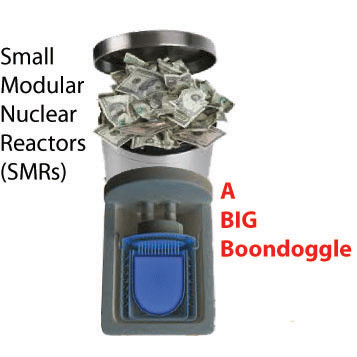 Why GOP support for subsidized nuclear energy is confounding Bangor Daily News, By Peter Bradford, July 11, 2015,
Two unusual bills promoting nuclear power were introduced in the Maine Legislature this session. One, from Sen. Eric Brakey, R-Auburn, would have fast tracked Maine’s path to a reactor using thorium to create a uranium isotope different from those that fuel nearly all of today’s power reactors. The other, from the office of Gov. Paul LePage, would have exempted “small modular reactors” from the referendum process Maine requires for other nuclear power plants.
Neither bill passed as proposed.
Still, what on earth is going on here? No license applications for these designs have ever been filed at the Nuclear Regulatory Commission. No one knows what they would cost or how reliably they would operate.
New, conventional reactors being built at customer expense in South Carolina and Georgia will have to charge well over twice the prevailing and projected market price of electricity in New England. No private company wants to build or finance a reactor under anything resembling New England power market rules. Large subsidies will be essential to the development of new reactors, including thorium and small modular reactors.
When it comes to much smaller subsidies for solar energy, LePage has vetoed legislation that would have added a surcharge amounting to less than one-tenth of a percent to Maine electric bills. He asserted that the legislation “unilaterally selects solar above other solutions that have proven to be more cost effective.” He is equally dismissive of support for wind energy or energy efficiency.
What is it about taxpayer subsidy and big government cronyism that pose such an irresistible attraction for conservatives only when directed to nuclear power? Like a reverend preaching temperance from a barstool, LePage vetoes and disparages government support for proven technologies while embracing an unproven and subsidy-addicted reactor technology as a solution to Maine’s electricity needs.
Subsidies for today’s reactors pale beside past nuclear largesse. Reactors — including thorium reactors — and nuclear fuel enrichment facilities were invented in government laboratories and given to private industry in combination with massive incentives to build power plants. The federal government made unique commitments to own and dispose of the waste fuel while limiting liability for serious accidents. States were preempted from any safety judgements about nuclear power. When electric industry restructuring threatened nuclear profitability in the 1990s, a multibillion-dollar surcharge was added to customer electric bills to cushion the impact on investors. A Congressional Research Service Report estimates that half of all federal energy expenditures on energy research and development have gone to nuclear power………….
given Maine’s experience with past nuclear mirages, the state should not anoint any single technology without an even-handed evaluation of the alternatives.
Peter Bradford chaired the Maine and New York utility regulatory commissions and was a member of the U.S. Nuclear Regulatory Commission. He is an adjunct professor at Vermont Law School. http://bangordailynews.com/2015/07/11/the-point/why-gop-support-for-subsidized-nuclear-energy-is-confounding/
Mysterious die-off of whales in the pacific: US scientists test for radiation
TV: US scientists testing for radiation in dead whales as mysterious die-off in Pacific continues — Now 14 carcasses reported, expert warns “death toll could still rise” — “Whales may have consumed something toxic… trying to find an explanation for this unusual event” (VIDEO) http://enenews.com/tv-scientists-testing-radiation-mysterious-whale-die-pacific-continues-14-carcasses-reported-expert-warns-death-toll-could-rise-whales-consumed-toxic-trying-find-explanation-unusual-event-video?utm_source=feedburner&utm_medium=email&utm_campaign=Feed%3A+ENENews+%28Energy+News%29
KTUU, Jul 10, 2015 (emphasis added): 5 more dead whales found in Alaska waters since June; total 14 dead; Researchers try to understand mysterious whale deaths… Kate Wynne, a Marine Mammal Specialist for the Alaska Sea Grant Marine Advisory Program, told Channel 2 News that since the June 18 announcement of the nine dead fin whales, four humpback whales and another fin whale have been found dead. According to Wynne, the five whales appeared to have been dead for the same amount of time as the previously discovered whales… After the first two whales were discovered… it triggered a response from numerous agencies… “The good news is that this has gotten a lot of us to talk toeach other, and be alert,” Wynne said… Wynne thinks the whales may have consumed something toxic… Tests on tissue from one of the whales have proven negative for domoic acid, a biotoxin, and results on two other tests, for Paralytic Shellfish Poisoning (PSP) and Cesium-137 radioactivity, are still pending.
Alaska Dispatch News, Jul 10, 2015: More whales found dead in southern Alaska waters – Scientists investigating the mysterious deaths of nine endangered fin whales… report that the death toll has increased… five additional whales — one fin whale and four humpbacks — have been reported… So far, the only sample taken from any of the dead animals… came back negative for domoic acid, a toxin that is produced by algae… Results from other tests are still pending… [Scientists] have been trying to find an explanation for the unusual event. Wynne said it’s possible the toll could still rise. “The number of now-rotten carcasses may continue to climbas more people travel around the area and submit reports of carcasses they see,” she said.
AP, Jul 11, 2015: More whale carcasses found in Gulf of Alaska… [Wynne] said it’s possible that more carcasses will be reported as people continue to travel around the area.
AP, Jul 11, 2015: Whale deaths in Gulf of Alaskapuzzle scientists – More dead whales have been found in the Gulf of Alaska following the sightings of nine fin whale carcasses… five additional dead whales [were reported] over the past several weeks, including four humpbacks and one fin whale… Wynne says it’s possible that more whale carcasses could be reported soon.
CBC, Jul 11, 2015: Reports of whale carcasses off Alaska raise whale death toll to 14; Scientists don’t know what’s been killing humpback and fin whales
Watch a report from ABC San Diego on NOAA scientists on the way to study whales in Alaska
Southern Ohio’s Piketon enriched uranium plant will get on-site radioactive trash disposal
On-site Piketon uranium disposal OK’d in decades-long plan Columbus Dispatch, By Kantele FrankoAssociated Press • Monday July 13, 2015 Waste from the decontamination and decommissioning of a Cold War-era uranium plant in southern Ohio will go to an on-site disposal facility under a U.S. Department of Energy plan approved by the Ohio Environmental Protection Agency.The Portsmouth Gaseous Diffusion Plant in Piketon produced enriched uranium until 2001, and the shutdown left behind old buildings, industrial chemicals and radioactive areas……..The disposal plan had support from local officials and lawmakers representing the area. Pike County Commissioner Blaine Beekman said the long-awaited decision is critical to get the cleanup rolling and to support lawmakers’ efforts to secure continued federal funding for the project.
But unanswered questions remain, including which types of waste will go where, said United Steelworkers local president Herman Potter, who represents hundreds of Piketon workers……..Some area residents and environmental activists also have objected.
U.S. Sen. Rob Portman, a Republican from southwestern Ohio, said the community agreed to on-site disposal to accelerate the cleanup but remains concerned about the site’s future now that the Energy Department estimates the work will take another three decades. http://www.dispatch.com/content/stories/local/2015/07/13/on-site-disposal-okd-in-decades-long-plan.html
EPA’s Clean POwer plan is still being lobbied by the nuclear industry
The nuclear industry is still lobbying for a bailout in EPA’s Clean Power Plan. Maybe you should be lobbying too. GreenWorld, Michael Mariotte, 14 July 15
The final language of the EPA’s Clean Power Plan (CPP) is supposed to be released next month, which means most of the text (and more importantly, the concepts behind it) is already completed.And, more specifically, it isn’t stopping the nuclear power industry from pushing for changes that would benefit new reactors in particular, although it still holds out some fading hope for help for its older, uneconomic and obsolete reactors as well.*Edison Electric Institute and utility CEOs and representatives from American Electric Power Co. Inc., DTE Energy, Berkshire Hathaway Energy and Duke Energy Corp.That’s a lot of heavyweight nuclear utilities right there. A bunch of other industry groups got to make their case as well……….
- *MJ Bradley & Associates and electric utilities that are members of its Clean Power Plan Initiative, including the CEOs or senior executives of Dominion, National Grid, NextEra, Exelon, PSEG, Pacific Gas and Electric Co. and Calpine Corp.
- As evidence, E&E Publishing Friday published a story headlined White House opens doors to eleventh-hour pleas on Clean Power Plan. Among the bevy of recent visitors pleading their cases were:
- But that isn’t stopping industry, and the occasional environmental group, from continuing to press their cases for changes from the draft proposal.
- Oh, and NEI thinks power uprates at existing reactors should be considered “new” as well.We, however, are expecting something quite different, and you should be too: if the CPP is meant to be the nation’s first climate change roadmap, then it should be pointing the path to a nuclear-free, carbon-free energy future, not figuring out how to do more of the same failed policies of the past……….
- Fertel and NEI’s ultimate goal is to make sure the U.S. nuclear fleet doesn’t continue its recent downward trend. “He noted that currently nuclear is about 20 percent of the electricity mix in the U.S. ‘Our goal is that it never drop below 20, that it pick up and maybe be more than that, but that it’s in the 20 to 20+ range as we go forward. So that’s what we are expecting.’”
- While the public comment period ended December 1, 2014, and since unlike giant utilities and the occasional big green group the public doesn’t get access to EPA officials or the White House, we thought we’d give the public another chance to comment anyway. You can send your e-mail to President Obama and EPA Administrator Gina McCarthy here, and let them know that we expect the final version of the Clean Power Plan to contain no help for nuclear whatsoever……… http://safeenergy.org/2015/07/13/the-nuclear-industry-is-still-lobbying/
USA plans for B61-12 nuclear gravity bomb “fictitious” and “bizarre,” says MIT professor
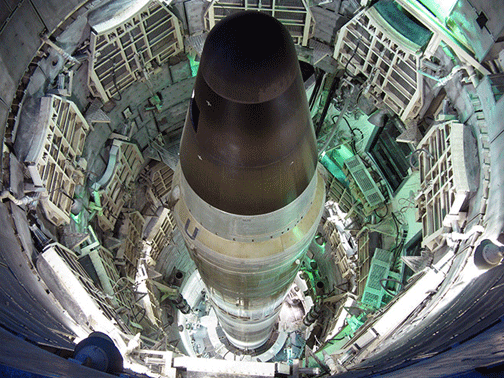 MIT Professor Shames US for ‘Fictitious and Bizarre’ Idea that New Nuclear B61-12 Bomb Could Win War http://www.globalresearch.ca/mit-prof-shames-us-for-fictitious-and-bizarre-idea-that-new-nuclear-b61-12-bomb-could-win-war/5461947 13 July 15, US plans to deploy the B61-12 nuclear gravity bomb are “fictitious” and “bizarre,” Massachusetts Institute of Technology (MIT) Professor Emeritus of Science, Technology and National Security Policy Theodore Postol told Sputnik.
WASHINGTON (Sputnik) — The US Air Force and the National Nuclear Security Administration have successfully completed the first development flight test of a B61-12 nuclear gravity bomb with no warhead in Nevada.
“The military capabilities of this weapon stem from a totally fictitious and bizarre idea that the United States can fight and win nuclear wars,” Postol said on Friday.
Postol, 69, is one of the leading US experts on ballistic missile defense technologies and ballistic missiles.
“This weapon could never be used in a real-world situation against any nuclear-armed state, as it would likely provoke an uncontrolled nuclear escalation,” he said.
The projected $11 billion upgrade program for the B61 has been described as the most expensive nuclear warhead refurbishment in history.However, the upgraded B61-12 is designed to have far greater accuracy and generate less radioactive fallout than earlier versions of the bomb.
Nevertheless, Postol charged that the new moves to modernize and upgrade the gravity bomb were likely to backfire on US policymakers with unintended consequences.
“This is yet another example of how the US nuclear modernization program continues to undermine the security of the United States and its allies,” the scientist said.
He warned that even “against states not armed with nuclear weapons, its use could have global political consequences with very far ranging and unpredictable results.”
Far from advancing US strategic security, Postol argued, developing the B61 was likely to undermine it by alarming Russia and China, and provoke them to respond by developing new strategic weapons of their own.
“It is the wrong signal to send to countries like Russia, which is already on edge over continuous advances in US nuclear strike capabilities, and to China, which is trying in spite of constant provocation to maintain a sensible posture of minimum deterrence,” Postol continued.
Pushing ahead with gravity bomb development also threatened to undermine already fragile prospects for arms control and for preventing the proliferation of nuclear weapons, Postol warned.
“It is the wrong message to send to the non-weapon state signatories of the Nonproliferation Treaty,” he stated.
Postol suggested that the Obama administration did not appear to have thought through the potential diplomatic and strategic consequences of modernizing the gravity bomb weapon.“It is hard to understand what the Obama White House thinks it is accomplishing by pushing such a counterproductive program,” he concluded.
Before joining MIT, Postol worked as an analyst at the US Office of Technology Assessment and as a science and policy adviser to the Chief of Naval Operations, the operational head of the US Navy.
In 2001, Postol received the Norbert Wiener Prize from Computer Professionals for Social Responsibility for uncovering numerous false claims about missile defenses.
US Department of Energy’s dilemma over radioactive White Oak Lake
 What to do with DOE’s radioactive lake? http://www.knoxnews.com/news/local-news/what-to-do-with-does-radioactive-lake_89372659 Frank Munger, Jul 10, 2015 More than 30 years ago, when the magnitude of pollution problems on the U.S. Department of Energy’s Oak Ridge reservation was just becoming apparent, White Oak Lake was dubbed the nation’s — if not the world’s — most radioactively polluted body of water.
The 25-acre lake was created during the World War II Manhattan Project to collect radioactive discharges from Oak Ridge National Laboratory’s nuclear operations. The construction of White Oak Dam backed up White Oak Creek and prevented the nuclear wastes from flowing directly into the Clinch River and downstream reservoirs.
Much of the worst stuff settled into the lake’s sediments. That, of course, reduced the potential exposures to downstream dwellers, but it created an environmental problem all its own.
For decades, as the DOE-funded cleanup of Oak Ridge sites has progressed, there has been an often-asked, never-answered question: What to do with White Oak Lake?
The good news is that large-scale capping and closure projects in ORNL’s old burial grounds — where tons and tons of hot wastes were dumped — have greatly reduced the seepage of radioactive materials into the basin that empties into the lake. Over time, the radioactivity in the sediments of White Oak Lake has, via the process of radioactive decay, gradually diminished.
Where once there were thousands of curies of radioactivity — notably cesium-137, which has a half-life of about 30 years — that total is probably a few hundred or maybe less by now. But the lake is still a big hazard that requires attention. The dam is regularly inspected and maintained to reduce the chances of failure, and the water released over the dam is monitored continuously.
Years ago, regulators declared the DOE would be held accountable for the environmental degradation and at some point would probably be forced to drain the lake, clean up the radioactive muck and return the area to its pre-war condition.If so, it’s expected to be one of the last DOE-sponsored cleanup actions in Oak Ridge.
Based on a federal facility agreement with the EPA and the Tennessee Department of Environment and Conservation, the DOE is supposed to provide a range of alternatives to “remediate” the lake by 2036.
However, Chris Thompson, TDEC’s Oak Ridge overseer, said recent projections of future cleanup funding indicate the decision on White Oak Lake may be delayed until 2048. Mike Koentop, executive officer of the DOE’s cleanup program, said there are ever-changing budget projections, but the DOE currently plans to submit a final proposal for the lake in 2036. Senior Writer Frank Munger may be reached at 865-342-6329.
USA Regulators to decide on future of Diablo Canyon Nuclear Facility
California law forbids building more nuclear plants in the state until the federal government comes up with a long-term solution for dealing with the radioactive waste.
The commission has called two hearings in San Luis Obispo on Aug. 5 to take public comments on issues that should be covered in an environmental impact study on the license renewal project. A draft of the study will likely take a year to complete, according to a schedule the commission sent PG&E in April. A final decision on the license renewal likely won’t arrive before mid-2017, according to the schedule.
Feds to decide whether state’s last nuclear plant stays or goes, SF Gate, By David R. Baker, July 8, 2015 Federal regulators have restarted the process of deciding whether California’s last nuclear power plant, Diablo Canyon, will remain open for decades. And like most everything else in Diablo’s long, contentious history, the move is sure to provoke a fight.

The Nuclear Regulatory Commission has reported that it would once again begin processing a request from plant owner Pacific Gas and Electric Co. to renew Diablo’s operating licenses, set to expire in 2024 and 2025. That request has been on hold since shortly after Japan’s 2011 Fukushima disaster rekindled fears of nuclear danger.
PG&E applied in 2009 to renew Diablo’s licenses for 20 years, arguing that California would need the plant near San Luis Obispo to combat climate change. The commission’s license extension process takes years to complete — hence, PG&E’s early application……….
The license renewal process, which will include public hearings and testimony, will also give the plant’s vocal opponents another chance to make their case.
Spying an opening Activists who never wanted Diablo in the first place have been pushing hard to close it, particularly after California’s only other commercial nuclear plant — San Onofre, north of San Diego — shut down in 2012.
They argue that PG&E has consistently underestimated earthquake threats to the plant, and that PG&E has a long record of snafus at Diablo, such as replacing the steam generators and vessel heads without first conducting a necessary seismic test. PG&E, in contrast, says the plant boasts a solid safety record.
“Our point is, this is a pattern with them,” said Jane Swanson, with Mothers for Peace. “They keep screwing up — and this is a nuclear plant.” Continue reading
New names for nuclear weapons – covering up the $billions spent on them
 When politicians are telling us that they’re trying to create a world without nuclear weapons, it’s misleading for the military to just give nuclear weapons new names. It’s even more misleading to spend billions of dollars rebuilding and renaming old nuclear weapons, just so that those politicians can say that we’re not creating any new ones.
The Air Force Just Dropped an Expensive (and Useless) Nuke in Nevada http://gizmodo.com/the-air-force-just-dropped-an-expensive-and-useless-n-1716527174 Adam Clark Estes 7/08/15 In the face of mounting criticism, the Air Force just completed the first test flight of the B61 Mod 12 mock up nuclear bomb in the Nevada desert. This marks the next step in updating a cold war-era weapon that many experts consider to be completely useless today. The military might as well drop a nuke on a pile of taxpayer dollars.
The whole situation is frustrating, in part, because it’s based on some scary assumptions about an impending nuclear apocalypse. Since its development in 1963—a year after the Cuban missile crisis—the B61 has been one of top weapons in the U.S. nuclear arsenal. Capable of carriage in supersonic aircraft and a two-stage radiation implosion, this is a bad bomb that we might’ve dropped on Moscow if things had escalated with the Soviets.
However, as the New York Times editorial board explained things a couple years ago, the bombs are “the detritus of the cold war.” The updated B61s are also a very, very expensive detritus. President Obama is already throwing hundreds of millions of dollars at this program to keep these nukes on life support. The total cost of the program is expected to be as high as $11 billion by its completion in the 2020s, while the true nature of the upgrade is being masked.
This is a nonsensical decision, not least because it is at odds with Mr. Obama’s own vision. In a seminal speech in Prague in 2009 and a strategy review in 2010, Mr. Obama advocated the long-term goal of a world without nuclear arms and promised to reduce America’s reliance on them. He also promised not to field a new and improved warhead.
 But refurbishing warheads from the 1960s is apparently cool. Meanwhile, the National Nuclear Security Administration (NNSA) and the Air Force still insists on referring to these types of weapons as “gravity bombs” in this modern era. This is misleading since a gravity bomb is really any unguided bomb. Really, it’s a nuke wrapped in a gravity bomb wrapped in a euphemism.
So it’s basically bullshit when Obama and friends talk up their anti-proliferation efforts. In truth, the government is still spending billions on nukes tuned towards the former USSR, while also doing nothing to influence with China, India, or Pakistan (or Israel) to rein in their nuclear programs. An expert gave a lengthy Congressional Testimony on this very topic just a few months ago. Similarly, the Air Force is actively updating its nuclear weapons operation in order to fight a nuclear war when the time is right. As Maj. Gen. Sandra Finan, the commander of the Air Force Nuclear Weapons Center, put it in an April press release, “Our mission is still to deliver nuclear capabilities and winning solutions that warfighters use daily to deter our enemies and assure our allies.”
This is what brings us back to those assumptions about a scary nuclear apocalypse. When politicians are telling us that they’re trying to create a world without nuclear weapons, it’s misleading for the military to just give nuclear weapons new names. It’s even more misleading to spend billions of dollars rebuilding and renaming old nuclear weapons, just so that those politicians can say that we’re not creating any new ones.
Just call a nuke a nuke. The Air Force just dropped an expensive and inevitably useless nuke in the Nevada desert. There was no mushroom cloud this time. But there’s always a next time.
USA’s faith groups unite in push for clean energy
From Pope Francis to Green Muslims, faith groups steadfast in push for clean energy, Midwest Energy News, BY Kari Lydersen, 9 July 15 Rev. Booker Steven Vance took to the pulpit in historic Old St. Patrick’s Church in downtown Chicago on June 22 to praise Pope Francis’ ground-breaking encyclicalon climate change and sustainability.
Vance attached a very concrete and local element to the Pope’s sweeping call to action. He and other religious and environmental leaders hosting a press conference declared that passing a proposed Clean Jobs bill in the Illinois legislature is one way the Pope’s call to action should be answered.
“The encyclical provides an opportunity for a game-changer, bringing this conversation to a whole new level,” said Vance. “I’m talking about the bill downstate in Springfield that deals with clean air, clean energy and clean jobs. The pope is absolutely correct, we are responsible and the onus falls on us.”
That same evening 90 miles north in Milwaukee, the Islamic Environmental Group of Wisconsin, also known as the Wisconsin Green Muslims, gathered to break the Ramadan fast together while also talking about a spiritual obligation to care for the earth, in part by reducing carbon emissions and embracing a more sustainable lifestyle…………
The Clean Jobs bill would create about 32,000 jobs in Illinois, according to proponents, by increasing the state’s commitment to renewable energy and energy efficiency. A study by the Union of Concerned Scientists found it would spur $23 billion in clean energy investment and lower consumer bills by a total of $12 billion over 15 years.
The bill has widespread support — including from interfaith groups and religious leaders — but it also faces competing bills backed by powerful energy interests and a state budget crisis that is consuming the legislature’s attention.
Meanwhile the Wisconsin Green Muslims also are up against powerful forces in trying to promote clean energy……….http://midwestenergynews.com/2015/07/09/from-pope-francis-to-green-muslims-faith-groups-steadfast-in-push-for-clean-energy/
Mounting risk and costs of new Vogtle nuclear reactors shown at hearing
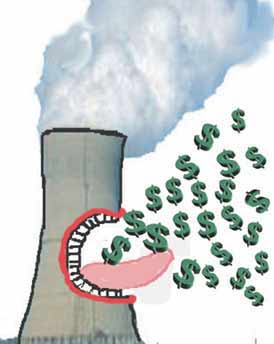 Hearing on New Vogtle Nuclear Reactors Provides New Information on Mounting Risks and Costs July 7th, 2015 ›
Members of the public voice concerns about the Vogtle expansion at the GA PSC hearing
http://blog.cleanenergy.org/2015/07/07/hearing-on-new-vogtle-nuclear-reactors-provides-new-information-on-mounting-risks-and-costs/Below is a Georgia Utility Update first published on July 1, 2015 by Robert “Bobby” B. Baker, Jr. with Freeman, Mathis & Gary, LLP who serves as SACE’s legal counsel in the ongoing semi-annual Vogtle Construction Monitoring (VCM) review before the Georgia Public Service Commission (PSC). Mr. Baker served three terms as a Georgia PSC Commissioner and he provides an invaluable perspective. SACE has consistently intervened and is extremely concerned about the project’s negative impacts on customers given the significant cost increases and schedule delays that have now eroded any supposed benefits, according to experts who testified at the July 23, 2015 PSC hearing. The audiocast of the hearing is available in two parts: part 1 has the Jacobs/Roetger panel and part 2 continues with Jacobs/Roetger until witness Philip Hayet begins at ~37:33. U.S. taxpayers are also at risk should the project default as $8.3 billion in federal loan guarantees for the project were just recently finalized, more than five years after they were originally offered. Additionally, the proposed expansion poses significant risks to the already imperiled Savannah River. We have added links within Mr. Baker’s article to provide our readers with more information. The Georgia PSC Commissioners will vote on the $169 million in expenditures for docket #29849 on August 18, 2015. To contact the Commission, click here. –Sara Barczak, SACE’s High Risk Program Director
Hearing in Vogtle Review Provides New Information on Project’s Cost by Bobby Baker
At the June 23rd hearing on the 12th Vogtle Construction Monitoring Review the Public Service Commission (“PSC”) Staff expert witnesses provided new information regarding the actual financial impact of the current 39 month delay in the construction schedule for Vogtle Units 3 and 4. While it is hardly newsworthy to report that the Project has fallen further behind schedule and the overall costs have increased, the PSC’s witnesses explained how the cost increases impact each residential ratepayer, quantified the total revenue requirement for the Project and refuted the Company’s claims regarding the alleged benefits of the Project.
Staff Witness Philip Hayet testified that the current 39 month delay would add $319.00 or $6.26 per month to the average residential ratepayer’s bill beginning in April 2016 and continuing to June 2020 in the form of higher fuel costs and Nuclear Construction Cost Recovery (“NCCR”) tariff payments.
Of the additional $319.00 in costs, 59% of the increase or $187.00 would be through higher NCCR monthly charges. The cost increase is especially significant to businesses because the $319.00 increase was for the average residential customer who uses 1,000 kilowatt hours per month. Obviously, electric customers with higher monthly electric usage would be paying significantly more in fuel and NCCR costs.
During cross examination concerning the current cost projection of $7.5 billion for Georgia Power Company’s share of the Project it was disclosed for the first time that the total revenue requirement just for Georgia Power’s share of the Project would be $30 billion. Knowing that the total revenue requirement for the project is four times the construction costs gives consumers an ability to evaluate the total Project costs. The current total revenue requirement for the Project is approximately $65 billion.
In the past few Vogtle reviews it was revealed that the cost for every day of delay is $2 million. This calculation was further clarified when it was explained that it did not contain payment of any taxes. The gross up on the $2 million daily cost with taxes would be approximately $2.92 million.
Finally, the PSC Staff witness refuted the Company’s claims regarding the alleged ratepayer benefits of the Project by testifying that the remaining $2.7 billion in alleged benefits claimed by the Company had shrunk down to no more than $208 million. This figure would be further reduced to negative $300 million if 50% of the production tax credits were removed from the calculation. Based on the Project’s current schedule it is highly unlikely that Unit 4 will be on line by December 31, 2020 to be eligible to receive $522 million in production tax credits.
While the testimony at the June 23 hearing was not reassuring to ratepayers, it did provide a clearer financial picture regarding the true costs of Vogtle Units 3 and 4, and reaffirmed the fact that the Project would see more construction delays.:… http://blog.cleanenergy.org/2015/07/07/hearing-on-new-vogtle-nuclear-reactors-provides-new-information-on-mounting-risks-and-costs/#sthash.NN53E6sH.dpuf
Mainstream media is complicit in cover-up of effects of Fukushima radiation
Hiding behind the glaring omissions of the mainstream press regarding Fukushima is the pressing reality that contamination from the event is severe, continual, on the rise, and already affecting North America.
Independent Media Runs With the Story There is, however, plenty of news coming out about Fukushima and plenty of conversation taking place about the impact on the environment and on human health. It’s just not to be found in the mainstream media, who is unquestionably strongly influenced by the nuclear energy industry and the government, and apparently involved in one of the greatest media cover ups of all time.
 Cover Up – Mainstream Reporting on Fukushima a Joke Terence Newton, Staff Writer Waking Times , 5 July 15 It has been over four years since the 9.0 magnitude Tōhoku earthquake and ensuing catastrophic tsunami leveled the Pacific coast of Japan, setting off a nuclear meltdown at the Fukushima Daichi power plant. Radiation has been pouring into the ocean, into the earth below, and into the air for over 1500 days now and there is still zero sense of urgency on the part of the government and world leaders to seriously address this blooming catastrophe. All efforts to stop the meltdown and clean up the radiation have been left in the hands of TEPCO, Japan’s energy company that has been proven time and again to be inept and unprepared to confront a disaster of this sort.
The mainstream media, for its part, appears to be complicit in a cover-up of the effects thatFukushima radiation is already having on our environment and on human and animal health, and instead insists on omitting most news on the matter, or seriously dumbing down reports of the fallout.
For example, Continue reading
USA government hid radiation test results in Pacific
 Japan Scientists: High radiation levels near West Coast after Fukushima disaster — Almost 30 Bq/m3 of cesium offshore — Secret documents reveal US gov’t previously ordered radiation test results in Pacific be hidden to avoid contamination fears http://enenews.com/japan-scientists-high-radiation-levels-west-coast-after-fukushima-disaster-almost-30-bqm3-cesium-offshore-secret-documents-reveal-govt-ordered-radiation-test-results-pacific-be-hidden-avoid-cont
Michio Aoyama (Fukushima University) et al. (pdf), European Geosciences Union General Assembly, Apr 2015 (emphasis added): The oceanic distribution of Cs-137 and Cs-134 released from [Fukushima Daiichi] were investigated… During the period from end of March to early of April 2011, extremely high activities of Cs-137 and Cs-134 in seawater were concentrated along the coast… The high activities area spread to the region of 165_E with a latitudinal center of 40_N in the western North Pacific Ocean. Atmospheric deposition is also cause to high activities in the region between 180º and 130º W in the North Pacific Ocean. The total inventory of FNPP1-released Cs-134 in the North Pacific Ocean is estimated to be 15.2 +/- 1.8 PBq… Leak of stagnant water induced by heavy rainfall would also cause the increase of the total…
Meteorological Research Institute (further detailed inAoyama et al.): 137Cs and 134Cs activities in the North Pacific Ocean after Fukushima Nuclear power plants accident — MRI (Meteorological Research Institute) measured the concentration of radiocesium (134Cs、137Cs) in the seawater sampled in April – May 2011.
- May 13 (42.72ºN, 151.12ºW): 27.3 Bq/m3 of 134Cs + 137Cs (13.5 + 13.8)
- May 14 (40.97ºN, 141.46ºW): 19.3 Bq/m3 of 134Cs + 137Cs (8.1 + 11.2)
Advisory Committee on Human Radiation Experiments(special committee created by Executive Order of the President of the United States), 1994: The [Department of Defense] engaged in fallout data gathering. In the fall of 1954, the Armed Forces Special Weapons Project established a “Fall-out Study Group“… A December 16, 1954, memorandum from the chief of the Armed Forces Special Weapons Project stated… “The actual data obtained are SECRET and the sample collection should be discreetly handled.”… Another contemporary instance of selective disclosure of fallout-related research… is discussed in a February 1955 letter… Willard Libby, acting AEC chairman [reporting] on a proposed marine radiobiological survey in the Pacific… “The classification ‘Secret’ Defense Information has been assigned to the surveyin order to avoid… unwarranted recrudescence [i.e. recurrence] of fears in Japan of radioactive contamination of fish… The fact of an oceanographic survey in the Pacific, however, is regarded as unclassified so long as purpose, content, and results are not revealed.”
Note the rather obvious gap in the center of the Woods Hole Oceanographic Institution’s map showing test results for the Fukushima radioactive plume from 2011-15. According to the WHOI website, they are attempting to “reveal the ongoing spread of radiation across the Pacific.” Perhaps samples from a location that’s in the projected path of the radiation spreading across the Pacific would help.
History of safety failures at US nuclear plants
 How the next US nuclear accident could happen, Bulletin of the Atomic Scientists, Hugh Gusterson 5 July 15 “…….We can learn a lot about the potential for safety failures at US nuclear plants from the July 29, 2012, incident in which three religious activists broke into the supposedly impregnable Y-12 facility at Oak Ridge, Tennessee, the Fort Knox of uranium. Once there, they spilled blood and spray painted “work for peace not war” on the walls of a building housing enough uranium to build thousands of nuclear weapons. They began hammering on the building with a sledgehammer, and waited half an hour to be arrested. If an 82-year-old nun with a heart condition and two confederates old enough to be AARP members could do this, imagine what a team of determined terrorists could do.
We have a detailed understanding of this incident thanks to energetic reporting byFrank Munger, Dan Zak, and, finally, a recent tour de force account in the New Yorker by Eric Schlosser, who has established himself as the premier reporter on nuclear accidents waiting to happen. Their cumulative reporting suggests that the Achilles’ heel of US nuclear safety culture lies in a fondness for automated security technologies, the delegation of government functions to private contractors, and a predilection for hollow facsimiles of effective audit procedures.
Where some other countries often rely more on guards with guns, the United States likes to protect its nuclear facilities with a high-tech web of cameras and sensors. Under the Nunn-Lugar program, Washington has insisted that Russia adopt a similar approach to security at its own nuclear sites—claiming that an American cultural preference is objectively superior. The Y-12 incident shows the problem with the American approach of automating security. At the Y-12 facility, in addition to the three fences the protestors had to cut through with wire-cutters, there were cameras and motion detectors. But we too easily forget that technology has to be maintained and watched to be effective. According to Munger, 20 percent of the Y-12 cameras were not working on the night the activists broke in. Cameras and motion detectors that had been broken for months had gone unrepaired. A security guard was chatting rather than watching the feed from a camera that did work. And guards ignored the motion detectors, which were so often set off by local wildlife that they assumed all alarms were false positives….
Instead of having government forces guard the site, the Department of Energy had hired two contractors: Wackenhut and Babcock and Wilcox. Wackenhut is now owned by the British company G4S, which also botched security for the 2012 London Olympics, forcing the British government to send 3,500 troops to provide security that the company had promised but proved unable to deliver. Private companies are, of course, driven primarily by the need to make a profit, but there are surely some operations for which profit should not be the primary consideration.
Babcock and Wilcox was supposed to maintain the security equipment at the Y-12 site, while Wackenhut provided the guards. Poor communication between the two companies was one reason sensors and cameras were not repaired. Furthermore, Babcock and Wilcox had changed the design of the plant’s Highly Enriched Uranium Materials Facility, making it a more vulnerable aboveground building, in order to cut costs. And Wackenhut was planning to lay off 70 guards at Y-12, also to cut costs.
Incidentally, we hear similar stories coming out of Los Alamos, where the private contractor responsible for packaging nuclear waste for the Waste Isolation Pilot Project put pressure on an undertrained workforce to pack as many barrels of nuclear waste as possible everyday, if necessary by cutting safety corners to maximize profit.
These are the hazards of outsourcing essential state security functions to private contractors: They prioritize profit and, like the Soviet bureaucratic organizations Sonja Schmid blames for Chernobyl, they often find it hard to work together……
This time the nuclear facility was broken into by highly principled peace activists intent on symbolically spilling their own blood to make a point. Next time the intruders may be more malevolent, intending to spill others’ blood. If there is a next time, be prepared for an inquiry that shows a misplaced faith in automated security technology, private contractors cutting corners to make a buck, and government managers astonished that their reviews didn’t catch the problem. http://thebulletin.org/how-next-us-nuclear-accident-could-happen8441
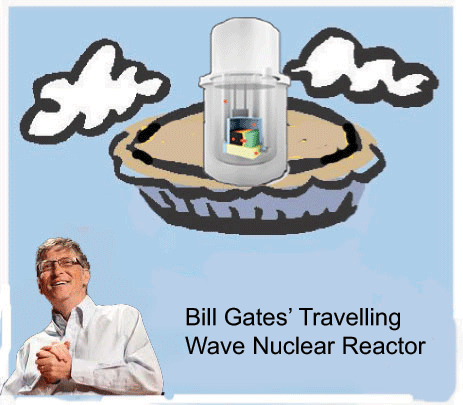
A losing bet – Bill Gates’ gamble on nuclear power?
Arjun Makhijani, president of the Institute for Energy and Environmental Research, told VICE News that companies have spent $100 billion worldwide trying to commercialize breeder reactors without success.
“So now you’re telling me that this combination of reactors has $1.3 billion scattered over more than a dozen technologies?” he said. “Bill Gates’ investment … is hopeless.”
Tech Titans Like Bill Gates Are Gambling on Nuclear Power — But It Looks to Be a Losing Bet, VICE News, By Laura Dattaro July 4, 2015 Nearly 50 American and Canadian tech companies, including heavy hitters like Bill Gates, have invested over a billion dollars in next-generation nuclear technologies in the last 10 years, according to the think tank Third Way.
Despite declining public trust in nukes, especially since the Fukushima Daiichi meltdown in Japan in March 2011, proponents argue that nuclear is key — some say the key — to providing reliable energy while at the same time helping to rid the world of fossil fuels.
“We were compelled by a mission to get involved in a very pressing energy challenge …. Marcia Burkey, chief financial officer of TerraPower, told VICE News. Bellingham, Washington-based TerraPower was founded by Bill Gates and is developing new nuclear reactor technologies.
But critics of nuclear power say this rosy picture does not match the realities of the industry, and that the technologies are too far from being scaled up commercially to meet the urgency of lowering emissions. What’s more, they say, the money behind the current push for more advanced reactors is paltry compared to the costs associated with developing, licensing, and constructing even a single nuclear plant.
“You can’t really in good faith put forward a technology that we don’t know how to do, and have no real prospect of knowing how to do in the next couple of decades. The solution needs to be underway already or to be capable of beginning tomorrow,” Peter Bradford, a professor at Vermont Law School and former member of the US Nuclear Regulatory Commission (NRC), told VICE News. “That’s really not true of any of those designs mentioned in the [Third Way] report.” Continue reading
1 This Month
15 October. Joint Appeal for Nuclear Abolition Day -presentation to the UN on October 15 will be live on UNWebTV
Endorse the Nuclear Abolition Day Appeal
23-25 October – on Zoom – World BEYOND War’s annual global conference

To see nuclear-related stories in greater depth and intensity – go to https://nuclearinformation.wordpress.com
-
Archives
- October 2026 (149)
- September 2026 (339)
- August 2026 (330)
- July 2026 (355)
- June 2026 (287)
- May 2026 (306)
- April 2026 (356)
- March 2026 (251)
- February 2026 (267)
- January 2026 (308)
- December 2025 (358)
- November 2025 (359)
-
Categories
- 1
- 1 NUCLEAR ISSUES
- business and costs
- climate change
- culture and arts
- ENERGY
- environment
- health
- history
- indigenous issues
- Legal
- marketing of nuclear
- media
- opposition to nuclear
- PERSONAL STORIES
- politics
- politics international
- Religion and ethics
- safety
- secrets,lies and civil liberties
- spinbuster
- technology
- Uranium
- wastes
- weapons and war
- Women
- 2 WORLD
- ACTION
- AFRICA
- Atrocities
- AUSTRALIA
- Christina's notes
- Christina's themes
- culture and arts
- Events
- Fuk 2022
- Fuk 2023
- Fukushima 2017
- Fukushima 2018
- fukushima 2019
- Fukushima 2020
- Fukushima 2021
- general
- global warming
- Humour (God we need it)
- Nuclear
- RARE EARTHS
- Reference
- resources – print
- Resources -audiovicual
- Weekly Newsletter
- World
- World Nuclear
- YouTube
-
RSS
Entries RSS
Comments RSS

