The Empire Only De-Escalates In One Area So It Can Escalate In Another, And Other Notes
Caitlin Johnstone, Nov 15, 2025, https://www.caitlinjohnst.one/p/the-empire-only-de-escalates-in-one?utm_source=post-email-title&publication_id=82124&post_id=178942591&utm_campaign=email-post-title&isFreemail=true&r=1ise1&triedRedirect=true&utm_medium=email
Just as things cool down a bit in the middle east, the US has relocated the USS Gerald Ford from the Mediterranean Sea to the Caribbean while the Trump administration discusses plans to bomb Venezuela.
The violence of the empire remains constant. Peace is never the goal. You get happy they’re pulling the world’s largest aircraft carrier away from Iran, then it turns out they’re only doing it so they can move it to Venezuela. You get happy they’re pulling out of Afghanistan, then suddenly they’re waging a proxy war in Ukraine.
These days whenever you see the imperial war machinery getting pulled from one area, you know it’s just going to be sent someplace else.
Peace is never pursued for its own sake, because there’s nothing in it for the empire. There’s too much power and money in nonstop warmongering for peace to be allowed to become the norm.
Which is just insane if you think about it. Every normal person wants peace in their own lives. None of us want our time on this planet to be disturbed by violence, chaos and bloodshed.
The western world has created a machine whose behavior goes against every healthy human impulse. The US-led world order has given birth to an out of control monster with an insatiable appetite for human flesh.
❖
Reuters reports that in 2024 the Biden administration had intelligence showing that the IDF was using Palestinians as human shields in Gaza. But Biden continued shipping genocide weapons to the Israelis the entire time he was in office.
You’ll still periodically see online liberals trying to shame leftists for not voting for Kamala, but the more information comes out about what the Biden administration was up to during that time the more genocidal they look. Biden-Harris are looking worse with time, not better.
When you see what a large-scale power broker Jeffrey Epstein was for Israeli intelligence, you understand why it’s entirely reasonable to suspect that extensive state resources would be put toward an elaborate plot to murder him in his prison cell and make it look like a suicide.
Generative AI stuff only looks impressive to mediocre people for the same reason a chess novice couldn’t tell you whether they were playing against a Grandmaster or just someone who’s pretty good at chess. We can only appreciate something up to the level of our own adeptness.
To someone who’s not very bright, an AI’s imitation of reasoning looks sharp. Someone with no aptitude for writing or appreciation for great literature will think its prose reads brilliantly. Its poetry looks good to those who don’t understand poetry. Its “art” looks great to those with no artistic sensibility. It’s music sounds awesome to those with no musical depth. Only those who are emotionally stunted and incapable of meaningful human connection will find them to be stimulating conversationalists and companions.
Like so much else capitalism produces, it’s a product that’s designed to appeal to the lowest common denominator. For everyone else it looks vapid and gross, just like daytime talk shows, Hollywood blockbusters, and trashy tabloids always have.
That’s just how it works in a society which only elevates that which can generate profits. The food is designed to induce craving rather than facilitate health. The entertainment is designed to distract and sedate rather than to edify. The social media is designed to be addictive rather than to help people connect with each other. It’s all geared to appeal to our baser instincts rather than to improve and inform us.
Anyone who is interested in actually growing as a person will have less and less use for anything GenAI has to offer. Past a certain point of personal development, it simply cannot satisfy.
Lab Chromium Contamination Confirmed on San Ildefonso Pueblo Land.

Since chromium contamination was first reported in 2004, the Lab’s nuclear weapons budget has more than doubled to $5 billion (now 84% of LANL’s ~$6 billion annual budget). Cleanup is being cut to $278 million (less than 5% of the Lab’s total budget), as are virtually all non-nuclear weapons programs (research into renewable energies is being eliminated).[6]
Comprehensive Cleanup Needed Instead of More Nuclear Weapons
November 14, 2025, nuclear watch , New Mexico, nukewatch.org
| Santa Fe, NM – The New Mexico Environment Department has announced: “A toxic chromium plume from Los Alamos National Laboratory has spread beyond Lab boundaries onto Pueblo de San Ildefonso land for the first time, with contamination exceeding state groundwater standards… These new results are conclusive evidence that the U.S. Department of Energy’s efforts to contain the chromium plume have been inadequate.” In reality, chromium groundwater contamination probably migrated beyond the LANL/San Ildefonso Pueblo boundary long ago, with Lab maps of the plume “magically’ stopping at the border. In the past, tribal leadership has commented that it was fortunate that the contamination stopped there, but that any future indications of groundwater contamination on Pueblo land could have serious consequences. The San Ildefonso Pueblo is a sovereign Native American tribal government. |
| As late as the late 1990s the Lab was falsely claiming that groundwater contamination was impossible because underlying volcanic tuff is “impermeable.” [1] This ignored the obvious fact that the Parajito Plateau is heavily seismically fractured, providing ready pathways for contaminant migration to deep groundwater. By 2005 even LANL acknowledged that continuing increasing contamination of the regional aquifer is inevitable.[2] Some 300,000 northern New Mexicans rely upon the aquifer for safe drinking water. The potential serious human health effects (including cancer) caused by chromium contamination was the subject of the popular movie Erin Brockovich. LANL’s chromium contamination plume is at least one mile long, a half mile wide and 100 feet thick.[3] It is commonly regarded as the Lab’s most serious environmental threat. One drinking water supply well for Los Alamos County has already been shut down because of the plume. But even two decades after it was first reported, the Lab still doesn’t know how big the chromium plume is. On December 30, 2024, in the middle of the holiday season, the Lab posted the report Independent Review of the Chromium Interim Measures Remediation System to its largely unknown Legacy Cleanup Electronic Public Reading Room. The Report’s bottom line was: “…at this time the plume is not sufficiently characterized to design a final remedy… data gaps and uncertainties need to be addressed before committing to an alternative or final remedy.” From 1956 to 1972, water containing potassium dichromate was used to prevent corrosion in cooling towers, releasing as much as 160,000 pounds of potassium dichromate into the headwaters of Sandia Canyon.[4] Over a 3-year period ending in November 2022, the Department of Energy extracted, treated and reinjected more than 400 million gallons of groundwater. But the December 2024 chromium report stated that only ~680 pounds of chromium was actually removed.[5] At this rate it will take more than a century to treat and remediate the chromium plume. |
While failing to recommend a final remedy, the new chromium report did argue that extraction and treatment of groundwater should be continued. However, in order to speed up cleanup as part of any final remedy, Nuclear Watch New Mexico argues for pumping or trucking the treated groundwater uphill to flush out the chromium contamination at its source. In addition, more monitoring wells should be installed to finally determine the true depth and breadth of the chromium contamination that threatens northern New Mexico’s largest supply of drinking water.
Since chromium contamination was first reported in 2004, the Lab’s nuclear weapons budget has more than doubled to $5 billion (now 84% of LANL’s ~$6 billion annual budget). Cleanup is being cut to $278 million (less than 5% of the Lab’s total budget), as are virtually all non-nuclear weapons programs (research into renewable energies is being eliminated).[6]
According to the independent Government Accountability Office, expected completion of Lab cleanup has been repeatedly pushed back, most recently to 2043 with an estimated cost of $7 billion.[7] But even this is a false cleanup with the Lab planning to “cap and cover” some 800,000 cubic yards of radioactive and toxic wastes, leaving them permanently buried in unlined pits and shafts as a perpetual threat to groundwater. As the Lab becomes more and more a nuclear weapons production site for plutonium “pit” bomb cores, it remains woefully ignorant over the extent and depth of the contamination it has caused to the regional groundwater aquifer. At the same time, LANL continues to downplay widespread plutonium contamination in soil, water and plants.[8]
Jay Coghlan, Director of Nuclear Watch New Mexico, commented: “LANL’s expanding nuclear weapons programs are a two-fold threat. First, they fuel the new nuclear arms race that threatens all of humanity. At the same time, they rob funding from vitally needed cleanup that would permanently protect our irreplaceable groundwater. As is commonly said in northern New Mexico, “Aqua es Vida!” Nuclear weapons can destroy both.”
Trump’s Ploy at the UN Is American Imperialism Masquerading as a Peace Process

Jeffrey D. SachsSybil Fares, Nov 13, 2025, https://www.commondreams.org/opinion/trump-s-ploy-at-the-un-is-american-imperialism-masquerading-as-a-peace-process
Palestine remains the endless victim of US and Israeli maneuvers. The results are not just devastating for Palestine, which has suffered an outright genocide, but for the Arab world and beyond.
The Trump administration is pushing an Israeli-crafted resolution at the UN Security Council (UNSC) this week aimed at eliminating the possibility of a State of Palestine. The resolution does three things. It establishes US political control over Gaza. It separates Gaza from the rest of Palestine. And it allows the US, and therefore Israel, to determine the timeline for Israel’s supposed withdrawal from Gaza–which would mean: never.
This is imperialism masquerading as a peace process. In and of itself it’s no surprise. Israel runs US foreign policy in the Middle East. What is a surprise is that the US and Israel might just get away with this travesty unless the world speaks up with urgency and indignation.
The draft UNSC resolution would establish a US-UK-dominated Board of Peace, chaired by none other than Donald Trump himself, and endowed with sweeping powers over Gaza’s governance, borders, reconstruction, and security. This resolution would sideline the State of Palestine and condition any transfer of authority to the Palestinians on the indulgence of the Board of Peace.
This would be an overt return to the British Mandate of 100 years ago, with the only change being that the US would hold the mandate rather than Britain. If it weren’t so utterly tragic, it would be laughable. As Marx said, history repeats itself, first as tragedy, then as farce. Yes, the proposal is farce, yet Israel’s genocide is not. It is tragedy of the first order.
Incredibly, according to the draft resolution, the Board of Peace would be granted sovereign powers in Gaza. Palestinian sovereignty is left to the discretion of the Board, which alone would decide when Palestinians are “ready” to govern themselves – perhaps in another 100 years? Even military security is subordinated to the Board, and the envisioned forces would answer not to the UN Security Council or to the Palestinian people, but to the Board’s “strategic guidance.”
The US-Israel resolution is being put forward precisely because the rest of the world—other than Israel and the US—has woken up to two facts. First, Israel is committing genocide, a reality witnessed every day in Gaza and the West Bank, where innocent Palestinians are murdered to the satisfaction of the Israel Defense Forces and the illegal Israeli settlers in the West Bank. Second, Palestine is a state, albeit one whose sovereignty remains obstructed by the US, which uses its veto in the UNSC to block Palestine’s permanent UN membership. At the UN this past July and then again in September, the UN General Assembly voted overwhelmingly for Palestine’s statehood, a fact that put the Israel-US Zionist lobby into overdrive, resulting in the current draft resolution.
For Israel to accomplish its goal of Greater Israel, the US is pursuing a classic divide-and-conquer strategy, squeezing Arab and Islamic states with threats and inducements. When other countries resist the US-Israel demands, they are cut off from critical technologies, lose access to World Bank and IMF financing, and suffer Israeli bombing, even in countries with US military bases present. The US offers no real protection; rather, it orchestrates a protection racket, extracting concessions from countries wherever US leverage exists. This extortion will continue until the global community stands up to such tactics and insists upon genuine Palestinian sovereignty and US and Israeli adherence to international law.
Palestine remains the endless victim of US and Israeli maneuvers. The results are not just devastating for Palestine, which has suffered an outright genocide, but for the Arab world and beyond. Israel and the US are currently at war, overtly or covertly, across the Horn of Africa (Libya, Sudan, Somalia), the Eastern Mediterranean (Lebanon, Syria), the Gulf region (Yemen), and Western Asia (Iraq, Iran).
If the UN Security Council is to provide true security in accordance with the UN Charter, it must not yield to US pressures and instead act decisively in line with international law. A resolution truly for peace should include four vital points. First, it should welcome the State of Palestine as a sovereign UN member state, with the US lifting its veto. Second, it should safeguard the territorial integrity of the State of Palestine and Israel, according to the 1967 borders. Third, it should establish a UNSC-mandated protection force drawn up from Muslim-majority states. Fourth, it should include the defunding and disarmament of all belligerent non-state entities, and it should ensure the mutual security of Israel and Palestine.
The two-state solution is about true peace—not about the politicide and genocide of Palestine, or the continued attacks by militants on Israel. It’s time for both Palestinians and Israelis to be safe, and for the US and Israel to give up the cruel delusion of permanently ruling over the Palestinian people.
Bechtel Chief Says U.S. Must Subsidize Trump’s Nuclear Revival.

By Leonard Hyman & William Tilles – Nov 153, 2025 https://oilprice.com/Alternative-Energy/Nuclear-Power/Bechtel-Chief-Says-US-Must-Subsidize-Trumps-Nuclear-Revival.html5,
- Bechtel CEO Craig Albert said the U.S. government should help cover the costs of new nuclear plants under Trump’s proposed expansion.
- Nuclear power relies on layers of government subsidies for insurance, fuel, and waste disposal.
- If more reactors are truly needed, the government—not private firms—should build and operate them to lower capital costs
Well, someone important finally said it. Craig Albert, head of construction firm Bechtel, credited by the Financial Times for “rescuing” the Vogtle nuclear project in Georgia (we think “finishing“ it would be a better description), told that august paper that if the government wanted to get Donald Trump’s nuclear construction expansion going, it should be willing to pick up part of the costs. That is, subsidize the seemingly inevitable cost overruns? All the stories that followed talked about encouraging the “early movers” as if nobody had been building nuclear plants for the past seventy years, with cost overruns a common feature of construction in the US and Europe for at least 40 years.
We’ve said, and written in blogs and books, that building nuclear power plants in the USA (and a lot of other places) is not and has never been a commercial business venture. And maybe not a rational one, either. (The list of government subsidies for the industry like insurance, fuel procurement, nuclear waste disposal etc. go on and on.)
And Mr. Albert’s comments seem to bear that out. Just about every other electricity source is cheaper. If you don’t believe in climate change, then why not build more coal and gas? The USA has large domestic supplies of both. They run around the clock, too. If you believe in climate change, wind and solar assisted by batteries and better transmission can do the same job as a base load plant at about the same price points. And the wind and sun don’t have to be imported. But the Chinese control the rare earths that go into those facilities. Yes, but there are plenty of rare earths to be found elsewhere (“rare” being a misnomer). The problem is that the Chinese control the processing. So, would it take more time to build a nuclear plant or to build rare earth processing facilities in friendly places?
Or, if we really were worried about national security or the climate and were looking for an economical way out, we might want to do something about our outsize consumption of electricity, roughly 50-100% higher than in similarly developed countries in similar climates. For years, energy economists have argued that saving energy is a lot cheaper than producing it. A nonstarter nowadays. (Ever since 1977 when Jimmy Carter caused a controversy by turning down the thermostats and putting on a sweater in the White House to encourage energy conservation this has been a political nonstarter. Sad.)
Here’s the point. We need lots of electricity, but we don’t need nuclear power. So why should we subsidize the risk? This is not a new technology. Our first commercial reactor entered service in 1957. It’s an old, extremely complicated technology that never met its promised potential. A workable fusion reactor might change the world, but not more fission nukes. However, if the powers that be really want more nukes, we suggest that the government build and run them. It couldn’t do worse than the private generating companies. It would open the nuclear subsidy to public scrutiny and it would save a bundle on capital costs. (The government can always finance things much more cheaply than the private sector.) Our conclusion is that nuclear power is not a place for the private sector because it is not, and has never been, a commercially viable business.
Beyond Nuclear brings interim storage case back to Supreme Court.

Nov 14, 2025, https://www.ans.org/news/article-7537/beyond-nuclear-brings-interim-storage-case-back-to-supreme-court/
The U.S. Supreme Court may once again scrutinize the Nuclear Regulatory Commission’s authority to license consolidated interim storage facilities for commercial spent nuclear fuel. The antinuclear group Beyond Nuclear has filed a petition with the court for a writ of certiorari review of an August 2024 appeals court decision rejecting the group’s lawsuit against the licensing of Holtec International’s New Mexico storage facility, the HI-STORE CISF.
Beyond Nuclear is arguing that the NRC’s decision to license the HI-STORE CISF and deny the group’s hearing request violated the Nuclear Waste Policy Act (NWPA) and the Administrative Procedure Act, as well as the constitutional separation of powers doctrine. The group also contends that the NRC manipulated the hearing process to deny the group its right to a “day in court.”
The petition was filed on October 31 and docketed on November 4, with docket No. 25–540.
Litigating the merits: The U.S. Supreme Court in June ruled against Texas in its case regarding the licensing of Interim Storage Partners’ proposed CISF in Andrews County, Texas. The court found that plaintiffs Texas and Fasken Land and Minerals did not have standing as “parties aggrieved” to challenge the NRC license, sending the case back to the 5th Circuit Court of Appeals to be dismissed. As directed by the Supreme Court, the 5th Circuit dismissed the petitions against both the ISP and Holtec CISFs on October 20.
In NRC v. Texas, however, the Supreme Court did not weigh in on the NRC’s authority under the Atomic Energy Act and the NWPA to license private companies to store spent nuclear fuel at away-from-reactor sites.
In its petition to the Supreme Court, Beyond Nuclear claims that Holtec’s NRC license violates the NWPA, as the law prohibits the Department of Energy from taking any ownership of spent fuel until a deep geologic repository is licensed and operating.
Beyond Nuclear, together with Fasken, made similar arguments in their 2024 petition to the D.C. Circuit Court of Appeals. The court, however, rejected that argument, finding that because Holtec “sought a license for the lawful storage of privately owned spent fuel, and only the conditional storage of DOE-titled fuel if such storage became lawful, the Commission concluded that Beyond Nuclear had failed to raise a genuine dispute of law or fact.”
New Mexico pause: In October, Holtec canceled its agreement with the Eddy-Lea Energy Alliance, its partner in building the HI-STORE CISF. The company cited ongoing state resistance to the facility for the decision. In addition, Holtec said the canceled agreement would allow the company to work with other states that may be interested in interim storage projects.
Beyond Nuclear, however, has denigrated Holtec’s announcement as a “ruse,” claiming the company could be waiting until the political environment is more favorable to the project, or that Holtec may sell its license to another company for development in New Mexico.
Atom is prematurely split in the ‘golden age’ transatlantic partnership
Nils Pratley, 14 Nov 25 https://www.theguardian.com/business/2025/nov/13/atom-split-us-uk-golden-age-partnership-wylfe-smr
Britain was always going to prefer homegrown technology for the SMR reactors at Wylfe. The US would have done the same.
It had all been so harmonious two months ago. “Together with the US, we’re building a golden age of nuclear that puts both countries at the forefront of global innovation and investment,” purred the prime minister about the new “landmark” UK-US nuclear partnership.
Now there’s an atomic split over the first significant decision. The UK has allocated Wylfa on the island of Anglesey, or Ynys Môn, to host three small modular reactors (SMRs) to be built by the British developer Rolls-Royce SMR. The US ambassador, Warren Stephens, says his country is “extremely disappointed”: he wanted Westinghouse, a US company, to get the gig for a large-scale reactor.
This quarrel is easy to adjudicate. The US ambassador is living in dreamland if he seriously thought the UK wouldn’t show home bias at Wylfa. This is the coveted site for new nuclear power in the UK because the land is owned by the government, which ought to make the planning process easier and quicker, and the site hosted a Magnox reactor until 2015, so the locals are used to nuclear plants. Since Rolls-Royce’s kit is the best national hope of reviving the UK’s industry with homegrown technology, of course there was going to be preferential treatment.
None of which is to say the SMR experiment will definitely succeed in the sense of demonstrating cheapness (a relative measure in nuclear-land) versus mega-plants, such as Hinkley Point C, Sizewell C or the Westinghouse design. Rolls-Royce oozes confidence about the cost-saving advantages of prefabrication in factories, but these have yet to be demonstrated on the ground. The point, though, is that the only way to find out is to get on and build. Rolls-Royce SMR’s only other order currently is from the Czech Republic for six units.
Indeed, the criticism from some quarters is that the UK government has been too timid in ordering only three. If the batch-production is supposed to be the gamechanger on costs, goes the argument, then commit to a decent-sized batch at the outset.
The choice of Wylfa may help on that score in time, though. The site is reckoned to be big enough to hold an additional five SMR units eventually, on the top of the first three. Since each SMR is 470 megawatts, a full build-out would equate to more megawatts in total than the 3,200 from each of Hinkley and Sizewell.
The sop to the US is that Westinghouse gets to compete for future large-scale reactor projects in the UK. It would probably have been a good idea to tell the ambassador in advance before he blew a fuse. Reserving Wylfa for Rolls-Royce SMRs was the only sensible decision here.
Hopes that SMR technology will become a major export-earner for the UK eventually are best treated with extreme caution at this stage. The first electricity from Wylfa won’t be generated until the mid-2030s, and the demonstration of falling costs with each additional unit can only come after that. There is a long way to go. But a good way to maximise your chance of success is to give the top site to your pet project. The US would have done exactly the same.
Toxic plume from Los Alamos National Laboratory spreads to nearby pueblo
by: Nicole Sanders, Nov 14, 2025 https://www.krqe.com/news/new-mexico/toxic-plume-from-los-alamos-national-laboratory-spreads-to-nearby-pueblo/
NEW MEXICO (KRQE) — A toxic chromium plume from Los Alamos National Laboratory has spread onto Pueblo de San Ildefonso land, with contamination levels exceeding state groundwater standards. The New Mexico Environment Department says there is no imminent threat to drinking water on pueblo land or Los Alamos County because the plume is not near any known drinking well yet.
NMED says that the US Department of Energy’s chromium mitigation efforts failed, and because of that they are planning to file a lawsuit. Health officials say that long-term chromium ingestion can lead to cancer.
AI Warlord”+: Eric Schmidt – Money, Media and Maim
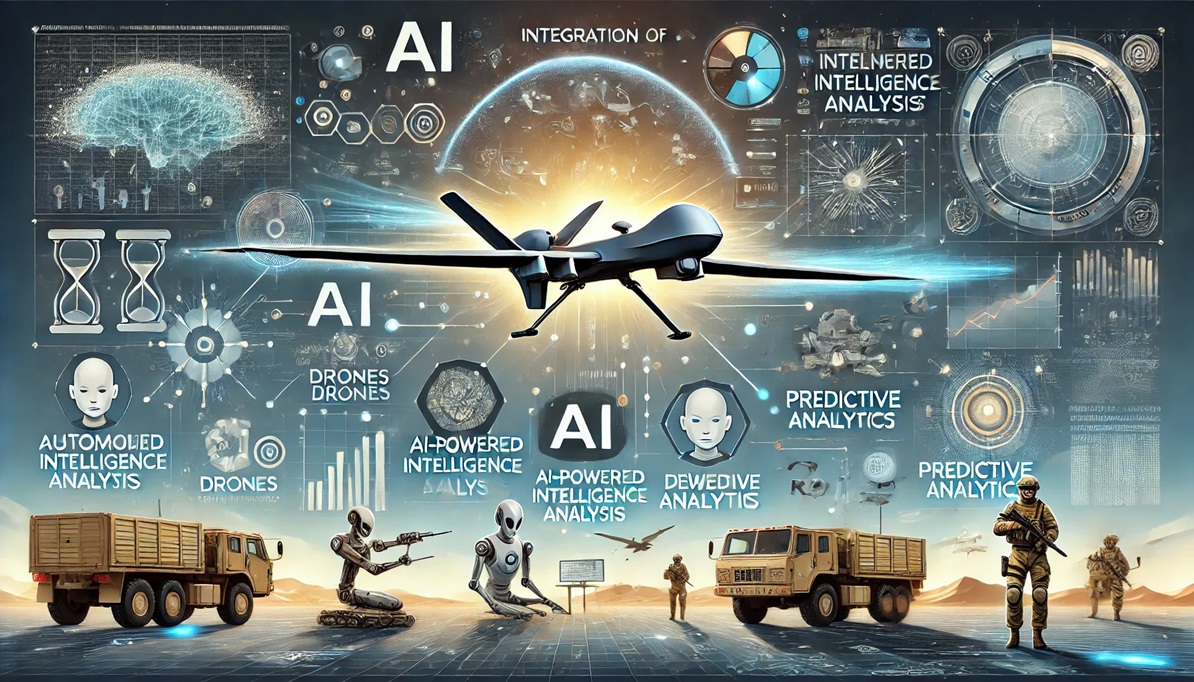
rather than deterring military AI threats with a promise of retaliation after an attack, as per standard MAD theory, MAIM advocates striking first, preventatively.
In an era where technology is advancing at breakneck speed, the implications of AI on warfare are profound and troubling. Byrne’s latest article, “AI Warlord: Eric Schmidt,” part of the ongoing Military AI Watch series from Project Censored, sheds light on the intersection of power, profit, and peril in the realm of military AI. From the shadowy alliances of tech billionaires to the ethical dilemmas posed by autonomous weaponry, we’ll explore how the hype surrounding AI is not just about innovation but also about control, surveillance, and an unsettling future.
October 30, 2025, By Peter Byrne, https://www.projectcensored.org/ai-warlord-eric-schmidt-money-media-maim/
In August, Foreign Affairs published Alphabet-Google billionaire Eric Schmidt’s essay “The Dawn of Automated Warfare”—co-authored with Greg Grant of the Center for New American Security, a nonprofit funded by Schmidt and the military industry.
Best characterized as an advertorial, the AI weapons piece promotes Schmidt’s investments in military AI, including Ukrainian drone manufacturer White Stork, and Relativity Space, a military rocket contractor.
The authors frame Ukraine’s battlefields as laboratories for testing AI weapons in “the new reality of war.” From their profit-seeking perspective, mass death and suffering are collateral effects justified by “racing to create … an automated drone swarm—the holy grail of drone operations.”
The sane response to such callous marketing disguised as objective analysis by a stakeholding multibillionaire is revulsion and disbelief. But, such is the halo of entrepreneurial genius and progressive philanthropy crowning the 70-year-old Democrat Party sugar daddy, that Schmidt’s pronouncements are treated as oracular in corridors of government where he exercises undue influence alongside fellow billionaire AI militarists Musk, Zuckerberg, Ellison, Bezos, Thiel, Hoffman, Bloomberg, Andreessen, Altman, Huang, Son, the Trumps, and Kushners.
Since 2016, investigative reports in major media have documented serious conflicts of interest between Schmidt’s governmental positions and his $30 billion in private investments and the multibillion-dollar stock portfolios managed by his nonprofit foundations. But Schmidt and his similarly conflicted tech mogul demographic remain politically immunized against punishment—or paying taxes—by the violence-energized system that created and enriches them.
Schmidt’s conflicts of interest
In 2016, when Schmidt served as CEO of Alphabet-Google, The Intercept and the Tech Transparency Project published The Android Administration, illuminating the incestuous relationship between the Obama administration and 152 Google executives: “Google doesn’t just lobby the White House for favors, but collaborates with officials, effectively serving as a sort of corporate extension of government operations.”
Obama’s doors were always open to executives from Schmidt’s investment firm, Tomorrow Ventures, and Civis Analytics, an AI data firm controlled by Schmidt that is a federal contractor.
In 2019, Politico published “How Amazon and Silicon Valley Seduced the Pentagon,” highlighting Schmidt’s activities as chair of the Defense Innovation Board, a quasi-governmental body composed of militaristic capitalists such as Michael Bloomberg and Reid Hoffman, who is also a board member of the genocide-abetting Microsoft Corporation. The Defense Innovation Board develops military contracting policies that impact companies controlled by Schmidt and other board members.
In 2021, American Prospect exposed that Rebellion Defense, a military and security tech company that Schmidt owns, was vacuuming up military AI contracts while he chaired the Defense Innovation Board and the National Security Commission on Artificial Intelligence.
As Schmidt’s reputation was spoiling, New York Times tech reporters tried to refresh it, “updating” a previously published hagiography. Brushing past Schmidt’s well-documented conflicts, Kate Conger and Cade Metz explained that the philanthropic venture capitalist had simply “reinvented himself as the prime liaison between Silicon Valley and the military industrial complex.”
In May 2022, the Tech Transparency Project published a blockbuster series detailing the scope of Schmidt’s influence over military AI contracting and his many conflicts of interest.
In December 2022, referencing CNBC reporting on Schmidt’s conflicts, Senator Elizabeth Warren formally requested that the Secretary of Defense investigate Schmidt; there is no available record of a reply.
In May 2023, Le Monde highlighted the synergies between Schmidt’s business interests and his calls to prepare for warring with China. Fox News reported on an investigation by the MAGA-friendly Bull Moose Project, which charted the intersections of Schmidt’s interlocking business and governmental networks. Jack Poulson’s All Source Intelligence published additional evidence of conflicts of interest between Google and Schmidt, including collaborating with US and Australian intelligence agencies.
These are but a few examples of the flood of exposés, amplified by hundreds of news outlets, that could have prompted federal agencies to bar Schmidt from military contracting for influence peddling. But Schmidt’s military businesses thrived during the Trump I and Biden years, and continue to do so under Trump II. In June 2025, Chairman of the Joint Chiefs of Staff Dan Caine, a military AI venture capitalist associated with the Trump–Kushner family’s Thrive Capital, was tasked with delivering the keynote address at a June 2025 conference called AI+ Expo, sponsored by Schmidt’s Special Competitive Studies Project (SCSP).
The National Security Commission on Artificial Intelligence was dissolved in 2021 after concluding that the US must buy more military AI products to face off against China. Schmidt then transmuted the federal commission into the SCSP, a partially tax-exempt private foundation he funded and governs, which opposes AI regulation.
Most of SCSP’s fifty-member staff have worked for either the Commission, the Pentagon, intelligence agencies, or Wall Street firms. SCSP leadership includes the Center for a New American Security’s Robert O. Work and Michèle Flournoy. Both are Pentagon careerists turned lobbyists for military AI. To direct his military AI lobby, Schmidt hired the commission’s director, Ylli Bajraktari, the former chief of staff to Trump’s national security advisor, retired Lieutenant General H.R. McMaster, also a prominent military AI promoter.
Tax-avoidant, Schmidt hires former national security officials to operate his interlocking network of businesses and tax-exempt organizations. He also places his employees and grantees in influential governmental positions, paying their salaries via his for-profit organization, Schmidt Futures.
Unholy AI alliances
Schmidt credits the late, and credibly accused war criminal, Henry Kissinger, with having inspired him to create SCSP. Schmidt modeled SCSP after Kissinger’s Special Studies Project (1956–1960), which oil and railroad billionaire John D. Rockefeller bankrolled through his Rockefeller Brothers Fund. History records that the Rockefeller study rationalized minimizing social spending to free up larger portions of the gross national product for the nuclear arms race.
Media amplification of the study influenced public opinion to support the Cold War by demonizing Russia and China as existential threats to American values, by which the Rockefellers meant plutocracy, not democracy.
Kissinger opposed arms control efforts. He advocated fighting “limited” nuclear wars with intercontinental ballistic missiles. He falsely claimed the US was militarily disadvantaged because Russia fielded more nuclear missiles, while the opposite was known to be the case. The Rockefeller study he crafted helped institutionalize what outgoing President Dwight D. Eisenhower called a danger to democracy when he left office in 1960. The former Army general presciently predicted “that public policy could itself become the captive of a scientific-technological elite” operating a perpetually war-seeking “military-industrial complex.”
In 2021, Kissinger, Schmidt, and MIT computer scientist Daniel Huttenlocher published the bestselling book, The Age of AI. They advocated spending vast amounts of public wealth developing AI weapons of mass destruction for use against China.
Their arguments are framed in terms of seventeenth-century rationalist philosophy. They hail the solipsistic Cartesian worldview as the epitome of Reason, acting as if the wisdom of all previous ages culminated in the anti-democratic musings of Immanuel Kant, who avidly supported aristocratic rule. “The AI age needs its own Descartes, its own Kant, to explain what is being created and what it will mean for humanity. … Existing principles [of human reasoning] will not apply.” For Schmidt, Kissinger, and Huttenlocher, artificial intelligence is the New Enlightenment.
The Age of AI echoes the factual dishonesty and omnicidal sociopathy of Herman Kahn’s 1960 treatise On Thermonuclear War. RAND Corporation theorist Kahn had argued that obedience to Reason requires accepting millions of deaths in a nuclear war waged to preserve American values.
According to Kissinger, Schmidt, and Huttenlocher, it is worth taking existential risks in order to achieve the supremacy of artificial intelligence:
Machines will enlighten humans, expanding our reality in ways we did not expect or necessarily intend to provoke. In daily life, AI is our partner, helping us make decisions about what to eat, what to wear, what to believe, where to go, and how to get there. … [AI] weapons are targetable with relative precision, [obeying] moral and legal imperatives.
Counseling going to war with China, Kissinger, Schmidt, and Huttenlocher claim that failing to militarize artificial general intelligence (AGI) will wreck American society: “The dilemma posed by AI-related weapons technology is that keeping up research and development is essential for national survival.”
But, they caution, advanced AI must serve only certain corporations:
Developing AGI will require immense computing power … created by only a few well-funded organizations. … Its applications will need to be restricted. Limitations could be imposed by only allowing approved organizations to operate it.
Kissinger joined his ancestors in 2023, and in 2025, after Trump retook office, Schmidt teamed up with Alexandr Wang (founder of the military AI company Scale AI, now charged with developing “superintelligence” for Meta) and Dan Hendrycks, executive director of the Center for AI Safety, a nonprofit largely funded by Open Philanthropy.
In March, Hendrycks, Schmidt, and Wang co-published a Strangelovian policy paper on national security, “Superintelligence Strategy.” The authors compare their version of deterring attacks from unfriendly AI-armed nations—which they call “Mutual Assured AI Malfunction” or MAIM—to the classical Cold War deterrence theory of “mutual assured destruction” or MAD.
But, rather than deterring military AI threats with a promise of retaliation after an attack, as per standard MAD theory, MAIM advocates striking first, preventatively.
Hendrycks, Schmidt, and Wang compare MAIM favorably to Kahn’s “thinking the unthinkable” about the positive aspects of launching a preventative nuclear first strike on the Soviet Union, while preplanning to robustly rebuild American capitalism from the radioactive ashes after the hypothetically enfeebled Soviet retaliation.
Echoing extreme “AI doomer” worldviews, Hendrycks, Schmidt, and Wang encourage the US military to undertake preemptive cyber and “kinetic” sabotage campaigns to ruin the AI infrastructure of US competitors, including bombing data centers to prevent the emergence of non-US-aligned superintelligences.
Afraid of US market competitors launching expensive Manhattan Project-style superintelligence efforts, they advocate for “nonproliferation.” By which they mean using military means to ensure that only the US, its allies, and certain corporate behemoths can create and use advanced AI technologies.
In a major obfuscation, the trio’s pro-AI acceleration paper does not acknowledge ongoing attempts to create international agencies capable of monitoring, regulating, and sanctioning the development and use of military AI, such as the Netherlands’ Responsible AI in the Military Domain, or international resolutions by governments to regulate or ban lethal AI weapons.
Schmidt’s SCSP vehemently opposes significant governmental regulation of AI products and weapons. Schmidt prefers that the AI industry self-regulate, and his policy aligns with the vaguely stated regulatory aims of Hendrycks’s Center for AI Safety.
In late October, leading computer scientists, world celebrities, and thousands of concerned professionals signed the Future of Life Institute’s call for prohibiting the further development of superintelligence until there is “strong public buy-in” and “broad scientific consensus that it will be done safely and controllably.” Hendrycks signed the call; Wang and Schmidt did not.
An April 2025 analysis by AI Now concludes that, given the propensity of large language models to hallucinate and the impossibility of humans monitoring neural network decision-making processes, it is a national security error to allow commercial interests to dictate the reliability and safety of military AI. The failure to establish strong laws regulating artificial intelligence violates long-established legal and social norms governing the safety of nuclear power, nuclear arsenals, and chemical weapons. Loosely regulated AI systems are obviously more susceptible to hacking, sabotage, and operational disaster than regulated systems, AI Now emphasizes.
In 2025, SCSP released a series of Defense Papers and Memos to the President, urging, “The United States should organize ‘moonshot’ programs, modeled on past successful efforts like the Manhattan Project, to drive AGI [artificial general intelligence] innovation.” Schmidt’s clarion call is for the US to harm China.
Schmidt’s stance on military AI aligns closely with the Heritage Foundation’s Project 2025, the policy blueprint followed by the Trump administration. Heritage paints a similarly paranoid view of China, while urging that government research and development of AI weaponry ought to be “transferred swiftly to American interests in the private sector,” which includes, of course, Schmidt’s ventures.
Last year, the Tech Transparency Project uncovered Schmidt’s stakes in Chinese AI firms, “Eric Schmidt Cozies up to China’s AI Industry While Warning U.S. of its Dangers.” It appears that Schmidt lacks a coherent international relations strategy beyond enriching his globalized enterprises.
Media conflicts of interest
In June 2025, SCSP’s AI+ Expo conference in Washington, DC, was sponsored by military firms and “media partners” focused on ramping up military AI spending by the “Department of War.” Talks by Schmidt and panels featuring a Who’s Who in governmental and corporate AI war planning were obsequiously “moderated” by national security beat reporters from the New York Times, NBC News, Politico, Washington Post, and C4ISRNET.
Code Pink energetically disrupted Schmidt’s presentation, which was hosted by former New York Times Pentagon correspondent Thom Shanker, who is now employed by RAND Corporation. The activists unfurled Palestinian flags, demanding that Google cease providing technology enabling genocide in Gaza. They were forcibly removed.
David E. Sanger of the New York Times supervised a panel discussion featuring former Rep. Mac Thornberry, a board member of military AI corporations, including CAE and Booz Allen, where he sits alongside Michèle Flournoy, his colleague at Beltway lobby firm West Exec Advisors and SCSP. Sanger also ran a panel featuring a Google vice president, Royal Hansen, and SCSP’s Anne Neuberger, who had served on Biden’s National Security Council, before joining SCSP and anti-AI regulation leader, Andreessen Horowitz.
SCSP videos record Sanger making statements disguised as questions about the threat of China to US global hegemony, and, therefore, the necessity for the US to quicken AI weapons contracting. Sanger did not ask the panelists about the validity of accepting those core elements of SCSP’s lobbying agenda as factual or desirable.
Hansen, however, made a newsworthy statement:
We have been using AI to defend Gmail long before people were using chatbots, and … it’s only gotten better [with large language models]. … We use little agents, little classifiers, to look at all the content and metadata about a message to look for bad actors.
To reiterate: Hansen stated that Google uses Gemini to parse all the content of Gmail looking for (undefined) “bad actors,” and the “reporter” ignored it. (Google’s press office did not respond to a request for comment.)
The New York Times’s Ethical Handbook cautions reporters that
those assigned to beats, must be sensitive that personal relationships with news sources can erode into favoritism, in fact or appearance. … [S]ources are eager to win our good will for reasons of their own. … Staff members may not collaborate in ventures involving individuals or organizations that figure or are likely to figure in coverage they provide … While many professional and trade groups are organized as nonprofits, most of them do lobbying or advocacy work on policy issues [so] avoid situations that create an appearance of coziness or favoritism.
Sanger is professionally affiliated with military-industry-focused organizations, including the Center for New American Security, Harvard’s Belfer Center, the Council on Foreign Relations, and the Aspen Institute. In an email exchange with Military AI Watch, Sanger said his only recompense for hosting the SCSP panels was “a somewhat soggy sandwich.” He did not respond to our query about his possible conflicts of interest, including writing a Times story last year praising Google’s much-criticized Project Maven, while pumping Schmidt’s White Stork drone business in Ukraine.
Mick Sussman, a New York Times editor charged with investigating staff conflicts of interest, did not respond to Military AI Watch’s email query on Sanger’s conflicts. Reached then on his cellphone, Sussman demanded to know how we got his phone number and abruptly hung up. Doggedly, we called back, and he picked up. Sussman said he had received the email and would get back to us. He didn’t.
Influence peddling and tax dodging
Banking a net worth of $30 billion—more than doubled since 2020—Schmidt uses a network of private nonprofits to reduce taxes and to social engineer his popular image. Advertising himself as “working to restore a balanced relationship between people and the planet,” Schmidt has disbursed billions of his tax-deductible dollars to hundreds of socially and environmentally progressive nonprofits, including media organizations.
To be clear: Schmidt’s foundations earn hundreds of millions of dollars a year investing in environmentally and socially disastrous multinational corporations, venture capital partnerships, and private equity firms, some operating out of secretive tax havens in Bermuda and the Cayman Islands. Schmidt’s nonprofits pay multimillion-dollar fees to Schmidt’s personal investment firm, Hillspire LLC, to manage portfolios of decidedly non-progressive investments.
According to IRS filings in 2023, the Eric and Wendy Schmidt Fund for Strategic Innovation held $1.4 billion in assets and logged (largely untaxed) capital gains of $302 million. It distributed $301 million, mostly to scientific and university projects, including $15 million to SCSP. Its largest tax-free grant, $41 million, went to an AI software accelerator, Convergent Research, which works on barcoding brains.
The Schmidt Family Foundation held $1.8 billion in stocks and real estate, netting $198 million in profits. Its charitable contributions were $137 million, targeting Indigenous and alternative energy organizations—causes antithetical to the sources of the money. The foundation holds $814 million in shares of climate- and information-destroying Alphabet (Google), and extensive holdings of Chinese AI companies.
The family foundation invests heavily in environmentally destructive corporations, including Amazon, Apple, Oracle, Dow, Barrick Gold, and Rio Tinto. It profits from companies that fuel wars and genocides, such as Elbit Systems, General Dynamics, Huntington Ingalls Industries, L3Harris, Lockheed Martin, and Rheinmetall. It owns stock in Las Vegas casinos, greenhouse gas-generating chemical manufacturers, and oil-guzzling automakers. The nonprofit owns a piece of Murdoch’s anti-environmentalist News Corp. And its 2018–2023 tax returns reveal cash donations of $9.75 million to Grist, an “independent” environmental magazine that regularly climate-washes Google and Schmidt. Grist’s media department did not respond to a request for comment.
US ‘disappointed’ that Rolls-Royce will build UK’s first small modular reactors.
Guardian, 13 Nov 25
As Keir Starmer announces SMRs to be built in Wales, US ambassador says Britain should choose ‘a different path.
Keir Starmer has announced that the UK’s first small modular nuclear reactors will be built in north Wales – but immediately faced a backlash from Donald Trump’s administration after it pushed for a US manufacturer to be chosen.
Wylfa on the island of Anglesey, or Ynys Môn, will be home to three small modular reactors (SMRs) to be built by British manufacturer Rolls-Royce SMR. The government said it will invest £2.5bn.
SMRs are a new – and untested – technology aiming to produce nuclear power stations in factories to drive down costs and speed up installation. Rolls-Royce plans to build reactors, each capable of generating 470 megawatts of power, mainly in Derby.
The government also said that its Great British Energy – Nuclear (GBE-N) will report on potential sites for further larger reactors. They would follow the 3.2GW reactors under construction by French state-owned EDF at Hinkley Point C in Somerset and Sizewell C in Suffolk.
The Labour government under Starmer has embraced nuclear energy in the hope that it can generate electricity without carbon dioxide emissions, while also providing the opportunity for a large new export industry in SMRs.
However, it faced the prospect of a row with the US, piqued that its ally had overlooked the US’s Westinghouse Electric Company when choosing the manufacturer for the Wylfa reactors.
Ahead of the publication of the UK announcement, US ambassador Warren Stephens published a statement saying Britain should choose “a different path” in Wales.
“We are extremely disappointed by this decision, not least because there are cheaper, faster and already-approved options to provide clean, safe energy at this same location,” he said.
The Trump administration last month signed an $80bn (£61bn) deal with Westinghouse, which had been struggling financially, to build several of the same larger reactors proposed at Wylfa. Under the terms of that deal, the Trump administration could end up taking a stake in the company……………………………………………………………………………………………………………………… https://www.theguardian.com/environment/2025/nov/13/us-disappointed-that-rolls-royce-will-build-uks-first-small-modular-reactors
Los Alamos National Laboratory Reneges on Active Confinement Ventilation Systems at Plutonium Facility, PF-4.

| Concerned Citizens for Nuclear Safety .14 Nov 25 |
Los Alamos National Laboratory (LANL) continues to neglect its obligations to safely operate its nuclear weapons facilities in a manner required by laws, orders, guidance and common sense.
A recent report from the Defense Nuclear Facilities Safety Board (DNFSB or the Board) details the threats from the release of plutonium contaminated air during a seismic event from the LANL Plutonium Facility, or PF-4. For over 20 years, the Board has recommended that LANL establish active confinement ventilation systems for PF-4, and LANL agreed. https://www.dnfsb.gov/content/review-los-alamos-plutonium-facility-documented-safety-analysis
Active confinement ventilation systems require negative air pressure in rooms and buildings where plutonium is stored, handled and processed. In the event of seismic activity, or other possible catastrophic events, the negative air pressure would keep the contamination inside where it could be held and filtered before being released.
The converse, which is called passive confinement systems, would do nothing. No filtration would occur. Contaminated air would move out of the building and into the air we breathe. Depending on the wind direction, radioactive plutonium particles would be deposited in neighborhoods, on hiking trails, fields, school grounds, and in the Rio Grande.
When it comes to New Start nuclear treaty….Trump just can’t get started

Walt Zlotow, West Suburban Peace Coalition, Glen Ellyn IL , 12 Nov 25
President Trump sure has an aversion to nuclear disarmament treaties with Russia that might just prevent nuclear war.
In his first term he dropped out of the Joint Comprehensive Plan of Action (JCPOA), a signature Obama agreement including Russia, China, France, Germany and the UK to diffuse Iran’s nuclear program. He also withdrew from the Intermediate Range Nuclear Forces Treaty (INF). Then he left office without renewing the impending expiration of the New Start Treaty. Successor Biden wisely renewed it for 5 years upon replacing Trump in January, 2021.
Here we are with New Start set to expire in 12 weeks and guess whose president again? Nuclear agreement adverse Donald J. Trump. And what has Trump done to avoid having the third nuclear treaty go poof on his watch. Nada, zilch, nothing.
New Start was and is a sensible nuclear agreement. It limits the number of strategic nuclear warheads that can be deployed by the US and Russia to 1,550 each. It further restricts nuclear capable bombers, submarines and missile launchers to 800. All this to be verified by mutual inspections.
Seven weeks ago Russian President Putin reached out to Trump to get the New Start renewal ball rolling. Trump’s response? Kremlin spokesman Dmitry Peskov expressed dismay there has been no reaction to the proposal as of yet. “After all, my colleague in Washington announced that Trump would personally respond to this initiative. But so far, there’s been no response from the American.”
When a reporter recently asked Trump what he thought of Putin’s request to renew New Start, Trump meekly replied “Sounds like a good idea to me” before turning away to avoid a follow up question.
When it comes to initiating, staying in, renewing nuclear agreements with Russia that just might prevent nuclear Armageddon, Trump adheres to the NATO formula: No Action, Talk Only.
Is President Trump leading US to Vietnam style disaster in Venezuela?

Walt Zlotow, West Suburban Peace Coalition, Glen Ellyn IL , 14 Nov 25.
Sure looks like Trump is initiating regime change in Venezuela. He’s sent a US armada of ships including its most advanced aircraft carrier, planes and troops to Venezuela’s neighborhood. Trump’s hoping to intimidate Venezuelan President Maduro to go quietly so he can replace him with a compliant US puppet. For emphasis he’s issued a $50 million dollar reward for his arrest, and blasted 17 small, unarmed boats to smithereens near Venezuela murdering dozens.
Trump doesn’t care one whit about ending imaginary Venezuelan drug smuggling into the US. That is simply a plot device to control Venezuela’s massive oil reserves via a US puppet ruling Venezuela, and to sever Venezuela’s newfound political, economic and military ties to Russia and China. Neither will stand by to an American regime change operation, much less an outright invasion, without offering help to resist US aggression. Trump may be the president upon whose watch the Monroe Doctrine went poof.
No nation in in Central or South America supports Trump’s march to war against Venezuela. Indeed no nation in the world, outside of possibly Israel, supports this impending abomination of foreign intervention.
US firepower is so dominant they can quickly take out Maduro if Trump’s newly rechristened Secretary of War Pete Hegseth lights the fuse. But neither the Maduro government nor its citizens will go quietly. Resistance both during and after the incursion will likely be ferocious. Get ready for US body bags to start arriving at Arlington.
Trump would be wise to converse with former President George W. Bush to get his thoughts on the nearly 4,500 senseless US deaths in Iraq and the 2,400 senseless US deaths in Afghanistan after Bush’s ‘war fighters’ quickly deposed Saddam Hussein and the Taliban respectively. To what end? We’re still defiling Iraq with 2,000 troops Iraq wants out but, like being in a roach motel, will never leave. It took 20 years but the Taliban kicked out the US invaders that stayed thru 3 presidencies till Biden left in disgrace.
The last possible firewall preventing Trump’s impending invasion, Congress, abdicated their responsibility by refusing to invoke the War Powers Act forbidding war without Congressional approval as required by the Constitution. Only 2 of 100 Senators voted for peace. All 49 Democrats who voted to prevent were more likely motivated by political opposition to anything Trump. When it comes to US militarism abroad, Democrats are almost always on board.
The 49 Republicans voting for presidential war did so because they love both robust militarism and their deranged, war loving president keeping them supported by Trump’s MAGA base. Only Republicans Lisa Murkowski and Rand Paul voted against their party’s impending war out of principle.
Besides a powwow with Bush Jr., Trump might seek a séance with late warmonger down in War Lovers Hell LBJ. If he could communicate from his everlasting place of infamy over Vietnam, he might tell Trump, ‘Faggedaboudit Donald, I lost 58,000 US boys for nothing. Pivot to peace while you’re till earthbound.’
Nuclear Force “Recapitalization”

an idealized illustration of a Sentinel ICBM soon after launch. Don’t think about the aftermath of thermonuclear war. As NBC Pitchman Brian Williams once said, it’s important to be guided by the beauty of our weapons.
An Abomination of the English Language
| Just when you thought the assault on the English language couldn’t be more severe, I came across a new abomination in a recent memo (11/3/25) signed by the Chief of Staff of the Air Force (CSAF).The CSAF expressed his commitment to nuclear force “recapitalization,” meaning that he fully supports the B-21 Raider and the Sentinel ICBM, which will cost more than $500 billion over the next two decades. He vowed he’d “relentlessly advocate” for them. |
“Recapitalization”: What a word to describe more genocidal nuclear weapons!
Typically, the Air Force refers to “modernization” or “investment” when it comes to new nukes. This latest euphemism is an even more extreme example of bureaucratese and business-speak.
We’re just “recapitalizing” our nuclear forces, folks. Nothing to see here, move along.
One thing is certain. The new CSAF, with his talk of “recapitalization,” will make the smoothest of transitions to industry once he retires from the military.
It’s time for recapitalization! (Red sky in morning, America take warning.)
US Plans for China Blockade Continue Taking Shape

Brian Berletic. https://sovereignista.com/ November 11, 2025
What was once a theoretical discussion in U.S. military journals about blockading China’s oil supply is now steadily turning into a tangible, multi-layered strategy aimed at containing Beijing and preserving American global dominance.
In 2018, the US Naval War College Review published a paper titled, “A Maritime Oil Blockade Against China—Tactically Tempting But Strategically Flawed.” It was only one of many over the preceding years discussing the details of implementing a maritime blockade as part of a larger encirclement and containment strategy of China.
At first glance the paper looks like US policy thinking considered, then moved past the idea of blockading China. Instead, the paper merely listed a number of obstacles impeding such a strategy in 2018—obstacles that would need to be removed if such a strategy were to be viable in the near or intermediate future—and obstacles US policymakers have been removing ever since.
More contemporary papers published, including those among the pages of the US Naval Institute (here and here), have updated and refined not just an emerging strategy to theoretically confront and contain China, but a plan of action taking tangible shape.
Cold War Continuity of Agenda
Throughout the Cold War and ever since its conclusion, the US’ singular foreign policy objective has been to maintain American hegemony over the globe established at the end of the World Wars. A 1992 New York Times article titled “U.S. Strategy Plan Calls for Insuring no Rivals Develop” made it clear the US would actively prevent the emergence of any nation or groups of nations from contesting American primacy worldwide.
In recent years this has included preventing the reemergence of Russia as well as the rise of China. It also involves surrounding both nations with arcs of chaos and/or confrontation—either through the destruction of neighboring countries through political subversion, or the capture of these nations by the US and their transformation into battering rams to be used against both nations.
Ukraine is an extreme example of this policy in action. The US is also transforming both the Philippines and the Chinese island province of Taiwan into similar proxies vis-à-vis China.
Beyond this, the US seeks to prevent the majority of nations currently outside US dominion from joining with and contributing to the multipolar world order proposed by nations like Russia and China.
This strategy of coercion, destabilization, political capture, proxy war, and outright war has been used to target both Russia and China directly, their neighbors, and a growing list of nations far beyond their near abroad.
The US is demonstrating a clear, unwavering commitment to a multi-layered strategy of containment, coercion, and confrontation designed not just to prepare for conflict, but to make that conflict both inevitable and successful for the singular goal of maintaining global American hegemony
Strengths and Weaknesses of American Primacy
Enabling this strategy is America’s global-spanning military presence facilitated by its “alliance network.” This network of obedient client regimes both hosts US military forces and serves as an extension of US military, economic, and increasingly military-industrial power. US “allies” often pursue US geopolitical objectives at their own expense.
Again, an explicit example of this is Ukraine, which is locked in a proxy war with Russia, threatening its own self-preservation as a means of—as US policymakers described in a 2019 RAND Corporation paper—“extending Russia.”
While conflicts like that unfolding in Ukraine or the US-backed military build-up in the Philippines or on Taiwan has exposed a critical weakness of the United States—its lagging military industrial capacity vis-à-vis either Russia or China, let alone both nations—the US has demonstrated the ability to compensate through geopolitical agility the multipolar world is struggling to address.
This includes the ability of the US to mire a targeted nation in conflict in one location while moving resources across its global-spanning military-logistical networks toward pressure points in other locations, overextending the targeted nation and achieving success in at least one of the multiple pressure points targeted. The US successfully did this through its proxy war against Russia in Ukraine, which tied Russia up sufficiently for the US to finally succeed in the overthrow of the Syrian government, where Russian forces had previously thwarted US-sponsored proxy war and regime change.
It also includes the ability of the US to target partner or potential partner nations of Russia and China through economic, political, or even military means in ways Russia and China are unable to defend against—including through political subversion facilitated through America’s near monopoly over global information space.
These advantages the US still possesses also make potential maritime blockades very difficult for Russia and China to defend against.
Russian Energy Shipments as a Beta Test for Blockading China
France recently announced seizing a ship accused of being part of Russia’s “ghost” or “shadow” fleet—ships refusing to heed unilateral sanctions placed by the US and its client states on Russian energy shipments.
This was just one of several first steps toward what may materialize into a wider and more aggressive interdiction or blockade of Russian energy shipments. This may also be a beta test for implementing a long-desired maritime blockade on China…………………
Setting the Stage for a Blockade of China Has Already Begun
The 2018 US Naval War College Review paper lays out the realities of a potential blockade against China in 2018, noting the various opportunities and risks associated with such a strategy…………………………………………………………………………………………..
Since the paper was published, the US has pursued both continued preparations for a maritime blockade of China itself, as well as build up a number of regional proxies to wage war against China, as the US wages proxy war against Russia in Ukraine and, increasingly, through the rest of Europe……………………………………………………………………..
To understand Washington’s strategy toward China, one should not look to the political rhetoric of “retreat” or “homeland defense” in the Western Hemisphere, but rather to the tangible actions taking place across the Asia-Pacific and beyond—the meticulous encirclement of China’s periphery, the sustained attacks on its critical overland energy and trade links (BRI/CPEC), the calculated incapacitation of Russia as a potential energy supplier, and the establishment of local proxy forces (the Philippines, Japan, separatists on Taiwan) prepared to wage war.
Far from an abstract or “flawed” concept relegated to think-tank papers, the maritime oil blockade—or wider general blockade against China—is being incrementally prepared in real-time. By systematically removing the very obstacles noted in the 2018 Naval War College Review paper, the US is demonstrating a clear, unwavering commitment to a multi-layered strategy of containment, coercion, and confrontation designed not just to prepare for conflict, but to make that conflict both inevitable and successful for the singular goal of maintaining global American hegemony. https://sovereignista.com/2025/11/11/us-plans-for-china-blockade-continue-taking-shape/
Residents outraged as US nuclear plant gets greenlight to dump radioactive waste into major river: ‘Potential long-term consequences’
“We really don’t know enough.”
The Cool Down, by Kristen Lawrence, November 5, 2025
A federal court has ruled that a nuclear plant in New York can dump radioactive waste into the Hudson River, a decision that overrides a 2023 ban on releasing treated wastewater into the river.
What’s happening?
As Surfer Magazine reported, the ruling will allow Holtec, a nuclear-power-focused energy company, to release around 45,000 gallons per year of treated wastewater from the decommissioned Indian Point plant into the Hudson.
The site is only 40 miles from Rockaway Beach, one of the most popular surfing locations in the state and the only one within NYC’s limits.
U.S. District Judge Kenneth Karas ruled that federal authority over nuclear regulation supersedes the prior ban that was the result of the “Save the Hudson” campaign, which was in response to a proposal by Holtec to release radioactive wastewater into the river.
Holtec will now be allowed to dump the materials — mostly tritiated water, which Surfer explained “contains the nuclear-energy byproduct tritium — into the Hudson, with around 1.5 million gallons expected to enter the river in the next several years.
Even though the 45,000 gallons set to be dumped annually is within safe limits, according to the federal government, the public and environmental organizations like Riverkeeper worry about how the waste will affect people’s health and the surrounding ecosystem……………………………
“We really don’t know enough about how tritium behaves in the environment [at diluted levels] to assess potential long-term consequences to the environment, to the food chain, and ultimately to humans,” Timothy Mousseau, biologist at the University of South Carolina, told Chemical & Engineering News.
There are also concerns that fewer people will want to surf and swim in the Hudson because of the new regulations.
Surfer reported that the river had only recently become a “viable recreational waterway” and that dumping radioactive waste may deter people from visiting…………………………….. https://www.thecooldown.com/green-business/radioactive-waste-hudson-river-nuclear-plant/
1 This Month





PLEASE OPPOSE HR 8255 AND S.3639 – bills would accelerate satellite deployment, with no environmental review or safeguards – https://ncstd5li.quorum.us/campaign/169331/
To see nuclear-related stories in greater depth and intensity – go to https://nuclearinformation.wordpress.com
-
Archives
- October 2026 (58)
- September 2026 (339)
- August 2026 (330)
- July 2026 (355)
- June 2026 (287)
- May 2026 (306)
- April 2026 (356)
- March 2026 (251)
- February 2026 (267)
- January 2026 (308)
- December 2025 (358)
- November 2025 (359)
-
Categories
- 1
- 1 NUCLEAR ISSUES
- business and costs
- climate change
- culture and arts
- ENERGY
- environment
- health
- history
- indigenous issues
- Legal
- marketing of nuclear
- media
- opposition to nuclear
- PERSONAL STORIES
- politics
- politics international
- Religion and ethics
- safety
- secrets,lies and civil liberties
- spinbuster
- technology
- Uranium
- wastes
- weapons and war
- Women
- 2 WORLD
- ACTION
- AFRICA
- Atrocities
- AUSTRALIA
- Christina's notes
- Christina's themes
- culture and arts
- Events
- Fuk 2022
- Fuk 2023
- Fukushima 2017
- Fukushima 2018
- fukushima 2019
- Fukushima 2020
- Fukushima 2021
- general
- global warming
- Humour (God we need it)
- Nuclear
- RARE EARTHS
- Reference
- resources – print
- Resources -audiovicual
- Weekly Newsletter
- World
- World Nuclear
- YouTube
-
RSS
Entries RSS
Comments RSS

