What’s Legally Allowed in War – Gaza a dress rehearsal for U.S. war on China.

The claim that Israel has adhered to the laws of war is extremely contentious.
1977, an international agreement explicitly prohibited the intentional targeting of civilians.
Gaza not only looks like a dress rehearsal for the kind of combat U.S. soldiers may face. It is a test of the American public’s tolerance for the levels of death and destruction that such kinds of warfare entail….………………………………………………………………………………………………………………………………………………….
Smash it, then claim it

Trump is trying to rebuild the Iran nuclear deal he destroyed, then declare personal triumph, writes Linda Pentz Gunter
There is deep irony in the current efforts by the Trump administration to secure a nuclear deal with Iran, given it was the previous Trump administration that broke a fully functioning agreement already in place to ensure Iran did not develop nuclear weapons.
The JCPOA — or Joint Comprehensive Plan of Action — also known colloquially as the Iran nuclear deal — was agreed in Vienna in June 2015 between Iran and China, France, Germany, the Russian Federation, the United Kingdom and the United States. It involved significant monitoring and verification of Iran’s nuclear enrichment activities to ensure it remained within the confines of commercial grade. It also lifted UN Security Council sanctions on Iran as well as multilateral and national sanctions related to its nuclear program.
But under the first Donald Trump presidency, the White House effectively tore up the agreement, rendering it worthless when the US withdrew in May 2018. In his classically hyperbolic style, Trump labeled the JCPOA “one of the worst and most one-sided transactions the United States has ever entered into.”
In recent weeks, the new Trump administration has been feverishly negotiating, most recently in Oman, to establish an Iran nuclear deal that could turn out to be remarkably similar to the JCPOA. But this, of course, is the Trump modus operandi: Destroy something perfectly effective, then rebuild it almost in the exact image and declare it his own invention.
So far, the administration has wavered between demanding that Tehran dismantle its entire nuclear program, backtracking to allow Iran to enrich uranium to within commercial grade, then reversing again, with Middle East envoy Steve Witkoff telling Iran it must “stop and eliminate its nuclear enrichment” before the US would sign a deal.
Whether any of this will work remains uncertain, but it certainly wasn’t helped by the recent ravings of New Jersey Senator John Fetterman, a Democrat and former Bernie Sanders supporter whose politics — and especially rhetoric — on Israel and immigration, have become indistinguishable from many of the more extreme Republicans.
Of the current Iran talks, Fetterman pronounced: “The negotiations should be comprised of 30,000-pound bombs and the IDF,” referring to the Israeli Defence Forces. …………………………………..
what would the health and environmental impacts be of a major bombing attack on Iran’s nuclear facilities? Such an act could release clouds of radioactive dust into the atmosphere, contaminating land and water downwind. Contamination of surface and ground water would result in prolonged harmful consequences through ingestion by exposed populations.
Protracted exposure to enriched uranium dust by inhalation and ingestion can cause bone toxicity and reproductive toxicity and lead to renal failure. Uranium is also neurotoxic to the brain.
Tehran had been keeping its uranium enrichment well within the 3.67% limit, even after Trump withdrew the US from JCPOA. But in 2021, an act of sabotage against Natanz, Iran’s largest uranium enrichment facility, which Iran blamed on Israel, blacked out the plant and damaged centrifuges. The attack prompted Iran, unfettered by the shattered nuclear deal, to begin enriching its uranium to as high as 60% U-235 — some sources assert it has even reached 85% — either way a level that is considered weapons usable. Uranium enriched to 90% is considered weapons grade.
Iran’s nuclear facilities have been targeted on several occasions. In 2010, a powerful computer worm known as Stuxnet, designed by US and Israeli intelligence, was used to disable a key part of the Iranian nuclear program. Last year, a strike by the Israeli Air Force hit Iran’s Isfahan Nuclear Technology Center for uranium conversion and fuel production.
As negotiations began with Iran this spring, Trump also used threatening rhetoric at first, warning in late March that if the country did not dismantle its nuclear program, “there will be bombing. It will be bombing the likes of which they have never seen before.” He made similar threats during the last gasps of his first presidency, when he weighed an attack on Iran’s Natanz nuclear center but never followed through.
If Iran does indeed agree to end all its nuclear activities, the question remains about what to do with its stockpile of already enriched uranium. One idea apparently mooted by the White House is to allow Russia to store it, with a clause that would let Russia return the stockpile to Iran should the US breach any deal made in the coming weeks.
What all of this points to, of course, is the blurry line between commercial and military nuclear programs. Iran, a signatory to the nuclear Non-Proliferation Treaty, can claim to be abiding by the terms laid out in Article IV which gives countries who agree not to develop nuclear weapons “the inalienable right of all the Parties to the Treaty to develop research, production and use of nuclear energy for peaceful purposes.” The trouble is, no one believes them, exposing the weakness in — and wrongheadedness of — the treaty clause that leaves the back door perpetually open to the production of nuclear weapons.
Linda Pentz Gunter is the international specialist at Beyond Nuclear and writes for and edits Beyond Nuclear International. Views are her own. https://beyondnuclearinternational.org/2025/04/27/smash-it-then-claim-it/
US prepares $100bn arms deal with Saudi Arabia ahead of Trump visit
The mega deal comes as Washington continues to push for the normalization of ties between Saudi Arabia and Israel
APR 25, 2025, The Cradle,
Washington is preparing a major arms package for Saudi Arabia worth over $100 billion, according to six sources cited by Reuters.
The deal is expected to be announced during US President Donald Trump’s upcoming visit to the kingdom in May.
This proposed package follows a failed attempt by the former US president Joe Biden government to broker a broader security agreement that included Saudi normalization with Israel in exchange for advanced US arms, assistance in developing a civilian nuclear program, and reduced Chinese influence in the region.
While it remains unclear whether Trump’s proposal includes similar conditions, the package is expected to feature a range of advanced weaponry.
This includes C-130 transport aircraft, missiles, and radars supplied by major US defense contractors such as Lockheed Martin, RTX (formerly Raytheon Technologies), Boeing, Northrop Grumman, and General Atomics.
Lockheed is reportedly involved in a potential $20 billion drone deal involving MQ-9B SeaGuardian-style aircraft – an agreement discussed since 2018.
Defense company executives are reportedly considering traveling to Saudi Arabia as part of the US delegation. The Pentagon emphasized that the US–Saudi defense relationship remains strong under Trump’s leadership.
The US has a longstanding history of arms sales to Saudi Arabia, highlighted by Trump’s 2017 proposal of $110 billion in weapons deals. However, only $14.5 billion of those sales had been initiated by 2018, and Congress raised concerns following the 2018 murder of journalist Jamal Khashoggi. These concerns led to a 2021 congressional ban on offensive weapons sales under president Biden.
The Biden administration began softening its stance in 2022 due to shifting geopolitical dynamics, including the Ukraine war’s impact on oil markets. The ban on offensive weapons sales was lifted in 2024, as the US worked more closely with Riyadh after Hamas’s 7 October 2023 attack on Israel.
Meanwhile, Saudi Defense Minister Prince Khalid bin Salman visited Tehran on April 17, meeting Iranian Supreme Leader Ali Khamenei and conveying a message from King Salman.
The visit resulted from renewed nuclear talks between the US and Iran amid fears of regional escalation………………….https://thecradle.co/articles-id/30331
As Israel Openly Declares Starvation as a Weapon, Media Still Hesitate to Blame It for Famine

this is a genocide, after all—even if the corporate media refuse to say the word—and starvation is part and parcel of that.
Belén Fernández, April 25, 2025, https://fair.org/home/as-israel-openly-declares-starvation-as-a-weapon-media-still-hesitate-to-blame-it-for-famine/
Israeli Prime Minister Benjamin Netanyahu announced on March 2 that “Israel has decided to stop letting goods and supplies into Gaza,” where the ongoing Israeli genocide, with the loyal backing of the United States, has officially killed more than 51,000 Palestinians since October 2023. The announcement regarding the total halt of humanitarian aid amounted to yet another explicit declaration of the starvation policy that Israel is pursuing in the Gaza Strip, a territory that—thanks in large part to 17 consecutive years of Israeli blockade—has long been largely dependent on such aid for survival.
Of course, this was not the first time that senior Israeli officials had advertised their reliance on the war crime of forced starvation in the current genocidal assault on Gaza. On October 9, 2023, two days after the most recent launch of hostilities, then–Defense Minister Yoav Gallant ordered a “complete siege” of the Gaza Strip: “There will be no electricity, no food, no fuel, everything is closed.” Two days after that, Foreign Minister Israel Katz boasted of cutting off “water, electricity and fuel” to the territory.
And just this month, Israeli National Security Minister Itamar Ben-Gvir proclaimed that there was “no reason for a gram of food or aid to enter Gaza.” Following an April 22 dinner held in his honor in Florida at US President Donald Trump’s Mar-a-Lago resort, Ben-Gvir reported that US Republicans had
expressed support for my very clear position on how to act in Gaza and that the food and aid depots should be bombed in order to create military and political pressure to bring our hostages home safely.
Never mind that the hostages would have been brought home safely as scheduled had Israel chosen to comply with the terms of the ceasefire agreement with Hamas that was implemented in January, rather than definitively annihilating the agreement on March 18.
It is no doubt illustrative of Israel’s modus operandi that the March 2 decision to block the entry of all food and other items necessary for human existence took place in the middle of an ostensible ceasefire.
‘Starved, bombed, strangled’
While Ben-Gvir’s most recent comments have thus far eluded commentary in the US corporate media, the roundabout media approach to the whole starvation theme has been illuminating in its own right. It has not, obviously, been possible to avoid reporting on the subject altogether, as the United Nations and other organizations have pretty much been warning from the get-go of Israel’s actions causing widespread famine in Gaza.
In December 2023, for example, just two months after the onset of Israel’s blood-drenched campaign, the Integrated Food Security Phase Classification initiative, or IPC scale, determined that “over 90% of the population in the Gaza Strip (about 2.08 million people) was estimated to face high levels of acute food insecurity, classified in IPC Phase 3 or above (Crisis or worse).” The assessment went on: “Among these, over 40% of the population (939,000 people) were in Emergency (IPC Phase 4) and over 15% (378,000 people) were in Catastrophe (IPC Phase 5).”
A full year ago, in April 2024, even Samantha Power—then the administrator of the US Agency for International Development—conceded that it was “credible” that famine was already well underway in parts of the Gaza Strip. And the UN Office for the Coordination of Humanitarian Affairs now warns that Gaza is “likely facing the worst humanitarian crisis in the 18 months since the escalation of hostilities in October 2023”—its population being “starved, bombed, strangled” and subjected to “deprivation by design.”
Disappearance of agency
None of these details have escaped the pages and websites of corporate media outlets, although the media’s frequent reliance on ambiguous wordiness tends to distract readers from what is actually going on—and who is responsible for it. Take, for instance, the New York Times headline “Gaza Famine Warning Spurs Calls to Remove Restrictions on Food Shipments” (6/25/24), or the CBS video “Hunger Spreads Virtually Everywhere in Gaza Amid Israel/Hamas War” (12/5/24). Even news outlets that intermittently undertake to spotlight the human plight of, inter alia, individual parents in Gaza losing their children to starvation remain susceptible to long-winded efforts to disperse blame. (As of April of last year, Save the Children confirmed that 27 children in northern Gaza had already died of starvation and disease.)
In an era in which news consumption often consists of skimming headlines, the phrasing of article titles is of utmost import. And yet many headlines manage to entirely excise the role of Israel in Gaza’s “hunger crisis”—as in CNN’s report (2/24): “‘We Are Dying Slowly:’ Palestinians Are Eating Grass and Drinking Polluted Water as Famine Looms Across Gaza.” Or take the Reuters headline (3/24/24): “Gaza’s Catastrophic Food Shortage Means Mass Death Is Imminent, Monitor Says.” Or this one from ABC News (11/15/24): “Famine ‘Occurring or Imminent’ in Parts of Northern Gaza, Experts Warn UN Security Council.”
It’s not that these headlines are devoid of sympathy for Palestinian suffering. The issue, rather, is the dilution—and even disappearance—of agency, such that the “catastrophic food shortage” is rendered as transpiring in a sort of vacuum and thereby letting the criminals perpetrating it off the hook. Imagine if a Hamas rocket from Gaza killed an infant in Israel and the media reported the event as follows: “Israeli Baby Perishes as Rocket Completes Airborne Trajectory.”
‘No shortage of aid’
Then there is the matter of the media’s incurable habit of ceding Israeli officials a platform to spout demonstrable lies, as in the April 17 NBC News headline “Aid Groups Describe Dire Conditions in Gaza as Israel Says There Is No Shortage of Aid.” The fact that Israel is permitted to make such claims is particularly perplexing, given Israeli officials’ own announcements that no aid whatsoever may enter the territory, while the “dire conditions” are made abundantly clear in the text of the article itself: “The Global Nutrition Cluster, a coalition of humanitarian groups, has warned that in March alone, 3,696 children were newly admitted for care for acute malnutrition” in Gaza.
Among numerous other damning statistics conveyed in the dispatch, we learn that all Gaza bakeries supported by the UN World Food Programme closed down on March 31, “after wheat flour ran out.” Meanwhile, the WFP calculated that Israel’s closure of border crossings into Gaza caused prices of basic goods “to soar between 150% and 700% compared with prewar levels, and by 29% to as much as 1,400% above prices during the ceasefire.”
Against such a backdrop, it’s fairly ludicrous to allow Israeli officials to “maintain there is ‘no shortage’ of aid in Gaza and accuse Hamas of withholding supplies.” If the press provides Israel with space to spout whatever nonsense it wants—reality be damned—where is the line ultimately drawn? If Israel decides Hamas is using wheat flour to build rockets, will that also be reported with a straight face?
Lest anyone think that thwarting the entry of food into the Gaza Strip is a new thing, recall that Israel’s blockade of Gaza long predated the present war—although the details of said blockade are generally glossed over in the media in favor of the myth that Israel unilaterally “withdrew” from the territory in 2005. In 2010, the BBC (6/21/10) listed some basic foodstuffs—pardon, potential “dual-use items”—that Israel had at different times in recent history blocked from entering Gaza, including pasta, coffee, tea, nuts and chocolate. In 2006, just a year after the so-called “withdrawal,” Israeli government adviser Dov Weissglas outlined the logic behind Israel’s restriction of food imports into Gaza: “The idea is to put the Palestinians on a diet, but not to make them die of hunger.”
Fast forward almost two decades, and it’s safe to say that the “idea” has evolved; this is a genocide, after all—even if the corporate media refuse to say the word—and starvation is part and parcel of that. But on account of Israel’s extra-special relationship with the United States, US media have institutionalized the practice of beating around the bush when it comes to documenting Israeli crimes. This is how we end up with the aforementioned long-winded headlines instead of, say, the far more straightforward “Israel is starving Gaza,” a Google search of which terms produces not a single corporate media dispatch, but does lead to a January 2024 report by that very name, courtesy of none other than the Israeli human rights organization B’Tselem.
‘Starving as negotiation tactic’
That said, there have been a few surprises. The New York Times (3/13/25), for example, took a short break from its longstanding tradition of unabashed apologetics for Israeli atrocities in allowing the following sentence to appear in a March opinion article by Megan Stack: “Israeli officials are essentially starving Gaza as a negotiation tactic.” In the very least, this was a vast improvement, in terms of syntactic clarity and assignation of blame, over previous descriptions of Israeli behavior immortalized on the pages of the US newspaper of record—like that time the Israeli military slaughtered four kids playing by the sea in Gaza, and the Times editors (7/16/14) went with the headline “Boys Drawn to Gaza Beach, and Into Center of Mideast Strife.”
In the end, Israel’s starvation of the Gaza Strip is multifaceted. It’s not just about physically blocking the entry of food into the besieged enclave. It’s also about Israel’s near-total decimation of Gaza’s healthcare system: the bombardment of hospitals, the targeting of ambulances, the massacres of medical personnel (FAIR.org, 4/11/25). It’s about Israeli military attacks on humanitarian aid convoys and workers, including the April 2024 massacre of seven international employees of the food organization World Central Kitchen.
It’s about Israel razing agricultural areas, wiping out food production, devastating the fishing industry and depleting livestock. It’s about Israel bombing water infrastructure in Gaza. And it’s about Israeli troops slaughtering at least 112 desperate Palestinians queuing for flour on February 29, 2024 (FAIR.org, 3/22/24)—which was at least a quicker way of killing starving people than waiting for them to starve.
In his 2017 London Review of Books essay (6/15/17) on the use of famine as a weapon of war, Alex de Waal referenced the “physical debilitation of groups as a technique of genocide,” noting that “forced starvation was one of the instruments of the Holocaust.” It’s worth reflecting on the essay’s opening paragraph:
In its primary use, the verb “to starve” is transitive: It’s something people do to one another, like torture or murder. Mass starvation as a consequence of the weather has very nearly disappeared: Today’s famines are all caused by political decisions, yet journalists still use the phrase “man-made famine” as if such events were unusual.
As for the current case of the Gaza Strip, US establishment journalists appear to be doing their best to avoid the transitive nature of the verb in question—or any subject-verb-object construction that might too overtly expose Israeli savagery. And by treating famine in Gaza as a subject unto itself, rather than a “technique of genocide,” to borrow de Waal’s words, the media assist in obscuring the bigger picture about this very man-made famine—which is that Israel is not just starving Gaza. Israel is exterminating Gaza.
Plutonium’s Hidden Legacy at Piketon

Plutonium was here. It was processed, mishandled, released, and denied. It contaminated water, soil, fish, and workers. It spread to schools. And it killed.
Investigative Team April 24, 2025, https://appareport.com/2025/04/24/plutoniums-hidden-legacy-at-piketon/?utm_source=facebook&utm_medium=jetpack_social&fbclid=IwY2xjawJ5XrBleHRuA2FlbQIxMQBicmlkETE3b0JDR3JZZ0xqRkNqVU1oAR5YM8gN60lbVkb21XEno8JBYLC_Rnqv7LD993TwfBersmNr-c-SsZuL1J_1mA_aem_sCNRay627WxIPPEuu7DVsA [ample illustrations]
For decades, the U.S. Department of Energy (DOE) claimed that plutonium had no place at the Portsmouth Gaseous Diffusion Plant (PORTS). But government documents, congressional testimony, and radiological data spanning more than 40 years tell a different story — one of systemic exposure, buried secrets, and radioactive contamination that continues to haunt the soil, water, and people of southern Ohio.
The truth has been revealed in pieces. Some of it was made public as early as the 1990s. Some surfaced only recently. Together, it paints an undeniable picture: plutonium was present at PORTS, it was mishandled, and it left a toxic legacy that federal agencies have failed to clean up — or fully acknowledge.
The Paper Trail: Plutonium Officially Confirmed
The denial cracked in 1999, when The Portsmouth Daily Times published a front-page bombshell: “Plutonium Confirmed in Piketon.” The article cited admissions by federal officials that plutonium-contaminated uranium had been shipped to the site from Paducah, Kentucky, as part of a Cold War-era uranium recycling program.
In a formal letter to DOE Secretary Bill Richardson, U.S. Senators Mike DeWine and George Voinovich confirmed that at least 570 tons of contaminated feed material had been sent to Piketon, beginning as early as 1983. DOE had known. The public had not.
The Incinerator and the Burned Truth
Records show the X-705A incinerator, which operated from the 1970s until 1986, was used to burn approximately 50,000 pounds of uranium-contaminated solid waste annually. But it didn’t stop there.
ccording to on-site Ohio EPA coordinator Maria Galanti, uranium-contaminated solvents — materials never meant for incineration — were also burned in the unit. The result? Soil surrounding the incinerator is now radioactive to a depth of at least 12 feet.
Until the late 1980s, operators even tilled radioactive oils into unlined soil, assuming it would degrade over time. It didn’t. And it won’t — the plutonium isotopes involved have half-lives exceeding 24,000 years.
Radiation in the Waterways — and the Food Chain
A 2006 Ohio EPA report confirmed what residents feared: plutonium had migrated offsite and into the public environment.
Testing in Little Beaver Creek, Big Beaver Creek, Big Run, and the Scioto River revealed the presence of:
- Plutonium-238
- Plutonium-239
- Americium-241
- Neptunium-237
- Alongside technetium-99 and uranium isotopes
All these elements were detected well above background levels, confirming they originated from the plant, not nature.
The Hazard Index (HI) — a risk threshold used by federal agencies — was exceeded across all tested water bodies, with Big Run scoring more than 20 times the EPA’s risk cutoff.
Separate DOE assessments show Pu-238 in fish as a significant dietary exposure source, second only to Tc-99 in produce. Plutonium has entered the food chain.
Offsite Spread: Plutonium Detected Near Schools and Homes
Monitoring data confirmed the presence of plutonium-239/240, neptunium-237, and americium-241 at offsite stations including:
- Station A41A near Zahn’s Corner Middle School
- Station A6 in northwest Piketon
- Station A23 near local residential zones
DOE contends that any plutonium found in air monitors comes from 1950s nuclear weapons testing fallout and not PORTS.
Workers Testify to Deception and Disease
At a 2000 Senate hearing, former worker Sam Ray described his fight with chondrosarcoma, a rare bone cancer he linked directly to his work at PORTS. He spoke of no health monitoring, no protective equipment, and no transparency.
Jeffrey Walburn, a plant whistleblower, testified to a 1994 chemical exposure that permanently damaged his lungs. He alleged a criminal cover-up by Lockheed Martin, including the alteration and destruction of radiation dose records.
He warned that widows of deceased workers may never receive compensation because exposure data had been falsified.
DOE’s Own Admissions: Plutonium in the Cascade System
According to a 2024 DOE report, plutonium-238 and plutonium-239 were present in enrichment equipment, having entered the cascade system through contaminated uranium hexafluoride cylinders. The isotopes were found in the X-326 Process Building and throughout the cascade.
DOE also confirmed that residual technetium-99 remained embedded in internal pipe surfaces, requiring special disposal decades after operations ended.
From Russian Warheads to Pike County: The Megatons to Megawatts Program
Between 1993 and 2013, the U.S. and Russia dismantled over 20,000 nuclear warheads under the Megatons to Megawatts Program — converting highly enriched uranium (HEU) into low-enriched uranium (LEU) for use in American power plants.
But that uranium didn’t just vanish. It came through U.S. enrichment sites — including the Portsmouth Gaseous Diffusion Plant in Piketon.
Contractor and DOE records confirm that Russian-origin uranium — some of it likely carrying residual contaminants from dismantled warheads — was introduced into the U.S. enrichment stream at PORTS.
Whether plutonium from these shipments contributed to PORTS contamination is still under question. What’s undeniable is this: the U.S. government sent Russian bomb-grade material through an Appalachian processing plant with a history of unsafe handling, minimal oversight, and deliberate secrecy.
They took Soviet nukes and ran them through Appalachian lungs. Without warning. Without consent.
While the legacy of plutonium contamination at PORTS stretches back to the Cold War, the threat isn’t just historical — it’s current, legal, and active.
Centrus Energy: HALEU, the NRC license, and legal plutonium storage at PORTS
In 2021, the Nuclear Regulatory Commission (NRC) granted Centrus Energy Corp. a license to operate a first-of-its-kind High-Assay Low-Enriched Uranium (HALEU) facility inside the old enrichment footprint at PORTS. HALEU is a higher-enriched form of uranium (5–20% U-235), specifically produced for next-generation small modular nuclear reactors (SMRs).
But buried in the licensing documents is something the public was never told:
The HALEU license explicitly authorizes Centrus to store an undisclosed amount of plutonium-bearing material at the site.
That’s not speculation — that’s federal licensing language. In plain English: Centrus is legally allowed to store plutonium compounds at a facility that already has a catastrophic contamination legacy.
A Legacy Buried in Contamination and Lies
Plutonium was here. It was processed, mishandled, released, and denied. It contaminated water, soil, fish, and workers. It spread to schools. And it killed.
Some of the evidence has been buried. Some altered. But most of it has been in plain sight — ignored by federal agencies and omitted from cleanup plans.
This is not an old story. This is an ongoing disaster.
The time for quiet compliance is over. The reckoning for Piketon — and for the people poisoned by its secrets — has come.
Trump’s transactional instincts could help forge a new Iran nuclear deal
Mohamad Bazzi, 265 Apr https://www.theguardian.com/commentisfree/2025/apr/25/trump-iran-nuclear-deal
The president has a chance to make good on his reputation as a dealmaker as Iran moves closer to a nuclear weapon.
In May 2018, Donald Trump unilaterally withdrew the US from the Iran nuclear deal and reimposed American sanctions that crippled the Iranian economy. Trump tore up the 2015 agreement, which had taken years for Iran to negotiate with six world powers, under which Tehran limited its nuclear program in exchange for relief from international sanctions. Trump insisted he would be able to negotiate a better pact than the one reached by Barack Obama’s administration.
Today, in his second term as president, Trump is eager to fix the Iran deal he broke nearly seven years ago.
While Trump’s overall foreign policy has been chaotic and has alienated traditional US allies in Europe and elsewhere, he has an opportunity to reach an agreement with Iran that eluded Joe Biden. Since Trump walked away from the original deal, Iran has moved closer to having a nuclear weapon than it has ever been. It has enriched enough uranium close to weapons-grade quality to make six nuclear bombs, according to the International Atomic Energy Agency (IAEA). But analysts believe that even after enriching enough uranium for a bomb, Iran would still need up to a year to develop an actual nuclear warhead that could be deployed on a ballistic missile.
Last month, Trump sent a letter to Iran’s supreme leader, the 86-year-old Ayatollah Ali Khamenei, saying the US wanted to negotiate a new deal. Trump followed up with a public threat, saying if Iran’s leaders did not agree to renewed talks, they would be subjected to “bombing the likes of which they have never seen before”. After Trump’s threats and a buildup of US forces in the Middle East, Iran’s military said it would respond to any attack by targeting US bases in the region, which house thousands of American troops.
But Iranian leaders also agreed to indirect negotiations, rather than the direct talks Trump had proposed. Trump dispatched his special envoy, the real estate developer Steve Witkoff, to lead a team of US negotiators to meet indirectly with top Iranian officials, including the foreign minister, Abbas Araghchi. The two sides held two rounds of productive talks so far this month, under the mediation of Oman. And the US and Iranian teams are due to meet again this weekend in Muscat, the capital of Oman, where they will start talks on technical details of a potential agreement.
While Trump and Iran’s leaders both changed their tones in recent weeks, there are many obstacles before a deal can be reached, including hardliners in Iran and Washington, as well as opposition from Israel’s rightwing government, led by Benjamin Netanyahu, who has spent years working to undermine negotiations between the US and Iran. The main barrier will be whether the Trump administration insists on a total dismantling of Iran’s nuclear program – the so-called “Libya model”, named after the late Libyan dictator Muammar Gaddafi, who decided to eliminate his country’s nuclear weapons program in 2003 under pressure from the US. But that decision deprived Gaddafi of a major lever to stave off western military intervention after the Arab Spring uprisings in 2011, which led to his regime’s fall and his killing by Libyan rebels.
Some foreign policy hawks in Washington, including Trump’s national security adviser, Michael Waltz, and the secretary of state, Marco Rubio, insist on this maximalist strategy, which echoes Netanyahu’s demand that Iran must completely dismantle its nuclear enrichment activity and infrastructure as part of any deal with the US. If Trump takes a similar approach, negotiations would probably break down and Trump could follow through on his threat to carry out military strikes.
Iran has made clear that it will not agree to the total end of its nuclear program, but would accept a verification-based approach, as it did under the 2015 deal negotiated by the Obama administration along with China, France, Russia, the UK and Germany, together with the European Union. That type of agreement would place strict limits on Iran’s ability to enrich uranium and impose an inspections regime involving international monitors. Several of Trump’s advisers, including Witkoff and the vice-president, JD Vance, seem to favor this solution.
“I think he wants to deal with Iran with respect,” Witkoff said of Trump’s outreach to the Iranian regime, in a long interview last month with Tucker Carlson, the rightwing media host who has been highly critical of Republican hawks agitating for war with Iran. “He wants to build trust with them, if it’s possible.”
Iran’s leaders apparently got that message – and have tried to stroke Trump’s ego and convey that they respect him in ways they never respected Biden. In a Washington Post op-ed published on 8 April, Iran’s foreign minister seemed to be speaking to Trump directly when he blamed the failure of earlier negotiations on a “lack of real determination by the Biden administration”. Araghchi also played to Trump’s oft-repeated desire to be a peacemaker who ends America’s legacy of forever wars, writing: “We cannot imagine President Trump wanting to become another US president mired in a catastrophic war in the Middle East.”
And the minister appealed to Trump’s reputation as a deal-maker, citing the “trillion-dollar opportunity” that would benefit US companies if they could gain access to Iran after a diplomatic agreement. Iran’s leaders evidently understand that Trump loves to frame his foreign policy as being guided by his desire to secure economic deals and benefits for American businesses.
In this case, Trump’s transactional instincts and bulldozer style of negotiations could lead to a positive outcome, avoiding war with Iran and undermining the hardliners in Washington, Iran and Israel. Trump has already adopted a significant shift toward Tehran from his first term, when he had insisted that Iran was the world’s leading state sponsor of terrorism and the greatest threat to US interests in the Middle East.
After he took office in 2017, Trump wanted to tear up the Iran deal partly because it was one of Obama’s major foreign policy accomplishments. Trump also surrounded himself with hawkish advisers who reinforced the danger of an Iranian threat, including HR McMaster, who served as national security adviser, and James Mattis, who was defense secretary. Both men commanded US troops during the occupation of Iraq, and they fought Iraqi militias funded by Iran. Trump later appointed John Bolton, another neoconservative and advocate of the 2003 US invasion of Iraq, as his national security adviser.
In his second term, Trump has banished most of the neocons from his administration. Trump also seems to realize that Netanyahu could become one of the biggest obstacles to an Iran deal, as he was during the Obama and Biden administrations. It was no accident that the president announced his plan for renewed talks with Iran while Netanyahu sat beside him at an Oval Office meeting on 7 April. Netanyahu had arranged a hasty visit to Washington to seek an exemption from Trump on new tariffs on Israeli exports. But he left empty-handed and embarrassed by Trump’s Iran announcement. That meeting was a signal to Iran’s leaders: that Trump would not allow Netanyahu to steamroll him, as the Israeli premier had done with other US presidents.
If Trump continues to resist Netanyahu, along with hawkish Republicans and some of his own advisers, he might well be able to negotiate a dramatic deal with Iran – and repair the nuclear crisis he unleashed years ago.
- Mohamad Bazzi is the director of the Hagop Kevorkian Center for Near Eastern studies and a journalism professor at New York University.
They didn’t know their backyard creek carried nuclear waste. Now, they’re dying of cancer.
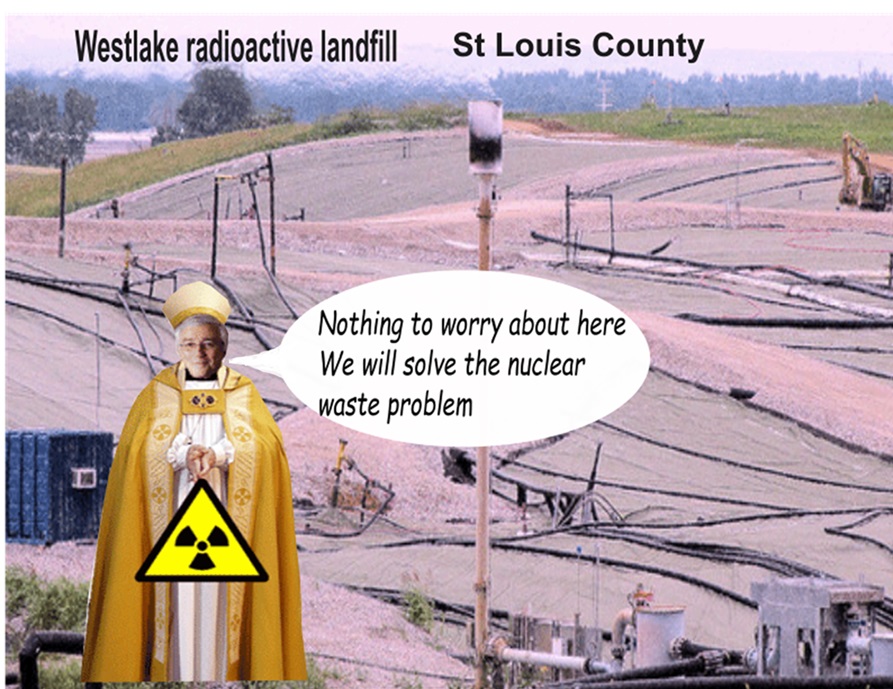
By Skyler Henry, Cait Bladt, https://www.cbsnews.com/amp/news/coldwater-creek-st-louis-missouri-nuclear-waste-manhattan-project/?fbclid=IwY2xjawJ5WlNleHRuA2FlbQIxMQBicmlkETE3b0JDR3JZZ0xqRkNqVU1oAR6r1OHnTIbzQszYmq5UdxWm2CDEhfSw2CBAqIbrvNc_QJ0mnVpSMlz18FoZ6A_aem_HBiqzbUxMZqObYI2gfOYx April 24, 2025
This story is part one of a two-part series that examines the effects of nuclear waste contamination in Coldwater Creek on the surrounding community in St. Louis, Missouri. Part two aired Wednesday, April 23 on “CBS Evening News.”
When Linda Morice and her family first moved to St. Louis in 1957, they had no idea they had anything to fear. Then, people started getting sick.
“It was a slow, insidious process,” Morice said.
After the death of Morice’s mother, her physician uncle took her aside and gave her a stark warning: “Linda, I don’t believe St. Louis is a very healthy place to live. Everyone on this street has a tumor.”
Their neighborhood was bordered by Coldwater Creek, a 19-mile tributary of the Missouri River It wound through their backyards, near baseball fields, schools and cemeteries — and past lots where leaking barrels and open-air dumps of nuclear waste leeched into its waters.
“It was shocking that this creek was likely making people sick,” Morice said.
Starting in 1942, roughly one ton of pure uranium was produced per day in downtown St. Louis. It was then shipped to labs across the country for the top secret Manhattan Project that created the first nuclear bomb.
The leftover waste was dumped around the city.
“That material was in 82 different spots throughout St. Louis County. It spilled. Children played in it. It seemed to me that there wasn’t an attempt to absolutely get to the bottom of it,” Morice said.
In Morice’s family alone, her mother, father and brother died of cancer, leaving her to think differently about her childhood.
“All that time, all those fun things were happening, but that whole time we, and the rest of the community were being exposed to some pretty dangerous stuff,” Morice said.
Now her husband, who also lived in the area, is fighting cancer. He’s being treated by urologic oncologist Dr. Gautum Agarwal. For the last several years, Agarwal has been tracking which of his patients lived near Coldwater Creek.
“I was seeing patients who are young, who had developed pretty significant cancers from areas that there’s been some contamination with nuclear waste,” Agarwal said.
While radiation is known to cause cancer, experts say they can’t pin down the specific cause of the disease in a given patient.
But a 2019 study from the Department of Health and Human Services found that people who lived and played near Coldwater Creek from the 1960s to 1990s “could be at an increased risk of developing lung cancer, bone cancer or leukemia.”
“The people there deserve for us to look at this much closer than we have,” Agarwal said.
The Ever-Expanding War Machine
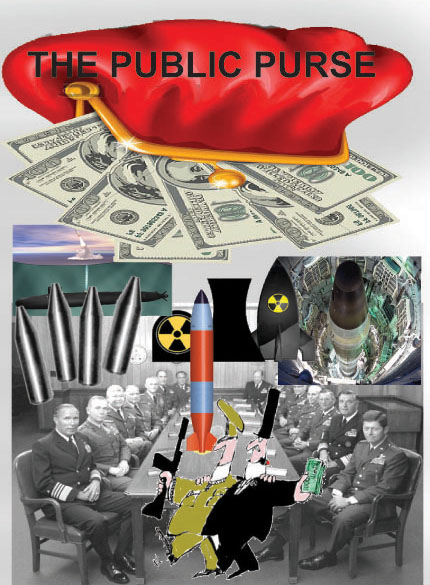
Dismantling the Government While Pumping Up the Pentagon
By William D. Hartung, April 22, 2025 https://tomdispatch.com/the-ever-expanding-war-machine/
Under the guise of efficiency, the Trump administration is taking a sledgehammer to essential programs and agencies that are the backbone of America’s civilian government. The virtual elimination of the U.S. Agency for International Development (USAID) and plans to shut down the Department of Education are just the most visible examples of a campaign that includes layoffs of budget experts, public health officials, scientists, and other critical personnel whose work undergirds the daily operations of government and provides the basic services needed by businesses, families, and individuals alike. Many of those services can make the difference between solvency and poverty, health and illness, or even, in some cases, life and death for vulnerable populations.
The speed with which civilian programs and agencies are being slashed in the second Trump era gives away the true purpose of the Department of Government Efficiency (DOGE). In the context of the Musk-Trump regime, “efficiency” is a cover story for a greed-driven ideological campaign to radically reduce the size of government without regard for the human consequences.
So far, the only agency that seems to have escaped the ire of the DOGE is — don’t be shocked! — the Pentagon. After misleading headlines suggested that its topline would be cut by as much as 8% annually for the next five years as part of that supposed efficiency campaign, the real plan was revealed — finding savings in some parts of the Pentagon only to invest whatever money might be saved in — yes! — other military programs without any actual reductions in the department’s overall budget. Then, during a White House meeting with Israeli Prime Minister Benjamin Netanyahu on April 7th, Trump announced that “we’re going to be approving a budget, and I’m proud to say, actually, the biggest one we’ve ever done for the military . . . $1 trillion. Nobody has seen anything like it.”
So far, cuts to make room for new kinds of military investments have been limited to the firing of civilian Pentagon employees and the dismantling of a number of internal strategy and research departments. Activities that funnel revenue to weapons contractors have barely been touched — hardly surprising given that Musk himself presides over a significant Pentagon contractor, SpaceX.
The legitimacy of his role should, of course, be subject to question. After all, he’s an unelected billionaire with major government contracts who, in recent months, seemed to have garnered more power than the entire cabinet combined. But cabinet members are subject to Senate confirmation, as well as financial disclosure and conflict-of-interest rules. Not Musk, though. Not only hasn’t he been vetted by Congress, but he’s been allowed to maintain his role in SpaceX.
A Hollow Government?
The Trump and Musk hollowing out of the civilian government, while keeping the Pentagon budget at enormously high levels of funding, means the United States is well on its way to becoming the very “garrison state” that President Dwight D. Eisenhower warned against in the early years of the Cold War. And mind you, all of that’s true before Republican hawks in Congress like Senate Armed Services Committee Chairman Roger Wicker (R-MS), who is seeking $100 billion more in Pentagon spending than its officials have asked for, even act.
What’s at stake, however, goes well beyond how the government spends its money. After all, such decisions are being accompanied by an assault on basic constitutional rights like freedom of speech and a campaign of mass deportations that already includes people with the legal right to remain in the United States. And that’s not to mention the bullying and financial blackmailing of universities, law firms, and major media outlets in an attempt to force them to bow down to the administration’s political preferences.In fact, the first two months of the Trump/Musk administration undoubtedly represent the most blatant power grab by the executive branch in the history of this republic, a move that undermines our ability to preserve, no less expand, the fundamental rights that are supposed to be the guiding lights of American democracy. Those rights have, of course, been violated to one degree or another throughout this country’s history, but never like this. The current crackdown threatens to erase the hard-won victories of the civil rights, women’s rights, labor rights, immigrant rights, and LGBTQ rights movements that had brought this country closer to living up to its professed commitments to freedom, tolerance, and equality.
Continue readingWorld’s first AI-powered nuclear power plant Diablo Canyon worries experts after Trump plan

AI technology being used to aid the running of a nuclear power plant has experts worried as Trump scraps AI regulation labelling them it ‘as barriers to American AI innovation’.
Daily Star 21st April 2025
Fears AI technology powering nuclear power plants could lead to catastrophe have been sparked experts caution the emergence of AI in the nuclear energy industry.
These fears come after Trump scraps AI regulation labelling it “as barriers to American AI innovation” as experts have begun to deploy AI to help run a once dead nuclear power plant.
Boffs at the Diablo Canyon, California’s sole remaining nuclear power plant, has begun exploring the frontier of AI to help aid them running the powerplant. In a venture with artificial intelligence start-up Atomic Canyon, a brand-new artificial intelligence tool designed for the nuclear energy industry.
Pacific Gas and Electricity who runs Diablo Canyon have announced a deal with the artificial intelligence start-up declaring the development of “the first on-site generative AI deployment at a U.S. nuclear power plant”.
Currently the artificial intelligence tool, dubbed Neutron Enterprise, is meant to help workers navigate extensive technical reports and regulations. Due to Neutron Enterprise’s use at the Diablo Canyon, both lawmakers and AI experts are requesting strong guardrails…………………..
Tamara Kneese, the director of tech policy non-profit Data & Society’s Climate, Technology, and Justice program commented on the use of AI in the field. “AI can be helpful in terms of efficiency,” the director said, praising the initial implementation.
“The idea that you could just use generative AI for one specific kind of task at the nuclear power plant and then call it a day, I don’t really trust that it would stop there. And trusting PG&E to safely use generative AI in a nuclear setting is something that is deserving of more scrutiny,” Kneese added…………………… https://www.dailystar.co.uk/news/world-news/worlds-first-ai-powered-nuclear-35093367
DOE Releases More Funding to Reopen Palisades Nuclear Plant

Energy Secretary Chris Wright on April 22 announced the release of a third
loan disbursement to Holtec for the reopening of the Palisades Nuclear
Plant in southwest Michigan. Today’s action releases $46,709,358 of the
up to $1.52-billion loan guarantee to Holtec for the Palisades project.
The 800-MW Palisades plant, located in Covert Township, was closed in 2022.
Holtec bought the power station from Entergy that year, with intent to
decommission the facility, before deciding instead to restart the plant.
Palisades at present would be the first U.S. nuclear power plant to restart
after being closed.
The plant still needs licensing approvals from the U.S.
Nuclear Regulatory Commission (NRC).
Opponents of restarting the nuclear power plant have said they will appeal a recent decision by a three-judge panel of the NRC’s Atomic Safety and Licensing Board, which refused to grant a hearing on the merits for seven safety-related contentions brought by a coalition that includes Beyond Nuclear, a nonprofit group. Beyond Nuclear and other groups have argued the plant should not be restarted.
Powermag 22nd April 2025,
https://www.powermag.com/doe-releases-more-funding-to-reopen-palisades-nuclear-plant/
Sam Altman steps down as chair of nuclear power supplier Oklo to avoid conflict of interest.

The modular reactor company he funded and led is in
talks to deliver energy to OpenAI. OpenAI chief executive Sam Altman is
stepping down as chair of Oklo to avoid a conflict of interest ahead of
talks between his company and the nuclear start-up on an energy supply
agreement, as the race to power artificial intelligence intensifies.
Altman, who was an early-stage investor in Oklo, will step down immediately
and be replaced by Jacob DeWitte, the group’s CEO and co-founder. The
move comes as the AI industry strives to procure high-wattage, low-carbon
energy supplies. Although it may be years before tech companies can benefit
from nuclear power, the launch of DeepSeek, the less energy-intensive
Chinese large language model competitor, has underscored the urgency for
western companies such as OpenAI to compete.
Oklo has yet to enter into any firm partnerships or receive approval for any of its designs from the Nuclear Regulatory Commission in the US.
FT 22nd April 2025,
https://www.ft.com/content/a511bae0-d19f-4ebd-9520-69d3f89d8556
Iran-US talks wrap up in Rome with agreement to establish framework for potential nuclear deal

Omani officials stated that the indirect talks are ‘gaining momentum’ after Tehran and Washington agreed to establish technical delegations to draft a potential replacement for the Obama-era JCPOA
The second round of indirect talks between Iranian and US officials concluded in the Italian capital, Rome, on 19 April, with both sides agreeing to establish working groups to draft a “general framework” for a potential new nuclear deal.
“In this round of talks, senior Iranian and US negotiators outlined the general framework for the talks and exchanged views on some important issues in the areas of sanctions relief and the nuclear issue. The two sides agreed to continue the next round of indirect talks next Saturday in Muscat,” the Iranian Foreign Ministry said in a statement.
Tehran also stated that talks to limit the country’s uranium enrichment program in exchange for sanctions relief “require more detailed discussion and examination at the expert level.” As such, the two sides agreed to send technical delegations to the Omani capital next Wednesday for detailed discussions.
Following Saturday’s talks, Iranian Foreign Minister Abbas Araghchi described the atmosphere as “positive” and said that officials “made clear how many in Iran believe that the [2015 Joint Comprehensive Plan of Action] is no longer good enough for us.”
“For now, optimism may be warranted but only with a great deal of caution,” he told reporters.
The Omani Foreign Ministry said the second round of talks “led to the parties agreeing to move to the next phase of targeted negotiations to achieve a fair, permanent, and binding agreement that ensures Iran is free from nuclear weapons and the full lifting of sanctions while preserving the country’s right to develop nuclear energy for peaceful uses and purposes.”
“Dialogue and clear communication are the only way to achieve a credible and reliable understanding that will benefit all parties in the regional and international context,” Omani officials said.
There was no immediate comment from the US side following the talks.
Nevertheless, soon after Saturday’s talks ended, Israeli TV broadcast a pre-recorded address by Prime Minister Benjamin Netanyahu, in which he reiterated his commitment to preventing Iran from developing a nuclear weapon.
“I am committed to preventing Iran from attaining nuclear weapons. I won’t give on this, I won’t let up on this, and I won’t withdraw from this — not a millimeter,” Netanyahu said.
Earlier in the day, Reuters reported that Tel Aviv “has not ruled out” launching an attack on Iran’s nuclear facilities in the near future without US involvement.
80 years after atomic bombs devastated Japan, Donald Trump’s actions risk nuclear proliferation
The Conversation 20th April 2025
- Jamie LevinAssociate Professor of Political Science, St. Francis Xavier University
- Youngwon ChoAssociate Professor of Political Science, St. Francis Xavier University
The policy of every American president since Harry S. Truman has been to limit the proliferation of nuclear weapons.
They have not always been successful. The world’s most powerful weapons spread, with nine countries now possessing them. But no United States president has actively sought their further proliferation, as the belligerent policies of Donald Trump are now set to do.
In 2018, during his first term as president, Trump tore up the Iran nuclear deal, which had successfully placed limits on the enrichment of weapons-grade materials in exchange for sanctions relief.
Iran has since accelerated its nuclear weapons program. Estimates now put Iran within months or even weeks of producing several bombs.
A short time later, after a series of escalating threats, Trump suggested that North Korea had agreed to denuclearize. Talks ensued, but a deal never materialized.
In fact, Trump failed to stop, let alone roll back, North Korea’s ambitious nuclear weapons programs. North Korea is now said to possess at least 50 warheads as well as the means to deliver them.
No longer an ally
Under the second Trump administration, the world is facing a rapidly growing proliferation risk of a different kind, one that is found not only among the usual suspects in Iran and North Korea, but also among a long list of U.S. allies who once basked in American security guarantees.
Merely two months into Trump’s second term, America’s European allies have grown increasingly concerned that the U.S. is no longer a reliable ally.
That’s due to his suspension (and then reinstatement) of weapons transfers and intelligence sharing with Ukraine, an explicitly prioritized rapprochement with Russia, open denigration of its NATO allies, suggestions that the U.S. would not come to their defence if attacked, and his active and repeated threats to the sovereignty and territorial integrity of Canada, Greenland and Panama.
Against this backdrop, Trump’s guiding Project 2025 principles advocate escalating nuclear testing, breaking a long-held taboo.
Once protected by its nuclear umbrella, America’s closest allies are now threatened by it. Europe’s loss of confidence in the U.S. is so severe that finding alternatives has now become part of serious discussions in capitals across the continent. France and the United Kingdom are poised to fill the void by extending their nuclear deterrence to the likes of Germany and Poland.
The scene in Asia
But the risk of proliferation is greatest in East Asia. On the campaign trail in 2016, Trump mused that Japan and South Korea might need to develop nuclear weapons. “It’s only a matter of time,” he said.
That time is unfortunately now…………………………………………………………………………………………………………
Catastrophic dangers
While going nuclear may be individually rational for the East Asian countries, the collective outcome for the region and beyond is fraught with catastrophic risks.
The world is now grappling with the most dangerous collective action problem because the solution that has worked so well for decades — credible American security assurance — is eroding.
In upending the very international order that the U.S. established, the Trump administration is not merely chipping away at the global security architecture underpinned by myriad American security guarantees. It’s imploding the post-Second World War security order from within and the moral, political and institutional bulwark against nuclear proliferation.
In this predatory, zero-sum world of Trumpian foreign policy, putting America First necessarily means putting everyone else last — and, along the way, inadvertently fuelling nuclear proliferation. https://theconversation.com/80-years-after-atomic-bombs-devastated-japan-donald-trumps-actions-risk-nuclear-proliferation-254459
Small nuclear reactors are no fix for California’s energy needs
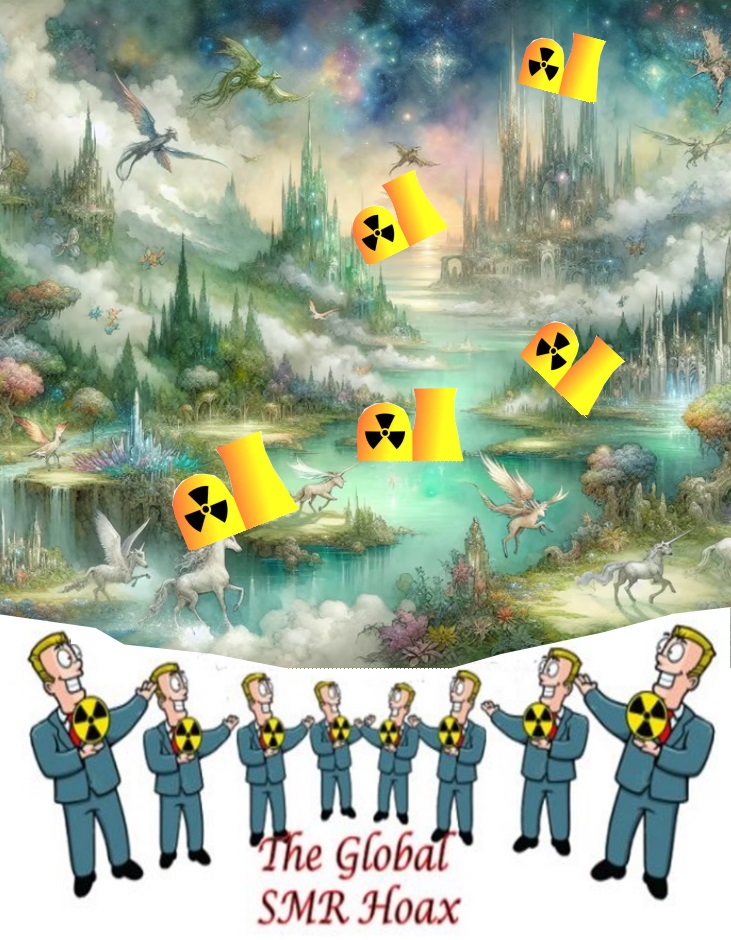
I know all too well that the hype is built on quicksand …….. many of those “building support for small modular reactors” are putting forward “rhetorical visions imbued with elements of fantasy.”
SMRs are just one of several wildly overhyped false promises on which the world is poised to spend hundreds of billions of dollars by 2040
Joseph Romm, April 18, 2025 , https://www.latimes.com/opinion/story/2025-04-18/small-modular-reactors-cost-california
It might seem like everyone from venture capitalists to the news media to the U.S. secretary of Energy has been hyping small modular reactors as the key to unlocking a nuclear renaissance and solving both climate change and modern data centers’ ravenous need for power.
On Monday, the Natural Resources Committee of the California Assembly will consider a bill to repeal a longstanding moratorium on nuclear plants in the state, which was meant to be in place until there is a sustainable plan for what to do with radioactive waste. Defeated multiple times in the past, this bill would carve out an exception for small modular reactors, or SMRs, the current pipe dream of nuclear advocates.
SMRs are typically under 300 megawatts, compared with the combined 2.2 gigawatts from Diablo Canyon’s two operating reactors near San Luis Obispo. These smaller nukes have received so much attention in recent years mainly because modern reactors are so costly that the U.S. and Europe have all but stopped building any.

The sad truth is that small reactors make even less sense than big ones. And Trump’s tariffs only make the math more discouraging.
I’ve been analyzing nuclear power since 1993, when I started a five-year stint at the Department of Energy as a special assistant to the deputy secretary. I helped him oversee both the nuclear energy program and the energy efficiency and renewable energy program, which I ran in 1997.
So I know all too well that the hype is built on quicksand — specifically, a seven-decade history of failure. As a 2015 analysis put it, “Economics killed small nuclear power plants in the past — and probably will keep doing so.” A 2014 journal article concluded many of those “building support for small modular reactors” are putting forward “rhetorical visions imbued with elements of fantasy.”
But isn’t there a nuclear renaissance going on? Nope. Georgia’s Vogtle plant is the only new nuclear plant the U.S. has successfully built and started in recent decades. The total cost was $35 billion, or about $16 million per megawatt of generating capacity — far more than methane (natural gas) or solar and wind with battery storage.
As such, Vogtle is “the most expensive power plant ever built on Earth,” with an “astoundingly high” estimated electricity cost, noted Power magazine. Georgia ratepayers each paid $1,000 to support this plant before they even got any power, and now their bills are rising more than $200 annually.
The high cost of construction and the resulting high energy bills explain why nuclear’s share of global power peaked at 17% in the mid-1990s but was down to 9.1% in 2024.
For decades, economies of scale drove reactors to grow beyond 1,000 megawatts. The idea that abandoning this logic would lead to a lower cost per megawatt is magical thinking, defying technical plausibility, historical reality and common sense.
Even a September report from the federal Department of Energy — which funds SMR development — modeled a cost per megawatt more than 50% higher than for large reactors. That’s why there are only three operating SMRs: one in China, with a 300% cost overrun, and two in Russia, with a 400% overrun. In March, a Financial Times analysis labeled such small reactors “the most expensive energy source.”

Indeed, the first SMR the U.S. tried to build — by NuScale — was canceled in 2023 after its cost soared past $20 million per megawatt, higher than Vogtle. In 2024, Bill Gates told CBS the full cost of his 375-megawatt Natrium reactor would be “close to $10 billion,” making its cost nearly $30 million per megawatt — almost twice Vogtle’s.
All of this has played out against a backdrop of historically cheap natural gas and a rapid expansion of renewable energy sources for electricity generation. All that competition against nuclear power matters: A 2023 Columbia University report concluded that “if the costs of new nuclear end up being much higher” than $6.2 million per megawatt, “new nuclear appears unlikely to play much of a role, if any, in the U.S. power sector.” R.I.P.
SMRs are just one of several wildly overhyped false promises on which the world is poised to spend hundreds of billions of dollars by 2040, including hydrogen energy and direct air carbon capture.
But nuclear power is the original overhyped energy technology. When he was chairman of the Atomic Energy Commission, Lewis Strauss — the Robert Downey Jr. character in “Oppenheimer” — predicted in 1954 that our children would enjoy nuclear power “too cheap to meter.”
Yet by the time I joined the Department of Energy in 1993, nuclear power costs had grown steadily for decades. Since then, prices for new reactors have kept rising, and they are now the most expensive power source. But solar, wind and battery prices have kept dropping, becoming the cheapest. Indeed, those three technologies constitute a remarkable 93% of planned U.S. utility-scale electric-generating capacity additions in 2025. The rest is natural gas.
China is the only country building many new nuclear plants over the next five years — about 35 gigawatts. Less than 1% of this projected capacity would be from small reactors — while more than 95% will be from reactors over 1,100 megawatts. Now compare all that to the 350 gigawatts of solar and wind China built — just in 2024.
For the U.S., President Trump’s erratic tariffs make small modular reactors an even riskier bet. If the U.S. economy shrinks, so does demand for new electric power plants. And the twin threats of inflation and higher interest rates increase the risk of even worse construction cost overruns.
Also, China, Canada and other trading partners provide critical supply chain elements needed to mass-produce SMRs — and mass production is key to the sales pitch claiming this technology could become affordable. That logic would apply only if virtually all of the current SMR ventures fail and only one or two end up pursuing mass production.
So, can we please stop talking about small modular reactors as a solution to our power needs and get back to building the real solutions — wind, solar and batteries? They’re cheaper and cleaner — and actually modular.
Joseph Romm is a former acting assistant secretary of Energy and the author of “The Hype About Hydrogen: False Promises and Real Solutions in the Race to Save the Climate.”
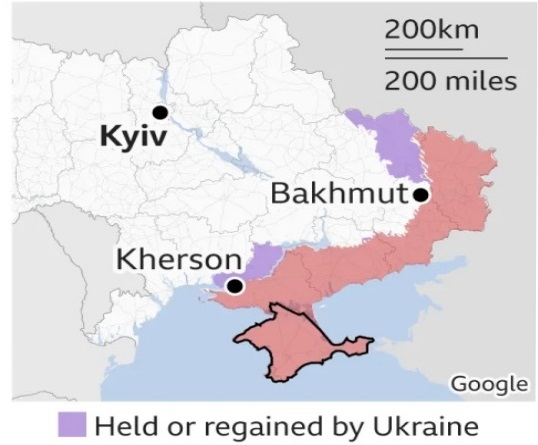
US proposes leaving former Ukrainian territories under Russian control – Bloomberg
18 Apr,25 – https://www.rt.com/news/615961-russia-ukraine-peace-us/
Washington’s offer also reportedly envisions easing sanctions on Moscow and ending Kiev’s NATO aspirations.
The US has presented its allies with details of its peace plan to bring the conflict between Russia and Ukraine to an end, Bloomberg reported on Friday, citing European officials familiar with the matter.
The proposal, outlined during a meeting in Paris on Thursday, reportedly includes easing sanctions on Russia, as well as terminating Ukraine’s aspirations to join NATO. The roadmap would effectively freeze the conflict and leave former Ukrainian territories that are part of Russia under Moscow’s control, the sources suggested.
One of the officials told Bloomberg that the proposal still had to be discussed with Kiev, adding that the plan would not actually amount to a definitive conflict settlement. Kiev’s European backers would not recognize the territories as Russian, the source suggested.
The US delegation at the Paris meetings, which involved senior officials from several countries, was led by Secretary of State Marco Rubio and White House special envoy Steve Witkoff. They met with French President Emmanuel Macron and also held discussions with top officials from France, Germany, the UK, and Ukraine.
Earlier on Friday, Rubio signaled Washington was ready to “move on” if a way to end the hostilities between Moscow and Kiev could not be found “within days.”
“We need to figure out here now, within a matter of days, whether this is doable in the short term. Because if it’s not, then I think we’re just going to move on,” Rubio told reporters before departing from France.
Moscow has signaled a full ceasefire with Ukraine was highly unlikely, citing Kiev’s violations of previous deals. Speaking to reporters at the UN headquarters on Thursday, Russian envoy Vassily Nebenzia said there are “big issues with the comprehensive ceasefire,” recalling the fate of the now-defunct Minsk agreements, which were “misused and abused to prepare Ukraine for the confrontation.”
The diplomat also cited repeated Ukrainian violations of a US-brokered 30-day moratorium on energy infrastructure strikes, implemented on March 18.
“How close we are to the ceasefire is a big question to me personally, because, as I said, we had an attempt at a limited ceasefire on energy infrastructure, which was not observed by the Ukrainian side. So, in these circumstances, to speak about a ceasefire is simply unrealistic at this stage,” Nebenzia said.
1 This Month

of the week – Shut Down Drone Warfare!


Tell the Ukrainian Government to Drop Prosecution of Peace Activist Yurii Sheliazhenko

Petition to revoke the licensing of the Near Surface Nuclear Disposal Facility (NSDF) at Chalk River. https://www.ourcommons.ca/petitions/en/Petition/Details?Petition=e-7247
To see nuclear-related stories in greater depth and intensity – go to https://nuclearinformation.wordpress.com
-
Archives
- March 2026 (230)
- February 2026 (268)
- January 2026 (308)
- December 2025 (358)
- November 2025 (359)
- October 2025 (376)
- September 2025 (257)
- August 2025 (319)
- July 2025 (230)
- June 2025 (348)
- May 2025 (261)
- April 2025 (305)
-
Categories
- 1
- 1 NUCLEAR ISSUES
- business and costs
- climate change
- culture and arts
- ENERGY
- environment
- health
- history
- indigenous issues
- Legal
- marketing of nuclear
- media
- opposition to nuclear
- PERSONAL STORIES
- politics
- politics international
- Religion and ethics
- safety
- secrets,lies and civil liberties
- spinbuster
- technology
- Uranium
- wastes
- weapons and war
- Women
- 2 WORLD
- ACTION
- AFRICA
- Atrocities
- AUSTRALIA
- Christina's notes
- Christina's themes
- culture and arts
- Events
- Fuk 2022
- Fuk 2023
- Fukushima 2017
- Fukushima 2018
- fukushima 2019
- Fukushima 2020
- Fukushima 2021
- general
- global warming
- Humour (God we need it)
- Nuclear
- RARE EARTHS
- Reference
- resources – print
- Resources -audiovicual
- Weekly Newsletter
- World
- World Nuclear
- YouTube
-
RSS
Entries RSS
Comments RSS
 nuclear-news