US Relied on Illegal Sanctions to Seize Venezuelan Oil Tanker
December 15, 2025 By Marjorie Cohn, https://scheerpost.com/2025/12/15/us-relied-on-illegal-sanctions-to-seize-venezuelan-oil-tanker/
This article was originally published by Truthout
US armed forces’ seizure of the oil tanker constituted an unlawful use of force in violation of the UN Charter.
“We have just seized a tanker on the coast of Venezuela — a large tanker, very large, the largest one ever seized actually,” Donald Trump told reporters on December 10, describing the escalation of his apparently impending illegal war and regime change in Venezuela. Attorney General Pam Bondi ceremoniously released a video clip of the U.S. Marines and National Guard rappelling down from two helicopters onto the tanker.
In seizing the “Skipper,” the Trump administration relied on sanctions the U.S. had imposed on the Venezuelan oil tanker. Bondi said a seizure warrant was executed by the U.S. Coast Guard, FBI, Pentagon, and Homeland Security Investigations. “For multiple years, the oil tanker has been sanctioned by the United States due to its involvement in an illicit oil shipping network supporting foreign terrorist organizations,” she stated.
But those sanctions are illegal and cannot provide a lawful basis for the U.S. to seize this vessel.
Only the Security Council Is Authorized to Impose Sanctions
Although claims in the corporate media that Venezuelan oil is subject to “international sanctions” are ubiquitous, nothing could be further from the truth.
When a country takes it upon itself to impose sanctions without Security Council approval, they are called unilateral coercive measures, which violate the UN Charter.
The U.S. government imposed unilateral coercive measures on the oil tanker in 2022 for its alleged ties to Iran. But the UN Charter empowers only the Security Council to impose and enforce sanctions. Article 41 specifies:
The Security Council may decide what measures not involving the use of armed force are to be employed to give effect to its decisions, and it may call upon the Members of the United Nations to apply such measures. These may include complete or partial interruption of economic relations and of rail, sea, air, postal, telegraphic, radio, and other means of communication, and the severance of diplomatic relations.
“Under international law, we cannot lawfully enforce U.S. domestic law in a foreign state’s territorial sea (12 nautical miles) or contiguous zone (next 12 miles out, to total 24) without the coastal state’s consent,” Jordan Paust, professor emeritus at University of Houston Law Center and former captain in the U.S. Army JAG Corps, told Truthout.
Francisco Rodriguez, senior research fellow at the Center for Economic and Policy Research, concurs. “The US has no jurisdiction to enforce unilateral sanctions on non-US persons outside its territory,” he posted on X. “The seizure of ships in international waters to extraterritorially enforce US sanctions is a dangerous precedent and a violation of international law.”
“Nor can we lawfully do so on a foreign flag vessel there or on the high seas without the flag state’s consent — all absent any international legal justification under the law of war during an actual ‘armed conflict’ or under Article 51 of the UN Charter in case of an actual ‘armed attack,’” Paust added.
Although there are allegations that the Skipper was operating under a false flag, Trump made clear in his December 10 statement that it was in Venezuela’s territorial sea or contiguous zone, not on “the high seas.” Moreover, a senior military official told CBS News that the tanker had just left a port in Venezuela when it was seized.
The Seizure Was an Illegal Act of Aggression
At first blush, it appears that the U.S. military committed piracy when it seized the Skipper. But piracy is defined by Article 101 of the UN Convention on the Law of the Sea as acts committed for private purposes by a private aircraft or ship. State-sponsored or military actions can constitute acts of war or violations of sovereignty, but not piracy.
The UN Charter prohibits the threat or use of force except in self-defense after an armed attack under Article 51 or when approved by the Security Council, neither of which was present before the seizure of the Skipper. Nor was the U.S. engaged in armed conflict with Venezuela.
General Assembly Resolution 3314 sets forth the definition of “aggression,” which has been adopted by the Rome Statute for the International Criminal Court: “Aggression is the use of armed force by a State against the sovereignty, territorial integrity or political independence of another State, or in any other manner inconsistent with the Charter of the United Nations.”
The seizure of the oil tanker by the U.S. armed forces constituted an unlawful use of force in violation of the UN Charter. It was therefore an act of aggression.
This aggression comes on the heels of the Trump administration’s extrajudicial executions (murders) of some 87 alleged drug traffickers on more than 20 small boats in the Caribbean and Eastern Pacific. In all likelihood, the administration doesn’t even know the identity of the victims, nor has it provided any evidence that they were trafficking in narcotics. Even if it had, due process requires arrest, not murder.
The U.S. has seized “sanctioned” oil in the past, during the first Trump administration and the Biden administration as well. But, according to The New York Times, it is not a common practice and “rarely becomes a public spectacle.”
Meanwhile, the administration is engaging in the largest military buildup of U.S. firepower in the Caribbean in decades, including the deployment of the USS Gerald R. Ford, the biggest aircraft carrier in the world. Trump declared a no-fly-zone over Venezuela. And the administration recently added significant combat equipment to that already present in the region.
On December 11, the U.S. Treasury Department imposed additional sanctions on the government of Venezuelan President Nicolás Maduro, targeting his relatives and six shipping companies operating in Venezuela’s oil sector.
If U.S. Regime Change Succeeds in Venezuela, Cuba May Be Next
Trump has clearly stated his intention to attack Venezuela, and his administration has signaled that it aims to change Venezuela’s regime, with opposition leader María Corina Machado waiting in the wings. Hours after it seized the Skipper, the U.S. helped Machado leave Venezuela and travel to Norway to receive the Nobel “Peace” Prize.
Maduro called the seizure of the tanker what it really is: “It has always been about our natural resources, our oil, our energy, the resources that belong exclusively to the Venezuelan people.” Venezuela has the largest proven oil reserves in the world.
This seizure could be the first act in the U.S. imposition of an oil blockade on Venezuela. Such a blockade “would shut down the entire economy,” former Biden administration Latin America adviser Juan González told the Guardian.
“Because Venezuela is so dependent on oil, they could not resist that very long,” retired U.S. Marine Corps Colonel and senior adviser at think tank Center for Strategic and International Studies Mark Cancian, told the BBC. It would be “an act of war.”
The oil tanker had offloaded a small amount of its oil to a smaller ship headed for Cuba and then proceeded east toward Asia before the tanker was seized by the U.S. That seizure “is part of the US escalation aimed at hampering Venezuela’s legitimate right to freely use and trade its natural resources with other nations, including the supplies of hydrocarbons to Cuba,” the Cuban Foreign Ministry said in a statement.
Secretary of State Marco Rubio, architect of Trump’s Venezuela regime change strategy, has long had the Cuban government in his sights. “Their theory of change involves cutting off all support to Cuba,” González told The New York Times. “Under this approach, once Venezuela goes, Cuba will follow.”
For decades, Cuba has suffered under unilateral coercive measures in the form of an economic blockade, which was also imposed by the U.S. in violation of the UN Charter.
Forcible regime change is illegal. The UN Charter prohibits the use of force against the territorial integrity or political independence of another state. Likewise, the Charter of the Organization of American States forbids any state from intervening in the internal or external affairs of another state. And the International Covenant on Civil and Political Rights guarantees the right to self-determination.
Trump’s new National Security Strategy contains the “Trump Corollary” to the Monroe Doctrine, signaling a return to U.S. military interventions in Latin America. The strategy states:
We want to ensure that the Western Hemisphere remains reasonably stable and well-governed enough to prevent and discourage mass migration to the United States; we want a Hemisphere whose governments cooperate with us against narco-terrorists, cartels, and other transnational criminal organizations; we want a Hemisphere that remains free of hostile foreign incursion or ownership of key assets, and that supports critical supply chains; and we want to ensure our continued access to key strategic locations.Washington’s brutal anti-immigrant policies and false accusations that Venezuela is sending drugs to harm the U.S. are consistent with this strategy. And implicit in the strategy is the key goal of U.S. access to Venezuela’s rich oil deposits.
US sets out condition for Ukraine security guarantees – Axios
13 Dec 25 https://www.rt.com/news/629413-us-condition-ukraine-security-guarantees/
Kiev could receive assurances as part of a peace deal if it agrees to territorial concessions, the report says
The administration of US President Donald Trump is willing to offer Kiev NATO-style and Congress-approved security guarantees if it agrees on territorial concessions to Russia, Axios reported on Saturday, citing sources. Ukraine has rejected any concessions and has called instead for a ceasefire – a proposal Moscow has dismissed as a ploy to win time and prolong the conflict.
The outlet cited unnamed US officials as saying that negotiations on security guarantees from the US and EU nations to Ukraine had made “significant progress.” An Axios source claimed that Washington wanted a guarantee “that will not be a blank check … but will be strong enough,” adding: “We are willing to send it to Congress to vote on it.”
The package proposal, the official continued, would entail territorial concessions, with Ukraine “retaining sovereignty over about 80% of its territory” and receiving “the biggest and strongest security guarantee it has ever got,” alongside a “very significant prosperity package.”
Russian Foreign Minister Sergey Lavrov has said that Moscow is open to discussing a security guarantees framework on condition that it will not be aimed at Russia. He added that Moscow believes Washington to be “genuinely interested in a fair settlement that… safeguards the legitimate interests of all parties.”
The Axios report also said the US viewed as “progress” recent remarks by Ukrainian leader Vladimir Zelensky suggesting Ukraine could hold a referendum on territorial concessions, particularly those concerning Donbass.
Moscow, however, has stressed that Donbass – which overwhelmingly voted to join Russia in 2022 – is sovereign Russian territory, and Ukrainian troops will be pushed out of the region one way or the other. It also suggested that Zelensky’s referendum play was a ploy to prolong the conflict and gain time for patching up the Ukrainian army.
Moscow insists that a sustainable peace could only be reached if Ukraine commits to staying out of NATO, demilitarization and denazification, limits the size of its army, and recognizes the new territorial reality on the ground.
More than 200 environmental groups demand halt to new US datacenters.

Congress urged to act against energy-hungry facilities blamed for increasing bills and worsening climate crisis
Oliver Milman, Guardian 8 December 25
A coalition of more than 230 environmental groups has demanded a national moratorium on new datacenters in the US, the latest salvo in a growing backlash to a booming artificial intelligence industry that has been blamed for escalating electricity bills and worsening the climate crisis.
The green groups, including Greenpeace, Friends of the Earth, Food & Water Watch and dozens of local organizations, have urged members of Congress to halt the proliferation of energy-hungry datacenters, accusing them of causing planet-heating emissions, sucking up vast amounts of water and exacerbating electricity bill increases that have hit Americans this year.
“The rapid, largely unregulated rise of datacenters to fuel the AI and crypto frenzy is disrupting communities across the country and threatening Americans’ economic, environmental, climate and water security,” the letter states, adding that approval of new data centers should be paused until new regulations are put in place.
The push comes amid a growing revolt against moves by companies such as Meta, Google and Open AI to plow hundreds of billions of dollars into new datacenters, primarily to meet the huge computing demands of AI. At least 16 datacenter projects, worth a combined $64bn, have been blocked or delayed due to local opposition to rising electricity costs. The facilities’ need for huge amounts of water to cool down equipment has also proved controversial, particularly in drier areas where supplies are scarce.
These seemingly parochial concerns have now multiplied to become a potent political force, helping propel Democrats to a series of emphatic recent electoral successes in governor elections in Virginia and New Jersey as well as a stunning upset win in a special public service commission poll in Georgia, with candidates campaigning on lowering power bill costs and curbing datacenters.
This threatens to be a major headache for Donald Trump, who has aggressively pushed the growth of AI but also called himself the “affordability president” and vowed to cut energy costs in half in his first year………………………………………………………………………………………….
it is the growth of datacenters to service AI – with electricity consumption set to nearly triple over the next decade, equivalent to powering 190m new homes – that is the focus of ire for voters as well as an unlikely sweep of politicians ranging from Bernie Sanders on the left to Marjorie Taylor Greene on the far right…………………………………………………………………………………………….https://www.theguardian.com/us-news/2025/dec/08/us-data-centers
Decades of Global Drone War Made Trump’s Caribbean Killing Spree Possible
“Suspicion of smuggling is not an imminent threat. Even if known traffickers were on board, it would not give the military the authority to launch missiles at a civilian vessel”
The Caribbean is not a war zone.
The so-called war on terror laid the foundations for Trump to turn international waters into one-sided battlefields.
By Emran Feroz , Truthout December 13, 2025
In September 2, 2025, a small fishing boat carrying 11 people was targeted by a U.S. Reaper drone off the coast of Venezuela. Hellfire missiles were fired. Two survivors clung to the wreckage. Their identities and motives were unknown. Their behavior showed no hostility. Moments later, the drone operator launched a second strike — the so-called “double tap” — killing the final survivors. This scene is shocking, but it should not be surprising to anyone who has followed the trajectory of the U.S.’s drone wars. This tactic is familiar from Afghanistan, Pakistan, Yemen, and, most recently, Gaza, where the Israeli military has used much worse violence to conduct genocide.
The U.S.’s first drone strike in the Caribbean, and the footage of the incident, reignited a debate about a conflict that Washington refuses to call a war — because it isn’t one. Instead, the Trump administration is using sheer violence to terrorize non-white populations and, as usual, has normalized lethal force far from declared battlefields and without any legal mandate.
U.S. Defense Secretary Pete Hegseth has approved at least 21 additional strikes in the Caribbean and eastern Pacific since September, killing at least 87 people. He has aggressively defended the very first operation, insisting he would have authorized the second strike as well — despite claiming he did not see it. Hegseth even misinterpreted the visible smoke on the video as the “fog of war,” seemingly unaware that the term refers to uncertainty in conflict, not the physical aftermath of a missile strike.
The details matter because they reveal something essential: the senior leadership overseeing these operations does not appear interested in the law, accuracy, or the basic meaning of proportionality. Instead, it has embraced escalation and mass murder as official policy.
Illegal Violence Dressed Up as Counter-Narcotics
Almost all legal experts agree that the U.S. strikes in the Caribbean violate international law. The Trump administration claims that suspected smugglers are “narco-terrorists” and therefore legitimate targets. But as Khalil Dewan, a legal scholar at London’s School of Oriental and African Studies who has studied U.S. and British drone programs for years, told me: “Drug trafficking is a crime, not an armed conflict.”
International law permits lethal force outside war zones only to prevent imminent threats to life. There is no indication that any of the boats the U.S. targeted — including the one in the September 2 video — posed such a threat. Dewan is clear: these are extrajudicial killings taking place on the high seas.
Former Air Force drone technician Lisa Ling, who left the program under the Obama administration due to the civilian casualties she witnessed, shares the same assessment. “Suspicion of smuggling is not an imminent threat. Even if known traffickers were on board, it would not give the military the authority to launch missiles at a civilian vessel,” she told me. Ling emphasizes a point that U.S. officials seem intent on ignoring: The Caribbean is not a war zone.
Ling also raises a question the military prefers not to confront: Who bears responsibility? “We were taught to disobey unlawful orders,” she said. “I’m still waiting to see that principle applied to those who carried out strikes on civilian boats in international waters.”
A Pattern With a Long History
The U.S. drone program did not begin with Trump. Its first lethal strike took place on October 7, 2001, in Kandahar province, targeting Taliban founder Mullah Mohammad Omar. It missed and killed civilians instead. That pattern — high-value targets declared dead, only to reappear alive — became common………………………………………………………………………………………………………………………………………………………….
Trump Escalation and Total Blowback
Trump has not only expanded the use of drone strikes but also removed the few modest oversight mechanisms Obama left behind. Now, under his second administration, the U.S. is openly striking vessels in international waters with almost no pretext.
…………………………….For years, critics of the war on terror have warned that a globalized drone program, paired with militarized domestic security agencies, would eventually produce consequences within the Americas too. That moment is here.
At least one family in Colombia has announced legal action after a fisherman, Alejandro Carranza, disappeared at sea. At the same time, Washington claimed to have killed “three violent drug-smuggling cartel members and narco-terrorists.” Carranza leaves behind a wife and five children.
What happens in the Caribbean today is not an anomaly. It is the outcome of two decades of policy decisions made by presidents of both parties. The world was declared a battlefield long before Trump returned to office. What we are seeing now is the cost of refusing to confront that reality. https://truthout.org/articles/decades-of-global-drone-war-made-trumps-caribbean-killing-spree-possible/?utm_source=Truthout&utm_campaign=f725ba5970-EMAIL_CAMPAIGN_2025_12_13_05_12&utm_medium=email&utm_term=0_bbb541a1db-f725ba5970-650192793
Trump’s Monroe Doctrine 2.0 Outlines Imperial Intentions for Latin America.

The National Security Strategy condemns U.S. foreign policy since the end of the Cold War. It champions the U.S. economy and military and says that the United States “must be preeminent” in the Americas and around the world. If there is one overarching principle it is the concept of “peace through strength.”
The administration’s National Security Strategy signals a return to more outwardly interventionist policies.
By Michael Fox , Truthout, December 12, 2025
n Wednesday, December 10, Donald Trump announced that the United States had seized a tanker in the Caribbean carrying more than 1.6 million barrels of Venezuelan crude oil.
“Large tanker, very large, largest one ever, actually, and other things are happening,” Trump told the press.
The seizure is only the latest move in a long build-up of U.S. military action in the Caribbean and increasing U.S. threats against Venezuela and its President Nicolas Maduro.
Trump — without evidence — says Maduro is the head of an international terrorist group running drugs into the United States. He has called Maduro’s days numbered.
Over the last three months, the United States has hit at least 22 alleged “drug boats” in the Caribbean and Pacific, killing more than 80 people. The campaign is the first unilateral lethal action the U.S. military has undertaken in Latin America since the 1980s.
The United States has now amassed the largest military buildup in the Caribbean in decades, including the world’s largest warship, the U.S. aircraft carrier USS Gerald R. Ford. Fifteen thousand U.S. troops are stationed in the region, on the ready.
Responding to news of the tanker seizure, Democratic Senator Chris Coons told NewsNation that he is “gravely concerned that [Trump] is sleepwalking us into a war with Venezuela.”
Even Congress has been shocked by how the administration has conducted the boat strikes. But a new document offers insight into the thought process behind Trump’s threats and actions in the region.
The United States has now amassed the largest military buildup in the Caribbean in decades, including the world’s largest warship, the U.S. aircraft carrier USS Gerald R. Ford. Fifteen thousand U.S. troops are stationed in the region, on the ready.
Responding to news of the tanker seizure, Democratic Senator Chris Coons told NewsNation that he is “gravely concerned that [Trump] is sleepwalking us into a war with Venezuela.”
Even Congress has been shocked by how the administration has conducted the boat strikes. But a new document offers insight into the thought process behind Trump’s threats and actions in the region.
The National Security Strategy condemns U.S. foreign policy since the end of the Cold War. It champions the U.S. economy and military and says that the United States “must be preeminent” in the Americas and around the world. If there is one overarching principle it is the concept of “peace through strength.”
“Strength is the best deterrent. Countries or other actors sufficiently deterred from threatening American interests will not do so,” it reads. “The United States must maintain the strongest economy, develop the most advanced technologies, bolster our society’s cultural health, and field the world’s most capable military.”
Front and center is the Western Hemisphere. It’s the first region mentioned in the document — China isn’t mentioned until page 23. The priority and focus on the Americas clearly marks a shift away from U.S. attention elsewhere around the world.
One detail in the document stands out more than any other — a reference to a new “Trump Corollary” to the Monroe Doctrine. This is made twice — first it’s included top among the overall policy goals and then again in the section on the Western Hemisphere.
The term “corollary” may seem like an odd choice to describe Trump’s embrace of the foreign policy position, but it is actually a clear historical nod to a moment when the Monroe Doctrine was used to justify widespread U.S. military actions in the region.
Now, analysts believe this is the direction we are headed again.
The Roosevelt Corollary
When U.S. President James Monroe issued his state of the union address on December 2, 1823, it included in it an articulation of a foreign policy position that would come to be known as the Monroe Doctrine.
Essentially, the doctrine was a message to European countries following the independence of most of the countries of the Americas: Foreign powers had no right to interfere in the politics of the newly independent nations of the Western Hemisphere.
But by the beginning of the 20th century, the United States had grown in prominence, power and ambition. President Theodore Roosevelt’s 1904 “Roosevelt Corollary” vastly reinterpreted the Monroe Doctrine, essentially turning it into a tool to justify U.S. intervention across the region.
……………………………………………………………………………………..the Trump Corollary reads as a veiled threat against countries who might be unwilling to bend to U.S. interests.
“We will assert and enforce a “Trump Corollary” to the Monroe Doctrine,” the National Security Strategy document states. “We want to ensure that the Western Hemisphere remains reasonably stable and well-governed enough to prevent and discourage mass migration to the United States; we want a Hemisphere whose governments cooperate with us against narco-terrorists, cartels, and other transnational criminal organizations; we want a Hemisphere that remains free of hostile foreign incursion or ownership of key assets, and that supports critical supply chains; and we want to ensure our continued access to key strategic locations.”
Analysts say the Trump administration’s visible actions toward Latin America in recent months — the seizure of the oil tanker, the boat attacks, threats of war with Venezuela, intervention into Honduran elections, tariffs on Brazil — all fit into this rubric.
…………………………………………………………………………………………Like the Roosevelt Corollary, which, following 1904, would be used for years to justify intervention after intervention across the region, the new National Security Strategy is a means of justifying the policies, threats, and attacks Trump may unleash across the region.
………………………………………………………………………………………………………………………Gone are the past U.S. pretexts of spreading democracy, or standing for the good of humanity, or civilization building……………………………………………………………………………. https://truthout.org/articles/trumps-monroe-doctrine-2-0-outlines-imperial-intentions-for-latin-america/?utm_source=Truthout&utm_campaign=e71842d601-EMAIL_CAMPAIGN_2025_12_12_07_18_COPY_01&utm_medium=email&utm_term=0_bbb541a1db-62fed5671d-650192793
FBI Labels Antifa a Major Terror Threat, but Lawmakers Say Evidence Is Lacking as Trump’s Obsession Distracts From Far-Right Extremism
December 12, 2025, Joshua Scheer, https://scheerpost.com/2025/12/12/fbi-labels-antifa-a-major-terror-threat-but-lawmakers-say-evidence-is-lacking-as-trumps-obsession-distracts-from-far-right-extremism/
At a recent House Homeland Security Committee hearing, FBI official Michael Glasheen — operations director of the Bureau’s National Security Branch — described the anti-fascist movement antifa as one of the most significant domestic terrorism threats facing the United States, echoing a Trump executive order that designated antifa as a domestic terrorist organization.
But when lawmakers pressed him for specifics, Glasheen struggled to provide concrete evidence about where antifa is organized, how many members it has, or how its activities are tracked. He repeatedly described the situation as “fluid” and emphasized that investigations are ongoing. The exchange underscored deep partisan divisions in Congress over how domestic threats are identified, and raised broader questions about how law enforcement defines and responds to politically motivated violence — particularly given that antifa lacks formal leadership, structure or membership rolls.
Despite the lack of clear data, Glasheen maintained that antifa remains the agency’s “primary concern” and “the most immediate violent threat that we’re facing.”
Democratic Rep. Bennie Thompson challenged those claims directly: “Where in the United States does antifa exist? What does that mean?” he asked. “We’re trying to get information. You said antifa is a terrorist organization. Tell us, as a committee, how did you come to that? Do they exist? How many members do they have in the United States as of right now?”
“Well, that’s very fluid,” Glasheen said.
“Sir, I just want you to tell us — if you said antifa is the No. 1 domestic terrorist organization operating in the United States, I just need to know where they are … how many people have you identified with the FBI that antifa is made of,” Thompson asked.
“Sir, you wouldn’t come to this committee to say something that you can’t prove,” Thompson said to Glasheen. “I know you wouldn’t do that. But you did.
Trump’s obsession with antifa is well-known, even though the evidence has long shown that the more significant threat comes from right-wing–aligned groups rather than activists who identify as anti-fascist. It’s not hard to understand why this president fixates on antifa, but the disconnect between his rhetoric and documented threats has been clear for years. The Intercept’s reporting — based on leaked documents from 2020 — “But while the White House beat the drum for a crackdown on a leaderless movement on the left, law enforcement offices across the country were sharing detailed reports of far-right extremists seeking to attack the protesters and police during the country’s historic demonstrations, a trove of newly leaked documents reveals.”
So there is a threat, just not from the group Trump focuses on. What this designation does, however, is clearly silence critics of his administration, using the “terror” label as a tool — especially if he can find a way to tie someone to foreign support
Because U.S. law does not criminalize membership in domestic terror groups, experts warn that the Trump administration could attempt to target American citizens under existing laws that apply to foreign organizations. Shayana Kadidal, an attorney at the Center for Constitutional Rights, told The Intercept that regulations allow the government to link domestic groups to foreign entities already designated as terrorist organizations, potentially creating legal obstacles for ordinary Americans. Kadidal highlighted past cases in which U.S. citizens were branded “specially designated terrorists” for alleged ties to foreign groups, which severely restricted their ability to conduct normal financial transactions.
Civil liberties advocates also caution that Supreme Court precedent allows individuals to be charged with providing “material support” to foreign terrorist organizations based on speech acts alone — a pathway the administration could exploit. One immediate consequence of this approach is the “chilling effect,” where protesters may hesitate to participate due to legal uncertainty, effectively discouraging civic engagement and dissent.
In the larger context of extremism, the focus on hunting antifa is largely a red herring, distracting from the far more serious threat posed by right-wing and white supremacist groups. We turn to Luke Baumgartner, a research fellow with George Washington University’s Program on Extremism discussing what the we are all taking about, from an interview on PBS :
“I would classify it more as a political scapegoat, honestly. There have been incidents of political violence linked to far left extremists in the U.S. in recent years, but the overwhelming majority of the data points towards far right extremism being a much more serious threat to national security.”
He continued, noting that any protest by the left — whether it’s No Kings or Black Lives Matter — is immediately labeled “antifa.” This represents a clear abuse of Trump’s power in his broader effort to crush the left and silence groups that challenge his warped worldview.
Trump did this with Black Lives Matter back in 2020 with the violent clearing of peaceful Black Lives Matter protesters from Lafayette Square — simply so he could stage a photo op. It remains one of the clearest demonstrations of state power being used to suppress constitutional rights in modern American history.
That wasn’t an anomaly, but part of a longstanding pattern in which protests are met with force, intimidation, and the machinery of government turned against them. Now, feeling more empowered than ever, the president appears to be attempting the same tactics under the guise of combating “terrorism,” despite evidence showing that left-wing movements are far less likely to pose the threats he claims to be targeting.
Needless to say, I’m glad that Bennie Thompson is still around and holding the line, but more action is needed to challenge what amounts to a high level of evil by some and foolishness by others and the belief that there is a real threat when, in reality, there is “no there there,” and that any supposed danger is merely a smokescreen.
Trump’s ‘End of History’ Moment
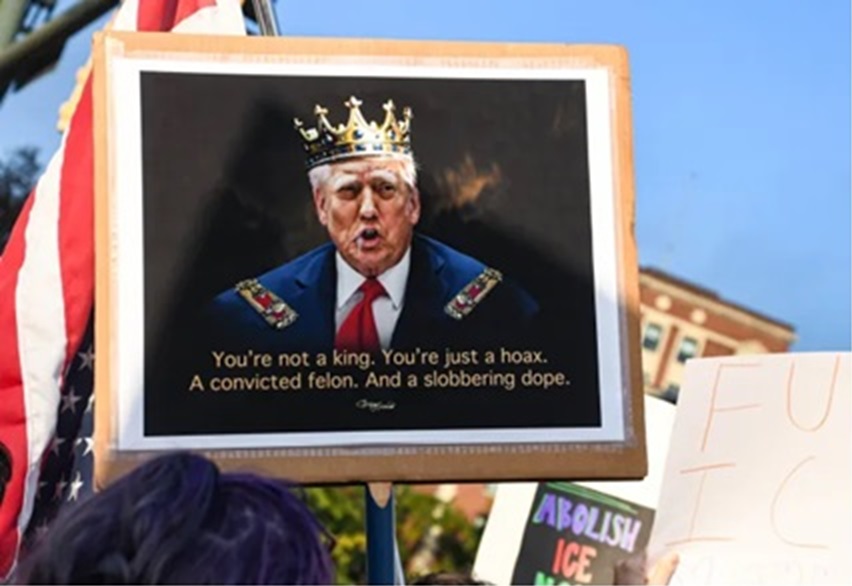
History will thankfully go on once we see the end of them and the work of repairing the mess they are making begins.
December 13, 2025 , By Patrick Lawrence, ScheerPost, https://scheerpost.com/2025/12/13/patrick-lawrence-trumps-end-of-history-moment/
The Trumpster is not yet finished his first year back in the White House, and I cannot imagine how our crumbling republic will survive three more years of this man-child and the misfits and miscreants with whom he has surrounded himself. And it occurs to me lately that neither I nor anyone else is supposed to imagine any kind of future — good, bad, in the middle — beyond Jan. 20, 2029, when President Trump will no longer be president. The future will not be the point by then. By then we are supposed to be living in an imaginary past that we won’t have to imagine because the imaginary past will be the actual present.
It is not quite three months since Trump issued an executive order designating “antifa,” the more or less fictitious “organization” of antifascists, a “domestic terrorist organization.” In the Trump White House’s rendering, antifa “explicitly calls for the overthrow of the United States Government, law enforcement authorities and our system of law.” To this end, it organizes and executes vast campaigns of violence. It coordinates all this across the country. It recruits and radicalizes young people, “then employs elaborate means and mechanisms to shield the identities of its operatives, conceal its funding sources and operations in an effort to frustrate law enforcement, and recruit additional members.”
I didn’t take the executive order containing this kind of language the least bit seriously when it was issued Sept. 22. Antifa, so far as I understand it, does not actually exist. It is a state of mind, or it signifies a shared set of political sentiments vaguely in the direction of traditional anarchism — a hyper-individualistic ultra-libertarianism when translated into the American context.
Trump’s executive order describing antifa as an organized terrorist organization reminded me of nothing so much as those flatfooted fogies back in the Cold War years who, nostalgic for a simpler time but understanding nothing, went on about “outside agitators” as the root of America’s ills.
I was wrong in one respect, maybe more, about Trump and his adjutants and what they have in mind. These people are not flatfooted. They know exactly what they are doing and they are moving swiftly to get it done. It is time to take seriously, I mean to say, the wall-to-wall unseriousness of the Trump regime’s plans for a nation it would be impossible to live in were it ever to come to be. The saving grace here is they cannot possibly create the America they have in mind. But they will, I have to add, make an unholy mess on their way to failing.
Three days after the antifa executive order, The White House made public a National Security Presidential Memorandum titled “Countering Domestic Terrorism and Organized Political Violence.” NSPM–7, as this document is known, is formally addressed to Marco Rubio, Trump’s secretary of state, Treasury Secretary Scott Bessent, Attorney General Pam Bondi and Kristi Noem, the Homeland Security secretary.
This thing picks up where the one-page executive order leaves off. It cites various assassinations and attempted assassinations — Charlie Kirk, Brian Thompson, the United Healthcare chief executive, the two attempts on Trump’s life during his 2024 campaign — and fair enough, although casting political violence as terrorist violence is a sleight-of-hand too far. It is when NSPM–7 invokes recent protests against Immigration and Customs Enforcement agents and “riots in Los Angeles and Portland” that you sense the trouble to come.
From the first of the document’s five sections:
This political violence is not a series of isolated incidents and does not emerge organically. Instead, it is a culmination of sophisticated, organized campaigns of targeted intimidation, radicalization, threats, and violence designed to silence opposing speech, limit political activity, change or direct policy outcomes, and prevent the functioning of a democratic society. A new law enforcement strategy that investigates all participants in these criminal and terroristic conspiracies — including the organized structures, networks, entities, organizations, funding sources, and predicate actions behind them — is required.
What is required, it turns out, is an institutionalized surveillance operation that goes considerably beyond the Patriot Act. “This guidance,” Section 2 reads, “shall also include an identification of any behaviors, fact patterns, recurrent motivations, or other indicia common to organizations and entities that coordinate these acts in order to direct efforts to identify and prevent potential violent activity.”
And then NSPM–7 gets down to what the Trump regime is truly after:
Common threads animating this violent conduct include anti-Americanism, anti-capitalism, and anti-Christianity; support for the overthrow of the United States Government; extremism on migration, race, and gender; and hostility towards those who hold traditional American views on family, religion, and morality.
I am not letting the liberal wing of the ruling Late–Imperial War Party, commonly known as the Democrats, off the hook in this domestic terrorism business. Joe Biden banged on about this whenever it was politically expedient the whole of his discombobulated term, and we now witness the consequences of all his loose, opportunistic talk. In effect, Biden prefaced what the Trump regime is step-by-step codifying into law.
One of the more pernicious of the many objectionable features of NSPM–7 merits immediate note. This is the vagueness of its language. Whenever I see official documents of this kind my mind goes back to imperial China, whose mandarins were highly legalistic but kept written law purposely ambiguous so as to maximize the prerogatives of imperial power. A surfeit of laws, all of them to be interpreted in whatever way suited the throne.
As of last weekend we know how Pam Bondi, Trump’s patently fascistic AG, intends to interpret NSPM–7. This is by way of a Justice Department memorandum Ken Klippenstein, the exemplary investigative journalist, reported on (but did not actually publish in full) on Saturday, Dec. 6. This is Klippenstein’s exclusive. Here is the top of the piece he published in his Substack newsletter under the headline, “FBI Making List of American ‘Extremists,’ Leaked Memo Reveals:”
Attorney General Pam Bondi is ordering the FBI to “compile a list of groups or entities engaging in acts that may constitute domestic terrorism”… The target is those expressing “opposition to law and immigration enforcement; extreme views in favor of mass migration and open borders; adherence to radical gender ideology,” as well as “anti–Americanism,” “anti-capitalism,” and “anti–Christianity.”
By way of defining all these domestic terrorism threats, Klippenstein reports, the DoJ memorandum cites “extreme viewpoints on immigration, radical gender ideology, and anti-American sentiment.” As to enforcement, the memorandum authorizes the FBI to open a hotline by means of which ordinary Americans can report on other ordinary Americans, along with “a cash reward system” to go along with it. The agency is also to develop a legion of informants (“cooperators”); state and local governments are to be funded to develop their own programs in conformity with the DoJ’s directives. What the memorandum calls Joint Terrorism Task Forces are to “map the full network of culpable actors.”
This is more than what we now call an all-of-government surveillance and enforcement program that open-and-shut outlaws a variety of Constitutional rights. It is an all-of-society operation that prompts comparisons with regimes in history I never would have imagined summoning to mind in anything like this context. “Extremist viewpoints” are to be criminalized? I am an outlaw if I am critical of orthodox Christianity, if I am “hostile” to the nuclear family, to traditional morality and so on? Just how close to thought control does the Trump regime plan to sail?
Continue readingUS should exit lost Ukraine war, obsolete NATO
Walt Zlotow West Suburban Peace Coalition Glen Ellyn IL, substack.com/@waltzlotow 12 Dec 25
President Trump appears to relish killing innocents worldwide. He’s still enabling the Israeli genocide in Gaza that has killed over 100,000. He’s obliterated 20 little unarmed boats in the Caribbean killing over 80 hapless innocents. He’s bombed imagined bad guys in Somalia 111 times in 10 months. Why? Because he wants to and can.
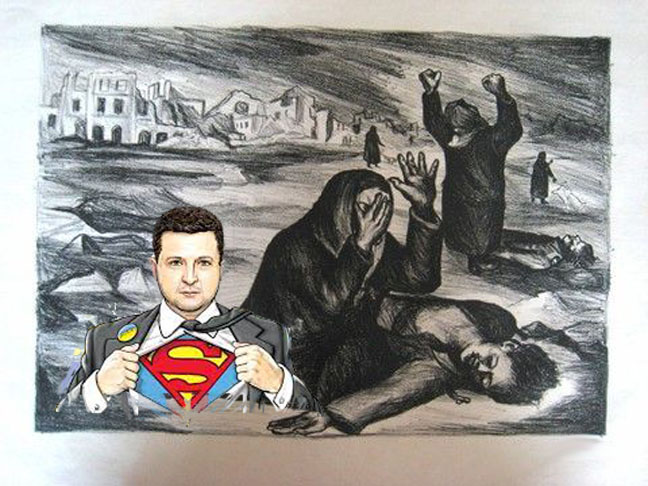
But one killing field Trump wants out of is Ukraine. His predecessor Biden provoked the war there 4 years ago. It has largely destroyed Ukraine as a viable state with millions fled, dead, injured, with a shattered economy propped up by US, NATO treasure.
Trump is working with Russia to end the war largely on Russia’s sensible terms. No NATO for Ukraine which will remain neutral between Europe and Russia. No return of the seized territory containing the Russian speaking Ukrainians their government was systematically destroying. End of sanctions allowing reintegration of Russia into the European political economy.
This is good for Ukraine, good for Russia, good for Europe.
For Ukraine it ends further destruction which will alas, now be a rump state of its former self. Had Ukraine not allowed the US and NATO to sabotage the April, 2022 Istanbul peace agreement, Ukraine could have achieved peace then with no loss of territory and its economy largely intact.
For Russia, its security concerns regarding NATO encroachment allowing NATO nukes on its borders, and further destruction of Russian leaning Donbas Ukrainians will achieved be.
For Europe, peace will allow redirection of squandered treasure to the commons, ward off right wing political movements likely to topple pro war leaders, and buy cheap energy from Russia to revitalize their stagnant economies.
While Russia is on board, neither Ukraine nor Europe will have any of this sanity. Ukraine wants to fight on to regain lost territory that will forever be part of Russia. Hurling teens and grandfathers into the cauldron of lost war further cements Ukraine’s destruction.
European NATO pretends defeating Russia in Ukraine is critical to preventing Russia from attacking NATO countries in their imagined obsession Russia is recreating the Soviet Union.
Ukraine and Europe continue in their delusions in spite of Trump’s clear message that the war is lost and must be ended to prevent further disintegration of Ukraine. Neither Ukraine nor Europe has anywhere near the military resources to continue the war largely financed by the Russophobic Biden administration.
Trump must not weaver in his efforts to exit the money pit of senseless war in Ukraine. But he should go further and exit NATO, allowing Europe to provide for their own defense. No US Sugar Daddy might be just the tonic to dissuade foolish European leaders like UK’s Starmer, France’s Macron and Germany’s Merz from endlessly screaming ‘The Russians are coming, the Russian’s are coming.’
Congress is starting to recognize the need to exit NATO. House Republican Thomas Massie and Senate Republican Mike Lee have both introduced legislation to end US membership in NATO.
Their common sense justification is long overdue fresh air. Massie noted, “NATO was created to counter the Soviet Union, which collapsed over thirty years ago. Since then, U.S. participation has cost taxpayers trillions of dollars and continues to risk US involvement in foreign wars. Our Constitution did not authorize permanent foreign entanglements, something our Founding Fathers explicitly warned us against. America should not be the world’s security blanket—especially when wealthy countries refuse to pay for their own defense.”
Lee observed, “America’s withdrawal from NATO is long overdue. NATO has run its course – the threats that existed at its inception are no longer relevant 76 years later “If they were, Europe would be paying their fair share instead of making American taxpayers pick up the check for decades. My legislation will put America first by withdrawing us from the raw deal NATO has become.”
Trump must support this legislation as he works with Russia to end the carnage that addresses Russia’s valid security concerns. Ending this war and exiting NATO will bring peace to Europe and revitalize the economies of all combatants. It might also avert something infinitely more ominous…nuclear war.
Venezuela charges Washington with ‘theft, piracy’ after seizure of oil tanker
The US had imposed sanctions on the vessel under claims it was involved in the Iranian oil trade.
The Cradle, DEC 11, 2025
Venezuela has accused the US government of “blatant theft” and “piracy,” following Washington’s seizure of a Venezuelan oil tanker off the Latin American country’s coast on 10 December.
The Venezuelan Foreign Ministry strongly condemned what it said was a “blatant theft and an act of international piracy, publicly announced by the President of the US, who confessed to the assault on an oil tanker in the Caribbean Sea.”
“Already in his 2024 campaign, [US President Donald Trump] openly stated that his objective has always been to keep Venezuelan oil without paying any consideration in return, making it clear that the policy of aggression against our country responds to a deliberate plan to plunder our energy wealth,” the Venezuelan Foreign Ministry added.
“The true reasons for the prolonged aggression against Venezuela have finally been revealed. It is not migration. It is not narcotics trafficking. It is not democracy. It is not human rights. It has always been about our natural wealth,” the statement went on to say.
Cuban President Miguel Diaz-Canel Bermudez also condemned Washington’s theft of the oil tanker.
“Cuba expresses its full support for the denunciation issued by the government of Venezuela and strongly condemns the assault on an oil tanker in the Caribbean Sea, carried out by the Armed Forces of the United States. This constitutes an act of piracy, a violation of international law, and an escalation in the aggression against that sister nation,” he said.
The US announced the seizure on Wednesday. The move caused a jump in oil prices and has fanned the flames of an already tense situation between Caracas and Washington – which has recently targeted the Latin American country with brutal strikes under the pretext of stopping the flow of drugs into the US.
Video footage of the seizure showed armed US soldiers descending onto the vessel from a helicopter. The Venezuelan oil tanker was subject to illegal US sanctions. ………………………………………………..
The seizure of the Venezuelan tanker comes as part of a massive military buildup in the Caribbean Sea and recent airstrikes on what Washington claims are “drug boats” responsible for the flow of Fentanyl into the US.
At least 87 people, among them innocent fishermen from Colombia, Ecuador, and Trinidad and Tobago, have been killed by the US attacks since September. https://thecradle.co/articles/venezuela-charges-washington-with-theft-piracy-after-seizure-of-oil-tanker
The Authoritarian Stack – How Tech Billionaires Are Building a Post-Democratic America — And Why Europe Is Next
[Superb graphics on original]
The Authoritarian Stack
A project led by Prof. Francesca Bria with xof-research.org, 12 December 2025. https://www.authoritarian-stack.info/
Research and editorial team: Francesca Bria, José Bautista
Data analysis: Autonomy Institute
Map development and design: xof-research.org
Web development: José Núñez
Supported by: Rosa Luxemburg Stiftung
Funded by: Friedrich-Ebert-Stiftung (FES) Future of Work
The Contract That Changed Everything
In late July 2025, deep within the Pentagon’s bureaucratic machinery, the U.S. Army quietly signed away a piece of its sovereignty.
A ten-billion-dollar contract with Palantir Technologies—one of the largest in the Department of Defense’s history—was framed as a move toward “efficiency.”
It consolidated seventy-five procurement agreements into a single contract.
A strategic handover of core military functions to a private company whose founder, Peter Thiel, has declared that “freedom and democracy are no longer compatible.”
The Authoritarian Tech Network:
The Kingmakers
J.D. Vance, propelled to the vice-presidency by $15 million from Peter Thiel, became the face of tech-right governance. Behind him, Thiel’s network moved into the machinery of the state.
Under the banner of “patriotic tech“, this new bloc is building the infrastructure of control—clouds, AI, finance, drones, satellites—an integrated system we call the Authoritarian Stack. It is faster, ideological, and fully privatized: a regime where corporate boards, not public law, set the rules.
Our investigation shows how these firms now operate as state-like powers—writing the rules, winning the tenders, and exporting their model to Europe, where it poses a direct challenge to democratic governance.
Silicon Valley isn’t building apps anymore.
It’s building empires.
State Capture: Personnel Pipeline
To understand why this capture is happening so rapidly, follow the personnel. The revolving door no longer spins between government and industry—it locks them together into a new architecture of power.
Detachment 201: The Army’s Executive Innovation Corps
This goes further—commissioning Silicon Valley executives directly into military ranks. In June 2025, four tech executives were sworn in as lieutenant colonels:
The line between contractor and commander has been erased.
The Pipeline Made Visible
Unlike old authoritarianism built on fear and force, this new system rules through code, capital, and infrastructure — making resistance feel architecturally impossible.
It’s a self-reinforcing loop:
Ideology fuels venture capital → capital captures the state → the state feeds the same private systems that built it. A new model of power — privatized sovereignty.
Each layer reinforces the others. Ideology justifies investment. Investment captures state power. State power secures contracts. Contracts build infrastructure. Infrastructure becomes indispensable. Indispensability generates returns. Returns fund more ideology.
The Capital Machine: Financial Flows — From Taxpayers to Venture Capital
Follow the Money
Funding
Government
Tech Companies
Venture Capital
Founders Fund, Thiel’s $17 billion flagship, led Anduril’s $1 billion round at a $30.5 billion valuation. It was the first institutional investor in both Palantir and SpaceX. Palantir’s quarterly revenue now exceeds $1 billion—up 53 percent in government contracts. 1789 Capital epitomizes dynasty.
Founded by Thiel’s confidants and joined by Donald Trump Jr., it grew from $150 million to over $1 billion. It channels tens of millions into Musk’s empire—SpaceX for orbital dominance, xAI for military AI.
Andreessen Horowitz (a16z), through its “American Dynamism” fund, backs defense tech and what it calls builders of the American state. Andreessen rallied Silicon Valley’s billionaire class to Trump’s 2024 campaign.
Smaller giants like 8VC and General Catalyst reinforce the pattern. 8VC poured $450 million into Anduril; General Catalyst led a $1.48 billion round.
The Stack: Five Domains of Privatized Sovereignty
Critical state infrastructures are being privatized across five domains—data, defense, space, energy, and money—the foundations of democratic power. These domains form the architecture of privatized sovereignty: a technological regime where power flows through laws, infrastructure and automated platforms.
Crypto Sovereignty
The Nuclear AI Complex
SpaceX: Orbital Infrastructure
Anduril: Autonomous Warfare
Palantir: The Operating System of Government
Privatizing the state’s data and decision making.
Systems
- Gotham (intelligence)
- Foundry (DOGE budget automation)
- ImmigrationOS (ICE tracking)
- NHS Federated Data Platform
Contracts
ICE Immigration Platform (2025)
$10 B U.S. Army Enterprise Agreement
Europe’s Deepening Trap
y mid-2025, its reverberations were already felt across Europe. In Rome, Italian defense officials moved to integrate Elon Musk’s Starlink into military communications. In Berlin, Rheinmetall and Anduril expanded their joint venture to deploy autonomous drone swarms for NATO. The German variants of its drones still run on Californian code. Musk livestreams with the AfD’s Alice Weidel, endorsing the German far-right while supplying NATO infrastructure.
In London, the NHS scaled Palantir’s £330 million Federated Data Platform across tens of millions of patient records, By May 2025, the government had to pay KPMG £8 million just to encourage hospital adoption. Meanwhile, a £1.5 billion defense partnership binds Britain to Palantir’s AI systems.
None of these decisions provoked real debate. Few reached front pages. Together, they reveal the systematic outsourcing of European sovereignty to American oligarchs whose ideology openly undermines democracy.
It is a paradox with devastating implications: pursuing digital sovereignty while ceding control through every signed contract.
Each new contract deepens the trap. Once Palantir becomes indispensable, once Anduril’s drones are NATO standard, once nuclear facilities power AI that runs everything else— the transformation is irreversible.
Europe faces an existential choice: build genuine technological sovereignty now, or accept governance by platforms whose architects view democracy as an obsolete operating system.
The Infrastructure of Control
ilicon Valley’s Authoritarian Tech Right is not theorizing this world. They are already building it. The pipelines are operational. The feedback loops are functioning. The sovereignty transfers are completing.
Democracy persists as a legacy interface— maintained for stability, while being systematically hollowed out and replaced.
The question now is whether democratic societies can recognize this formation for what it is—and build alternatives before the infrastructure of control becomes too deeply embedded to dislodge.
The Authoritarian Tech Complex
Explore the Map [by clicking on graphic on original]
Trump gives Zelensky ‘days’ to respond to peace plan – Financial Times
The US president reportedly hopes for a deal by Christmas.
10 Dec, 2025, https://www.rt.com/news/629243-trump-sets-zelensky-deadline/?utm_source=substack&utm_medium=email
US negotiators have given Ukrainian leader Vladimir Zelensky days to respond to a peace proposal requiring Kiev to accept territorial losses to Russia in exchange for unspecified security guarantees, the Financial Times reported on Tuesday, citing officials familiar with the matter.
One person told the FT that US President Donald Trump was hoping to reach a deal by Christmas. Zelensky reportedly told US envoys that he needed time to consult with Kiev’s European backers.
Although Trump had said last month that he would like to see an agreement by Thanksgiving, he later told journalists that he did not have a specific timeline.
he US president submitted a peace plan in November that reportedly called for Ukraine to withdraw troops from part of Russia’s Donbass they currently control, one of Moscow’s key conditions for a broad ceasefire.
Zelensky acknowledged during his trip to London on Monday that the US was pushing him towards “a compromise,” but added that no agreement on territory had been reached. He reiterated that Ukraine was not willing to give up any land without a fight.
Russian troops have been making steady gains on different sections of the front line, while Ukrainian commanders say they are outgunned and struggling to replenish battlefield losses with new conscripts.
In early December, the Russian Defense Ministry announced the liberation of Krasnoarmeysk (Pokrovsk), a Donbass city President Vladimir Putin has described as an important “bridgehead” for further offensives.
US House passes $800mn aid package for Ukraine
New military assistance has been signed off on a month after Kiev was shaken by a major corruption scandal.
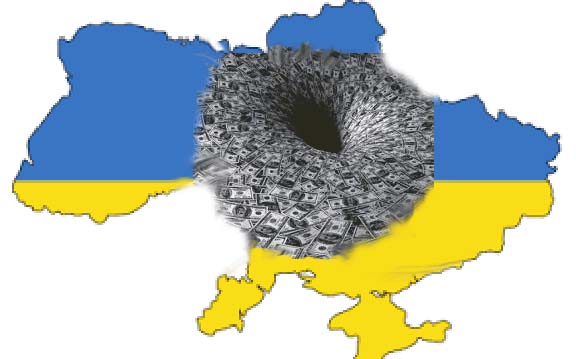
The US House of Representatives has passed a defense spending bill that would provide $800 million in military aid to Ukraine through 2027.
The 2026 National Defense Authorization Act (NDAA) was approved 312-122 on Wednesday and will now advance to the Senate, where it is expected to receive bipartisan support, according to The Hill.
Some legislators objected to directing more taxpayers’ money to help Ukraine fight Russia. “I thought we were getting out of Ukraine. I don’t know why we still need to spend money there,” Thomas Massie, a Republican from Kentucky, said.
On Wednesday, US President Donald Trump slammed what he described as a “massive corruption situation” in Kiev, referring to the recently uncovered $100 million kickback scheme in the country’s energy sector, which heavily relies on Western aid.
Prosecutors named Ukrainian leader Vladimir Zelensky’s longtime associate and former business partner Timur Mindich as the ringleader. Mindich fled the country to evade arrest after apparently being tipped off.
The scandal led to the resignation of two government ministers, and further anti-corruption raids prompted Zelensky to fire chief of staff Andrey Yermak last month.
Ukraine’s military procurement system has also been shaken by several graft and embezzlement scandals, one of which led to the resignation of Defense Minister Aleksey Reznikov in 2023.
The bill was approved as Trump has been pressuring Ukraine to sign a peace deal with Russia, with some reports suggesting that he hopes to reach an agreement by Christmas.
Russia considers Western military cooperation with Ukraine one of the root causes of the conflict and has listed ending foreign weapons deliveries as a condition for a ceasefire. President Vladimir Putin has argued that otherwise, Ukraine would use the pause in the fighting to rearm and regroup, as he says happened when Ukraine refused to implement the 2014-2015 Minsk
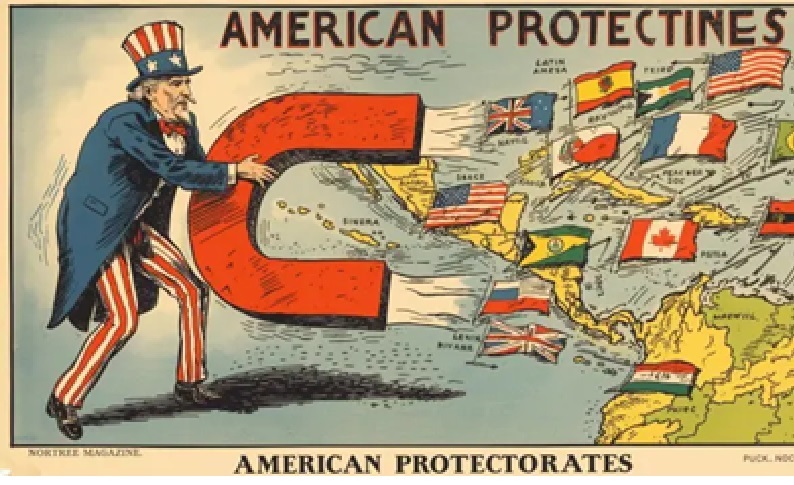
THE NEXT WARS WERE ALWAYS HERE: How Post 9/11 Law and the Monroe Doctrine Converged in the Caribbean.
December 9, 2025 By Michelle Ellner, https://scheerpost.com/2025/12/09/the-next-wars-were-always-here-how-post-9-11-law-and-the-monroe-doctrine-converged-in-the-caribbean/
The first U.S. missiles that struck the boats in the Caribbean in early September 2025 were described by Washington as a “counter-narcotics operation,” a sterile phrase meant to dull the violence of incinerating human beings in an instant. Then came the second strike, this time on survivors already struggling to stay afloat. Once the details emerged, however, the official story began to fall apart.
Local fishermen contradicted U.S. claims. Relatives of those killed have said the men were not cartel operatives at all, but fishermen, divers, and small-scale couriers. Relatives in Trinidad and Venezuela told regional reporters their loved ones were unarmed and had no connection to Tren de Aragua, describing them instead as fathers and sons who worked the sea to support their families. Some called the U.S. narrative “impossible” and “a lie,” insisting the men were being demonized after their deaths. U.N. experts called the killings “extrajudicial.” Maritime workers noted what everyone in the region already knows: the route near Venezuela’s waters is not a fentanyl corridor into the United States. Yet the administration clung to its story, insisting these men were “narcoterrorists,” long after the facts had unraveled. Because in Washington’s post 9/11 playbook, fear is a tool. Fear is the architecture of modern American war.
The U.S. did not emerge from the Iraq War into peace or reflection. It emerged into normalization. The legal theories invented and abused after 9/11 – elastic self-defense, limitless definitions of terrorism, enemy combatants, global strike authority – did not fade. They became the backbone of a permanent war machine. These justifications supported drone wars in Pakistan, airstrikes in Yemen and Somalia, the destruction of Libya, special operations in Syria, and yet another military return to Iraq. And behind every expansion of this global battlefield was a U.S. weapons industry that grew richer with each intervention, lobbying for policies that kept the country in a constant state of conflict. What we are seeing today in the Caribbean is not an isolated action; it is the extension of a militarized imperial model that treats entire regions as expendable.
The next wars were always there because we never confronted the political and economic system that made endless wars a profitable cornerstone of U.S. power.
A Post-9/11 Legal Framework Built for Endless War
The Trump administration has advanced several overlapping legal arguments to justify the strikes, and together they reveal a post-9/11 framework that stretches executive power far beyond its intended limits.
According to detailed reporting in The Washington Post, a classified Justice Department Office of Legal Counsel (OLC) memo argues that the United States is engaged in a “non-international armed conflict” with so-called narcoterrorist organizations. Under this theory, the strikes qualify as part of an ongoing armed conflict rather than a new “war” requiring congressional authorization. This framing alone is unprecedented: drug-trafficking groups are criminal networks, not organized armed groups targeting the U.S.
A second pillar of the memo, described by lawmakers to the Wall Street Journal, claims that once the president designates a cartel as a Foreign Terrorist Organization, it becomes a lawful military target. But terrorism designations have never created war powers. They are financial and sanctions tools, not authorizations for lethal force. As Sen. Andy Kim put it, using an FTO label as a “kinetic justification” is something “that has never been done before.”
The OLC memo also invokes Article II, claiming the president can order strikes as part of his commander-in-chief authority. Yet this argument depends on a second unsupported premise: that the boats posed a threat significant enough to justify self-defense. Even internal government lawyers questioned this. As one person familiar with the deliberations told The Washington Post, “There is no actual threat justifying self-defense — there are not organized armed groups seeking to kill Americans.”
At the same time, the administration has publicly insisted that these operations do not rise to the level of “hostilities” that would trigger the War Powers Resolution because U.S. military personnel were never placed at risk. By the administration’s own logic, that means the people on the boats were not engaged in hostilities and therefore were not combatants under any accepted legal standard, making the claim of a wartime self-defense strike impossible to reconcile with U.S. or international law.
Under international law, executing people outside a genuine armed conflict is an extrajudicial killing. Nothing about these strikes meets the legal threshold for war. Because the people on the boats were not lawful combatants, the operation risks violating both international law and U.S. criminal law, including statutes on murder at sea, a concern reportedly underscored by Admiral Alvin Holsey’s early resignation.
The memo goes further still, invoking “collective self-defense” on behalf of regional partners. But key regional partners, including Colombia, Brazil, and Mexico, have publicly criticized the strikes and said they were not consulted, undermining the very premise of “collective” defense.
This internal contradiction is one reason lawmakers across both parties have called the reasoning incoherent. As Sen. Chris Van Hollen put it, “This is a memo where the decision was made, and someone was told to come up with a justification for the decision.”
And beneath all of this lies the most dangerous element: the memo’s logic has no geographic limits. If the administration claims it is in an armed conflict with a designated “narcoterrorist” group, then, by its own theory, lethal force could be used wherever members of that group are found. The same framework that justifies strikes near Venezuela could, in principle, be invoked in a U.S. city if the administration claimed a cartel “cell” existed there.
If Trump truly believes he leads “the most transparent administration in history,” then releasing the memo should be automatic. The American people have the right to know what legal theory is being used to justify killing people in their name.
For decades, OLC memos have been used not simply as legal advice but as the internal architecture that allows presidents to expand their war-making power. The Bush torture memos treated torture as lawful by redefining the word “torture” itself, calling it “enhanced interrogation,” thereby enabling years of CIA black-site operations and abusive interrogations. The Libya War Powers memo argued that bombing Libya did not constitute “hostilities,” allowing the administration to continue military action without congressional approval. Targeted-killing memos, including those related to drone strikes on U.S. citizens abroad, constructed a legal theory that lethal force could be used outside traditional battlefields, without trial, based on executive determinations alone. In each case, the memo did not merely interpret the law; it reshaped the boundaries of presidential war powers, often without public debate or congressional authorization.
The American people have the right to know what “legal theory” is being used to justify killing people in their name. Congress needs it to conduct oversight. Service members need it to understand the legality of the orders they receive. And the international community needs clarity on the standards the U.S. claims to follow. There is no legitimate reason for a president to hide the legal basis for lethal force, unless the argument collapses under scrutiny. A secret opinion cannot serve as the foundation for an open-ended military campaign in the Western Hemisphere.
The Older Foundation: A 200-Year-Old Doctrine of Control
If the legal foundation comes from the post-9/11 era, the geopolitical foundation is older. Almost ancestral. For 200 years, the Monroe Doctrine has served as the permission slip for U.S. domination in Latin America.
The Trump administration went even further by openly reviving and expanding it through what officials called a “Trump Corollary,” which reframed the entire Western Hemisphere as a U.S. “defense perimeter” and justified increased military operations under the language of counter-narcotics, migration control, and regional stability. In this framework, Latin America is no longer treated as a diplomatic neighbor but as a security zone where Washington can act unilaterally.
Venezuela, with its vast oil reserves, sovereign political project, and refusal to submit to U.S. pressure, has long been marked as a target. Sanctions softened the terrain. Disinformation hardened public opinion. And now, military strikes near its waters test how far Washington can push without triggering public revolt at home. The term “narcoterrorism” is simply the newest mask on a very old doctrine.
The strikes in the Caribbean are not isolated. They are the predictable intersection of two forces: a post-9/11 legal regime that allows war to expand without congressional approval, and a 200-year-old imperial doctrine that treats Latin America as a zone of control rather than a community of sovereign nations. Together, they form the logic that justifies today’s violence near Venezuela.
The Label that Opened the Door
After 9/11, every administration learned the same lesson: if you label something “terrorism,” the public will let you do almost anything. Now, this logic is being used everywhere. The cruel, decades-long blockade on Cuba is justified by claiming that the island is a “state sponsor of terrorism.” Mass surveillance, border militarization, endless sanctions, all wrapped in the language of “counterterrorism.” And now, to authorize military action in the Caribbean, they simply take the word “narco” and attach it to the word “terrorism.” The label does all the work. The danger is not confined to foreign policy: after Charlie Kirk’s assassination, the same elastic definition of “terrorism” is now being used domestically to justify crackdowns on NGOs the administration claims are inciting “anti-American” political violence.
The only reason Trump has not launched a full-scale attack on Venezuela is that he is still testing the ground, testing resistance inside Venezuela, testing Congress, testing the media, and testing us. He knows nearly 70% of people in the United States oppose a war with Venezuela. He knows he cannot sell another Iraq. So he is probing, pushing, looking for the line we will not let him cross.
We are that line.
If we do not challenge the lie now, if we do not demand release of the memo, if we stay silent, “narcoterrorism” becomes the new “weapons of mass destruction.” If we allow this test case to go unanswered, the next strike will be a war. We are the only ones who can stop him. And history is watching to see whether we learned anything from the last twenty years of fear, deception, and violence.
Because the next wars were always here, looming. We just need the clarity to see them and the force to stop them before they begin.
New York Times Wants The US Military Built Up For War With China.
Caitlin Johnstone, Dec 10, 2025, https://www.caitlinjohnst.one/p/new-york-times-wants-the-us-military?utm_source=post-email-title&publication_id=82124&post_id=181225843&utm_campaign=email-post-title&isFreemail=true&r=1ise1&triedRedirect=true&utm_medium=email
Just as the United States hits its first official trillion-dollar annual military budget, the New York Times editorial board has published an article which argues that the US is going to need to increase military funding to prepare for a major war with China.
The article is titled “Overmatched: Why the U.S. Military Must Reinvent Itself,” and to be clear it is an editorial, not an op-ed, meaning it represents the position of the newspaper itself rather than solely that of the authors.
This will come as no surprise to anyone who knows that The New York Times has supported every American war throughout its entire history, because The New York Times is a war propaganda firm disguised as a news outlet. But it is surprising how brazen they are about it in this particular case.
The article opens with graphics I saw one commenter describe as “Mussolini-core” because of their conspicuously fascistic aesthetic, accompanied by three lines of text in all-caps which reads as follows:
“AMERICA’S MILITARY HAS DEFENDED THE FREE WORLD FOR 80 YEARS.
OUR DOMINANCE IS FADING.
RIVALS KNOW THIS AND ARE BUILDING TO DEFEAT US.”
The narrative that the US war machine has “defended the free world” during its period of post-world war global dominance is itself insane empire propaganda. Washington has abused, tyrannized and starved the world at levels unrivaled by any other power during that period while spearheading the theft of hundreds of trillions of dollars from the global south via imperialist extraction. The US empire has not been defending any “free world”, it has been actively obstructing its emergence.
The actual text of the article opens with another whopper, with the first sentence reading, “President Xi Jinping of China has ordered his armed forces to be ready to seize Taiwan by 2027.”
This is straight-up state propaganda. The New York Times editorial board is here uncritically parroting a completely unsubstantiated claim the US intelligence cartel has been making for years, which Xi Jinping explicitly denies. While it is Beijing’s official position that Taiwan will eventually be reunited with the mainland, not one shred of evidence has ever been presented to the public for the 2027 timeline. It’s a US government assertion being reported as verified fact by the nation’s “paper of record”.
And it doesn’t get any better from there. The Times cites a Pentagon assessment that the US would lose a hot war with China over Taiwan as evidence of “a decades-long decline in America’s ability to win a long war with a major power,” arguing that this is a major problem because “a strong America has been crucial to a world in which freedom and prosperity are far more common than at nearly any other point in human history.”
“This is the first of a series of editorials examining what’s gone wrong with the U.S. military — technologically, bureaucratically, culturally, politically and strategically — and how we can create a relevant and effective force that can deter wars whenever possible and win them wherever necessary,” The New York Times tells us.
The Times argues that the US needs to reshape its military to defeat China in a war, or to win a war with Russia if they attack a NATO member, saying “Evidence suggests that Moscow may already be testing ways to do this, including by cutting the undersea cables on which NATO forces depend.”
The “evidence” the Times cites for this claim is a hyperlink to a January article titled “Norway Seizes Russian-Crewed Ship Suspected of Cutting an Undersea Cable,” completely ignoring the fact that Norway released that ship shortly thereafter when it was unable to find any evidence linking it to the event, and completely ignoring reports that US and European intelligence had concluded that the undersea cable damage was the result of an accident rather than sabotage.
And then, of course, comes the call for more military funding.
“In the short term, the transformation of the American military may require additional spending, primarily to rebuild our industrial base. As a share of the economy, defense spending today — about 3.4 percent of G.D.P. — remains near its lowest level in more than 80 years, even after Mr. Trump’s recent increases,” the Times writes, adding that US allies should also be pressured to ramp up spending on the war machine.
“A more secure world will almost certainly require more military commitment from allies like Canada, Japan and Europe, which have long relied on American taxpayers to bankroll their protection,” the authors write, saying “China’s industrial capacity can only be met by pooling the resources of allies and partners around the world to balance and contain Beijing’s increasing influence.”
Of course the idea that perhaps the United States should avoid fighting a hot war with China right off the coast of its own mainland never enters the discussion. The suggestion that it’s insane to support waging full-scale wars with nuclear-armed great powers to secure US planetary domination never comes up. It’s just taken as a given that pouring wealth and resources into preparations for a nuclear-age world war is the only normal option on the table.
But that’s the New York Times for you. It’s been run by the same family since the late 1800s and it’s been advancing the information interests of rich and powerful imperialists ever since. It’s a militarist smut rag that somehow found its way into unearned respectability, and it deserves to be treated as such. The sooner it ceases to exist, the better.
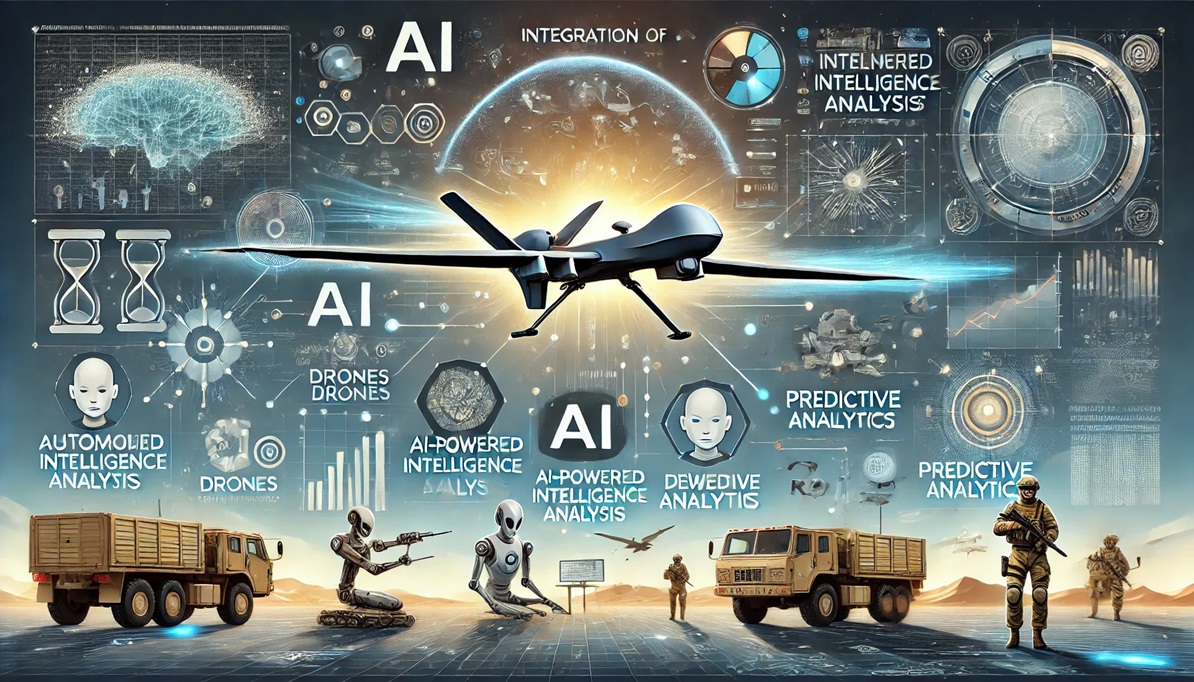
The War Department Unleashes AI on New GenAI.mil Platform
U.S. Department of War, Dec. 9, 2025
The War Department today announced the launch of Google Cloud’s Gemini for Government as the first of several frontier AI capabilities to be housed on GenAI.mil, the Department’s new bespoke AI platform. This initiative cultivates an “AI-first” workforce, leveraging generative AI capabilities to create a more efficient and battle-ready enterprise. Additional world-class AI models will be available to all civilians, contractors, and military personnel, delivering on the White House’s AI Action Plan announced earlier this year.
This past July, President Donald Trump instituted a mandate to achieve an unprecedented level of AI technological superiority. The War Department is delivering on this mandate, ensuring it is not just ink on paper. In response to this directive, AI capabilities have now reached all desktops in the Pentagon and in American military installations around the world.
The first instance on GenAI.mil, Gemini for Government, empowers intelligent agentic workflows, unleashes experimentation, and ushers in an AI-driven culture change that will dominate the digital battlefield for years to come. Gemini for Government is the embodiment of American AI excellence, placing unmatched analytical and creative power directly into the hands of the world’s most dominant fighting force………………
The launch of GenAI.mil stands as a testament to American ingenuity, driven by the AI Rapid Capabilities Cell within the War Department’s Office of Research & Engineering. Their achievement directly embodies the Department’s core tenets of reviving the warrior ethos, rebuilding American military capabilities, and re-establishing deterrence through technological dominance and uncompromising grit.
“We are pushing all of our chips in on artificial intelligence as a fighting force. The Department is tapping into America’s commercial genius, and we’re embedding generative AI into our daily battle rhythm.” Secretary of War Pete Hegseth remarked
“AI tools present boundless opportunities to increase efficiency, and we are thrilled to witness AI’s future positive impact across the War Department.”………………..https://www.war.gov/News/Releases/Release/Article/4354916/the-war-department-unleashes-ai-on-new-genaimil-platform/
1 This Month





PLEASE OPPOSE HR 8255 AND S.3639 – bills would accelerate satellite deployment, with no environmental review or safeguards – https://ncstd5li.quorum.us/campaign/169331/
To see nuclear-related stories in greater depth and intensity – go to https://nuclearinformation.wordpress.com
-
Archives
- October 2026 (58)
- September 2026 (339)
- August 2026 (330)
- July 2026 (355)
- June 2026 (287)
- May 2026 (306)
- April 2026 (356)
- March 2026 (251)
- February 2026 (267)
- January 2026 (308)
- December 2025 (358)
- November 2025 (359)
-
Categories
- 1
- 1 NUCLEAR ISSUES
- business and costs
- climate change
- culture and arts
- ENERGY
- environment
- health
- history
- indigenous issues
- Legal
- marketing of nuclear
- media
- opposition to nuclear
- PERSONAL STORIES
- politics
- politics international
- Religion and ethics
- safety
- secrets,lies and civil liberties
- spinbuster
- technology
- Uranium
- wastes
- weapons and war
- Women
- 2 WORLD
- ACTION
- AFRICA
- Atrocities
- AUSTRALIA
- Christina's notes
- Christina's themes
- culture and arts
- Events
- Fuk 2022
- Fuk 2023
- Fukushima 2017
- Fukushima 2018
- fukushima 2019
- Fukushima 2020
- Fukushima 2021
- general
- global warming
- Humour (God we need it)
- Nuclear
- RARE EARTHS
- Reference
- resources – print
- Resources -audiovicual
- Weekly Newsletter
- World
- World Nuclear
- YouTube
-
RSS
Entries RSS
Comments RSS

