Does the Deep State really exist, and if so, is it being dismantled?
March 9, 2025, https://theaimn.net/does-the-deep-state-really-exist-and-if-so-is-it-being-dismantled/ .
What is the Deep State? Does it really exist?
These questions are hard to answer. I had heard the term Deep State over many years, and I connected it with all sorts of conspiracies – not just about U.S. politics and intelligence systems, but with wild ideas about satanism, reptilian shapeshifters, the antichrist, child-trafficking, blood harvesting – and all connected with extreme right-wing and pro- Trump propaganda. So I just dismissed and ignored them – there was no such thing as the Deep State !
It is not that simple.
Indeed, it is very complex.
If you start delving, the term Deep State takes you back to Turkey, over 100 years ago, where the concept of a “shadow government” a “secret state within the state” was a real thing. In more modern times the Deep State is defined as:
“The deep state conspiracy theory in the United States is an American political conspiracy theory that posits the existence of the deep state, a clandestine network of members of the federal government (especially within the FBI and CIA). The theory argues that there exist networks of collaborators within the leadership of the high-level financial and industrial entities, which exercise power alongside or within the elected United States government” – Wikipedia
So, OK it’s still just a theory – a conspiracy theory pushed by Donald Trump’s supporters in order to discredit USA’s Biden Democrat administration? And various extreme religious and other wacky groups tacked the more sinister stuff onto it.
The trouble is, as with many problems, there is some truth in it. Over the decades since World War 2, successive U.S. Presidents have turned to secret discussions with unelected officials from the CIA in particular, but also from other agencies and business circles, relying on their advice to make decisions. The decisions were then pretty much rubber-stamped by a complacent and oblivious Congress.
The following (annoying advertisement-afflicted) video from early 2024, is unmistakably a propaganda piece for the Trump campaign. But it does contain some telling information. Even from its first example, we see that J.F. Kennedy, in the Cuban missile crisis, went not to his advisors, but to a social group of very secret members of the CIA to decide what to do. The development of the very powerful, very secretive CIA, in partnership with military leaders, rocket scientists from Germany, media and business leaders, produced an information network on which Presidents relied for decision-making. The CIA’s spying powers that were appropriate in war against the enemy are now directed also against the American public, even in peacetime. Huge well-funded resources went to secret activities that included misinformation and disinformation against civil rights and peace activists. Congress accepts these secret programmes in the name of security.
That video – however pro-Trump it might be, does not mention satanism, etc. If you separate that wacky stuff from the Deep State story – it is all remarkably convincing. To an American public, fed up with the secrecy, the endless expensive pointless wars – Vietnam, Iraq Afghanistan …, Donald Trump’s promise of change, and of dismantling the Deep State sounded attractive.
And hey – presto ! Trump is doing it! He’s sacking those unelected officials, thousands and thousands of them. He’s purging law enforcement and intelligence agencies, and plans to cut 70 percent of staff from various government agencies — freezing of billions of dollars in funding,
Ain’t that great!
Actually, no.
We might welcome the disruption of a Deep State system based on militarism, with the USA forever fomenting trouble overseas, and spending unknown $squillions on military gimmickry. A phrase springs to mind – “Throwing the baby out with the bath-water” . That’s a very corny metaphor. But what is really happening is this:
Trump’s aim is nothing to do with the “Deep State” . Trump’s goal and methodology was set out, detailed in Project 2025, the Center for Renewing America and the America First Policy Institute. The goal is the destruction of democracy – removing or rendering useless the laws, regulations, protocols and rules that prevent autocratic power. No more compromise, limited power, checks and balances and accountability. He made a good start in getting control over the Supreme Court
And I don’t know if everybody noticed two salient points in Trump’s “defeat of the Deep State”
- the power and unaccountable funding of the Pentagon will continue.
- Trump’s getting rid of “unelected officials” – but apparently taking orders from unelected Elon Musk.
The end goal is the dictatorship of Donald Trump. It would be funny if it were not so deadly serious. The first step – the “Trump’s Birthday and Flag Day Holiday Establishment Act” gives a clue as to what will follow.

The President Trump phenomenon will end eventually, for sure in chaos. Western World leadership is in the hands of a powerful, but unhinged , dictator, who is taking the advice of another powerful unelected unhinged billionaire, Elon Musk.
The whole process is far too much to pay for the destruction of the Deep State. Yes, it is welcome that the secretive decision-making by unelected officials and business leaders – taking the USA into endless wars – has been stopped. But its replacement is a terrifying fascism.
And at the end of it all, after the chaos, what will emerge? If we’re lucky enough to avoid catastrophes of global heating, and war, will we again get a government of men that are happy to have decisions made by macho men in bureaucracy and industry, who are itching for war – another Deep State in the name of “security”?
Supreme Court wrestles with nation’s frustrating search for nuclear waste storage

Justice Sonia Sotomayor, looking ahead to the United States’ 250th anniversary next year, said, “I hope that we make it another 250, but if it takes 40 or 80 years for a solution to come, it would still be temporary, correct?”
By ASSOCIATED PRESS, 6 March 2025 ,
https://www.dailymail.co.uk/wires/ap/article-14464455/The-Supreme-Court-confronts-national-headache-What-growing-pile-nuclear-waste.html
WASHINGTON (AP) – The Supreme Court on Wednesday wrestled with whether to restart plans to temporarily store nuclear waste at sites in rural Texas and New Mexico even as some justices worried about safety issues and the lack of progress toward a permanent solution.
The justices heard arguments in a case that reflects the complicated politics of the nation´s so far futile quest for a permanent underground storage facility. A plan to build a national storage facility northwest of Las Vegas at Yucca Mountain has been mothballed because of staunch opposition from most Nevada residents and officials.
The court took up a challenge by the Nuclear Regulatory Commission and a private company with a license for the Texas facility to an appellate ruling that found the commission had no authority to grant the license. The outcome of the case will affect plans for a similar facility in New Mexico roughly 40 miles (65 kilometers) away.
The licenses would allow the companies to operate the facilities for 40 years, with the possibility of a 40-year renewal.
“That doesn’t sound very interim to me,” Justice Neil Gorsuch said, while also questioning the advisability of storing spent nuclear fuel “on a concrete platform in the Permian Basis, where we get all our oil and gas from.”
Justices Samuel Alito and Clarence Thomas joined Gorsuch in asking questions suggesting they were the most likely to uphold the ruling from the 5th U.S. Circuit Court of Appeals.
Roughly 100,000 tons (90,000 metric tons) of spent fuel, some of it dating from the 1980s, is piling up at current and former nuclear plant sites nationwide and growing by more than 2,000 tons (1,800 metric tons) a year. The waste was meant to be kept there temporarily before being deposited deep underground.
The NRC has said that the temporary storage sites are needed because existing nuclear plants are running out of room. The presence of the spent fuel also complicates plans to decommission some plants, the Justice Department said in court papers.
Justice Sonia Sotomayor, looking ahead to the United States’ 250th anniversary next year, said, “I hope that we make it another 250, but if it takes 40 or 80 years for a solution to come, it would still be temporary, correct?”
Justice Department lawyer Malcolm Stewart agreed, noting that the spent fuel has to be kept somewhere, whether at operating and decommissioned plants or elsewhere.
Security also is cheaper with the waste in one or two locations, Stewart said, relying on arguments made by Interim Storage Partners LLC, the company with the Texas license.
Sotomayor, along with Justices Ketanji Brown Jackson, Elena Kagan and Brett Kavanaugh, seemed most inclined to reverse the 5th circuit. Chief Justice John Roberts and Justice Amy Coney Barrett said little or nothing to reveal where they stand.
The NRC’s appeal was filed by the Biden administration and maintained by the new Trump administration. Texas Gov. Greg Abbott,. a Republican, and New Mexico Gov. Michelle Lujan Grisham, a Democrat, are leading bipartisan opposition to the facilities in their states.
The justices will consider whether, as the NRC and Interim Storage Partners argues, the states and a private energy company forfeited their right to object to the licensing decisions because they declined to join in the commission´s proceedings.
Two other federal appeals courts, in Denver and Washington, that weighed the same issue ruled for the agency. Only the 5th Circuit allowed the cases to proceed.
The second issue is whether federal law allows the commission to license temporary storage sites. Opponents are relying on a 2022 Supreme Court decision that held that Congress must act with specificity when it wants to give an agency the authority to regulate on an issue of major national significance. In ruling for Texas, the 5th Circuit agreed that what to do with the nation´s nuclear waste is the sort of “major question” that Congress must speak to directly.
But the Justice Department has argued that the commission has long-standing authority to deal with nuclear waste reaching back to the 1954 Atomic Energy Act.
The NRC granted the Texas license to Interim Storage for a facility that could take up to 5,000 metric tons of spent nuclear fuel rods from power plants and 231 million tons of other radioactive waste. The facility would be built next to an existing dump site in Andrews County for low-level waste such as protective clothing and other material that has been exposed to radioactivity. The Andrews County site is about 350 miles (560 kilometers) west of Dallas, near the Texas-New Mexico state line.
The New Mexico facility would be in Lea County, in the southeastern part of the state near Carlsbad. The NRC gave a license for the site to Holtec International.
Alito, who said the interim sites could remove the incentive to find a permanent solution, asked Brad Fagg, a lawyer for Interim Storage Partners, for a prediction of when a permanent site would open.
“I’ve been in this stew for a lot of years,” Fagg said. “I would be kidding myself and this court if I said I had a date.”
A decision is expected by late June.
Surface tension: could the promised Aukus nuclear submarines simply never be handed over to Australia?

Guardian, Ben Dohert, 7 Mar 25
The multi-billion dollar deal was heralded as ensuring the security of the Indo-Pacific. But with America an increasingly unreliable ally, doubts are rising above the waves.
Maybe Australia’s boats just never turn up.
To fanfare and flags, the Aukus deal was presented as a sure bet, papering over an uncertainty that such an ambitious deal could ever be delivered.
It was assured, three publics across two oceans were told – signed, sealed and to-be-delivered: Australia would buy from its great ally, the US, its own conventionally armed nuclear-powered attack submarines before it began building its own.
But there is an emerging disquiet on the promise of Aukus pillar one: it may be the promised US-built nuclear-powered submarines simply never arrive under Australian sovereign control.
Instead, those nuclear submarines, stationed in Australia, could bear US flags, carry US weapons, commanded and crewed by American officers and sailors.
Australia, unswerving ally, reduced instead to a forward operating garrison – in the words of the chair of US Congress’s house foreign affairs committee, nothing more than “a central base of operations from which to project power”.
Reliable ally no longer
Officially at least, Aukus remains on course, centrepiece of a storied security alliance.
Pillar one of the Australia-UK-US agreement involves, first, Australia buying between three and five Virginia-Class nuclear-powered submarines from the US – the first of these in 2032.
Then, by the “late 2030s”, according to Australia’s submarine industry strategy, the UK will deliver the first specifically designed and built Aukus submarine. The first Australian-built version will be in the water “in the early 2040s”. Aukus is forecast to cost up to $368bn to the mid-2050s.
But in both Washington and Canberra, there is growing concern over the very first step: America’s capacity to build the boats it has promised Australia, and – even if it had the wherewithal to build the subs – whether it would relinquish them into Australian control.
The gnawing anxiety over Aukus sits within a broader context of a rewritten rulebook for relations between America and its allies. Amid the Sturm und Drang of the first weeks of Trump’s second administration, there is growing concern that the reliable ally is no longer that…………………….
‘The cheque did clear’
On 8 February, Australia paid $US500m ($AUD790m) to the US, the first instalment in a total of $US3bn pledged in order to support America’s shipbuilding industry. Aukus was, Australia’s defence minister Richard Marles said, “a powerful symbol of our two countries working together in the Indo-Pacific”.

“It represents a very significant increase of the American footprint on the Australian continent … it represents an increase in Australian capability, through the acquisition of a nuclear‑powered submarine capability … it also represents an increase in Australian defence spending”.
………….. just three days after Australia’s cheque cleared, the Congressional Research Service quietly issued a paper saying while the nuclear-powered attack submarines (known as SSNs) intended for Australia might be built, the US could decide to never hand them over.
It said the post-pandemic shipbuilding rate in the US was so anaemic that it could not service the needs of the US Navy alone, let alone build submarines for another country’s navy…………………………………………………………………………………………………..
‘Almost inevitable’
Clinton Fernandes, professor of international and political Studies at the University of New South Wales and a former Australian Army intelligence analyst, says the Aukus deal only makes sense when the “real” goal of the agreement is sorted from the “declared”.
“The real rather than declared goal is to demonstrate Australia’s relevance to US global supremacy,” he tells the Guardian.
“The ‘declared goal’ is that we’re going to become a nuclear navy. The ‘real goal’ is we are going to assist the United States and demonstrate our relevance to it as it tries to preserve an American-dominated east Asia.”
Fernandes, author of Sub-Imperial Power, says Australia will join South Korea and Japan as the US’s “sentinel states in order to hold Chinese naval assets at risk in its own semi-enclosed seas”.
“That’s the real goal. We are demonstrating our relevance to American global dominance. The government is understandably uneasy about telling the public this, but in fact, it has been Australia’s goal all along to preserve a great power that is friendly to us in our region.”
Fernandes says the Aukus pillar one agreement “was always an article of faith” based on a premise that the US could produce enough submarines for itself, as well as for Australia.
“And the Congressional Research Service study argues that … they will not have enough capacity to build boats for both themselves and us.”
He argues the rotation of US nuclear-powered submarines through Australian bases – particularly HMAS Stirling in Perth – needs to be understood as unrelated to Aukus and to Australia developing its own nuclear-powered submarine capability.
“Submarine Rotational Force-West (SRF-W) is presented by the spin doctors as an ‘optimal pathway’ for Aukus. In fact, it is the forward operational deployment of the United States Navy, completely independent of Aukus. It has no connection to Aukus.”
The retired rear admiral and past president of the Submarine Institute of Australia, Peter Briggs, argues the US refusing to sell Virginia-class submarines to Australia was “almost inevitable”, because the US’s boat-building program was slipping too far behind.
“It’s a flawed plan, and it’s heading in the wrong direction,” he tells the Guardian.
Before any boat can be sold to Australia, the US commander-in-chief – the president of the day – must certify that America relinquishing a submarine will not diminish the US Navy’s undersea capability.
“The chance of meeting that condition is vanishingly small,” Briggs says.
It now takes the US more than five years to build a single submarine (it was between three and 3.5 years before the pandemic devastated the workforce). By 2031, when the US is set to sell its first submarine to Australia, it could be facing a shortfall of up to 40% of the expected fleet size, Briggs says.
Australia, he argues, will be left with no submarines to cover the retirement from service of the current Collins-class fleet, weakened by an unwise reliance on the US.
The nuclear-powered submarines Australia wants to buy and then build “are both too big, too expensive to own and we can’t afford enough of them to make a difference”.
He argues Australia must be clear-eyed about the systemic challenges facing Aukus and should look elsewhere. He nominates going back to France to contemplate ordering Suffren-class boats – a design currently in production, smaller and requiring fewer crew, “a better fit for Australia’s requirements”……. https://www.theguardian.com/world/2025/mar/07/surface-tension-could-the-promised-aukus-nuclear-submarines-simply-never-be-handed-over-to-australia
Supreme Court steps into debate over where to store nuclear waste

CBS, By Melissa Quin, March 5, 2025
Washington — The Supreme Court on Wednesday jumped into the decades-long dispute over what to do with thousands of metric tons of nuclear waste, as it considered a plan to store it above one of the world’s most productive oil fields, the Permian Basin in Texas.
The U.S. Nuclear Regulatory Commission and the company Interim Storage Partners are facing off against the state of Texas and Fasken Land and Minerals Ltd., which owns land in the Permian Basin, in the fight over what to do with the spent fuel generated at nuclear reactor sites. The waste can remain radioactive and pose health risks for thousands of years, according to the U.S. Energy Information Administration.
How to address the problem of nuclear waste has been complicated by politics since the advent of nuclear power last century. In 1982, Congress enacted a federal law that required the government to establish a permanent facility to house spent fuel, later determined to be Yucca Mountain in Nevada. But the site has yet to be established amid pushback from the state, and funding from Congress dried up years ago. The project was halted during the Obama administration.
The issue of where to store the growing amount of spent fuel remains. Roughly 91,000 metric tons of nuclear waste from commercial power plants are currently in private storage, both at or away from nuclear reactor sites, according to the U.S. government. And with nearly 20% of the nation’s electricity supplied by nuclear energy, plants are generating an additional 2,000 metric tons of spent fuel each year, the Energy Department estimates.
The Supreme Court agreed to take up the case in October and is considering two issues. The first is whether Texas and the landowners could challenge the commission’s decision to issue the license to Interim Storage Partners. The second is whether federal law allows the Nuclear Regulatory Commission to license private companies to temporarily house spent fuel away from nuclear-reactor sites.
Oral arguments
During arguments at the court on Wednesday, three liberal justices appeared the most skeptical of the argument from Texas that it could seek review of the commission’s licensing decision in a federal appeals court……………………………
The legal fight
The legal battle before the justices Wednesday involves a license the Nuclear Regulatory Commission issued in September 2021 to a company called Interim Storage Partners allowing it to house 5,000 metric tons — and up to 40,000 metric tons — of spent fuel in dry-cask, above-ground storage for up to 40 years. ………………………………………………………………………………………….
https://www.cbsnews.com/news/supreme-court-nuclear-waste-disposal-yucca-mountain/
Most Contaminated U.S. Nuclear Site Is Set to Be the Largest Solar Farm.
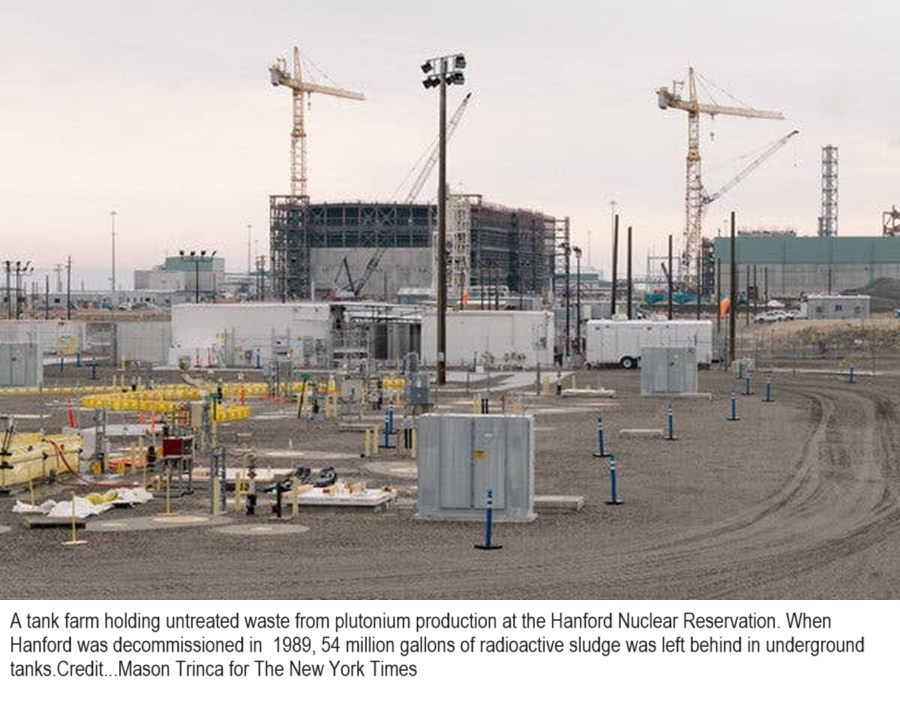
Plans to transform Hanford, which was integral to the nation’s nuclear arsenal after World War II, had just begun inching forward when President Trump started his second term.
New York Times, By Keith Schneider, Reporting from Richland, Wash, March 5, 2025,
In the weeks since President Trump has taken office, he has pushed to unleash oil and gas production and has signed executive orders halting the country’s transition to renewable energy.
But in Washington State, a government-led effort has just started to build what is expected to be the country’s largest solar generating station. The project is finally inching forward, after decades of cleaning up radioactive and chemical waste in fits and starts, at the Hanford Nuclear Reservation, a sweep of desert that was pivotal to the nation’s weapons arsenal from 1943 until it was shut down in 1989. A developer, Hecate, was brought on last year to turn big stretches of the site into solar farms.
Hecate will have access to 10,300 acres that the government has determined sufficiently safe to redevelop. The company has already started site evaluation on 8,000 acres, an area nearly 10 times the size of Central Park in New York and enough space for 3.45 million photovoltaic panels. (Hanford’s site is nearly 400,000 acres.)
If all goes according to plan, the Hecate project, which is expected to be completed in 2030, will be by far the largest site the government has cleaned up and converted from land that had been used for nuclear research, weapons and waste storage. It is expected to generate up to 2,000 megawatts of electricity — enough roughly to supply all the homes in Seattle, San Francisco, and Denver — and store 2,000 more in a large battery installation at a total cost of $4 billion. The photovoltaic panels and batteries will provide twice as much energy as a conventional nuclear power plant. The nation’s current biggest solar plant, the Copper Mountain Solar Facility in Nevada, can generate up to 802 megawatts of energy.
The big unknown still hanging over the plan is whether the Trump administration will thwart efforts that the Biden administration put in place to develop more clean electricity generation………………………………………….
While a clean energy project may clash with Mr. Trump’s policies, there’s a reason the administration may allow Hecate’s solar development to move forward: the revenue the government will get for the land lease. Hecate and the Energy Department declined to discuss the land’s market value, but private solar developers in the region said such easements typically paid landowners $300 an acre annually.
Two officials at the Energy Department, who asked not to be named for fear of retaliation, said that neither the president nor the leaders of the administration’s effort to reshape federal agencies had yet to intervene in the solar project, but that the future of the initiative was uncertain. One of the officials said the new energy secretary, Chris Wright, a former oil executive, had not yet reviewed the project as of late February.
Alex Pugh, Hecate’s director of development, said the company was moving ahead despite shifting political winds. “The fundamentals of the project are strong regardless of policy direction,” he said. “The region needs the project. There is a huge demand for electricity here.”
…………………….Hecate identified the large expanse of open ground alongside high-voltage transmission lines at Hanford as a potential site for its plant several years ago, Mr. Pugh said — long before the Energy Department solicited proposals. The potential benefits, he said, were plainly apparent.
………………….What they also have, however, is risk. The site where Hecate plans to build its photovoltaic panels is near an area where groundwater and soil were decontaminated and alongside an experimental 400-megawatt nuclear reactor complex that was decommissioned in 2001. It’s also about 20 miles south of B Reactor, the world’s first full-scale nuclear reactor, which produced the plutonium for the atomic
The SMR Gamble: Betting on Nuclear to Fuel the Data Center Boom

“Who’s going to insure these plants?” “That’s a huge unknown. “
Mar 3, 2025, by Sonal Patel Power Mag
Data center power demand is accelerating, pushing the grid to its limits and prompting tech giants to bet on next-generation nuclear reactors. But given steep costs, regulatory hurdles, and uncertain scalability, is nuclear the future of data center energy—or just another high-stakes gamble?
At the end of January, Chinese artificial intelligence (AI) startup DeepSeek unveiled two large language models (LLMs)—DeepSeek-R1 and DeepSeek-R1-zero. Unlike previous generations of AI models, DeepSeek’s breakthrough reduced the compute cost of AI inference by a factor of 10, allowing it to achieve OpenAI GPT-4.5-level performance while consuming only a fraction of the power.
The news upended future electricity demand assumptions, rattling both the energy and tech sectors. Investment markets reacted swiftly, driving down expectations—and share prices—for power generation, small modular reactor (SMR) developers, uranium suppliers, gas companies, and major tech firms.
Yet, amid the chaos, optimism abounded. Analysts pointed to Jevons paradox, the economic principle that efficiency gains can increase consumption, rather than reduce it. “Our model shows a ~90% drop in the unit cost of compute over a six-year period, and our recent survey of corporate AI adoption suggests increases in the magnitude of AI use cases,” said Morgan Stanley Research. The U.S. remains the dominant market for AI-driven data center expansion, with 40 GW of new projects under development, aligning with a projected 57 GW of AI-related compute demand by 2028. Already, that load is transforming the energy landscape. A recent POWER analysis shows that U.S. data center electricity consumption could reach between 214 TWh and 675 TWh annually by 2030, up from 176 TWh in 2023 (Figure 1 on original)………………………………
Emerging Business Challenges
Still, beyond regulations, the actual business of running co-located nuclear plants remains uncertain. While recent discussions highlight tech companies as potential investors in advanced nuclear facilities, data center sources confirmed most aren’t attracted to the prospect of owning and operating nuclear plants.
“Data center operators are not in the business of running power plants,” said Walsh. “They want reliability and cost certainty, but they don’t want to deal with regulatory oversight, fuel procurement, or reactor maintenance.”………………………
From an operational standpoint, co-located facilities can pose new risks, as Nina Sadighi, professional engineer and founder of Eradeh Power Consulting told POWER. “Who’s going to insure these plants?” she asked. “That’s a huge unknown. Right now, insurance providers are hesitant because of the regulatory and operational complexity. The traditional nuclear liability structures are built around large reactors with established operational histories, and when you introduce something novel like SMRs or microreactors, you’re dealing with a very different risk profile.”
Sadighi, though generally optimistic about nuclear’s suitability for data centers, also pointed to potential workforce-related challenges that hinge on timely deployment. “If we train nuclear workers now, but deployment gets delayed, those workers won’t wait around,” she said. “The nuclear workforce pipeline is not like a tech workforce, where people can pivot between roles quickly. These are specialized skills that require years of training, and if there’s uncertainty about job stability, we risk losing them to other industries entirely,” she said. Sadighi also raised concerns about the stringent operational protocols that add to labor inefficiencies.
Finally, while the data center industry isn’t solely bent on economics—and told POWER sustainability with a long-term vision is a bigger priority—scaling up will require significant investment. That has sparked all kinds of debate. Lux Research estimates first-of-a-kind (FOAK) SMRs could cost nearly three times more than natural gas ($331/MWh versus $124/MWh) and more than 10 times more when factoring in cost overruns and delays. The firm projects SMRs won’t be cost-competitive before 2035. “Cheap nuclear just isn’t in the cards in the next two decades,” it says.
The fundamental debate is rooted in several uncertainties—which is not uncommon for emerging sectors, experts also generally pointed out. “Tax credits—especially the clean electricity production tax credits and investment tax credits—will be vital to the commercial viability of these projects, especially considering the FOAK risk,” said Teplinsky. “DOE [U.S. Department of Energy] loan guarantees and direct financing from the Federal Financing Bank at low rates are also essential to companies’ ability to secure debt and reduce cost of capital. Grant funding to support commercial demonstrations and high-assay low-enriched uranium support are also key.” ………………..
https://www.powermag.com/the-smr-gamble-betting-on-nuclear-to-fuel-the-data-center-boom/
Trump Pauses All Military Aid to Ukraine

The pause applies to weapons that are already in transit
by Dave DeCamp March 3, 2025, https://news.antiwar.com/2025/03/03/trump-pauses-all-military-aid-to-ukraine/
President Trump has paused all military aid to Ukraine, Bloomberg reported on Monday, citing a senior Pentagon official.
The pause applies to all US military equipment bound for Ukraine that’s not currently in the country, including weapons that are in transit on aircraft and ships or waiting in Poland to be delivered.
The Pentagon official said the US was pausing all military to Ukraine until the country’s leadership demonstrates a good faith commitment to peace. A senior Trump administration official told Fox News, “This is not permanent termination of aid, it’s a pause.”
The move comes a few days after Ukrainian President Volodymyr Zelensky clashed with President Trump and Vice President JD Vance in the Oval Office, an argument that started after Zelensky questioned the administration’s push for diplomacy with Russia.
News of the pause comes after reports said the Trump administration was holding a meeting on Monday afternoon on the possibility of pausing military aid to Ukraine. Before the meeting, the US had already frozen weapons sales to Ukraine under the State Department’s Foreign Military Financing program, which only accounted for a small portion of the US weapons supply to Ukraine.
While the Trump administration hasn’t approved any new military aid for Ukraine, President Biden signed off on a massive number of arms packages during his final months in office that would take years to deliver.
The aid approved by Biden came in two forms: the Presidential Drawdown Authority (PDA), which ships weapons straight from US military stockpiles, and the Ukraine Security Assistance Initiative (USAI), which allows the Pentagon to purchase arms for Ukraine.
Ageing nuclear plant in Florida at risk from climate crisis, advocates warn

we also have to consider the risks of climate on the plants. “We have to be clear-eyed about those risks, and we have to be elevating, fortifying, preparing these plants for storms, for floods, for sea level rise, for drought, and for heat.”
Guardian, Richard Luscombe , 2 Mar 25
Regulators extended the life of two of the oldest US reactors in Miami. Millions of people in the area are now vulnerable
A decision by regulators to extend the life of two of the oldest reactors in the US decades beyond their original permits has elevated the risk of a nuclear disaster in heavily populated south Florida, environmental groups are warning.
The Miami Waterkeeper says the ageing Turkey Point facility in south Miami-Dade county, which was built in 1967 and generates power for a metropolitan area covering about 3 million people, is especially vulnerable to flooding and excessive heat from the climate emergency, in part because of its low-lying position and coastal exposure to a major hurricane.
One of the major risks, the group told a packed public meeting in Miami this week, is contamination of drinking water in the Biscayne Aquifer on which the plant and its two nuclear units sit.
Consultants said last month that the plant’s owners, Florida Power & Light (FPL), will not meet a crucial deadline to clean up a toxic hyper-salinated water plume produced in the reactors’ network of cooling canals that has been creeping closer to freshwater wells.
More generally, the activists fear the potential consequences of an unprecedented decision by the Nuclear Regulatory Commission (NRC) to extend Turkey Point’s operating license to 2053, a reversal of its earlier refusal.
They point out that the Florida plant’s two nuclear power reactors are already among the oldest of 94 currently operating in the US, and beyond the age of both the Three Mile Island reactor in Pennsylvania that suffered a partial meltdown in 1979 in the country’s worst nuclear accident and radiation leak; and Ukraine’s Chornobyl plant, site of the 1986 catastrophe.
Turkey Point is also the same age as the Fukushima Daiichi plant in Japan, which is similarly located on a coastline exposed to severe weather events, and where a 2011 earthquake and tsunami triggered a nuclear disaster.
“Nobody needs to be reminded what a worst-case scenario looks like, but I will say this plant is within 30 miles of millions of people,” said Rachel Silverstein, the chief executive of Miami Waterkeeper, which has worked with Friends of the Earth and the Natural Resources Defense Council on legislation to try to block the license extension.
“Turkey Point was the first reactor in the country to apply to run for a total of 80 years, and no one in the world has ever run a nuclear power plant for 80 years. They all came online in the early 1970s and have gone through their first license extensions into the 2030s, more or less.
“Now, because the world is looking for low-carbon energy sources, we’re looking into extending the operating license of all of these plants into the coming decades. Our position is not anti-nuclear, but if we’re going to rely on nuclear in the coming decades as a primary source of energy that’s going to help us address climate risks, we also have to consider the risks of climate on the plants.
“We have to be clear-eyed about those risks, and we have to be elevating, fortifying, preparing these plants for storms, for floods, for sea level rise, for drought, and for heat.”
Silverstein’s group has partnered with the Miccosukee Tribe of Indians of Florida, whose ancestral homelands cover much of south Florida, to appeal the NRC’s decision allowing Turkey Point to become the first to test the outer limits of its “80-year rule” for license extensions for nuclear power reactors.
They argue that the regulators failed to properly acknowledge a critical report from the Government Accountability Office published last year that stated climate change “was expected to exacerbate natural hazards that pose risks” to Turkey Point.
The report also noted that, instead of issuing a citation or fines, the regulators’ response to FPL’s breach of the maximum allowable cooling water temperature of 100F (38C) during an incident in 2014 was to raise the acceptable figure to 104F, the amount of the overage.
Environmentalists, meanwhile, insist the true operational lifespan of nuclear power generating facilities is far below the NRC’s eight-decade guideline, and point to data showing that among US plants built before 1973, half were decommissioned within 40 years.
According to the New Hampshire-based Seacoast Anti-Pollution League: “In most cases the plants simply wore out, broke down, or never functioned properly.”…………………………………… https://www.theguardian.com/us-news/2025/mar/01/nuclear-power-plants-miami-florida?fbclid=IwY2xjawIweO1leHRuA2FlbQIxMQABHWBZlpSR5NRSL4LqL1lZ0b75I0XzH-D6EPnvsLdoGDbj9-XZOy6MV4–YQ_aem_3Qx31WNB3HCZKhro973QUQ
Techno-Fascism Comes to America

American techno-fascism is no longer a philosophical abstraction for Silicon Valley to tinker with, in the vein of intermittent fasting or therapeutic ketamine doses. It is a policy program whose constitutional limits are being tested right now as DOGE, staffed with inexperienced engineers linked to Musk’s own companies, rampages through the federal government.
Silicon Valley is premised on the idea that its founders and engineers know better than anyone else: they can do better at disseminating information, at designing an office, at developing satellites and advancing space travel. By the same logic, they must be able to govern better than politicians and federal employees.
The historic parallels that help explain Elon Musk’s rampage on the federal government.
New Yorker By Kyle Chayka, February 26, 2025
When a phalanx of the top Silicon Valley executives—Mark Zuckerberg, Jeff Bezos, Elon Musk, and Google’s Sundar Pichai—aligned behind President Trump during the Inauguration in January, many observers saw an allegiance based on corporate interests. The ultra-wealthy C.E.O.s were turning out to support a fellow-magnate, hoping perhaps for an era of deregulation, tax breaks, and anti-“woke” cultural shifts. The historian Janis Mimura saw something more ominous: a new, proactive union of industry and governmental power, wherein the state would drive aggressive industrial policy at the expense of liberal norms. In the second Trump Administration, a class of Silicon Valley leaders was insinuating itself into politics in a way that recalled one of Mimura’s primary subjects of study: the élite bureaucrats who seized political power and drove Japan into the Second World War. “These are experts with a technological mind-set and background, often engineers, who now have a special role in the government,” Mimura told me. The result is what, in her book “Planning for Empire” (2011), she labelled “techno-fascism”: authoritarianism driven by technocrats. Technology “is considered the driving force” of such a regime, Mimura said. “There’s a sort of technicization of all aspects of government and society.”
In the nineteen-thirties, Japan colonized Manchuria, in northeastern China, and the region became a test ground for techno-fascism. Nobusuke Kishi, a Japanese commerce-ministry bureaucrat, was appointed to head the industrial program in Manchuria, in 1936, and, with the collaboration of a new crop of the Japanese conglomerates known as zaibatsu, he instituted a policy of forced industrial development based on the exploitation of the local population. When Kishi returned to national politics in Japan, in 1939, along with a clique of other Japanese technocrats who had worked in Manchuria, he pursued similar strategies of state-dictated industrialization, at the expense of private interests and labor rights. This fascistic regime would not be structured the same way as Mussolini’s or Hitler’s, with power concentrated in the hands of a single charismatic leader, although Kishi had travelled to Germany in the nineteen-twenties, as the Nazi movement expanded, and drew inspiration from German industrialization for his Manchurian project. Instead, Mimura said, Japan “kind of slid into fascism” as bureaucrats exercised their authority behind the scenes, under the aegis of the Japanese emperor. As she explained, techno-fascist officials “acquire power by creating these supra-ministerial organs and agencies, subgroups within the bureaucracy that are unaccountable.” Today, Elon Musk’s DOGE is the Trumpian equivalent.
American corporations of the twentieth century flirted with a merging of state and industrial power. The entrepreneur Henry Ford promoted a system of industrial organization that came to be known as “Fordism,” whereby the state would intervene in the economy to guarantee mass production and consumption. In the nineteen-thirties, I.B.M. did business with the Nazi government through a German subsidiary, lending its technology to projects like the 1933 census, which helped identify Jews in the country. As a recent feature in the Guardian by Becca Lewis laid out, Silicon Valley itself has exhibited right-wing tendencies for decades, embracing misogynist and hierarchical attitudes about achievement. The journalist Michael S. Malone was issuing warnings about emerging “technofascism” way back in the late nineties, when he warned about “IQ bigotry” in the tech industry and the willingness of people to push forward digital revolution while “tossing out the weak and wounded along the way.” But our current moment marks a new conjunction of Internet entrepreneurs and day-to-day government operations.
American techno-fascism is no longer a philosophical abstraction for Silicon Valley to tinker with, in the vein of intermittent fasting or therapeutic ketamine doses. It is a policy program whose constitutional limits are being tested right now as DOGE, staffed with inexperienced engineers linked to Musk’s own companies, rampages through the federal government.
Musk has slashed the ranks of federal employees, shut down agencies whose authority challenges his own, and leveraged artificial intelligence to decide where to cut, promising a government executed by chatbots such as Grok, from Musk’s own A.I. company. DOGE has gained access to Americans’ private data and developed tools to e-mail the entire federal government at once, a digital megaphone that Musk recently used to demand that employees send in a list of their weekly accomplishments. As Mimura put it, “You try to apply technical concepts and rationality to human beings and human society, and then you’re getting into something almost totalitarian.”
The techno-fascist opportunism goes beyond Musk; one can sense other tech entrepreneurs and investors slavering to exploit the alliance between Trumpism and Silicon Valley capitalism, building infrastructure on a national scale. Sam Altman, the C.E.O. of OpenAI, has arranged his own deals with Trump’s government, including Stargate, a heavily hyped data-center project worth a potential five hundred billion dollars. Apple recently announced its own five-hundred-billion-dollar investment campaign in the U.S. over the next four years, including a plan to begin building A.I. servers in Texas.
However nebulous, these extravagant plans signal a spirit of collaboration. On Truth Social, Trump posted approvingly that Apple’s plans demonstrated “FAITH IN WHAT WE ARE DOING.”
Erin McElroy, a geographer at the University of Washington who studies Silicon Valley, has used the term “siliconization” to describe the way that places such as San Francisco or Cluj-Napoca, Romania, to which many western tech companies have outsourced I.T. services, have been remade in the image and ideology of Silicon Valley.
According to McElroy, the first signs of Washington’s current siliconization can be traced back, in part, to the Administration of Barack Obama, who embraced social-media platforms such as Facebook as a vector of government communication. For a time, digital platforms seemed to support democratic government as a kind of communal megaphone; but now, a decade later, technology seems to be supplanting the established authority of the government. “There is a crisis of the state,” McElroy said, and Silicon Valley may be “trying to corrode state power” in order to more quickly replace it.
Silicon Valley is premised on the idea that its founders and engineers know better than anyone else: they can do better at disseminating information, at designing an office, at developing satellites and advancing space travel. By the same logic, they must be able to govern better than politicians and federal employees. Voguish concepts in Silicon Valley such as seasteading and “network states” feature independent, self-contained societies running on tech principles. Efforts to create such entities have either failed or remained confined to the realm of brand-building, as in the startup Praxis, a hypothetical plan for a new tech-driven city on the Mediterranean.
Under the new Trump White House, though, the U.S. government is being offered up as a guinea pig, McElroy said. “Now that we’ve got Musk running the state, I don’t know if they need their little offshore bubbles as much as they thought they did before.”
Such visions of a technologized society represent a break from the Make America Great Again populism that drove the first Trump Administration. MAGA reactionaries such as Steve Bannon tend to be skeptical of technological progress; ………………………………………………………………………………………………………………….. more https://www.newyorker.com/culture/infinite-scroll/techno-fascism-comes-to-america-elon-musk?utm_source=nl&utm_brand=tny&utm_mailing=TNY_Science_030125&utm_campaign=aud-dev&utm_medium=email&bxid=5be9d23d24c17c6adf3bf435&cndid=30183386&hasha=432fc0d0ad6543e820e2dfcd39f76c35&hashb=e1c24f6a6459c7d1d625eb2ea55d9dfbbb4633bf&hashc=ac5a1f5526e7292c73f49dfa8fb6d5d0cb87d8773cec3b9b03d38a4ce482d7c8&esrc=subscribe-page&mbid=CRMNYR012019&utm_term=TNY_Science_Tech
Donald Trump was rude to Zelensky, but he did tell him the hard truths.

Much of what President Trump told Ukraine President Zelensky in their contentious public meeting Friday was valid…and needed to be said to achieve peace. A sampling of the truths Trump told Zelensky:
1. Ukraine must seek immediate ceasefire not more war
2. Why? The war is lost with Zelensky having “no more cards to play” to achieve his unrealistic, indeed delusional war objectives.
3. Only the US can achieve war’s end thru a negotiated peace with Russia. What Trump omitted is that this has always been America’s war simply using Ukraine proxies to fight it.
4. Ukraine is running out of soldiers, relying on old men and conscripts snatched off the street to fight a lost cause.
5. Zelensky could start WWIII with his efforts to keep war going by attacking deep into Russia.
Trump’s comments signaled a near complete break with predecessor Biden’s embrace of the weak, compliant Zelensky to fight the war to weaken Russia and keep it out of the European political economy.
Trump knows the war has nothing to do with Europe or America’s national security interests and must be ended.
If the Oval Office dustup offends people who want this war to continue indefinitely, possibly going nuclear, then by all means be outraged. But if you want to end this lost war utterly destroying Ukraine so US can weaken Russia, then join the peace community in supporting Trump’s peace initiative.
This war has put peoplekind at risk of nuclear annihilation for all 1,100 days since it began. That must end.
As Freed Palestinians Describe Torture, Trump OKs $3 Billion Arms Package for Israel
Like the Biden administration, Trump is claiming an “emergency” in order to bypass Congress.
Common Dreams, Brett Wilkins, 28 Feb 25
As Palestinians released from Israeli imprisonment recount torture and other abuse suffered at the hands of their former captors, the Trump administration on Friday approved a new $3 billion weapons package for Israel.
The new package, reported by Zeteo‘s Prem Thakker, includes nearly $2.716 billion worth of bombs and weapons guidance kits, as well as $295 million in bulldozers. The Trump administration said that “an emergency exists that requires the immediate sale,” allowing it to bypass Congress, as the Biden administration did on multiple occasions. However, the weapons won’t be delivered until 2026 or 2027.
From October 2023 to October 2024, Israel received a record $17.9 billion worth of U.S. arms as it waged a war of annihilation against the Gaza Strip that left more than 170,000 Palestinians dead, maimed, or missing and millions more displaced, starved, or sickened. Israel is facing genocide allegations in an International Court of Justice case brought by South Africa. The International Criminal Court has also issued arrest warrants for Israeli Prime Minister Benjamin Netanyahu and former Israeli Defense Minister Yoav Gallant.
Reporting on the new package came after U.S. Sen. Bernie Sanders (I-Vt.) on Monday announced an effort to block four other arms sales totaling $8.56 billion in offensive American weaponry to Israel.
Meanwhile, some of the approximately 1,000 Palestinians released by Israel as part of a prisoner swap described grim stories of abuse by Israeli forces. The former detainees, who were arrested but never charged with any crimes, “have returned visibly malnourished and scarred by the physical and psychological torture they say they faced in Israeli prisons,” according toThe Washington Post. Some returned to what were once their homes to find them destroyed and their relatives killed or wounded by Israeli forces.
Eyas al-Bursh, a doctor volunteering at al-Shifa Hospital in Gaza City when he was captured by Israeli troops, was held in Sde Teiman and the Ofer military prison in the illegally occupied West Bank for 11 months.
“The places where we were held were harsh, sleep was impossible, and we remained handcuffed and blindfolded,” al-Bursh told the Post……………………………………………………………………
Rahdi also said that Mohammed al-Akka, a 44-year-old detainee held with him, died last December. Al-Akka is one of dozens of Palestinian prisoners who have died in Israeli custody, some from suspected torture and, in at least one case, rape with an electric baton. A number of Israeli reservists are being investigated for the alleged gang-rape of a Sde Teiman prisoner. https://www.commondreams.org/news/trump-arms-to-israel
Beyond Nuclear files two relicensing legal actions
February 27, 2025, https://beyondnuclear.org/beyond-nuclear-files-two-legal-relicensing-actions/
In February 2025, Beyond Nuclear and the Sierra Club (“petitioners”) filed two legal actions challenging extreme relicensing decisions by the Nuclear Regulatory Commission (NRC) to qualify and extend US reactor operating licenses beyond 60 years to 80 years. The petitioners have argued that these license renewals are based on faulty analyses of the environmental impacts for extreme reactor operations that are irrational, unreasonable, incomplete, unsupported, arbitrary and capricious. Beyond Nuclear contends that the NRC has failed to satisfy requirements under the National Environmental Policy Act (NEPA) for both its generic and site-specific relicensing applications.
On February 20, 2025, Beyond Nuclear and Sierra Club (“petitioners”) filed a 76-page legal brief in the US Court of Appeals for the District of Columbia in response to the NRC issuance of its new rule and Final Generic Environmental Impact Statement for License Renewal (GEIS). The lawsuit draws attention to the federal agency ignoring the petitioners’ comments submitted earlier in 2024 on the Draft GEIS compiled. The petitioners’ substantial comments are supported by expert witness testimony of a retired NRC senior risk analyst and nuclear engineer focused on the materials facts that the new rule and rewrite of the GEIS, effective September 15, 2024, does not meet the legal standard for “adequate protection” of the public health and safety during the extended reactor operations from the destructive impacts of age-related degradation of critical reactor safety systems, structures and components (SSC). These SSCs include the large and irreplaceable steel reactor pressure vessels, reactor internal components, the massive concrete containment buildings and foundations. Other critical safety systems also include the miles and miles of the by and large inaccessible, uninspected buried control, instrumentation and power electrical cables and similarly extensive and inaccessible safety-related buried pipe systems.
The petitioners further challenge that the new rule and final GEIS do not meet the legal standard of “adequate protection” from the projected impacts of climate change on the increase of severe reactor accident risk and frequency as well as radiological accident consequences during the projected license renewal period.
In both the cases of age-related degradation of safety-related SSC operations and climate change impacts of severe accident risk and consequences, the NRC GEIS further fails to acknowledge an extensive list of identified “knowledge gaps” and even broader uncertainties that erode the reliability of projecting operational risk, accident frequency and consequences into the license renewal period.
The petitioners are specifically challenging the NRC GEIS finding that the environmental impacts of a nuclear reactor accident “during the initial (40 to 60 years) and subsequent (60 to 80 years) license renewal term” would be insignificant or “SMALL” and, as a result, the NRC does not need to evaluate less impactful alternatives to extended reactor operations.
The petitioners are asking the federal court to vacate the NRC rule and Final GEIS. They further request that the Court order the NRC to more thoroughly investigate the adverse impacts, gaps and uncertainties of operational aging degradation of reactor safety margins. Furthermore, given that the NRC GEIS further claims that the adverse impact of climate change on reactor operations is “out of scope” of the agency’s environmental reviews for license extension, the petitioners assert that the court should require the NRC to take a “hard look” at the impact of climate change (sea level rise, increasingly severe storms, hurricanes, flooding, wild fires, etc) on severe nuclear accident risk and environmental consequences.
On February 24, 2025, petitioners Beyond Nuclear and Sierra Club additionally filed an appeal to the NRC Office of the Commissioners regarding an Atomic Safety Licensing Board order on a 60 to 80 year license renewal application of Duke Energy’s Oconee Units 1, 2 & 3 nuclear power station in Seneca, South Carolina for operations out to 2053 and 2054. The licensing board order now under appeal to the NRC Commissioners denies their request for a hearing, dismisses all of the petitioners’ contentions and terminates the relicensing proceeding.
Oconee nuclear station operates beneath and downstream of two large hydroelectric dams; the Jocassee Dam, a 385 feet high earthen rock-filled dam, ten miles upstream of the Oconee reactors roughly 300 feet below the top of the Lake Jocassee water level of more than 1 million acre feet of water and; the Keowee Dam, a 175 feet earthen dam that immediately abuts the nuclear power station that is sited roughly five feet below the top level of Lake Keowee and an additional 990,000 acre feet of water.
The three reactors were originally designed, constructed as a “dry site” where dam failure was considered an “incredible” event. Only precipitation directly onto the reactor site was analyzed for its flooding impact risk and dismissed. The only dam failure evaluated was for a “sunny day failure” or a structural failure unrelated to severe flooding. The “initial” 40 to 60 years license renewal application was approved without any challenge or consideration of a flood induced dam failure resulting in severe nuclear accident consequences that were analyzed in an environmental review or the NRC Environmental Impact Statement.
The NRC site-specific Environmental Impact Statement for Oconee has concluded that determining the projected impact of climate change on the reliable operation of Oconee safety systems including climate change induced extreme flooding events is “out of scope” of an environmental review.
Both of the petitioners’ legal actions as filed February 20 and 25, 2025 stem from previous Commission Orders issued three years ago on February 24, 2022. These NRC orders were won on appeal in the first round of Subsequent License Renewal Applications filed by the intervenors that resulted in the NRC rescinding the original subsequent license renewals for the Turkey Point Units 3 & 4 and Peach Bottom 2 & 3 nuclear power plants, as well as suspend other active subsequent license renewal proceedings pending a rewrite of the GEIS as reported by the Associated Press . These same NRC Orders required the NRC staff to rewrite a new rule and Generic Environmental Impact Statement because the previous 2013 GEIS as written only applied to the license renewal period for the “initial” 20 year license extension of 40 to 60 years, not the “subsequent” license renewal of 60 to 80 years.
Nuclear reactors killing Americans at accelerating rate

John LaForge Guest columnist, Feb 27, 2025 https://www.hometownsource.com/monticello_times/nuclear-reactors-killing-americans-at-accelerating-rate/article_7cb060d2-eef6-11ef-836b-8349ae8997a8.html
A new analysis of public health data from the Centers for Disease Control and Prevention (CDC) reveals alarming evidence that cancer deaths are rising in communities surrounding America’s oldest nuclear power plants.
Epidemiologist Joseph Mangano, executive director for the Radiation and Public Health Project in New York, has conducted a study showing a disturbing correlation between prolonged exposure to nuclear radiation and increased cancer mortality in affected counties.
According to Mangano’s research, which examines county-by-county cancer mortality data over three distinct time periods, radiation routinely released from nuclear reactors is directly impacting public health.
His findings indicate that cancer deaths in counties hosting 15 of the nation’s 16 oldest nuclear facilities have significantly increased over time, reinforcing longstanding concerns about the safety of prolonged nuclear plant operations.
“There is no safe dose of radiation,” Mangano states, citing the National Academy of Sciences’ BEIR VII report, which confirms that every exposure to ionizing radiation has the potential to trigger cancer.
As nuclear reactors age and continue to release radioactive gases such as helium, xenon and krypton into the atmosphere, residents in nearby communities are at increasing risk of developing cancer due to prolonged exposure.
The data further illustrates the impact of these radiation releases varies based on geographical factors, including wind patterns and local topography.
For example, in Wisconsin, excess cancer deaths were significantly lower near the Point Beach nuclear facility than in counties downwind of the Palisades and DC Cook plants on Lake Michigan’s eastern shore.
These findings suggest that radiation exposure is not uniform and that some communities bear a greater burden than others.
The implications of Mangano’s research are particularly concerning for residents of Wright and Sherburne counties in Minnesota, home to the Monticello Nuclear Generating Plant.
Since the plant began operating in 1971, the once-lower-than-average cancer mortality rate in these counties has risen sharply. Projections estimate that between 2031 and 2050, as many as 1,662 excess cancer deaths could occur if Monticello’s operating license is extended through 2051.
“These findings should serve as a wake-up call,” said Kelly Lundeen, a staff member at the Wisconsin-based environmental and nuclear watchdog Nukewatch. “We are urging local, state, and federal officials to take immediate action to phase out commercial nuclear power before more lives are lost.”
Despite growing concerns, the U.S. Nuclear Regulatory Commission (NRC) has already approved license extensions for several aging reactors, allowing some to operate for up to 80 years.
Given the demonstrated public health risks, advocates are calling for an immediate halt to these extensions and a transition toward safer, renewable energy sources.
The Coalition for a Nuclear-Free Mississippi River was planning to rally outside of the Minnesota Public Utilities Commission hearing earlier this month to maintain the current shutdown date of the Monticello reactor.
The Radiation and Public Health Project, the organization behind Mangano’s analysis, is pushing for greater transparency in radiation monitoring, stricter regulations on radioactive emissions, and a comprehensive plan to phase out aging nuclear plants.
John LaForge serves as the co-director of Nukewatch, a Wisconsin-based environmental and peace action watchdog group.
How the Warfare State Paved the Way for a Trumpist Autocracy

Biden said nothing about how almost 20 years of nonstop war funding and war making had already altered the character of the nation.
Biden’s designated successor, Vice President Kamala Harris, displayed a traditional militaristic reflex while campaigning against Trump ……… she pledged to maintain “the strongest, most lethal fighting force in the world.”
In 2024, as in 2016, Trump notably benefitted from the unwavering militarism of his Democratic opponent.
While the warfare state seems all too natural to most politicians and journalists, its consequences over time have been transformational for the United States in ways that have distinctly skewed the political climate. Along the way, militarism has been integral to the rise of the billionaire tech barons who are now teaming up with an increasingly fascistic Donald Trump.
SCHEERPOST, February 28, 2025 , By Norman Solomon / TomDispatch
Donald Trump’s power has thrived on the economics, politics, and culture of war. The runaway militarism of the last quarter-century was a crucial factor in making President Trump possible, even if it goes virtually unmentioned in mainstream media and political discourse. That silence is particularly notable among Democratic leaders, who have routinely joined in bipartisan messaging to boost the warfare state that fueled the rise of Trumpism.
Trump first ran for president nearly a decade and a half after the “Global War on Terror” began in the wake of the 9/11 attacks. The crusade’s allure had worn off. The national mood was markedly different than in the era when President George W. Bush insisted that “our responsibility” was to “rid the world of evil.”
Working-class Americans had more modest goals for their government. Distress festered as income inequality widened and economic hardships worsened, while federal spending on war, the Pentagon budget, and the “national security” state continued to zoom upward. Even though the domestic effects of protracted warfare were proving to be enormous, multilayered, and deeply alienating, elites in Washington scarcely seemed to notice.
Donald Trump, however, did notice.
Status-Quo Militarism
President Barack Obama and Hillary Clinton represented the status quo that Trump ran against and defeated. Like them, he was completely insulated from the harsh boomerang effects of the warfare state. Unlike them, he sensed how to effectively exploit the discontent and anger it was causing.
Obama was not clueless. He acknowledged some downsides to endless war in a much-praised speech during his second term in office. “Our systematic effort to dismantle terrorist organizations must continue,” he affirmed at the National Defense University. “But this war, like all wars, must end. That’s what history advises. That’s what our democracy demands.”
…………………………………………….President Bush’s messianic calls to rid the world of “evil-doers” had fallen out of fashion, but militarism remained firmly embedded in the political economy. Corporate contracts with the Pentagon and kindred agencies only escalated. But when Hillary Clinton ran for president in 2016, being a rigid hawk became a negative with the electorate as pro-Trump forces jumped into the opening she provided.
Six weeks before the election, Forbes published an article under the headline “Hillary Clinton Never Met a War She Didn’t Want Other Americans to Fight.”
Clinton was following a timeworn formula for Democrats trying to inoculate themselves against charges of being soft on foreign enemies, whether communists or terrorists. Yet Trump, deft at labeling his foes both wimps and warmongers, ran rings around the Democratic nominee. In that close election, Clinton’s resolutely pro-war stance may have cost her the presidency.
……………………………….. Leading Democrats and Republicans remained on autopilot for the warfare state as the Pentagon budget kept rising.
On the War Train with Donald Trump……………………………………………………………….
While the warfare state seems all too natural to most politicians and journalists, its consequences over time have been transformational for the United States in ways that have distinctly skewed the political climate. Along the way, militarism has been integral to the rise of the billionaire tech barons who are now teaming up with an increasingly fascistic Donald Trump.
The Military-Industrial-Tech Complex
While President Trump has granted Elon Musk unprecedented power, many other tech moguls have rushed to ingratiate themselves. The pandering became shameless within hours of his election victory last November.
“Congratulations to President Trump on a decisive victory,” Meta’s CEO Mark Zuckerberg wrote. “We have great opportunities ahead of us as a country. Looking forward to working with you and your administration.” Jeff Bezos, the owner of Amazon, Whole Foods, and the Washington Post, tweeted: “wishing @realDonaldTrump all success in leading and uniting the America we all love.”
Amazon Web Services alone has numerous government contracts, including one with the National Security Agency worth $10 billion and deals with the Pentagon pegged at $9.7 billion. Such commerce is nothing new. For many years, thousands of contracts have tied the tech giants to the military-industrial complex.
Musk, Zuckerberg, Bezos, and smaller rivals are at the helm of corporations eager for government megadeals, tax breaks, and much more. For them, the governmental terrain of the new Trump era is the latest territory to navigate for maximizing their profits. With annual military outlays at 54% of all federal discretionary spending, the incentives are astronomical for all kinds of companies to make nice with the war machine and the man now running it.
While Democrats in Congress have long denounced Trump as an enemy of democracy, they haven’t put any sort of brake on American militarism. Certainly, there are many reasons for Trump’s second triumph, including his exploitation of racism, misogyny, nativism, and other assorted bigotries. Yet his election victories owe much to the Democratic Party’s failure to serve the working class, a failure intermeshed with its insistence on serving the industries of war. Meanwhile, spending more on the military than the next nine countries combined, U.S. government leaders tacitly lay claim to a kind of divine overpowering virtue.
As history attests, militarism can continue for many decades while basic democratic structures, however flawed, remain in place. But as time goes on, militarism is apt to be a major risk factor for developing some modern version of fascism. The more war and preparations for war persist, with all their economic and social impacts, the more core traits of militarism — including reliance on unquestioning obedience to authority and sufficient violence to achieve one’s goals — will permeate the society at large.
During the last 10 years, Donald Trump has become ever more autocratic, striving not just to be the nation’s commander-in-chief but also the commandant of a social movement increasingly fascistic in its approach to laws and civic life. He has succeeded in taking on the role of top general for the MAGA forces. The frenzies that energize Trump’s base and propel his strategists have come to resemble the mentalities of warfare. The enemy is whoever dares to get in his way.
A warfare state is well suited for such developments. Pretending that militarism is not a boon to authoritarian politics only strengthens it. The time has certainly come to stop pretending.
ELON AND THE MILITARY-INDUSTRIAL-COMPLEX

Bruce Gagnon, Feb 28, 2025, Pentagon and StarLink
“…………………………………………………………………………………………….Until he entered the Trump White House, many still perceived Musk as a radical tech industry outsider. Yet this was never the case. From virtually the beginning of his career, Musk’s path has been shaped by his exceptionally close relationship with the U.S. national security state, particularly with Mike Griffin of the CIA.

From 2002 to 2005, Griffin led In-Q-Tel, the CIA’s venture capitalist wing. In-Q-Tel is an organization dedicated to identifying, nurturing, and working with tech companies that can provide Washington with cutting-edge technologies, keeping it one step ahead of its competition.
Griffin was an early believer in Musk. In February 2002, he accompanied Musk to Russia, where the pair attempted to purchase cut-price intercontinental ballistic missiles to start SpaceX. Griffin spoke up for Musk in government meetings, backing him as a potential “Henry Ford” of the tech and military-industrial complex.
After In-Q-Tel, Griffin became the chief administrator of NASA. In 2018, President Trump appointed him the Under Secretary of Defense for Research and Engineering. While at NASA, Griffin brought Musk in for meetings and secured SpaceX’s big break. In 2006, NASA awarded the company a $396 million rocket development contract – a remarkable “gamble,” in Griffin’s words, especially as it had never launched a rocket. National Geographic wrote that SpaceX “never would have gotten to where it is today without NASA.” And Griffin was essential to this development. Still, by 2008, both SpaceX and Tesla Motors were in dire straits, with Musk unable to make payroll and assuming both businesses would go bankrupt. It was at that point that SpaceX was savedby an unexpected $1.6 billion NASA contract for commercial cargo services.
Today, the pair remain extremely close, with Griffin serving as an official advisor to Castelion. A sign of just how strong this relationship is that, in 2004, Musk named his son “Griffin” after his CIA handler.
Today, SpaceX is a powerhouse, with yearly revenues in the tens of billions and a valuation of $350 billion. But that wealth comes largely from orders from Washington. Indeed, there are few customers for rockets other than the military or the various three-letter spying agencies.
In 2018, SpaceX won a contract to blast a $500 million Lockheed Martin GPS into orbit. While military spokespersons played up the civilian benefits of the launch, the primary reason for the project was to improve America’s surveillance and targeting capabilities. SpaceX has also won contracts with the Air Force to deliver its command satellite into orbit, with the Space Development Agency to send tracking devices into space, and with the National Reconnaissance Office to launch its spy satellites. All the “big five” surveillance agencies, including the CIA and the NSA, use these satellites.
Therefore, in today’s world, where so much intelligence gathering and target acquisition is done via satellite technology, SpaceX has become every bit as important to the American empire as Boeing, Raytheon, and General Dynamics. Simply put, without Musk and SpaceX, the U.S. would not be able to carry out such an invasive program of spying or drone warfare around the world.

The repugnantly infantile libertarian extremist Elon Musk
An example of how crucial Musk and his tech empire are to the continuation of U.S. global ambitions can be found in Ukraine. Today, around 47,000 Starlinks operate inside the country. These portable satellite dishes, manufactured by SpaceX, have kept both Ukraine’s civilian and military online. Many of these were directly purchased by the U.S. government via USAID or the Pentagon and shipped to Kiev.
In its hi-tech war against Russia, Starlink has become the keystone of the Ukrainian military. It allows for satellite-based target acquisition and drone attacks on Russian forces. Indeed, on today’s battlefield, many weapons require an internet connection. One Ukrainian official told The Times of London that he “must” use Starlink to target enemy forces via thermal imaging.
The controversial mogul has also involved himself in South American politics. In 2019, he supported the U.S.-backed overthrow of socialist president Evo Morales. Morales suggested that Musk financed the insurrection, which he dubbed a “lithium coup.” When directly charged with his involvement, Musk infamously replied, “We will coup whoever we want! Deal with it!” Bolivia is home to the world’s largest lithium reserves, a metal crucial in producing batteries for electric vehicles such as the ones in Musk’s Tesla cars.
In Venezuela last year, Musk went even further, supporting the U.S.-backed far-right candidate against socialist president Nicolás Maduro. He even went so far as to suggest he was working on a plan to kidnap the sitting president. “I’m coming for you Maduro. I will carry you to Gitmo on a donkey,” he said, referencing the notorious U.S. torture center.
More recently, Musk has thrown himself into American politics, funding and campaigning for President Trump, and will now lead Trump’s new Department of Government Efficiency (DOGE). DOGE’s stated mission is to cut unnecessary and wasteful government spending. However, with Musk at the helm, it seems unlikely that the billions of dollars in military contracts and tax incentives his companies have received will be on the chopping block.

At Trump’s inauguration, Musk garnered international headlines after he gave two Sieg Heil salutes – gestures that his daughter felt were unambiguously Nazi. Musk – who comes from a historically Nazi-supporting family – took time out from criticizing the reaction to his salute to appear at a rally for the Alternative für Deutschland Party. There, he said that Germans place “too much focus on past guilt” (i.e., the Holocaust) and that “we need to move beyond that.” “Children should not feel guilty for the sins of their parents – their great-grandparents even,” he added to raucous applause.
The tech tycoon’s recent actions have provoked outrage among many Americans, claiming that fascists and Nazis do not belong anywhere near the U.S. space and defense programs. In reality, however, these projects, from the very beginning, were overseen by top German scientists brought over after the fall of Nazi Germany. Operation Paperclip transported more than 1,600 German scientists to America, including the father of the American lunar project, Wernher von Braun. Von Braun was a member of both the Nazi Party and the infamous elite SS paramilitary, whose members oversaw Hitler’s extermination camps.
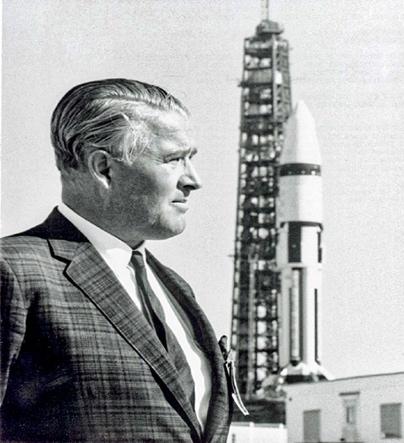
Thus, Nazism and the American empire have, for a long time, gone hand in hand. Far more disturbing than a man with fascist sympathies being in a position of power in the U.S. military or space industry, however, is the ability the United States is seeking for itself to be impervious to intercontinental missile attacks from its competitors.
On the surface, Washington’s Iron Dome plan may sound defensive in nature. But in reality, it would give it a free hand to attack any country or entity around the world in any way it wishes – including with nuclear weapons. This would upend the fragile nuclear peace that has reigned since the early days of the Cold War. Elon Musk’s help in this endeavor is much more worrying and dangerous than any salutes or comments he could ever make. https://brucegagnon177089.substack.com/p/the-pentagon-and-starlink-satellites?utm_source=post-email-title&publication_id=3720343&post_id=158057576&utm_campaign=email-post-title&isFreemail=false&r=c9zhh&triedRedirect=true&utm_medium=email
1 This Month
19 February – VIRTUAL EVENT-Decision Time: AI and Our Nuclear Arsenal
12:45 p.m. Central / 1:45 p.m. Eastern
To see nuclear-related stories in greater depth and intensity – go to https://nuclearinformation.wordpress.com
-
Archives
- February 2026 (181)
- January 2026 (308)
- December 2025 (358)
- November 2025 (359)
- October 2025 (376)
- September 2025 (258)
- August 2025 (319)
- July 2025 (230)
- June 2025 (348)
- May 2025 (261)
- April 2025 (305)
- March 2025 (319)
-
Categories
- 1
- 1 NUCLEAR ISSUES
- business and costs
- climate change
- culture and arts
- ENERGY
- environment
- health
- history
- indigenous issues
- Legal
- marketing of nuclear
- media
- opposition to nuclear
- PERSONAL STORIES
- politics
- politics international
- Religion and ethics
- safety
- secrets,lies and civil liberties
- spinbuster
- technology
- Uranium
- wastes
- weapons and war
- Women
- 2 WORLD
- ACTION
- AFRICA
- Atrocities
- AUSTRALIA
- Christina's notes
- Christina's themes
- culture and arts
- Events
- Fuk 2022
- Fuk 2023
- Fukushima 2017
- Fukushima 2018
- fukushima 2019
- Fukushima 2020
- Fukushima 2021
- general
- global warming
- Humour (God we need it)
- Nuclear
- RARE EARTHS
- Reference
- resources – print
- Resources -audiovicual
- Weekly Newsletter
- World
- World Nuclear
- YouTube
-
RSS
Entries RSS
Comments RSS
 nuclear-news