Georgia’s half-built nuclear power station – Toshiba to the rescue?
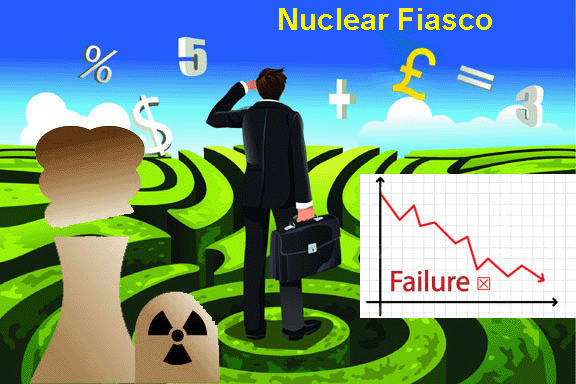
 Toshiba rescues half-built Georgia nuclear plant, CNN Money , 11 June 17, Toshiba’s bankrupt nuclear unit left an uncertain future for two half-finished nuclear reactors in Georgia — but the company promised Saturday it will pour up to $3.68 billion into the project to finish it.The Tokyo-based company will pay out the billions to Georgia Power, a subsidiary of Southern Company, in installments between this coming October and January 2021.
Toshiba’s Westinghouse will still be involved with the project by way of lending engineering, licensing support, and the intellectual property rights needed for the project to Southern Company, the company said in a statement.
Toshiba’s nuclear construction efforts are at the heart of its current financial woes. Westinghouse was crippled by massive losses because the costs of its nuclear projects in the U.S. winded up “far surpassing estimates.”
Though Toshiba is known for making a vast array of product — from IT equipment to TVs and laptops — the nuclear program has dented profits so badly that the company said in April it has “substantial doubt” about its ability to stay in business.
Toshiba’s Westinghouse is also midway building two nuclear reactors in South Carolina, and the fate of that project still hangs in the balance. Toshiba said Saturday it’s “still in negotiations” with the project’s owners……http://money.cnn.com/2017/06/10/news/companies/toshiba-nuclear-plant-georgia-southern-co/index.html
American corporations hope to use Indian insurance companies, for nuclear build in India
GE, Westinghouse keen to take nuclear insurance from Rs 1,500-crore pool BY SHILPY SINHA, ET BUREAU JUN 12, 2017 MUMBAI:After years of stonewalling, India is poised to open up its nuclear liability cover to equipment suppliers, with GE and Westinghouse showing interest in taking insurance from the pool.
Secrecy on highly radioactive uranium in the nuclear waste dump in Parks Township.
Amount of nuclear waste in Parks Township could remain unknown until 2031, TRIB Live, MARY ANN THOMAS | Sunday, June 11, 2017 Secrecy, lack of documentation and inattention to warnings may have led the Army Corps of Engineers to grossly underestimate the amount of highly radioactive uranium in the nuclear waste dump in Parks Township.
Lawsuit over beryllium exposure
Lawsuit filed against General Dynamics for beryllium exposure http://www.cullmantimes.com/news/lawsuit-filed-against-general-dynamics-for-beryllium-exposure/article_c8a5fcf4-4e1d-11e7-b725-63d15c9435f1.html Tiffeny Owens Jun 10, 2017A local man has filed suit against General Dynamics, alleging the company fired him after he filed a worker’s compensation claim for an incurable disease he alleges he contracted from working there.
Gary Miller is suing his former employer for worker’s compensation benefits and retaliatory discharge after he was terminated from the defense contractor in April, according to a lawsuit filed in Cullman County Circuit Court Tuesday.
Miller alleges he was diagnosed with chronic beryllium disease (CBD) by a Denver, Colorado medical facility General Dynamics sent him to see after blood tests showed he had abnormal levels of the Category 1 carcinogen in his system. After working at the manufacturing facility since June 2012, Miller was terminated April 17, according to the law suit.
General Dynamics, located on Alabama 157, machines and processes beryllium and its alloys for optics and optical assemblies. Beryllium is one-third the weight of aluminum but six times stronger than steel with high thermal stability. It’s used in various industries, such as electronics, aerospace, dental, atomic energy and defense.
In his lawsuit, Miller alleges he developed chronic beryllium disease from working at the plant where he “inhaled beryllium dust and powder over a period of time.” Miller reported his symptoms to the company, and according to his complaint, General Dynamics “acknowledged” he had the disease and paid for some of his medical and pharmacy expenses.
CBD is a slowly progressive respiratory disease characterized by the formation of lung lesions called granulomas, according to the Centers for Disease Control (CDC). These granulomas and accompanying fibrosis cause impairment of the lung’s ability to expand fully and to oxygenate the blood.
There is no cure, although symptoms can be treated. It has been estimated that as many as 134,000 current U.S. workers in private industry and government may be exposed to beryllium. The rate of progression from less severe to severe disease can vary widely. An estimated 100 people die from the disease annually.
A new rule under the Obama administration was set to lower workplace exposure to beryllium but could be sidelined by the current administration’s call to roll back occupational regulations, potentially exempting major industries.
OSHA estimated the proposed rule would prevent 96 premature deaths each year and prevent 50 new cases of CBD per year, once the full effects of the rule are realized.
Tiffeny Owens can be reached at 256-734-2131, ext. 135.
Tiffeny Owens can be reached at towens@cullmantimes.com or at 256-734-2131, ext. 135.
1979 Three Mile Island nuclear accident – where to put the radioactive trash?

Extension Sought for Storing Three Mile Island Debris https://www.usnews.com/news/best-states/idaho/articles/2017-06-09/extension-sought-for-idaho-storing-nuclear-meltdown-debris Federal officials requested a 20-year extension involving the storage in Idaho of reactor core debris from the partial meltdown at the Three Mile Island nuclear power plant. June 9, 2017,By KEITH RIDLER, Associated Press BOISE, Idaho (AP) — Federal officials requested a 20-year extension involving the storage in Idaho of reactor core debris from the partial meltdown at the Three Mile Island nuclear power plant.
New nuclear power station for Virginia? Clean Technica examines the financial realities
 No, Virginia, There Is No Nuclear Santa Claus https://cleantechnica.com/2017/06/09/no-virginia-no-nuclear-santa-claus/June 9th, 2017 by Michael Barnard Virginia is about to receive approval for the most expensive nuclear reactor ever built in the USA. It’s been a 10-year hunt with reactor technologies changing at least twice to add a third unit to the North Anna nuclear generation plant. But they are closing in on regulatory approval.
How much would its electricity cost if it actually goes forward?
Nuclear math is hard. That’s not the math behind nuclear physics, by the way. That’s actually straightforward compared to the financial black arts accounting that occurs with nuclear plants. A tremendous amount of the costs are typically swept under the rug as overruns occur and governments and utilities try to save face. Ontario, as one example, is on its 30th year and 4th administration of pushing its nuclear debt down the road to future politicians and taxpayers.
But let’s pretend the numbers will be relatively transparent and do some simple math.
Let’s make a few assumptions:
-
- Capital costs are $19 billion USD as per the economic analysis cited.
- The $600 million USD already spent as per the reference is included in the cost of electricity.
- Capacity is 1.6 GW as per the reference, which is higher than the 1.52 GW originally specified in 2007 when this process started.
- Capacity factor on most years of operation would be 90%, but 60% for the first year of operation and after refurbishment. Obviously, it would be 0% during construction and during the two years of refurbishment.
- Operational costs are 5% to 10% of capital costs per year. That would be $0.95 billion to $1.9 billion per year.
- At 20 years of operation, the reactor would be refurbished, taking two years and costing $5 billion, approximately 25% of original capital outlay.
- It would take 8 years of actual construction and be on time and on budget.
- Lifespan of the reactor before decommissioning would be 40 years.
Let’s see what the numbers tell us for 5% operating costs for the cost of electricity per MWh: Continue reading
“We Are Still In” Paris climate accord; over 1,000 U.S. governors, mayors, investors, universities, and companies
 Guardian 8th June 2017, Yesterday, the mayors of Pittsburgh and Paris co-authored a New York Times editorial rejecting Trump’s efforts to pin the two cities against each other on climate change.
Additionally, 12 states (California, New York,Washington, Connecticut, Delaware, Hawaii, Massachusetts, Minnesota,
Oregon, Rhode Island, Vermont, and Virginia) plus Puerto Rico created the US Climate Alliance, committed to upholding the Paris accord. These states represent 97 million Americans – 30% of the national population.
More than 1,000 U.S. governors, mayors, investors, universities, and companies joined the “We Are Still In” campaign, pledging to meet the goals of the Paris agreement. And California Governor Jerry Brown has effectively
become America’s unofficial climate change ambassador. https://www.theguardian.com/environment/climate-consensus-97-per-cent/2017/jun/08/pittsburgh-and-paris-join-over-200-cities-and-states-rejecting-trump-on-climate
USA, the Republican ideology of money, and the Paris climate agreement
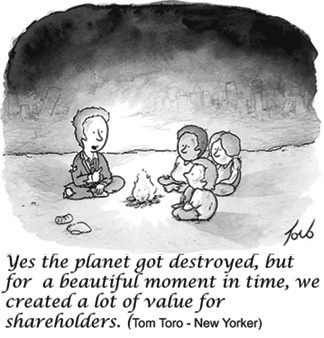 Trump, the Paris Climate Agreement and Scrooge McDuck, https://independentaustralia.net/politics/politics-display/trump-the-paris-climate-agreement-and-scrooge-mcduck,10369 Independent Australia, Jim Pembroke 6 June 2017, To understand Trump’s withdrawal from the Paris Accord we only need to follow the money behind climate change denial, writes Jim Pembroke.THE WORLD’S collective jaw dropped the other day, when U.S President Donald Trump announced he was pulling the plug on the Paris Climate Accord.
Sure, we knew it was coming, but no one thought it would really happen. We figured the whole Russian thing would destroy Trump long before he got a chance to destroy the planet. But quicker than you can say, anthropogenic climate change, the Yanks were gone.
But who is really to blame for this mess? Angry white men, people who didn’t vote, Donald Trump and his troupe of bad impersonators?
For an answer to this we need to dip our toes – once again– into the murky waters of secret donations, clandestine organisations and fictional Disney characters. This is a tale about the unidentified rich who sit high on a stack of cash in their air-conditioned money vaults, while secretly bankrolling climate change denial. The Scrooge McDucks of this world.
An imaginary Disney character is about as close as we’ll get to the identity of these cloak and dagger contributors, because the hundreds of millions of dollars they donate to climate denial organisations are routed via third party payments.
This “dark money” is channelled anonymously through conservative organisations, like Donors Trust and Donors Capital Fund, whose stated mission is a commitment to “liberty”. Now that sounds fine until you realise that this includes the freedom to fund think tanks and activists who spread disinformation and confusion, scorning global warming and climate science.
Despite all the cloak and dagger stuff, the donations of some of these wealthy birds have been well documented. The fossil fuel industry and, in particular, ExxonMobil and the Koch family, have considerable history in the climate denial space. Exxon have been accused of covering up climate change research and American businessman Charles Koch has reportedly funded climate denial activity to the tune of tens of millions of dollars.
But it’s not just the wealthy ducks from the fossil fuel sector feeding the mayhem. Even companies who publically declare their grand support for climate action have made political donations to climate deniers. Google, Microsoft, eBay have all contributed to politicians who oppose climate legislation, while at the same time spruiking their own climate credentials to the public. The subsequent self-serving rationalisation of these Scrooge McDucks is evidence: there’s at least one thing they want more than improving the environment, their huge bank balances.
Likely, there were many factors affecting the decision to pull out of the Paris Accord. But without the confusion sewn by secretly funded denialists, it’s likely that rational, scientific thought would have won the day and the U.S. might still be part of the Paris Accord. However, the Scrooge McDucks of this world could never allow their ideology of money to be threatened by regulations — whether climate change is real or not.
You see, failing crops, water shortages, or savage storm events may wreak havoc on the rest of us, but won’t really affect the billionaires and corporations.
Like Uncle Scrooge, they’ll be swimming high on their mountains of coins, always safe from the rising waters of global warming.
Dangerous cargo of radioactive trash flying from Scotland to South Carolina
Toxic cargo of nuclear waste leaves Scotland for US under armed guard https://www.sundaypost.com/fp/toxic-cargo-of-nuclear-waste-leaves-for-us/ Jim Lawson, 04 June 2017 AN American military plane carrying a deadly cargo of radioactive waste has taken off from Scotland for the second time.

USA’s President Trump sets the world stage for a new nuclear arms race
 Is President Trump setting the stage for a new nuclear arms race?, https://www.bostonglobe.com/news/politics/2017/06/03/stealthy-cruise-missile-spurs-worries-amid-trump-call-for-revived-nuclear-arms-race/QlgPJLsn01ru4SaHFuGicM/story.html By Christopher Rowland GLOBE STAFF JUNE 03, 2017 WASHINGTON — President Trump has called for a new global arms race, and the Pentagon is ready. It has a nuclear weapon on the drawing board that the military considers essential but that critics fear could put the United States on the inside lane to Armageddon.
The new weapon is the planned update of the Air Force’s nuclear cruise missile. Price tag: at least $20 billion. Fear factor 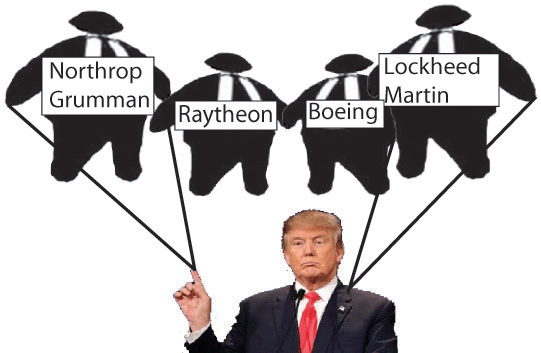 for arms-control advocates: maximum.
Trump’s newly released budget for 2018 contains hundreds of millions of dollars to speed up development of the Long Range Stand Off missile — a jet-propelled nuke designed to be launched from an airborne bomber and stealthily zip to a target virtually anywhere in the world.
It will carry a “variable yield’’ warhead that can be adjusted to deliver an atomic blast ranging from 5 to 150 kilotons — that is, from about one-third of a Hiroshima-sized bomb to as much as 10 Hiroshima bombs.
The ability to limit the scope of devastation and highly flexible targeting offer a powerful allure to Air Force generals, but are also precisely what worry antiproliferation specialists. They contend these capabilities make the idea of a “limited’’ nuclear strike on a target like Iran or North Korea — aggressive provocateurs but not superpowers — more likely, with a high risk for catastrophic escalation. It could also give Pentagon planners an intriguing option as they study ways to deter Russia’s ambitions to reassert sway over Eastern Europe.
The new missiles are part of a $1 trillion upgrade of America’s nuclear arsenal kicked off by President Barack Obama, replacing missiles, submarines, and planes that have been in service for decades. Now Trump is positioning the military to pursue those plans aggressively, with $1 billion in his new budget to keep the Pentagon on an accelerated course for updating warheads, including a refurbished warhead for the 1,000 new, improved cruise missiles.
“It is very dangerous to have this excessive, unnecessary rebuilding of the arsenal take place under the Trump administration,’’ said Tom Collina, policy director at the Ploughshares Fund, a nonprofit organization that advocates for the reduction and elimination of nuclear weapons development. “The United States wants a new arms race, and is willing to push for it, and willing to pay for it, and we’re going to see other countries including Russia respond in kind, which is not good for global security.’’
Under an order Trump signed soon after he took office, the Pentagon is beginning a Nuclear Posture Review, due for completion by the end of the year. It gives the new administration a chance to articulate the president’s nuclear vision and decide what atomic weapons and strategies he deems most important.
Trump’s White House has not yet provided details of the president’s views, but in some of his remarks, he appears prepared to push the United States closer to a Cold War footing, a shift in tone and possibly in tactics that could have an impact on global nuclear security long after he leaves office.
“Let it be an arms race,’’ Trump, then president-elect, was quoted by MSNBC as saying in December. “We will outmatch them at every pass and outlast them all.’’
Tough talk, or something more? Certainly the tone runs sharply counter to the trend over the last three decades. Since the destruction of the Berlin Wall, there has been a sharp reduction in nuclear arms deployed by the United States and Russia.
Obama’s own 2010 Nuclear Posture Review concluded that the United States should continue seeking to reduce the balance of nuclear weapons in the post-Cold War era, not add new nuclear weapons systems to the mix of intercontinental ballistic missiles, submarine-based missiles, and missiles on long-range bombers. But to win Republican support for the ratification of the New START arms control treaty with Russia in 2010 — which limited both sides to 1,550 strategic warheads and set up new inspection regimes — Obama softened his stance and agreed to the sweeping modernization of the smaller nuclear force. The $1 trillion price tag, coming due over 30 years, includes new strategic bombers, submarines, and rebuilt intercontinental ballistic missiles.
Among all the nuclear systems, the plan to update the air-launched cruise missile is the most controversial, because of what critics consider its “destabilizing’’ effect. The missile is designed to be used in a survivable, limited nuclear conflict — survivable, meaning it doesn’t result in mutual annihilation. Intended to replace an existing, less capable system built in the 1980s, it would be widely deployed by 2030, with the first one ready by 2025.
‘Let it be an arms race. We will outmatch them at every pass and outlast them all.’
Donald Trump, as quoted by MSNBC in December

It could be shot thousands of miles away from enemy territory, and then fly low and fast to its target. The new version will have a stealthy profile and skin, making it difficult to detect by radar.
Proponents in the Air Force have said the missile is indispensable because it eliminates the need for long-range strategic bombers to enter enemy airspace. They contend it can act as an even stronger deterrent than ballistic missiles.
“We want our adversaries to think we have the capability — and the will — to use our nuclear weapons,’’ said Adam Lowther, director of the Air Force’s School for Advanced Nuclear Deterrence Studies, at Kirtland Air Force Base in New Mexico. With the new missile, he said, “we’re not in a situation where it is all or nothing.’’
It is in America’s interest to keep the Russians guessing if the “crazy Americans’’ will pull the trigger, he said. Enemies know that America will be extremely reluctant, he said, to deliver an atomic blast from an ICBM, given the almost certain retaliation that would follow.
Unlike Obama’s review, which called for reductions in the risks of global annihilation, the Trump review is expected to highlight the benefits of nuclear weapons to America’s power, Lowther predicted. He anticipates the review will be “a more positive view of the role of nuclear weapons, and nuclear deterrence.’’
Critics say the cruise missile makes the frightening logic of deterrence all the more fragile.
“This weapon makes fighting nuclear wars even more possible. Its accuracy and potency will be greater. We don’t need it. It’s dangerous. And the weapons that we have already can do the job,’’ said Senator Edward Markey, the Massachusetts Democrat and longtime proponent of a freeze and reduction on nuclear weapons.
“We’re going to ask other countries to engage in restraint while we’re making . . . nuclear war-fighting even more possible, even more imaginable,” he said.
Markey has sponsored Senate legislation that would cap development money for the next-generation nuclear cruise missile at current levels until Trump’s Nuclear Posture Review is complete. The bill has little chance of passage. Most of the Republicans who control Congress and a number of Democrats whose states depend on jobs and military bases that support nuclear weapons favor a full-speed-ahead approach.
North Dakota is home to the B-52 bombers that carry the old nuclear cruise missiles. Both of the state’s senators, Democrat Heidi Heitkamp and Republican John Hoeven, were among a bipartisan group who wrote the Pentagon last summer urging that the full nuclear modernization continue.
They wrote the letter after published reports said Obama was thinking about scaling back the modernization in his last year in office, including canceling the new cruise missile.
“We must modernize these forces to preserve their deterrent capabilities,’’ Hoeven, Heitkamp, and the other senators wrote. “We . . . need a new [air-launched cruise missile] to hold the broadest possible array of targets at risk.’’
The gears of Pentagon procurement bureaucracy are already turning, supported by weapons manufacturers.
Early development of the cruise missile’s updated warhead is under way at Sandia National Laboratories . Requests for bids for the full missile systems were issued last year; prime bidders are expected to be Waltham-based Raytheon, Boeing, Northrop Grumman, and Lockheed Martin, according to defense trade journals.
Christopher Rowland can be reached at christopher.rowland@globe.com. Follow him on Twitter @GlobeRowland.
New York’s plan for nuclear civil defence – not much change from the 1950s
New York’s plan for nuclear fallout is basically “duck and cover” https://qz.com/979520/heres-new-york-citys-sort-of-plan-for-the-nuclear-apocalypse/ 4 June 17 In April, a rumor spread that 600,000 people were evacuated from Pyongyang, the capital of North Korea, because they wouldn’t all be able to fit in the city’s network of bomb shelters in case of an attack. That report was later debunked, but rising tensions between North Korea and the US have a lot of people on edge. North Korea’s series of recent missile tests are unlikely to help matters.
The latest ballistic missile fired by North Korea is believed to have fallen in the sea of Japan, within Japan’s exclusive economic zone. Relatedly, in March, Japan ran its first evacuation drill designed for the possibility of a North Korean missile attack. With these reminders of some kind of nuclear threats, and the doomsday clock the closest to midnight it’s been in decades, it seems fair to wonder how safe would American cities be, in such scenario?
We looked at New York—because it’s the most densely populated, and it is, after all, the only city in America to ever have suffered an aerial attack (not counting Pearl Harbor in 1941). Sure, climate change will probably kill New Yorkers before a nuclear explosion does. But still, should the city follow Hawaii’s (or Japan’s) lead in updating fallout shelters?
New York Civil Defense drill. 1950’s
There isn’t much of a plan
That said, New Yorkers could face nuclear exposure from two other sources: A terror attack utilizing a low-yield radioactive device, or a radiation leak following an accident in one of the plants somewhere near the city. (Just as an example, on May 9, a tunnel collapsed in a plutonium finishing plant in Hanford, Washington. According to news reports, it was full of highly contaminated nuclear waste. Though luckily no one was harmed, workers were instructed to take cover, ensure the ventilation was working in buildings, and “refrain from eating and drinking.”)
The latter scenario is the least dangerous, for a number of reasons. Brooke Buddemeier, a certified health physicist (also known as a radiation safety specialist) at the Lawrence Livermore National Laboratory, tells Quartz that due to the workings of nuclear plants, accidental explosions within the plants are not actually nuclear and are very small in comparison to a nuclear bomb explosion. In the unlikely event of an accident, most of the radioactive material would be contained by the reactor containment itself, limiting the damage to structures and people in the immediate vicinity of the plant. Further, any radioactive plant leak would likely take some time and release radioactive material at much slower rates than an explosion, allowing for an evacuation of the area to prevent or reduce exposures to the public.
A bomb is different. If an improvised radioactive device—a so-called “dirty bomb”— were to go off in New York City, Buddemeier said, we’d be “looking at a low-yield explosive going off at ground level.” The explosive power of such a device could be of a magnitude comparable to the bombs of Hiroshima and Nagasaki, and the dangers would be twofold: The immediate explosion, and the radioactive fallout.
When it comes to the explosion, the danger (at least in terms of dying from the explosion itself, or developing acute radiation sickness) would decline drastically after the first half mile, remaining serious for anyone standing within the first mile of the blast, then somewhat concerning for those within three miles of the explosion.
The fallout—or the radioactive debris that would fall from the sky following an explosion—would cover an area between 10 to 20 miles, with the so-called “hot zone” covering up to 100 miles.
Gone are the days when New York’s “busy millions” were involved in city-wide drills: The city’s Emergency Management department said today it’s much safer to simple find the closest building and stay indoors rather than looking for a designated fallout shelter.
On the site PlanNowNYC, New York maintains lists of possible disasters—including biological attacks, dirty bombs, and cyber attacks—and gives advice on how to handle them. For a radioactive attack, the official government suggestion is again to stay indoors, remove possibly contaminated clothes, take a warm shower, and don’t use conditioner (it can bind radioactive particles to your hair protein).
In case of any kind of radioactive attack, “New Yorkers should immediately take shelter in the center or basement of any nearby building. Expect to stay there until instructed to leave by emergency personnel,” a New York City spokesperson wrote to Quartz in an email.
But is that enough of a plan? And how many people can actually fit in basements and building halls, anyway?
“An east coast city like New York offers some good protection,” says Buddemeier. “[The key] is getting into the nearest solid structure and staying indoors.” Examples of structures that provide good protection are basements, multistory buildings, and underground areas including parking garages or subways.
The degree of protection offered by a building depends on its size, the material it’s built with, and where one stands in it. Basements (particularly corners) are generally the best bets, or the center of a tall concrete building. Taking shelter in the center of a tall concrete building would cut the potential radiation exposure from a dirty bomb down by a factor of 1,000 to 10,000, according to calculations from the Lawrence Livermore National Laboratory. But even sheltering in a one story wooden house would cut radiation exposure down by a factor of 10.
People who are outside at the time of the explosion should seek the nearest, most effective shelter—but getting indoors sooner is more important than finding the perfect protection. Similarly, those who are indoors should just stay there, and wait: Even a few hours will significantly reduce the radiation intensity.
“Radiation is one of the gifts that keeps on giving,” explains Buddemeier. But while some level of radiation could be detectable in the area of an explosion for years to come, its intensity would be drastically reduced after the first day. Within the first hour, radiation is cut in half, and loses 80% of its power after the first day, so protecting oneself during this initial period of time should hopefully reduce the risk of acute radiation sickness.
Reducing exposure as soon and as drastically as possible, Buddemeier says, will also help stave off the long-term effects of radiation, such as cancer or genetic mutations. Drinking water and eating food is OK, he says, and though “you don’t want to go out and start harvesting fresh vegetables.” Food that is stored indoors can be consumed and “if you need to wash off or are thirsty, by all means, get water.” While bottled is preferable, even the water in the city system would do in a pinch.
Importantly, these safety and emergency measures actually apply to a nuclear explosion of any kind—even a much more powerful one: The difference of course would be the size of the prompt impact zone, and how far downwind people would need to find shelter in order to avoid significant fallout exposure
Serious flaws in the spent fuel pools method of storing nuclear radioactive trash

Facing South 2nd June 2017, As the United States continues to grapple with long-term storage of highly radioactive spent fuel from the nation’s nuclear power plants, science watchdogs are warning of serious flaws with the current storage method, which involves densely packing the combustible spent fuel assemblies under at least 20 feet of water in pools located at individual plants while awaiting creation of a permanent repository.
https://www.facingsouth.org/2017/06/nuclear-regulators-flawed-analysis-leaves-millions-risk-radioactive-fires
Distress and disarray in the U.S. nuclear industry
 Distress in the US nuclear industry, https://www.financierworldwide.com/distress-in-the-us-nuclear-industry#.WTSVQZKGPGh BY Fraser Tennant June 2017
 Financier Worldwide Magazine A US nuclear industry in distress is a development likely to cause concern among even the hardiest – yet ‘distress’ does not quite do justice to the extent of the issues currently troubling the industry stateside.
The origin of this elevated distress is the plight of Westinghouse Electric Company (WEC), the Toshiba Corporation-owned US nuclear company which has been haemorrhaging billions of dollars due to severe difficulties with a number of key projects and, as a result, has now filed for Chapter 11 bankruptcy.
Indicative in many ways of the struggles facing the global nuclear industry, WEC’s indigenous operations – in the main, four nuclear plants under construction in Georgia and South Carolina – have been hit by massive cost overruns and delays of nearly four years, leaving the Japanese conglomerate with a forecasted annual loss of 1.01 trillion yen ($9.1bn).
Satoshi Tsunakawa, Toshiba’s chief executive, has stated there is no risk of additional losses from overseas nuclear projects (which includes the £10bn Moorside nuclear project in the UK, Europe’s largest planned nuclear power plant). “The filing by WEC is an important step toward recovery,” said Mr Tsunakawa. “It is also in-line with our goal of limiting risk from overseas nuclear operations.”
On the other hand, Dr Paul Dorfman, from University College London’s Energy Institute, concludes that Toshiba’s nuclear gamble with Westinghouse has been the cause of the nuclear company’s financial problems. “Both corporations are in dire straits and face a relatively dismal future without significant public and governmental financial input,” he says. “In this sense, the situation mirrors that of new nuclear worldwide – because of the sheer expense of nuclear construction, without huge public and government subsidy, new nuclear is being left behind by the renewable evolution.”
Irreversible dark age
Considered to be something of a coup at the time, the $5.4bn purchase of Pittsburgh-based WEC by Toshiba in 2006 was swiftly followed by deals to build four reactors in 2008 – the first US nuclear plants to be approved by regulators since the controversial Three Mile Island incident in 1979. Today, WEC’s major power plant problems, not to mention its bankruptcy filing, threaten to plunge the US nuclear industry into an irreversible dark age.
“The Westinghouse bankruptcy is a huge blow to the US nuclear industry,” says Steve Clemmer, director of energy research for the Union of Concerned Scientists (UCS) Climate and Energy Program. “After three decades of not building new nuclear plants in the US, only a handful of companies are left in the world with the expertise to build new reactors. Westinghouse is building all four reactors currently under construction in the US and the bankruptcy will make it much harder for power companies in Georgia and South Carolina to finish these projects and collect money Westinghouse owes them. It will also have reverberations across the nuclear supply chain, because Westinghouse is holding $508m in claims from its top 30 creditors.”
More renewable, less new nuclear
As one might expect, the huge losses being incurred by WEC/Toshiba is serving to prompt the exploration of renewable energy opportunities rather than the pursuit of new nuclear projects. “Westinghouse’s recent experience clearly shows that building new nuclear plants in the US is considerably more expensive than new natural gas, wind and solar projects,” says Mr Clemmer. “Increased energy efficiency in homes and businesses is also reducing electricity demand and the need for new power plants. Utilities in South Carolina have already raised consumer electricity rates by nearly 20 percent since 2009 to pay for the construction of the new reactors, even though they have not generated any electricity yet.”
Concurrently, and bolstering the case for a renewed focus on renewable energy opportunities, the cost of wind and solar projects installed in the US has fallen by more than two-thirds since 2009. Furthermore, over the same period, US wind and solar capacity has almost tripled, adding 86,000 megawatts of new capacity – a quantity equivalent to the electricity produced by more than 23 new nuclear reactors.
“The key problem with new nuclear is cost-effectiveness,” states Dr Dorfman. “Solar costs have fallen by 50 percent in the last five years, and now significant new offshore wind projects will be built in Germany without any subsidy. With these very significant drops in renewable costs, nuclear is simply not cost-effective.”
Making nuclear competitive
Across the globe, the outlook for the nuclear industry looks bleak in the near-term, with the construction of new reactors hindered by significant cost and time overruns, and a number of existing nuclear plants economically vulnerable due to historically low natural gas prices. “Over the long-term, if new nuclear plants are to play a role in achieving deep reductions in global warming emissions by 2050 under the Paris Agreement, policies that put a price on carbon and invest in research and development will likely be needed to make nuclear competitive,” concludes Mr Clemmer.
In the US, while bankruptcy proceedings continue, Toshiba and WEC have been working with the owners of the Georgia and South Carolina projects to develop arrangements for the continuation of construction during an interim period – an arrangement which, although keeping work at the sites going and preventing further distress, is likely to do little toward finding a comprehensive solution that can reinvigorate the prospects of new nuclear in the US in the long-term.
Escalating costs for South Carolina’s nuclear reactor project
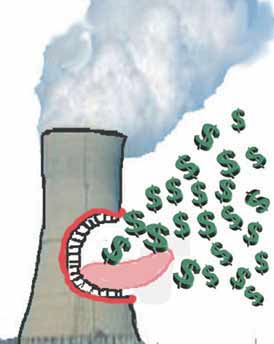 Once-secret records reveal pattern of costly mistakes at troubled nuclear project, Since 2009, companies working to build twin nuclear reactors in Fairfield County have made nearly three dozen changes to the project that drove up costs by about $325 million, according to recently released records and a state agency tracking the work’s progress.
The amount is a fraction of the escalating costs of the $14 billion V.C. Summer expansion project, but documents released May 24 by state utility regulators provide insight into why some of the costs have risen at a time of increasing concern by ratepayers.
The $325 million worth of changes represents the costs of additional work that was not expected when Westinghouse Electric and South Carolina Electric & Gas Co. launched the project about eight years ago. Some of the changes were to improve training for those who would operate the new reactors, while others were for better equipment and construction upgrades, the documents show.
SCE&G customers already have paid at least $1.4 billion for the reactor project. About 18 percent of a customer’s current bill goes toward the plant’s construction. Customers have been hit with nine rate hikes to finance the work, and critics predict efforts to raise rates further if the project continues…….http://www.thestate.com/news/local/article154261279.html
Legacy of Shoreham nuclear power plant (in pictures)
 Generating controversy: The Shoreham nuclear power plant, http://www.newsday.com/long-island/history/generating-controversy-the-shoreham-nuclear-power-plant-1.13702920 [large set of excellent photos] June 2, 2017 The nuclear power plant built in Shoreham was initially sold as a solution for a power-hungry Island, a safe and economical source of electricity that would light 500,000 homes and last for several decades. The LILCO project instead generated intense controversy.
An estimated 15,000 people rallied in a driving rainstorm outside Shoreham’s gates on June 3, 1979, in what was then believed to be the biggest demonstration of any kind in Long Island history. Before the protest was over, 571 people were peacefully arrested. In the years after the protest, questions about the plant’s safety and its ballooning costs led to a state takeover of the Long Island Lighting Co. and the decommissioning of the plant. LIPA, which owns the property and operates a substation and other power facilities there, continues to express interest in redeveloping the site. But despite occasional calls to convert it for other uses, the property’s future remains uncertain.
The plant’s legacy included $6 billion in debt related to its closure and LIPA taking over LILCO, with $1 billion left to be paid, and vivid memories of a demonstration that captivated the Island on June 3, 1979.
After years of controversy, the Shoreham nuclear power plant was ordered closed on May 25, 1988. It was fully decommissioned in 1994.
1 This Month





PLEASE OPPOSE HR 8255 AND S.3639 – bills would accelerate satellite deployment, with no environmental review or safeguards – https://ncstd5li.quorum.us/campaign/169331/
To see nuclear-related stories in greater depth and intensity – go to https://nuclearinformation.wordpress.com
-
Archives
- October 2026 (81)
- September 2026 (339)
- August 2026 (330)
- July 2026 (355)
- June 2026 (287)
- May 2026 (306)
- April 2026 (356)
- March 2026 (251)
- February 2026 (267)
- January 2026 (308)
- December 2025 (358)
- November 2025 (359)
-
Categories
- 1
- 1 NUCLEAR ISSUES
- business and costs
- climate change
- culture and arts
- ENERGY
- environment
- health
- history
- indigenous issues
- Legal
- marketing of nuclear
- media
- opposition to nuclear
- PERSONAL STORIES
- politics
- politics international
- Religion and ethics
- safety
- secrets,lies and civil liberties
- spinbuster
- technology
- Uranium
- wastes
- weapons and war
- Women
- 2 WORLD
- ACTION
- AFRICA
- Atrocities
- AUSTRALIA
- Christina's notes
- Christina's themes
- culture and arts
- Events
- Fuk 2022
- Fuk 2023
- Fukushima 2017
- Fukushima 2018
- fukushima 2019
- Fukushima 2020
- Fukushima 2021
- general
- global warming
- Humour (God we need it)
- Nuclear
- RARE EARTHS
- Reference
- resources – print
- Resources -audiovicual
- Weekly Newsletter
- World
- World Nuclear
- YouTube
-
RSS
Entries RSS
Comments RSS

