Catastrophic climate change all but unavoidable; now what?, UW study finds little chance of keeping temperature rise within 2 degrees Celsius, Seattle PI, By Stephen Cohen, August 3, 2017
Seattle is suffering through its worst heat wave of the year, but according to a recent University of Washington study, increasingly hotter temperatures — and their deadly outcomes — are all but unavoidable.
That doesn’t mean we shouldn’t take steps to try and slow down the rising thermometer.
The UW study, co-authored by statistics and sociology professor Adrian Raftery and associate professor of atmospheric sciences Dargan Frierson, concluded there is a 90 percent chance the Earth’s average temperature will rise by more than 2 degrees Celsius (about 3.6 degrees Fahrenheit) by 2100.
Limiting a rise to less than 2 degrees was one of the goals of the 2015 Paris climate agreement due to the potentially catastrophic effects of such an increase, including heat waves, extreme storms, flooding, sea level rise, etc. But the study, published on July 31 in the journal “Nature Climate Change,” found there is a less than 5 percent chance that the goal will be met, and only a 1 percent chance the increase will be limited to 1.5 degrees.
“If we’re to keep anywhere close to the 2-degree limit, we basically need to pull out all the stops on all registers over the next 80 years,” Raftery told SeattlePI. “I don’t see any alternative.”
The study used 50 years of data on three input factors — world population, gross domestic product per person and carbon intensity — to determine a range of possible outcomes. Only one of the three (carbon intensity, or the amount of carbon needed for a constant amount of economic production) is realistically subject to policy or societal influence. Carbon intensity has been decreasing at a fairly steady rate for years, and by 2100 it may have gone down by about 90 percent, but the incremental improvement doesn’t seem to be enough.
“If we’d gotten started seriously earlier — say, back when climate change was first identified as a major issue in the 1980s — then I think we could be a bit further along than we are now,” Raftery said.
You don’t have to look too far into Washington’s past to see what even a small rise in temperature might do to the state. The winter of 2014-15 featured above-average temperatures, which led to a “temperature-driven drought,” according to Jeff Marti of the Washington Department of Ecology.
The state got a normal amount of precipitation, but warmer temperatures turned what would have been mountain snowpack into rain, which washed down rivers and out into Puget Sound instead of remaining in the mountains. When temperatures rose in the spring and summer, there was little snowpack to melt into rivers and increase the volume of water while simultaneously lowering temperatures……
One reaction would be to say, ‘Too bad, we’re going to miss the 2-degree target,’ so we kind of throw up our hands and say there’s nothing we can do,” Raftery said. “But I think that’s exactly the wrong message to take away from the study. The more warming it is, the worse the consequences, and that makes it even more urgent to to take urgent action to at least limit temperature increase to be as close to 2 degrees as possible.”
At a security conference late last month, the commander of the U.S. Pacific Fleet was asked what he would do if President Trump ordered him “to make a nuclear attack on China.” The commander, Adm. Scott Swift, answered promptly that he would, framing the issue as one of democratic governance and civilian control of the military.
Every member of the U.S. military has sworn an oath … to obey the officers and the president of the United States as the commander in chief appointed over us,” he said.
But is that quite right? Isn’t there such a thing as an illegal order? And if so, what kind of right or, more accurately, what kind of duty exists to disobey it?
Second point first: As a matter of fact, it is illegal to obey an obviously illegal order. Indeed, the law clearly rejects the “superior orders” defense. Colloquially put, the defense goes something like this: “I cannot be liable for carrying out an illegal act because I was simply following orders.” At least since the Nazis were prosecuted for war crimes and crimes against humanity at Nuremberg, this defense has largely disintegrated.
If — continuing the Nazi parallel — the “commander in chief appointed over us” tells military officials to commit genocide, they can’t legally go along with it. Legally, they must say no.
But how can, say, the commander of the U.S. Pacific fleet know if an order is so obviously illegal that he’d be held liable?
Under international and U.S. law, the order must be “manifestly” or “clearly” illegal, not just of debatable or arguable legality. What this means is that the person ordered to launch or to plan the launch knows or should know that the order is illegal. The Department of Defense manual cites as an example firing on the shipwrecked. An order to shoot an innocent civilian in the head also would qualify.
The kind of weapon used is, of course, germane as well. The law of war — otherwise known as humanitarian law — is designed to protect civilian life and reduce suffering even though, inevitably, in armed conflict there will be some amount of civilian death and suffering.
At least five unique characteristics ominously separate nuclear weapons from conventional weapons in ways that promise to increase civilian death and suffering. First, quantitatively, the blast power, heat and energy generated far outstrip that of conventional weapons. Second, the radiation released is so powerful that it damages DNA and causes death and severe health defects throughout the entire lives of survivors as well as their children exposed in utero. Third, nuclear weapons make impossible humanitarian assistance to survivors at the blast scene struggling to survive, leading to more suffering and death. Fourth, damage to the environment leads to widespread famine and starvation. And fifth, nuclear weapons cause long-lasting multi-generational psychological injury to survivors of the blast.
All of these factors weigh heavily against the humanitarian goals of the law of war, which again is designed chiefly to prevent and reduce civilian death and suffering.
So anyone ordered to plan or launch a nuclear strike is on notice: An order to use a nuclear weapon instead of a conventional weapon when the same military advantage can be gained by either gives rise to a duty to reject that order. To do otherwise and follow the order would constitute a war crime for which the actor could be held liable.
Anthony J. Colangelo is a Gerald J. Ford Research Fellow and professor of law at Southern Methodist University in Dallas, and consultant for the Nautilus Institute for Security and Sustainability.
How to manage the implosion of nuclear power, Washington Examiner , 4 Aug 17
“…..Today, the very future of nuclear power is in question. The electricity market is flashing warning signs that bad times are ahead for the nuclear industry and the U.S. fleet of 100 nuclear power plants.
Westinghouse is bankrupt. Only two new nuclear plants are being built in the U.S., and both are plagued with huge cost overruns. The nuclear industry has been rocked by plant closings and battered by an abundance of cheap natural gas, which has made it difficult for nuclear plants to compete. Since 2014, electricity companies have either closed or announced plans to shut down 14 existing U.S. nuclear plants, and odds are high that at least a dozen more nuclear plants will be shuttered. Among those in jeopardy are all four nuclear plants in New Jersey – PSE&G’s Salem 1 and 2 plants and the Hope Creek plant and Exelon’s Oyster Creek plant.
At a bare minimum, the policy choices ahead are difficult. And for PSE&G, the question is whether New Jersey needs the large amounts of baseload power that nuclear plants provide. Could New Jersey run on natural gas and renewable energy alone?
This may seem like an absurd question, given that nuclear power supplies 44 percent of the state’s electricity. The answer is that low-cost natural gas – which accounts for 46 percent of New Jersey’s electricity – will grow in importance, along with renewables and improvements in energy efficiency. Incredible as it might seem, nuclear power is just no longer needed to maintain grid reliability.
According to a study by the Brattle Group, the term “baseload generation,” which has been synonymous with nuclear power and coal for decades, is no longer useful for the purposes of planning and operating today’s electricity system. Instead, more flexible resources like natural gas and renewables are increasingly needed to cost effectively assist with meeting changing system loads, responding to local requirements and integrating the variable output of solar and wind power.
Despite changing market conditions, some states have approved generous subsidies to keep their financially-stressed nuclear plants afloat. Illinois and New York state have approved a zero-emission nuclear resource program that puts a price on nuclear power’s attributes in meeting carbon reduction goals — though both efforts are being challenged legally by other electricity producers, who say the nuclear credits intrude into federal wholesale markets.
What is indisputable is that the Illinois and New York state measures are in fact subsidies requiring electricity users to pay an additional $700 million annually in higher rates. Several other states – Ohio, Pennsylvania, and Connecticut – are considering similar measures. But nuclear power’s future is being questioned and challenged as never before………
Absent the need for baseload power, New Jersey’s PSE&G should prepare for what had once been unthinkable: the early retirement of the Salem and Hope Creek nuclear plants. Exelon’s Oyster Creek plant, the nation’s oldest operating nuclear plant, is scheduled to be closed by the end of 2019…..
Vermont Law School’s Cooper on demise of VC Summer: Nuclear power is uneconomic, http://www.vermontbiz.com/news/2017/august/04/vermont-law-schools-cooper-demise-vc-summer-nuclear-power-uneconomic, Vermont Business Magazine 4 Aug 17, The abandonment this week of the VC Summer nuclear project in South Carolina heralds the likely demise of “new” nuclear in the United States (including the Vogtle project in Georgia and North Anna 3 in Virginia) and also should put an end to state or federal bailouts for the failing nuclear industry, according to four experts who held a media briefing Thursday, sponsored by NIRS, the Nuclear Information and Resource Service.
Nuclear economist Dr Mark Cooper, senior fellow for economic analysis, Institute for Energy and the Environment at Vermont Law School, said the V.C. Summer shutdown should lead to a similar step at the Vogtle project in Georgia and to a renewed focus on renewable energy.
Cooper said: “The message for Vogtle is simple, nuclear power is uneconomic. It will take massive federal, state and vendor subsidies to be completed and the cost of power will still be two to three times the cost of power from alternatives. The capital cost of renewables is between one-eighth and one quarter the cost of VC Summer. Even adjusted for load factors, nuclear power is two to three times more costly then the alternatives.”
Peter Bradford, former Nuclear Regulatory Commission (NRC) Commissioner, past chair of the New York and Maine state utility regulatory commissions, said that “new” reactor construction financed in advance from ratepayers in states like Virginia (home to Dominion’s proposed North Anna 3 reactor) are V.C. Summer-like debacles waiting to happen.
Bradford said: “The primary lessons for Georgia, Virginia, and other states, from the South Carolinacancellations (as well as Levy County in Florida and Kemper in Mississippi) is that laws and regulatory decisions placing economic risks on customers instead of the investors and lenders who should properly bear them are a disastrous mistake. Freed of responsibility for the consequences of their mistakes, utility executives too often plunge into ill-advised schemes to pad their rate bases (and individual compensation) when they should be managing competitive processes designed to select the most cost-effective alternative.”
After a surge of state bailouts for nuclear in 2016 in New York and Illinois, the industry has failed in 2017 in Ohio, Connecticut, Pennsylvania and New Jersey. The push in Ohio faltered in the face of extensive public criticism and was relegated in Connecticut to a study report by the state’s governor. In Pennsylvania and New Jersey, bailout backers were unable to even get promised legislation introduced.
A federal bailout for the nuclear industry would come at staggering cost. If based on the New Yorkmodel, the cost to consumers would be $150 billion to $275 billion, depending on whether the subsidies applied to all reactors, or just those that are determined to be unprofitable. (The latter may seem like a common-sense outcome, but Exelon crafted bailout legislation in Illinois that allows it to be paid even if energy prices rise.) If a federal bailout were based on a new and expanded nuclear production tax credit, as a Department of Energy advisory committee recommended last year (at $27/MWh), the cost to taxpayers would be nearly a quarter of a trillion dollars: $228 billion, according to calculations by the Nuclear Information and Resource Service (NIRS).
NIRS Executive Director Tim Judson said: “Nuclear power is failing despite the fact that it is already heavily subsidized. Canceling the Summer reactors proves that the industry has no future, but it only tells half the story. Nuclear generators are pushing for billions of dollars in subsidies and bailouts for their aging reactors, and those efforts are mostly failing, as well. Hoped-for momentum from 2016 bailouts in New York and Illinois did not materialize, as state legislatures rejected nuclear subsidy bills this year. With renewable energy now surpassing nuclear by widening margins, it’s clear that subsidizing nuclear is an expensive way to slow down the growth of clean, safe, affordable, job-creating energy sources.”
Even if there is no new federal bailout for nuclear, taxpayers could still end up on the hook for billions of dollars if the Vogtle project goes belly up. Ryan Alexander, president, Taxpayers for Common Sense, a nonprofit and nonpartisan taxpayer advocacy group, said: “The VC Summer project relied on the same problematic reactor designs and contractor, the recently bankrupt Westinghouse Corporation, as Southern Company’s Plant Vogtle. Westinghouse’s AP1000 design was being used in both VC Summer and Vogtle. Both projects have experienced multiple delays and significant cost overruns. Westinghouse’s recent bankruptcy pushed both projects further into turmoil. Unlike VC Summer, Vogtle managed to win themselves more than $8 billion in taxpayer-backed loan guarantees. So while federal taxpayers should and must watch any efforts to contribute to the bailout of the state of South Carolina and the players involved in the VC Summers project, billions in tax dollars are already at risk with the Vogtle project. It seems clearer than ever that the writing is on the wall for taxpayers. We’ve said it for 8 years: These massive nuclear reactor projects were doomed from the start, and taxpayer money should not be risked on them.”
Where does the industry go from here? The V.C. Summer project collapse means that any remaining illusions about a resurgence of nuclear power in the United States is now dead.
As Bradford explained: “In fact, there never was an actual ‘nuclear renaissance’, just the 31 paper applications on file at the Nuclear Regulatory Commission by early 2009. Now nearly all but two are cancelled, leaving a trail of economic waste in their wake. The intent of the renaissance dream was to show that new reactor designs and an expedited licensing process from which the public was largely excluded would produce reactors that could be completed ‘on time and on budget’ as well as at competitive costs. The expectation was that private financing, without subsidy from customers and taxpayers, would then become available to nuclear power. That dream is now in ruins. The Westinghouse bankruptcy and subsequent events in South Carolina make the lessons so clear that even the most ardent nuclear propagandists probably can no longer shout them down.”
The Environmental Protection Agency is pouring nearly $40 million into the rehabilitation of a former Ridgewood factory that once produced radioactive materials for the Manhattan Project.
More than three years after the EPA first declared the plot of land on the Ridgewood-Bushwick border between 1125 and 1139 Irving Ave. a federal Superfund site, the agency announced last Friday it plans to spend $39.4 million on extensive, long-term remediation efforts there.
“Today’s comprehensive cleanup proposal addresses potential long-term risks through a combination of response actions,” the EPA’s announcement reads, “including permanent relocation of commercial businesses, demolishing contaminated buildings, excavating contaminated soil and cleaning or replacing contaminated sewers.”
To further discuss the plan, the EPA will hold a public meeting at 7 p.m. on Wednesday, Aug. 16 at the Audrey Johnson Day Care Center, located at 272 Moffat St., just one block south of the site in question.
The Wolff-Alport Chemical Co. occupied the plot of land in question from 1920 until 1954 and processed imported monazite sand among other chemicals.
Monazite contains up to 8 percent thorium, a radioactive element that the company sold to the federal government for use in the Manhattan Project, the top-secret program aimed at developing the atomic bombs that were eventually dropped on Japan during World War II.
During and after Wolff-Alport’s aiding of the Manhattan Project, the company regularly dumped thorium waste into the sewer system and on its property until 1947, when the Atomic Energy Commission ordered it to stop.
Wolff-Alport continued to sell thorium products to the government until 1954.
The EPA began investigating the level of contamination at the site in 2012, with the agency discovering radon gas leaks at two locations in and around it — in addition to higher than normal contamination levels below public sidewalks and in the sewer system.
About $2 million in short-term remediation efforts to curb the leaking of the harmful gas was spent at the time.
To further rectify the situation, the EPA plans to permanently relocate five businesses -— including a deli, a pair of auto body shops, a construction company and a warehouse — before tearing down the former factory buildings they reside in.
The EPA said it will “support and assist” the relocation of those entities.
Once that is complete, the agency will then excavate about 24,000 cubic yards of contaminated soil and dispose of it off-site, eliminating the potential threat of long-term health impacts posed by the radiation.
That solution is something Community Board 5 Chairman Vincent Arcuri Jr. advocated for years ago. Citing Wolff-Alport’s role in the secretive Manhattan Project, he told the Chronicle in 2014 there may have been operations at the former factory that weren’t ever made public — resulting in more contamination than believed.
“The real approach is to demolish and excavate the entire site,” Arcuri said, “in order to see what the extent of the contamination is.”
Also in 2014, the EPA released a 39-page report about the hazards at the Ridgewood site. While it was strongly worded at times, the report said radiation levels of 1,133 picocuries per gram were observed during one on-site visit.
That amount equates to about one-millionth of a millicure. In comparison, a heart scan produces about 30 millicuries of radiation.
Despite the seemingly low levels of hazardous materials, the EPA plugged a hole in an unoccupied storage area of nearby IS 384, from which radon gas was seeping, in addition to placing lead and steel shields underneath area sidewalks and building floors.
The agency said last Friday that those actions have sufficiently brought down the levels of radiation, while EPA spokesman Elias Rodriguez said the school will not be subjected to any further remediation efforts.
“Our sampling and assessment shows that IS 384 is not being impacted by the contamination at Wolff-Alport,” Rodriguez said in a Monday email.
In addition to the Aug. 16 meeting, the EPA is accepting public comments on the proposal through Aug. 28.
They can be emailed to EPA Remedial Project Manager Thomas Mongelli at mongelli.thomas@epa.gov.
That was the headline on a piece last week from the Washington Post, whose reporters continued the herculean task of debunking wave after wave of President Donald Trump’s lies. (It turned out there was a 30th Trump falsehood in that time frame, regarding the head of the Boy Scouts.) The New York Timeskeeps a running tally of the president’s lies since Inauguration Day, and PolitiFact has scrutinized and rated 69 percent of Trump’s statements as mostly false, false, or “pants on fire.”
Trump’s chronic duplicity may be pathological, as some experts have suggested. But what else might be going on here? In fact, the 45th president’s stream of lies echoes a contemporary form of Russian propaganda known as the “Firehose of Falsehood.”
In 2016, the nonpartisan research organization RAND released a study of messaging techniques seen in Kremlin-controlled media. The researchers described two key features: “high numbers of channels and messages” and “a shameless willingness to disseminate partial truths or outright fictions.”
The result of those tactics? “New Russian propaganda entertains, confuses and overwhelms the audience.”
Indeed, Trump’s style as a mendacious media phenomenon resonates strongly with RAND’s findings from the study, which also explains the efficacy of the Russian propaganda tactics. Here are the key examples:
RAND: “Russian propaganda is produced in incredibly large volumes and is broadcast or otherwise distributed via a large number of channels.”
Trump is known for his high-volume use of Twitter, tweeting about 500 times in his first 100 days in office, using both his personal account and the official @POTUS account. His tweets often become the subject of news stories and sometimes provoke entire news cycles’ worth of coverage across the mainstream media……..
Trump is also a prolific liar on stage: Of the 29 false statements the Washington Posttracked last week, five came in a speech to Boy Scouts, two came from a news conference, and a whopping 15 came from a rally in Youngstown, Ohio. (Seven others came from, where else, his personal Twitter feed.)
The deluge matters, notes RAND: “The experimental psychology literature suggests that, all other things being equal, messages received in greater volume and from more sources will be more persuasive.”
RAND: “Russian propaganda is rapid, continuous, and repetitive”
Trump often repeats misleading statements in rapid, successive tweets……..
Why the technique works: RAND explains that “repetition leads to familiarity, and familiarity leads to acceptance.”
RAND: “Russian propaganda makes no commitment to objective reality”
Phony news stories are a staple of Vladimir Putin’s Russia—and as Mother Jones has detailed, Trump and his team have been caught repeating several that originated in Russian news outlets.
RAND: “Don’t expect to counter the firehose of falsehood with the squirt gun of truth.”
The Washington Post has called Trump “the most fact-checked politician.” Yet, the RAND research found that pointing out specific falsehoods was an ineffective tool against the propaganda techniques they studied in Russia because “people will have trouble recalling which information they have received is the disinformation and which is the truth.” …..http://www.motherjones.com/politics/2017/08/trump-nonstop-lies/
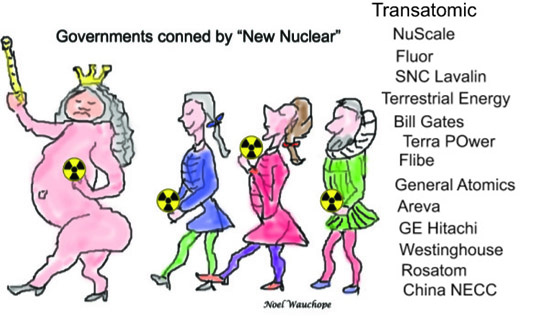
Argonne Lab will verify Transatomic Power molten fuel salt, Next Big Future brian wang|August 4, 2017Transatomic Power Corporation has been awarded a second voucher to complete work with the Argonne National Laboratory, the U.S. Department of Energy (DOE) announced last month.…….The voucher, awarded through the DOE’s Gateway for Accelerated Innovation in Nuclear (GAIN) initiative, will experimentally verify the physical properties of the fuel salt for Transatomic’s molten salt reactor technology, and will be conducted at the Argonne National Laboratory.
This is the second year that GAIN has awarded vouchers to support advanced nuclear technology, and builds on successful outcomes from the program’s inaugural round. Last year, Transatomic was awarded a voucher for work at the Oak Ridge National Laboratory, performing cutting-edge modelling and simulation analysis. This project has produced extensive positive results, published by ORNL in a Technical Memorandum in January 2017, and points to the value of public-private partnerships in nuclear technology development. “A primary measure of success for GAIN is the forging of productive relationships between the DOE laboratories and advanced technology developers like Transatomic,” said Idaho National Laboratory’s Dr. John Jackson, GAIN Technical Interface……https://www.nextbigfuture.com/2017/08/argonne-lab-will-verify-transatomic-power-molten-fuel-salt.html
Vt. Yankee: More faked test results,Rutland Herald| August 04, 2017, By SUSAN SMALLHEER STAFF WRITER VERNON — Entergy Nuclear has uncovered an additional problem area in which a former radiation technician failed to conduct safety tests and then falsified documents about it.
In a report filed last week with the Nuclear Regulatory Commission, Entergy said it would not fight an earlier safety violation uncovered by an NRC investigator last year at the Vermont Yankee nuclear power plant in Vernon.
That finding alleged the same radiation technician failed to test equipment which monitors workers’ radiation exposure.
The technician first lost his access to Vermont Yankee, and then was fired, Entergy said in its formal response to the NRC.
Entergy said it conducted its own investigation into the radiation technician’s work to make sure there weren’t other problem areas, and discovered another area where the person claimed to have conducted tests but didn’t.
NRC spokesman Neil Sheehan said Thursday the new information means the NRC will conduct its own investigation in the second instance of falsified inspection reports. “We’re going to do a follow-up inspection,” he said.
The second problem area was a required survey of a chemistry lab drain line. Entergy said it uncovered evidence the drain was not tested on Sept. 27, 2016, and Oct. 30, 2016, as claimed in a document signed by the technician. Entergy Nuclear has uncovered an additional problem area in which a former radiation technician failed to conduct safety tests and then falsified documents about it.
In a report filed last week with the Nuclear Regulatory Commission, Entergy said it would not fight an earlier safety violation uncovered by an NRC investigator last year at the Vermont Yankee nuclear power plant in Vernon.
That finding alleged the same radiation technician failed to test equipment which monitors workers’ radiation exposure.
The technician first lost his access to Vermont Yankee, and then was fired, Entergy said in its formal response to the NRC.
Entergy said it conducted its own investigation into the radiation technician’s work to make sure there weren’t other problem areas, and discovered another area where the person claimed to have conducted tests but didn’t.
NRC spokesman Neil Sheehan said Thursday the new information means the NRC will conduct its own investigation in the second instance of falsified inspection reports. “We’re going to do a follow-up inspection,” he said.
The second problem area was a required survey of a chemistry lab drain line. Entergy said it uncovered evidence the drain was not tested on Sept. 27, 2016, and Oct. 30, 2016, as claimed in a document signed by the technician.
Earlier this summer, the same technician was faulted by the NRC in a June 26 report for “a willful decision not to perform” required daily calibration checks of radiation safety equipment…….
Vermont Yankee shut down in December 2014 and is in the early stages of decommissioning. Entergy is transferring its spent nuclear fuel from a cold-water pool to an air-cooled steel and concrete cask storage facility.
In Sweltering South, Climate Change Is Now a Workplace Hazard Workers laboring outdoors in southern states are wrestling with the personal and political consequences of a worsening environment, NYT, By YAMICHE ALCINDORAUG. 3, 2017, GALVESTON, Tex. — Adolfo Guerra, a landscaper in this port city on the Gulf of Mexico, remembers panicking as his co-worker vomited and convulsed after hours of mowing lawns in stifling heat. Other workers rushed to cover him with ice, and the man recovered.
But for Mr. Guerra, 24, who spends nine hours a day six days a week doing yard work, the episode was a reminder of the dangers that exist for outdoor workers as the planet warms.
“I think about the climate every day,” Mr. Guerra said, “because every day we work, and every day it feels like it’s getting hotter.”……
to Robert D. Bullard, a professor at Texas Southern University who some call the “father of environmental justice,” the industrial revival that Mr. Trump has promised could come with some serious downsides for an already warming planet. Professor Bullard is trying to bring that message to working-class Americans like Mr. Guerra, and to environmental organizations that have, in his mind, been more focused on struggling animals than poor humans, who have been disproportionately harmed by increasing temperatures, worsening storms and rising sea levels.
“For too long, a lot of the climate change and global warming arguments have been looking at melting ice and polar bears and not at the human suffering side of it,” Professor Bullard said. “They are still pushing out the polar bear as the icon for climate change. The icon should be a kid who is suffering from the negative impacts of climate change and increased air pollution, or a family where rising water is endangering their lives.”
The “environmental justice movement” has, in fact, caught on with major environmental groups, but it has far to go before it begins moving the dial in the nation’s politics. Professor Bullard envisions the recruits for his movement coming not only from the liberal college towns of the Northeast and Midwest, but also from the sweltering working-class communities in the Sun Belt, which he sees as the front line of the nation’s environmental wars.
Residents of working-class communities in the Sun Belt often cannot afford to move or evacuate during weather disasters. They may work outside, and they may struggle to cover their air-conditioning bills. Pollution in their communities leads to health problems that are compounded by the refusal of most Sun Belt state governments to expand Medicaid access under the Affordable Care Act…….. https://www.nytimes.com/2017/08/03/us/politics/climate-change-trump-working-poor-activists.html
IF SCE&G AND Santee Cooper were free-market businesses, they’d probably be out of business in the wake of South Carolina’s nuclear meltdown. Or they’d have new management. Or they would have abandoned their nuclear reactors years ago — if they had ever started building them.
If SCE&G were even just a regular regulated monopoly — one that didn’t have the Legislature’s blessing to charge ratepayers $1.4 billion, and keep charging us even more, for electricity we will never receive — it probably would have walked away from the project much sooner. Or, like every other regulated monopoly in the nation without such legislative protection, never started it.
But state law reduced SCE&G’s risk and made it financially and psychologically easier for the company to pursue a high-risk plan to build the nation’s first new nuclear reactors in decades. And state law allowed Santee Cooper to join the venture without even the modicum of oversight that SCE&G had.
Santee Cooper is not regulated by the Public Service Commission, and its management answers to a politically appointed board whose members cannot be removed unless they break the law. Both conditions need to change. The governor should be able to remove his appointees for any or no reason, and the utility should be subject to the same regulation as privately owned utilities. And serious questions need to be asked about whether President Lonnie Carter deserves to be the highest-paid person in state government — or even remain employed.
What to do about the laws that govern SCE&G is less clear — and figuring that out needs to be the focus of legislators when they begin hearings later this month on how a $14 billion nuclear-construction project fell apart after both companies’ ratepayers sank more than $2 billion into it.
Was the whole concept of that law flawed? Are we guaranteeing irresponsible decision-making when we allow a regulated monopoly to charge customers up front for nuclear and coal-fired production facilities, and keep charging them even after the project is abandoned? Or would that mechanism, which is intended to reduce interest costs, make sense if the utility had to put more of its investors’ money at risk?
What about the Public Service Commission? Did commissioners have enough room to turn down any of the nine rate increases they approved for SCE&G? The law allows them to reject increases if there has been “a material and adverse deviation from the approved schedules, estimates, and projections” — which certainly happened here — but only if the utility was “imprudent” in failing to anticipate or avoid the changes.
If the commission didn’t have enough authority to reject rate increases, that needs changing. If there was enough authority but commissioners failed to use it, then perhaps it’s the commissioners who need changing.
Or did legislators — who elect commissioners to the well-paid political posts — make it too clear that they were not to reject rate increases? If so, we need to change how commissioners are selected. (Yes, legislators would need to change as well, but that’s up to voters.)
The Office of Regulatory Staff is supposed to conduct “on-going monitoring” of nuclear construction projects and “review and audit” rate requests, hiring outside experts as needed. Did it have the authority it needed to protect the public? If not, that needs changing. (The law that created that office, by the way, requires it to protect the “public interest,” which includes “preservation of the financial integrity of the state’s public utilities and continued investment in and maintenance of utility facilities.”)
If the office has sufficient authority, did it do its job but get overruled by the PSC? If not, then perhaps that staff needs changing, and perhaps the way it’s selected. The executive director is nominated by a legislative committee and technically appointed by the governor, sort of like magistrates.
What happens when SCE&G builds the new capacity that nuclear reactors will not provide? If it builds a natural gas plant, it won’t be allowed to charge ratepayers for construction unless or until the plant produces electricity. But should SCE&G ever be allowed to charge us for a facility that replaces an abandoned facility we’ve already paid $1.4 billion toward?
And what about the whole idea of monopolies? I doubt we’ve reached the point where small carbon-based or alternative-energy plants can provide everyone in the state access to electricity, which we’d need before we could switch to a free-market system. But a lot of people believe that time is coming. If lawmakers are going to spend a lot of mental energy on our state’s energy future, they ought to start thinking about how we get to that place, and what we do once we’re there.
Finally, a question legislators will avoid if we let them: Should a monopoly be allowed to make campaign donations to the legislators who have the power not only to revoke its monopoly status but also to shield it even more from the consequences of its decisions? And if so, how on earth do you justify that?
Ms. Scoppe writes editorials and columns for The State. Reach her at cscoppe@thestate.com or (803) 771-8571 or follow her on Twitter or like her on Facebook @CindiScoppe.
Legislators call for refunds from nuke projecthttp://counton2.com/2017/08/03/legislators-call-for-refunds-from-nuke-project/ By Associated Press, August 3, 2017, COLUMBIA, S.C. — South Carolina legislators want to bar SCE&G from continuing to collect money for a now-scuttled multibillion-dollar nuclear power project customers have been paying for since 2009.
A bipartisan group of legislators announced Wednesday the creation of an Energy Caucus that will work to overhaul how utility requests are reviewed.
South Carolina Electric & Gas and state-owned Santee Cooper decided Monday to abandon construction of two nuclear reactors. A project accounts for 18 percent of SCE&G’s residential electric bills. Utility executives said Tuesday none will get refunded. They are seeking permission from state regulators to recoup an additional $5 billion over 60 years.
Legislators created the system allowing that to happen in 2007.
But Energy Caucus members say the utility’s request should be rejected, and customers should be refunded.
South Carolina Electric and Gas Co. and partner Santee Cooper abandoned work on two new nuclear reactors this week, not because of public protests, but because the only way to pay for them was to overcharge customers or bankrupt both companies.
The decision comes after the main contractor, Westinghouse, has completed a third of the work at the V.C. Sumner Nuclear Station. Of course, the project has already bankrupted Westinghouse due to missed deadlines and costs spiraling out of control. Westinghouse parent Toshiba Corp. had to pay $2.7 billion to get out of it’s contract.
The project was supposed to cost only $5.1 billion, but to actually finish the work would have cost $11.4 billion. By abandoning work, the utilities said they will save about $7 billion in charges they would have had to pass on to customers.
That leaves only one new nuclear project under construction in Georgia, where Westinghouse has also gone over budget and missed deadlines. Georgia Power says it has taken over construction of the two new reactors at the Vogtle plant through Southern Nuclear.
Georgia power officials are reviewing the timeline and estimating the cost for completing the two new reactors, which if finished would be the first in the U.S. in 30 years. Costs, though, are not as important to Georgia Power because it sells power in a regulated market. Georgia Power started charging customers for the reactors as soon as construction began.
By comparison, Texas has a competitive market, where power plants only make money when they produce electricity. Customers here don’t finance new plants for mega-corporations the way they do in Georgia, and that saves Texans money.
Once Georgia Power completes it’s review of the Vogtle reactors, company leaders will likely have a hard time justifying the increased cost to regulators. Because even if the reactors were not over-budget already, the all-in cost of the power generated by that plant is far higher than alternative sources.
Natural gas and wind from Texas are far cheaper, and new natural gas pipelines and two proposed direct current transmission projects will easily deliver cheap power to South Carolina and Georgia well below the cost of the new reactors.
Even existing nuclear power plants have a hard time competing with cheap natural gas and renewable energy, which is why all of them are begging for subsidies or a carbon tax that will reward the plants for not producing carbon dioxide.
President Donald Trump has promised to boost nuclear power, but he has yet to roll out a plan. So far he has talked about doing away with the Clean Power Plan and has rejected a carbon tax, both of which are vital for nuclear power’s future.
What the nuclear industry really needs is new technology. Scientists are working on smaller reactors that are less dangerous, but none of them are ready for commercial deployment.
There could be a future for nuclear power in the United States, but only if the technology can compete on cost with renewable sources and natural gas. That is the real challenge for the nuclear power industry.
Nuclear energy leaders need to spend less time lobbying for government handouts for out-dated, expensive technology and focus on innovation. The coal industry thought they could win through manipulating politicians, and we all know how that ended up.
BY SAMMY FRETWELL, sfretwell@thestate.com, AUGUST 02,2017COLUMBIA, SC Even though SCE&G won’t finish a multi-billion dollar nuclear expansion project in Fairfield County, customers will continue paying about one-fifth of their monthly power bills for the work.
Rates that customers now are charged for the project already are in the company’s rate base and “will remain so moving forward,’’ SCE&G spokesman Eric Boomhower said in an email Wednesday night.
The company has hit customers with nine power bill increases to finance the project in less than a decade.
SCE&G abandoned the nuclear project this week, but under a 2007 state law, can continue charging customers for the work unless the state Public Service Commission says otherwise.
Collectively, SCE&G and partner Santee Cooper have spent about $9 billion for the reactor project. As an investor owned-utility, SCE&G will seek to recover its share of the amount it has already spent, which was about $5 billion.
Customers of SCE&G have paid about $1.4 billion as a result of company rate increases to fund the two new reactors at the V.C. Summer plant northwest of Columbia. They’re paying, on average, about 18 percent of their monthly power bills for the nuclear work.
Officials with the state Office of Regulatory Staff said they don’t expect the state Public Service Commission to change any rates this year for the SCE&G project in Jenkinsville…… http://www.thestate.com/news/state/article165119542.html
Tests show Hanford workers inhaled radioactive plutonium, Susannah Frame, KING 5 August 03, 2017On June 8 approximately 350 Hanford workers were ordered to “take cover” after alarms designed to detect elevated levels of airborne radioactive contamination went off. It was quickly determined that radioactive particles had been swept out of a containment zone at the plutonium finishing plant (PFP) demolition site. The work is considered the most hazardous demolition project on the entire nuclear reservation.
At the time Hanford officials called the safety measure “precautionary.” Officials from the U.S. Dept. of Energy, which owns Hanford, and the contractor in charge of the demolition, CH2M Hill, downplayed the seriousness of the event with statements including, it appeared “workers were not at risk”, “(the alarm went off) in an area where contamination is expected” and there was “no evidence radioactive particles had been inhaled” by anyone.
The KING 5 Investigators have discovered those statements are incorrect. An internal CH2M Hill email sent to their employees on July 21 was obtained by KING. It states that 301 (test kits) have been issued to employees and of the first 65 workers tested, a “small number of employees” showed positive results for “internal exposures” (by radioactive plutonium).
Sources tell KING the “small number of employees” is twelve. Twelve people out of 65 is 20 percent. Still outstanding are 236 tests. A communication specialist with CH2M Hill sent a statement that more positive results are expected. “We expect additional positive results because analytical tests like a bioassay can detect radiological contamination at levels far lower than what field monitoring can detect,” said Destry Henderson of CH2M Hill Plateau Remediation Company.
Several veteran Hanford workers were surprised by the number of people with internal contamination from a single event.
“I’ve worked there for 27 years and I’ve never seen this many people contaminated internally,” said one employee with radiation expertise who did not want to be identified………
Hanford workers said they are not concerned about the small dose of radiation detected, but about the contamination inside the body from plutonium. All radiation is not created equal.Radiation from an x-ray, air flight or a microwave are different and far less dangerous types than the kind emitted by plutonium inside the body. Unlike x-rays, air travel or microwaves, plutonium emits alpha radiation, which is the most destructive type to inhale or ingest.
“Alpha particles damage or destroy DNA and can cause cancer,” said Kaltofen.
“If I get a chest x-ray or CT scan, that’s a different type of radiation,” said Dr. Erica Liebelt, Medical and Executive Director of the Washington Poison Center. “These people’s risk could be quite low because that number was very very small. (But) you have concerns about (alpha) radiation disrupting the cells and causing genetic disruption in the cells and cellular damage. And that’s what causes the increased risk for cancers in three organs: lungs, liver, and bone,” said Liebelt, who is also a board certified toxicologist……http://www.king5.com/news/local/hanford/tests-show-hanford-workers-inhaled-radioactive-plutonium/461574180
California Aims to Make Electricity Production in the State 100 Percent Renewable by 2045 http://tribunist.com/news/california-aims-to-make-electricity-production-in-the-state-100-percent-renewable-by-2045/, By Tribunist Staff on August 1, 2017, Even though the White House decided to step out of the Paris Accords, many states are still working to increase their use of clean energy in an effort to fight climate change. While California has already invested in alternative energy sources like wind, solar, and hydro, a new set of bills looks to take it to the next level.
According to IFL Science, the current governor of California, Democrat Jerry Brown, has extended the cap-and-trade program for an additional 10 years. This puts an upper limit on carbon dioxide emissions by individual companies and provides a trade network for buying and selling the allowances. If a business lowers their emissions below their allotment, they can sell the excess to organizations that are struggling to meet the requirements.
Another bill working its way through the California legislature would require the state to produce 100 percent of its electricity needs from renewable sources by the year 2045.
Based on the current use of clean energy and upcoming projects, California is on track for producing about 50 percent of their electricity from alternative sources by 2026, a few years earlier than the original 2030 deadline.
If the bill is passed into law, California will be the second state dedicated to reaching the 100 percent mark for the generation of renewable electricity. The first state that made that commitment was Hawaii.
Both of the bills aim to reduce man-made climate change. Speaking about the issue, Brown said, “If we don’t do something about it, it is the end of the world as we know it.”
Brown and former California governor Arnold Schwarzenegger, who authored the original cap-and-trade legislation over 10 years ago, are recognized for the actions related to climate advocacy. Speaking about climate change, Schwarzenegger said, “We do not have to wait for Washington to take action.”
Since President Donald Trump stated the US was withdrawing from the Paris Accords, Brown has signed multiple climate change agreements with the international community, pledging California’s support of such initiatives. Brown has also set up a coalition of states known as the Climate Alliance that has chosen to dedicate themselves to fighting global warming.