Kim Jong-un knows what he wants from the summit. Does President Trump?
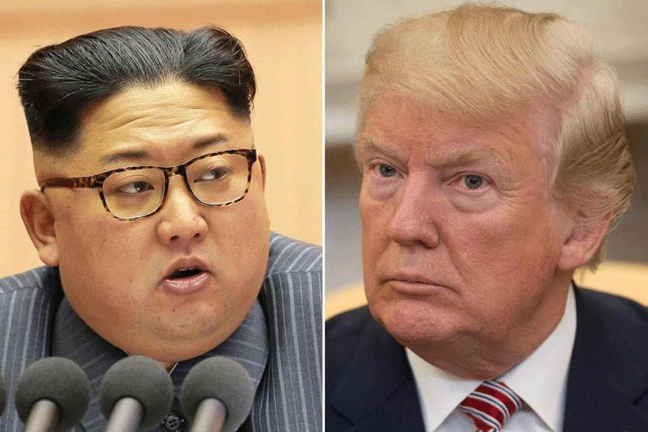 The Korean nuclear roller coaster: Has time run out for a summit? Brookings, Jonathan D. Pollack
Tuesday, May 29, 2018 The turbulence and drama on the Korean Peninsula over the past week defies imagination. On May 24, President Trump withdrew from his planned summit with North Korean leader Kim Jong-un, acting almost as impulsively as when he first agreed to the meeting in early March. Following a conciliatory response from Pyongyang’s senior nuclear negotiator Kim Kye-gwan, the president two days later sharply reversed course and said that the summit might still take place.
Not to be outdone, on May 26 Kim Jong-un abruptly convened a second meeting with South Korean President Moon Jae-in on the North Korean side of the truce village of Panmunjom. The next day, American and North Korean officials began to interact on the language of a possible communiqué. Separate consultations between the United States and North Korea in Singapore were expected to begin today, on May 29, with North Korea represented by Kim Jong-un’s de facto chief of staff, Kim Ch’ang-soon. Additional discussions have taken place between Chinese and North Korean officials in Beijing, perhaps connected to a possible stopover by Kim Jong-un while traveling to Singapore, which would be his third visit to China in less than two months. One of Kim Jong-un’s closest aides and a vice chairman of the Korean Workers Party Central Committee, General Kim Yong-chol, is now en route to New York, and is expected to serve as the lead point-of-contact with U.S. officials in deliberations over the Singapore meeting.
These heightened activities all suggest that the summit will indeed go forward, though there has been no formal announcement to this effect.
However, two facts remain incontestable. There is as yet no U.S.-North Korea agreement on the terms of a summit, and time is running out to reach such an understanding. An unspoken but unmistakable anxiety thus pervades these intensified political and diplomatic maneuvers. Only 10 days before President Trump’s presumed departure for Singapore, it is stunning how little remains agreed to, even in broad conceptual terms. Advocates of diplomacy argue that this is the purpose of face-to-face negotiations. But the contrasts in the language and expectations of the two leaderships remain glaring, even after two visits by Mike Pompeo to Pyongyang, first as CIA director and subsequently as secretary of state.
The fundamental issue is what the summit is supposed to be about. ……….
Kim Jong-un knows what he wants from the summit. Does President Trump? Is the president prepared to accept the risks of an inconclusive outcome or an outright failure in Singapore? What would U.S. policy options be in the event of such a failure? Time will tell. But for now, time is running out. https://www.brookings.edu/blog/order-from-chaos/2018/05/29/the-korean-nuclear-roller-coaster-has-time-run-out-for-a-summit/
Rocky Flats Wildlife Refuge – the cover-up – the cleanup – but radioactive trash is still there
 The 60-Year Downfall of Nuclear Power in the U.S. Has Left a Huge Mess The demand for atomic energy is in decline. But before the country can abandon its plants, there’s six decades of waste to deal with. The Atlantic , FRED PEARCE,
“……… Rocky Flats Wildlife Refuge is an oasis of prairie biodiversity covering 5,000 acres, home to prairie dogs, elk, monarch butterflies, and rare xeric grasses. It also serves as a buffer zone around the site of the largest completed nuclear cleanup to date in the United States. And David Lucas of the U.S. Fish and Wildlife Service is preparing to open it for public access in summer 2018. He’s reckoning on 150,000 visitors a year.During the Cold War, Rocky Flats was secretly machining plutonium manufactured at Hanford into some 70,000 spheres that formed the explosive heart of each weapon in Uncle Sam’s nuclear arsenal. Plutonium pollution was routine. The plant had nowhere to get rid of the day-to-day plutonium waste, which was often dumped in hastily dug landfills or sprayed onto grassland around the plant. At an outdoor compound known as pad 903, where more than 5,000 drums of waste liquids contaminated with plutonium are stored, there’s been substantial leakage. An internal memo reported that rabbits living on the site were heavily contaminated, especially in their hind feet.
A whistle-blower’s allegations about illegal late-night incineration of plutonium waste at the plant led to an FBI raid in 1989. After that—and with demand for plutonium spheres declining following the end of the Cold War—the government closed the site. A federal grand jury sat for three years to hear testimony from the FBI raid. But two days after the jury approved indictments, the Justice Department struck a deal with Rockwell Automation, the company that managed the plant. The company pleaded guilty to some minor charges, but the FBI evidence and grand jury conclusions were sealed forever.
Today, the land that housed the industrial complex remains behind a sturdy fence under the control of the Department of Energy (DOE). But the large grassland buffer zone that once protected the complex from prying eyes has been released into the care of the Fish and Wildlife Service for public access.
There are two concerns. First that, as I saw on a tour with Lucas, the fenced-off core area hardly looks self-contained. Earth slips have left ugly gashes up to 300 feet wide across a former landfill site that overlooks a creek running through the wildlife refuge. The DOE’s Scott Surovchak concedes that “slumping is very common” after heavy rain. Only constant repairs, it seems, will prevent the landfills and buried contaminated buildings and pipework from being exposed.
The second concern is the safety of the buffer zone itself. Harvey Nichols, a biologist from the University of Colorado, has found that when the plant was operating snow falling nearby was often “hot.” Falling snowflakes captured tiny plutonium particles that evaded the stack filter. Just two days of snowfall could deposit about 14 million particles on every acre of the site. “There must be tens of billions of particles in the soil today,” he told me.
The Environmental Protection Agency has dismissed such concerns. In 2006 it found plutonium levels in soil samples in the buffer zone were within acceptable limits and concluded that the lands comprising the refuge are “suitable for unlimited use and unrestricted exposure.” But Moore, the activist, is unimpressed. “Prairie dogs and other critters will burrow down for several feet and bring plutonium to the surface,” he says. “Children will be exposed to plutonium. And people will start taking plutonium out into their communities on boots and cycle wheels. Why would we allow that?”
Lucas is unmoved. “We need to get people out here on the refuge. Then the fears will evaporate,” he told me. But that is just what worries his opponents. Forgetting about the plutonium is the worst thing that could happen, they say……….This piece is adapted from Pearce’s new book, Fallout: Disasters, Lies, and the Legacy of the Nuclear Age.
Congress has the power to stop squandering the public purse on new nuclear weapons

Congress should shoot down new nuke plan [Editorial] https://www.houstonchronicle.com/opinion/editorials/article/Congress-should-shoot-down-new-nuke-plan-12945344.php
Do we really need to spend more taxpayer money making new types of nuclear bombs?
The United States already has 6,800 nuclear weapons, according to the latest figures from the Federation of Atomic Scientists. But frankly the published data on America’s atomic arsenal varies so wildly it seems nobody knows how to count all of our nukes. Suffice to say the United States already has enough atomic firepower to blow the world to kingdom come.
Nonetheless, the House Armed Services Committee recently authorized $65 million for development of a new type of nuclear weapon, a low-yield warhead that would be attached to a long-range submarine-launched ballistic missile. During this Memorial Day weekend, a time when we honor those who’ve lost their lives in service of our country, spending that money on veteran services makes a lot more sense than buying more bombs that will be detonated only in the unlikely event of an atomic cataclysm. This proposal is now wending its way around Capitol Hill, and Congress needs to shoot it out of the sky.
Pentagon officials reportedly used some cockamamie logic to justify the expenditure, arguing that if the Russians use tactical nukes on the battlefield, the United States needs the capability to respond with a limited nuclear strike instead of a full-scale attack involving hundreds of warheads. If our planes are rendered incapable of delivering any of the 200 low-yield weapons already in Europe, they reasoned, we need to be able to launch them toward Russia from submarines.
As Walter Pincus, a respected former national security reporter for the Washington Post, pointed out, the problem is that the Russians won’t know the missiles launched from those submarines are carrying low-yield nukes. They’ll probably assume they’re under attack from the more powerful nuclear weapons typically carried by submarines as part of a first-strike intended to destroy their capacity to launch a full-scale response against the United States.
Pentagon officials argued the new bombs would deter the Russians from using tactical nukes, because they’d know the United States could respond with similar low-yield weapons. But the idea that the superpowers can fire smaller nuclear bombs at each other without escalating the conflict to Armageddon stretches credulity.
Adding even more nuclear weapons to the nation’s atomic arsenal won’t enhance deterrence. The United States already spends more on defense than the next eight top defense spending nations combined. It’s noteworthy that Director of National Intelligence Dan Coats recently warned lawmakers the spiraling federal debt could jeopardize national security. Wasting money deploying more nuclear weapons would be a step in the wrong direction
The Fort St. Vrain spent nuclear fuel store – just another example of America’s stranded radioactive waste dumps

 , FRED PEARCE,
“…….. About 30 miles northeast of Rocky Flats, out on the prairie near the small town of Platteville, is the Fort St. Vrain spent-fuel store. It resembles nothing so much as an outsize grain store, but since the 1990s it has been holding 1,400 spent fuel rods, laced with plutonium and encased in blocks of graphite. The spent fuel was left behind when the neighboring nuclear power plant shut. The plan had been to send it to another temporary store at the Idaho National Laboratory, but the governor of Idaho banned the shipment. The Fort St. Vrain facility is designed to withstand earthquakes, tornado winds of up to 360 miles per hour, and flooding six feet deep. Also time. It will be several decades at least before the federal government finds the fuel a final resting place.
The country is littered with such caches of spent fuel stuck in limbo. According to the Government Accountability Office (GAO), 80,000 metric tons of spent fuel, the most dangerous of all nuclear wastes, is stored at 80 sites in 35 states. The sites include stores at past and present power plants such as Maine Yankee, and stand-alone federal sites such as Fort St. Vrain. As the GAO puts it: “After spending decades and billions of dollars … the future prospects for permanent disposal remain unclear.” Nobody wants to give the stuff a forever home.
Nuclear waste is conventionally categorized as high-, intermediate-, or low-level. Low-level waste includes everything from discarded protective clothing to plant equipment and lab waste. It can usually be treated like any other hazardous waste, which in practice usually means burial in drums in landfills or concrete-lined trenches.
Intermediate waste contains radioactive materials with isotopes that decay with half-lives long enough to require long-term incarceration. It includes many reactor components, as well as chemical sludges and liquids from processing radioactive materials, which can often be solidified in concrete blocks. Once solid, intermediate waste can be buried safely in shallow graves, though anything containing plutonium will have to be disposed of deep underground because of the very long half-life.
Much of America’s intermediate-level waste will end up at the country’s largest deep-burial site for such radioactive material. The U.S. military’s Waste Isolation Pilot Plant in salt beds near Carlsbad, New Mexico, could eventually take 6.2 million cubic feet of waste. But it has had problems that have slowed progress and raised questions about its viability.
A chemical explosion in 2014 sprayed the tunnels dug into the salt beds with a white, radioactive foam. When a ventilation filter failed, some of the plutonium reached the surface, where at least 17 surface workers were contaminated. The military shut the tunnels for three years to clean up. While WIPP is today back in business, full operations cannot resume until a new ventilation system is in place, probably in 2021. The eventual cost of the accident, including keeping the dump open longer to catch up with the waste backlog, has been put at $2 billion.
High-level waste is the nastiest stuff. It includes all spent fuel and a range of highly radioactive waste liquids produced when spent fuel is reprocessed, a chemical treatment that extracts the plutonium. Most of America’s high-level waste liquids—and around 30 percent of the world’s total—are in tanks at Hanford.
High-level waste is either very radioactive and will stay so for a long time, or it generates heat and so requires keeping cool. Usually both. It accounts for more than 95 percent of all the radioactivity in America’s nuclear waste, and needs to be kept out of harm’s way for thousands of years.
There is general agreement that the only way to keep high-level waste safe is by turning the liquids into solids and then burying it all deep underground, somewhere where neither water nor seismic activity is likely to bring the radioactivity to the surface, and where nobody is likely to stumble on it unexpectedly. There is disagreement, however, about whether this buried waste should be kept retrievable in case future technologies could make it safer sooner, or whether accessibility simply places a burden of guardianship on future generations.
Before it can be buried, most high-level waste needs to be stored for up to a century while it cools. Unfortunately, this has encouraged countries to put off making plans. None of the world’s high-level waste currently has any permanent resting place. The planet is instead peppered with interim stores. America is no better. Its 90,000 metric tons of high-level waste—set to rise to as much as 140,000 tonnes by the time the last power plant closes—is mostly sitting in ponds at dozens of power stations or lockups like Fort St. Vrain………..https://www.theatlantic.com/science/archive/2018/05/the-60-year-downfall-of-nuclear-power-in-the-us-has-left-a-huge-mess/560945/
President Trump’s Washington swamp – the nuclear lobby/politics revolving door
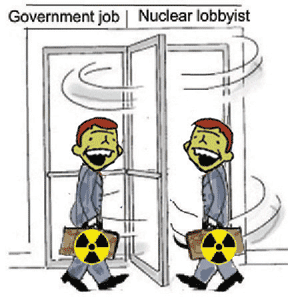 New swamp: Ex-Perry adviser lobbies for energy firm bailout AP, By MATTHEW DALY and RICHARD LARDNER, 29 May 18, WASHINGTON — At a West Virginia rally on tax cuts, President Donald Trump veered off on a subject that likely puzzled most of his audience.
“Nine of your people just came up to me outside. ’Could you talk about 202?’” he said. “We’ll be looking at that 202. You know what a 202 is? We’re trying.”
One person who undoubtedly knew what Trump was talking about last month was Jeff Miller, an energy lobbyist with whom the president had dined the night before. Miller had been hired by FirstEnergy Solutions, a bankrupt power company that relies on coal and nuclear energy to produce electricity. His assignment: push the Trump administration to use a so-called 202 order — named for a provision of the Federal Power Act — to secure a bailout worth billions of dollars.
Although Trump didn’t agree to the plan — he still hasn’t — for Miller, a president’s public declaration of interest amounted to a job well done.
How a single lobbyist helped carry a long-shot idea from obscurity to the presidential stage is a twisty journey through the new swamp of Trump’s Washington. Rather than clearing out the lobbyists and campaign donors that spend big money to sway politicians, Trump and his advisers paved the way for a new cast of powerbrokers who have quickly embraced familiar ways to wield influence.
Miller is among them. A well-connected GOP fundraiser, he has served as an adviser to California Gov. Arnold Schwarzenegger and Texas Gov. Rick Perry, also a close friend. He ran Perry’s unsuccessful presidential campaign in 2016. And when Trump tapped Perry to lead the Energy Department, Miller shepherded his friend through confirmation, sitting behind him, next to the nominee’s wife, at the Senate hearing.
When Perry came to Washington, Miller did, too. He launched his firm, Miller Strategies, early last year and began lobbying his friend and other Washington officials.
Besides Perry, Miller is close to other Trump-era power players. He is among House Majority Leader Kevin McCarthy’s best friends, their relationship dating back decades to Miller’s days in California. In more recent years, Miller developed a friendship with Vice President Mike Pence adviser Marty Obst.
“He’s very influential in Washington, a leading fundraiser,” Obst said of Miller.
Now, after 14 months in business, the 43-year-old Miller has collected more than $3.2 million from a roster of clients that includes several of the nation’s largest energy companies, among them Southern Co., a nuclear power plant operator headquartered in Atlanta, and Texas-based Valero Energy, according to federal filings.
Miller also has continued to raise money for GOP politicians. He contributed nearly $37,000 of his own over the past year to Republicans, including Sen. Ted Cruz of Texas and Greg Pence of Indiana, who’s seeking the congressional seat once held by his younger brother, the vice president, according to federal campaign records.
He is an active supporter of America First Action, a pro-Trump super PAC that raised $4.7 million in the first three months of 2018.
…….. Miller registered as a lobbyist in Washington in February 2017, just after Trump took office. He was hired by FirstEnergy in July 2017. Lobbying disclosure records show he was paid to target the highest levels of American government: the White House — including the offices of Trump and Pence — and Perry’s Energy Department. Miller has earned $330,000 from FirstEnergy since last year, making him one of the company’s highest-paid outside lobbyists……..https://apnews.com/e620b6cb527d41ebbb1c27974d771822
Nevada fights back – resentment against becoming America’s nuclear waste dump
Federal Nuclear Dumping in Nevada Stirs Statewide Resentment,
For decades, the federal government has treated Nevada as a radioactive waste dumping ground, now the state is fighting back U.S. News by Michael Green May 29, 2018
NEVADANS CAN BE FORGIVEN FOR THINKING THEY ARE IN AN ENDLESS LOOP OF “THE WALKING DEAD” TV SERIES. Their least-favorite zombie federal project refuses to die.
In 2010, Congress had abandoned plans to turn Yucca Mountain, about 100 miles northwest of Las Vegas, into the nation’s only federal dump for nuclear waste so radioactive it requires permanent isolation. And the House recently voted by a wide margin to resume these efforts.
Nevada’s U.S. Sens. Dean Heller, a Republican, and Catherine Cortez Masto, a Democrat, have made their determination to block the latest Yucca proposal clear since the Trump administration first proposed resurrecting the project in early 2017.
While teaching and writing about the state’s history for more than 30 years, I have followed the Yucca Mountain fight from the beginning — as well as how Nevadans’ views have evolved on all things nuclear. The project could well go forward, but I believe that it probably won’t as long as there are political benefits to stopping it.
The roots of statewide resentment
TWO-THIRDS OF NEVADANS OPPOSE THIS PLAN, according to a 2017 poll. The state’s experience with federal actions, including nuclear weapons and waste, may help explain the proposed repository’s long-standing unpopularity……. https://www.usnews.com/news/best-states/articles/2018-05-29/commentary-federal-nuclear-dumping-in-nevada-stirs-statewide-resentment
Julian Assange was smeared without proof. USA refused to hear his account of Wikileaks and ‘Russiagate’
 US has no interest in hearing what Julian Assange can freely say about Russiagate – Max Blumenthal https://www.rt.com/news/428010-assange-russiagate-testimony-blumenthal/
Assange, who is currently incommunicado in the Ecuadorean embassy in London, reportedly offered – through an intermediary – to talk to US investigators about the release of DNC documents by WikiLeaks during the 2016 US election campaign.
US intelligence claims that WikiLeaks acted on behalf of Russia as part of a campaign to prop up the candidacy of Donald Trump and undermine that of Hillary Clinton. The offer was flatly rejected by Representative Adam Schiff, the ranking Democrat on the House Intelligence Committee, who said Assange would only be interviewed if he is in US custody.
“The US has no intention of interviewing Julian Assange except under duress, possibly after a long period of solitary confinement, the kind that Chelsea Manning endured,” journalist Max Blumenthal told RT, referring to the whistleblower, whose leak to WikiLeaks of classified US material exposing abuses in Iraq lead to her nearly seven-year confinement. Schiff is “the de facto grand inquisitor of the Russiagate investigation”, he said, so he presumably speaks for the entire US intelligence community.
No WikiLeaks people were publicly accused of having a hand in the supposed hacking of the DNC computer network and that the narrative of the hacking itself is on a very shaky foundation, Blumenthal remarked.
“They don’t want to interrupt their narrative with what could be facts very similar to the case of the hacking of the Democratic National Committee. The DNC has never handed over its servers to any US intelligence or law enforcement agency and has likely destroyed those servers,” he said. “It seems like the US does not want to know what’s in them just as the US only wants to know what Assange has to say only after he has been sufficiently held and intimidated.”
Blumenthal says Assange is rightfully afraid of leaving the Ecuador embassy because of his claim that he would then be grabbed by the UK law enforcement and extradited to the US under a classified indictment – the existence of which neither Washington nor London will confirm. If put in US custody, he is likely to become the first person prosecuted in America for what is essentially a journalist revealing classified information, he added.Read more
‘The smelly kid in class’: Former Met officer taunts Julian Assange’s mother on Twitter
“You have the whole beltway press corps howling about [US President Donald] Trump being mean to them and criticizing them. But almost no one in Washington in the press corps will stand up and defend Julian Assange as a fellow journalist,” he said. “This is a case that sets a precedent for the rest of the media in how other journalists would be treated if they reveal classified information. And it seems like there is little concern about it in the journalistic community in the West.”
The lack of support is because the US intelligence community smeared WikiLeaks and Assange personally, calling them a non-governmental intelligence agency and a Russian agent respectively, Blumenthal said, adding that the smear campaign didn’t bother to provide any proof.
“This narrative is almost impossible to challenge. It is simply the CIA’s narrative accepted hook, line and sinker by the New York Times, the Washington Post and all of the major cable media news networks,” he explained.
Assange was given political asylum under the leftist Ecuadorean President Rafael Correa. His successor, Lenín Moreno, has put the country on the path of rapprochement with the US. Moreno is apparently under pressure from Washington to have Assange kicked out of the embassy, which would essentially require him to violate the Ecuadorean law banning extradition of its citizens to foreign nations, Blumenthal said.
“Julian Assange is an Ecuadorean citizen. The Ecuadorean president Lenín Moreno has acceded to US wishes on so many points and said that Julian Assange is a problem he inherited,” he said. “It’s really up to [Moreno] to decide between the pressure that he is receiving from the US, which has just signed a joint military agreement with his country, and the rule of law, the Ecuadorean constitution, which forbids him from handing over an Ecuadorean citizen like Assange to the United States or the UK.”
Albuquerque city councilors oppose shipping radioactive waste through city
Council opposed to shipping radioactive waste through city Albuquerque Journal By Steve Knight / Journal Staff Writer May 28th, 2018 Albuquerque city councilors voted 4-3 – with one abstention – to approve a memorial opposing transportation of high-level radioactive waste by railway through the city for temporary consolidated storage in southeastern New Mexico……..
It’s dangerous that Donald Trump does not understand that nuclear negotiations are not like Reality TV
White House–watchers feared a move toward the “preventive war” National Security Adviser John Bolton is on the record favoring. And war on the peninsula, with a predicted 300,000 Korean casualties in the opening days alone, even if nuclear weapons were not used — plus the deaths of American soldiers, plus the prospect of a nuclear launch — is decidedly real life, not a movie.
 What Happens When You Treat Nuclear Diplomacy Like a Reality-TV Show http://nymag.com/daily/intelligencer/2018/05/trump-nuclear-diplomacy-is-like-a-reality-tv-show.html Recently, a reader asked why my columns often compare Trump administration moves to TV shows. The reason is simple — Trump’s actions often seem inexplicable or counterproductive if viewed through a traditional national security lens. Seeing them as moves to promote a media narrative often makes them easier to understand — and offers a way to predict what comes next. Trump’s reality-TV approach to foreign and domestic policy has served him well — getting him elected and keeping his base closely enough bound to him that members of his own party do little to challenge him. Continue reading
U.S. Senator Ed Markey points out the absurdity of John Bolton’s suggesting the “Libya model” for negotiating with North Korea
 The $100 billion dollar man Senator Ed Markey wants to slash nuclear weapons spending and get the US back to the negotiating table with North Korea By Linda Pentz Gunter
Workers at Waste Isolation Pilot project evacuated due to a container problem
 Container problem spurs evacuation at nuclear waste site http://www.kristv.com/story/38282972/container-problem-spurs-evacuation-at-nuclear-waste-site
May 26, 2018 ALBUQUERQUE, N.M. (AP) – Workers had to evacuate the U.S. government’s only underground nuclear waste repository after finding a container of waste misaligned inside its packaging, but officials confirmed Friday that no radiation was released.
It marked another problem for the New Mexico facility where a drum of radioactive waste leaked in 2014 and shut down operations for nearly three years. The leak highlighted safety concerns and resulted in a costly recovery and sweeping changes in the way low-level nuclear waste destined for the dump is treated and handled.
In the latest incident, the contractor that runs the Waste Isolation Pilot Plant activated its emergency operations center after discovering the misaligned container Thursday night. Officials later determined conditions were stable and deactivated emergency operations.
Donavan Mager, a spokesman with Nuclear Waste Partnership LLC, said Friday that officials are investigating how the problem occurred.
In disposing the waste, seven 55-gallon drums are wrapped together in a tight formation to go deep inside the ancient salt formation where the repository is located. The idea is that the shifting salt will eventually entomb the waste.
Workers found one drum wasn’t aligned with the six others that made up the waste package. Work was immediately halted.
Procedures call for officials to develop a plan to re-enter the underground portion of the repository to deal with the pack of drums. It was not immediately known how long that would take.
“The plan is developed with extreme conservatism to ensure workers are protected,” Mager said.
Shipments to the repository resumed in 2017 following the lengthy closure stemming from the container of waste that was improperly treated at Los Alamos National Laboratory, also in New Mexico.
The repository has been receiving several shipments a week of waste that includes gloves, clothing, tools and other debris contaminated by plutonium and other radioactive elements. The Cold War-era waste was generated over years of bomb-making and nuclear weapons research.
The shipments are coming from Los Alamos lab and installations in Idaho, Tennessee, South Carolina and Texas.
South Carolina suing the USA govt over closure of MOX fuel reprocessing program

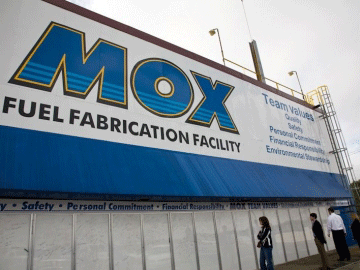 South Carolina sues federal government over end of nuclear fuel program http://www.wrdw.com/content/news/South-Carolina-sues-federal-government-over-end-of-nuclear-fuel-program-483786421.html May 26, 2018 AIKEN, S.C. (AP) — South Carolina is suing the federal government after the Energy Department announced it was stopping construction of a plant to turn plutonium used in nuclear weapons into fuel for nuclear reactors.
South Carolina Attorney General Alan Wilson’s lawsuit filed Friday says Energy Secretary Rick Perry didn’t consult Governor Henry McMaster before ending construction at the Savannah River Site near Aiken.
The lawsuit also says the Energy Department didn’t perform an analysis of how to store the plutonium already at SRS.
Instead of creating mixed oxide fuel, or MOX, the National Nuclear Security Administration suggests SRS make new plutonium pits for nuclear weapons.
Wilson called the decision to end MOX another chapter in the long, tortured history of broken promises by the federal government.
The Energy Department didn’t immediately respond.
Grand Canyon – too important, too majestic, to be ruined by uranium mining
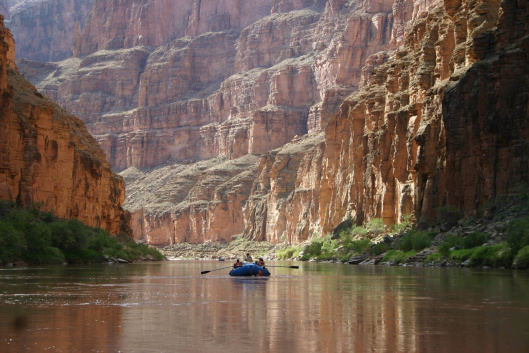
Renewed uranium mining is an unconscionable threat to the Grand Canyon Chicago Sun Times, Thomas Frisbie, 05/26/2018, @thomasfrisbie | email
The spectacular and majestic Grand Canyon, eons in the making, needs our help. Some Republican members of Congress want President Donald Trump to overturn a ban on new uranium mining nearby, along with other conservation measures. We need to urge Congress to protect this national jewel.
Some six million people arrive each year to view the vast, multi-hued and intricate canyon, though most don’t venture far from the rim. For them, it’s an inspiring and breath-taking sight. But hardy trekkers who explore remote trails might see something else: signs warning them they are entering an area of the canyon tainted by radioactivity spewed years ago from uranium mines. National Geographic reports uranium leaching from old mines has rendered 15 springs and five wells inside the canyon unsafe to drink. We don’t need more of that.
Uranium pollution is no way to treat an immense and ancient panorama of stunningly varied rock that has been called one of the seven wonders of the natural world. Recently, I had an opportunity to backpack with intrepid family members from the rim to the bottom and camp along Bright Angel Creek, near where it flows into the Colorado River. The ever-changing vista along the rocky trails was magnificent. Unafraid mule deer browsed just a few feet from us. A rare condor flew overhead. Bold rock squirrels waited for a chance to gnaw and rummage through any backpacks absent-mindedly left on the ground.
….. We now have a president who last year ordered federal agencies to review anything that could interfere with domestic energy production. In response, the Forest Service in November recommended reopening land near the Grand Canyon for uranium mining. In March, groups representing the mining industry asked the U.S. Supreme Court to lift the ban on new uranium mining on public land bordering the Grand Canyon National Park.
Uranium mining is extremely risky for the environment. Mining releases radioactive dust into the air and contaminates the land and water with radioactive and toxic substances.
“Uranium mining has left a toxic trail across the West — including at the Grand
Canyon itself,” the environmental group Environment America wrote in its April report update, “Grand Canyon at Risk: Uranium Mining Threatens a National Treasure.”
The waste rock and dirt left behind can remain radioactive for hundreds of thousands of years and also contain toxic chemicals such as arsenic that can contaminate the surrounding environment and make the mines themselves permanently hazardous, the report says.
Steve Blackledge, Environment America’s conservation program director, says, “Some places are too majestic, too important to ruin. At a time of energy abundance and the remarkable growth of clean renewables, messing with the Grand Canyon to turn on a few more light bulbs is beyond absurd.”……https://chicago.suntimes.com/working/renewed-uranium-mining-is-an-unconscionable-threat-to-the-grand-canyon/
Drug use among security troops on U.S. Nuclear Missile Base
Security Troops on US Nuclear Missile Base Took LSD Reader Supported News, By Robert Burns, Associated Press, 25 May 18  ne airman said he felt paranoia. Another marveled at the vibrant colors. A third admitted, “I absolutely just loved altering my mind.”
Meet service members entrusted with guarding nuclear missiles that are among the most powerful in America’s arsenal. Air Force records obtained by The Associated Press show they bought, distributed and used the hallucinogen LSD and other mind-altering illegal drugs as part of a ring that operated undetected for months on a highly secure military base in Wyoming. After investigators closed in, one airman deserted to Mexico.
“Although this sounds like something from a movie, it isn’t,” said Capt. Charles Grimsley, the lead prosecutor of one of several courts martial.
A slipup on social media by one airman enabled investigators to crack the drug ring at F.E. Warren Air Force Base in March 2016, details of which are reported here for the first time. Fourteen airmen were disciplined. Six of them were convicted in courts martial of LSD use or distribution or both.
None of the airmen was accused of using drugs on duty. Yet it’s another blow to the reputation of the Air Force’s nuclear missile corps, which is capable of unleashing hell in the form of Minuteman 3 intercontinental ballistic missiles, or ICBMs. The corps has struggled at times with misbehavior, mismanagement and low morale.
Although seen by some as a backwater of the U.S. military, the missile force has returned to the spotlight as President Donald Trump has called for strengthening U.S. nuclear firepower and exchanged threats last year with North Korea. The administration’s nuclear strategy calls for hundreds of billions of dollars in new spending in coming decades.
The service members accused of involvement in the LSD ring were from the 90th Missile Wing, which operates one-third of the 400 Minuteman 3 missiles that stand “on alert” 24/7 in underground silos scattered across the northern Great Plains.
Documents obtained by the AP over the past two years through the Freedom of Information Act tell a sordid tale of off-duty use of LSD, cocaine and other drugs in 2015 and 2016 by airmen who were supposed to be held to strict behavioral standards because of their role in securing the weapons.
“It’s another black eye for the Air Force — for the ICBM force in particular,” says Stephen Schwartz, an independent consultant and nuclear expert.
In response to AP inquiries, an Air Force spokesman, Lt. Col. Uriah L. Orland, said the drug activity took place during off-duty hours. “There are multiple checks to ensure airmen who report for duty are not under the influence of alcohol or drugs and are able to execute the mission safely, securely and effectively,” he said.
Airman 1st Class Tommy N. Ashworth was among those who used LSD supplied by colleagues with connections to civilian drug dealers.
“I felt paranoia, panic” for hours after taking a hit of acid, Ashworth said under oath at his court martial. He confessed to using LSD three times while off duty. The first time, in the summer of 2015, shook him up. “I didn’t know if I was going to die that night or not,” he said as a witness at another airman’s drug trial. Recalling another episode with LSD, he said it felt “almost as if I was going to have like a heart attack or a heat stroke.”
Airman Basic Kyle S. Morrison acknowledged at his court martial that under the influence of LSD he could not have responded if recalled to duty in a nuclear security emergency.
In prosecuting the cases at F.E. Warren, the Air Force asserted that LSD users can experience “profound effects” from even small amounts. It said common psychological effects include “paranoia, fear and panic, unwanted and overwhelming feelings, unwanted life-changing spiritual experiences, and flashbacks.”
It’s unclear how long before being on duty any of the airmen had taken LSD, which stands for lysergic acid diethylamide. The drug became popularized as “acid” in the 1960s, and views since then have been widely split on its mental health risks. Although illegal in the U.S., it had been showing up so infrequently in drug tests across the military that in December 2006 the Pentagon eliminated LSD screening from standard drug-testing procedures. An internal Pentagon memo at the time said that over the previous three years only four positive specimens had been identified in 2.1 million specimens screened for LSD.
Yet Air Force investigators found those implicated in the F.E. Warren drug ring used LSD on base and off, at least twice at outdoor gatherings. Some also snorted cocaine and used ecstasy. Civilians joined them in the LSD use, including some who had recently left Air Force service, according to two officials with knowledge of the investigation. The Air Force declined to discuss this.
Airman 1st Class Nickolos A. Harris, said to be the leader of the drug ring, testified that he had no trouble getting LSD and other drugs from civilian sources. He pleaded guilty to using and distributing LSD and using ecstasy, cocaine and marijuana.
He acknowledged using LSD eight times and distributing LSD multiple times to fellow airmen at parties in Denver and other locations from spring 2015 to early 2016.
Vogtle nuclear power station in Georgia, only half completed, and 7 years behind schedule
 Saporta Report 24th May 2018, A new report on the construction status of the Vogtle nuclear plant,
released Wednesday by Moody’s Investors Service, provides greater detail
than a May 10 statement released by Georgia Power and cites a number of
risks that could further delay the plant’s opening date. Moody’s report
addresses a list of frequently asked questions about the Vogtle project as
it relates to MEAG, the Municipal Electric Authority. MEAG is a partner in
the Vogtle project, along with Georgia Power, Oglethorpe Power Corp., and
the City of Dalton Combined Utility. The first sentence of Moody’s report
observes: “Construction is progressing on the Vogtle Nuclear Units 3 and
4 in Georgia, offering additional credit stability to the owners of the
units, though the work is still only around 50 percent completed and is
several years behind the original schedule.”
1 This Month





PLEASE OPPOSE HR 8255 AND S.3639 – bills would accelerate satellite deployment, with no environmental review or safeguards – https://ncstd5li.quorum.us/campaign/169331/
To see nuclear-related stories in greater depth and intensity – go to https://nuclearinformation.wordpress.com
-
Archives
- October 2026 (39)
- September 2026 (339)
- August 2026 (330)
- July 2026 (355)
- June 2026 (287)
- May 2026 (306)
- April 2026 (356)
- March 2026 (251)
- February 2026 (267)
- January 2026 (308)
- December 2025 (358)
- November 2025 (359)
-
Categories
- 1
- 1 NUCLEAR ISSUES
- business and costs
- climate change
- culture and arts
- ENERGY
- environment
- health
- history
- indigenous issues
- Legal
- marketing of nuclear
- media
- opposition to nuclear
- PERSONAL STORIES
- politics
- politics international
- Religion and ethics
- safety
- secrets,lies and civil liberties
- spinbuster
- technology
- Uranium
- wastes
- weapons and war
- Women
- 2 WORLD
- ACTION
- AFRICA
- Atrocities
- AUSTRALIA
- Christina's notes
- Christina's themes
- culture and arts
- Events
- Fuk 2022
- Fuk 2023
- Fukushima 2017
- Fukushima 2018
- fukushima 2019
- Fukushima 2020
- Fukushima 2021
- general
- global warming
- Humour (God we need it)
- Nuclear
- RARE EARTHS
- Reference
- resources – print
- Resources -audiovicual
- Weekly Newsletter
- World
- World Nuclear
- YouTube
-
RSS
Entries RSS
Comments RSS

