Saudi Arabia is putting money in Trump’s pocket. Is that shaping U.S. policy? https://www.washingtonpost.com/blogs/plum-line/wp/2018/10/16/saudi-arabia-is-putting-money-in-trumps-pocket-is-that-shaping-u-s-policy/?noredirect=on&utm_term=.434cc7237930, By Paul Waldman,October 16
As hard as it is to resist writing about the fact that on Tuesday the president of the United States called the adult film actress to whom he paid hush money “Horseface,” I want to focus on a different aspect of this presidency that we’re seeing play out right now.
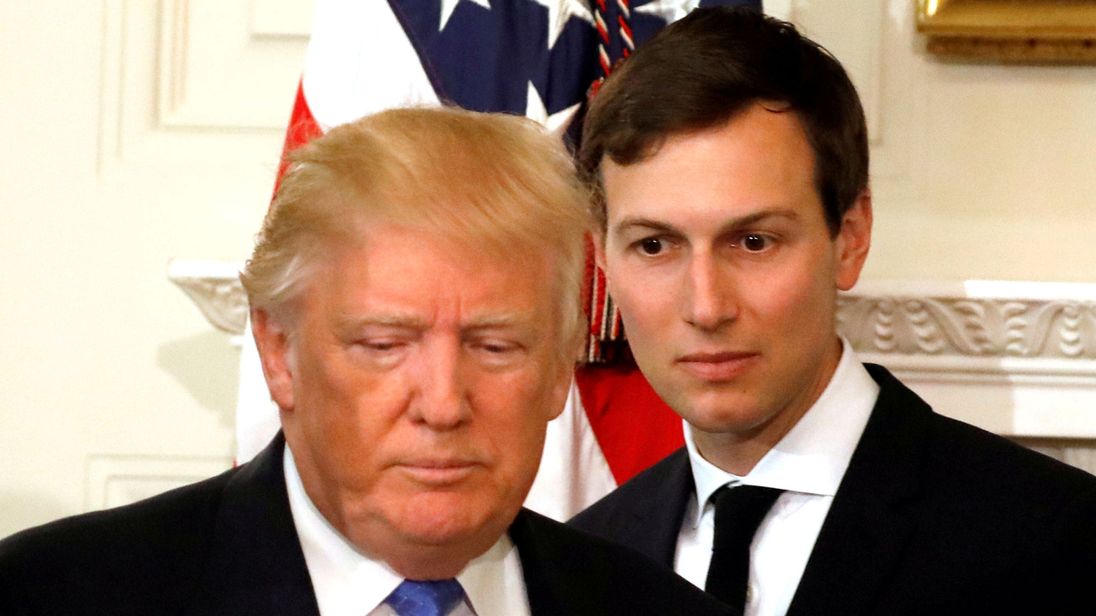
.As the apparent murder of Saudi journalist and Post contributor Jamal Khashoggi complicates our relations with Saudi Arabia, we have to ask what the implications are of having a fully transactional presidency, one not just built on “deals” but where policy is determined by what is financially beneficial to the president.
We should begin by reminding ourselves that as awful as Khashoggi’s apparent murder is, it’s only the latest in a long list of Saudi abuses that administrations both Democratic and Republican have chosen to overlook for decades. The country is a cruel dictatorship that embodies none of the values we as a nation hold dear, such as democracy, freedom of expression, freedom of the press and freedom of religion. But we decided long ago that since the Saudis have a great deal of oil and they provide us with a strategic ally in the Middle East, we’ll overlook all that.
There is something unsettling about the fact that Saudi intervention in Yemen’s civil war, in which they have reportedly killed thousands of civilians, has received steady U.S. support, while the murder of a single journalist threatens to upend the relationship between the two countries.
Or so you might think. But here’s the reality: This will blow over, not only because of the complex relationship between the two countries, but also because everything in foreign policy is personal with President Trump, and he likes the Saudis.
And why does he like them so much? Because they pay him.
This is not something Trump has been shy about saying. “Saudi Arabia, I get along with all of them. They buy apartments from me. They spend $40 million, $50 million,” he said at a rally in Alabama in 2015. “Am I supposed to dislike them? I like them very much.”
Trump says so many shocking things that it’s sometimes easy to slide right past the most appalling ones, but read that again. Here you have a candidate for president of the United States saying that he is favorably disposed toward a foreign country because they have given him millions of dollars, and all but promising to shape American foreign policy in their favor for that very reason.
“Am I supposed to dislike them?” he asks. How could I possibly dislike them when they pay me?
We should note that it’s more than just apartments. Trump has sold many properties to Saudis, and Saudis have invested in Trump projects. And as David Fahrenthold and Jonathan O’Connell report:
Business from Saudi-connected customers continued to be important after Trump won the presidency. Saudi lobbyists spent $270,000 last year to reserve rooms at Trump’s hotel in Washington. Just this year, Trump’s hotels in New York and Chicago reported significant upticks in bookings from Saudi visitors.
This is precisely the reason the framers of the Constitution added a provision saying that neither the president nor other officials could “accept of any present, Emolument, Office, or Title, of any kind whatever, from any King, Prince, or foreign State.” If a foreign country is putting money in the president’s pocket on an ongoing basis, how in the world can we trust that the decisions he makes will be based on the best interests of the United States and not on his bank account?
This is of more concern with Trump than with any other president in American history. His entire life has been devoted to the accumulation of wealth, as though there were no other goal anyone should consider seeking (“My whole life I’ve been greedy, greedy, greedy. I’ve grabbed all the money I could get. I’m so greedy,” he has said). He made sure that upon assuming office his businesses would continue to operate and continue to provide avenues for those wishing to further enrich him to do so. And he refuses to release his tax returns, so we have no idea exactly how much money he’s getting and from whom.
But Tuesday, Trump tweeted this:
For the record, I have no financial interests in Saudi Arabia (or Russia, for that matter). Any suggestion that I have is just more FAKE NEWS (of which there is plenty)!
This is the same claim Trump has made with regard to Russia, and it’s the same dodge. The point isn’t whether Trump has interests in Saudi Arabia, it’s whether Saudi Arabia has interests in him. And just as is the case with Russia, they do.
If you’re the Saudis, the nice thing about Trump is that he lacks any subtlety whatsoever, so you don’t have to wonder how to approach him. He has said explicitly that the way to win his favor is to give him money. He has established means for you to do so — buying Trump properties and staying in Trump hotels. And with his combination of narcissism and insecurity, if you invite him to your country and give him a gold medal, he’ll forever be your friend.
Every president has to balance the desire to honor U.S. values with more crass interests such as whether a country will buy weapons from us, which Trump also cited as a reason we shouldn’t punish Saudi Arabia for Jamal Khashoggi’s murder (even though they aren’t actually buying what Trump claims). But only Trump apparently gets direct and significant payoffs from other countries, and only Trump is so clear that if you pay him he’ll do what you want. That may not have changed the American stance toward Saudi Arabia too much yet, but we have no idea what’s to come.
October 18, 2018
Posted by Christina Macpherson |
politics international, Saudi Arabia, USA |
1 Comment
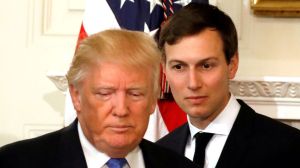 Trump and Kushner Put Saudi’s Money First https://www.bloomberg.com/view/articles/2018-10-17/trump-and-kushner-put-saudi-arabia-s-money-ahead-of-khashoggi
Jamal Khashoggi’s death has exposed the White House and two of its most powerful figures as naive, ill-informed and craven. What comes next?, By Timothy L. O’Brien, October 17, 2018, The Trump team is standing by Saudi Arabia and Crown Prince Mohammed bin Salman as the investigation and controversy surrounding the disappearance of journalist Jamal Khashoggi deepens.
On Tuesday, Secretary of State Mike Pompeo visited Riyadh for a photo op with the prince. In a press release, he praised the Saudi leadership for “supporting a thorough, transparent and timely” investigation into the Khashoggi affair, a full two weeks after the dissident first went missing.
Pompeo also said that Saudi leaders denied any involvement in Khashoggi’s disappearance, something his boss, President Donald Trump, let the world know on Twitter as well.
By Tuesday evening, that line became more complex to defend after the New York Times reported that at least four suspects in Khashoggi’s disappearance had ties to the crown prince. A fifth was “of such stature that he could be directed only by a high-ranking Saudi authority,” the newspaper said.
Complexity has never deterred the president, however. In an interview with the Associated Press on Tuesday, he blamed critics of Saudi Arabia for holding it “guilty until proven innocent.” Lest anyone doubt his motives, Trump took to Twitter to talk about his finances:
“For the record, I have no financial interests in Saudi Arabia (or Russia, for that matter). Any suggestion that I have is just more FAKE NEWS (of which there is plenty)!”
That statement would be easier to digest if Trump hadn’t bragged publicly in the past about how much Saudis have spent buying his condominiums – and if he wasn’t the steward of the most financially conflicted presidency of the post World War II era.
Trump is playing word games, of course. He says he has no investments in Saudi Arabia or Russia. But that doesn’t mean money from those countries hasn’t flowed into his coffers. In Saudi Arabia’s case, that has meant very different things over the years.
In the early 1990s, Saudi billionaire Prince Alwaleed bin Talal bought Trump’s prized yacht on the cheap from the property developer’s creditors when he was on the cusp of personal bankruptcy. A few years later, one of Trump’s lenders forced him to sell the Plaza Hotel, a New York City landmark also mired in debt, to Alwaleed. As David Fahrenthold and Jonathan O’Connell noted in the Washington Post recently, this was a period when Trump was trying to dig himself out of $3.4 billion of debt, about $900 million of which he had guaranteed personally. But Alwaleed was a bargain-hunter at the time, not someone trying to ensnare a failed developer on the unlikely chance that he might someday become president.
Still, Alwaleed, who once described Trump on Twitter as a “disgrace not only to the GOP but to all America,” kept those early deals in mind. When Trump made fun of him on Twitter two years ago, Alwaleed responded by tweeting, “I bailed you out twice; a 3rd time, maybe?”
As Trump climbed out of his debt hole in the late 1990s and early 2000s, he courted Saudi condo buyers. The Saudi Arabian government bought the entire 45th floor of the Trump World Tower in 2001, and, before running for president, Trump was apparently contemplating doing business in Saudi Arabia – he incorporated eight limited-liability companies with names suggesting he planned to do business there (they were later dissolved).
After becoming president, Trump flouted tradition by declining to authentically separate himself from the Trump Organization and its hotel and golf properties. The Trump International Hotel in Washington has been a favorite venue for Saudi diplomats who have spent lavishly there, as well as at other Trump hotels.
The president and his son-in-law, Jared Kushner, also decided to make Saudi Arabia a linchpin of their policy in the Middle East. Kushner, lacking full security clearance and any diplomatic experience, lobbied the crown prince directly in early 2017 to secure what was fancifully and inaccurately touted as a $110 billion arms sale – most of which had been agreed a year earlier, and the bulk of which still hasn’t been completed.
Shortly after that transaction was arranged, Trump visited Saudi Arabia. And soon after that, the Saudis announced they would invest $20 billion in an infrastructure fund managed by Blackstone Group LP. The New York-based firm had financed several of the Kushner family’s deals and its chairman, Stephen Schwarzman, sat on the president’s business-advisory council. The private equity firm told Bloomberg News that the Saudi investment had been contemplated long before Trump was even the Republican nominee.
Kushner’s forays alarmed members of the intelligence and national security communities, as Bob Woodward outlined in his book, “Fear.” At the very moment Kushner was throwing himself into these diplomatic adventures, he was coming under scrutiny for his own financial conflicts – in particular, his efforts to secure funding for 666 Fifth Avenue, a troubled Manhattan skyscraper his family owned.
Although the family has since sold off the property, Kushner had tried unsuccessfully to secure funding for it from a Chinese investor. His intersection with a prominent banker and diplomats from Moscow during the Trump campaign’s transition into the White House raised questions about whether he was courting Russian investors (which he denied). Inevitably, the Kushner family also courted a prominent Saudi investor to bail them out of 666 Fifth, as detailed by my Bloomberg News colleagues David Kocieniewski and Caleb Melby.
Late last year, Kushner made another secretive trip alone to Riyadh. He later described the visit as an effort to “brainstorm” Middle East strategies with Mohammed bin Salman. Not long afterward, the crown prince placed dozens of prominent businessmen and political rivals under house arrest in what was described as an anti-corruption drive. Among them was Alwaleed, the man who once snatched the Plaza Hotel and yacht from Kushner’s father-in-law.
Earlier this year, leaked intelligence reports revealed that diplomats in Mexico, Israel, China and the United Arab Emirates had decided to target Kushner because they believed he could be easily manipulated due to “his complex business arrangements, financial difficulties and lack of foreign policy experience.”
For his part, Kushner just plowed ahead, continuing to rest the White House’s plans for the Middle East on the shoulders of an equally young and untested man, Saudi Arabia’s crown prince. The disappearance of a single journalist, a one-time ally of the royal family turned critic, may ultimately cause Kushner’s plans to unravel – and expose his machinations in Saudi Arabia to more revealing and unwanted scrutiny.
If it doesn’t, it may well be because the president – putting the lie to his dissembling about his family’s financial ties to Saudi Arabia – will openly and stubbornly put money ahead of the moral and diplomatic issues at play in Khashoggi’s disappearance.
As he told Fox News in an interview on Tuesday night: “I don’t want to give up a $100 billion order or whatever it is.”
October 18, 2018
Posted by Christina Macpherson |
politics, politics international, Saudi Arabia, USA |
1 Comment
White House shelves rescue plan for coal, nuclear: report https://thehill.com/policy/energy-environment/411604-white-house-shelves-rescue-plan-for-coal-nuclear-report BY TIMOTHY CAMA – 10/16/18, The White House has shelved a proposed effort to prop up coal and nuclear power plants at risk of closure, Politico reported.
Some of President Trump’s advisers in the White House National Security Council and National Economic Council oppose Energy Secretary Rick Perry’s plan, due largely to the likelihood that it would raise energy prices, Politico said, citing four people familiar with the matter.
The rescue plan was a key piece of the Trump administration’s energy agenda, and Trump’s promise to save the coal industry. Perry first pursued the policy last year, asking that the Federal Energy Regulatory Commission (FERC) write a rule to require higher electricity payments to coal and nuclear plants, in a bid to preserve the “resiliency” of the electric grid.
But FERC, an independent agency, rejected the proposal unanimously.
Earlier this year, Trump formally asked his administration to find a way to save uneconomic coal and nuclear plants from closing.
A White House memo leaked in May showed that officials were considering using legal authorities to force coal and nuclear plants to stay open for two years. During that time, the National Security Council would study the issue from a security perspective and determine if other interventions could be used.
The Energy Department and the White House didn’t return requests for comment.
October 18, 2018
Posted by Christina Macpherson |
politics, USA |
1 Comment

 New proposal makes
nuclear war more likely https://www.mercurynews.com/2018/10/17/letter-new-proposal-makes-nuclear-war-more-likely/–
Jo Ann Frisch, Pleasanton, 17 Oct 18Donald Trump said he doesn’t understand why we have nuclear weapons if we can’t use them.
The administration’s fiscal 2019 budget took a step in that direction by proposing to create a warhead more likely to be used in war: a low-yield nuclear variant to sit atop Trident D5 missiles. Trump says it will make a U.S. strike more “credible.” The smaller-yield weapon will not be distinguishable from high-yield ones thus lowering the threshold for nuclear use and making nuclear war more likely.
A bill introduced by Reps. Smith, Lieu, Garamendi and Blumenauer called Hold the LYNE (Low-Yield Nuclear Explosive) Act, HR 6840 would prohibit funds for research, development, production or deployment of this warhead…..For more information, go to trivalleycares.org.
October 18, 2018
Posted by Christina Macpherson |
politics, USA, weapons and war |
Leave a comment
US Military Leaders Keep Quiet on Saudi Arabia Amid Khashoggi Outrage, Defense One 16 Oct 18 Defense Secretary Jim Mattis and Joint Chiefs Chairman Gen. Joseph Dunford this week have declined to say much on Saudi Arabia. Both leaders, in previously scheduled meetings with reporters, were asked about the kingdom and what effect the killing of Khashoggi may have on U.S.-Saudi relations. Both men deferred to Secretary of State Mike Pompeo and said they were waiting for him to return to the U.S. with more “facts.” And they both implied that any related changes to Trump administration foreign policy would be given to them, not made by them. …….
Speaking to reporters traveling with him in Brussels, Pompeo said: “I do think it’s important that everyone keep in their mind that we have lots of important relationships – financial relationships between U.S. and Saudi companies, governmental relationships, things we work on together all across the world – efforts to reduce the risk to the United States of America from the world’s largest state sponsor of terror, Iran. The Saudis have been great partners in working alongside us on those issues. I could go on about places where the Saudis and the Americans are working together. Those are important elements of the U.S. national policy that are for – are in Americans’ best interests. We just need to make sure that we are mindful of that as we approach decisions that the United States Government will take when we learn all of the facts associated with whatever may have taken place.”
President Trump, meanwhile, has been giving the Saudis as much cover as humanly possible, Over the weekend, he floated the idea that “rogue killers” dispatched Khashoggi, and on Tuesday, he
told the Associated Press, “Here we go again with, you know, you’re guilty until proven innocent. I don’t like that. We just went through that with Justice Kavanaugh and he was innocent all the way as far as I’m concerned.”………
Is the Saudi partnership still a matter of necessity? Should it be? That’s not likely the question Mattis and Dunford are asking for the near term. For them, the answer is yes. But for the long term, it’s a question for them, Pompeo,and Trump. It’s a question of whether “Saudi interests” under bin Salman still align with American interests, or just with American military and intelligence interests.
October 18, 2018
Posted by Christina Macpherson |
politics international, Saudi Arabia, USA, weapons and war |
Leave a comment
|
Analysis: Trump’s Saudi bet has become much riskier, By MATTHEW LEE, 17 Oct, WASHINGTON (AP) — President Donald Trump put a big and risky bet on Saudi Arabia and its 33-year-old crown prince. It’s now become much riskier.
From the early days of his presidency, Trump and his foreign policy team embraced the kingdom and Mohammed bin Salman as the anchors of their entire Middle East strategy. From Iran and Iraq to Syria, Yemen and the Israeli-Palestinian conflict, the administration gambled that Saudi Arabia, effectively run by the prince, could credibly lead, and willingly pay for, a “Pax Arabica” in a part of the world from which Trump is keen to disengage.
For nearly two years, through an ongoing crisis with Qatar and international outrage over civilian casualties in the Saudi-led campaign against Yemeni rebels, the prince has managed to keep Washington’s confidence. But now, the tide is turning amid growing outrage over the disappearance and likely death of a U.S.-based journalist inside a Saudi Consulate in Turkey, and that confidence appears to be waning. The Trump administration’s grand strategy may be upended with far-reaching ramifications that extend well outside the region.
Even if an investigation into what happened to Washington Post contributor Jamal Khashoggi in Istanbul exonerates the prince and the top Saudi leadership, the administration’s deep reliance on him will be severely tested not least because of broad bipartisan revulsion in Congress to as-yet unconfirmed accounts of Khashoggi’s fate. Already, prominent lawmakers from both parties are questioning his fitness to lead the country and suggesting it might be time to re-think U.S.-Saudi relations and sharply curb arms sales.
Trump ally Sen. Lindsey Graham, R-S.C., and other influential politicians warned of dire consequences on Tuesday, saying the prince, often known as MBS for short, should be removed from his post……….
The impact of a U.S.-Saudi rift, however remote the possibility, could send shockwaves around the world, destabilizing oil markets and the global investment climate, not to mention dealing a blow to the Trump administration’s own plans in the Middle East.
Trump’s son-in-law and senior adviser Jared Kushner has made Saudi Arabia a centerpiece of his yet to be revealed Israeli-Palestinian peace plan, which is expected to call for massive Saudi and Gulf Arab contributions to fund reconstruction and development projects in the West Bank and Gaza.
Saudi support will also be key to the political elements of the plan that Israel insists put its security on par with Palestinian statehood. That means that Israel will likely seek assurances that any deal with the Palestinians be followed by a broader agreement that normalizes its relations with the rest of the Arab world, particularly Saudi Arabia.
In Syria, the administration relied almost entirely on Saudi Arabia, along with the closely allied United Arab Emirates, to make up for steep cuts in U.S. stabilization assistance to areas liberated from Islamic militants. Next door in Iraq, the current secretary of state, Mike Pompeo, and his predecessor, Rex Tillerson, have leaned heavily on the Saudis to make large financial pledges for reconstruction of war-shattered communities.
But it is the administration’s policy of isolating Iran that may suffer the most from Saudi-U.S. estrangement. Trump is counting on the Saudis to shore up and complement its Iran policy on several fronts………https://www.apnews.com/5f0516d3358b4acab27ca4ec56dd711e
|
|
October 18, 2018
Posted by Christina Macpherson |
politics international, Saudi Arabia, USA |
Leave a comment
|
How To Get Nuclear-Weapons Treaties Back on Track, Defense one BY DARYL G. KIMBALL, EXECUTIVE DIRECTOR, ARMS CONTROL ASSOCIATION, 16 Oct 18, Back in March, President Trump told reporters at the White House in March that he wanted to meet with Putin in large part “to discuss the arms race, which is getting out of control” and has characterized the costly nuclear weapons upgrade programs being pursued by each side as “a very, very bad policy.”Three months have elapsed since the July summit between Trump and Putin in Helsinki – after which the U.S. president said, “Perhaps the most important issue we discussed at our meeting…was the reduction of nuclear weapons throughout the world.”
But since the summit, there has been no apparent progress. The long-running dispute over Russia’s violation of the 1987 Intermediate-Range Nuclear Forces Treaty remains. The two sides have not begun to discuss the future of the successful 2010 New START agreement, which limits each side to 1,550 deployed strategic warheads. That treaty will expire on Feb. 5, 2021, unless Trump and Putin agree to extend it.
Without these treaties in place, the door will be opened to an unconstrained nuclear arms race. The already abysmal U.S.-Russian relationship will become even more complicated and dangerous.
Next week, National Security Advisor John Bolton will travel to Moscow to meet with his counterpart in the Kremlin, Nikolai Patrushev. It is past time for both sides to get serious about resolving the INF compliance crisis, to agree to discuss the extension of New START, and to resume regular talks on “strategic stability.”
INF Woes: U.S. and Russian officials both say they support the 1987 INF Treaty, which led to the elimination all U.S. and Soviet ground-launched ballistic and cruise missiles with ranges between 500 and 5,500 kilometers. But the treaty is now at risk because Russia has tested and deployed a prohibited ground-launched cruise missile: the 9M729. Moscow, for its part, alleges, far less credibly, that Washington is deploying missile defense systems in Europe that could be used to launch offensive missiles.
Contrary to what some observers may want to believe, the arms control community has been working hard to raise the alarm belland put advance serious options to put out the INF fire. Since Russia’s INF violation became known in early 2014, the Arms Control Association has steadfastly reported on and published expert analyses on the problem in our monthly journal Arms Control Today. We have convened U.S. and European and Russian experts from inside and outside government on the INFissue, and met with U.S. lawmakers and staff to exchange views on the problem. We have confronted senior Russian officials in private consultations Washington and in Moscow and, along with a number of experts and former U.S. officials, we have put forward options for resolving the dispute. ………
The Future of New START: New START remains one of the few bright spots in an otherwise broken U.S.-Russian relationship. Ratified in 2011, the Treaty limits the number of deployed strategic warheads to a maximum of 1,550 on each side, a target each met earlier this year, and which is far below the tens of thousands we pointed at each other during the Cold War.
The Treaty imposes important bounds on strategic nuclear competition as long as it is in force. As allowed in Article XIV of the treaty, it can be extended by up to five years by agreement by the two Presidents, without requiring further action by the Congress or the Duma.
Before and after the Helsinki summit, Russian officials have reiterated their interest in talks designed to extend the treaty. But after his first post-Helsinki meeting with Patrushev, in Geneva on Aug. 23, Bolton said the administration remains in the “early stages” of an interagency review about whether to extend, replace, or jettison New START or to pursue a different type of approach.
Unfortunately, some elements in the Trump administration want to hold New START hostage until Russia acknowledges its INFviolation—an extremely unlikely possibility. Sacrificing New START, given the transparency it provides, would only create a bigger nuclear headache and do nothing to bring Russia back into compliance with INF.
Key Senate Democrats have called for an extension of New START so long as Russia remains in compliance with it, and several leading Senate Republicans have also voiced their support for New START. U.S. military leaders continue to see value in New START; for example, Gen. John Hyten, commander of U.S. Strategic Command, told Congress last March that “bilateral, verifiable arms control agreements are essential to our ability to provide an effective deterrent.”
If New START is not extended, there will be no legally binding limits on the world’s two largest strategic arsenals for the first time since 1972. In its absence, each side could quickly increase the number of warheads deployed on their strategic delivery systems. Unconstrained U.S.-Russian nuclear competition—in both numbers and technology—could spark an arms race as dangerous as that of the 1950s and 1960s. That would add scores of billions in additional costs to an already unrealistic U.S.nuclear upgrade plan.
An extension of New START, on the other hand, would buy time for the two sides to discuss agreements on new strategic systems, including the ones under development by Russia, and provide a solid baseline for talks on further reductions of each side’s strategic and tactical nuclear stockpiles……..https://www.defenseone.com/ideas/2018/10/how-get-nuclear-weapons-treaties-back-track/152095/
|
|
October 18, 2018
Posted by Christina Macpherson |
politics international, Russia, USA, weapons and war |
Leave a comment
 https://windsorstar.com/news/local-news/essex-county-residents-can-obtain-pills-to-protect-against-radiation-in-nuclear-disaster
Every resident in Essex County can now obtain potentially life-saving pills to protect them from radiation in case of an accident at one of the nearby U.S. nuclear power plants.
Every resident in Essex County can now obtain potentially life-saving pills to protect them from radiation in case of an accident at one of the nearby U.S. nuclear power plants.
The potassium iodide (KI) pills are available to people in Essex County and part of Chatham-Kent who live within range of Michigan’s Enrico Fermi 2 Nuclear Generating Station or the Davis-Besse Nuclear Power Station in Ohio. Dr. Wajid Ahmed, the acting medical officer of health for the Windsor-Essex County Health Unit, said taking the tablets in the wake of a nuclear accident can help prevent thyroid cancer.
“The most common thing that is released in the event of a nuclear emergency is the radioactive iodine,” he said. “Anyone who gets exposed to the radioactive iodine, it tends to get absorbed in the thyroid gland, and then potentially someone can develop thyroid cancer after some time.”
The health unit launched the potassium iodide distribution plan for the “primary zone” in April for households within 16.1 km of the nuclear power plants. Ahmed said Essex County’s primary zone included about 400 Amherstburg and Boblo Island home
October 18, 2018
Posted by Christina Macpherson |
safety, USA |
Leave a comment
 U.S. seeks more info on proposed nuclear waste storage project http://www.santafenewmexican.com/news/briefs/u-s-seeks-more-info-on-proposed-nuclear-waste-storage/article_9b914fe8-cc5c-5d84-beb3-3da44571ad30.html Associated Press , 16 Oct 18 HOBBS — Federal regulators are seeking more information from developers who have proposed building a storage facility at a site in southeastern New Mexico for spent fuel from commercial reactors around the United States.
October 18, 2018
Posted by Christina Macpherson |
USA, wastes |
Leave a comment
 Nuclear innovation legislation becoming law, Post Register., Mike Crapo, a U.S. Senator, 16 Oct 18
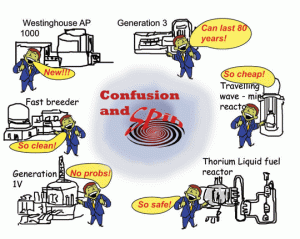
Congress’s recent passage of S. 97, the Nuclear Energy Innovation Capabilities Act (NEICA) ………. Senators Lisa Murkowski (R-Alaska), Cory Booker (D-New Jersey), Orrin Hatch (R-Utah) and Dick Durbin (D-Illinois) also co-sponsored this legislation that directs the U.S. Department of Energy (DOE) to prioritize partnerships with private innovators to test and demonstrate advanced reactor concepts.
The measure authorizes the creation of a National Reactor Innovation Center that brings together the technical expertise of the National Labs and the DOE to enable the construction and testing of experimental reactors. The Nuclear Regulatory Commission (NRC) would partner with the DOE in this effort, contributing its expertise on safety issues while also learning about the new technologies developed through the Center. This legislation strengthens the ability of national laboratories, like Idaho National Laboratory (INL), to partner with private industry to prove the principles behind their research. ………ttps://
www.postregister.com/star/opinion/nuclear-innovation-legislation-becoming-law/article_dbbcc9f3-0cab-523b-aa97-0e0d783b371c.html
October 18, 2018
Posted by Christina Macpherson |
politics, technology, USA |
Leave a comment
The Sandpaper.net, Gina G. Scala, ggscala@thesandpaper.net, Oct 17, 2018 Less than a month after submitting a license renewal application to the Nuclear Regulatory Commission, Holtec International Inc., a New Jersey-based company known globally for its used nuke fuel management technologies and interested in purchasing the Oyster Creek Nuclear Generating Station from its current owners, submitted a revised report outlining its decommissioning plans for the plant.The Holtec Post-Shutdown Decommissioning Activities Report will be reviewed separately from the license transfer application, according to Neil Sheehan, public information officer for the NRC Region 1 office. The license transfer provides information on how and why the company is financially and technically capable of handling the Oyster Creek decommissioning as well as managing the spent nuclear fuel storage onsite for the foreseeable future, he said. In their joint license renewal application, the two companies requested that the NRC adhere to a schedule to help meet a May 1, 2019, deadline for its decision on ownership……..
The revised PSDAR, submitted Sept. 28, highlights the accelerated schedule for the prompt decommissioning of Oyster Creek and the unrestricted release of the site, with the exclusion of the Independent Spent Fuel Storage Installation, or spent fuel pad, on site.
“This DECON PSDAR is contingent upon NRC approval of the LTA (license transfer application), completion of transfer of the licenses and asset sale closure. If the licenses are not transferred, this DECON PSDAR will be ineffective, and the May 21, 2018 PSDAR submitted by Exelon Generation will remain in effect,” according to the revised PSDAR. “Exelon Generation has reviewed the contents of this letter and is aligned.”
The Master Summary Schedule is based on the assumptions that the licenses are transferred to Holtec in July 2019, according to the report.
From the beginning, Holtec officials have said the company’s preferred method for decommissioning Oyster Creek was a DECON, or decontamination, method, in which equipment, structures and portions of the facility and site that contain radioactive contaminants are promptly removed and decontaminated to a level that permits termination of the license shortly after cessation of operations.
The one timeline change from an Aug. 15 meeting with the NRC and Exelon Generation is the transfer of spent nuclear fuel to the ISFSI. Under the revised PSDAR report, that activity is slated to be finalized in 2023, providing for the complete dismantlement of the reactor and turbine buildings. Radiological decommissioning, according to the revised plan, is expected to be completed by 2024. That would allow full release of the Route 9 site, located on 779 acres of land in the Forked River section of Lacey Township, with the except of the spent fuel pad.
In August, Holtec’s expedited timeline called for this process to begin with still-hot spent fuel being moved sometime next year and a 2021 completion date, with a full removal from the site by 2034 and full license termination by 2035.
“The Oyster Creek spent fuel is projected to be accepted by the DOE (Department of Energy) for shipment away from the Oyster Creek site in the years 2034 and 2035,” according to the revised report. “Spent fuel storage operations continue at the site, independent of decommissioning operations, until the transfer of the fuel to the DOE is complete. At that time, the ISFSI is decommissioned and the site released for unrestricted use.”
The NRC is currently reviewing applications for two potential interim sites to house spent nuclear fuel, one in Texas and the other in New Mexico. In the meantime, the only option for U.S. nuclear power plants is to store spent fuel from the reactor vessel on site.
Just last month, the deadline to request a public hearing on Holtec International’s interim repository in New Mexico closed. However, there is still time to request a public hearing for a similar spent fuel facility in West Texas. That window closes Oct. 29. The federal agency resumed reviewing the application after it received two letters, dated June 8 and July 19, from Interim Storage Partners, a joint venture between Waste Control Specialists and Orano CIS LLC. ……. https://thesandpaper.villagesoup.com/p/would-be-nuclear-plant-owner-submits-revised-decommissioning-plan-for-oyster-creek/1784585
October 18, 2018
Posted by Christina Macpherson |
decommission reactor, USA |
Leave a comment
Dominion seeks new 20-year Licensing for Surry Nuclear Reactors Power Engineering 10/17/2018, By Rod Walton Dominion Energy has filed an application with federal regulators asking to keep its Surry nuclear power station licensed for additional 20-year terms.
Surry Units 1 and 2 were commissioned in 1972 and 1973, respectively. Dominion has previously said it believes the nuclear plant along the James River in Virginia could be safely operational through 2053.
Its current licensing allows Units 1 and 2 to provide power through 2032 and 2033. If approved, it would be one of the first 80-year plants in the U.S. Exelon Corp. has also applied for additional 20-year license for its Peach Bottom nuclear generation facility in Pennsylvania. https://www.power-eng.com/articles/2018/10/dominion-seeks-new-20-year-licensing-for-surry-nuclear-reactors.html
October 18, 2018
Posted by Christina Macpherson |
business and costs, politics, safety, USA |
Leave a comment
Regulators Discuss New Plans For Nuclear Waste At Hanford https://www.opb.org/news/article/hanford-nuclear-waste-plans-portland-oregon-meetings/, by Cassandra Profita Oct. 15, 2018 Federal and state energy regulators will hold back-to-back meetings in Portland on Tuesday for a proposal to reclassify some of the high-level nuclear waste at the Hanford Site in Washington.
The proposal has major implications for the nuclear waste that remains in Hanford’s storage tanks.
In recent years, the U.S. Department of Energy has been working to retrieve the nuclear waste left in storage tanks, and in one area known as C-Farm, they’ve removed as much as they can get.
“But there is some amount they were not able to get,” said Jeff Burright, nuclear waste remediation specialist with the Oregon Department of Energy. “And that equates to approximately 70,000 gallons of waste.”
The Energy Department wants to downgrade that remainder to “low-level radioactive waste,” so they can leave it in place and fill the tanks with grout. The area would then be sealed off to prevent the waste from migrating.
It’s the first step in a long closure process for about 10 percent of the storage tanks on the site. But the Oregon Department of Energy has raised concernsthat federal officials are moving too quickly. The state has filed public comments asking federal officials to do additional reviews before making any decisions.
“The movement of waste through the Hanford environment is a very complex process that we’re still trying to fully understand,” Burright said. “Despite their best efforts, there are still uncertainties over very long time scales that could represent future risk.”
Burright said closing the tanks could prevent the future removal of the 70,000 gallons of remaining waste should new technologies emerge. Plus, he said, there may be additional risks stemming from the million gallons of waste that have already leaked or spilled into the ground underneath the tanks on the site.
The Oregon Department of Energy is holding its own informational meetingon the issue at 6:30 p.m. after the U.S. Department of Energy’s informational meeting from 3-5 p.m. in Portland on Tuesday. Both meetings will be held at the same location, the Eliot Center at the First Unitarian Church, 1226 SW Salmon St.
October 16, 2018
Posted by Christina Macpherson |
politics, secrets,lies and civil liberties, USA, wastes |
Leave a comment