Reclassifying nuclear wastes as “Low Level”

DOE proposes reclassifying high-level nuclear waste, could send more to WIPP A proposal to re-characterize high-level nuclear waste could bring more waste to the Waste Isolation Pilot Plant.
The U.S. Department of Energy posted a notice in the federal register in October, requesting public comment on the potential change.
If approved, the DOE would change how it labels high level waste (HLW), allowing some of the waste resulting from processing nuclear fuel to be characterized as either low-level or transuranic (TRU) waste.
If the waste is deemed low-level, it can be disposed of at the generator site, or in a surface-level facility………
When the HLW is held at the site, the federal government pays for the facility’s utilities, costing tax payers billions of dollars a year, Heaton said.
Some of that money could be saved, he said, if the waste was moved.
“A lot of would pass the waste acceptance criteria at WIPP,” Heaton said. “It would extend the life of WIPP for sure. ………
Don Hancock, director of the Nuclear Waste Program at the Southwest Research and Information Center said the proposal is not only illegal, but hypocritical.
He said HLW is defined numerous times in laws passed by the U.S. Congress, and the DOE’s proposal would circumvent congressional powers.
“What it seems like they’re proposing is illegal,” he said. “They say they get to rewrite the law, not Congress. They’re a lot of opposition to this nationally.”
Hancock also said that if waste is truly less dangerous than previously thought, it could be safely kept where it is.
If it’s more dangerous to keep the waste at the generator sites, Hancock said the DOE should petition for more repositories.
All HLW must be sent to a geologic repository, per federal law, excluding WIPP which is licensed for TRU waste.
Aside from re-characterizing HLW as TRU waste, Hancock said the proposal was also intended to get around the law requiring HLW to go underground, by re-characterizing it as low-level waste.
“There was a consensus that there should be multiple geologic repositories,” Hancock said. “There should be multiple places in the U.S. where you can have safe repositories. That didn’t happen.”
Adrian Hedden can be reached at 575-628-5516, achedden@currentargus.com or @AdrianHedden on Twitter. https://www.currentargus.com/story/news/local/2018/11/02/doe-reclassifying-nuclear-waste/1831914002
America’s new nuclear warhead designs – and what they cost.
 Here’s when all of America’s new nuclear warhead designs will be active — and how much they’ll cost, Military Times, 3 Nov 18, By: Aaron Mehta WASHINGTON — Estimates for the cost of America’s nuclear warheads have gone up in the last year, as the government prepares to develop and maintain as many as nine new systems in the next 25 years.
The National Nuclear Security Administration’s fiscal 2019 Stockpile Stewardship and Management Plan, released Thursday lays out the investments that could be needed for the NNSA over the next two and a half decades.
The NNSA is a semiautonomous department within the Department of Energy. While the Defense Department manages the delivery systems of the nuclear force — ships, planes and missiles — NNSA oversees the development, maintenance and disposal of nuclear warheads.
However, NNSA costs are not just about the warheads, as requirements range from upgrading aging infrastructure, to increasing the production of plutonium pits, to securing facilities. The agency expects capital investments during this period could require spending between $61.1 billion and $90.7 billion, for example.
And the overall cost of replacing America’s nuclear arsenal will be much higher when factoring in the development of new cruise missiles, intercontinental ballistic missiles and bomber aircraft.
Kingston Reif of the Arms Control Association said the report “highlights the enormous scope of work already on NNSA’s overburdened plate, and the additional work that the Nuclear Posture Review proposes to pile on top.”
He pointed to a chart in the report showing NNSA’s budgetary estimate for the next 25 years has grown significantly in the year since the FY18 estimate — by about $75 billion over the previous estimate.
“NNSA claims that this increase ‘is generally affordable and executable,’ but that’s wishful thinking,” Reif said, noting previous concerns raised by the Government Accountability Office that NNSA could not meet its requirements with its planned budget.
The cost increase is partly driven by the Trump administration’s Nuclear Posture Review. Released early this year, the NPR called for two new nuclear warhead designs as well as an overall recommitment to the nuclear triad………….https://www.militarytimes.com/smr/2018/11/02/heres-when-all-of-americas-new-nuclear-warhead-designs-will-be-active-and-how-much-theyll-cost/
A world on nuclear hair-trigger, if USA withdraws from INF Treaty?
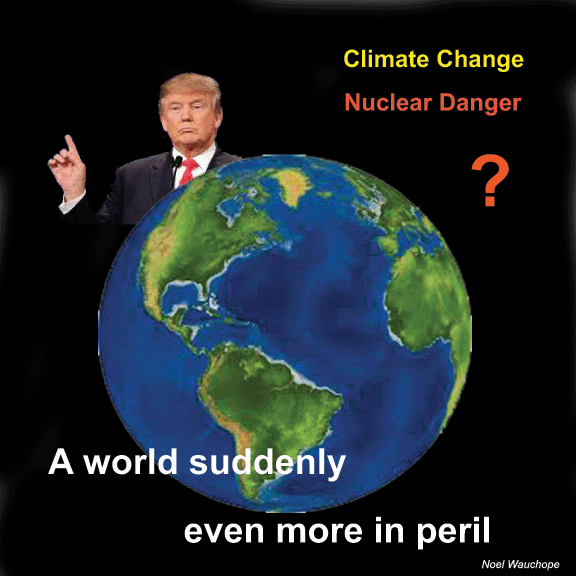 Would INF Withdrawal Recreate a Nuclear Hair-Trigger World? Junk enough arms control treaties, and the Cold War balance of terror will reign once again—this time with China in the mix. Foreign Policy, BY MICHAEL HIRSH, OCTOBER 23, 2018, “………The INF Treaty, signed in 1987, was a keystone of those early efforts to ease tensions. It sought to end the hair-trigger calculus embedded in the missiles that ringed the perimeter of the Soviet bloc, giving both sides scant minutes of warning before Armageddon. The INF Treaty was, as then-U.S. President Ronald Reagan said, the first nuclear treaty to eliminate, not just limit, nuclear arms. The United States and the Soviet Union pledged to destroy and permanently forswear all of their nuclear and conventional ground-launched ballistic and cruise missiles with ranges of 500 to 5,500 kilometers (300 to 3,400 miles).
Now, Washington plans to withdraw from the INF Treaty, according to U.S. President Donald Trump, who says that Russia has violated the agreement for years. Coupled with the prospect of no extension to the Strategic Arms Reduction Treaty, Washington may thus be opening the door to a return of a terrifying past. The Trump administration is not just threatening to roll back a slew of protections and safety precautions; it is also quite consciously restarting the arms race, with a full nuclear modernization plan that could cost up to $1.6 trillion over 30 years, according to an October 2017 report from the Congressional Budget Office and other accounts. The Russians and Chinese will undoubtedly respond, but with the cessation of treaty-authorized inspections, governments will be far more in the dark about what the other side is building.
……….Together, these moves could eventually leave the world facing a new kind of balance of terror, and on several different fronts. It’s no longer just about Washington and Moscow. China, which was for much of the Cold War a nuclear minnow and remains a much smaller nuclear power than the United States or Russia, has now stockpiled thousands of missiles, including tactical, cruise, medium-range, long-range, and intercontinental ballistic missiles launchable from air, land, and sea. That arsenal includes the mobile-launched Dongfeng-41, believed to be the world’s longest-ranged missile at a projected 7,500 miles.
Until now, Beijing has been restrained about tipping those missiles with nuclear warheads: It keeps an estimated 250 to 300 warheads, about as many as France. But that could begin to change if tensions rise and no treaty is in place to contain them.
…….. without treaty restrictions, a Pacific balance of terror could prove as unpredictable as what prevailed between Moscow and Washington during the darkest days of the Cold War.
The Trump administration claims that Russian President Vladimir Putin is responsible for the INF Treaty’s failure. In February 2007, Putin declared that the treaty no longer served Russia’s interests. Ever since, Russia has been violating it, claiming that its missile deployments are justified by U.S. missile defense. Even so, the violations have been relatively small-scale, mainly involving the construction of about 40 to 50 prohibited SSC-8 cruise missiles, said Matthew Bunn, a nuclear arms specialist at Harvard University’s Belfer Center. Bunn noted that the United States is also technically violating the treaty by taking a sea-based missile launcher, the Aegis, and putting it ashore. “If the shoe was on the other foot, we’d be screaming about that,” he said.……….HTTPS://FOREIGNPOLICY.COM/2018/10/23/WOULD-INF-WITHDRAWAL-RECREATE-A-NUCLEAR-HAIR-TRIGGER-WORLD/
Closures of coal and nuclear plants will not trouble the grid, says USA’s Largest power grid operator
 Largest power grid operator dismisses the threat of coal and nuclear plant closures, Washington Examiner, by Josh Siegel, November 01, 2018
The operator of the largest power market in America released a report Thursday finding that its electricity supply would hold up against a range of threats, providing evidence against the Trump administration case for preserving coal and nuclear plants.
“The PJM system is reliable today and will remain reliable into the future,” the grid operator, PJM Interconnection, said in an eight-page summary of a much-anticipated report slated for full release in December.
Andrew Ott, president and CEO of PJM, amplified that assertion later Thursday during a press conference in Washington D.C.
“The grid is more reliable today than it’s ever been,” Ott said.
PJM covers a large territory representing 65 million people in 13 states from Illinois to Virginia.
The report weighs against the Trump administration’s interest in using emergency power to keep coal and nuclear plants alive.
“We think government intervention is unnecessary,” Ott said. “Nothing in our report would say there is a specific need for a specific fuel source. We are fuel neutral.”
The White House has reportedly considered asserting a national security justification for providing coal and nuclear plants with subsidies to keep them from retiring. The effort has stalled, but critics, who say action would upset competitive power markets that reward the lowest cost resource – and also raise electricity rates – fear the administration could try to revive the idea through different mechanisms.
Ott testified to Congress last month that the grid operator’s analysis shows that coal and nuclear closures in the region he covers scheduled for 2021 and 2022 can happen without causing a problem to the grid.
PJM has previously said its grid is “more reliable than ever” and that any federal intervention “would be damaging to the markets and therefore costly to consumers” by raising electricity prices.
……….. FERC, a panel of independent energy regulators, last year rejected a previous version of the Trump administration’s plan to provide special payments to uneconomic coal and nuclear plants that could store 90 days of fuel on-site. But it directed regional transmission operators such as PJM to submit information on resilience challenges in their markets, in anticipation of potential future action FERC could take on its own.
FERC is considering the comments before determining how or whether to act. https://www.washingtonexaminer.com/policy/energy/largest-power-grid-operator-dismisses-the-threat-of-coal-and-nuclear-plant-closures
USA’s National Nuclear Security Administration under scrutiny, over plutonium pits
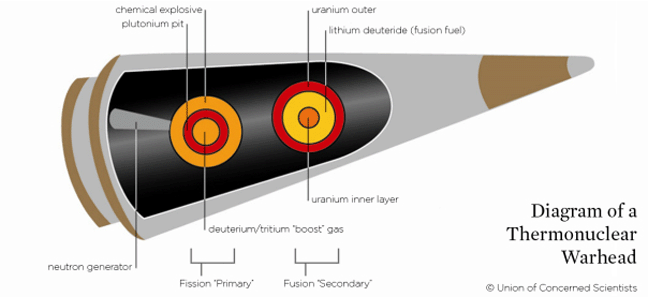
Watchdog groups seek review of plutonium plan http://www.santafenewmexican.com/news/local_news/watchdog-groups-seek-review-of-plutonium-plan/article_52eb4d8b-05bf-5715-9c8f-233132157ca0.html, By Andy Stiny | astiny@sfnewmexican.com,– 2 Nov 18
Climate change denialism- and the reality

New UN Report Warns of Impending Catastrophe as World Warms, Glaciers Melt, DAHR JAMAIL, TRUTHOUT PART OF THE TRUTHOUT SERIES CLIMATE DISRUPTION DISPATCHES NOVEMBER 2, 2018 “………….Denial and Reality
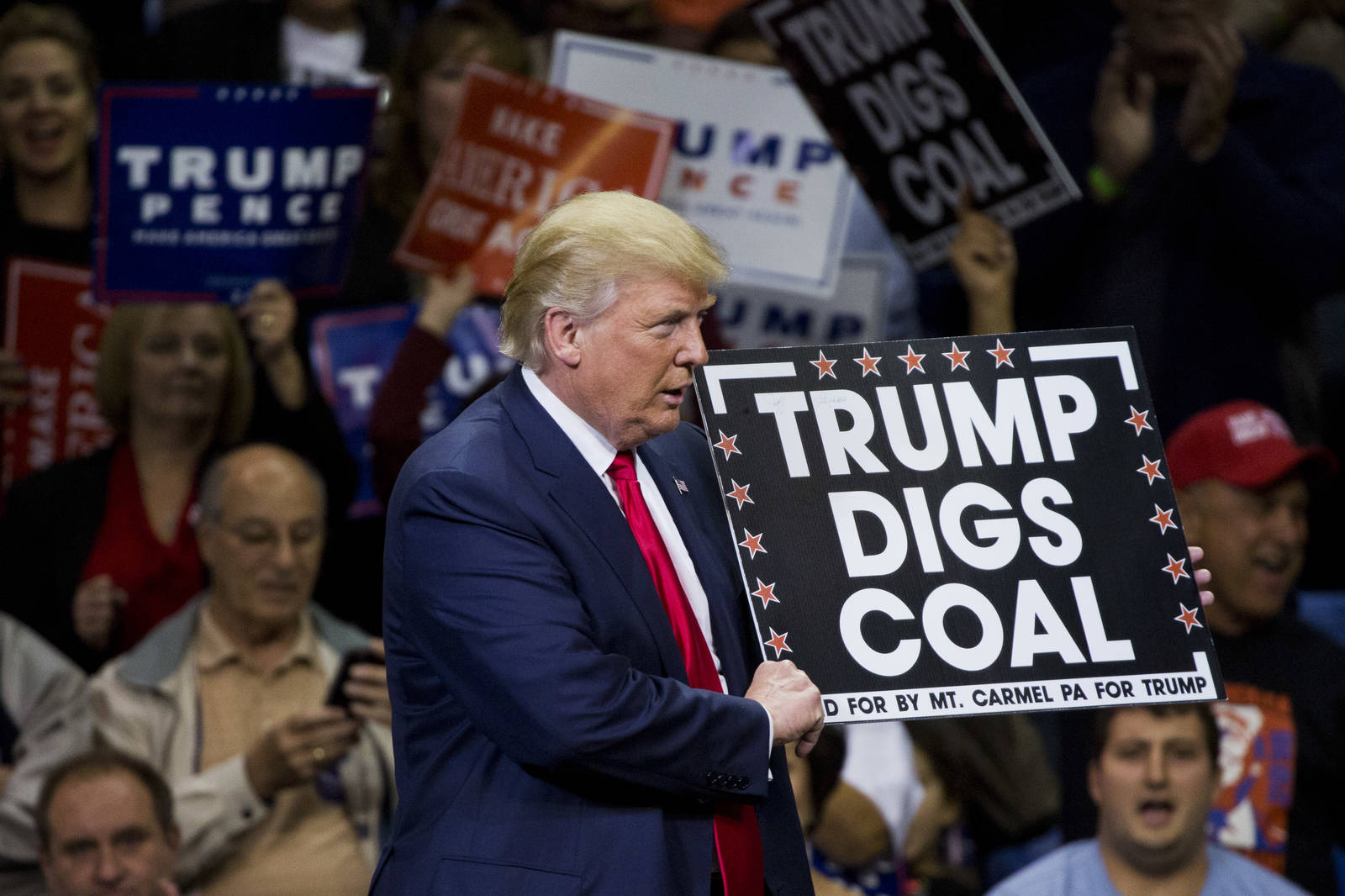 In a recent interview, Donald Trump, who had called human-caused climate change “a Chinese hoax,” said it is real, “but I don’t know that it’s manmade.” He also said the climate will “change back again” — whatever that means.Meanwhile, the ongoing denialism continues unabated in his administration. Climate change information was removed from an important planning document for a national park in New England, with the rationale that it was deemed a “sensitive” topic.
The North Carolina government did not like the science about sea level rise, so literally passed a law banning policies based on such forecasts. The state, of course, is still recovering from flooding from Hurricane Florence.
Meanwhile, Trump’s EPA has abandoned restrictions against hydrofluorocarbons, a chemical that has been linked to climate change. OPEC announced it is predicting a massive increase in oil production over the next five years — enough so that it will offset CO2 reductions from electric cars. On that note, it was recently exposed that the state of Texas, already the leading emitter of greenhouse gasses in the US, has approved 43 petrochemical projects along the Gulf Coast since 2012 — projects that add millions of tons more of greenhouse gas pollution.
Stunningly, despite the terrifying weather events and dire predictions of what’s to come, it has come to light that the Trump administration is aware of and accepts a projected 7-degree rise in global temperatures by just 2100. This came out in a draft statement issued by the National Highway Traffic Safety Administration, which was written to justify Trump’s decision to freeze federal fuel-efficiency standards for cars and trucks built after 2020. “The amazing thing they’re saying is human activities are going to lead to this rise of carbon dioxide that is disastrous for the environment and society,” Michael MacCracken, who served as a senior scientist at the US Global Change Research Program from 1993 to 2002 told The Washington Post. “And then they’re saying they’re not going to do anything about it.”
The Trump administration’s stance on climate change is essentially that we’re doomed, so what’s the point in cutting greenhouse gas emissions?
With regard to the alarming UN climate report, the White House basically shrugged it off, claiming that emissions in the US have dropped since 2005. This is a true statement, but does not explain the reason for that, which is a historic shift away from coal-fired electricity and toward renewables and natural gas.
Fortunately, reality is striking back.
A group of 17 bipartisan state governors representing states that comprise half of the total US GDP has vowed to both fight climate change and fight Donald Trump on the issue. They recently pledged $1.4 billion to support electric cars and institute new policies geared toward reducing greenhouse gas emissions.
Stunningly, even Bloomberg, a business news outlet, is running stories with titles like “New Climate Debate: How to Adapt to the End of the World.”
And of course, the language coming out of the UN is a sign that the international community is beginning to understand the full weight of climate change’s implication.
Alas, this realization has not yet been met with the policy response it deserves. The author of a key UN report on the dangers of breaching the 1.5°C global warming limit recently said that the world is “nowhere near on track” to keep warming below even that already arbitrary level.https://truthout.org/articles/new-un-report-warns-of-impending-catastrophe-as-world-warms-glaciers-melt/
Trump Is Pushing the United States Toward Nuclear Anarchy
 The White House wants to leave the INF Treaty. New START could be next. The death of
  these agreements would fuel a new arms race. Foreign policy, BY JON WOLFSTHAL OCTOBER 31, 2018, President Donald Trump’s tough talk about withdrawing the United States from the Intermediate-Range Nuclear Forces (INF) Treaty has generated plenty of controversy, but not much clarity about what happens next. What’s certain is that the end of the treaty would make the United States and its allies (for whom Trump apparently cares little) less safe and would undermine the global basis for nuclear restraint and nonproliferation.
And it may get worse. America’s potential withdrawal from the INF Treaty—which bans the United States and Russia from having nuclear or conventional ground-based missiles with ranges between 500 and 5,500 km (300 to 3,400 miles)—suggests that the 2010 New START arms reduction treaty with Russia might be next.
The untimely death of these two agreements would add fuel to a new arms race and further undermine stability and predictability between Washington and Moscow.
The last time the United States aand Russia had to navigate a world without bilateral nuclear constraints was before 1972; it was a world we were lucky to survive and one to which no sane person should want to return.
Nuclear weapons and deterrence advocates like to claim that the invention of nuclear weapons is what has kept the peace among major powers since the end of World War II. However, it was the development of predictable, binding, legal agreements and enforced global norms of behavior across security, trade, and global issues—not nuclear arms—that helped the United States to become the most prosperous and secure country in history. The rules not only made the United States safer and richer but also helped usher in an unprecedented era of global prosperity. The preservation of that order is a vital national interest and is under attack by the Trump administration.
That Trump would seek to undermine the rules that have benefited U.S. prosperity and influence is bad enough. That he would try to disrupt the system that prevents nuclear anarchy is inexcusable…………..
After assuming office, Trump largely ignored the issue of the INF Treaty and nuclear stability, even passing on an early offer from Russian President Vladimir Putin to extend the New START agreement, which caps both Russia and the United States at 1,550 strategic offensively deployed nuclear weapons and will expire on Feb. 5, 2021, unless extended by a term of up to five years. Since then, there has been no evidence that Trump or any senior member of his administration has engaged with Russia in any serious way to bring it back into compliance with the INF Treaty. While the Defense Department’s 2018 Nuclear Posture Review does briefly mention the agreement, it includes no strategy to restore Russian compliance and instead uses Russia’s violations to justify considering a new generation of sea-launched, nuclear-tipped cruise missiles. https://foreignpolicy.com/2018/10/31/trump-is-pushing-the-united-states-toward-nuclear-anarchy/
Hearing on failed VC Summer Nuclear Project begins in South Carolina
 https://www.wjbf.com/news/csra-news/hearing-on-failed-vc-summer-nuclear-project-begins-in-south-carolina/1567635123, By: Shawn Cabbagestalk Nov 01, 2018 SOUTH CAROLINA (WJBF) – A stroke of a pen signed it into law back in 2007. It’s blamed for higher rates you’ve paid on projects not yet completed.
Electromagnetic radiation from cell-phones is a cancer causer to rats
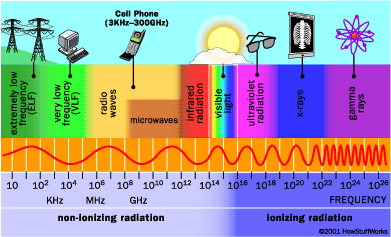
‘Clear evidence’ of mobile phone radiation link to cancers in rats, US health agency concludes
Uncertainty remains about risk to humans who experience much lower radio wave doses, Independent, Alex Matthews-King, Health Correspondent 2 Nov 18, A long-running US study on the effects of radio wave radiation, the sort emitted by mobile phones, has found “clear evidence” of high levels of exposure and heart cancers in male rats.
Some evidence of links to brain and adrenal gland tumours was also found in male rats, but in female rodents and male mice signs of cancer weren’t clear, the National Toxicology Programme (NTP) concluded in its final report on Thursday.
The programme is run by the US Department of Health and Human Services and was tasked with reviewing the toxicity of mobile phone radiation in response to the devices’ near ubiquity in modern life.
Radiation exposure in the trial was well above the levels most humans would experience, but researchers said the findings show the link between radio frequencies and tumours – at least for rats – “is real”.
“In our studies, rats and mice received radio frequency radiation across their whole bodies. By contrast, people are mostly exposed in specific local tissues close to where they hold the phone.
“In addition, the exposure levels and durations in our studies were greater than what people experience.”………..
Proposal to drill near a former nuclear weapons plant at Rocky Flats
Oil-gas wells proposed near Rocky Flats ex-nuclear weapons site, https://www.thedenverchannel.com/news/politics/oil-gas-wells-proposed-near-rocky-flats-ex-nuclear-weapons-site, Associated Press, Nov 1, 2018 DENVER (AP) — An oil and gas company is asking for state permits to drill near a former nuclear weapons plant in Colorado, but it’s unclear whether any of the wells would extend under the site.
End nuclear energy talks with Saudi Arbai – 5 Republican senators tell Trump

 Republican senators ask Trump to end nuclear energy talks with Saudi Arabia https://www.washingtonpost.com/powerpost/republican-senators-ask-trump-to-end-nuclear-energy-talks-with-saudi-arabia/2018/10/31/71fdbb60-dd20-11e8-b3f0-62607289efee_story.html?utm_term=.eb0c6524a937 By Karoun Demirjian October 31
Five Republican senators sent a letter to President Trump on Wednesday imploring him to end ongoing discussions with Saudi Arabia on nuclear energy cooperation in the wake of Washington Post contributor Jamal Khashoggi’s killing at the Saudi Consulate in Istanbul.
The senators also threatened in the letter to file legislation to block any civil nuclear agreements with Saudi Arabia if Trump will not agree to suspend negotiations “for the foreseeable future.”
“We already held serious reservations about negotiations for such an agreement,” Sens. Marco Rubio (R-Fla.), Todd C. Young (R-Ind.), Cory Gardner (R-Colo.), Rand Paul (R-Ky.) and Dean Heller (R-Nev.) wrote in the letter, first reported by NBC.
“The ongoing revelations about the murder of Saudi journalist Jamal Khashoggi, as well as certain Saudi actions related to Yemen and Lebanon, have raised further serious concerns about the transparency, accountability, and judgment of current decision-makers in Saudi Arabia.”
Congressional dissatisfaction with the U.S.-Saudi relationship was on a slow ascent before the prominent journalist’s disappearance earlier this month. But his apparent murder — which most lawmakers believe occurred at the behest of Saudi leaders, including Crown Prince Mohammed bin Salman — has precipitated unprecedented calls for consequences, from sanctions to an end to arms sales and military support for the Saudi kingdom in its controversial regional engagements, particularly in Yemen’s civil war.
Saudi officials have acknowledged that Khashoggi, a self-exiled critic of the Saudi government, was killed in the consulate, but deny that the action had their authorization.
[Turkish prosecutor says Khashoggi was strangled and dismembered in Saudi Consulate]
The senators’ letter indicates yet another layer of distrust in Saudi leaders: concern that the kingdom may try to adapt nuclear technologies acquired in a civil-use deal for weapon-making purposes.
Saudi Arabia has never agreed to terms that would prohibit it from turning a civil nuclear program dedicated for energy production into a tool to enrich uranium, reprocess plutonium and pursue other weapons-grade uses “that can bring a nation within weeks of producing a nuclear weapon,” they wrote, pointing out that the United Arab Emirates did accept such terms for a similar deal.
The senators suggested that it would be hypocritical and dangerous for the United States to accept anything less than a Saudi pledge to abide by terms of an Emirates-style deal — terms known as the “Gold Standard” — especially when the administration is demanding such behavior from Iran.
“Given your Administration’s ongoing efforts to press the Iranian regime — in the words of Secretary of State Mike Pompeo — to ‘stop enrichment and never pursue plutonium reprocessing,’ we have long believed that it is therefore critical and necessary for the Kingdom of Saudi Arabia to accept and uphold this ‘Gold Standard’ for responsible nuclear behavior,” the senators wrote.
USA’s new Federal Energy Regulatory Commission Chairman vows to reject political influence
Facing Trump coal and nuclear push, new energy panel chief swears off politics, Washington Examiner, by Josh Siegel, October 31, 2018
New Federal Energy Regulatory Commission Chairman Neil Chatterjee vowed Wednesday to protect the independent body from political influence as it considers how to handle the growing number of retirements of coal and nuclear plants.
“We should be separate an
d apart from any political influence on either side,” Chatterjee said. “I intend to do everything in my power.”
“I have made very clear to all of the staff at the agency that the agency’s independence from political influence will continue,” Chatterjee, a sitting GOP commissioner, told reporters at a briefing one week after the White House designated him chairman, replacing Kevin McIntyre, a fellow Republican who is suffering from health issues.
Chatterjee sought to rebut critics who fear, because of his political background representing a coal-friendly state, that he may be more sympathetic to the Trump administration’s interest in saving uneconomic coal and nuclear plants by subsidizing their continued existence……….
FERC in January voted unanimously to reject a proposal from Energy Secretary Rick Perry to provide special payments to struggling coal and nuclear plants in the name of resilience and reliability, saying the grid faces no immediate risk without them.
McIntyre and Chatterjee both opposed the Perry plan.
FERC, in rejecting Perry’s plan, directed regional transmission operators to submit information on resilience challenges in their markets. The commission is reviewing those responses and could act on its own. President Trump has repeatedly pressed for action to save coal and nuclear plants, but the White House has reportedly stalled over an effort to use emergency executive authority.
Any potential action would likely come through FERC.
Chatterjee said he would follow the “rule of law” on any decision on the matter and take action, or no action if the evidence does not support it, based on facts.
“This won’t be a politically influenced decision,” he said. “My actions will be taken by the record, facts, and the rule of law.”
The new FERC chairman also said he would not veer from the commission’s other priorities…… https://www.washingtonexaminer.com/policy/energy/facing-trump-coal-and-nuclear-push-new-energy-panel-chief-swears-off-politics
The world is in danger, as Donald Trump and John Bolton just don’t ‘get it’about nuclear treaties
WHAT TRUMP AND JOHN BOLTON DON’T UNDERSTAND ABOUT NUCLEAR WAR, 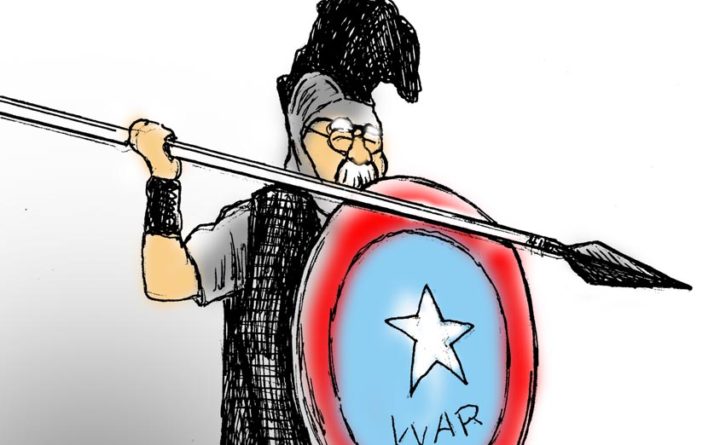 The Intercept, Jon Schwarz, PRESIDENT DONALD TRUMP’S announcement on October 20 that he intends to pull the United States out of the Intermediate-Range Nuclear Forces Treaty was, if nothing else, appropriately timed. On that date exactly 56 years before, President John F. Kennedy abruptly cut short a midterm campaign trip to Illinois because, the White House said, he had a cold. In fact, Kennedy was returning to Washington to address the Cuban missile crisis — the closest humanity has ever come to obliterating itself with a nuclear war.The INF treaty was signed in 1987 by President Ronald Reagan and Soviet General Secretary Mikhail Gorbachev. It required both countries to forgo any land-based missiles, nuclear or otherwise, with ranges between 500 and 5,500 kilometers. The Intercept, Jon Schwarz, PRESIDENT DONALD TRUMP’S announcement on October 20 that he intends to pull the United States out of the Intermediate-Range Nuclear Forces Treaty was, if nothing else, appropriately timed. On that date exactly 56 years before, President John F. Kennedy abruptly cut short a midterm campaign trip to Illinois because, the White House said, he had a cold. In fact, Kennedy was returning to Washington to address the Cuban missile crisis — the closest humanity has ever come to obliterating itself with a nuclear war.The INF treaty was signed in 1987 by President Ronald Reagan and Soviet General Secretary Mikhail Gorbachev. It required both countries to forgo any land-based missiles, nuclear or otherwise, with ranges between 500 and 5,500 kilometers.
In concrete terms, the treaty was a huge success. The U.S. destroyed almost 1,000 of its own missiles, and the Soviets destroyed almost 2,000 of theirs. But arms control treaties are never about weapons and numbers alone. They can help enemy nations create virtuous circles, both between them and within themselves. Verification requires constant communication and the establishment of trust; it creates constituencies for peace inside governments and in the general public; this reduces on both sides the power of the paranoid, reactionary wing that exists in every country; this creates space for further progress; and so on. The long negotiation of the INF treaty, and the post-signing environment it helped create, was part of an extraordinary collapse of tensions between the U.S. and the Soviet Union during the 1980s. When Reagan took office, the Soviets genuinely believed that the U.S. might engage in a nuclear first strike against them. This, in turn, led to two separate moments in 1983 in which the two countries came terrifyingly close to accidental nuclear war — closer than at any time since the Cuban missile crisis. Instead, the INF treaty was part of an era of good feelings that contributed to one of the most remarkable events of the past 100 years: the largely peaceful implosion of the Soviet Empire. Empires generally do not go quietly, and the dynamics of imperial collapse often contribute to huge conflagrations. Think of the Austro-Hungarian Empire, the Ottoman Empire, and World War I; or the British Empire and World War II. The Soviet fall was an incredible piece of good fortune for the world; if it had happened in the early 1980s, instead of a few years later, it plausibly would have been catastrophic…….. exiting the treaty will do more than just lead to an arms race in which all three countries throw themselves into building new weapons. It will also create an atmosphere in which any rational modus vivendi between the U.S. and Russia, or the U.S. and China, will be far more difficult. This is the prize for Bolton and his allies, who can imagine only one world order: One in which they give orders, and everyone else submits. Bolton has the standard self-perception of his genre of human: In his memoir, “Surrender Is Not an Option,” he explains that he cares about “hard reality,” in contrast to the “dreamy and academic” fools who support arms control. But in fact, it is Bolton who is living inside of a dream. The hard reality is that our species almost committed suicide on October 27, the most dangerous moment of the Cuban missile crisis, later dubbed Black Saturday by the Kennedy administration. Even with comparative doves in charge of the U.S. and the Soviet Union, we came close to ending human civilization, thanks to mutual incomprehension. And we avoided it, as then-Defense Secretary Robert McNamara later said, not by talent or wisdom, but pure luck. Then, we created a false history of what happened, one which allows terrifying fantasists like Bolton to reach, and thrive within, the highest levels of power……… Shortly after midnight, in the early morning of Black Saturday, the U.S. informed NATO that it “may find it necessary within a very short time” to attack Cuba. At noon, a U-2 flight over Cuba was shot down, killing the pilot. On all sides, war — potentially nuclear war — seemed likely, if not inevitable. But that night, Kennedy made the most important presidential decision in history: He accepted an offer from Soviet leader Nikita Khrushchev to remove the U.S. missiles in Italy and Turkey in return for the removal of the Soviet missiles in Cuba. But the U.S. part of the bargain was kept secret from Americans. The administration maintained that Kennedy had forced the Soviets to give in, giving them nothing. That was, of course, more than frightening enough. But here’s the rest of the story. ON OCTOBER 27, A U.S. Navy ship participating in the blockade dropped depth charges on a Soviet submarine. It was only discovered years later that not only was the submarine armed with nuclear torpedoes, but also was out of radio contact with the Soviet government and believed that the war had begun. The captain wanted to use the torpedoes, which almost certainly would have led to the U.S using nuclear weapons in response. However, according to Soviet protocol, the torpedoes could only be launched with the approval of all three officers aboard. One of them refused. ……… what we can be sure of is that if people like Trump and Bolton had been in charge in 1962, then today there would be no discussion of the INF treaty — because there would be no treaty and no one to discuss it. It’s also certain that on our current trajectory, the day will come when the world will face a similar crisis. That time we won’t get the same roll of the dice. The hard reality of the Cuban missile crisis is that, as Blight and Lang put it, “either we put an end to nuclear weapons, or they will put an end to us.” https://theintercept.com/2018/10/27/trump-inf-treaty-cuban-missile-crisis-nuclear-war/ |
|
Energy Secretary Rick Perry and Donald Trump saying different things about Yucca nuclear waste dump plan
| Energy Secretary Says White House Still Backs Nevada Nuke Dump, Financial Express, By: Bloomberg October 27, 2018
Energy Secretary Rick Perry said the White House still supports construction of a planned repository for nuclear waste in Nevada, despite President Donald Trump’s suggestion over the weekend that he was reconsidering. When asked if the Trump administration still supports Yucca Mountain, Perry swiftly said “Yes.” “I’m making this presumption by looking at a budgeting process and there was money in the president’s budget to manage Yucca,” Perry said, after giving remarks at the department’s Brookhaven National Laboratory in Upton, New York. Trump requested $120 million in his budget proposal for the geologic repository 90 miles north of Las Vegas. ……….Trump told a Nevada television station he was reconsidering his support after campaigning last weekend with Senator Dean Heller, an embattled Republican senator who opposes the project and is in a tight re-election battle. “I think you should do things where people want them to happen, so I would be very inclined to be against it,” Trump said in Oct. 20 interview with KRNV-News 4. “We will be looking at it very seriously over the next few weeks, and I agree with the people of Nevada.”…….. https://www.financialexpress.com/world-news/energy-secretary-says-white-house-still-backs-nevada-nuke-dump/1363704/
|
USA’s subsidy to coal and nuclear power stalled, but still a possibility
|
Coal And Nuclear Subsidy Still Alive Despite Stall, Wyoming Public Media By COOPER MCKIM • OCT 26, 2018, Coal-fired power plants are closing down in unprecedented numbers, many of which are Wyoming coal customers. In June, President Trump took a step to change that. Taylor Kuykendall, a coal reporter with S&P Global Market Intelligence, gives context to the coal and nuclear plant subsidy introduced last June.
TK: The basic idea is that the Department of Energy would like to intervene into the energy markets and basically either order grid operators to buy electricity from struggling coal nuclear plants or they would provide some sort of an incentive to do so. And currently, a lot of those units are retiring because it’s cheaper to get energy from elsewhere. And so, what the DOE is doing here is making a national defense or a national security argument that basically gives wide deference to the administration that would allow them to come in and intervene in those markets and put their thumb on the scale in support of coal and nuclear plants that otherwise might not dispatch. …….
I think one of the things to keep in mind is that even all of the even before the opposition is stacked against the proposal any sort of legal battles is going to be a very protracted process. …..there’s a lot of kind of a top-down political drive to move this thing forward……..
this is probably going to be a very costly proposal and anything that we’ve seen so far doesn’t really detail who’s going to pay for it or how they’re going to pay for it. ……. someone’s got to pay for it and that’s going to be pretty politically damaging…….http://www.wyomingpublicmedia.org/post/coal-and-nuclear-subsidy-still-alive-despite-stall#stream/0
|
|
1 This Month





PLEASE OPPOSE HR 8255 AND S.3639 – bills would accelerate satellite deployment, with no environmental review or safeguards – https://ncstd5li.quorum.us/campaign/169331/
To see nuclear-related stories in greater depth and intensity – go to https://nuclearinformation.wordpress.com
-
Archives
- October 2026 (19)
- September 2026 (339)
- August 2026 (330)
- July 2026 (355)
- June 2026 (287)
- May 2026 (306)
- April 2026 (356)
- March 2026 (251)
- February 2026 (267)
- January 2026 (308)
- December 2025 (358)
- November 2025 (359)
-
Categories
- 1
- 1 NUCLEAR ISSUES
- business and costs
- climate change
- culture and arts
- ENERGY
- environment
- health
- history
- indigenous issues
- Legal
- marketing of nuclear
- media
- opposition to nuclear
- PERSONAL STORIES
- politics
- politics international
- Religion and ethics
- safety
- secrets,lies and civil liberties
- spinbuster
- technology
- Uranium
- wastes
- weapons and war
- Women
- 2 WORLD
- ACTION
- AFRICA
- Atrocities
- AUSTRALIA
- Christina's notes
- Christina's themes
- culture and arts
- Events
- Fuk 2022
- Fuk 2023
- Fukushima 2017
- Fukushima 2018
- fukushima 2019
- Fukushima 2020
- Fukushima 2021
- general
- global warming
- Humour (God we need it)
- Nuclear
- RARE EARTHS
- Reference
- resources – print
- Resources -audiovicual
- Weekly Newsletter
- World
- World Nuclear
- YouTube
-
RSS
Entries RSS
Comments RSS

