Pompeo to Seoul: Nuclear progress must not lag better Korea ties, REUTERS, November 21, 2018 WASHINGTON--The United States has told its ally South Korea it should not improve ties with North Korea faster than Pyongyang takes steps to give up its nuclear weapons, U.S. Secretary of State Mike Pompeo said on Tuesday.
Speaking as a working group with South Korea to coordinate North Korean policy held an inaugural meeting in Washington, Pompeo indicated that Washington had been concerned that Seoul had moved too quickly with Pyongyang.
“We have made clear to the Republic of Korea that we do want to make sure that peace on the peninsula and the denuclearization of North Korea aren’t lagging behind the increase in the amount of inter-relationship between the two Koreas,” he told a news briefing………
Last month, in a rare sign of discord between Seoul and Washington, South Korean Foreign Minister Kang Kyung-wha said Pompeo had expressed “discontent” at an inter-Korean military pact reached during a summit in September.
The Koreas also agreed in October to begin reconnecting rail and road links despite U.S. concerns that the rapid North-South thaw could undermine efforts to press Pyongyang to give up its nuclear weapons.
At an unprecedented summit in June, U.S. President Donald Trump and North Korean leader Kim Jong Un agreed to work toward denuclearization and peace on the Korean Peninsula and establish new relations.
But negotiations have since made little headway, with Pyongyang upset by Washington’s insistence that international sanctions must remain until it gives up its nuclear weapons.
Last week, South Korean Unification Minister Cho Myoung-gyon said in Washington it was important to provide North Korea with motivation to denuclearize but that sanctions would stay in place “until we see actual progress on denuclearization.” http://www.asahi.com/ajw/articles/AJ201811210041.html
Gender Differences in Public Understanding of Climate Change, Yale Program on Climate Change Communication By Matthew Ballew, Jennifer Marlon, Anthony Leiserowitz and Edward Maibach , 21 Nov 18, While political views play a strong role in Americans’ opinions on climate change, there are many other individual, social, and cultural factors that influence public understanding of the issue. Here we explore how views on climate change differ between men and women. A large body of research shows a small—but consistent—gender gap in environmental views and climate change opinions. On average, women are slightly more likely than men to be concerned about the environment and have stronger pro-climate opinions and beliefs. Scholars have proposed several explanations for this gender gap, including differences in gender socialization and resulting value systems (e.g., altruism, compassion), perceptions of general risk and vulnerability, and feminist beliefs including commitment to egalitarian values of fairness and social justice. Some researchers also note that some of the strongest gender differences are found in concern about specific environmental problems, particularly local problems that pose health risks.In our research, we find that, although a similar proportion of men and women think global warming is happening and is human-caused, women consistently have higher risk perceptions that global warming will harm them personally, and will harm people in the U.S., plants and animals, and future generations of people (Fig. 1 on original). Also compared with men, a greater proportion of women worry about global warming, think that it is currently harming the U.S., and support certain climate change mitigation policies, specifically regulating CO 2 as a pollutant and setting strict CO 2 limits on coal power plants……….
on average, women scored lower than men in scientific knowledge on climate change ……..Women were also more likely than men to express uncertainty about a variety of questions. For instance, respondents were asked how much several factors contribute to global warming (e.g., deforestation, nuclear power plants, burning fossil fuels, the sun, cars and trucks). Across many of these questions, a greater proportion of women said “don’t know” than did men
Closing gender gaps in knowledge and understanding of the problem, therefore, ought to receive more attention in climate education and outreach efforts to further engage and empower women in climate issues. This is especially important because women are more likely than men to be harmed by environmental problems like climate change—both nationally and globally. In a recent BBC News Science & Environment article, U.N. data show that globally women make up 80% of people who are displaced by climate change. Because women in many countries tend to have roles as primary caregivers and food providers—and tend to have less socioeconomic power than men—they are more vulnerable to climate problems including natural hazards like flooding, droughts, and hurricanes. In the U.S., for instance, the Institute for Women’s Policy Research reported that 83% of low-income, single mothers did not return to their homes in New Orleans after Hurricane Katrina hit in 2005. In terms of public health, air pollution is considered a leading threat to pregnant women and their babies-to-be.
Women play an essential role in responding to climate change. In fact, out of 100 substantive climate solutions identified through rigorous empirical modeling, improving the education of women and girls represents one of the top solutions (#6) to reducing greenhouse gas emissions that cause global warming—similar in ranking to restoring tropical forests and ranking above increased solar energy generation. Women in leadership positions can also foster climate policy solutions. A study on gender equality and state-level environmentalism found that, across 130 countries, women in government positions were more likely to sign on to international treaties to reduce global warming than men. Promoting the participation of diverse women in leadership positions, as well as climate science, can also inspire young women to participate too.
The US midterm elections of November 6, 2018, produced a divided Congress and essentially reaffirmed the existence of two nations in one country. But they also revealed, once again, the deep state of moral and political depravity that prevails in the country’s political culture — at least insofar as political campaigns go. In the exclusive interview below, world-renowned scholar and public intellectual Noam Chomsky discusses how the major issues confronting the United States and the world at large were barely addressed by the majority of candidates of both parties.
……..Noam Chomsky: The most striking features are brutally clear.
Humanity faces two imminent existential threats: environmental catastrophe and nuclear war. These were virtually ignored in the campaign rhetoric and general coverage. There was plenty of criticism of the Trump administration, but scarcely a word about by far the most ominous positions the administration has taken: increasing the already dire threat of nuclear war, and racing to destroy the physical environment that organized human society needs in order to survive.
These are the most critical and urgent questions that have arisen in all of human history. The fact that they scarcely arose in the campaign is truly stunning — and carries some important, if unpleasant, lessons about our moral and intellectual culture.
To be sure, not everyone was ignoring these matters. They were front and center for those who are constantly vigilant in their bitter class war to preserve their immense power and privilege. Several states had important ballot initiatives addressing the impending environmental catastrophe. The fossil fuel industry spent huge, sometimes record-breaking, sums to defeat the initiatives — including a carbon tax in the mostly Democratic state of Washington — and mostly succeeded.
We should recognize that these are extraordinary crimes against humanity. They proceed with little notice.
The Democrats helped defeat these critically important initiatives by ignoring them. They scarcely mentioned them “in digital or TV ads, in their campaign literature or on social media,” a New York Times surveyfound. Nor, of course, were they mentioned by the Republicans, whose leadership is dedicated to driving humanity off the cliff as soon as possible — in full knowledge of what they are doing, as easily demonstrated……….
The concentration of wealth and enhancement of corporate power translate automatically to decline of democracy. Research in academic political science has revealed that a large majority of voters are literally disenfranchised, in that their own representatives pay no attention to their wishes but listen to the voices of the donor class. It is furthermore well established that elections are pretty much bought: electability, hence policy, is predictable with remarkable precision from the single variable of campaign spending, both for the executive and Congress. Thomas Ferguson’s work is particularly revealing, going far back and including the 2016 election. And that is a bare beginning. Legislation is commonly shaped, even written, by corporate lobbyists, while representatives who sign it have their eyes on funding for the next election………..
How do we explain the fact that while US politics seems nastier, more polarized and more divided than any other time in recent history, both parties stay away from addressing the most critical issues facing the country and the world at large?
In 1895, the highly successful campaign manager Mark Hanna famously said: “There are two things that are important in politics. The first ismoney, and I can’t remember what the second one is.”
Those who control the wealth of the country have their own priorities, primarily self-enrichment and enhancement of decision-making power. And these are the priorities that prevail in a neoliberal democracy with the annoying public dismissed to the back rooms where they belong.
The CEOs of major banks surely understand the extraordinary threat of environmental catastrophe but are increasing investment in fossil fuels because that’s where the money is. Like the energy corporations, they are hardly eager to support candidates warning of the serious crimes they are committing. Lockheed-Martin and its cohorts are quite happy to see vast increases in the military budget and are surely delighted with such declarations as the Trump administration’s new National Defense Strategy, just released by the US Institute of Peace (lacking a sense of irony, the bureaucracy is quite happy to caricature Orwell).
This somber document warns that our dangerously depleted military, which almost overwhelms the rest of the world combined, might not be able to prevail in a two-front war against Russia and China. Of course, neither military industry nor the distinguished authors of the report believe that such a war could even be fought without terminal destruction, but it’s a great way to siphon taxpayer dollars away from absurdities like health and education and into the deserving pockets of the captains of industry and finance……….
the actual constituency of the Republican Party remains great wealth and corporate power, even more dramatically so under Trump. It is quite an achievement to serve this actual constituency with dedication while maintaining a hold on the voting base.
As their voting base shrinks, Republican leaders understand that the GOP is becoming a minority party, which is why they are so dedicated to finding modes of voter suppression and packing the courts with reactionaries who will support their efforts……….. https://truthout.org/articles/noam-chomsky-moral-depravity-defines-us-politics/
U.S. Nuclear Fleet’s Dry Docks Threatened by Storms and Rising SeasDamage to key military shipyards would undermine the Pentagon’s ability to respond to military crises and counter China’s ambitions. Inside Climate News, By Nicholas Kusnetz NOV 19, 2018 PORTSMOUTH, Va. — At the foot of the Chesapeake Bay in southeast Virginia lies a Naval shipyard older than the nation itself. One of the country’s first warships was built here in 1799. So was the first battleship, and decades later the first aircraft carrier.Over a quarter millennium, Norfolk Naval Shipyard has been blockaded and burnt to the ground by the British, the Union and the Confederates, only to be rebuilt again and again to evolve into a hub of Naval power.
Today, it’s an essential maintenance facility for the nation’s fleet of nuclear-powered submarines and aircraft carriers, and it’s facing a threat that could shut it down permanently.
Rising seas will likely engulf the shipyard by century’s end, but the reckoning for Norfolk and nearby military installations could come much sooner.
“They’re going to disappear” unless the Pentagon acts quickly to protect them, said Ray Mabus, Navy secretary under President Barack Obama.
The most immediate worry is a direct hit from a major storm. “It would have the potential for serious, if not catastrophic damage, and it would certainly put the shipyard out of business for some amount of time,” Mabus said. “That has implications not just for the shipyard, but for us, for the Navy.”
The shipyard is among the American military sites most vulnerable to climate change. Because of its role in maintaining the fleet, damage to the aging facility could undermine the Pentagon’s ability to respond to military and humanitarian crises and to counter China’s growing naval ambitions. …….
The dry docks “were not designed to accommodate the threats” of rising seas and stronger storms, according to a 2017 report by the Government Accountability Office. Navy officials warned the GAO that flooding in a dry dock could cause “catastrophic damage to the ships.”
Already, high-tide flooding is contributing to extensive delays in ship repairs, the GAO said, disrupting maintenance schedules throughout the nuclear fleet.
The Navy has erected temporary flood walls to protect the dry docks and has begun elevating some equipment. It also recently proposed a more permanent barrier and other projects to address flooding, part of a 20-year, $21 billion plan the Navy submitted to Congress this year to modernize its four shipyards.
But the new projects have yet to be approved by lawmakers……….
Climate change is threatening to impair the military’s ability to respond to crises and defend the nation, not only at the shipyard but throughout its operations. The Defense Department has publicly recognized this risk for at least 15 years. The Navy, in particular, understands what is at stake, with so many facilities along the coasts and its forces often the first to arrive on the scene of humanitarian crises triggered by extreme weather……….
Addressing climate change has become more difficult under President Donald Trump. His administration omitted mention of climate change in its first National Security Strategy and instead called for greater fossil fuel development. Trump rescinded an Obama executive order that, in part, sought to provide intelligence analysts with the most current climate science to better monitor potential global hotspots. Nearly all references to climate change were also stripped from the final draft of a survey about the effects of climate-driven weather on facilities.
Military officials have become reluctant to work openly on climate change in the current political environment, said Joan VanDervort, former deputy director for ranges, sea and airspace at the Pentagon. “They have gone underground. They’re doing the same work but calling it something different. They try to stay away from the words ‘climate change,’ and use words like natural resources and resiliency and terms like weather, hurricanes,” she said. When you omit “climate change as a priority related to our national security, it’s very difficult to get funding.”…………
Every Year You Wait, the Risk Goes Up
A decade ago, the chief of naval operations commissioned the National Research Council to study the implications of climate change on the Navy’s mission. The 2011report warned that global warming would strain the service’s capabilities. More severe weather would trigger famine and mass migration, requiring more humanitarian aid. A thawing Arctic would stress the Navy’s fleet by opening a vast new arena to police in particularly harsh conditions. Rising seas and harsher storms would put bases at risk: 56 facilities worth a combined $100 billion would be threatened by about 3 feet of sea level rise (the list has not been made public).
It warned that the Navy needed to begin investing in protections immediately at facilities facing the greatest climate risks, and had only 10 to 20 years to begin work on the rest. Seven years later, there’s been little progress, said retired Rear Adm. Jonathan White, who led the Navy’s Task Force Climate Change before retiring in 2015.
“Many of those recommendations, most if not all, have gone unanswered,” he said. “Every year you wait to make decisions and take actions, the risk goes up. And I think the expense also goes up.”………..InsideClimate News reporter Neela Banerjee contributed to this story.
Nuclear Advocates Set Sights on Advanced Reactors for Puerto Rico
With big push of meetings with key officials, nuclear industry hopes to be part of Puerto Rico’s energy future, Morning ConsultBY JACQUELINE TOTH November 19, 2018
Supporters are highlighting the energy, climate and safety benefits of advanced reactor concepts.
Puerto Rico’s House of Representatives passed a resolution to study nuclear energy.
Details are sparse this early in the discussions, and Puerto Rico has no concrete plans for nuclear, instead focusing on other sources.
Nuclear industry professionals have launched a long-term bid to convince Puerto Rico they may have the solution for the island’s energy woes. ………
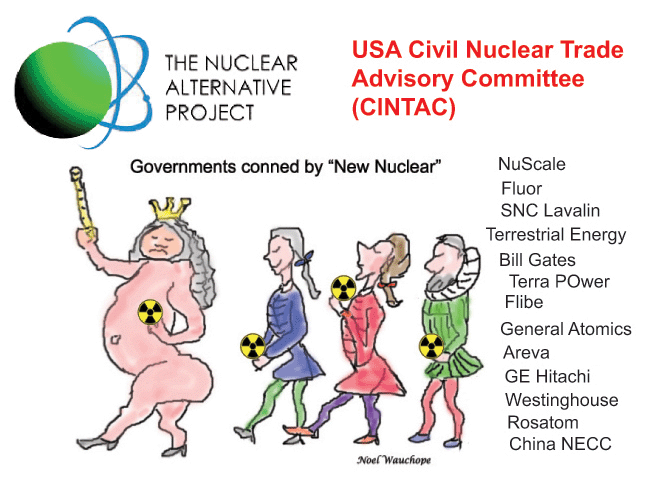
A group of nuclear industry professionals, who have formed The Nuclear Alternative Project nonprofit organization, recently hosted a group of nuclear executives to meet with Puerto Rican lawmakers and officials to discuss new nuclear concepts.
“We were in Puerto Rico for four days, and we were able to take the conversation from, ‘You guys are nuts,’” to something Puerto Ricans would consider if it would lower their energy bills, said Jesabel Rivera, the nonprofit’s community impact and engagement consultant.
But a host of questions over when, where, how and at what cost these reactors would be deployed and operated in Puerto Rico remains unanswered at this early stage. Some groups have also raised environmental concerns.
Officials from companies that included small modular reactor and micro-reactor developers NuScale Power LLC, X-Energy LLC, Westinghouse Electric Co. and GE-Hitachi Nuclear Energy Inc., attended the meetings on the island.
“A lot of folks didn’t know anything about nuclear other than what they had kind of seen in movies,” said Jose Reyes, chief technology officer of NuScale, who attended the trip. “One person mentioned Homer Simpson.”
Another participant was Donald Hoffman, president and chief executive of nuclear consultancy EXCEL Services Corp., founder of the United Nuclear Industry Alliance, a former adviser to now-President Donald Trump and a member of the Commerce Department’s Civil Nuclear Trade Advisory Committee.
Several of the recent tour’s other participants are CINTAC members.
After the tour, Puerto Rico’s House of Representatives on Nov. 7 approved a resolution that calls on the House Government Commission to investigate the need for nuclear energy reactors on the island and report back within 180 days.
SMRs are billed as faster-to-construct, safer technologies with longer refueling cycles compared to older nuclear reactors, though no U.S. designs have yet undergone construction. The U.S. SMR furthest along in the Nuclear Regulatory Commission licensing process is NuScale, which has completed phase one of design review……
But discussions are at a nascent stage.
“There’s not enough detail yet. There’s no site,” design or cost determination for nuclear in Puerto Rico, Carlos Fernández-Lugo, chairman of the environmental, energy and land use practice group at law firm McConnell Valdés LLC, said during an Oct. 30 public panel discussion on nuclear energy held at the Mayagüez campus of the University of Puerto Rico.
It also remains unclear whether the customer for a nuclear plant would be the Puerto Rico Electric Power Authority, the struggling government-owned utility that is undergoing restructuring.
The Nuclear Alternative Project is looking for funding to move forward with a feasibility study, Rivera said.
On Friday, however, a spokeswoman from the Department of Energy said the department does not have plans for a study on advanced nuclear in Puerto Rico at this time.
Puerto Rico does not currently have any operating nuclear reactors, but it once had the Boiling Nuclear Superheater Reactor Facility, an experimental reactor in Rincón, which operated at full power in 1965 but stopped about three years later due to technical difficulties and the resulting expensive changes that would be required. It was decommissioned, and decontamination work continued into the early 2000s. https://morningconsult.com/2018/11/19/nuclear-advocates-set-sights-advanced-reactors-puerto-rico/
Sputnik News, 18 Nov 18The former NSA contractor, who faces capital punishment in the US for leaking classified information on numerous US secret surveillance programmes, voiced his support for the WikiLeaks founder after it came to light that US authorities are apparently poised to indict Julian Assange.
Edward Snowden, who has been granted political asylum in Russia, has voiced his concern about the dangerous precedent for stifling press freedom which could emerge from the US Justice Department’s alleged plans to prosecute WikiLeaks founder Julian Assange.
The Freedom of the Press Foundation, where Snowden is a board member, also issued a statement condemning the possible indictment of Julian Assange, whose website published a classified Iraqi dossier revealing that the US killed civilians during the country’s 2003 invasion and subsequent occupation. Trevor Timm, executive director of Freedom of the Press Foundation, cited a profound threat to press freedom if any charges are brought against WikiLeaks for their publishing activities.
“Whether you like Assange or hate him, the theories used in a potential Espionage Act prosecution would threaten countless reporters at the New York Times, Washington Post, and the many other news outlets that report on government secrets all the time. While everyone will have to wait and see what the charges detail, it’s quite possible core First Amendment principles will be at stake in this case,” his statement reads.
Earlier this week, it came to light through what is believed to be an accident that there’s a sealed complaint against Assange, as the US Department of Justice is gearing up to prosecute the whistleblower. It is now “optimistic” about the prospect of securing his release to US authorities, a new report suggests. According to the Wall Street Journal, prosecutors have weighed several types of charges against the journalist, who has resided in self-imposed exile at the Ecuadorian Embassy in London since 2012……….https://sputniknews.com/us/201811171069890725-snowden-assange-whistleblower-prosecution/
In 2017, the Nuclear Regulatory Commission accepted Waste Control Specialists’ application to begin an interim storage facility for nuclear waste at an Andrews County dump.
The public can submit their opinion to the NRC at nonuclearwaste.org. The deadline for comments is midnight on Monday.
WCS initially hoped to break ground in 2020, but that timeline has been pushed back due to a change in ownership. The license decision from the NRC could be made as early as 2020 and according to NRC spokesperson David McIntyre, the NRC is currently working on an environmental safety and security reviews that won’t be completed until the fall of 2019.
In March, Orano, a French company specializing in nuclear power and renewable energy, and WCS formed a joint venture to license the interim storage facility.
Public Citizen and SEED have intervened in that license application citing a variety of hazards in transporting and storing that nuclear waste. Seven of the eight radioactive waste sites that have been proposed over the last 40 years in Texas have been stopped — the only one to pass is in Andrews County.
“There’s no benefit to Texas taking the nation’s high-level radioactive waste,” said Tom “Smitty” Smith, who was the former director of Public Citizen. “This is waste that nobody else wants that other states have said, ‘We don’t want it in our borders.’ It’s waste that people who live around nuclear reactors have organized to politically to send it somewhere else.
“Here in Texas it’s believed because of former governor (Rick) Perry and because Andrews County said, ‘we would like bring this waste to us,’ that somehow we have expressed consent. More than five million people that live in cities have expressed their opposition.”
SEED Director Karen Hadden said one of the reasons behind submitting opinions online is due to the lack of public meetings by the NRC. There was one meeting in Andrews that took place in 2017, one public meeting in Hobbs, N.M. and two meetings were in Rockville, Md.
McIntyre said after the environmental safety and security reviews is completed in 2019, the NRC will return to Texas for the public to voice opinions and concerns.
The interim storage facility could hold up to 40,000 tons of irradiated nuclear reaction fuel over the life of the 40-year permit. There are no restrictions on how many times WCS could renew its permit.
Hadden is concerned the interim nuclear waste site could stay permanently.
“We risk the waste could stay forever,” Hadden said.
The current application states the nuclear waste would be transported by railroads.
Yet, Dallas, San Antonio and Midland have already opposed the transport of nuclear waste in and around the city
Activist attorney Terry Lodge, who resides in Toledo, Ohio, said over the phone there’s an interim storage already in place — onsite storage.
Lodge continued to explain on a daily basis, it’s overseen by the NRC. It means there’s an alternative that’s taking place instead of the plan to ship everything to the middle of the desert — in some instances thousands of miles — through cities and risk accident, sabotage or terrorism.
“A lengthy petition has been filed to intervene rising 14 various technical points including objections to the legality and odd financing scheme that’s being proposed by WCS when there’s no federal law even allows it,” Lodge said.
The concern also arises when the nuclear waste is transported through neighbors.
Adrian Shelley, current Public Citizen director, said over last several weeks the company used EJSCREEN to look at communities along Class I rail routes across Texas. EJSCREEN can see age, race, education level, income level and language along rail routes.
Shelley said some of the urban areas along those routes have as high as 90 percent of minority residents and in other areas that number is closer to 70 percent. A majority of the people that live along these rail routes don’t speak English, Spanish being the most common.
Lodge said there are also safety concerns for thousands of trips — 3,000 minimum — and there are some Department of Energy policies under consideration that would double, triple or quadruple the number of shipments because of the need to reload the fuel rods into smaller canisters, so they could ultimately be disposed in a geological repository.
“It’s a massive transportation campaign, increasing risk with the number of trips and potential for a serious accident in transit that could have effects according to federal agencies as far as 50 miles downwind,” Lodge said.
Smith added that a 10-year survey from the U.S. Department of Transportation website discovered there have been more than 10,000 railroad accidents in Texas. Many of those involved hazardous cargos. During that 10-year period of time, 25 of the cars carrying hazardous materials had some sort of rupture or leak.
Smith said a report submitted that’s part of the Yucca Mountain licensing process stated an accident could cost $3.5 to $45 billion if the casks were penetrated, but not perforated. If there was a sabotage event and the casks were fully perforated, the cleanup costs could be somewhere between $300 and $648 billion dollars.
“The risk of a train accident is not insignificant,” he said.
The Christian Vacation Camp Where Kids Are Taught by Notorious Climate Science Deniers, DESMOG, By Graham Readfearn • Tuesday, November 13, 2018 –Each morning at Camp Constitution’s summer camp, the kids and parents go off to classes while staff members do a room inspection.“What we look for is not just cleanliness, but a patriotic and Godly theme,” says camp director Hal Shurtleff in a video of the 2016 camp.
“We are looking for creativity — are they learning what we are teaching them?”
And what are they being taught? Conspiracy theories about the United Nations (UN) and how climate change is a hoax, and they’ve drafted in two of the world’s most notorious climate science denialists to do the job.
The rooms — named after “places of refuge in the old testament” — are covered with U.S. nationalistic garlands and flags. A “Make America Great Again” (MAGA) hat is perched on a wooden bunk post.
Children take quotes they’ve learned from classes, and turn them into posters. One encourages the United Nations to keep out.
Another lists “buzzwords” including CO2, climate change, environmental justice, and endangered species.
“You hear these buzzwords and you know the bad guys are behind the scenes,” says a commentating Shurtleff.
Shurtleff is a former regional director of the John Birch Society — the UN-hating, right-wing conservative group known for, among other things, pushing a conspiracy that the UN’s promotion of environmental sustainability was in fact a sinister plot to install a world government.
But as well as learning about the evils of sensible resource use, the kids at this summer’s Camp Constitution attended classes by climate science deniers Lord Christopher Monckton and Dr. Willie Soon………..
Also on the agenda was former John Birch Society president John “Jack” McManus, who told the youngsters, some who stay with their parents, how the U.S. should “Get Us Out of the United Nations” while explaining his full anti-UN “world governement” conspiracy theory. He even sold them a booklet for the discounted price of $2.
In fight over power bills, SCE&G seeks to disparage ex-employees, $1 million nuclear report, Greenville News, Avery G. Wilks, The State Nov. 19, 2018 COLUMBIA— When the S.C. Public Service Commission rules on SCE&G’s electric rates next month, the Cayce-based utility doesn’t want those regulators to put too much stock into scathing testimony by two of its former employees.
Nor does SCE&G want the commission to weigh heavily a nuclear contractor’s late 2015 assessment that concluded SCE&G’s $9 billion nuclear construction project was foundering and way behind schedule.
Fighting allegations of fraud and mismanagement in this month’s PSC hearing into the failed V.C. Summer Nuclear Station expansion project, SCE&G has sought to disparage its former employees and a high-powered construction company that it paid $1 million.
It is a key part of SCE&G’s defense as the state’s utility watchdog, environmentalists and consumer groups cite those witnesses to bolster their arguments that the utility’s power bills – which rose by about $27 a month to bankroll the failing project – should be slashed.
That strategy likely will be on display again Tuesday when former utility executive Carlette Walker, vice president of nuclear finance administration for SCE&G’s parent company SCANA, and retired SCE&G engineer Ken Browne testify before the commission for the first time in this case.
Impeach your own people’
Walker and Browne are star witnesses for the S.C. Office of Regulatory Staff, the state’s utility watchdog.
In sworn statements filed with the PSC, both have said SCE&G executives misled the commission in 2015 by testifying the project would cost $698 million more to complete – a number supplied by the project’s lead contractor, Westinghouse.
That number was unrealistically low and based on a productivity rate that never had been achieved at the Fairfield County construction site, Walker and Browne say. A team of SCE&G accountants and engineers worked for weeks to estimate the project actually would cost an additional $1.2 billion to finish — $500 million more than Westinghouse had said.
How the U.S. Government Might Have Survived a Nuclear War, Yes, this is the real Deep State, National Interest, by Steve Weintz, 18 Nov 18
With the arrival of the Bomb and its immense destructive power, the efforts to protect elites and commoners alike from swift destruction assumed novel and at times grotesque forms. Civil defense foundered in America upon the sheer scale of the problem—getting tens of millions of urbanites out of cities and into shelters before enemy nukes arrived. Ultimately the United States quietly gave up on protecting the majority of its residents from nuclear attack via shelter, and opted for a grand technological fix in missile defense.
Elite shelter concepts, however, had better success. Ostensibly, this makes sense; targeting the enemy leadership can sometimes win a struggle. The assassination of Admiral Yamamoto by the U.S. Navy in 1943, for example, derailed Japan’s defense of its island conquests. But such a policy opens a door into a very dark room, as many leaders instinctively know.
Tofrom early on in the Nuclear Age the U.S. government explored numerous ways to keep itself safe during and after Armageddon.
The Greenbriar Resort in West Virginia, a grand old vacation destination abounding in stately elegance, now includes a Cold War extra amongst a tour of its premises: the congressional bunker built in the late 1950s under the guise of a resort expansion. The Greenbriar bunker is a true time capsule, its rotary-dial phones and fusty office chairs ready for the cast of a period movie.
The Greenbriar bunker was never used for its intended purpose and was decommissioned in 1992 after a news expose. When members of Congress evacuated the Capitol on September 11, 2001, they flew to the Mount Weather emergency command facility in the Blue Ridge Mountains. Now run by FEMA, Mount Weather can shelter several hundred people from all three branches of government for months.
Along with Congress agencies such as the Federal Reserve made accommodations for apocalypse, including giant vaults full of currency . As Strangelovian as it sounds, the work of returning American society to some semblance of pre-war routine would depend on cash and banking.
As aircraft became faster and missiles faster still the warning times for nuclear attack shrank from hours to minutes. Even as Greenbriar and Mount Weather were conceived and built, the evolving threat demanded more urgent safety measures. As Mark, the author of Atomic Skies blog writes:
“Two solutions were considered: mobility and hardness. Mobility meant keeping the president on the move, on plane or train or ship, so that the Soviets could not find and kill him. Hardness meant burying the president, deep underground, deeper than even a nuclear weapon could reach.” ………
So are there deep bunkers carved into the American soil still hiding in the dark? Vast sums have been spent since 9/11 and much is unaccounted for. But the same concerns that kept super bunkers from being built – cost, capacity and effectiveness—mitigate against any grand caverns of doom.
THEY OCCURRED IN 1959, 1964, 1969, Doug Carrol 19 Nov 18
“Until 2006, the site was operated by private corporations for federal agencies — chiefly NASA. The problems there began in 1959, when a nuclear reactor partially melted down, contaminating portions of the hilltop facility and spewing radioactive gases into the atmosphere. That incident wasn’t publicly disclosed until 1979. By then, more mishaps had followed, including reactor accidents in 1964 and 1969. The worst contamination is thought to be in a parcel known as Area IV, where the meltdown occurred”
20 years of the worst radioactive shit in the universe accumulated in simi valley, where the horrendous fire occured this past week. The place has not been cleaned up. The fires, that englufed Ventura county and Malibu. 3 nuclear meltdowns occured at Santa susana in a 10 year period. Multiple ignitions of shitty nuclear reactor engines, that just spewed radioactive shit into the valley, everytime they fired it off. The recent fires in ventura county, picked up that cesium 137, plutonium yada yada yada, and suspended it in the air all over so cal. Everyone there is breathing it.
I knew a Doctor raised south of Santa Susana. His one and only child, was born deaf and blind with deformities. His three siblings died of cancer, at relatively young ages.
Frank Zappa was from lancaster, and went to High School close to there. His father was affiliated with government research close to santa susana. FRANK may not have been in Lancaster when the first meltdown occured, but there was nuclear research there in the early 50s.
Watch for a massive uptick in the incidence of Reactive airway disease, intractable respiratory infections in children this winter. Watch for a large spike cancer, in the next few years in socal.
Pediatric Cancers Near the Santa Susana Field Laboratory
Frank Zappa died of the most hideous, fast growing metastatic-prostate cancer possible. That was at age 53. Continue reading →
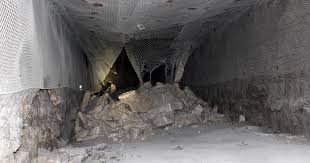
Nuke dump managers: There was waste near ceiling collapse ,By SUSAN MONTOYA BRYAN November 17, 2018 ALBUQUERQUE, N.M. (AP)— Operations at the federal government’s nuclear waste repository in southern New Mexico resumed Friday as managers acknowledged there was radioactive waste in the area where a portion of the underground facility’s ceiling collapsed earlier this week.The acknowledgement came a day after the U.S. Energy Department announced there had been a rock fall at the Waste Isolation Pilot Plant. The agency’s office in Carlsbad initially said there was no waste in the area, but watchdogs voiced concerns.
The radioactive waste included two canisters that were encapsulated in holes bored into the salt formation that makes up the walls and ceilings of the repository and its underground disposal rooms. There also were pieces of equipment in the room where the collapse happened that were contaminated by a 2014 radiation release.
Watchdogs pointed to agency documents and testimony during a recent hearing, saying officials knew what was in the room.
“For them to say there’s no waste, that’s just worse than false,” said Don Hancock with the Southwest Research and Information Center, an Albuquerque-based watchdog group. “Documents available to the public show 320,000 pounds of contaminated equipment in the room. That is waste. They know that.”
Hancock said the equipment contains fuel and other fluids that have never been drained, since crews have been kept out of the area for more than two years due to safety concerns.
Wednesday’s collapse prompted an evacuation. Workers heard a loud thud while doing inspections underground, so they left the area and all work was stopped………..
Access in the underground disposal area has been limited in the wake of the 2014 radiation release, which was caused by an inappropriately packed drum of waste that had come from Los Alamos National Laboratory. That release contaminated part of the area, forcing the closure of the repository for nearly three years and resulting in a costly recovery. https://apnews.com/b5902544d58f4b10bd352f15f0651a5d
CNN Planet Earth: Poisoned Earth – Rocky Mountain Arsenal
The Dangers of Rocky Flats Are Forgotten but Not Gone, Westword, RON BAXENDALE II | NOVEMBER 17, 2018 “……..After nearly forty years of producing plutonium triggers for nuclear bombs, Rocky Flats was closed in 1992 after an endless series of fires, leaking storage containers and other accidents. At that time, it was said that Rocky Flats was likely to become a “national sacrifice zone” — a place so toxic it would never be fit for human habitation.
Then in 2000, only a few years later, Kaiser-Hill was given a contract to complete the closure of Rocky Flats, agreeing to clean up the entire 6,245-acre site in less than six years on a budget of $4 billion.
Really? From “sacrifice zone” to “70-year marginal clean up” to “perfectly safe” in less than six years? How is this possible?
The cleanup of Rocky Flats was declared complete in 2006 and, even more astonishing, new homes in the Candelas development began to appear in 2012, immediately south of Rocky Flats, near the buffer zone. Now, despite continuing protest, the Deputy Secretary of the Interior has ruled that the Rocky Flats National Wildlife Refuge (the innocuous new name for the plant) is safe enough for visits by children on school field trips.
The efforts to hide the dirty secrets of Rocky Flats are nothing new, and neither is the willingness of people to ignore the truth in order to lead lives free of worry. Newbies to Colorado, many of whom have invested much to make major life changes, are the biggest naysayers, wearing blinders to avoid the unsettling truth about their new choice of residence………..
We all lived in the Broomfield area of the Front Range from the early ’60s onward, I told the woman. For more than twenty years, I said, we all drank water from the Great Western Reservoir, Broomfield’s plutonium-laden water supply, and began suffering our health problems in the mid- to late ’80s. And this is just one family, I told her. One little family out of tens of thousands of families, all of which can tell their version of the same horror story. (When the members of a family or multiple families within a community contract this much cancer, says my primary care doctor, the cause is nearly always environmental.)……….
if Rocky Flats is so safe, why did an independent sample of soils east of Rocky Flats along Indiana Street in 2012 show plutonium contamination 100 times greater than allowable background levels? Why did a 2016 study led by Metropolitan State University of Denver find that those living downwind from Rocky Flats have unusually high rates of breast, thyroid, prostate, colon and rare cancers? And why do veterinarians in the Arvada-Westminster area report that dogs that frequent the Westminster Hills Dog Park — located just east of Rocky Flats and adjacent to the contaminated Great Western Reservoir — have abnormally high rates of bone and foot cancers?
More important, if Rocky Flats is so safe, why are home buyers immediately south of ground zero presented with advisory notices only at closing and told not to plant root-bound vegetables in gardens? One would think buyers would pay serious attention to such red flags, especially those buyers with young children……..
Kardashian shared with her 58 million followers Thursday that she was “shocked and furious” to learn that the Woolsey fire, which threatened her Calabasas home, started at the former nuclear testing site and is “potentially radioactive.”
The celebrity’s sister, Kourtney Kardashian, echoed her concerns.
“Our family lives only 20 miles from a nuclear disaster site, Santa Susana Field Lab, and we didn’t even know it. We need Gavin Newsom to do something,” Kardashian tweeted Thursday.
But the contaminated 2,900-acre site is well known to San Fernando Valley residents.
Nearly 490,000 people signed a petition on Change.org, started by West Hills resident Melissa Bumstead whose daughter Grace has twice survived leukemia. The girl is one of 50 children within 20 miles of the site with cancer, a product, some residents say, of an era of nuclear research and rocket engine testing that left a tragic imprint in the area.
The lab appeared on the map in the 1940s, and about two decades later it became the site of a partial meltdown accident that left the area polluted with radioactive and chemical contamination. The United States Department of Energy and NASA signed an agreement in 2010, promising to remove all contamination from the site by 2017. The state’s Department of Toxic Substance Control, or DTSC, asked Boeing, which owns a portion of the area, to commit to its own cleanup.
About a year after the deadline, the companies still have not cleaned the area. Now, Bumstead and other parents worry that their families are being exposed to carcinogenic chemicals.
The Woolsey fire, which started near the former Rocketdyne site, has amplified those concerns.
“DTSC repeatedly minimizes risk from SSFL and has broken every promise it ever made about the SSFL cleanup,” Bumstead wrote in a statement. “Communities throughout the state have also been failed by DTSC. The public has no confidence in this troubled agency.”
Abbott Dutton, a spokeswoman for DTSC, wrote in an email that the agency’s experts accessed the site last Saturday to inspect damage caused by the fire.
“We confirmed that the SSFL facilities that previously handled radioactive and hazardous materials were not affected by the fire,” Dutton wrote. “Over the weekend our multi-agency team took measurements of radiation and hazardous compounds, both on the site and in the surrounding community. The results from this initial round of testing showed no radiation levels above background levels, and no elevated levels of hazardous compounds other than those normally present after a wildfire.”
But Bumstead was skeptical about the test results.
“I was outraged to learn that DTSC and other agencies are telling everyone there’s no risk, and then we find out they haven’t even received many of the test results,” she wrote in an email. “DTSC and Los Angeles County Department of Public Health should not make assurances when they don’t have the data and won’t release whatever measurements they may have taken.”