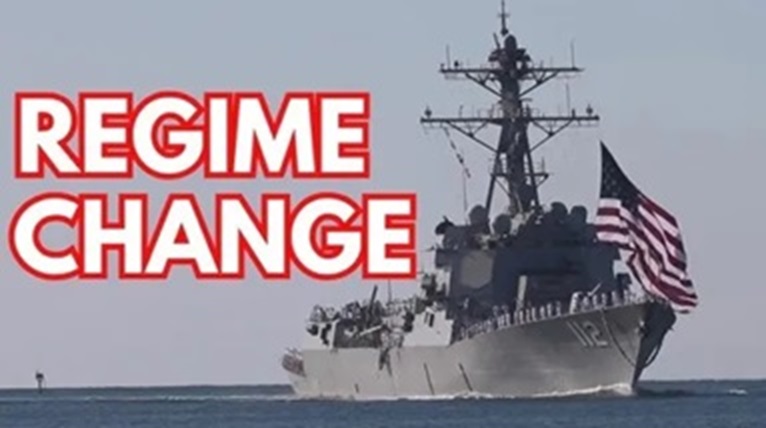
US 21st Century regime change ops: Failure, Failure, Failure, Failure, Failure… To Be Determined
5 January 2026 AIMN Editorial , By Walt Zlotow, West Suburban Peace Coalition, Glen Ellyn, IL, https://theaimn.net/us-21st-century-regime-change-ops-failure-failure-failure-failure-failure-to-be-determined/
The US has spent the entire 21st century toppling regimes it hates. Every one up to Saturday’s removal of Venezuelan president Nicholas Maduro has ended in failure.
2001 Afghanistan
President George W. Bush kicked off the 21st century by changing out the Taliban regime in Afghanistan. America could not confront the real culprit of 911, ally Saudi Arabia, so we picked an easy scapegoat to extract our revenge. It only took 5 weeks to topple the Taliban, allowing installation of a US puppet government. Result? Taliban regrouped to win their country back. Took 20 years but this time it was the hated Yankees ousted, killing 2,461 Americans in the process. America left the failed state of Afghanistan with over 150,000 dead and Afghanistan’s 42 million people worse off than before American’s criminal regime change operation.
2003 Iraq
Bush turned next to hated Iraq to one up Poppy Bush’s failure to oust Saddam Hussein 1991. His regime change turned Iraq into a failed state with over 500,000 Iraqis and 5,984 American soldiers and contractors killed. Over 100,000 Americans were injured in body and mind from in a totally made up, senseless war. Twenty-three years later the US is still defiling Iraqi sovereignty with a couple of thousand soldiers stuck in the Iraq war roach motel.
2011 Libya
George W. Bush’s successor Barack Obama got into regime change business to knock off Libyan strongman Muammar Gaddafi. He employed so called defense alliance NATO to bomb Libby during the Libyan civil war to tip the scales against Gaddafi. Obama’s Secretary of State Hillary Clinton gloated, “We came, we saw, he died”, failing to mention this death resulted from a bayonet to the butt. The US achieved the complete opposite of its intended goal of Libyan and regional stability by turning Libya into one of the most chaotic, failed states on the planet.
2013 Syria
Just 2 years later Obama was at it again, this time intervening in the Syrian civil war, supporting jihadist terrorists to depose hated Syrian President Bashar Assad. Neither Obama nor successor Trump could complete the task finally achieved by President Joe Biden in his last 2 months. US intervention was primarily designed to rid puppet master Israel of one of its regional hegemonic rivals. By prolonging the Syrian civil war for 11 years, the US contributed mightily to the civil war’s half million deaths. Led by new US pal, former US designated al-Qaeda terrorist Ahmed al-Sharaa, Christians, Druze and Alawites are being systematically hunted down and killed by the US backed al-Sharaa regime.
2022 Russia
The US and NATO spent 14 years under 4 presidents provoking Russia to invade Ukraine to keep Ukraine out of NATO. The US knew Russia would eventually invade; indeed, also knew Ukraine could not prevail against the Russian goliath. Didn’t matter. The US believed the war would so weaken Russia it might topple despised President Vladimir Putin, bringing in a Russian puppet amenable to US influence. Four years on Russia and Putin are stronger than ever, pivoting away from Europe to the non-aligned world seeking independence from a war and sanctions crazed America. Ukraine is now a failed state near totally dependent on US, NATO treasure to survive. A fifth of its land is gone forever, soon to be joined by its last warm water port. Looks like the only regime to be removed is Ukraine’s, not Russia’s.
2026 Venezuela
In his first solo adventure in regime change, President Trump kicked off 2026 with a lightning assault that snatched Venezuelan President Nicholas Maduro out of Venezuela to face a Trump style show trial in the US. Trump and his war cabinet are positively ecstatic about completing America’s two decade crusade to snuff out socialism in Venezuela and gobble up its 300 billion barrels of heavy crude in the process. But they might look back at America’s 21st century regime change failures in Afghanistan, Iraq, Libya, Syria, Russia, and ponder whether they’re simply following previous administrations down the rabbit hole of regime change failure.
US DOE Awards $2.7B for Uranium Enrichment in Nuclear Power Push
Rigzone, by Jov Onsat. Tuesday, January 06, 2026
The United States Department of Energy (DOE) has awarded $2.7 billion orders to three companies for enrichment services to enable the production of low-enriched uranium (LEU) and high-assay low-enriched uranium (HALEU)…………….
American Centrifuge Operating LLC and General Matter Inc each won $900 million to establish domestic HALEU enrichment capacity for advanced reactors. Orano Federal Services LLC also won $900 million to expand the U.S.’ LEU enrichment capacity.
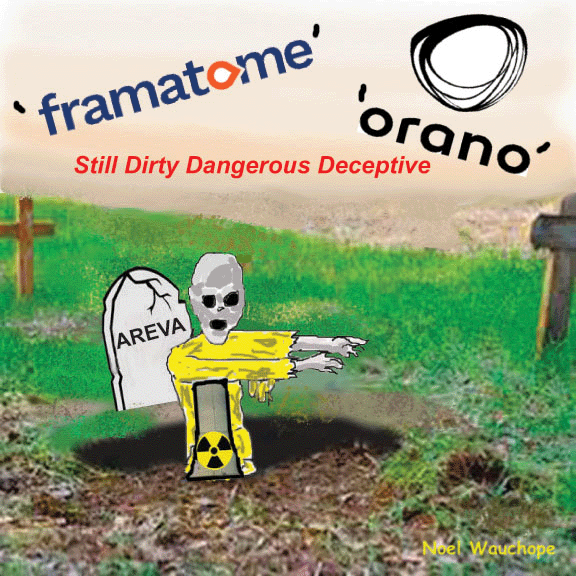
……………….Currently only China and Russia can produce HALEU at a commercial scale, according to the World Nuclear Association.
Fears of Wider War Over Venezuela Oil as US Seizes Russian-Flagged Tanker
“That is a confrontation of Cold War proportions,” warned one observer.
Jake Johnson, January 7, 2026 https://www.commondreams.org/news/venezuela-russia-oil-tanker
US forces have now boarded and seized control of the Russian-flagged oil vessel in the North Atlantic, the Associated Press reported Wednesday.United States military forces on Wednesday attempted to board and seize control of a Venezuela-linked and Russian-flagged oil tanker after a weekslong pursuit across the Atlantic, sparking fears of a broader conflict stemming from US President Donald Trump’s assault on the South American country.
Reuters reported that the US Coast Guard and military are leading the takeover operation, which came “after the tanker, originally known as the Bella-1, slipped through a US maritime ‘blockade’ of sanctioned tankers and rebuffed US Coast Guard efforts to board it.” According to the Wall Street Journal, “Helicopters and at least one Coast Guard vessel were being used to take control of the tanker.”.
The vessel is reportedly being escorted by a Russian submarine, fueling concerns of a direct confrontation between two nuclear powers.
Video footage published Tuesday by RT purports to show US forces pursuing the tanker, whose name was recently changed to the Marinera.
The New York Times reported that US forces first stopped the tanker in the Caribbean on December 21.
According to the Times:
The ship, which started its journey in Iran, had been on its way to pick up oil in Venezuela.
At the time, the United States said it had a seizure warrant on the vessel because it was not flying a valid national flag. But the Bella 1 refused to be boarded and sailed into the Atlantic, with the United States in pursuit.
Then came a series of moves to ward off the United States. The fleeing crew painted a Russian flag on the hull, the tanker was renamed and added to an official Russian ship database, and Russia made a formal diplomatic request that the United States stop its chase.
Observers voiced alarm over the tense and fast-moving situation.
“Don’t wish to be hyperbolic, but if—if—US special forces are intercepting and seeking to board a now Russian-flagged tanker, apparently with submarine escort, then that is a confrontation of Cold War proportions,” warned British journalist Jon Sopel.
A game of chicken between the US and Denmark
The people of Greenland are merely pawns on a neo-colonial chessboard
Ian Proud, Jan 08, 2026, https://thepeacemonger.substack.com/p/a-game-of-chicken-between-the-us?utm_source=post-email-title&publication_id=3221990&post_id=183816648&utm_campaign=email-post-title&isFreemail=true&r=1ise1&triedRedirect=true&utm_medium=email
Trump’s attempt to claim Greenland as his own is running up against plucky Denmark. This is a David v Goliath game of chicken in which Trump hopes the Danes will back down and they, in turn, are waiting Trump out, hoping that his increasingly unhinged foreign policy leads to a change in power in 2029, whereupon the issue will go away.
Until then, the people of Greenland will remain pawns on a neo-colonial chessboard.
Even though they’ll get no support from European military powers, Denmark should call Trump’s bluff over military action and signal a willingness to defend, even though they would be quickly defeated. Their biggest ally is US public opinion.
But whatever happens, the Greenlanders have the right to self-determination under the 2009 Act and may ultimately be swayed by Trump’s cash.
Report: Nuclear Power Isn’t Viable In Hawaiʻi

Constitutional issues are the basis for the conclusion of the Nuclear Energy Working Group’s final report for the state energy office.
By Lynda Williams, January 6, 2026 , https://www.civilbeat.org/2026/01/nuclear-power-isnt-viable-in-hawaii/
The Hawaiʻi State Energy Office has released the final report of the Nuclear Energy Working Group created by the Legislature under SCR-136. I served on the working group as a representative of 350 Hawaiʻi.
The report concludes that nuclear power is not viable in Hawaiʻi and that the state should not change its laws or constitution to enable it.
The most fundamental obstacle is legal. Hawaiʻi’s Constitution restricts nuclear fission construction, and nuclear power is excluded from the state’s Renewable Portfolio Standard. These restrictions apply regardless of reactor size, design, fuel type or branding. Small modular reactors and so-called “advanced” reactors are still nuclear fission reactors. Making nuclear power legal in Hawaiʻi would require amending the constitution — a process that requires a two-thirds legislative vote. The working group did not recommend taking this step.
Beyond the law, the technology itself remains unfeasible. No advanced nuclear reactors are operating commercially in the United States, and none are expected to come online in any timeframe relevant to Hawaiʻi’s energy or climate goals. Projects cited by nuclear advocates remain stuck in licensing pipelines, demonstration phases or heavily subsidized pilot programs.
Without commercially operating reactors, reliable cost estimates, construction schedules, or grid-integration analyses do not exist. Nuclear power cannot meaningfully address climate change when it cannot be deployed at scale.
The report also acknowledges that radioactive waste is a decisive and unresolved problem. There is no permanent disposal repository operating anywhere in the United States. Hawaiʻi has no capacity to store or manage spent nuclear fuel, and no federal facility exists to accept it.
The Hawaiʻi Constitution explicitly bars nuclear waste storage and disposal facilities unless approved by a two-thirds vote of both legislative chambers. Any nuclear project would therefore require indefinite on-island storage of radioactive material in direct conflict with the constitution, creating ongoing risks related to containment failure and transport. For an isolated island state, this reality alone makes nuclear power unrealistic.
The Hawaiʻi State Energy Office has released the final report of the Nuclear Energy Working Group created by the Legislature under SCR-136. I served on the working group as a representative of 350 Hawaiʻi.
The report concludes that nuclear power is not viable in Hawaiʻi and that the state should not change its laws or constitution to enable it.
The most fundamental obstacle is legal. Hawaiʻi’s Constitution restricts nuclear fission construction, and nuclear power is excluded from the state’s Renewable Portfolio Standard. These restrictions apply regardless of reactor size, design, fuel type or branding. Small modular reactors and so-called “advanced” reactors are still nuclear fission reactors. Making nuclear power legal in Hawaiʻi would require amending the constitution — a process that requires a two-thirds legislative vote. The working group did not recommend taking this step.
Ideas showcases stories, opinion and analysis about Hawaiʻi, from the state’s sharpest thinkers, to stretch our collective thinking about a problem or an issue. Email news@civilbeat.org to submit an idea or an essay.
Beyond the law, the technology itself remains unfeasible. No advanced nuclear reactors are operating commercially in the United States, and none are expected to come online in any timeframe relevant to Hawaiʻi’s energy or climate goals. Projects cited by nuclear advocates remain stuck in licensing pipelines, demonstration phases or heavily subsidized pilot programs.
Without commercially operating reactors, reliable cost estimates, construction schedules, or grid-integration analyses do not exist. Nuclear power cannot meaningfully address climate change when it cannot be deployed at scale.
The report also acknowledges that radioactive waste is a decisive and unresolved problem. There is no permanent disposal repository operating anywhere in the United States. Hawaiʻi has no capacity to store or manage spent nuclear fuel, and no federal facility exists to accept it.
The Hawaiʻi Constitution explicitly bars nuclear waste storage and disposal facilities unless approved by a two-thirds vote of both legislative chambers. Any nuclear project would therefore require indefinite on-island storage of radioactive material in direct conflict with the constitution, creating ongoing risks related to containment failure and transport. For an isolated island state, this reality alone makes nuclear power unrealistic.
Emergency preparedness and regulatory capacity further reinforce that conclusion. Hawaiʻi does not have a nuclear regulatory agency, a trained nuclear emergency-response workforce, evacuation-planning capacity, or land suitable for exclusion zones. These are not minor administrative gaps. They reflect the absence of the institutional and physical capacity needed to respond to potentially catastrophic nuclear accidents.
The analysis also places nuclear power in the context of Hawaiʻi’s history in the Pacific, including nuclear weapons testing and long-term harm to island and Indigenous communities. Public trust cannot be assumed, and meaningful public evaluation is impossible without concrete information about reactor designs, fuel cycles, waste handling, and accident scenarios — information that does not exist.
Hawaiʻi is not alone in facing industry efforts to dismantle state-level protections. Over the past decade, several states with laws restricting or prohibiting new nuclear plant construction — including Wisconsin, Kentucky, Montana, West Virginia, Connecticut and Illinois — have repealed or weakened those laws to allow so-called advanced nuclear technologies such as small modular reactors, often justified by climate or grid-reliability claims. These rollbacks occurred despite the continued absence of commercially operating advanced reactors, the lack of a permanent nuclear waste repository, and mounting evidence that nuclear power cannot be deployed fast enough to play a meaningful role in addressing climate change.
Now is not the time to weaken Hawaiʻi’s protections against nuclear power. At the federal level, environmental protection and public oversight under the National Environmental Policy Act are being aggressively gutted through executive orders and legislation such as the SPEED Act. These measures are designed to shorten environmental review, eliminate meaningful public participation, restrict judicial oversight, and prevent courts from stopping unlawful projects even when agencies violate the law. As federal safeguards are dismantled, Hawaiʻi’s constitutional and statutory protections against nuclear power become more critical, not less.
The report’s only weak point is its suggestion that the state revisit nuclear power every three to five years. Even under the most optimistic assumptions, advanced nuclear reactors, including SMRs, will not be commercially operating, fully tested, or economically viable within that timeframe. Any nuclear reactor operated in Hawaiʻi would require radioactive waste to remain on island for extended periods to cool before transport, and shifting that waste burden onto other Indigenous lands is not an ethical solution and is inconsistent with the values of aloha ʻāina.
Nuclear power is not viable in Hawaiʻi and never will be; the state should instead focus on renewable energy, storage, efficiency, grid modernization and community-centered planning grounded in reality.
Click here to read the final Nuclear Energy Working Group report. You can read more about the Nuclear Energy Working Group at nuclearfreehawaii.org.
CIA Played Instrumental Role in Maduro Kidnapping.
In reality, while U.S. and British companies were involved in early oil exploration in Venezuela, Venezuela’s oil belongs to Venezuela, pursuant to the international law principle of permanent sovereignty over natural resources.
Venezuela’s socialist government, meanwhile, has used oil revenues to adopt social programs for the poor and to develop Venezuela’s economy, accounting for its electoral successes.
The financial elite the CIA serves is now salivating over the prospects of U.S. corporations retaking control of Venezuela’s oil industry
Jeremy Kuzmarov, Substack, Jan 05, 2026
The Trump administration welcomed the New Year by ordering a brazen Special Forces raid into Venezuela that resulted in the kidnapping of Venezuelan President Nicolás Maduro, who was brought to the U.S. to face charges for alleged drug trafficking.
Called Operation Absolute Resolve, the kidnapping had been preceded by months of terrorist activities that included bombing a Venezuelan oil tanker and fishing vessels, resulting in the deaths of more than 100 civilians.
On January 3, The New York Times reported that a CIA source within the Venezuelan government had monitored Maduro’s location in the days and moments before his capture, tipping off the Special Forces about his whereabouts. The CIA also produced the intelligence that led to Maduro’s capture with a fleet of stealth drones.
According to a person familiar with the agency’s work, the CIA was able to recruit informants in Maduro’s inner circle because of the $50 million bounty placed on Maduro’s head.
Donald Trump watched the Operation Absolute Resolve from Mar-O-Lago with CIA Director John Ratcliffe and Secretary of State Marco Rubio. [Source: yahoo.com]
Beginning in August, the informants worked clandestinely to provide the CIA with information about Maduro’s “pattern of life” and daily movements.
The CIA had Maduro so precisely monitored that even his pets were known to U.S. intelligence agents, according to General Dan Caine, Chairman of the Joint Chiefs of Staff and former CIA associate director for military affairs.
In late December, the CIA used an armed drone to conduct a strike on a dock that U.S. officials claimed was being used by a Venezuelan gang to load drugs onto boats.
These actions fulfilled a promise of CIA Director John Ratcliffe in his confirmation hearing that he would lead a more aggressive CIA willing to conduct large-scale covert operations.
Despite claiming to be doing battle with the “deep state,” President Donald Trump authorized the CIA to take more aggressive action last fall and openly authorized CIA operations in Venezuela when the CIA normally operates covertly.
To the Victor Go the Spoils
The symbiotic relationship between the CIA and the financial elite intent on profiting from regime change are epitomized by the CIA’s former Venezuelan station chief, Enrique de la Torre, who advertised immediately after Maduro’s kidnapping that his lobbying firm, Tower Strategy,[1] was supporting clients intent on “rebuilding Venezuela’s energy sector.”
De la Torre published a blog post in late November entitled “The Case for Ending Maduro’s Rule………………
Venezuela’s Bolivarian Revolution under Hugo Chávez (1998-2013) and then Maduro (2013-present) had in fact been designed to establish Venezuela’s economic sovereignty, empower the poor and Indigenous people, and revitalize the legacy of Latin America’s great liberator, Simón Bolívar.
It was opposed by the U.S. financial elite precisely because it threatened to inspire other Latin American and Third World countries to take control over their own economies and limit the influence of American corporations.
Donald Trump echoed de la Torre in stating after the announcement of Maduro’s capture that “we’re going to have our very large United States oil companies, the biggest anywhere in the world, go in and spend billions of dollars and fix the oil infrastructure—the badly broken oil infrastructure—and start making money for the country.”[2]
Similarly, former CIA Director Mike Pompeo told Fox & Friends last week that, in the event of the overthrow of the Maduro government, “American companies can come in and sell their products — Schlumberger, Halliburton, Chevron — all of our big energy companies can go down to Venezuela and build out an economic capitalist model.”
These latter comments combined with de la Torre’s action make clear the agenda behind Operation Absolute Resolve.
Stephen Miller, a top aide to President Trump, openly proclaimed that Venezuela’s oil belongs to Washington, describing the nationalization of Venezuela’s petroleum industry as “theft.”
According to Miller, “American sweat, ingenuity and toil created the oil industry in Venezuela. Its tyrannical expropriation was the largest recorded theft of American wealth and property. These pillaged assets were then used to fund terrorism and flood our streets with killers, mercenaries and drugs.”
In reality, while U.S. and British companies were involved in early oil exploration in Venezuela, Venezuela’s oil belongs to Venezuela, pursuant to the international law principle of permanent sovereignty over natural resources.
The Venezuelan government never actually denied the U.S. access to its oil and, as late as 2017, remained the U.S.’s third-largest foreign supplier of energy.[3]
Venezuela’s socialist government, meanwhile, has used oil revenues to adopt social programs for the poor and to develop Venezuela’s economy, accounting for its electoral successes.
During his presidency from 1998 to 2013, Hugo Chávez cut poverty by 20% and extreme poverty by 30%.
Literacy rates in this period also increased, child malnutrition rates declined dramatically, millions of hectares of state-owned land were distributed, and Venezuela’s UN Human Development Index, a composite measure of national income (GDP), access to education, and child mortality—rose from seventh in the region to fourth.[4]
Maduro was continuing the same trajectory as Chávez, though Venezuela’s economy was undermined during his presidency by declining world oil prices, internal corruption typical of South and North American countries and harsh U.S. sanctions imposed by the Obama, Trump I and Biden administrations, whose purpose was to set the groundwork for regime change.[5]
Long War Against Venezuela’s Left
In Modernizing Repression: Police Training and Nation-Building in the American Century, I detail how the Kennedy, Johnson and Nixon administrations set the groundwork for today’s foreign policy by providing significant police aid to help prop up centrist governments in Venezuela that carried out a dirty war against left-wing movements.
The latter sought to nationalize Creole Petroleum Company, Venezuela’s largest oil company, which was largely controlled by the Rockefeller-owned Standard Oil empire.
Run under the cover of the United States Agency for International Development (USAID), the CIA-led Office of Public Safety (OPS) provided riot-control gear and other repressive police instruments and assisted Venezuelan police in compiling blacklists of left-wing “subversives.”
The OPS’s support for hard-line police tactics was apparent in its push to eliminate the requirement that a policeman who killed a suspect be arrested, paving the way for death-squad activity.
Showing where their true priorities rested, OPS police advisers met monthly with security officials of Creole Petroleum and the major foreign mining companies in Venezuela to discuss “insurgency problems.”……………………………………………………………………………………………………………………………………………………………………………………… https://jeremykuzmarov.substack.com/p/cia-played-instrumental-role-in-maduro?publication_id=2091638&post_id=183483325&isFreemail=true&r=3alev&triedRedirect=true&utm_source=substack&utm_medium=email
Rubio Says “Not a War” as Trump Threatens Half the Hemisphere
By Joshua Scheer, SCHEEPOST, 5 Jan 26
Welcome to another day in the empire we might as well call 1984. Marco Rubio, who only yesterday said the U.S. didn’t need congressional approval because the situation in Venezuela is not a war but the capture of a fugitive, adding, to the BBC saying “That’s not a war. I mean, we are at war against drug trafficking organizations. That’s not a war against Venezuela,”
But has the narrative really shifted, or is this just good cop/bad cop—or whatever you want to call the times we are living in? Meanwhile, with President Trump threatening both the incoming president of Venezuela and other left-leaning nations, the United States seems to be lurching toward a space where it resembles a new Rome—a power with seemingly no regard for history.
That was made clear in an interview with The Atlantic yesterday, when asked about Iraq and the current intensifying situation, Trump said: “I didn’t do Iraq. That was Bush. You’ll have to ask Bush that question, because we should have never gone into Iraq. That started the Middle East disaster.”
He threatened Venezuela’s new president Delcy Rodríguez, saying that “if she doesn’t do what’s right, she is going to pay a very big price—probably bigger than Maduro,” adding that “she’s essentially willing to do what we think is necessary to make Venezuela great again.” He went on to declare, “The country’s gone to hell. It’s a failed country. It’s a totally failed country. It’s a disaster in every way.”
I wonder why a country that has been subjected to coercive actions by the United States and repeated coup attempts can’t get ahead—especially when, even now, its oil is being seized and treated as if it belongs to the U.S. This is a madman being guided by what I would describe as delusional people. The truly frightening part, however, is that they know exactly what they are doing, and that is what makes it so dangerous.
This was a man when campaigning in 2016 spoke saying “stop racing to topple foreign regimes that we know nothing about.” He had campaigned that year in opposition to “nation building,”
Great—who’s paying attention? Which Trump are we seeing this morning—the 2016 isolationist of the highest order? Reports are emerging of a split within the MAGA camp (Make America Great Again, for those unfamiliar), with the New York Times highlighting tensions among the more isolationist figures from Trump’s first administration. “The lack of framing of the message on a potential occupation has the base bewildered, if not angry,” said Stephen K. Bannon, the pro-Trump podcaster. “While President Trump makes the case for hemispheric defense, Rubio confuses with talk of removing Hamas and Hezbollah.”
At the same time MAGA darling Candice Owens tweeting “Venezuela has been “liberated” like Syria, Afghanistan, and Iraq were “liberated”. The CIA has staged another hostile takeover of a country at the behest of a globalist psychopaths. That’s it. That’s what is happening, always, everywhere. Zionists cheer every regime change. There has never been a single regime change that Zionists have not applauded because it means they get to steal land, oil and other resources.”
In the video below, [on original] in a strange twist, right‑wing superstar Tucker Carlson—of all people—defends Venezuela, apparently because it’s the most Christian nation in Latin America. So there you go.
Of course, this MAGA split—and the difference between Trump in 2016 and now—really shows that the true worm in the drink is Marco “the Neocon” today believes that countries shouldn’t have friends—because the threat is global. Why? Because Venezuela is friends with Iran, Russia, and China… oh my. Of course they are—they certainly aren’t ours.
Here’s “little” Marco discussing why he feels the need to protect the oil because “Why does China need their oil? Russia? Iran? This is the West. This is where we live”Adding, for good measure, that after we take our “fair share,” maybe the people of Venezuela would finally get theirs. That’s entirely on brand for the United States—its free‑market ideology and trickle‑down economic system.
Speaking about China’s reaction, they strongly condemned the U.S. seizure of President Maduro, calling it a violation of international law and an overreach of U.S. power, even as some analysts note Beijing may see the situation as a chance to challenge American global dominance and assert its own influence on the world stage.
Many commentators have draw parallels between Washington’s actions in Venezuela and China’s ambitions toward Taiwan, analysts suggest that China is less concerned with the sovereignty of the self-ruled island. Instead, Beijing sees the U.S. move as an opening to question America’s leadership on the world stage. ……………………………………………………. https://scheerpost.com/2026/01/05/rubio-says-not-a-war-as-trump-threatens-half-the-hemisphere/
“We’re Going to Run the Country:” Preparing an Illegal Occupation in Venezuela
This press conference wasn’t just about Venezuela. It was about whether empire can say the quiet part out loud again, whether it can openly claim the right to govern other nations and expect the world to shrug.
January 3, 2026, By: Michelle Ellner , https://scheerpost.com/2026/01/03/were-going-to-run-the-country-preparing-an-illegal-occupation-in-venezuela/
I listened to the January 3 press conference with a knot in my stomach. As a Venezuelan American with family, memories, and a living connection to the country being spoken about as if it were a possession, what I heard was very clear. And that clarity was chilling.
The president said, plainly, that the United States would “run the country” until a transition it deems “safe” and “judicious.” He spoke about capturing Venezuela’s head of state, about transporting him on a U.S. military vessel, about administering Venezuela temporarily, and about bringing in U.S. oil companies to rebuild the industry. He dismissed concerns about international reaction with a phrase that should alarm everyone: “They understand this is our hemisphere.”
For Venezuelans, those words echo a long, painful history.
Let’s be clear about the claims made. The president is asserting that the U.S. can detain a sitting foreign president and his spouse under U.S. criminal law. That the U.S. can administer another sovereign country without an international mandate. That Venezuela’s political future can be decided from Washington. That control over oil and “rebuilding” is a legitimate byproduct of intervention. That all of this can happen without congressional authorization and without evidence of imminent threat.
We have heard this language before. In Iraq, the United States promised a limited intervention and a temporary administration, only to impose years of occupation, seize control of critical infrastructure, and leave behind devastation and instability. What was framed as stewardship became domination. Venezuela is now being spoken about in disturbingly similar terms. “Temporary Administration” ended up being a permanent disaster.
Under international law, nothing described in that press conference is legal. The UN Charter prohibits the threat or use of force against another state and bars interference in a nation’s political independence. Sanctions designed to coerce political outcomes and cause civilian suffering amount to collective punishment. Declaring the right to “run” another country is the language of occupation, regardless of how many times the word is avoided.
Under U.S. law, the claims are just as disturbing. War powers belong to Congress. There has been no authorization, no declaration, no lawful process that allows an executive to seize a foreign head of state or administer a country. Calling this “law enforcement” does not make it so. Venezuela poses no threat to the United States. It has not attacked the U.S. and has issued no threat that could justify the use of force under U.S. or international law. There is no lawful basis, domestic or international, for what is being asserted.
But beyond law and precedent lies the most important reality: the cost of this aggression is paid by ordinary people in Venezuela. War, sanctions, and military escalation do not fall evenly. They fall hardest on women, children, the elderly, and the poor. They mean shortages of medicine and food, disrupted healthcare systems, rising maternal and infant mortality, and the daily stress of survival in a country forced to live under siege. They also mean preventable deaths, people who die not because of natural disaster or inevitability, but because access to care, electricity, transport, or medicine has been deliberately obstructed. Every escalation compounds existing harm and increases the likelihood of loss of life, civilian deaths that will be written off as collateral, even though they were foreseeable and avoidable.
What makes this even more dangerous is the assumption underlying it all: that Venezuelans will remain passive, compliant, and submissive in the face of humiliation and force. That assumption is wrong. And when it collapses, as it inevitably will, the cost will be measured in unnecessary bloodshed. This is what is erased when a country is discussed as a “transition” or an “administration problem.” Human beings disappear. Lives are reduced to acceptable losses. And the violence that follows is framed as unfortunate rather than the predictable outcome of arrogance and coercion.To hear a U.S. president talk about a country as something to be managed, stabilized, and handed over once it behaves properly, it hurts. It humiliates. And it enrages.
And yes, Venezuela is not politically unified. It isn’t. It never has been. There are deep divisions, about the government, about the economy, about leadership, about the future. There are people who identify as Chavista, people who are fiercely anti-Chavista, people who are exhausted and disengaged, and yes, there are some who are celebrating what they believe might finally bring change.
But political division does not invite invasion.
Latin America has seen this logic before. In Chile, internal political division was used to justify U.S. intervention, framed as a response to “ungovernability,” instability, and threats to regional order, ending not in democracy, but in dictatorship, repression, and decades of trauma.
In fact, many Venezuelans who oppose the government still reject this moment outright. They understand that bombs, sanctions, and “transitions” imposed from abroad do not bring democracy, they destroy the conditions that make it possible.
This moment demands political maturity, not purity tests. You can oppose Maduro and still oppose U.S. aggression. You can want change and still reject foreign control. You can be angry, desperate, or hopeful, and still say no to being governed by another country.
Venezuela is a country where communal councils, worker organizations, neighborhood collectives, and social movements have been forged under pressure. Political education didn’t come from think tanks; it came from survival. Right now, Venezuelans are not hiding. They are closing ranks because they recognize the pattern. They know what it means when foreign leaders start talking about “transitions” and “temporary control.” They know what usually follows. And they are responding the way they always have: by turning fear into collective action.
This press conference wasn’t just about Venezuela. It was about whether empire can say the quiet part out loud again, whether it can openly claim the right to govern other nations and expect the world to shrug.
If this stands, the lesson is brutal and undeniable: sovereignty is conditional, resources are there to be taken by the U.S., and democracy exists only by imperial consent.
As a Venezuelan American, I refuse that lesson.
I refuse the idea that my tax dollars fund the humiliation of my homeland. I refuse the lie that war and coercion are acts of “care” for the Venezuelan people. And I refuse to stay silent while a country I love is spoken about as raw material for U.S. interests, not a society of human beings deserving respect.
Venezuela’s future is not for U.S. officials, corporate boards, or any president who believes the hemisphere is his to command. It belongs to Venezuelans.
Following U.S. coup in Venezuela, the CIA’s former station chief is advertising support for corporate exploitation of the country’s oil
The CIA’s former Venezuela chief of station, Enrique de la Torre, advertised that his lobbying firm, Tower Strategy, is supporting clients “rebuilding the country’s energy sector.”
Jack Poulson, Jan 04, 2026, https://jackpoulson.substack.com/p/following-us-coup-in-venezuela-the?utm_source=post-email-title&publication_id=1269175&post_id=183365776&utm_campaign=email-post-title&isFreemail=true&r=8cf96&triedRedirect=true&utm_medium=email
“We’re going to have our very large United States oil companies, the biggest anywhere in the world, go in and spend billions of dollars and fix the oil infrastructure — the badly broken oil infrastructure — and start making money for the country,” U.S. President Donald Trump declared on Saturday morning. The remarks followed a raid by the U.S. military’s elite commando team, Delta Force, which kidnapped Venezuelan president Nicolás Maduro and his wife, Cilia, using what Trump described as cover of darkness implied to have been provided by a U.S. cyberattack.
“It was dark, the lights of Caracas were largely turned off, due to a certain expertise we have,” Trump stated, before adding that, “It was dark, and it was deadly.” A series of photos from the “deadly” raid was quickly published by the wire service Reuters.
A special operations source was summarized by the investigative journalism outlet The High Side as stating that a “local source network … helped install jammers and other technical equipment on the ground, including beacons for airstrikes.” “The operational preparation of the battlespace was conducted by Task Force Orange, which throughout its history has been known by a host of cover names, including the U.S. Army Office of Military Support, Titan Zeus and the Intelligence Support Activity,” reported The High Side.
“We’re ready to stage a much larger second attack,” continued the U.S. president, before adding that, “we have a much bigger wave that we probably won’t have to do.”
A recent CIA chief of station in Venezuela, Enrique de la Torre, quickly took to the professional networking site LinkedIn to claim that his newly formed lobbying firm with former U.S. Ambassador to Venezuela James B. Story, Tower Strategy, was “already working with clients focused on democratic recovery, restored U.S. engagement, and the serious work of rebuilding the country’s energy sector.”
Tower Strategy has so-far publicly disclosed representing four companies: the controversial treasure-hunting company Odyssey Marine Exploration, the Singapore-based and Tether-affiliated cryptocurrency company Bitdeer, the solar supply chain company T1 Energy, and the international solar power export company UGT Renewables / Sun Africa.
De la Torre spent roughly the first ten months of 2025 working for the lobbying and foreign influence firm Continental Strategy, which is run by Carlos Trujillo, a former U.S. Ambassador to the Organization of American States with close ties to U.S. secretary of state Marco Rubio. The former CIA station chief’s partner at Tower Strategy, Ambassador Story, further launched the consulting firm Global Frontier Advisors alongside former Pentagon artificial intelligence chief Michael S. Groen in late July, with partner David Kol noted in the press release to be the CEO of Zodiac Gold Inc.
Former CIA director Michael R. Pompeo similarly told the media platform Fox & Friends on Monday that the U.S. Government’s seizures of Venezuela-linked oil tankers was the “right course of action” and that, in the event of the overthrow of the Maduro government, “American companies can come in and sell their products — Schlumberger, Halliburton, Chevron — all of our big energy companies can go down to Venezuela and build out an economic capitalist model.”
Trump further declared in his Saturday press conference that, “We’re going to run the country [Venezuela] until such time as we can do a safe, proper and judicious transition,” further stating that the members of his administration standing behind him in the press conference would be designated to lead the country in the short term. Venezuelan president Delcy Rodriguez, who was today sworn in as the new leader of the country following the U.S. kidnapping of President Maduro, was claimed by Trump to have effectively agreed to concede to U.S. demands in a recent conversation with U.S. secretary of state Marco Rubio.
Trump described his government as having “superseded” the longstanding U.S. policy of dominating the politics of the Western Hemisphere, known as the Monroe Doctrine, by “a lot.” “They now call it the Donroe Doctrine,” Trump stated, in reference to the now-popular phrase.
The U.S. Government’s claim to legal legitimacy of the kidnapping and broader coup have centered upon allegations that Maduro and his administration have been engaged in large-scale cocaine trafficking meant to destabilize the United States. A U.S. Drug Enforcement Administration (DEA) jacket was partially visible in the background of a photograph published by Trump on his social media platform Truth Social on Saturday, showing a blindfolded Maduro aboard the U.S. warship Iwo Jima.
Several U.S. State Department-backed media and lobbying organizations helped amplify the impact of unilateral U.S. sanctions over the past several years, effectively providing a form of international legal top cover for the Trump administration’s coup this morning. The most notable were perhaps Transparency International through its Venezuelan branch, the National Endowment for Democracy-backed media platform Connectas, and the CIA-affiliated think-tank Center for Advanced Defense Studies (C4ADS).
Brazilian president Luiz Inacio Lula da Silva condemned the unilateral U.S. kidnapping of Venezuela’s leader as having crossed “an unacceptable line,” while UN Secretary-General Antonio Guterres described the U.S. raid as setting “a dangerous precedent.”
Jan 04, 2026
Microsoft wants to resurrect Three Mile Island. It will never happen.
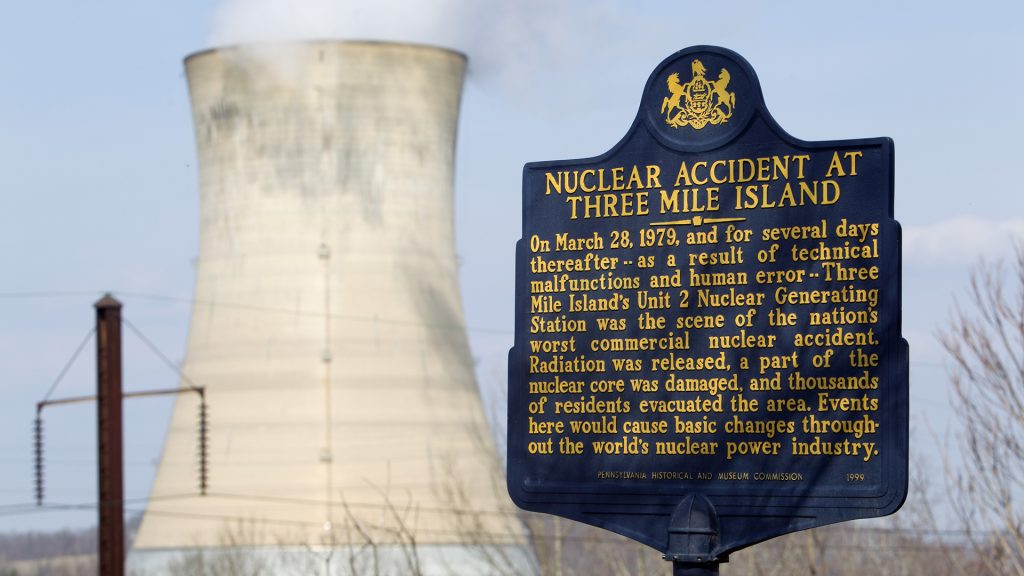
regulatory barriers are just the start. Nuclear reactors can’t be simply switched back on like a light bulb. They’re more like a car left undriven in a garage for too long with old oil, putrid gasoline, rat-chewed wires and a rusty frame — except that nuclear plants are infinitely more complicated than any car.
The Hill. by Neil Chatterjee, opinion contributor – 01/02/26
Microsoft and Constellation Energy have spent the last year trying to resurrect the Three Mile Island Nuclear power plant in Pennsylvania. The plant shut down in 2019 under economic pressure, after a separate part of the facility was decommissioned following a partial meltdown in 1979.
The effort is laudable, especially in light of Microsoft’s rapidly rising demand for [?] clean energy to fuel its artificial intelligence data centers. Unfortunately, it will never work. A fully shut-down nuclear plant has never been restarted in America for good reason: There are too many regulatory, material and logistical hurdles to overcome.
So far, Constellation Energy has painted a rosy picture. It originally stated the plant would be back online by 2028. Then, in early 2025, it revised its estimated opening date to 2027 following various inspections and the restoration of the plant’s water systems.
But traditional nuclear projects have a long history of going over budget and past schedule. A big factor is that the U.S. regulatory environment is not friendly to traditional nuclear power.
As the former head of the Federal Energy Regulatory Commission in the first Trump administration, I have seen firsthand how red tape can choke even the best-intentioned projects under goodwill regulators. Reactors that were permanently shut down must go through an extensive regulatory review process and request special exemptions for both their operations and use of radioactive fuel.
Constellation Energy and Microsoft have some solace in that the Department of Energy offered their project public support. But the Department of Energy isn’t the only player in town.
To ensure safety, Three Mile Island will also have to pass rigorous rounds of inspections, receive environmental approval and get the green light from the likes of the Environmental Protection Agency, the U.S. Nuclear Regulatory Commission, FERC and other state and local offices.
Even under a pro-business, pro-energy, regulation-slashing Trump administration, this is quite a gauntlet — especially because pro-nuclear government officials may nevertheless be hemmed in by existing laws and review processes outside of their control.
If regulatory barriers were the only holdup, perhaps there would be reasons to be more bullish on Three Mile Island. After all, President Trump has offered full support to nuclear energy and is committed to winning the energy-intensive AI race against China, red tape or not.
But regulatory barriers are just the start. Nuclear reactors can’t be simply switched back on like a light bulb. They’re more like a car left undriven in a garage for too long with old oil, putrid gasoline, rat-chewed wires and a rusty frame — except that nuclear plants are infinitely more complicated than any car.
At Three Mile Island, the reactor vessel could be brittle and fatigued. The core rods may need to be refurbished, the steam generators might have corroded, the turbines may break after not being rotated for years. And we know the cooling tower was partially removed as a fire hazard.
Replacing and restoring this equipment and more will not come cheaply. Constellation Energy originally projected it would take $1.6 billion to bring the facility back onto the grid, but that was before it fully cracked open the hood.
Then there are the basic economic realities of traditional reactors. Three Mile Island, Indian Point, Crystal River and others were shut down not because they were unsafe or failed to produce energy, but because maintenance was costly and they couldn’t keep up with the low price of other energy sources like natural gas.
As energy demand rises, those costs may become more comparable. But restarting Three Mile Island is still an expensive bet that will take years or decades of the right economic conditions to pay off.
And all of this does not even count the difficulties with accessing or creating a supply chain for nuclear fuel and long-unused components, integrating with the local electricity grid, hiring and training a highly competent workforce and overcoming the (unjustified) cultural stigma against a power plant that shares a name with the only major nuclear meltdown in American history…………………………… https://thehill.com/opinion/energy-environment/5667831-microsoft-constellation-nuclear-challenges/
Russia-US nuclear pact set to end in 2026 and we won’t see another
After the New START treaty expires in February, there will be no cap on the number of US and Russian nuclear weapons – but some are sceptical about whether the deal actually made the world safer
By Matthew Sparkes, New Scientist, 30 December 2025
In February 2026, for the first time in decades, there will be no active treaty limiting the size of the US and Russian nuclear arsenals. Experts are divided on whether the New START treaty genuinely made the world safer, but there is far more agreement on one thing: a replacement is unlikely.
The US and Russia first agreed to place limits on their nuclear weapons and allow each to inspect the other’s stockpiles with the START I treaty in 1991, and this was succeeded by New START in 2011. In 2021, Joe Biden and Vladimir Putin agreed to extend the treaty by five years. It is now due to expire on 5 February and talks on a replacement have faltered………………….(Subscribers only) https://www.newscientist.com/article/2504635-russia-us-nuclear-pact-set-to-end-in-2026-and-we-wont-see-another/
DePetris’ Trump foreign policy accomplishments more dubious than prideful
Walt Zlotow… West Suburban Peace Coalition Glen Ellyn IL 3 Jan 26
In his Chicago Tribune foreign policy commentary ‘The foreign policy moves Donald Trump got right this year’, Daniel DePetris largely ignores reality.
He praises Trump for brokering the November 10 ceasefire agreement in Gaza without mentioning that for nearly 10 months Trump provided Israel with billions in weapons to complete the obliteration of Gaza’s 139 square miles. With over 100,000 dead and the remaining 2,200,000 Palestinians facing death from forced starvation and withdrawal of medicine, the world rightly calls Israeli US policy a genocide. So yes, DePetris is correct to call Trump’s slowing down Israel’s ferocious genocide thru ceasefire “preferable” to its continuance. But pretending Trump is simply a neutral peace broker of the US enabled Israeli genocide is deplorable.
DePetris is also correct to praise Trump for seeking to broker an end to the Russo Ukraine war. But in claiming the biggest obstacle with Trump’s diplomacy is Trump’s “wild inconsistency”, DePetris misses a far greater obstacle: Russia and Ukraine’s diametrically opposed and irreconcilable goals to end the war. That makes Trump’s sincere efforts at peace daunting, if not impossible. At this stage, it is nowhere near an accomplishment.
DePetris whiffs on his third claimed Trump foreign policy accomplishment, the overthrow of the Syrian Bashar Assad regime, replaced by former al-Qaeda terrorist Ahmad al-Sharaa.
DePetris, like Trump, rehabilitates a US enemy dedicated to killing Americans in Iraq in his previous life. Why? Because al-Sharaa deposed the hated Assad whom the US sought to oust since the 2011 Syrian civil war to remove one of Israel’s regional enemies. This had nothing to do with uplifting the Syrian people. Indeed, the billions in weapons America poured into the Syrian civil war was responsible for much of the hundreds of thousands of deaths DePetris attributes solely to Assad. With the secular Assad gone, Syria’s Christians, Alawites, and others not part of al Sharaa’s extremist religious base are suffering horribly. Their fate was never a concern of Trump and his champion DePetris who view the destabilization of Syria as a US win for expanded Israeli Middle East hegemony.
Chicago Tribune’s readers deserve more than a sanitized view of Trump’s machinations in Gaza, Ukraine and Syria. They deserve the truth.
WE’LL CONTROL THE OIL! — TRUMP BOASTS AFTER SECRET RAID AS WASHINGTON POST CHEERS ARREST.
“we went from the world cop to the world bully in less than one year. There is no reason for us to be at war with Venezuela.”
January 3, 2026 , By Joshua Scheer, https://scheerpost.com/2026/01/03/well-control-the-oil-trump-boasts-after-secret-raid-as-washington-post-cheers-arrest/
In a reprehensible editorial, The Washington Post praised the capture of Venezuelan President Nicolás Maduro, calling the U.S.-led operation as “Justice in Venezuela” saying it was “one of the boldest moves by a president in recent years” and a tactical success. According to reports, the mission in Caracas involved airstrikes followed by a Delta Force operation that apprehended Maduro and his wife, who have been extradited to the U.S. to face charges including narcoterrorism, weapons violations, and drug crimes—all with no American casualties. The editorial argued that removing Maduro would weaken the influence of authoritarian allies such as Russia, China, Cuba, and Iran in the region and send a strong message to other dictators.
The piece also noted that the next challenge is ensuring stability and a democratic transition in Venezuela, highlighting opposition leader María Corina Machado and her “Freedom Manifesto” as a potential path forward. At the same time, the editorial acknowledged the uncertainty of outcomes, warning that a power vacuum or a new authoritarian leader could emerge if a clear transition plan is not implemented.
Machado was quoted as saying the opposition is “prepared to take power,” though no specifics regarding a transition plan have been released.
Nobel Peace Prize laureate Machado, who has been in hiding since Maduro’s disputed reelection in July 2024, said in a post on X that opposition candidate Edmundo Gonzalez Urrutia, whom the opposition says won the vote, “must immediately assume his constitutional mandate” as president. and that “Venezuelans, the hour of freedom has arrived.”
Not everyone welcomed the operation. Rep. Jim Himes of Connecticut, a Democratic member of the House Intelligence Committee, criticized the attack and said Secretary of State Marco Rubio had “repeatedly denied to Congress” that the administration intended to “force regime change in Venezuela.” Himes added, “Maduro is an illegitimate ruler, but I have seen no evidence that his presidency poses a threat that would justify military action without Congressional authorization, nor have I heard a strategy for the day after and how we will prevent Venezuela from descending into chaos.”
Others highlight the split between the GOP and the Democrats.
“Nicolás Maduro wasn’t just an illegitimate dictator; he also ran a vast drug‑trafficking operation,” tweeted Sen. Tom Cotton, defending the mission and saying he commends Trump and U.S. forces.
The split was evident at first with Utah Senator Mike Lee. Notably, the Republican initially seemed critical of the action being taken without congressional authorization.
“I look forward to learning what, if anything, might constitutionally justify this action in the absence of a declaration of war or authorization for the use of military force,” Lee posted on X.
However, Lee later followed up, saying he had spoken by phone with Rubio and was now comfortable with the administration’s authority to take action. Because the administration is framing this not as a war but as a police action to arrest a fugitive, Lee said he believes it would be permissible under the president’s current authority. I wonder we have heard that term police action before?
From the Democratic side, the sentiment was nearly unanimous.
“Without authorization from Congress … Trump just launched an unjustified, illegal strike on Venezuela,” Democratic Rep. Jim McGovern wrote on social media, highlighting a lack of legislative approval.
“Second unjustified war in my life time,” Arizona Democratic Sen. Ruben Gallego, on X shortly after 3 a.m. Saturday. “This war is illegal, it’s embarrassing that we went from the world cop to the world bully in less than one year. There is no reason for us to be at war with Venezuela.”
Sen Andy Kim writing on X: “Secretaries Rubio and Hegseth looked every Senator in the eye a few weeks ago and said this wasn’t about regime change. I didn’t trust them then and we see now that they blatantly lied to Congress.”
Others Democrats, including Rep. Yvette Clarke and Rep. Rashida Tlaib, called the operation “unconstitutional,” “un‑American,” and a “direct threat to our democracy,” arguing that the administration bypassed Congress.
The president spoke about a great many things, including taking over the country, which again would fall in line with the concept of the historic police action that took place in Southeast Asia. As Gallego said, this may be the second illegal war in our lifetime; it is certainly not the only two that the United States has been involved in.
As Trump said, he’s not afraid of putting boots on the ground.
Trump had the gall to say today that his administration will make the people of Venezuela “rich, independent, and safe.” But he doesn’t mean most people—the poor and working-class citizens whom the socialist government represents. He means the oligarchs: the wealthy and powerful few. Trump is clearly the leader of the oligarchs, so this isn’t surprising—yet it is still deeply sickening.
Of course, this feels a lot like George W. Bush’s horrific war in Iraq, which was more about the pride of a leader whose father couldn’t topple Saddam Hussein. In this case, it seems driven by Rubio’s long-standing fantasy of a life in Cuba, surrounded by the wealth of oligarchs—something his family could have aspired to. Now, he is helping push a new Monroe Doctrine and supporting the rise of right-wing forces in Latin America.
Regarding oil, many in 2003 foolishly claimed that oil profits would cover the costs of the Iraq War. In the lead-up to the invasion, U.S. officials expressed strong confidence that Iraq could finance its own reconstruction, largely through its vast oil reserves and other national assets. Secretary of Defense Donald Rumsfeld emphasized that American taxpayers would not be the primary source of funding, pointing instead to Iraq’s own resources and potential international contributions. Similarly, Deputy Secretary of Defense Paul Wolfowitz assured Congress that Iraq could fund its recovery “relatively soon,” citing the wealth of the Iraqi people. Kenneth Pollack, a former National Security Council official, dismissed the idea of massive U.S. expenditures as “unimaginable,” suggesting that even tens of billions of dollars in spending would be “highly unlikely.” These statements collectively painted a picture of Iraq as a “very wealthy country,” with officials expressing little doubt that it could largely finance the reconstruction of its own nation.
On the parallels between Iraq and Venezuela, I’ll leave this to former Defense Secretary Donald Rumsfeld, as quoted in Ron Suskind’s book about Paul O’Neill. Advocating “going after Saddam” during the January 30 meeting, Rumsfeld said, according to O’Neill:
“Imagine what the region would look like without Saddam and with a regime that’s aligned with U.S. interests. It would change everything in the region and beyond. It would demonstrate what U.S. policy is all about”
Exactly, Donald—the empire was always the goal. The idea of democracy was just a shield to make us seem less evil than those who came before, especially our original colonial parent the English. But now the veil is off: we are brazenly invading countries and claiming what belongs to them as our own. I’ve written before—may the empire end, hopefully peacefully, though most likely it will not.
However, in another display of both war talk and regime change, the president said he’s not afraid of boots on the ground, since they have already been there. So if the people of Venezuela resist, as they have promised, and your justification for a fugitive is now gone, what will you do? Ironically, this is from The Washington Post, but as a member of Congress once told me, you need to read the paper daily to know what the CIA and the policy establishment think.
About oil, the war, and the current situation. As of now Chevron is currently the only global oil company with access to Venezuela’s vast reserves.
As Bloomberg’s Kevin Crowley noted last month, the company occupies a unique position: it has faced criticism in the U.S. for continuing to operate in the country, while some members of Venezuela’s ruling party view it as a symbol of American imperialism. Chevron has been able to maintain its presence thanks to special licenses that allow it to operate despite U.S. sanctions.
Venezuela once played a central role in global oil markets, supplying the U.S. with large volumes of crude and standing as an oil powerhouse. Today, however, it accounts for less than 1% of global oil supplies—less than fellow OPEC member Libya.
However, don’t expect a rapid recovery in Venezuelan oil production—whether or not the U.S. is heavily involved. History shows that violent regime changes rarely encourage inward investment. Fourteen years after Muammar Qaddafi’s removal, Libya’s oil production remains about 25% below its pre-war level. In Iraq, where the U.S. had a major administrative role after toppling Saddam Hussein, it took 12 years for oil production to return to pre-war levels—and much of the new production came from Chinese companies rather than U.S. firms.
Trump said today that “we will control those Venezuelan oil fields.” Let’s see, sir. It’s not nearly as easy as you think. Based on the history of wars that involve oil.
More notes from the presidents speech
Rubio discussed today why Congress was not informed, claiming that this was not a war but rather a Justice Department arrest, and that the individual in question is a fugitive of American justice.
He described the situation as a “president of action,” saying, “I don’t know how we haven’t figured this out. Marco, we have figured it out. The president is a man of action, and he—and this neocon-aligned regime—need to go. Sadly with The Washington Post pushing its editorial agenda, alternative media is essential, because the mainstream press is controlled by you and your oligarch allies. Of course so is social media and almost everything else, I would hope—but not hold my breath—that the same Democrats who are criticizing today’s events would also ensure we have a free and fair media. Yet many in this Congress supported President Biden when he pushed for the forced sale of TikTok to Larry Ellison, so…
Keep hope alive
CIA, with Trump’s blessing, is using Ukrainians to sabotage Russia’s energy infrastructure and oil tankers – NYT
Iona Cleave, The telegraph, Fri, 02 Jan 2026, https://www.sott.net/article/503791-CIA-with-Trumps-blessing-is-using-Ukrainians-to-sabotage-Russias-energy-infrastructure-and-oil-tankers-NYT
Attacks on oil refineries have cost Moscow $75m a day, according to US intelligence
The CIA secretly taught Ukraine how to target crucial components of Russia’s oil refining infrastructure and its sanction-busting shadow fleet, according to officials.
Despite Washington pulling back its support for Kyiv’s war effort under the Trump administration, it has emerged that US intelligence and military officers continued to find new ways to stifle Vladimir Putin’s war machine.
Since June, the CIA, with Donald Trump’s blessing, has been covertly providing specific intelligence to bolster Ukraine’s aerial offensive against oil refineries inside Russia, according to the officials.
The move came amid Mr Trump’s growing frustration with Putin’s unwillingness to negotiate while Russian forces accelerated attacks on Ukrainian cities.
The US has long shared intelligence with Kyiv that helps with attacks on Russian military targets in occupied parts of Ukraine and provides advanced warning of incoming Russian missiles and drones.
Under persuasion by Ukraine sceptics in the White House, led by JD Vance, the vice-president, and his allies, Mr Trump froze military aid in March and intelligence sharing was suspended as a result.
However, The New York Times, citing officials, said the CIA heavily lobbied for the agency to keep sharing intelligence.
Before summer, the impact of the strikes on Russia’s energy infrastructure – which often hit storage depots or structures easily repaired – had been relatively minimal.
Under a new plan, crafted by the CIA and US military, the campaign was concentrated exclusively on oil refineries, targeting a newly found Achilles heel.
A CIA expert had identified a coupler device that is so difficult to replace that it could lead to a facility remaining shut for weeks.
The strikes became so successful that Russian oil refining was reduced by as much as a fifth on certain days, cutting exports and leading to domestic fuel shortages.
It was costing its economy an estimated $75m (£55m) a day, according to US intelligence.
Comment: That’s certainly one way to make your otherwise useless sanctions work: just start blowing up your opponent’s oil business! Uniquely American…
In response, Mr Trump praised the strikes for the leverage and deniability they gave him as Putin continued to stonewall negotiations, according to the sources.
It was first reported in October that Washington was closely involved in the planning of such strikes, but it wasn’t known that the CIA was responsible for the new focus of the campaign and identifying specific weaknesses in its energy infrastructure.
In late November, Ukraine also began a maritime campaign against Moscow’s shadow fleet, a clandestine network of hundreds of vessels carrying sanctioned oil to keep the Russian economy afloat.
Comment: At least we now know how ‘Ukraine’ struck a Russian oil tanker off West Africa.
Kyiv was using its explosive-laden long-range naval drones to blow holes in the ships, opening a new front in the war to cut off Russia’s largest source of funding and strengthen its negotiating position at US-led peace talks.
According to US and Ukrainian officials, the CIA was authorised to assist Kyiv’s military in these efforts, despite the risk of angering Putin’s regime.
It is not clear exactly when such help was approved by the Trump administration.
The New York Times report, citing hundreds of national security officials, military and intelligence officers and US, Ukrainian and European diplomats, charts the unwinding of the US-Ukrainian alliance over the past year.
The officials argued that as Mr Trump attempted to broker peace, factions in the White House and Pentagon pushed the president and his aides to make inconsistent, and at times, erratic decisions that damaged Kyiv’s war effort.
This included how the newly renamed Department of War, led by Pete Hegseth, repeatedly made unannounced decisions to withhold vital munitions from Ukraine that had already been given under the Biden administration, costing lives at the front.
A critical error, according to the officials and diplomats, was Mr Trump overestimating his rapport with Putin and ability to get him to meaningfully engage in negotiations.
Despite repeatedly touting his ability to secure an end to the war in “24 hours”, the Republican was forced to admit on Sunday his lack of a breakthrough after a year of on-off negotiations.
As he hosted Volodymyr Zelensky at Mar-a-Lago, he was forced to admit “it is not a one-day process deal. This is very complicated stuff”.
The officials also revealed that Mr Trump and his Ukrainian counterpart bonded over a love of Ukrainian women.
Following their disastrous meeting in February, Mr Zelensky returned six months later to win back Mr Trump’s support.
Sitting in the Oval Office, Mr Trump said “Ukrainian women are beautiful”, to which Mr Zelensky replied, “I know, I married one.”
In an odd sequence of events, Mr Trump rang up an old friend who had married a former Miss Ukraine who was then put on the phone to speak to Mr Zelensky.
“It humanised Zelensky with Trump,” an official who was there told the New York Times. “You could feel the room change.” The meeting, in which the Ukrainian leader was on the charm offensive, proved crucial for their relationship moving forward.
The officials also revealed that Mr Trump had approved a back channel being opened with Moscow before his inauguration, despite the fact that doing so before his first term prompted claims of conspiracy and became part of a long-running Russian investigation.
The Saudi crown prince, Mohammed bin Salman, reportedly introduced Mr Trump’s special envoy Steve Witkoff to Kirill Dmitriev, who would later emerge as the lead negotiator in peace talks with the US.
That move reportedly came after Joe Biden rejected a request for a secret letter granting Mr Trump and his team permission to begin talks during the transition, for fear the incoming president would sell out Ukraine in a deal.
Comment: So, apparently ‘an edge on the oil markets’ is more important to ‘the peacemaker’ than actual peace.
WHAT CHAOS WILL TRUMP UNLEASH IN 2026?
The evidence of 2025 suggests a president who is alternately reckless and bored
Seymour Hersh, Jan 03, 2026
One of my favorite anecdotes occurred sometime after 9/11 when Tony Blair, the prime minister of Great Britain, joined in with America’s declaration of war against terrorism. The brilliant playwright Harold Pinter, who would be a bitter and prolific critic of the ensuing war, was invited to respond before the House of Commons. He began his talk with a tale from British history during a wave of terror in Ireland.
“There’s an old story about Oliver Cromwell. After he had taken the town of Drogheda, the citizens were brought to the main square. Cromwell announced to his lieutenants: ‘Right! Kill all the women and rape all the men.’ One of his aides said: ‘Excuse me, General. Isn’t it the other way around?’ A voice from the crowd called out: ‘Mr. Cromwell knows what he is doing!’”
In Pinter’s telling, the voice of support from the crowd was Blair’s. Today it could and would come from the lips of Vance, Bondi, Hegseth, or Noem. Never has a modern American president been surrounded by such self-important sycophants and a Republican-led Congress with little gumption. Trump’s lack of interest in nonmilitary briefing papers and his obsession with social and political gossip has moved from information known by a few to standard operating procedure………………….(Subscribers only) https://seymourhersh.substack.com/p/what-chaos-will-trump-unleash-in?utm_source=post-email-title&publication_id=1377040&post_id=183249150&utm_campaign=email-post-title&isFreemail=true&r=ln98x&triedRedirect=true&utm_medium=email
1 This Month

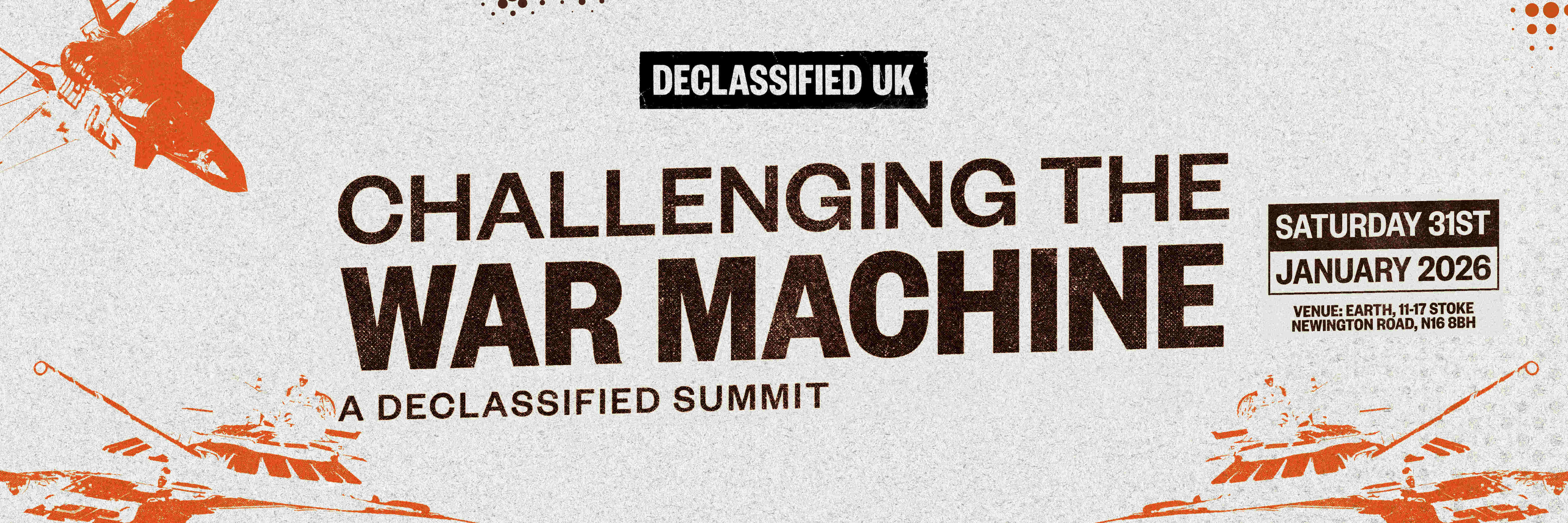
31st January – Challenging the War Machine – a DECLASSIFIED UK SUMMIT
Website of the Week
Now until to February 10, 2026 Radioactive waste storage in France: the debate is finally open! How to participate?
-
Archives
- January 2026 (227)
- December 2025 (358)
- November 2025 (359)
- October 2025 (377)
- September 2025 (258)
- August 2025 (319)
- July 2025 (230)
- June 2025 (348)
- May 2025 (261)
- April 2025 (305)
- March 2025 (319)
- February 2025 (234)
-
Categories
- 1
- 1 NUCLEAR ISSUES
- business and costs
- climate change
- culture and arts
- ENERGY
- environment
- health
- history
- indigenous issues
- Legal
- marketing of nuclear
- media
- opposition to nuclear
- PERSONAL STORIES
- politics
- politics international
- Religion and ethics
- safety
- secrets,lies and civil liberties
- spinbuster
- technology
- Uranium
- wastes
- weapons and war
- Women
- 2 WORLD
- ACTION
- AFRICA
- Atrocities
- AUSTRALIA
- Christina's notes
- Christina's themes
- culture and arts
- Events
- Fuk 2022
- Fuk 2023
- Fukushima 2017
- Fukushima 2018
- fukushima 2019
- Fukushima 2020
- Fukushima 2021
- general
- global warming
- Humour (God we need it)
- Nuclear
- RARE EARTHS
- Reference
- resources – print
- Resources -audiovicual
- Weekly Newsletter
- World
- World Nuclear
- YouTube
-
RSS
Entries RSS
Comments RSS
 nuclear-news