
nuclear-news

The News That Matters about the Nuclear Industry Fukushima Chernobyl Mayak Three Mile Island Atomic Testing Radiation Isotope

China urges dialogue, as Russia and USA ramp up nuclear weaponry, pull out of weapons treaty

Russia withdraws from Cold War-era nuclear weapons treaty with US  https://www.abc.net.au/news/2019-02-02/russia-withdraws-from-cold-war-era-nuclear-weapons-treaty/10774536 Russia has suspended a Cold War-era nuclear weapons treaty, President Vladimir Putin said, after the United States accused Moscow of violations and said it would withdraw from the arms control pact.

Key points:

  • Russia will start work on new missiles, including hypersonic ones
  • US and Russia both allege the other has violated the INF treaty
  • China urges dialogue amid fears of nuclear arms race

The Intermediate-range Nuclear Forces (INF) Treaty prevents the two superpowers from possessing, producing or test-flying ground-launched nuclear cruise missiles with a range of 500 to 5,500 kilometres.

The United States announced it will withdraw from the INF treaty in six months unless Moscow ends what it says are violations of the pact, but Russia denied violating the treaty.

“The American partners have declared that they suspend their participation in the deal, we suspend it as well,” Mr Putin said during a televised meeting with foreign and defence ministers.

Mr Putin said Russia will start work on creating new missiles, including hypersonic ones, and told ministers not to initiate disarmament talks with Washington, accusing the United States of being slow to respond to such moves.

“We have repeatedly, during a number of years, and constantly raised a question about substantiative talks on the disarmament issue,” Mr Putin said.

“We see that in the past few years the partners have not supported our initiatives.”

The US alleges a new Russian cruise missile violates the important pact, signed by former leaders Ronald Reagan and Mikhail Gorbachev in 1987.

The missile, the Novator 9M729, is known as the SSC-8 by the North Atlantic Treaty Organisation (NATO).

Russia said the missile’s range put it outside the treaty, and accused the US of inventing a false pretext to exit a treaty it wants to leave anyway so it can develop new missiles.

Russia also rejected the demand to destroy the new missile.

During the meeting with Mr Putin, Russian Foreign Minister Sergey Lavrov accused the US of violating the INF and other arms deals, including the non-proliferation treaty.

Mr Putin said Russia would not deploy its weapons in Europe and other regions unless the US did so.

Fears of new arms race

The row over the INF treaty is yet another twist in Russia’s worsening relations with the United States and the West, with tensions over Russia’s annexation of Crimea from Ukraine as well as allegations of it meddling with the presidential election in the US and being behind a nerve agent attack in Britain.

The treaty’s suspension has drawn a strong reaction from Europe and China.

European nations fear the treaty’s collapse could lead to a new arms race with possibly a new generation of US nuclear missiles stationed on the continent.

In a statement, China’s Ministry of Foreign Affairs said the bilateral treaty was important to maintain “global strategic balance and stability”.

“China is opposed to US withdrawal action and urges the United States and Russia to handle their differences properly through constructive dialogue,” the statement said, warning that unilateral withdrawal could trigger “negative consequences”.

February 4, 2019 Posted by | China, politics international, Russia, USA, weapons and war | Leave a comment

North Dakota Community Alliance urges public to watch progress of Bill on high-level radioactive waste

February 4, 2019 Posted by | politics, USA | Leave a comment

U.S. Sen. Elizabeth Warren introduces Bill to outlaw first strike use of nuclear weapons

US Sen. Warren: Ban US first strike nuclear weapons option https://www.sfgate.com/news/article/US-Sen-Warren-Ban-US-first-strike-nuclear-13585408.php  February 3, 2019  BOSTON (AP) — U.S. Sen. Elizabeth Warren wants to make sure the United States never uses nuclear weapons first.

The Massachusetts Democrat has introduced a bill with Democratic U.S. Rep. Adam Smith of Washington that would make it the official policy of the United States not to use nuclear weapons first.

The lawmakers say the United States currently retains the option to be the first to use nuclear weapons in a conflict, even in response to a non-nuclear attack.

They said banning the use of nuclear weapons for first-strike purposes would “reduce the chances of a nuclear miscalculation.”

Fellow Massachusetts Democratic U.S. Sen. Edward Markey and U.S. Rep. Ted Lieu, a California Democrat, have also sponsored a bill that would bar the president from launching a nuclear first strike without congressional approval.

February 4, 2019 Posted by | politics, USA, weapons and war | Leave a comment

FirstEnergy nuclear bailout would be crony capitalism at its worst 


 Should legislators help save Ohio nuclear plants? NO: FirstEnergy bailout would be crony capitalism at its worst Columbus Dispatch, 4 Feb 19,  Crony capitalism is never acceptable and should be always met with public outrage. But more-covert pay-to-play schemes that affect Ohio’s long-term economic health are particularly egregious. Take for instance the campaign-contributions scheme from FirstEnergy Solutions over the past year. While transactions to more than a dozen of Ohio policymakers may seem normal to the average voter, recent activity in Columbus reveals a much more calculated operation that seemly puts FirstEnergy’s nuclear agenda ahead of Ohio’s future.

In April 2018, FirstEnergy Solutions filed for bankruptcy in the wake of massive financial problems arising from the company’s competitive power-generation fleet. The company announced it would shut down its Ohio nuclear plants over a three-year period because continued operation wasn’t profitable. FirstEnergy had been unsuccessfully pursuing bailouts from the Public Utilities Commission of Ohio since 2014 and seeking a nuclear subsidy in the legislature since 2016 without success.

So it scrambled desperately for a lifeline, hatching a plan to offer sizable campaign donations to candidates hoping to gather up political allies to support its demand for $300 million a year to keep its plants operational.

What did FirstEnergy cough up for its legislative lifeline? For starters, the company gave $172,000 in total to Ohio House candidates, many of whom had no legislative or energy-industry experience. It also donated $565,000 to the Republican Governors Association, an amount more than five times what the company gave to Governor Mike DeWine’s Democratic counterpart.

We can clearly see the pay, but what exactly was the play? Conveniently, on the first day of the new General Assembly a standing committee on power generation was established, setting the stage to justify passage of a nuclear bailout and help out FirstEnergy. Additionally, FirstEnergy recently announced a debt-restructuring agreement with its creditors. Not coincidentally, this surprise development came on the tails of securing state-lawmaker support to bail out FirstEnergy.

This situation is pay-to-play politicking at its worst, flying in the face of the new administration’s promises to be the most innovative administration in Ohio’s history. Part of an innovation agenda should include rejecting political favoritism toward uncompetitive and less technologically advanced nuclear power plants. Ohioans need to know that FirstEnergy’s attempt to influence a bailout for its failing nuclear plants isn’t just bad ethics. It’s also awful public policy.

Incidentally, natural gas is fueling jobs and consumer cost savings across America. This is especially true in Ohio, …………https://www.dispatch.com/opinion/20190203/column-should-legislators-help-save-ohio-nuclear-plants-no-firstenergy-bailout-would-be-crony-capitalism-at-its-worst

February 4, 2019 Posted by | business and costs, politics, USA | Leave a comment

IAEA criticises USA’s efforts to sabotage Iran nuclear deal

UN Nuclear Watchdog Warns Against Meddling Over Iran, Bloomberg By February 2, 2019,
  •  IAEA calls pressure on Iran monitoring ‘extremely harmful’
  •  
    Comments follow criticism at Tel Aviv event sponsored by U.S.
………Late Wednesday, at a private reception for diplomats, IAEA Director General Yukiya Amano lashed out at efforts to hamstring an organization that’s been at the forefront of nuclear security for decades, according to two foreign officials who were there. Without naming Israel and the U.S., the career Japanese diplomat made it clear those countries were the source of his ire, they said.

“The agency’s independence must not be undermined,” Amano said, according to the IAEA’s website. “If attempts are made to micro-manage or put pressure on the agency in nuclear verification, that is counterproductive and extremely harmful.”

An IAEA official said on Saturday that the U.S. wasn’t Amano’s intended target. He declined to specify which countries prompted the rebuke.

Three years into an agreement that was meant to be a hallmark of the Obama administration, in which Iran agreed to curb its nuclear activities in return for sanctions relief, IAEA inspectors say Tehran is in full compliance.

That hasn’t stopped the Trump administration from backing out of the agreement, piling on new penalties and trying to use the agency to turn the screws with help from Israeli Prime Minister Benjamin Netanyahu.

Iran Abides Nuclear Limits

Enriched uranium has remained below thresholds agreed under deal

President Donald Trump’s hardline stance on Iran has heightened tensions with the other signatories to the agreement: China, France, Germany, Russia and the U.K. It’s also sowed divisions between the White House and America’s spy agencies, with Trump castigating his own intelligence officials this week for being “passive and naive when it comes to the dangers of Iran.”

Netanyahu went to the U.S. Congress to lobby against the agreement before it was signed and has continued to criticize the deal since, arguing that it won’t prevent Iran from attaining nuclear weapons……..

fake newscast in Israel came as Iran’s deputy foreign minister was in Vienna for talks with the IAEA, which is trying to keep the accord from unraveling.

Iran’s leadership has said the country’s ready to re-start its enrichment program using more advanced technology if the agreement fails. The country is considering making the kind of nuclear fuel used in naval propulsion, implying it could enrich uranium closer to the levels needed for weapons.

Meanwhile, the European Union is moving to help countries evade the sanctions that the Trump administration imposed to stop countries from trading with Iran.

On Thursday, the 28-member bloc finalized a new financial mechanism for bypassing the U.S. restrictions. The special purpose vehicle, called the Instrument in Support of Trade Exchanges, will be headquartered in Paris and staffed with German leadership.

The vehicle will have a positive “impact on trade and economic relations with Iran, but most importantly on the lives of Iranian people,” a draft of the joint communique seen by Bloomberg says.

The U.S. mission to the IAEA in Vienna said in an emailed response to questions that the watchdog “can continue to count on the full support of the United States” as it carries out its “important mandate in Iran.” https://www.bloomberg.com/news/articles/2019-02-01/fake-news-goes-nuclear-as-iaea-sees-u-s-israel-meddling-on-iran

February 4, 2019 Posted by | Iran, politics international, USA | Leave a comment

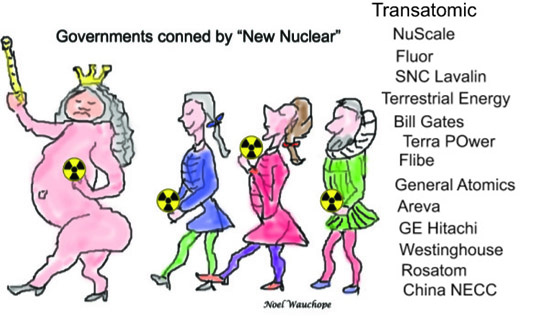
I lived through Three Mile Island. New nuclear plants are a bad idea.

Gene Eisman, Washington Post 1st Feb 2019 . In 1979, I was working for a member of the Pennsylvania
governor’s Cabinet and lived in Harrisburg, Pa., a few miles from the
Three Mile Island nuclear plant. When one of the reactors melted down, I
saw real panic as state workers left their offices to pick up their
children at school. I spent several days in the state’s underground
emergency command facility during the crisis, talking to the Federal
Emergency Management Agency in Washington, providing it with real-time
updates on the situation. Having been through that, I believe that
Mr. Gates’s idea to build new nuclear power plants would be the height
of folly, any claims he makes notwithstanding.
https://www.washingtonpost.com/opinions/i-lived-through-three-mile-island-new-nuclear-plants-are-a-bad-idea/2019/02/01/3e15b3e8-2573-11e9-b5b4-1d18dfb7b084_story.html

February 4, 2019 Posted by | PERSONAL STORIES, USA | Leave a comment

Is Vogtle nuclear station expansion now further behind schedule? Report is delayed?

Proposed deal would delay report on Georgia nuclear plant  The News and Observer, THE ASSOCIATED PRESS, FEBRUARY 02, 2019 ATLANTA 

February 4, 2019 Posted by | politics, USA | Leave a comment

USA’ s EPA appoints a radiation sceptic to head the panel on radiation

Skeptic on radiation limits will head EPA radiation panel,  https://www.kwch.com/content/news/Skeptic-on-radiation-limits-will-head-EPA-radiation-panel-505198021.html By ELLEN KNICKMEYER, Associated Press 1 Feb 19, WASHINGTON (AP) — The Environmental Protection Agency has appointed a scientist who argues for easing regulations on lower-level radiation exposures to lead the agency’s radiation advisory committee.

Acting EPA head Andrew Wheeler on Thursday announced the appointment of Brant Ulsh, a health physicist, as one of the EPA’s science advisers and the panel chairman. Ulsh has been a leading critic of the EPA’s decades-old position that exposure to any amount of ionizing radiation is a cancer risk.

In a paper he co-wrote last year, Ulsh and a colleague argued that the position was based on outdated scientific information and forced the “unnecessary burdens of costly clean-ups” on facilities working with radiation.

The EPA under President Donald Trump has targeted a range of environmental protections, in line with Trump’s arguments that overly strict environmental rules have hurt U.S. businesses. Environmental and public health advocates say the rollbacks threaten the health and safety of Americans.

Some environmental groups and scientists have criticized what they say is the administration’s openness to an outlier position on radiation risks.

“Once again the Trump administration is moving to the fringe for its scientific advice, choosing someone who could undercut foundational protections from radiation,” Bemnet Alemayehu, a staff scientist at the Natural Resources Defense Council environmental advocacy group, said in a statement Friday. “We need sound science to dictate health protections, not dangerous theories.”

EPA spokesman John Konkus declined comment Friday, referring a reporter to a news release announcing the appointment.

Ulsh did not immediately respond to an email Friday asking for comment, including whether he intended to use the advisory position to encourage reconsideration of the EPA’s no-tolerance policy on lower doses of radiation exposure.

Last year, Ulsh told The Associated Press that “we spend an enormous effort trying to minimize low doses” at nuclear power plants, for example.

“Instead, let’s spend the resources on minimizing the effect of a really big event,” he said.

U.S. agencies have long maintained there is no threshold of radiation exposure that is risk-free.

The National Council on Radiation Protection and Measurements reaffirmed that last year after reviewing 29 public health studies on cancer rates among people exposed to low-dose radiation.

The EPA last year proposed a rule that would have instructed regulators to consider “models across the exposure range” when it comes to dangerous substances.

Environmental groups and some scientists expressed concern then that the directive could open the way for an agency retreat from its long-standing no-tolerance rule for ionizing radiation exposure. But the proposed rule did not mention radiation, and EPA officials denied it would have applied to radiation. It said the agency still follows its no-tolerance guidelines.

But the EPA’s proposal last year did specify consideration of a particular scientific model, called the U curve, put forward by Edward Calabrese, a toxicologist and leading proponent of the theory that exposure to radiation and other hazardous substances can actually be healthy at low doses

The EPA’s initial news release on the rule last April quoted Calabrese as praising the proposal, calling it a “major scientific step forward” in assessing the risks of “chemicals and radiation.”

EPA calendars obtained through the Freedom of Information Act show an appointment between Calabrese and EPA chief of staff Ryan Jackson on June 28, 2017, early in the tenure of Scott Pruitt, Wheeler’s predecessor.

February 2, 2019 Posted by | secrets,lies and civil liberties, spinbuster, USA | Leave a comment

Donald Trump confirms US withdrawal from INF nuclear treaty

 Guardian, Julian Borger, World affairs editor, Sat 2 Feb 2019 
Announcement gives Russia 180 days to destroy violating missiles and launchers to avoid new arms race Donald Trump has confirmed that the US is leaving the Intermediate-range Nuclear Forces (INF) treaty, saying “we will move forward with developing our own military response options” to Russia’s suspect missile.In a written statement, Trump said that the US would be suspending its compliance with the 1987 treaty on Saturday, and would serve formal notice that it would withdraw altogether in six months.

He left the door open to the treaty being salvaged in that 180-day window, but only if Russia destroys all of its violating missiles, launchers and associated equipment. Since 2013, the US has alleged that Russia has developed a new ground-launched cruise missile which violated the INF prohibition of missiles with ranges between 500km and 5,500km.

Russia for several years denied the missile existed but has more recently acknowledged its existence, saying its range does not violate INF limits.

“This is in reality, under international law, Russia’s final chance,” a senior administration official said. “If there is to be an arms race, it is Russia that has undermined the global security architecture.”

In his statement, Trump warned that unless Russia destroyed its missile by August: “We will move forward with developing our own military response options and will work with Nato and our other allies and partners to deny Russia any military advantage from its unlawful conduct.”

Washington’s European allies have been anxious that the death of the INF treaty would lead to a return to the tense days of the 1980s, and an arms race involving short- and medium-range missiles on European soil………

, neither the Trump nor Pompeo gave any indication whether the administration would agree to extend the 2010 New Start treaty, the last remaining arms control agreement constraining the arsenals of the two major nuclear weapons powers.

Both the US and Russia have abided by the New Start limit of 1,550 deployed, strategic nuclear warheads, but the treaty expires in 2021, leaving little time to negotiate a five-year extension.

Alexandra Bell, a former state department arms control official and senior policy director at the Centre for Arms Control and Non-Proliferation, said: “New Start is working, it’s good for American national security and this administration is putting global security at risk by foot-dragging on extension.” https://www.theguardian.com/world/2019/feb/01/inf-donald-trump-confirms-us-withdrawal-nuclear-treaty

February 2, 2019 Posted by | politics international, USA, weapons and war | 1 Comment

New Jersey nuclear reactor shut down due to extreme cold weather

It’s so cold, even a nuclear reactor in N.J. can’t do its job,By Chris Franklin | For NJ.com

PSEG spokesman Joseph Delmar Sr. says the utility company’s Salem Unit 2 reactor was manually taken offline by control room operators early Thursday morning at 3:01 a.m. due to frazil icing conditions at the circulating water intake structure on the non-nuclear side of the power plant. ………Chris Franklin can be reached at cfranklin@njadvancemedia.com. Follow him on Twitter @cfranklinnews or on Facebook. Have a tip? Tell us. nj.com/tipshttps://www.nj.com/salem/2019/02/its-so-cold-even-a-nuclear-reactor-in-nj-cant-do-its-job.html

February 2, 2019 Posted by | climate change, USA | Leave a comment

Nevada State Officials Are Outraged that the Trump Administration Secretly Shipped Plutonium in from South Carolina


“They lied to the State of Nevada, misled a federal court, and jeopardized the safety of Nevada’s families and environment,” Governor Sisolak said. Nevada officials say they are “outraged” by the Trump administration’s “reckless decision” to secretly ship 1,100 pounds of weapons-grade plutonium to a site north of Las Vegas, against the express wishes of state representatives.

Governor Steve Sisolak called the move an “unacceptable deception” that exposed the “sham” of the state’s ongoing negotiations with the Department of Energy (DOE) over the transfer of plutonium from South Carolina. Nevada Senator Jacky Rosen called the decision “deceitful and unethical” and said it jeopardized “the health and safety of thousands of Nevadans and Americans who live in close proximity to shipment routes,” according to The New York Times.

A federal judge ordered the transfer in 2017, but the move was challenged in court when Nevada sued the federal government to block it last November. Unbeknownst to Nevada officials, the DOE had already shipped the plutonium to Nevada, according to legal filings released Wednesday. Nevada officials were not notified because the transfer was classified due to its implications for national security, the DOE said.

“Although the precise date that this occurred cannot be revealed for reasons of operational security, it can be stated that this was done before November 2018, prior to the initiation of the litigation,” said Bruce Diamond, general counsel for the DOE’s National Nuclear Security Administration, in the filing.

The plutonium is being held at the Nevada National Security Site near Yucca Mountain, in the complex’s Device Assembly Facility (DAF).

This region has a rich tradition of anti-nuclear activism: Public figures like astronomer Carl Sagan and actor Martin Sheen were among the thousands of people arrested at the height of the local protest movement in the late 1980s and early 1990s.

Decades later, there is strong bipartisan opposition in Nevada to any expansion of the site’s role as a repository for spent nuclear material. In 2009, President Obama backed off of long-term plans to develop storage capabilities at Yucca Mountain. The Trump administration signaled its intention to reverse that decision last year by including $120 million in the DOE budget to prepare for new shipments.

Nevada’s November lawsuit against the transfer is now regarded as moot by the US Justice Department, the Associated Press reported, and the plutonium may remain at the DAF for nearly a decade before another planned transfer to New Mexico.

Despite assurances from the DOE that there will be no other imminent shipments, the state’s elected officials argue the lack of transparency over the move demands new preventative measures. Governor Sisolak said the state is pursuing “any and all legal remedies” against the federal government, including contempt of court orders.

“They lied to the State of Nevada, misled a federal court, and jeopardized the safety of Nevada’s families and environment,” Sisolak said in a statement. “My administration is working with our federal delegation, and we will use the full force of every legal tool available to fight back against the federal government’s reckless disregard for the safety of our state.”

Correction: An earlier version of this article referred to the plutonium shipment as nuclear waste. It does not far under that definition according to the DOE. The article has been updated to reflect this.

February 2, 2019 Posted by | politics, secrets,lies and civil liberties, USA, wastes | Leave a comment

Dismantling process of pioneer nuclear station – it’s still dangerous

How do you dismantle a nuclear power plant? Very, very carefully.  Before they can break apart this historic Army facility, they have to make sure it’s not radioactive, WP, By Michael E. Ruane, February 1 2010 Behind the locked gates of Building 372 at Fort Belvoir in Virginia, past the door to the huge containment vessel where a sign warns of radiation, a large button on the control panel is covered in red plastic and reads: “manual scram.”

This is the emergency shutdown button, which nuclear legend says was pushed when it was time to scram.

But these days, the dark interior of the Army’s historic nuclear reactor, once called an “atomic-age miracle machine,” is a maze of rusted pipes, peeling paint and pressure gauges reading zero.

Keys in the control panel haven’t been turned in years, and switches are set to “off.”

The world’s first nuclear plant to supply energy to a power grid has been defunct for years. But the Army is preparing to break it up, check it for lingering radiation and haul it away piece by piece.

Dedicated in 1957, as the government was promoting “Atoms for Peace,” the facility was a training site and a prototype for small reactors that could produce power for bases in remote places around the world, the Army said. Built on the Potomac River’s Gunston Cove, it was called the SM-1, for stationary medium power plant No. 1.

“First nuclear power plant ever to put power on a grid, ever in the world,” said Hans B. Honerlah, a senior health physicist with the Army Corps of Engineers’ hazardous, toxic and radioactive waste branch.

The SM-1 trained hundreds of nuclear plant specialists before it was shut down in 1973. By then, the military’s need for such expensive plants had dwindled, said Charles Harmon, a former shift supervisor at the facility and an unofficial historian of the site. “The cost of the Vietnam War was making funds scarce,” Harmon said.

The plant’s uranium-235 fuel and reactor waste were removed in 1973 and ’74 and taken to a storage site in South Carolina. The 64-foot-high concrete-and-steel containment vessel that housed the smaller reactor vessel and other equipment was sealed.

But all these years later, there still is likely residual nuclear contamination of some of the internal structures, Army experts said.

Before the site is torn down, experts will check everything for radiation and look for any impacts to the environment and historical record.

Honerlah said at Fort Belvoir earlier this month: “It’d be great to make it a museum, but it’s always going to be radioactive.

“It has to go away. It’s never going to not be radioactive. The goal . . . is to take the remaining radioactive components, remove them from the . . . facility here and take them” to a nuclear waste site, probably in western Texas………

Corps of Engineer officials said they hope to start the process next year. They said it would probably take five years to finish. “These facilities were really not built to be taken apart,” Barber said.

‘Atoms for Peace’

In 1954, the SM-1 was described by The Washington Post as a miracle machine that could provide power anywhere in the world……

Years before the nuclear plant disasters at Three Mile Island in 1979Chernobyl in the Ukraine in 1986, and Fukushima in Japan in 2011, hopes were that nuclear power could be clean and safe. ……https://www.washingtonpost.com/history/2019/02/01/how-do-you-dismantle-nuclear-power-plant-very-very-carefully/?utm_term=.5704ad3cf0b4

February 2, 2019 Posted by | decommission reactor, USA | Leave a comment

Employee faked radiation test data at Swiss nuclear plant 

https://www.swissinfo.ch/eng/safety-protocols_employee-faked-radiation-test-data-at-swiss-nuclear-plant/44723344T JANUARY 31, 2019 2:43 PMJAN 31, 2019 A worker at the Leibstadt nuclear power plant near Zurich was found to have fabricated data on safety tests that were not even performed.  The authorities claim this did not affect the safe operation of the plant.

The employee concerned failed to perform biannual tests on three mobile radiation measuring devices since 2016. The devices need to be tested to ensure they function properly. Instead, the worker entered fabricated data into the inspection logs.

The devices in question are used to measure radiation from containers for radioactive fuel before they are transported to an interim storage facility at another location. Once at the interim storage facility, the radiation levels of the containers are measured again.

According to the Swiss Federal Nuclear Safety Inspectorate (SFNSI)external link, no significant differences in radiation levels were observed between the plant and the interim storage facility, indicating that the error did not pose a threat to safety. Personnel transporting the radioactive fuel did not show any unexpected level of exposure.

Axpo, the company that operates and owns the plant, will have to submit a detail report SFNSI by February and the latter will make the final conclusions public. A review of other inspection protocols will later be conducted by an independent body.

“Unfortunately, this case is not an isolated one. It is part of a series of incidents at the Leibstadt power plant linked to human error,” said Georg Schwarz, deputy director of SFNSI in a statement on Wednesday. “Steps must now be taken to sustainably improve the safety culture at this facility.”

SFNSI already conducts around a 100 announced and unannounced inspection of the plant every year. This number is expected to increase significantly in the current year.

February 2, 2019 Posted by | secrets,lies and civil liberties, USA | Leave a comment

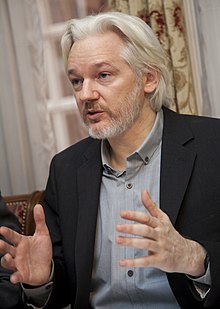
Judge refuses to unseal criminal charges against Assange

January 31, 2019  FALLS CHURCH, Va. (AP) — A federal judge on Wednesday rejected a request to unseal criminal charges against Wikileaks founder Julian Assange that were mistakenly revealed in another case.

U.S. District Judge Leonie Brinkema said in a 10-page ruling that free-press advocates seeking to unseal the charges have no proof Assange has actually been charged.

The Reporters Committee for the Freedom of the Press sought to unseal the charges after a federal prosecutor inadvertently typed a reference to “the fact that Assange has been charged” in an unrelated case.

The government has acknowledged it made an error but has not publicly confirmed that charges against Assange have been filed.

After the mistake was made, news outlets including The Associated Press reported that Assange has indeed been charged. But those reports relied on anonymous sources.

The precise charges against Assange are unclear. The Wikileaks founder has been staying in the Ecuadorian Embassy in London since 2012 under a grant of asylum and has long expressed fear of a U.S. prosecution. WikiLeaks has served as a vehicle for release of thousands of classified U.S. military and diplomatic cables. In addition, WikiLeaks’ role in releasing emails hacked from the Democratic National Committee in 2016 has also been under scrutiny as special counsel Robert Mueller has investigated Russian interference in the 2016 election and whether the Trump campaign was involved.

Criminal charges typically remain secret and under seal until a defendant has been arrested to prevent a target from fleeing prosecution or destroying evidence. Lawyers for the free-press foundation said that rationale for secrecy no longer exists given the inadvertent disclosure and the fact that Assange has long assumed he has been charged.

Brinkema, though, wrote in her ruling that the Reporters Committee “has not demonstrated with sufficient certainty that Assange has been charged. Unlike in other high-profile cases, the Government has not affirmatively disclosed that charges have been filed. Although the Government acknowledges that it made a mistake … the nature of that mistake is fundamentally unclear.”

Katie Townsend, a lawyer for the Reporters Committee, said no decision has been made on whether to appeal. “The disclosure of the nature of the charges against Assange are a matter of public interest and should be made public,” she said.

February 2, 2019 Posted by | Legal, USA | Leave a comment

Clean-up of molten salt nuclear reactor continuing – new plan to reduce the costs

Crews start project to reduce maintenance, operations costs at Molten Salt Reactor, Oak Ridge Today, JANUARY 22, 2019, BY JOHN HUOTARI Cleanup crews started a $4.7 million project this month to reduce maintenance and operations costs at the Molten Salt Reactor Experiment, which was shut down 50 years ago at Oak Ridge National Laboratory.The project is expected to save nearly $25 million in costs, the U.S. Department of Energy Office of Environmental Management said in an “EM Update” published Tuesday.

The cost-reduction project will relocate employees stationed at the decades-old facility. Personnel currently housed in the building will move to other site locations to help with other projects, the “EM Update” said……..

The Molten Salt Reactor Experiment operated for only four years in the 1960s,  …….

Oak Ridge Today reported in November 2017 that DOE was, at the time, studying whether to entomb parts of the Molten Salt Reactor Experiment. Those parts were reported to be too radioactively “hot” for humans. The current status of the entombment proposal wasn’t immediately clear Tuesday evening.

In 2017, Jay Mullis, manager of the Oak Ridge Office of Environmental Management, said most of the fuel at the Molten Salt Reactor Experiment, a unique reactor that operated from June 1965 to December 1969, was removed about 10 years ago. That included uranium, plutonium, and some uranium-233.

Oak Ridge Today reported at that time that some residual fuel and fission products remained, including cesium and strontium.

The Oak Ridge Office of Environmental Management has previously estimated the cost of removing the salt from the Molten Salt Reactor Experiment and disposing of it at the Waste Isolation Pilot Plant in New Mexico at between $150 million to $200 million. It’s not clear if that estimate has changed.

In the meantime, several million dollars has been spent each year on surveillance and maintenance at the Molten Salt Reactor Experiment and liquid and gaseous waste operations at ORNL, including at what are known as “hot cells,” and costs were expected to increase. Federal officials had asked for $12 million for those surveillance and maintenance operations in fiscal year 2019, the current fiscal year. Oak Ridge Today did not immediately have information on Tuesday about what amount was actually appropriated.

In 2017, Mullis said the Molten Salt Reactor Experiment, which had a control room and reactor room, is degrading…….https://oakridgetoday.com/2019/01/22/crews-start-project-reduce-maintenance-operations-costs-molten-salt-reactor/

February 2, 2019 Posted by | technology, USA | Leave a comment